Visual abstracts
New randomized trials and meta-analyses from leading journals at a glance: who was studied, what was compared, and what was found. Every paper is free to read in full.
All specialtiesCardiology 855Oncology 770Gastroenterology & Hepatology 311Infectious Disease 626Neurology 354Psychiatry & Mental Health 430Pulmonology 370Critical Care 259Endocrinology & Diabetes 484Pediatrics 542Surgery 349Orthopedics & Sports Medicine 166Neurosurgery 115Cardiothoracic & Vascular Surgery 87Plastic & Reconstructive Surgery 144Nephrology 197Rheumatology 108Hematology 183Dermatology 81Ophthalmology 97Obstetrics & Gynecology 266Public & Global Health 168Radiology & Imaging 104Anesthesiology 128Urology 162ENT (Otolaryngology) 114Emergency Medicine 103Allergy & Immunology 58Geriatrics 160Family Medicine & Primary Care 111Medical Genetics & Genomics 91Pathology & Laboratory Medicine 27Physical Medicine & Rehabilitation 149Palliative Care 81Nutrition 223Digital Health & AI 462General Medicine 101
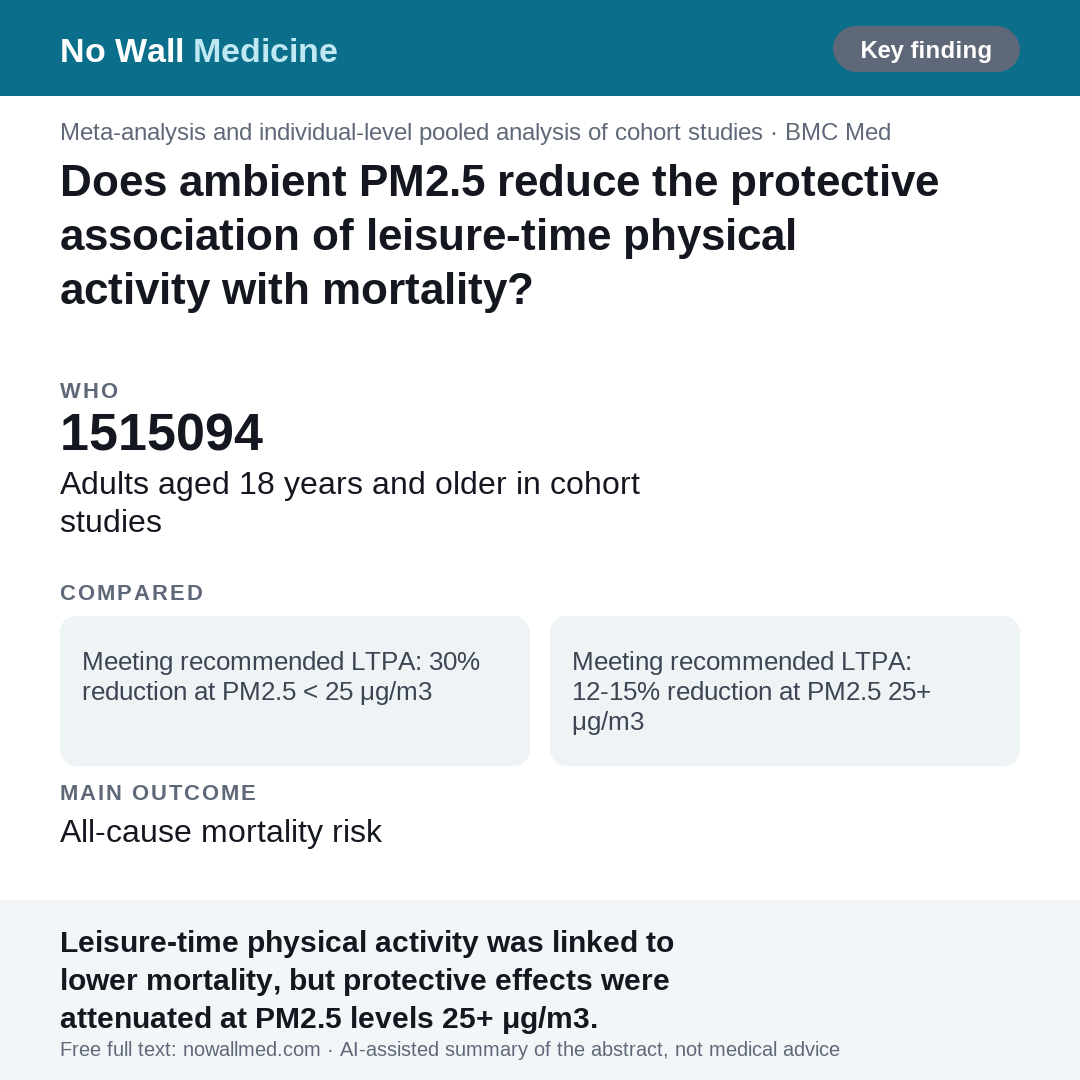
Does ambient PM2.5 reduce the protective association of leisure-time physical activity with mortality? A systematic review, meta-analysis, and individual-level pooled analysis of cohort studies involving 1.5 million adults
Systematic review, meta-analysis, and individual-level pooled analysisMixed results
Does fine particulate matter reduce the protective association of physical activity with mortality?
Who
1515094
Adults aged 18 years or older
Compared
Recommended physical activity at PM2.5 < 25 μg/m3: 30% reduction in all-cause mortality risk
Recommended physical activity at PM2.5 25+ μg/m3: 12-15% reduction in all-cause mortality risk
Main outcome
All-cause, cardiovascular, and cancer mortality
Bottom line: Physical activity reduces mortality risk, but these protective benefits are attenuated at fine particulate matter levels above 25 μg/m3.
BMC Med · 2025-11-28Download image
Efficacy and safety of esketamine for "treatment resistant depression": registered report for a systematic review with an individual patient data meta-analysis of randomized, double-blind, placebo-controlled trials
Systematic review and individual patient data meta-analysisMixed results
Is intranasal esketamine effective and safe for treatment resistant depression?
Who
1505
Patients with treatment resistant depression · Multiple databases and Yale Open Data Access Project
Compared
Esketamine plus an antidepressant: mean difference -2.94
Placebo
Main outcome
Montgomery-Åsberg Depression Rating Scale score at 4 weeks or more
Result: mean difference -2.94 (95% CI -5.39 to -0.48)
Bottom line: Esketamine plus an antidepressant showed a statistically significant but small reduction in depression scores with increased adverse events.
Limitation: FDA concerns about one centre could not be addressed due to data privacy restrictions.
BMC Med · 2025-11-28Download image

Neurocognitive outcomes in patients with brain metastases: a systematic review
Systematic review of clinical trialsMixed results
What are the neurocognitive outcomes in patients with brain metastases receiving radiotherapy with or without systemic therapies?
Who
6617
Patients with brain metastases
Compared
Advanced radiotherapy techniques: reduced cognitive decline and improved quality of life
Whole-brain radiotherapy
Combined-modality therapy: no signal for increased toxicity
Main outcome
Neurocognitive outcomes
Bottom line: Advanced radiotherapy techniques reduce cognitive decline, but more research is needed on combined-modality therapy toxicity.
Limitation: Evaluable trials for combined-modality therapy were few in number.
Lancet Oncol · 2025-11-28Download image

Palliative Care in Low and Middle-Income Countries to Reduce Cancer Suffering: A Systematic Review
Systematic review using best-fit framework synthesisBenefit found
How does palliative care development contribute to alleviating cancer suffering in low- and middle-income countries?
Who
81
People with cancer in low- and middle-income countries · Low- and middle-income countries
Compared
Palliative care interventions: improved patient outcomes
Community-based palliative care: empowered patients and families
Main outcome
Mitigating or alleviating human suffering of people with cancer
Bottom line: Palliative care improves patient outcomes, reduces hospital stays, and lowers healthcare costs in low- and middle-income countries.
Limitation: Evidence linking development to international indicators of palliative care progress is insufficient.
Funded by: End-of-Life Care in India Task Force
J Pain Symptom Manage · 2025-11-28Download image

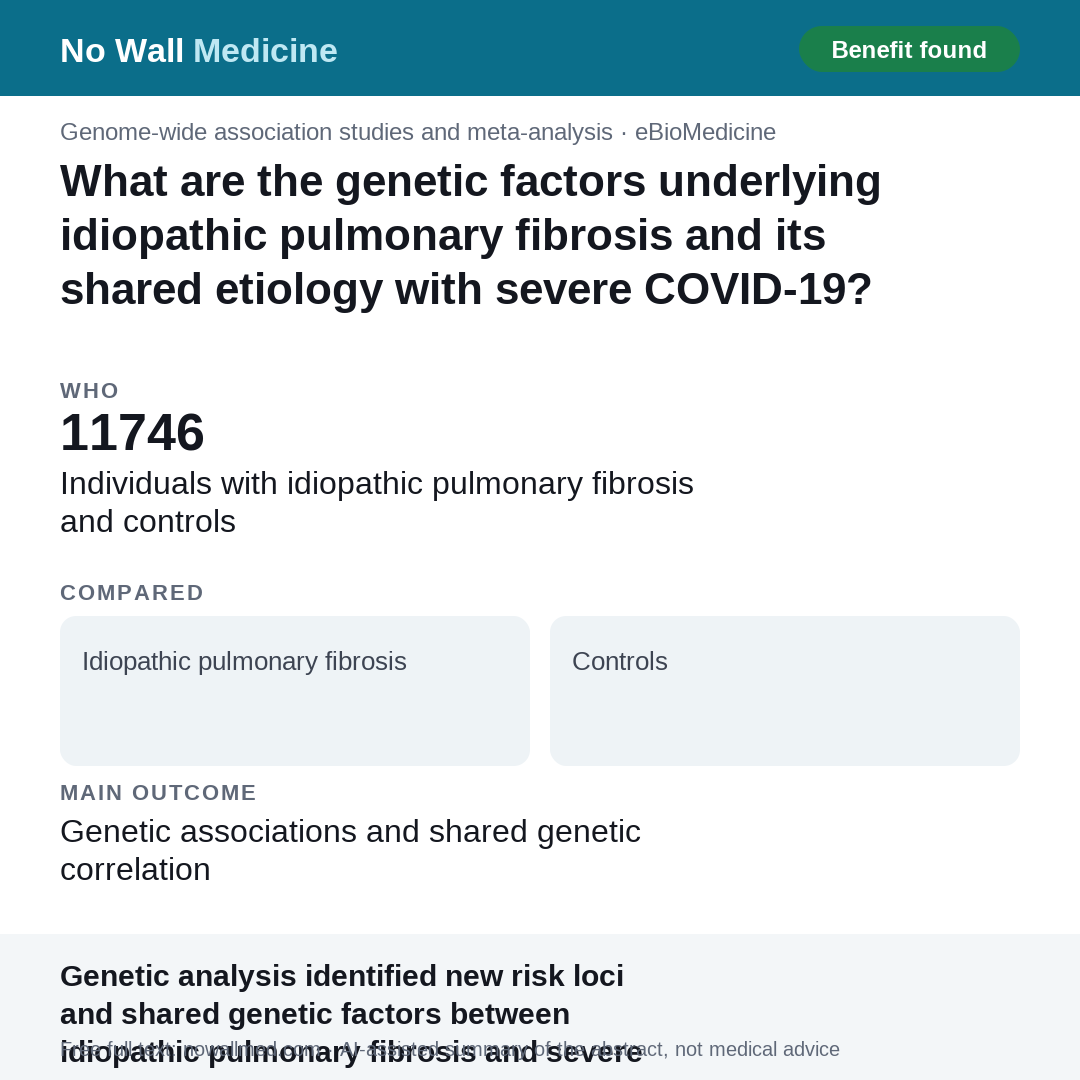
Common and rare variant analyses reveal genetic factors underlying idiopathic pulmonary fibrosis and its shared aetiology with severe COVID-19
Genome-wide association studies and meta-analysisBenefit found
What are the genetic factors underlying idiopathic pulmonary fibrosis and its shared etiology with severe COVID-19?
Who
11746
Individuals with idiopathic pulmonary fibrosis and controls
Compared
Idiopathic pulmonary fibrosis
Controls
Main outcome
Genetic associations and shared genetic correlation
Result: genetic correlation rg [95% CI] = 0.39 [0.25, 0.53]
Bottom line: Genetic analysis identified new risk loci and shared genetic factors between idiopathic pulmonary fibrosis and severe COVID-19.
eBioMedicine · 2025-11-28Download image
Second-event endpoints (EFS2, PRFS2 and PFS2) after anti-PD-(L)1-based RCTs: a systematic review and meta-analysis
Systematic review and meta-analysisBenefit found
Do second-event endpoints capture durable benefit in anti-PD-(L)1-based randomized trials?
Who
34,973
Patients with solid malignancies in anti-PD-(L)1-based randomized controlled trials
Compared
Immune checkpoint inhibitors
Non-immune checkpoint inhibitors
Main outcome
Event-free survival 2, progression/recurrence-free survival 2, or progression-free survival 2
Result: hazard ratio 0.72 (95% CI 0.68 to 0.76)
Bottom line: Early anti-PD-(L)1 use improves second-event survival and these endpoints are strong surrogates for overall survival.
J Immunother Cancer · 2025-11-28Download image

Interactive Conversational Agents to Improve Dietary Behaviors for Health Promotion: Mixed Systematic Review
Mixed methods systematic reviewBenefit found
How effective are interactive conversational agents in improving dietary behaviors?
Who
20
Participants in studies using conversational agents for dietary behavior change
Compared
Conversational agents: improvements in fruit and vegetable intake reported in 2 studies
Control
Main outcome
dietary behaviors, nutritional knowledge, usability, and engagement
Bottom line: Conversational agents show promise for improving fruit and vegetable intake, Mediterranean diet adherence, and nutritional knowledge.
Limitation: Variability in outcomes, high attrition, and limited impact on social support.
J Med Internet Res · 2025-11-28Download image

Diagnostic accuracy of artificial intelligence compared to family physicians and dermatologists for skin conditions: a systematic review and meta-analysis
Systematic review and meta-analysisBenefit found
What is the diagnostic accuracy of artificial intelligence for skin lesions compared to physicians?
Who
Skin lesions encountered in primary care settings
Compared
Artificial intelligence for melanoma: sensitivity 0.86 (95% CI: 0.80-0.90)
Artificial intelligence for melanoma: specificity 0.94 (95% CI: 0.89-0.97)
Main outcome
Diagnostic accuracy for skin lesions and melanoma detection
Result: diagnostic odds ratio 44.36 (95% CI 29.28; 67.1)
Bottom line: Artificial intelligence performs at a similar level to dermatologists and general practitioners for diagnosing skin lesions and melanoma.
Limitation: High risk of bias in 25 studies, primarily due to patient selection and non-representative datasets.
BMC Prim Care · 2025-11-28Download image

Neuromodulation effects of low-intensity transcranial focused ultrasound in human, a systematic review focusing on motor and sensory functions
Systematic reviewMixed results
What are the neuromodulatory effects of low-intensity transcranial focused ultrasound on motor and sensory functions?
Who
Humans receiving low-intensity transcranial focused ultrasound
Compared
Excitatory effects
Inhibitory effects
Main outcome
Neuromodulation of motor and sensory functions
Bottom line: Low-intensity transcranial focused ultrasound can induce both excitatory and inhibitory effects on motor and sensory brain regions.
Limitation: The underlying mechanisms of neuromodulation remain incompletely understood.
J Neuroeng Rehabil · 2025-11-28Download image

Spinal manifestations of Paget's disease: Case presentation and systematic review
Case presentation and systematic reviewMixed results
What are the spinal manifestations of Paget's disease of the bone?
Who
87
Patients with Paget's disease of the bone
Compared
Systematic review of ten articles: spinal stenosis, vertebral fracture, spinal cord compression, cauda equina syndrome, and neurological deficits
Synovial cyst cases: one reported case
Main outcome
Spinal complications associated with Paget's disease of the bone
Bottom line: Spinal stenosis and fractures are common, but facet joint synovial cysts are extremely rare manifestations of Paget's disease.
Brain Spine · 2025-11-28Download image

Age-specific distribution of cervical precancer and cancer among women living with HIV across seven countries: a systematic review and an individual patient data meta-analysis
Systematic review and individual patient data meta-analysisBenefit found
What is the age-specific distribution of cervical precancer and cancer among women living with HIV?
Who
128732
Women living with HIV · 12 countries
Compared
6.0%Ages 15-19 years (95% CI 0.74-64.1)
32.4%Ages 20-24 years (8.3-72.7)
42.1%Ages 25-29 years (16.4-80.2)
50.3%Ages 30-34 years (16.3-80.0)
Main outcome
Predicted probability of cervical intraepithelial neoplasia grade 2 or 3
Bottom line: Cervical precancer risk increases with age in women living with HIV, peaking in the 45-49 age group.
Funded by: US Agency for International Development and US President's Emergency Plan for AIDS Relief
Lancet HIV · 2025-11-27Download image

Identifying predictors of neuropathic pain medication prescribing, adherence, and discontinuation: a systematic review and meta-analysis
Systematic review and meta-analysisMixed results
What predicts neuropathic pain medication prescribing, adherence, and discontinuation in adults?
Who
Adults with neuropathic pain
Compared
Prescribing predictors: mental health disorder, diabetes mellitus, and White race
Adherence predictors: serotonin-norepinephrine reuptake inhibitors, dose titration, and medicine reminders
Discontinuation predictors: tricyclic antidepressants and combination neuropathic pain medications
Main outcome
medication prescribing, adherence, and discontinuation
Bottom line: Predictors for prescribing, adherence, and discontinuation vary across different medication management strategies in neuropathic pain.
Br J Anaesth · 2025-11-27Download image

Prevalence, hormonal correlates, severity, and neural basis of neurocognitive impairment in patients with hypothyroidism: Systematic review and meta-analyses
Systematic review and meta-analysisHarm found
What are the prevalence, hormonal correlates, and neurocognitive impairments in hypothyroidism?
Who
85
Patients with hypothyroidism
Compared
Hypothyroidism patients: SMD -1.134 (95% CI -2.020 to -0.248) for MMSE
Controls
Main outcome
Neurocognitive impairment and thyroid hormone associations
Result: standardized mean difference -1.134 (95% CI -2.020 to -0.248)
Bottom line: Hypothyroidism is associated with neurocognitive impairment, lower memory scores, and structural brain alterations.
Alzheimers Dement · 2025-11-27Download image

Magnetic resonance imaging in the diagnosis of trigeminal neuralgia: a systematic review of the imaging protocol and diagnostic accuracy
Systematic reviewUnclear result
What are the diagnostic performance and effective MRI protocols for trigeminal neuralgia?
Who
Patients with suspected trigeminal neuralgia
Compared
Advanced MRI sequences
3.0 Tesla imaging
Main outcome
Visualization of neurovascular conflicts and diagnostic accuracy
Bottom line: Advanced sequences and higher field strength improve visualization, but distinguishing clinically significant conflicts remains a challenge.
Limitation: Variable imaging protocols, interobserver variability, and limited clinical correlation.
Eur Radiol · 2025-11-27Download image

The evolving etiologies of rapidly progressive dementia: a systematic review
Systematic reviewMixed results
What are the evolving etiologies and temporal trends of rapidly progressive dementia?
Who
1,701
Patients with rapidly progressive dementia
Compared
Neurodegenerative diseases: 459 cases, 27.0%
Neuroimmune diseases: 327 cases, 19.2%
Central nervous system infections: 295 cases, 17.3%
Main outcome
Etiological categories and temporal trends of rapidly progressive dementia
Bottom line: Neuroimmune diseases, particularly autoimmune encephalitis, show a significant upward trend in prevalence over time.
Transl Psychiatry · 2025-11-27Download image

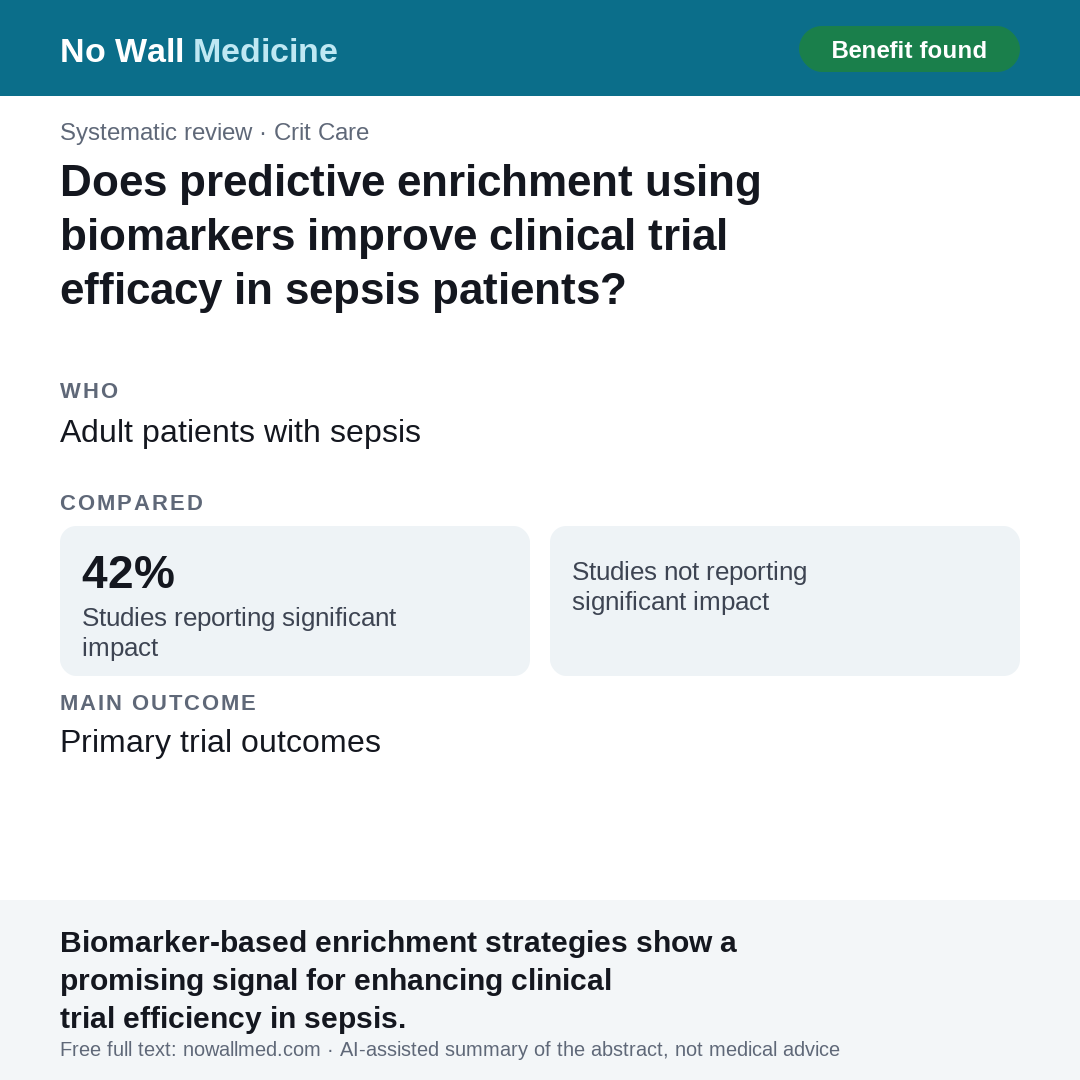
Predictive enrichment using biomarkers in studies of critically-ill patients with sepsis: a systematic review
Systematic reviewBenefit found
Does predictive enrichment using biomarkers improve clinical trial efficacy in sepsis patients?
Who
Adult patients with sepsis
Compared
42%Studies reporting significant impact
Studies not reporting significant impact
Main outcome
Primary trial outcomes
Bottom line: Biomarker-based enrichment strategies show a promising signal for enhancing clinical trial efficiency in sepsis.
Limitation: Studies were heterogeneous in design and limited in number.
Crit Care · 2025-11-27Download image
Patient-reported outcome measures for use in patients with alpha-1-antitrypsin deficiency: results of a systematic selection process
Systematic selection processUnclear result
PROM for alpha-1-antitrypsin deficiency patients
Who
patients with alpha-1-antitrypsin deficiency
Compared
EuroQoL
COPD Assessment Test
Chronic Liver Disease Quality of Life
Main outcome
quality of life
Bottom line: Three PROMs selected for alpha-1-antitrypsin deficiency
BMJ Open Respir Res · 2025-11-27Download image

Long-term outcomes of JIA-associated uveitis: a systematic review and meta-analysis
Systematic review and meta-analysisHarm found
What are the long-term ocular complications in adults with juvenile idiopathic arthritis-associated uveitis?
Who
2208
Adults with juvenile idiopathic arthritis-associated uveitis
Compared
16.6%Severe visual impairment (95% CI 9.9% to 22.6%)
44.3%Cataract (95% CI 27.5% to 61.7%)
Main outcome
Cumulative incidence of ocular complications
Bottom line: Long-term ocular complications like cataracts and severe visual impairment persist into adulthood despite biologic therapy.
Limitation: High heterogeneity and evidence of reporting bias for severe visual impairment and cataract.
RMD Open · 2025-11-27Download image

The gynecologic tumor risk related to GLP-1 receptor agonists and SGLT2 inhibitors use: a network meta-analysis of 91 randomized controlled trials
Network meta-analysis of 91 randomized controlled trialsHarm found
What is the gynecologic tumor risk associated with GLP-1 receptor agonists and SGLT2 inhibitors?
Who
224986
Female participants in randomized controlled trials
Compared
high-dose tirzepatide (15mg/week): odds ratio 2.37 (95% CI 1.04-5.39)
controls
Main outcome
incidence of gynecologic tumors
Result: odds ratio 2.37 (95% CI 1.04-5.39)
Bottom line: High-dose tirzepatide is associated with increased gynecologic tumor risk, particularly intra-uterus neoplasms.
Limitation: More data are needed to confirm whether this association is causal.
J Hematol Oncol · 2025-11-27Download image

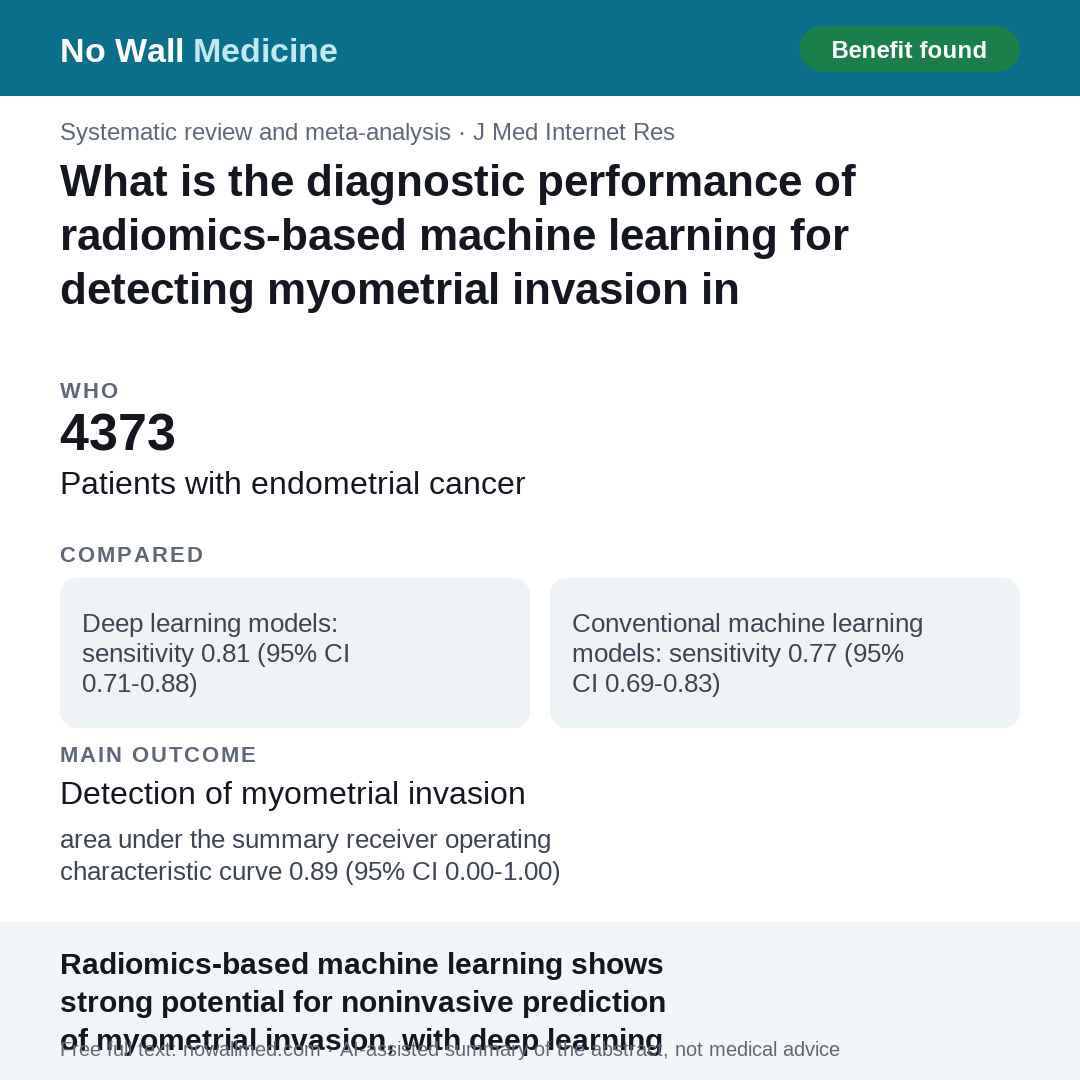
Radiomics-Based Machine Learning for the Detection of Myometrial Invasion in Endometrial Cancer: Systematic Review and Meta-Analysis
Systematic review and meta-analysisBenefit found
What is the diagnostic performance of radiomics-based machine learning for detecting myometrial invasion in endometrial cancer?
Who
4373
Patients with endometrial cancer
Compared
Deep learning models: sensitivity 0.81 (95% CI 0.71-0.88)
Conventional machine learning models: sensitivity 0.77 (95% CI 0.69-0.83)
Main outcome
Detection of myometrial invasion
Result: area under the summary receiver operating characteristic curve 0.89 (95% CI 0.00-1.00)
Bottom line: Radiomics-based machine learning shows strong potential for noninvasive prediction of myometrial invasion, with deep learning outperforming conventional machine learning.
Limitation: Current evidence is limited and relies mainly on internal validation.
J Med Internet Res · 2025-11-27Download image