Visual abstracts
New randomized trials and meta-analyses from leading journals at a glance: who was studied, what was compared, and what was found. Every paper is free to read in full.
All specialtiesCardiology 4877Oncology 4138Gastroenterology & Hepatology 1942Infectious Disease 3837Neurology 1905Psychiatry & Mental Health 2273Pulmonology 2143Critical Care 1365Endocrinology & Diabetes 2580Pediatrics 2980Surgery 2559Orthopedics & Sports Medicine 931Neurosurgery 537Cardiothoracic & Vascular Surgery 674Plastic & Reconstructive Surgery 591Nephrology 1133Rheumatology 823Hematology 1109Dermatology 621Ophthalmology 543Obstetrics & Gynecology 1686Public & Global Health 1058Radiology & Imaging 648Anesthesiology 986Urology 764ENT (Otolaryngology) 503Emergency Medicine 511Allergy & Immunology 313Geriatrics 981Family Medicine & Primary Care 562Medical Genetics & Genomics 676Pathology & Laboratory Medicine 159Physical Medicine & Rehabilitation 757Palliative Care 444Nutrition 1588Digital Health & AI 2201General Medicine 321
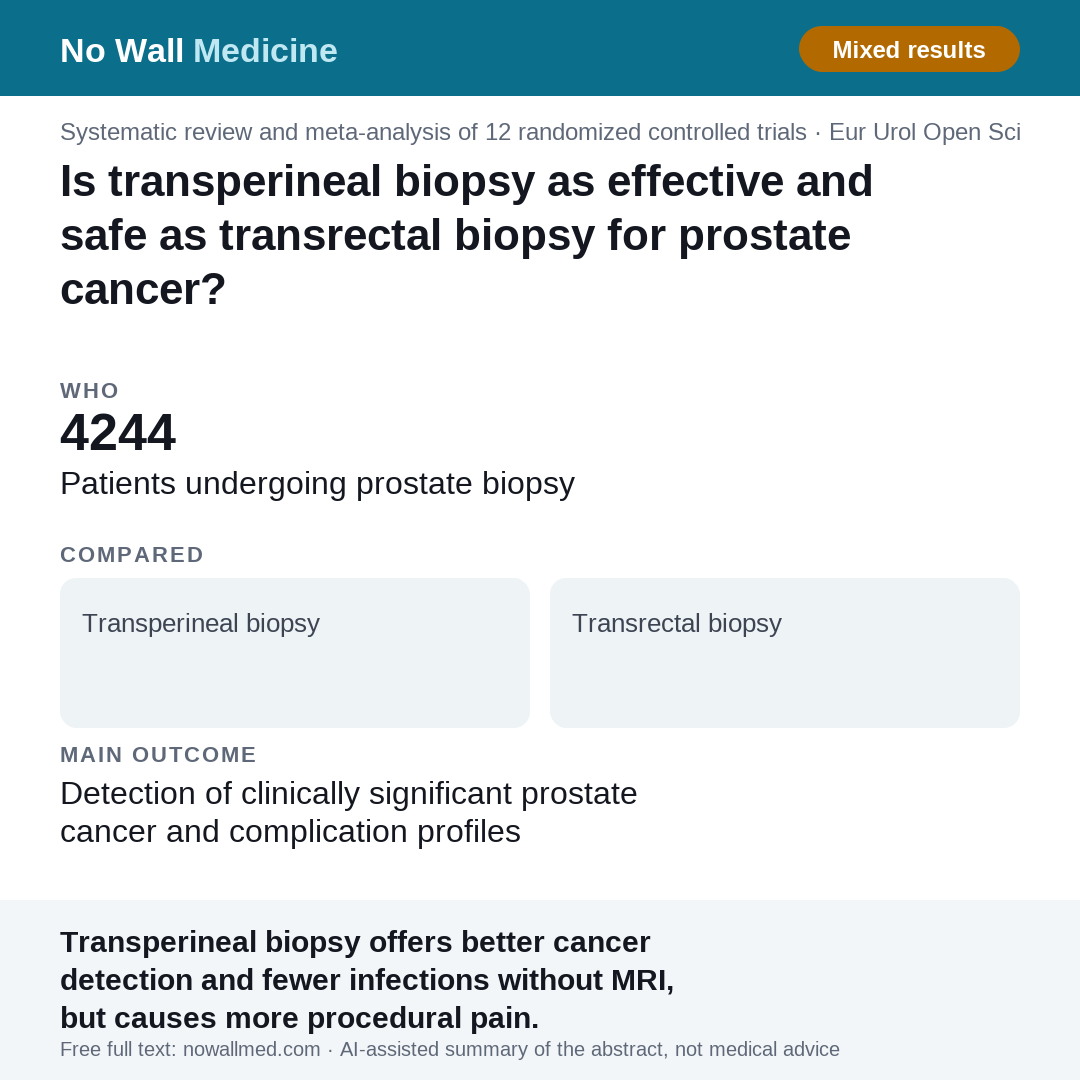
Transperineal Versus Transrectal Prostate Biopsy: A Systematic Review and Meta-analysis of Randomized Controlled Trials Across Settings With and Without Magnetic Resonance Imaging Targeting
Systematic review and meta-analysis of 12 randomized controlled trialsMixed results
Is transperineal biopsy as effective and safe as transrectal biopsy for prostate cancer?
Who
4244
Patients undergoing prostate biopsy
Compared
Transperineal biopsy
Transrectal biopsy
Main outcome
Detection of clinically significant prostate cancer and complication profiles
Result: odds ratio 1.15 (95% CI 0.95-1.39)
Bottom line: Transperineal biopsy offers better cancer detection and fewer infections without MRI, but causes more procedural pain.
Limitation: Heterogeneity in analgesia protocols and magnetic resonance imaging use across studies.
Eur Urol Open Sci · 2025-12-30Download image
Associations Between Polygenic Risk Score for Blood Pressure and Risk of Hypertension in Northeast Asian Individuals
Genome-wide association studyBenefit found
Are polygenic risk scores for blood pressure associated with hypertension risk in Northeast Asians?
Who
Northeast Asian individuals from Korean Genome and Epidemiology Study and Biobank Japan · Korea and Japan
Compared
Highest 5 percentiles polygenic risk score: hazard ratio 2.44 (95% CI 1.67-3.56) for systolic blood pressure
Lowest 5 percentiles polygenic risk score
Main outcome
Risk of hypertension, cardiovascular disease, and chronic kidney disease
Result: hazard ratio 2.44 (95% CI 1.67-3.56) for systolic blood pressure
Bottom line: High polygenic risk scores for blood pressure are associated with increased hypertension risk and earlier onset in Northeast Asians.
J Am Heart Assoc · 2025-12-30Download image

A systematic meta-review of interventions to prevent and manage delirium in the Intensive Care Unit: Part 1 - Pharmacological interventions
Systematic meta-review of randomized controlled trialsBenefit found
What are the effects of pharmacological interventions to prevent or manage intensive care unit delirium?
Who
Critically ill adults with or at risk of intensive care unit delirium · Intensive Care Unit
Compared
alpha 2-adrenoceptor agonist drug class: probably favourable over placebo for preventing or reducing delirium occurrence
placebo
Main outcome
Delirium occurrence, duration, severity, mortality, and length of stay
Bottom line: Alpha 2-adrenoceptor agonists like dexmedetomidine are most likely effective for managing intensive care unit delirium.
Limitation: Underlying conditions and the impact of loss to follow-up remain unclear.
Crit Care · 2025-12-30Download image

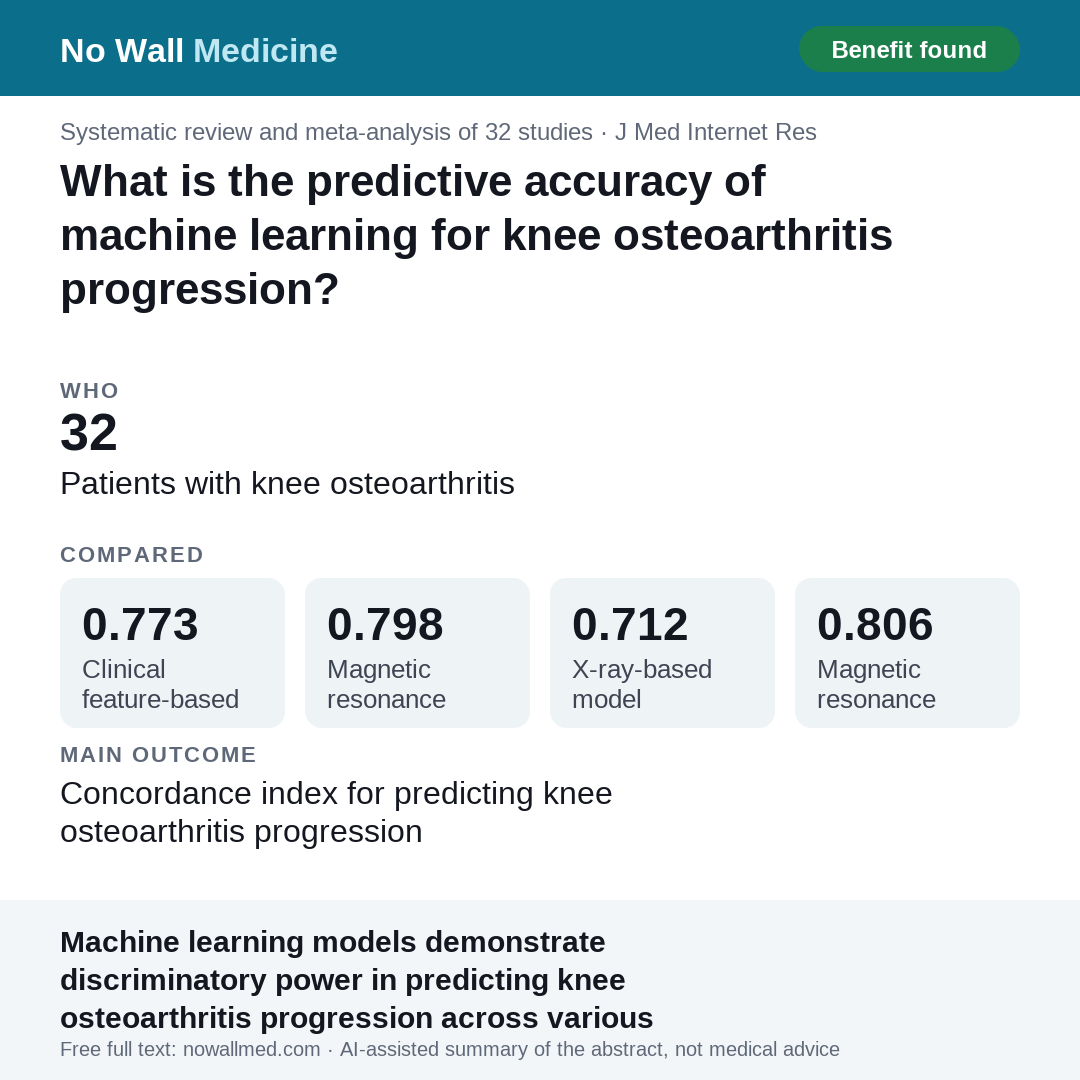
Predictive Value of Machine Learning in Knee Osteoarthritis Progression: Systematic Review and Meta-Analysis
Systematic review and meta-analysis of 32 studiesBenefit found
What is the predictive accuracy of machine learning for knee osteoarthritis progression?
Who
32
Patients with knee osteoarthritis
Compared
0.773Clinical feature-based model (95% CI 0.727-0.821)
0.798Magnetic resonance imaging-based model (95% CI 0.755-0.843)
0.712X-ray-based model (95% CI 0.657-0.772)
0.806Magnetic resonance imaging plus clinical feature-based model (95% CI 0.765-0.849)
Main outcome
Concordance index for predicting knee osteoarthritis progression
Bottom line: Machine learning models demonstrate discriminatory power in predicting knee osteoarthritis progression across various data types.
Limitation: Significant heterogeneity due to variations in progression definitions and validation strategies.
J Med Internet Res · 2025-12-30Download image
Screening tools for ruling out mood and anxiety disorders in adults in primary care: a rapid systematic review
Systematic reviewBenefit found
Which screening tools rule out mood disorders
Who
Adults in primary care · Primary care
Compared
PHQ-2
PHQ-9
GAD-2
GAD-7
Main outcome
Mood and anxiety disorders
Bottom line: Seven tools can rule out depression and anxiety
Limitation: No reliability studies
BMC Prim Care · 2025-12-30Download image

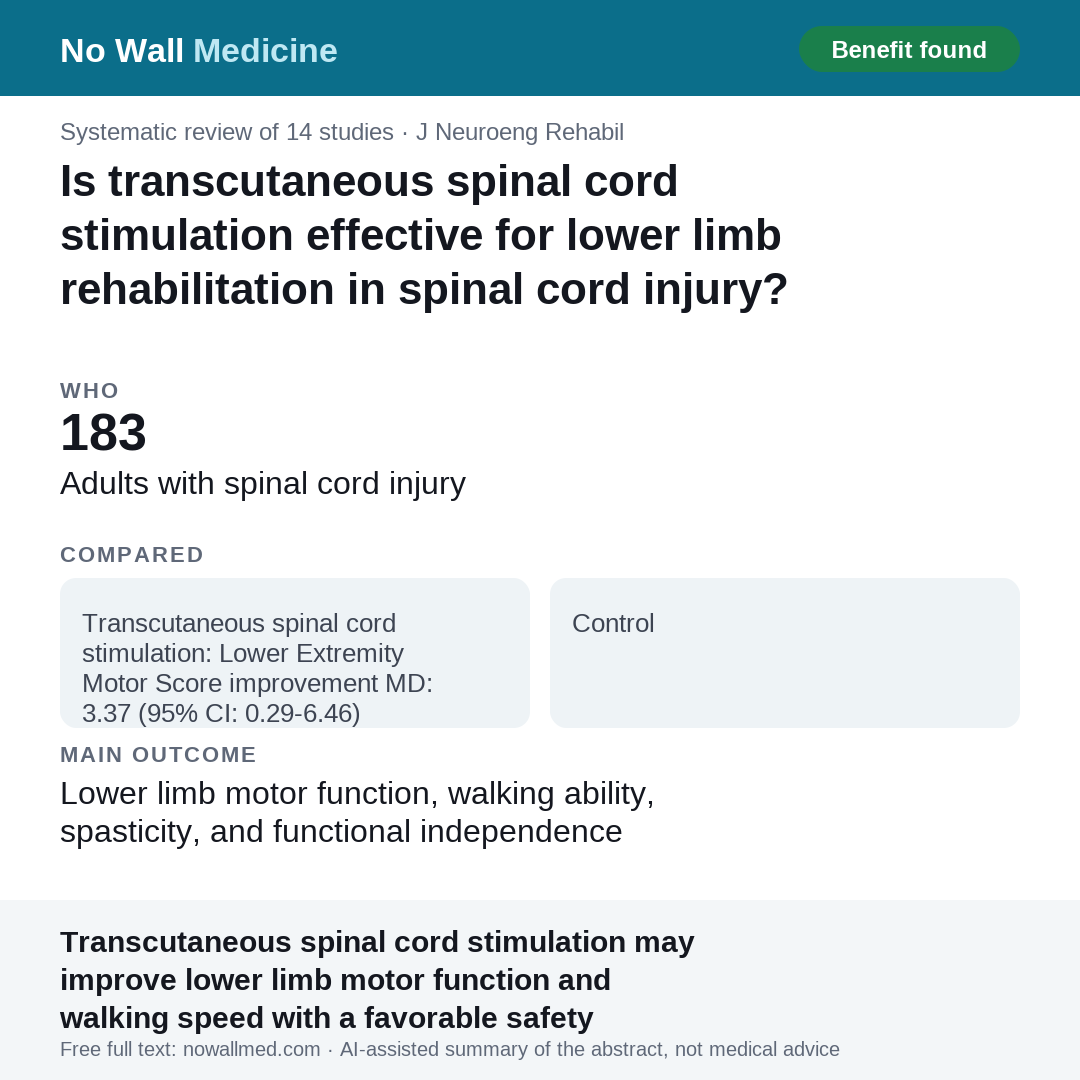
Effectiveness of transcutaneous spinal cord stimulation for lower limb rehabilitation in spinal cord injury: a systematic review
Systematic review of 14 studiesBenefit found
Is transcutaneous spinal cord stimulation effective for lower limb rehabilitation in spinal cord injury?
Who
183
Adults with spinal cord injury
Compared
Transcutaneous spinal cord stimulation: Lower Extremity Motor Score improvement MD: 3.37 (95% CI: 0.29-6.46)
Control
Main outcome
Lower limb motor function, walking ability, spasticity, and functional independence
Result: MD: 3.37 (95% CI: 0.29-6.46) for Lower Extremity Motor Score
Bottom line: Transcutaneous spinal cord stimulation may improve lower limb motor function and walking speed with a favorable safety profile.
Limitation: Small sample sizes, heterogeneous protocols, and methodological concerns with very low certainty of evidence.
J Neuroeng Rehabil · 2025-12-30Download image
Impact of environmental pollution on acne: a systematic review
Systematic reviewBenefit found
Does environmental pollution impact the development, severity, or exacerbation of acne?
Who
Human populations
Compared
Sulfur dioxide increase: 1.02% increase in acne-related visits
Nitrogen dioxide increase: 2.13% increase in acne-related visits
Main outcome
Acne development, severity, or exacerbation
Bottom line: Pollutant exposure is significantly associated with acne exacerbation, increased sebum production, and reduced antioxidants.
Limitation: Study heterogeneity, lack of diversity, and limited control for confounders limit generalizability.
Skin Health Dis · 2025-12-30Download image

Impact of surgical non-technical skills on clinical outcomes: systematic review
Systematic reviewBenefit found
What is the relationship between intraoperative non-technical skills and clinical outcomes?
Who
8536
Operating room personnel across 13 specialties · Non-simulated environments
Compared
Observational studies: 82% reported significant improvement in clinical outcomes
Interventional studies: 30% reported significant improvement in clinical outcomes
Main outcome
Patient-level clinical outcomes including mortality and postoperative complications
Bottom line: Improved intraoperative non-technical skills are significantly linked to better patient-level clinical outcomes.
Br J Surg · 2025-12-29Download image

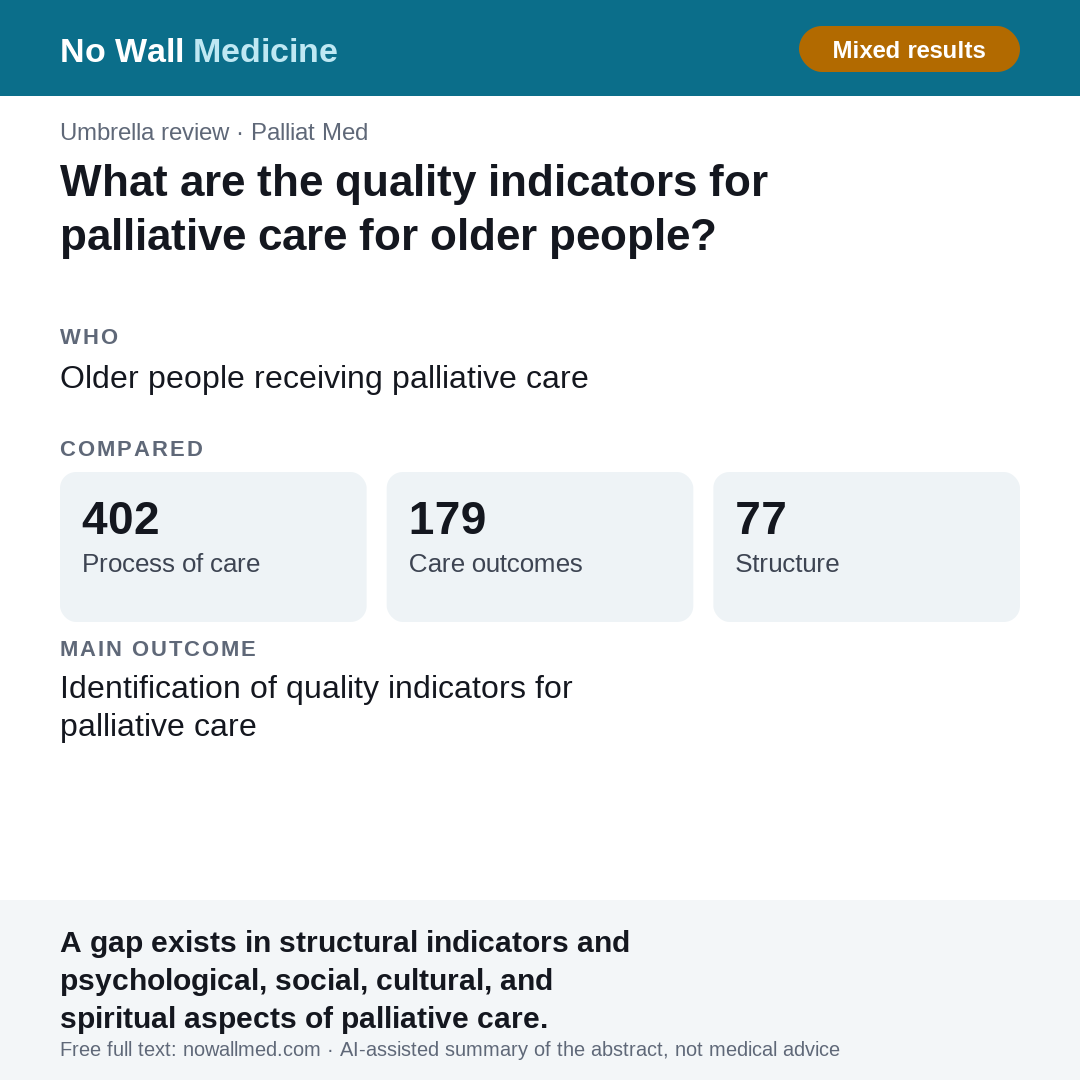
Quality indicators for palliative care for older people: An umbrella review
Umbrella reviewMixed results
What are the quality indicators for palliative care for older people?
Who
Older people receiving palliative care
Compared
402Process of care (61%)
179Care outcomes (27%)
77Structure (12%)
Main outcome
Identification of quality indicators for palliative care
Bottom line: A gap exists in structural indicators and psychological, social, cultural, and spiritual aspects of palliative care.
Palliat Med · 2025-12-29Download image
Factors Influencing Interprofessional Quality Improvement in Nursing Homes: A Systematic Review
Systematic literature reviewUnclear result
factors influencing quality improvement
Who
interprofessional teams in nursing homes · nursing homes
Compared
facilitators
barriers
Main outcome
quality improvement
Bottom line: quality improvement is complex
J Am Med Dir Assoc · 2025-12-29Download image

Quantification of heading in adult football: a systematic review and evidence synthesis
Systematic reviewUnclear result
Quantification of heading in football
Who
adult football players
Compared
male players
female players
Main outcome
acceleration and force of heading
Bottom line: Heading quantification varies by gender and position
Limitation: inconsistencies in terminology
Br J Sports Med · 2025-12-29Download image

Role of video review for sport-related concussion identification: a systematic review
Systematic reviewMixed results
What is the frequency and diagnostic utility of visible signs in video review for concussion?
Who
3281
Sport-related concussions · Professional competitions
Compared
Visible signs: slow to get up 37.6%
Visible signs: motor incoordination 26.7%
Main outcome
Diagnostic utility of visible signs and injury mechanism
Bottom line: Video review identifies visible signs with high specificity but low sensitivity, requiring multimodal assessment for diagnosis.
Limitation: Only eight studies had a low risk of bias.
Br J Sports Med · 2025-12-29Download image

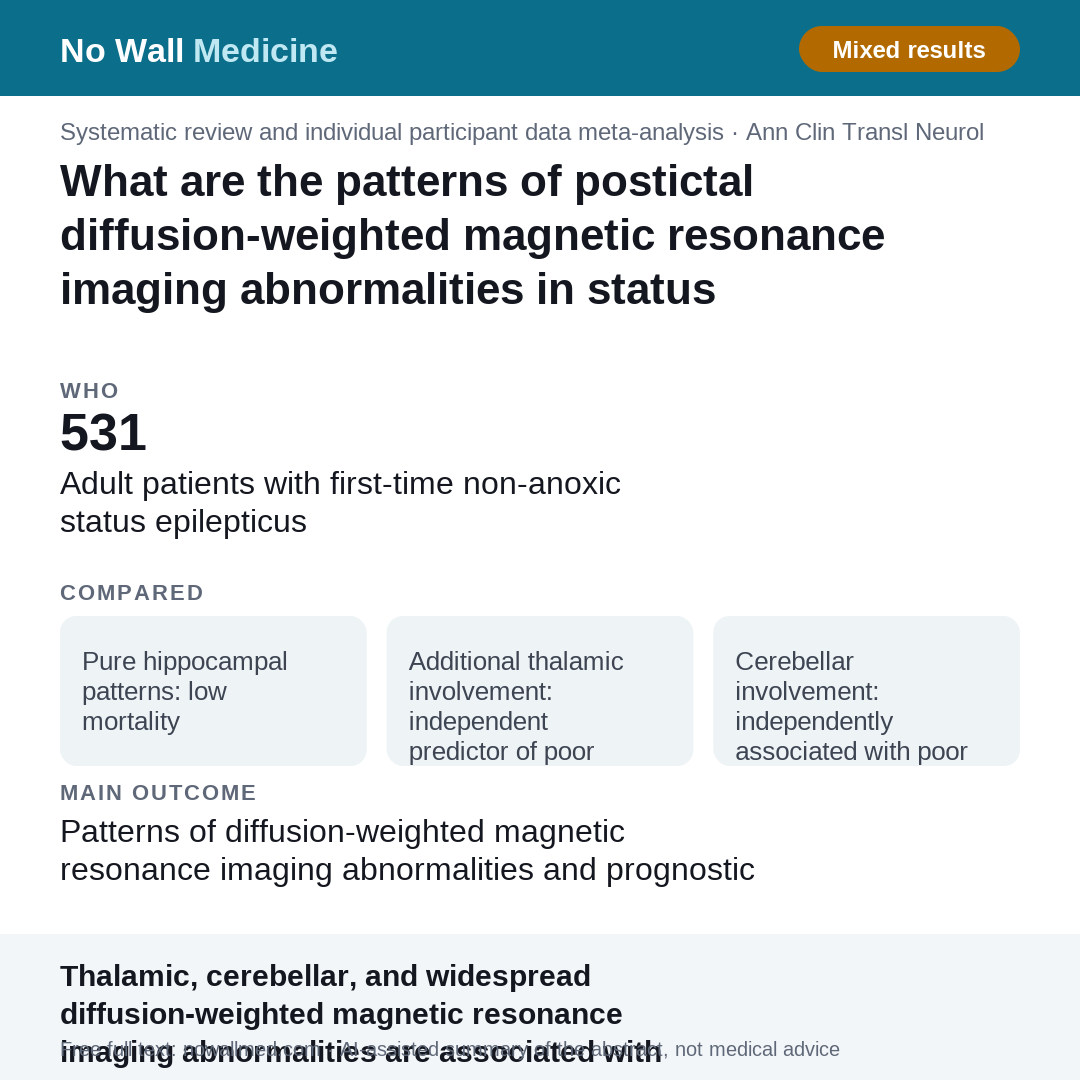
Patterns of Postictal Abnormalities in Relation to Status Epilepticus in Adults
Systematic review and individual participant data meta-analysisMixed results
What are the patterns of postictal diffusion-weighted magnetic resonance imaging abnormalities in status epilepticus?
Who
531
Adult patients with first-time non-anoxic status epilepticus
Compared
Pure hippocampal patterns: low mortality
Additional thalamic involvement: independent predictor of poor functional outcome
Cerebellar involvement: independently associated with poor functional outcome
Main outcome
Patterns of diffusion-weighted magnetic resonance imaging abnormalities and prognostic impact
Bottom line: Thalamic, cerebellar, and widespread diffusion-weighted magnetic resonance imaging abnormalities are associated with worse outcomes in status epilepticus.
Ann Clin Transl Neurol · 2025-12-29Download image
Facilitators and barriers primary care physicians face in providing palliative care in low- and middle-income countries: a mixed methods systematic review
Mixed methods systematic reviewUnclear result
Barriers to palliative care in low income countries
Who
primary care physicians · low- and middle-income countries
Compared
barriers
facilitators
Main outcome
palliative care delivery
Bottom line: Barriers hinder palliative care delivery
BMC Prim Care · 2025-12-29Download image
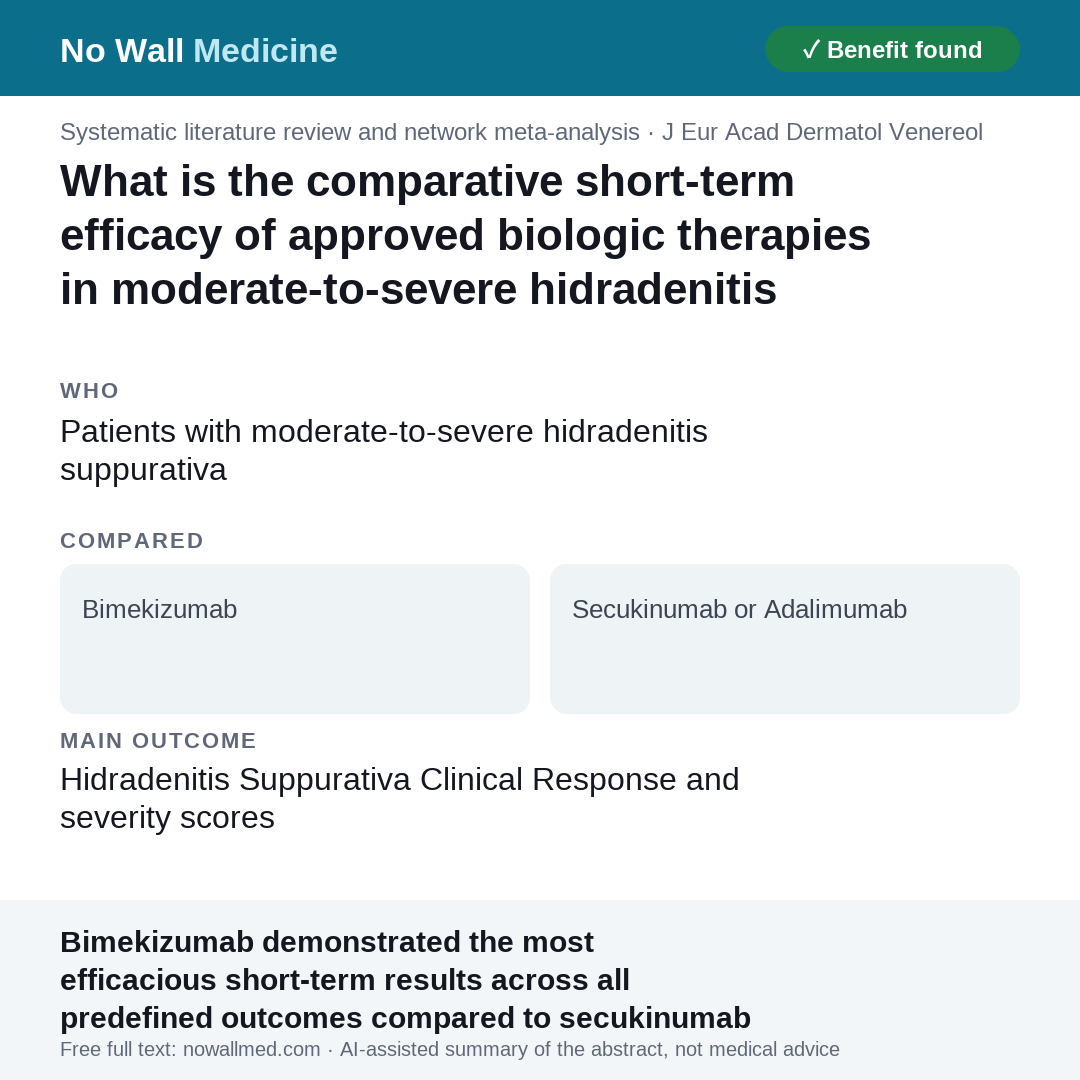
Short-term efficacy of biologics in moderate-to-severe hidradenitis suppurativa: A systematic review and NMA
Systematic literature review and network meta-analysisBenefit found
What is the comparative short-term efficacy of approved biologic therapies in moderate-to-severe hidradenitis suppurativa?
Who
Patients with moderate-to-severe hidradenitis suppurativa
Compared
Bimekizumab
Secukinumab or Adalimumab
Main outcome
Hidradenitis Suppurativa Clinical Response and severity scores
Result: HiSCR75 odds ratio 1.85 (bimekizumab vs secukinumab Q4W)
Bottom line: Bimekizumab demonstrated the most efficacious short-term results across all predefined outcomes compared to secukinumab and adalimumab.
J Eur Acad Dermatol Venereol · 2025-12-28Download image
Cangrelor in critically ill patients with cardiogenic shock or post-cardiac arrest undergoing percutaneous coronary intervention: a systematic review and meta-analysis
Systematic review and meta-analysis of 12 studiesBenefit found
Does intravenous cangrelor improve efficacy and safety in critically ill patients undergoing percutaneous coronary intervention?
Who
4537
Critically ill patients with cardiogenic shock or post-cardiac arrest
Compared
Adjunctive cangrelor
Oral P2Y12 inhibitor
Main outcome
All-cause mortality, cardiovascular mortality, stent thrombosis, myocardial infarction, stroke, and TIMI 3 flow
Result: RR, 0.90; 95% CI, 0.82–0.98
Bottom line: Intravenous cangrelor reduced all-cause mortality and improved coronary flow in hemodynamically unstable patients undergoing percutaneous coronary intervention.
Limitation: Pending confirmation of overall clinical benefit in large-scale randomized trials.
Crit Care · 2025-12-28Download image

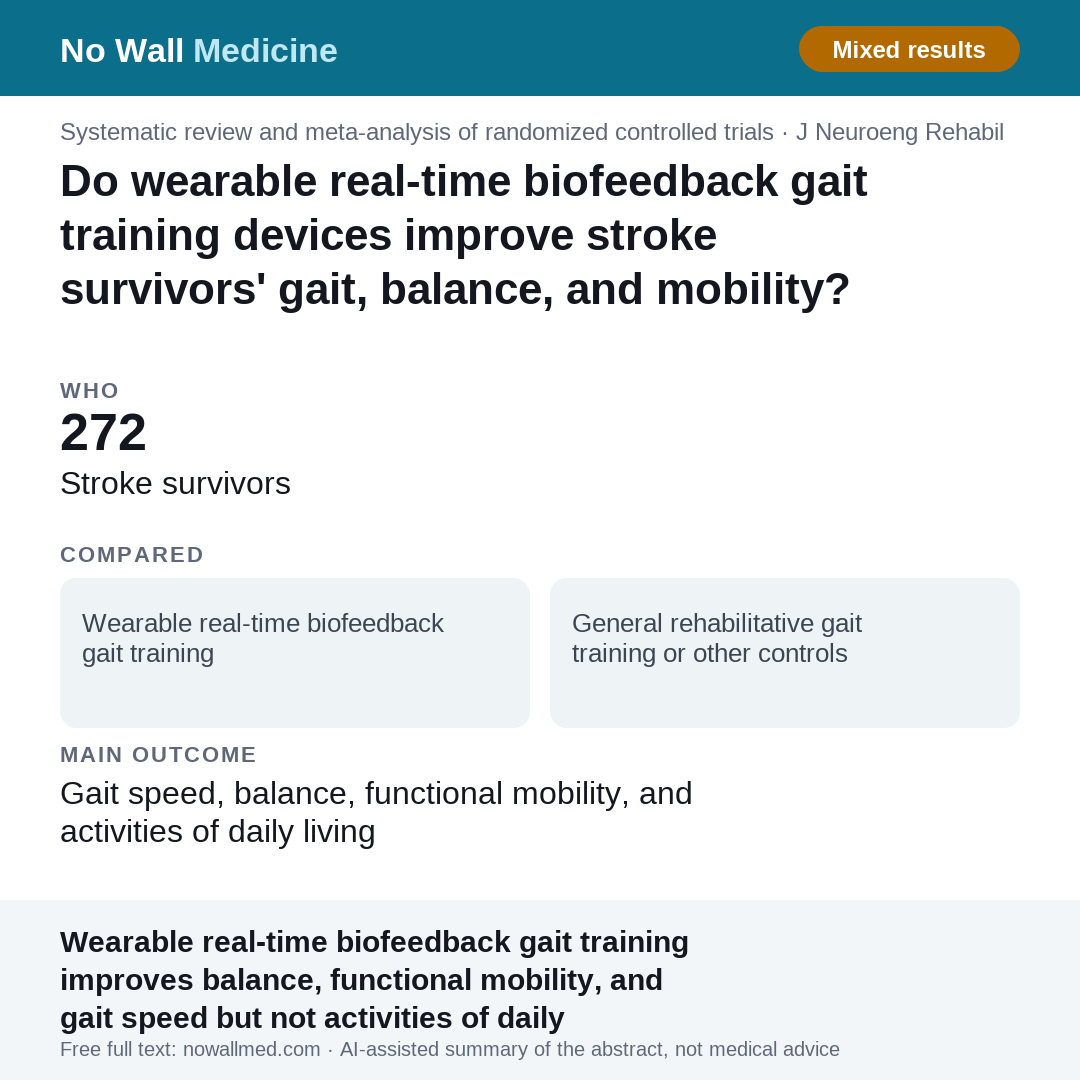
Can wearable real-time biofeedback gait training devices improve gait speed, balance, functional mobility and activities of daily living (ADL) in individuals post-stroke? A systematic review and meta-analysis of randomized controlled trials
Systematic review and meta-analysis of randomized controlled trialsMixed results
Do wearable real-time biofeedback gait training devices improve stroke survivors' gait, balance, and mobility?
Who
272
Stroke survivors
Compared
Wearable real-time biofeedback gait training
General rehabilitative gait training or other controls
Main outcome
Gait speed, balance, functional mobility, and activities of daily living
Result: SMD 0.41 (P=0.02) for gait speed; SMD 0.44 (P=0.03) for Berg Balance Scale; SMD -0.36 (P=0.01) for Timed Up and Go Test
Bottom line: Wearable real-time biofeedback gait training improves balance, functional mobility, and gait speed but not activities of daily living.
J Neuroeng Rehabil · 2025-12-28Download image
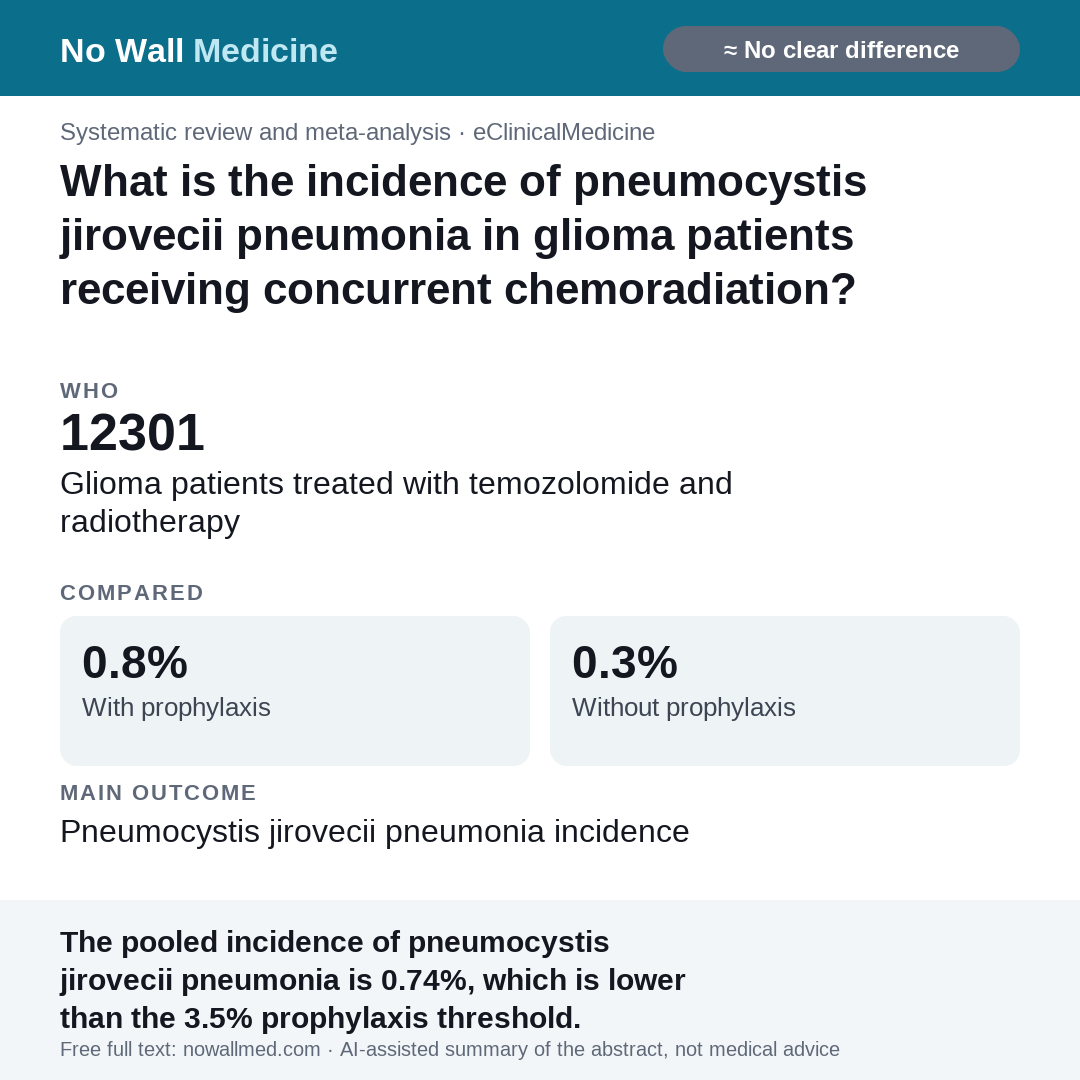
Pneumocystis jirovecii pneumonia prophylaxis in patients with glioma receiving concurrent chemoradiation: a systematic review and meta-analysis
Systematic review and meta-analysisNo clear difference
What is the incidence of pneumocystis jirovecii pneumonia in glioma patients receiving concurrent chemoradiation?
Who
12301
Glioma patients treated with temozolomide and radiotherapy
Compared
0.8%With prophylaxis (14/1765)
0.3%Without prophylaxis (9/2719)
Main outcome
Pneumocystis jirovecii pneumonia incidence
Result: 0.74% (95% CI, 0.59-0.93%)
Bottom line: The pooled incidence of pneumocystis jirovecii pneumonia is 0.74%, which is lower than the 3.5% prophylaxis threshold.
Limitation: Heterogeneity in study populations, lack of standardized diagnostic confirmation, and incomplete reporting of steroid administration.
Funded by: Qassim University
eClinicalMedicine · 2025-12-27Download image
Systematic review and meta-analysis of digital interventions for mental health in cancer patients and survivors
Systematic review and meta-analysis of 139 trialsBenefit found
Are digital health interventions effective for mental health in cancer patients and survivors?
Who
19,233
Cancer patients and survivors · 25 countries
Compared
Digital health interventions
Control
Main outcome
Mental health outcomes including anxiety, depression, distress, insomnia, and sleep quality
Bottom line: Digital health interventions significantly reduce anxiety, depression, psychological distress, insomnia, and improve sleep quality in cancer populations.
NPJ Digit Med · 2025-12-27Download image

Editor's Choice - The Prevalence of Abdominal Aortic Aneurysm in First Degree Relatives: A Systematic Review and Meta-analysis
Systematic review and meta-analysisBenefit found
What is the prevalence and risk of abdominal aortic aneurysm in first degree relatives?
Who
First degree relatives of patients with abdominal aortic aneurysm
Compared
First degree relatives
General population
Main outcome
Prevalence and risk of abdominal aortic aneurysm development
Result: odds ratio 3.19 (95% CI 1.90 - 5.37)
Bottom line: First degree relatives are three times more likely to develop abdominal aortic aneurysm, supporting targeted screening.
Eur J Vasc Endovasc Surg · 2025-12-26Download image