Visual abstracts
New randomized trials and meta-analyses from leading journals at a glance: who was studied, what was compared, and what was found. Every paper is free to read in full.
All specialtiesCardiology 4877Oncology 4138Gastroenterology & Hepatology 1942Infectious Disease 3837Neurology 1905Psychiatry & Mental Health 2273Pulmonology 2143Critical Care 1365Endocrinology & Diabetes 2580Pediatrics 2980Surgery 2559Orthopedics & Sports Medicine 931Neurosurgery 537Cardiothoracic & Vascular Surgery 674Plastic & Reconstructive Surgery 591Nephrology 1133Rheumatology 823Hematology 1109Dermatology 621Ophthalmology 543Obstetrics & Gynecology 1686Public & Global Health 1058Radiology & Imaging 648Anesthesiology 986Urology 764ENT (Otolaryngology) 503Emergency Medicine 511Allergy & Immunology 313Geriatrics 981Family Medicine & Primary Care 562Medical Genetics & Genomics 676Pathology & Laboratory Medicine 159Physical Medicine & Rehabilitation 757Palliative Care 444Nutrition 1588Digital Health & AI 2201General Medicine 321
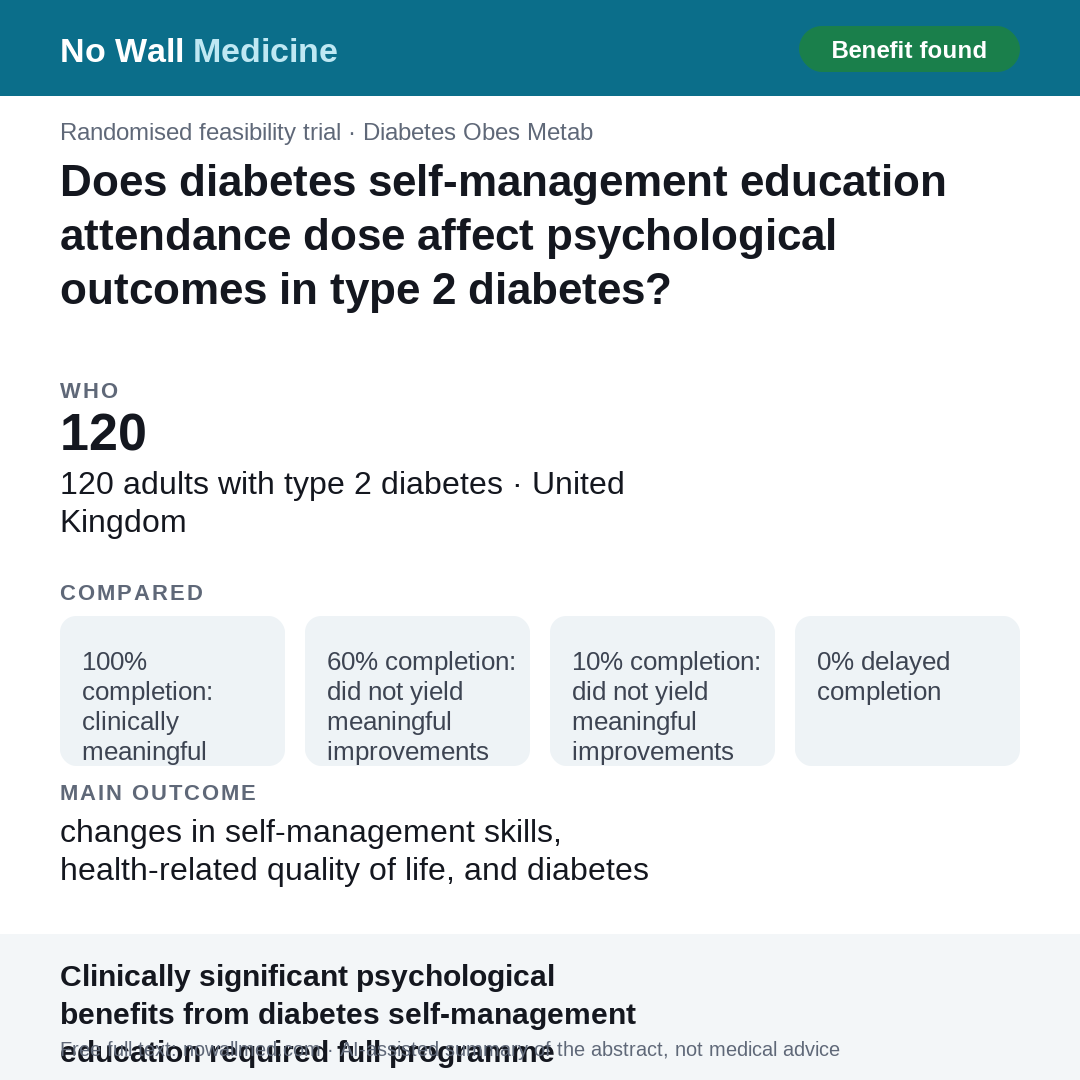
Randomised Controlled Feasibility Trial of Face-To-Face Diabetes Self-Management Education Shows High Completion Rates Are Needed to Improve Patient-Reported Outcomes
Randomised feasibility trialBenefit found
Does diabetes self-management education attendance dose affect psychological outcomes in type 2 diabetes?
Who
120
120 adults with type 2 diabetes · United Kingdom
Compared
100% completion: clinically meaningful improvements across all psychological domains
60% completion: did not yield meaningful improvements
10% completion: did not yield meaningful improvements
0% delayed completion
Main outcome
changes in self-management skills, health-related quality of life, and diabetes distress
Result: ηp 2 = 0.16-0.17 (95% CI [0.04, 0.27])
Bottom line: Clinically significant psychological benefits from diabetes self-management education required full programme completion.
Diabetes Obes Metab · 2026-05-27Download image
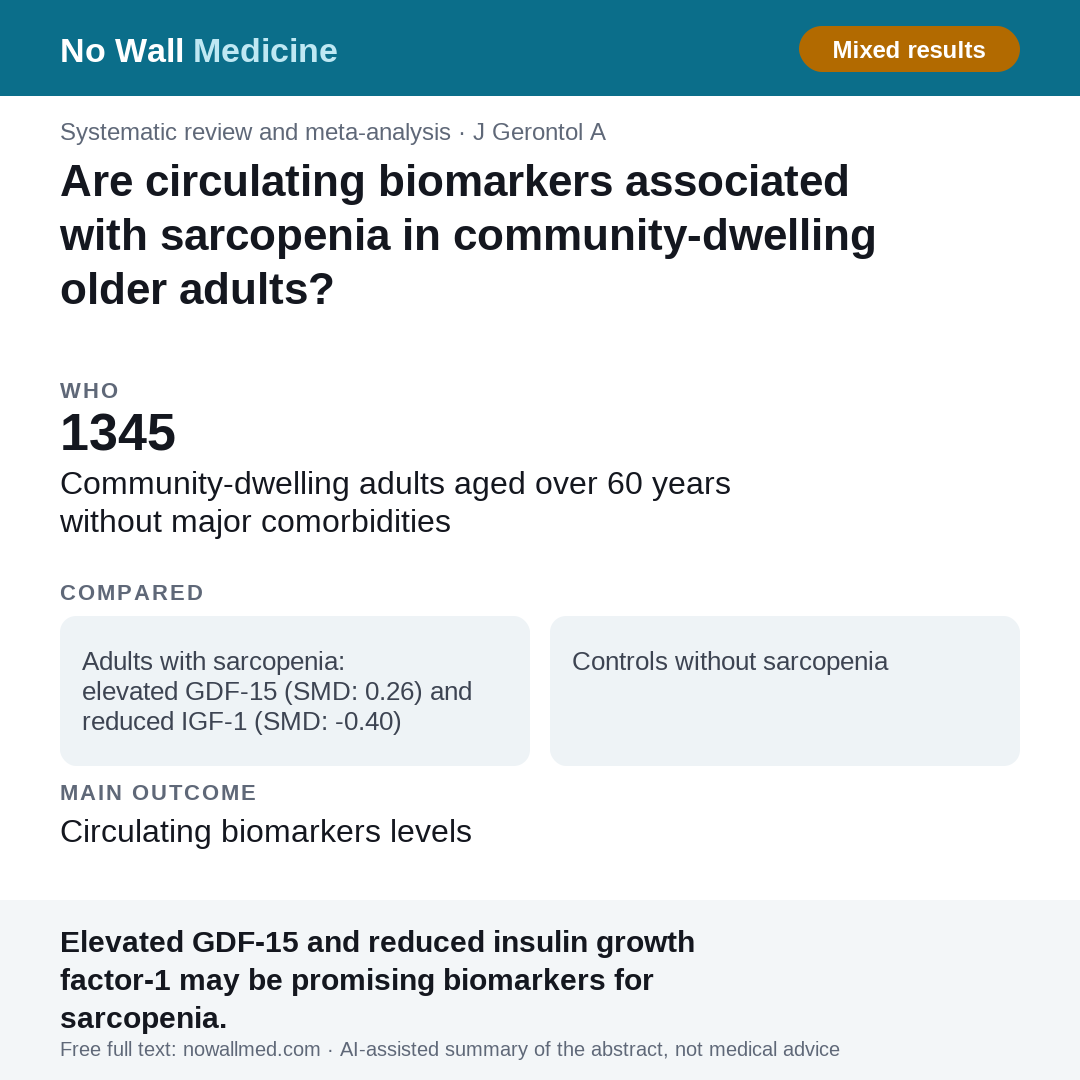
Circulating biomarkers in older adults with and without sarcopenia: a systematic review and meta-analysis
Systematic review and meta-analysisMixed results
Are circulating biomarkers associated with sarcopenia in community-dwelling older adults?
Who
1345
Community-dwelling adults aged over 60 years without major comorbidities
Compared
Adults with sarcopenia: elevated GDF-15 (SMD: 0.26) and reduced IGF-1 (SMD: -0.40)
Controls without sarcopenia
Main outcome
Circulating biomarkers levels
Result: GDF-15 SMD: 0.26 (95% CI 0.03 to 0.50); IGF-1 SMD: -0.40 (95% CI -0.54 to -0.27)
Bottom line: Elevated GDF-15 and reduced insulin growth factor-1 may be promising biomarkers for sarcopenia.
Limitation: Larger, longitudinal studies are needed to address heterogeneity and causality.
J Gerontol A · 2026-05-27Download image
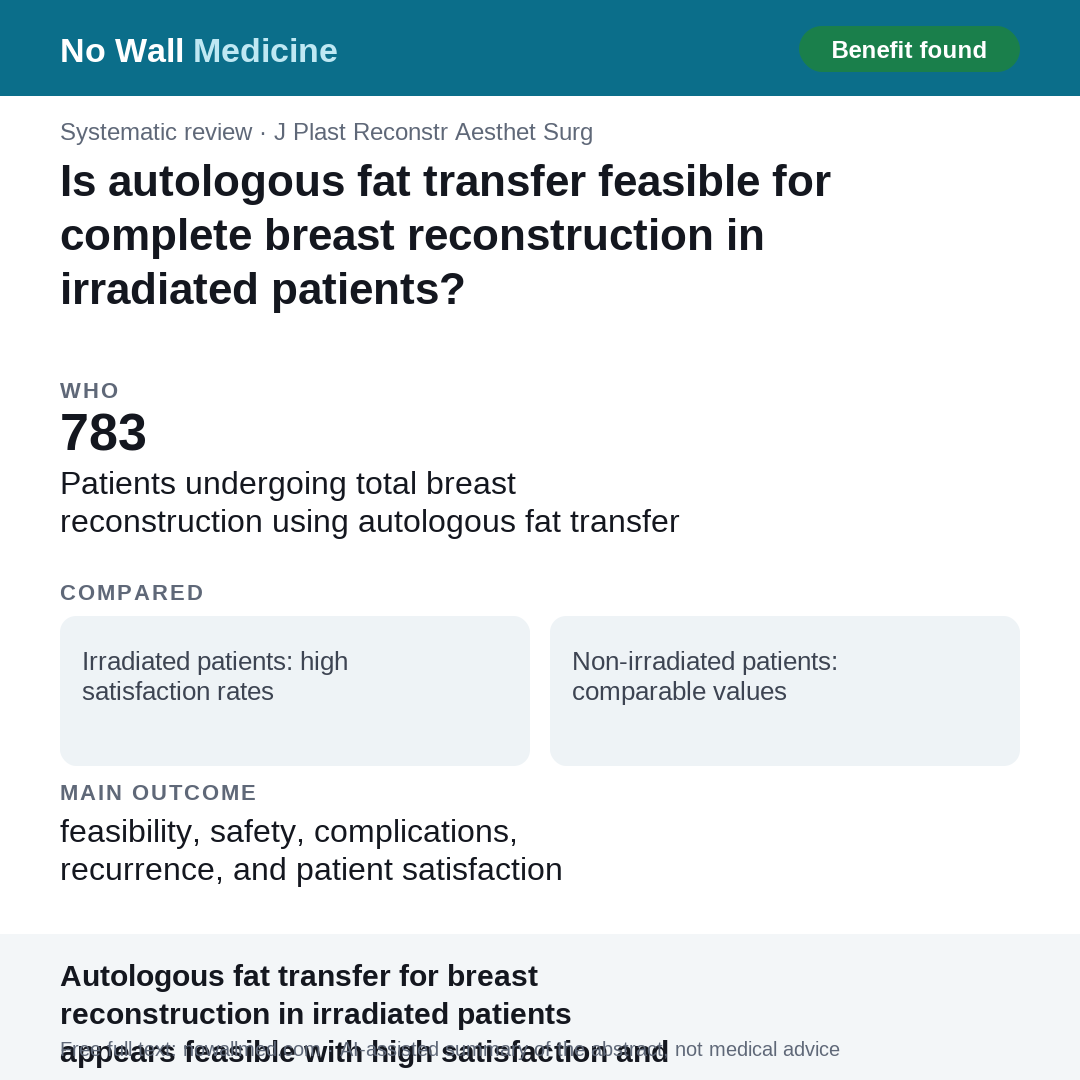
Autologous fat transfer for complete breast reconstruction in irradiated breast cancer patients: A systematic review
Systematic reviewBenefit found
Is autologous fat transfer feasible for complete breast reconstruction in irradiated patients?
Who
783
Patients undergoing total breast reconstruction using autologous fat transfer after radiotherapy
Compared
Irradiated patients: high satisfaction rates
Non-irradiated patients: comparable values
Main outcome
feasibility, safety, complications, recurrence, and patient satisfaction
Bottom line: Autologous fat transfer for breast reconstruction in irradiated patients appears feasible with high satisfaction and acceptable complications.
Limitation: The available evidence is predominantly retrospective and heterogeneous.
J Plast Reconstr Aesthet Surg · 2026-05-27Download image
Safety analyses of the INAVO120 randomised phase III trial of inavolisib or placebo with palbociclib-fulvestrant in patients with PIK3CA-mutated, hormone receptor-positive, HER2-negative, endocrine-resistant advanced breast cancer
Randomized phase III trialBenefit found
What is the safety profile of inavolisib plus palbociclib-fulvestrant in advanced breast cancer?
Who
PIK3CA-mutated, hormone receptor-positive, HER2-negative, endocrine-resistant advanced breast cancer
Compared
inavolisib plus palbociclib-fulvestrant: dose interruptions due to hyperglycaemia 27.2%
placebo plus palbociclib-fulvestrant
Main outcome
safety of key selected adverse events
Bottom line: Inavolisib plus palbociclib-fulvestrant demonstrated a generally consistent, manageable, and tolerable safety profile.
ESMO Open · 2026-05-27Download image

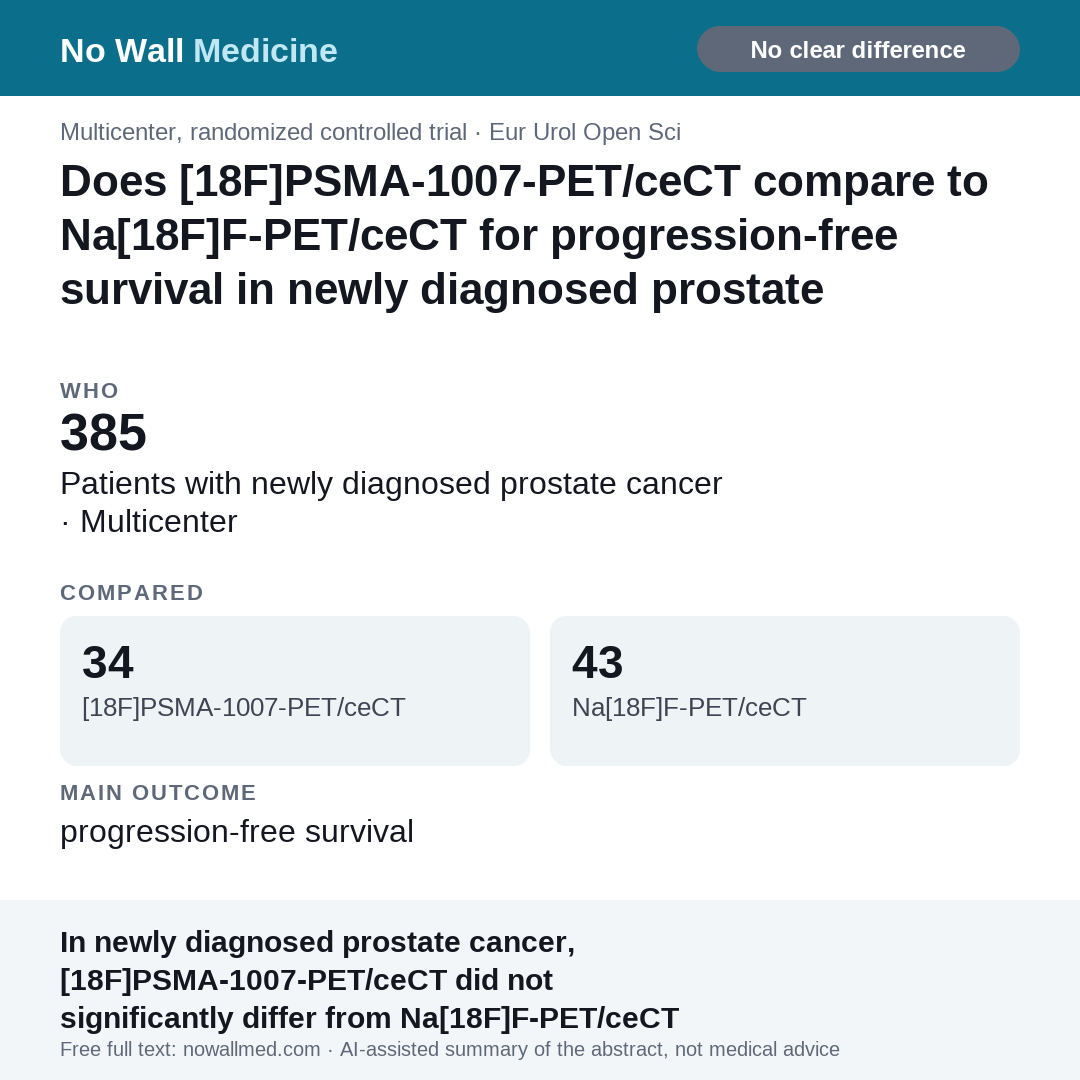
Progression-free Survival Following Primary Staging with [18F]PSMA-1007-PET/ceCT Versus Na[18F]F-PET/ceCT in Prostate Cancer: Results from the PRISMA-PET Randomized Controlled Trial
Multicenter, randomized controlled trialNo clear difference
Does [18F]PSMA-1007-PET/ceCT compare to Na[18F]F-PET/ceCT for progression-free survival in newly diagnosed prostate cancer?
Who
385
Patients with newly diagnosed prostate cancer · Multicenter
Compared
34[18F]PSMA-1007-PET/ceCT (18%)
43Na[18F]F-PET/ceCT (23%)
Main outcome
progression-free survival
Result: hazard ratio 0.74 (95% CI 0.47-1.16)
Bottom line: In newly diagnosed prostate cancer, [18F]PSMA-1007-PET/ceCT did not significantly differ from Na[18F]F-PET/ceCT regarding progression-free survival.
Limitation: The main limitation was the variation in types of progression-free survival events between the two groups.
Eur Urol Open Sci · 2026-05-27Download image
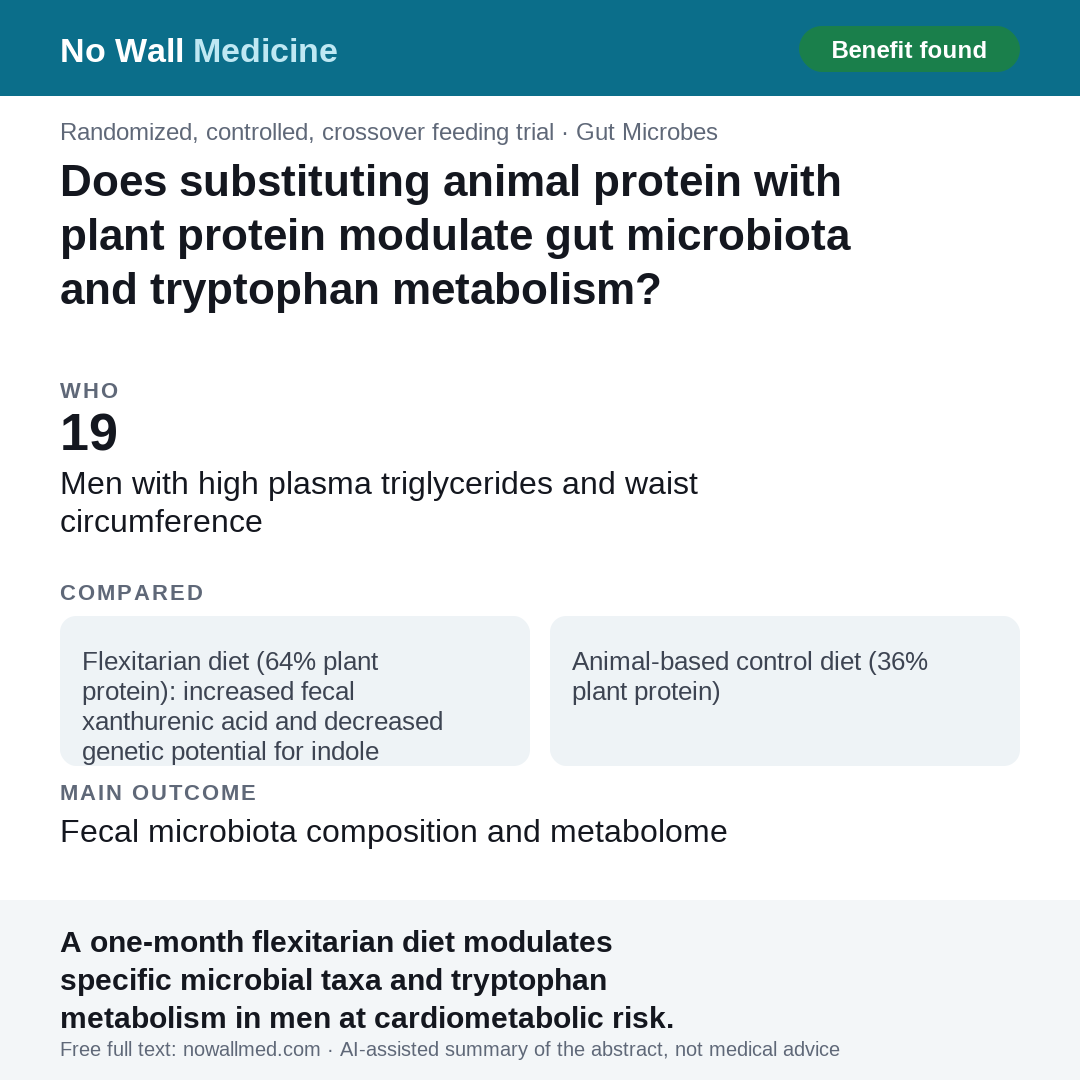
Increasing plant protein sources in the diet modulates gut microbiota and tryptophan metabolism in men at cardiometabolic risk
Randomized, controlled, crossover feeding trialBenefit found
Does substituting animal protein with plant protein modulate gut microbiota and tryptophan metabolism?
Who
19
Men with high plasma triglycerides and waist circumference
Compared
Flexitarian diet (64% plant protein): increased fecal xanthurenic acid and decreased genetic potential for indole production
Animal-based control diet (36% plant protein)
Main outcome
Fecal microbiota composition and metabolome
Bottom line: A one-month flexitarian diet modulates specific microbial taxa and tryptophan metabolism in men at cardiometabolic risk.
Gut Microbes · 2026-05-27Download image
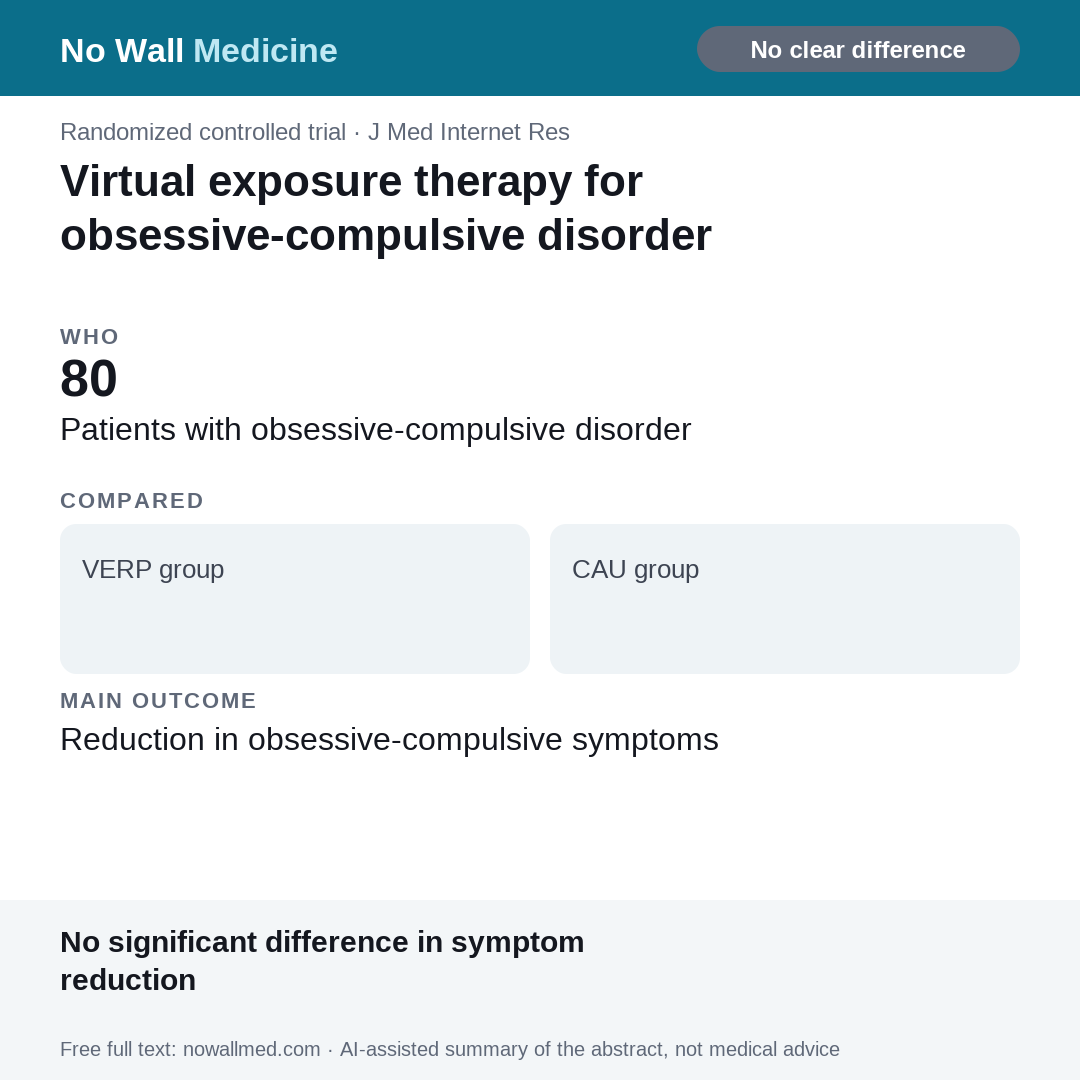
Virtual Exposure With Response Prevention for Obsessive-Compulsive Disorder: Randomized Controlled Trial
Randomized controlled trialNo clear difference
Virtual exposure therapy for obsessive-compulsive disorder
Who
80
Patients with obsessive-compulsive disorder
Compared
VERP group
CAU group
Main outcome
Reduction in obsessive-compulsive symptoms
Bottom line: No significant difference in symptom reduction
J Med Internet Res · 2026-05-27Download image
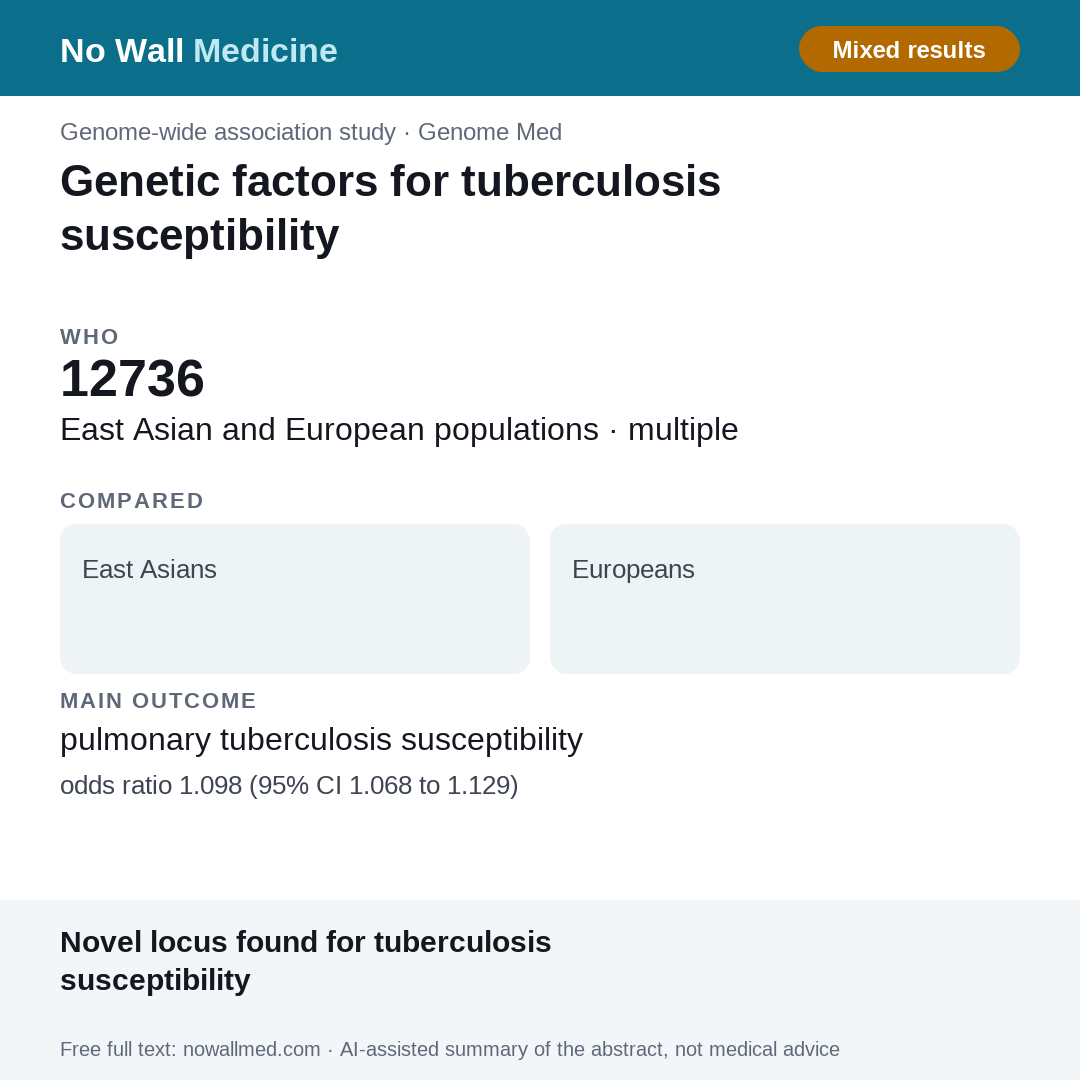
Genome-wide association study reveals a novel tuberculosis susceptibility locus in multiple East Asian and European populations
Genome-wide association studyMixed results
Genetic factors for tuberculosis susceptibility
Who
12736
East Asian and European populations · multiple
Compared
East Asians
Europeans
Main outcome
pulmonary tuberculosis susceptibility
Result: odds ratio 1.098 (95% CI 1.068 to 1.129)
Bottom line: Novel locus found for tuberculosis susceptibility
Limitation: unexplained heritability remains
Genome Med · 2026-05-27Download image
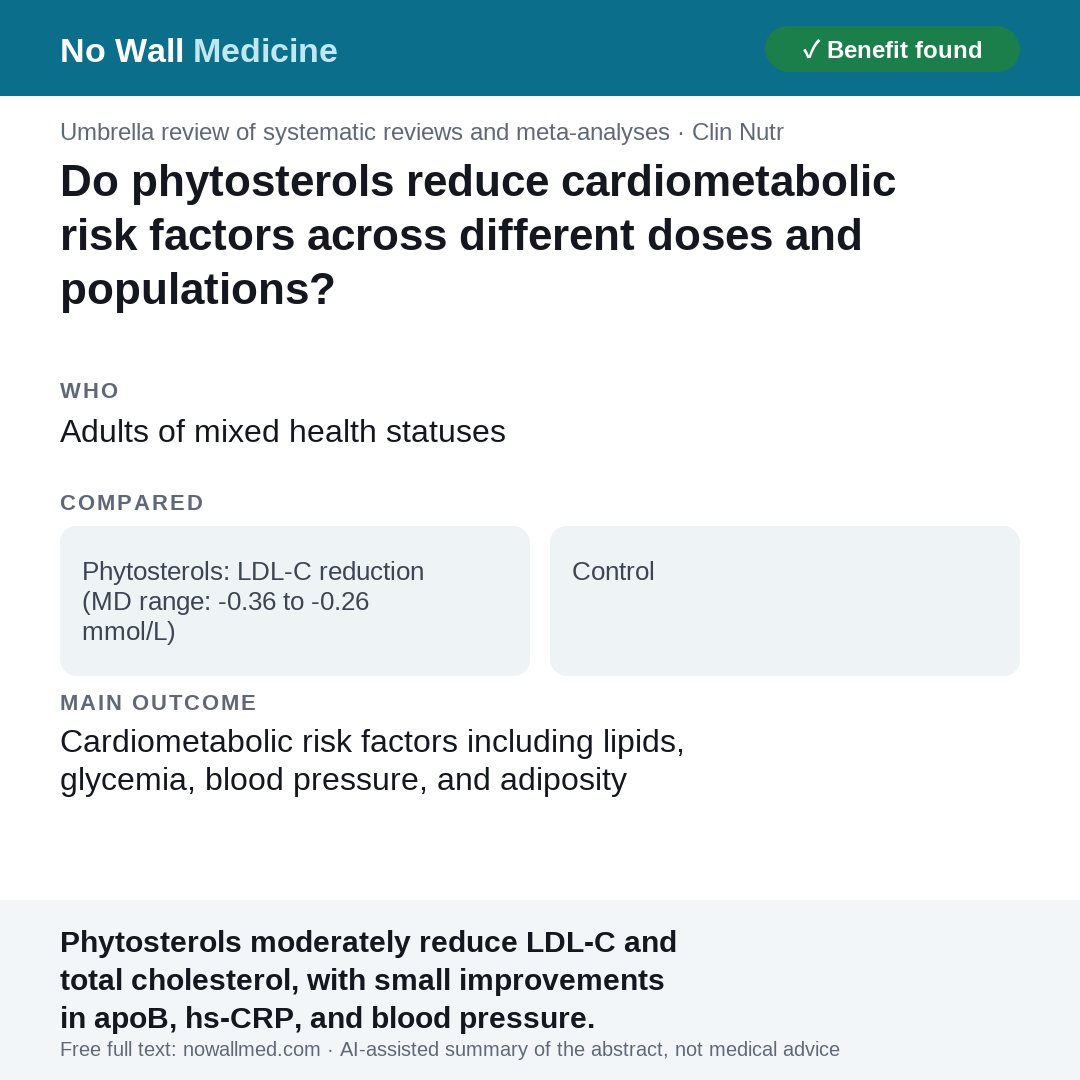
Efficacy of phytosterols for reduction of cardiometabolic risk factors: An umbrella review of systematic reviews and meta-analyses and updated dose-response meta-analyses of randomized trials
Umbrella review of systematic reviews and meta-analysesBenefit found
Do phytosterols reduce cardiometabolic risk factors across different doses and populations?
Who
Adults of mixed health statuses
Compared
Phytosterols: LDL-C reduction (MD range: -0.36 to -0.26 mmol/L)
Control
Main outcome
Cardiometabolic risk factors including lipids, glycemia, blood pressure, and adiposity
Bottom line: Phytosterols moderately reduce LDL-C and total cholesterol, with small improvements in apoB, hs-CRP, and blood pressure.
Limitation: Certainty of evidence was downgraded for inconsistency, imprecision and/or publication bias.
Clin Nutr · 2026-05-26Download image
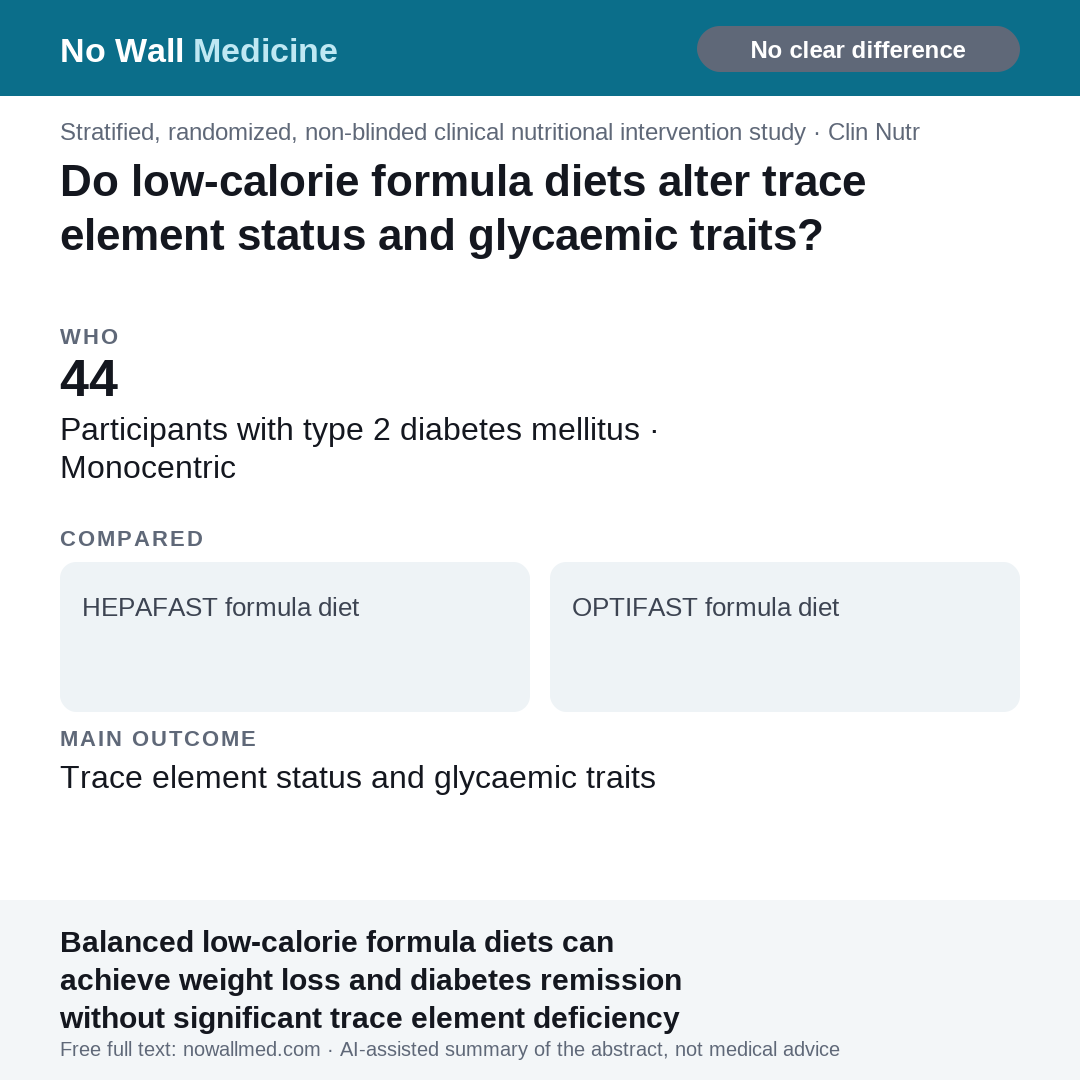
Trace element dynamics following low-calorie formula diet and their association with glycaemic traits
Stratified, randomized, non-blinded clinical nutritional intervention studyBenefit found
How do low-calorie formula diets affect trace element status and glycaemic traits?
Who
44
Participants with type 2 diabetes mellitus · monocentric
Compared
HEPAFAST® formula diet: selenoprotein P (p = 0.049) and ceruloplasmin (p = 0.020) increased
OPTIFAST® formula diet: copper (p = 0.046), selenium (p = 0.002), selenoprotein P (p = 0.002) and ceruloplasmin (p = 0.001) increased
Main outcome
trace element status and glycaemic traits
Bottom line: Balanced formula diets achieve weight loss and diabetes remission without significant risk of trace element deficiency or excess.
Limitation: The present study on trace elements is a subset of the FAIR study
Clin Nutr · 2026-05-26Download image
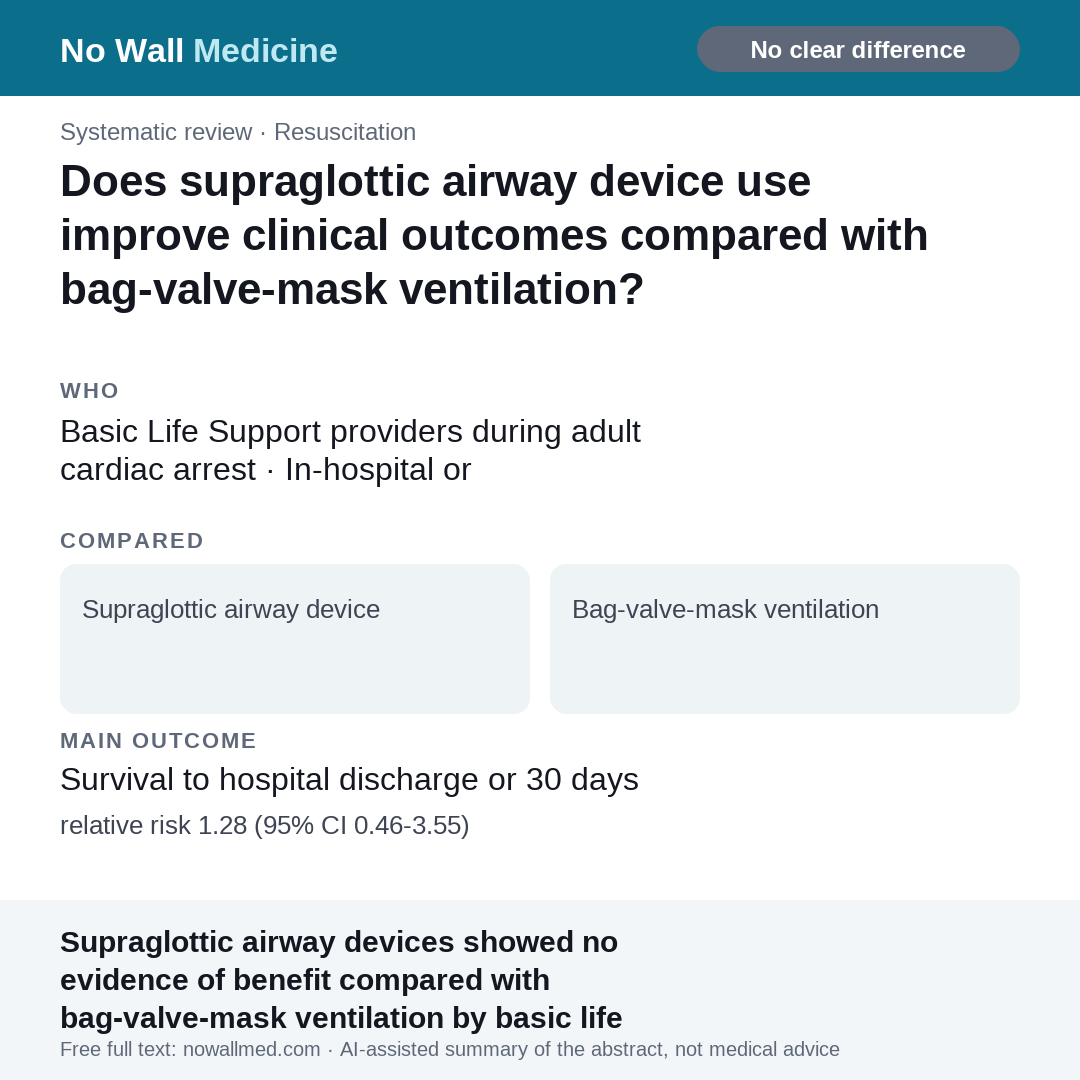
Airway management with a supraglottic airway device during resuscitation by basic life support providers: a systematic review
Systematic reviewNo clear difference
Does supraglottic airway device use improve clinical outcomes compared with bag-valve-mask ventilation?
Who
Basic Life Support providers during adult cardiac arrest · In-hospital or out-of-hospital
Compared
Supraglottic airway device
Bag-valve-mask ventilation
Main outcome
Survival to hospital discharge or 30 days
Result: relative risk 1.28 (95% CI 0.46-3.55)
Bottom line: Supraglottic airway devices showed no evidence of benefit compared with bag-valve-mask ventilation by basic life support providers.
Limitation: Considerable heterogeneity among studies and lack of data for first rescuers or first responders.
Resuscitation · 2026-05-26Download image
Complexity in disguise: a systematic review of fractal analysis in psychiatric neuroimaging
Systematic reviewMixed results
Fractal analysis in psychiatric neuroimaging
Who
Young adults with psychiatric conditions
Compared
Psychiatric patients
Control groups
Main outcome
Brain pattern alterations
Bottom line: Fractal analysis shows consistent patterns across disorders
Limitation: Lack of standardized protocol
Eur Radiol · 2026-05-26Download image

Association of Advanced Access With Primary Care Performance: A Systematic Review
Systematic review and narrative synthesisBenefit found
Does advanced access improve primary care performance compared to traditional scheduling?
Who
Patients in primary care settings · Universal and non-universal health care systems
Compared
Advanced access
Traditional scheduling
Main outcome
Wait time, continuity of care, emergency department use, and patient satisfaction
Bottom line: Advanced access improves appointment timeliness, continuity of care, and patient satisfaction across diverse health care systems.
Ann Fam Med · 2026-05-26Download image

Prayer for Pain and Anxiety in a Primary Care Setting: A Randomized Controlled Trial
Randomized controlled trialBenefit found
Does proximal intercessory prayer reduce pain and anxiety in primary care patients?
Who
180
Patients waiting for family medicine appointments with pain or anxiety · Primary care setting
Compared
Christian proximal intercessory prayer: significantly larger (1 to 2 point) reductions in pain
Music control
Main outcome
Reductions in pain and anxiety scores
Bottom line: Proximal intercessory prayer was safe and effective for reducing pain and anxiety in primary care patients.
Ann Fam Med · 2026-05-26Download image

Equity Evaluation of an Intervention to Increase Colorectal Cancer Screening at Federally Qualified Health Centers
Secondary analysis of a pragmatic randomized clinical trialBenefit found
Does a colorectal cancer intervention increase screening uptake across different race and ethnicity groups?
Who
3734
Patients at Federally Qualified Health Centers · Federally Qualified Health Centers
Compared
Intervention
Control
Main outcome
Colorectal cancer screening uptake
Result: risk difference 18.3% (95% CI, 15.6%-20.9%)
Bottom line: The intervention increased colorectal cancer screening uptake across all racial and ethnic groups studied.
Ann Fam Med · 2026-05-26Download image

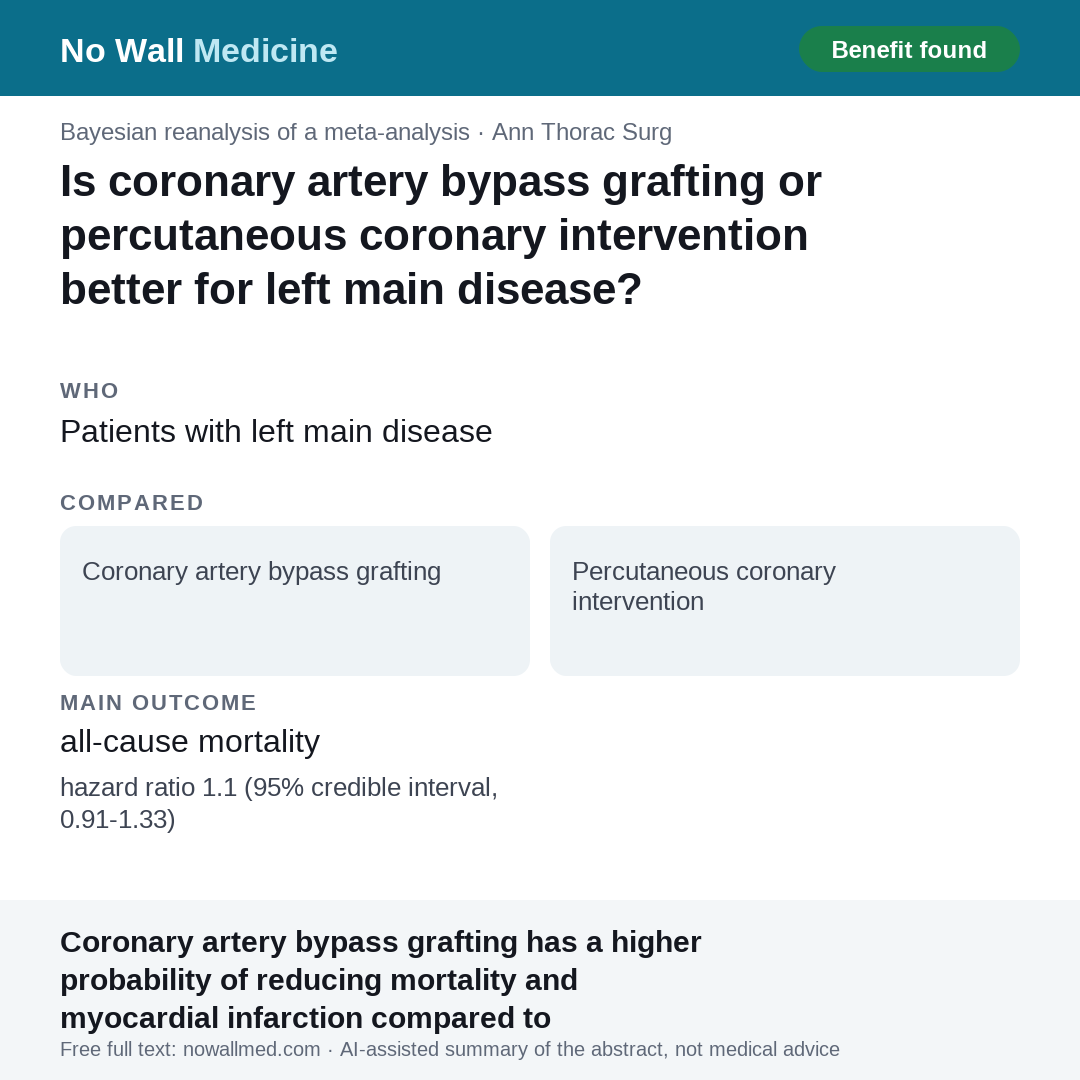
Bayesian Reanalysis of Revascularization Strategies for Left Main Disease: Coronary Artery Bypass Grafting vs Percutaneous Intervention
Bayesian reanalysis of a meta-analysisBenefit found
Is coronary artery bypass grafting or percutaneous coronary intervention better for left main disease?
Who
Patients with left main disease
Compared
Coronary artery bypass grafting
Percutaneous coronary intervention
Main outcome
all-cause mortality
Result: hazard ratio 1.1 (95% credible interval, 0.91-1.33)
Bottom line: Coronary artery bypass grafting has a higher probability of reducing mortality and myocardial infarction compared to percutaneous coronary intervention.
Ann Thorac Surg · 2026-05-26Download image
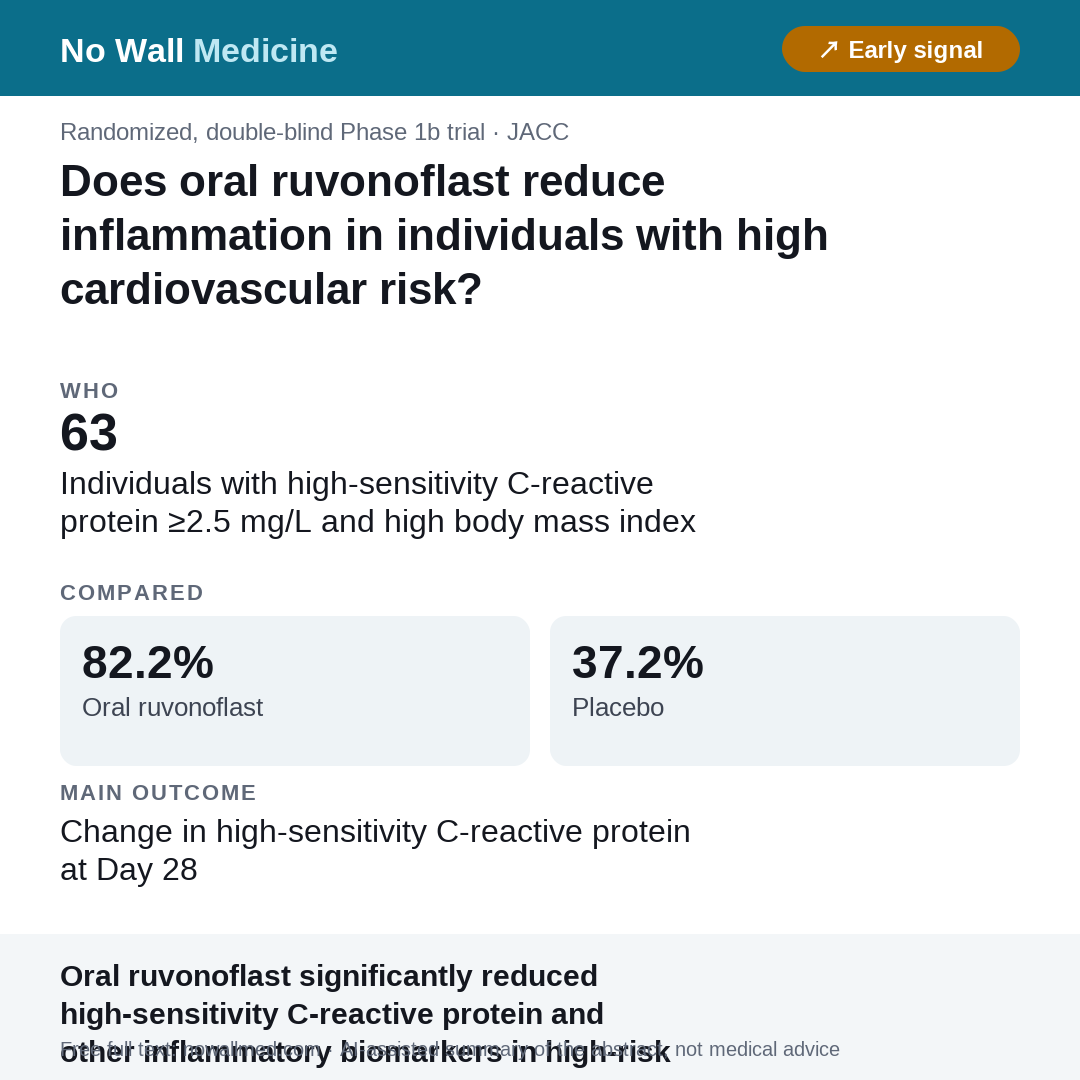
Anti-Inflammatory Effects of Oral NLRP3 Inhibition With Ruvonoflast Among Individuals at Elevated Cardiovascular Risk
Randomized, double-blind Phase 1b trialBenefit found
Does oral ruvonoflast reduce inflammation in individuals with high cardiovascular risk?
Who
63
Individuals with high-sensitivity C-reactive protein ≥2.5 mg/L and high body mass index
Compared
82.2%Oral ruvonoflast (95% CI: 75.9%-86.8%)
37.2%Placebo (95% CI: 7.0%-57.6%)
Main outcome
Change in high-sensitivity C-reactive protein at Day 28
Result: geometric least-squares mean reduction in hsCRP was 82.2% (95% CI: 75.9%-86.8%) with ruvonoflast vs 37.2% (95% CI: 7.0%-57.6%) with placebo
Bottom line: Oral ruvonoflast significantly reduced high-sensitivity C-reactive protein and other inflammatory biomarkers in high-risk individuals.
JACC · 2026-05-26Download image
Interleukin-6 and C-reactive protein prognostic value following acute coronary syndrome
Post hoc analysis of randomized trialBenefit found
Are interleukin-6 and C-reactive protein independent and complementary prognostic markers after acute coronary syndrome?
Who
11817
Patients with acute coronary syndrome on optimized statin therapy
Compared
High hsCRP and IL-6: significantly elevated risks of MACE and death
One marker elevated: risks not significantly elevated
Main outcome
Major adverse cardiovascular events and all-cause death
Bottom line: High C-reactive protein and interleukin-6 levels together provide complementary prognostic information for death and cardiovascular events.
Eur Heart J · 2026-05-26Download image
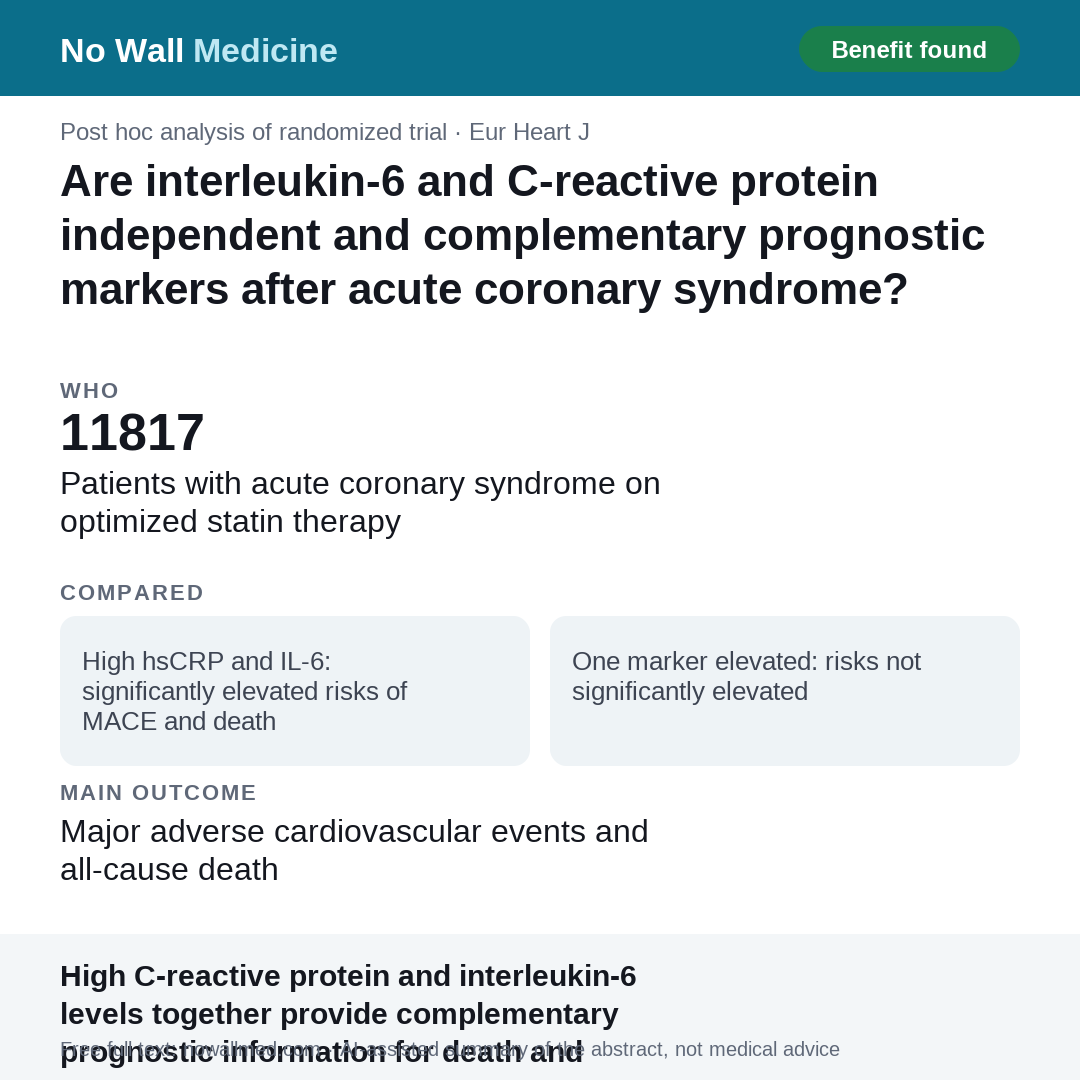
Effect of Electroacupuncture on Postherpetic Neuralgia: A Randomized Clinical Trial
Multicenter, randomized, sham-controlled clinical trialBenefit found
Does electroacupuncture reduce pain severity compared with sham electroacupuncture in postherpetic neuralgia patients?
Who
448
Patients with postherpetic neuralgia aged 45 to 75 years · 7 tertiary hospitals in China
Compared
46.68%Electroacupuncture
24.28%Sham electroacupuncture
Main outcome
Change in Numeric Rating Scale-11 scores from baseline to week 4
Result: adjusted risk difference, 22.40%; 95% CI, 13.02%-31.79%
Bottom line: Electroacupuncture significantly reduced pain severity and increased responder rates in patients with postherpetic neuralgia compared to sham electroacupuncture.
JAMA Neurol · 2026-05-26Download image
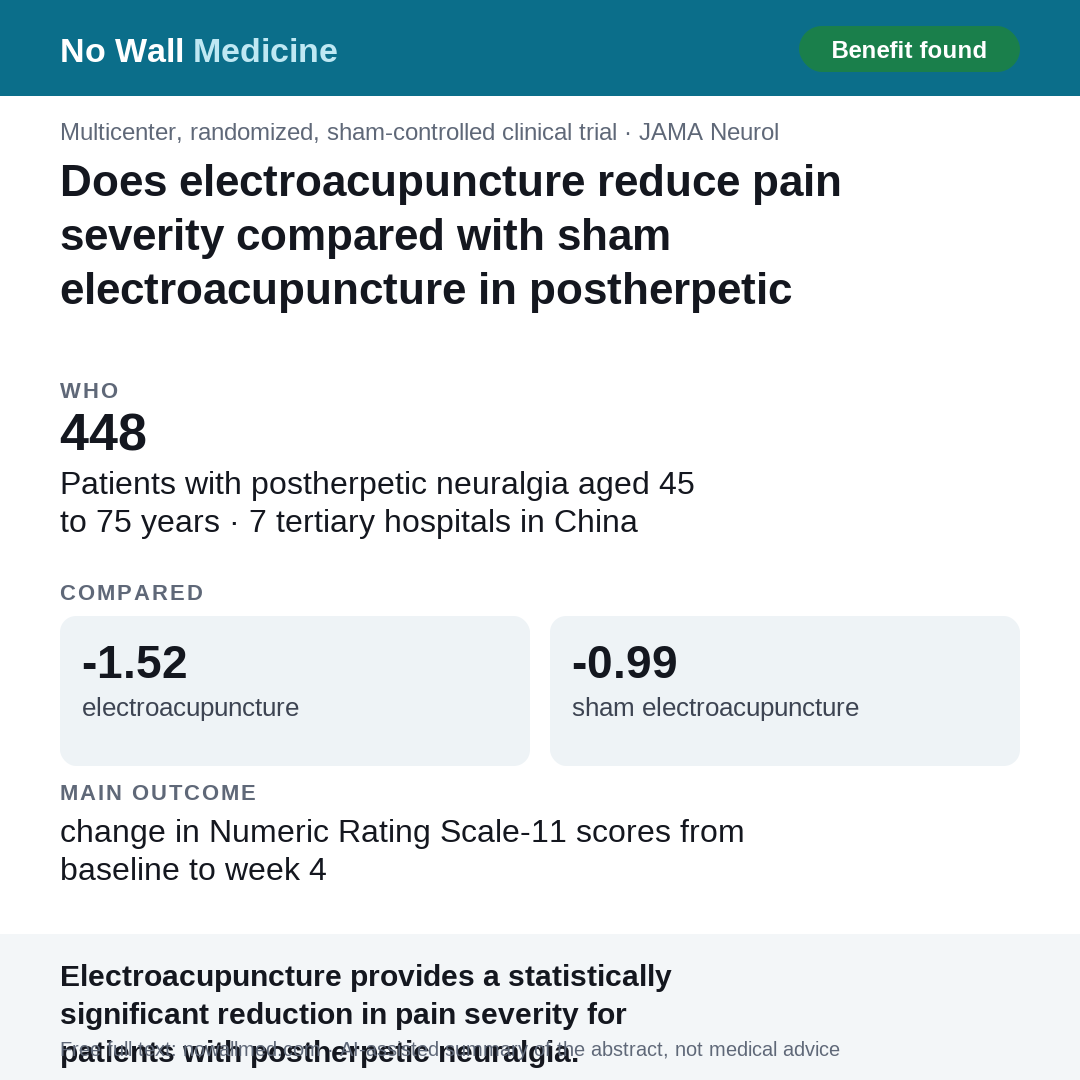
Neurological Teleconsultations in General Practice: A Stepped-Wedge Cluster Randomized Clinical Trial
Stepped-wedge cluster randomized clinical trialMixed results
Did teleneurology services increase patients managed solely in general practice?
Who
983
Patients aged 18 years or older with neurological symptoms · 41 general practitioner practices in northeast Germany
Compared
38.3%Teleconsultations
50.7%Standard care
Main outcome
Proportion of patients managed solely within general practice
Result: adjusted odds ratio, 0.58 (95% CI, 0.38-0.88)
Bottom line: Teleconsultations helped triage patients to other specialists or hospitals but did not increase management solely within general practice.
Limitation: Inability to blind general practitioners to the randomization may have introduced selection effects.
JAMA Neurol · 2026-05-26Download image