Visual abstracts
New randomized trials and meta-analyses from leading journals at a glance: who was studied, what was compared, and what was found. Every paper is free to read in full.
All specialtiesCardiology 4877Oncology 4138Gastroenterology & Hepatology 1942Infectious Disease 3837Neurology 1905Psychiatry & Mental Health 2273Pulmonology 2143Critical Care 1365Endocrinology & Diabetes 2580Pediatrics 2980Surgery 2559Orthopedics & Sports Medicine 931Neurosurgery 537Cardiothoracic & Vascular Surgery 674Plastic & Reconstructive Surgery 591Nephrology 1133Rheumatology 823Hematology 1109Dermatology 621Ophthalmology 543Obstetrics & Gynecology 1686Public & Global Health 1058Radiology & Imaging 648Anesthesiology 986Urology 764ENT (Otolaryngology) 503Emergency Medicine 511Allergy & Immunology 313Geriatrics 981Family Medicine & Primary Care 562Medical Genetics & Genomics 676Pathology & Laboratory Medicine 159Physical Medicine & Rehabilitation 757Palliative Care 444Nutrition 1588Digital Health & AI 2201General Medicine 321
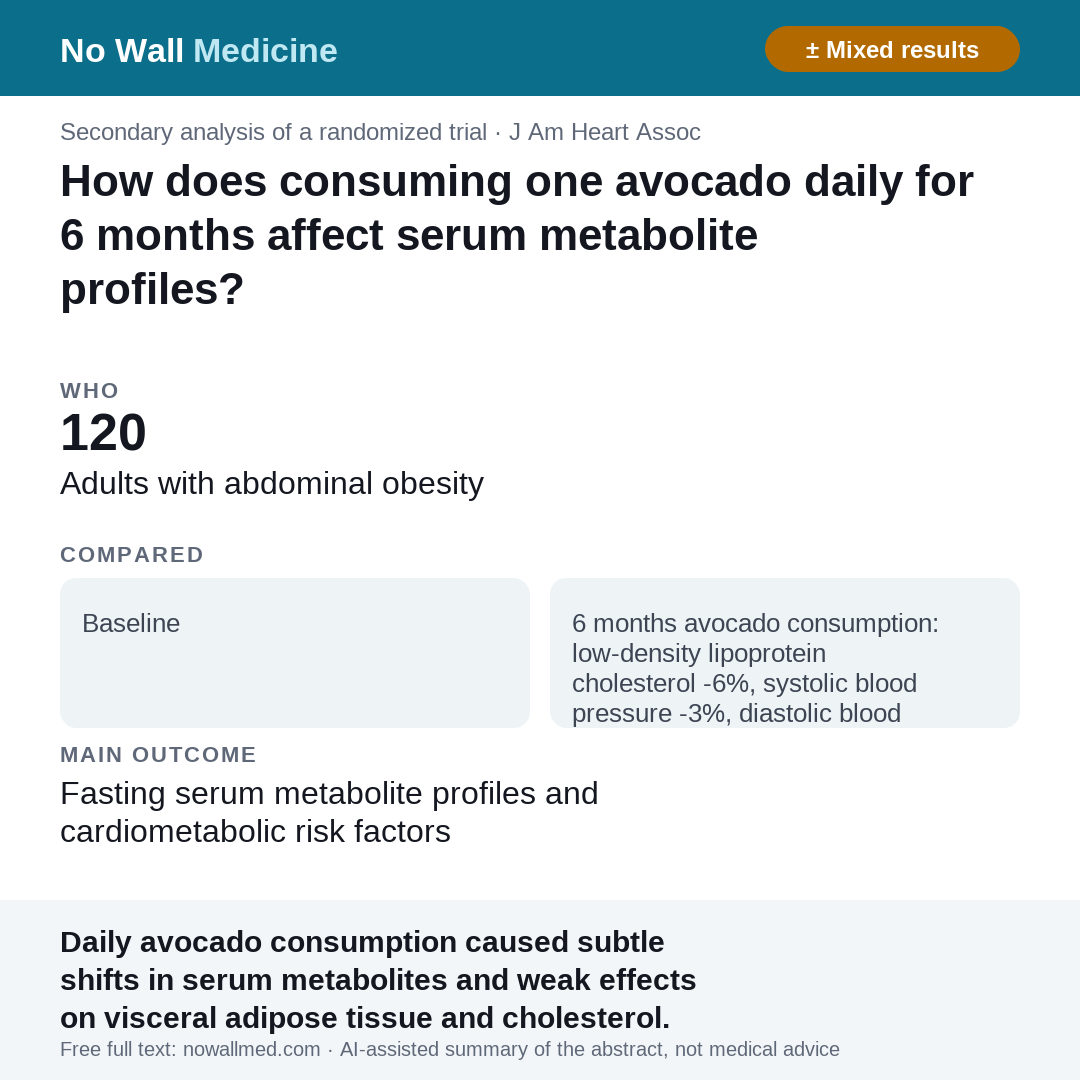
Serum Metabolite Profiles in Adults With Abdominal Obesity in Response to Consuming 1 Avocado Daily for 6 Months: An Exploratory Analysis
Secondary analysis of a randomized trialMixed results
How does consuming one avocado daily for 6 months affect serum metabolite profiles?
Who
120
Adults with abdominal obesity
Compared
Baseline
6 months avocado consumption: low-density lipoprotein cholesterol -6%, systolic blood pressure -3%, diastolic blood pressure -2%, visceral adipose tissue volume 3%
Main outcome
Fasting serum metabolite profiles and cardiometabolic risk factors
Bottom line: Daily avocado consumption caused subtle shifts in serum metabolites and weak effects on visceral adipose tissue and cholesterol.
J Am Heart Assoc · 2026-03-13Download image
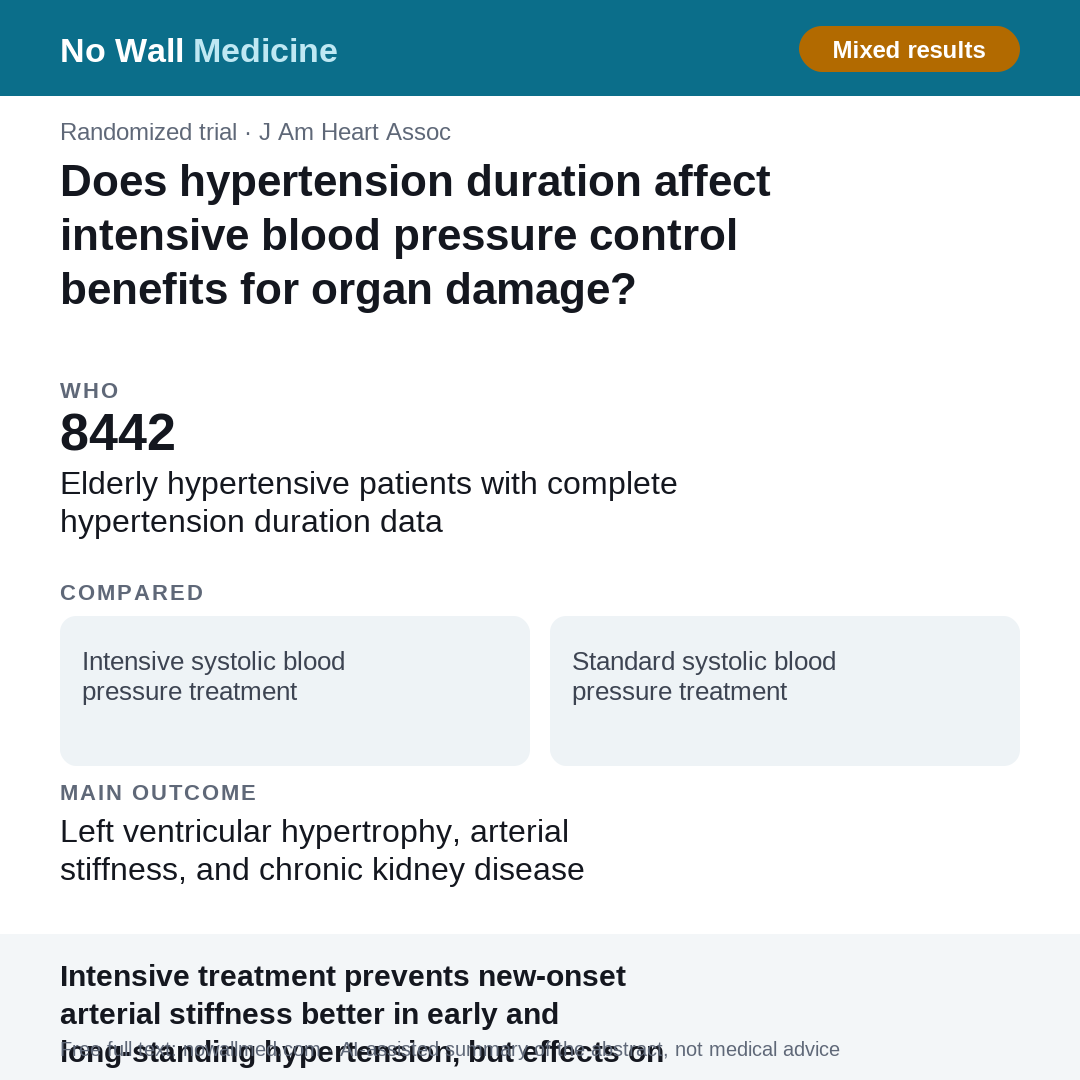
Effect of Hypertension Duration on the Associations Between Intensive Blood Pressure Control and Cardiac, Vascular, and Kidney Organ Damage
Randomized trialMixed results
Does hypertension duration affect intensive blood pressure control benefits for organ damage?
Who
8442
Elderly hypertensive patients with complete hypertension duration data
Compared
Intensive systolic blood pressure treatment
Standard systolic blood pressure treatment
Main outcome
Left ventricular hypertrophy, arterial stiffness, and chronic kidney disease
Bottom line: Intensive treatment prevents new-onset arterial stiffness better in early and long-standing hypertension, but effects on other organ damage vary.
J Am Heart Assoc · 2026-03-13Download image
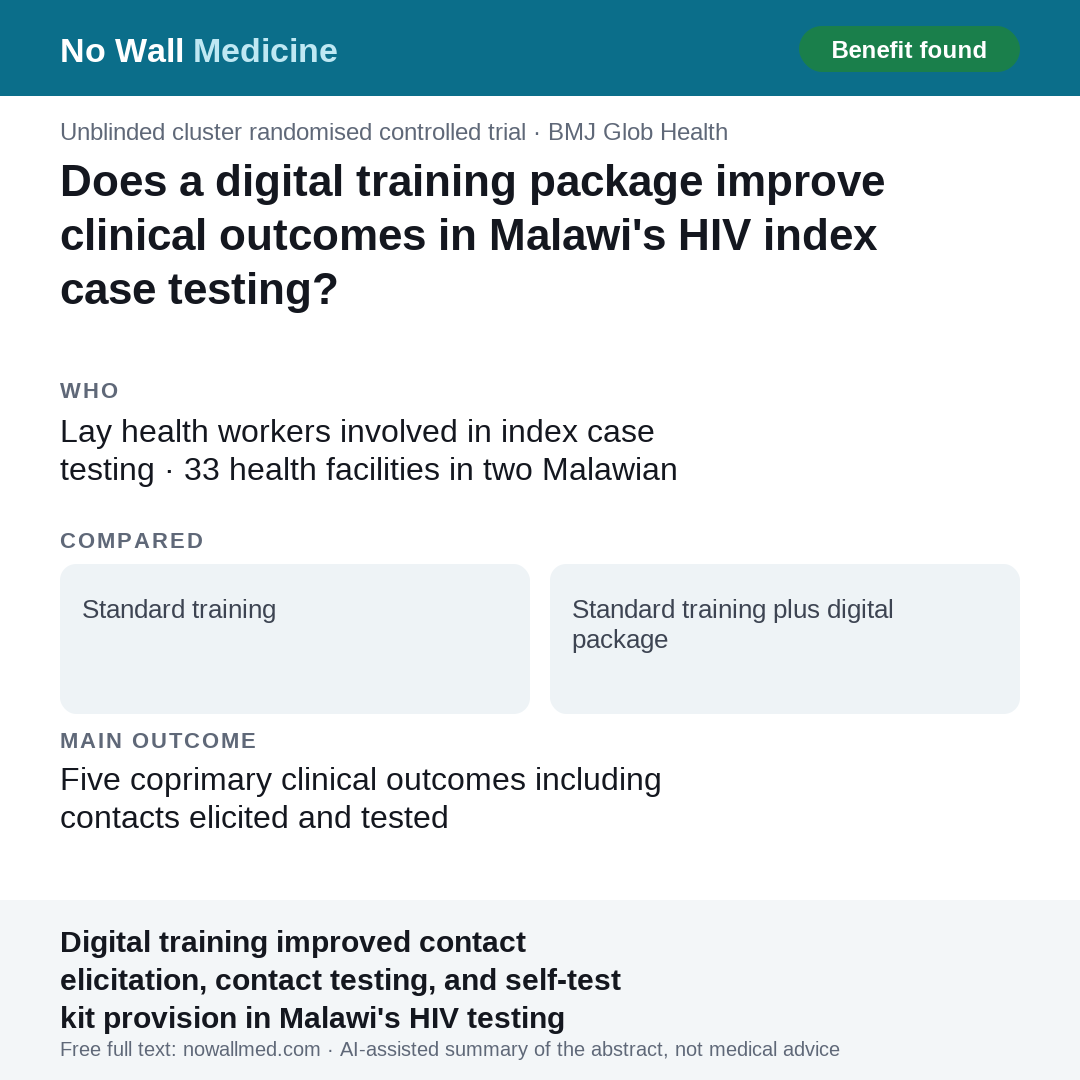
Effect of a digital training package on clinical outcomes in Malawi's index case testing programme: a cluster randomised controlled trial
Unblinded cluster randomised controlled trialBenefit found
Does a digital training package improve clinical outcomes in Malawi's HIV index case testing?
Who
Lay health workers involved in index case testing · 33 health facilities in two Malawian districts
Compared
Standard training
Standard training plus digital package
Main outcome
Five coprimary clinical outcomes including contacts elicited and tested
Result: contact client elicitation RR=1.37 (95% CI 1.10 to 1.71)
Bottom line: Digital training improved contact elicitation, contact testing, and self-test kit provision in Malawi's HIV testing programme.
BMJ Glob Health · 2026-03-13Download image
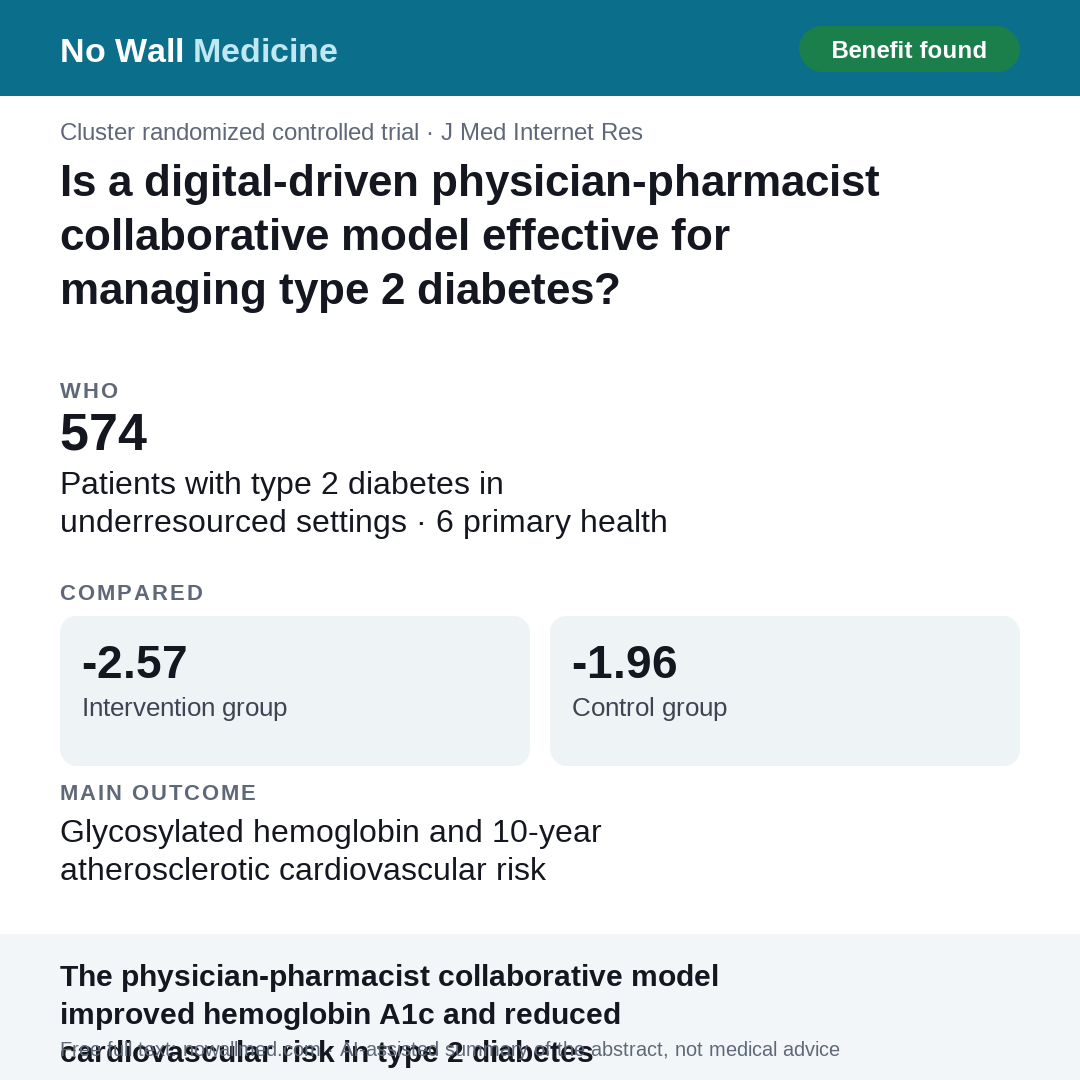
Effect of a Digital-Driven Physician-Pharmacist Collaborative Model for Diabetes in Primary Health Care: Cluster Randomized Trial
Cluster randomized controlled trialBenefit found
Is a digital-driven physician-pharmacist collaborative model effective for managing type 2 diabetes?
Who
574
Patients with type 2 diabetes in underresourced settings · 6 primary health care settings in China
Compared
-2.57Intervention group
-1.96Control group
Main outcome
Glycosylated hemoglobin and 10-year atherosclerotic cardiovascular risk
Result: -2.57 vs -1.96 (95% CI -1.027 to -0.238)
Bottom line: The physician-pharmacist collaborative model improved hemoglobin A1c and reduced cardiovascular risk in type 2 diabetes patients.
J Med Internet Res · 2026-03-13Download image
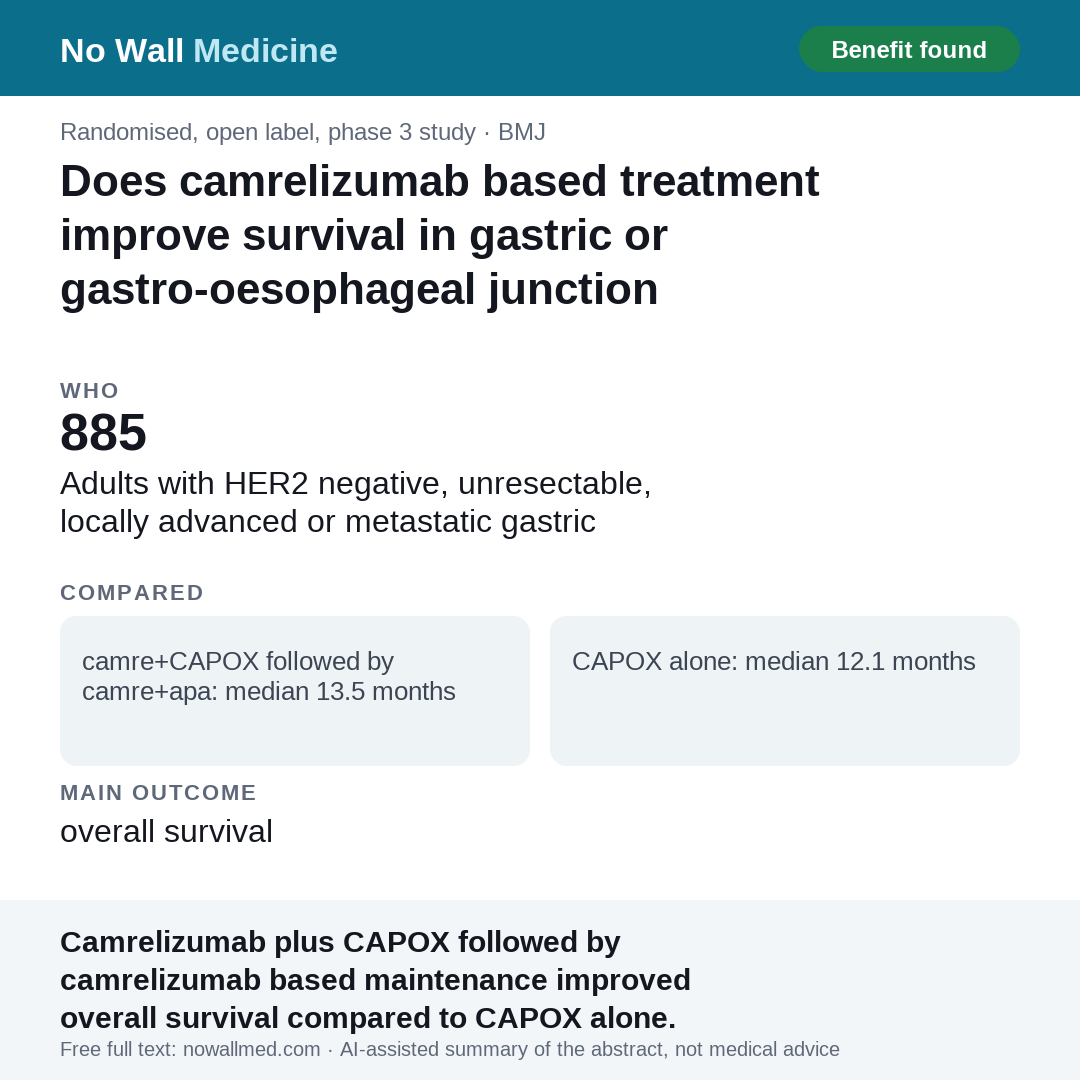
Camrelizumab plus CAPOX with camrelizumab based maintenance versus CAPOX alone as initial treatment for gastric or gastro-oesophageal junction adenocarcinoma: randomised phase 3 trial
Randomised, open label, phase 3 studyBenefit found
Does camrelizumab based treatment improve survival in gastric or gastro-oesophageal junction adenocarcinoma?
Who
885
Adults with HER2 negative, unresectable, locally advanced or metastatic gastric adenocarcinoma · 75 hospitals in China
Compared
camre+CAPOX followed by camre+apa: median 13.5 months
CAPOX alone: median 12.1 months
Main outcome
overall survival
Result: hazard ratio 0.80 (95% CI 0.68 to 0.94)
Bottom line: Camrelizumab plus CAPOX followed by camrelizumab based maintenance improved overall survival compared to CAPOX alone.
BMJ · 2026-03-12Download image
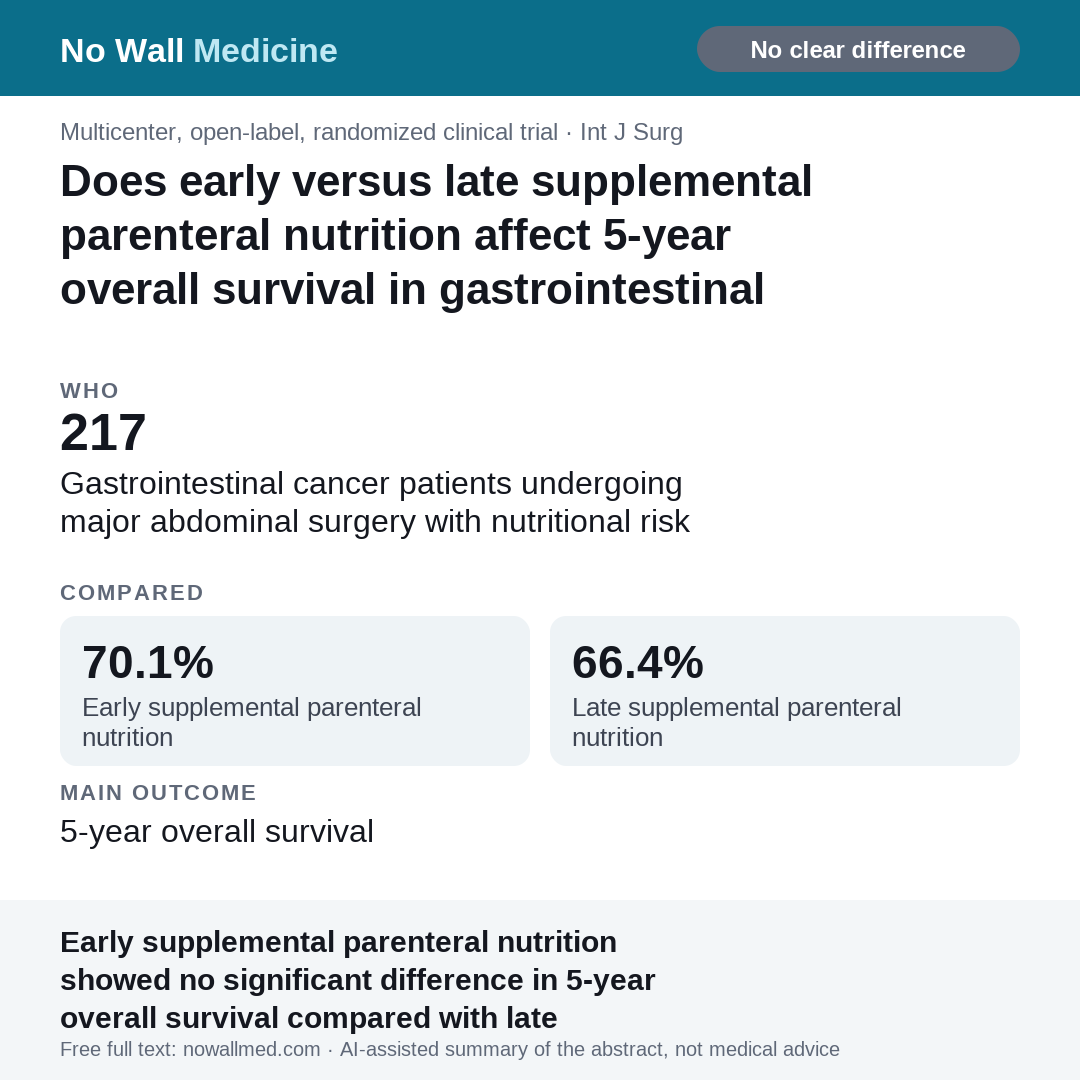
Early versus late supplemental parenteral nutrition in gastrointestinal cancer patients undergoing major abdominal surgery: 5-year outcomes from a randomized clinical trial
Multicenter, open-label, randomized clinical trialNo clear difference
Does early versus late supplemental parenteral nutrition affect 5-year overall survival in gastrointestinal cancer patients?
Who
217
Gastrointestinal cancer patients undergoing major abdominal surgery with nutritional risk · 11 centers in China
Compared
70.1%Early supplemental parenteral nutrition (75/107)
66.4%Late supplemental parenteral nutrition (73/110)
Main outcome
5-year overall survival
Result: hazard ratio 0.857 (95% CI 0.535-1.374)
Bottom line: Early supplemental parenteral nutrition showed no significant difference in 5-year overall survival compared with late supplemental parenteral nutrition.
Int J Surg · 2026-03-12Download image
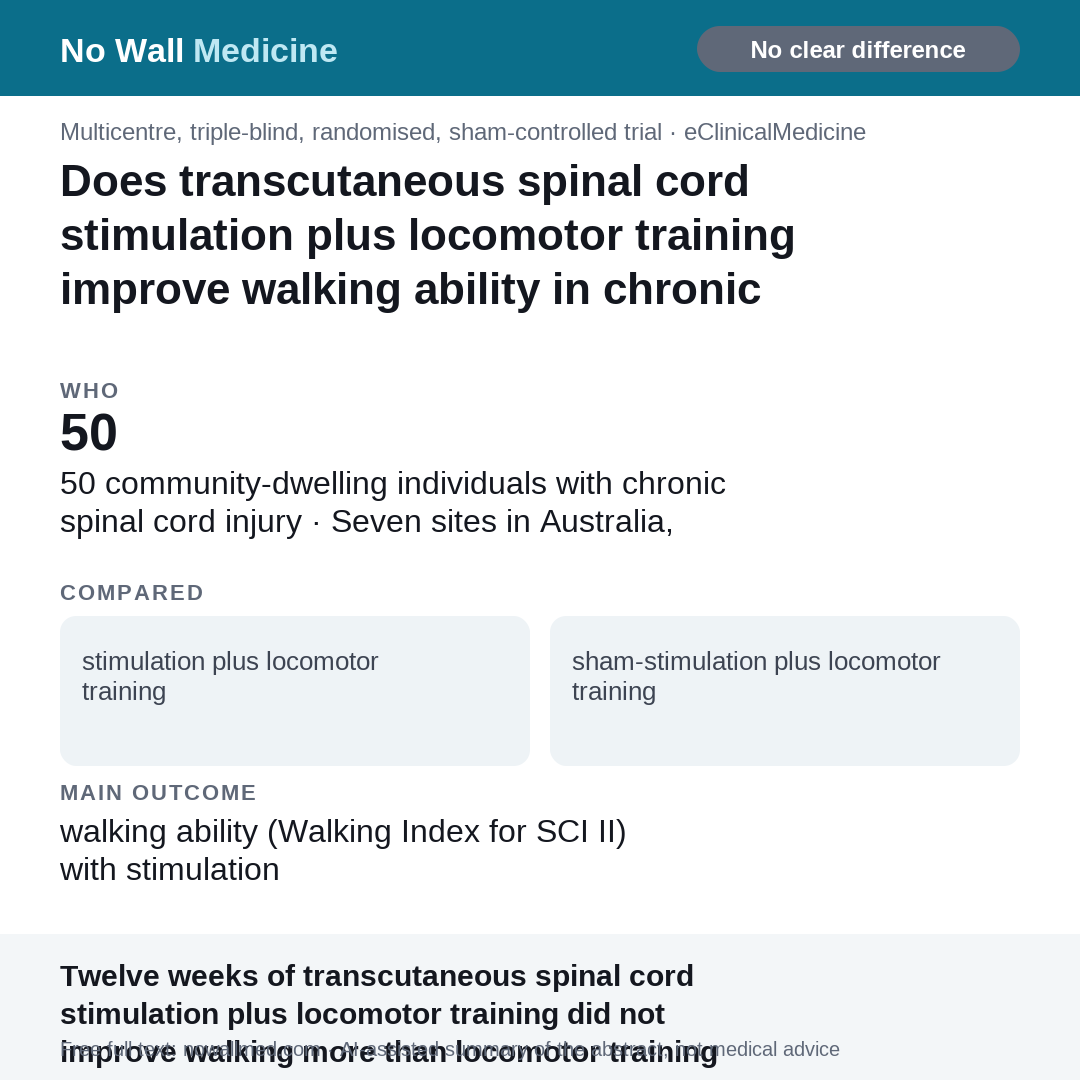
Transcutaneous spinal cord stimulation plus locomotor training versus sham-stimulation plus locomotor training in chronic spinal cord injury (eWALK): a multicentre, triple-blind, randomised, sham-controlled trial
Multicentre, triple-blind, randomised, sham-controlled trialNo clear difference
Does transcutaneous spinal cord stimulation plus locomotor training improve walking ability in chronic spinal cord injury?
Who
50
50 community-dwelling individuals with chronic spinal cord injury · Seven sites in Australia, USA, Scotland, and Spain
Compared
stimulation plus locomotor training
sham-stimulation plus locomotor training
Main outcome
walking ability (Walking Index for SCI II) with stimulation
Result: -0.1 (95% CI -1.6 to 1.5)
Bottom line: Twelve weeks of transcutaneous spinal cord stimulation plus locomotor training did not improve walking more than locomotor training alone.
Limitation: Future research could investigate effects across diverse spinal cord injury populations.
Funded by: SpinalCure Australia, The CatWalk Trust, NHMRC Australia, and UNSW
eClinicalMedicine · 2026-03-12Download image
The role of male foetal sex on maternal and neonatal outcomes in pregnancies complicated by gestational diabetes-secondary analysis of a randomised placebo controlled clinical trial of metformin in gestational diabetes (EMERGE)
Secondary analysis of a randomised controlled trialMixed results
Does foetal sex modify maternal and neonatal outcomes in gestational diabetes treated with metformin?
Who
Women with gestational diabetes and their foetuses
Compared
Metformin exposed males: 4.88 mmol/L fasting glucose at 32 weeks
Metformin exposed females: 8.3% birth weight < 2500 g
Main outcome
Maternal and neonatal outcomes including glucose and birth weight
Bottom line: Metformin showed sex-specific effects on glucose and birth weight, but findings are hypothesis-generating due to non-significant interactions.
Limitation: The sex-by-treatment interaction was not significant, so findings are hypothesis-generating.
BMC Med · 2026-03-12Download image

Effects of a Bone-Strengthening Exercise Intervention on Bone Health in Pediatric Cancer Survivors: A Randomized Controlled Trial
Assessor-blinded randomized controlled trialMixed results
Does a 9-month online bone-strengthening exercise intervention improve bone health in pediatric cancer survivors?
Who
116
Pediatric cancer survivors aged 6-18 years · Sport and Health University Research Institute, Spain
Compared
Exercise group
Control group
Main outcome
femoral neck areal bone mineral density z score
Bottom line: The exercise intervention did not increase femoral neck bone mineral density but improved hip bone mineral content.
Arch Phys Med Rehabil · 2026-03-12Download image
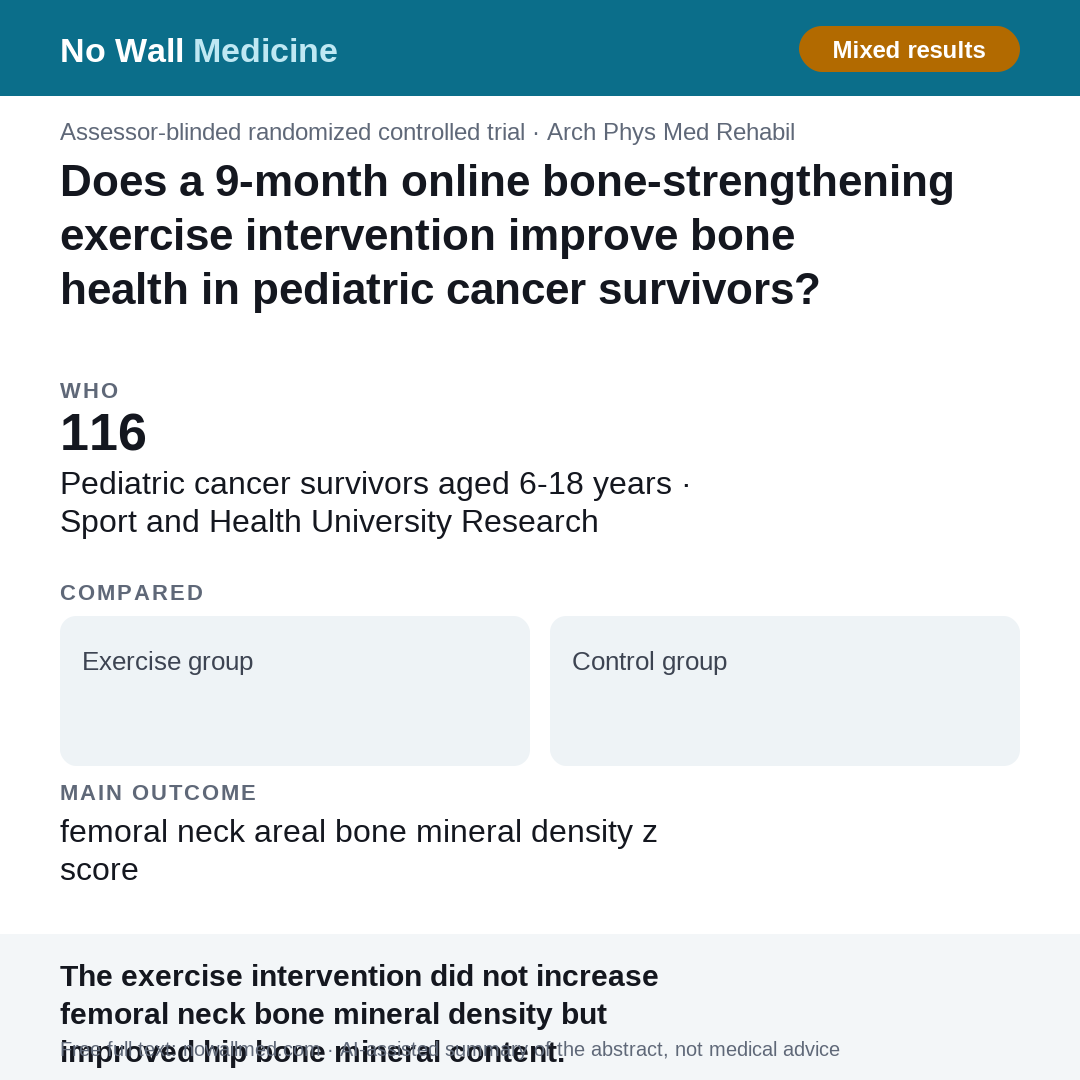
Finerenone and quality of life in heart failure: component-level analyses and clinical relevance of the Kansas City cardiomyopathy questionnaire
Double-blind, randomized, placebo-controlled trialBenefit found
How does finerenone affect quality of life in heart failure patients?
Who
5006
Patients with heart failure with mildly reduced or preserved ejection fraction
Compared
Finerenone
Placebo
Main outcome
Kansas City Cardiomyopathy Questionnaire score changes
Bottom line: Finerenone was associated with modest improvements in health status, most notably lower limb oedema and fatigue.
Eur J Heart Fail · 2026-03-12Download image
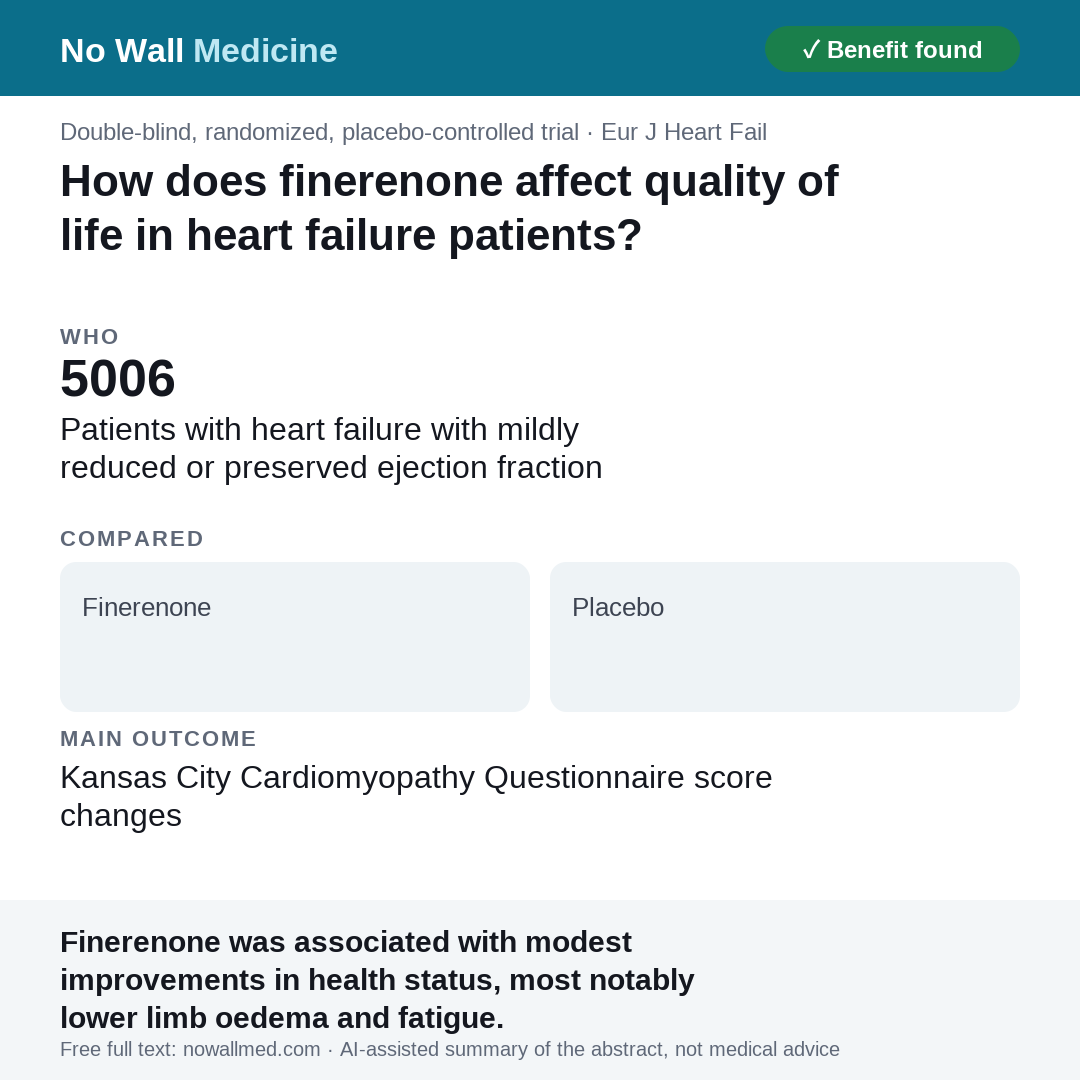
Aumolertinib with carboplatin-pemetrexed versus aumolertinib for nonsmall cell lung cancer with EGFR and concomitant tumor suppressor genes (ACROSS2): An open-label, multicenter, randomized phase 3 study
Open-label, multicenter, randomized phase 3 studyBenefit found
Does aumolertinib plus carboplatin-pemetrexed improve progression-free survival versus aumolertinib monotherapy?
Who
126
Nonsmall cell lung cancer with EGFR and concomitant tumor suppressor gene mutations · multicenter
Compared
19.78 monthsaumolertinib plus carboplatin-pemetrexed
16.53 monthsaumolertinib monotherapy
Main outcome
median progression-free survival
Result: hazard ratio 0.58 (95% confidence interval 0.34-0.97)
Bottom line: Aumolertinib plus carboplatin-pemetrexed significantly prolonged progression-free survival compared to aumolertinib monotherapy in this population.
Limitation: Overall survival data were immature
CA Cancer J Clin · 2026-03-12Download image
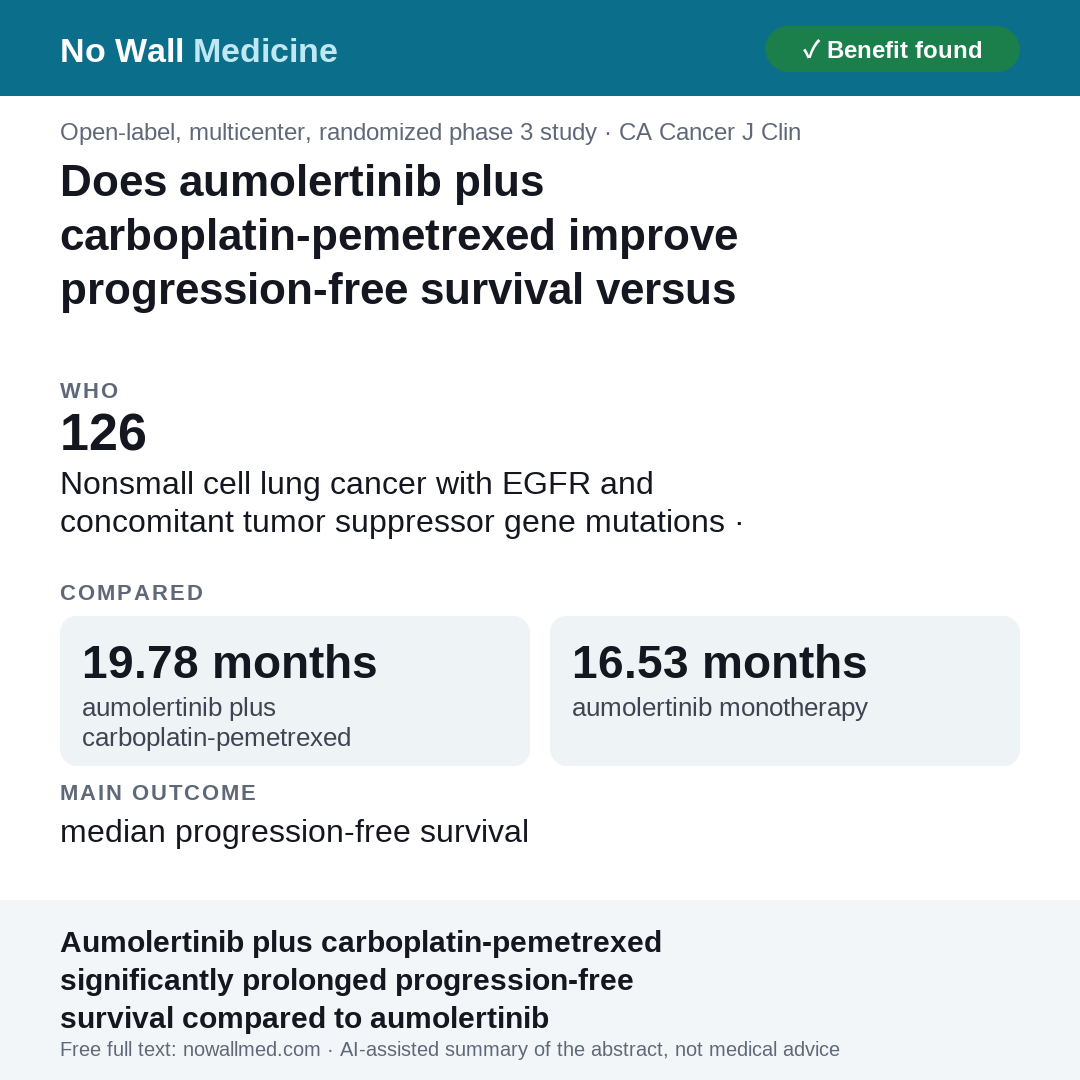
Serotype-specific Immunity and Association With Pneumococcal Carriage Following 3+1, 3+0, and 2+1 Schedules of 10-valent Pneumococcal Conjugate Vaccine
Randomized controlled trialNo clear difference
Is immunity linked to pneumococcal carriage?
Who
Infants in Vietnam · Vietnam
Compared
3 + 1 schedule
3 + 0 schedule
2 + 1 schedule
Main outcome
Pneumococcal carriage
Bottom line: No link between immunity and carriage found
J Infect Dis · 2026-03-12Download image

The DREAMS START intervention for sleep in dementia: Long-term follow-up of a randomized controlled trial
Single-blind, parallel-arm, superiority trialBenefit found
Does the DREAMS START intervention improve sleep in people with dementia?
Who
377
Dyads of people with dementia and their family caregivers · Community settings
Compared
Treatment-as-usual
-5.40Intervention
Main outcome
Sleep Disorders Inventory score
Result: -5.40 (95% CI -9.14 to -1·67)
Bottom line: The DREAMS START intervention demonstrated a 2-year improvement in sleep disruption for people with dementia.
Limitation: Only 177 dyads (46.9%) were followed up at 24 months.
Alzheimers Dement · 2026-03-12Download image
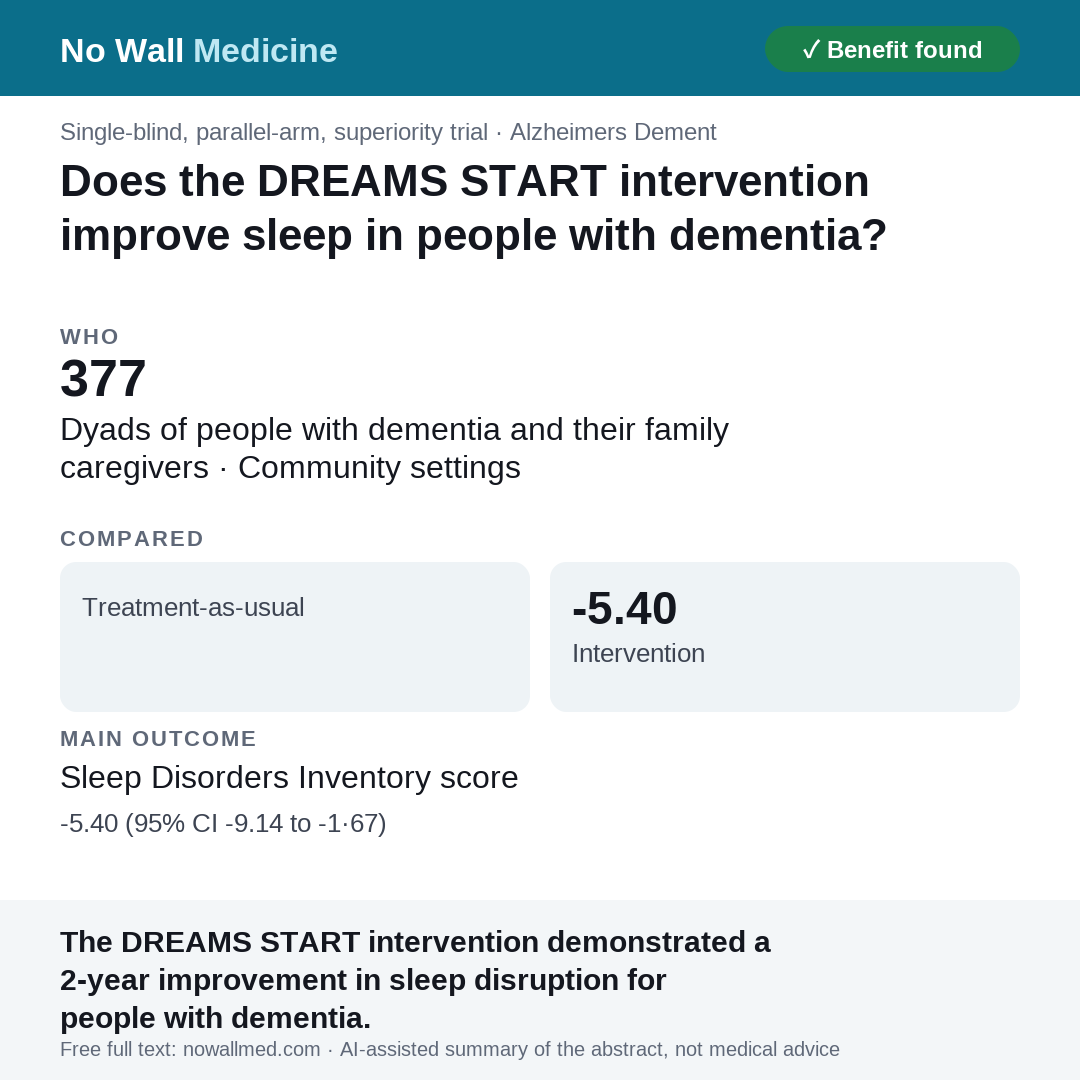
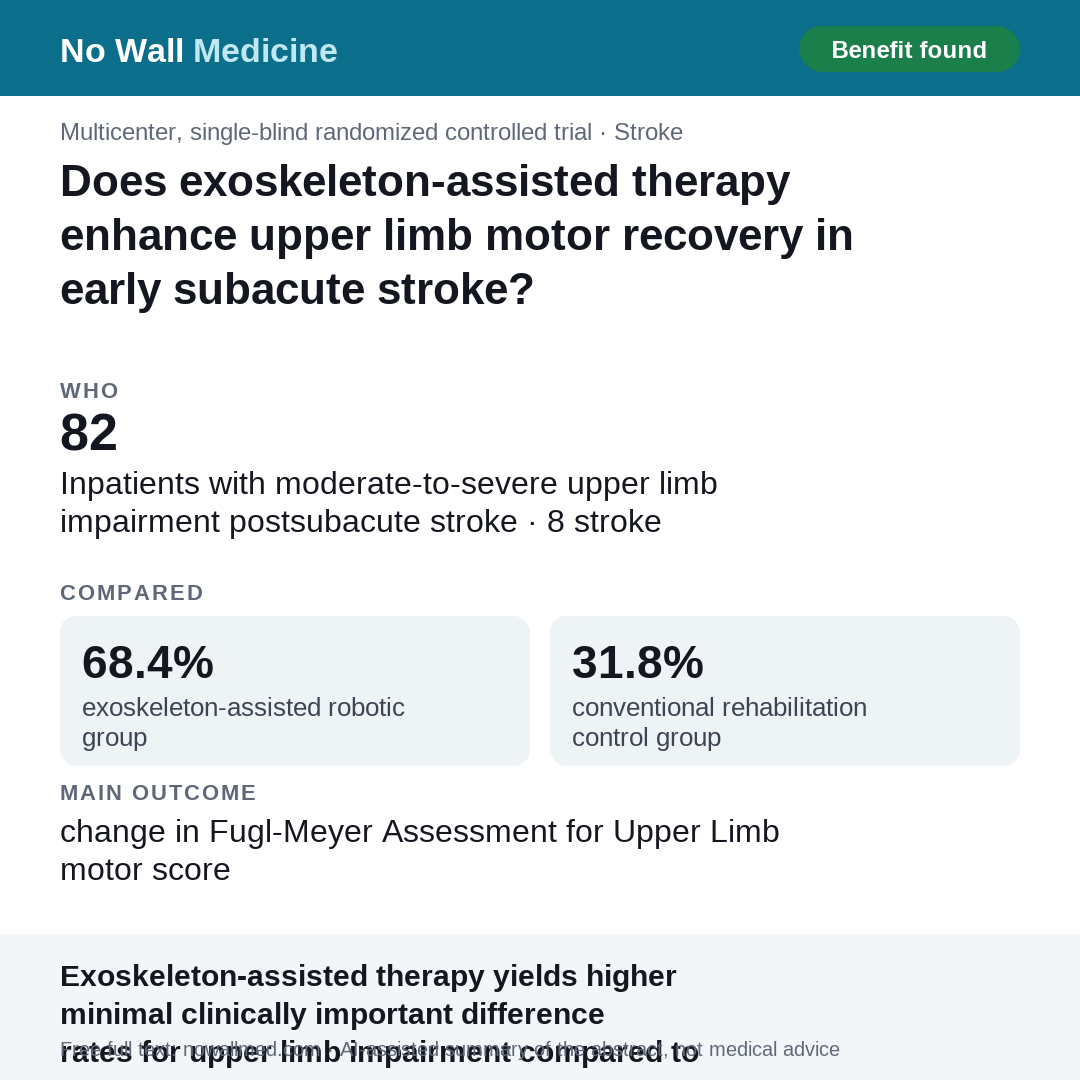
Exoskeleton-Assisted Therapy Enhances Upper Limb Motor Recovery in Early Subacute Stroke: A Multicenter, Single-Blind Randomized Controlled Trial
Multicenter, single-blind randomized controlled trialBenefit found
Does exoskeleton-assisted therapy enhance upper limb motor recovery in early subacute stroke?
Who
82
Inpatients with moderate-to-severe upper limb impairment postsubacute stroke · 8 stroke neurorehabilitation units
Compared
68.4%exoskeleton-assisted robotic group
31.8%conventional rehabilitation control group
Main outcome
change in Fugl-Meyer Assessment for Upper Limb motor score
Result: odds ratio 4.64 (95% CI 1.83-11.8)
Bottom line: Exoskeleton-assisted therapy yields higher minimal clinically important difference rates for upper limb impairment compared to conventional therapy.
Stroke · 2026-03-12Download image
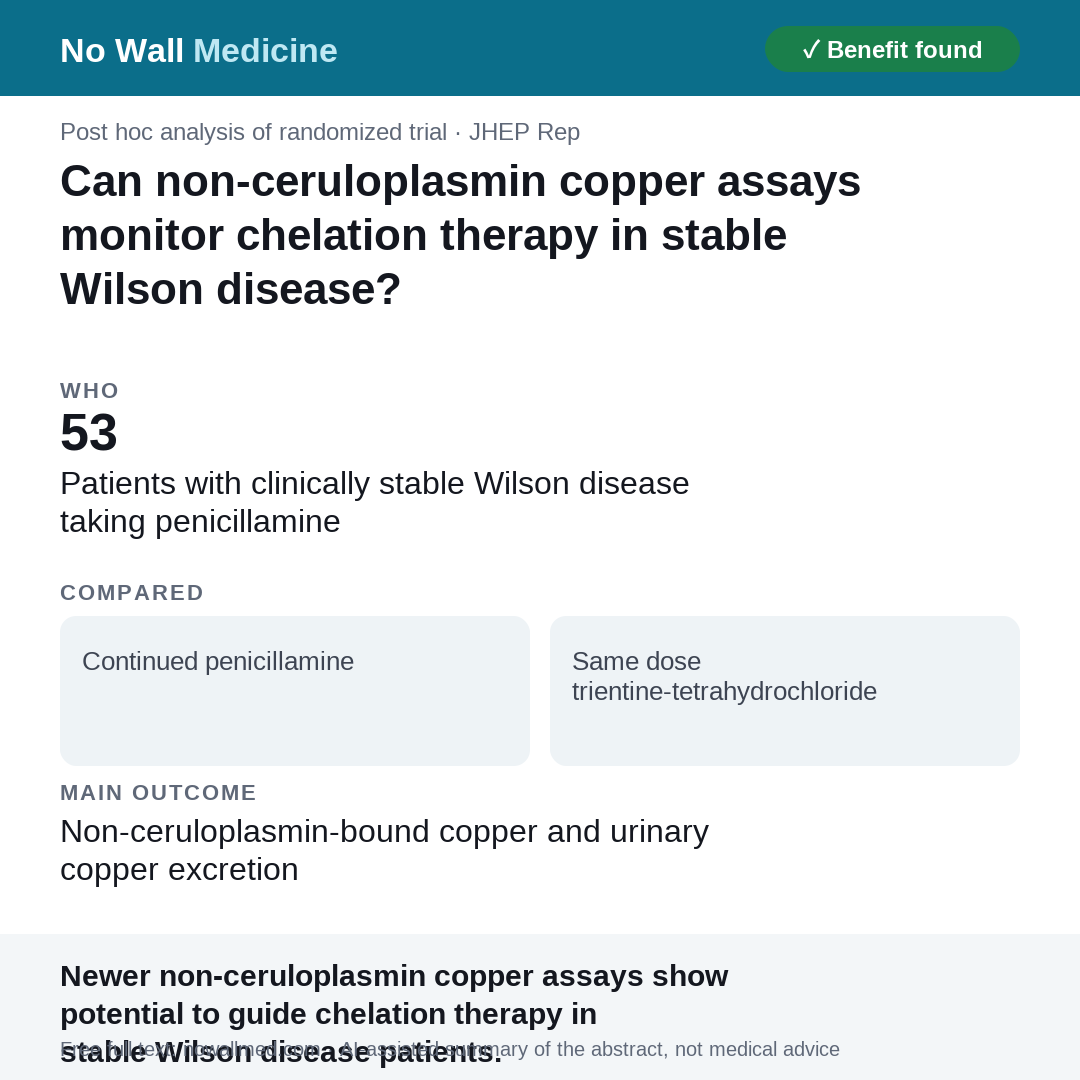
Evaluation of novel assays of non-ceruloplasmin copper to monitor chelation treatment in patients with Wilson disease
Post hoc analysis of randomized trialBenefit found
Can non-ceruloplasmin copper assays monitor chelation therapy in stable Wilson disease?
Who
53
Patients with clinically stable Wilson disease taking penicillamine
Compared
Continued penicillamine
Same dose trientine-tetrahydrochloride
Main outcome
Non-ceruloplasmin-bound copper and urinary copper excretion
Bottom line: Newer non-ceruloplasmin copper assays show potential to guide chelation therapy in stable Wilson disease patients.
JHEP Rep · 2026-03-12Download image
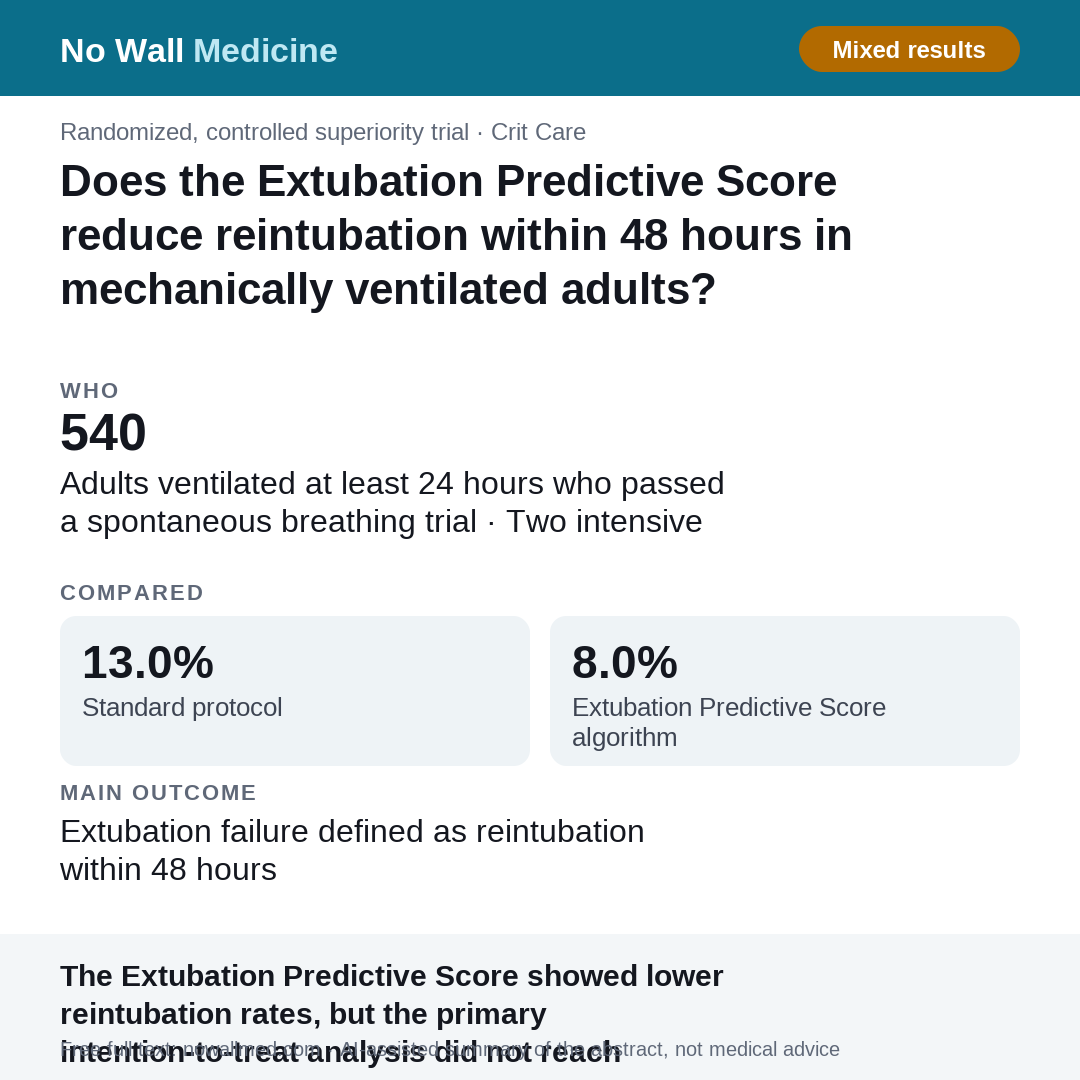
Effect of the extubation predictive score (ExPreS) on reintubation in the ICU: a randomized controlled trial
Randomized, controlled superiority trialMixed results
Does the Extubation Predictive Score reduce reintubation within 48 hours in mechanically ventilated adults?
Who
540
Adults ventilated at least 24 hours who passed a spontaneous breathing trial · Two intensive care units of a Brazilian university hospital
Compared
13.0%Standard protocol
8.0%Extubation Predictive Score algorithm
Main outcome
Extubation failure defined as reintubation within 48 hours
Bottom line: The Extubation Predictive Score showed lower reintubation rates, but the primary intention-to-treat analysis did not reach statistical significance.
Limitation: Findings warrant confirmation in larger multicenter studies.
Crit Care · 2026-03-12Download image
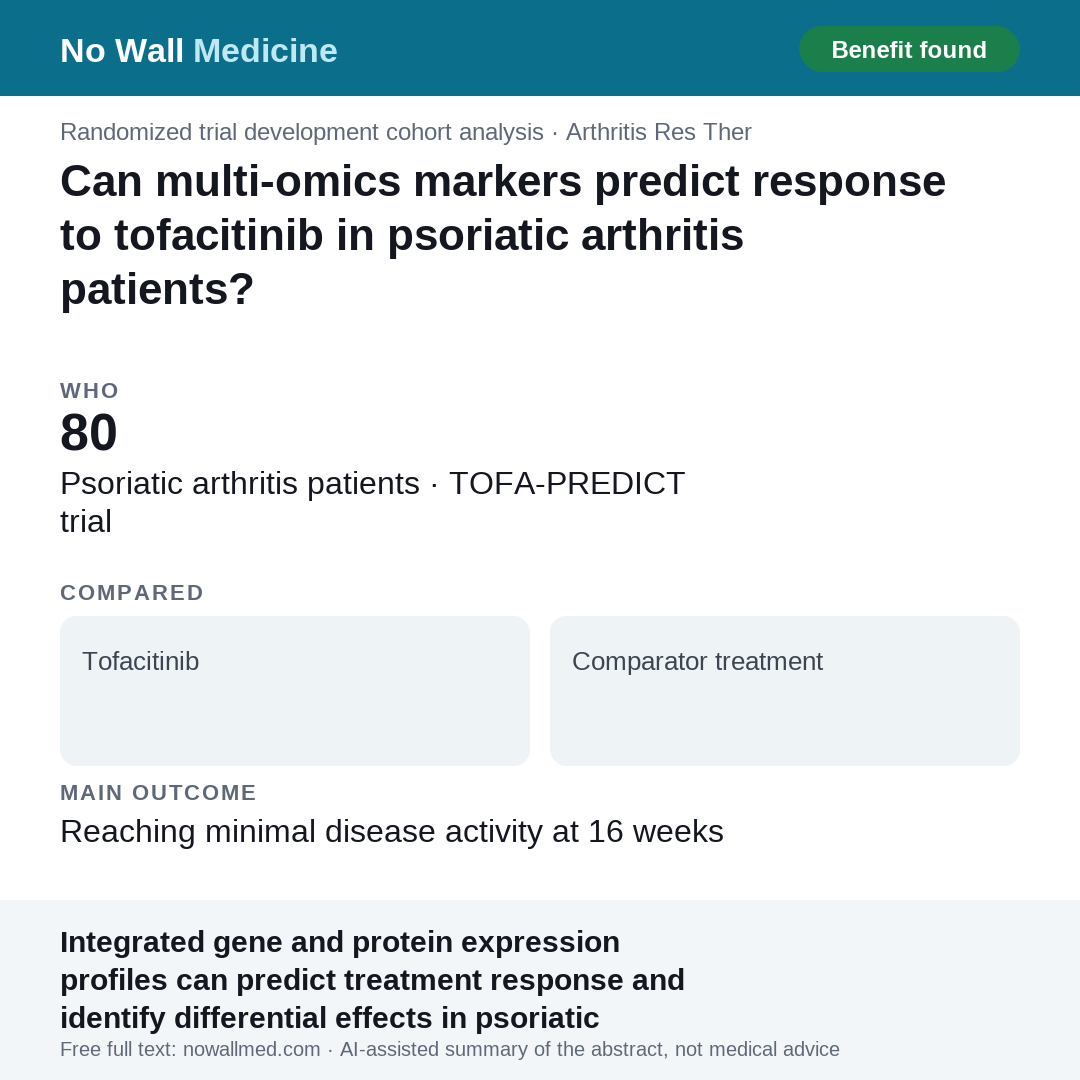
Predicting clinical response in psoriatic arthritis through integrative analysis of transcriptomics and proteomics
Randomized trial development cohort analysisBenefit found
Can multi-omics markers predict response to tofacitinib in psoriatic arthritis patients?
Who
80
Psoriatic arthritis patients · TOFA-PREDICT trial
Compared
Tofacitinib
Comparator treatment
Main outcome
Reaching minimal disease activity at 16 weeks
Result: AUC 0.70 ± 0.19
Bottom line: Integrated gene and protein expression profiles can predict treatment response and identify differential effects in psoriatic arthritis.
Arthritis Res Ther · 2026-03-12Download image
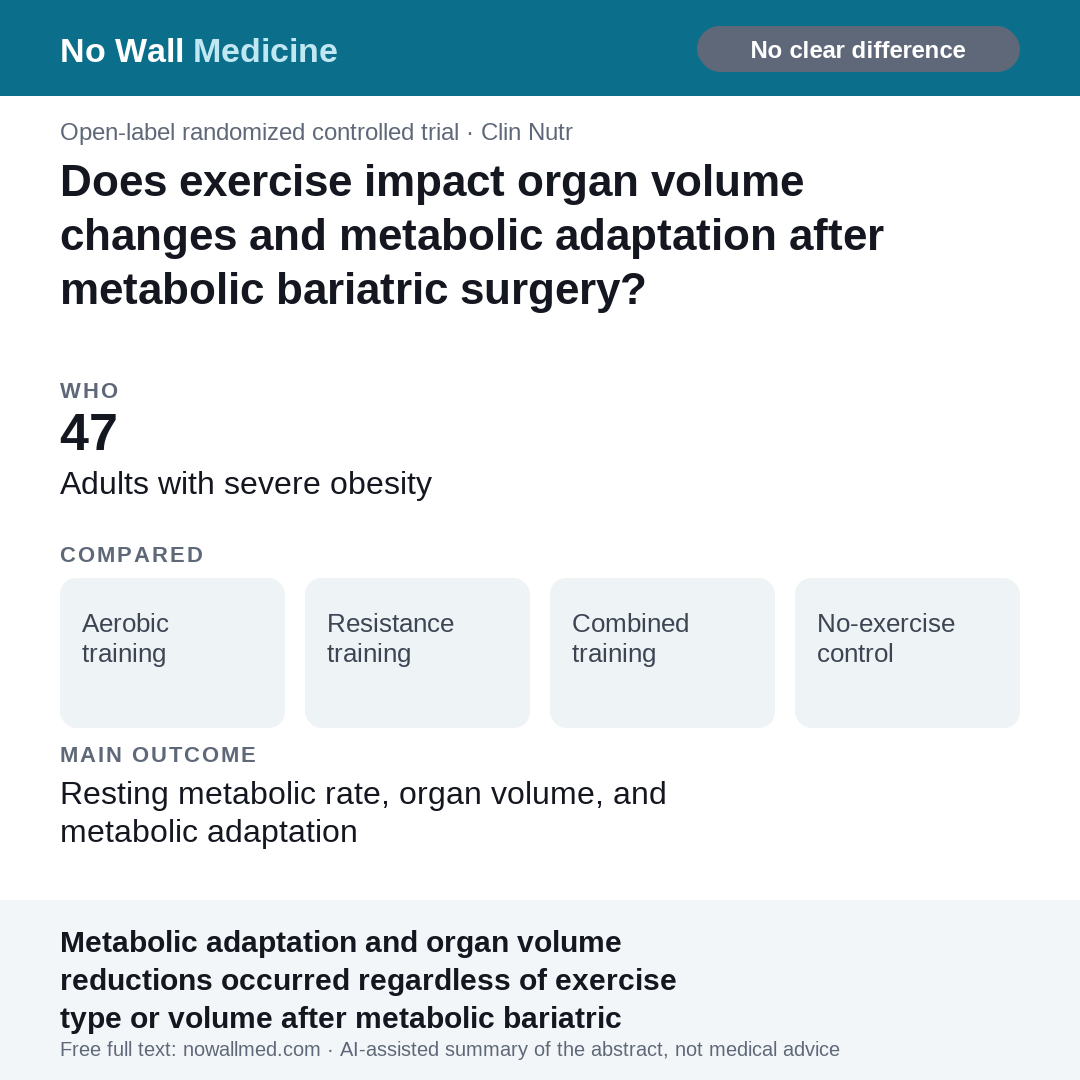
Liver and Kidney volume Reduction May Underlie Metabolic Adaptation After Metabolic Bariatric Surgery: A sub-study of the "POWER" Randomized clinical trial
Open-label randomized controlled trialNo clear difference
Does exercise impact organ volume changes and metabolic adaptation after metabolic bariatric surgery?
Who
47
Adults with severe obesity
Compared
Aerobic training
Resistance training
Combined training
No-exercise control
Main outcome
Resting metabolic rate, organ volume, and metabolic adaptation
Bottom line: Metabolic adaptation and organ volume reductions occurred regardless of exercise type or volume after metabolic bariatric surgery.
Clin Nutr · 2026-03-11Download image
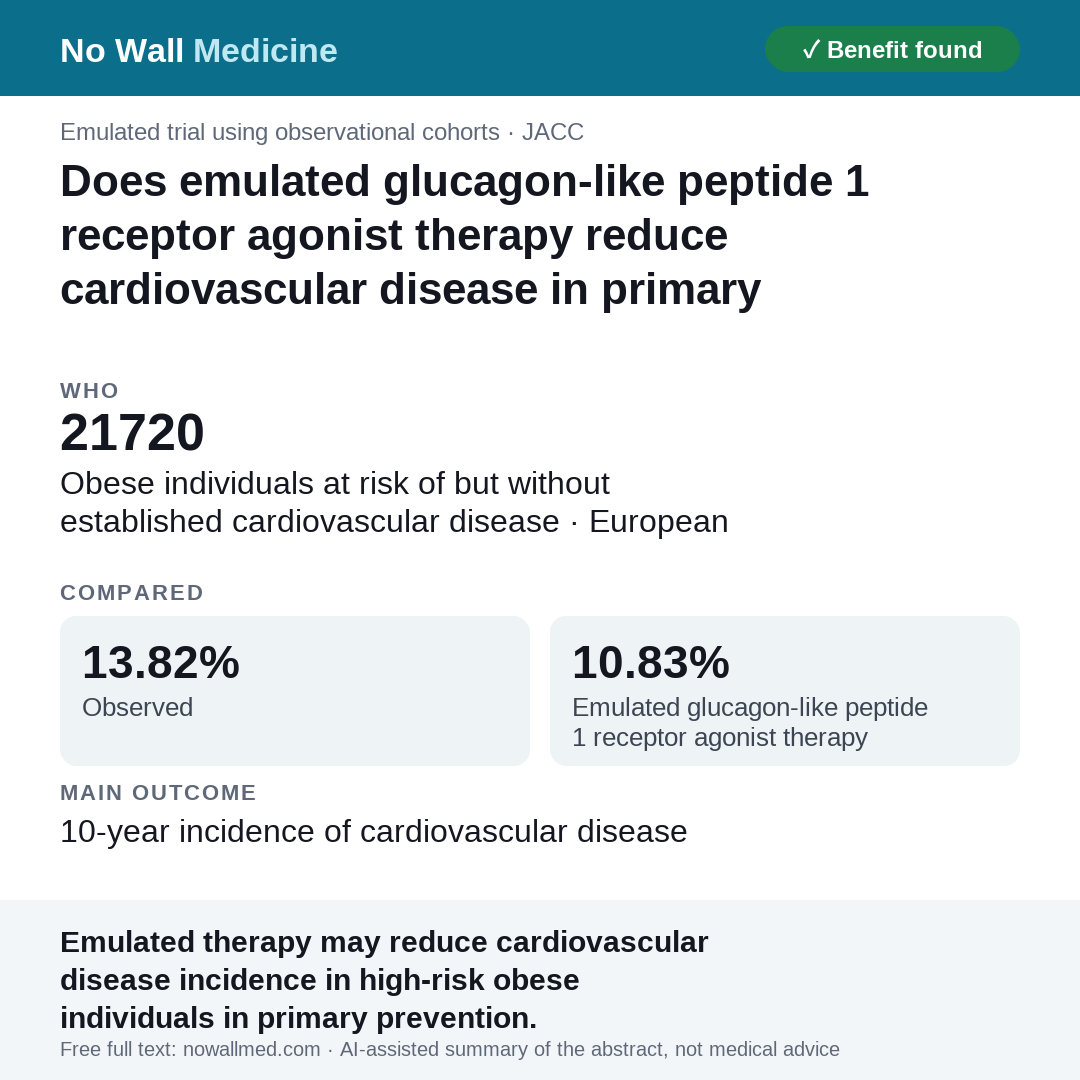
Emulated Effects of Glucagon-Like Peptide 1 Receptor Agonist Therapy in the General Population
Emulated trial using observational cohortsBenefit found
Does emulated glucagon-like peptide 1 receptor agonist therapy reduce cardiovascular disease in primary prevention?
Who
21720
Obese individuals at risk of but without established cardiovascular disease · European and North American cohorts
Compared
13.82%Observed (95% CI: 11.94%-15.71%)
10.83%Emulated glucagon-like peptide 1 receptor agonist therapy (95% CI: 9.27%-12.39%)
Main outcome
10-year incidence of cardiovascular disease
Result: absolute reduction of 2.99% (95% CI: 2.67%-3.31%)
Bottom line: Emulated therapy may reduce cardiovascular disease incidence in high-risk obese individuals in primary prevention.
Limitation: Modeled risk reductions were attenuated in nonobese and lower risk groups and with lower compliance.
JACC · 2026-03-11Download image
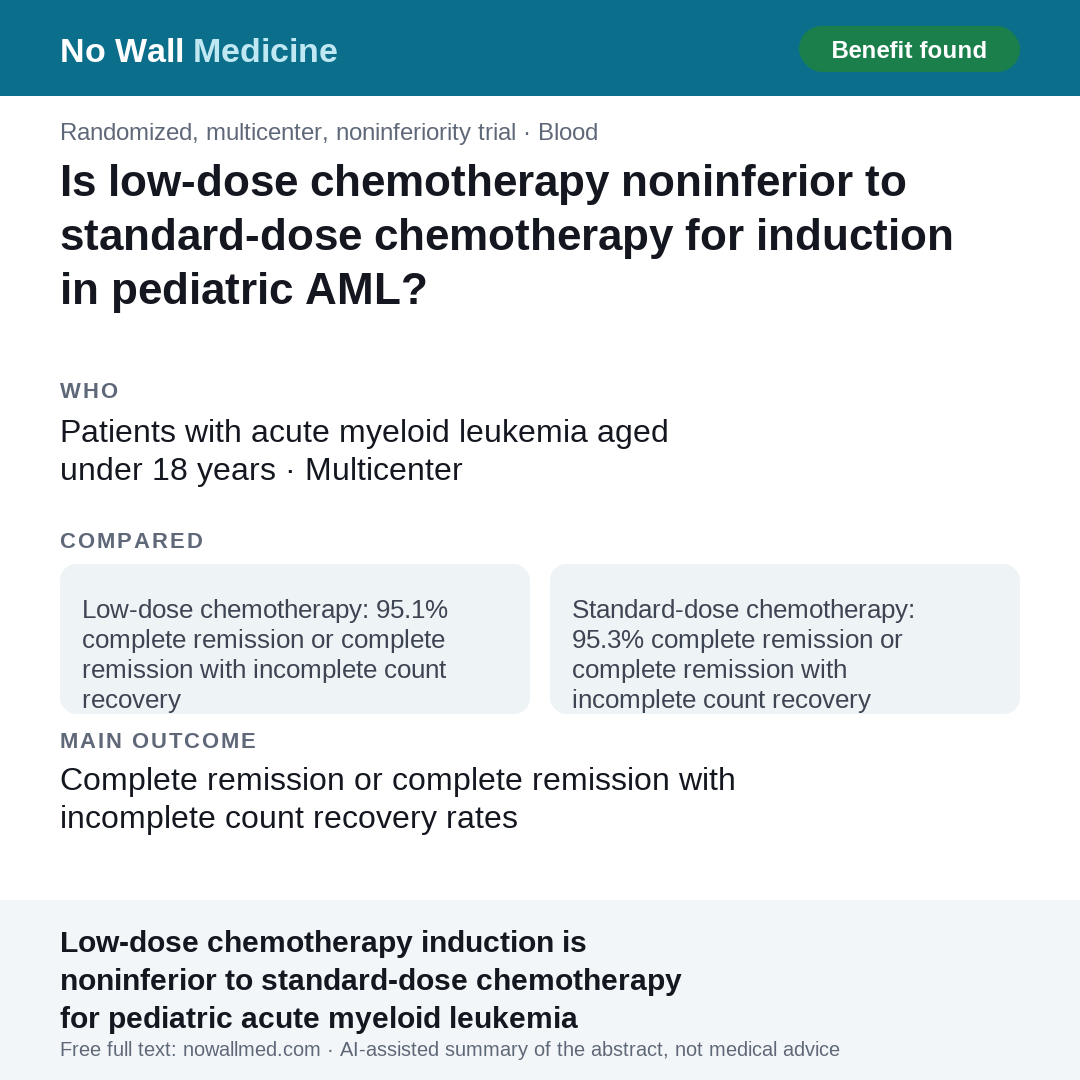
Low- vs standard-dose regimens as induction for pediatric AML: a multicenter, randomized noninferiority trial
Randomized, multicenter, noninferiority trialBenefit found
Is low-dose chemotherapy noninferior to standard-dose chemotherapy for induction in pediatric AML?
Who
Patients with acute myeloid leukemia aged under 18 years · Multicenter
Compared
Low-dose chemotherapy: 95.1% complete remission or complete remission with incomplete count recovery
Standard-dose chemotherapy: 95.3% complete remission or complete remission with incomplete count recovery
Main outcome
Complete remission or complete remission with incomplete count recovery rates
Bottom line: Low-dose chemotherapy induction is noninferior to standard-dose chemotherapy for pediatric acute myeloid leukemia patients.
Blood · 2026-03-11Download image