Visual abstracts
New randomized trials and meta-analyses from leading journals at a glance: who was studied, what was compared, and what was found. Every paper is free to read in full.
All specialtiesCardiology 4877Oncology 4138Gastroenterology & Hepatology 1942Infectious Disease 3837Neurology 1905Psychiatry & Mental Health 2273Pulmonology 2143Critical Care 1365Endocrinology & Diabetes 2580Pediatrics 2980Surgery 2559Orthopedics & Sports Medicine 931Neurosurgery 537Cardiothoracic & Vascular Surgery 674Plastic & Reconstructive Surgery 591Nephrology 1133Rheumatology 823Hematology 1109Dermatology 621Ophthalmology 543Obstetrics & Gynecology 1686Public & Global Health 1058Radiology & Imaging 648Anesthesiology 986Urology 764ENT (Otolaryngology) 503Emergency Medicine 511Allergy & Immunology 313Geriatrics 981Family Medicine & Primary Care 562Medical Genetics & Genomics 676Pathology & Laboratory Medicine 159Physical Medicine & Rehabilitation 757Palliative Care 444Nutrition 1588Digital Health & AI 2201General Medicine 321
Systematic review of risk factors for violence in psychosis: 10-year update
Systematic review and meta-analysisBenefit found
What are the longitudinal risk factors for violence in people with psychosis?
Who
203 297
Individuals with schizophrenia-spectrum disorders, bipolar disorder or other affective psychoses
Compared
Criminal history factors: pooled odds ratio 3.50
Substance misuse factors: odds ratio 2.36
Treatment-related factors: odds ratio 0.54
Cannabis use: odds ratio 3.34
Main outcome
Risk factors for violence
Result: criminal history odds ratio 3.50 (95% CI 2.37, 5.16)
Bottom line: Criminal history and substance misuse are major risk factors for violence in psychosis, while treatment-related factors may be protective.
Limitation: Effect estimates were attenuated in inpatient settings.
Br J Psychiatry · 2025-03-17Download image

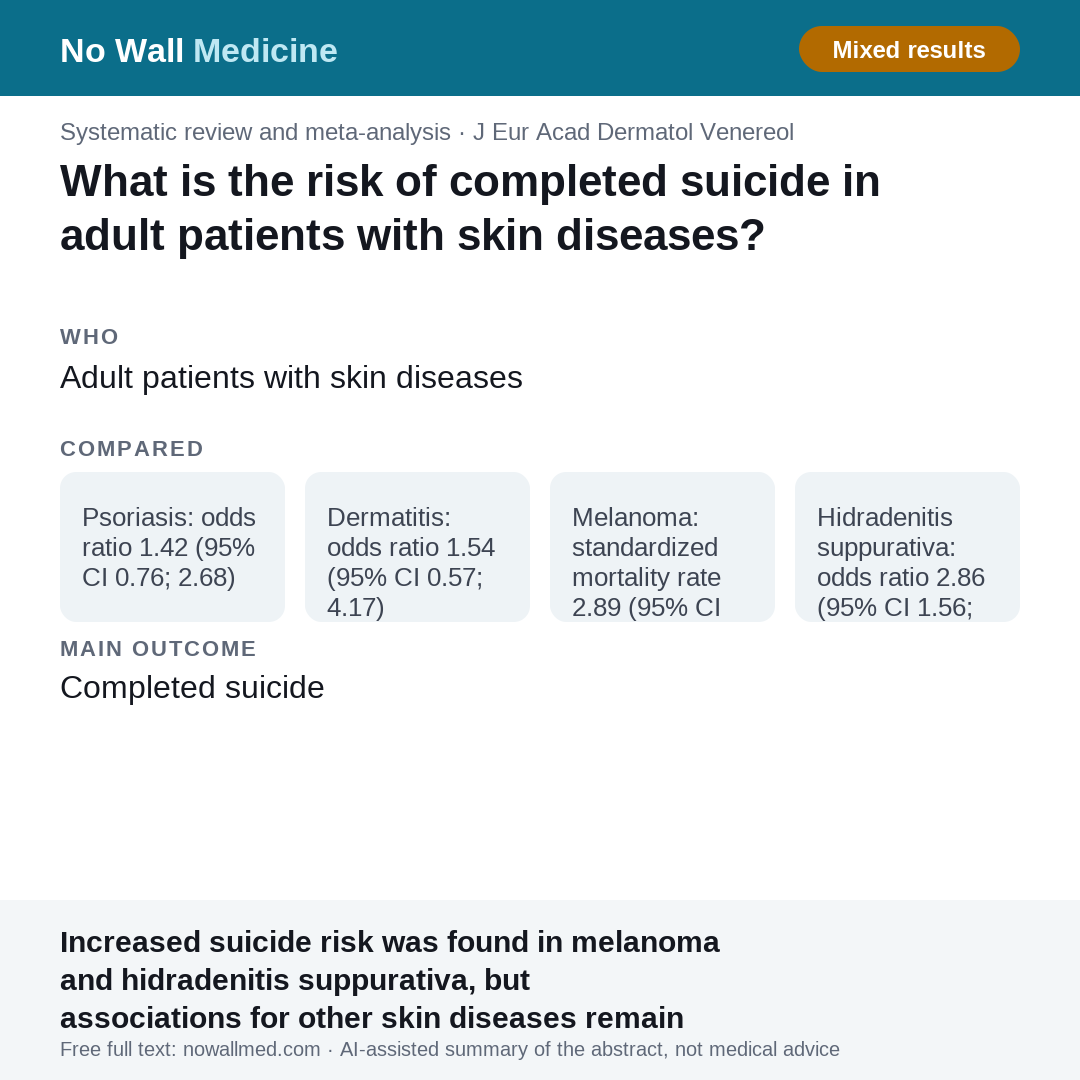
Completed suicide in patients with skin disease: A systematic review and meta-analysis
Systematic review and meta-analysisMixed results
What is the risk of completed suicide in adult patients with skin diseases?
Who
Adult patients with skin diseases
Compared
Psoriasis: odds ratio 1.42 (95% CI 0.76; 2.68)
Dermatitis: odds ratio 1.54 (95% CI 0.57; 4.17)
Melanoma: standardized mortality rate 2.89 (95% CI 1.97; 3.81)
Hidradenitis suppurativa: odds ratio 2.86 (95% CI 1.56; 5.24)
Main outcome
Completed suicide
Bottom line: Increased suicide risk was found in melanoma and hidradenitis suppurativa, but associations for other skin diseases remain unclear.
J Eur Acad Dermatol Venereol · 2025-03-17Download image
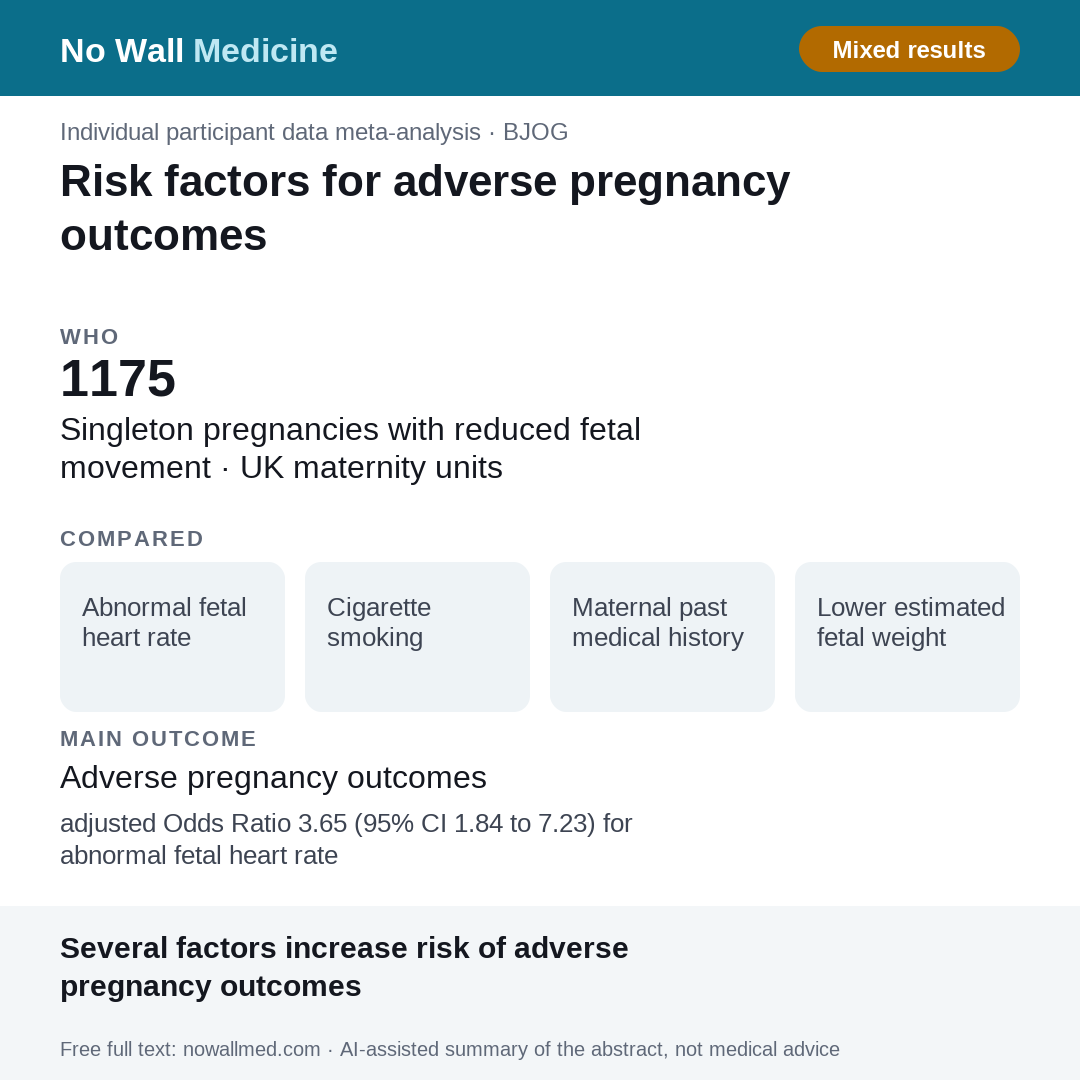
Risk Factors for Adverse Pregnancy Outcomes in Reduced Fetal Movement: An IPD Meta-Analysis
Individual participant data meta-analysisMixed results
Risk factors for adverse pregnancy outcomes
Who
1175
Singleton pregnancies with reduced fetal movement · UK maternity units
Compared
Abnormal fetal heart rate
Cigarette smoking
Maternal past medical history
Lower estimated fetal weight
Main outcome
Adverse pregnancy outcomes
Result: adjusted Odds Ratio 3.65 (95% CI 1.84 to 7.23) for abnormal fetal heart rate
Bottom line: Several factors increase risk of adverse pregnancy outcomes
BJOG · 2025-03-17Download image
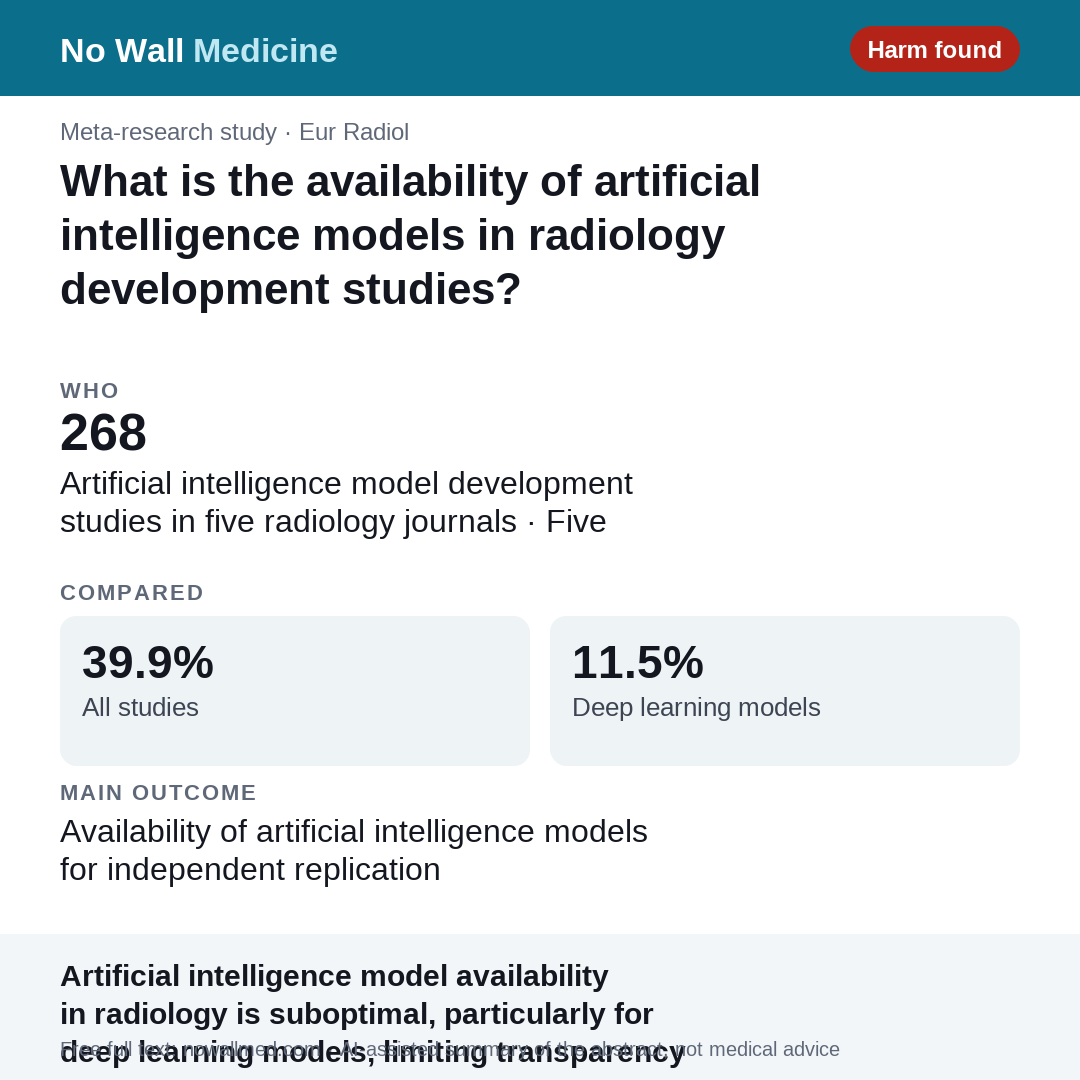
Availability and transparency of artificial intelligence models in radiology: a meta-research study
Meta-research studyHarm found
What is the availability of artificial intelligence models in radiology development studies?
Who
268
Artificial intelligence model development studies in five radiology journals · Five leading radiology journals
Compared
39.9%All studies (n = 107)
11.5%Deep learning models (n = 13)
Main outcome
Availability of artificial intelligence models for independent replication
Bottom line: Artificial intelligence model availability in radiology is suboptimal, particularly for deep learning models, limiting transparency and replicability.
Eur Radiol · 2025-03-17Download image
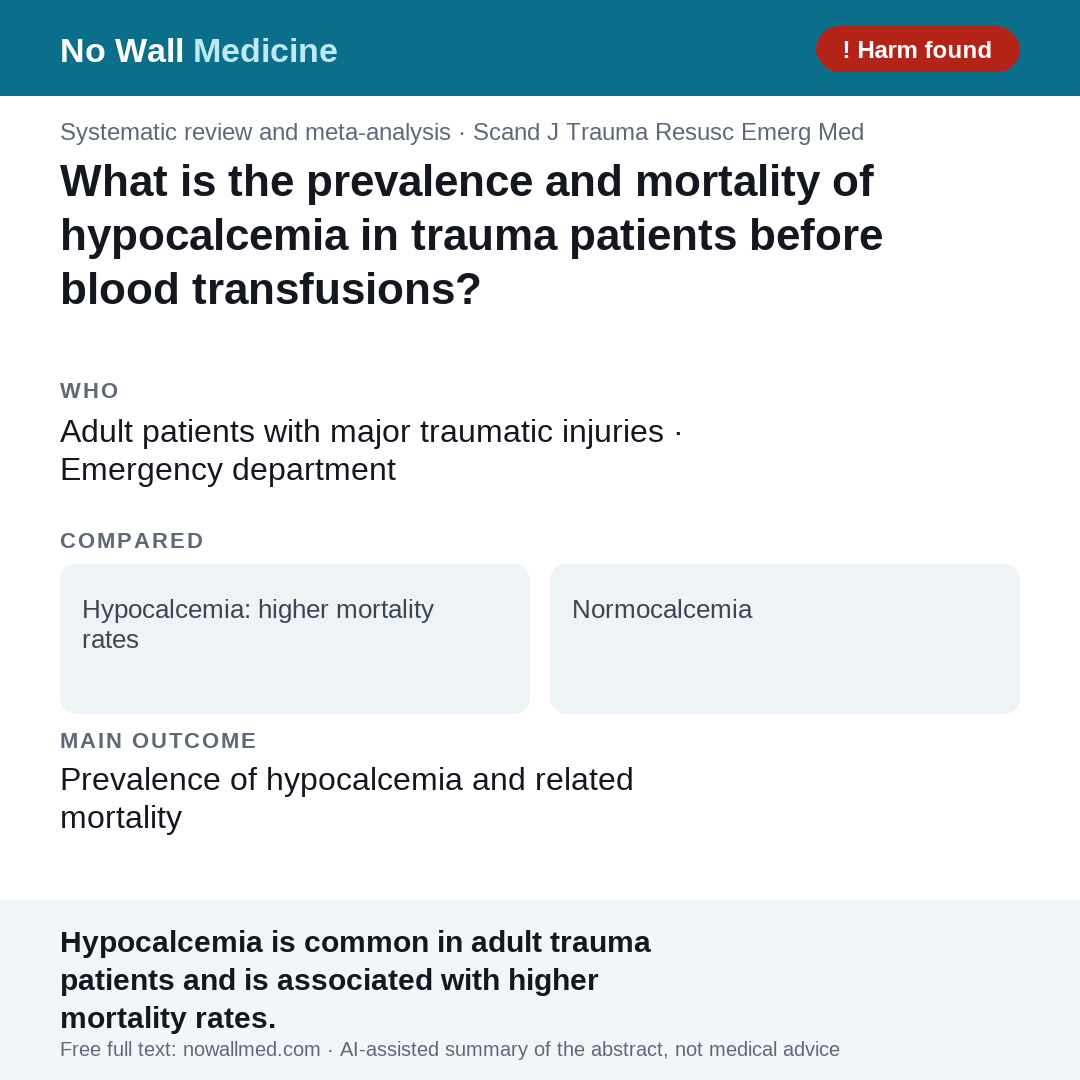
Assessing the gaps in cardiovascular disease risk assessment and management in primary care for Māori and Pacific peoples in Aotearoa New Zealand- a systematic review
Systematic review with narrative synthesisHarm found
Are there gaps in cardiovascular disease risk assessment and management for Māori and Pacific peoples?
Who
69
Māori and Pacific peoples in Aotearoa New Zealand · Aotearoa New Zealand
Compared
Māori and Pacific peoples: inadequate levels of CVDRA
Other ethnicities
Main outcome
cardiovascular disease risk assessment and management access
Bottom line: Māori and Pacific peoples face extensive and inequitable gaps in cardiovascular disease risk assessment and management compared to other ethnicities.
Funded by: The Heart Foundation of New Zealand and Healthier Lives National Science Challenge
Lancet Reg Health West Pac · 2025-03-17Download image
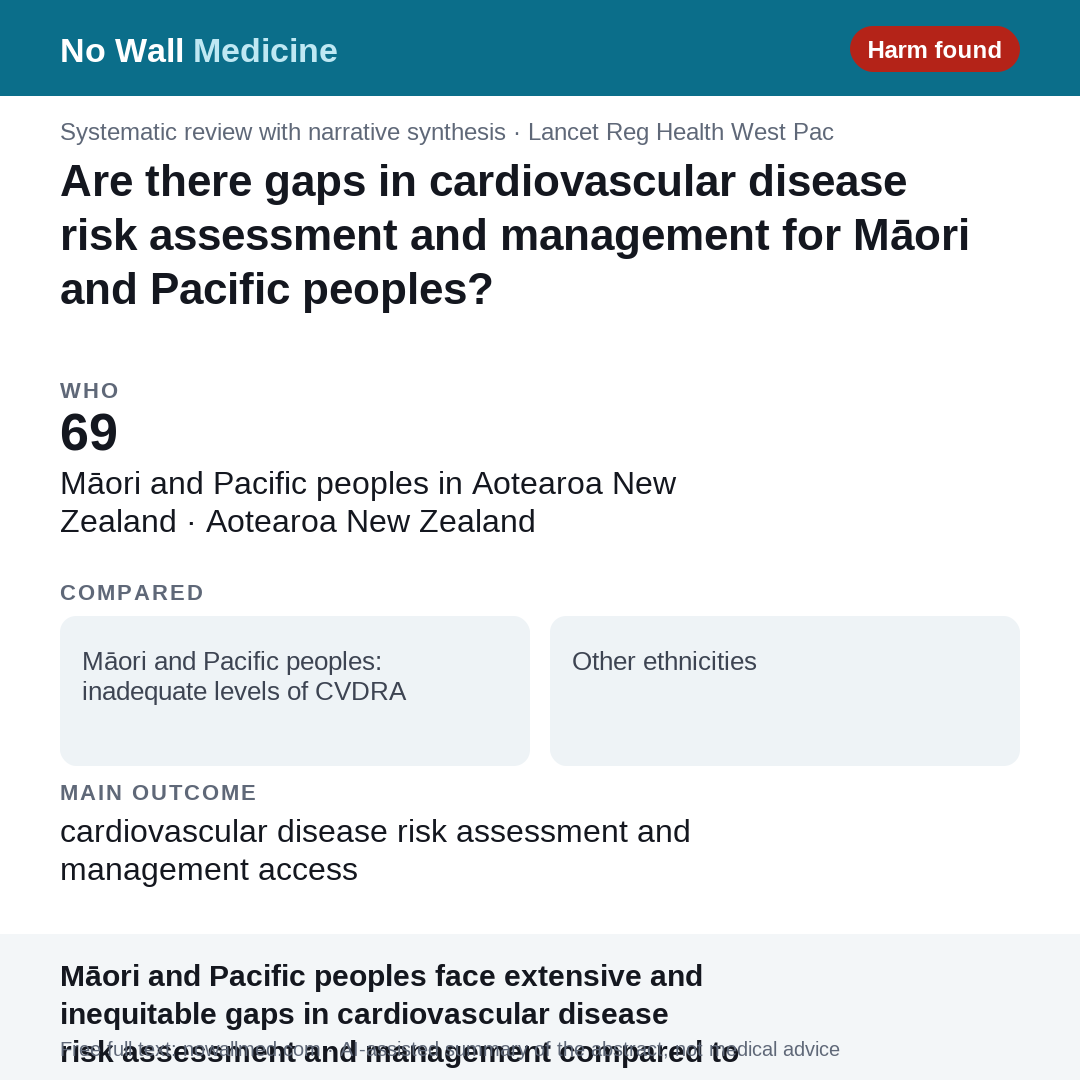
Systematic Review of Patient and Caregiver Involvement in CKD Research
Systematic reviewMixed results
What is the current landscape of patient and caregiver involvement in chronic kidney disease research?
Who
4500
Consumers in chronic kidney disease research · 15 countries
Compared
76%Consumers as informants
6%Consumers as drivers or commissioners
Main outcome
Nature and level of consumer involvement in research
Bottom line: Consumers are mostly involved in discrete activities with limited decision-making power in chronic kidney disease research.
Limitation: Need for ongoing evaluation of processes or impacts and consistent reporting.
Kidney Int Rep · 2025-03-17Download image
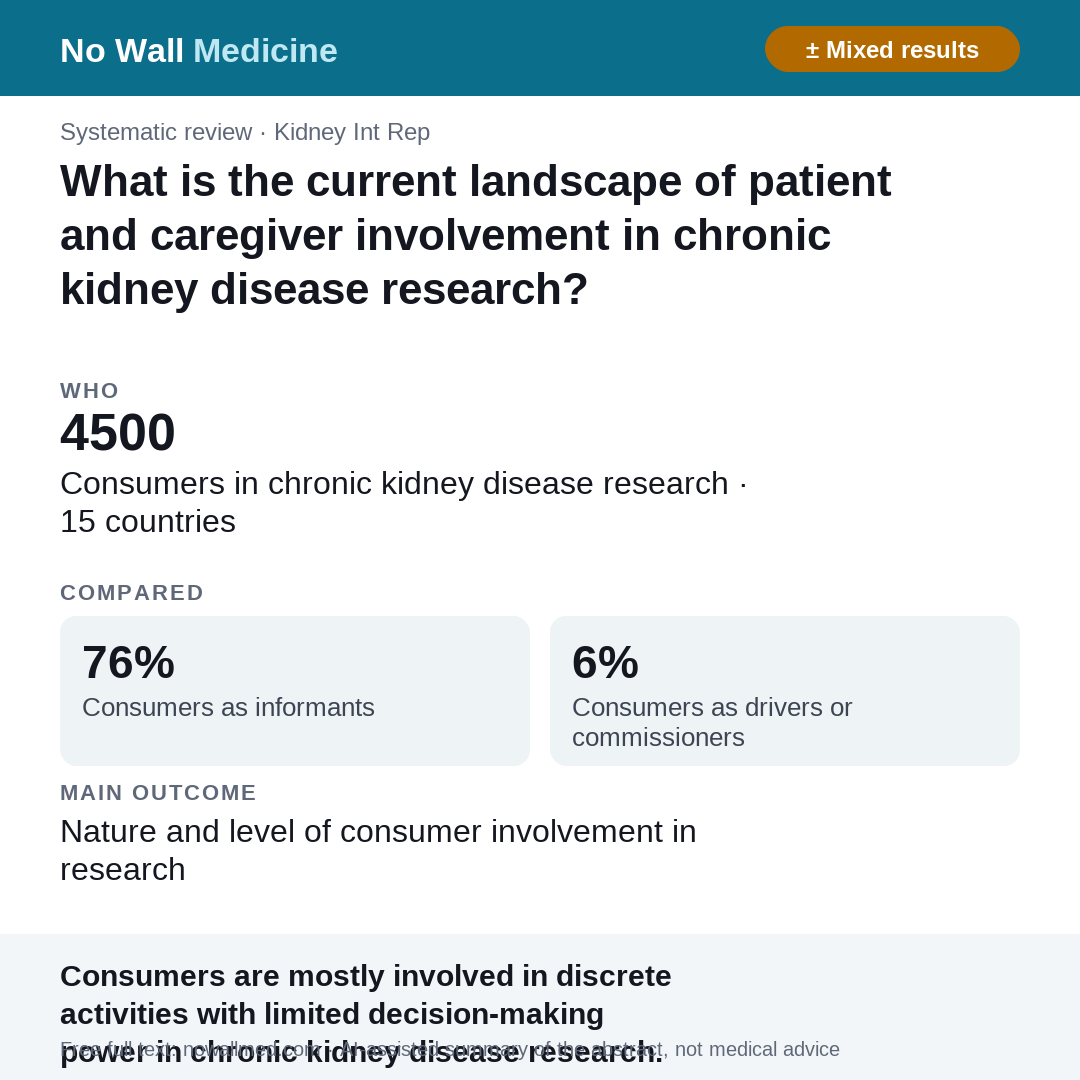
Return to work after major trauma: a systematic review
Systematic reviewUnclear result
What influences return to work after major trauma
Who
6907
Adults with major trauma
Compared
Younger patients
Older patients
Main outcome
Return to work
Bottom line: Younger patients may return to work better
Limitation: High risk of bias in study confounding
Scand J Trauma Resusc Emerg Med · 2025-03-17Download image
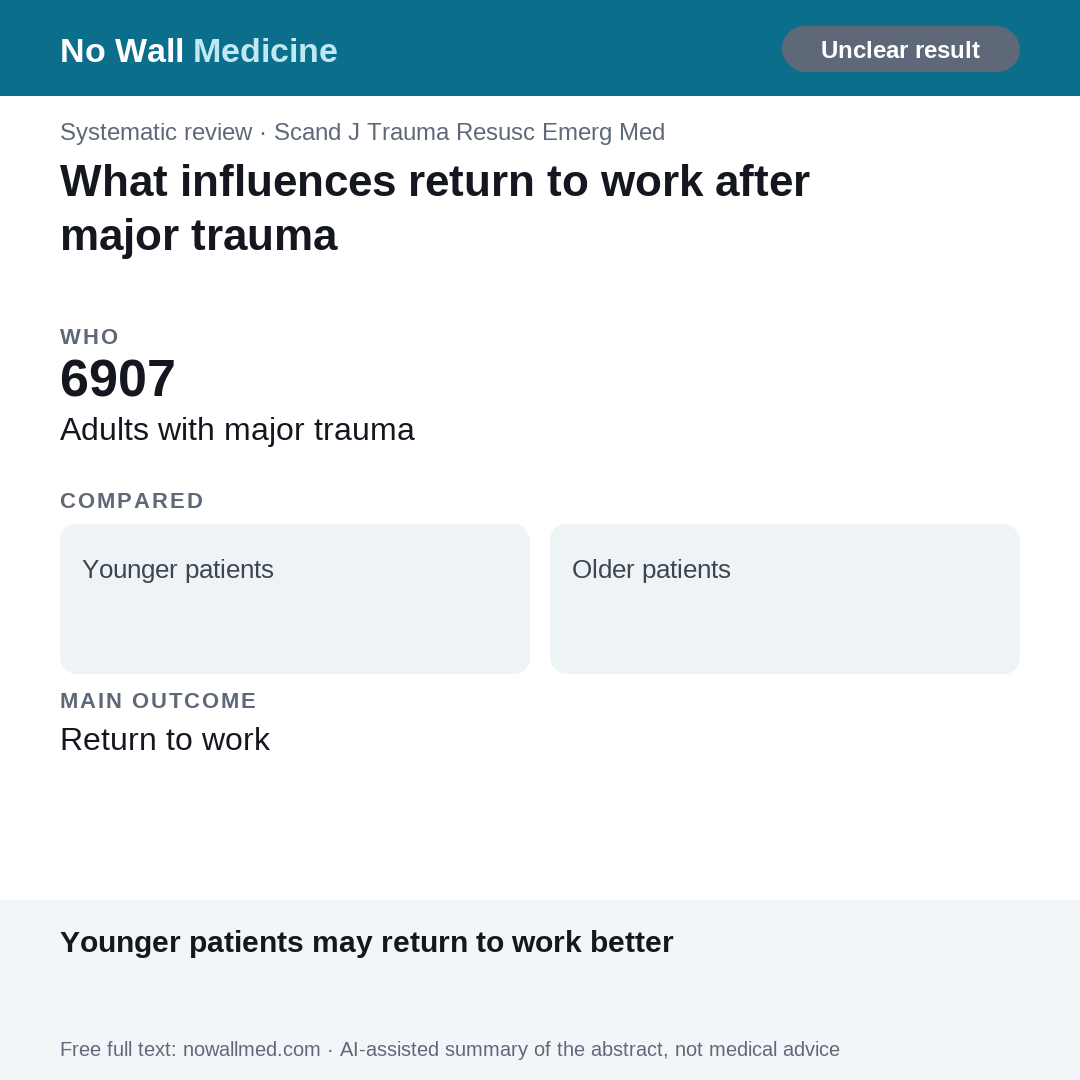
Prevalence and outcomes of hypocalcemia on ED arrival in traumatic patients before blood transfusions: a systematic review and meta-analysis
Systematic review and meta-analysisHarm found
What is the prevalence and mortality of hypocalcemia in trauma patients before blood transfusions?
Who
Adult patients with major traumatic injuries · Emergency department
Compared
Hypocalcemia: higher mortality rates
Normocalcemia
Main outcome
Prevalence of hypocalcemia and related mortality
Result: odds ratio 2.44 (95% CI 1.76-3.40)
Bottom line: Hypocalcemia is common in adult trauma patients and is associated with higher mortality rates.
Limitation: high heterogeneity (I2 99.8%) observed
Scand J Trauma Resusc Emerg Med · 2025-03-17Download image
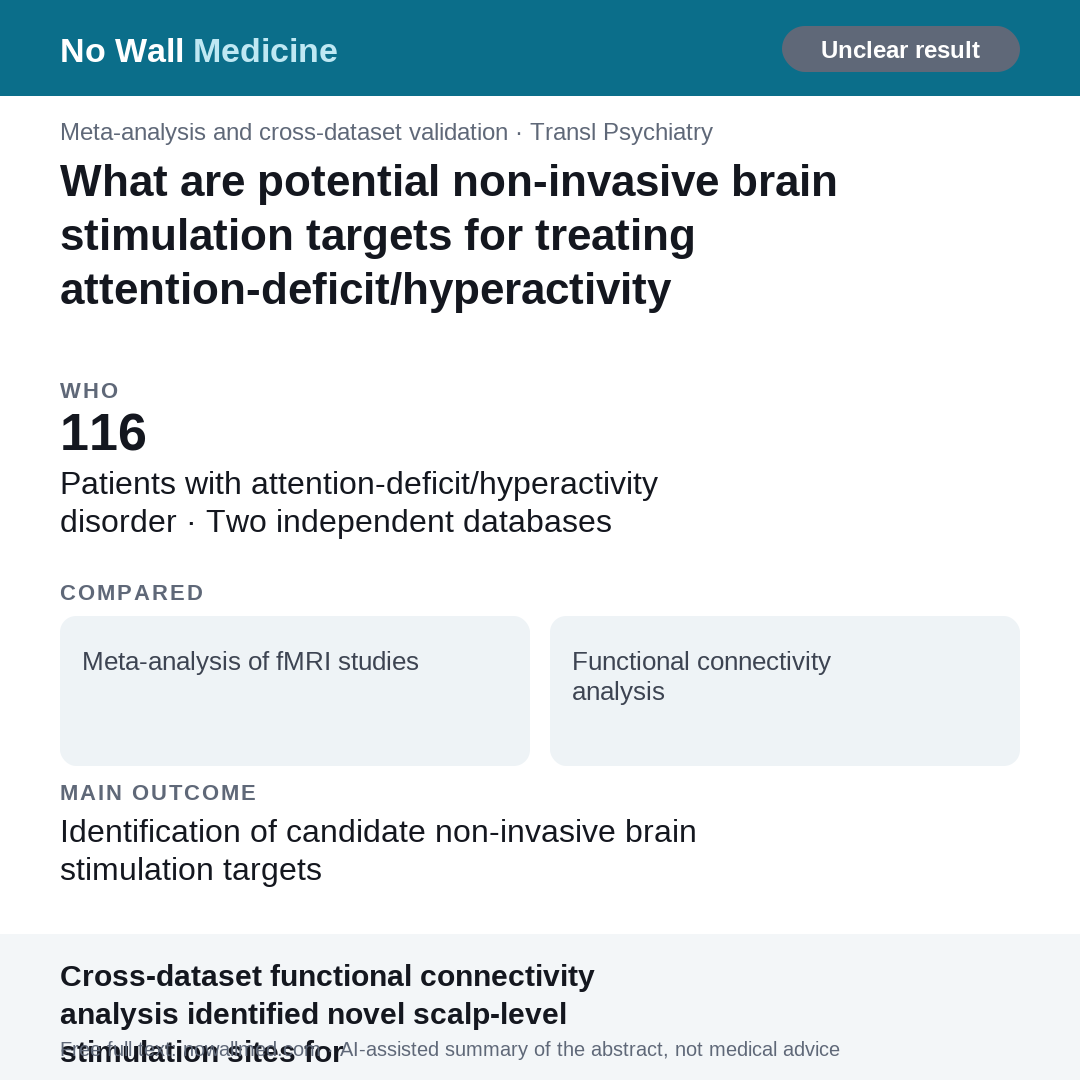
Potential locations for non-invasive brain stimulation in treating ADHD: Results from a cross-dataset validation of functional connectivity analysis
Meta-analysis and cross-dataset validationUnclear result
What are potential non-invasive brain stimulation targets for treating attention-deficit/hyperactivity disorder?
Who
116
Patients with attention-deficit/hyperactivity disorder · Two independent databases
Compared
Meta-analysis of fMRI studies
Functional connectivity analysis
Main outcome
Identification of candidate non-invasive brain stimulation targets
Bottom line: Cross-dataset functional connectivity analysis identified novel scalp-level stimulation sites for attention-deficit/hyperactivity disorder.
Transl Psychiatry · 2025-03-15Download image
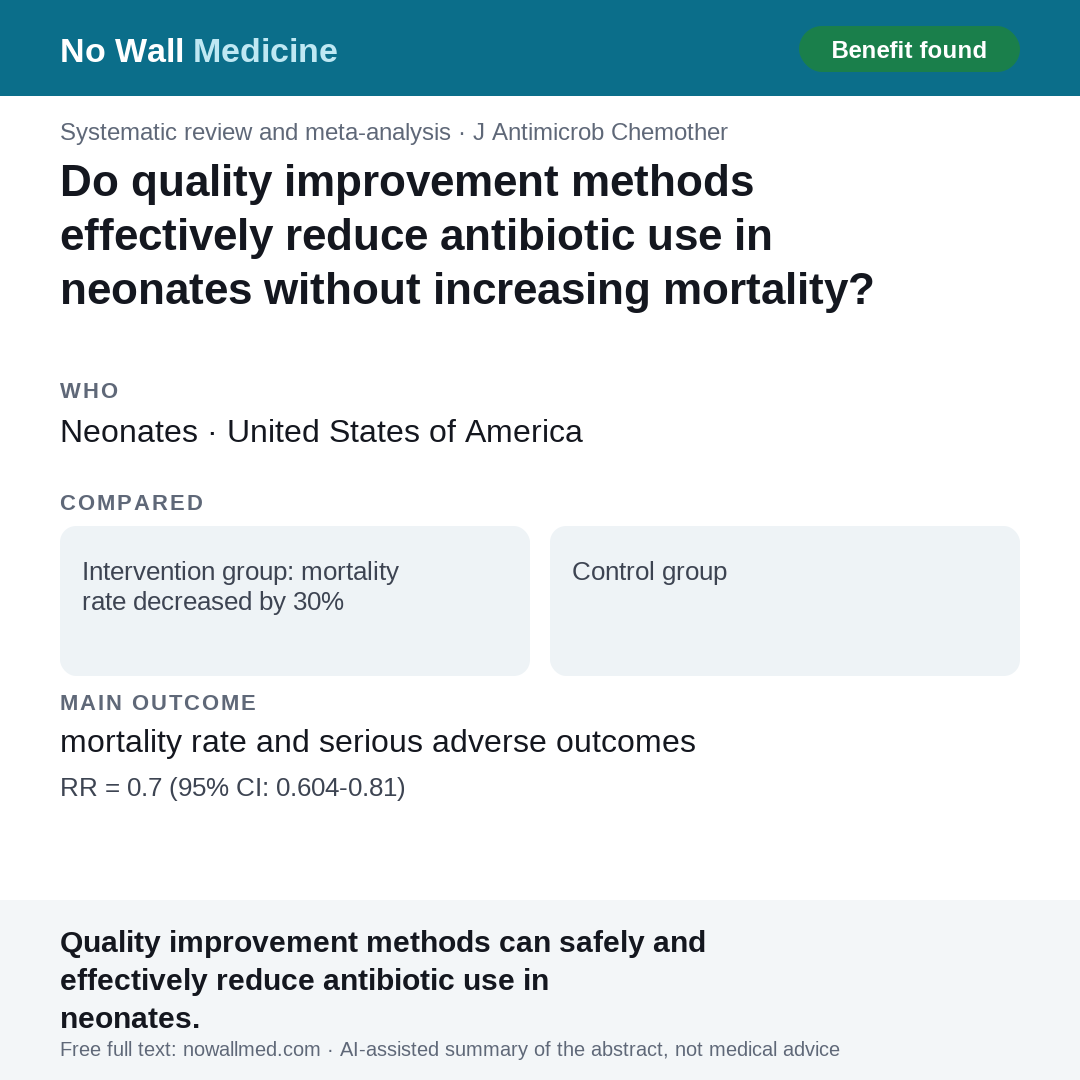
Applying quality improvement methods to reduce antibiotic use in neonates: a systematic review and meta-analysis
Systematic review and meta-analysisBenefit found
Do quality improvement methods effectively reduce antibiotic use in neonates without increasing mortality?
Who
Neonates · United States of America
Compared
Intervention group: mortality rate decreased by 30%
Control group
Main outcome
mortality rate and serious adverse outcomes
Result: RR = 0.7 (95% CI: 0.604-0.81)
Bottom line: Quality improvement methods can safely and effectively reduce antibiotic use in neonates.
J Antimicrob Chemother · 2025-03-14Download image
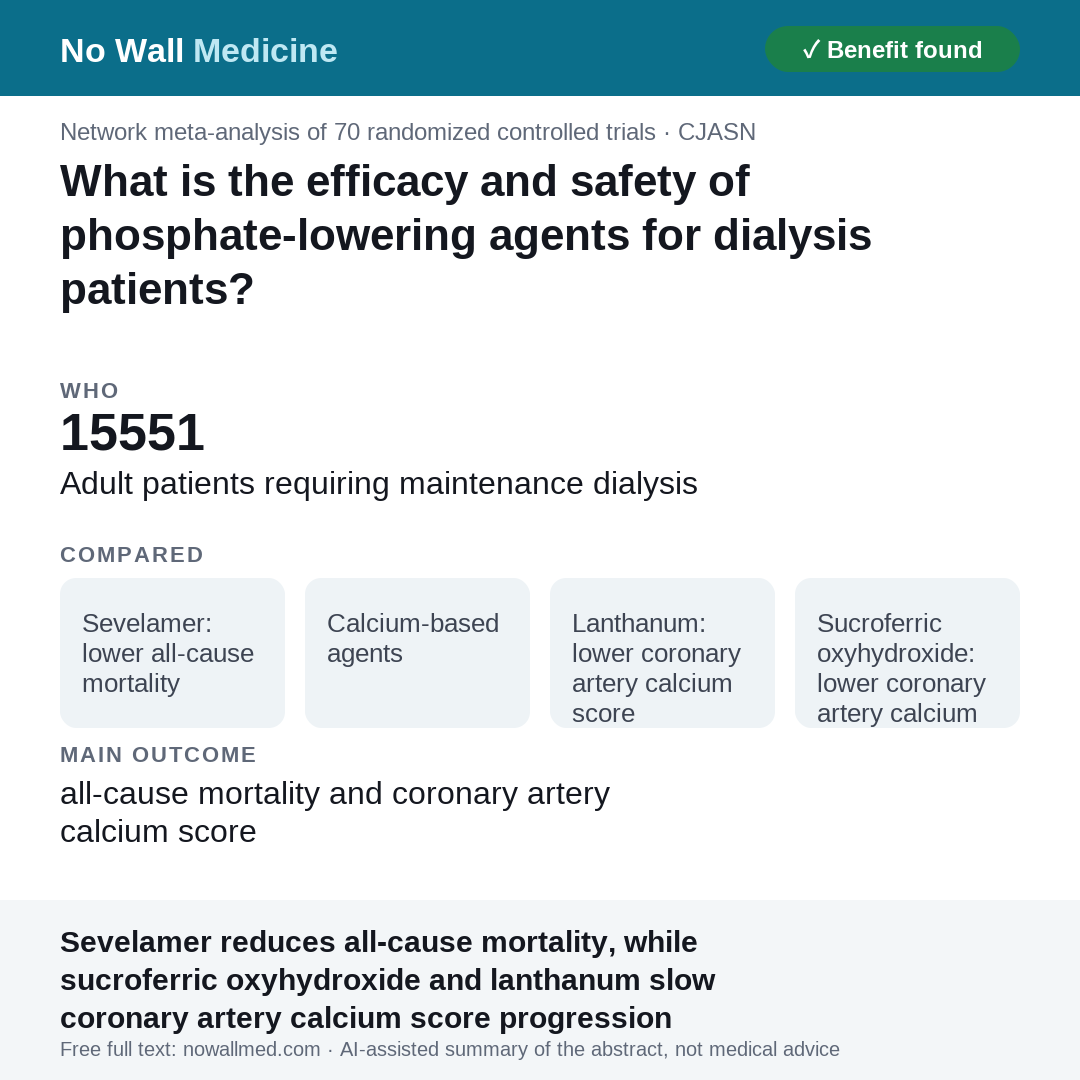
Efficacy and Safety of Phosphate-Lowering Agents for Adult Patients with CKD Requiring Dialysis: A Network Meta-Analysis
Network meta-analysis of 70 randomized controlled trialsBenefit found
What is the efficacy and safety of phosphate-lowering agents for dialysis patients?
Who
15551
Adult patients requiring maintenance dialysis
Compared
Sevelamer: lower all-cause mortality
Calcium-based agents
Lanthanum: lower coronary artery calcium score
Sucroferric oxyhydroxide: lower coronary artery calcium score
Main outcome
all-cause mortality and coronary artery calcium score
Result: risk ratio 0.59 (95% confidence interval 0.37 to 0.94)
Bottom line: Sevelamer reduces all-cause mortality, while sucroferric oxyhydroxide and lanthanum slow coronary artery calcium score progression compared to calcium-based agents.
CJASN · 2025-03-14Download image
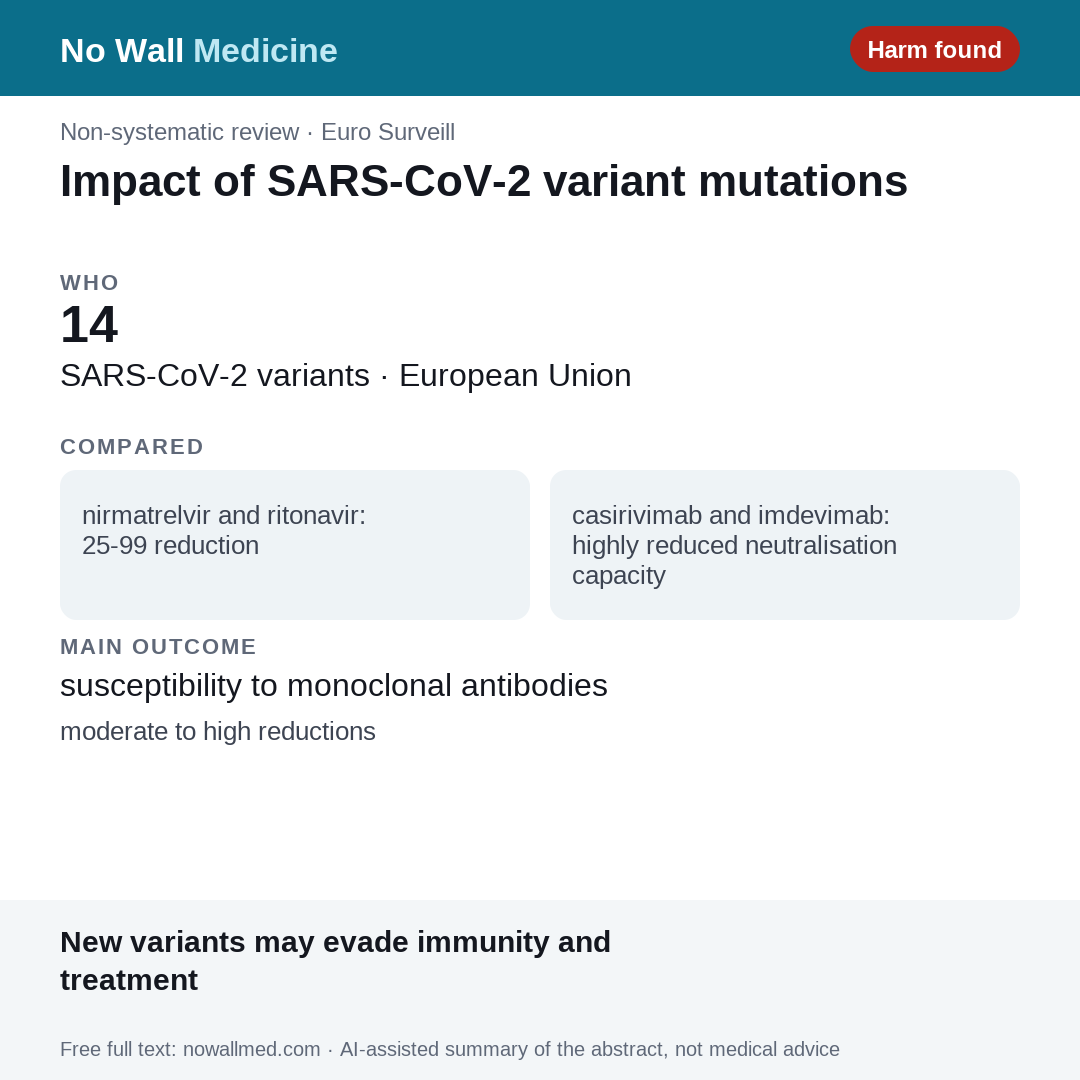
Impact of SARS-CoV-2 variant mutations on susceptibility to monoclonal antibodies and antiviral drugs: a non-systematic review, April 2022 to October 2024
Non-systematic reviewHarm found
Impact of SARS-CoV-2 variant mutations
Who
14
SARS-CoV-2 variants · European Union
Compared
nirmatrelvir and ritonavir: 25-99 reduction
casirivimab and imdevimab: highly reduced neutralisation capacity
Main outcome
susceptibility to monoclonal antibodies
Result: moderate to high reductions
Bottom line: New variants may evade immunity and treatment
Euro Surveill · 2025-03-14Download image
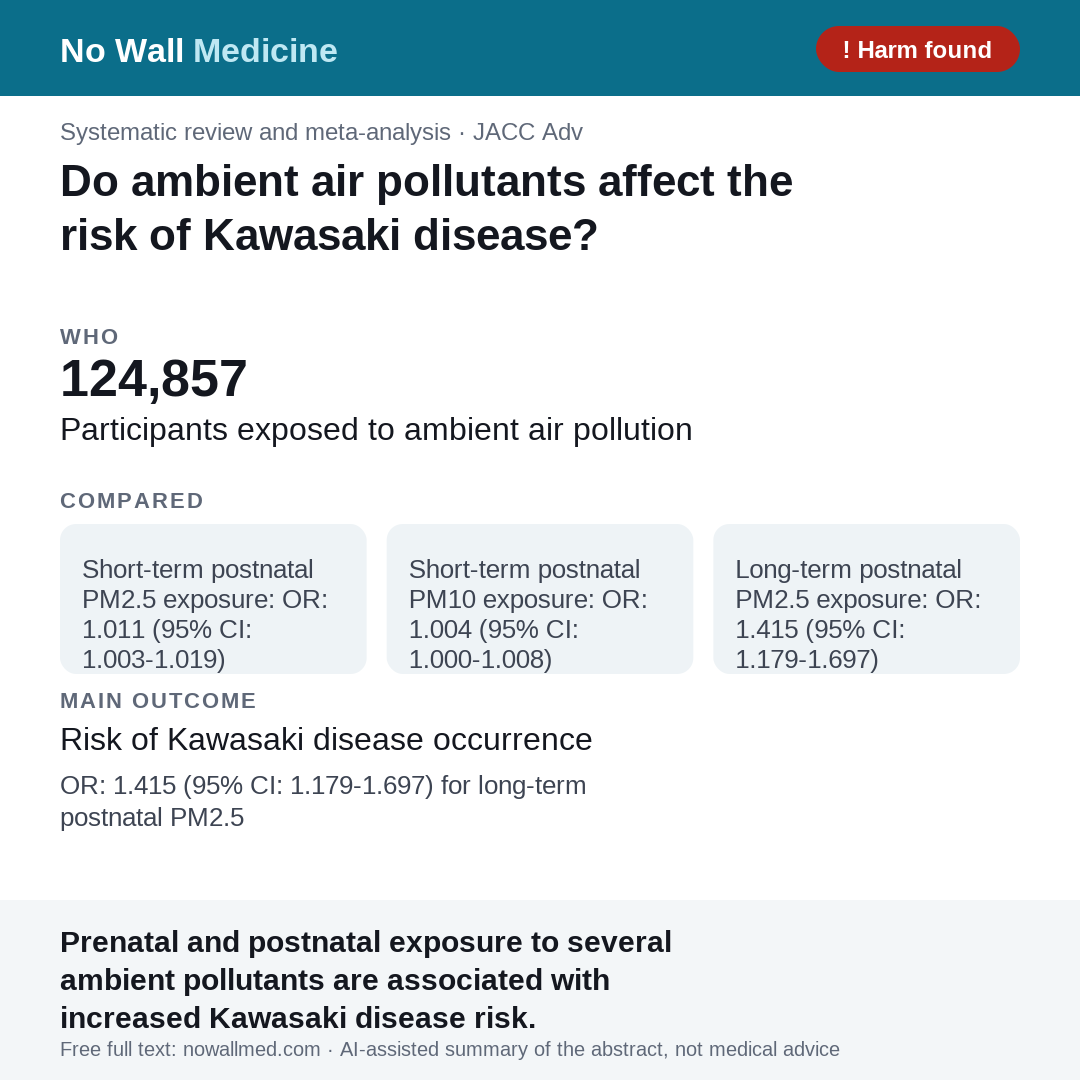
Prenatal and Postnatal Ambient Air Pollution and Kawasaki Disease: A Systematic Review and Meta-Analysis
Systematic review and meta-analysisHarm found
Do ambient air pollutants affect the risk of Kawasaki disease?
Who
124,857
Participants exposed to ambient air pollution
Compared
Short-term postnatal PM2.5 exposure: OR: 1.011 (95% CI: 1.003-1.019)
Short-term postnatal PM10 exposure: OR: 1.004 (95% CI: 1.000-1.008)
Long-term postnatal PM2.5 exposure: OR: 1.415 (95% CI: 1.179-1.697)
Main outcome
Risk of Kawasaki disease occurrence
Result: OR: 1.415 (95% CI: 1.179-1.697) for long-term postnatal PM2.5
Bottom line: Prenatal and postnatal exposure to several ambient pollutants are associated with increased Kawasaki disease risk.
Limitation: Seven studies were at high risk of bias.
JACC Adv · 2025-03-14Download image
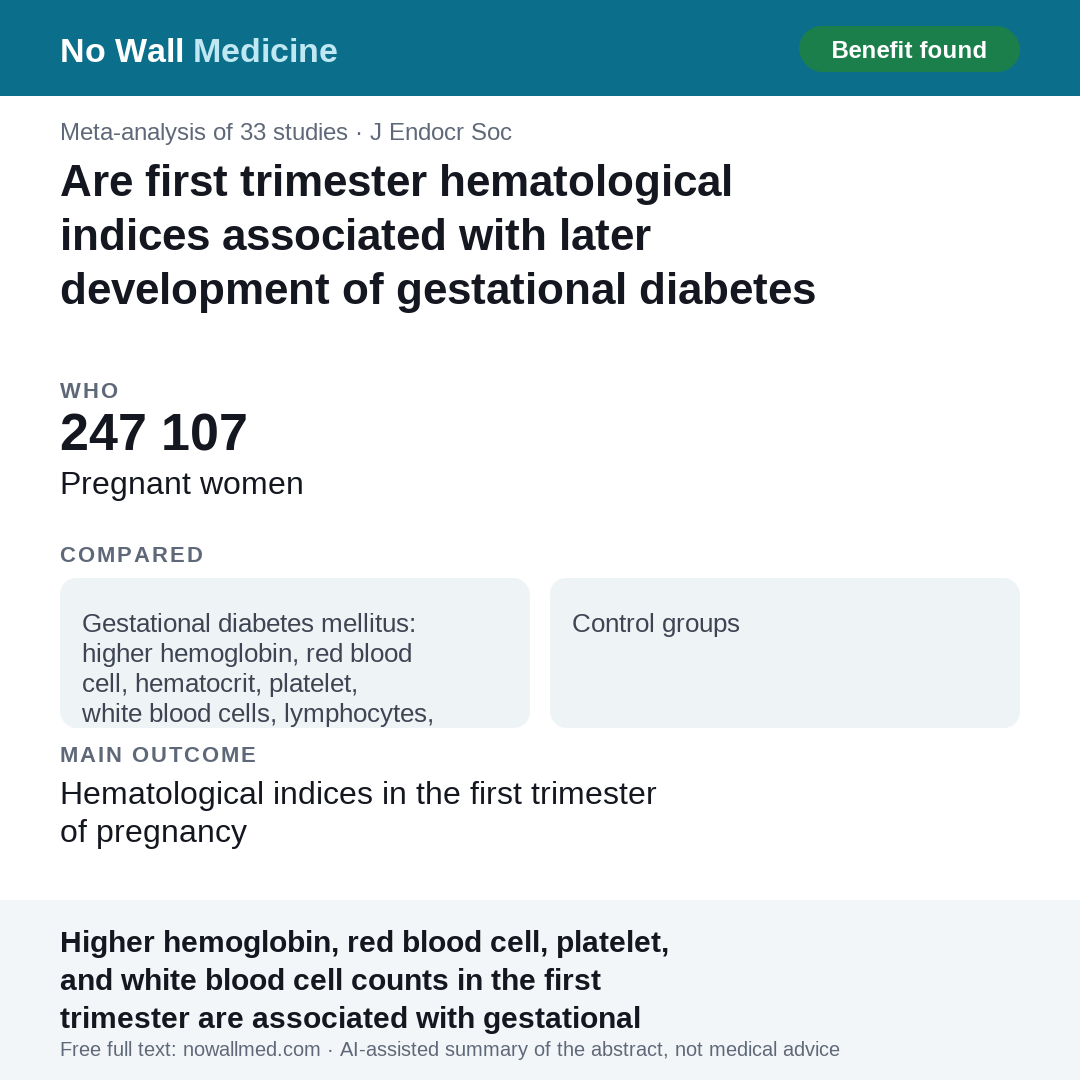
First Trimester Hematological Indices in Gestational Diabetes Mellitus: A Meta-Analysis
Meta-analysis of 33 studiesBenefit found
Are first trimester hematological indices associated with later development of gestational diabetes mellitus?
Who
247 107
Pregnant women
Compared
Gestational diabetes mellitus: higher hemoglobin, red blood cell, hematocrit, platelet, white blood cells, lymphocytes, neutrophils, and neutrophil-lymphocyte ratio
Control groups
Main outcome
Hematological indices in the first trimester of pregnancy
Result: standardized mean differences (95% CI) provided for multiple indices
Bottom line: Higher hemoglobin, red blood cell, platelet, and white blood cell counts in the first trimester are associated with gestational diabetes.
J Endocr Soc · 2025-03-14Download image
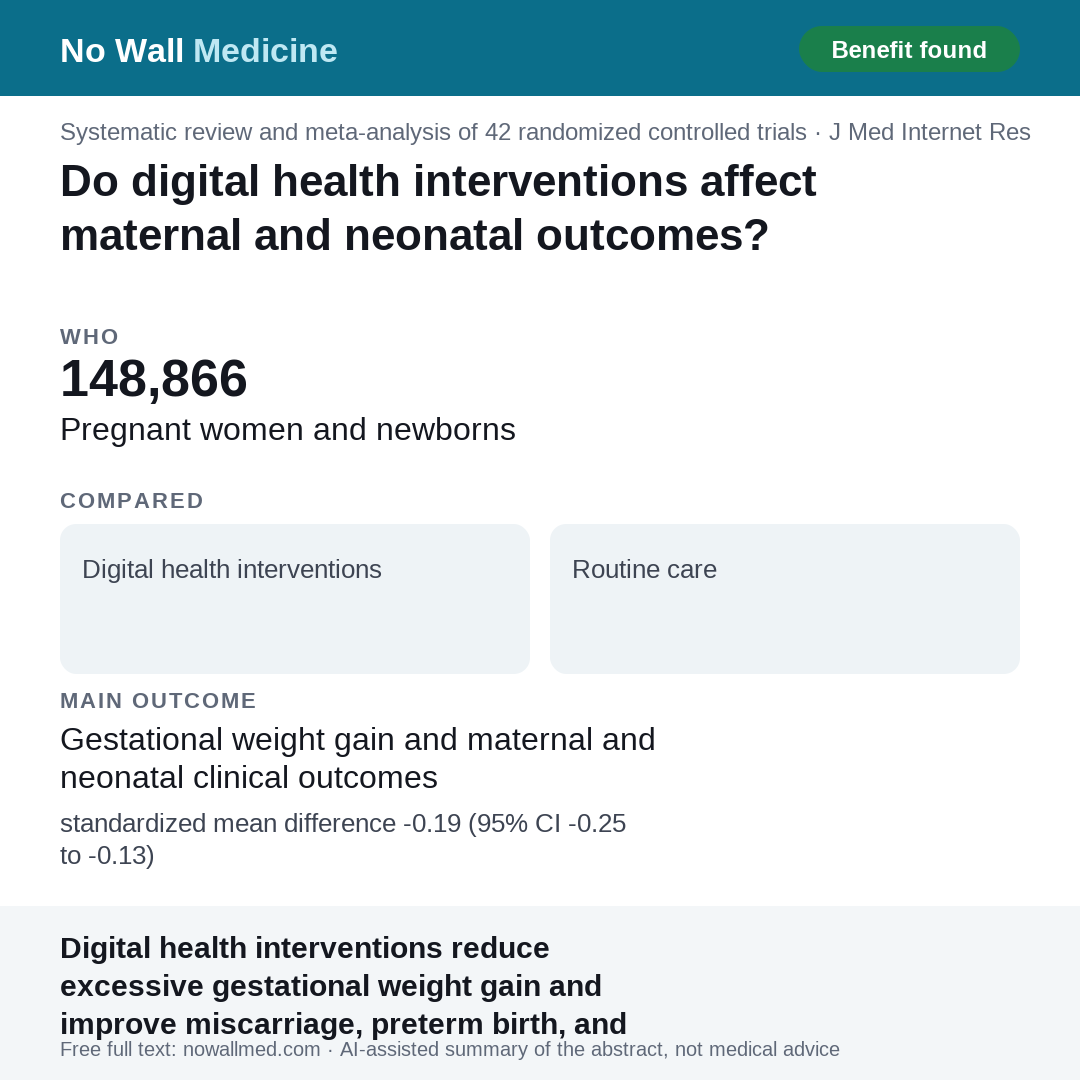
Association of Digital Health Interventions With Maternal and Neonatal Outcomes: Systematic Review and Meta-Analysis
Systematic review and meta-analysis of 42 randomized controlled trialsBenefit found
Do digital health interventions affect maternal and neonatal outcomes?
Who
148,866
Pregnant women and newborns
Compared
Digital health interventions
Routine care
Main outcome
Gestational weight gain and maternal and neonatal clinical outcomes
Result: standardized mean difference -0.19 (95% CI -0.25 to -0.13)
Bottom line: Digital health interventions reduce excessive gestational weight gain and improve miscarriage, preterm birth, and complex neonatal outcomes.
J Med Internet Res · 2025-03-14Download image
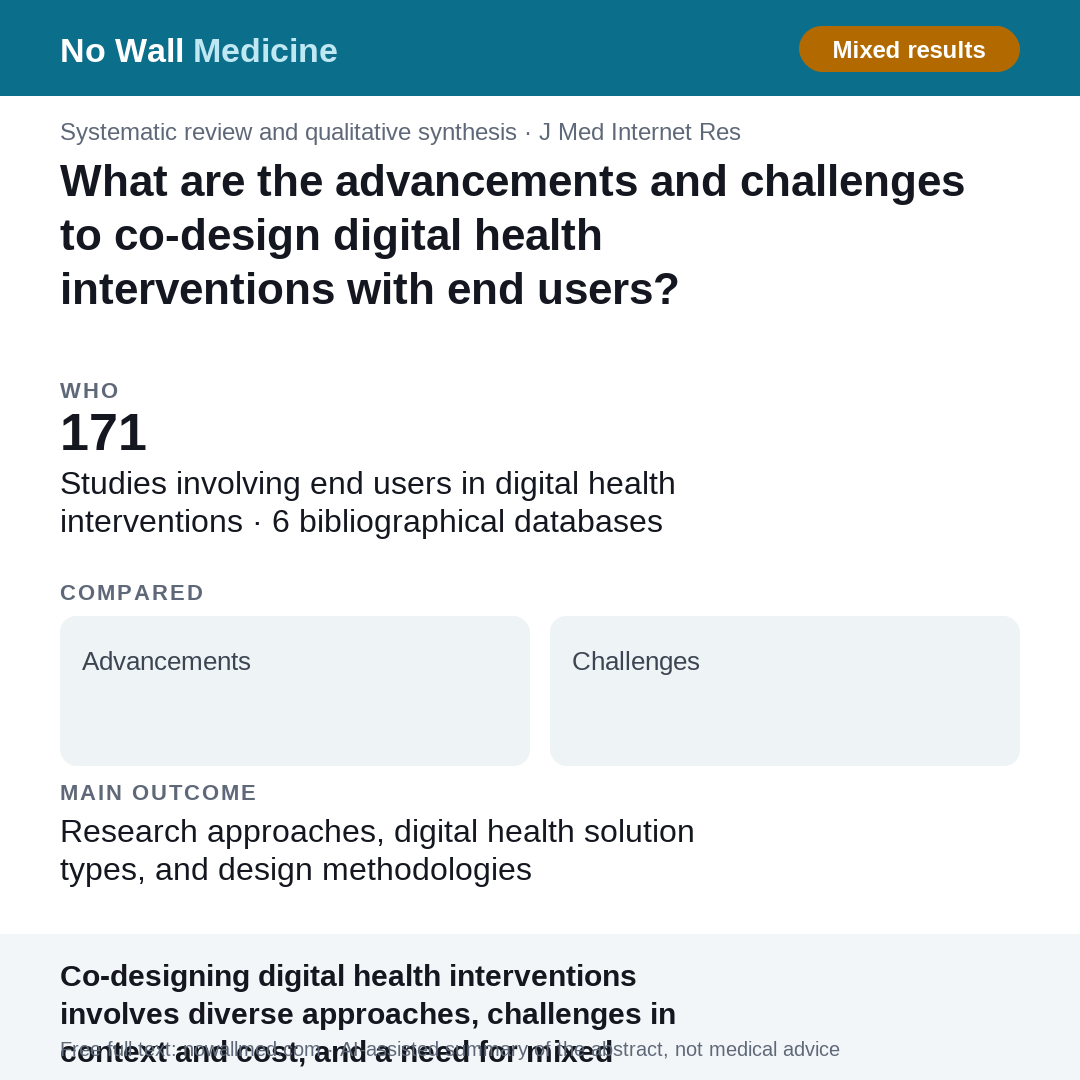
Examining Challenges to Co-Design Digital Health Interventions With End Users: Systematic Review
Systematic review and qualitative synthesisMixed results
What are the advancements and challenges to co-design digital health interventions with end users?
Who
171
Studies involving end users in digital health interventions · 6 bibliographical databases
Compared
Advancements
Challenges
Main outcome
Research approaches, digital health solution types, and design methodologies
Bottom line: Co-designing digital health interventions involves diverse approaches, challenges in context and cost, and a need for mixed methods.
J Med Internet Res · 2025-03-14Download image
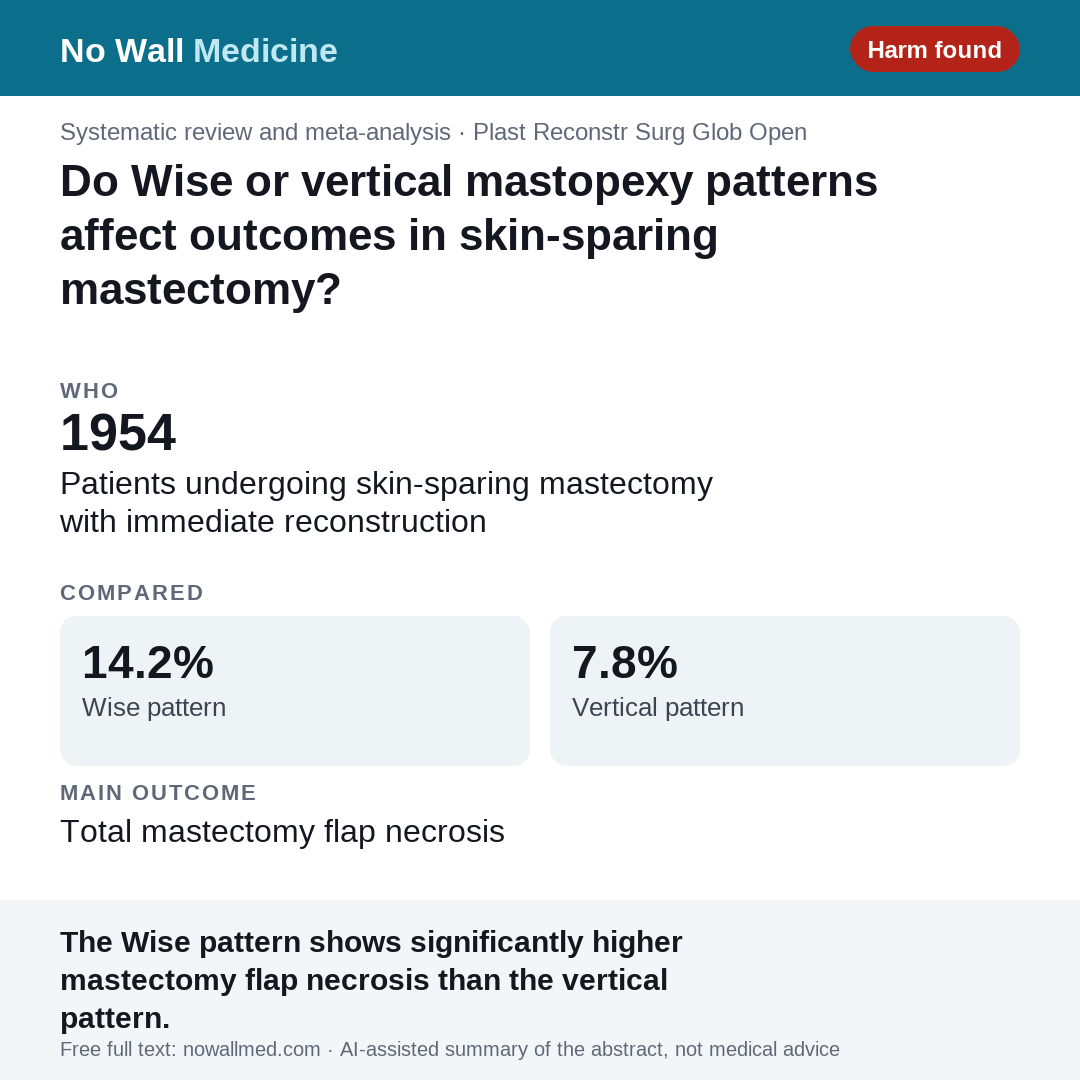
Wise Versus Vertical Mastopexy Pattern Skin-reducing Mastectomy With Immediate Breast Reconstruction: Systematic Review and Meta-analysis
Systematic review and meta-analysisHarm found
Do Wise or vertical mastopexy patterns affect outcomes in skin-sparing mastectomy?
Who
1954
Patients undergoing skin-sparing mastectomy with immediate reconstruction
Compared
14.2%Wise pattern (95% confidence interval: 10%-20%)
7.8%Vertical pattern (95% confidence interval: 5%-12%)
Main outcome
Total mastectomy flap necrosis
Bottom line: The Wise pattern shows significantly higher mastectomy flap necrosis than the vertical pattern.
Limitation: Future studies should focus on larger, high-quality randomized controlled trials.
Plast Reconstr Surg Glob Open · 2025-03-14Download image
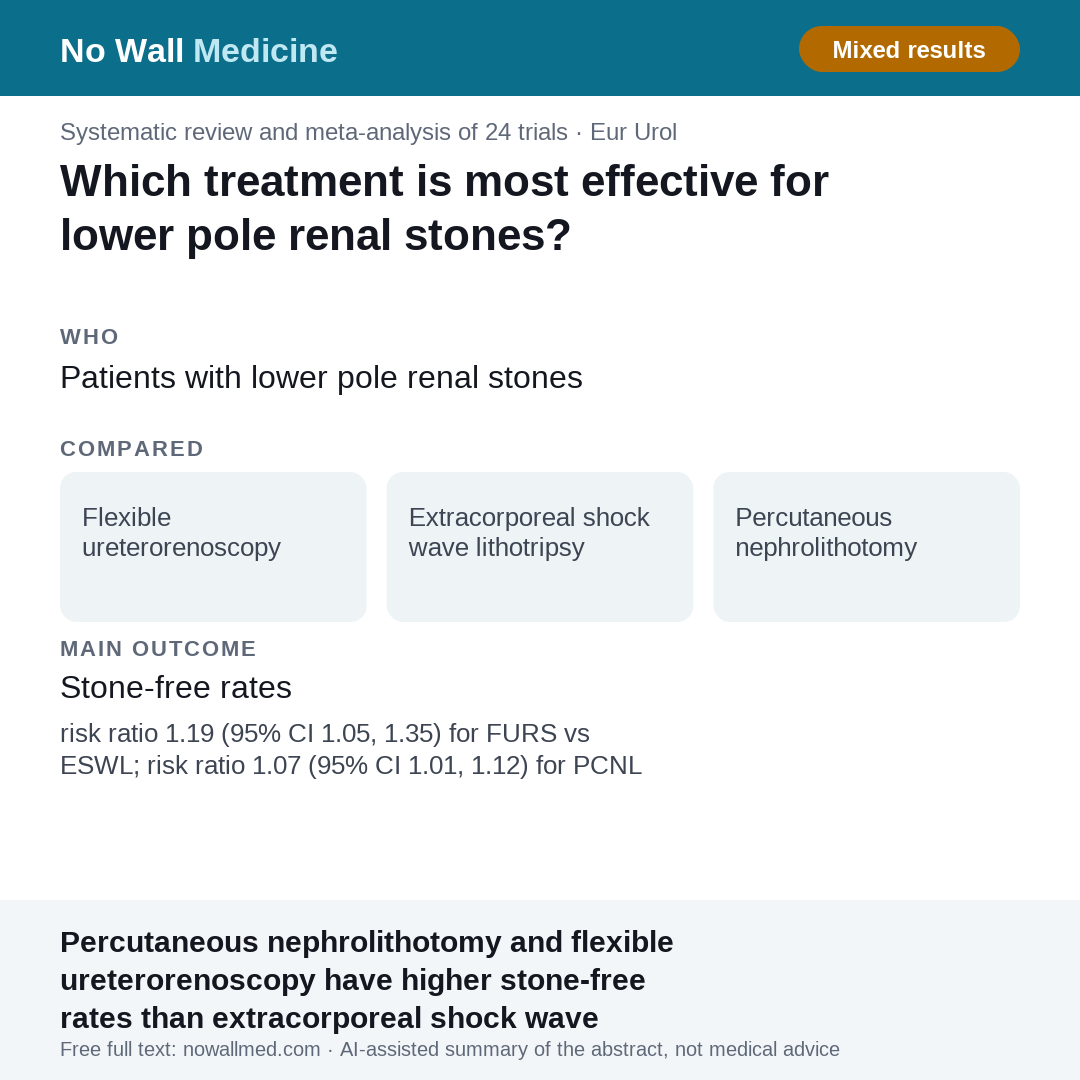
Updated Systematic Review and Meta-analysis of Extracorporeal Shock Wave Lithotripsy, Flexible Ureterorenoscopy, and Percutaneous Nephrolithotomy for Lower Pole Renal Stones
Systematic review and meta-analysis of 24 trialsMixed results
Which treatment is most effective for lower pole renal stones?
Who
Patients with lower pole renal stones
Compared
Flexible ureterorenoscopy
Extracorporeal shock wave lithotripsy
Percutaneous nephrolithotomy
Main outcome
Stone-free rates
Result: risk ratio 1.19 (95% CI 1.05, 1.35) for FURS vs ESWL; risk ratio 1.07 (95% CI 1.01, 1.12) for PCNL vs FURS; risk ratio 1.42 (95% CI 1.28, 1.58) for PCNL vs ESWL
Bottom line: Percutaneous nephrolithotomy and flexible ureterorenoscopy have higher stone-free rates than extracorporeal shock wave lithotripsy.
Eur Urol · 2025-03-13Download image
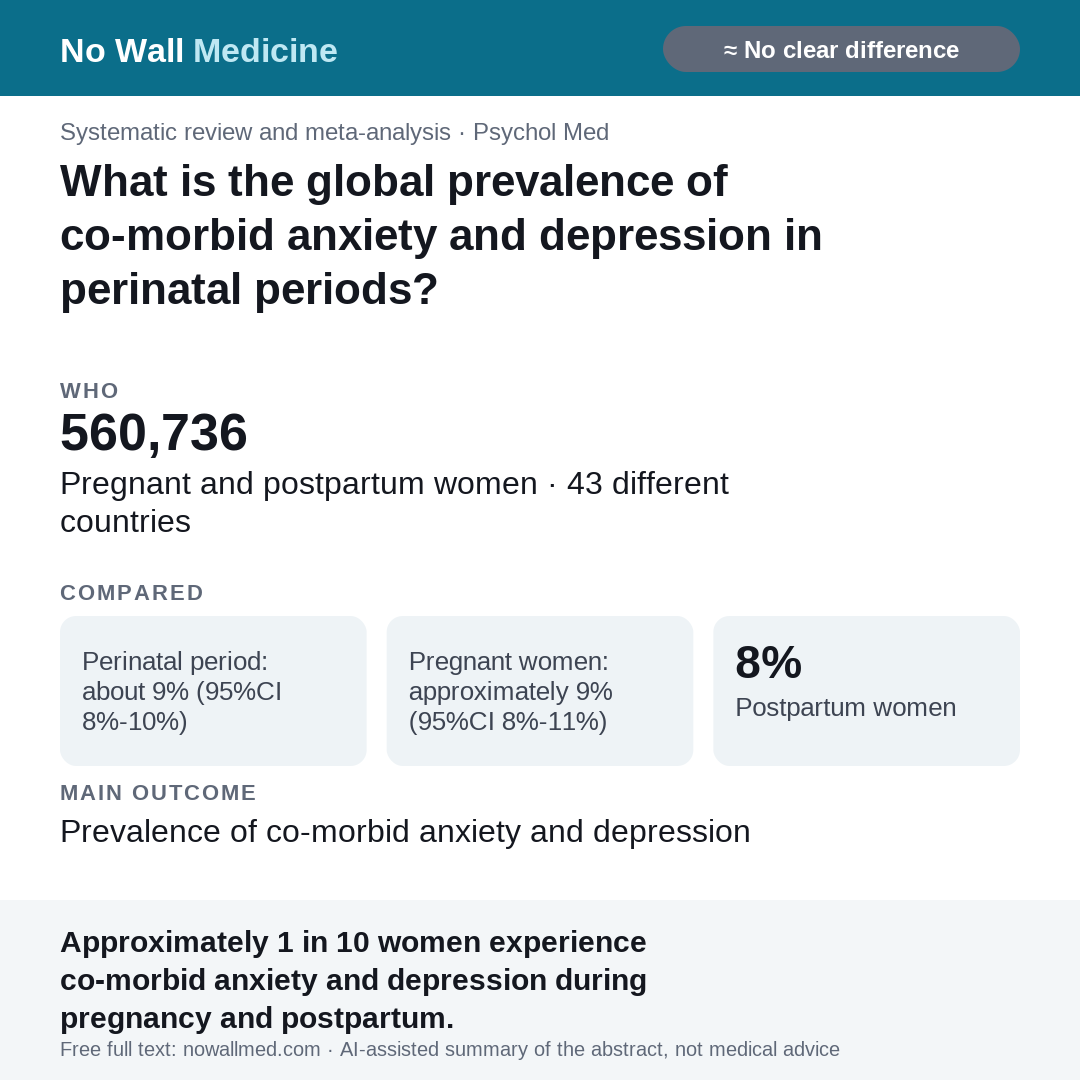
Prevalence of co-morbid anxiety and depression in pregnancy and postpartum: a systematic review and meta-analysis
Systematic review and meta-analysisNo clear difference
What is the global prevalence of co-morbid anxiety and depression in perinatal periods?
Who
560,736
Pregnant and postpartum women · 43 different countries
Compared
Perinatal period: about 9% (95%CI 8%-10%)
Pregnant women: approximately 9% (95%CI 8%-11%)
8%Postpartum women (95%CI 7%-10%)
Main outcome
Prevalence of co-morbid anxiety and depression
Bottom line: Approximately 1 in 10 women experience co-morbid anxiety and depression during pregnancy and postpartum.
Limitation: Prevalence varied significantly by assessment time points, country, study design, and assessment tool.
Psychol Med · 2025-03-13Download image
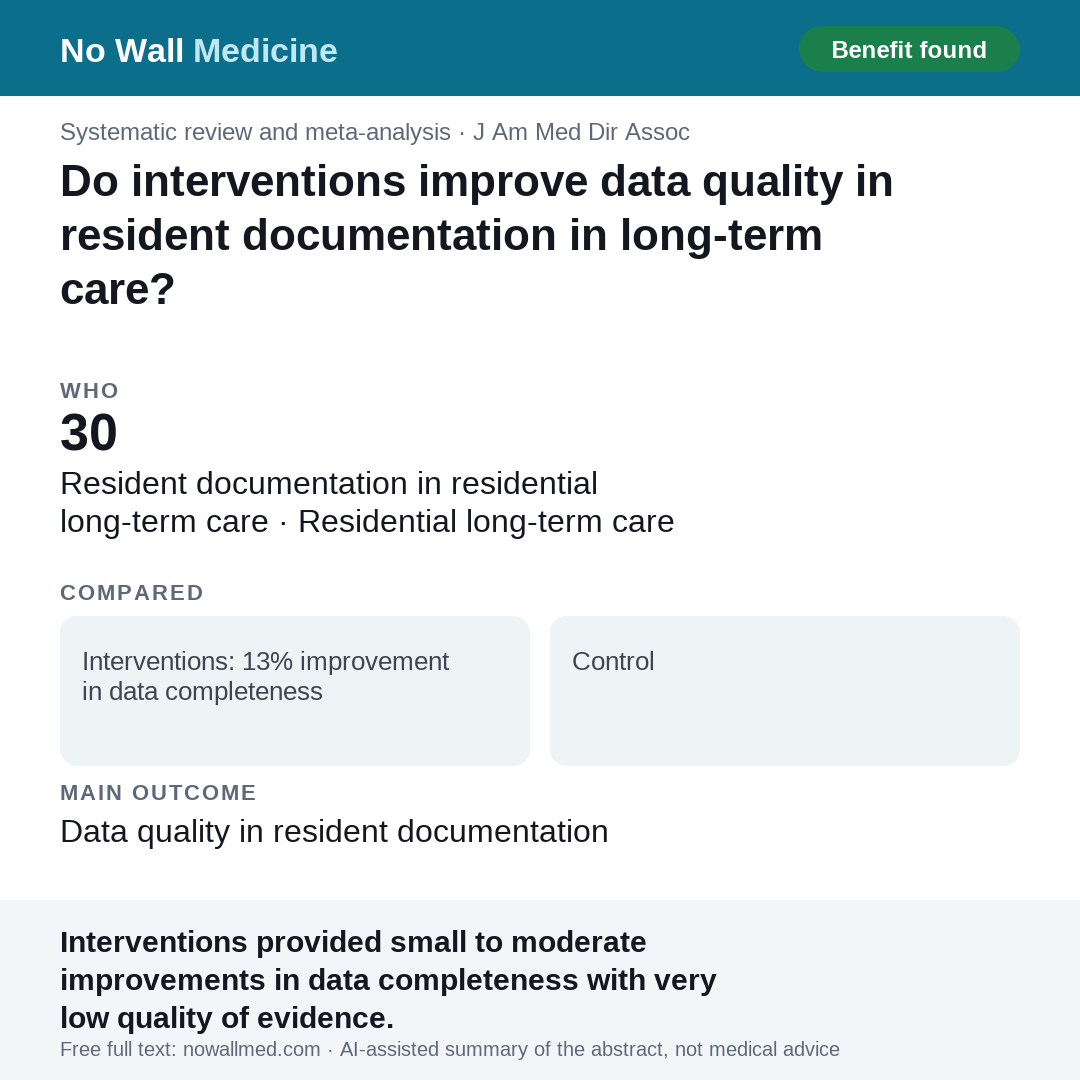
Data Quality of Resident Documentation in Long-Term Care: A Systematic Review and Meta-analysis
Systematic review and meta-analysisBenefit found
Do interventions improve data quality in resident documentation in long-term care?
Who
30
Resident documentation in residential long-term care · Residential long-term care
Compared
Interventions: 13% improvement in data completeness
Control
Main outcome
Data quality in resident documentation
Result: 13% (95% CI, 7%-20%)
Bottom line: Interventions provided small to moderate improvements in data completeness with very low quality of evidence.
Limitation: Most findings were limited to completeness; timeliness and accuracy remain understudied.
J Am Med Dir Assoc · 2025-03-13Download image