Visual abstracts
New randomized trials and meta-analyses from leading journals at a glance: who was studied, what was compared, and what was found. Every paper is free to read in full.
All specialtiesCardiology 4877Oncology 4138Gastroenterology & Hepatology 1942Infectious Disease 3837Neurology 1905Psychiatry & Mental Health 2273Pulmonology 2143Critical Care 1365Endocrinology & Diabetes 2580Pediatrics 2980Surgery 2559Orthopedics & Sports Medicine 931Neurosurgery 537Cardiothoracic & Vascular Surgery 674Plastic & Reconstructive Surgery 591Nephrology 1133Rheumatology 823Hematology 1109Dermatology 621Ophthalmology 543Obstetrics & Gynecology 1686Public & Global Health 1058Radiology & Imaging 648Anesthesiology 986Urology 764ENT (Otolaryngology) 503Emergency Medicine 511Allergy & Immunology 313Geriatrics 981Family Medicine & Primary Care 562Medical Genetics & Genomics 676Pathology & Laboratory Medicine 159Physical Medicine & Rehabilitation 757Palliative Care 444Nutrition 1588Digital Health & AI 2201General Medicine 321
Using Virtual Reality to Improve Outcomes Related to Quality of Life Among Older Adults With Serious Illnesses: Systematic Review of Randomized Controlled Trials
Systematic review of randomized controlled trialsBenefit found
Does virtual reality improve quality of life among patients with serious illnesses?
Who
24
Patients with serious illnesses
Compared
88%Studies reporting quality of life improvement (21/24)
67%Studies with high risk of bias (16/24)
Main outcome
Patient quality of life
Bottom line: Virtual reality shows potential to mitigate pain, anxiety, depression, and improve mobility in patients with serious illnesses.
Limitation: Most studies did not provide detailed information about unassisted or assisted use.
J Med Internet Res · 2025-02-26Download image

Telehealth adoption in palliative care: a systematic review of patient barriers and facilitators
Systematic reviewMixed results
What are the barriers and facilitators of telehealth adoption for patients with advanced cancer?
Who
Patients with advanced cancer in palliative care
Compared
Barriers: software and hardware failures, technical issues, language barrier, aging and medical issues
Facilitators: independence, control, comfort, security and empowerment
Main outcome
Barriers and facilitators of telehealth adoption
Bottom line: Telehealth is broadly accepted and provides empowerment, despite technical, language, and age-related barriers.
BMC Palliat Care · 2025-02-26Download image

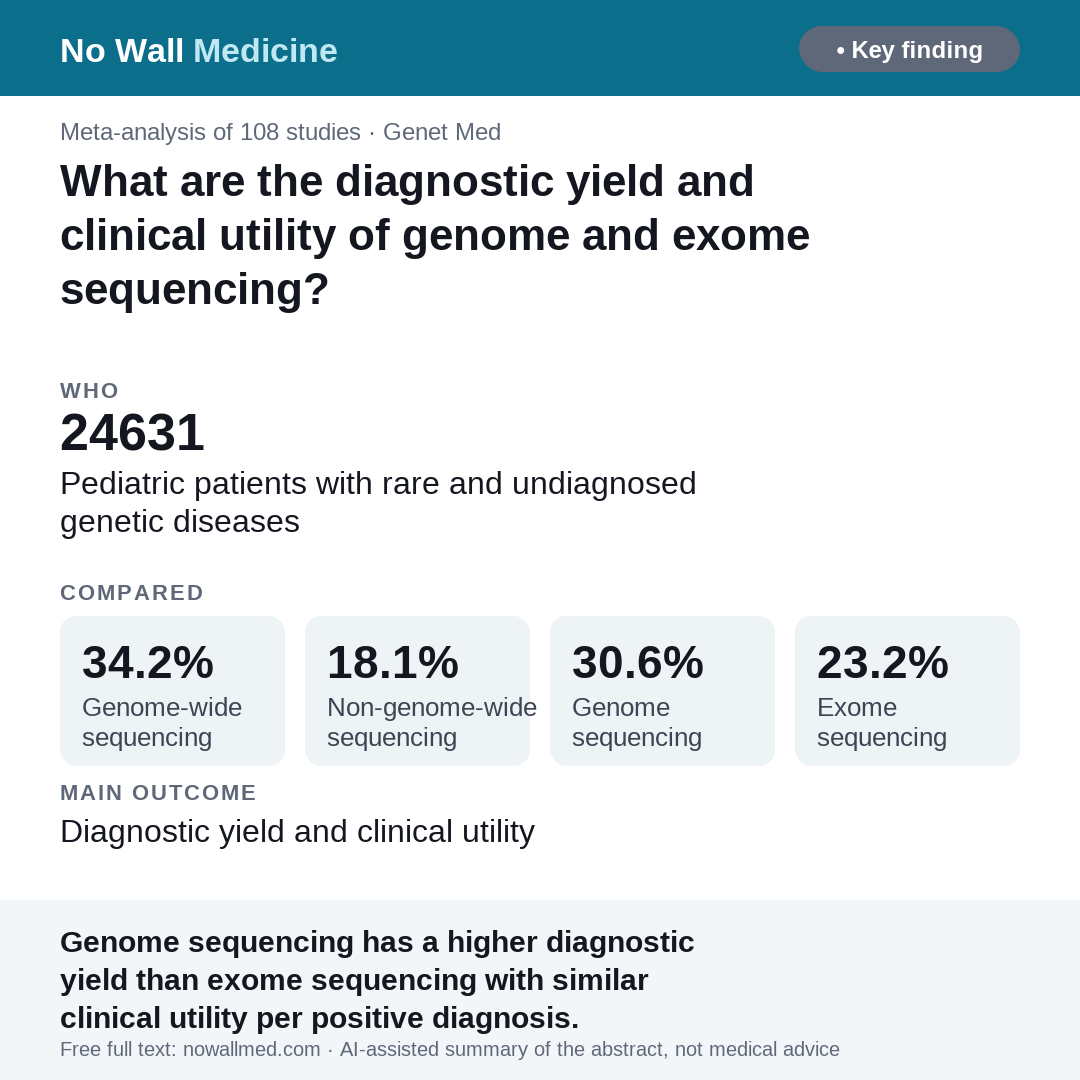
A meta-analysis of diagnostic yield and clinical utility of genome and exome sequencing in pediatric rare and undiagnosed genetic diseases
Meta-analysis of 108 studiesBenefit found
What are the diagnostic yield and clinical utility of genome and exome sequencing?
Who
24631
Pediatric patients with rare and undiagnosed genetic diseases
Compared
34.2%Genome-wide sequencing (95% CI: 27.6-41.5)
18.1%Non-genome-wide sequencing (95% CI: 13.1-24.6)
30.6%Genome sequencing (95% CI: 18.6-45.9)
23.2%Exome sequencing (95% CI: 18.5-28.7)
Main outcome
Diagnostic yield and clinical utility
Result: 2.4-times odds of diagnosis (95% CI: 1.40-4.04)
Bottom line: Genome sequencing has a higher diagnostic yield than exome sequencing with similar clinical utility per positive diagnosis.
Genet Med · 2025-02-25Download image
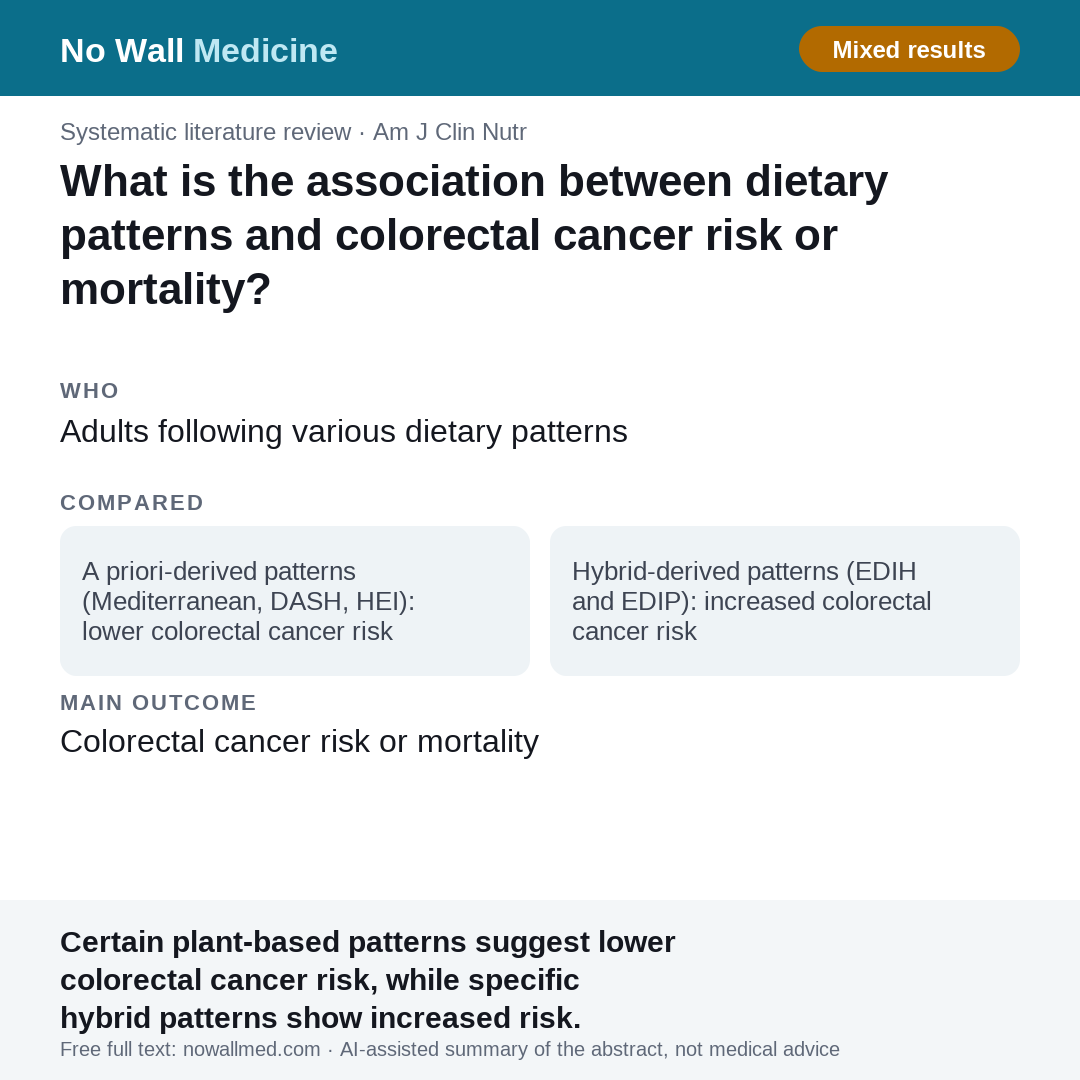
Dietary patterns and colorectal cancer risk: Global Cancer Update Programme (CUP Global) systematic literature review
Systematic literature reviewMixed results
What is the association between dietary patterns and colorectal cancer risk or mortality?
Who
Adults following various dietary patterns
Compared
A priori-derived patterns (Mediterranean, DASH, HEI): lower colorectal cancer risk
Hybrid-derived patterns (EDIH and EDIP): increased colorectal cancer risk
Main outcome
Colorectal cancer risk or mortality
Bottom line: Certain plant-based patterns suggest lower colorectal cancer risk, while specific hybrid patterns show increased risk.
Limitation: Insufficient data and varying pattern definitions in existing literature.
Am J Clin Nutr · 2025-02-25Download image
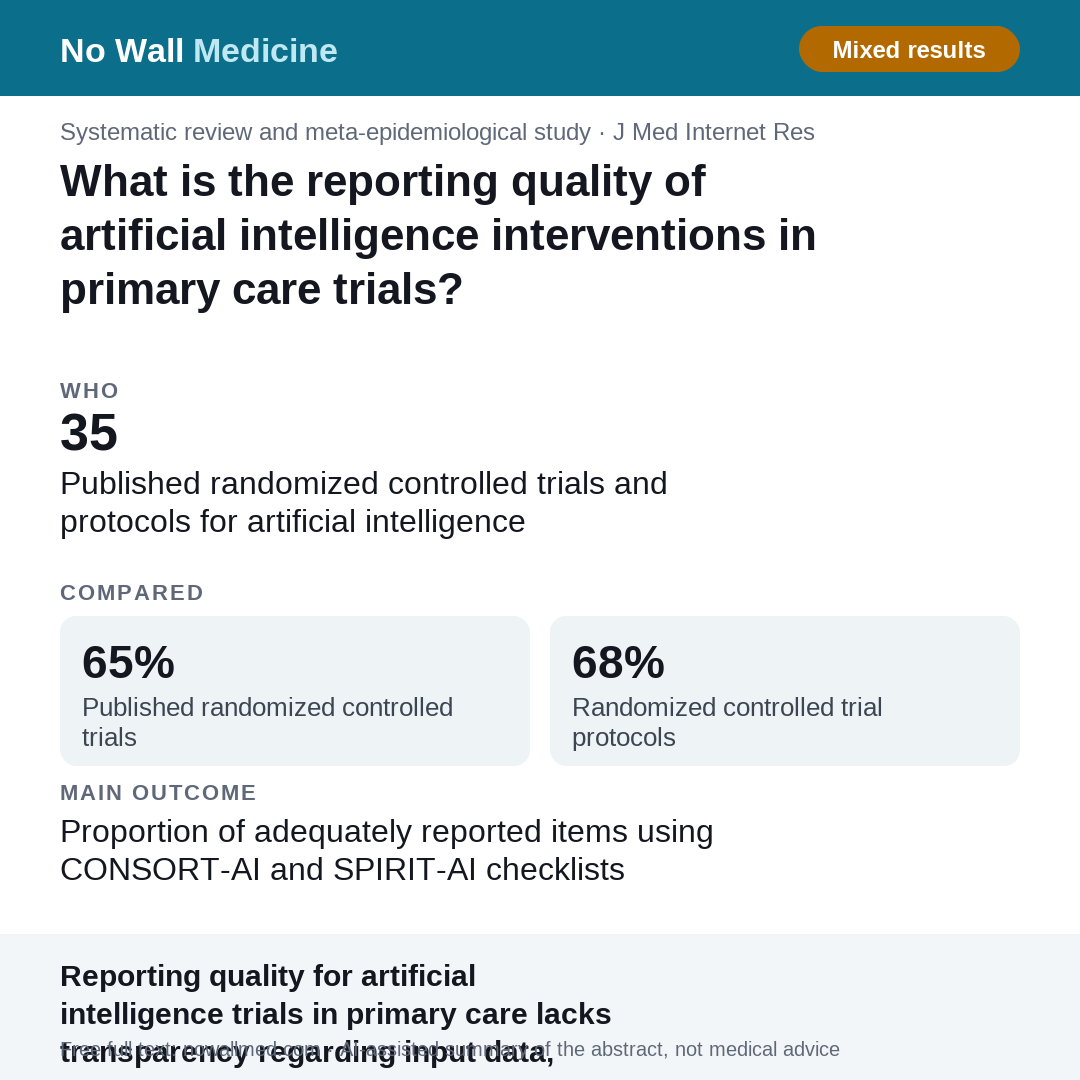
Reporting Quality of AI Intervention in Randomized Controlled Trials in Primary Care: Systematic Review and Meta-Epidemiological Study
Systematic review and meta-epidemiological studyMixed results
What is the reporting quality of artificial intelligence interventions in primary care trials?
Who
35
Published randomized controlled trials and protocols for artificial intelligence interventions in primary care
Compared
65%Published randomized controlled trials (172/266; 95% CI 59%-70%)
68%Randomized controlled trial protocols (214/315; 95% CI 62%-73%)
Main outcome
Proportion of adequately reported items using CONSORT-AI and SPIRIT-AI checklists
Bottom line: Reporting quality for artificial intelligence trials in primary care lacks transparency regarding input data, performance errors, and code accessibility.
J Med Internet Res · 2025-02-25Download image
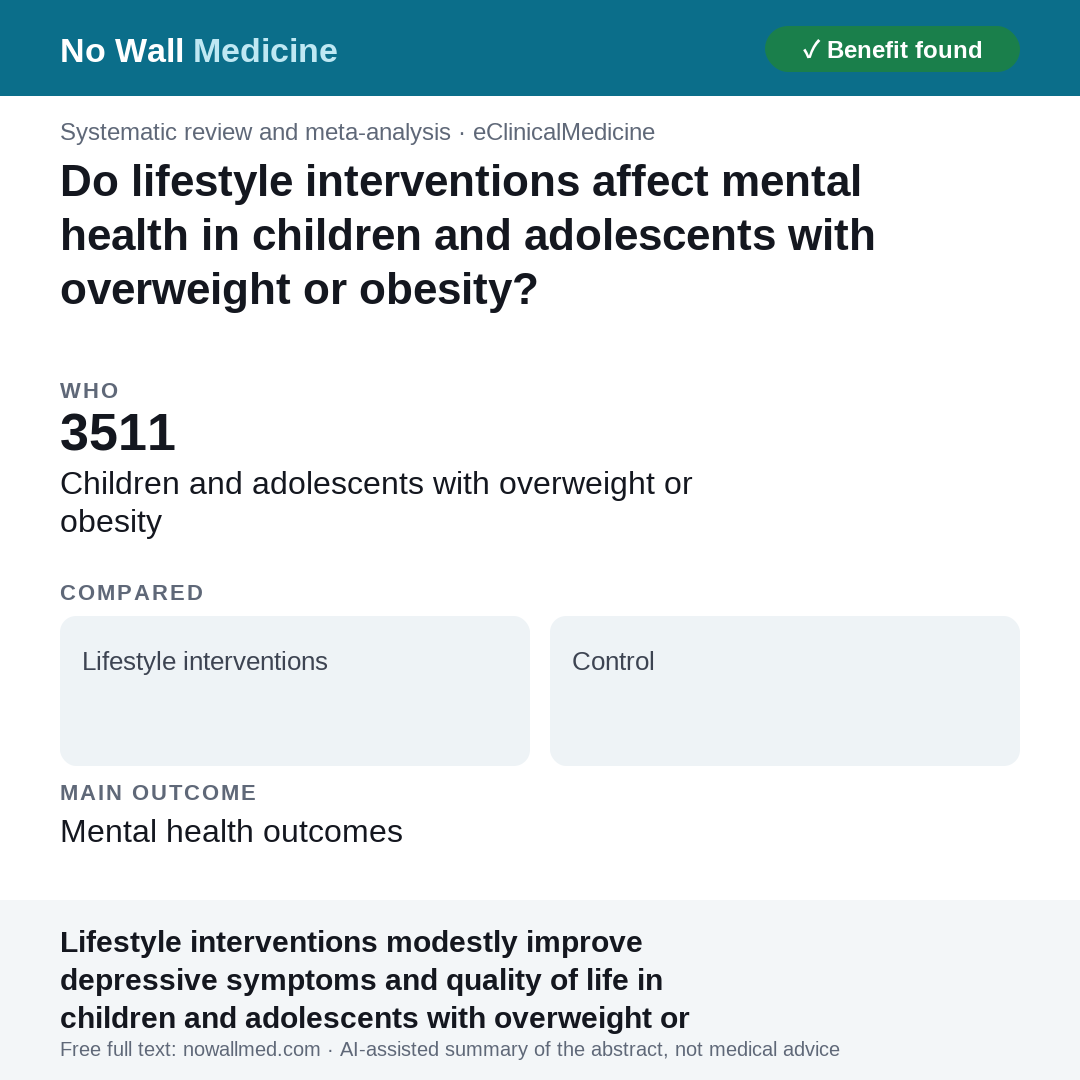
Effects of lifestyle interventions on mental health in children and adolescents with overweight or obesity: a systematic review and meta-analysis
Systematic review and meta-analysisBenefit found
Do lifestyle interventions affect mental health in children and adolescents with overweight or obesity?
Who
3511
Children and adolescents with overweight or obesity
Compared
Lifestyle interventions
Control
Main outcome
Mental health outcomes
Result: depression SMD = -0.24 (95% CI: -0.39 to -0.10); quality of life SMD = 0.24 (95% CI: 0.04-0.44)
Bottom line: Lifestyle interventions modestly improve depressive symptoms and quality of life in children and adolescents with overweight or obesity.
Limitation: Effects on anxiety, negative affect, and self-efficacy remain inconclusive.
eClinicalMedicine · 2025-02-24Download image
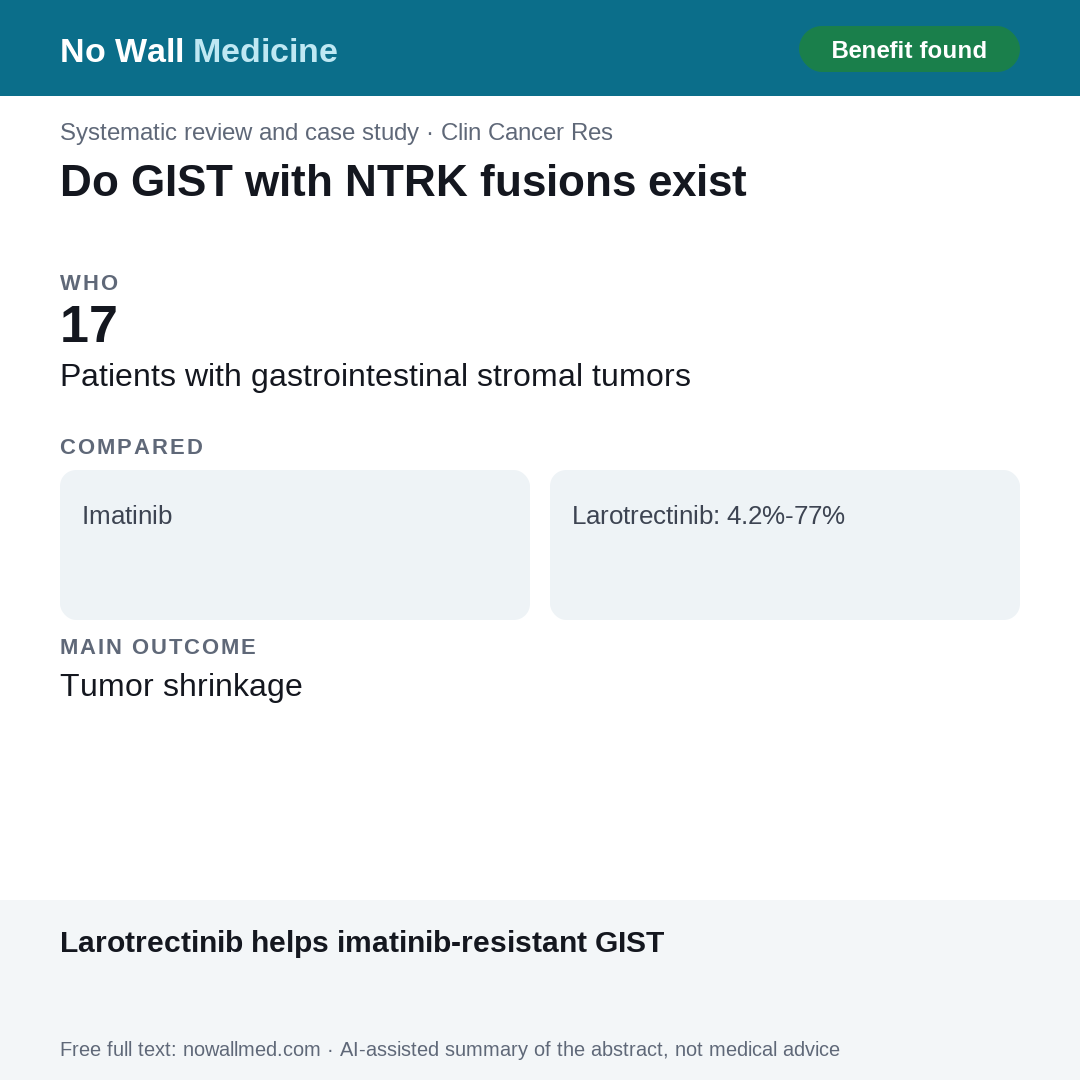
A Systematic Review with a Demonstrative Case of KIT and DOG-1 Expressing Gastrointestinal Stromal Tumors Harboring ETV6-NTRK3 Fusions
Systematic review and case studyBenefit found
Do GIST with NTRK fusions exist
Who
17
Patients with gastrointestinal stromal tumors
Compared
Imatinib
Larotrectinib: 4.2%-77%
Main outcome
Tumor shrinkage
Bottom line: Larotrectinib helps imatinib-resistant GIST
Clin Cancer Res · 2025-02-24Download image
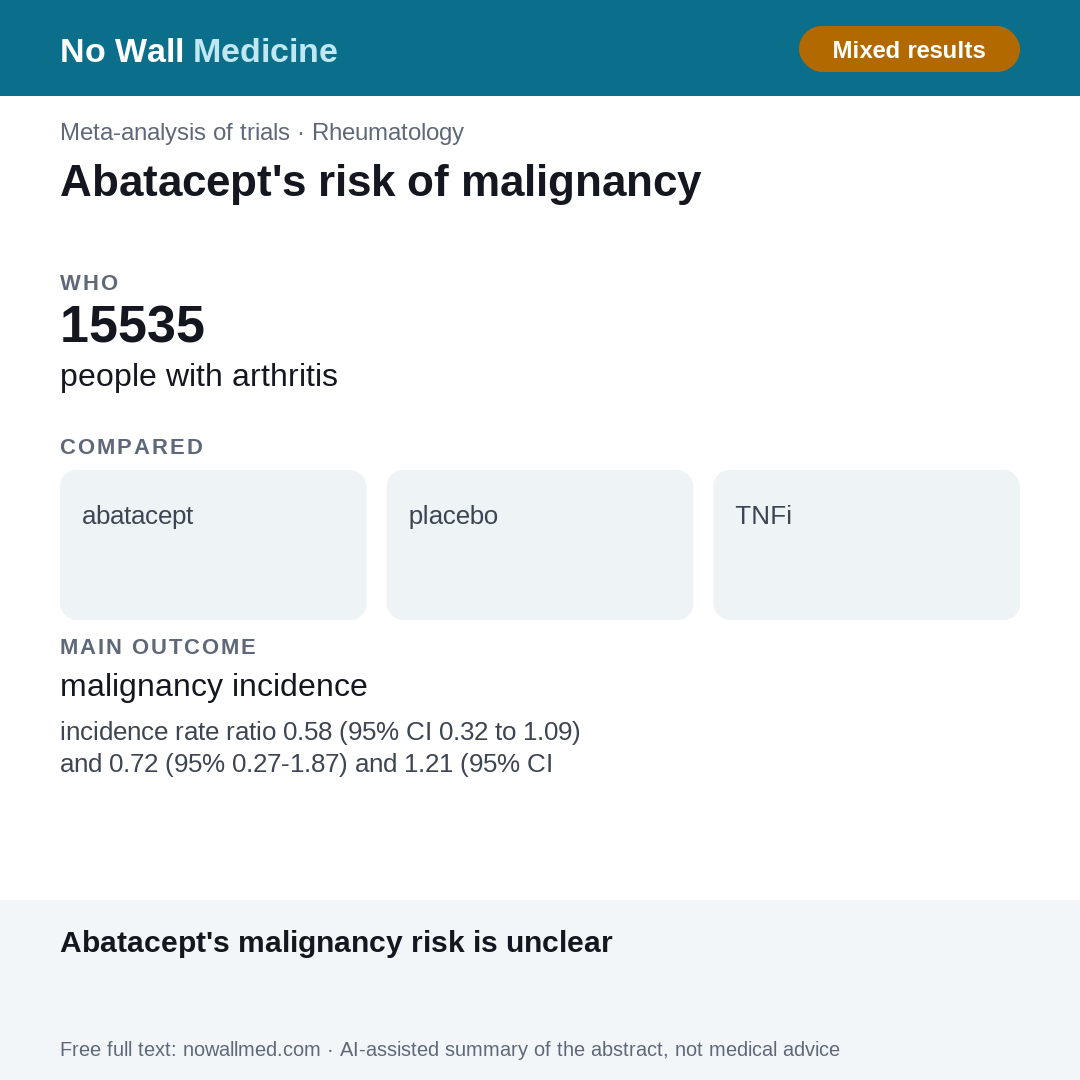
Abatacept and the risk of malignancy: a meta-analysis across disease indications
Meta-analysis of trialsMixed results
Abatacept's risk of malignancy
Who
15535
people with arthritis
Compared
abatacept
placebo
TNFi
Main outcome
malignancy incidence
Result: incidence rate ratio 0.58 (95% CI 0.32 to 1.09) and 0.72 (95% 0.27-1.87) and 1.21 (95% CI 1.15-1.28)
Bottom line: Abatacept's malignancy risk is unclear
Rheumatology · 2025-02-24Download image
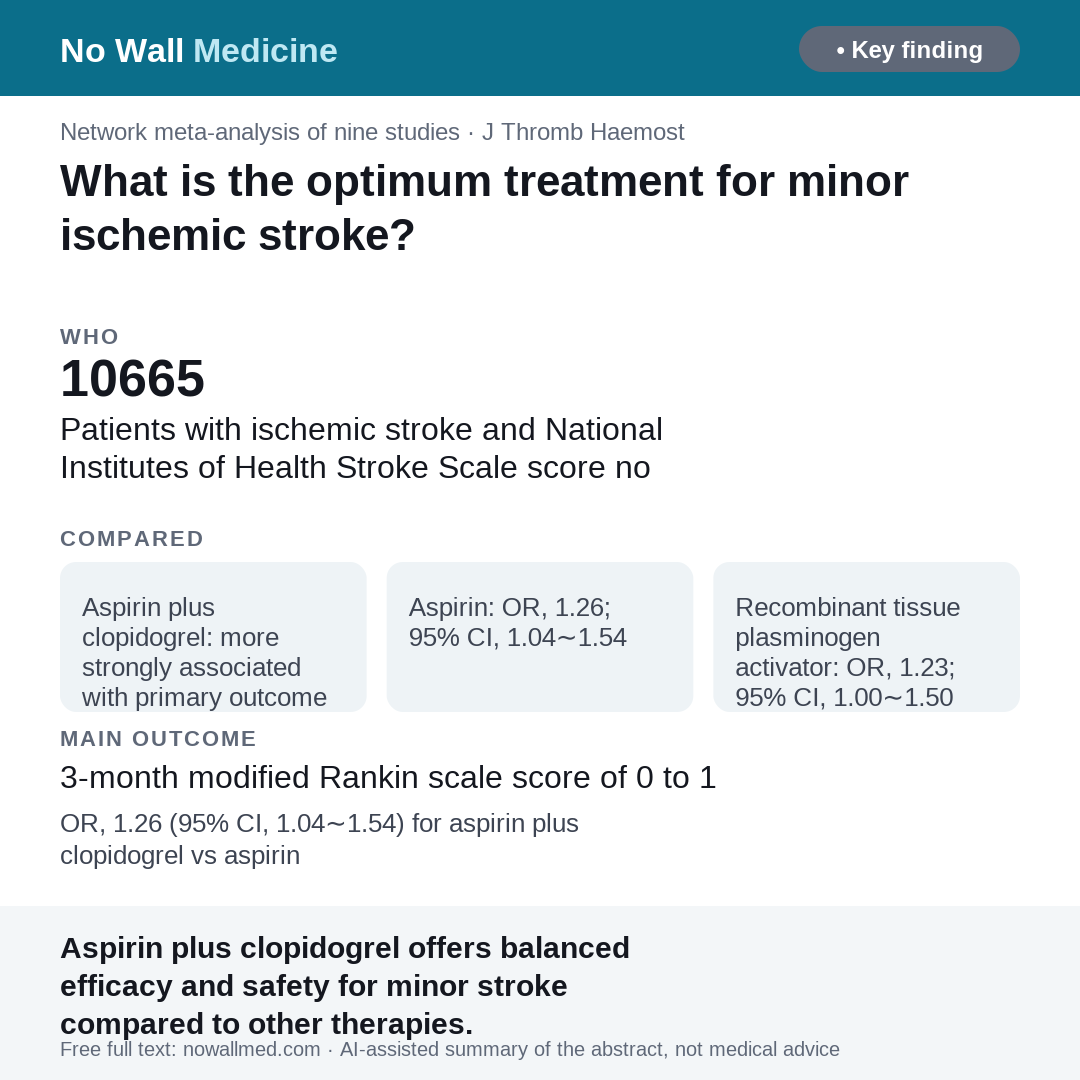
Navigating the waters of acute minor stroke therapies: a systematic review and network meta-analysis
Network meta-analysis of nine studiesBenefit found
What is the optimum treatment for minor ischemic stroke?
Who
10665
Patients with ischemic stroke and National Institutes of Health Stroke Scale score no more than 5
Compared
Aspirin plus clopidogrel: more strongly associated with primary outcome
Aspirin: OR, 1.26; 95% CI, 1.04∼1.54
Recombinant tissue plasminogen activator: OR, 1.23; 95% CI, 1.00∼1.50
Main outcome
3-month modified Rankin scale score of 0 to 1
Result: OR, 1.26 (95% CI, 1.04∼1.54) for aspirin plus clopidogrel vs aspirin
Bottom line: Aspirin plus clopidogrel offers balanced efficacy and safety for minor stroke compared to other therapies.
J Thromb Haemost · 2025-02-24Download image
Supporting older people through Hospital at Home care: a systematic review of patient, carer and healthcare professionals' perspectives
Systematic reviewBenefit found
Hospital at Home care for older people
Who
older people and their carers · UK
Compared
Hospital at Home
traditional hospital care
Main outcome
patient and carer perspectives
Bottom line: Hospital at Home care benefits older people
Age Ageing · 2025-02-24Download image

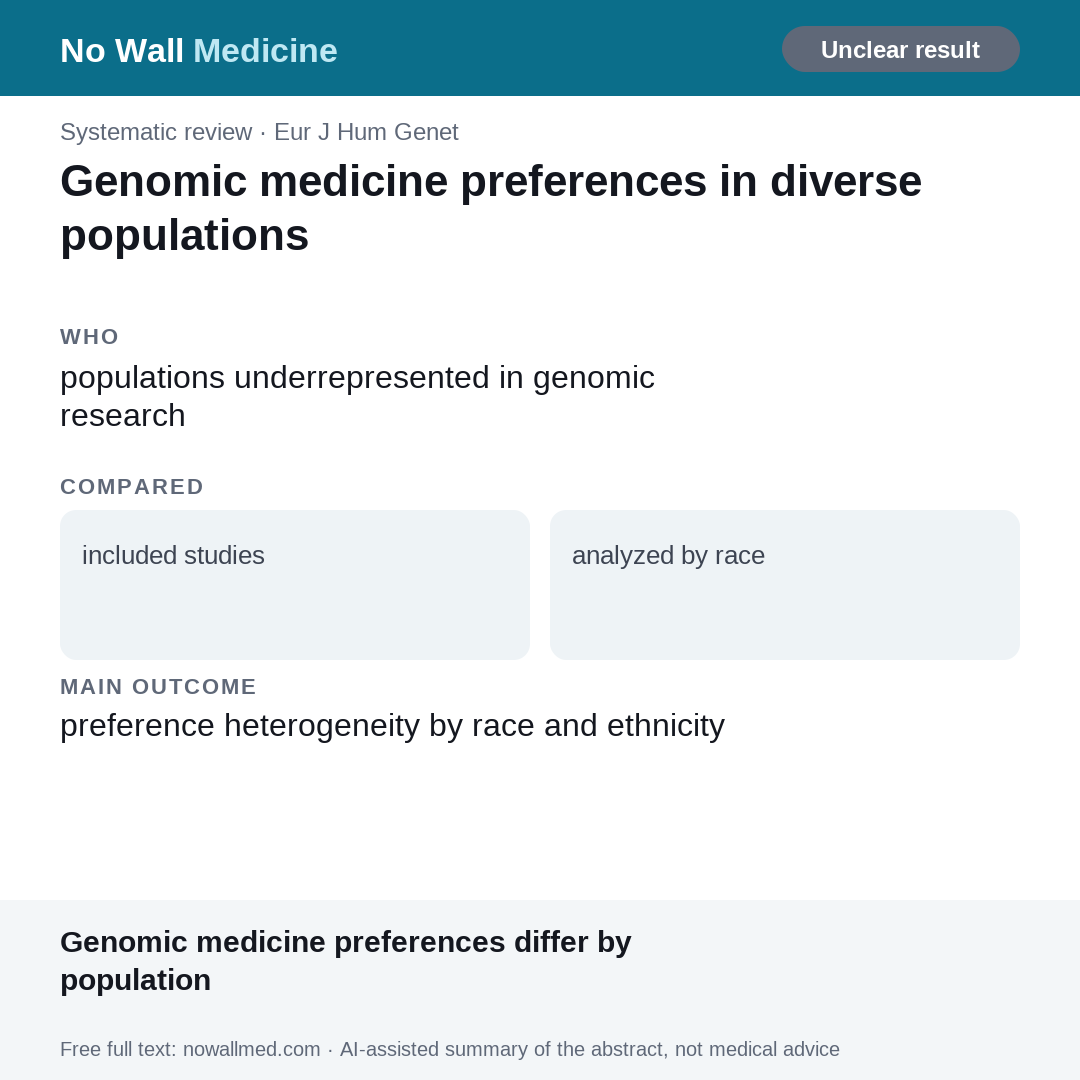
Preferences for genetic testing among populations underrepresented in genomic research: a systematic review
Systematic reviewUnclear result
Genomic medicine preferences in diverse populations
Who
populations underrepresented in genomic research
Compared
included studies
analyzed by race
Main outcome
preference heterogeneity by race and ethnicity
Bottom line: Genomic medicine preferences differ by population
Eur J Hum Genet · 2025-02-24Download image
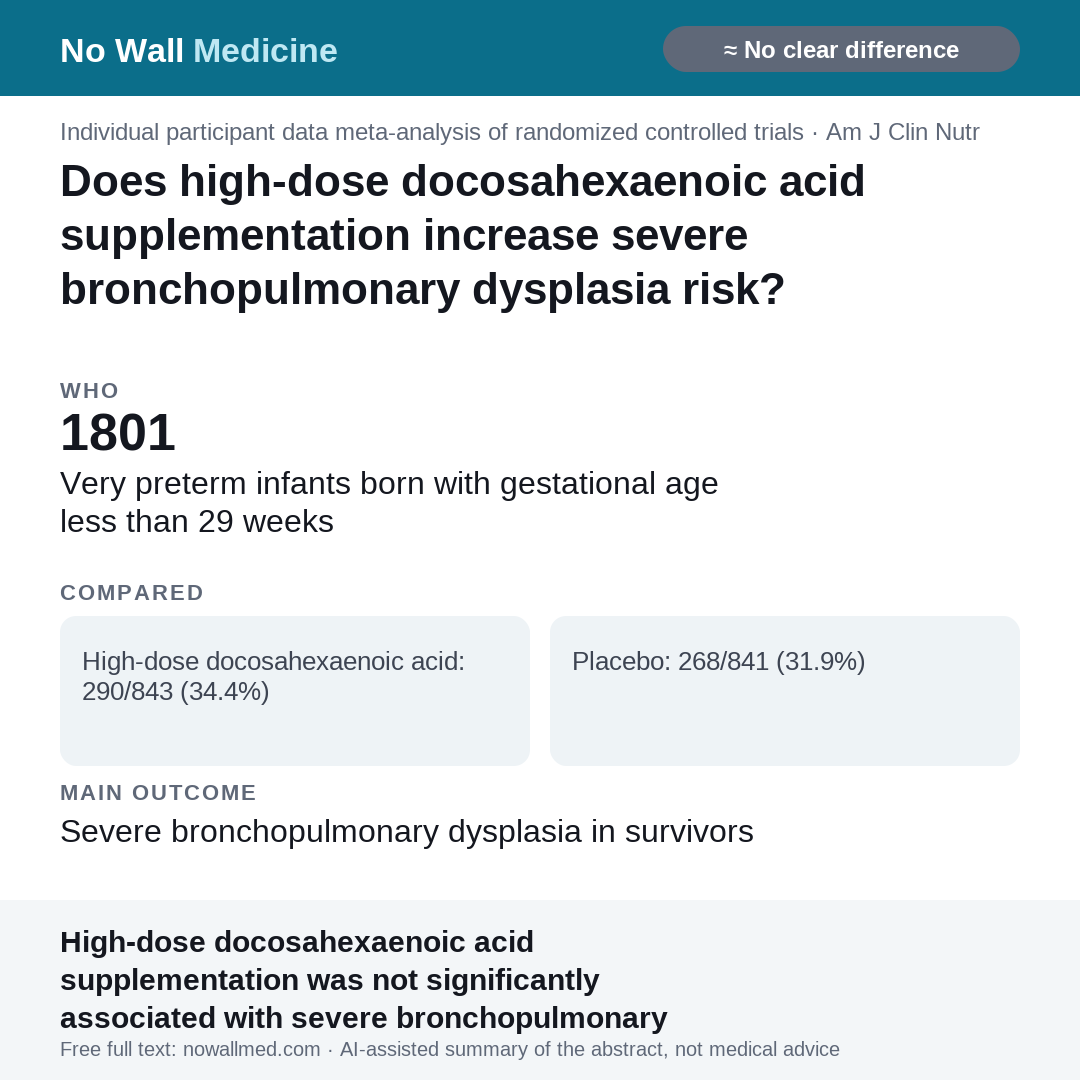
High-dose docosahexaenoic acid for bronchopulmonary dysplasia severity in very preterm infants: a collaborative individual participant data meta-analysis
Individual participant data meta-analysis of randomized controlled trialsNo clear difference
Does high-dose docosahexaenoic acid supplementation increase severe bronchopulmonary dysplasia risk?
Who
1801
Very preterm infants born with gestational age less than 29 weeks
Compared
High-dose docosahexaenoic acid: 290/843 (34.4%)
Placebo: 268/841 (31.9%)
Main outcome
Severe bronchopulmonary dysplasia in survivors
Result: relative risk 1.06 (95% CI 0.93 to 1.21)
Bottom line: High-dose docosahexaenoic acid supplementation was not significantly associated with severe bronchopulmonary dysplasia in very preterm infants.
Am J Clin Nutr · 2025-02-24Download image
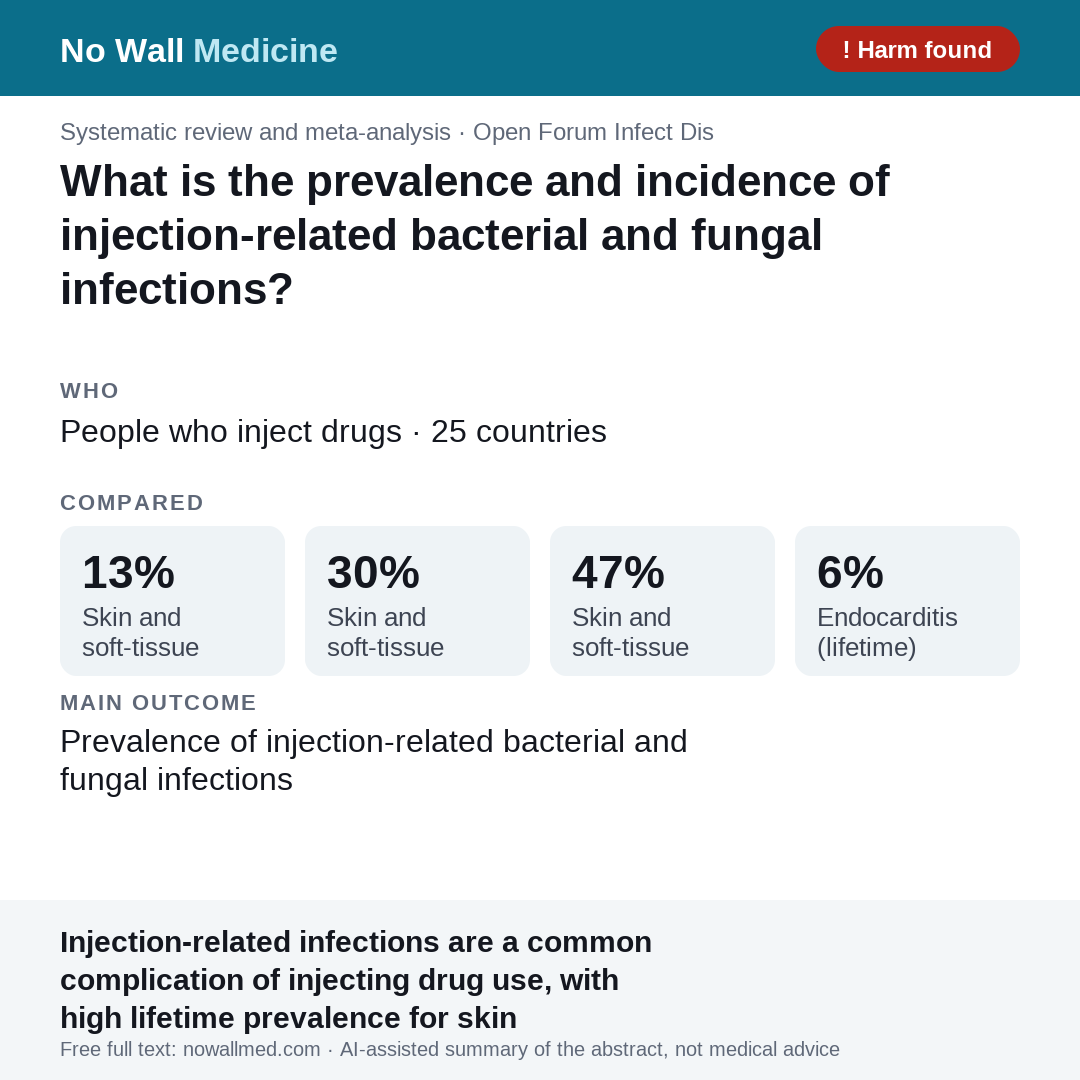
Prevalence of Injection-Related Bacterial and Fungal Infection Among People Who Inject Drugs: A Systematic Review and Meta-analysis
Systematic review and meta-analysisHarm found
What is the prevalence and incidence of injection-related bacterial and fungal infections?
Who
People who inject drugs · 25 countries
Compared
13%Skin and soft-tissue infections (past month) (95% CI 9%-19%)
30%Skin and soft-tissue infections (past 3-12 months) (23%-37%)
47%Skin and soft-tissue infections (lifetime) (29%-66%)
6%Endocarditis (lifetime) (3%-10%)
Main outcome
Prevalence of injection-related bacterial and fungal infections
Bottom line: Injection-related infections are a common complication of injecting drug use, with high lifetime prevalence for skin infections.
Open Forum Infect Dis · 2025-02-24Download image
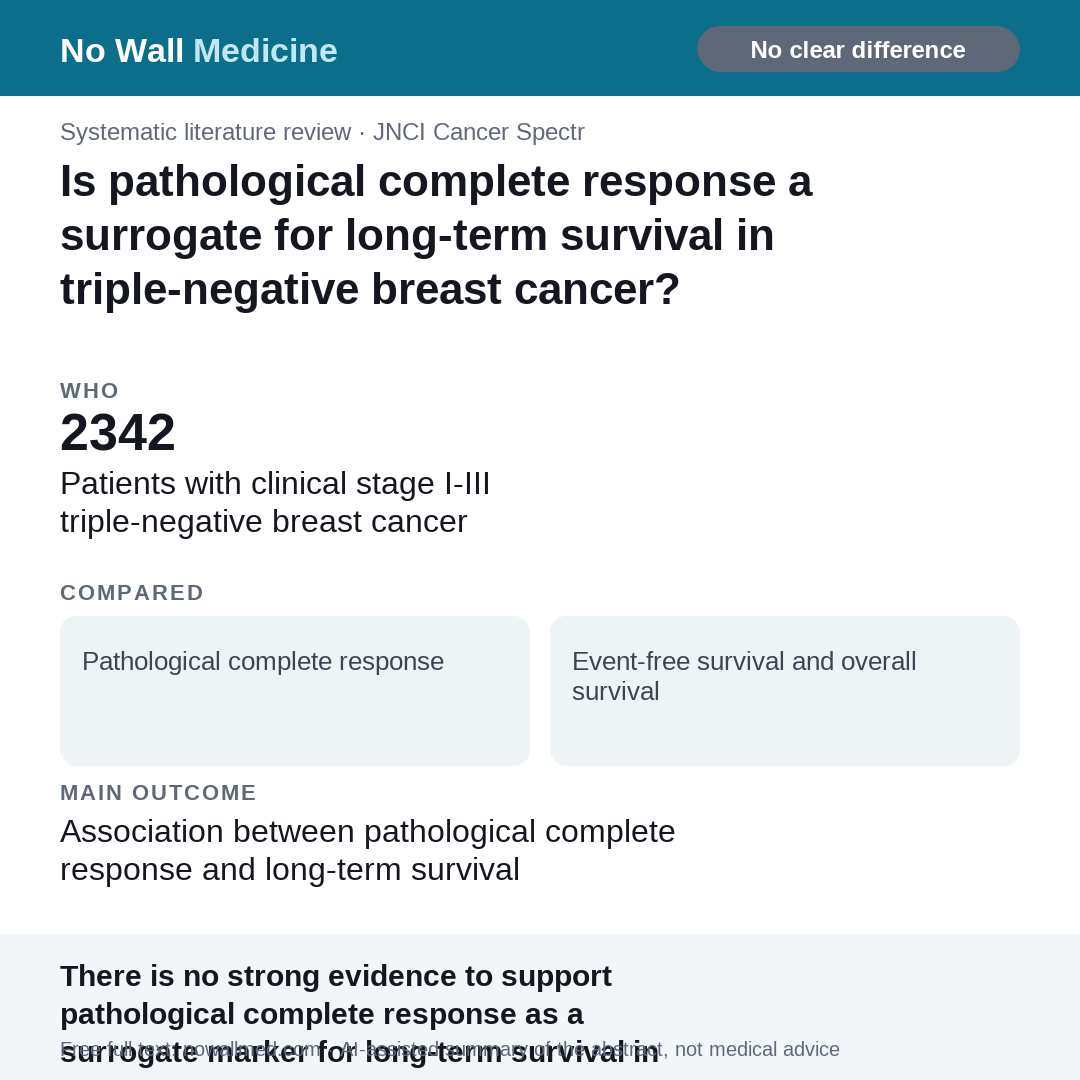
Revisiting surrogacy of pathological complete response for long-term survival in triple-negative breast cancer
Systematic literature reviewNo clear difference
Is pathological complete response a surrogate for long-term survival in triple-negative breast cancer?
Who
2342
Patients with clinical stage I-III triple-negative breast cancer
Compared
Pathological complete response
Event-free survival and overall survival
Main outcome
Association between pathological complete response and long-term survival
Result: R2 for event-free survival 0.2 (95% CI 0.17 to 0.22); R2 for overall survival 0.19 (95% CI 0.17 to 0.22)
Bottom line: There is no strong evidence to support pathological complete response as a surrogate marker for long-term survival in triple-negative breast cancer.
Limitation: Insufficient trial-level data to robustly support pathological complete response as a surrogate marker.
JNCI Cancer Spectr · 2025-02-24Download image
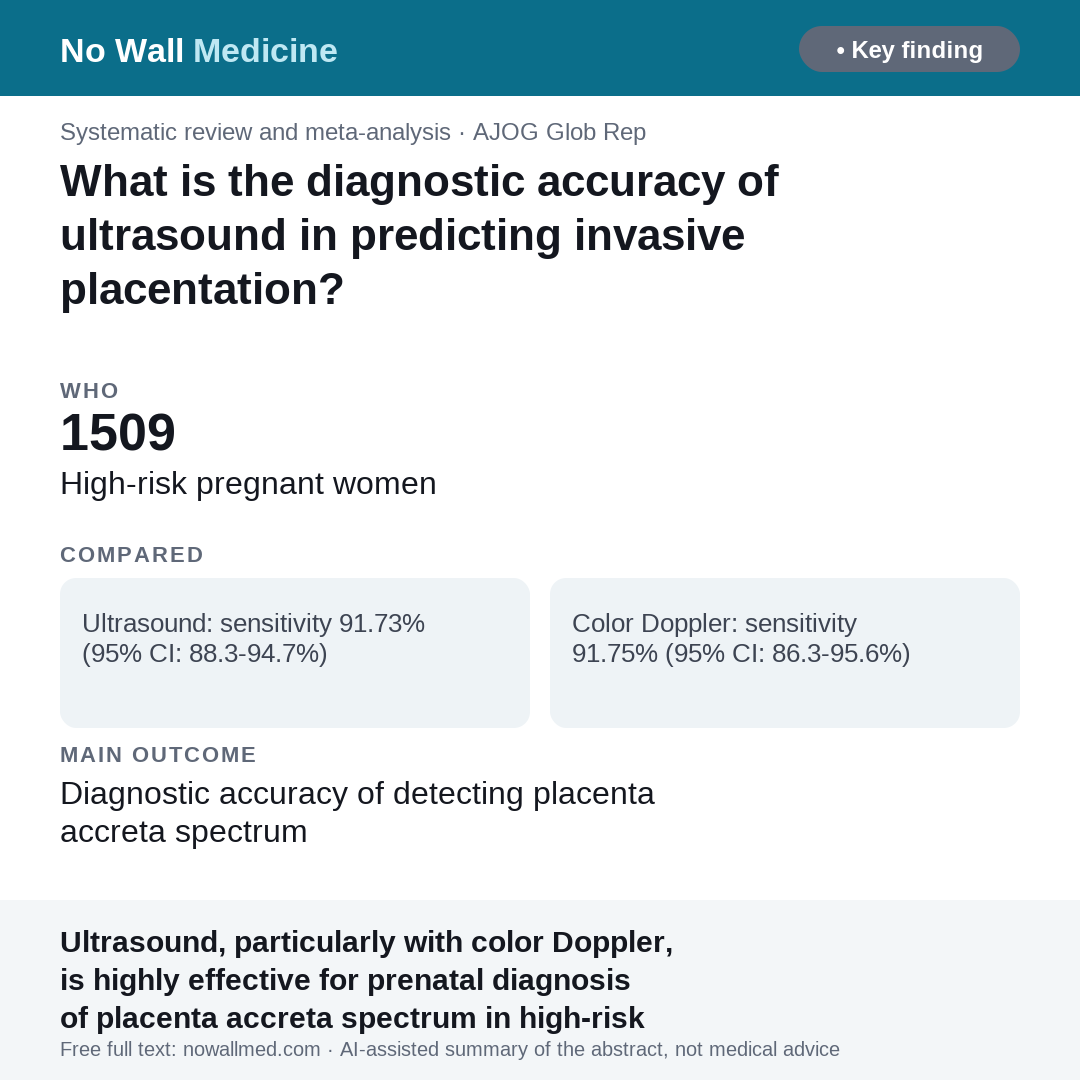
Accuracy of ultrasound in prediction of abnormal placental adherence: a systematic review and meta-analysis
Systematic review and meta-analysisBenefit found
What is the diagnostic accuracy of ultrasound in predicting invasive placentation?
Who
1509
High-risk pregnant women
Compared
Ultrasound: sensitivity 91.73% (95% CI: 88.3-94.7%)
Color Doppler: sensitivity 91.75% (95% CI: 86.3-95.6%)
Main outcome
Diagnostic accuracy of detecting placenta accreta spectrum
Result: diagnostic odds ratio 99.6 (95% CI 49.9-200.1)
Bottom line: Ultrasound, particularly with color Doppler, is highly effective for prenatal diagnosis of placenta accreta spectrum in high-risk pregnancies.
AJOG Glob Rep · 2025-02-24Download image
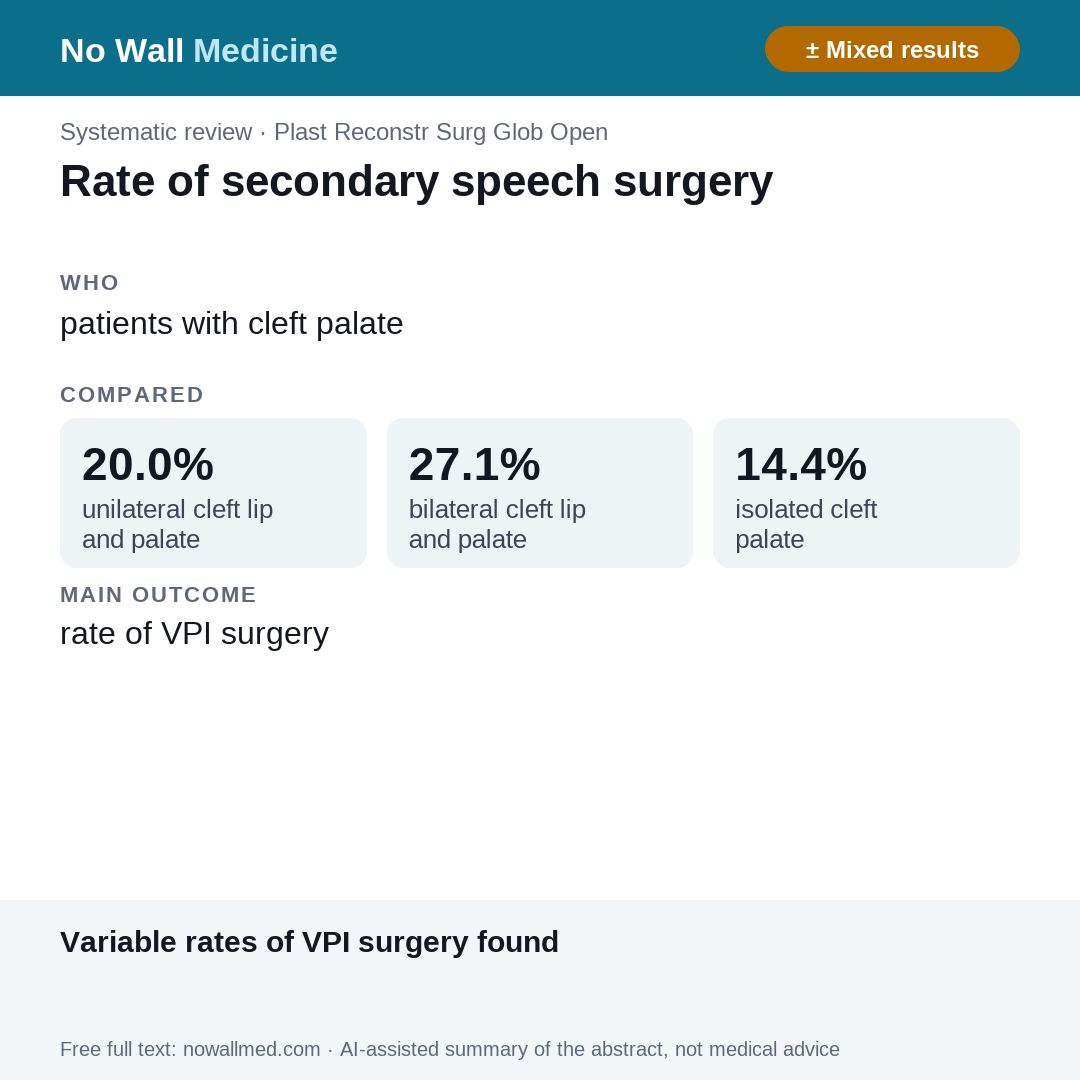
The Rate of Secondary Speech Surgery After Cleft Palate Repair: A Systematic Review
Systematic reviewMixed results
Rate of secondary speech surgery
Who
patients with cleft palate
Compared
20.0%unilateral cleft lip and palate
27.1%bilateral cleft lip and palate
14.4%isolated cleft palate
Main outcome
rate of VPI surgery
Bottom line: Variable rates of VPI surgery found
Plast Reconstr Surg Glob Open · 2025-02-24Download image
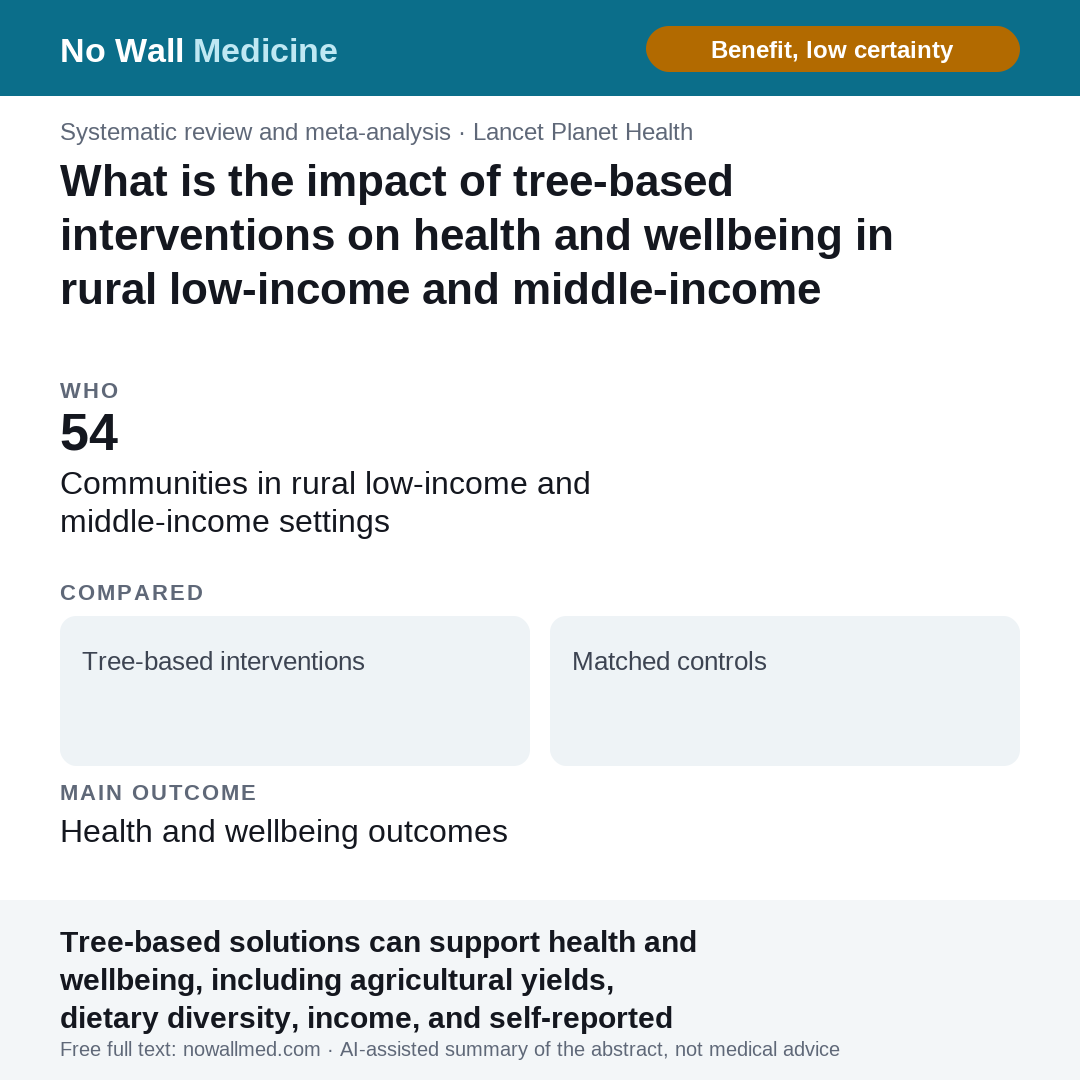
Impact of tree-based interventions in addressing health and wellbeing outcomes in rural low-income and middle-income settings: a systematic review and meta-analysis
Systematic review and meta-analysisBenefit found
What is the impact of tree-based interventions on health and wellbeing in rural low-income and middle-income settings?
Who
54
Communities in rural low-income and middle-income settings
Compared
Tree-based interventions
Matched controls
Main outcome
Health and wellbeing outcomes
Result: standardised mean difference 0.41 (95% CI 0.11 to 0.70) for agricultural yields
Bottom line: Tree-based solutions can support health and wellbeing, including agricultural yields, dietary diversity, income, and self-reported wellbeing.
Limitation: Cautious interpretation is urged owing to the low certainty of the evidence.
Lancet Planet Health · 2025-02-23Download image
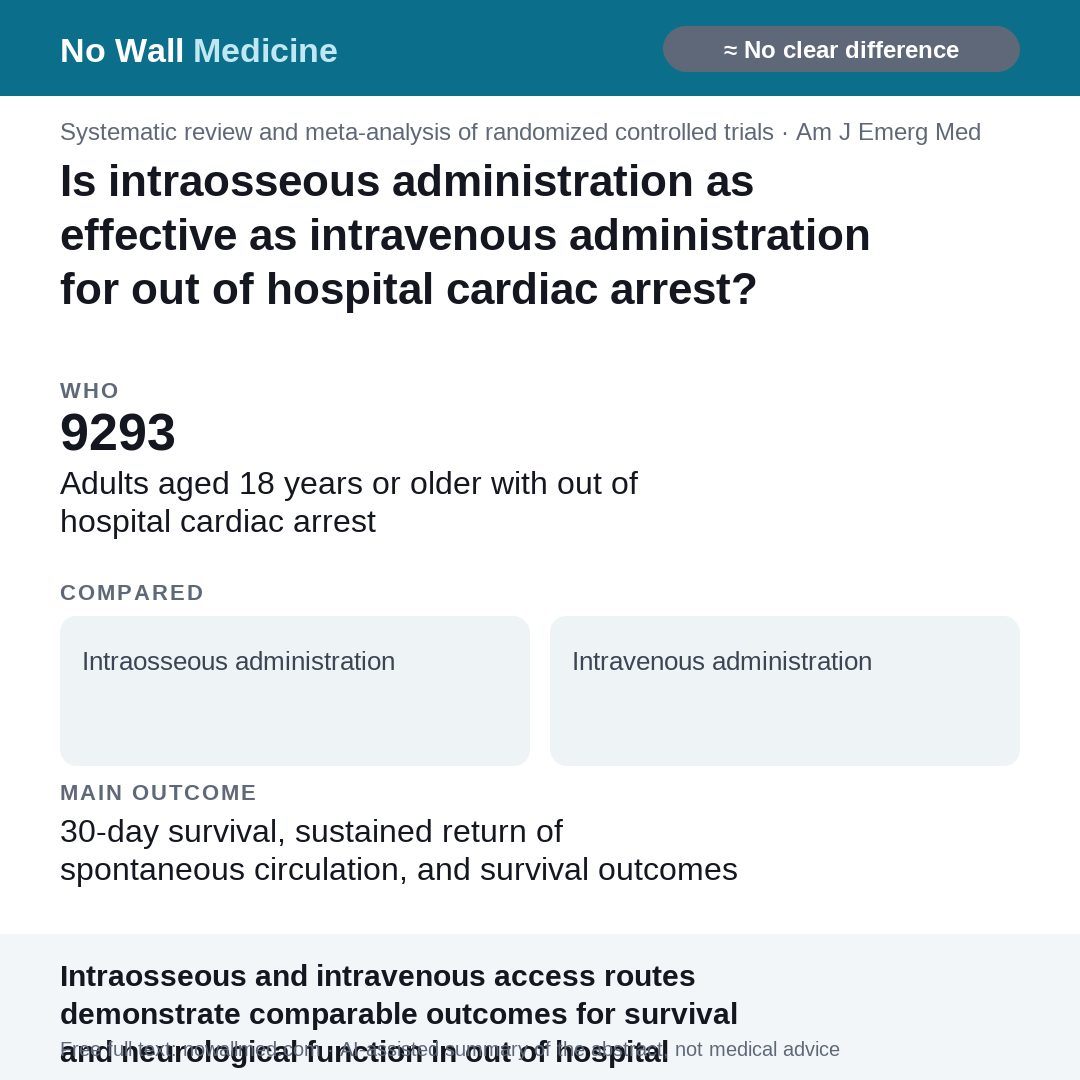
Intravenous vs intraosseous administration of drugs for out of hospital cardiac arrest: A systematic review and meta-analysis
Systematic review and meta-analysis of randomized controlled trialsNo clear difference
Is intraosseous administration as effective as intravenous administration for out of hospital cardiac arrest?
Who
9293
Adults aged 18 years or older with out of hospital cardiac arrest
Compared
Intraosseous administration
Intravenous administration
Main outcome
30-day survival, sustained return of spontaneous circulation, and survival outcomes
Result: OR: 1.00 (95% CI: 0.76-1.34) for 30-day survival
Bottom line: Intraosseous and intravenous access routes demonstrate comparable outcomes for survival and neurological function in out of hospital cardiac arrest.
Am J Emerg Med · 2025-02-23Download image
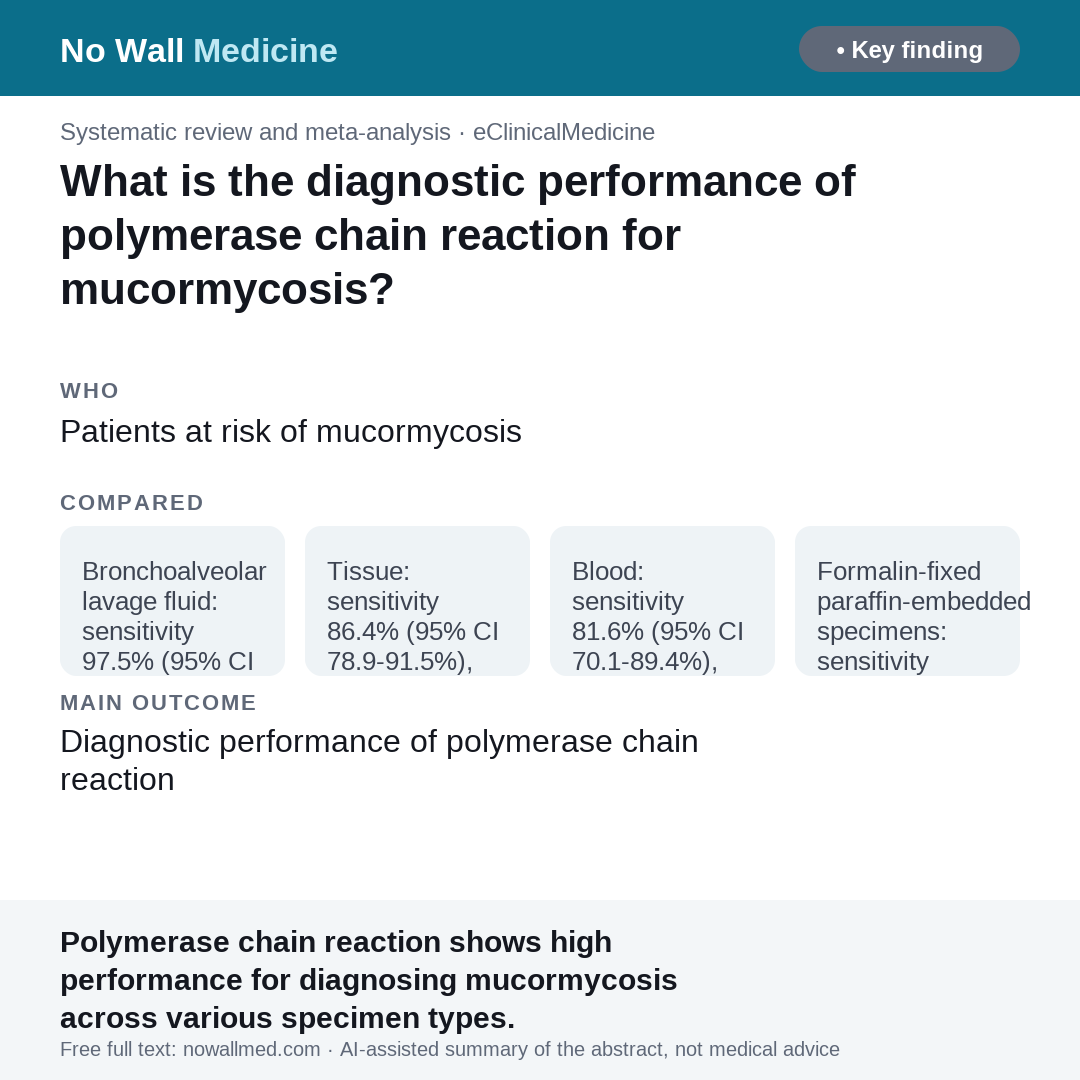
The diagnosis of mucormycosis by PCR in patients at risk: a systematic review and meta-analysis
Systematic review and meta-analysisBenefit found
What is the diagnostic performance of polymerase chain reaction for mucormycosis?
Who
Patients at risk of mucormycosis
Compared
Bronchoalveolar lavage fluid: sensitivity 97.5% (95% CI 83.7-99.7%), specificity 95.8% (95% CI 89.6-98.4%)
Tissue: sensitivity 86.4% (95% CI 78.9-91.5%), specificity 90.6% (95% CI 78.1-96.3%)
Blood: sensitivity 81.6% (95% CI 70.1-89.4%), specificity 95.5% (95% CI 87.4-98.5%)
Formalin-fixed paraffin-embedded specimens: sensitivity 73.0% (95% CI 61.0-82.3%), specificity 96.4% (CI 95% 87.5-99.0%)
Main outcome
Diagnostic performance of polymerase chain reaction
Bottom line: Polymerase chain reaction shows high performance for diagnosing mucormycosis across various specimen types.
eClinicalMedicine · 2025-02-22Download image
SCD-plus features and AD biomarkers in cognitively unimpaired samples: A meta-analytic approach for nine cohort studies
Meta-analysis of nine cohort studiesBenefit found
Do subjective cognitive decline plus features associate with Alzheimer's disease biomarkers?
Who
7219
Cognitively unimpaired older adults
Compared
SCD-plus features
Alzheimer's disease biomarkers
Main outcome
Amyloid beta and tau biomarkers
Bottom line: Multiple subjective cognitive decline plus features are robust indicators of abnormal Alzheimer's disease biomarkers.
Alzheimers Dement · 2025-02-22Download image