Visual abstracts
New randomized trials and meta-analyses from leading journals at a glance: who was studied, what was compared, and what was found. Every paper is free to read in full.
All specialtiesCardiology 857Oncology 770Gastroenterology & Hepatology 311Infectious Disease 626Neurology 354Psychiatry & Mental Health 430Pulmonology 370Critical Care 260Endocrinology & Diabetes 484Pediatrics 542Surgery 351Orthopedics & Sports Medicine 166Neurosurgery 115Cardiothoracic & Vascular Surgery 87Plastic & Reconstructive Surgery 144Nephrology 197Rheumatology 108Hematology 183Dermatology 82Ophthalmology 97Obstetrics & Gynecology 266Public & Global Health 168Radiology & Imaging 105Anesthesiology 130Urology 162ENT (Otolaryngology) 115Emergency Medicine 103Allergy & Immunology 58Geriatrics 160Family Medicine & Primary Care 111Medical Genetics & Genomics 91Pathology & Laboratory Medicine 27Physical Medicine & Rehabilitation 149Palliative Care 81Nutrition 223Digital Health & AI 462General Medicine 101
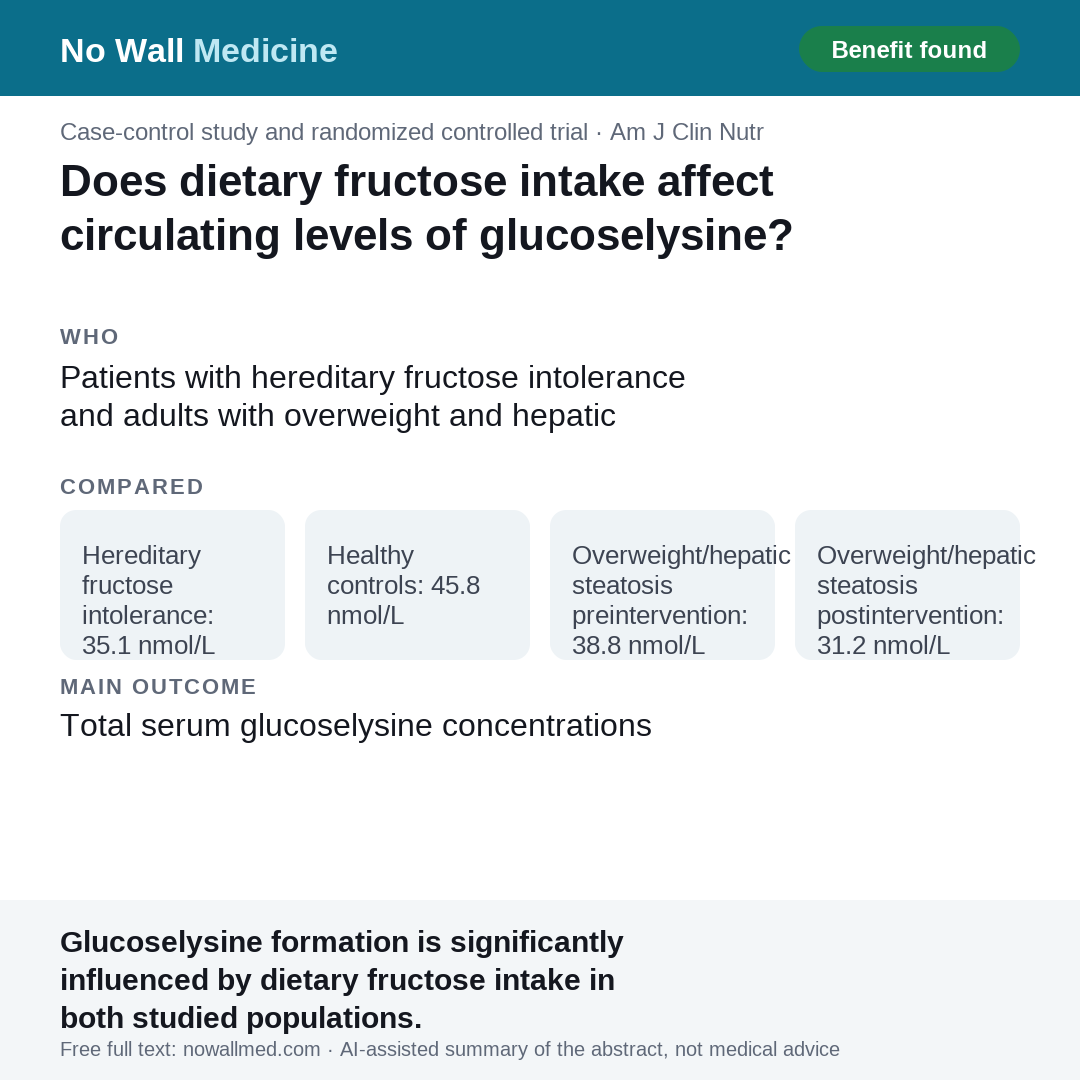
Circulating levels of glucoselysine, a fructose-specific glycation product, are modulated by dietary fructose: post hoc analysis of a case-control study and a randomized controlled trial
Case-control study and randomized controlled trialBenefit found
Does dietary fructose intake affect circulating levels of glucoselysine?
Who
Patients with hereditary fructose intolerance and adults with overweight and hepatic steatosis
Compared
Hereditary fructose intolerance: 35.1 nmol/L
Healthy controls: 45.8 nmol/L
Overweight/hepatic steatosis preintervention: 38.8 nmol/L
Overweight/hepatic steatosis postintervention: 31.2 nmol/L
Main outcome
Total serum glucoselysine concentrations
Bottom line: Glucoselysine formation is significantly influenced by dietary fructose intake in both studied populations.
Am J Clin Nutr · 2026-10-05Download image
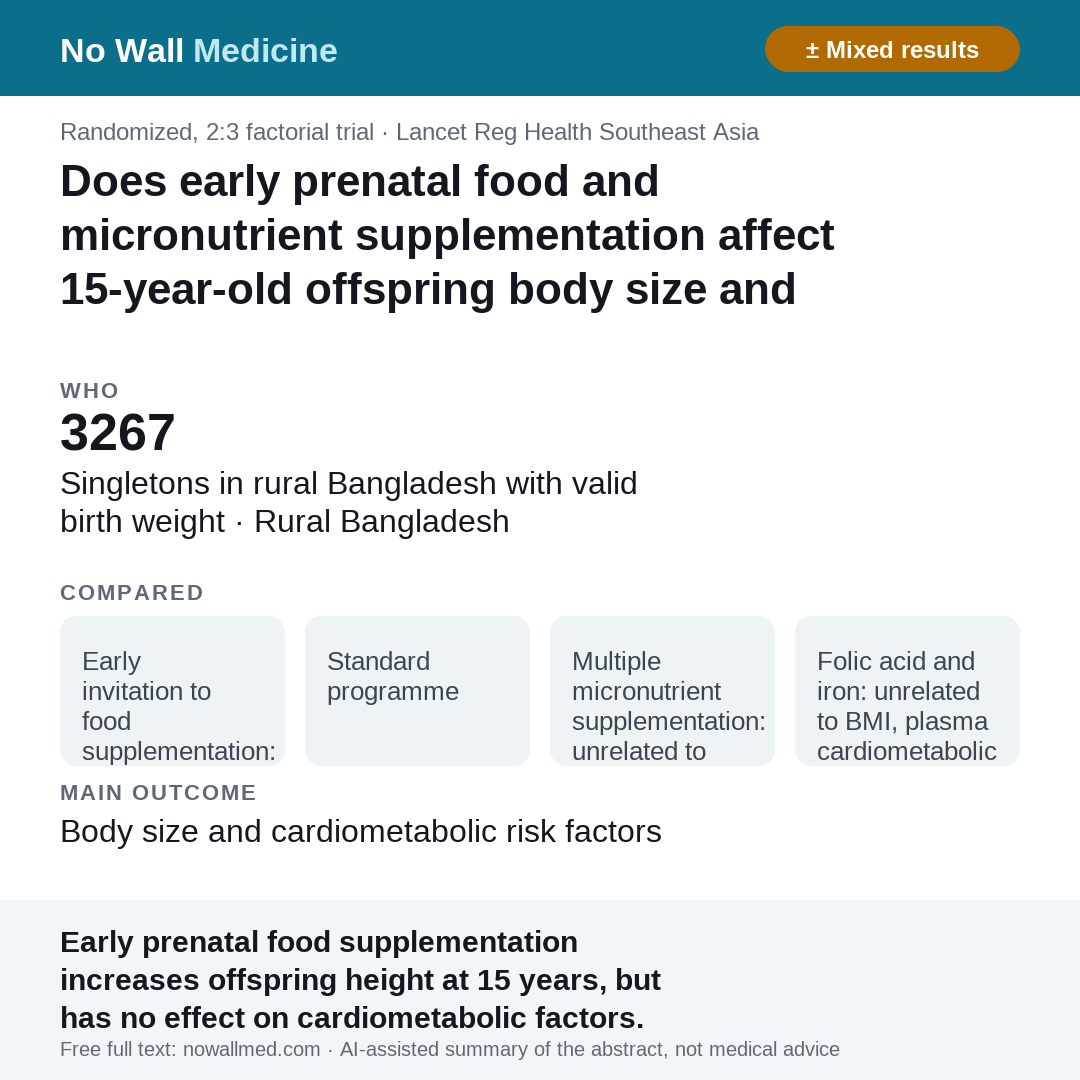
Effects of prenatal early food and micronutrient supplementations on body size and cardiometabolic risk factors in the 15-year-old offspring - the MINIMat randomised trial
Randomized, 2:3 factorial trialMixed results
Does early prenatal food and micronutrient supplementation affect 15-year-old offspring body size and cardiometabolic risk?
Who
3267
Singletons in rural Bangladesh with valid birth weight · Rural Bangladesh
Compared
Early invitation to food supplementation: 0.08 units higher height z score (95% CI 0.01, 0.16)
Standard programme
Multiple micronutrient supplementation: unrelated to BMI, plasma cardiometabolic biomarkers or blood pressure
Folic acid and iron: unrelated to BMI, plasma cardiometabolic biomarkers or blood pressure
Main outcome
Body size and cardiometabolic risk factors
Result: risk difference 4.1% (95% CI 0.8%, 7.3%) for stunting
Bottom line: Early prenatal food supplementation increases offspring height at 15 years, but has no effect on cardiometabolic factors.
Funded by: Swedish, Finnish, and Novo Nordisk foundations
Lancet Reg Health Southeast Asia · 2026-10-05Download image
A nationwide prospective randomized trial for diagnosing developmental disorders demonstrates genome sequencing outperforms standard of care
Nationwide prospective randomized trialBenefit found
Does genome sequencing outperform standard of care for diagnosing developmental disorders?
Who
567
Individuals with unexplained developmental disorders · All Belgian human genetics centers
Compared
39.8%Genome sequencing (113/284)
30%Standard of care (85/283)
Main outcome
Diagnostic yield
Result: 7.3% difference (p = 0.069) after correction
Bottom line: Genome sequencing outperforms standard of care for diagnosing developmental disorders in a nationwide Belgian study.
Genome Med · 2026-10-05Download image

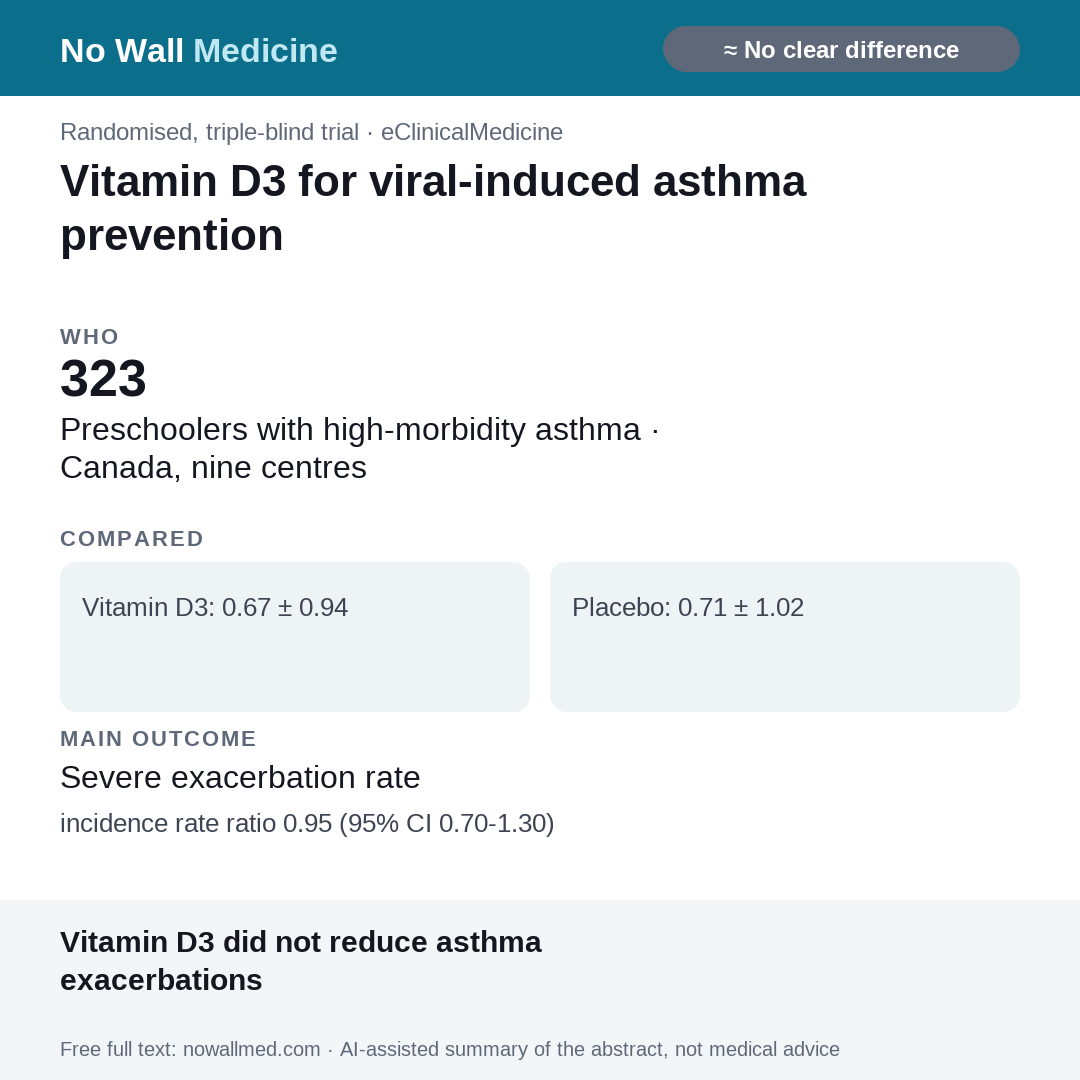
High-dose vitamin D3 supplementation in the prevention of viral-induced asthma in high-morbidity preschoolers (DIVA): a randomised controlled trial in Canada
Randomised, triple-blind trialNo clear difference
Vitamin D3 for viral-induced asthma prevention
Who
323
Preschoolers with high-morbidity asthma · Canada, nine centres
Compared
Vitamin D3: 0.67 ± 0.94
Placebo: 0.71 ± 1.02
Main outcome
Severe exacerbation rate
Result: incidence rate ratio 0.95 (95% CI 0.70-1.30)
Bottom line: Vitamin D3 did not reduce asthma exacerbations
Limitation: fewer participants than planned
Funded by: Canadian Institutes of Health Research
eClinicalMedicine · 2026-10-04Download image
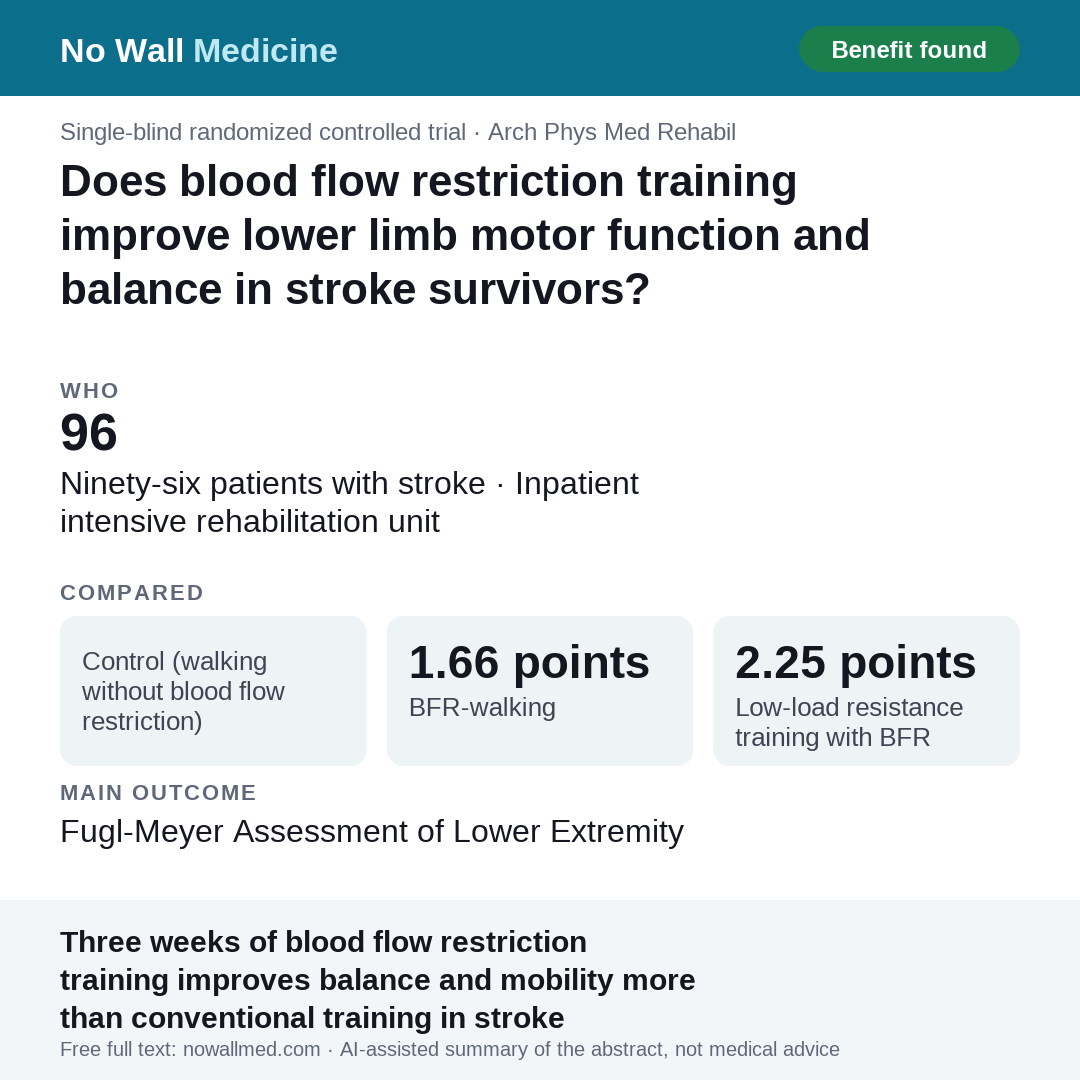
Effects of Blood Flow Restriction Training on Lower Limb Motor Function and Balance in Individuals With Stroke: A Randomized Controlled Trial
Single-blind randomized controlled trialBenefit found
Does blood flow restriction training improve lower limb motor function and balance in stroke survivors?
Who
96
Ninety-six patients with stroke · Inpatient intensive rehabilitation unit
Compared
Control (walking without blood flow restriction)
1.66 pointsBFR-walking (95% CI, 0.27-3.04)
2.25 pointsLow-load resistance training with BFR (95% CI, 0.86-3.64)
Main outcome
Fugl-Meyer Assessment of Lower Extremity
Result: adjusted mean difference vs control: 1.66 points (95% CI, 0.27-3.04) and 2.25 points (95% CI, 0.86-3.64)
Bottom line: Three weeks of blood flow restriction training improves balance and mobility more than conventional training in stroke survivors.
Arch Phys Med Rehabil · 2026-10-04Download image
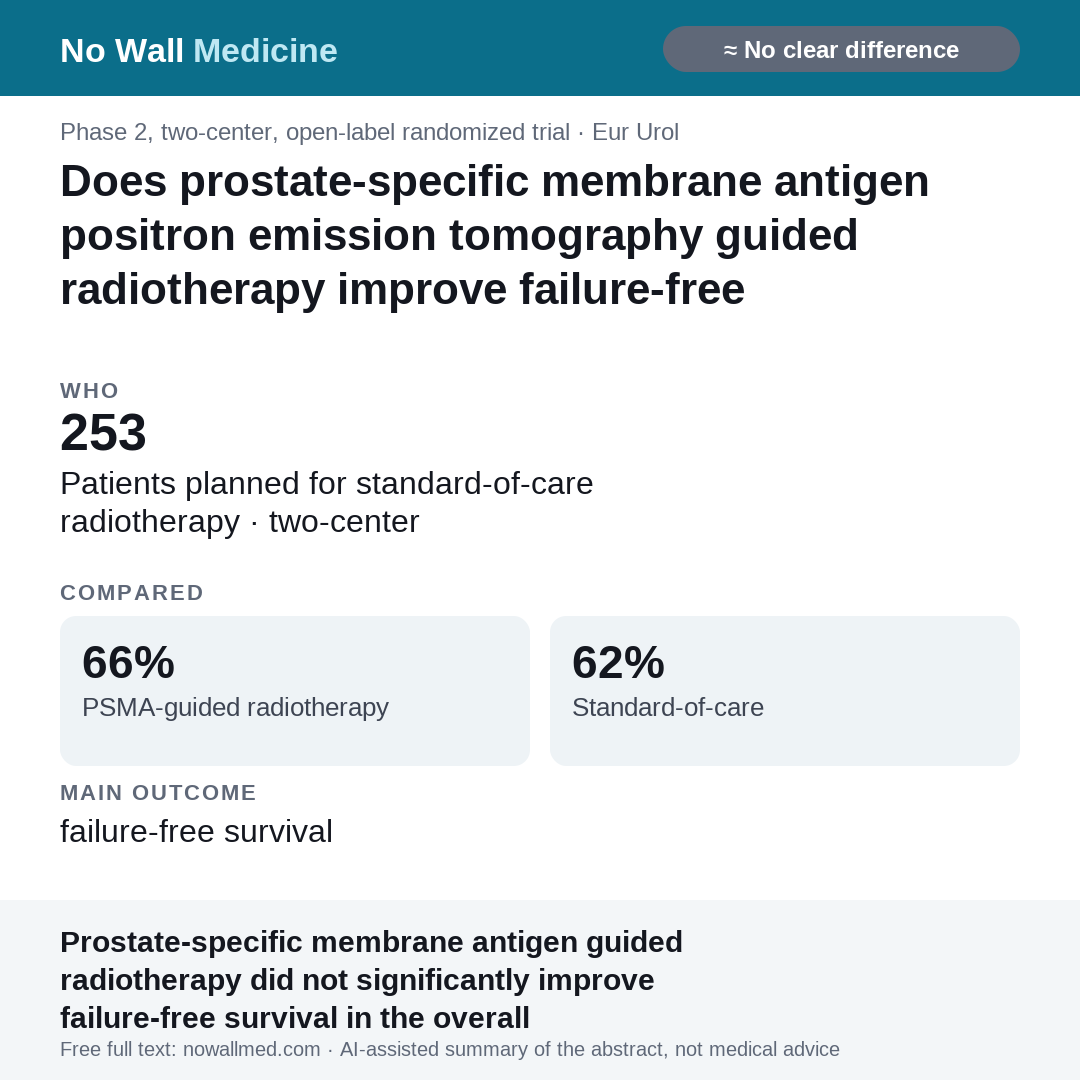
PSMA-PET/CT-guided Intensification of Radiation Therapy for Prostate Cancer (PSMAgRT): 5-yr Analysis of a Phase 2 Randomized Controlled Trial
Phase 2, two-center, open-label randomized trialNo clear difference
Does prostate-specific membrane antigen positron emission tomography guided radiotherapy improve failure-free survival?
Who
253
Patients planned for standard-of-care radiotherapy · two-center
Compared
66%PSMA-guided radiotherapy
62%Standard-of-care
Main outcome
failure-free survival
Result: hazard ratio 0.80 (one-sided 90% CI, upper bound 1.04)
Bottom line: Prostate-specific membrane antigen guided radiotherapy did not significantly improve failure-free survival in the overall population.
Limitation: phase 2 design with a heterogeneous population
Eur Urol · 2026-10-03Download image
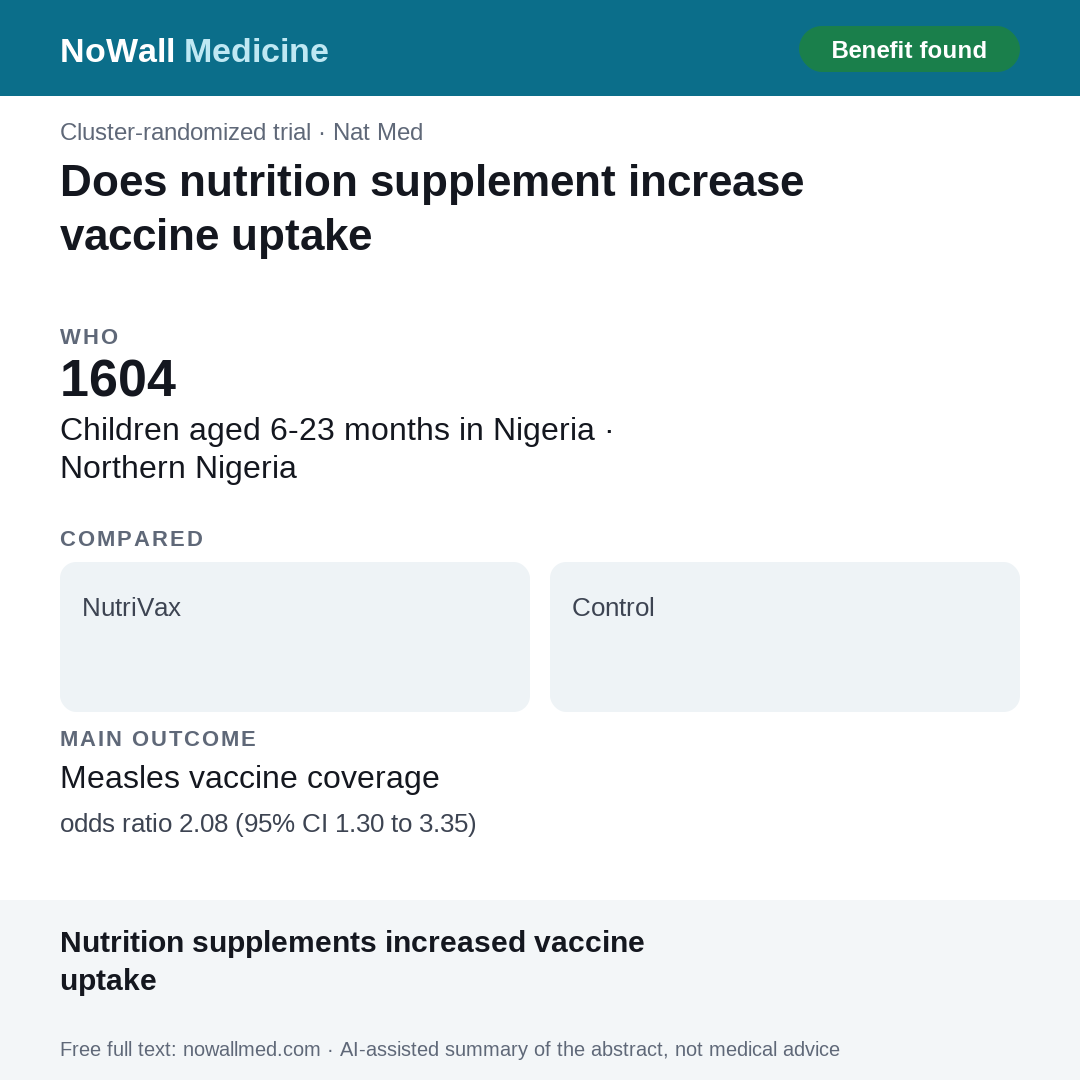
Small quantity lipid-based nutritional supplementation and measles vaccination coverage in children aged 6-23 months: a pragmatic cluster-randomized trial
Cluster-randomized trialBenefit found
Does nutrition supplement increase vaccine uptake
Who
1604
Children aged 6-23 months in Nigeria · Northern Nigeria
Compared
NutriVax
Control
Main outcome
Measles vaccine coverage
Result: odds ratio 2.08 (95% CI 1.30 to 3.35)
Bottom line: Nutrition supplements increased vaccine uptake
Nat Med · 2026-10-02Download image
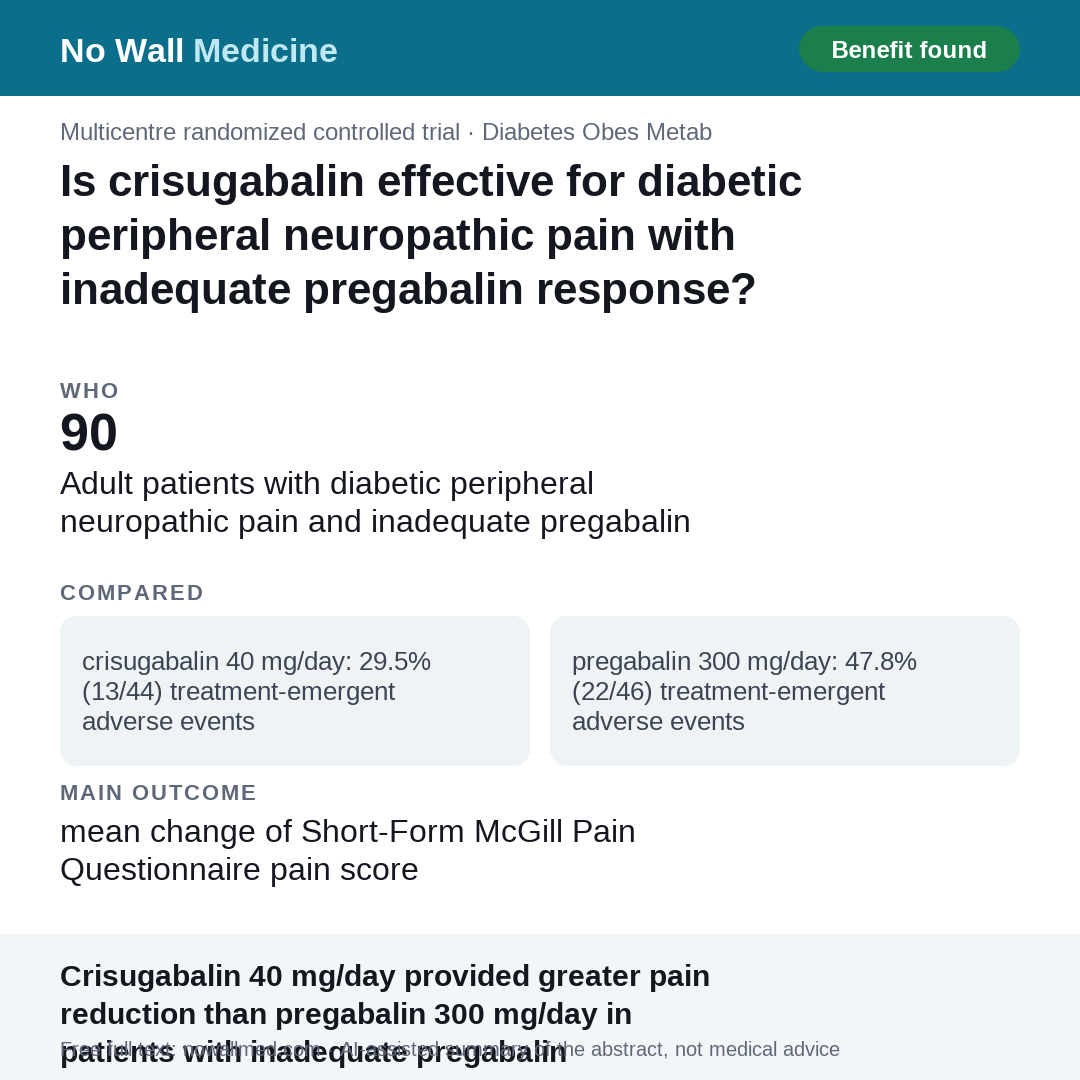
Efficacy and Safety of Crisugabalin for Inadequately Controlled Diabetic Peripheral Neuropathic Pain: A Randomized, Active-Controlled, Phase 2 Trial
Multicentre randomized controlled trialBenefit found
Is crisugabalin effective for diabetic peripheral neuropathic pain with inadequate pregabalin response?
Who
90
Adult patients with diabetic peripheral neuropathic pain and inadequate pregabalin response
Compared
crisugabalin 40 mg/day: 29.5% (13/44) treatment-emergent adverse events
pregabalin 300 mg/day: 47.8% (22/46) treatment-emergent adverse events
Main outcome
mean change of Short-Form McGill Pain Questionnaire pain score
Result: -7.2 (95% CI: -12.4, -2.0; ANCOVA p = 0.007)
Bottom line: Crisugabalin 40 mg/day provided greater pain reduction than pregabalin 300 mg/day in patients with inadequate pregabalin response.
Diabetes Obes Metab · 2026-10-02Download image
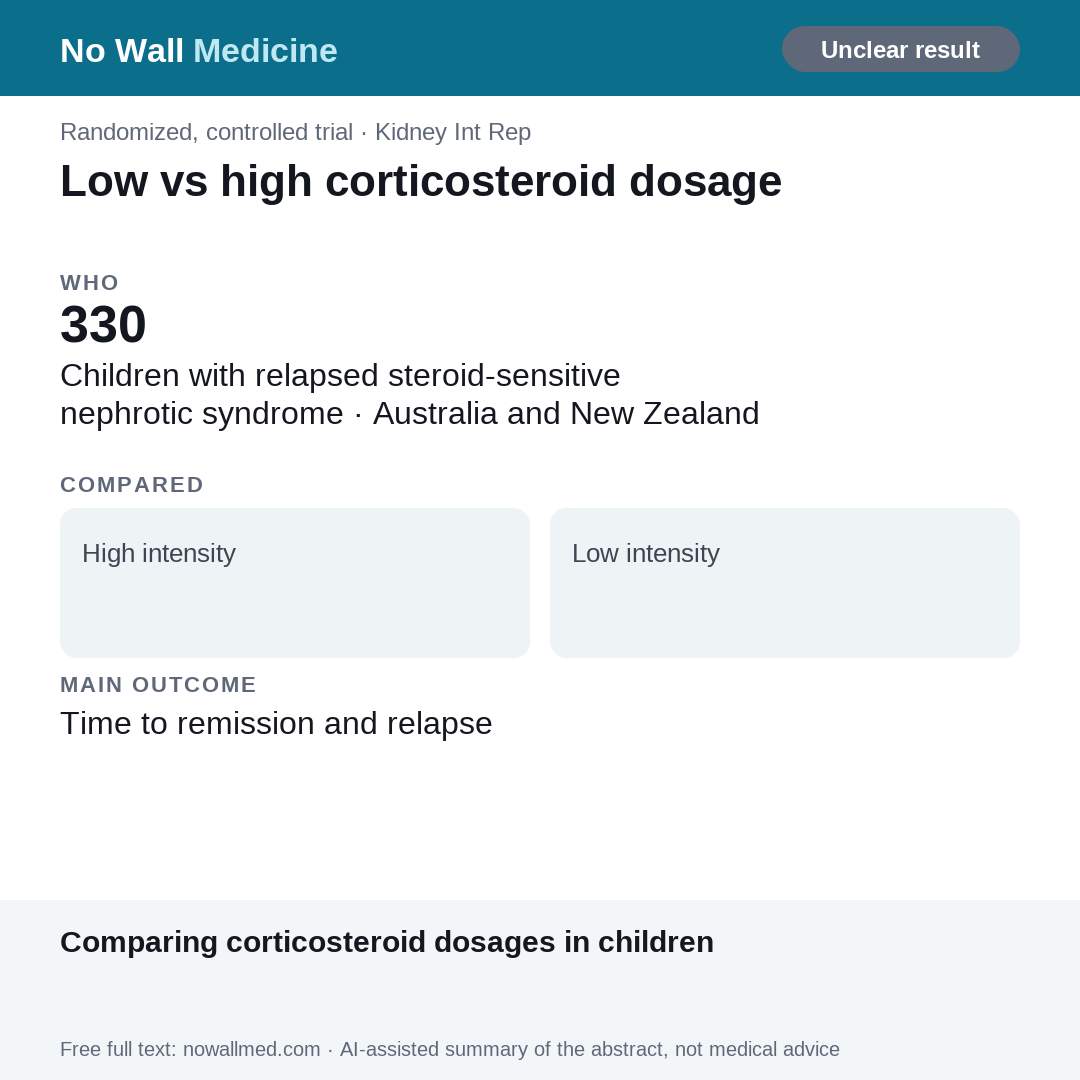
A Randomized Controlled Trial of Two Corticosteroid Dosages for Relapsed Childhood Steroid-Sensitive Nephrotic Syndrome: The OPtimising dosE in Nephrotic Syndrome (OPEN) Trial Protocol
Randomized, controlled trialUnclear result
Low vs high corticosteroid dosage
Who
330
Children with relapsed steroid-sensitive nephrotic syndrome · Australia and New Zealand
Compared
High intensity
Low intensity
Main outcome
Time to remission and relapse
Bottom line: Comparing corticosteroid dosages in children
Kidney Int Rep · 2026-10-02Download image
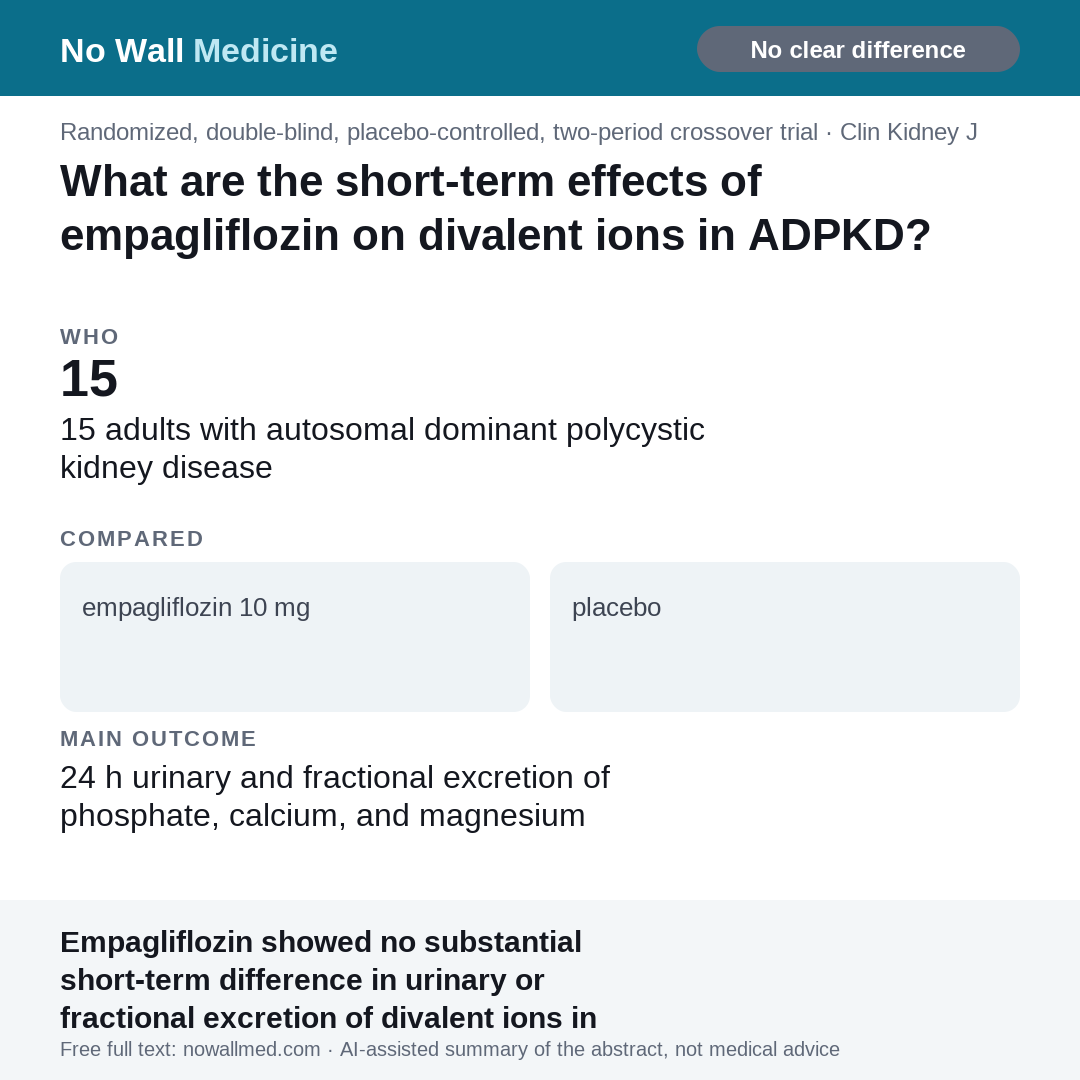
Short-term effects of an SGLT2 inhibitor on divalent ions in autosomal dominant polycystic kidney disease: a randomized crossover trial
Randomized, double-blind, placebo-controlled, two-period crossover trialNo clear difference
What are the short-term effects of empagliflozin on divalent ions in ADPKD?
Who
15
15 adults with autosomal dominant polycystic kidney disease
Compared
empagliflozin 10 mg
placebo
Main outcome
24 h urinary and fractional excretion of phosphate, calcium, and magnesium
Bottom line: Empagliflozin showed no substantial short-term difference in urinary or fractional excretion of divalent ions in ADPKD patients.
Limitation: Small sample size and exploratory nature of the analyses.
Clin Kidney J · 2026-10-02Download image
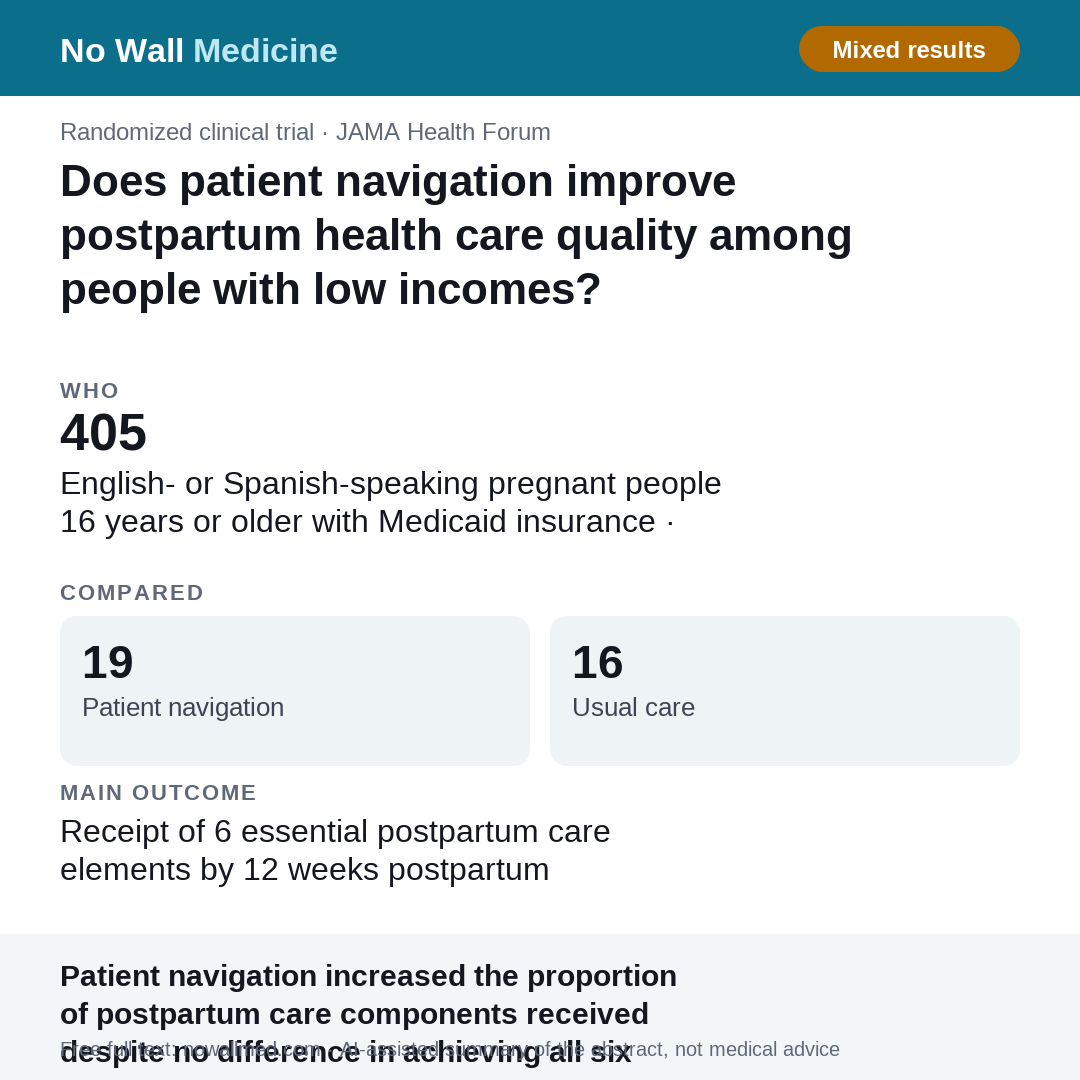
Patient Navigation and Postpartum Health Care Outcomes: A Randomized Clinical Trial
Randomized clinical trialMixed results
Does patient navigation improve postpartum health care quality among people with low incomes?
Who
405
English- or Spanish-speaking pregnant people 16 years or older with Medicaid insurance · Single urban academic medical center
Compared
19Patient navigation (9.4%)
16Usual care (7.9%)
Main outcome
Receipt of 6 essential postpartum care elements by 12 weeks postpartum
Bottom line: Patient navigation increased the proportion of postpartum care components received despite no difference in achieving all six essential elements.
JAMA Health Forum · 2026-10-02Download image
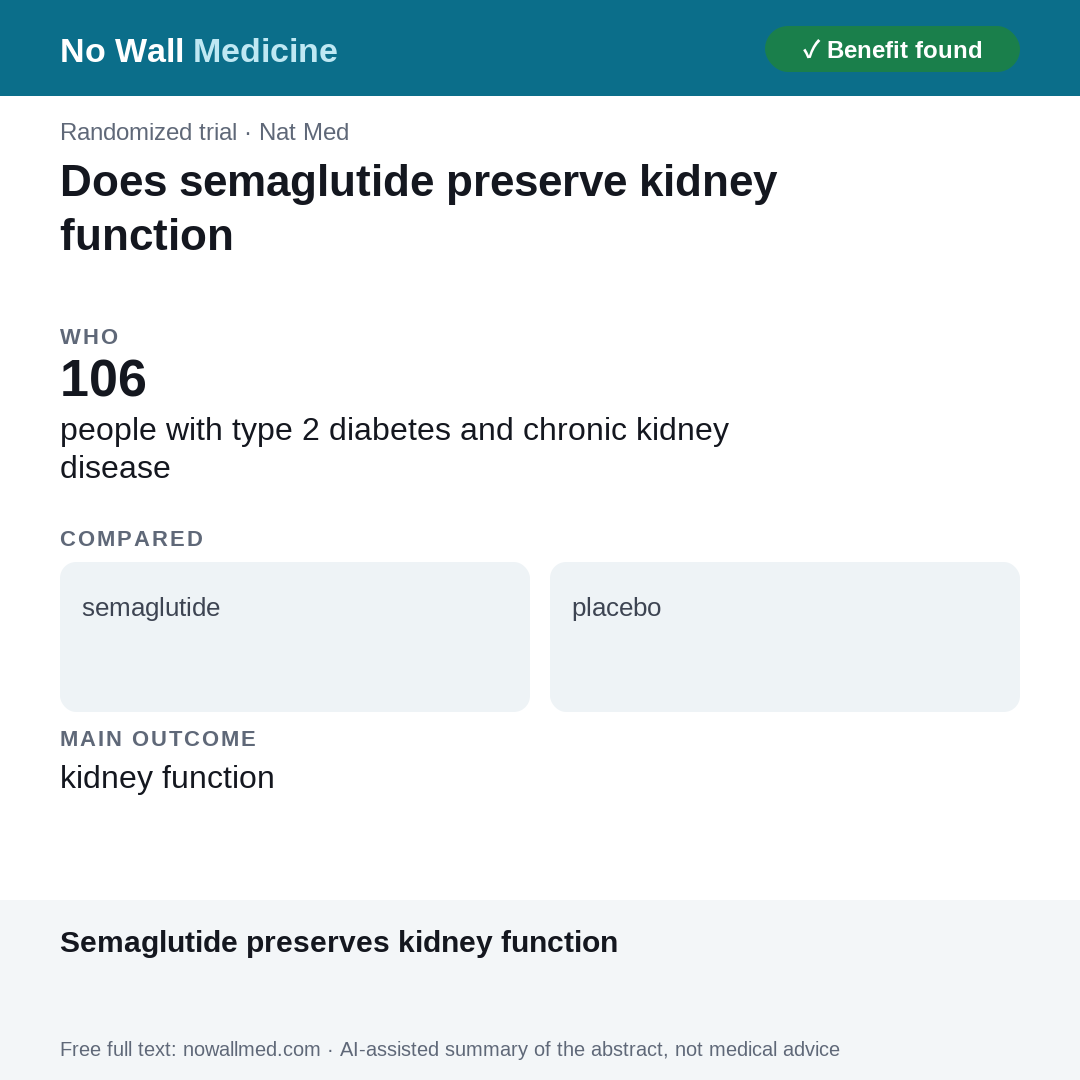
Effects of semaglutide on kidney disease in type 2 diabetes: a randomized placebo-controlled trial
Randomized trialBenefit found
Does semaglutide preserve kidney function
Who
106
people with type 2 diabetes and chronic kidney disease
Compared
semaglutide
placebo
Main outcome
kidney function
Bottom line: Semaglutide preserves kidney function
Nat Med · 2026-10-01Download image
User Interface Designs to Address Cancer Misinformation: A Randomized Clinical Trial
Randomized clinical trialBenefit found
Do user interface designs reduce cancer misinformation sharing?
Who
294
US adults with cancer or caregivers · US
Compared
38%Social cue prompts (224/592)
26%Standard prompts (180/689)
12%No prompts (84/675)
Main outcome
Flagging inaccurate cancer posts
Result: rate ratio 3.12 (95% CI 1.79 to 5.42) for social cue vs control
Bottom line: Prompts reduce cancer misinformation sharing
JAMA Netw Open · 2026-10-01Download image

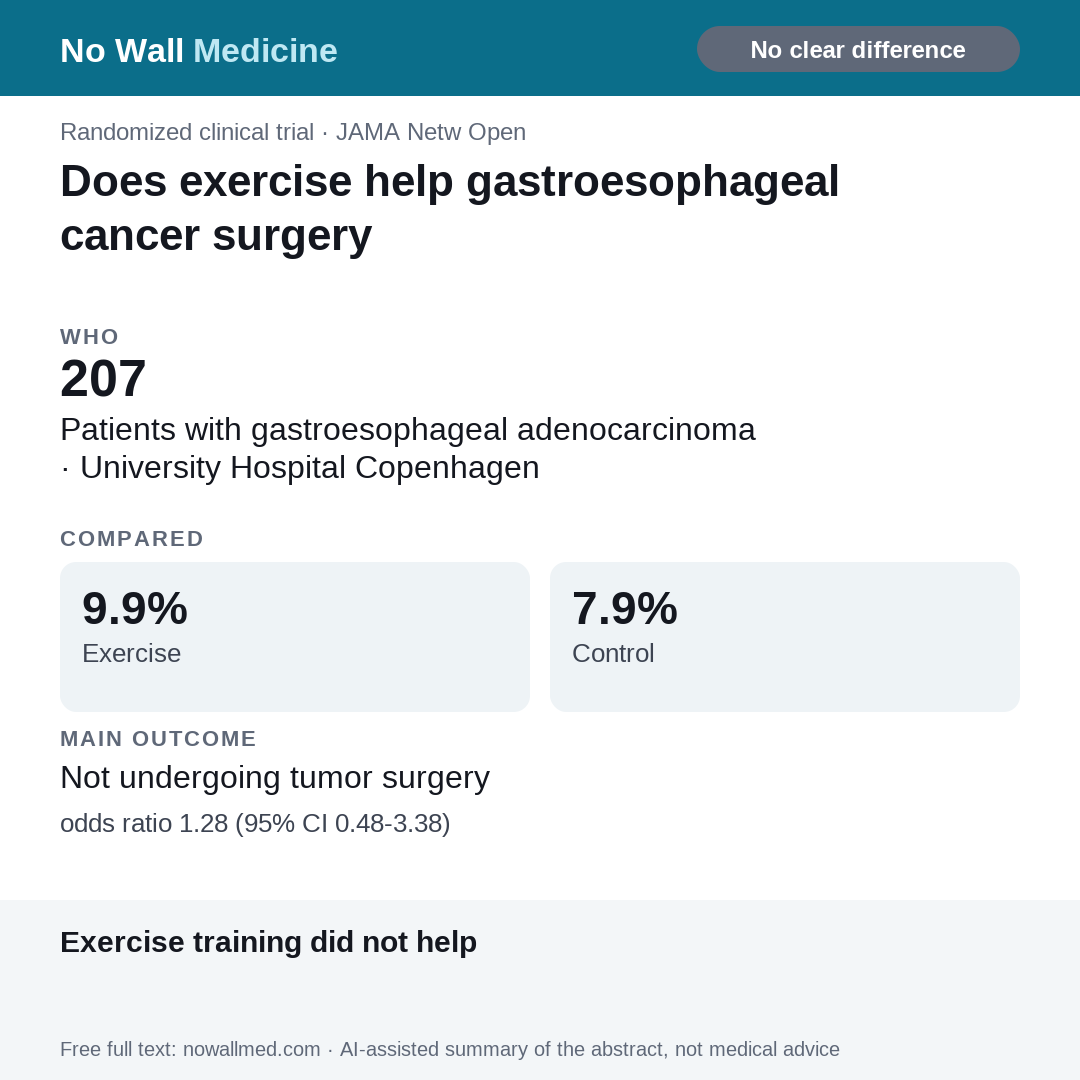
Exercise Training During Neoadjuvant Treatment for Gastroesophageal Cancer and Tumor Surgery: A Randomized Clinical Trial
Randomized clinical trialNo clear difference
Does exercise help gastroesophageal cancer surgery
Who
207
Patients with gastroesophageal adenocarcinoma · University Hospital Copenhagen
Compared
9.9%Exercise (10/101)
7.9%Control (8/101)
Main outcome
Not undergoing tumor surgery
Result: odds ratio 1.28 (95% CI 0.48-3.38)
Bottom line: Exercise training did not help
JAMA Netw Open · 2026-10-01Download image
Preschool Physical Activity Policy and Children's Physical Activity: A Pragmatic Cluster Randomized Clinical Trial
Cluster randomized clinical trialNo clear difference
Does preschool physical activity policy work
Who
3751
Children aged three to five years · Public preschools in Stockholm, Sweden
Compared
Intervention: 33.0 minutes per day
Control: 33.0 minutes per day
Main outcome
Moderate to vigorous physical activity
Result: difference in change, 0.3 (95% CI, -0.7 to 1.3) minutes per day
Bottom line: Policy did not increase physical activity
Limitation: detecting change in preschool settings
JAMA Netw Open · 2026-10-01Download image

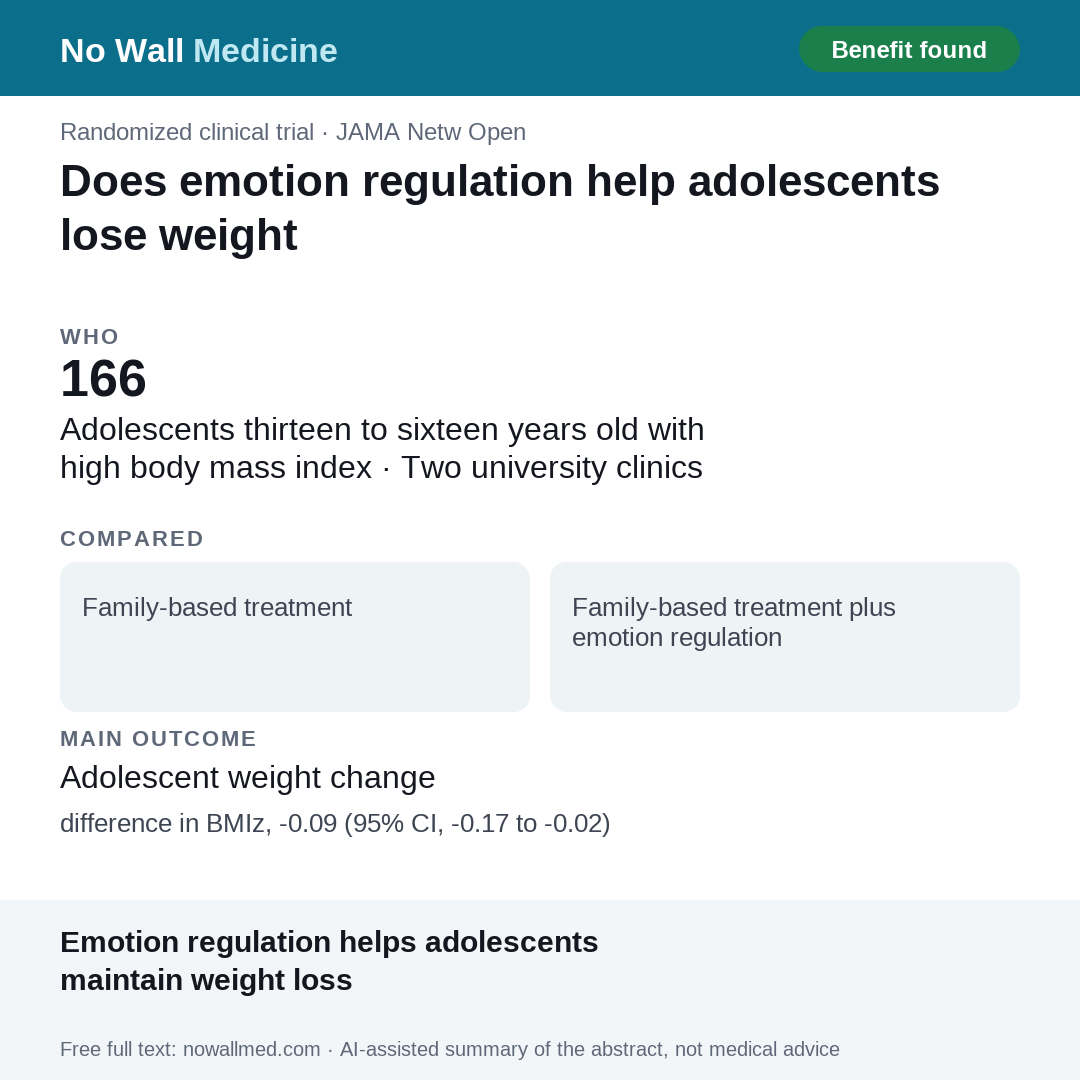
Emotion-Focused Behavioral Weight Loss Treatment for Adolescents: A Randomized Clinical Trial
Randomized clinical trialBenefit found
Does emotion regulation help adolescents lose weight
Who
166
Adolescents thirteen to sixteen years old with high body mass index · Two university clinics
Compared
Family-based treatment
Family-based treatment plus emotion regulation
Main outcome
Adolescent weight change
Result: difference in BMIz, -0.09 (95% CI, -0.17 to -0.02)
Bottom line: Emotion regulation helps adolescents maintain weight loss
JAMA Netw Open · 2026-10-01Download image
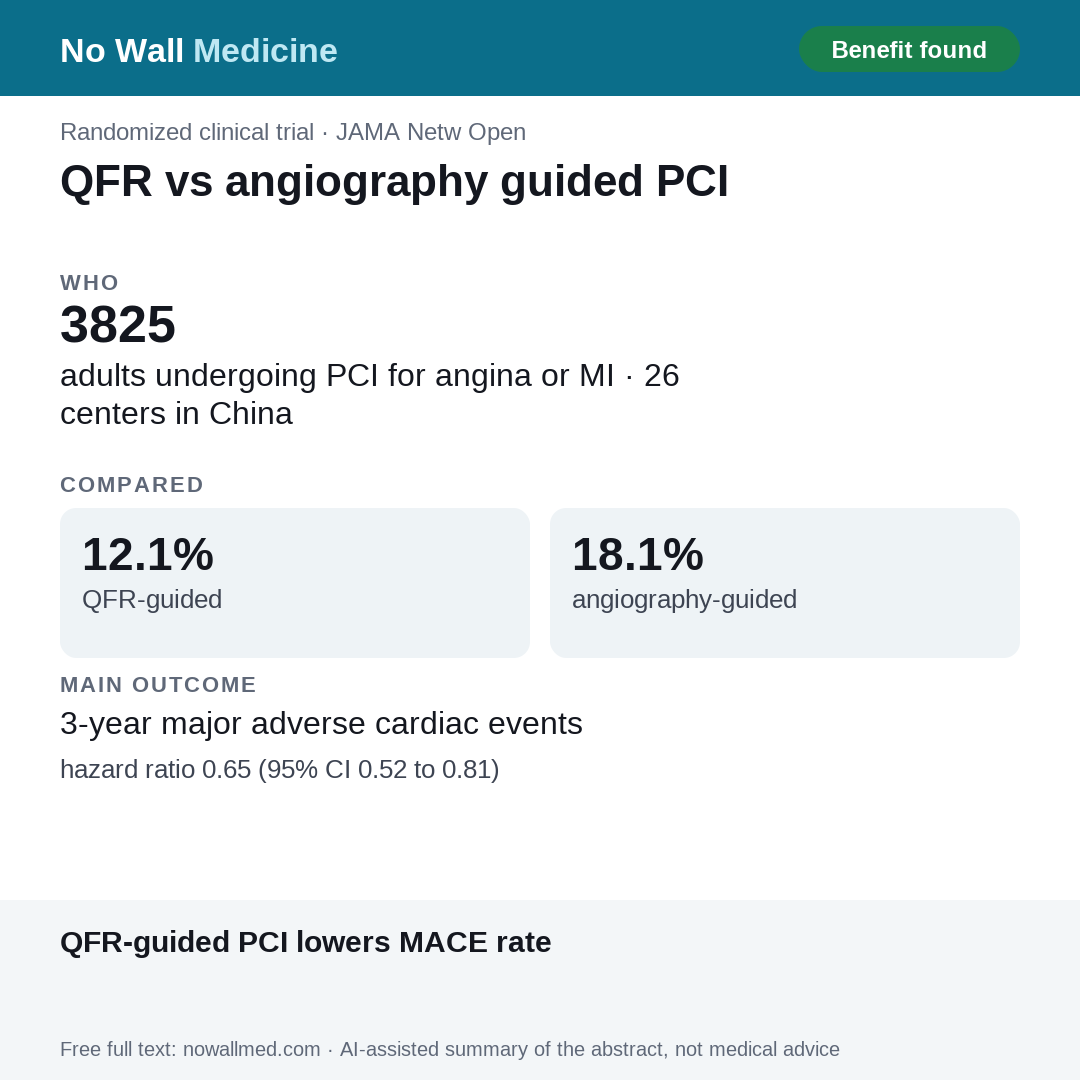
Quantitative Flow Ratio- vs Angiography-Guided Percutaneous Coronary Intervention: A Secondary Analysis of the FAVOR III China Trial
Randomized clinical trial secondary analysisBenefit found
Does QFR-guided PCI versus angiography-guided PCI affect 3-year outcomes by multivessel disease status?
Who
3825
Adults undergoing percutaneous coronary intervention for angina or myocardial infarction · 26 centers in China
Compared
12.1%QFR-guided PCI in MVD cohort
18.1%Angiography-guided PCI in MVD cohort
8.6%QFR-guided PCI in non-MVD cohort
11.0%Angiography-guided PCI in non-MVD cohort
Main outcome
3-year major adverse cardiac events
Result: hazard ratio 0.65 (95% CI 0.52-0.81) in MVD cohort
Bottom line: QFR-guided PCI was associated with lower 3-year major adverse cardiac events in patients with multivessel disease.
JAMA Netw Open · 2026-10-01Download image
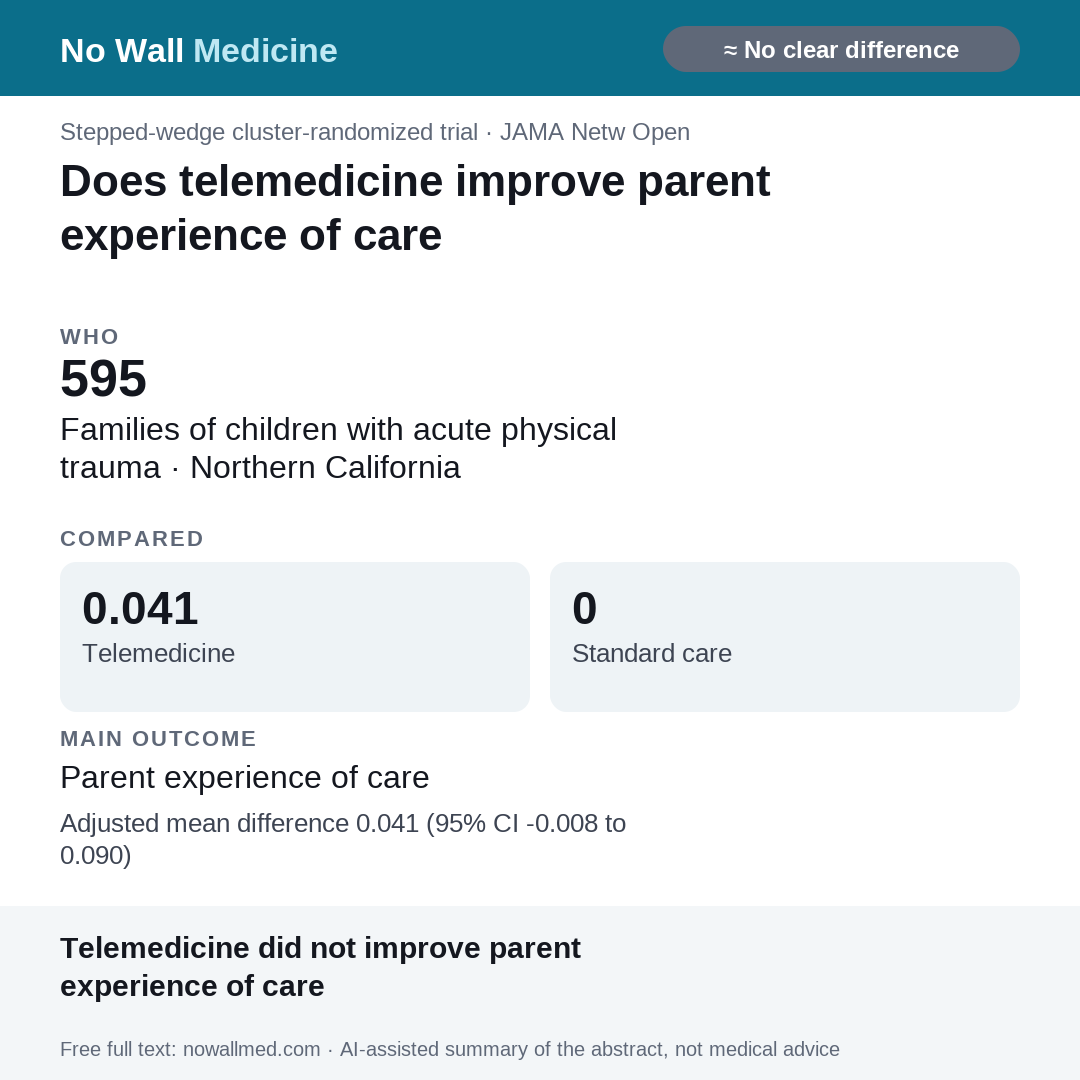
Telemedicine Consultation for Pediatric Trauma in Community ED Visits and Parent Experience of Care: A Stepped-Wedge Cluster-Randomized Clinical Trial
Stepped-wedge cluster-randomized trialNo clear difference
Does telemedicine improve parent experience of care
Who
595
Families of children with acute physical trauma · Northern California
Compared
0.041Telemedicine
0Standard care
Main outcome
Parent experience of care
Result: Adjusted mean difference 0.041 (95% CI -0.008 to 0.090)
Bottom line: Telemedicine did not improve parent experience of care
JAMA Netw Open · 2026-10-01Download image
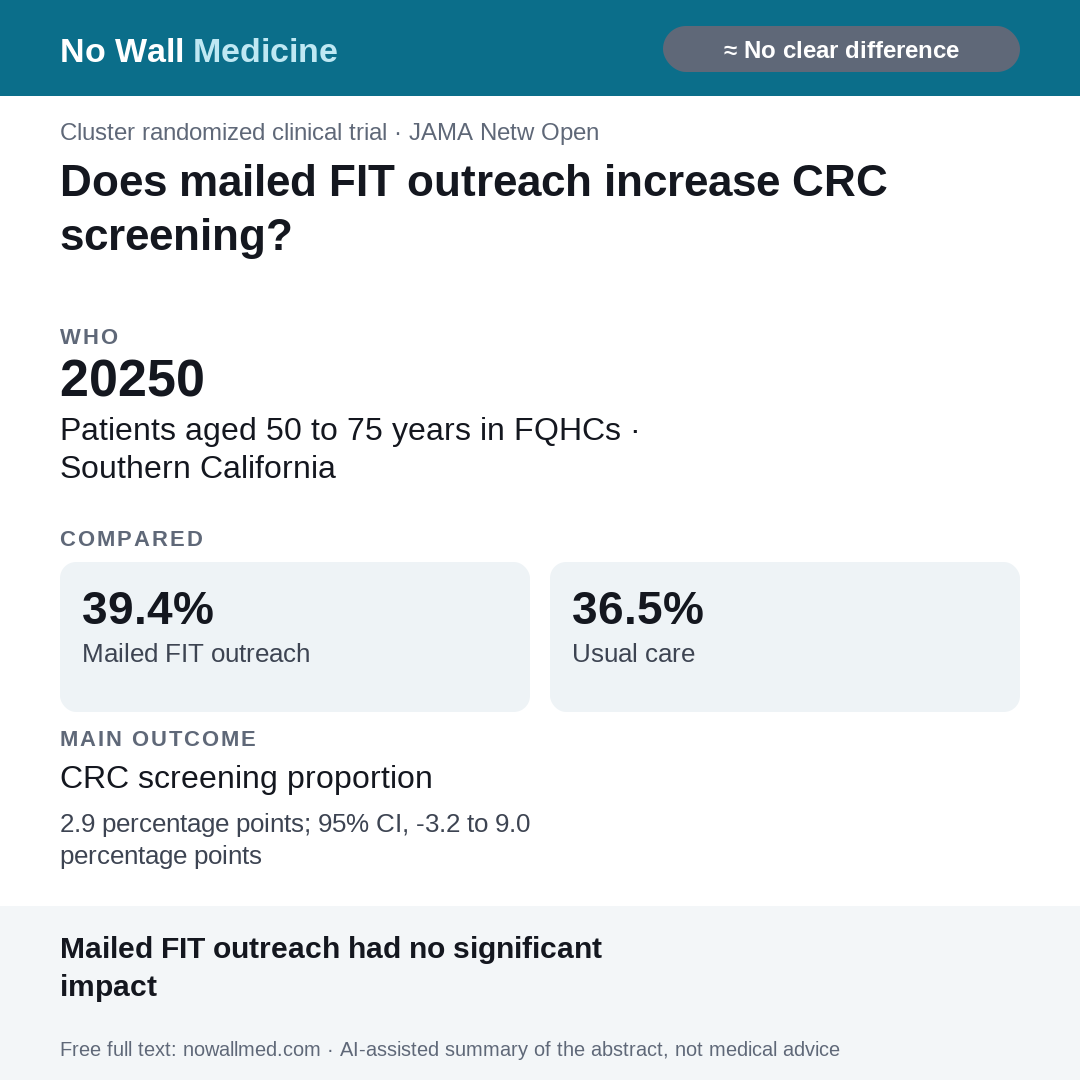
Fecal Immunochemical Test Outreach for Colorectal Cancer Screening in Community Health Centers: A Randomized Clinical Trial
Cluster randomized clinical trialNo clear difference
Does mailed FIT outreach increase CRC screening?
Who
20250
Patients aged 50 to 75 years in FQHCs · Southern California
Compared
39.4%Mailed FIT outreach (95% CI, 36.3% to 42.6%)
36.5%Usual care (95% CI, 31.2% to 42.2%)
Main outcome
CRC screening proportion
Result: 2.9 percentage points; 95% CI, -3.2 to 9.0 percentage points
Bottom line: Mailed FIT outreach had no significant impact
JAMA Netw Open · 2026-10-01Download image
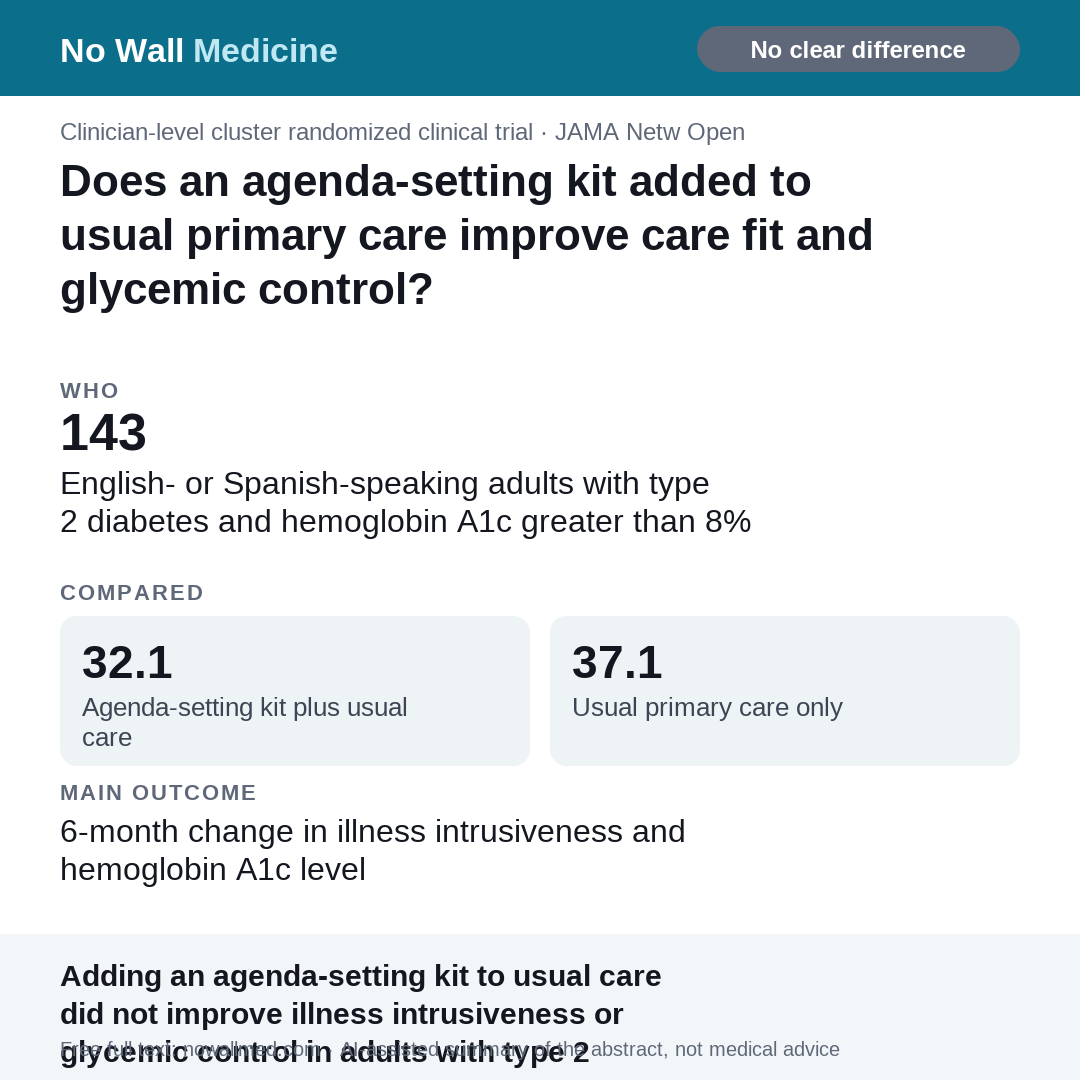
A Conversation Tool to Enhance Care for People With Type 2 Diabetes: The QBSafe Cluster Randomized Clinical Trial
Clinician-level cluster randomized clinical trialNo clear difference
Does an agenda-setting kit added to usual primary care improve care fit and glycemic control?
Who
143
English- or Spanish-speaking adults with type 2 diabetes and hemoglobin A1c greater than 8% · Federally qualified health center in New Haven, Connecticut
Compared
32.1Agenda-setting kit plus usual care (15.1)
37.1Usual primary care only (18.7)
Main outcome
6-month change in illness intrusiveness and hemoglobin A1c level
Result: adjusted mean difference, -3.9; 95% CI, -10.4 to 2.6
Bottom line: Adding an agenda-setting kit to usual care did not improve illness intrusiveness or glycemic control in adults with type 2 diabetes.
JAMA Netw Open · 2026-10-01Download image