Visual abstracts
New randomized trials and meta-analyses from leading journals at a glance: who was studied, what was compared, and what was found. Every paper is free to read in full.
All specialtiesCardiology 4877Oncology 4138Gastroenterology & Hepatology 1942Infectious Disease 3837Neurology 1905Psychiatry & Mental Health 2273Pulmonology 2143Critical Care 1365Endocrinology & Diabetes 2580Pediatrics 2980Surgery 2559Orthopedics & Sports Medicine 931Neurosurgery 537Cardiothoracic & Vascular Surgery 674Plastic & Reconstructive Surgery 591Nephrology 1133Rheumatology 823Hematology 1109Dermatology 621Ophthalmology 543Obstetrics & Gynecology 1686Public & Global Health 1058Radiology & Imaging 648Anesthesiology 986Urology 764ENT (Otolaryngology) 503Emergency Medicine 511Allergy & Immunology 313Geriatrics 981Family Medicine & Primary Care 562Medical Genetics & Genomics 676Pathology & Laboratory Medicine 159Physical Medicine & Rehabilitation 757Palliative Care 444Nutrition 1588Digital Health & AI 2201General Medicine 321
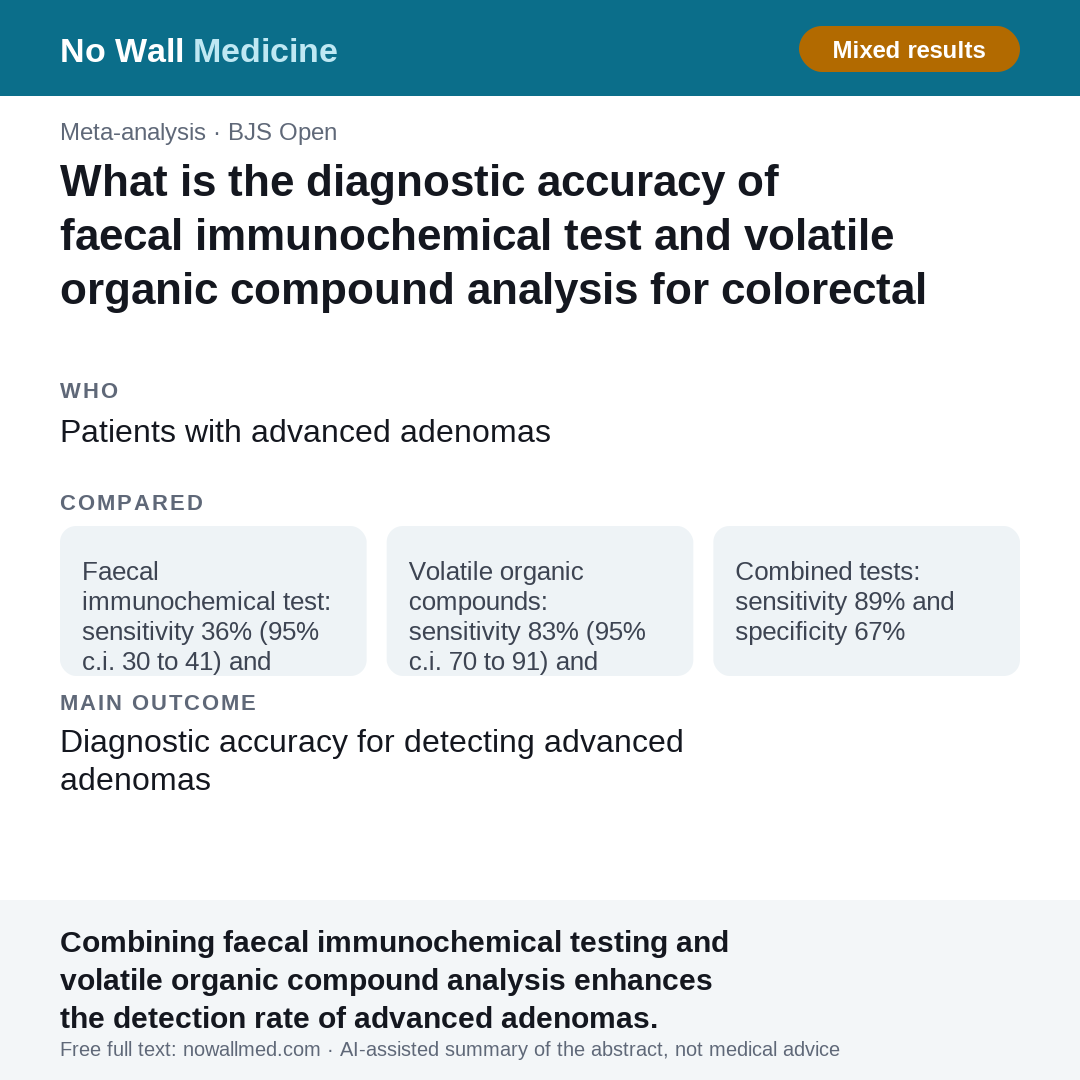
Diagnostic accuracy of the faecal immunochemical test and volatile organic compound analysis in detecting colorectal polyps: meta-analysis
Meta-analysisMixed results
What is the diagnostic accuracy of faecal immunochemical test and volatile organic compound analysis for colorectal polyps?
Who
Patients with advanced adenomas
Compared
Faecal immunochemical test: sensitivity 36% (95% c.i. 30 to 41) and specificity 89% (95% c.i. 86 to 91)
Volatile organic compounds: sensitivity 83% (95% c.i. 70 to 91) and specificity 76% (95% c.i. 60 to 87)
Combined tests: sensitivity 89% and specificity 67%
Main outcome
Diagnostic accuracy for detecting advanced adenomas
Bottom line: Combining faecal immunochemical testing and volatile organic compound analysis enhances the detection rate of advanced adenomas.
BJS Open · 2025-02-20Download image
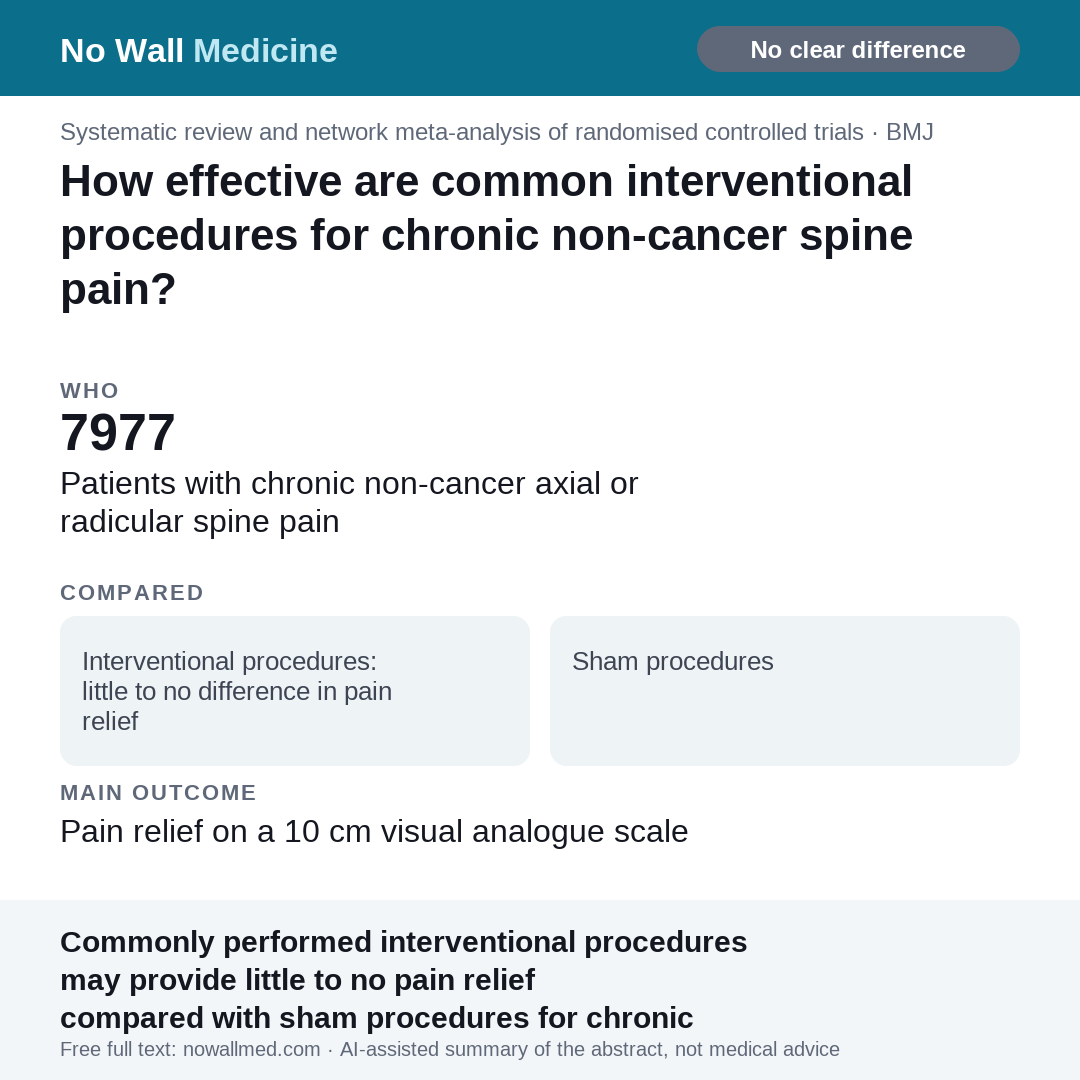
Common interventional procedures for chronic non-cancer spine pain: a systematic review and network meta-analysis of randomised trials
Systematic review and network meta-analysis of randomised controlled trialsNo clear difference
How effective are common interventional procedures for chronic non-cancer spine pain?
Who
7977
Patients with chronic non-cancer axial or radicular spine pain
Compared
Interventional procedures: little to no difference in pain relief
Sham procedures
Main outcome
Pain relief on a 10 cm visual analogue scale
Bottom line: Commonly performed interventional procedures may provide little to no pain relief compared with sham procedures for chronic spine pain.
Limitation: Certainty of evidence ranged from very low to moderate.
BMJ · 2025-02-19Download image
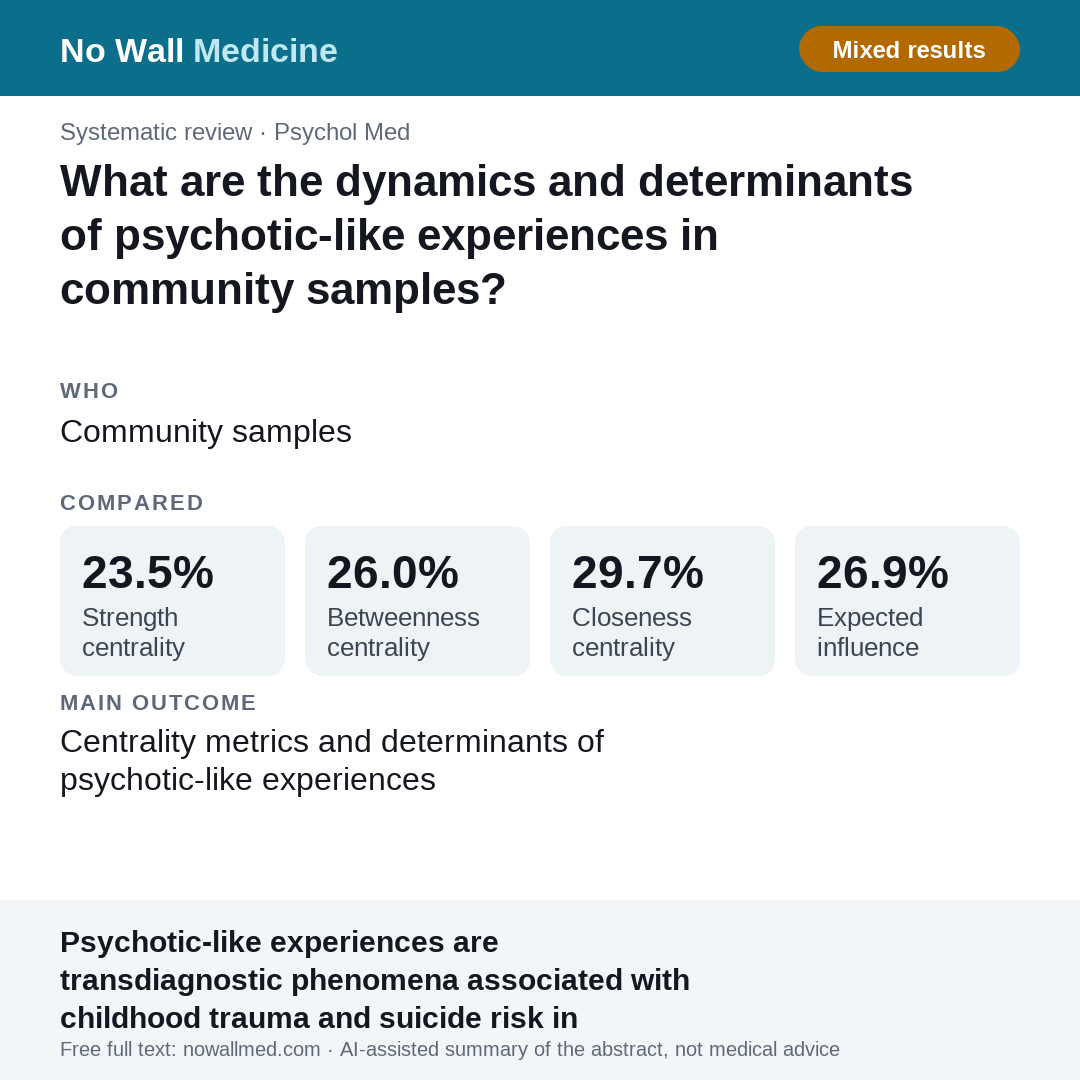
A systematic review of studies using network analysis to assess dynamics of psychotic-like experiences in community samples
Systematic reviewMixed results
What are the dynamics and determinants of psychotic-like experiences in community samples?
Who
Community samples
Compared
23.5%Strength centrality (20 studies)
26.0%Betweenness centrality (5 studies)
29.7%Closeness centrality (6 studies)
26.9%Expected influence (7 studies)
Main outcome
Centrality metrics and determinants of psychotic-like experiences
Bottom line: Psychotic-like experiences are transdiagnostic phenomena associated with childhood trauma and suicide risk in community samples.
Psychol Med · 2025-02-19Download image
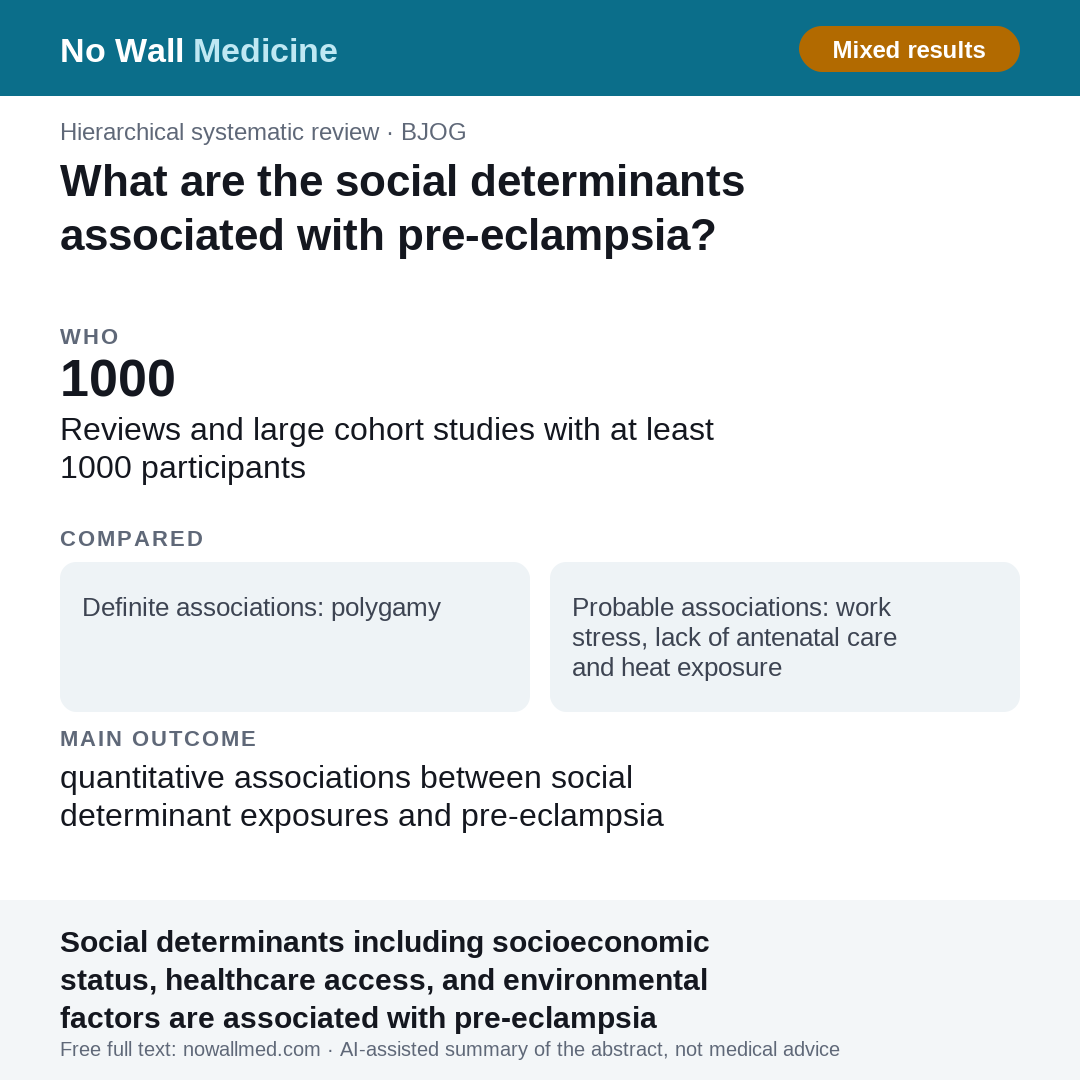
Towards the Development of a Conceptual Framework of the Determinants of Pre-Eclampsia: A Hierarchical Systematic Review of Social Determinants
Hierarchical systematic reviewMixed results
What are the social determinants associated with pre-eclampsia?
Who
1000
Reviews and large cohort studies with at least 1000 participants
Compared
Definite associations: polygamy
Probable associations: work stress, lack of antenatal care and heat exposure
Main outcome
quantitative associations between social determinant exposures and pre-eclampsia
Bottom line: Social determinants including socioeconomic status, healthcare access, and environmental factors are associated with pre-eclampsia risk.
BJOG · 2025-02-19Download image
The scientific evidence of commercial AI products for MRI acceleration: a systematic review
Systematic reviewUnclear result
Do AI products accelerate MRI scans effectively?
Who
Patients undergoing MRI scans
Compared
AI products
Traditional MRI
Main outcome
Diagnostic image quality
Bottom line: AI products lack evidence for clinical performance
Limitation: Limited prospective studies in large cohorts
Eur Radiol · 2025-02-19Download image

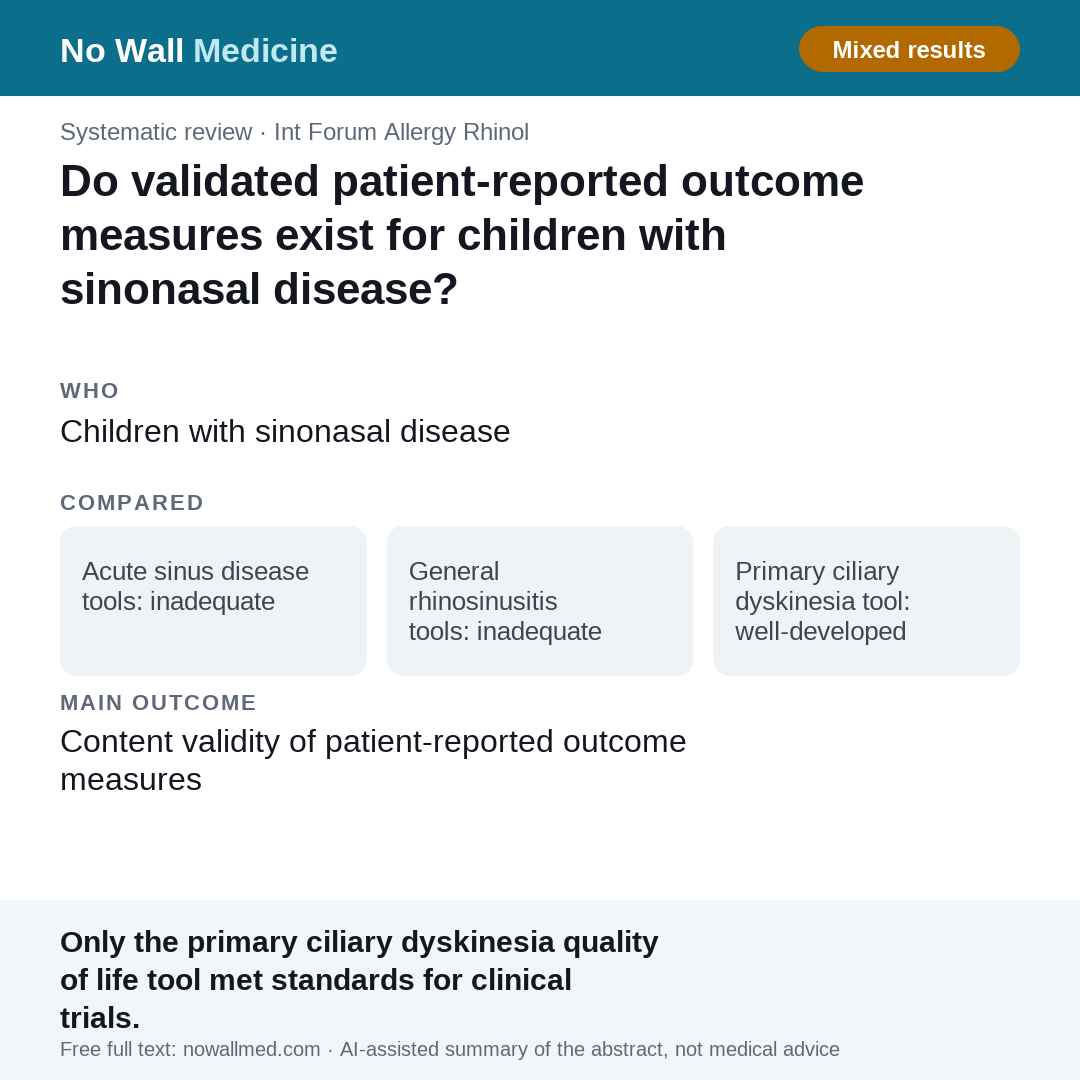
Content Validity of Patient-Reported Outcome Measures Developed for Assessing Disease-Specific Quality of Life in Children With Sinonasal Disease: A Systematic Review
Systematic reviewMixed results
Do validated patient-reported outcome measures exist for children with sinonasal disease?
Who
Children with sinonasal disease
Compared
Acute sinus disease tools: inadequate
General rhinosinusitis tools: inadequate
Primary ciliary dyskinesia tool: well-developed
Main outcome
Content validity of patient-reported outcome measures
Bottom line: Only the primary ciliary dyskinesia quality of life tool met standards for clinical trials.
Limitation: No content validity studies were included in the final analysis.
Int Forum Allergy Rhinol · 2025-02-19Download image
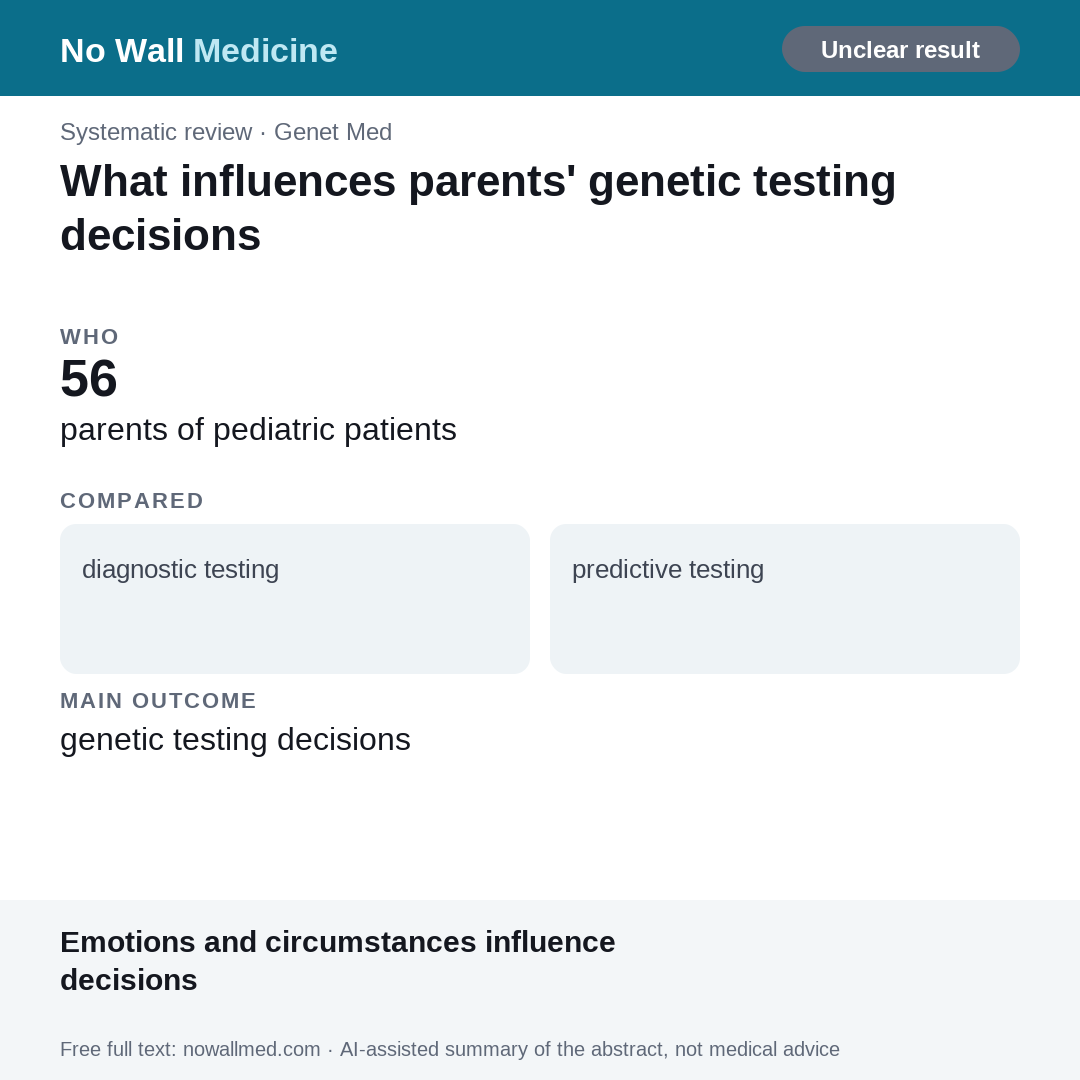
How do parents decide on genetic testing in pediatrics? A systematic review
Systematic reviewUnclear result
What influences parents' genetic testing decisions
Who
56
parents of pediatric patients
Compared
diagnostic testing
predictive testing
Main outcome
genetic testing decisions
Bottom line: Emotions and circumstances influence decisions
Genet Med · 2025-02-19Download image
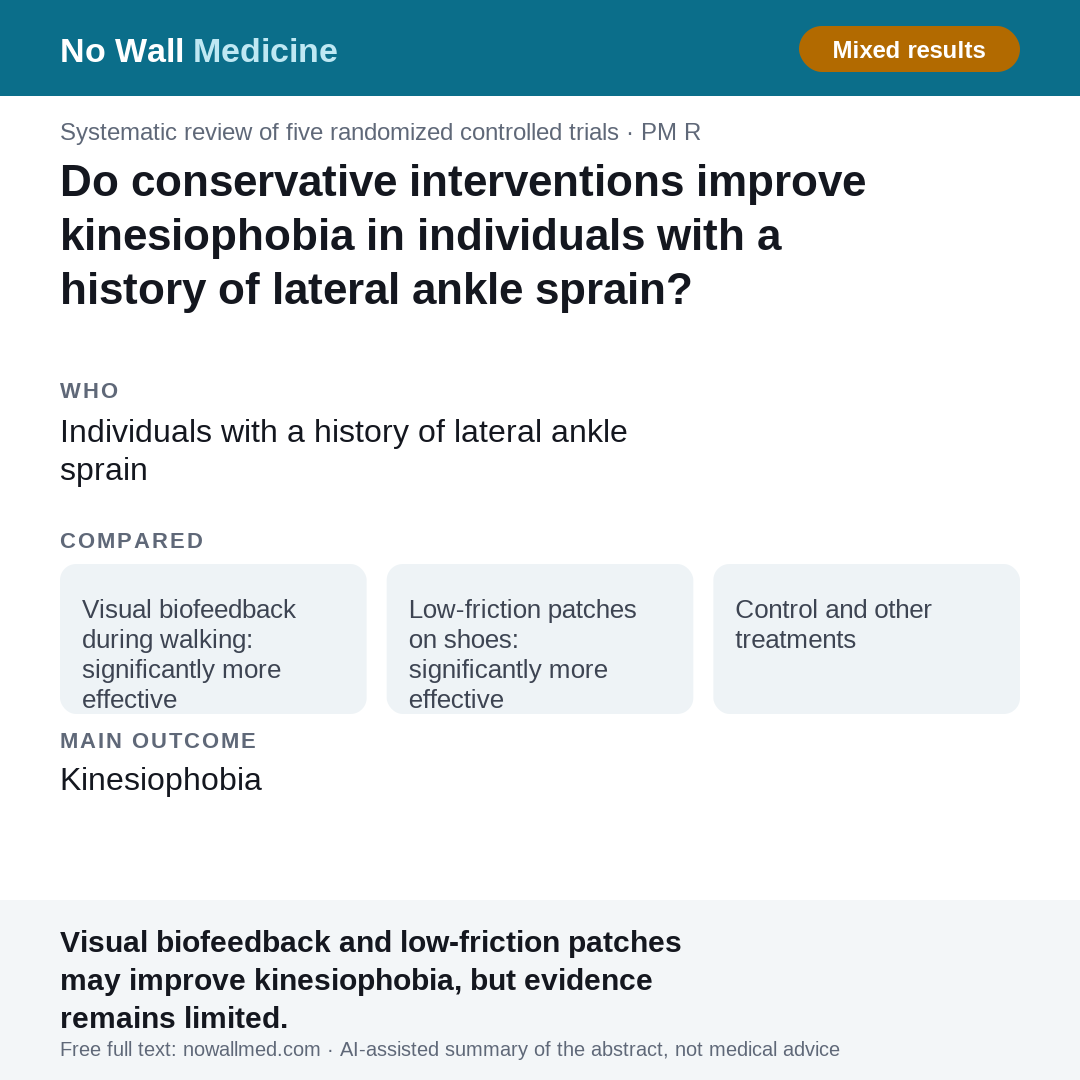
Efficacy of conservative intervention for kinesiophobia in individuals with a history of ankle sprain: A systematic review
Systematic review of five randomized controlled trialsMixed results
Do conservative interventions improve kinesiophobia in individuals with a history of lateral ankle sprain?
Who
Individuals with a history of lateral ankle sprain
Compared
Visual biofeedback during walking: significantly more effective
Low-friction patches on shoes: significantly more effective
Control and other treatments
Main outcome
Kinesiophobia
Bottom line: Visual biofeedback and low-friction patches may improve kinesiophobia, but evidence remains limited.
Limitation: Limited evidence from single studies and data synthesis through meta-analysis was not performed.
PM R · 2025-02-19Download image
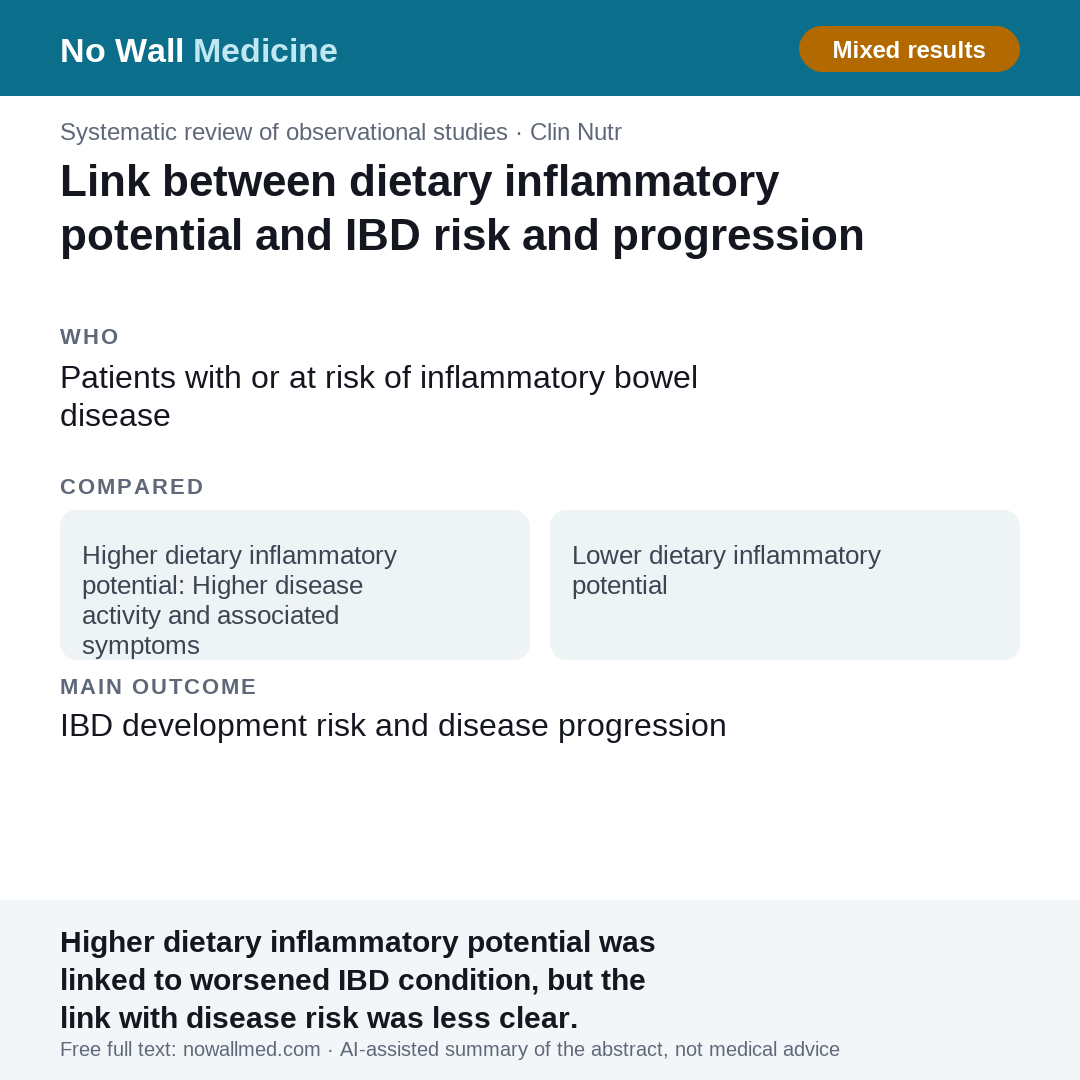
The dietary inflammatory potential and its role in the risk and progression of inflammatory bowel disease: A systematic review
Systematic reviewMixed results
What is the association between dietary inflammatory potential and inflammatory bowel disease?
Who
People with or at risk of inflammatory bowel disease
Compared
Higher dietary inflammatory potential: higher disease activity and associated symptoms
Risk of developing disease: mixed results
Main outcome
Risk and progression of inflammatory bowel disease
Bottom line: Higher dietary inflammatory potential worsens inflammatory bowel disease progression, but the link to disease development is less clear.
Limitation: High-quality intervention studies are needed to elucidate the findings.
Clin Nutr · 2025-02-19Download image
Adherence to mask-wearing and its impact on the incidence and deaths of viral respiratory infectious diseases: a systematic review, meta-analysis and modelling study
Systematic review, meta-analysis and modelling studyBenefit found
What is the impact of mask-wearing adherence on viral respiratory infectious disease incidence and deaths?
Who
448
Global populations during viral respiratory infectious disease pandemics and epidemics · 70 countries/regions
Compared
Mask-wearing in public settings: β=-265.26
COVID-19 deaths: β=-2.04
Main outcome
Incidence and deaths of viral respiratory infectious diseases
Result: COVID-19 incidence β=-265.26 (p=0.004), COVID-19 deaths β=-2.04 (p<0.001)
Bottom line: Mask-wearing in public settings significantly reduces COVID-19 incidence and deaths during viral respiratory infectious disease pandemics.
BMJ Glob Health · 2025-02-19Download image

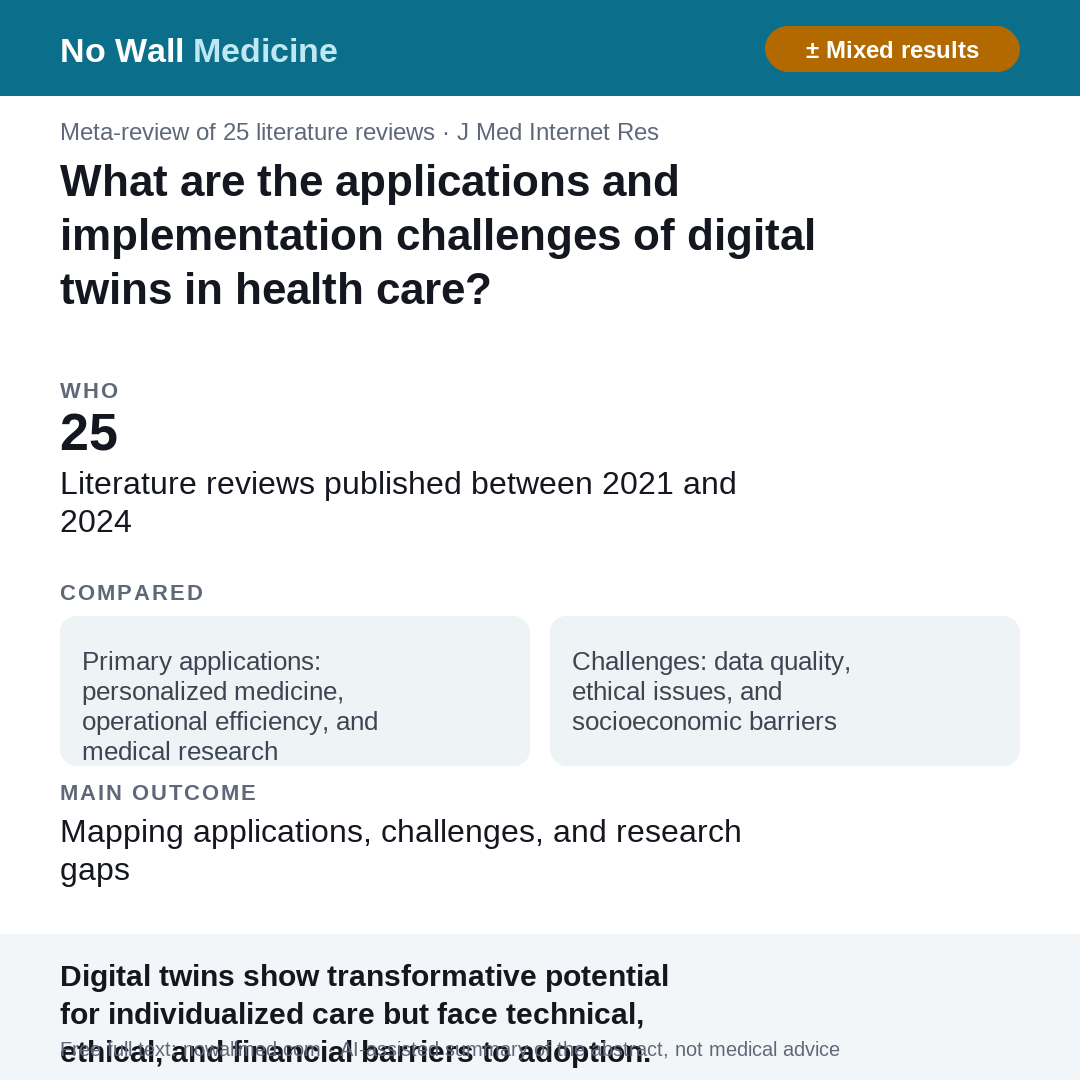
Advancing Health Care With Digital Twins: Meta-Review of Applications and Implementation Challenges
Meta-review of 25 literature reviewsMixed results
What are the applications and implementation challenges of digital twins in health care?
Who
25
Literature reviews published between 2021 and 2024
Compared
Primary applications: personalized medicine, operational efficiency, and medical research
Challenges: data quality, ethical issues, and socioeconomic barriers
Main outcome
Mapping applications, challenges, and research gaps
Bottom line: Digital twins show transformative potential for individualized care but face technical, ethical, and financial barriers to adoption.
J Med Internet Res · 2025-02-19Download image
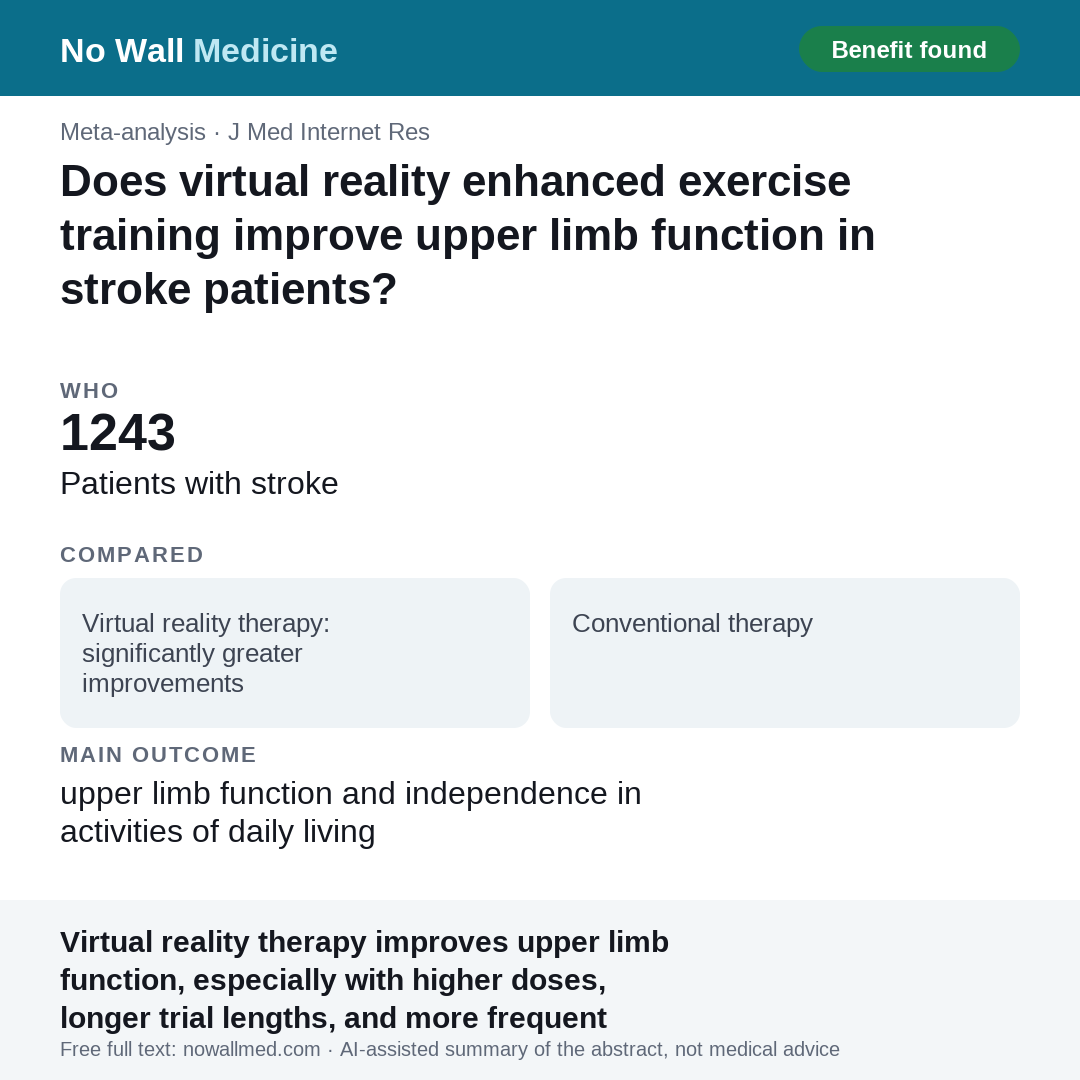
Virtual Reality Enhanced Exercise Training in Upper Limb Function of Patients With Stroke: Meta-Analytic Study
Meta-analysisBenefit found
Does virtual reality enhanced exercise training improve upper limb function in stroke patients?
Who
1243
Patients with stroke
Compared
Virtual reality therapy: significantly greater improvements
Conventional therapy
Main outcome
upper limb function and independence in activities of daily living
Bottom line: Virtual reality therapy improves upper limb function, especially with higher doses, longer trial lengths, and more frequent sessions.
J Med Internet Res · 2025-02-19Download image
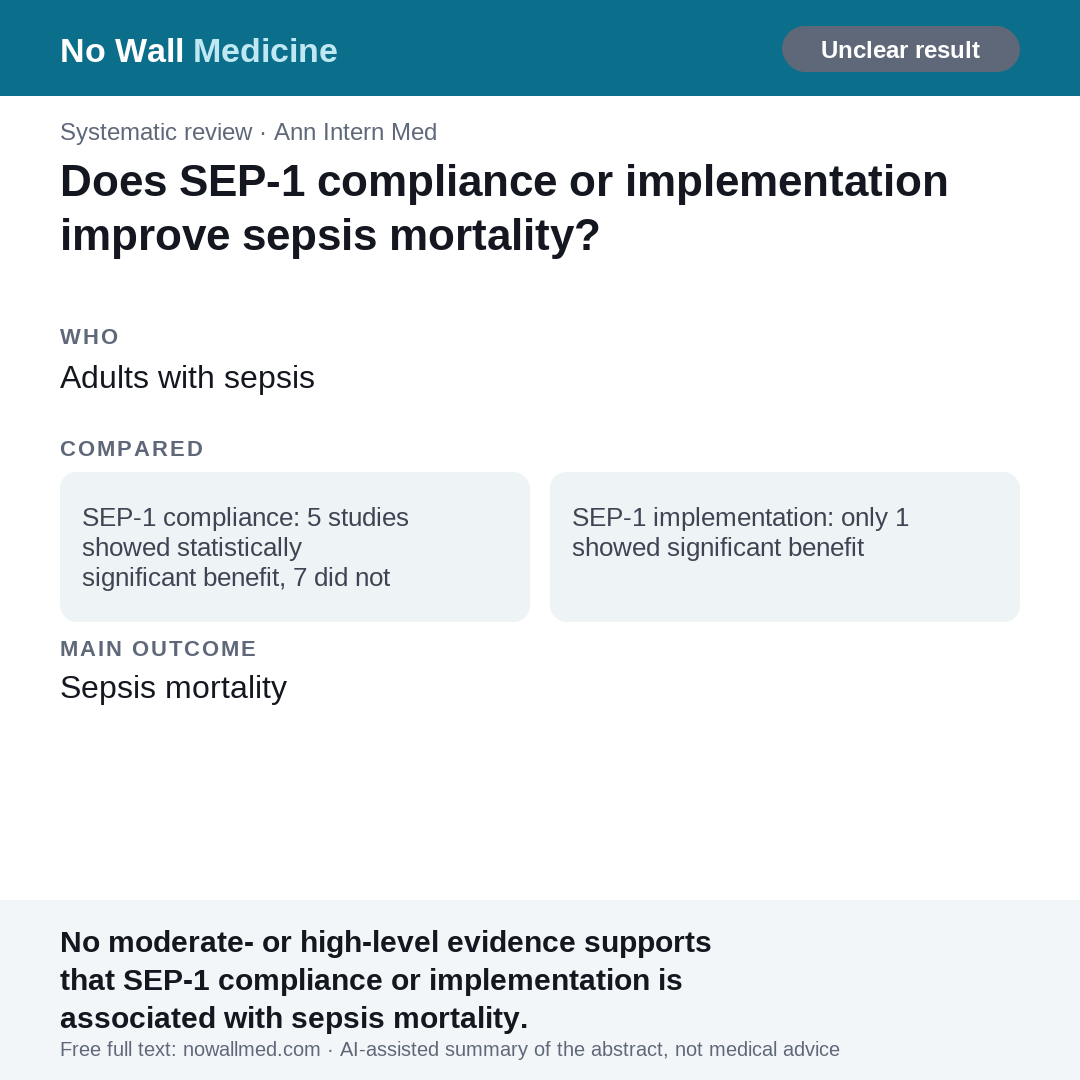
The Effect of Severe Sepsis and Septic Shock Management Bundle (SEP-1) Compliance and Implementation on Mortality Among Patients With Sepsis : A Systematic Review
Systematic reviewUnclear result
Does SEP-1 compliance or implementation improve sepsis mortality?
Who
Adults with sepsis
Compared
SEP-1 compliance: 5 studies showed statistically significant benefit, 7 did not
SEP-1 implementation: only 1 showed significant benefit
Main outcome
Sepsis mortality
Bottom line: No moderate- or high-level evidence supports that SEP-1 compliance or implementation is associated with sepsis mortality.
Limitation: All 17 studies were observational and none had low risk of bias.
Ann Intern Med · 2025-02-18Download image
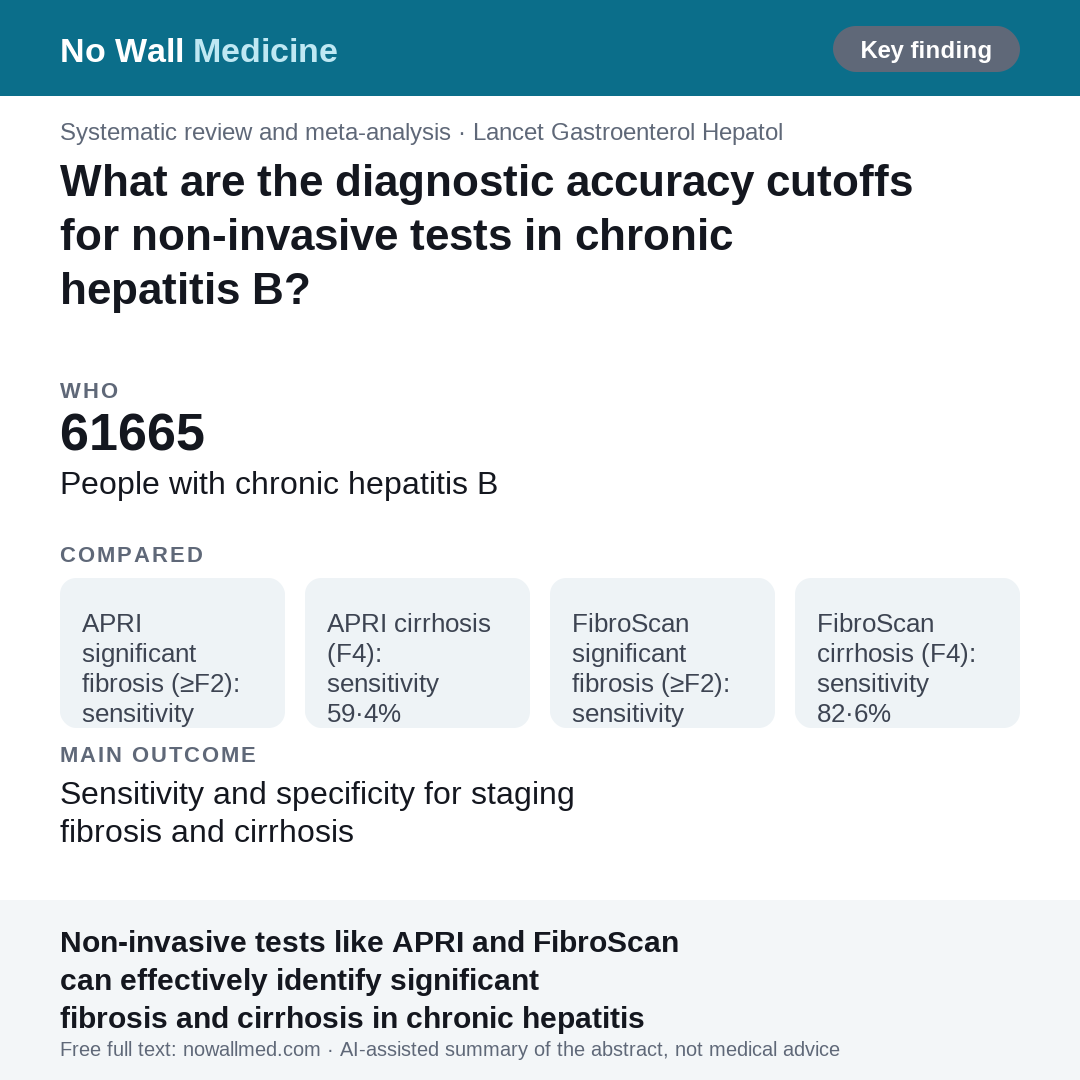
Staging liver fibrosis and cirrhosis using non-invasive tests in people with chronic hepatitis B to inform WHO 2024 guidelines: a systematic review and meta-analysis
Systematic review and meta-analysisBenefit found
What are the diagnostic accuracy cutoffs for non-invasive tests in chronic hepatitis B?
Who
61665
People with chronic hepatitis B
Compared
APRI significant fibrosis (≥F2): sensitivity 72·9% (95% CI 70·2-75·5)
APRI cirrhosis (F4): sensitivity 59·4% (53·2-65·2)
FibroScan significant fibrosis (≥F2): sensitivity 75·1% (72·2-77·7)
FibroScan cirrhosis (F4): sensitivity 82·6% (77·8-86·5)
Main outcome
Sensitivity and specificity for staging fibrosis and cirrhosis
Bottom line: Non-invasive tests like APRI and FibroScan can effectively identify significant fibrosis and cirrhosis in chronic hepatitis B.
Limitation: 231 studies had a high risk of bias.
Funded by: WHO
Lancet Gastroenterol Hepatol · 2025-02-18Download image
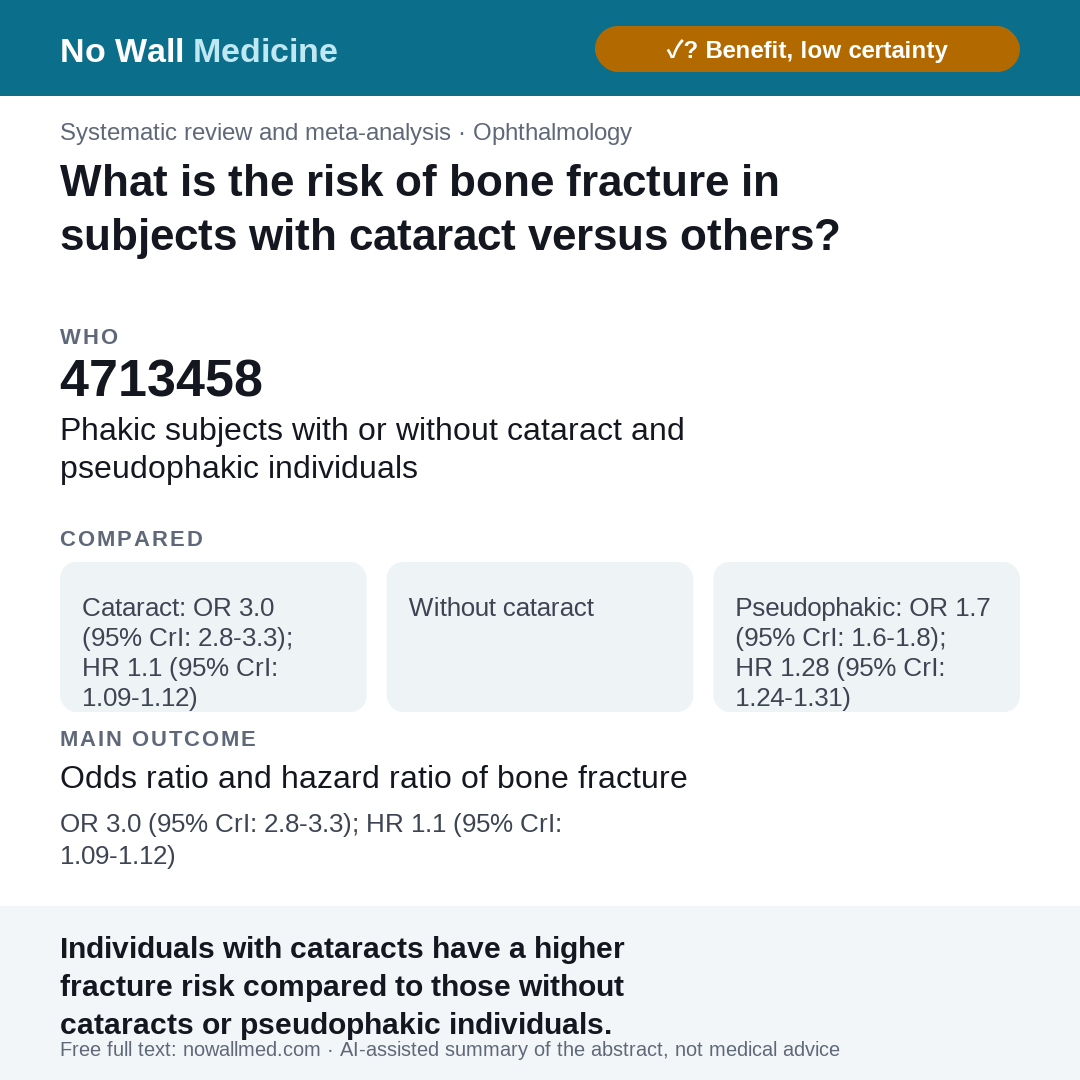
Cataract and Risk of Fracture: A Systematic Review, Meta-Analysis, and Bayesian Network Meta-Analysis
Systematic review and meta-analysisBenefit found
What is the risk of bone fracture in subjects with cataract versus others?
Who
4713458
Phakic subjects with or without cataract and pseudophakic individuals
Compared
Cataract: OR 3.0 (95% CrI: 2.8-3.3); HR 1.1 (95% CrI: 1.09-1.12)
Without cataract
Pseudophakic: OR 1.7 (95% CrI: 1.6-1.8); HR 1.28 (95% CrI: 1.24-1.31)
Main outcome
Odds ratio and hazard ratio of bone fracture
Result: OR 3.0 (95% CrI: 2.8-3.3); HR 1.1 (95% CrI: 1.09-1.12)
Bottom line: Individuals with cataracts have a higher fracture risk compared to those without cataracts or pseudophakic individuals.
Ophthalmology · 2025-02-18Download image
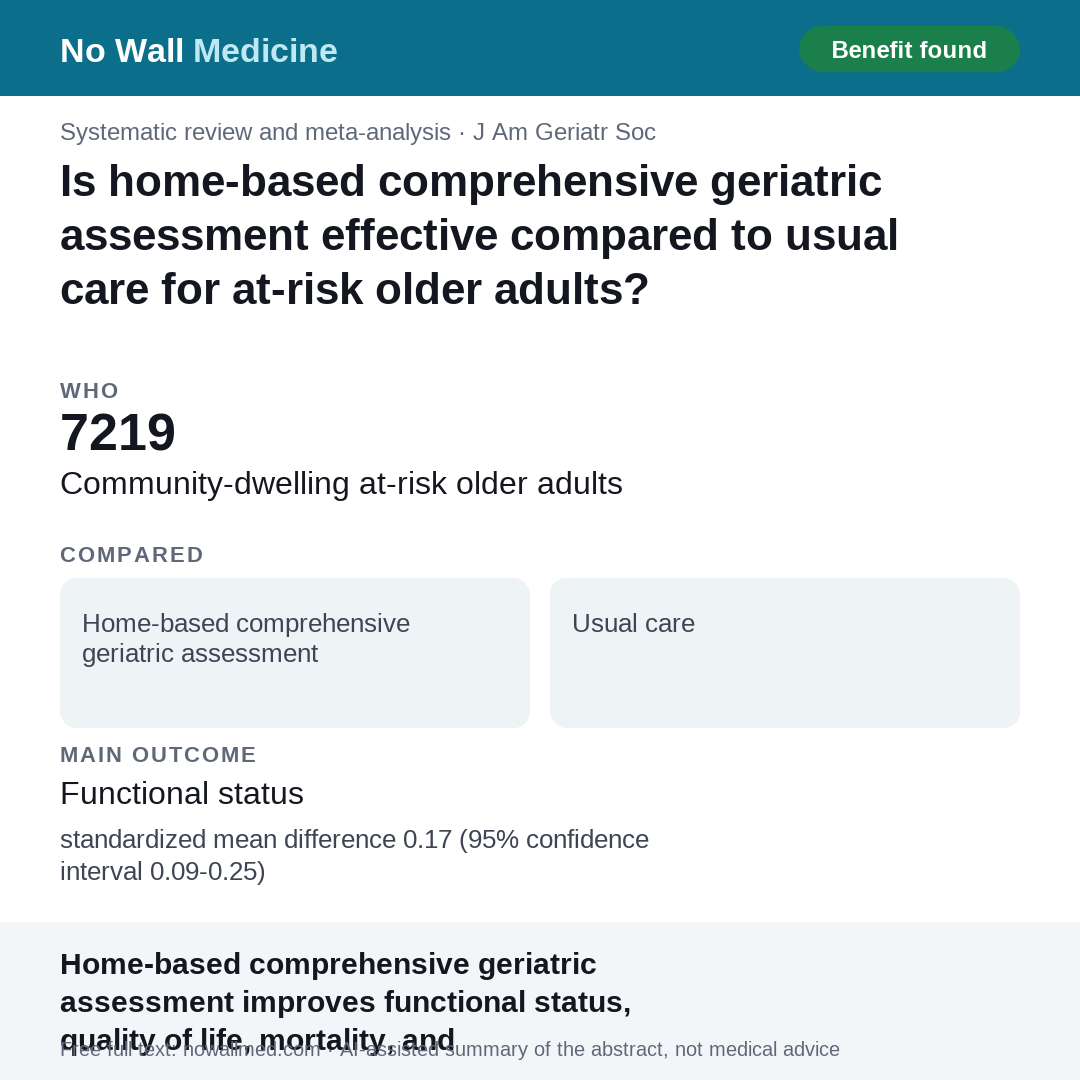
Home-Based Comprehensive Geriatric Assessment for Community-Dwelling, At-Risk, Frail Older Adults: A Systematic Review and Meta-Analysis
Systematic review and meta-analysisBenefit found
Is home-based comprehensive geriatric assessment effective compared to usual care for at-risk older adults?
Who
7219
Community-dwelling at-risk older adults
Compared
Home-based comprehensive geriatric assessment
Usual care
Main outcome
Functional status
Result: standardized mean difference 0.17 (95% confidence interval 0.09-0.25)
Bottom line: Home-based comprehensive geriatric assessment improves functional status, quality of life, mortality, and hospitalizations in at-risk older adults.
Limitation: Intervention characteristics and multidisciplinary team composition varied across trials.
J Am Geriatr Soc · 2025-02-18Download image
Efficacy and Patient Satisfaction in Voice Feminization Procedures: A Systematic Review and Meta-Analysis
Systematic review and meta-analysisBenefit found
What is the efficacy and quality of life impact of voice feminization interventions?
Who
893
Transgender women
Compared
Voice therapy: g = 0.86
Wendler glottoplasty: g = 1.21
Feminization laryngoplasty: g = 3.05
Laser reduction glottoplasty: g = 12.28
Main outcome
fundamental frequency and patient-reported outcomes
Bottom line: Voice therapy and surgical procedures enhance vocal pitch and correlate with improved quality of life in transgender women.
Limitation: Methodological limitations prevent evaluation of newer interventions.
Otolaryngol Head Neck Surg · 2025-02-18Download image

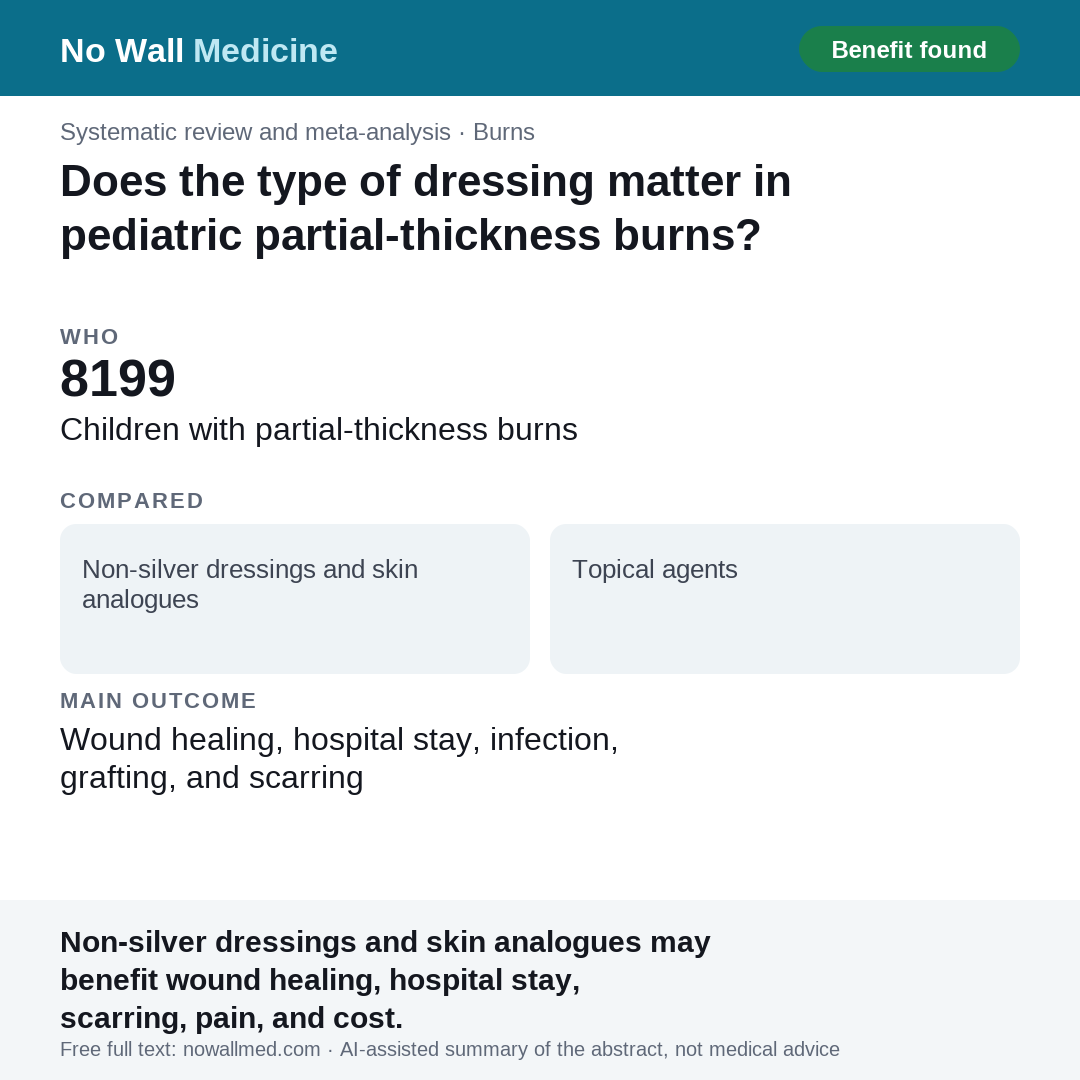
Does the dressing matter in pediatric partial-thickness burns: a systematic review and meta-analysis
Systematic review and meta-analysisBenefit found
Does the type of dressing matter in pediatric partial-thickness burns?
Who
8199
Children with partial-thickness burns
Compared
Non-silver dressings and skin analogues
Topical agents
Main outcome
Wound healing, hospital stay, infection, grafting, and scarring
Bottom line: Non-silver dressings and skin analogues may benefit wound healing, hospital stay, scarring, pain, and cost.
Burns · 2025-02-18Download image
Sacubitril/Valsartan vs ACE Inhibitors or ARBs: A Systematic Review and Meta-Analysis of Randomized Trials
Meta-analysis of 14 randomized trialsMixed results
Does sacubitril/valsartan reduce hard endpoints compared to angiotensin-converting enzyme inhibitors or angiotensin receptor blockers?
Who
25167
Patients with heart failure
Compared
Sacubitril/valsartan
Angiotensin-converting enzyme inhibitors or angiotensin receptor blockers
Main outcome
All-cause mortality, cardiovascular mortality, and heart failure rehospitalization
Result: RR 0.85 (95% CI 0.79-0.91) for heart failure readmission
Bottom line: Sacubitril/valsartan reduces heart failure rehospitalization and all-cause mortality in patients with ejection fraction ≤40%.
JACC Adv · 2025-02-18Download image

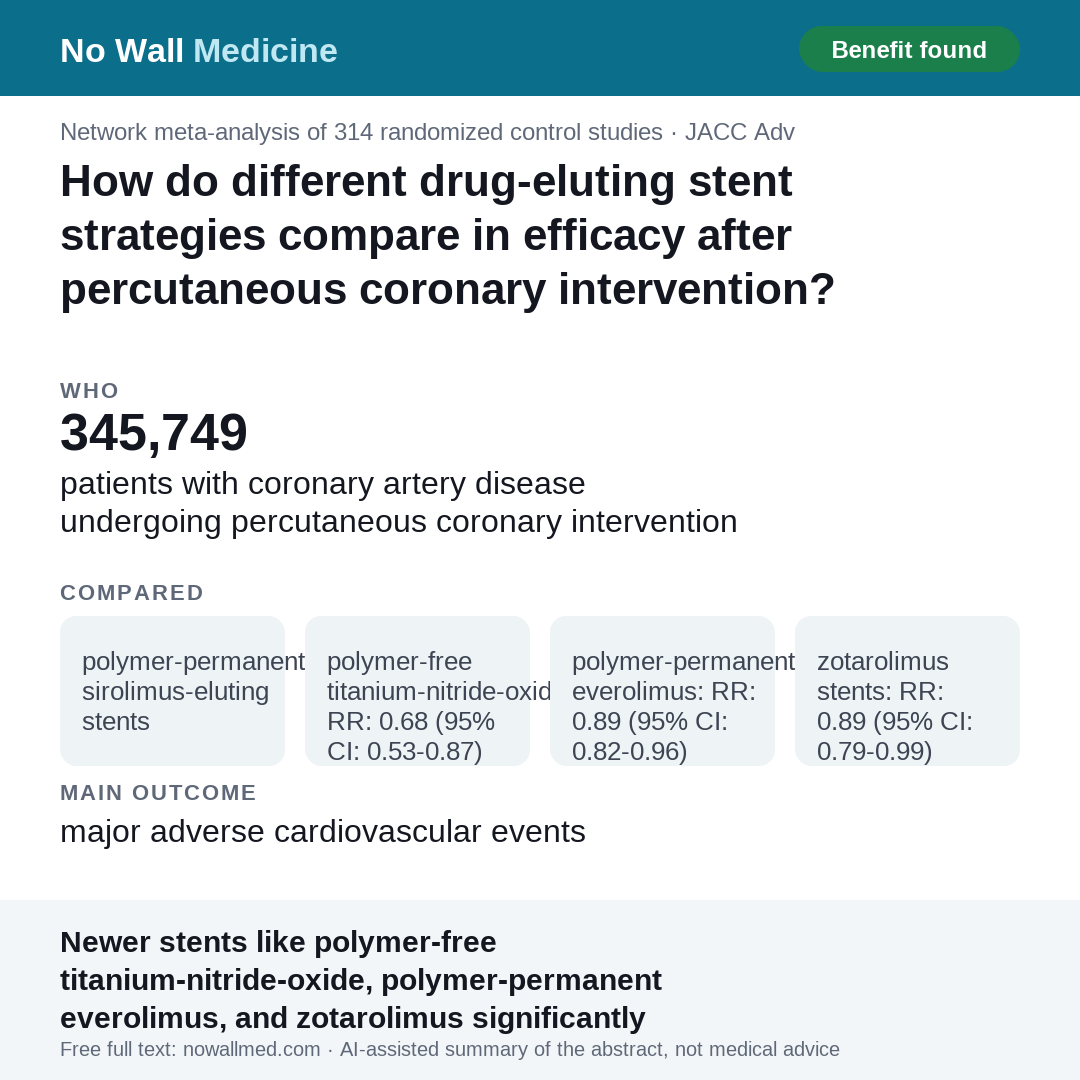
Safety and Efficacy of Different Stent Strategies in Percutaneous Coronary Intervention: A Network Meta-Analysis
Network meta-analysis of 314 randomized control trialsBenefit found
How do different drug-eluting stent strategies compare in efficacy after percutaneous coronary intervention?
Who
345,749
patients with coronary artery disease undergoing percutaneous coronary intervention
Compared
polymer-permanent sirolimus-eluting stents
polymer-free titanium-nitride-oxide: RR: 0.68 (95% CI: 0.53-0.87)
polymer-permanent everolimus: RR: 0.89 (95% CI: 0.82-0.96)
zotarolimus stents: RR: 0.89 (95% CI: 0.79-0.99)
Main outcome
major adverse cardiovascular events
Result: RR: 0.68 (95% CI: 0.53-0.87) for polymer-free titanium-nitride-oxide
Bottom line: Newer stents like polymer-free titanium-nitride-oxide, polymer-permanent everolimus, and zotarolimus significantly reduce long-term major adverse cardiovascular events.
JACC Adv · 2025-02-18Download image