Visual abstracts
New randomized trials and meta-analyses from leading journals at a glance: who was studied, what was compared, and what was found. Every paper is free to read in full.
All specialtiesCardiology 4877Oncology 4138Gastroenterology & Hepatology 1942Infectious Disease 3837Neurology 1905Psychiatry & Mental Health 2273Pulmonology 2143Critical Care 1365Endocrinology & Diabetes 2580Pediatrics 2980Surgery 2559Orthopedics & Sports Medicine 931Neurosurgery 537Cardiothoracic & Vascular Surgery 674Plastic & Reconstructive Surgery 591Nephrology 1133Rheumatology 823Hematology 1109Dermatology 621Ophthalmology 543Obstetrics & Gynecology 1686Public & Global Health 1058Radiology & Imaging 648Anesthesiology 986Urology 764ENT (Otolaryngology) 503Emergency Medicine 511Allergy & Immunology 313Geriatrics 981Family Medicine & Primary Care 562Medical Genetics & Genomics 676Pathology & Laboratory Medicine 159Physical Medicine & Rehabilitation 757Palliative Care 444Nutrition 1588Digital Health & AI 2201General Medicine 321
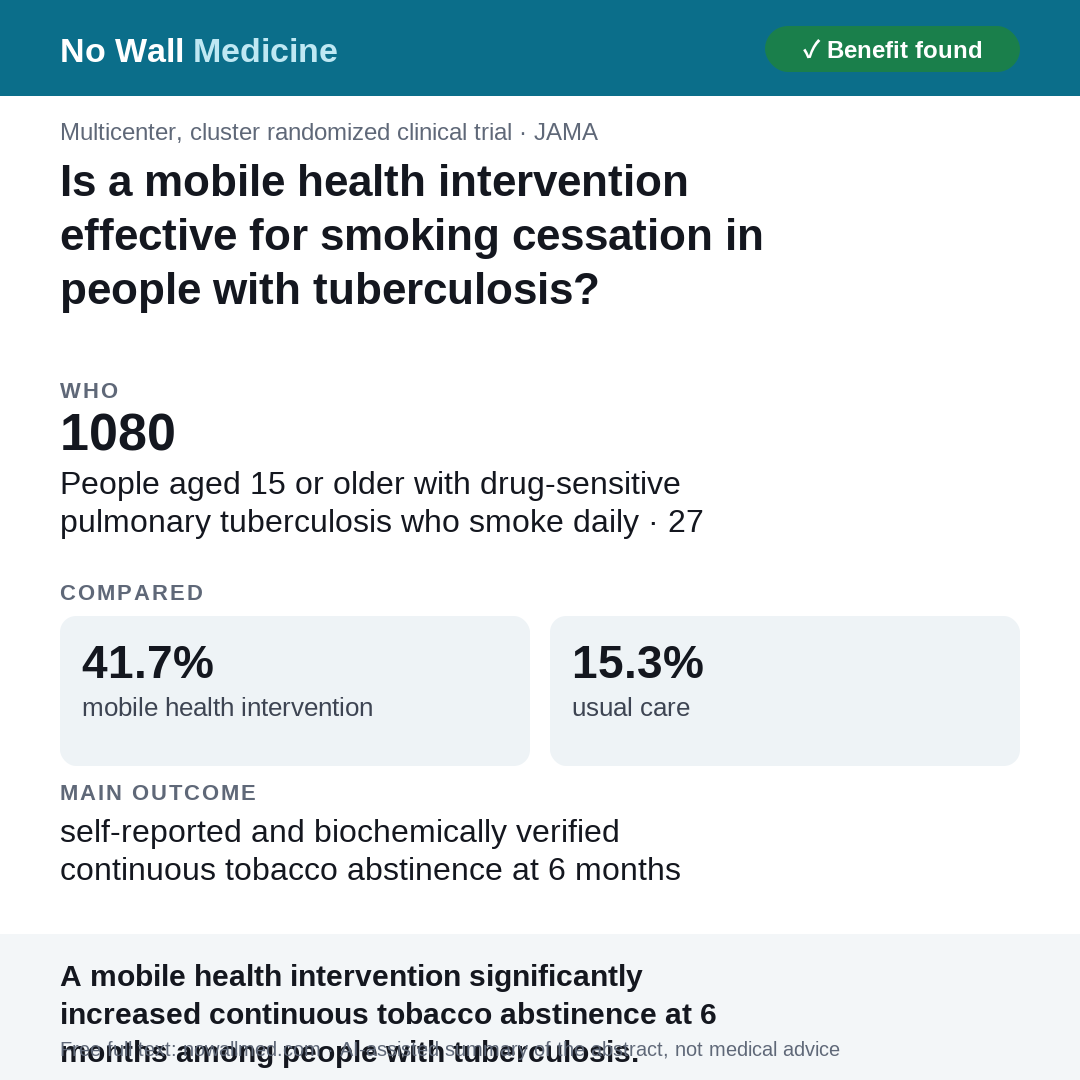
An mHealth (Mobile Health) Intervention for Smoking Cessation in People With Tuberculosis: A Cluster Randomized Clinical Trial
Multicenter, cluster randomized clinical trialBenefit found
Is a mobile health intervention effective for smoking cessation in people with tuberculosis?
Who
1080
People aged 15 or older with drug-sensitive pulmonary tuberculosis who smoke daily · 27 tuberculosis clinics in Bangladesh and Pakistan
Compared
41.7%mobile health intervention
15.3%usual care
Main outcome
self-reported and biochemically verified continuous tobacco abstinence at 6 months
Result: risk ratio 3.0 (95% CI 2.0-4.9)
Bottom line: A mobile health intervention significantly increased continuous tobacco abstinence at 6 months among people with tuberculosis.
JAMA · 2025-12-22Download image
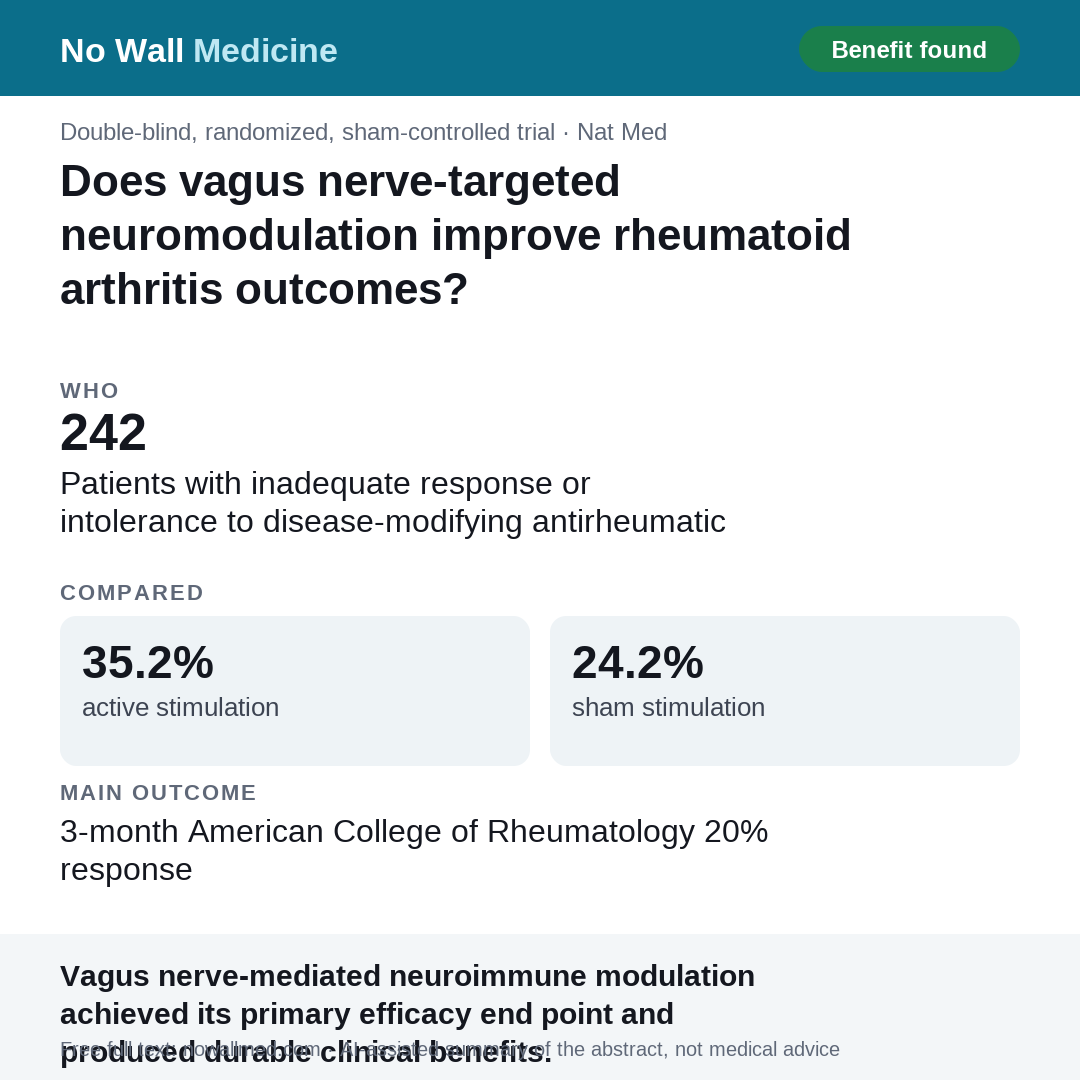
Vagus nerve-mediated neuroimmune modulation for rheumatoid arthritis: a pivotal randomized controlled trial
Double-blind, randomized, sham-controlled trialBenefit found
Does vagus nerve-targeted neuromodulation improve rheumatoid arthritis outcomes?
Who
242
Patients with inadequate response or intolerance to disease-modifying antirheumatic drugs
Compared
35.2%active stimulation
24.2%sham stimulation
Main outcome
3-month American College of Rheumatology 20% response
Bottom line: Vagus nerve-mediated neuroimmune modulation achieved its primary efficacy end point and produced durable clinical benefits.
Nat Med · 2025-12-22Download image
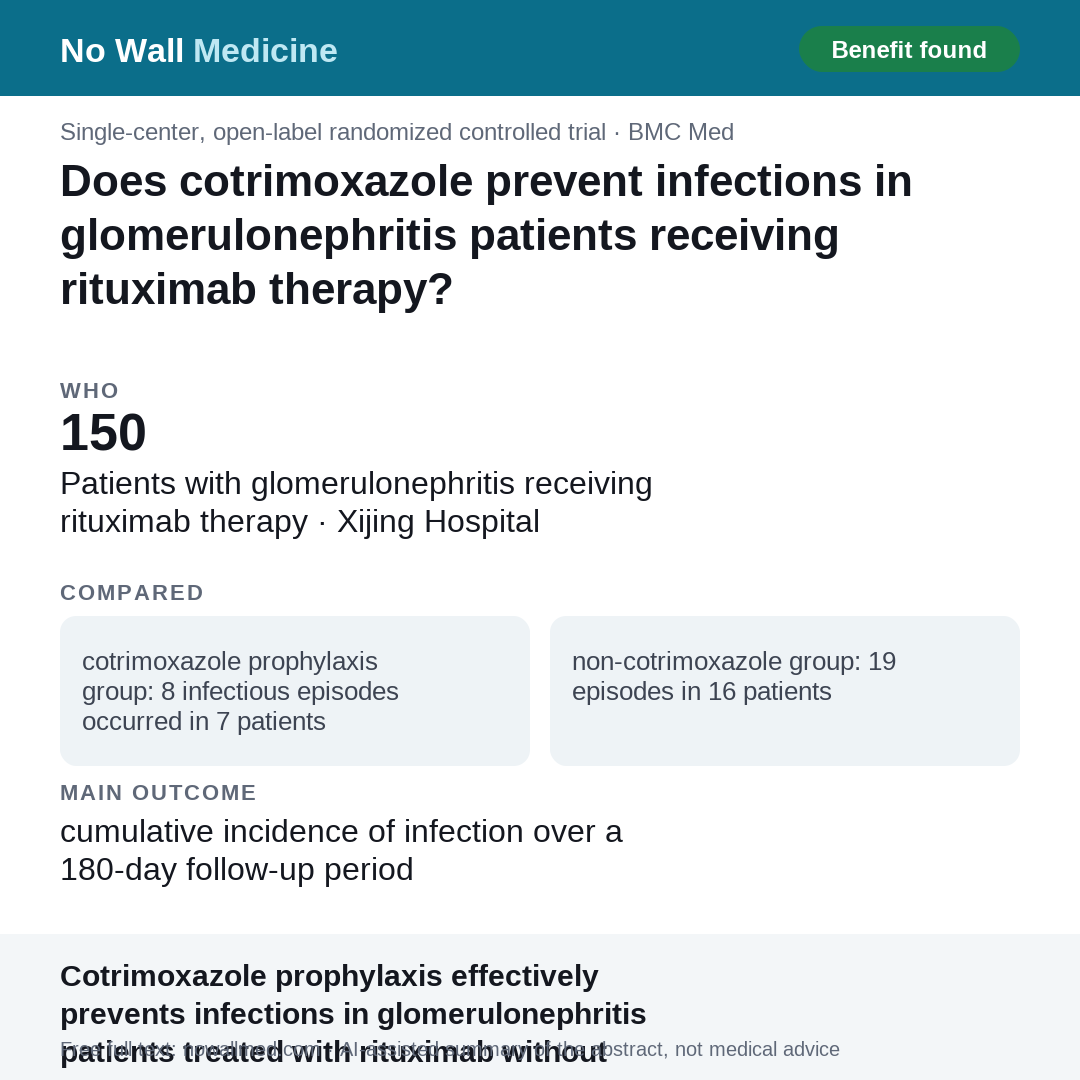
Cotrimoxazole for infection prevention in glomerulonephritis treated with rituximab: a randomized controlled trial
Single-center, open-label randomized controlled trialBenefit found
Does cotrimoxazole prevent infections in glomerulonephritis patients receiving rituximab therapy?
Who
150
Patients with glomerulonephritis receiving rituximab therapy · Xijing Hospital
Compared
cotrimoxazole prophylaxis group: 8 infectious episodes occurred in 7 patients
non-cotrimoxazole group: 19 episodes in 16 patients
Main outcome
cumulative incidence of infection over a 180-day follow-up period
Result: hazard ratio 0.39 (95% CI 0.17-0.88)
Bottom line: Cotrimoxazole prophylaxis effectively prevents infections in glomerulonephritis patients treated with rituximab without increasing serious adverse events.
Limitation: This study was a single-center investigation without a placebo control.
BMC Med · 2025-12-22Download image
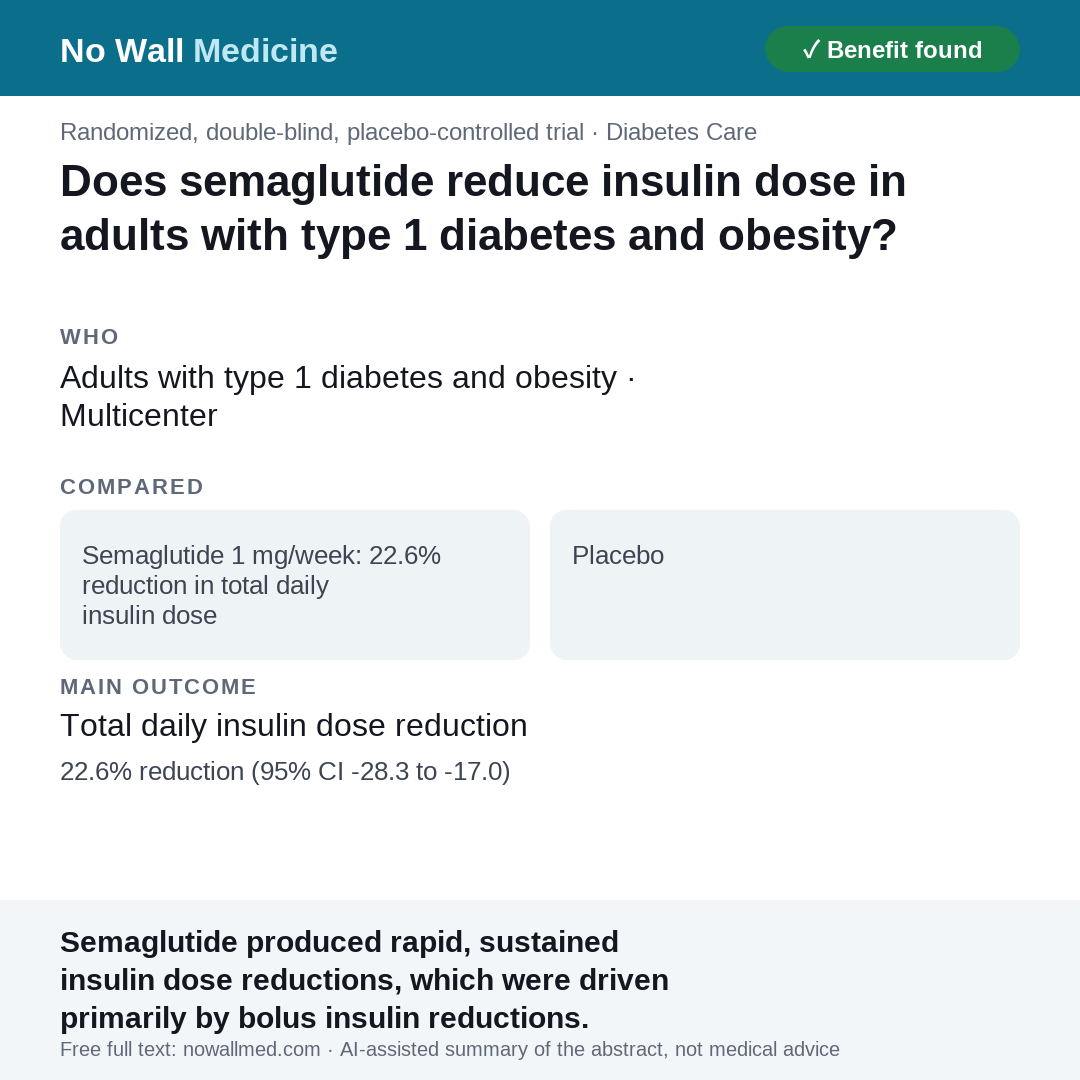
Effect of Semaglutide on Insulin Dose Reduction in Adults With Type 1 Diabetes and Obesity Using Automated Insulin Delivery Systems: ADJUST-T1D Post Hoc Analysis
Randomized, double-blind, placebo-controlled trialBenefit found
Does semaglutide reduce insulin dose in adults with type 1 diabetes and obesity?
Who
Adults with type 1 diabetes and obesity · Multicenter
Compared
Semaglutide 1 mg/week: 22.6% reduction in total daily insulin dose
Placebo
Main outcome
Total daily insulin dose reduction
Result: 22.6% reduction (95% CI -28.3 to -17.0)
Bottom line: Semaglutide produced rapid, sustained insulin dose reductions, which were driven primarily by bolus insulin reductions.
Diabetes Care · 2025-12-22Download image
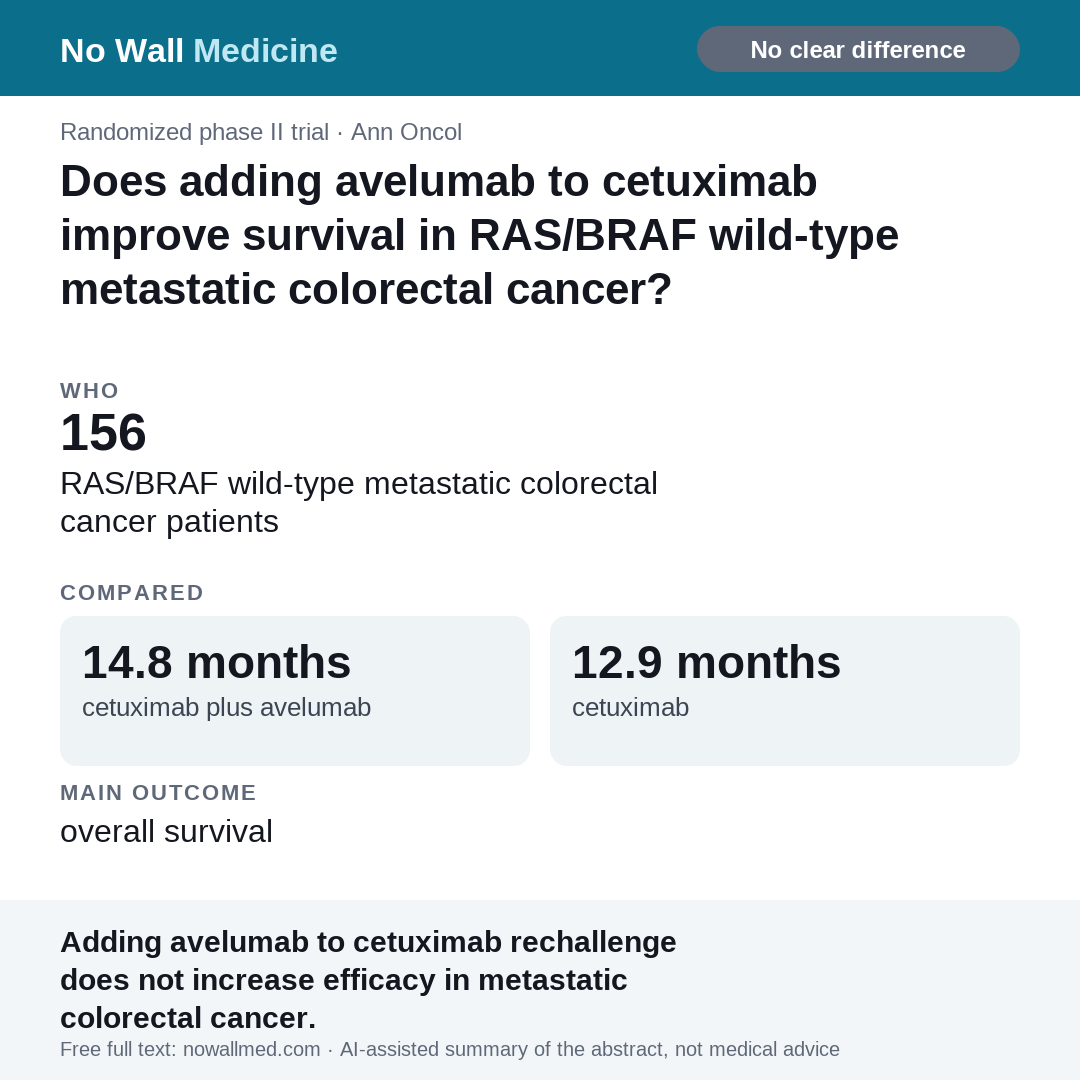
Cetuximab rechallenge in molecularly selected metastatic colorectal cancer: the randomized CAVE-2 GOIM trial
Randomized phase II trialNo clear difference
Does adding avelumab to cetuximab improve survival in RAS/BRAF wild-type metastatic colorectal cancer?
Who
156
RAS/BRAF wild-type metastatic colorectal cancer patients
Compared
14.8 monthscetuximab plus avelumab (95% CI 12.1-18.3 months)
12.9 monthscetuximab (95% CI 11 months-not evaluable)
Main outcome
overall survival
Result: hazard ratio 1.00 (95% CI 0.65-1.52)
Bottom line: Adding avelumab to cetuximab rechallenge does not increase efficacy in metastatic colorectal cancer.
Ann Oncol · 2025-12-22Download image
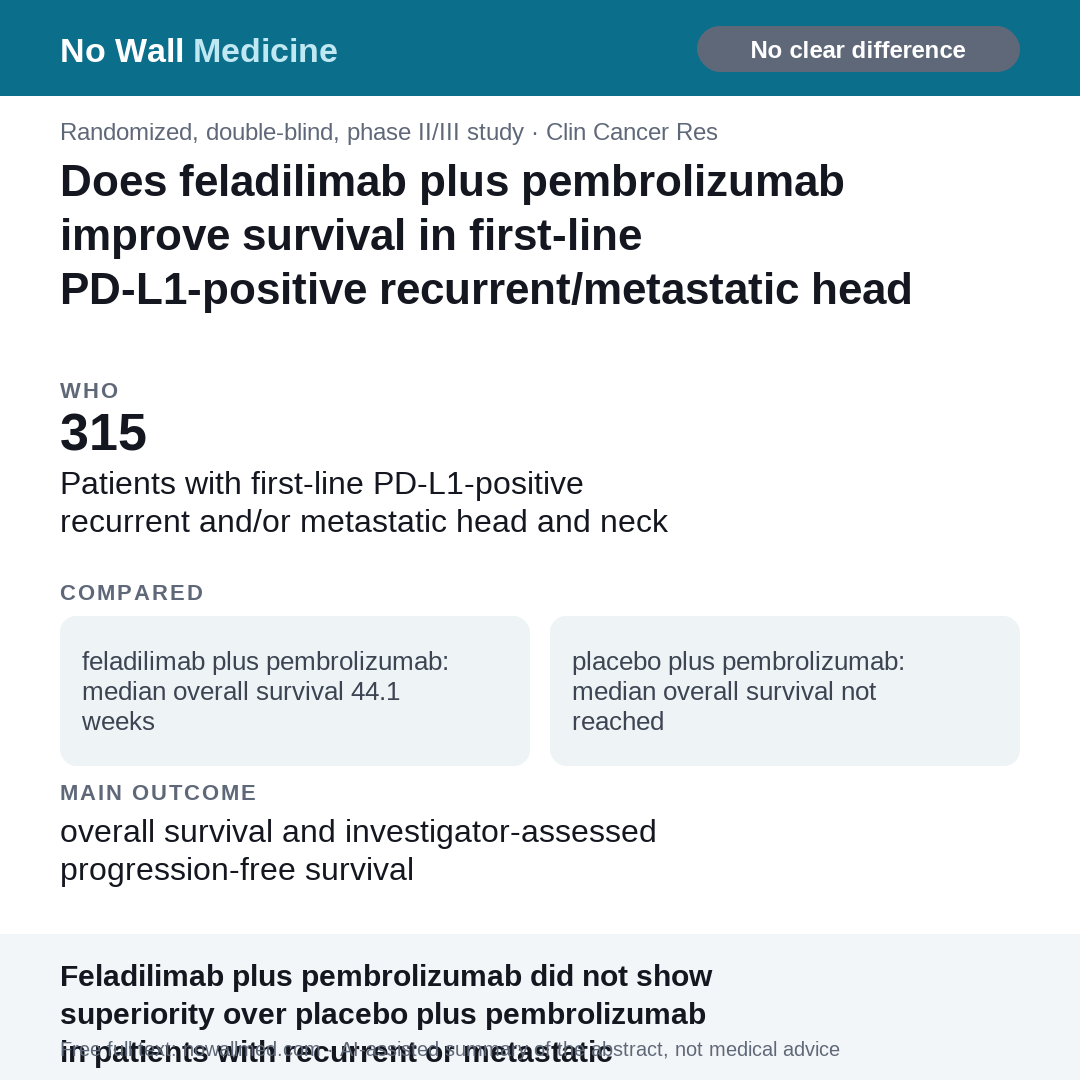
INDUCE-3: A Randomized Phase II/III Study of First-line Feladilimab plus Pembrolizumab in Patients with Recurrent/Metastatic Head and Neck Squamous Cell Carcinoma
Randomized, double-blind, phase II/III studyNo clear difference
Does feladilimab plus pembrolizumab improve survival in first-line PD-L1-positive recurrent/metastatic head and neck squamous cell carcinoma?
Who
315
Patients with first-line PD-L1-positive recurrent and/or metastatic head and neck squamous cell carcinoma
Compared
feladilimab plus pembrolizumab: median overall survival 44.1 weeks
placebo plus pembrolizumab: median overall survival not reached
Main outcome
overall survival and investigator-assessed progression-free survival
Result: adjusted hazard ratio 1.51 for overall survival
Bottom line: Feladilimab plus pembrolizumab did not show superiority over placebo plus pembrolizumab in patients with recurrent or metastatic head and neck squamous cell carcinoma.
Clin Cancer Res · 2025-12-22Download image
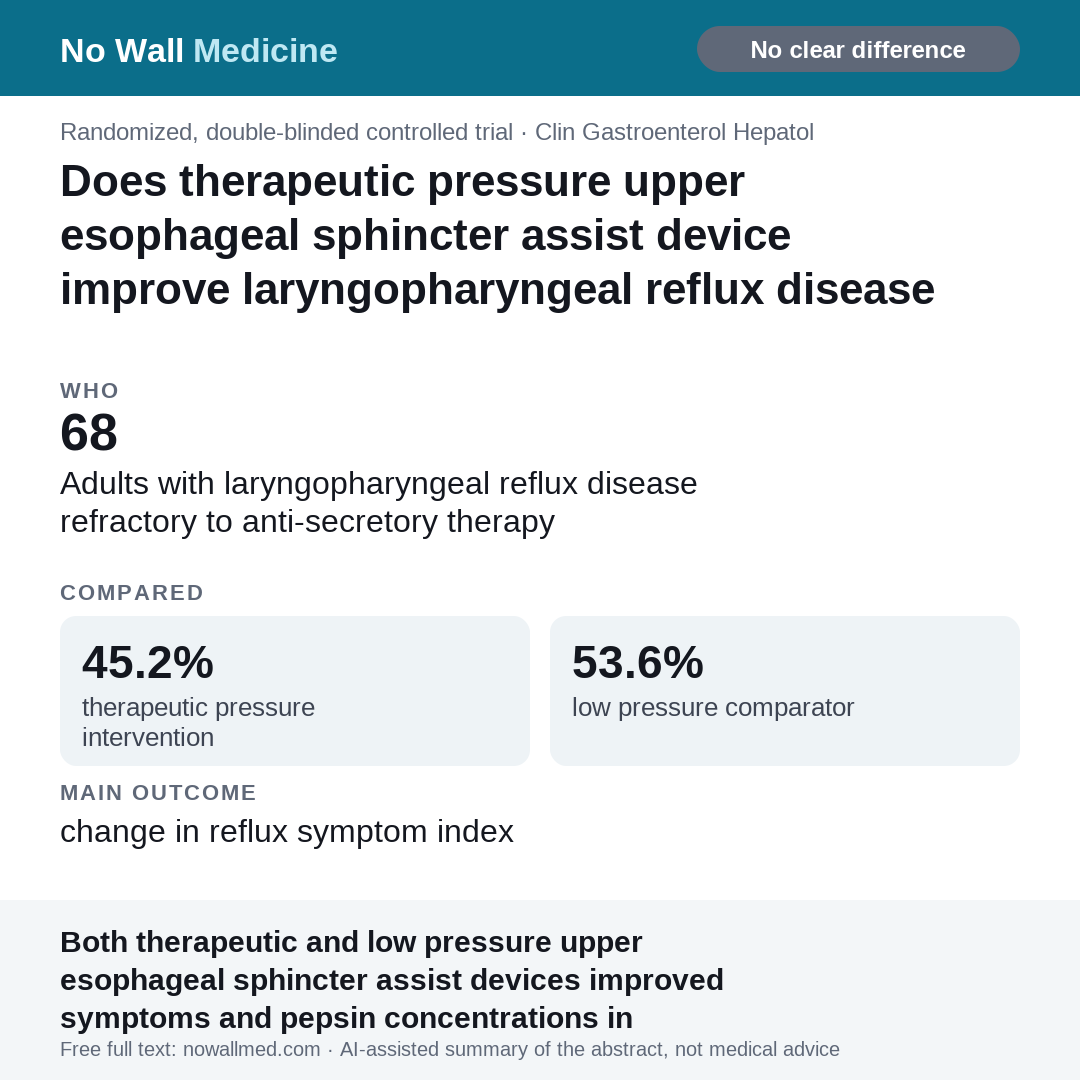
Randomized Controlled Trial of Upper Esophageal Sphincter Assist Device in Laryngopharyngeal Reflux Disease
Randomized, double-blinded controlled trialNo clear difference
Does therapeutic pressure upper esophageal sphincter assist device improve laryngopharyngeal reflux disease symptoms?
Who
68
Adults with laryngopharyngeal reflux disease refractory to anti-secretory therapy
Compared
45.2%therapeutic pressure intervention
53.6%low pressure comparator
Main outcome
change in reflux symptom index
Bottom line: Both therapeutic and low pressure upper esophageal sphincter assist devices improved symptoms and pepsin concentrations in patients.
Clin Gastroenterol Hepatol · 2025-12-22Download image
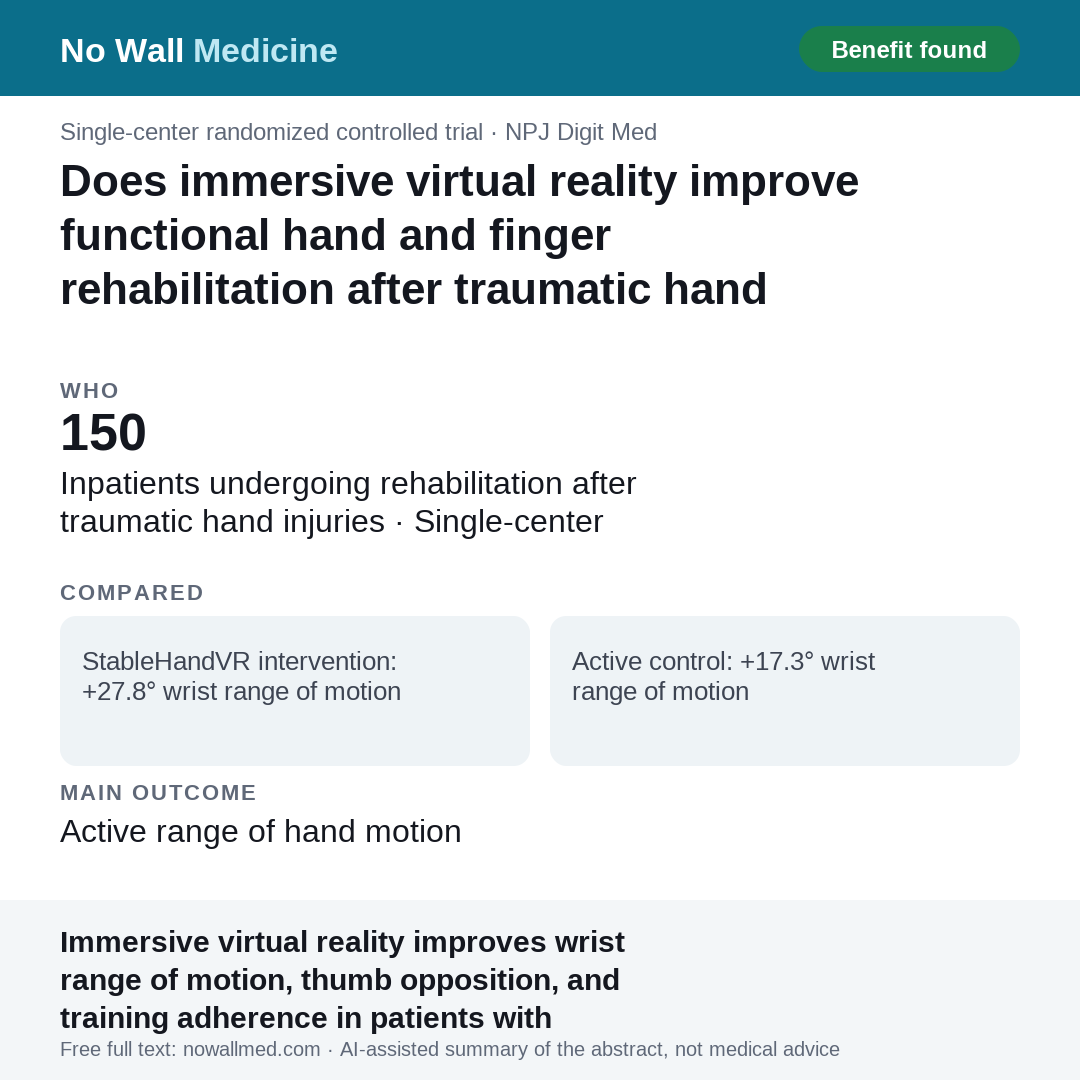
Efficacy of Wearable Exoskeleton for Gait Recovery in Patients With Stroke: A Multicenter Randomized Controlled Trial
Multicenter, randomized controlled trialNo clear difference
Does torque-assisted exoskeleton gait training improve ambulatory function in subacute stroke patients?
Who
127
Patients with subacute stroke and severe gait impairment · International, multicenter
Compared
Robot-assisted gait training group: mean change 3.0 (1-5)
Control group: mean change 2.5 (1-4)
Main outcome
Change in Functional Ambulation Category
Bottom line: Exoskeleton gait training was not superior to conventional rehabilitation for improving ambulatory function in subacute stroke patients.
Stroke · 2025-12-22Download image
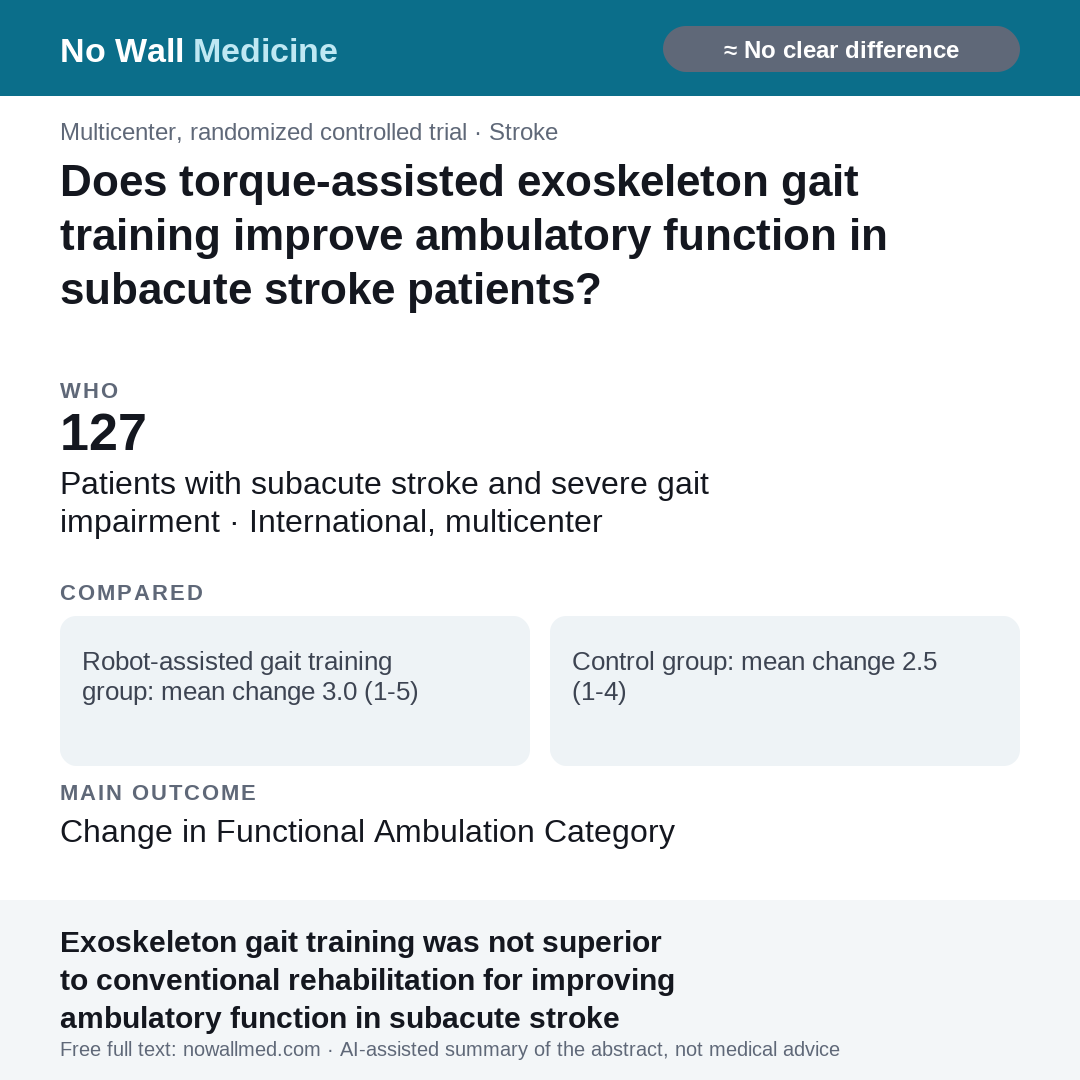
Association between Complete Proteinuria Remission and Kidney Function in the Phase 3 PROTECT Trial of Sparsentan in IgA Nephropathy
Post hoc analysis of a randomized, double-blind trialBenefit found
Does complete proteinuria remission associate with better kidney function preservation in IgA nephropathy?
Who
404
Adults with IgA nephropathy
Compared
Complete remission of proteinuria at week 110: 1% reached composite kidney end point
Non-complete remission of proteinuria: 14% reached composite kidney end point
Main outcome
Kidney function preservation and composite kidney end point
Bottom line: Achieving complete proteinuria remission is associated with better kidney function preservation and fewer kidney failure events.
CJASN · 2025-12-22Download image
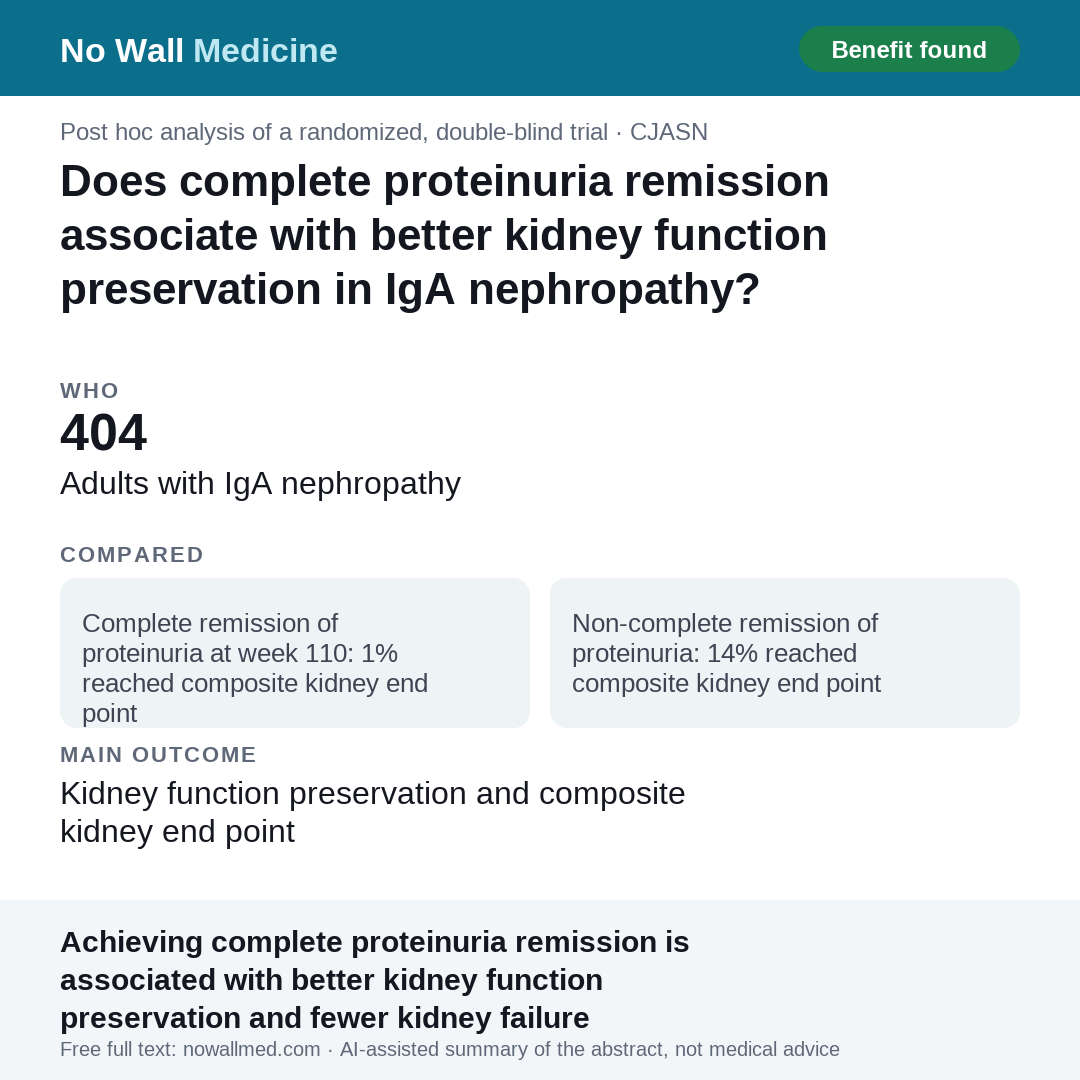
Phase 3 randomized trial of postirradiation chemotherapy in patients with newly diagnosed ependymoma: A report from the Children's Oncology Group
Phase 3 randomized trialNo clear difference
Does postirradiation chemotherapy improve survival in patients with newly diagnosed ependymoma?
Who
325
Patients 1-21 years with newly diagnosed intracranial ependymoma · Multicenter
Compared
63.7%Radiation alone (95% CI: 55.1%-71.1%)
69.2%Radiation followed by chemotherapy (60.8%-76.3%)
Main outcome
Five-year event-free survival
Result: hazard ratio 0.866
Bottom line: Postirradiation chemotherapy showed no benefit for event-free survival or overall survival in patients with newly diagnosed ependymoma.
Neuro Oncol · 2025-12-22Download image
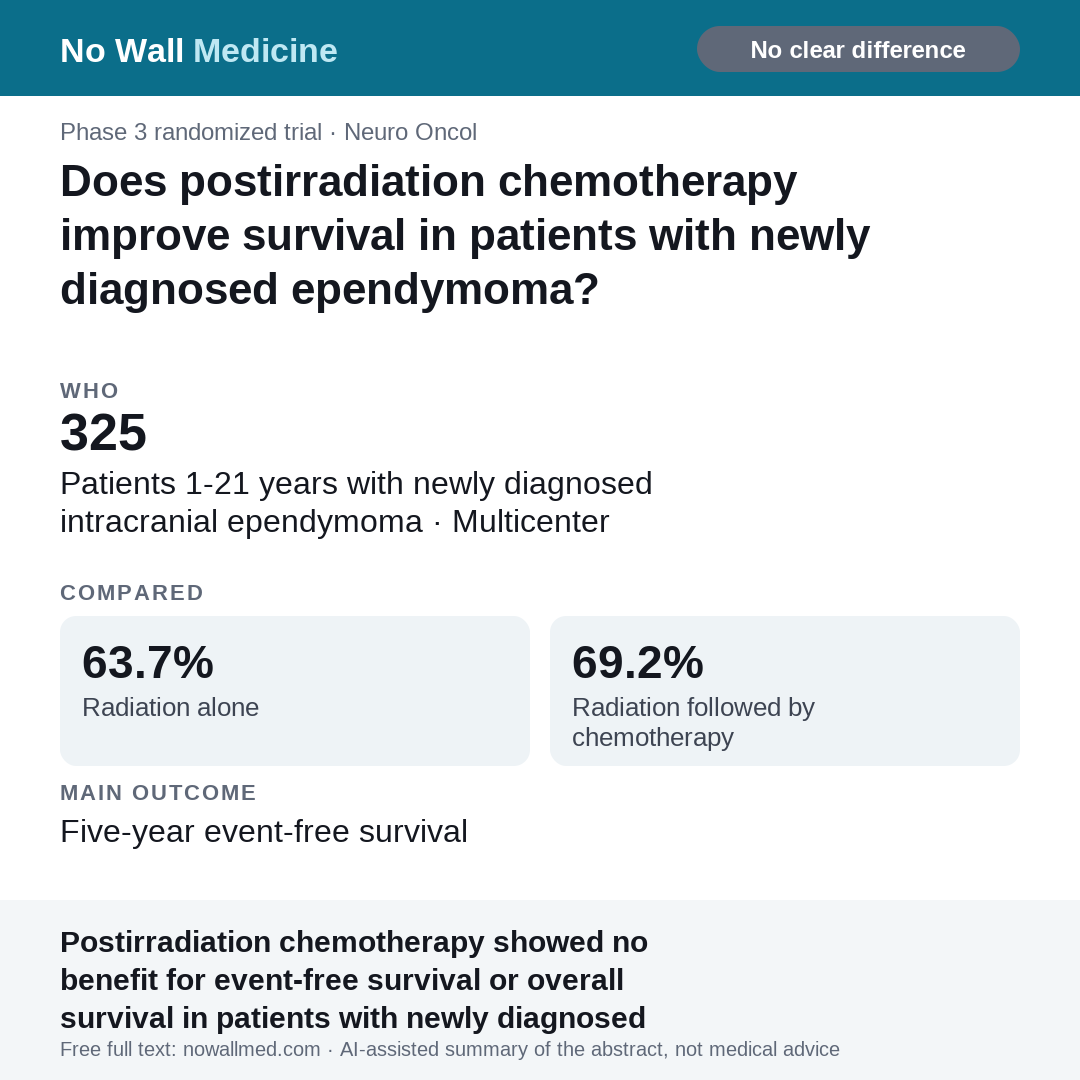
Immersive virtual reality for functional hand and finger rehabilitation: results from a randomized controlled trial in 150 patients after traumatic hand injuries
Single-center randomized controlled trialBenefit found
Does immersive virtual reality improve functional hand and finger rehabilitation after traumatic hand injuries?
Who
150
Inpatients undergoing rehabilitation after traumatic hand injuries · Single-center
Compared
StableHandVR intervention: +27.8° wrist range of motion
Active control: +17.3° wrist range of motion
Main outcome
Active range of hand motion
Result: wrist ROM +27.8° vs +17.3° (p < 0.001)
Bottom line: Immersive virtual reality improves wrist range of motion, thumb opposition, and training adherence in patients with traumatic hand injuries.
NPJ Digit Med · 2025-12-22Download image
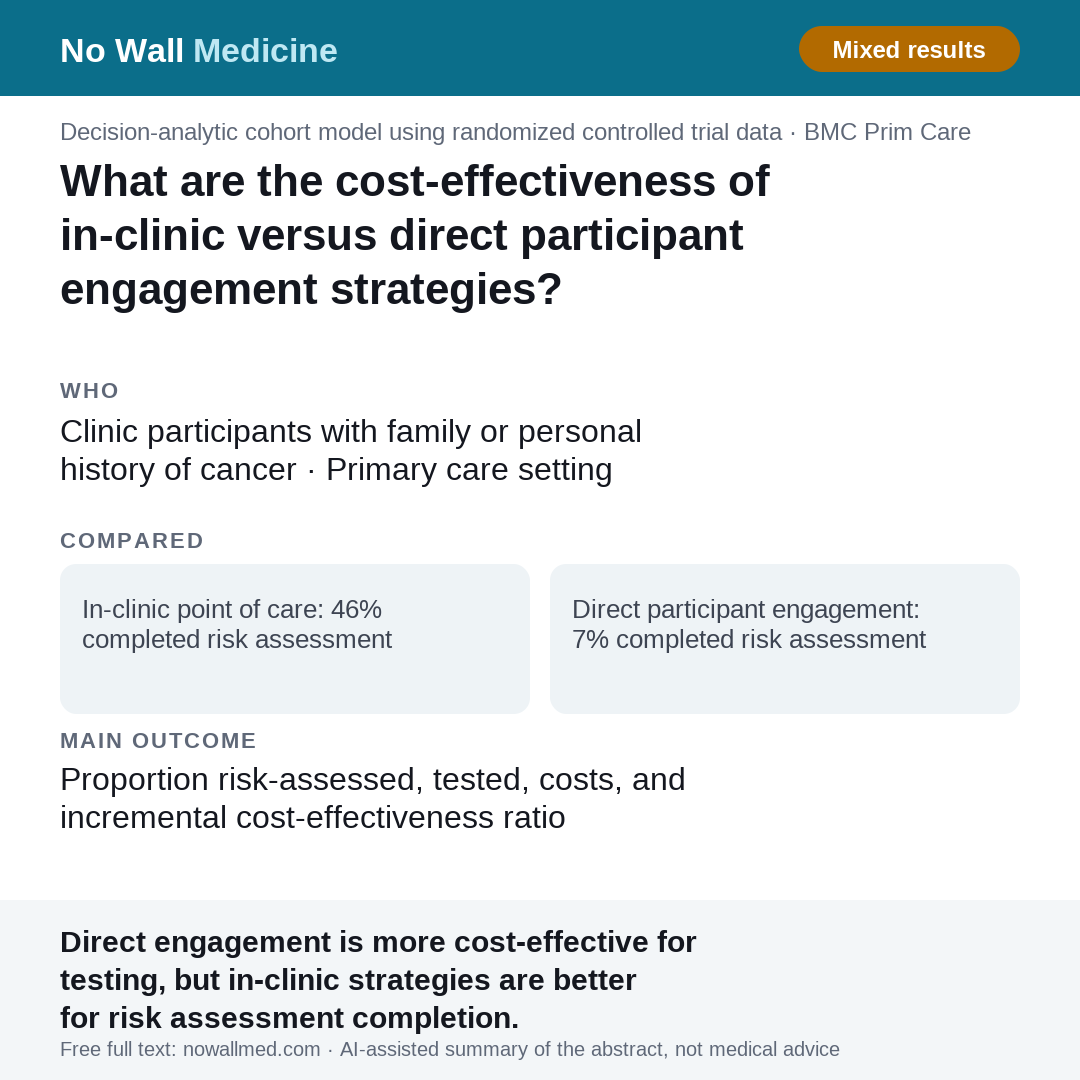
Cost-effectiveness of primary care-based risk assessment and hereditary cancer genetic testing
Decision-analytic cohort model using randomized controlled trial dataMixed results
What are the cost-effectiveness of in-clinic versus direct participant engagement strategies?
Who
Clinic participants with family or personal history of cancer · Primary care setting
Compared
In-clinic point of care: 46% completed risk assessment
Direct participant engagement: 7% completed risk assessment
Main outcome
Proportion risk-assessed, tested, costs, and incremental cost-effectiveness ratio
Result: ICER $152 (health-system) and $136 (limited societal) in favor of DPE
Bottom line: Direct engagement is more cost-effective for testing, but in-clinic strategies are better for risk assessment completion.
Limitation: Substantial uncertainty in results
BMC Prim Care · 2025-12-22Download image
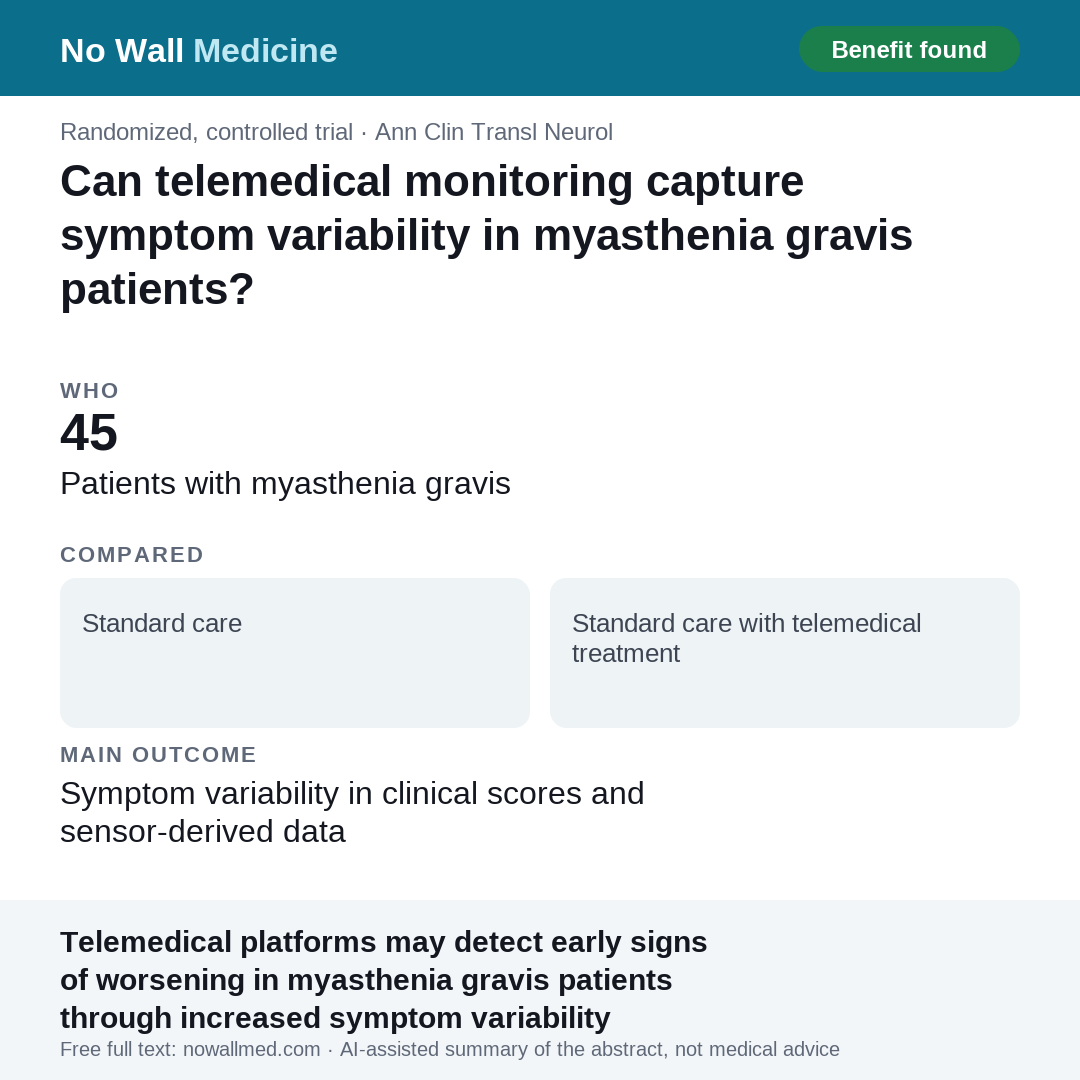
Remote Monitoring in Myasthenia Gravis: Exploring Symptom Variability
Randomized, controlled trialBenefit found
Can telemedical monitoring capture symptom variability in myasthenia gravis patients?
Who
45
Patients with myasthenia gravis
Compared
Standard care
Standard care with telemedical treatment
Main outcome
Symptom variability in clinical scores and sensor-derived data
Bottom line: Telemedical platforms may detect early signs of worsening in myasthenia gravis patients through increased symptom variability detection.
Ann Clin Transl Neurol · 2025-12-21Download image
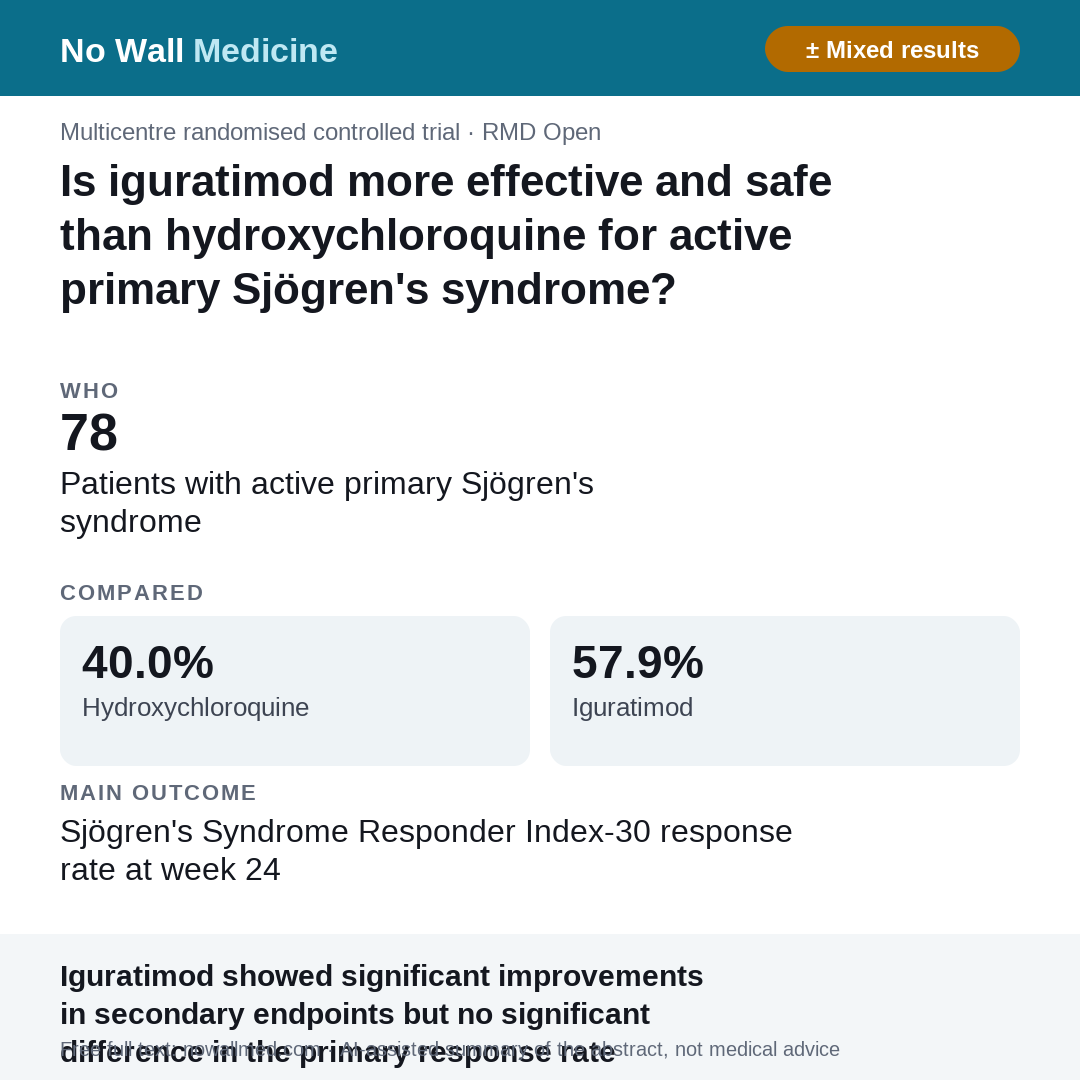
Efficacy and safety of iguratimod in patients with primary Sjögren's syndrome: a multicentre randomised controlled trial
Multicentre randomised controlled trialMixed results
Is iguratimod more effective and safe than hydroxychloroquine for active primary Sjögren's syndrome?
Who
78
Patients with active primary Sjögren's syndrome
Compared
40.0%Hydroxychloroquine
57.9%Iguratimod
Main outcome
Sjögren's Syndrome Responder Index-30 response rate at week 24
Bottom line: Iguratimod showed significant improvements in secondary endpoints but no significant difference in the primary response rate compared to hydroxychloroquine.
RMD Open · 2025-12-21Download image
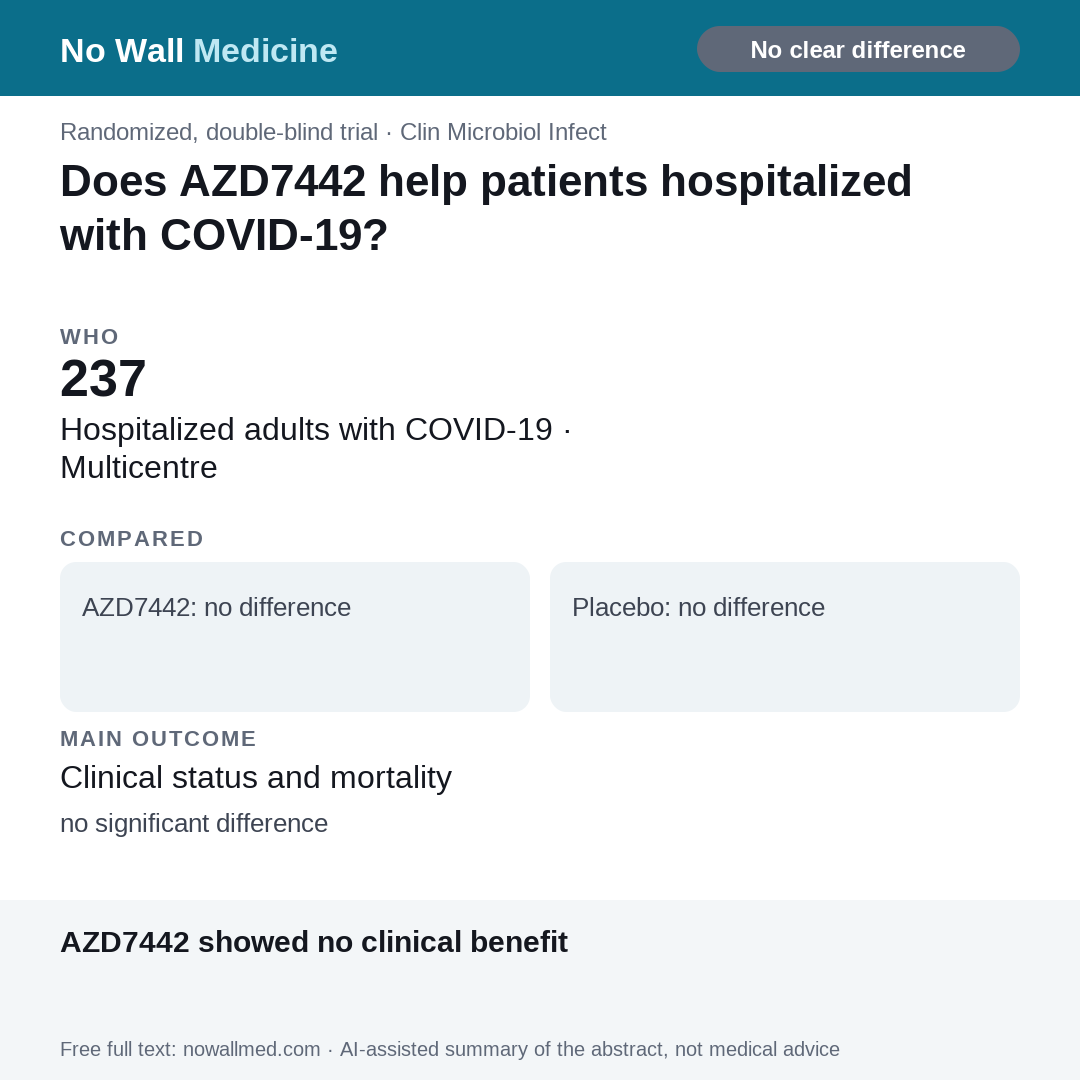
Efficacy, safety, pharmacokinetics, immunogenicity, and serum neutralizing activity of AZD7442 (tixagevimab-cilgavimab) in patients hospitalized with COVID-19: long-term results from the DisCoVeRy trial
Randomized, double-blind trialNo clear difference
Does AZD7442 help patients hospitalized with COVID-19?
Who
237
Hospitalized adults with COVID-19 · Multicentre
Compared
AZD7442: no difference
Placebo: no difference
Main outcome
Clinical status and mortality
Result: no significant difference
Bottom line: AZD7442 showed no clinical benefit
Clin Microbiol Infect · 2025-12-20Download image
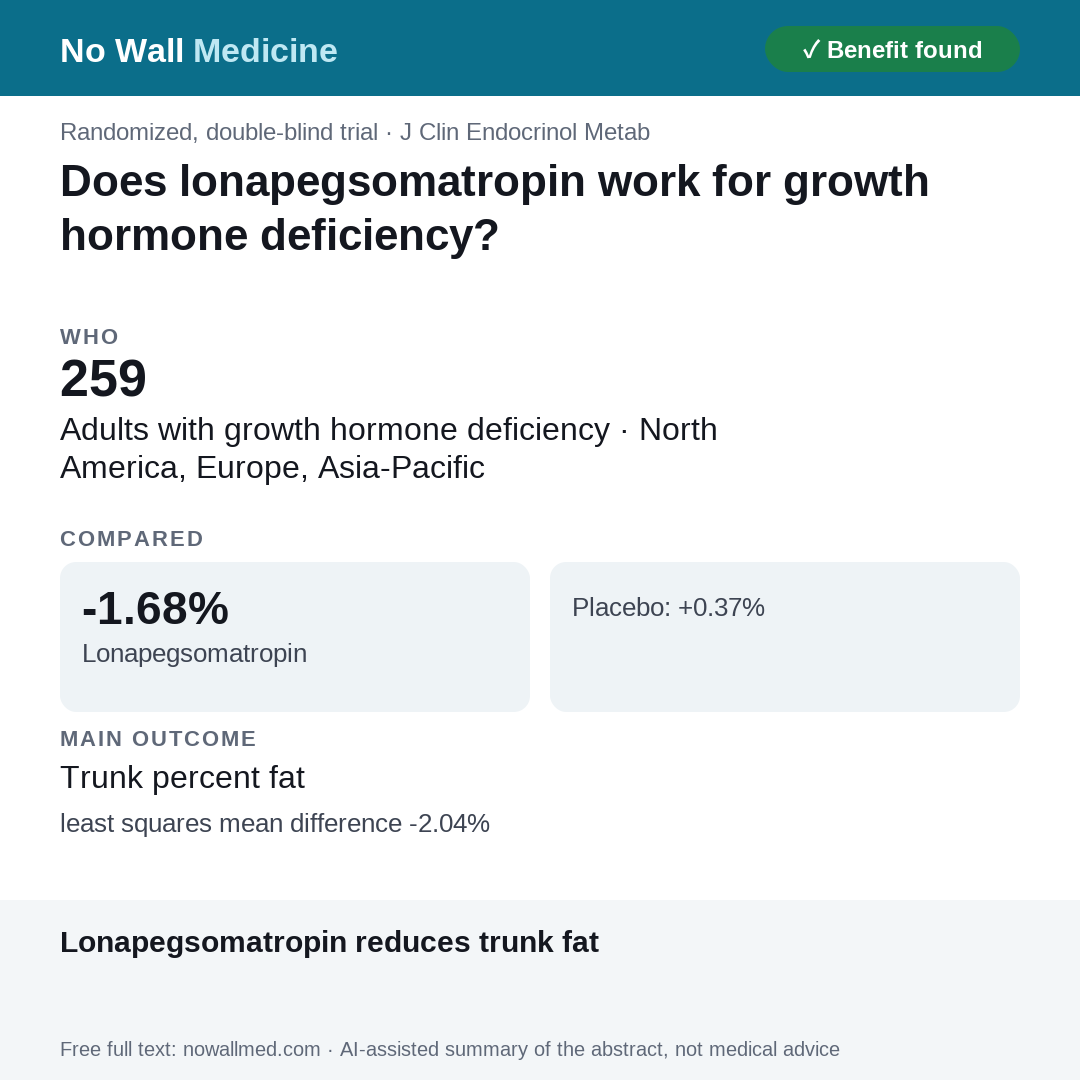
Efficacy and Safety of Once-Weekly Lonapegsomatropin in Adults With Growth Hormone Deficiency: foresiGHt Trial Results
Randomized, double-blind trialBenefit found
Does lonapegsomatropin work for growth hormone deficiency?
Who
259
Adults with growth hormone deficiency · North America, Europe, Asia-Pacific
Compared
-1.68%Lonapegsomatropin
Placebo: +0.37%
Main outcome
Trunk percent fat
Result: least squares mean difference -2.04%
Bottom line: Lonapegsomatropin reduces trunk fat
J Clin Endocrinol Metab · 2025-12-20Download image
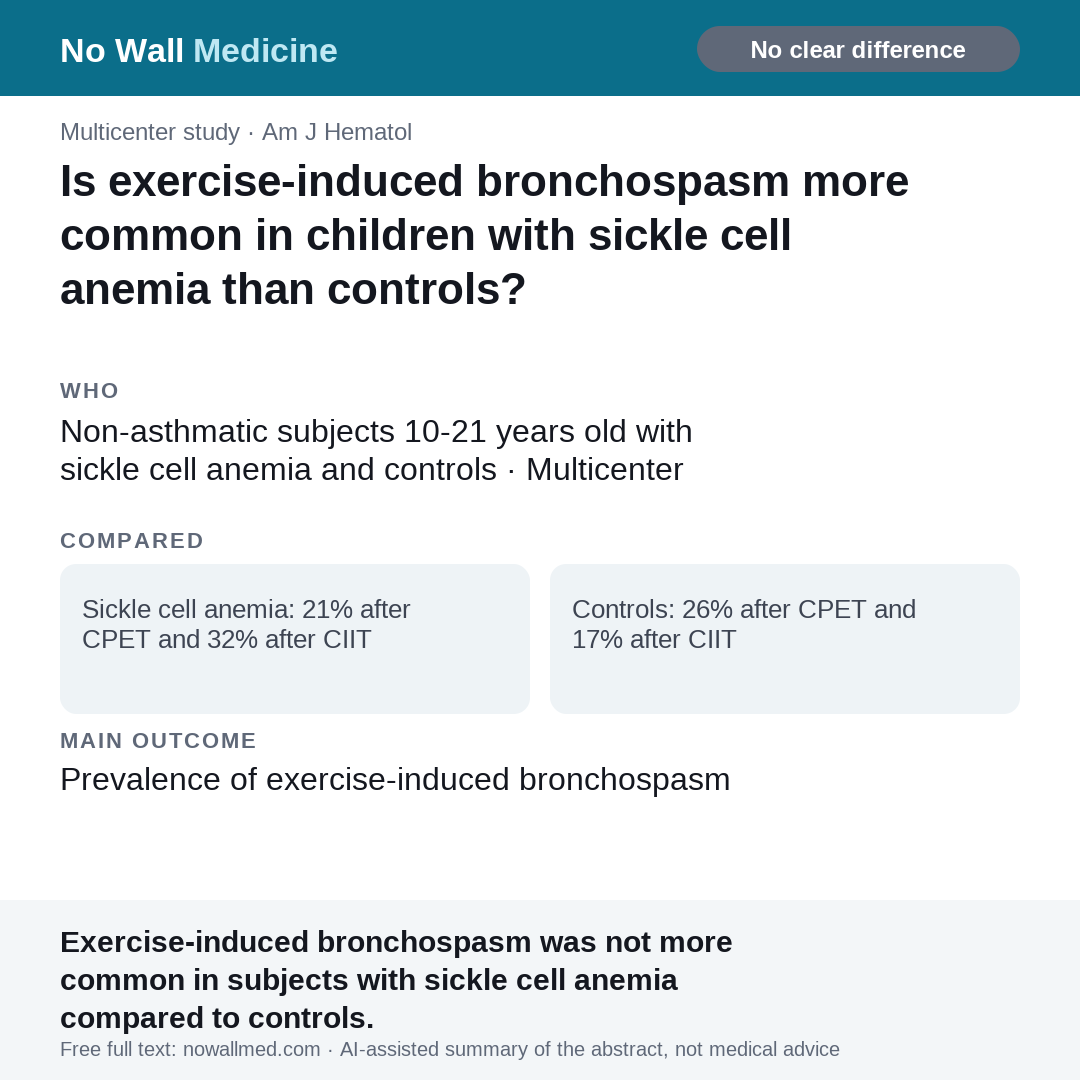
Acute Exercise Challenge and Airway Dynamics in Youth With Sickle Cell Anemia: A Multicenter Study
Multicenter studyNo clear difference
Is exercise-induced bronchospasm more common in children with sickle cell anemia than controls?
Who
Non-asthmatic subjects 10-21 years old with sickle cell anemia and controls · Multicenter
Compared
Sickle cell anemia: 21% after CPET and 32% after CIIT
Controls: 26% after CPET and 17% after CIIT
Main outcome
Prevalence of exercise-induced bronchospasm
Bottom line: Exercise-induced bronchospasm was not more common in subjects with sickle cell anemia compared to controls.
Am J Hematol · 2025-12-20Download image
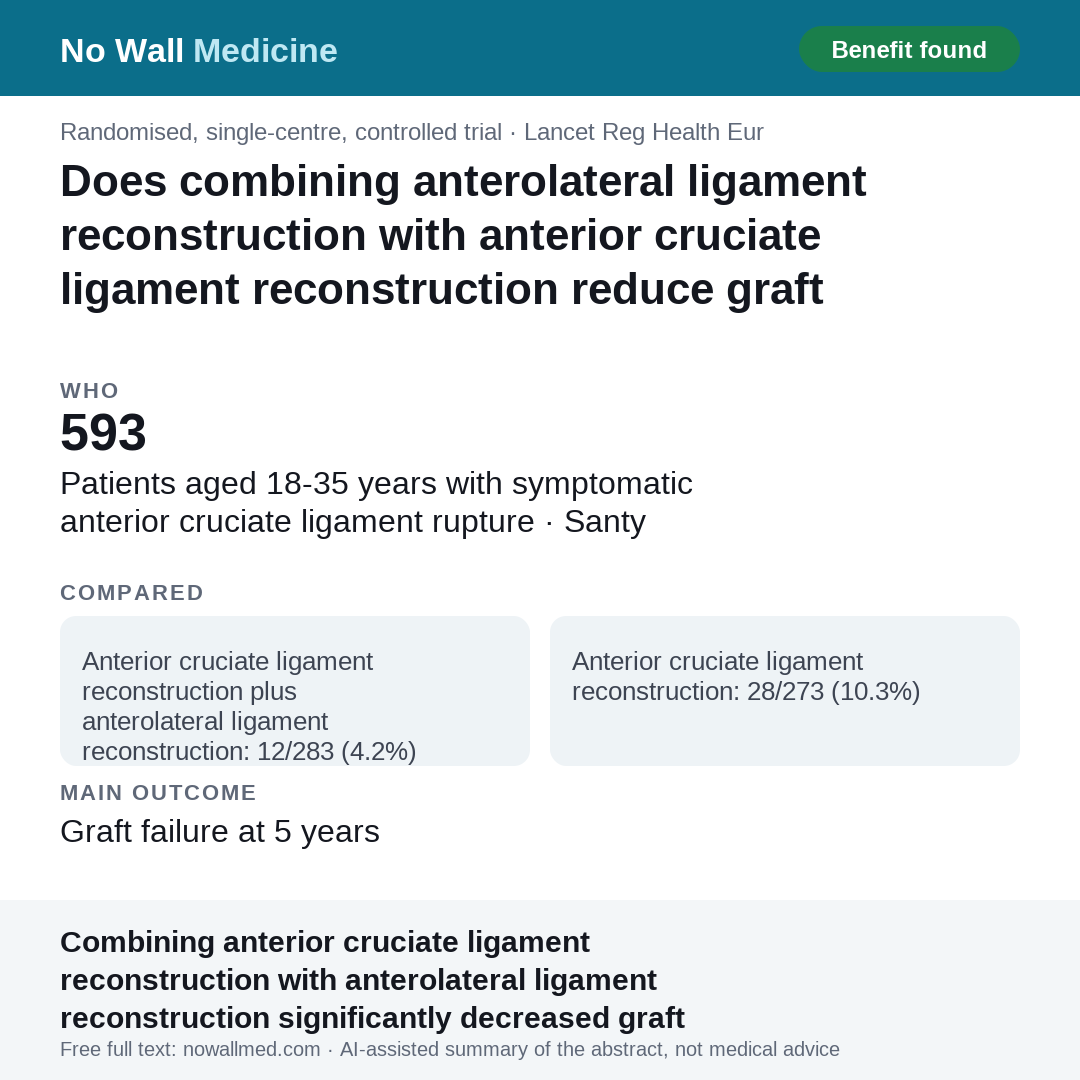
Anterior cruciate ligament reconstruction combined with anterolateral ligament reconstruction using hamstring autograft versus anterior cruciate ligament reconstruction using bone-patellar tendon-bone autograft: a randomised controlled trial with 5-year follow-up
Randomised, single-centre, controlled trialBenefit found
Does combining anterolateral ligament reconstruction with anterior cruciate ligament reconstruction reduce graft failure?
Who
593
Patients aged 18-35 years with symptomatic anterior cruciate ligament rupture · Santy Orthopedic Center in Lyon, France
Compared
Anterior cruciate ligament reconstruction plus anterolateral ligament reconstruction: 12/283 (4.2%)
Anterior cruciate ligament reconstruction: 28/273 (10.3%)
Main outcome
Graft failure at 5 years
Result: adjusted odds ratio 2.54 (95% CI 1.27 to 5.36)
Bottom line: Combining anterior cruciate ligament reconstruction with anterolateral ligament reconstruction significantly decreased graft failure compared to anterior cruciate ligament reconstruction alone.
Funded by: GCS Ramsay Santé pour l'Enseignement et la Recherche
Lancet Reg Health Eur · 2025-12-20Download image
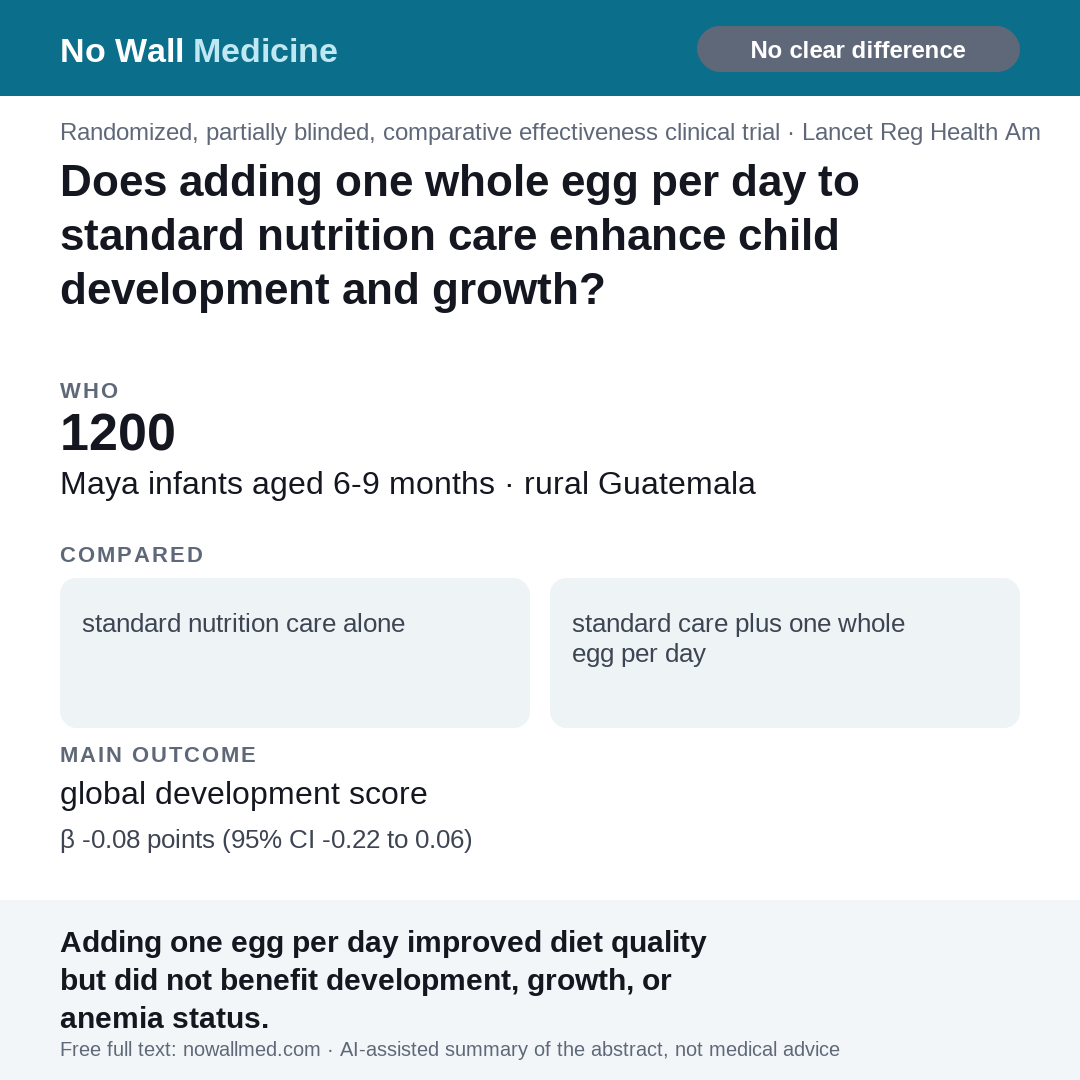
Effect of eggs on Maya child development and growth: the Saqmolo' Project randomized clinical trial
Randomized, partially blinded, comparative effectiveness clinical trialNo clear difference
Does adding one whole egg per day to standard nutrition care enhance child development and growth?
Who
1200
Maya infants aged 6-9 months · rural Guatemala
Compared
standard nutrition care alone
standard care plus one whole egg per day
Main outcome
global development score
Result: β -0.08 points (95% CI -0.22 to 0.06)
Bottom line: Adding one egg per day improved diet quality but did not benefit development, growth, or anemia status.
Funded by: Academy of Nutrition and Dietetics Foundation
Lancet Reg Health Am · 2025-12-20Download image
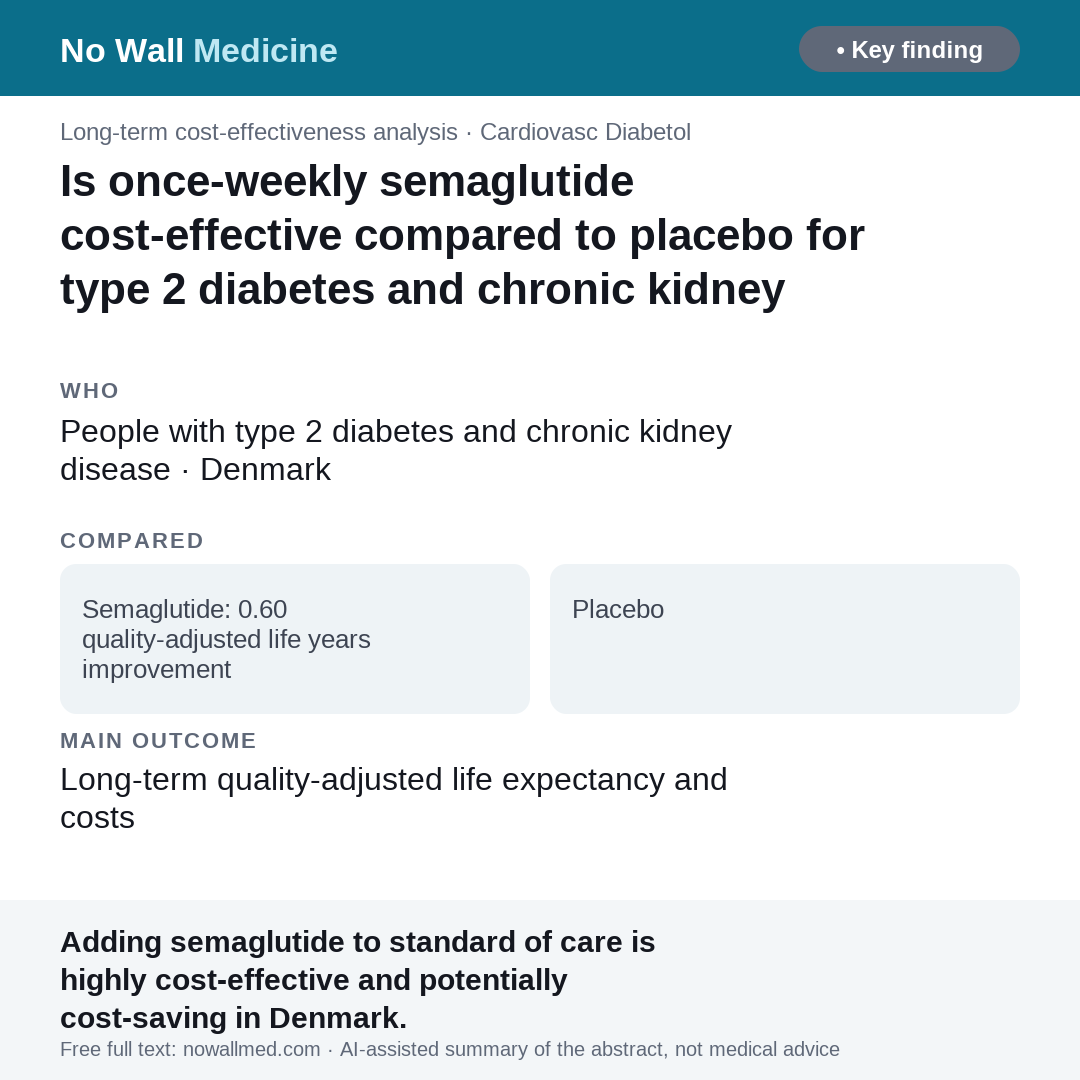
Once-weekly semaglutide versus placebo for the treatment of type 2 diabetes and chronic kidney disease in Denmark: A long-term cost-effectiveness analysis based on FLOW
Long-term cost-effectiveness analysisBenefit found
Is once-weekly semaglutide cost-effective compared to placebo for type 2 diabetes and chronic kidney disease?
Who
People with type 2 diabetes and chronic kidney disease · Denmark
Compared
Semaglutide: 0.60 quality-adjusted life years improvement
Placebo
Main outcome
Long-term quality-adjusted life expectancy and costs
Bottom line: Adding semaglutide to standard of care is highly cost-effective and potentially cost-saving in Denmark.
Cardiovasc Diabetol · 2025-12-20Download image