Visual abstracts
New randomized trials and meta-analyses from leading journals at a glance: who was studied, what was compared, and what was found. Every paper is free to read in full.
All specialtiesCardiology 4780Oncology 4080Gastroenterology & Hepatology 1914Infectious Disease 3775Neurology 1883Psychiatry & Mental Health 2238Pulmonology 2058Critical Care 1331Endocrinology & Diabetes 2550Pediatrics 2908Surgery 2496Orthopedics & Sports Medicine 922Neurosurgery 532Cardiothoracic & Vascular Surgery 662Plastic & Reconstructive Surgery 584Nephrology 1111Rheumatology 812Hematology 1095Dermatology 617Ophthalmology 537Obstetrics & Gynecology 1656Public & Global Health 1041Radiology & Imaging 637Anesthesiology 958Urology 751ENT (Otolaryngology) 497Emergency Medicine 484Allergy & Immunology 310Geriatrics 973Family Medicine & Primary Care 538Medical Genetics & Genomics 662Pathology & Laboratory Medicine 156Physical Medicine & Rehabilitation 744Palliative Care 422Nutrition 1564Digital Health & AI 2188General Medicine 318
Artificial Intelligence-Enabled Imaging for Predicting Preoperative Extraprostatic Extension in Prostate Cancer: Systematic Review and Meta-Analysis
Systematic review and meta-analysisBenefit found
Does artificial intelligence imaging perform better than radiologists for predicting preoperative extraprostatic extension?
Who
Patients with prostate cancer
Compared
Artificial intelligence enabled imaging: AUC 0.81 (95% CI 0.77-0.84)
Radiologists: AUC 0.77 (95% CI 0.73-0.80)
Main outcome
Diagnostic performance for predicting preoperative extraprostatic extension
Result: AUC 0.81 (95% CI 0.77-0.84) vs 0.77 (95% CI 0.73-0.80)
Bottom line: Multiparametric magnetic resonance imaging based artificial intelligence achieved a significantly higher area under the curve than radiologists.
Limitation: Retrospective design and high heterogeneity may introduce bias and affect generalizability.
J Med Internet Res · 2025-12-09Download image

Patient-reported Outcome Measures in Head and Neck Reconstruction: A Systematic Review Across Disciplines and Geographical Locations
Systematic reviewMixed results
PROM use in head and neck reconstruction
Who
30369
adult patients undergoing oncological head and neck reconstruction · multiple geographic regions
Compared
34.75%most frequent tools
25.99%nonvalidated tools
22.32%EORTC QLQ-H&N35
Main outcome
usage of patient-reported outcome measures
Bottom line: Substantial heterogeneity in PROM use exists
Plast Reconstr Surg Glob Open · 2025-12-09Download image

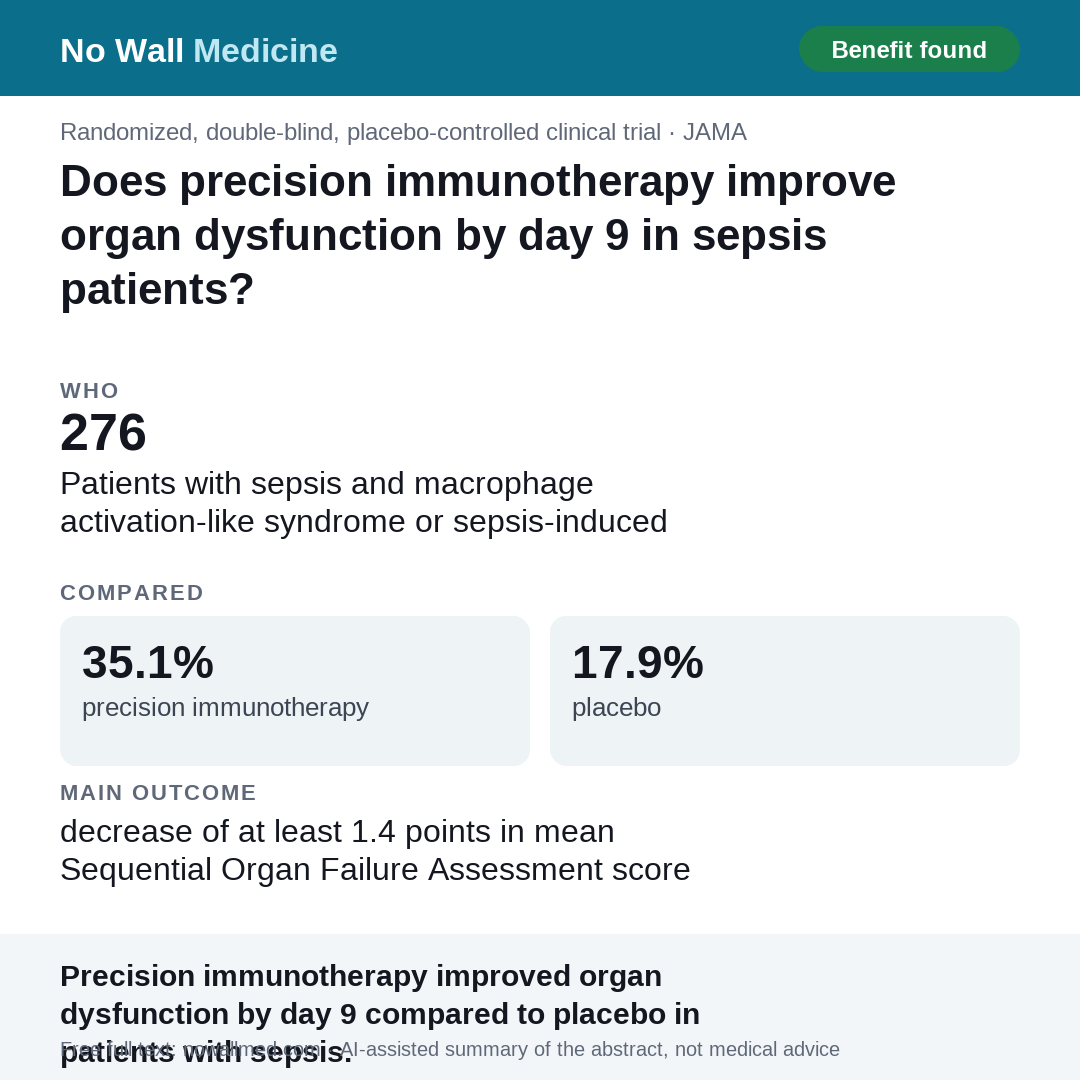
Precision Immunotherapy to Improve Sepsis Outcomes: The ImmunoSep Randomized Clinical Trial
Randomized, double-blind, placebo-controlled clinical trialBenefit found
Does precision immunotherapy improve organ dysfunction by day 9 in sepsis patients?
Who
276
Patients with sepsis and macrophage activation-like syndrome or sepsis-induced immunoparalysis · 6 countries
Compared
35.1%precision immunotherapy (46/131)
17.9%placebo (26/145)
Main outcome
decrease of at least 1.4 points in mean Sequential Organ Failure Assessment score
Result: difference, 17.2% (95% CI, 6.8% to 27.2%)
Bottom line: Precision immunotherapy improved organ dysfunction by day 9 compared to placebo in patients with sepsis.
JAMA · 2025-12-08Download image
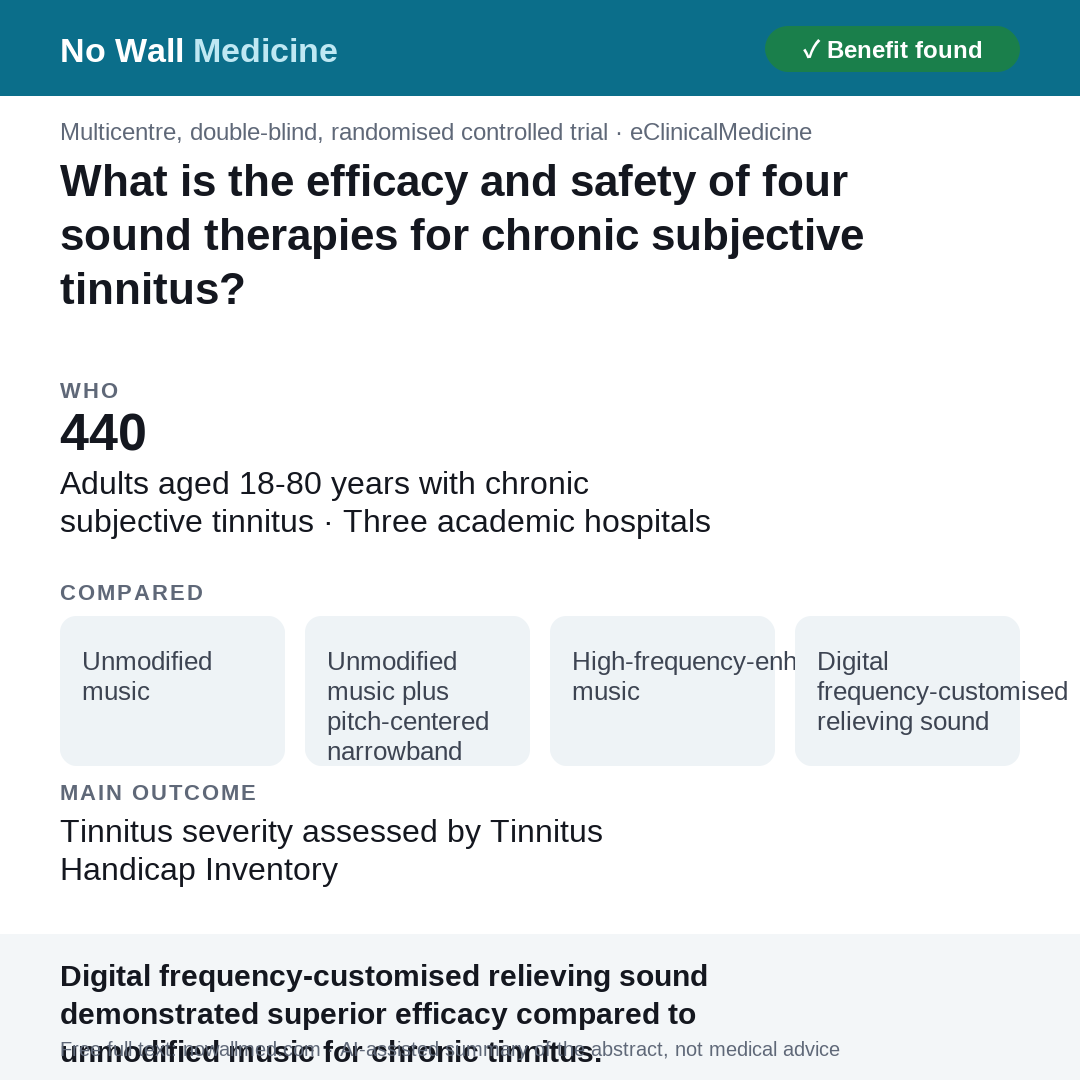
Efficacy and safety of a modified sound therapy for patients with subjective tinnitus (MOST): a multicentre, double-blind, randomised controlled trial
Multicentre, double-blind, randomised controlled trialBenefit found
What is the efficacy and safety of four sound therapies for chronic subjective tinnitus?
Who
440
Adults aged 18-80 years with chronic subjective tinnitus · Three academic hospitals in China
Compared
Unmodified music
Unmodified music plus pitch-centered narrowband noise
High-frequency-enhanced music
Digital frequency-customised relieving sound
Main outcome
Tinnitus severity assessed by Tinnitus Handicap Inventory
Result: parameter estimate -4·37, 95% CI -6·25 to -2·48
Bottom line: Digital frequency-customised relieving sound demonstrated superior efficacy compared to unmodified music for chronic tinnitus.
Limitation: Absence of a blank control arm and objective adherence monitoring.
eClinicalMedicine · 2025-12-08Download image
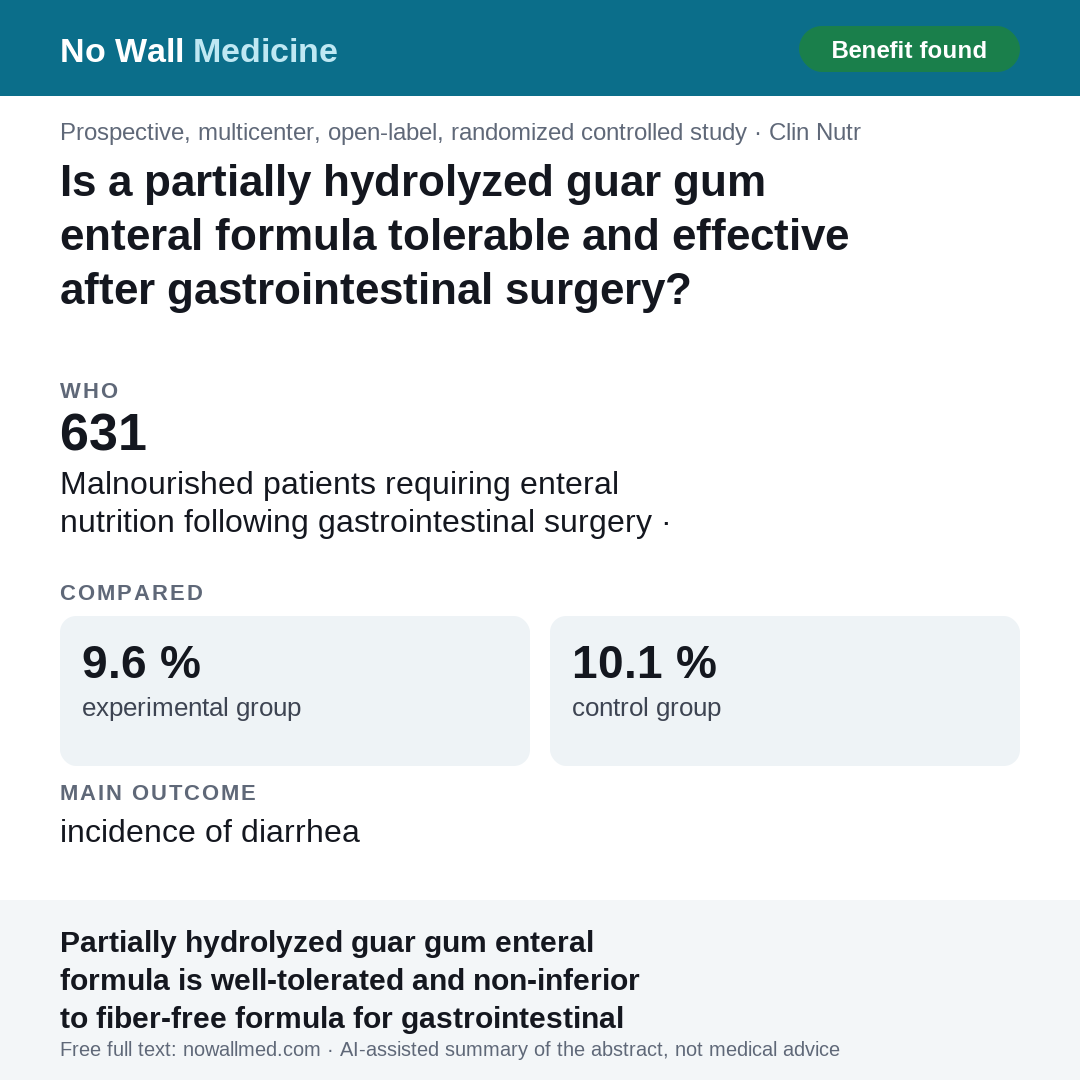
Tolerability and efficacy of an enteral formula containing partially hydrolyzed guar gum in patients following gastrointestinal surgery: A prospective, multicenter, open-label, randomized controlled study
Prospective, multicenter, open-label, randomized controlled studyBenefit found
Is a partially hydrolyzed guar gum enteral formula tolerable and effective after gastrointestinal surgery?
Who
631
Malnourished patients requiring enteral nutrition following gastrointestinal surgery · China
Compared
9.6 %experimental group (95 % confidence interval [CI]: 6.3 to 12.8)
10.1 %control group (95 % CI: 6.8 to 13.4)
Main outcome
incidence of diarrhea
Result: absolute difference of -0.5 (95 % CI: -5.1 to 4.2)
Bottom line: Partially hydrolyzed guar gum enteral formula is well-tolerated and non-inferior to fiber-free formula for gastrointestinal surgery patients.
Clin Nutr · 2025-12-08Download image
Effects on health-related quality of life of therapeutic exercise in burn survivors: A systematic review and meta-analyses
Systematic review and meta-analysisBenefit found
Does therapeutic exercise improve health-related quality of life in adult burn survivors?
Who
340
Adult burn survivors
Compared
Therapeutic exercise
Usual care
Main outcome
Health-related quality of life
Result: mean difference 0.69 (95% CI 0.26-1.12) for simple abilities
Bottom line: Therapeutic exercise significantly improves health-related quality of life in adult burn survivors, particularly in simple abilities and affective aspects.
Limitation: Substantial heterogeneity (I² = 83%) was observed, requiring cautious interpretation of the results.
Burns · 2025-12-08Download image

Impact of combined hormonal contraceptives and metformin on metabolic syndrome in women with hyperandrogenic polycystic ovary syndrome and obesity: The COMET-PCOS randomized clinical trial
Multicenter, double-blind, double-dummy, randomized trialNo clear difference
How do combined hormonal contraceptives, metformin, or both affect metabolic syndrome prevalence?
Who
240
Women aged 18 to 40 with hyperandrogenic polycystic ovary syndrome and obesity · Multicenter
Compared
28.8%Low-dose combined oral contraceptive pills (17/59)
26.2%Metformin extended release (17/65)
28.6%Combined treatment (17/59)
Main outcome
Prevalence of metabolic syndrome at the end of study
Result: adjusted p = 0.26
Bottom line: Low-dose combined oral contraceptive pills did not increase metabolic syndrome prevalence in women with hyperandrogenic polycystic ovary syndrome and obesity.
Limitation: Potential lack of power to detect differences in secondary outcomes.
PLOS Med · 2025-12-08Download image

Effects of Oveporexton, an Orexin Receptor 2-Selective Agonist, on Cognition in Narcolepsy Type 1: A Secondary Analysis of a Randomized Clinical Trial
Randomized, double-blind, placebo-controlled trialEarly signal
Does oveporexton improve cognition in people with narcolepsy type 1?
Who
112
Adults aged 18 to 70 with narcolepsy type 1 · Multicenter clinical settings
Compared
Oveporexton doses: Improved attention, memory, and executive function
Placebo
Main outcome
Cognitive symptoms including attention, memory, and executive function
Bottom line: Oveporexton improved attention, memory, and executive function in adults with narcolepsy type 1.
JAMA Neurol · 2025-12-08Download image

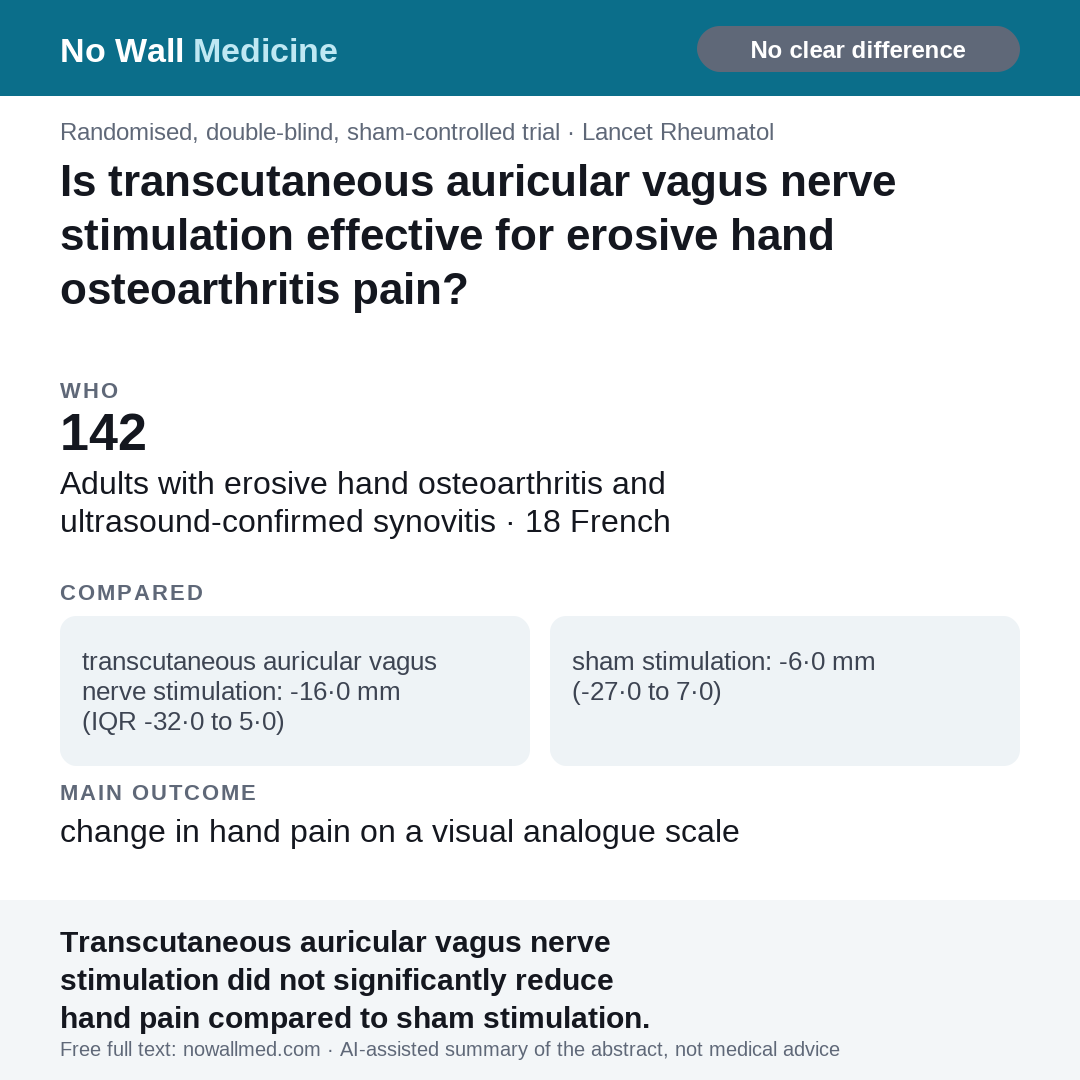
Transcutaneous auricular vagus nerve stimulation versus sham stimulation in patients with erosive hand osteoarthritis (ESTIVAL): a randomised, multicentre, double-blind, sham-controlled trial
Randomised, double-blind, sham-controlled trialNo clear difference
Is transcutaneous auricular vagus nerve stimulation effective for erosive hand osteoarthritis pain?
Who
142
Adults with erosive hand osteoarthritis and ultrasound-confirmed synovitis · 18 French hospital centres
Compared
transcutaneous auricular vagus nerve stimulation: -16·0 mm (IQR -32·0 to 5·0)
sham stimulation: -6·0 mm (-27·0 to 7·0)
Main outcome
change in hand pain on a visual analogue scale
Result: adjusted between-group difference of -10·0 mm (95% CI -23·0 to 2·0)
Bottom line: Transcutaneous auricular vagus nerve stimulation did not significantly reduce hand pain compared to sham stimulation.
Funded by: French Ministry of Health
Lancet Rheumatol · 2025-12-08Download image
Antineuraminidase Antibody Responses in Older Adults After Consecutive Vaccinations With Enhanced Influenza Vaccines: A Randomized Controlled Trial
2-year randomized controlled trialBenefit found
How do enhanced influenza vaccines compare to standard-dose vaccines in inducing neuraminidase inhibition antibodies?
Who
400
Older adults aged 65 to 82 years · Hong Kong
Compared
Standard-dose quadrivalent vaccine
High-dose trivalent vaccine
MF59-adjuvanted trivalent vaccine: significantly higher GMFR and seroconversion rates
Recombinant quadrivalent vaccine
Main outcome
neuraminidase inhibition antibody geometric mean fold rise and seroconversion rates
Bottom line: MF59-adjuvanted trivalent vaccine induced a superior neuraminidase inhibition antibody response in older adults than standard-dose quadrivalent vaccine.
J Infect Dis · 2025-12-08Download image

Long-term safety and efficacy of lecanemab in early Alzheimer's disease: Results from the clarity AD open-label extension study
Open-label extension randomized trialBenefit found
What are the long-term safety and efficacy of lecanemab in early Alzheimer's disease?
Who
Participants with early symptomatic Alzheimer's disease
Compared
Lecanemab treated participants: continued to benefit through 36 months
Placebo
Main outcome
Clinical, functional, and health-related quality-of-life outcomes
Bottom line: Lecanemab continued to suppress amyloid and slow clinical decline through 36 months of treatment.
Alzheimers Dement · 2025-12-08Download image

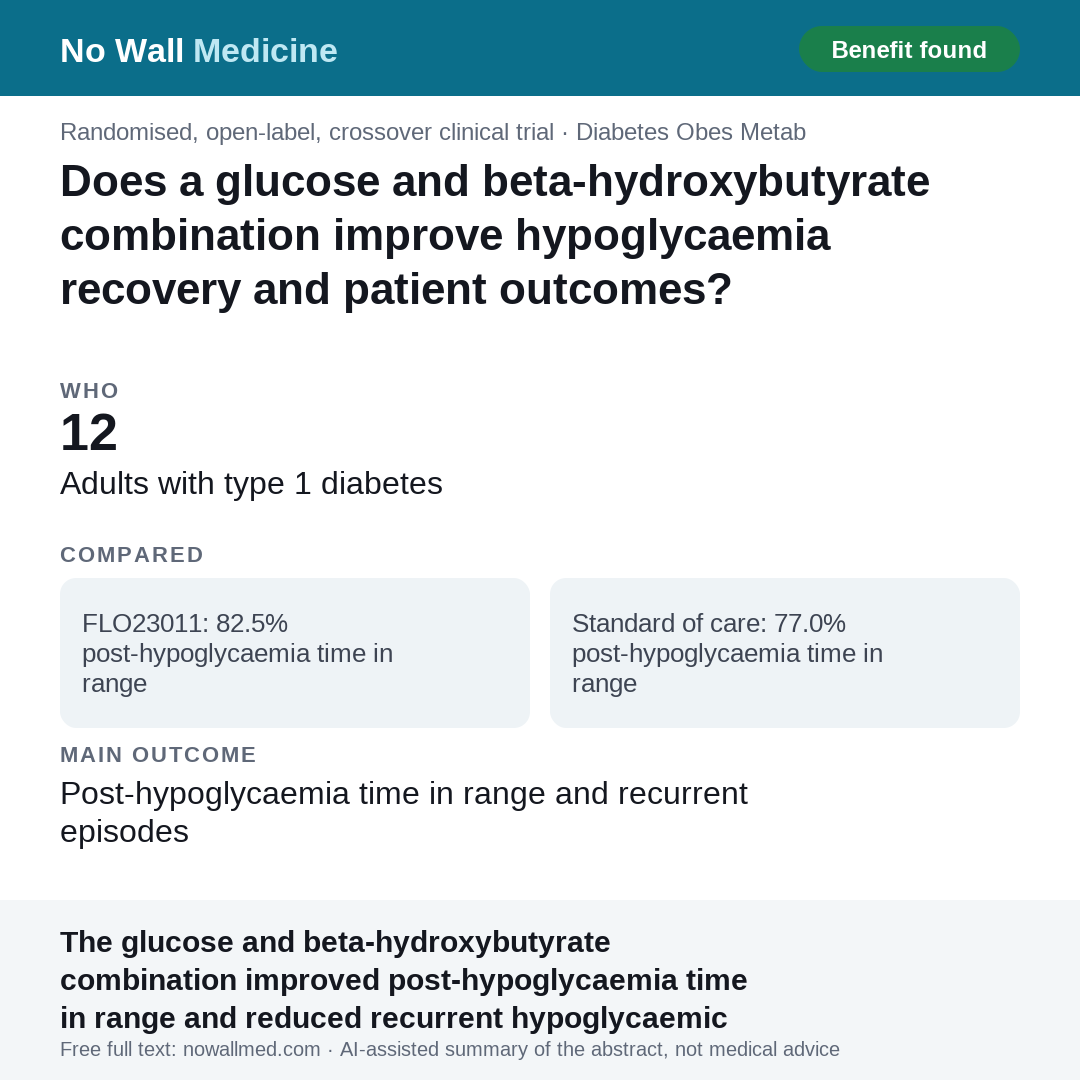
A novel glucose beta-hydroxybutyrate combination improves hypoglycaemia recovery and patient-reported outcomes in type 1 diabetes
Randomised, open-label, crossover clinical trialBenefit found
Does a glucose and beta-hydroxybutyrate combination improve hypoglycaemia recovery and patient outcomes?
Who
12
Adults with type 1 diabetes
Compared
FLO23011: 82.5% post-hypoglycaemia time in range
Standard of care: 77.0% post-hypoglycaemia time in range
Main outcome
Post-hypoglycaemia time in range and recurrent episodes
Bottom line: The glucose and beta-hydroxybutyrate combination improved post-hypoglycaemia time in range and reduced recurrent hypoglycaemic episodes.
Diabetes Obes Metab · 2025-12-08Download image
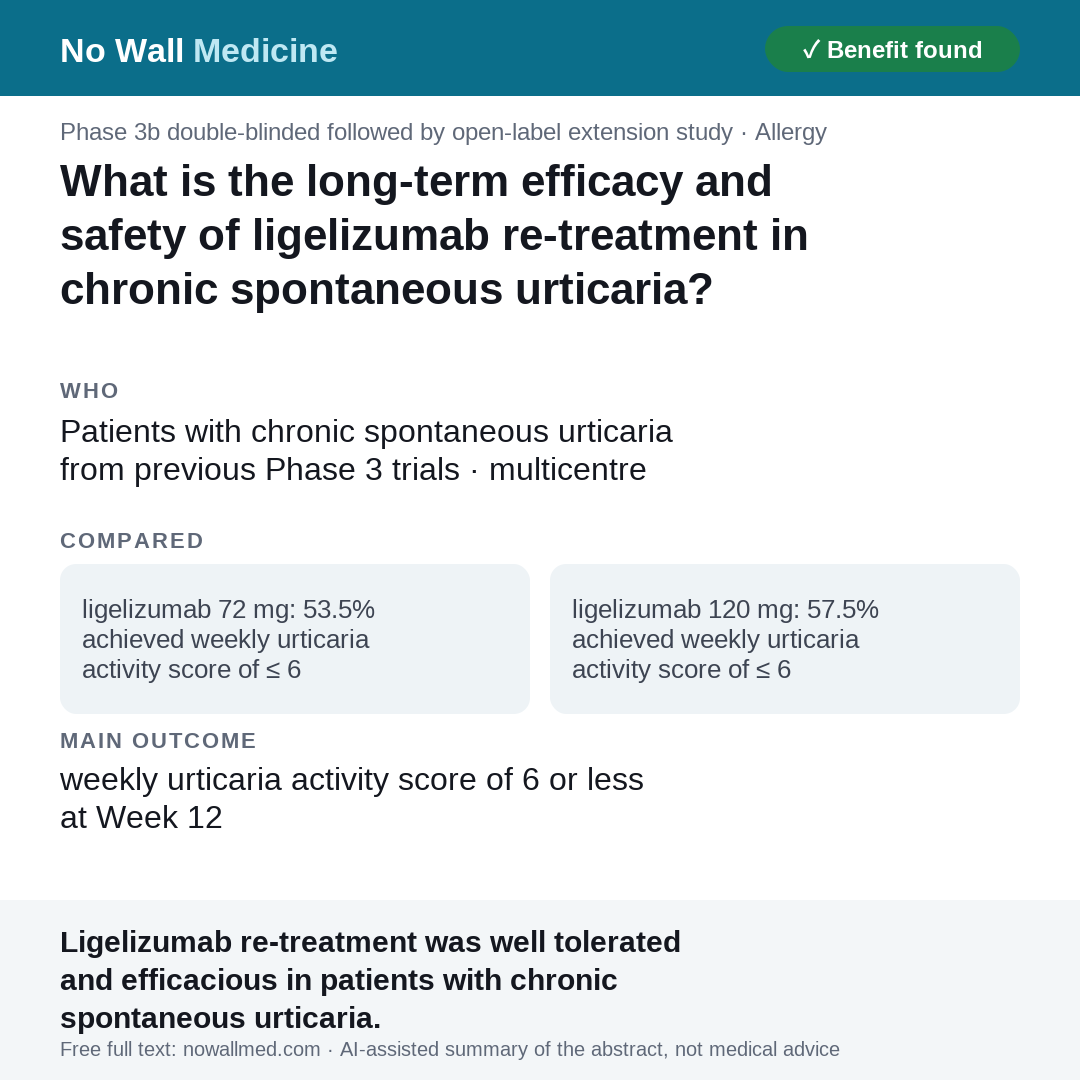
Long-Term Efficacy and Safety of Ligelizumab as Re-Treatment in Patients With Chronic Spontaneous Urticaria
Phase 3b double-blinded followed by open-label extension studyBenefit found
What is the long-term efficacy and safety of ligelizumab re-treatment in chronic spontaneous urticaria?
Who
Patients with chronic spontaneous urticaria from previous Phase 3 trials · multicentre
Compared
ligelizumab 72 mg: 53.5% achieved weekly urticaria activity score of ≤ 6
ligelizumab 120 mg: 57.5% achieved weekly urticaria activity score of ≤ 6
Main outcome
weekly urticaria activity score of 6 or less at Week 12
Bottom line: Ligelizumab re-treatment was well tolerated and efficacious in patients with chronic spontaneous urticaria.
Allergy · 2025-12-08Download image
Clinical effectiveness of music interventions for dementia and depression in older people (MIDDEL): a multinational, cluster-randomised controlled trial
Multinational, cluster-randomised controlled trialNo clear difference
Do music interventions reduce depressive symptoms among care home residents with dementia?
Who
1021
Care home residents aged 65 or older with dementia and mild depressive symptoms · 86 care home units in six countries
Compared
Group music therapy
Recreational choir singing
Combination of both strategies
Standard care
Main outcome
Montgomery-Åsberg Depression Rating Scale score at 6 months
Result: no significant effect on MADRS scores
Bottom line: Active group music interventions do not reduce depressive symptoms more than standard care in the long term.
Lancet Healthy Longev · 2025-12-08Download image

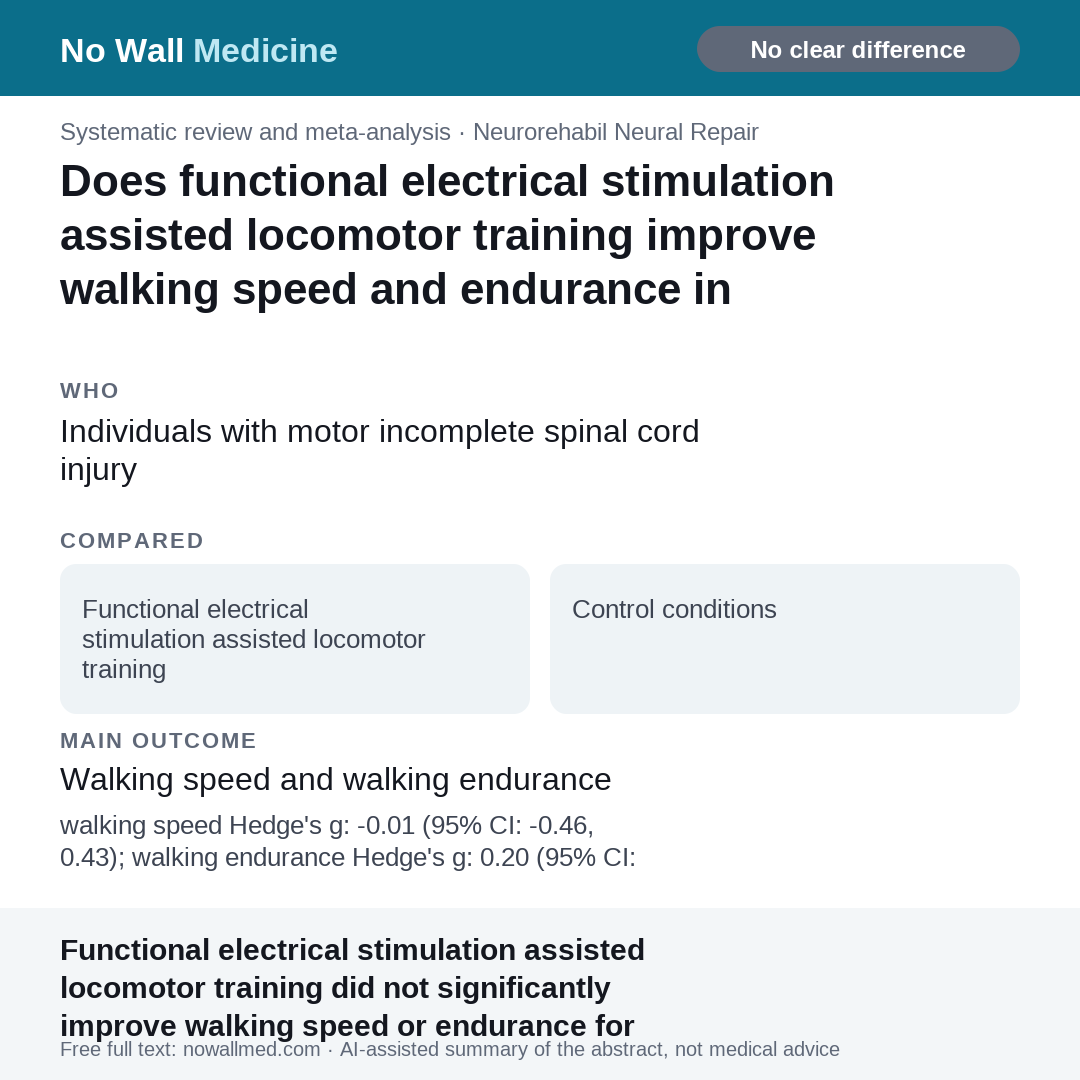
Effectiveness of Functional Electrical Stimulation Assisted Locomotor Training on walking Outcomes Following Incomplete Spinal Cord Injury: Systematic Review and Meta-Analysis
Systematic review and meta-analysisNo clear difference
Does functional electrical stimulation assisted locomotor training improve walking speed and endurance in incomplete spinal cord injury?
Who
Individuals with motor incomplete spinal cord injury
Compared
Functional electrical stimulation assisted locomotor training
Control conditions
Main outcome
Walking speed and walking endurance
Result: walking speed Hedge's g: -0.01 (95% CI: -0.46, 0.43); walking endurance Hedge's g: 0.20 (95% CI: -0.25, 0.65)
Bottom line: Functional electrical stimulation assisted locomotor training did not significantly improve walking speed or endurance for people with incomplete spinal cord injury.
Limitation: Future trials should better standardize and report training dose and stimulation parameters.
Neurorehabil Neural Repair · 2025-12-08Download image
Interplay between frailty and cardiometabolic disorders: from pathophysiology to clinical implications
Systematic reviewUnclear result
Frailty and cardiometabolic disorders interaction
Who
older adults with cardiometabolic disorders
Compared
frailty
cardiometabolic disorders
Main outcome
morbidity, mortality, quality of life
Bottom line: Frailty and cardiometabolic disorders worsen each other
Cardiovasc Diabetol · 2025-12-08Download image

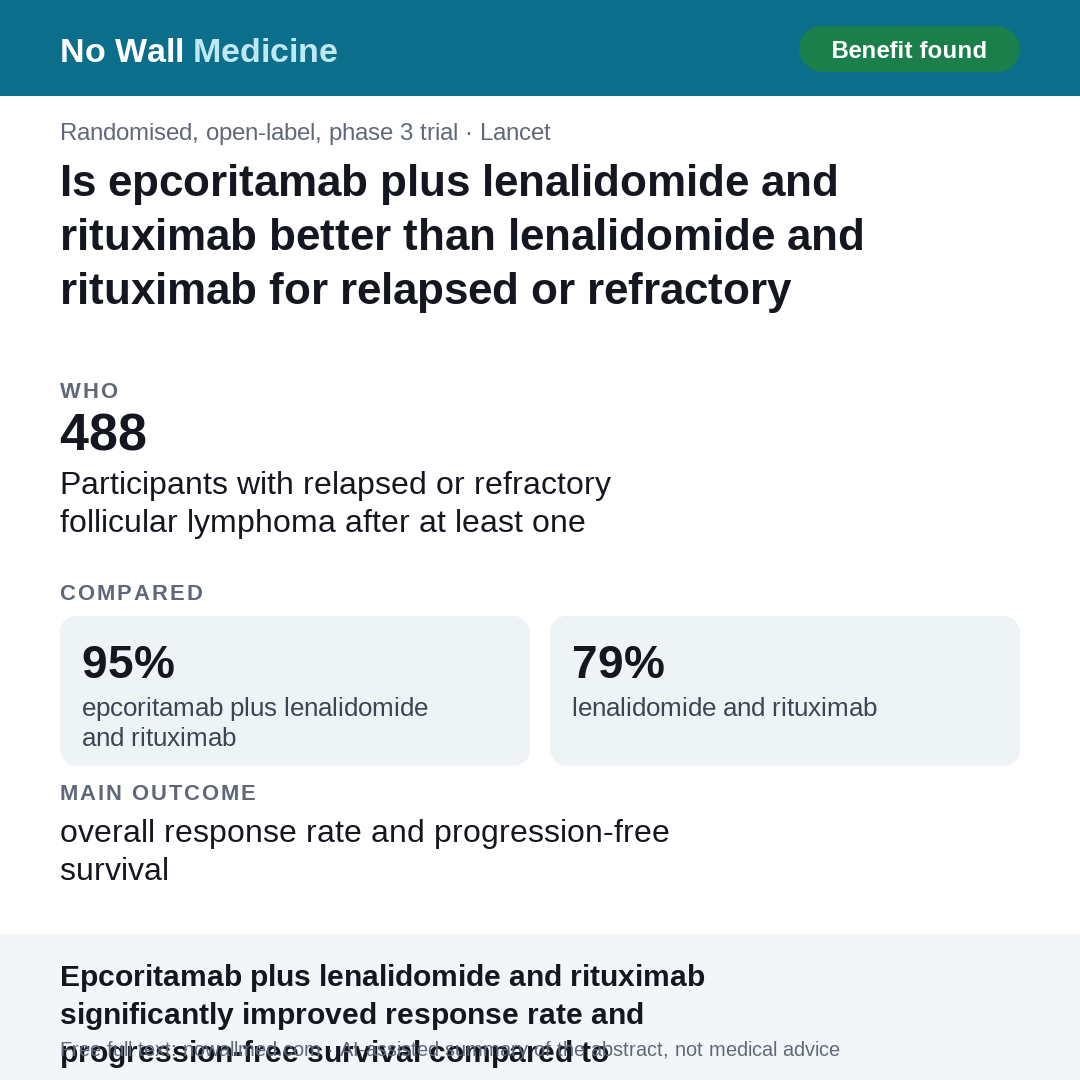
Epcoritamab, lenalidomide, and rituximab versus lenalidomide and rituximab for relapsed or refractory follicular lymphoma (EPCORE FL-1): a global, open-label, randomised, phase 3 trial
Randomised, open-label, phase 3 trialBenefit found
Is epcoritamab plus lenalidomide and rituximab better than lenalidomide and rituximab for relapsed or refractory follicular lymphoma?
Who
488
Participants with relapsed or refractory follicular lymphoma after at least one chemoimmunotherapy · 189 centres in 30 countries
Compared
95%epcoritamab plus lenalidomide and rituximab (95% CI 92-97)
79%lenalidomide and rituximab (74-84)
Main outcome
overall response rate and progression-free survival
Result: hazard ratio 0·21 (95% CI 0·14-0·31)
Bottom line: Epcoritamab plus lenalidomide and rituximab significantly improved response rate and progression-free survival compared to lenalidomide and rituximab.
Funded by: AbbVie and Genmab
Lancet · 2025-12-07Download image
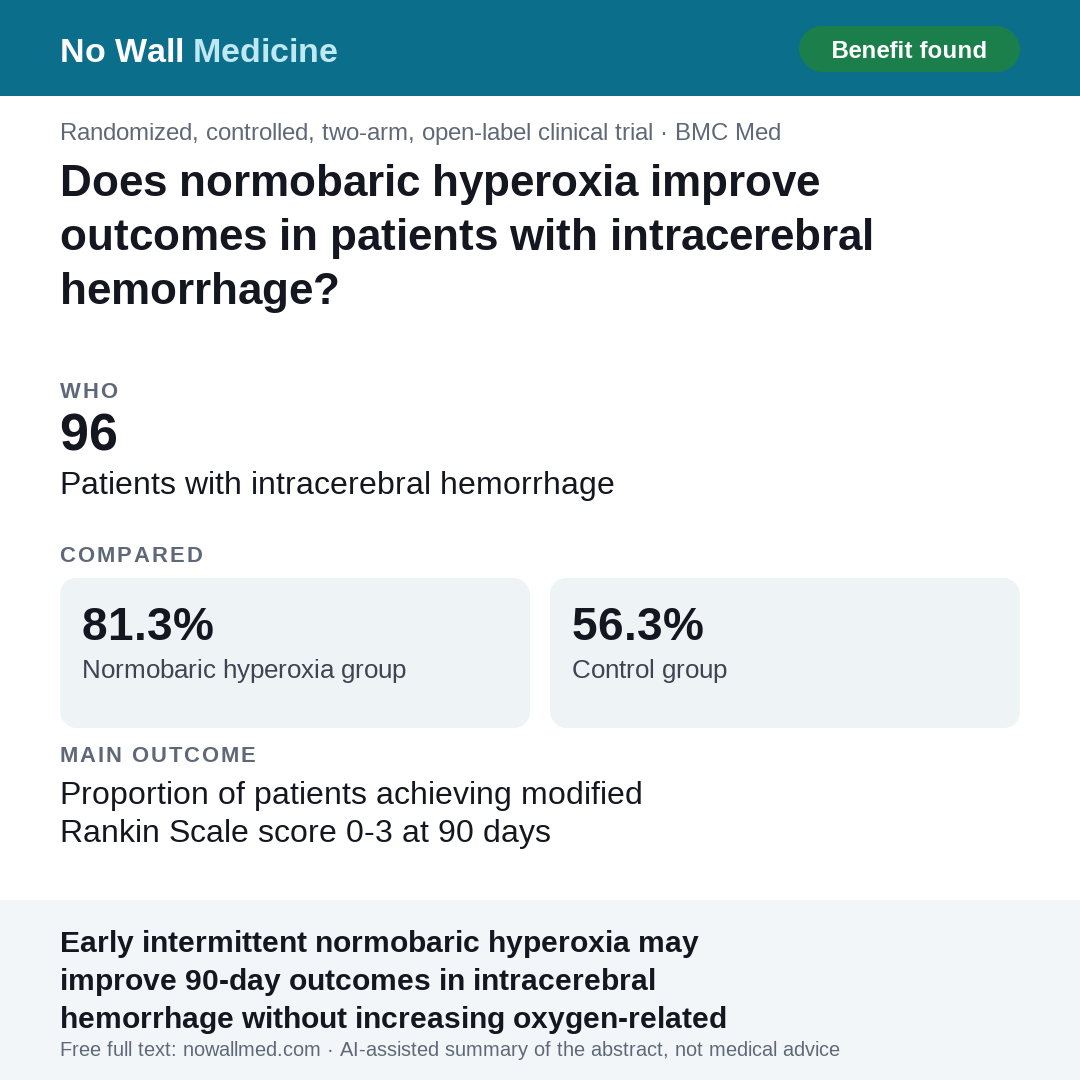
Normobaric hyperoxia for intracerebral hemorrhage: a randomized clinical trial
Randomized, controlled, two-arm, open-label clinical trialBenefit found
Does normobaric hyperoxia improve outcomes in patients with intracerebral hemorrhage?
Who
96
Patients with intracerebral hemorrhage
Compared
81.3%Normobaric hyperoxia group
56.3%Control group
Main outcome
Proportion of patients achieving modified Rankin Scale score 0-3 at 90 days
Result: adjusted risk ratio 1.39 (95% CI 1.06 to 1.82)
Bottom line: Early intermittent normobaric hyperoxia may improve 90-day outcomes in intracerebral hemorrhage without increasing oxygen-related complications.
BMC Med · 2025-12-07Download image
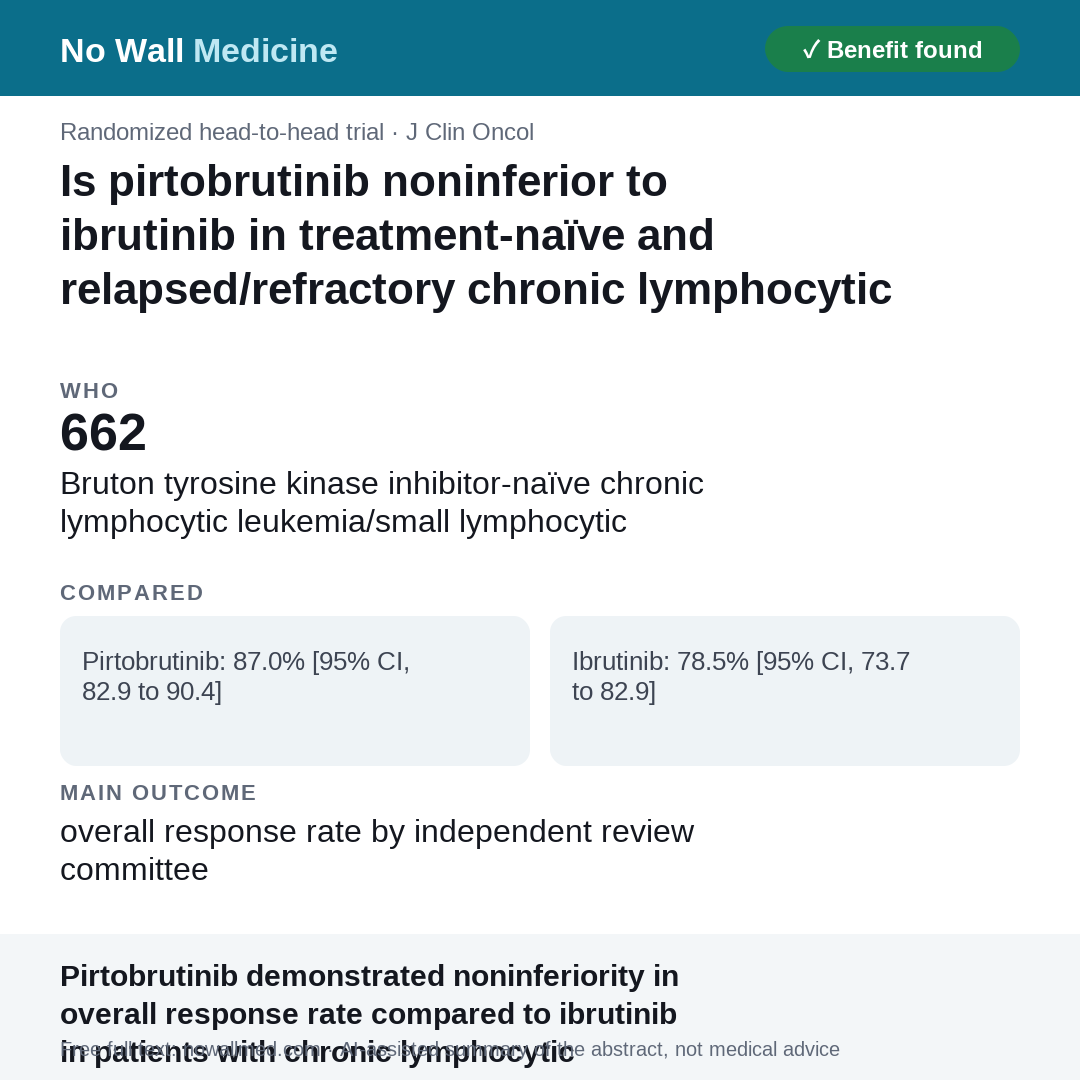
Pirtobrutinib Versus Ibrutinib in Treatment-Naïve and Relapsed/Refractory Chronic Lymphocytic Leukemia/Small Lymphocytic Lymphoma
Randomized head-to-head trialBenefit found
Is pirtobrutinib noninferior to ibrutinib in treatment-naïve and relapsed/refractory chronic lymphocytic leukemia/small lymphocytic lymphoma?
Who
662
Bruton tyrosine kinase inhibitor-naïve chronic lymphocytic leukemia/small lymphocytic lymphoma patients
Compared
Pirtobrutinib: 87.0% [95% CI, 82.9 to 90.4]
Ibrutinib: 78.5% [95% CI, 73.7 to 82.9]
Main outcome
overall response rate by independent review committee
Result: ORR ratio = 1.11 [95% CI, 1.03 to 1.19]
Bottom line: Pirtobrutinib demonstrated noninferiority in overall response rate compared to ibrutinib in patients with chronic lymphocytic leukemia/small lymphocytic lymphoma.
J Clin Oncol · 2025-12-07Download image
A Meta-analysis of Functional Outcomes and Recovery Metrics Comparing Transoral Robotic Surgery and (Chemo)Radiotherapy
Meta-analysis of 16 trialsMixed results
Transoral robotic surgery vs radiotherapy outcomes
Who
2185
patients with head and neck cancer
Compared
Transoral robotic surgery
Chemo radiotherapy
Main outcome
swallowing and recovery metrics
Bottom line: Transoral robotic surgery shows promise
Limitation: methodological inconsistencies
Otolaryngol Head Neck Surg · 2025-12-07Download image