Visual abstracts
New randomized trials and meta-analyses from leading journals at a glance: who was studied, what was compared, and what was found. Every paper is free to read in full.
All specialtiesCardiology 4877Oncology 4138Gastroenterology & Hepatology 1942Infectious Disease 3837Neurology 1905Psychiatry & Mental Health 2273Pulmonology 2143Critical Care 1365Endocrinology & Diabetes 2580Pediatrics 2980Surgery 2559Orthopedics & Sports Medicine 931Neurosurgery 537Cardiothoracic & Vascular Surgery 674Plastic & Reconstructive Surgery 591Nephrology 1133Rheumatology 823Hematology 1109Dermatology 621Ophthalmology 543Obstetrics & Gynecology 1686Public & Global Health 1058Radiology & Imaging 648Anesthesiology 986Urology 764ENT (Otolaryngology) 503Emergency Medicine 511Allergy & Immunology 313Geriatrics 981Family Medicine & Primary Care 562Medical Genetics & Genomics 676Pathology & Laboratory Medicine 159Physical Medicine & Rehabilitation 757Palliative Care 444Nutrition 1588Digital Health & AI 2201General Medicine 321
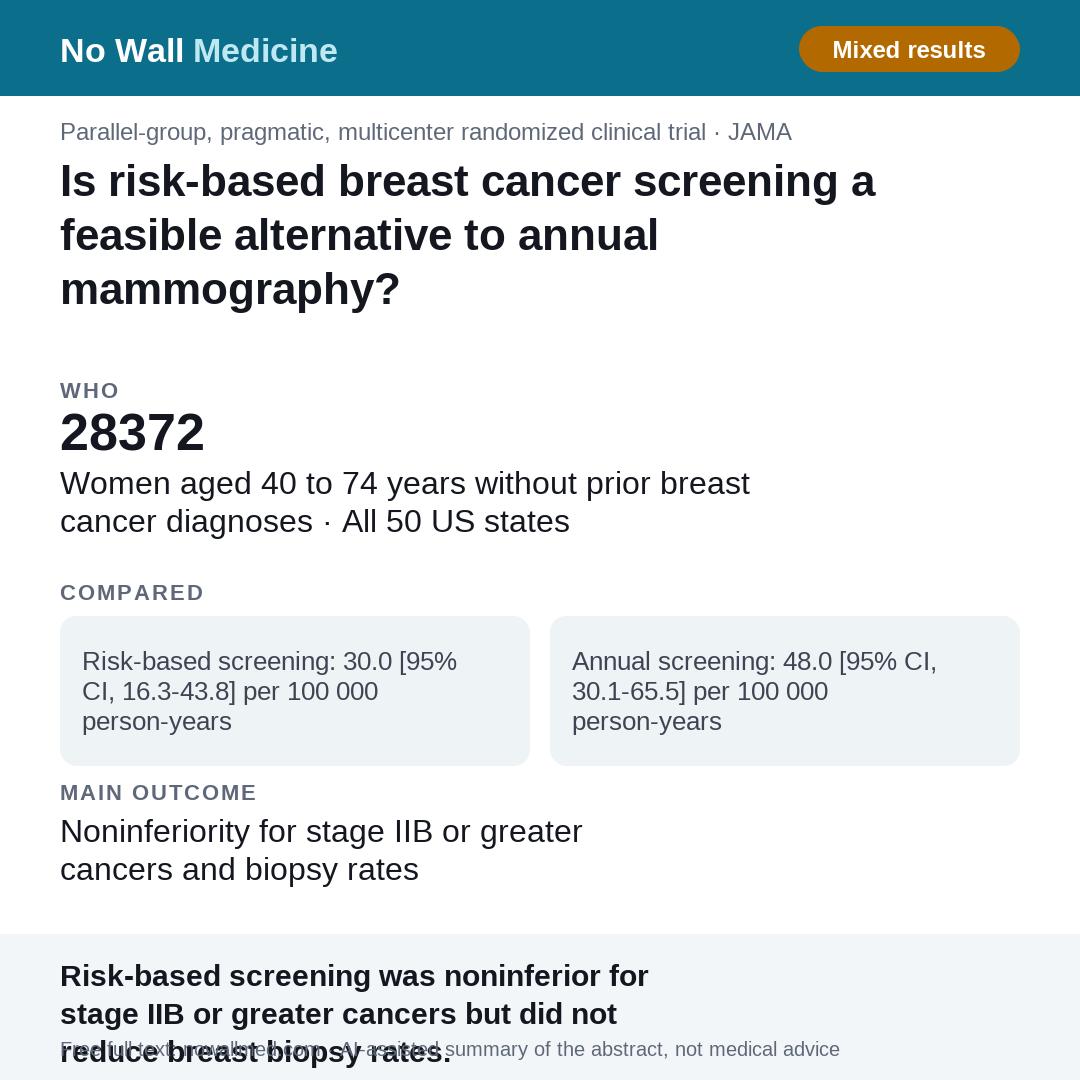
Risk-Based vs Annual Breast Cancer Screening: The WISDOM Randomized Clinical Trial
Parallel-group, pragmatic, multicenter randomized clinical trialMixed results
Is risk-based breast cancer screening a feasible alternative to annual mammography?
Who
28372
Women aged 40 to 74 years without prior breast cancer diagnoses · All 50 US states
Compared
Risk-based screening: 30.0 [95% CI, 16.3-43.8] per 100 000 person-years
Annual screening: 48.0 [95% CI, 30.1-65.5] per 100 000 person-years
Main outcome
Noninferiority for stage IIB or greater cancers and biopsy rates
Result: rate difference, -18.0 per 100 000 person-years [95% CI, -40.2 to 4.1]
Bottom line: Risk-based screening was noninferior for stage IIB or greater cancers but did not reduce breast biopsy rates.
JAMA · 2025-12-12Download image
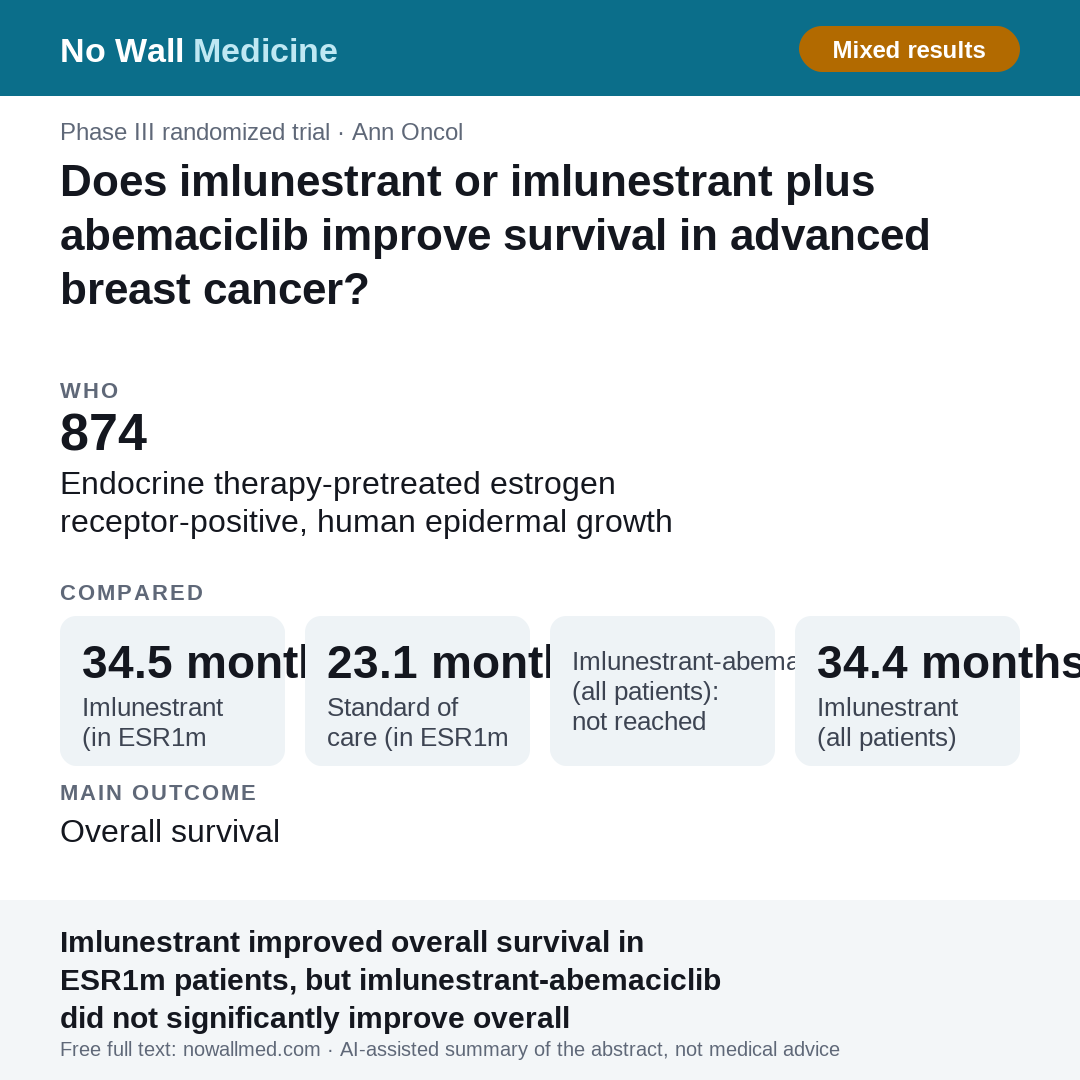
Imlunestrant with or without abemaciclib in advanced breast cancer: updated efficacy results from the phase III EMBER-3 trial
Phase III randomized trialMixed results
Does imlunestrant or imlunestrant plus abemaciclib improve survival in advanced breast cancer?
Who
874
Endocrine therapy-pretreated estrogen receptor-positive, human epidermal growth factor receptor 2-negative advanced breast cancer patients
Compared
34.5 monthsImlunestrant (in ESR1m patients)
23.1 monthsStandard of care (in ESR1m patients)
Imlunestrant-abemaciclib (all patients): not reached
34.4 monthsImlunestrant (all patients)
Main outcome
Overall survival
Result: hazard ratio 0.60 (95% CI 0.43-0.86) for ESR1m patients
Bottom line: Imlunestrant improved overall survival in ESR1m patients, but imlunestrant-abemaciclib did not significantly improve overall survival in all patients.
Limitation: Due to only two of three progression-free survival endpoints being met, a limited significance level was passed to overall survival.
Ann Oncol · 2025-12-12Download image
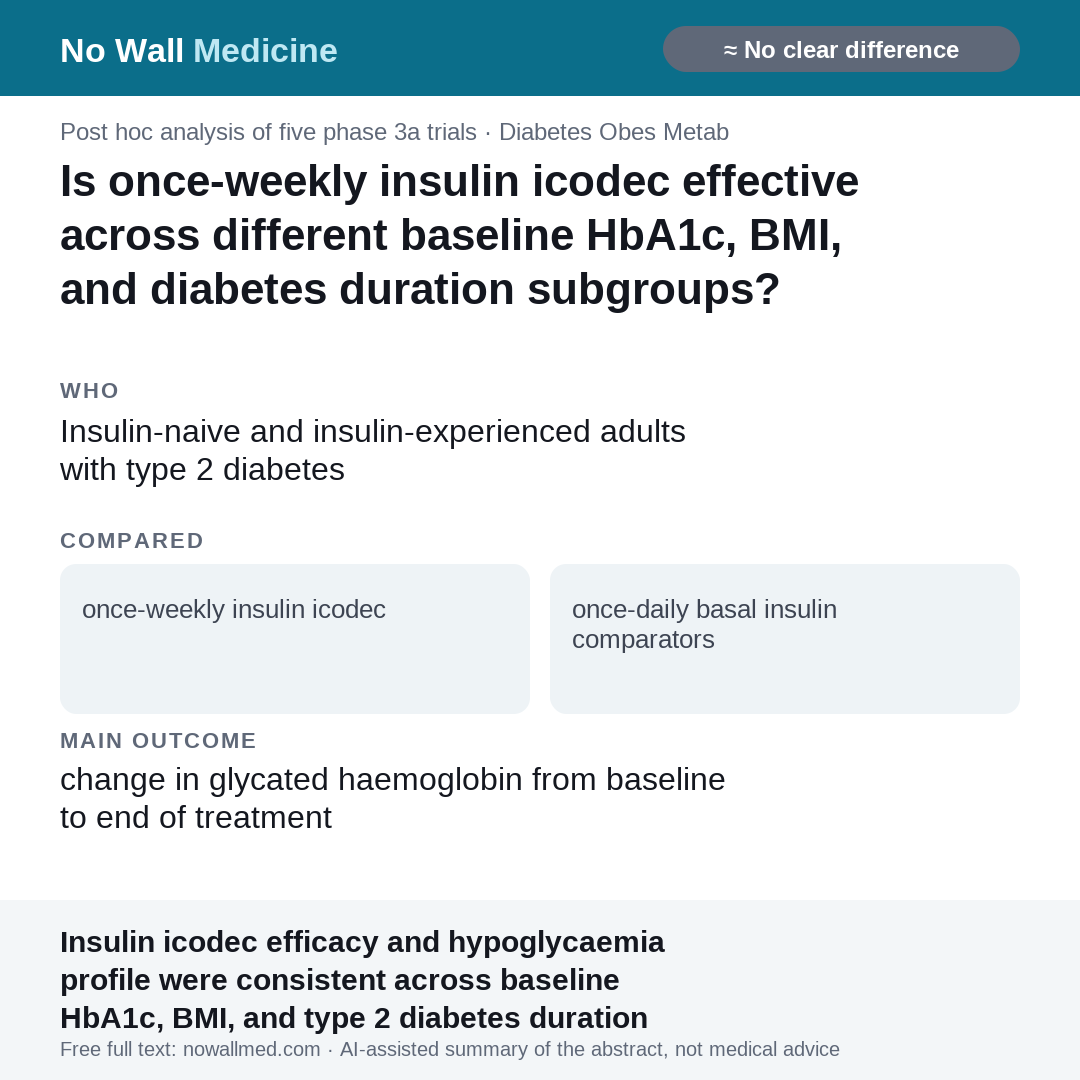
Efficacy and hypoglycaemia outcomes of once-weekly insulin icodec versus once-daily basal insulin comparators across baseline HbA1c, BMI and duration of type 2 diabetes subgroups: A post hoc analysis of ONWARDS 1-5
Post hoc analysis of five phase 3a trialsNo clear difference
Is once-weekly insulin icodec effective across different baseline HbA1c, BMI, and diabetes duration subgroups?
Who
Insulin-naive and insulin-experienced adults with type 2 diabetes
Compared
once-weekly insulin icodec
once-daily basal insulin comparators
Main outcome
change in glycated haemoglobin from baseline to end of treatment
Bottom line: Insulin icodec efficacy and hypoglycaemia profile were consistent across baseline HbA1c, BMI, and type 2 diabetes duration subgroups.
Diabetes Obes Metab · 2025-12-12Download image
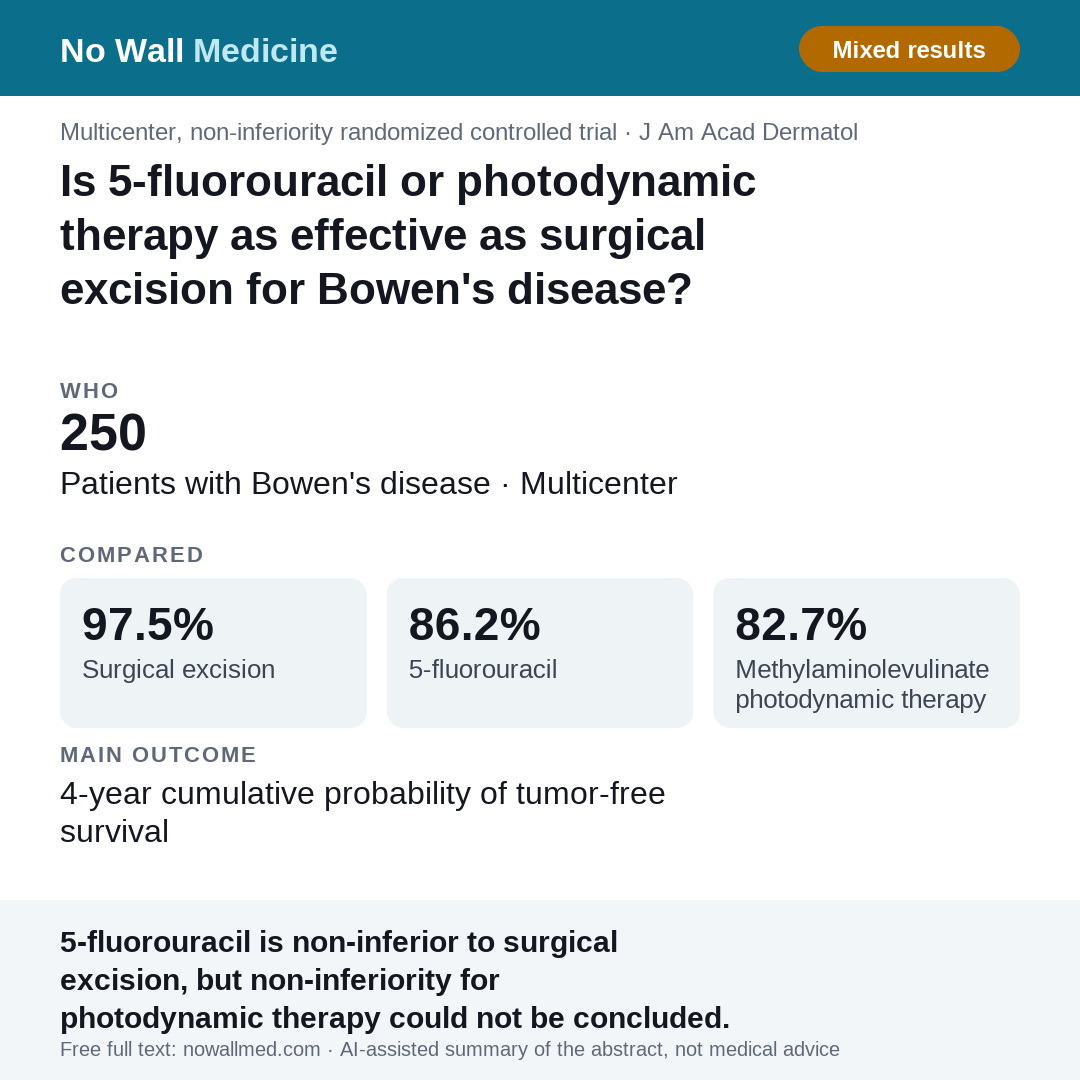
Surgical excision versus topical 5% 5-fluorouracil and photodynamic therapy in the treatment of Bowen's disease: Long-term results of a multicenter randomized controlled trial
Multicenter, non-inferiority randomized controlled trialMixed results
Is 5-fluorouracil or photodynamic therapy as effective as surgical excision for Bowen's disease?
Who
250
Patients with Bowen's disease · Multicenter
Compared
97.5%Surgical excision (95% CI 90.4-99.4)
86.2%5-fluorouracil (95% CI 76.4-92.1)
82.7%Methylaminolevulinate photodynamic therapy (95% CI 72.6-89.4)
Main outcome
4-year cumulative probability of tumor-free survival
Bottom line: 5-fluorouracil is non-inferior to surgical excision, but non-inferiority for photodynamic therapy could not be concluded.
Limitation: Loss to follow-up occurred in 23.2% of patients.
J Am Acad Dermatol · 2025-12-12Download image
Placental Growth Factor Led Management of the Small for Gestational Age Fetus: Randomised Controlled Feasibility Study
Randomised feasibility trialUnclear result
Is it feasible to use angiogenic biomarker-led care for suspected small for gestational age pregnancies?
Who
78
Women with suspected small for gestational age pregnancies between 32 and 37 weeks gestation · Two tertiary maternity hospitals in the United Kingdom
Compared
Biomarker-led care
Standard care
Main outcome
Feasibility measured through recruitment rate and adherence
Result: recruitment rate of 60.1% (95% confidence interval 52%-69%)
Bottom line: Biomarker-led care is acceptable for managing small for gestational age pregnancies, but feasibility remains less certain.
BJOG · 2025-12-12Download image

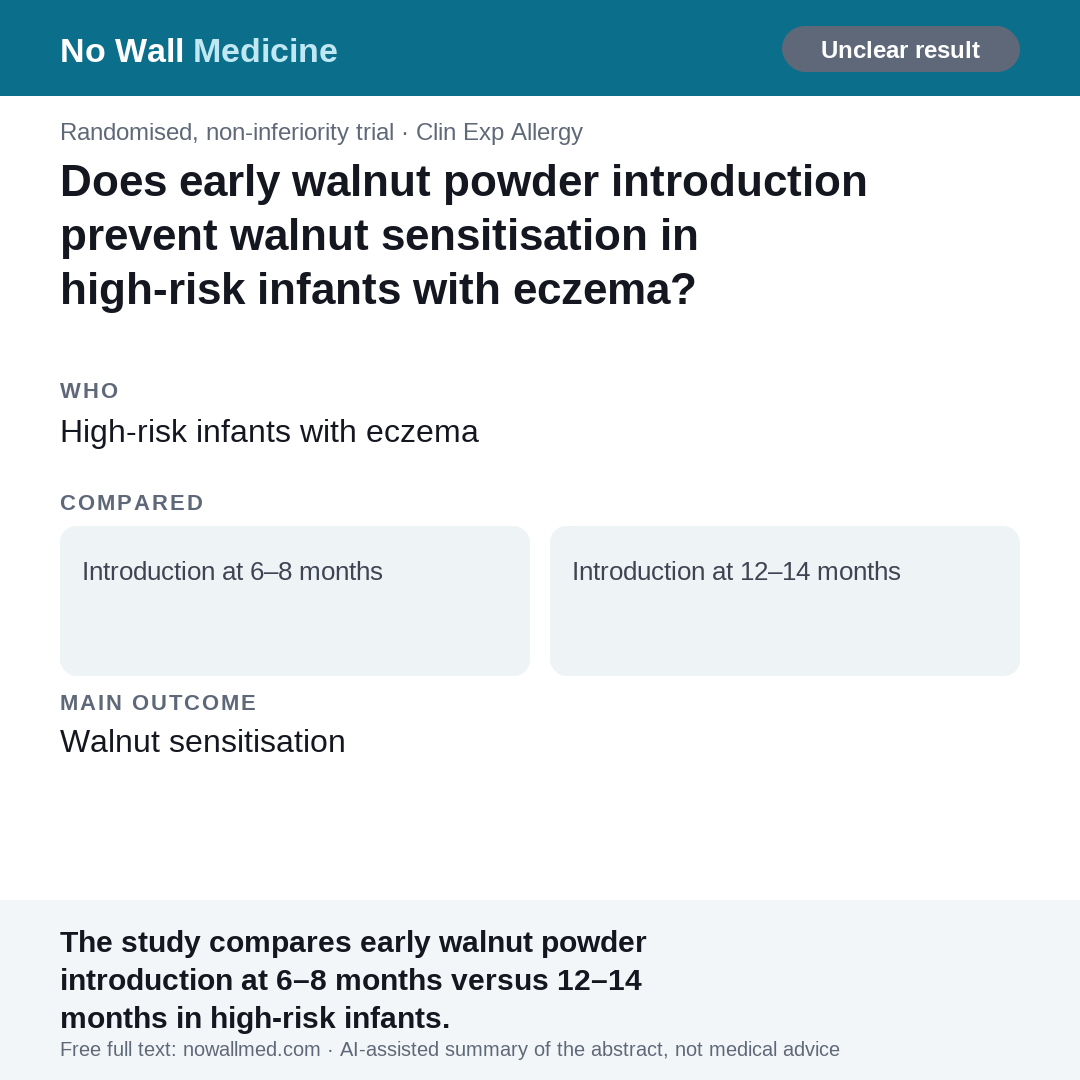
Early Walnut Powder Introduction for Prevention of Walnut Sensitisation in High-Risk Infants With Eczema: An Open-Label, Randomised, Non-Inferiority Trial
Randomised, non-inferiority trialUnclear result
Does early walnut powder introduction prevent walnut sensitisation in high-risk infants with eczema?
Who
High-risk infants with eczema
Compared
Introduction at 6–8 months
Introduction at 12–14 months
Main outcome
Walnut sensitisation
Bottom line: The study compares early walnut powder introduction at 6–8 months versus 12–14 months in high-risk infants.
Clin Exp Allergy · 2025-12-12Download image
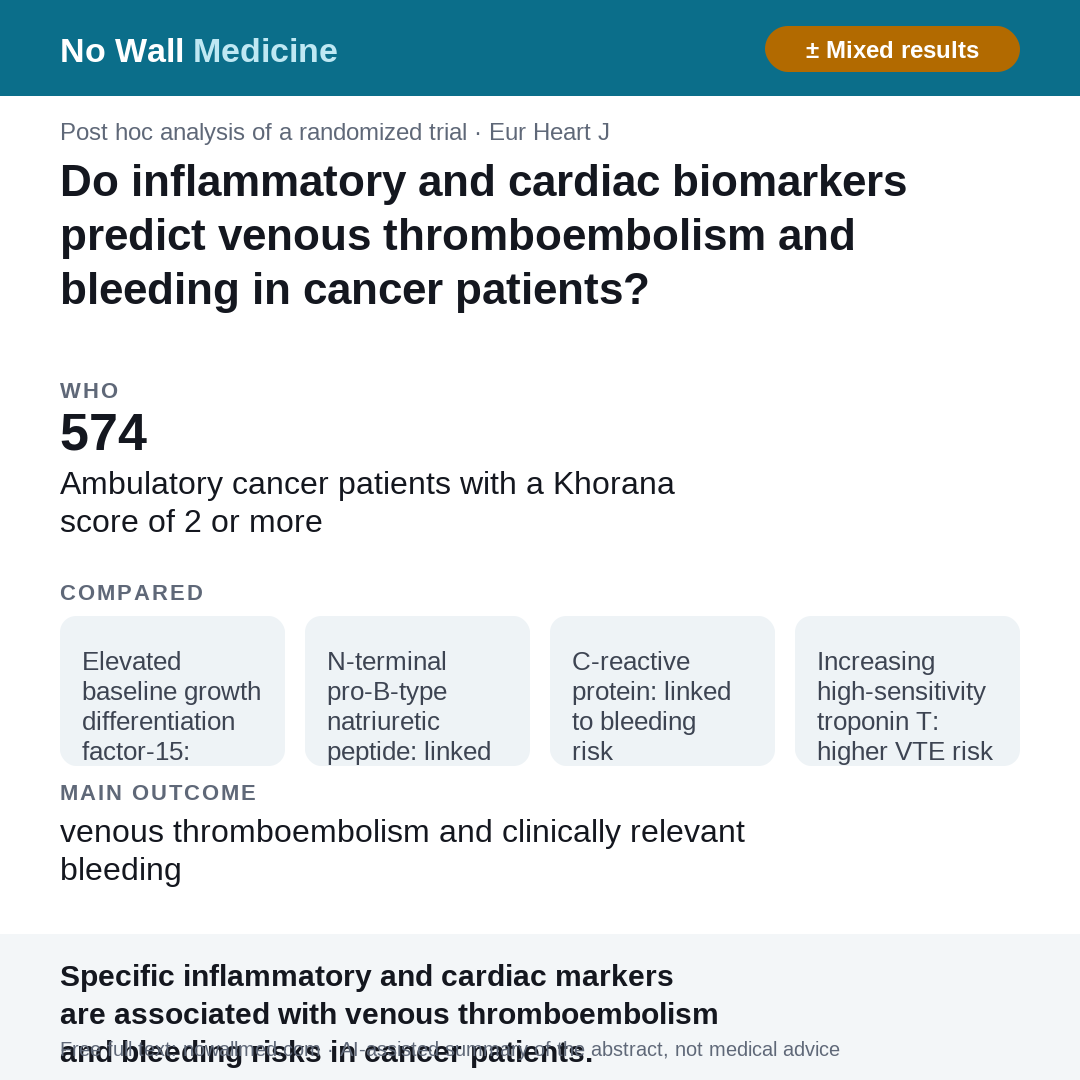
Venous thromboembolism and bleeding in cancer patients: role of inflammatory and cardiac biomarkers
Post hoc analysis of a randomized trialMixed results
Do inflammatory and cardiac biomarkers predict venous thromboembolism and bleeding in cancer patients?
Who
574
Ambulatory cancer patients with a Khorana score of 2 or more
Compared
Elevated baseline growth differentiation factor-15: increased VTE risk
N-terminal pro-B-type natriuretic peptide: linked to bleeding risk
C-reactive protein: linked to bleeding risk
Increasing high-sensitivity troponin T: higher VTE risk
Main outcome
venous thromboembolism and clinically relevant bleeding
Bottom line: Specific inflammatory and cardiac markers are associated with venous thromboembolism and bleeding risks in cancer patients.
Eur Heart J · 2025-12-12Download image
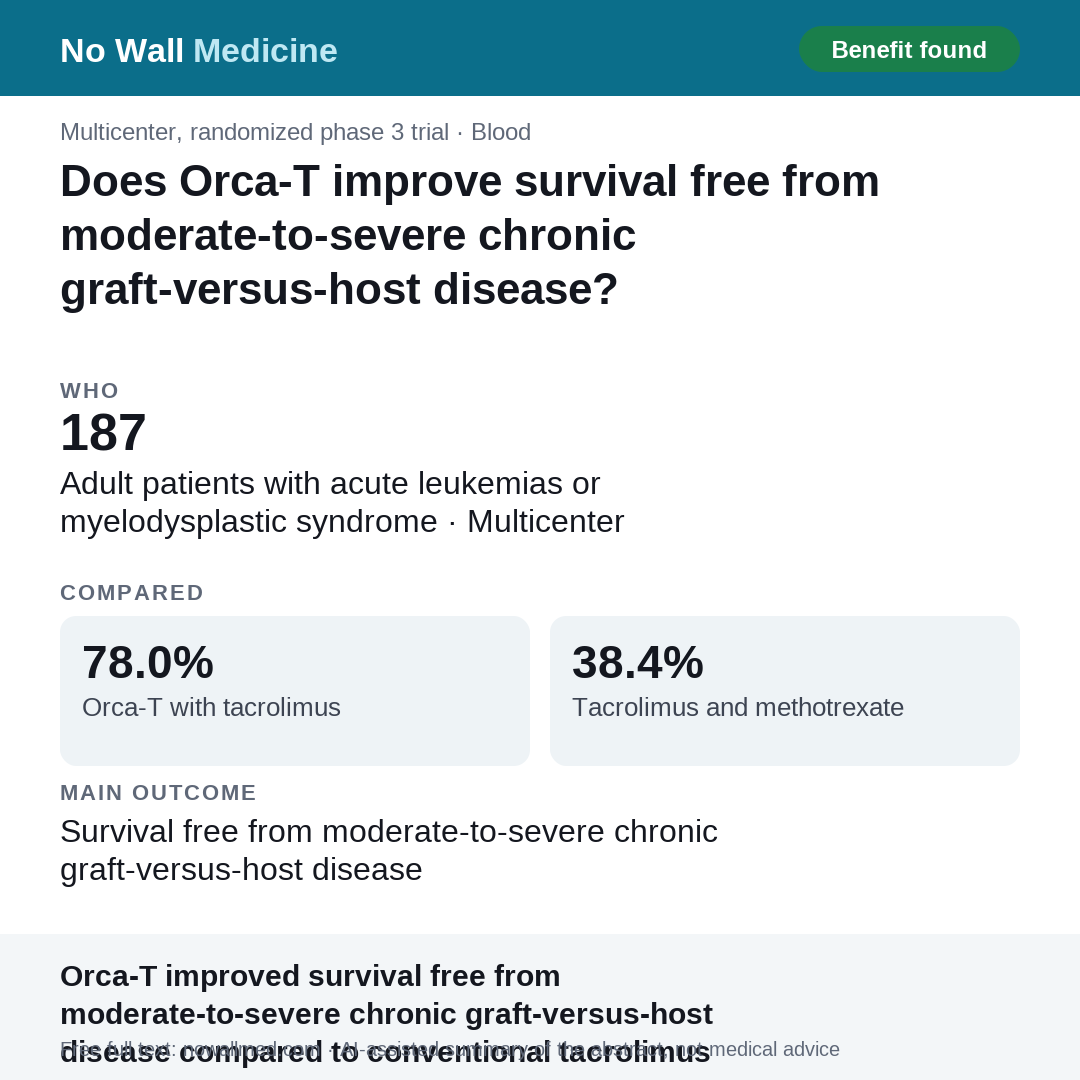
Orca-T vs allogeneic hematopoietic stem cell transplantation (Precision-T): a multicenter, randomized phase 3 trial
Multicenter, randomized phase 3 trialBenefit found
Does Orca-T improve survival free from moderate-to-severe chronic graft-versus-host disease?
Who
187
Adult patients with acute leukemias or myelodysplastic syndrome · Multicenter
Compared
78.0%Orca-T with tacrolimus
38.4%Tacrolimus and methotrexate
Main outcome
Survival free from moderate-to-severe chronic graft-versus-host disease
Result: hazard ratio 0.26 (95% confidence interval 0.14-0.47)
Bottom line: Orca-T improved survival free from moderate-to-severe chronic graft-versus-host disease compared to conventional tacrolimus and methotrexate prophylaxis.
Blood · 2025-12-12Download image
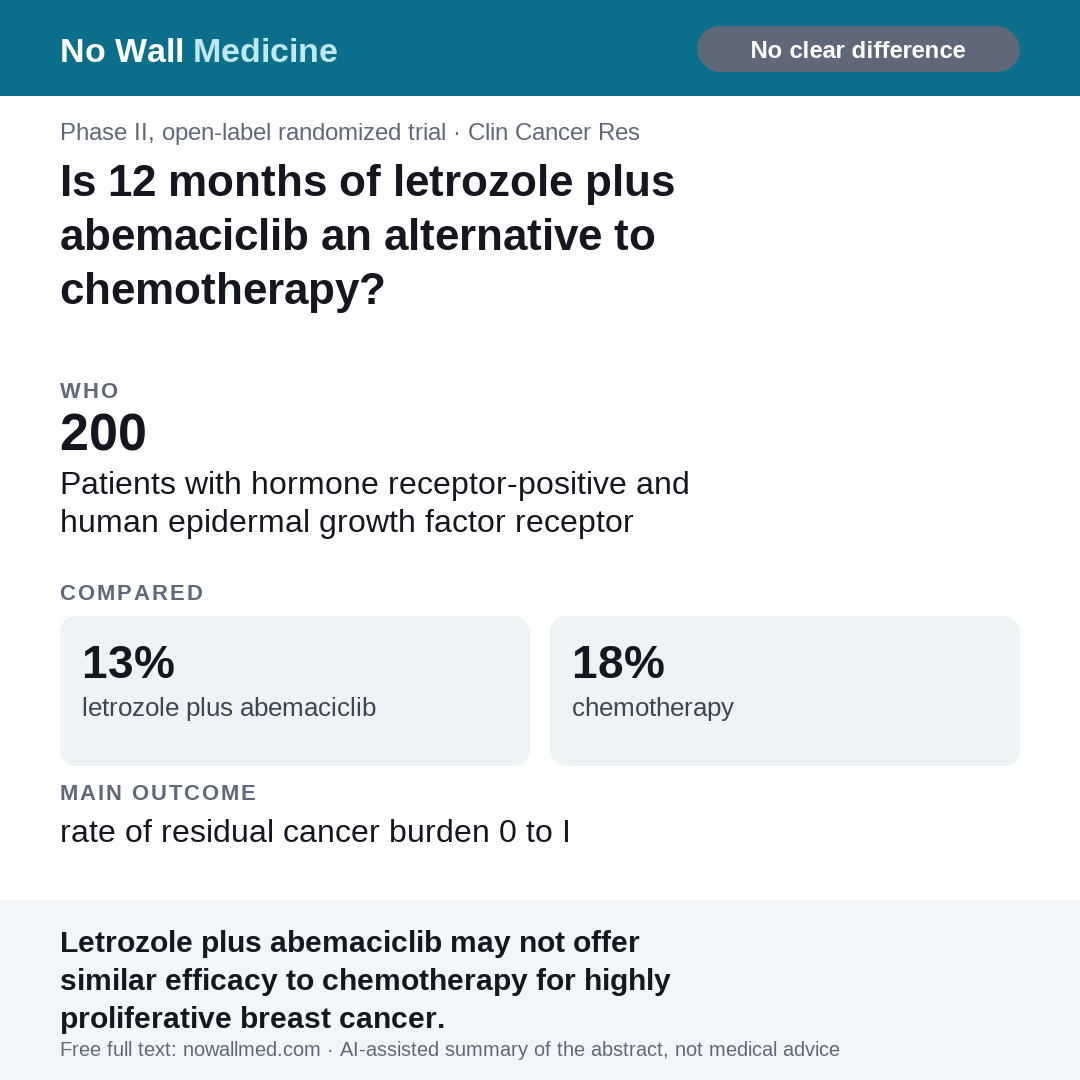
Neoadjuvant Abemaciclib plus Letrozole Versus Chemotherapy in Patients with HR+/HER2- Highly Proliferative Breast Cancer
Phase II, open-label randomized trialNo clear difference
Is 12 months of letrozole plus abemaciclib an alternative to chemotherapy?
Who
200
Patients with hormone receptor-positive and human epidermal growth factor receptor 2-negative stage II to III breast cancer
Compared
13%letrozole plus abemaciclib
18%chemotherapy
Main outcome
rate of residual cancer burden 0 to I
Bottom line: Letrozole plus abemaciclib may not offer similar efficacy to chemotherapy for highly proliferative breast cancer.
Clin Cancer Res · 2025-12-12Download image
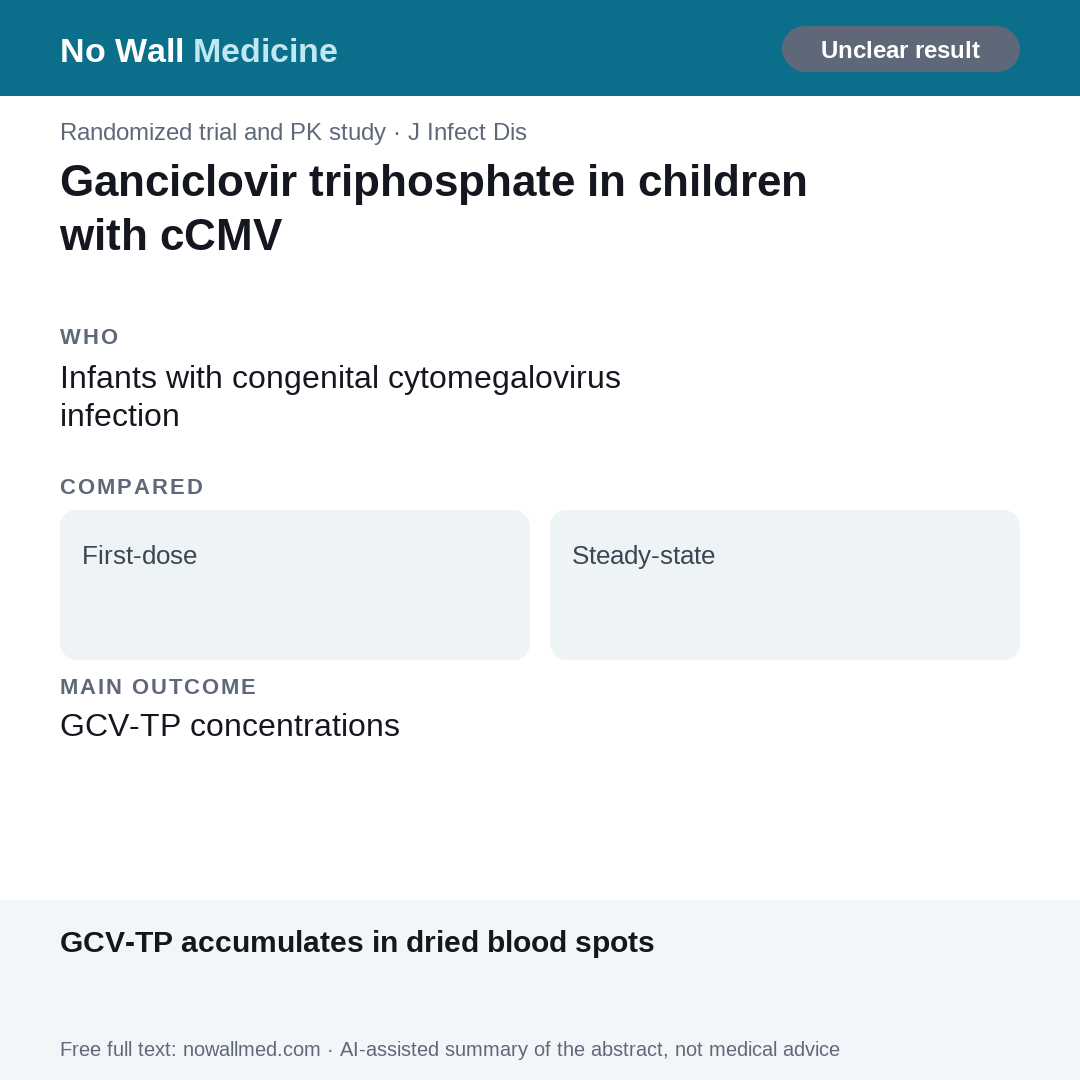
Intracellular Ganciclovir Triphosphate Concentrations in Children With Congenital Cytomegalovirus Infection
Randomized trial and PK studyUnclear result
Ganciclovir triphosphate in children with cCMV
Who
Infants with congenital cytomegalovirus infection
Compared
First-dose
Steady-state
Main outcome
GCV-TP concentrations
Bottom line: GCV-TP accumulates in dried blood spots
J Infect Dis · 2025-12-12Download image
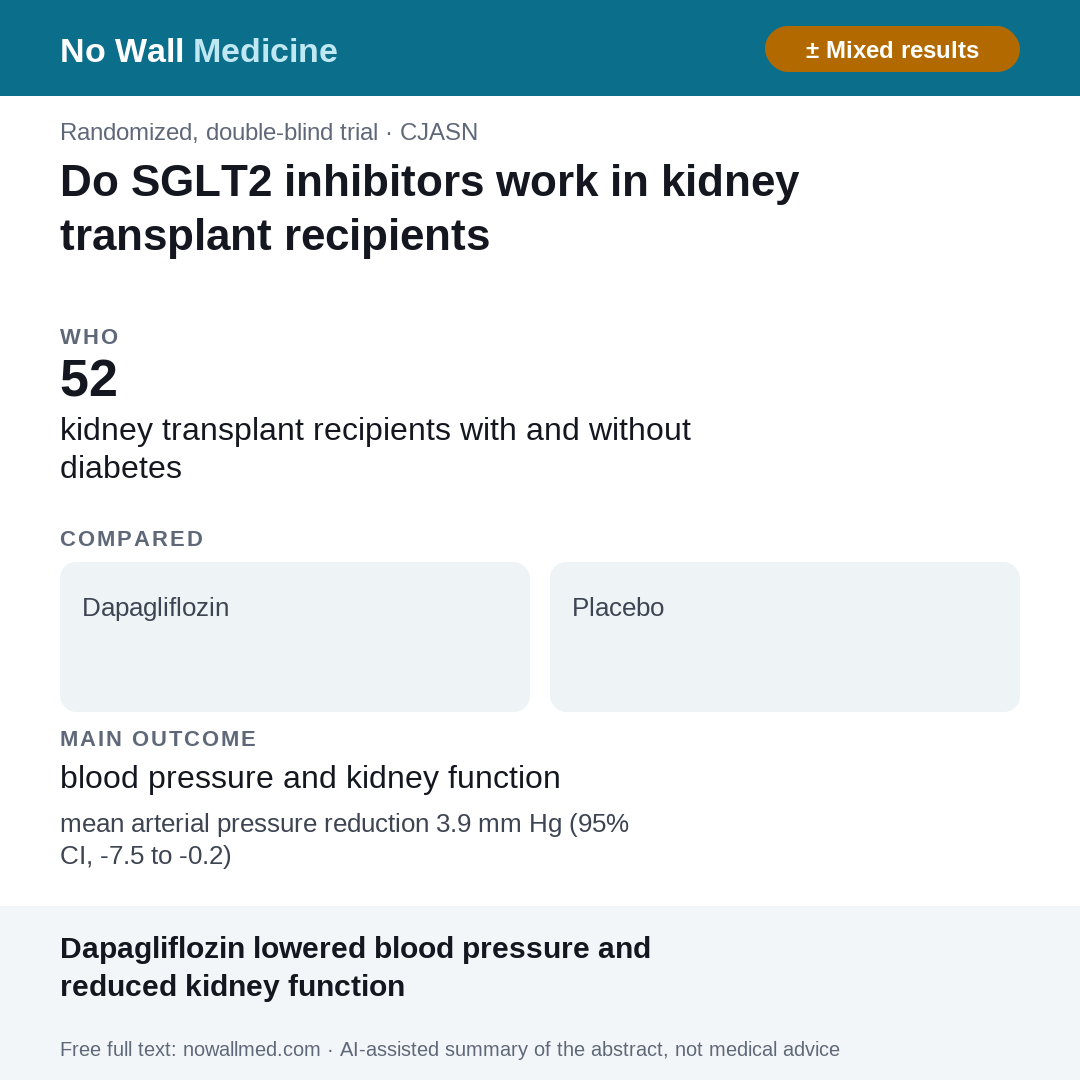
Efficacy, Mechanisms, and Safety of Sodium-Glucose Cotransporter-2 Inhibitors in Kidney Transplant Recipients: A Randomized, Double-Blind, Placebo-Controlled Trial
Randomized, double-blind trialMixed results
Do SGLT2 inhibitors work in kidney transplant recipients
Who
52
kidney transplant recipients with and without diabetes
Compared
Dapagliflozin
Placebo
Main outcome
blood pressure and kidney function
Result: mean arterial pressure reduction 3.9 mm Hg (95% CI, -7.5 to -0.2)
Bottom line: Dapagliflozin lowered blood pressure and reduced kidney function
CJASN · 2025-12-12Download image
Clinical outcomes and economic impact of a digital telemedicine intervention in patients with functional motor disorders: a single-blind, randomised controlled trial
Single-blind, randomised controlled trialBenefit found
Does digital telemedicine integrated into multidisciplinary management improve clinical and economic outcomes in functional motor disorders?
Who
62
Patients with functional motor disorders
Compared
Digital telemedicine: 0.037 additional quality-adjusted life years
Standard care: lower mental quality of life score
Main outcome
Changes in motor symptoms, non-motor symptoms, quality of life, and mobility
Result: incremental cost-effectiveness ratio €5503/QALY
Bottom line: Digital telemedicine maintains mental health quality of life and reduces healthcare costs despite similar motor symptom improvements.
J Neurol Neurosurg Psychiatry · 2025-12-12Download image

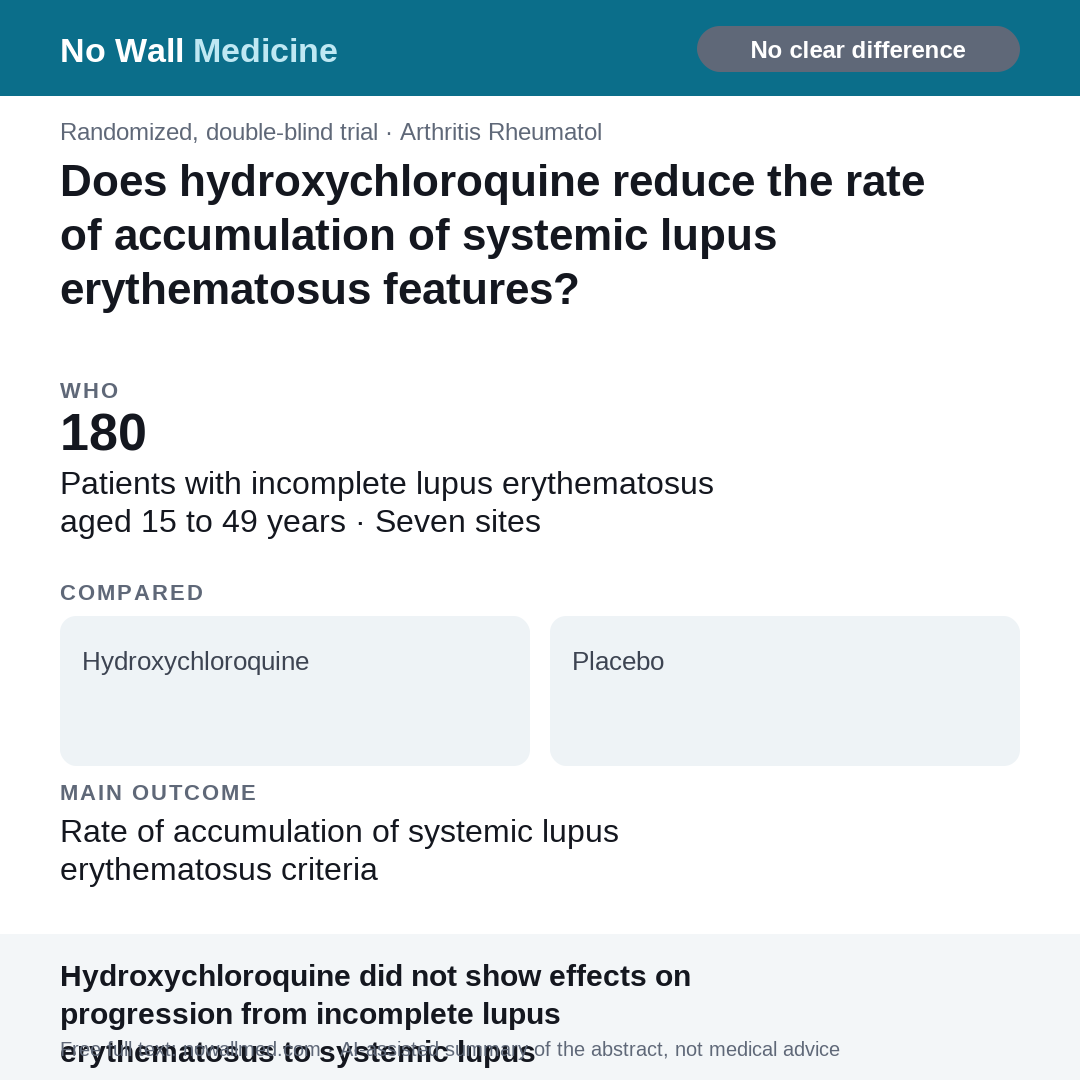
A Randomized, Placebo-Controlled Trial of Hydroxychloroquine in Incomplete Lupus
Randomized, double-blind trialNo clear difference
Does hydroxychloroquine reduce the rate of accumulation of systemic lupus erythematosus features?
Who
180
Patients with incomplete lupus erythematosus aged 15 to 49 years · Seven sites
Compared
Hydroxychloroquine
Placebo
Main outcome
Rate of accumulation of systemic lupus erythematosus criteria
Bottom line: Hydroxychloroquine did not show effects on progression from incomplete lupus erythematosus to systemic lupus erythematosus.
Arthritis Rheumatol · 2025-12-12Download image
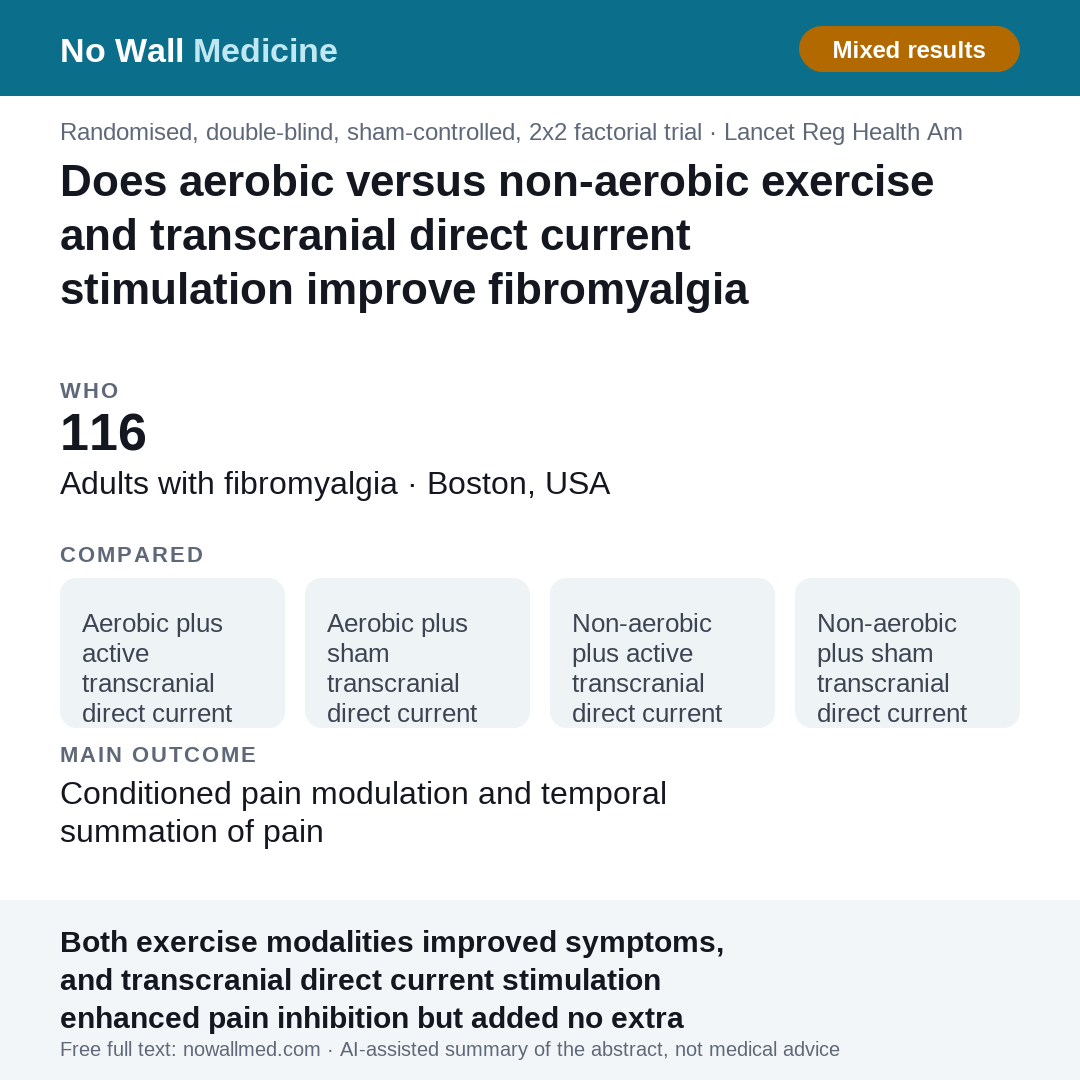
A randomised, double-blind, sham-controlled, 2×2 factorial trial of aerobic vs. non-aerobic exercise and motor cortex transcranial direct current stimulation in fibromyalgia: effects on clinical outcomes and descending pain modulation
Randomised, double-blind, sham-controlled, 2x2 factorial trialMixed results
Does aerobic versus non-aerobic exercise and transcranial direct current stimulation improve fibromyalgia outcomes?
Who
116
Adults with fibromyalgia · Boston, USA
Compared
Aerobic plus active transcranial direct current stimulation
Aerobic plus sham transcranial direct current stimulation
Non-aerobic plus active transcranial direct current stimulation
Non-aerobic plus sham transcranial direct current stimulation
Main outcome
Conditioned pain modulation and temporal summation of pain
Result: Cohen's d = 0.66 (for CPM improvement with active tDCS)
Bottom line: Both exercise modalities improved symptoms, and transcranial direct current stimulation enhanced pain inhibition but added no extra clinical benefit.
Funded by: National Institutes of health
Lancet Reg Health Am · 2025-12-12Download image
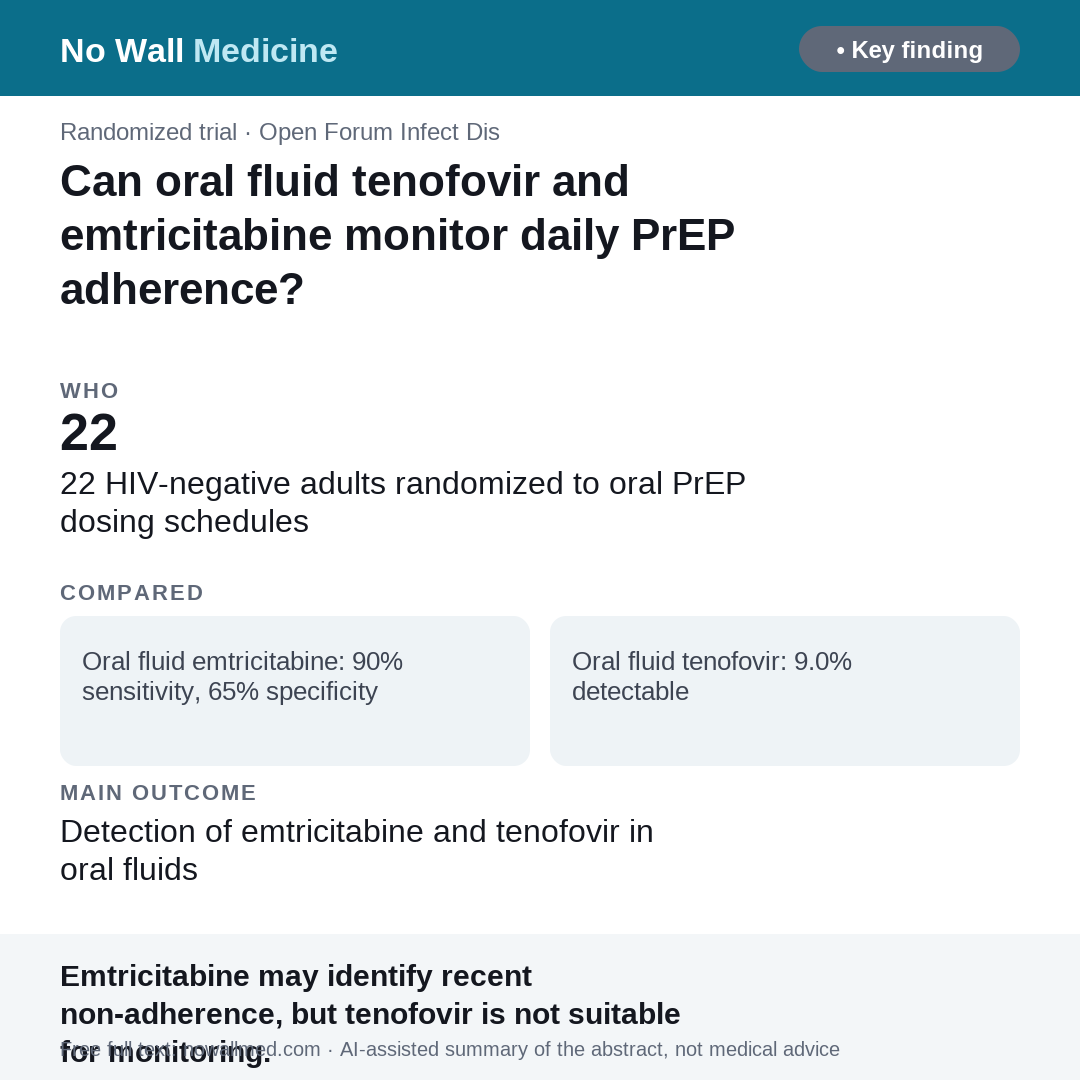
Oral Fluid Concentrations of Tenofovir and Emtricitabine for Monitoring HIV Antiretroviral Adherence: Findings From a Randomized Trial with Directly Observed Therapy (TARGET Study)
Randomized trialBenefit found
Can oral fluid concentrations of emtricitabine and tenofovir monitor daily pre-exposure prophylaxis adherence?
Who
22
HIV-negative adults
Compared
Oral fluids collected within 24 hours
Oral fluids collected between 24 and 48 hours: significantly lower odds of having detectable emtricitabine
Main outcome
detectability of emtricitabine and tenofovir in oral fluids
Result: odds ratio 0.21 (95% CI 0.11-0.38)
Bottom line: Emtricitabine in oral fluids is a promising marker for identifying recent pre-exposure prophylaxis non-adherence.
Open Forum Infect Dis · 2025-12-12Download image
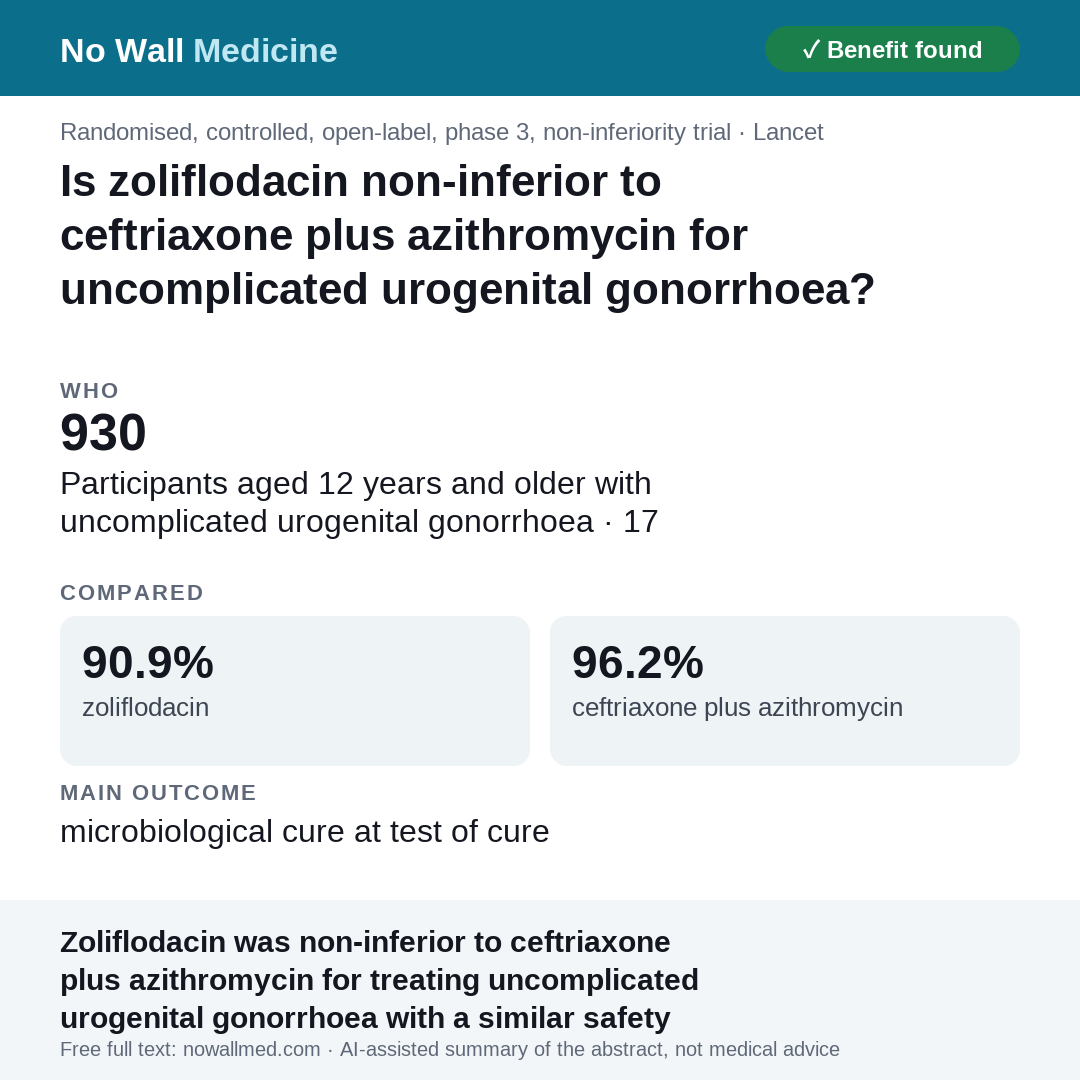
Zoliflodacin versus ceftriaxone plus azithromycin for treatment of uncomplicated urogenital gonorrhoea: an international, randomised, controlled, open-label, phase 3, non-inferiority clinical trial
Randomised, controlled, open-label, phase 3, non-inferiority trialBenefit found
Is zoliflodacin non-inferior to ceftriaxone plus azithromycin for uncomplicated urogenital gonorrhoea?
Who
930
Participants aged 12 years and older with uncomplicated urogenital gonorrhoea · 17 outpatient clinics in five countries
Compared
90.9%zoliflodacin (460/506)
96.2%ceftriaxone plus azithromycin (229/238)
Main outcome
microbiological cure at test of cure
Result: 5.3% (95% CI 1.4-8.6)
Bottom line: Zoliflodacin was non-inferior to ceftriaxone plus azithromycin for treating uncomplicated urogenital gonorrhoea with a similar safety profile.
Funded by: German Federal Ministry of Research, Technology and Space, UK Department of Health
Lancet · 2025-12-11Download image
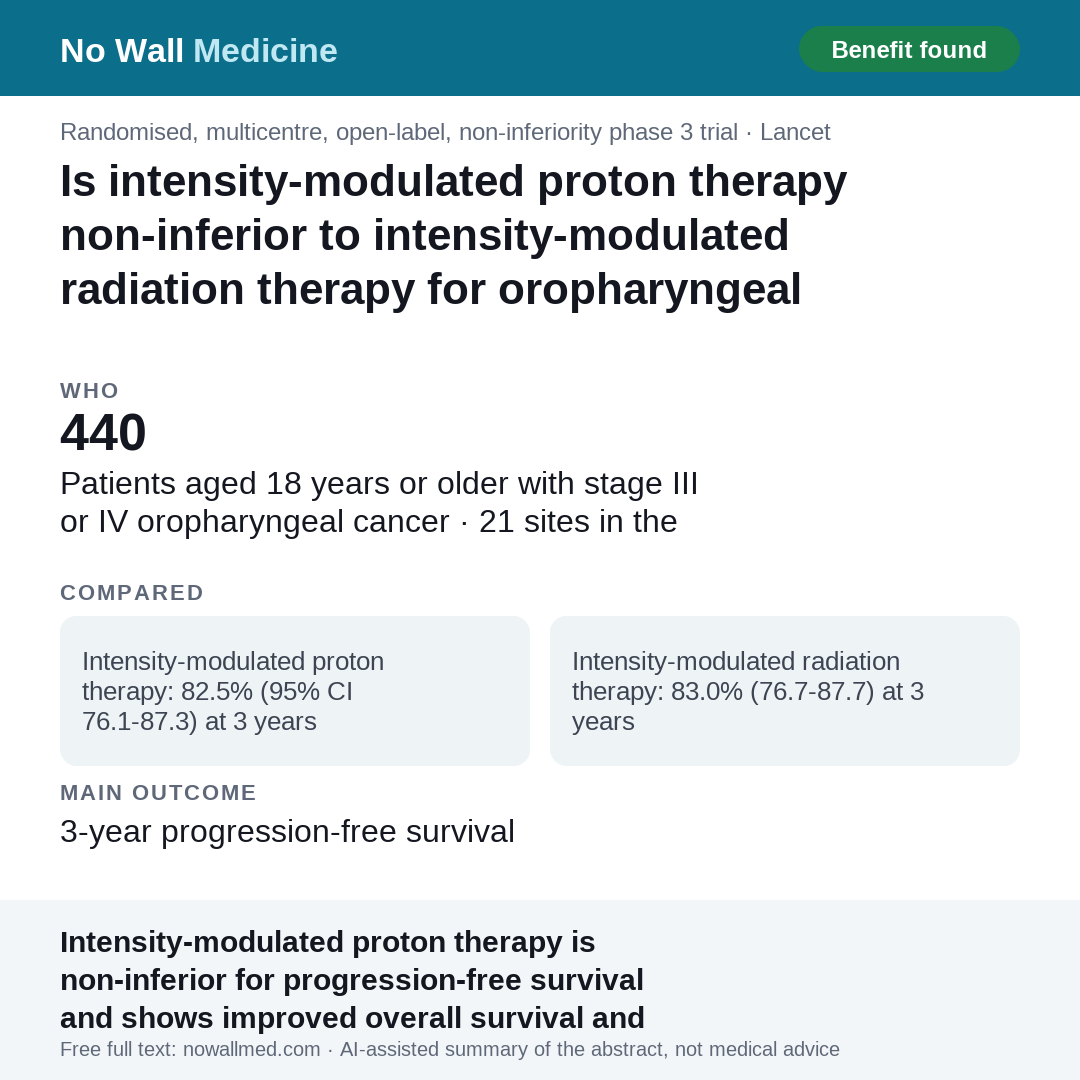
Proton versus photon radiotherapy for patients with oropharyngeal cancer in the USA: a multicentre, randomised, open-label, non-inferiority phase 3 trial
Randomised, multicentre, open-label, non-inferiority phase 3 trialBenefit found
Is intensity-modulated proton therapy non-inferior to intensity-modulated radiation therapy for oropharyngeal cancer?
Who
440
Patients aged 18 years or older with stage III or IV oropharyngeal cancer · 21 sites in the USA
Compared
Intensity-modulated proton therapy: 82.5% (95% CI 76.1-87.3) at 3 years
Intensity-modulated radiation therapy: 83.0% (76.7-87.7) at 3 years
Main outcome
3-year progression-free survival
Result: hazard ratio 0.88 (95% CI 0.57-1.35)
Bottom line: Intensity-modulated proton therapy is non-inferior for progression-free survival and shows improved overall survival and reduced toxicity.
Funded by: MD Anderson Cancer Center, Massachusetts General Hospital, National Institutes of Health, Hitachi America
Lancet · 2025-12-11Download image
Implementation and effectiveness of a care process to prioritize weight management in primary care: a stepped-wedge cluster-randomized trial
Stepped-wedge cluster-randomized pragmatic trialBenefit found
Does the PATHWEIGH care process improve weight management in primary care?
Who
274182
Adults with a body mass index at least 25 kg m2 · 56 primary care clinics in Colorado, USA
Compared
Usual care
PATHWEIGH intervention: 0.58 kg (95% CI: 0.54 kg, 0.61 kg) total difference
Main outcome
Average patient weight loss and weight loss maintenance
Result: 0.58 kg (95% CI: 0.54 kg, 0.61 kg)
Bottom line: The PATHWEIGH intervention significantly decreased average weight and mitigated weight gain in a primary care setting.
Nat Med · 2025-12-11Download image

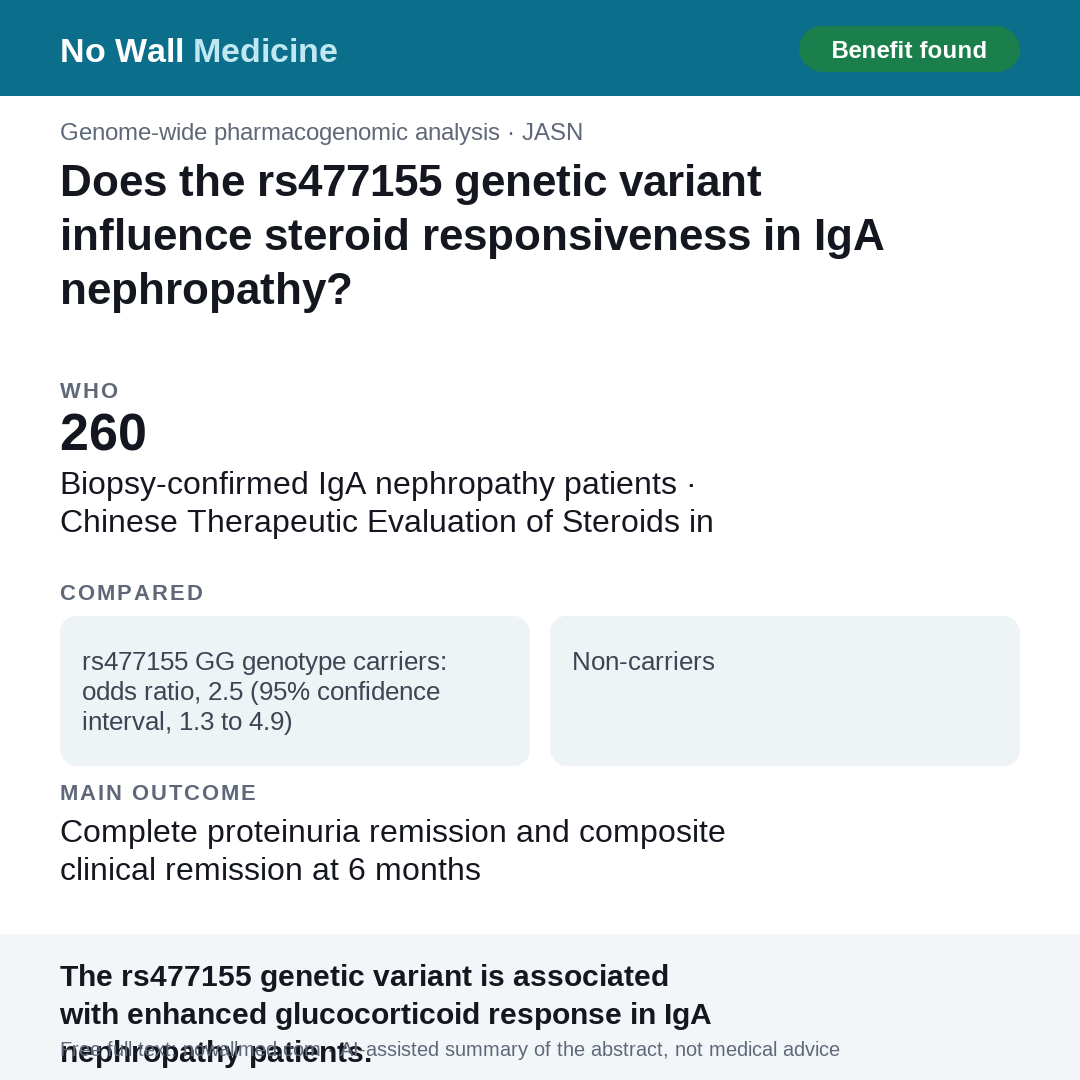
Genetic Determinants of Steroid Responsiveness in IgA Nephropathy
Genome-wide pharmacogenomic analysisBenefit found
Does the rs477155 genetic variant influence steroid responsiveness in IgA nephropathy?
Who
260
Biopsy-confirmed IgA nephropathy patients · Chinese Therapeutic Evaluation of Steroids in IgA Nephropathy Global study
Compared
rs477155 GG genotype carriers: odds ratio, 2.5 (95% confidence interval, 1.3 to 4.9)
Non-carriers
Main outcome
Complete proteinuria remission and composite clinical remission at 6 months
Result: odds ratio, 2.5 (95% confidence interval, 1.3 to 4.9)
Bottom line: The rs477155 genetic variant is associated with enhanced glucocorticoid response in IgA nephropathy patients.
JASN · 2025-12-11Download image
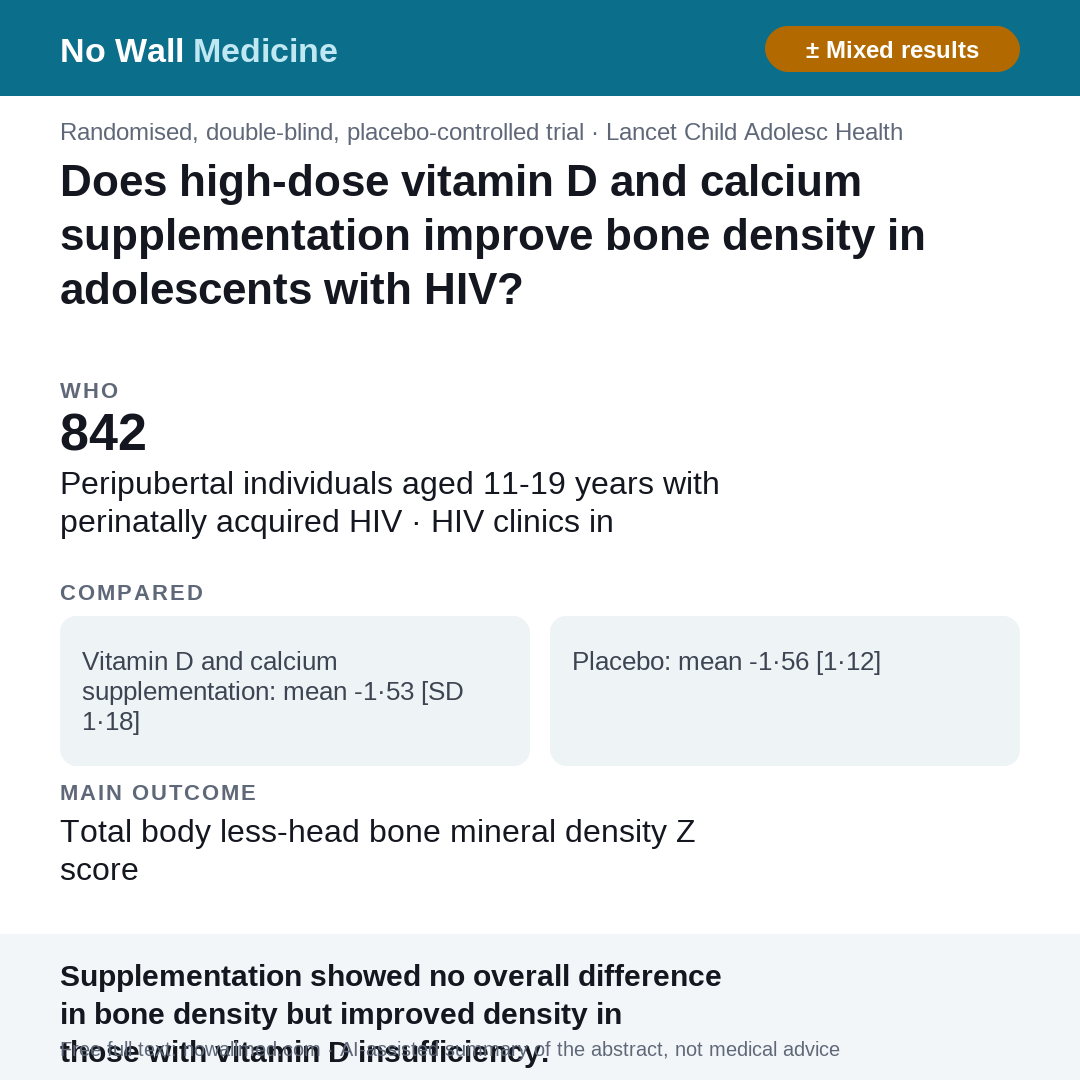
Impact of high-dose vitamin D and calcium carbonate supplementation on bone density in adolescents living with HIV: a randomised, placebo-controlled trial
Randomised, double-blind, placebo-controlled trialMixed results
Does high-dose vitamin D and calcium supplementation improve bone density in adolescents with HIV?
Who
842
Peripubertal individuals aged 11-19 years with perinatally acquired HIV · HIV clinics in Harare, Zimbabwe and Lusaka, Zambia
Compared
Vitamin D and calcium supplementation: mean -1·53 [SD 1·18]
Placebo: mean -1·56 [1·12]
Main outcome
Total body less-head bone mineral density Z score
Result: adjusted mean difference -0·04 (95% CI -0·01 to 0·09)
Bottom line: Supplementation showed no overall difference in bone density but improved density in those with vitamin D insufficiency.
Funded by: European Developing Country Clinical Trials Partnership
Lancet Child Adolesc Health · 2025-12-11Download image