Visual abstracts
New randomized trials and meta-analyses from leading journals at a glance: who was studied, what was compared, and what was found. Every paper is free to read in full.
All specialtiesCardiology 4877Oncology 4138Gastroenterology & Hepatology 1942Infectious Disease 3837Neurology 1905Psychiatry & Mental Health 2273Pulmonology 2143Critical Care 1365Endocrinology & Diabetes 2580Pediatrics 2980Surgery 2559Orthopedics & Sports Medicine 931Neurosurgery 537Cardiothoracic & Vascular Surgery 674Plastic & Reconstructive Surgery 591Nephrology 1133Rheumatology 823Hematology 1109Dermatology 621Ophthalmology 543Obstetrics & Gynecology 1686Public & Global Health 1058Radiology & Imaging 648Anesthesiology 986Urology 764ENT (Otolaryngology) 503Emergency Medicine 511Allergy & Immunology 313Geriatrics 981Family Medicine & Primary Care 562Medical Genetics & Genomics 676Pathology & Laboratory Medicine 159Physical Medicine & Rehabilitation 757Palliative Care 444Nutrition 1588Digital Health & AI 2201General Medicine 321
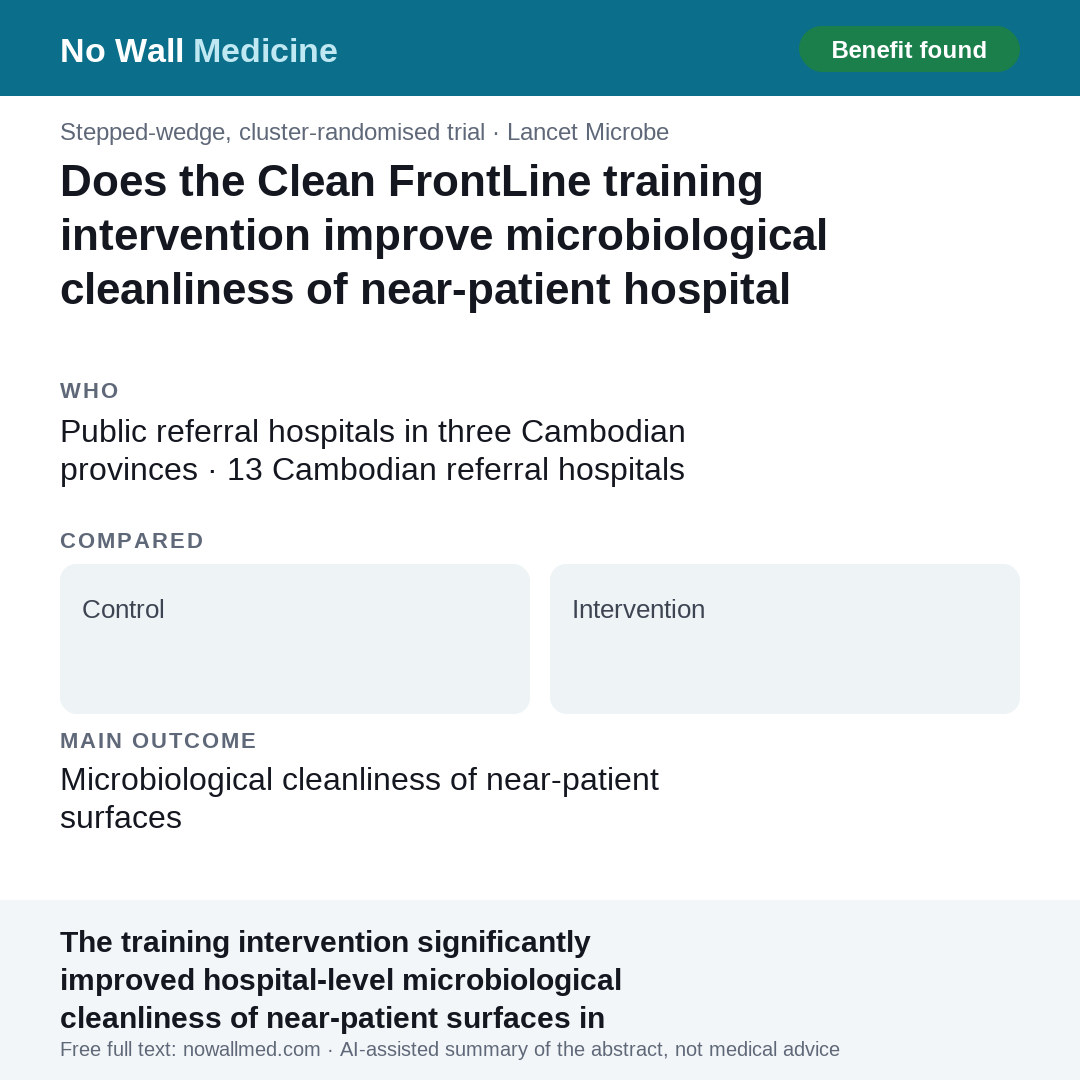
Impact of a multicomponent training intervention (Clean FrontLine) on microbiological cleanliness in Cambodian referral hospitals: a multicentre, stepped-wedge, cluster-randomised trial
Stepped-wedge, cluster-randomised trialBenefit found
Does the Clean FrontLine training intervention improve microbiological cleanliness of near-patient hospital surfaces?
Who
Public referral hospitals in three Cambodian provinces · 13 Cambodian referral hospitals
Compared
Control
Intervention
Main outcome
Microbiological cleanliness of near-patient surfaces
Result: risk difference 5.04 percentage points (95% CI 0.76-9.33)
Bottom line: The training intervention significantly improved hospital-level microbiological cleanliness of near-patient surfaces in Cambodian referral hospitals.
Limitation: Further research should test this intervention with a wider number of clusters.
Funded by: Who Gives A Crap and Reckitt Global Hygiene Institute
Lancet Microbe · 2025-12-11Download image
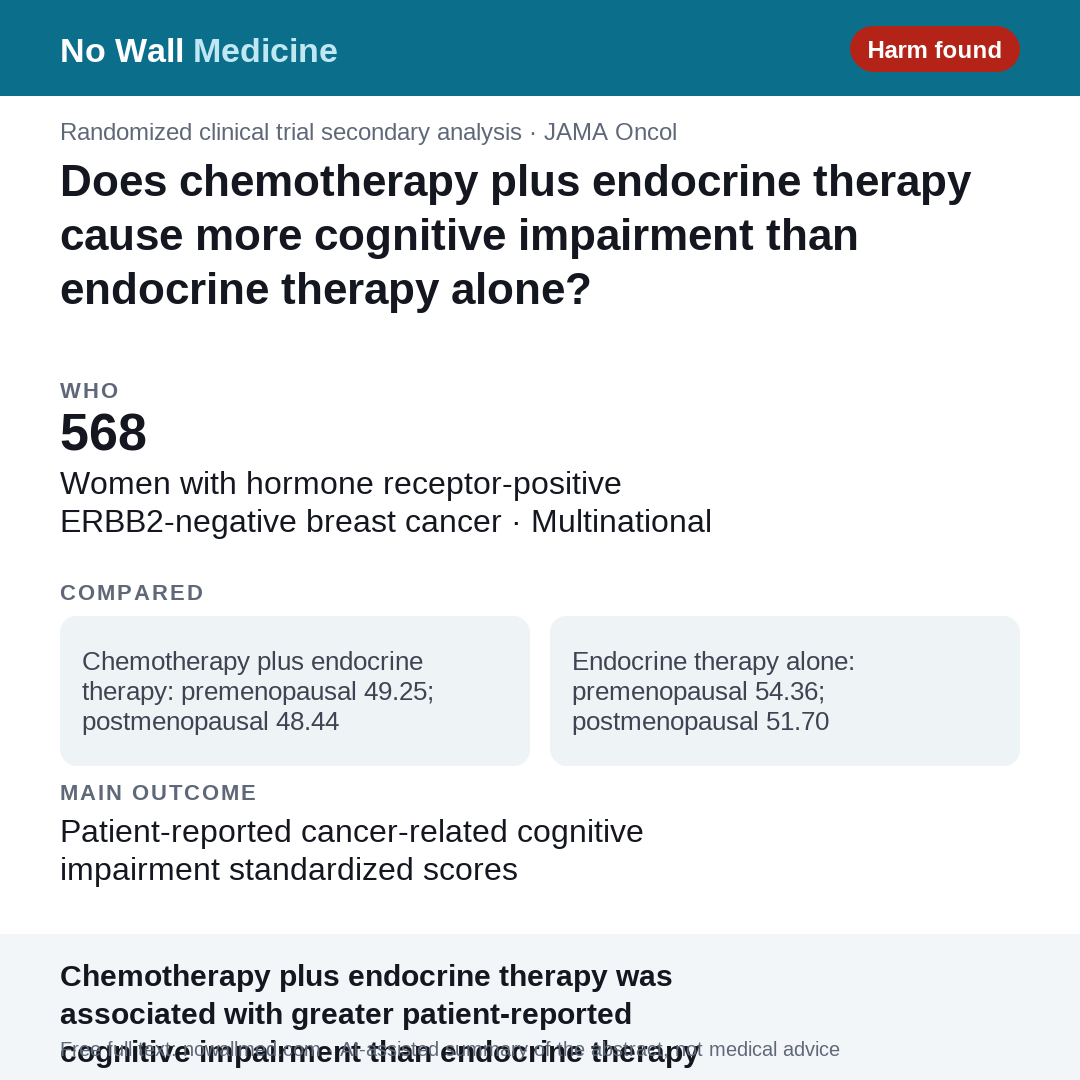
Cognitive Impairment and Chemoendocrine vs Endocrine Therapy in Pre- and Postmenopausal Women: A Secondary Analysis of the RxPONDER Randomized Clinical Trial
Randomized clinical trial secondary analysisHarm found
Does chemotherapy plus endocrine therapy cause more cognitive impairment than endocrine therapy alone?
Who
568
Women with hormone receptor-positive ERBB2-negative breast cancer · Multinational
Compared
Chemotherapy plus endocrine therapy: premenopausal 49.25; postmenopausal 48.44
Endocrine therapy alone: premenopausal 54.36; postmenopausal 51.70
Main outcome
Patient-reported cancer-related cognitive impairment standardized scores
Result: difference in longitudinal mean scores -3.02 (95% CI, -5.33 to -0.72) for premenopausal and -2.37 (95% CI, -3.92 to -0.82) for postmenopausal
Bottom line: Chemotherapy plus endocrine therapy was associated with greater patient-reported cognitive impairment than endocrine therapy alone in both menopausal groups.
JAMA Oncol · 2025-12-11Download image
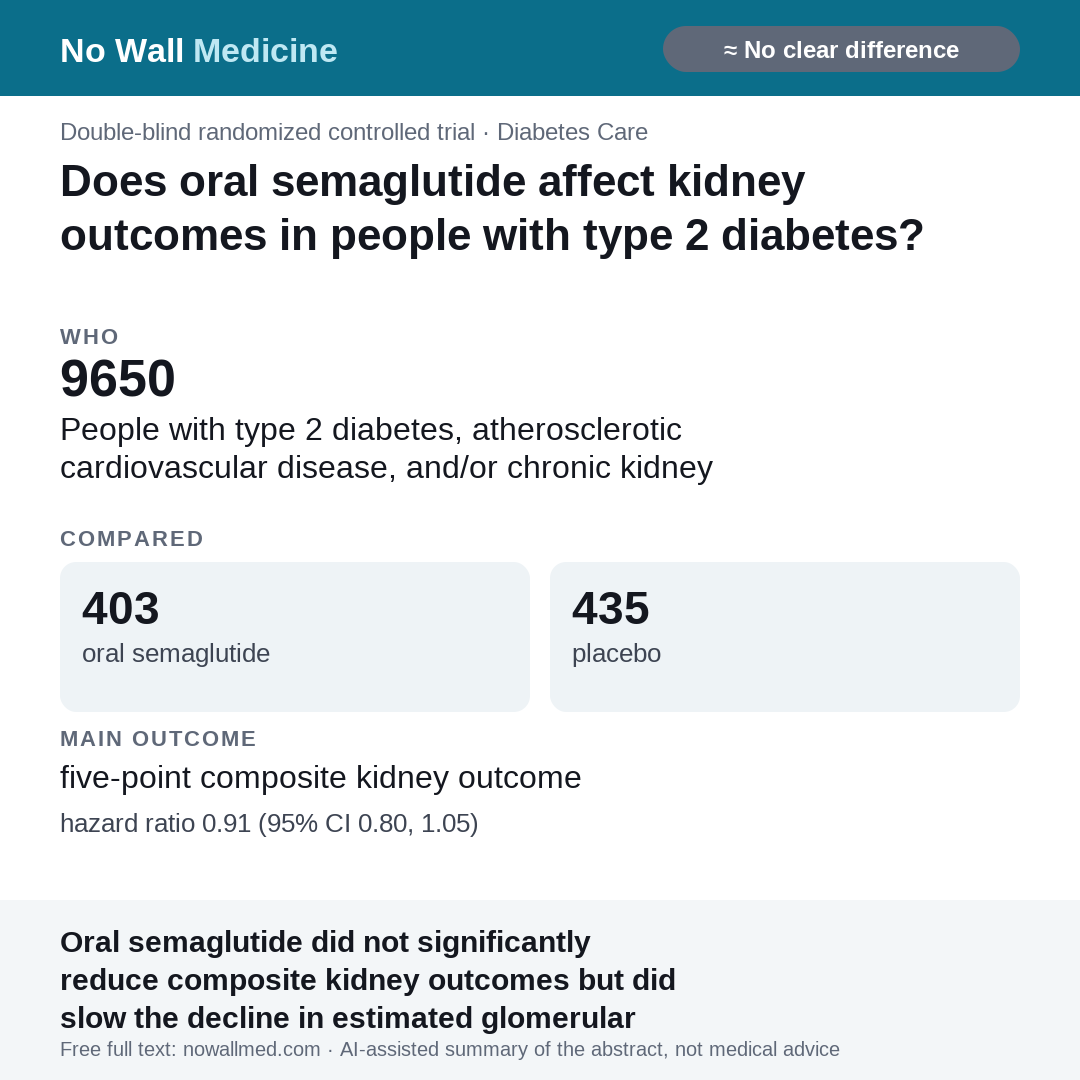
Impact of Oral Semaglutide on Kidney Outcomes in People With Type 2 Diabetes: Results From the SOUL Randomized Trial
Double-blind randomized controlled trialNo clear difference
Does oral semaglutide affect kidney outcomes in people with type 2 diabetes?
Who
9650
People with type 2 diabetes, atherosclerotic cardiovascular disease, and/or chronic kidney disease
Compared
403oral semaglutide (8.4%)
435placebo (9.0%)
Main outcome
five-point composite kidney outcome
Result: hazard ratio 0.91 (95% CI 0.80, 1.05)
Bottom line: Oral semaglutide did not significantly reduce composite kidney outcomes but did slow the decline in estimated glomerular filtration rate.
Diabetes Care · 2025-12-11Download image
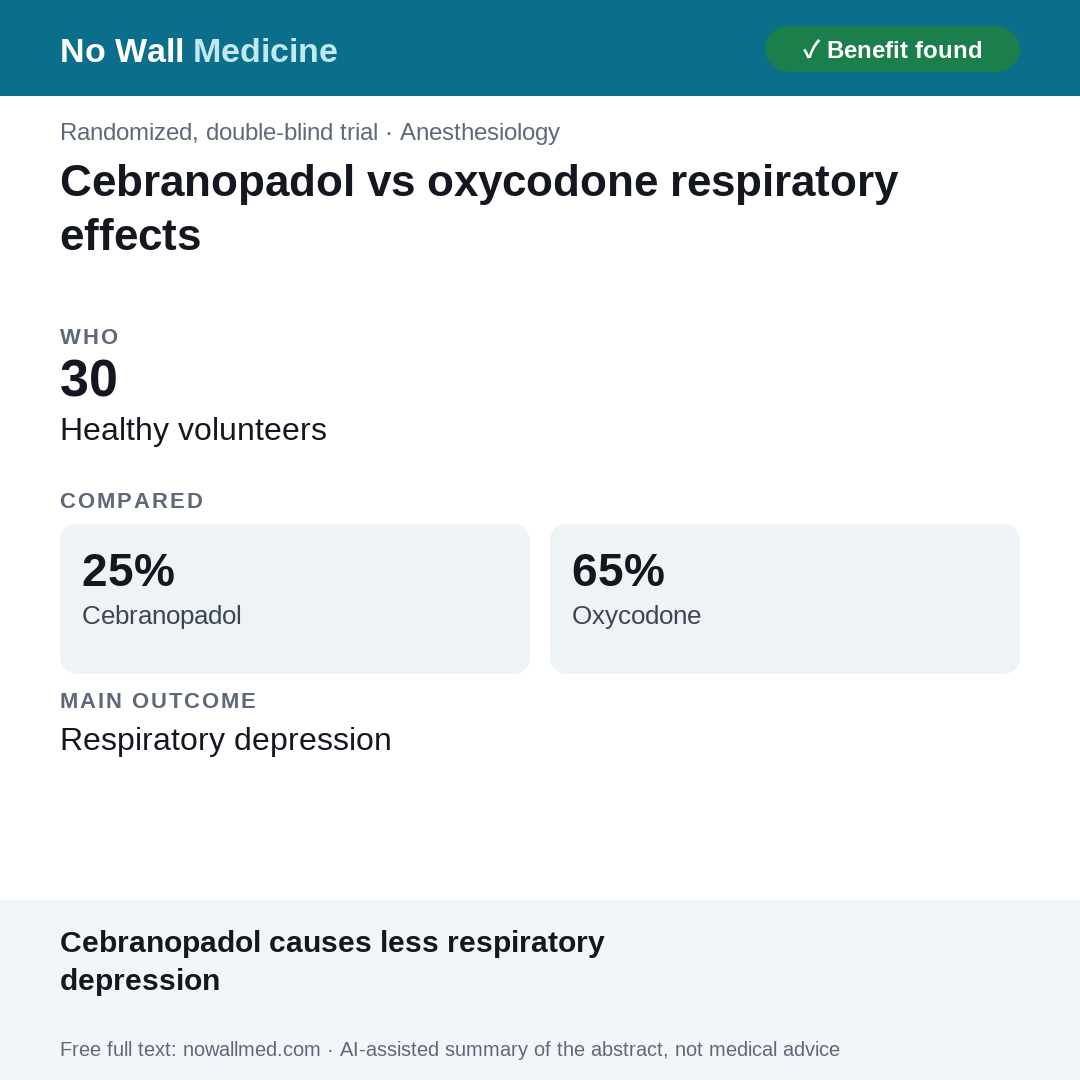
Respiratory and Antinociceptive Effects of Nociceptin Receptor-µ-Opioid Receptor Agonist Cebranopadol versus Full Opioid Receptor Agonist Oxycodone: A Comparison in Healthy Volunteers
Randomized, double-blind trialBenefit found
Cebranopadol vs oxycodone respiratory effects
Who
30
Healthy volunteers
Compared
25%Cebranopadol
65%Oxycodone
Main outcome
Respiratory depression
Bottom line: Cebranopadol causes less respiratory depression
Anesthesiology · 2025-12-11Download image
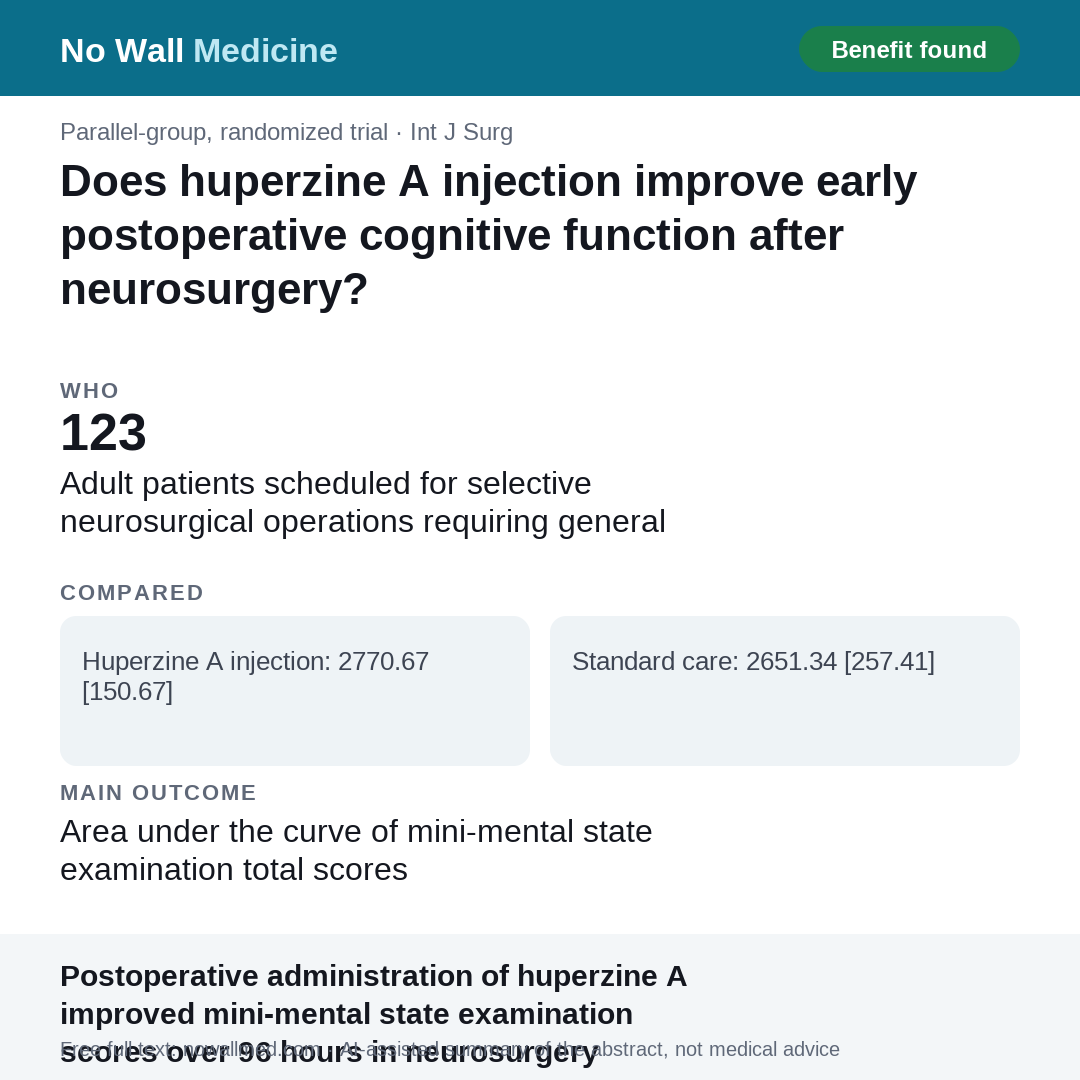
Huperzine A associated with improved early postoperative cognitive function after neurosurgery under general anesthesia: a randomized clinical trial
Parallel-group, randomized trialBenefit found
Does huperzine A injection improve early postoperative cognitive function after neurosurgery?
Who
123
Adult patients scheduled for selective neurosurgical operations requiring general anesthesia · Neurosurgical department of a tertiary hospital in China
Compared
Huperzine A injection: 2770.67 [150.67]
Standard care: 2651.34 [257.41]
Main outcome
Area under the curve of mini-mental state examination total scores
Result: P = 0.010
Bottom line: Postoperative administration of huperzine A improved mini-mental state examination scores over 96 hours in neurosurgery patients.
Int J Surg · 2025-12-11Download image
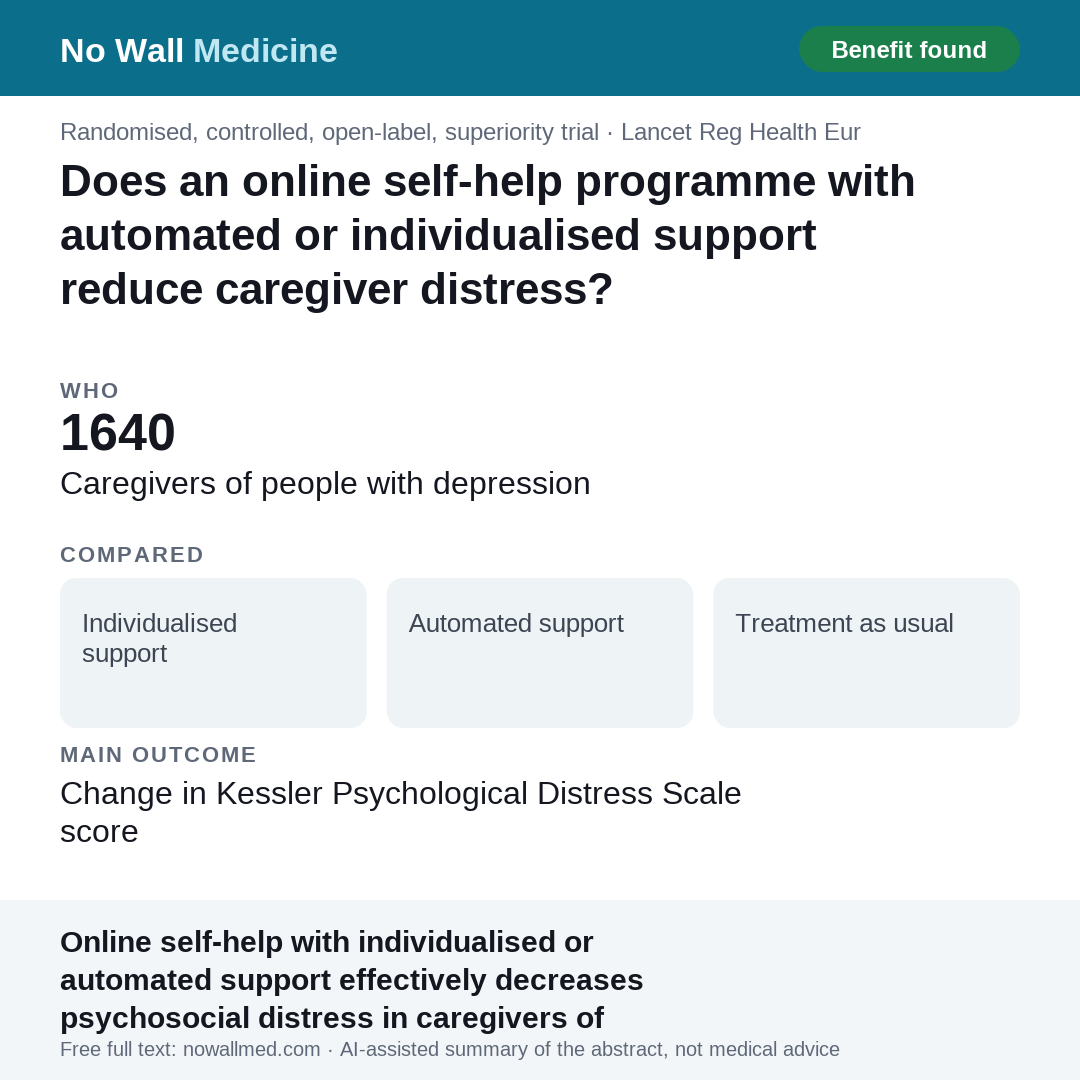
Efficacy of an online self-help programme with automated or individualised psychological support versus treatment as usual for caregivers of people with depression: a randomised, controlled, open-label, superiority trial
Randomised, controlled, open-label, superiority trialBenefit found
Does an online self-help programme with automated or individualised support reduce caregiver distress?
Who
1640
Caregivers of people with depression
Compared
Individualised support
Automated support
Treatment as usual
Main outcome
Change in Kessler Psychological Distress Scale score
Result: adjusted difference IND/TAU -1.45 (95% CI -2.19 to -0.72); AUT/TAU -0.89 (95% CI -1.63 to -0.14)
Bottom line: Online self-help with individualised or automated support effectively decreases psychosocial distress in caregivers of depressed individuals.
Funded by: German Innovation Fund
Lancet Reg Health Eur · 2025-12-11Download image
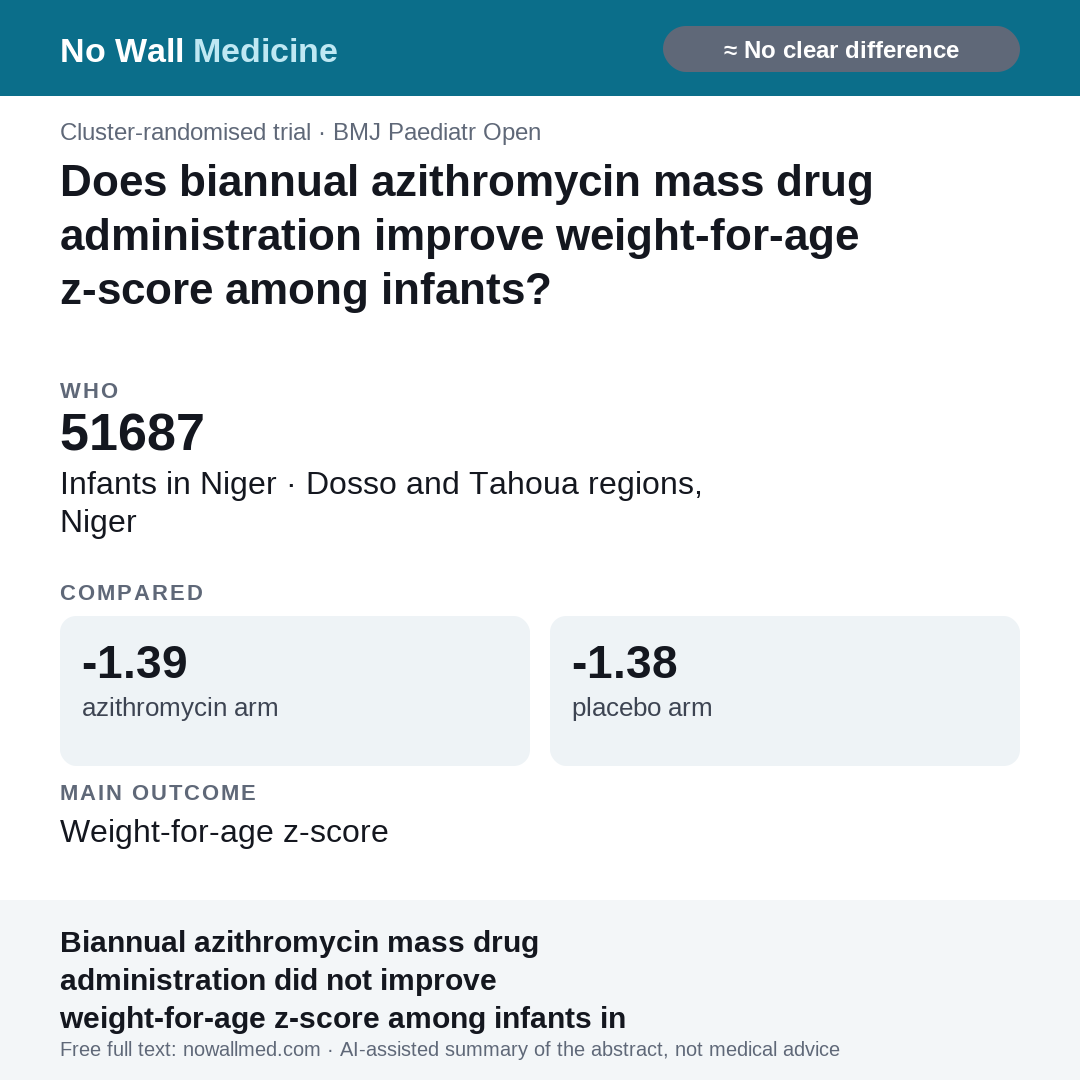
Impact of biannual azithromycin on weight-for-age z-score among infants in the AVENIR cluster-randomised trial
Cluster-randomised trialNo clear difference
Does biannual azithromycin mass drug administration improve weight-for-age z-score among infants?
Who
51687
Infants in Niger · Dosso and Tahoua regions, Niger
Compared
-1.39azithromycin arm
-1.38placebo arm
Main outcome
Weight-for-age z-score
Result: mean difference 0.00 (95% CI -0.05 to 0.04)
Bottom line: Biannual azithromycin mass drug administration did not improve weight-for-age z-score among infants in Niger.
BMJ Paediatr Open · 2025-12-11Download image
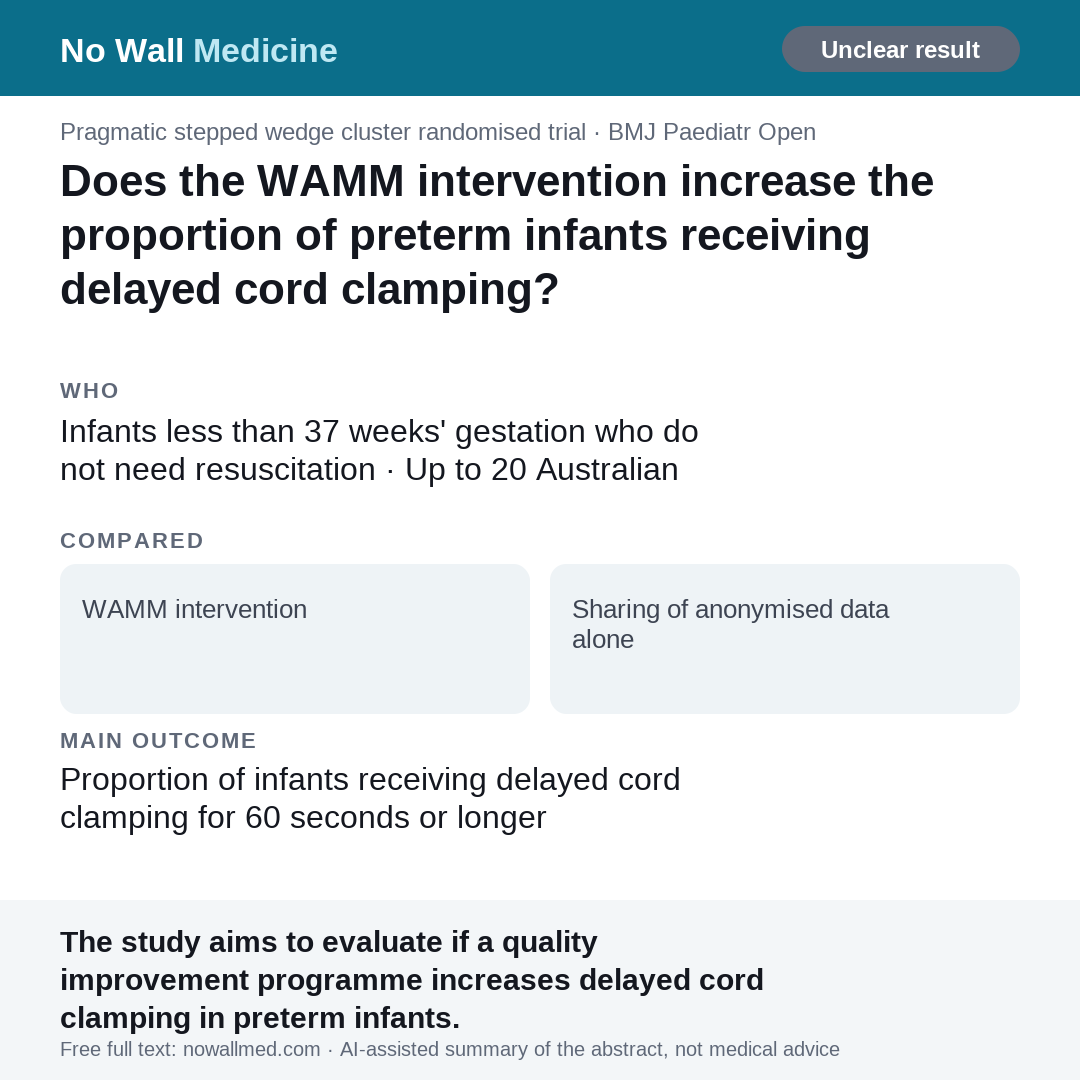
Wait a Minute or More (WAMM): a pragmatic stepped wedge cluster randomised implementation trial assessing the effect of a quality improvement programme on the proportion of infants achieving delayed cord clamping more than 60 s in infants <37 weeks' gestation in up to 20 maternity hospitals
Pragmatic stepped wedge cluster randomised trialUnclear result
Does the WAMM intervention increase the proportion of preterm infants receiving delayed cord clamping?
Who
Infants less than 37 weeks' gestation who do not need resuscitation · Up to 20 Australian maternity hospitals
Compared
WAMM intervention
Sharing of anonymised data alone
Main outcome
Proportion of infants receiving delayed cord clamping for 60 seconds or longer
Bottom line: The study aims to evaluate if a quality improvement programme increases delayed cord clamping in preterm infants.
BMJ Paediatr Open · 2025-12-11Download image
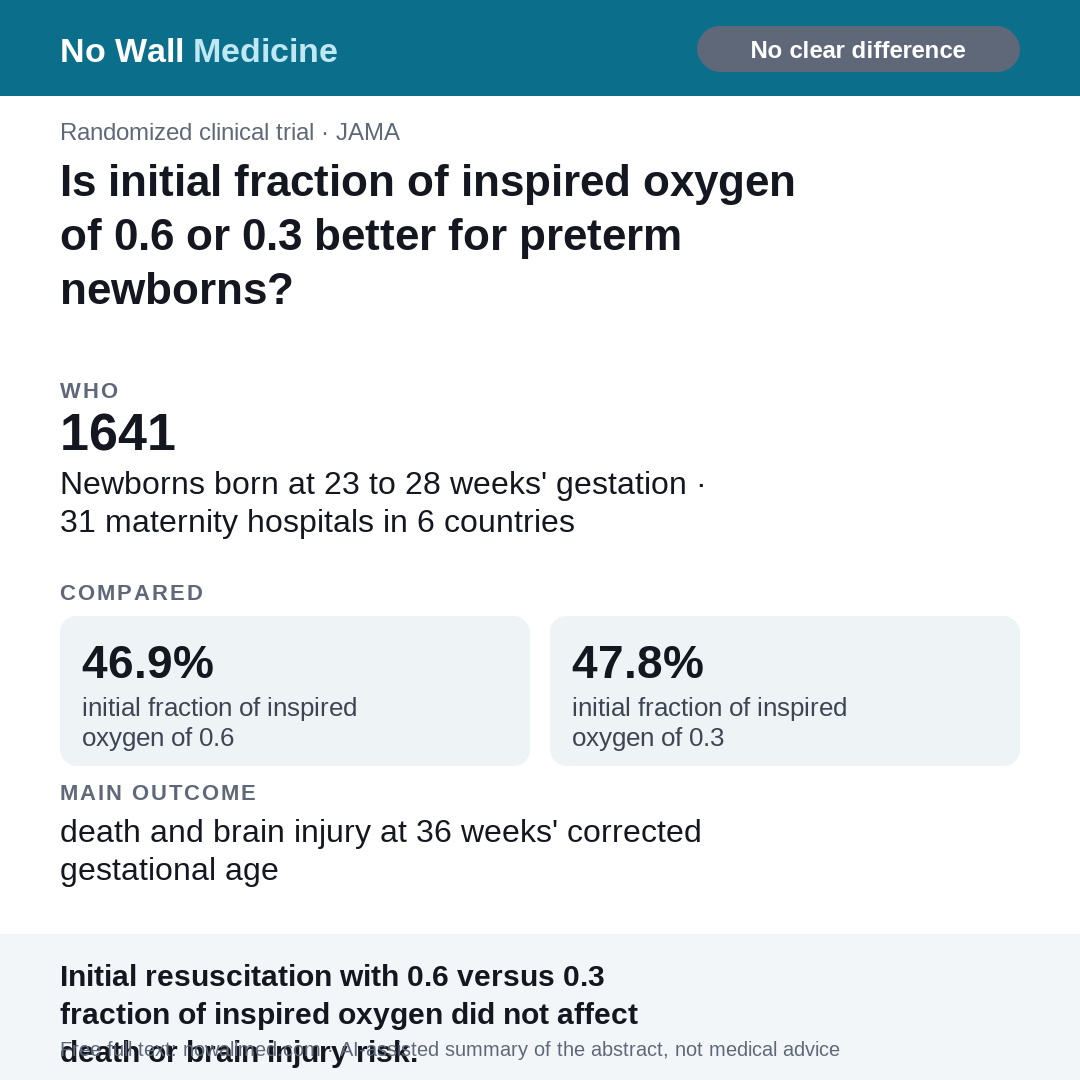
Targeted Oxygen for Initial Resuscitation of Preterm Infants: The TORPIDO 30/60 Randomized Clinical Trial
Randomized clinical trialNo clear difference
Is initial fraction of inspired oxygen of 0.6 or 0.3 better for preterm newborns?
Who
1641
Newborns born at 23 to 28 weeks' gestation · 31 maternity hospitals in 6 countries
Compared
46.9%initial fraction of inspired oxygen of 0.6 (330/703)
47.8%initial fraction of inspired oxygen of 0.3 (344/720)
Main outcome
death and brain injury at 36 weeks' corrected gestational age
Result: relative risk 0.98 (95% CI 0.89-1.09)
Bottom line: Initial resuscitation with 0.6 versus 0.3 fraction of inspired oxygen did not affect death or brain injury risk.
JAMA · 2025-12-10Download image
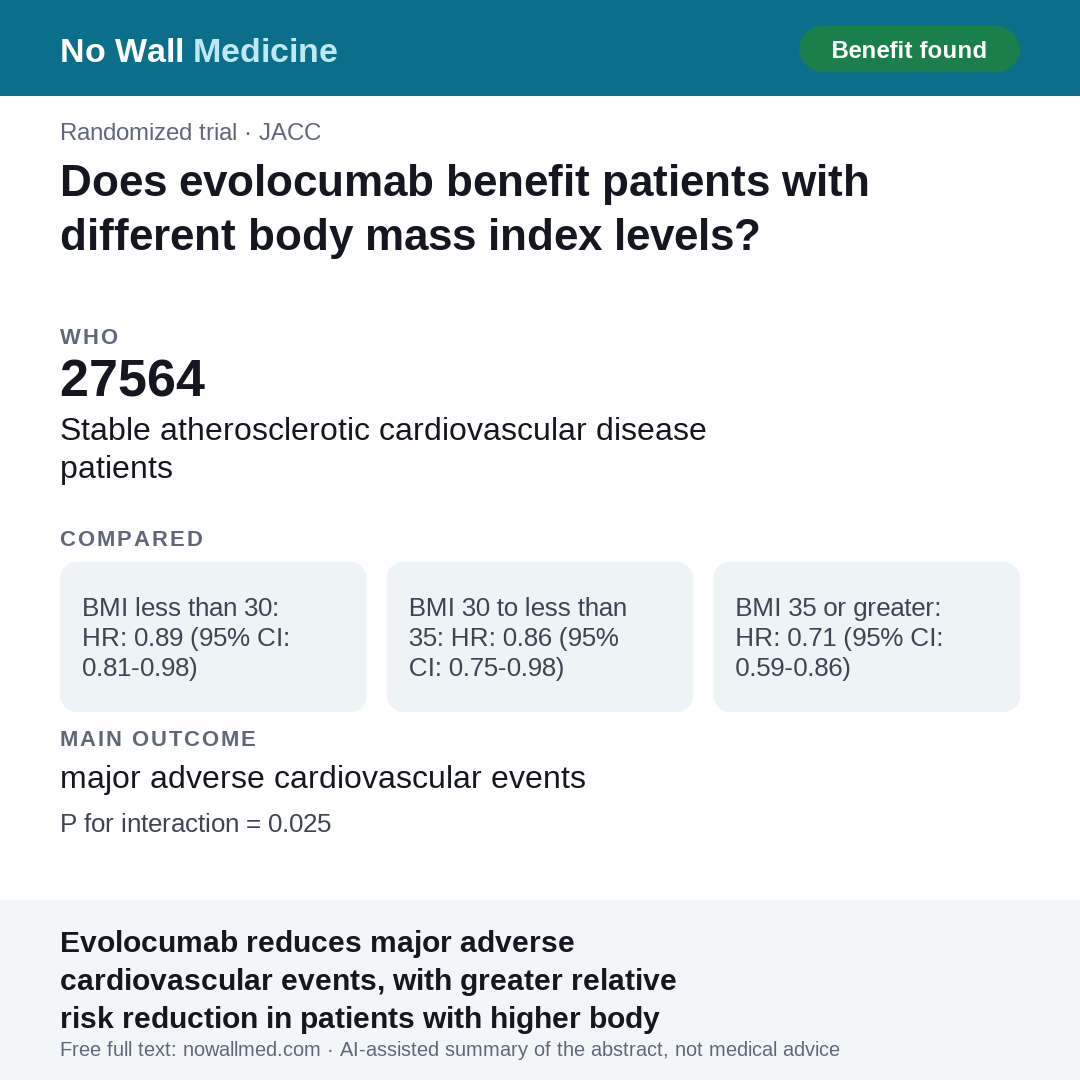
Obesity-Associated Cardiovascular Risk and Benefit From PCSK9 Inhibition: A Prespecified Analysis From FOURIER
Randomized trialBenefit found
Does evolocumab benefit patients with different body mass index levels?
Who
27564
Stable atherosclerotic cardiovascular disease patients
Compared
BMI less than 30: HR: 0.89 (95% CI: 0.81-0.98)
BMI 30 to less than 35: HR: 0.86 (95% CI: 0.75-0.98)
BMI 35 or greater: HR: 0.71 (95% CI: 0.59-0.86)
Main outcome
major adverse cardiovascular events
Result: P for interaction = 0.025
Bottom line: Evolocumab reduces major adverse cardiovascular events, with greater relative risk reduction in patients with higher body mass index.
JACC · 2025-12-10Download image
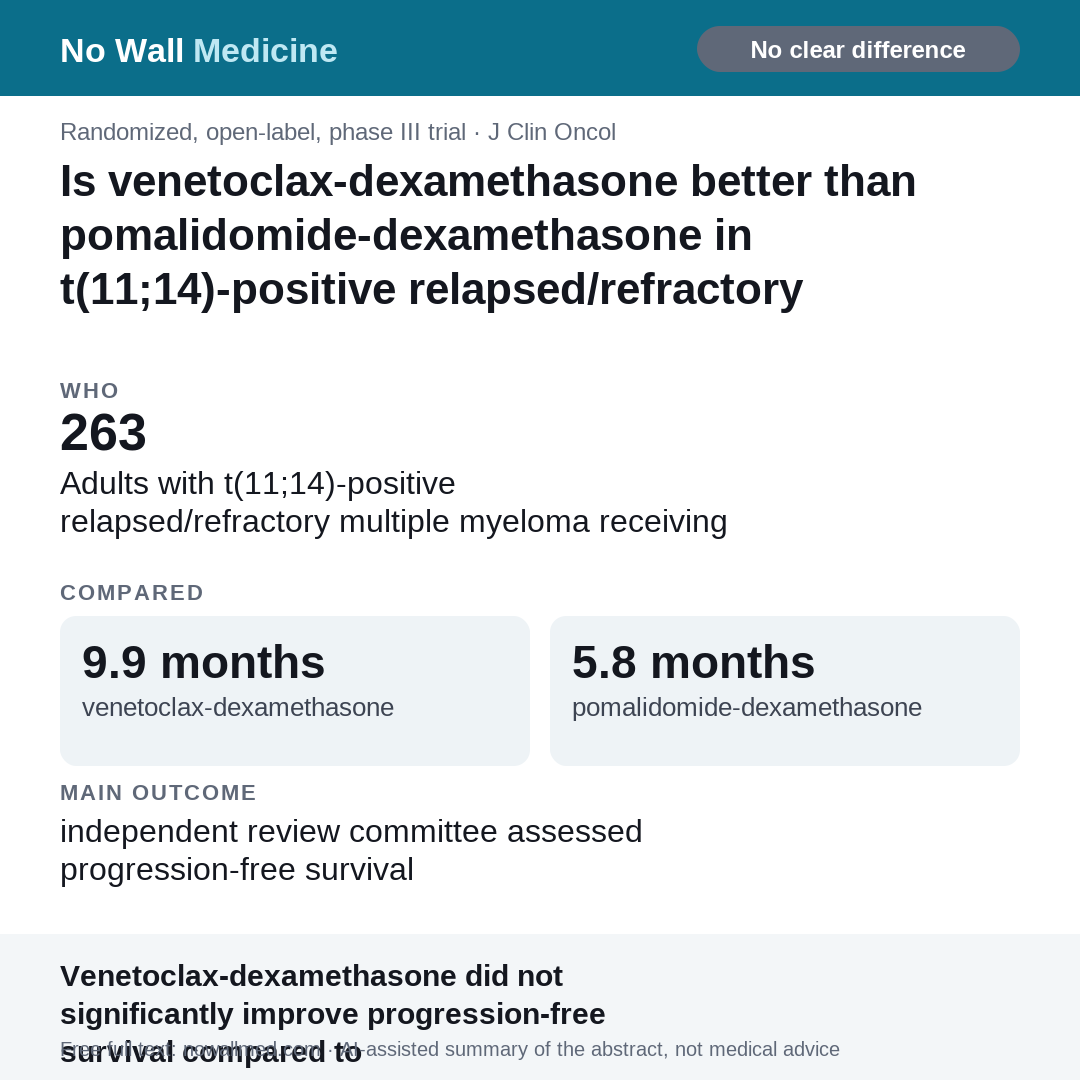
Venetoclax-Dexamethasone Versus Pomalidomide-Dexamethasone in t(11;14)-Positive Relapsed/Refractory Multiple Myeloma: Primary Results of the Randomized, Phase III CANOVA Study
Randomized, open-label, phase III trialNo clear difference
Is venetoclax-dexamethasone better than pomalidomide-dexamethasone in t(11;14)-positive relapsed/refractory multiple myeloma?
Who
263
Adults with t(11;14)-positive relapsed/refractory multiple myeloma receiving 2 or more previous therapies
Compared
9.9 monthsvenetoclax-dexamethasone
5.8 monthspomalidomide-dexamethasone
Main outcome
independent review committee assessed progression-free survival
Result: hazard ratio 0.823 (95% CI 0.596 to 1.136)
Bottom line: Venetoclax-dexamethasone did not significantly improve progression-free survival compared to pomalidomide-dexamethasone in this population.
J Clin Oncol · 2025-12-10Download image
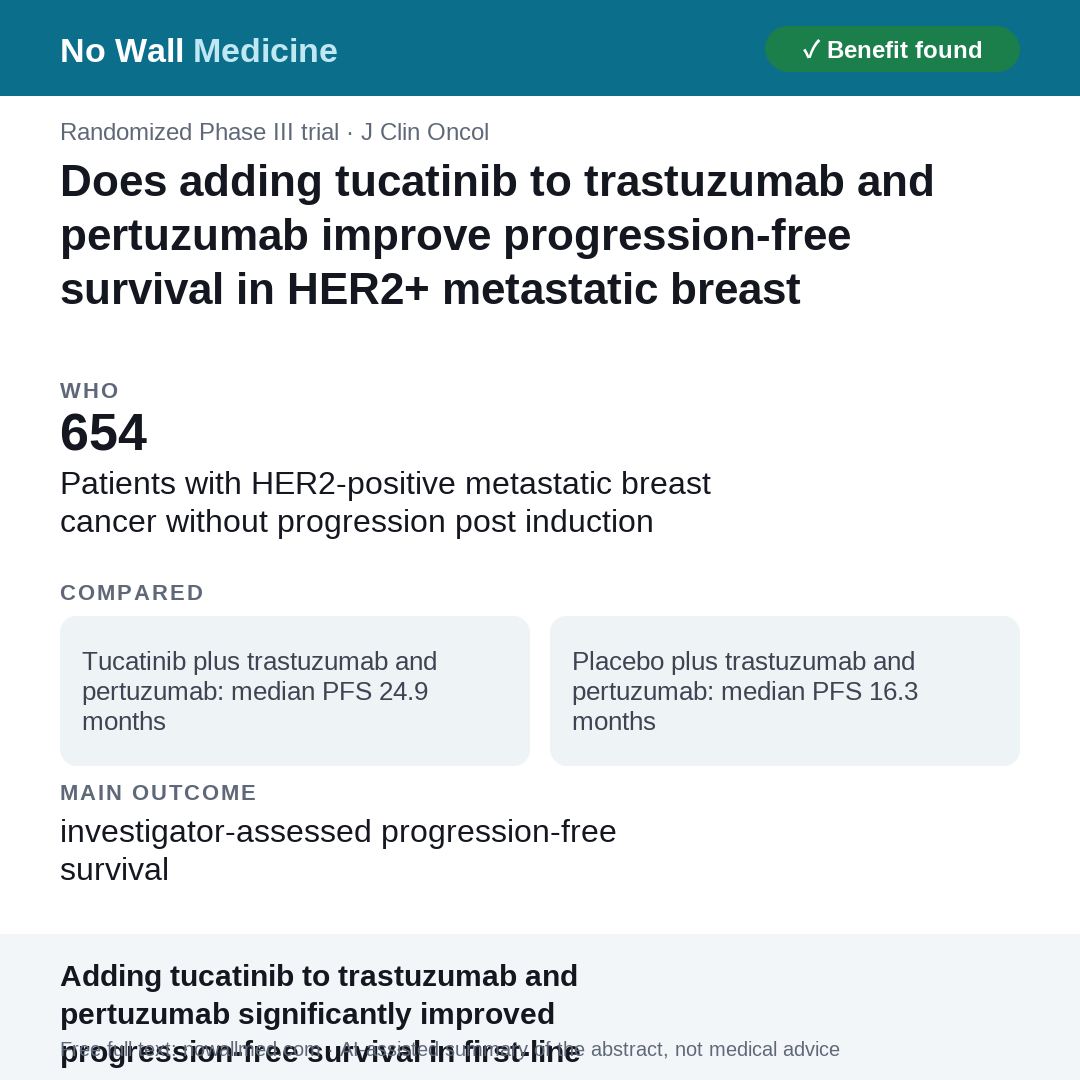
HER2CLIMB-05: A Phase III Study of Tucatinib Versus Placebo in Combination With Trastuzumab and Pertuzumab as First-Line Maintenance Therapy for HER2+ Metastatic Breast Cancer
Randomized Phase III trialBenefit found
Does adding tucatinib to trastuzumab and pertuzumab improve progression-free survival in HER2+ metastatic breast cancer?
Who
654
Patients with HER2-positive metastatic breast cancer without progression post induction therapy
Compared
Tucatinib plus trastuzumab and pertuzumab: median PFS 24.9 months
Placebo plus trastuzumab and pertuzumab: median PFS 16.3 months
Main outcome
investigator-assessed progression-free survival
Result: hazard ratio 0.641 (95% CI 0.514 to 0.799)
Bottom line: Adding tucatinib to trastuzumab and pertuzumab significantly improved progression-free survival in first-line maintenance therapy.
J Clin Oncol · 2025-12-10Download image
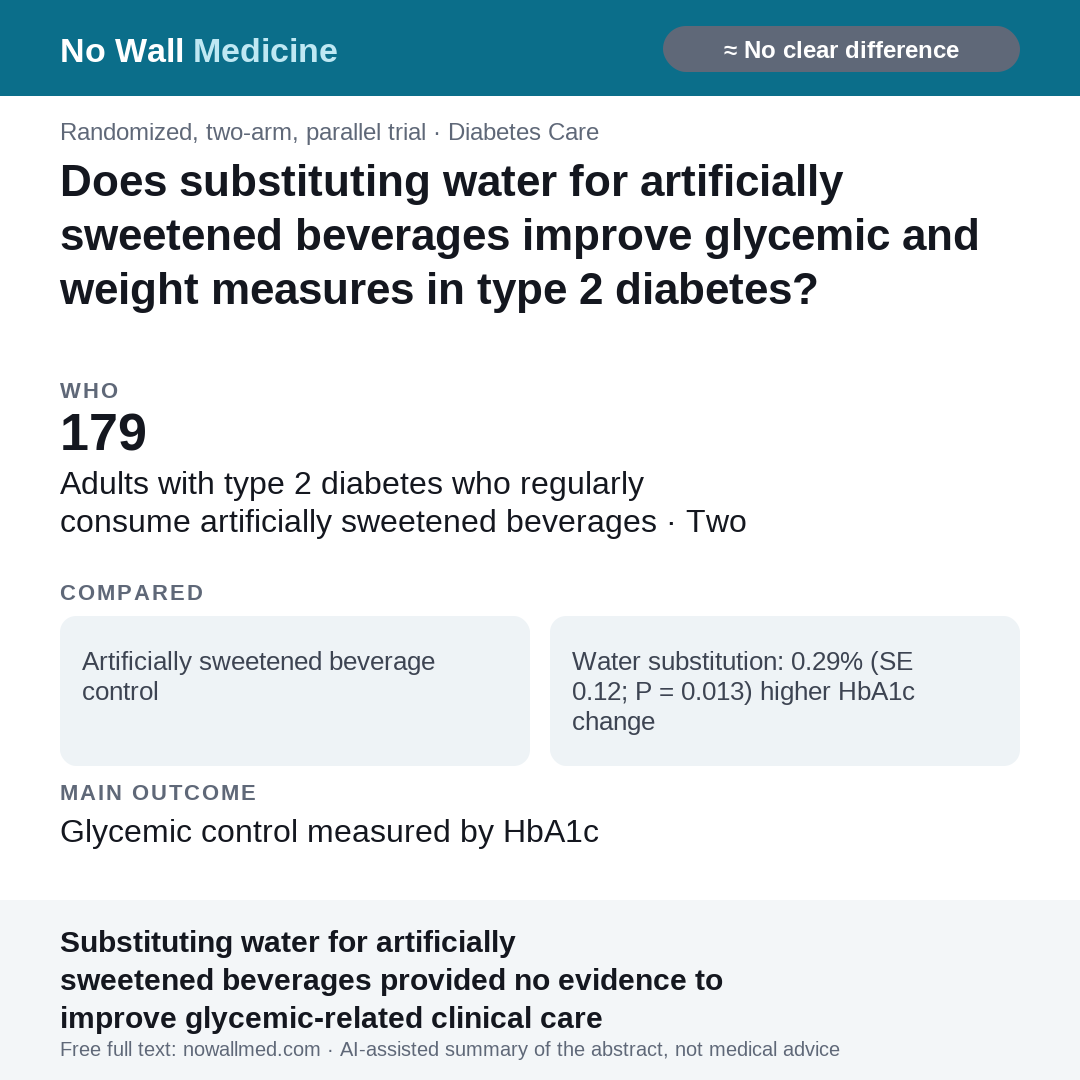
The Effect of Substituting Water for Artificially Sweetened Beverages on Glycemic and Weight Measures in People With Type 2 Diabetes: The Study of Drinks With Artificial Sweeteners (SODAS), a Randomized Trial
Randomized, two-arm, parallel trialNo clear difference
Does substituting water for artificially sweetened beverages improve glycemic and weight measures in type 2 diabetes?
Who
179
Adults with type 2 diabetes who regularly consume artificially sweetened beverages · Two academic health centers
Compared
Artificially sweetened beverage control
Water substitution: 0.29% (SE 0.12; P = 0.013) higher HbA1c change
Main outcome
Glycemic control measured by HbA1c
Result: mean difference in change of HbA1c was 0.29% (SE 0.12; P = 0.013)
Bottom line: Substituting water for artificially sweetened beverages provided no evidence to improve glycemic-related clinical care measures over 24 weeks.
Diabetes Care · 2025-12-10Download image
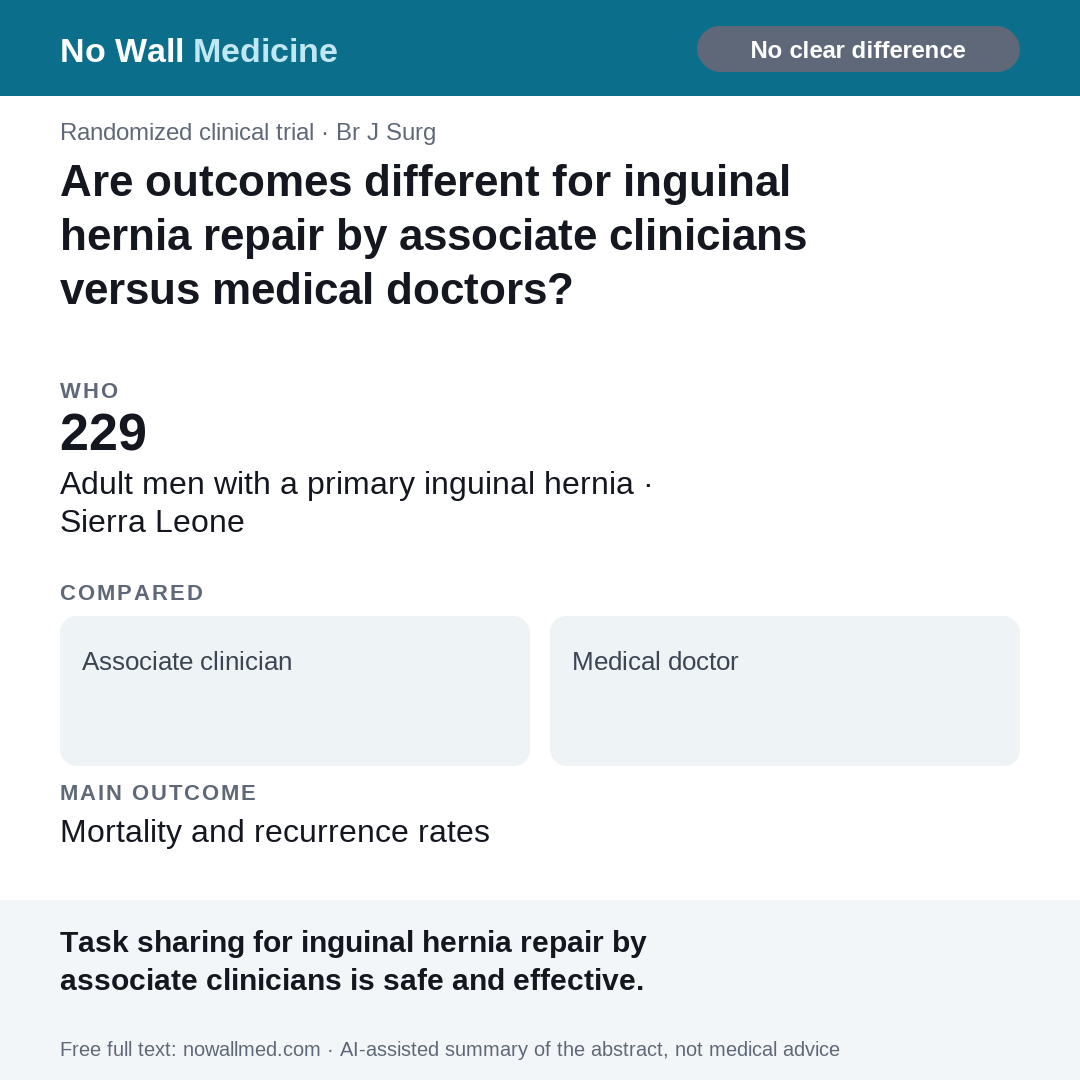
Outcomes after elective inguinal hernia repair with mesh performed by associate clinicians versus medical doctors in Sierra Leone: 5-year follow-up of a randomized clinical trial
Randomized clinical trialNo clear difference
Are outcomes different for inguinal hernia repair by associate clinicians versus medical doctors?
Who
229
Adult men with a primary inguinal hernia · Sierra Leone
Compared
Associate clinician
Medical doctor
Main outcome
Mortality and recurrence rates
Bottom line: Task sharing for inguinal hernia repair by associate clinicians is safe and effective.
Br J Surg · 2025-12-10Download image
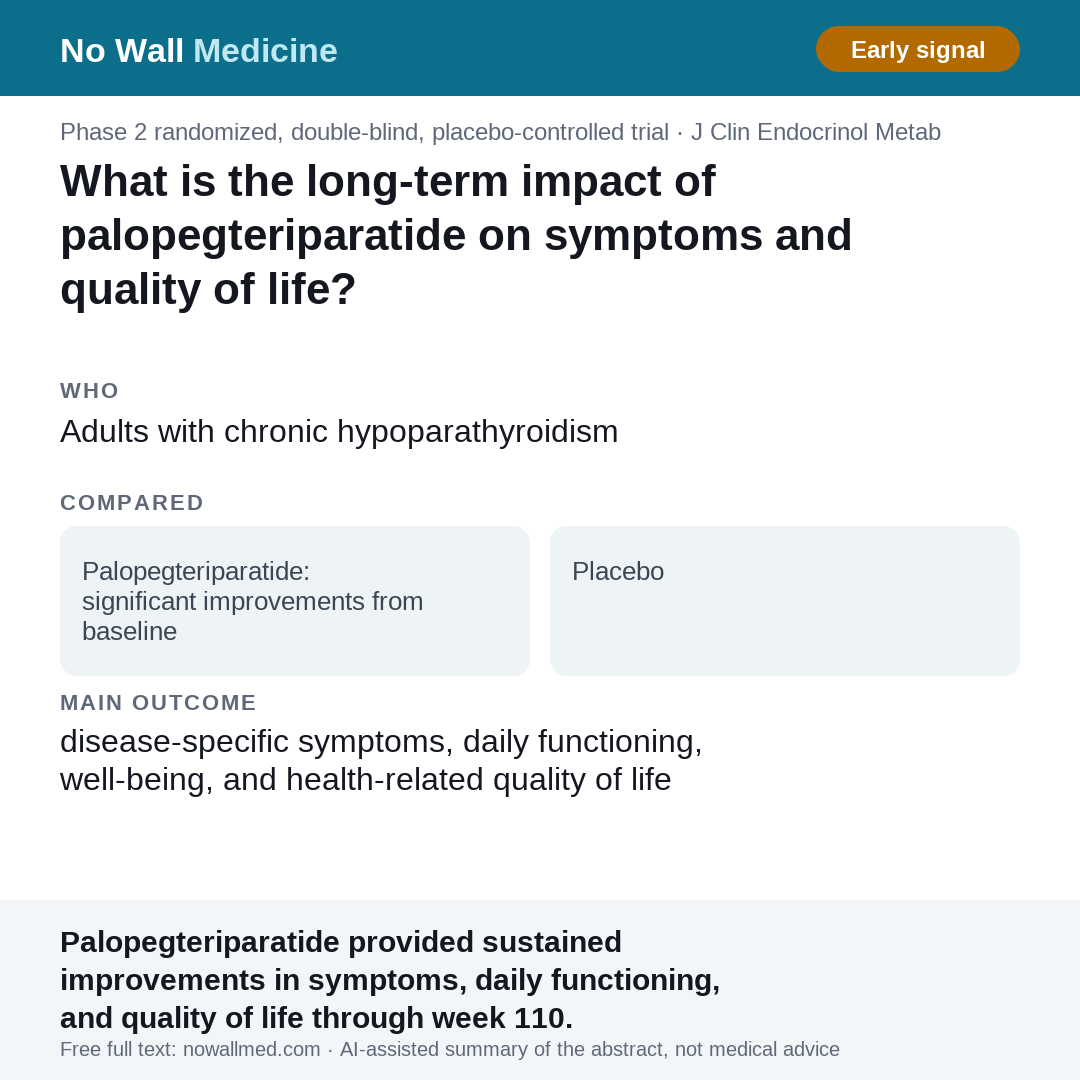
Patient-reported outcomes in palopegteriparatide-treated adults with hypoparathyroidism: PaTH Forward trial extension
Phase 2 randomized, double-blind, placebo-controlled trialBenefit found
What is the long-term impact of palopegteriparatide on symptoms and quality of life?
Who
Adults with chronic hypoparathyroidism
Compared
Palopegteriparatide: significant improvements from baseline
Placebo
Main outcome
disease-specific symptoms, daily functioning, well-being, and health-related quality of life
Bottom line: Palopegteriparatide provided sustained improvements in symptoms, daily functioning, and quality of life through week 110.
J Clin Endocrinol Metab · 2025-12-10Download image
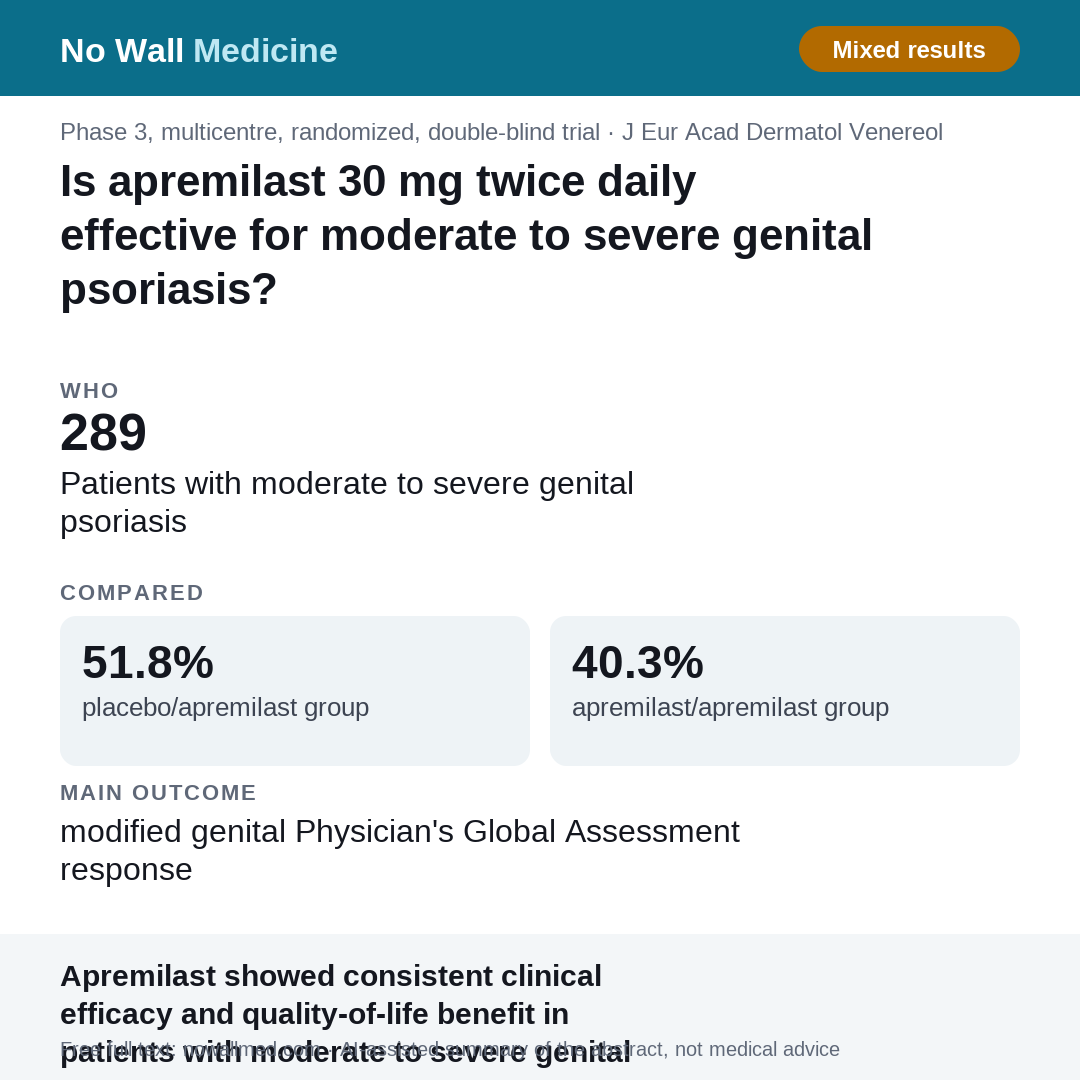
Results from the 32-week, phase 3 DISCREET study of apremilast in patients with moderate to severe genital psoriasis
Phase 3, multicentre, randomized, double-blind trialMixed results
Is apremilast 30 mg twice daily effective for moderate to severe genital psoriasis?
Who
289
Patients with moderate to severe genital psoriasis
Compared
51.8%placebo/apremilast group (95% CI: 42.6, 60.9)
40.3%apremilast/apremilast group (95% CI: 32.0, 49.3)
Main outcome
modified genital Physician's Global Assessment response
Bottom line: Apremilast showed consistent clinical efficacy and quality-of-life benefit in patients with moderate to severe genital psoriasis.
J Eur Acad Dermatol Venereol · 2025-12-10Download image
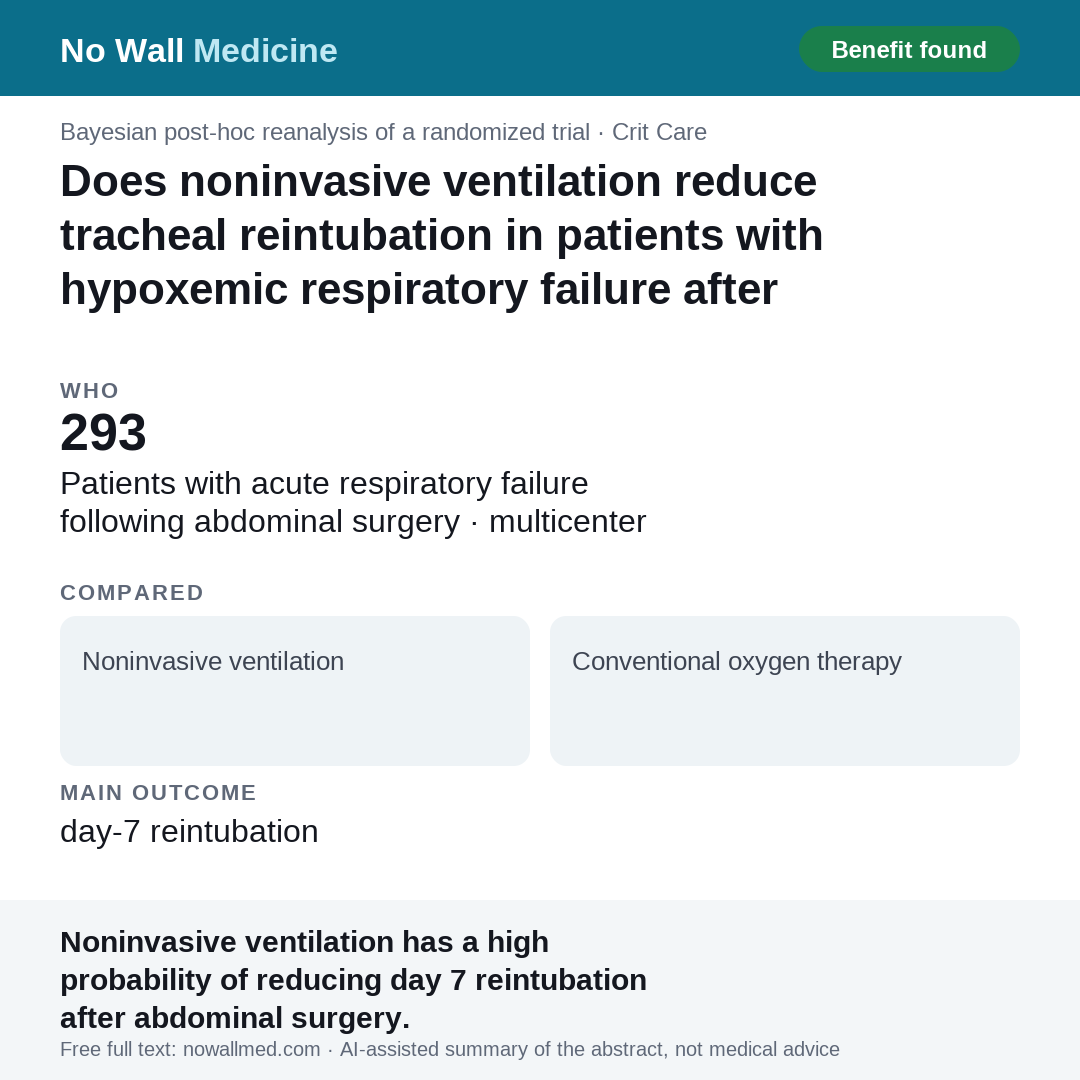
Effect of noninvasive ventilation on tracheal reintubation among patients with hypoxemic respiratory failure following abdominal surgery: a bayesian post-hoc analysis of the NIVAS trial
Bayesian post-hoc reanalysis of a randomized trialBenefit found
Does noninvasive ventilation reduce tracheal reintubation in patients with hypoxemic respiratory failure after abdominal surgery?
Who
293
Patients with acute respiratory failure following abdominal surgery · multicenter trial
Compared
Noninvasive ventilation
Conventional oxygen therapy
Main outcome
day-7 reintubation
Result: odds ratio 0.59 (95% credible interval 0.37 to 0.95)
Bottom line: Noninvasive ventilation has a high probability of reducing day 7 reintubation after abdominal surgery.
Crit Care · 2025-12-10Download image
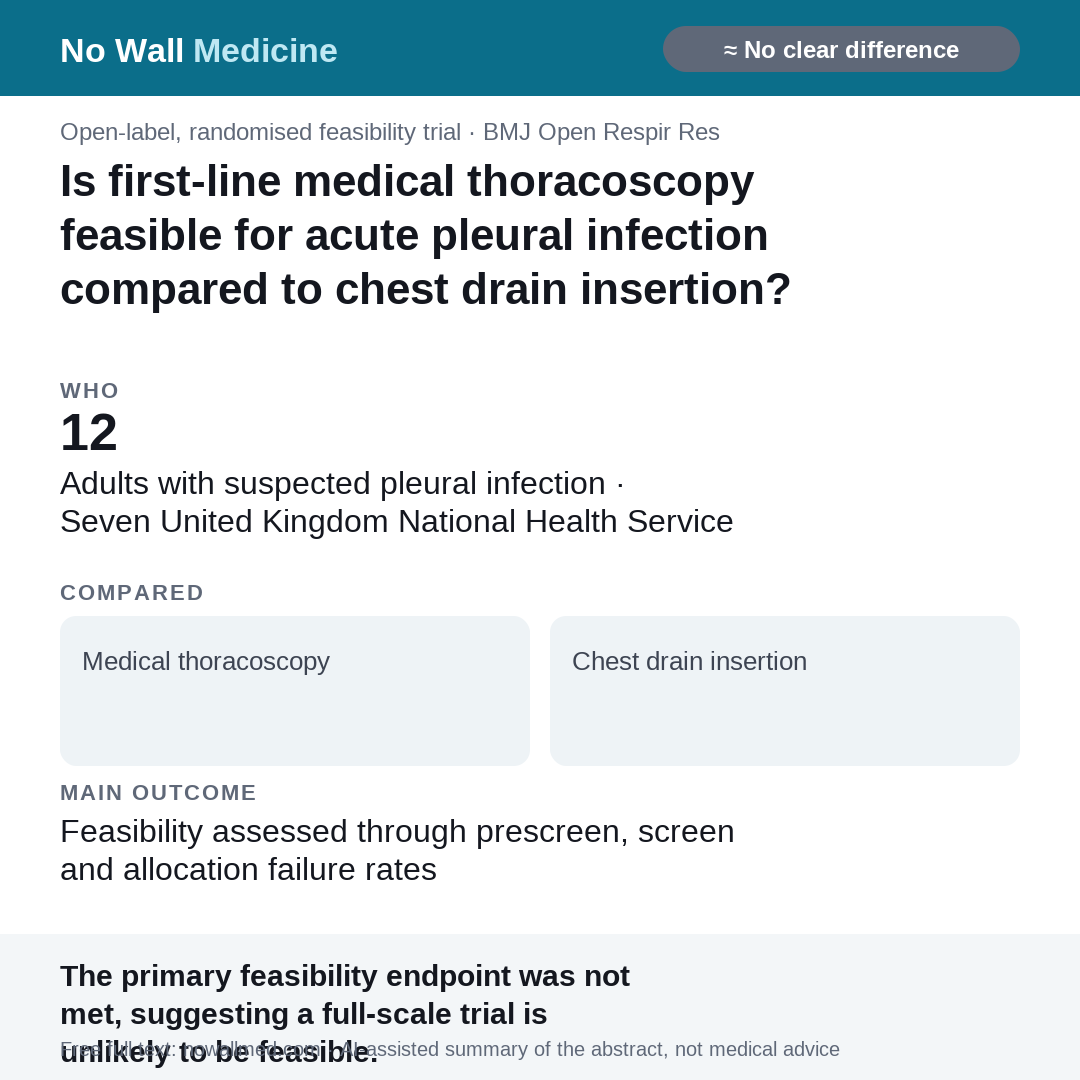
First-line medical thoracoscopy for pleural infection: the SPIRIT randomised controlled feasibility trial
Open-label, randomised feasibility trialNo clear difference
Is first-line medical thoracoscopy feasible for acute pleural infection compared to chest drain insertion?
Who
12
Adults with suspected pleural infection · Seven United Kingdom National Health Service centres
Compared
Medical thoracoscopy
Chest drain insertion
Main outcome
Feasibility assessed through prescreen, screen and allocation failure rates
Bottom line: The primary feasibility endpoint was not met, suggesting a full-scale trial is unlikely to be feasible.
Limitation: High exclusion rates due to lack of deliverability and non-infected effusions.
BMJ Open Respir Res · 2025-12-10Download image
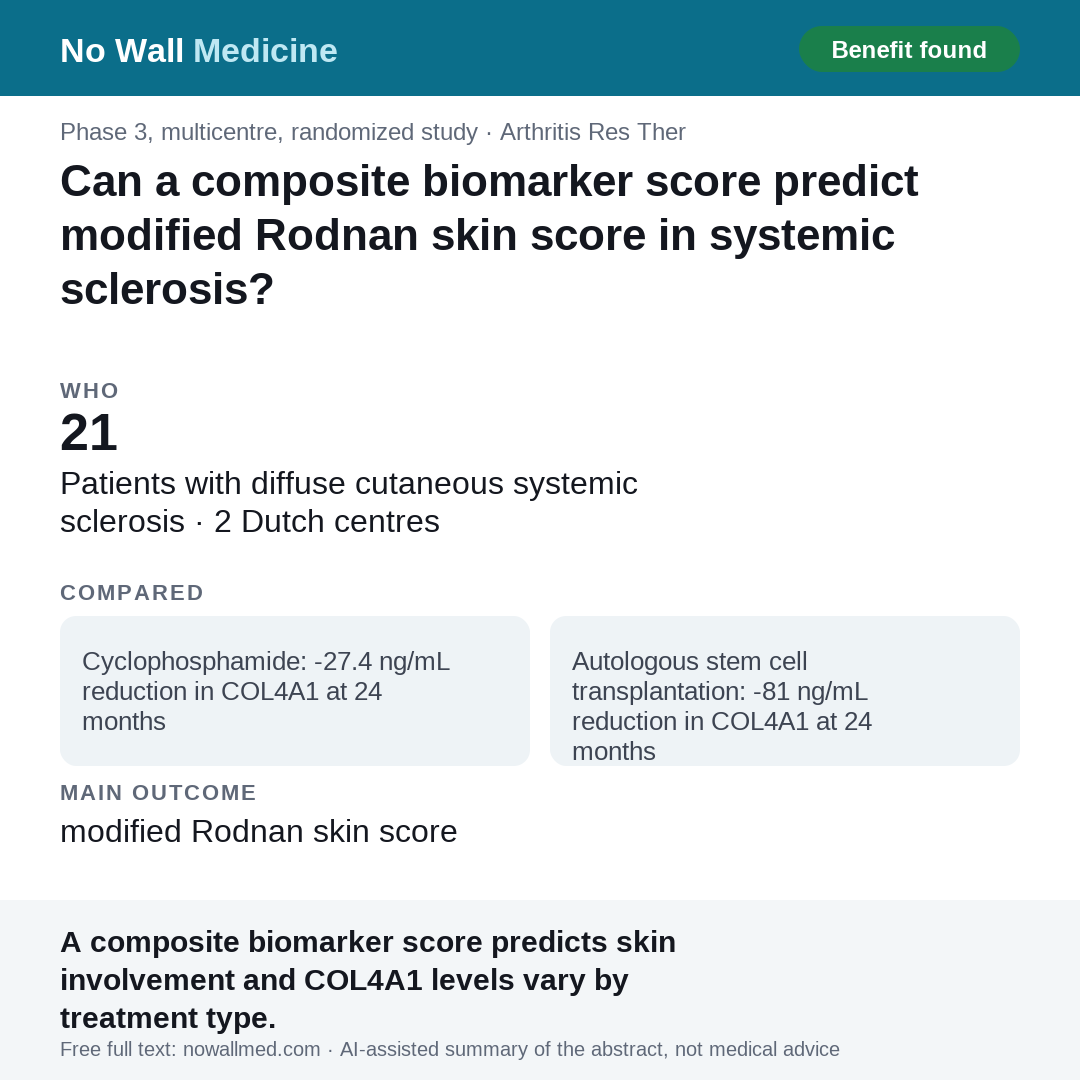
A composite biomarker score to predict modified Rodnan skin score in systemic sclerosis: insight from autologous stem cell transplantation international scleroderma trial
Phase 3, multicentre, randomized studyBenefit found
Can a composite biomarker score predict modified Rodnan skin score in systemic sclerosis?
Who
21
Patients with diffuse cutaneous systemic sclerosis · 2 Dutch centres
Compared
Cyclophosphamide: -27.4 ng/mL reduction in COL4A1 at 24 months
Autologous stem cell transplantation: -81 ng/mL reduction in COL4A1 at 24 months
Main outcome
modified Rodnan skin score
Result: p = 0.029 for COL4A1 reduction difference
Bottom line: A composite biomarker score predicts skin involvement and COL4A1 levels vary by treatment type.
Arthritis Res Ther · 2025-12-10Download image
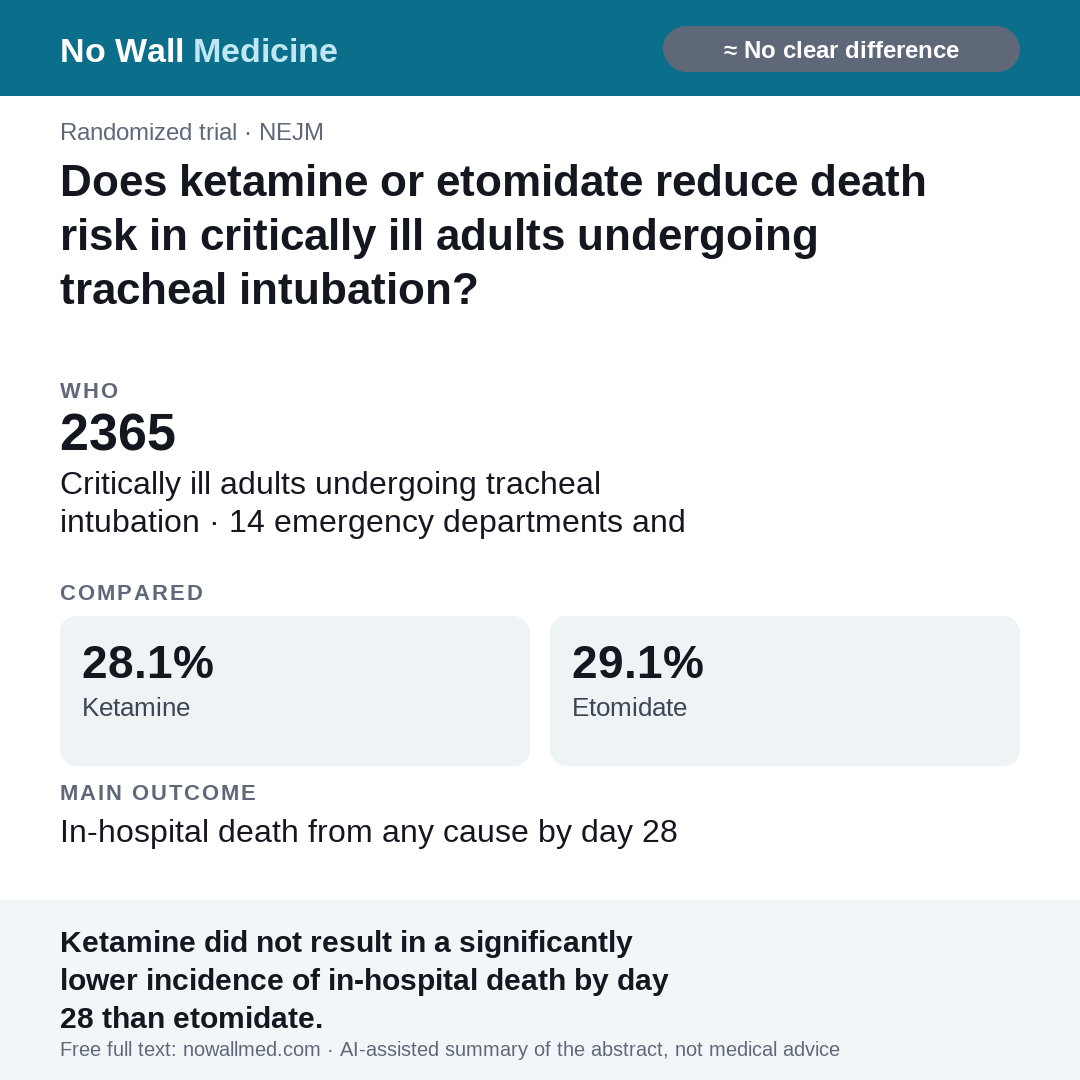
Ketamine or Etomidate for Tracheal Intubation of Critically Ill Adults
Randomized trialNo clear difference
Does ketamine or etomidate reduce death risk in critically ill adults undergoing tracheal intubation?
Who
2365
Critically ill adults undergoing tracheal intubation · 14 emergency departments and intensive care units in the United States
Compared
28.1%Ketamine
29.1%Etomidate
Main outcome
In-hospital death from any cause by day 28
Result: risk difference -0.8 percentage points (95% CI -4.5 to 2.9)
Bottom line: Ketamine did not result in a significantly lower incidence of in-hospital death by day 28 than etomidate.
Funded by: Patient-Centered Outcomes Research Institute and others
NEJM · 2025-12-09Download image