Visual abstracts
New randomized trials and meta-analyses from leading journals at a glance: who was studied, what was compared, and what was found. Every paper is free to read in full.
All specialtiesCardiology 4763Oncology 4042Gastroenterology & Hepatology 1902Infectious Disease 3756Neurology 1872Psychiatry & Mental Health 2214Pulmonology 2042Critical Care 1319Endocrinology & Diabetes 2544Pediatrics 2889Surgery 2479Orthopedics & Sports Medicine 917Neurosurgery 525Cardiothoracic & Vascular Surgery 656Plastic & Reconstructive Surgery 574Nephrology 1107Rheumatology 810Hematology 1090Dermatology 611Ophthalmology 532Obstetrics & Gynecology 1645Public & Global Health 1037Radiology & Imaging 617Anesthesiology 957Urology 745ENT (Otolaryngology) 494Emergency Medicine 481Allergy & Immunology 309Geriatrics 972Family Medicine & Primary Care 533Medical Genetics & Genomics 659Pathology & Laboratory Medicine 156Physical Medicine & Rehabilitation 734Palliative Care 421Nutrition 1560Digital Health & AI 2133General Medicine 318
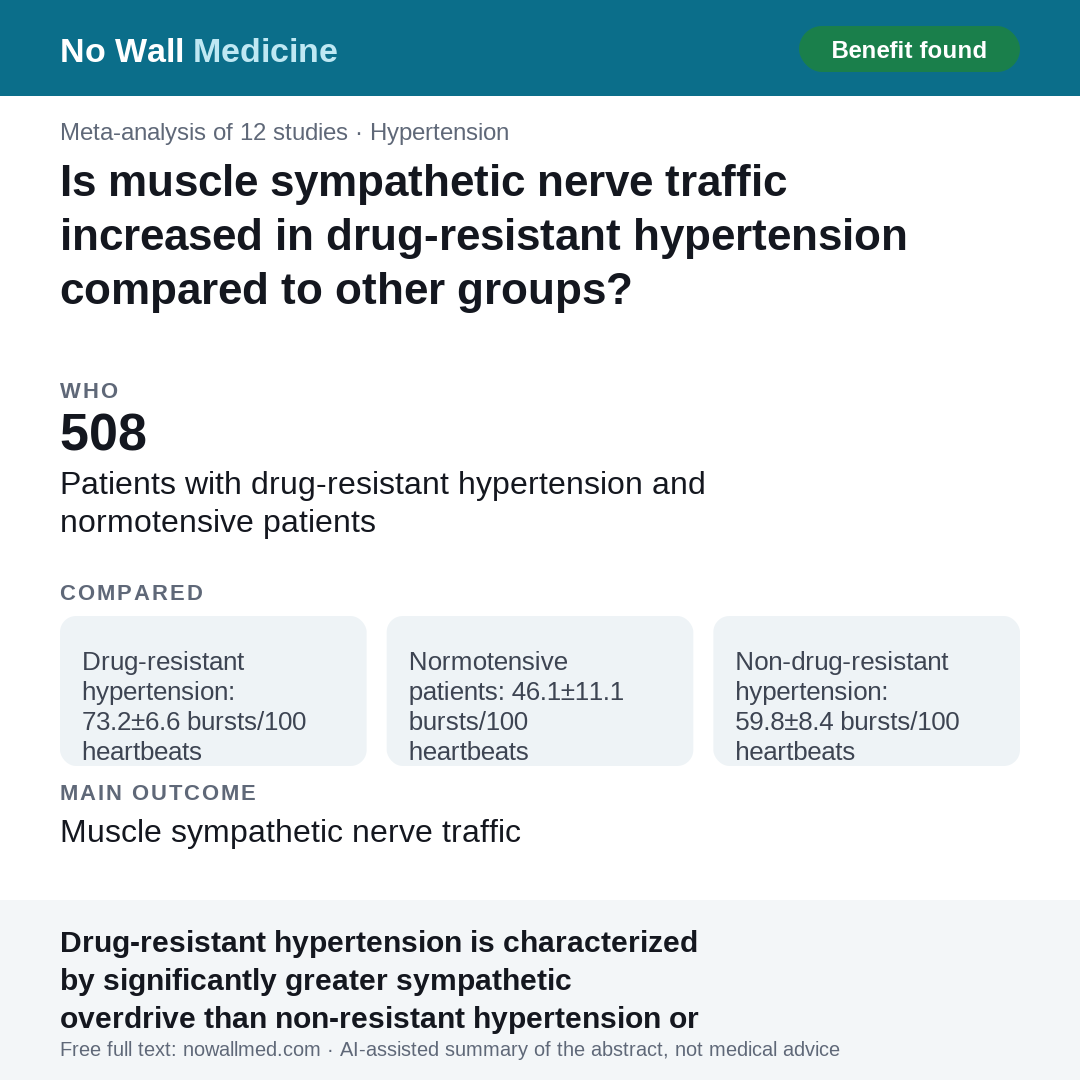
Sympathetic Overactivation in the Resistant Hypertensive Phenotype: A Meta-Analysis of Published Studies
Meta-analysis of 12 studiesBenefit found
Is muscle sympathetic nerve traffic increased in drug-resistant hypertension compared to other groups?
Who
508
Patients with drug-resistant hypertension and normotensive patients
Compared
Drug-resistant hypertension: 73.2±6.6 bursts/100 heartbeats
Normotensive patients: 46.1±11.1 bursts/100 heartbeats
Non-drug-resistant hypertension: 59.8±8.4 bursts/100 heartbeats
Main outcome
Muscle sympathetic nerve traffic
Bottom line: Drug-resistant hypertension is characterized by significantly greater sympathetic overdrive than non-resistant hypertension or normotensive patients.
Hypertension · 2025-06-18Download image
Ultrasound Guided Versus Conventional Closure Device Deployment Following Transfemoral Endovascular Procedures: A Systematic Review and Meta-analysis
Systematic review and meta-analysisBenefit, low certainty
Is ultrasound guided closure safer than conventional closure for transfemoral endovascular procedures?
Who
Patients undergoing transfemoral arterial interventions
Compared
Ultrasound guided closure: 2 339 patients
Conventional closure: 1 175 patients
Main outcome
Access site complications
Result: odds ratio 0.49 (95% CI 0.37 - 0.65)
Bottom line: Ultrasound guided vessel closure is associated with lower rates of access site complications compared to conventional closure techniques.
Eur J Vasc Endovasc Surg · 2025-06-18Download image

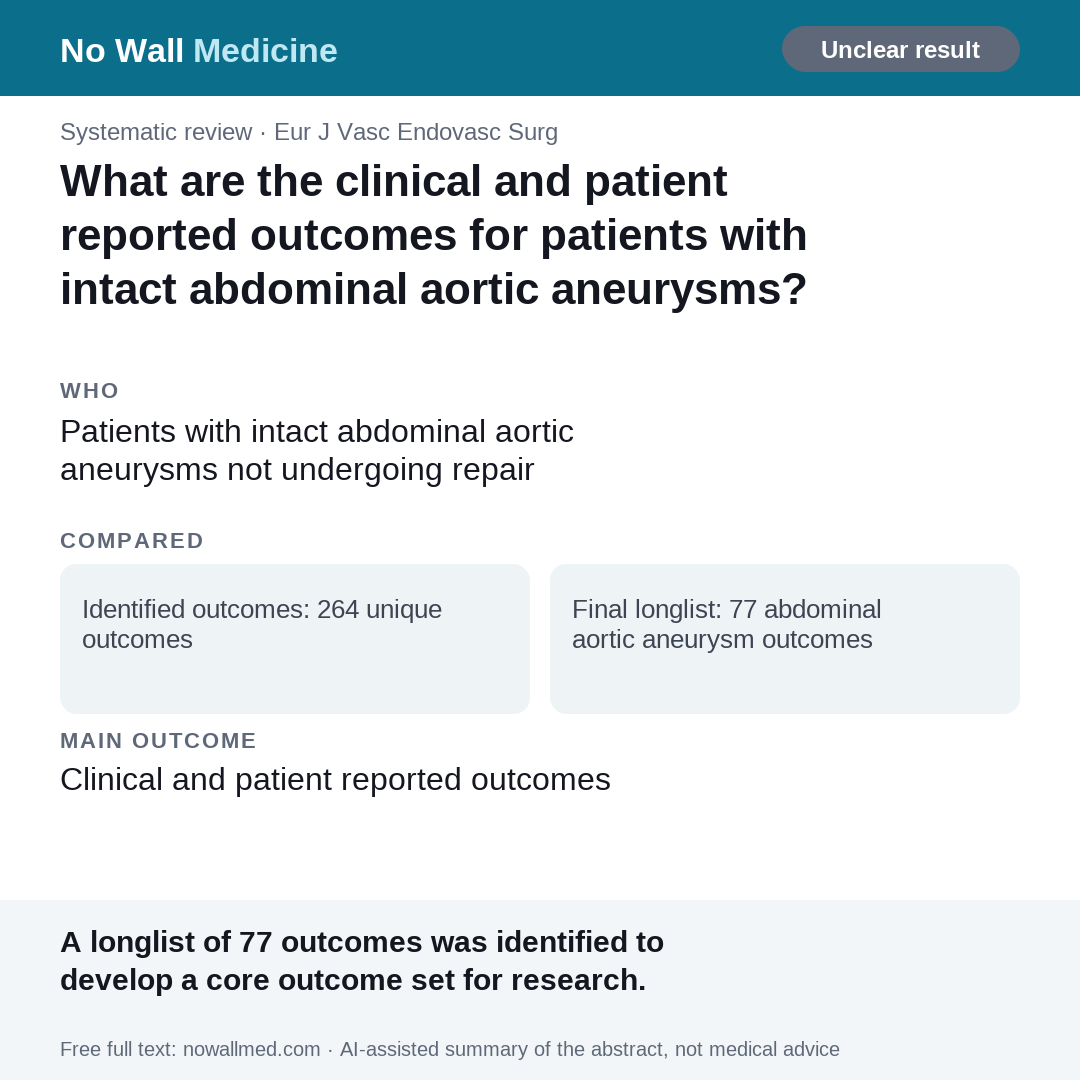
Identification of Clinical and Patient Reported Outcomes for Patients with Intact Abdominal Aortic Aneurysms Not Undergoing Repair: A Systematic Review
Systematic reviewUnclear result
What are the clinical and patient reported outcomes for patients with intact abdominal aortic aneurysms?
Who
Patients with intact abdominal aortic aneurysms not undergoing repair
Compared
Identified outcomes: 264 unique outcomes
Final longlist: 77 abdominal aortic aneurysm outcomes
Main outcome
Clinical and patient reported outcomes
Bottom line: A longlist of 77 outcomes was identified to develop a core outcome set for research.
Eur J Vasc Endovasc Surg · 2025-06-18Download image
Incidence of Stroke in Adults With Congenital Heart Disease: A Systematic Review and Meta-Analysis
Systematic review and meta-analysisUnclear result
What is the incidence of stroke and transient ischemic attack in adults with congenital heart disease?
Who
Adults aged 16 years or older with congenital heart disease
Compared
Stroke and transient ischemic attack: 0.58 per 100 person-years
Ischemic stroke: 0.59 per 100 person-years
Main outcome
Incidence rate of stroke and transient ischemic attack
Result: 0.58 per 100 person-years (95% CI: 0.39-0.86)
Bottom line: The pooled incidence rate of stroke and transient ischemic attack is 0.58 per 100 person-years in adults with congenital heart disease.
Limitation: Significant heterogeneity between studies was observed.
JACC Adv · 2025-06-18Download image

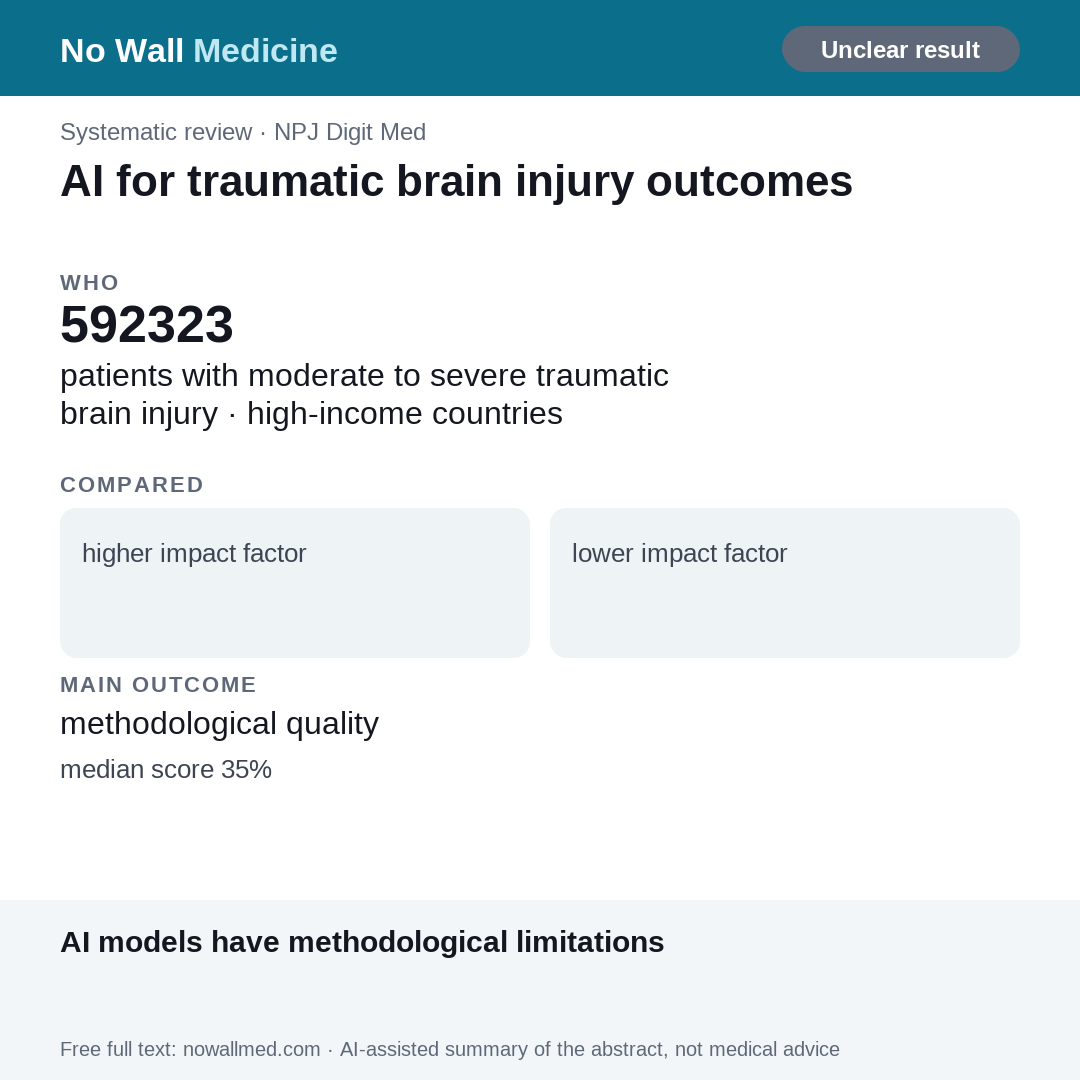
Predicting outcomes after moderate and severe traumatic brain injury using artificial intelligence: a systematic review
Systematic reviewUnclear result
AI for traumatic brain injury outcomes
Who
592323
patients with moderate to severe traumatic brain injury · high-income countries
Compared
higher impact factor
lower impact factor
Main outcome
methodological quality
Result: median score 35%
Bottom line: AI models have methodological limitations
Limitation: lack of diverse development datasets
NPJ Digit Med · 2025-06-18Download image
Use of Technology to Support Health Care Providers Delivering Care in Low- and Lower-Middle-Income Countries: Systematic Umbrella Review
Systematic umbrella reviewMixed results
What is the impact of digital health interventions on health care providers in low- and lower-middle-income countries?
Who
88
Health care providers in low- and lower-middle-income countries · Low- and lower-middle-income countries
Compared
Telemedicine: improved information sharing and enhanced delivery efficiency
Other digital health interventions: evidence remains thin and uneven
Main outcome
Impact of digital health interventions on health care providers
Bottom line: Digital health interventions show potential for improving delivery, but conclusive evidence on health outcomes and long-term sustainability is lacking.
Limitation: Robust evidence on health outcomes, cost-effectiveness, and long-term sustainability is lacking.
J Med Internet Res · 2025-06-18Download image

The Impact of Hormonal Therapy on Autologous Microvascular Breast Reconstruction: A Systematic Review and Meta-analysis
Systematic review and meta-analysisMixed results
Does hormonal therapy impact complications in autologous microvascular breast reconstruction?
Who
3796
Patients undergoing autologous microvascular breast reconstruction
Compared
Hormonal therapy
Control group
Main outcome
Postoperative complications of autologous microvascular breast reconstruction
Bottom line: Hormonal therapy does not increase flap complication risks, but selective estrogen receptor modulators increase systemic venous thromboembolic risk.
Limitation: Only studies with retrospective design could be included.
Plast Reconstr Surg Glob Open · 2025-06-18Download image

Anterior temporal lobectomy and selective AmygdaloHippocampectomy complications across Europe: review, meta-analysis, and Delphi consensus
Meta-analysis and Delphi consensusMixed results
What are the complication rates for anterior temporal lobectomy and selective amygdalohippocampectomy?
Who
Adult and pediatric patients with temporal lobe epilepsy · 35 European centers
Compared
Anterior temporal lobectomy: visual field deficits over 16%
Selective amygdalohippocampectomy: visual field deficits 2-10%
Main outcome
Surgical complications including mortality, morbidity, and deficits
Bottom line: Anterior temporal lobectomy has higher visual field deficit rates than selective amygdalohippocampectomy.
Brain Spine · 2025-06-18Download image
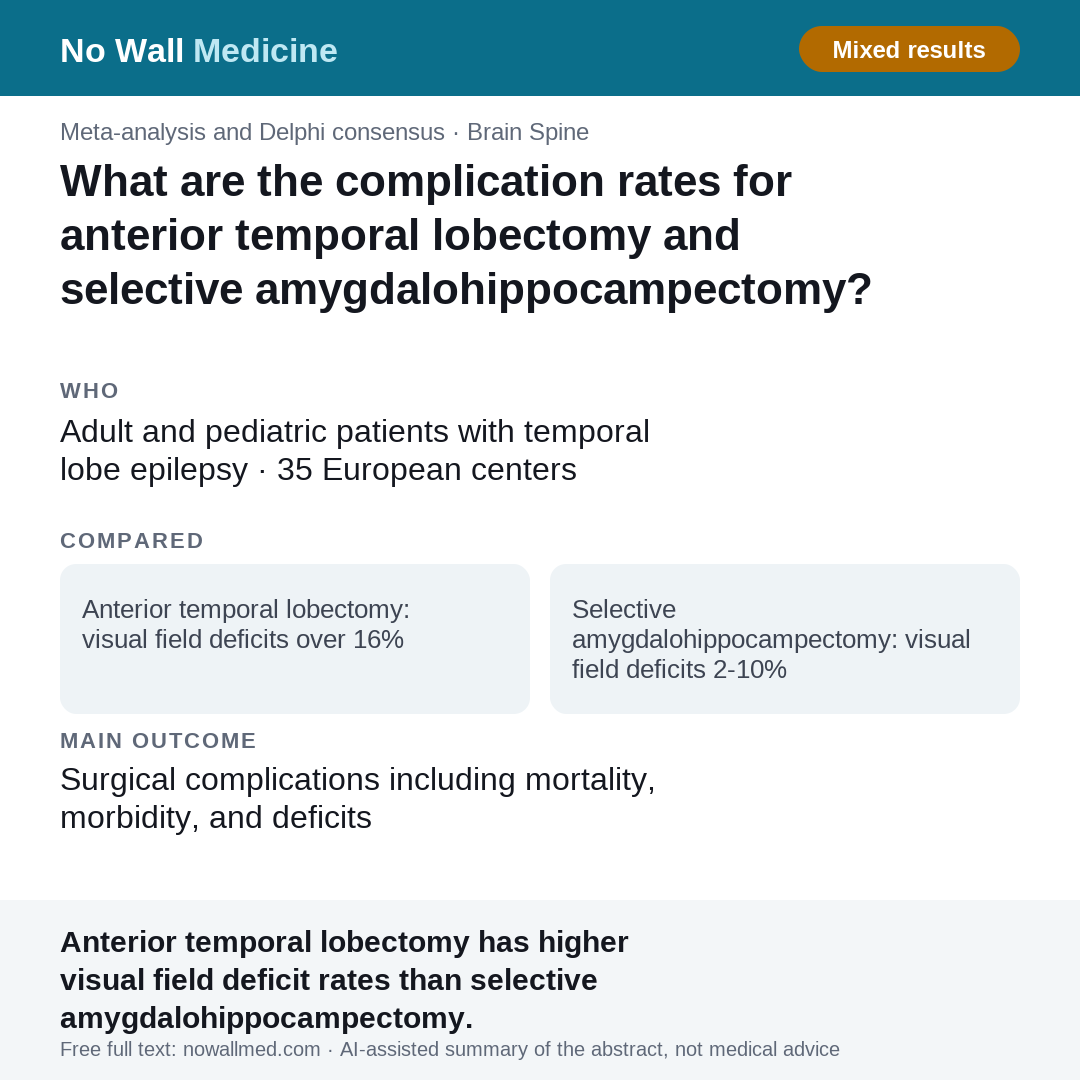
Comparative effectiveness of interventions to facilitate deprescription of benzodiazepines and other sedative hypnotics: systematic review and meta-analysis
Systematic review and meta-analysis of randomized controlled trialsBenefit, low certainty
What interventions are effective for deprescribing benzodiazepines and other sedative hypnotics?
Who
39000
Randomized adults using benzodiazepines and sedative hypnotics for insomnia
Compared
Patient education: 144 (95% confidence interval 61 to 246) more per 1000 patients
Medication review: 104 (34 to 191) more per 1000 patients
Pharmacist led educational intervention: 491 (234 to 928) more per 1000 patients
Usual care
Main outcome
Proportion of patients who discontinue benzodiazepines and sedative hypnotics
Bottom line: Patient education, medication reviews, and pharmacist led interventions may increase benzodiazepine and sedative hypnotic discontinuation rates.
Limitation: The evidence on the effectiveness of interventions is of low certainty.
BMJ · 2025-06-17Download image
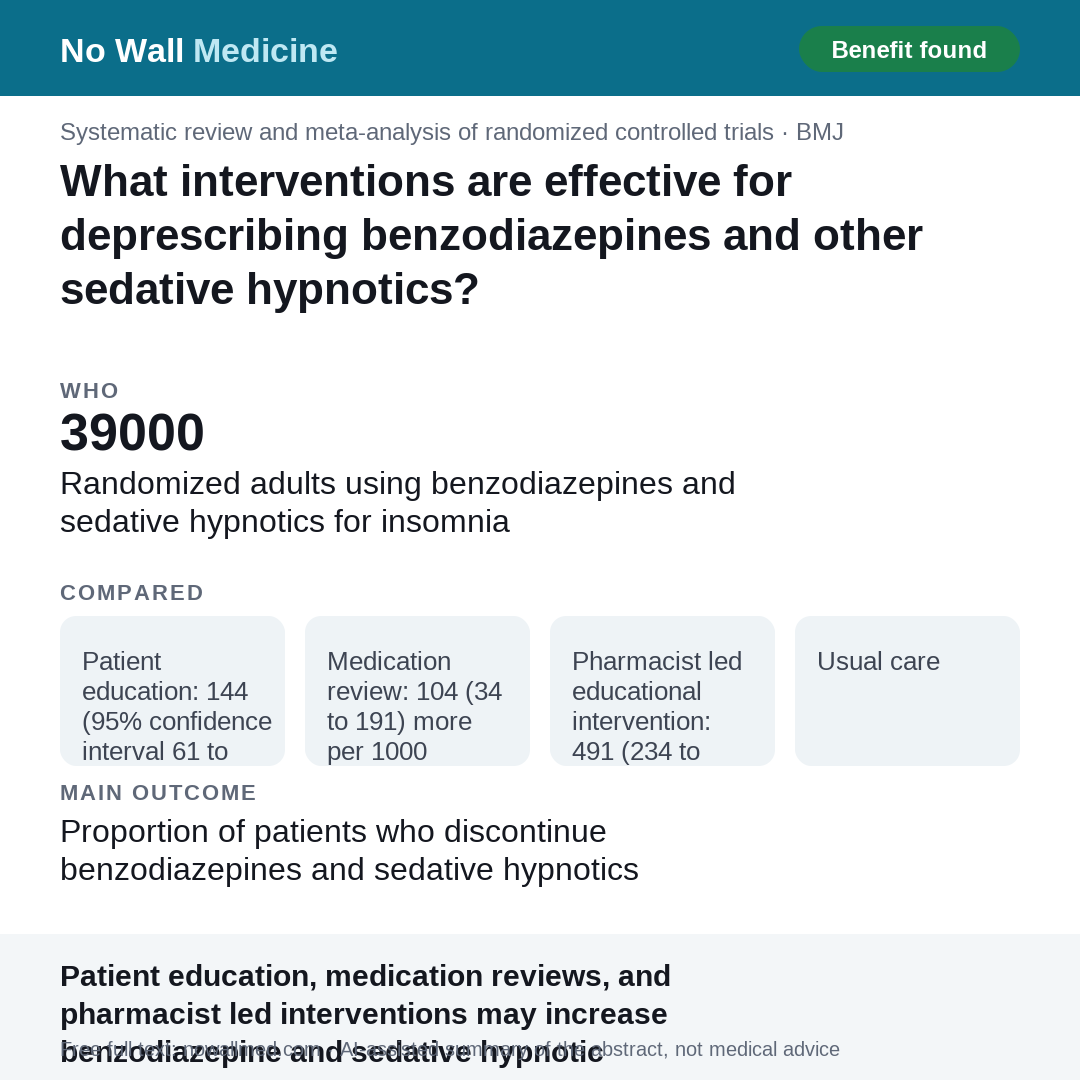
Prostate Cancer Outcomes in Immunocompromised Patients: A Systematic Review and Meta-analysis
Systematic review and meta-analysisKey finding
What are the cancer-specific and overall mortality rates in immunocompromised prostate cancer patients?
Who
3
Prostate cancer patients who are immunocompromised or immunocompetent
Compared
Immunocompromised patients: overall mortality hazard ratio 2.04
Immunocompetent individuals
Main outcome
cancer-specific mortality and overall mortality
Result: hazard ratio 2.04 (95% CI, 1.94-2.15)
Bottom line: Immunocompromised patients have higher overall mortality, though cancer-specific mortality was not significantly different.
Limitation: retrospective cohort studies and heterogeneity in reporting prostate cancer stages
Eur Urol Oncol · 2025-06-17Download image
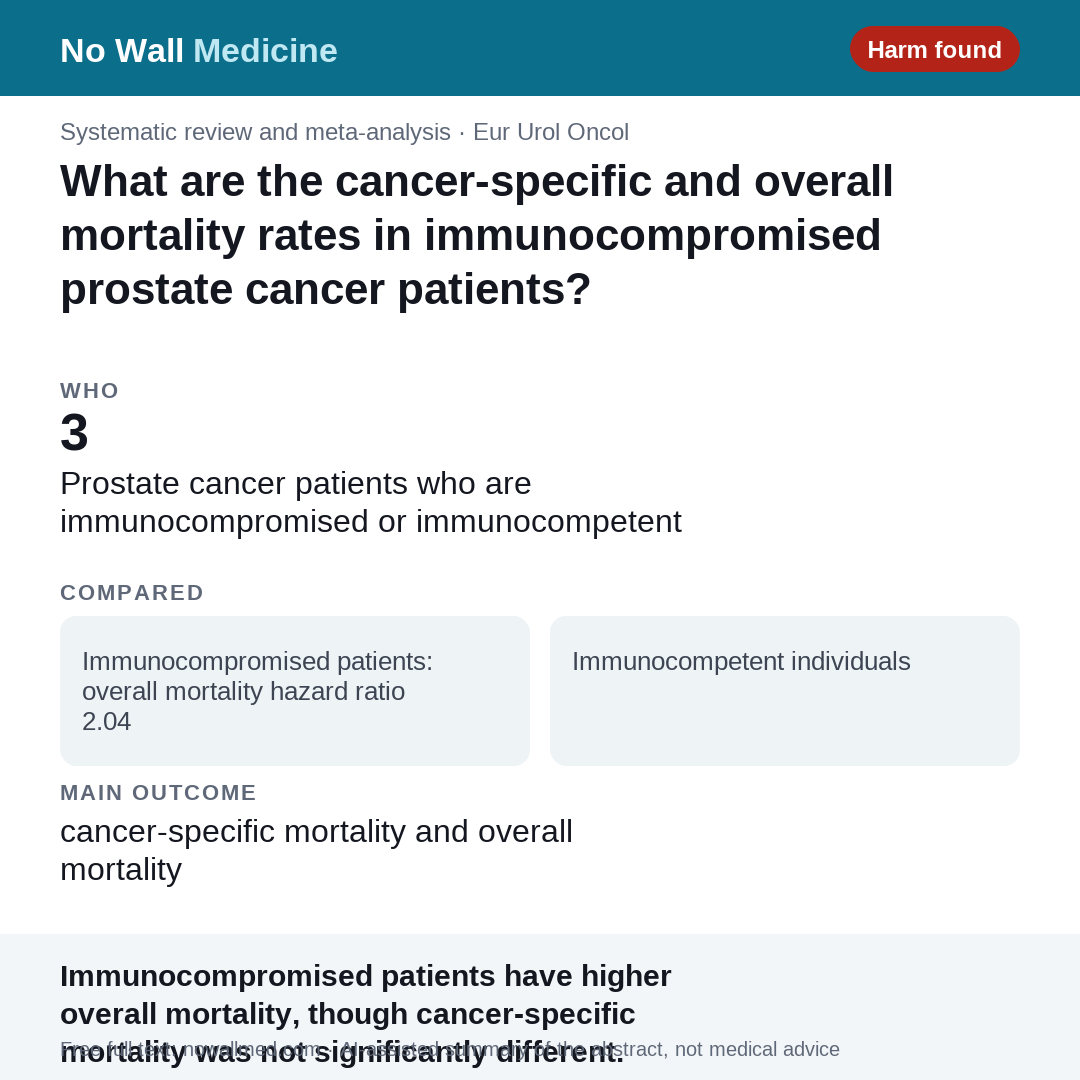
Management and outcome of whole-spine epidural abscesses - institutional case series and systematic review
Institutional case series and systematic reviewNo clear difference
What are the optimal management strategies for whole-spine epidural abscesses?
Who
48
Patients with whole-spine epidural abscesses · One tertiary spine center and systematic literature review
Compared
86.1%Surgical intervention
80.0%Conservative antibiotic treatment
Main outcome
Favourable outcomes
Bottom line: Both surgical and conservative approaches can achieve favourable outcomes in selected whole-spine epidural abscess cases.
Brain Spine · 2025-06-17Download image
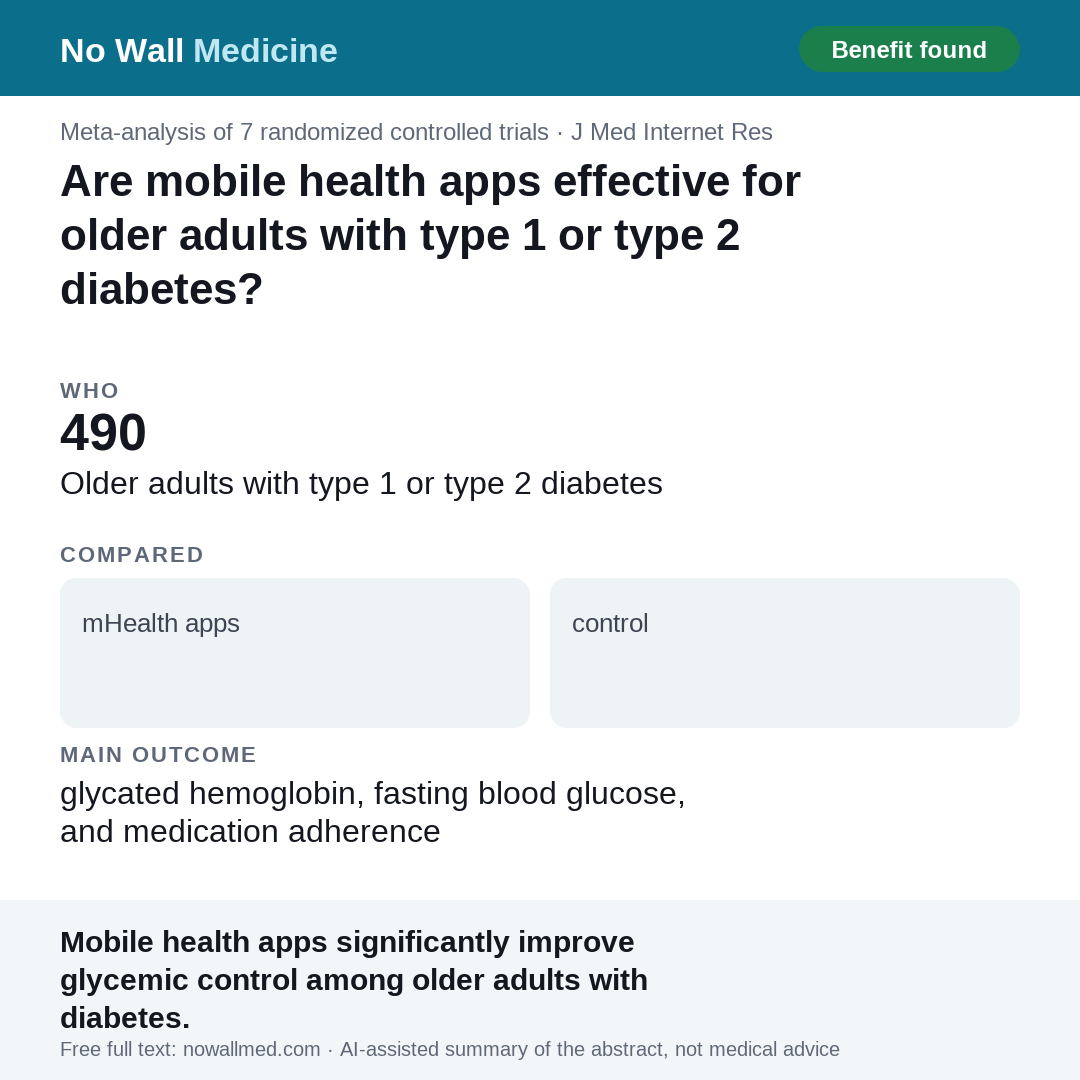
Evaluating Effectiveness of mHealth Apps for Older Adults With Diabetes: Meta-Analysis of Randomized Controlled Trials
Meta-analysis of 7 randomized controlled trialsBenefit found
Are mobile health apps effective for older adults with type 1 or type 2 diabetes?
Who
490
Older adults with type 1 or type 2 diabetes
Compared
mHealth apps
control
Main outcome
glycated hemoglobin, fasting blood glucose, and medication adherence
Result: Hedges g -0.40 (95% CI -0.75 to -0.06)
Bottom line: Mobile health apps significantly improve glycemic control among older adults with diabetes.
Limitation: Effectiveness of mobile health apps might decrease over trial time.
J Med Internet Res · 2025-06-17Download image
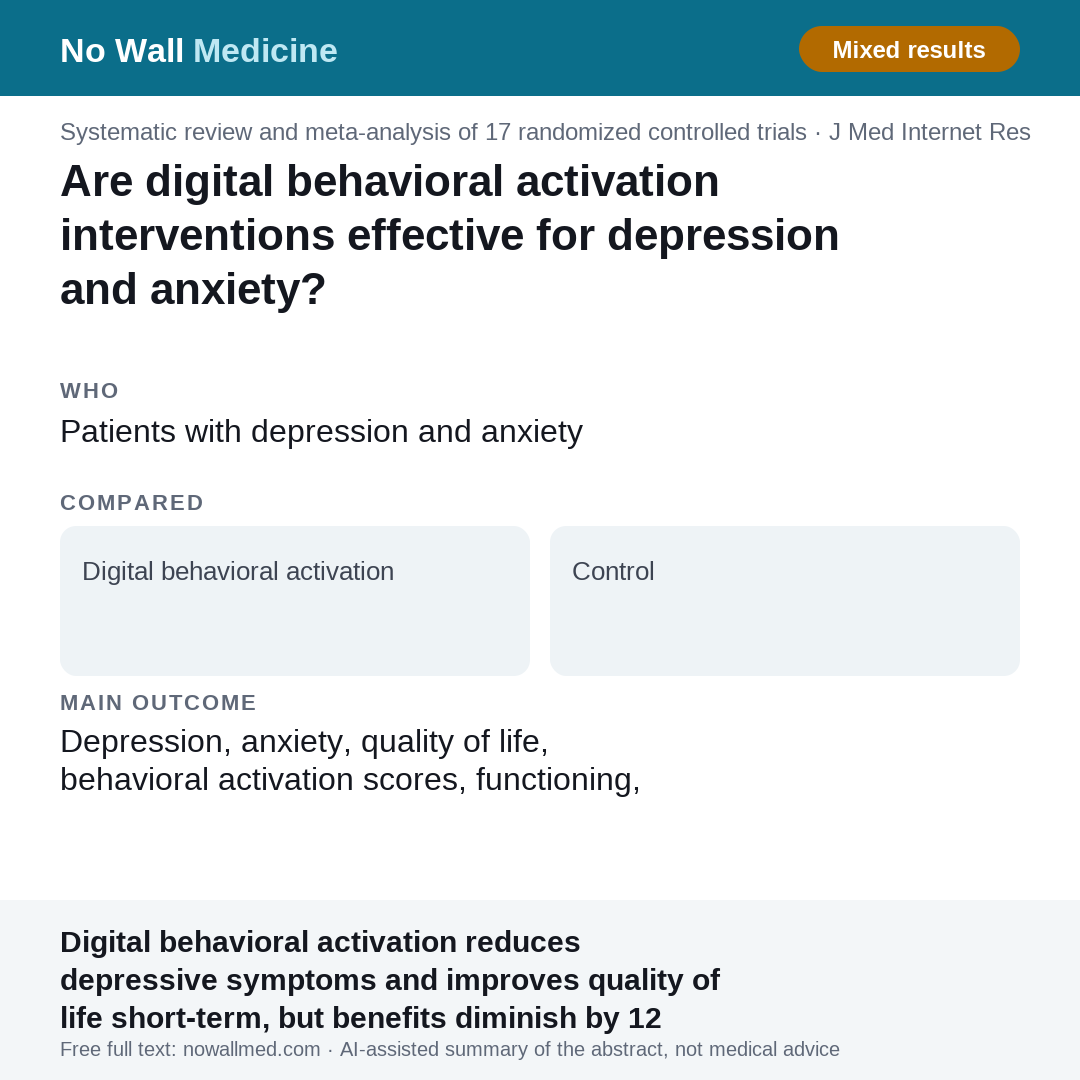
Effectiveness of Digital Behavioral Activation Interventions for Depression and Anxiety: Systematic Review and Meta-Analysis
Systematic review and meta-analysis of 17 randomized controlled trialsMixed results
Are digital behavioral activation interventions effective for depression and anxiety?
Who
Patients with depression and anxiety
Compared
Digital behavioral activation
Control
Main outcome
Depression, anxiety, quality of life, behavioral activation scores, functioning, disability, and stress
Bottom line: Digital behavioral activation reduces depressive symptoms and improves quality of life short-term, but benefits diminish by 12 months.
Limitation: Effects tend to diminish over time with no sustained benefits observed at 12 months.
J Med Internet Res · 2025-06-17Download image
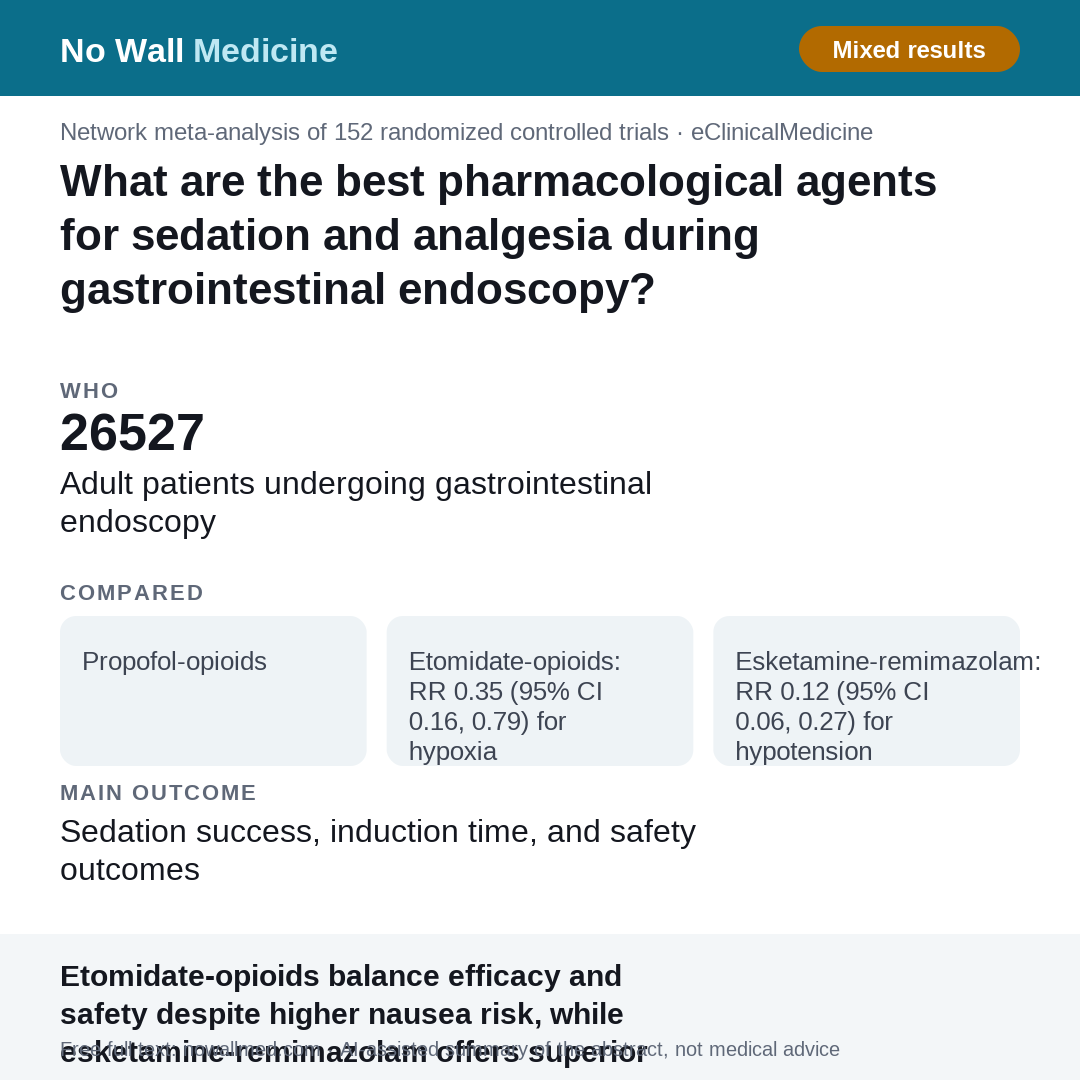
Pharmacological agents for procedural sedation and analgesia in patients undergoing gastrointestinal endoscopy: a systematic review and network meta-analysis
Network meta-analysis of 152 randomized controlled trialsMixed results
What are the best pharmacological agents for sedation and analgesia during gastrointestinal endoscopy?
Who
26527
Adult patients undergoing gastrointestinal endoscopy
Compared
Propofol-opioids
Etomidate-opioids: RR 0.35 (95% CI 0.16, 0.79) for hypoxia
Esketamine-remimazolam: RR 0.12 (95% CI 0.06, 0.27) for hypotension
Main outcome
Sedation success, induction time, and safety outcomes
Result: RR 0.35 (95% CI 0.16, 0.79) for hypoxia; RR 2.61 (95% CI 1.13, 6.07) for postoperative nausea and vomiting
Bottom line: Etomidate-opioids balance efficacy and safety despite higher nausea risk, while esketamine-remimazolam offers superior hemodynamic stability and faster recovery.
eClinicalMedicine · 2025-06-16Download image
The Scale of Neurodegeneration in Moderate-to-Severe Traumatic Brain Injury: A Systematic Review of Longitudinal Studies
Systematic review of longitudinal studiesHarm found
What is the scale and timeline of neurodegeneration in moderate-to-severe traumatic brain injury?
Who
Adults with moderate-to-severe traumatic brain injury
Compared
-0.28%Total grey matter volume
-0.65%Total white matter volume
-1.98%Hippocampal volume
-3.15%Corpus callosum fractional anisotropy
Main outcome
Annualized percent change in brain volume and fractional anisotropy
Bottom line: Moderate-to-severe traumatic brain injury involves widespread progressive volumetric and white matter integrity losses over time.
Limitation: Gaps include mechanisms of degeneration and whether progressive losses remain constant or attenuate with time.
Ann Neurol · 2025-06-16Download image

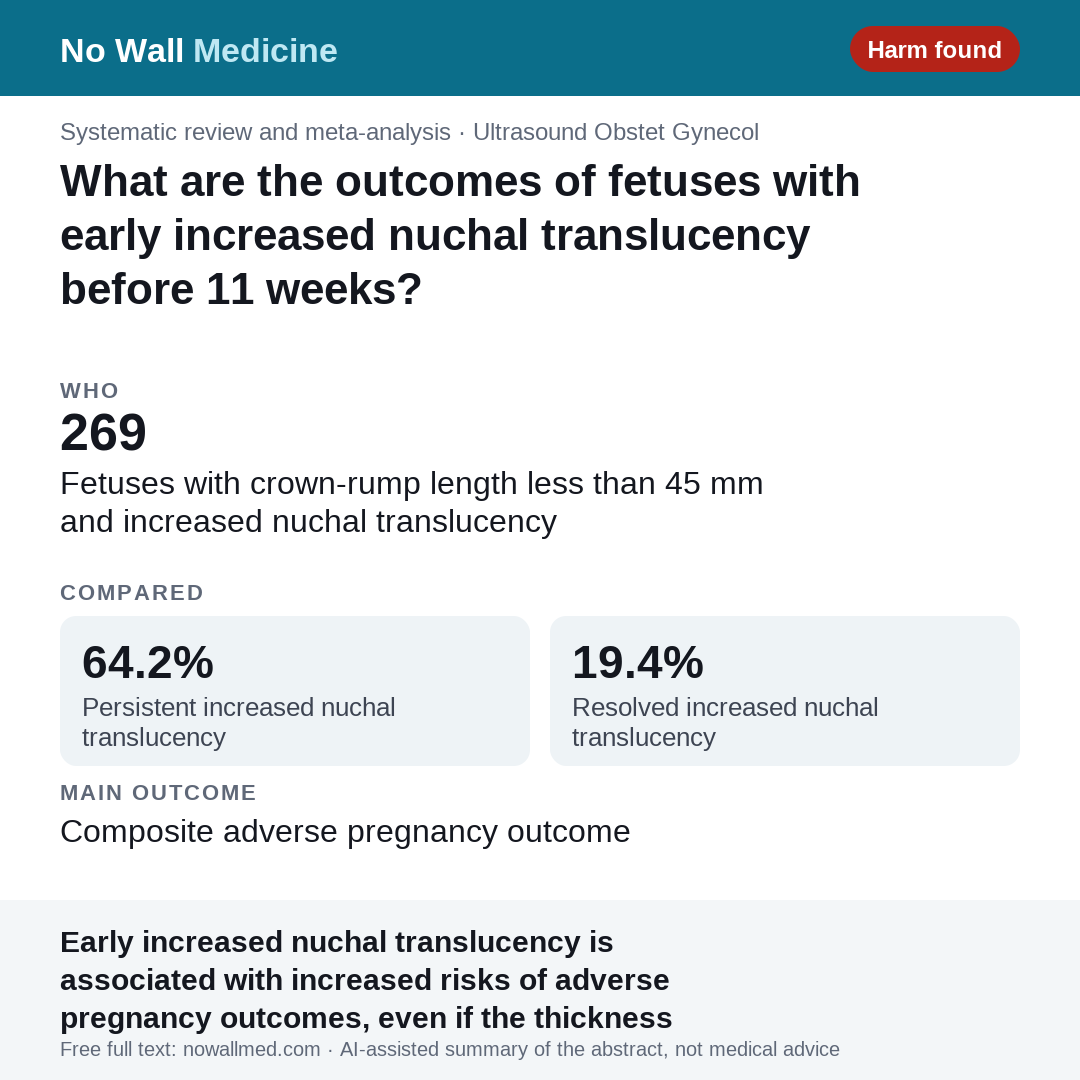
Outcome of fetuses with early increased nuchal translucency: systematic review and meta-analysis
Systematic review and meta-analysisHarm found
What are the outcomes of fetuses with early increased nuchal translucency before 11 weeks?
Who
269
Fetuses with crown-rump length less than 45 mm and increased nuchal translucency
Compared
64.2%Persistent increased nuchal translucency (95% CI, 51.8-75.6%)
19.4%Resolved increased nuchal translucency (95% CI, 8.8-33.0%)
Main outcome
Composite adverse pregnancy outcome
Result: 42.0% (95% CI, 18.5-67.6%)
Bottom line: Early increased nuchal translucency is associated with increased risks of adverse pregnancy outcomes, even if the thickness resolves later.
Ultrasound Obstet Gynecol · 2025-06-16Download image
Food marketing, eating and health outcomes in children and adults: a systematic review and meta-analysis
Systematic review and meta-analysisHarm found
What are the behavioral and health impacts of food marketing on children and adults?
Who
Children and adults
Compared
Food marketing exposure
Control
Main outcome
Choice of unhealthy foods and food consumption
Result: OR = 2·45 (95 % CI 1·41, 4·27) and standardised mean difference = 0·311 (95 % CI 0·185, 0·437)
Bottom line: Food marketing significantly increases the choice of unhealthy foods and increases food consumption in children and adults.
Br J Nutr · 2025-06-16Download image

Effects of head-up CPR on survival and neurological outcomes: A systematic review
Systematic review of observational studiesUnclear result
Does head-up cardiopulmonary resuscitation affect survival and neurological outcomes?
Who
10,099
Adults and children with cardiac arrest · In-hospital or out-of-hospital settings
Compared
Head-up CPR or bundle
Standard or compression-only CPR
Main outcome
Survival and neurological outcomes
Bottom line: Evidence is limited and of very-low certainty due to the absence of randomized controlled trials.
Limitation: Very-low certainty of evidence, subject to high-risk of bias and absence of randomized controlled trials.
Resusc Plus · 2025-06-16Download image

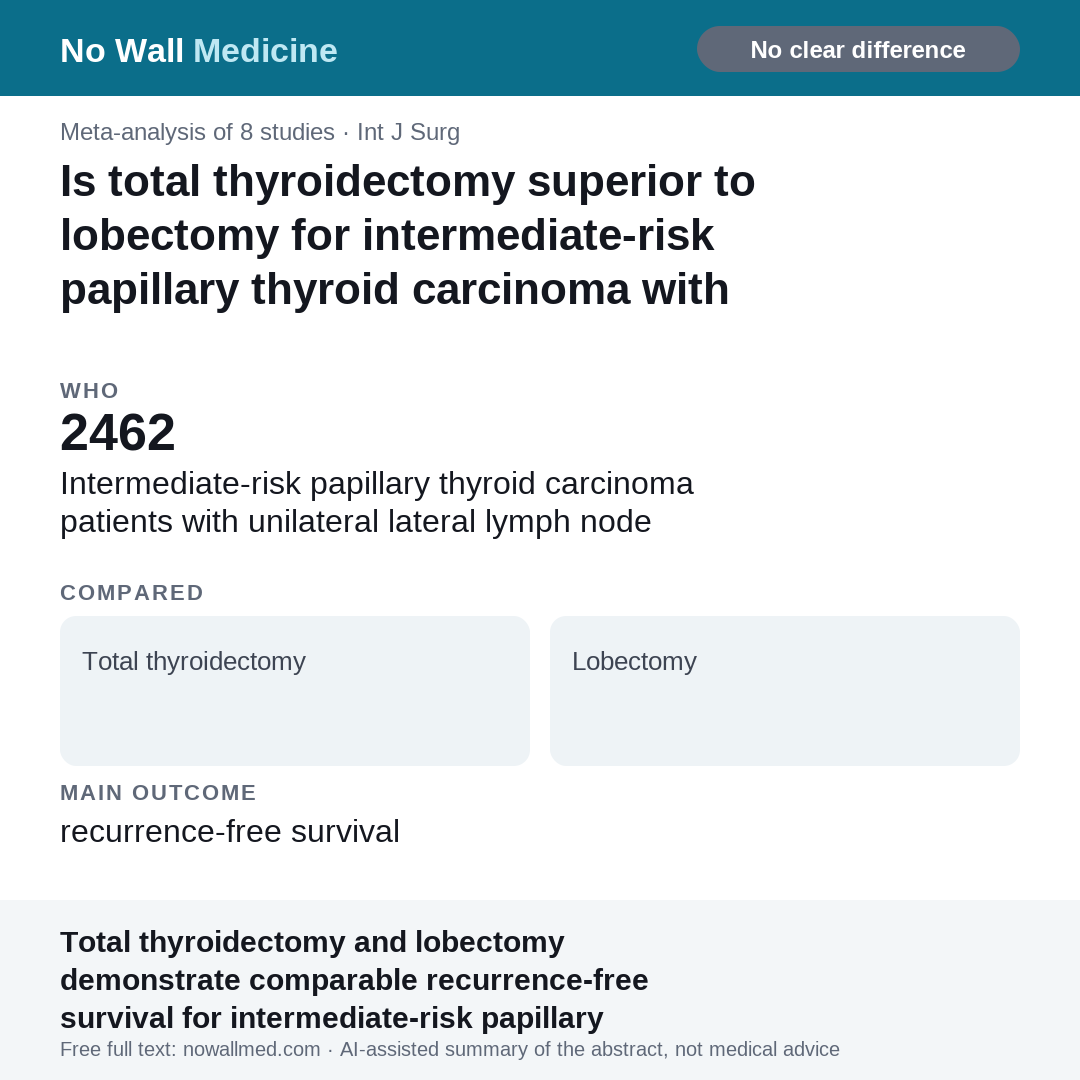
Comparison of total thyroidectomy and lobectomy for intermediate-risk papillary thyroid carcinoma with lateral lymph node metastasis: a systematic review and meta-analysis
Meta-analysis of 8 studiesNo clear difference
Is total thyroidectomy superior to lobectomy for intermediate-risk papillary thyroid carcinoma with unilateral lateral lymph node metastasis?
Who
2462
Intermediate-risk papillary thyroid carcinoma patients with unilateral lateral lymph node metastasis
Compared
Total thyroidectomy
Lobectomy
Main outcome
recurrence-free survival
Result: hazard ratio 1.08 (95% CI 0.83-1.40)
Bottom line: Total thyroidectomy and lobectomy demonstrate comparable recurrence-free survival for intermediate-risk papillary thyroid carcinoma with unilateral lateral lymph node metastasis.
Int J Surg · 2025-06-15Download image
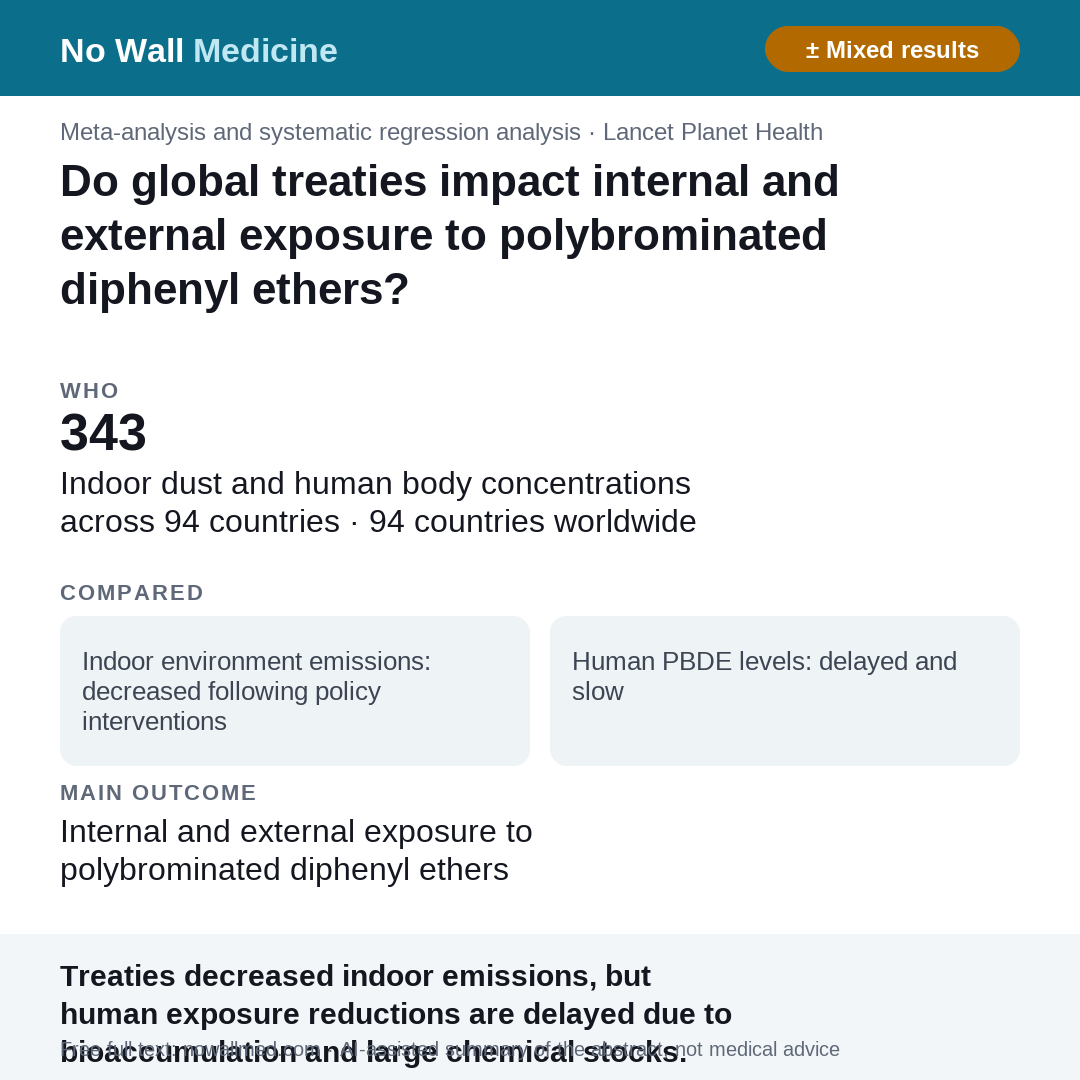
Effects of global treaties on commercial chemicals widely used as additives: a meta-analysis of historical measurements of polybrominated diphenyl ethers
Meta-analysis and systematic regression analysisMixed results
Do global treaties impact internal and external exposure to polybrominated diphenyl ethers?
Who
343
Indoor dust and human body concentrations across 94 countries · 94 countries worldwide
Compared
Indoor environment emissions: decreased following policy interventions
Human PBDE levels: delayed and slow
Main outcome
Internal and external exposure to polybrominated diphenyl ethers
Bottom line: Treaties decreased indoor emissions, but human exposure reductions are delayed due to bioaccumulation and large chemical stocks.
Limitation: Paucity of systematic longitudinal studies to evaluate monitoring effectiveness at global and national levels.
Funded by: National Natural Science Foundation
Lancet Planet Health · 2025-06-15Download image