Visual abstracts
New randomized trials and meta-analyses from leading journals at a glance: who was studied, what was compared, and what was found. Every paper is free to read in full.
All specialtiesCardiology 4780Oncology 4080Gastroenterology & Hepatology 1914Infectious Disease 3775Neurology 1883Psychiatry & Mental Health 2238Pulmonology 2058Critical Care 1331Endocrinology & Diabetes 2550Pediatrics 2908Surgery 2496Orthopedics & Sports Medicine 922Neurosurgery 532Cardiothoracic & Vascular Surgery 662Plastic & Reconstructive Surgery 584Nephrology 1111Rheumatology 812Hematology 1095Dermatology 617Ophthalmology 537Obstetrics & Gynecology 1656Public & Global Health 1041Radiology & Imaging 637Anesthesiology 958Urology 751ENT (Otolaryngology) 497Emergency Medicine 484Allergy & Immunology 310Geriatrics 973Family Medicine & Primary Care 538Medical Genetics & Genomics 662Pathology & Laboratory Medicine 156Physical Medicine & Rehabilitation 744Palliative Care 422Nutrition 1564Digital Health & AI 2188General Medicine 318
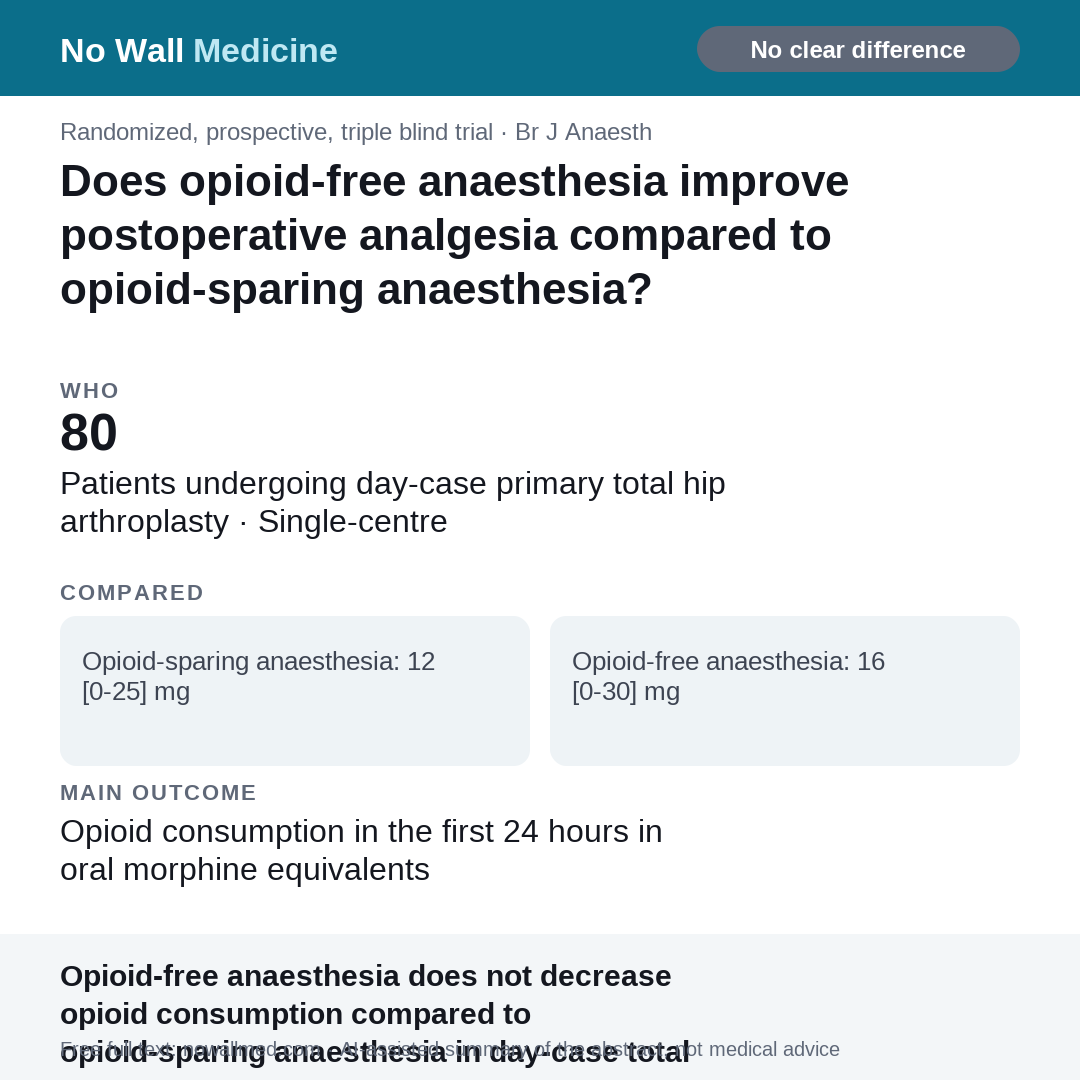
Opioid-free versus opioid-sparing anaesthesia in ambulatory total hip arthroplasty: a randomised controlled trial
Randomized, prospective, triple blind trialNo clear difference
Does opioid-free anaesthesia improve postoperative analgesia compared to opioid-sparing anaesthesia?
Who
80
Patients undergoing day-case primary total hip arthroplasty · Single-centre
Compared
Opioid-sparing anaesthesia: 12 [0-25] mg
Opioid-free anaesthesia: 16 [0-30] mg
Main outcome
Opioid consumption in the first 24 hours in oral morphine equivalents
Bottom line: Opioid-free anaesthesia does not decrease opioid consumption compared to opioid-sparing anaesthesia in day-case total hip arthroplasty.
Br J Anaesth · 2023-12-02Download image
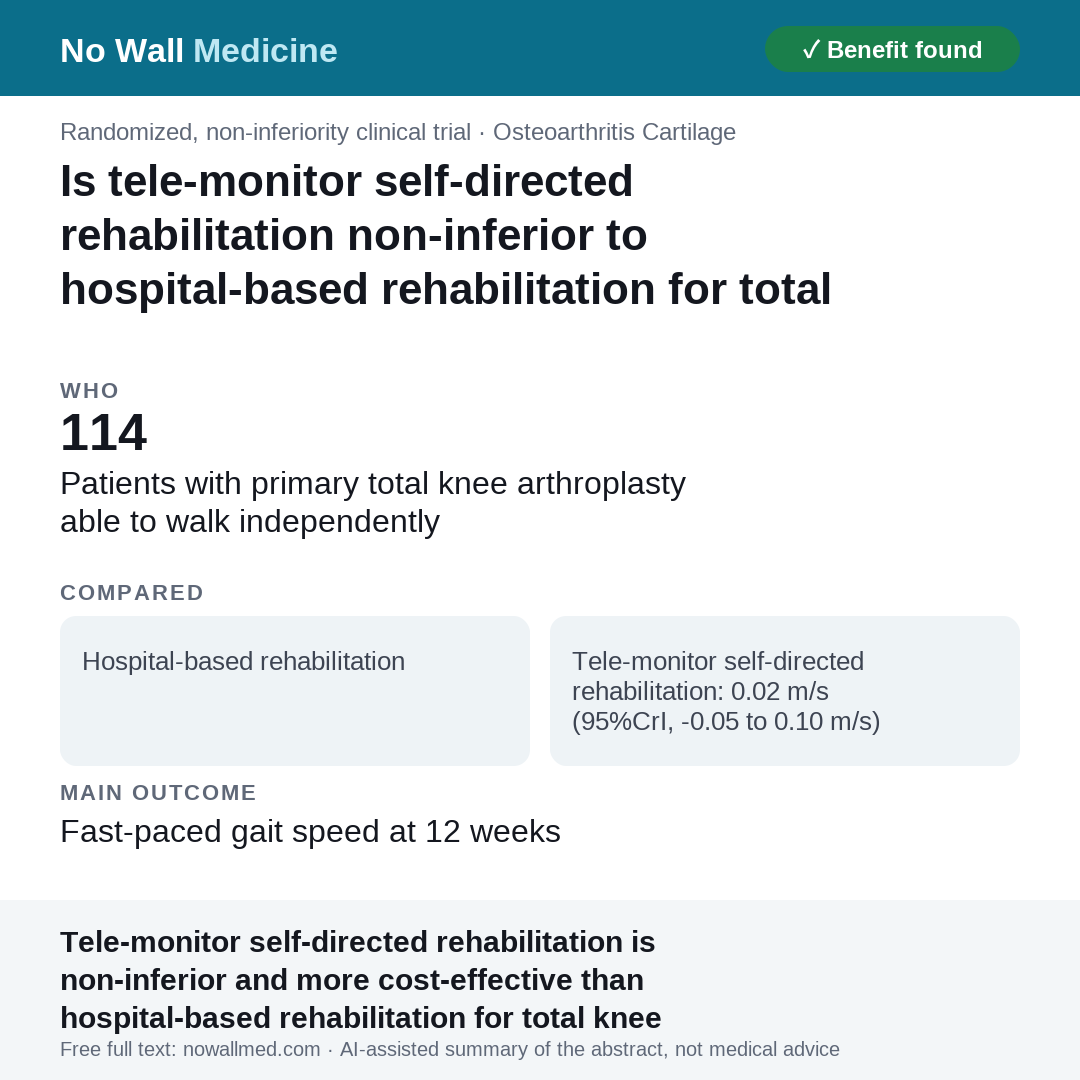
Cost and outcomes of Hospital-based Usual cAre versus Tele-monitor self-directed Rehabilitation (HUATR) in patients with total knee arthroplasty: A randomized, controlled, non-inferiority trial
Randomized, non-inferiority clinical trialBenefit found
Is tele-monitor self-directed rehabilitation non-inferior to hospital-based rehabilitation for total knee arthroplasty?
Who
114
Patients with primary total knee arthroplasty able to walk independently
Compared
Hospital-based rehabilitation
Tele-monitor self-directed rehabilitation: 0.02 m/s (95%CrI, -0.05 to 0.10 m/s)
Main outcome
Fast-paced gait speed at 12 weeks
Result: week-12 adjusted TR-HBR difference, 0.02 m/s; 95%CrI, -0.05 to 0.10 m/s
Bottom line: Tele-monitor self-directed rehabilitation is non-inferior and more cost-effective than hospital-based rehabilitation for total knee arthroplasty patients.
Osteoarthritis Cartilage · 2023-12-02Download image
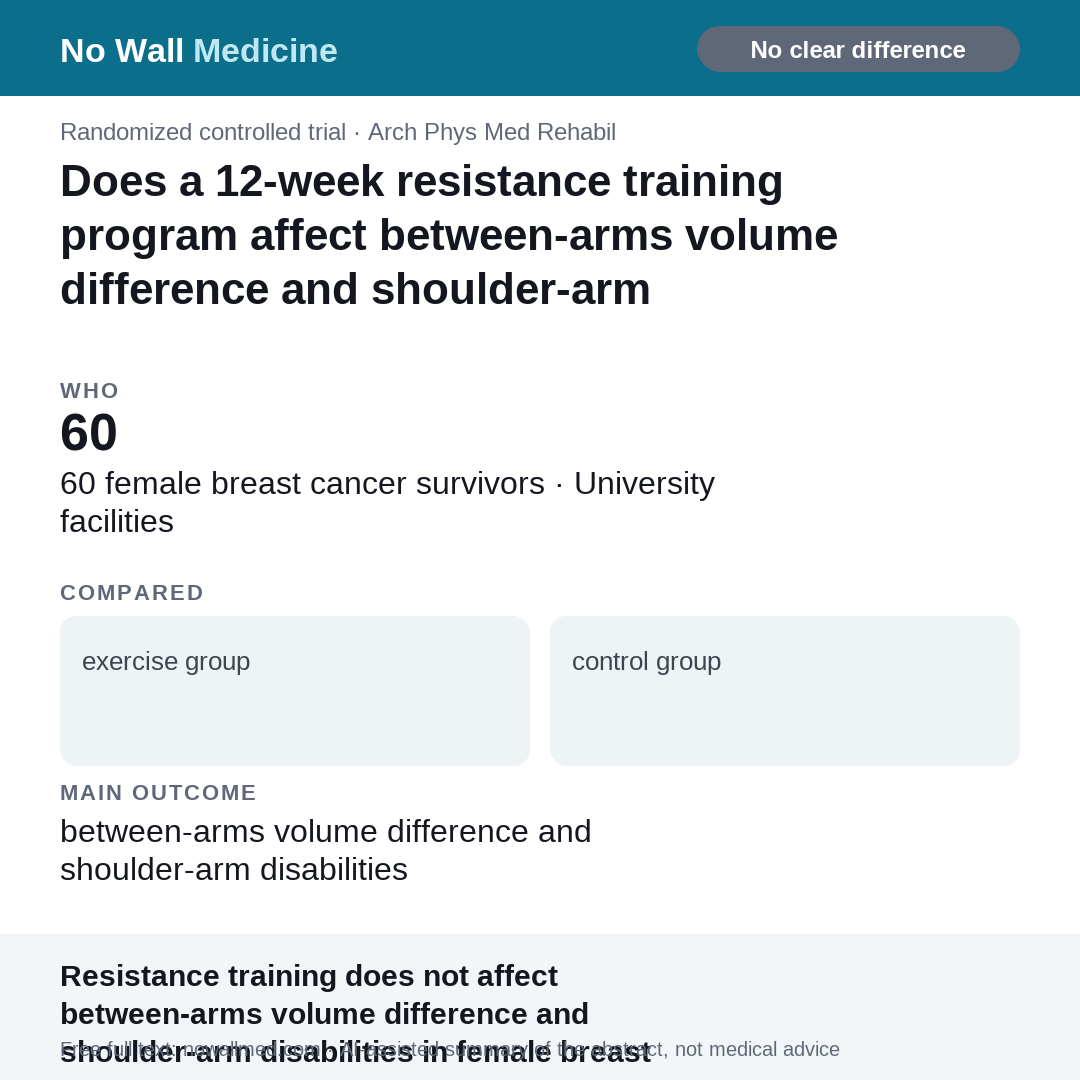
Does a Resistance Training Program Affect Between-arms Volume Difference and Shoulder-arm Disabilities in Female Breast Cancer Survivors? The Role of Surgery Type and Treatments. Secondary Outcomes of the EFICAN Trial
Randomized controlled trialNo clear difference
Does a 12-week resistance training program affect between-arms volume difference and shoulder-arm disabilities?
Who
60
60 female breast cancer survivors · University facilities
Compared
exercise group
control group
Main outcome
between-arms volume difference and shoulder-arm disabilities
Result: between-arms volume difference 1.207 (95% CI -0.964, 3.377); shoulder-arm disabilities 2.070 (95% CI -4.362, 8.501)
Bottom line: Resistance training does not affect between-arms volume difference and shoulder-arm disabilities in female breast cancer survivors.
Arch Phys Med Rehabil · 2023-12-02Download image
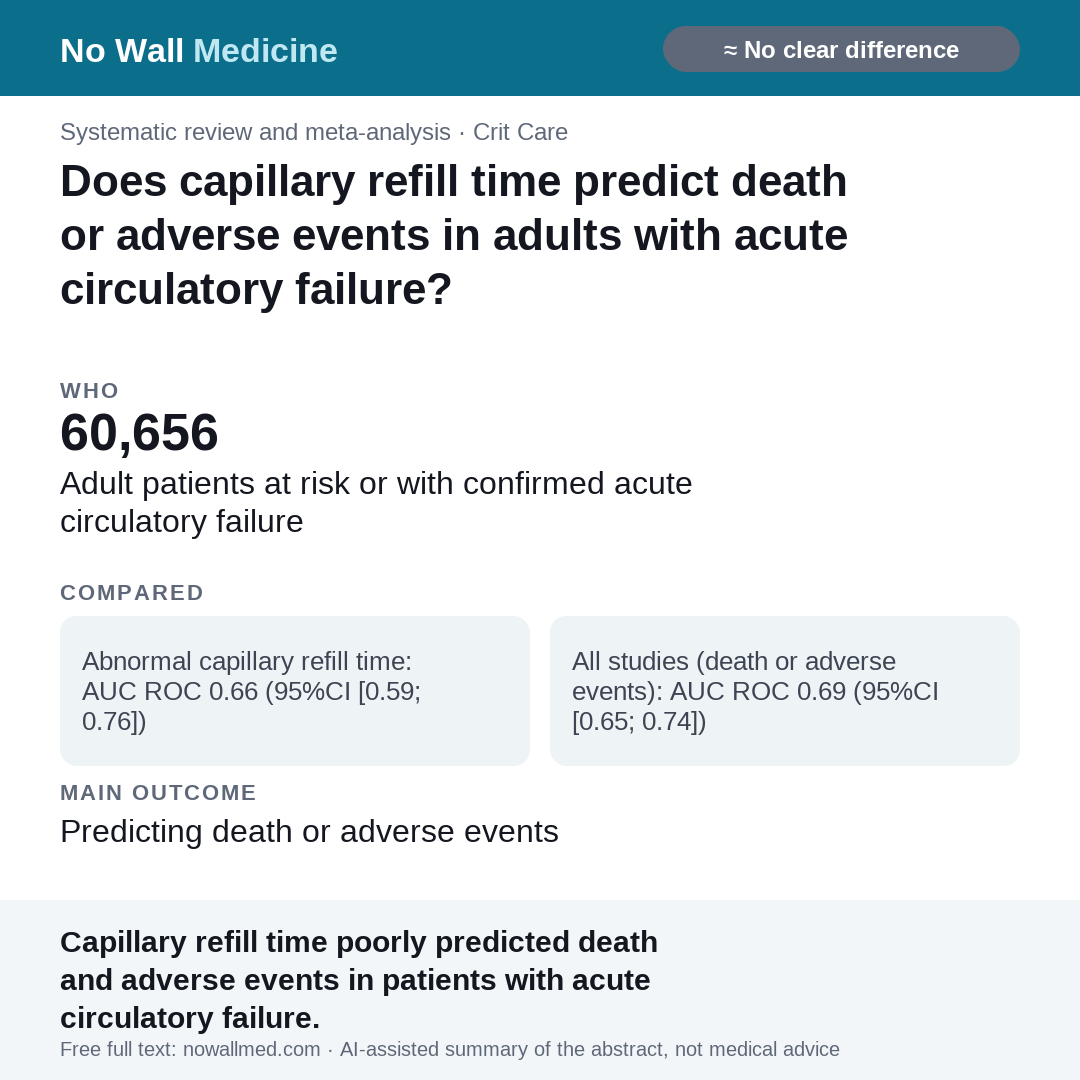
Prognostic value of capillary refill time in adult patients: a systematic review with meta-analysis
Systematic review and meta-analysisNo clear difference
Does capillary refill time predict death or adverse events in adults with acute circulatory failure?
Who
60,656
Adult patients at risk or with confirmed acute circulatory failure
Compared
Abnormal capillary refill time: AUC ROC 0.66 (95%CI [0.59; 0.76])
All studies (death or adverse events): AUC ROC 0.69 (95%CI [0.65; 0.74])
Main outcome
Predicting death or adverse events
Result: AUC ROC 0.66 (95%CI [0.59; 0.76])
Bottom line: Capillary refill time poorly predicted death and adverse events in patients with acute circulatory failure.
Crit Care · 2023-12-02Download image
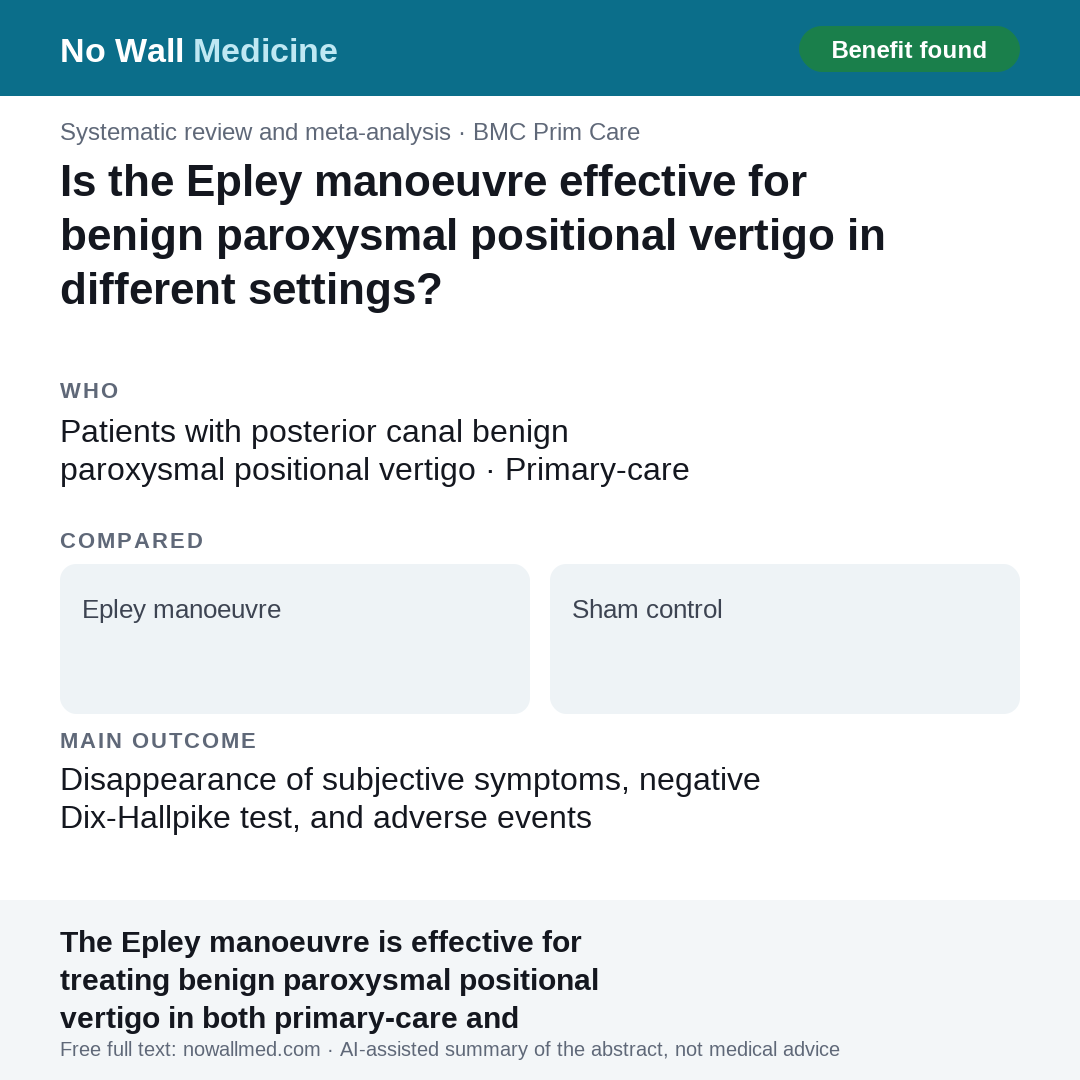
Epley manoeuvre's efficacy for benign paroxysmal positional vertigo (BPPV) in primary-care and subspecialty settings: a systematic review and meta-analysis
Systematic review and meta-analysisBenefit found
Is the Epley manoeuvre effective for benign paroxysmal positional vertigo in different settings?
Who
Patients with posterior canal benign paroxysmal positional vertigo · Primary-care and subspecialty settings
Compared
Epley manoeuvre
Sham control
Main outcome
Disappearance of subjective symptoms, negative Dix-Hallpike test, and adverse events
Result: risk ratio 3.14 (95% CI 1.96-5.02) in primary-care for subjective symptoms
Bottom line: The Epley manoeuvre is effective for treating benign paroxysmal positional vertigo in both primary-care and subspecialty settings.
Limitation: Evidence exhibited uncertainty about negative findings in primary-care and adverse events in subspecialty settings.
BMC Prim Care · 2023-12-02Download image
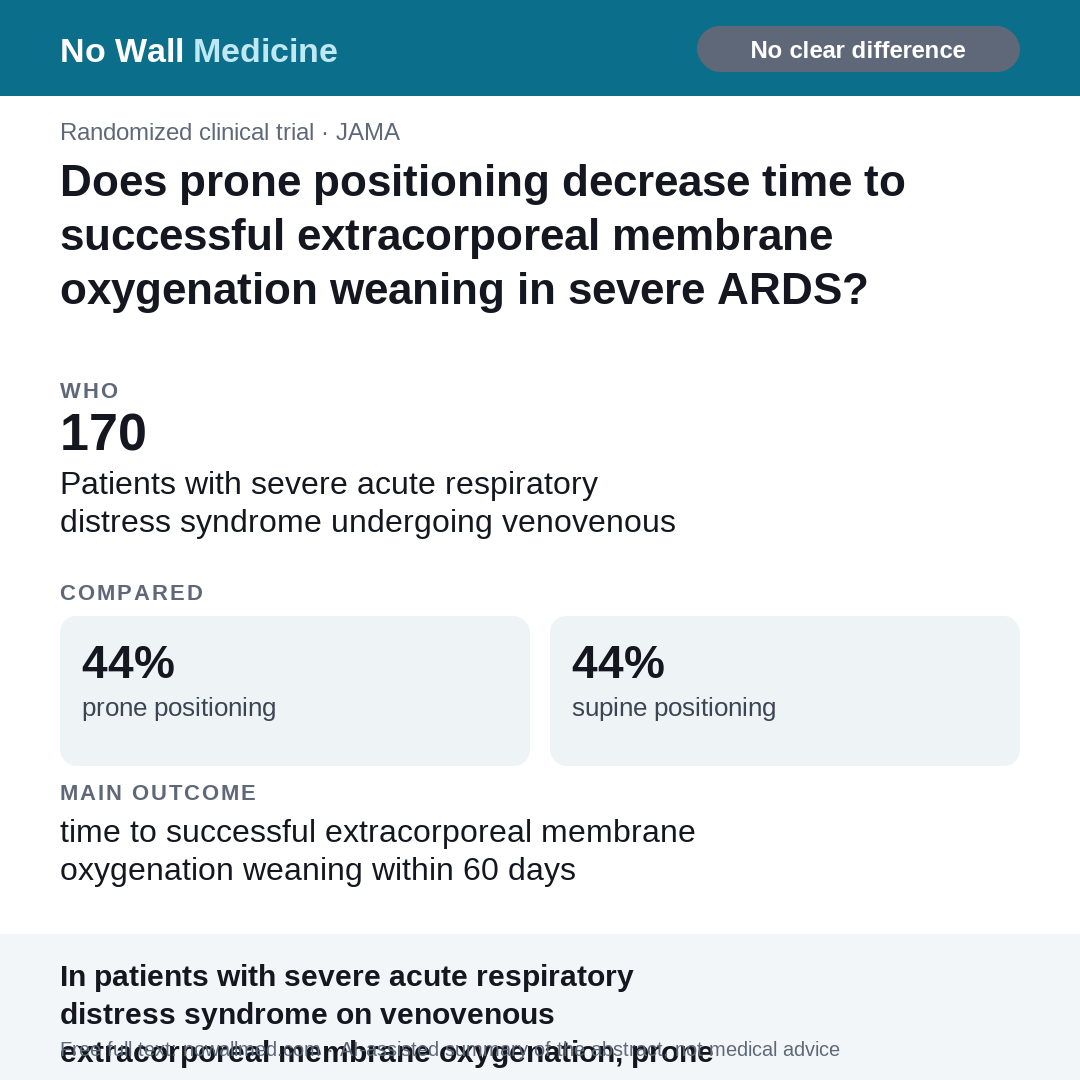
Prone Positioning During Extracorporeal Membrane Oxygenation in Patients With Severe ARDS: The PRONECMO Randomized Clinical Trial
Randomized clinical trialNo clear difference
Does prone positioning decrease time to successful extracorporeal membrane oxygenation weaning in severe ARDS?
Who
170
Patients with severe acute respiratory distress syndrome undergoing venovenous extracorporeal membrane oxygenation · 14 intensive care units in France
Compared
44%prone positioning (38/86)
44%supine positioning (37/84)
Main outcome
time to successful extracorporeal membrane oxygenation weaning within 60 days
Result: risk difference, 0.1% (95% CI, -14.9% to 15.2%)
Bottom line: In patients with severe acute respiratory distress syndrome on venovenous extracorporeal membrane oxygenation, prone positioning did not reduce weaning time.
JAMA · 2023-12-01Download image
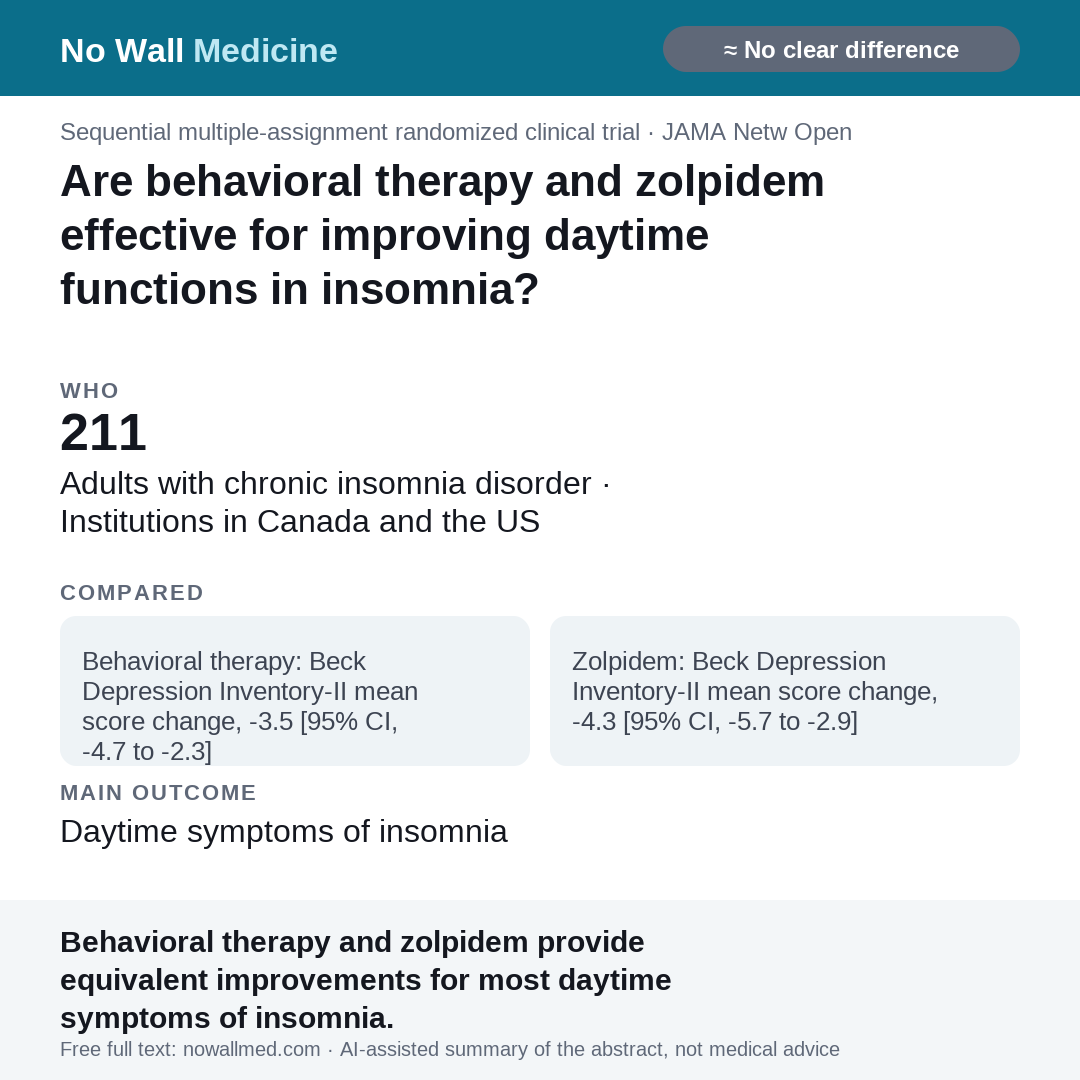
Effect of Psychological and Medication Therapies for Insomnia on Daytime Functions: A Randomized Clinical Trial
Sequential multiple-assignment randomized clinical trialNo clear difference
Are behavioral therapy and zolpidem effective for improving daytime functions in insomnia?
Who
211
Adults with chronic insomnia disorder · Institutions in Canada and the US
Compared
Behavioral therapy: Beck Depression Inventory-II mean score change, -3.5 [95% CI, -4.7 to -2.3]
Zolpidem: Beck Depression Inventory-II mean score change, -4.3 [95% CI, -5.7 to -2.9]
Main outcome
Daytime symptoms of insomnia
Bottom line: Behavioral therapy and zolpidem provide equivalent improvements for most daytime symptoms of insomnia.
JAMA Netw Open · 2023-12-01Download image
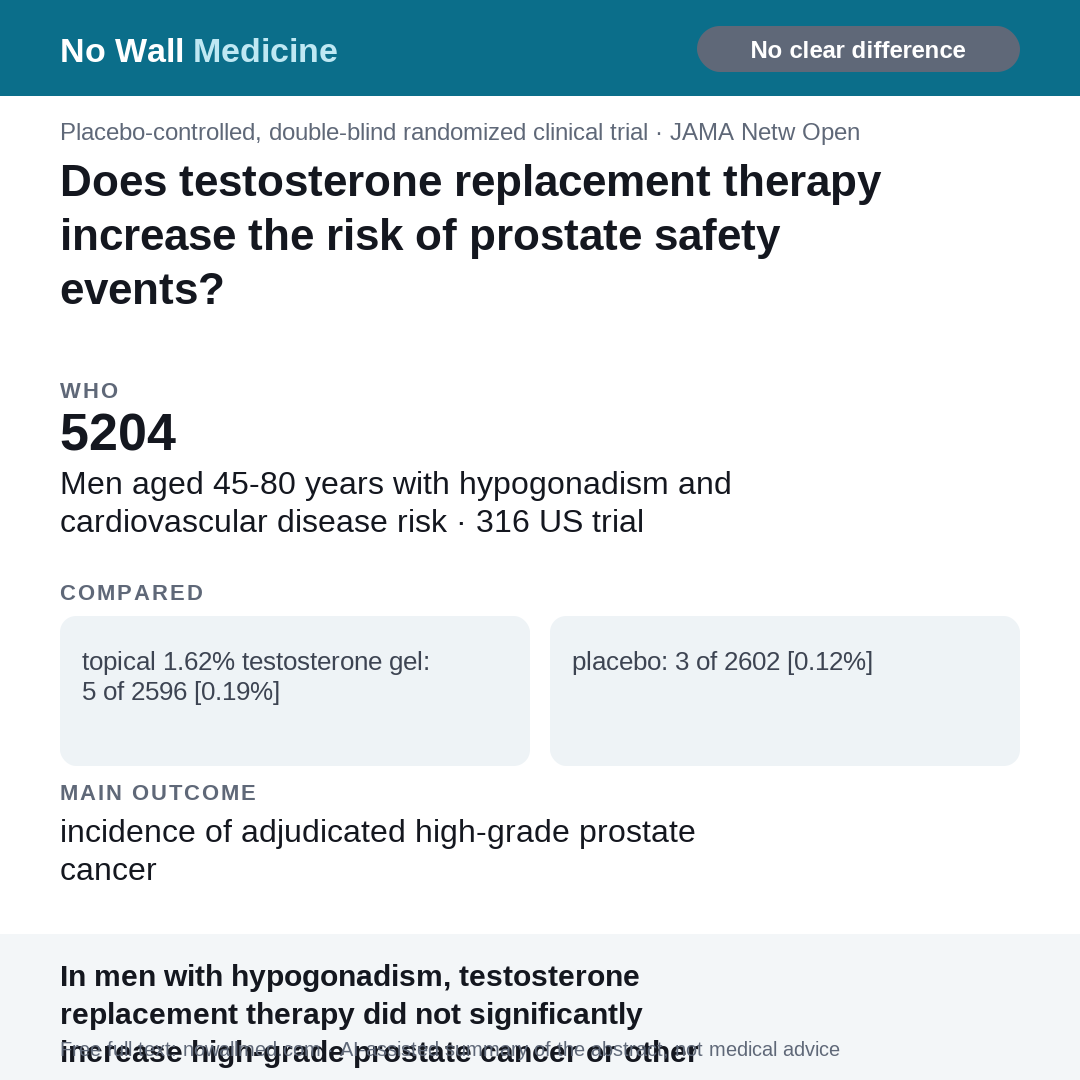
Prostate Safety Events During Testosterone Replacement Therapy in Men With Hypogonadism: A Randomized Clinical Trial
Placebo-controlled, double-blind randomized clinical trialNo clear difference
Does testosterone replacement therapy increase the risk of prostate safety events?
Who
5204
Men aged 45-80 years with hypogonadism and cardiovascular disease risk · 316 US trial sites
Compared
topical 1.62% testosterone gel: 5 of 2596 [0.19%]
placebo: 3 of 2602 [0.12%]
Main outcome
incidence of adjudicated high-grade prostate cancer
Result: hazard ratio 1.62 (95% CI 0.39-6.77)
Bottom line: In men with hypogonadism, testosterone replacement therapy did not significantly increase high-grade prostate cancer or other prostate safety events.
JAMA Netw Open · 2023-12-01Download image
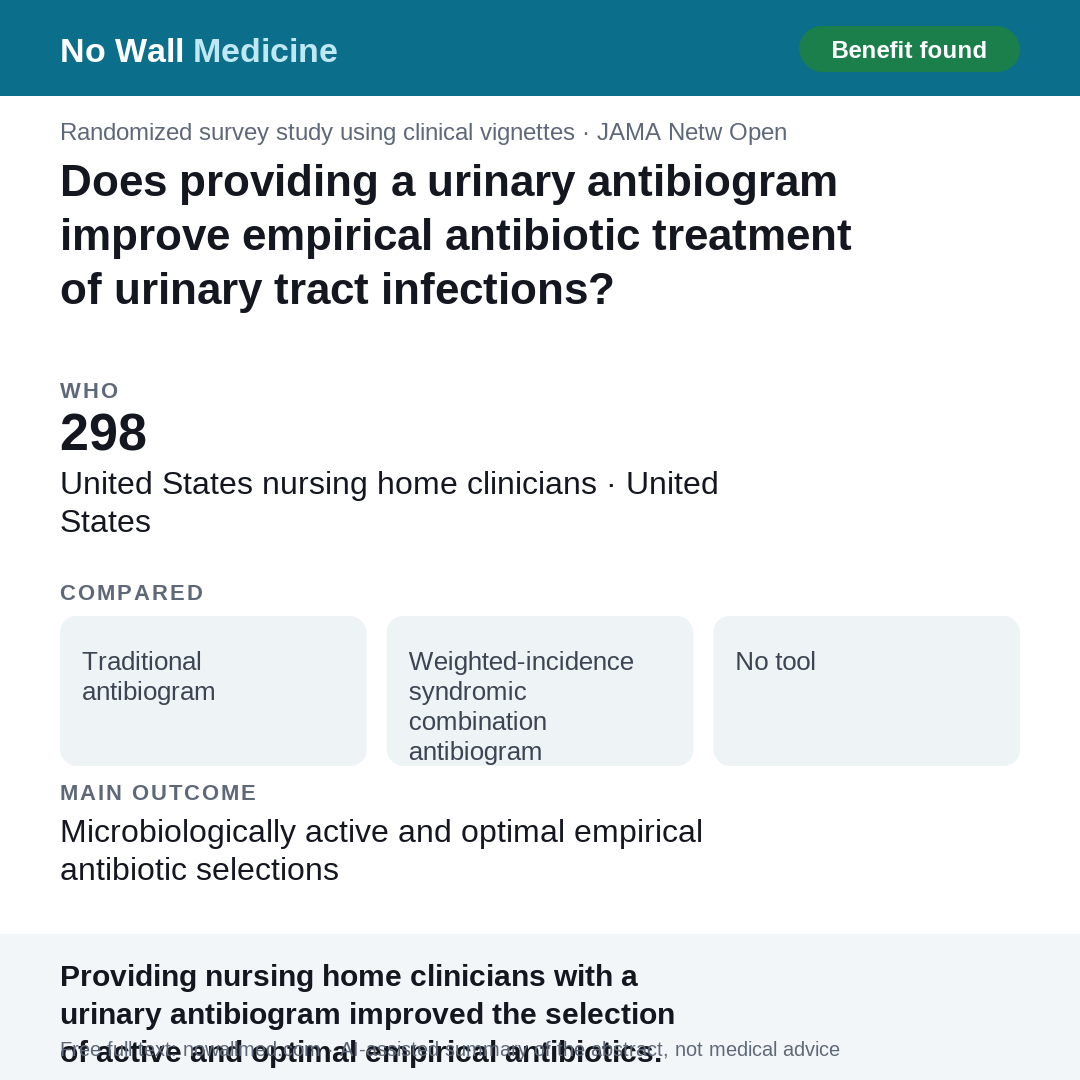
Syndromic Antibiograms and Nursing Home Clinicians' Antibiotic Choices for Urinary Tract Infections
Randomized survey study using clinical vignettesBenefit found
Does providing a urinary antibiogram improve empirical antibiotic treatment of urinary tract infections?
Who
298
United States nursing home clinicians · United States
Compared
Traditional antibiogram
Weighted-incidence syndromic combination antibiogram
No tool
Main outcome
Microbiologically active and optimal empirical antibiotic selections
Result: odds ratio 1.41 (95% CI 1.19-1.68) for traditional antibiogram
Bottom line: Providing nursing home clinicians with a urinary antibiogram improved the selection of active and optimal empirical antibiotics.
JAMA Netw Open · 2023-12-01Download image
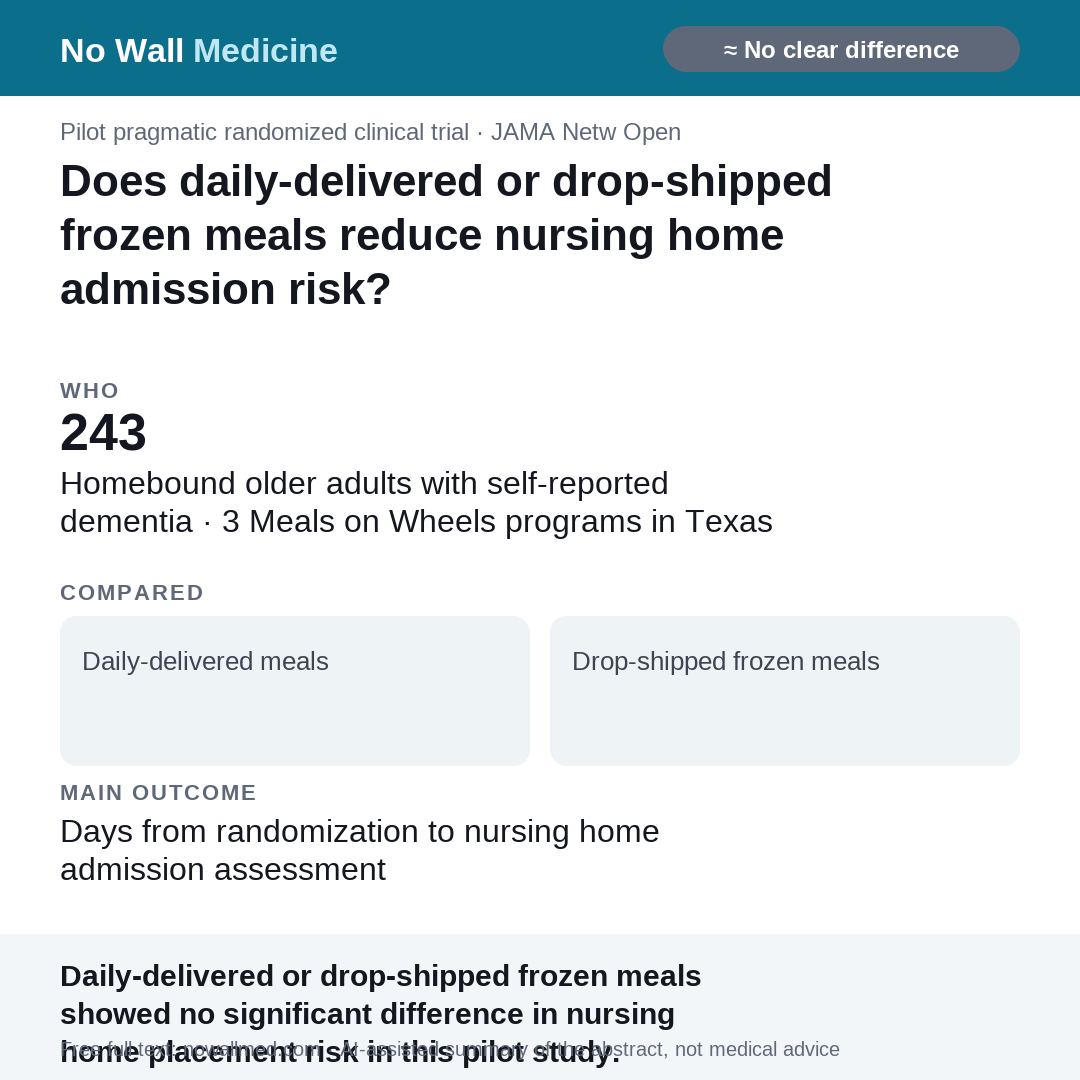
Home-Delivered Meals and Nursing Home Placement Among People With Self-Reported Dementia: A Pilot Pragmatic Clinical Trial
Pilot pragmatic randomized clinical trialNo clear difference
Does daily-delivered or drop-shipped frozen meals reduce nursing home admission risk?
Who
243
Homebound older adults with self-reported dementia · 3 Meals on Wheels programs in Texas and Florida
Compared
Daily-delivered meals
Drop-shipped frozen meals
Main outcome
Days from randomization to nursing home admission assessment
Result: adjusted log hazard ratio -0.67 (95% CI -1.52 to 0.19)
Bottom line: Daily-delivered or drop-shipped frozen meals showed no significant difference in nursing home placement risk in this pilot study.
Limitation: The pilot study was not powered to detect meaningful, statistically significant differences.
JAMA Netw Open · 2023-12-01Download image
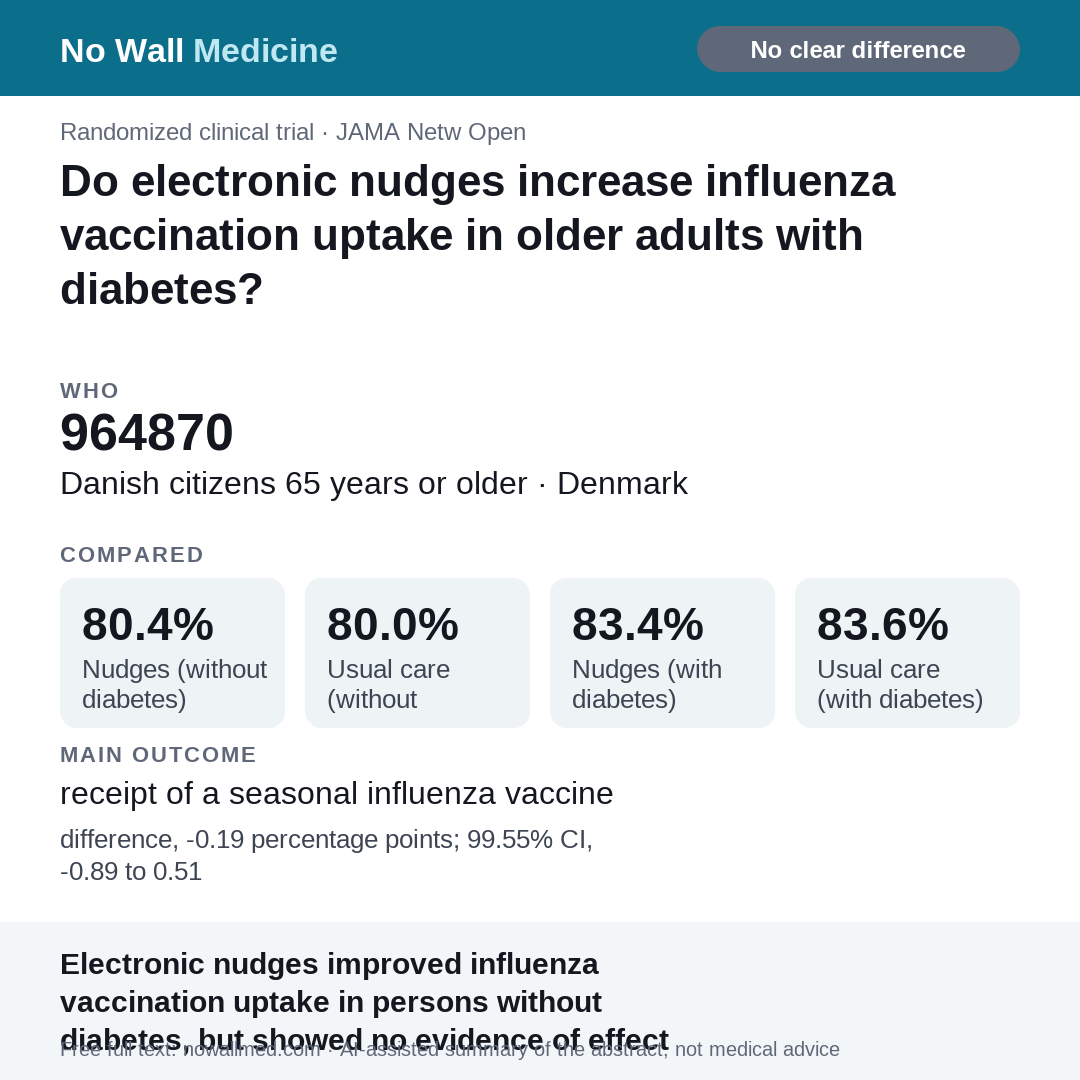
Electronically Delivered Nudges to Increase Influenza Vaccination Uptake in Older Adults With Diabetes: A Secondary Analysis of the NUDGE-FLU Trial
Randomized clinical trialNo clear difference
Do electronic nudges increase influenza vaccination uptake in older adults with diabetes?
Who
964870
Danish citizens 65 years or older · Denmark
Compared
80.4%Nudges (without diabetes)
80.0%Usual care (without diabetes)
83.4%Nudges (with diabetes)
83.6%Usual care (with diabetes)
Main outcome
receipt of a seasonal influenza vaccine
Result: difference, -0.19 percentage points; 99.55% CI, -0.89 to 0.51
Bottom line: Electronic nudges improved influenza vaccination uptake in persons without diabetes, but showed no evidence of effect in persons with diabetes.
JAMA Netw Open · 2023-12-01Download image
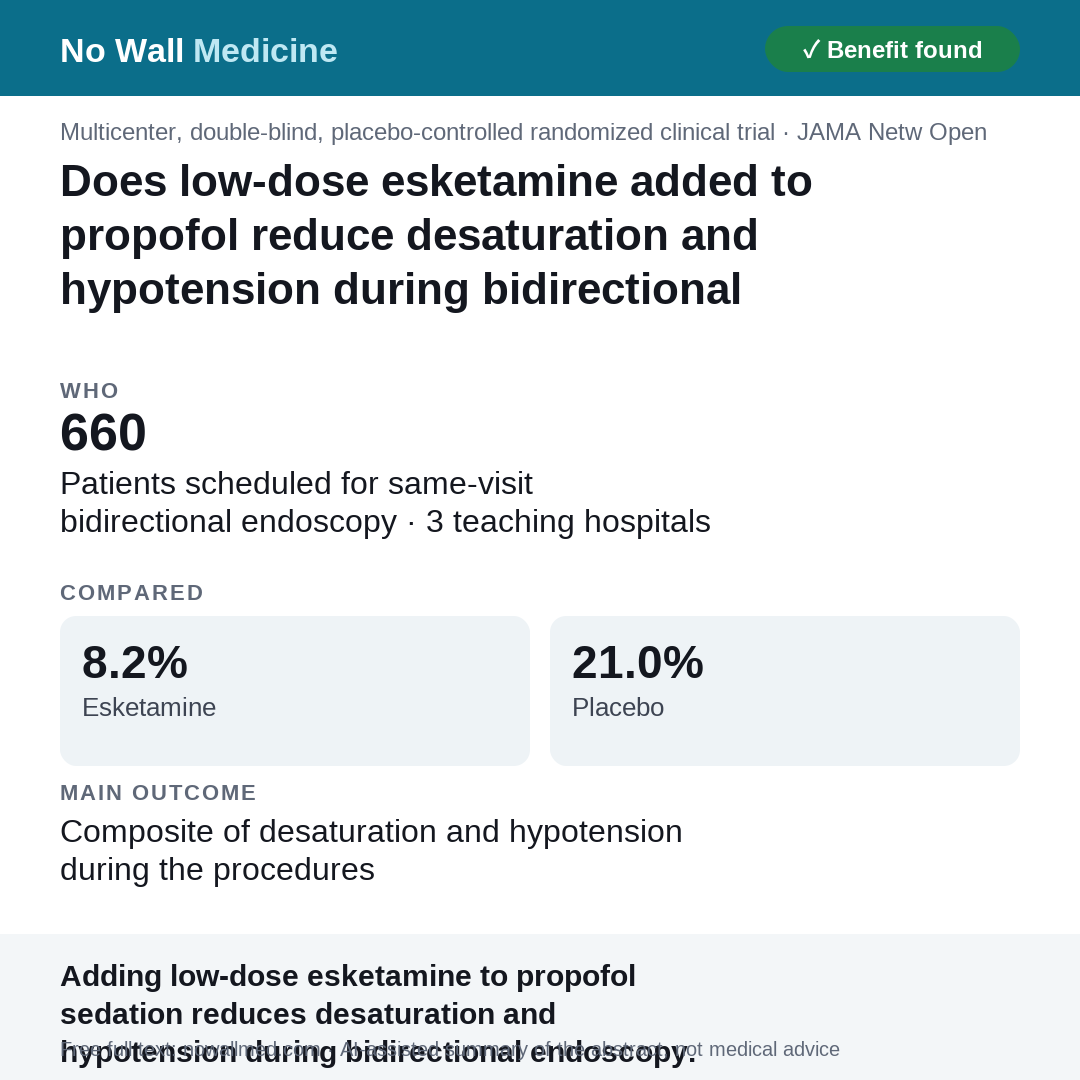
Effect of Esketamine Added to Propofol Sedation on Desaturation and Hypotension in Bidirectional Endoscopy: A Randomized Clinical Trial
Multicenter, double-blind, placebo-controlled randomized clinical trialBenefit found
Does low-dose esketamine added to propofol reduce desaturation and hypotension during bidirectional endoscopy?
Who
660
Patients scheduled for same-visit bidirectional endoscopy · 3 teaching hospitals in China
Compared
8.2%Esketamine
21.0%Placebo
Main outcome
Composite of desaturation and hypotension during the procedures
Result: odds ratio 0.34 (95% CI, 0.21-0.54)
Bottom line: Adding low-dose esketamine to propofol sedation reduces desaturation and hypotension during bidirectional endoscopy.
JAMA Netw Open · 2023-12-01Download image
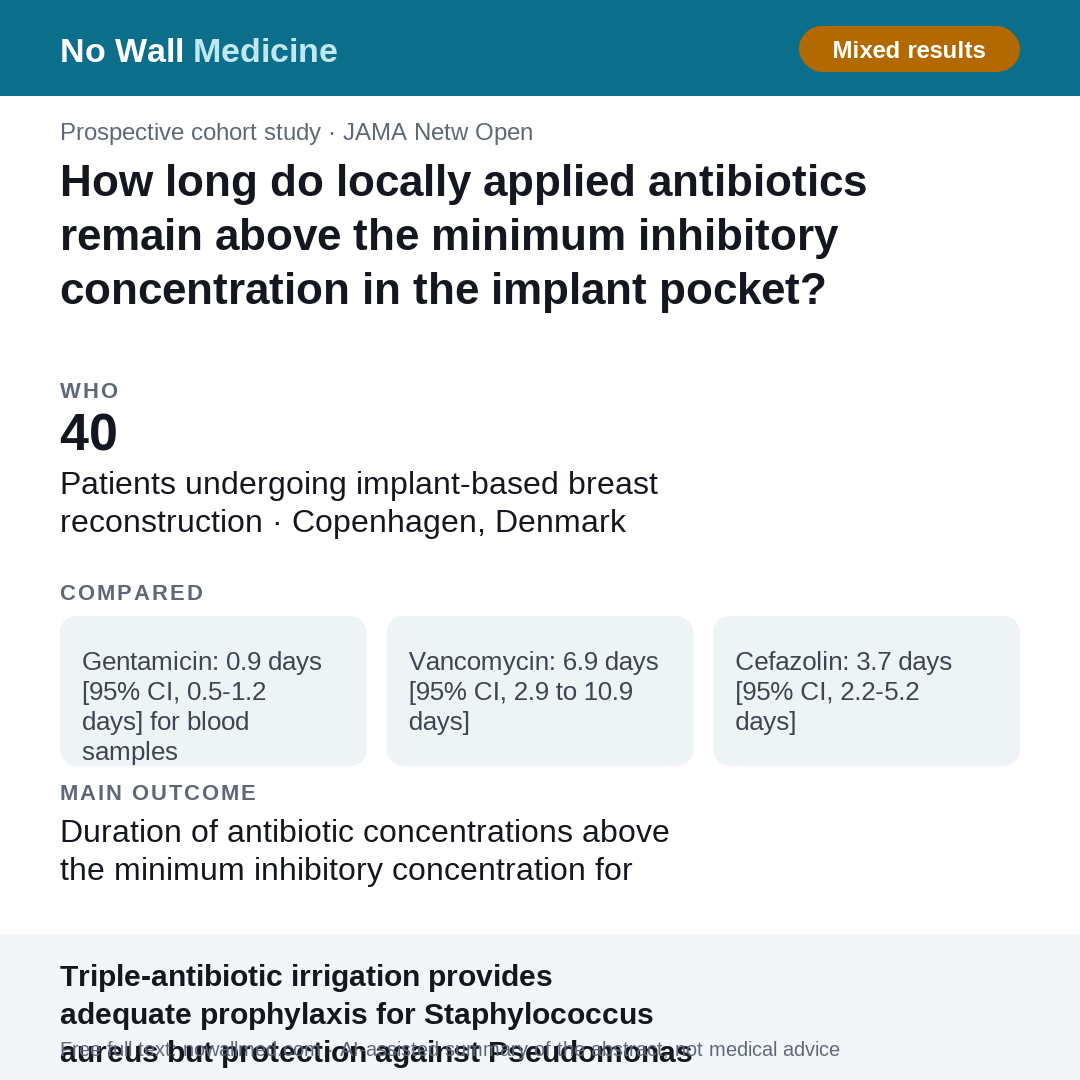
Pharmacokinetics of Locally Applied Antibiotic Prophylaxis for Implant-Based Breast Reconstruction
Prospective cohort studyMixed results
How long do locally applied antibiotics remain above the minimum inhibitory concentration in the implant pocket?
Who
40
Patients undergoing implant-based breast reconstruction · Copenhagen, Denmark
Compared
Gentamicin: 0.9 days [95% CI, 0.5-1.2 days] for blood samples
Vancomycin: 6.9 days [95% CI, 2.9 to 10.9 days]
Cefazolin: 3.7 days [95% CI, 2.2-5.2 days]
Main outcome
Duration of antibiotic concentrations above the minimum inhibitory concentration for Staphylococcus aureus
Bottom line: Triple-antibiotic irrigation provides adequate prophylaxis for Staphylococcus aureus but protection against Pseudomonas aeruginosa may be inadequate.
JAMA Netw Open · 2023-12-01Download image
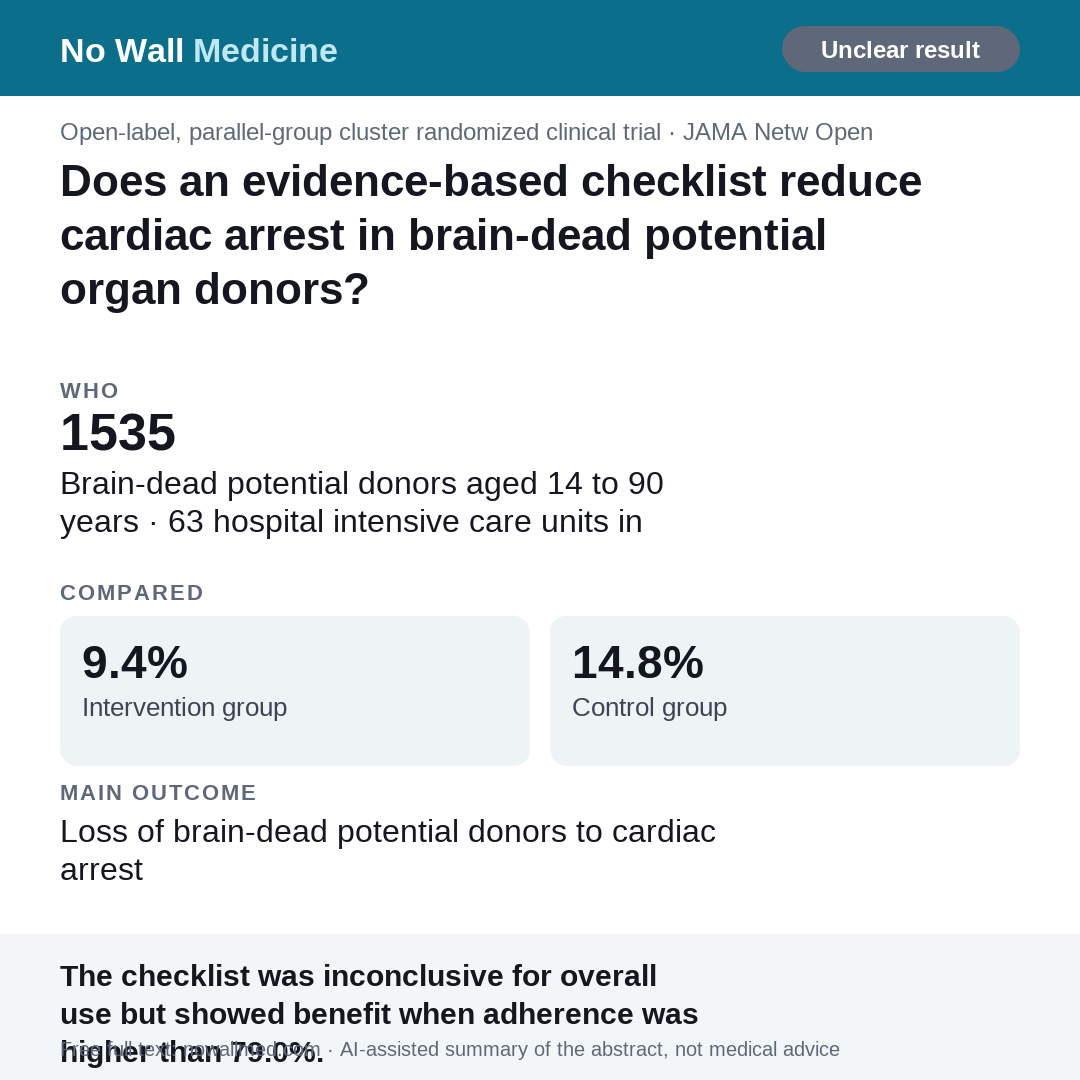
Evidence-Based Checklist to Delay Cardiac Arrest in Brain-Dead Potential Organ Donors: The DONORS Cluster Randomized Clinical Trial
Open-label, parallel-group cluster randomized clinical trialUnclear result
Does an evidence-based checklist reduce cardiac arrest in brain-dead potential organ donors?
Who
1535
Brain-dead potential donors aged 14 to 90 years · 63 hospital intensive care units in Brazil
Compared
9.4%Intervention group
14.8%Control group
Main outcome
Loss of brain-dead potential donors to cardiac arrest
Result: risk ratio 0.70 (95% CI, 0.46-1.08)
Bottom line: The checklist was inconclusive for overall use but showed benefit when adherence was higher than 79.0%.
Limitation: The trial was inconclusive in determining whether overall checklist use reduced cardiac arrest.
JAMA Netw Open · 2023-12-01Download image
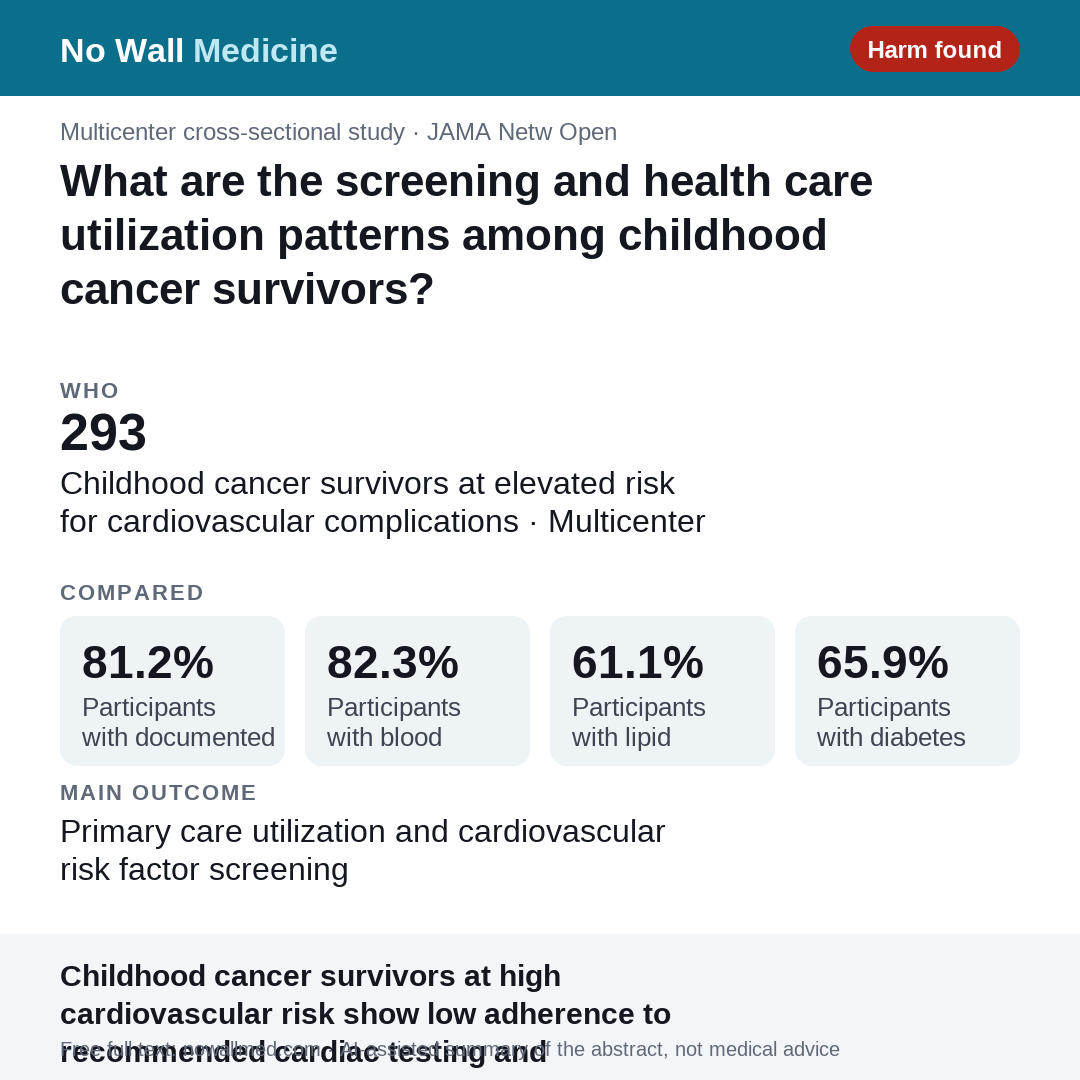
Primary Care Utilization and Cardiovascular Screening in Adult Survivors of Childhood Cancer
Multicenter cross-sectional studyHarm found
What are the screening and health care utilization patterns among childhood cancer survivors?
Who
293
Childhood cancer survivors at elevated risk for cardiovascular complications · Multicenter
Compared
81.2%Participants with documented primary care encounter
82.3%Participants with blood pressure screening
61.1%Participants with lipid testing
65.9%Participants with diabetes screening
Main outcome
Primary care utilization and cardiovascular risk factor screening
Bottom line: Childhood cancer survivors at high cardiovascular risk show low adherence to recommended cardiac testing and documentation of risks.
JAMA Netw Open · 2023-12-01Download image
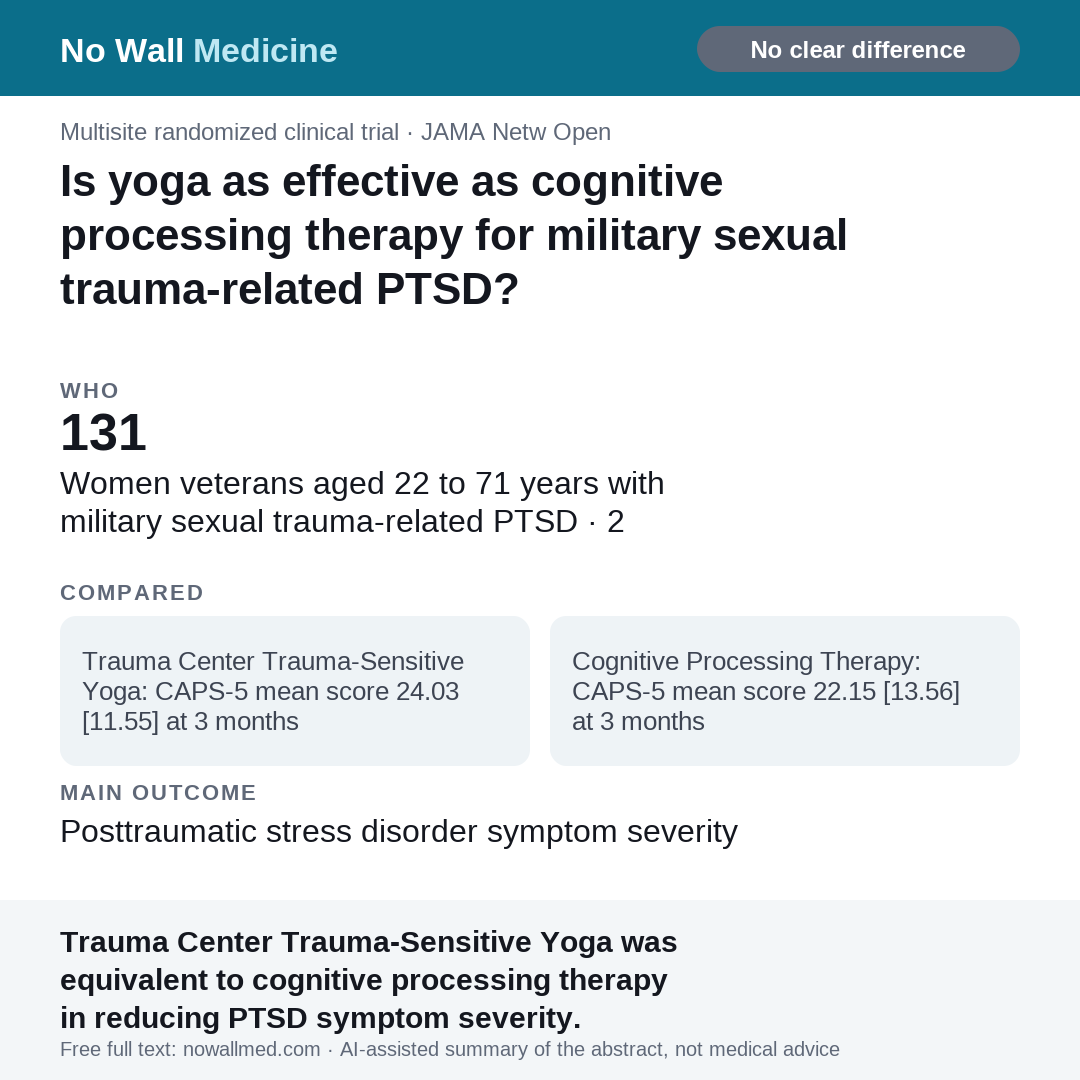
Yoga vs Cognitive Processing Therapy for Military Sexual Trauma-Related Posttraumatic Stress Disorder: A Randomized Clinical Trial
Multisite randomized clinical trialNo clear difference
Is yoga as effective as cognitive processing therapy for military sexual trauma-related PTSD?
Who
131
Women veterans aged 22 to 71 years with military sexual trauma-related PTSD · 2 Veterans Affairs health care systems
Compared
Trauma Center Trauma-Sensitive Yoga: CAPS-5 mean score 24.03 [11.55] at 3 months
Cognitive Processing Therapy: CAPS-5 mean score 22.15 [13.56] at 3 months
Main outcome
Posttraumatic stress disorder symptom severity
Bottom line: Trauma Center Trauma-Sensitive Yoga was equivalent to cognitive processing therapy in reducing PTSD symptom severity.
JAMA Netw Open · 2023-12-01Download image
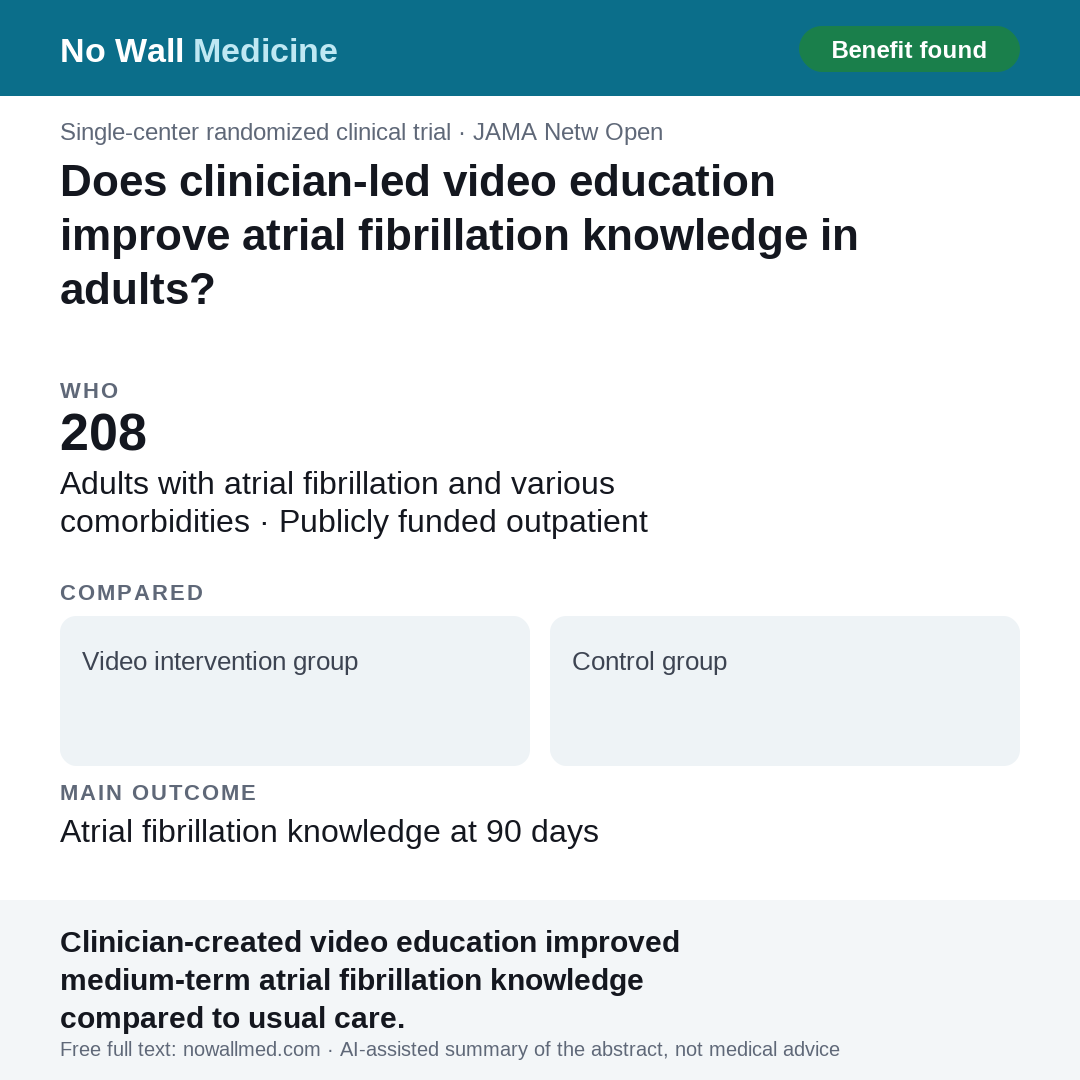
Clinician-Created Video Education for Patients With AF: A Randomized Clinical Trial
Single-center randomized clinical trialBenefit found
Does clinician-led video education improve atrial fibrillation knowledge in adults?
Who
208
Adults with atrial fibrillation and various comorbidities · Publicly funded outpatient cardiology clinics at a tertiary teaching hospital
Compared
Video intervention group
Control group
Main outcome
Atrial fibrillation knowledge at 90 days
Result: odds ratio 1.23 (95% CI 1.01-1.49)
Bottom line: Clinician-created video education improved medium-term atrial fibrillation knowledge compared to usual care.
Limitation: Further work is needed to assess impact on clinical outcomes.
JAMA Netw Open · 2023-12-01Download image
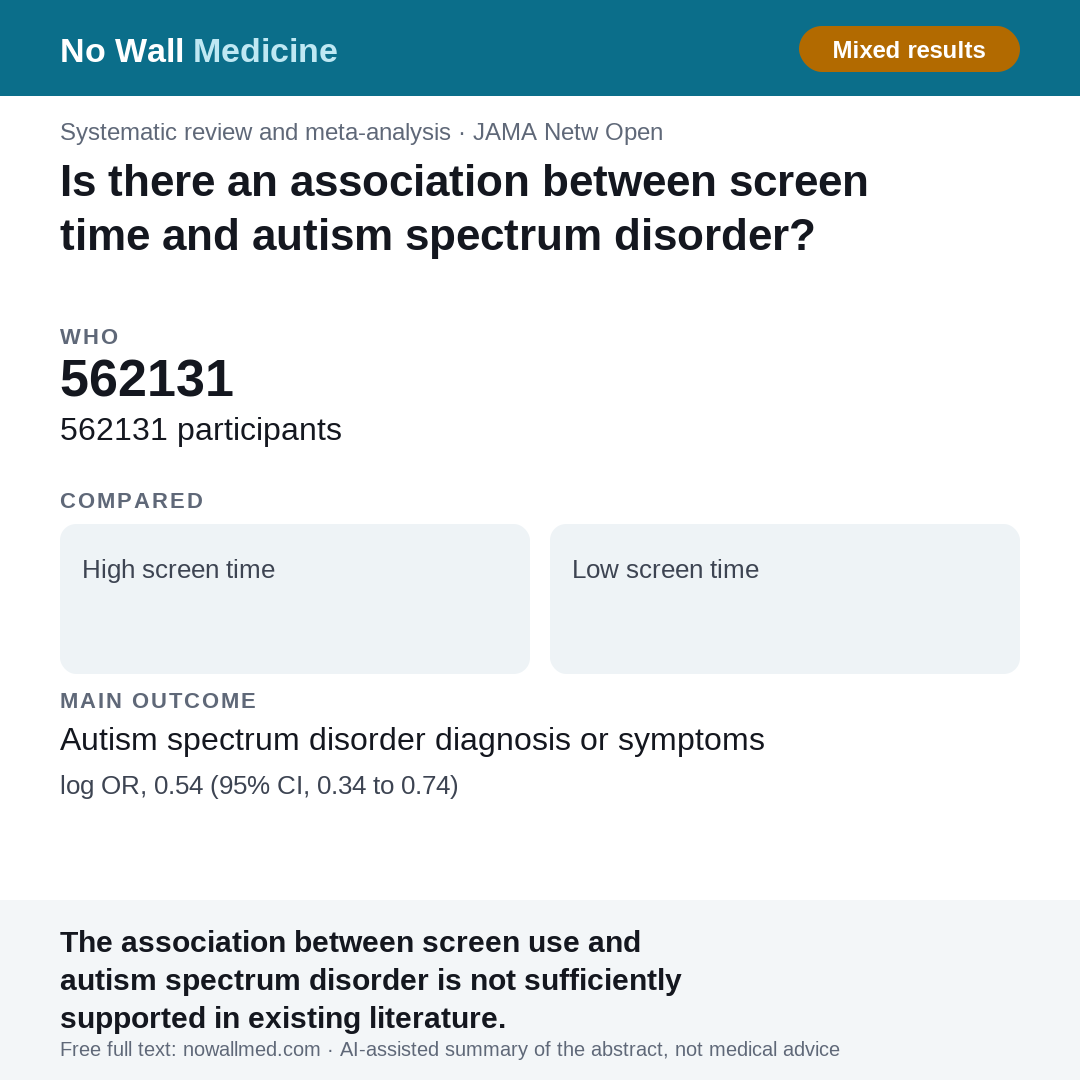
Screen Time and Autism Spectrum Disorder: A Systematic Review and Meta-Analysis
Systematic review and meta-analysisMixed results
Is there an association between screen time and autism spectrum disorder?
Who
562131
562131 participants
Compared
High screen time
Low screen time
Main outcome
Autism spectrum disorder diagnosis or symptoms
Result: log OR, 0.54 (95% CI, 0.34 to 0.74)
Bottom line: The association between screen use and autism spectrum disorder is not sufficiently supported in existing literature.
Limitation: The correlational nature of the available research and significant publication bias.
JAMA Netw Open · 2023-12-01Download image
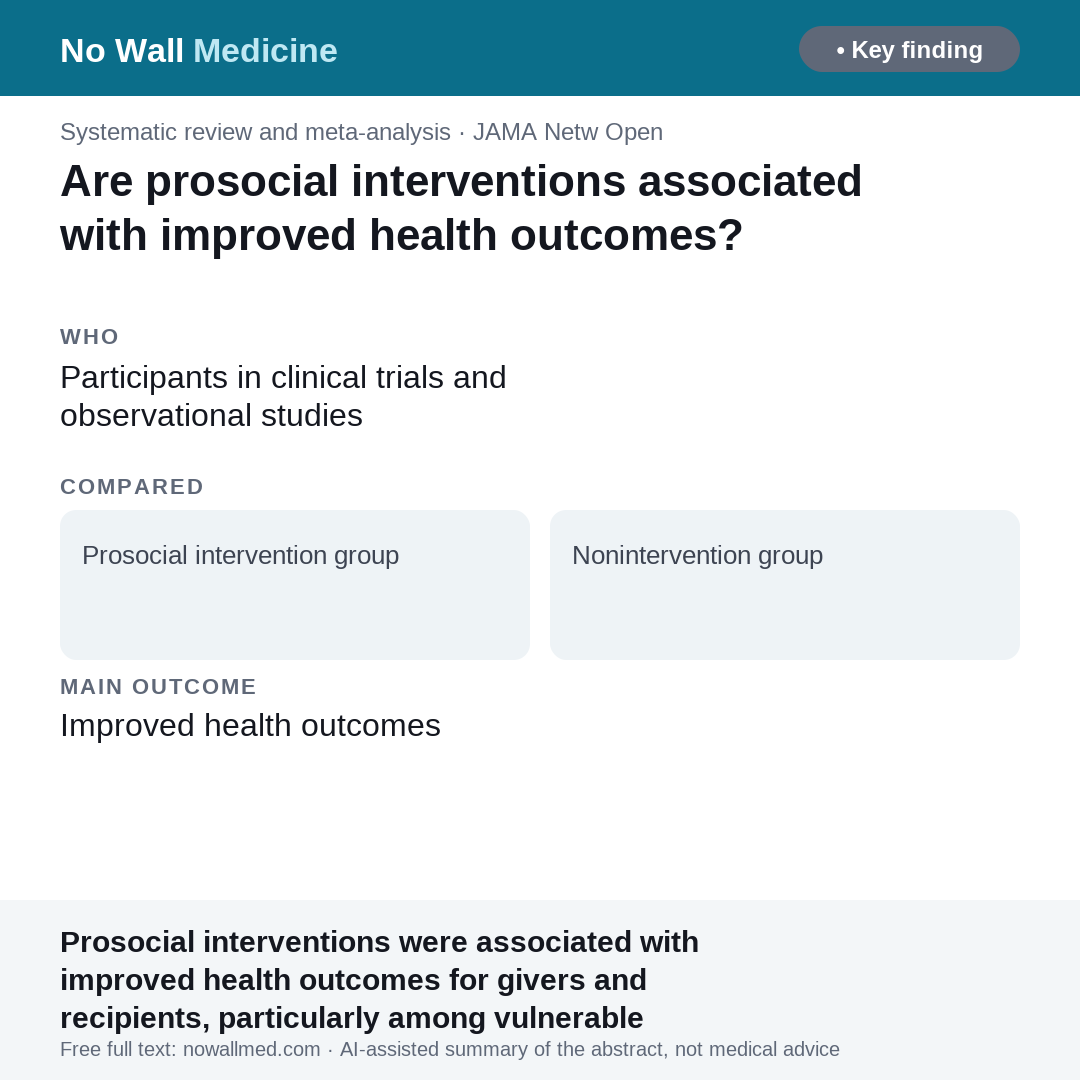
Prosocial Interventions and Health Outcomes: A Systematic Review and Meta-Analysis
Systematic review and meta-analysisBenefit found
Are prosocial interventions associated with improved health outcomes?
Who
Participants in clinical trials and observational studies
Compared
Prosocial intervention group
Nonintervention group
Main outcome
Improved health outcomes
Bottom line: Prosocial interventions were associated with improved health outcomes for givers and recipients, particularly among vulnerable groups.
JAMA Netw Open · 2023-12-01Download image
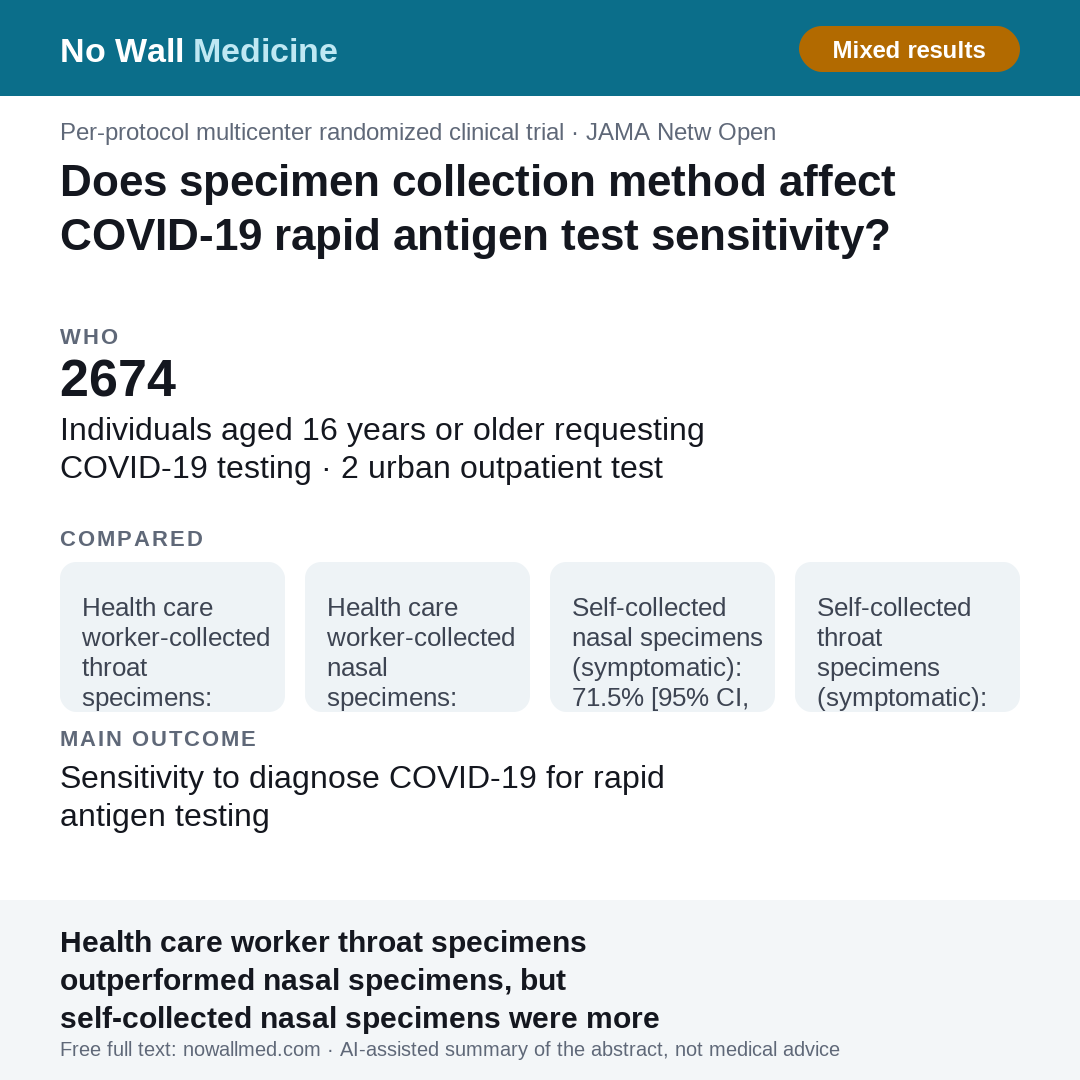
COVID-19 Rapid Antigen Tests With Self-Collected vs Health Care Worker-Collected Nasal and Throat Swab Specimens: A Randomized Clinical Trial
Per-protocol multicenter randomized clinical trialMixed results
Does specimen collection method affect COVID-19 rapid antigen test sensitivity?
Who
2674
Individuals aged 16 years or older requesting COVID-19 testing · 2 urban outpatient test centers in Copenhagen, Denmark
Compared
Health care worker-collected throat specimens: 69.4% [95% CI, 65.1%-73.6%]
Health care worker-collected nasal specimens: 60.0% [95% CI, 55.4%-64.5%]
Self-collected nasal specimens (symptomatic): 71.5% [95% CI, 65.3%-77.6%]
Self-collected throat specimens (symptomatic): 58.0% [95% CI, 51.2%-64.7%]
Main outcome
Sensitivity to diagnose COVID-19 for rapid antigen testing
Bottom line: Health care worker throat specimens outperformed nasal specimens, but self-collected nasal specimens were more sensitive than throat specimens for symptomatic participants.
JAMA Netw Open · 2023-12-01Download image