Visual abstracts
New randomized trials and meta-analyses from leading journals at a glance: who was studied, what was compared, and what was found. Every paper is free to read in full.
All specialtiesCardiology 4763Oncology 4042Gastroenterology & Hepatology 1902Infectious Disease 3756Neurology 1872Psychiatry & Mental Health 2214Pulmonology 2042Critical Care 1319Endocrinology & Diabetes 2544Pediatrics 2889Surgery 2479Orthopedics & Sports Medicine 917Neurosurgery 525Cardiothoracic & Vascular Surgery 656Plastic & Reconstructive Surgery 574Nephrology 1107Rheumatology 810Hematology 1090Dermatology 611Ophthalmology 532Obstetrics & Gynecology 1645Public & Global Health 1037Radiology & Imaging 617Anesthesiology 957Urology 745ENT (Otolaryngology) 494Emergency Medicine 481Allergy & Immunology 309Geriatrics 972Family Medicine & Primary Care 533Medical Genetics & Genomics 659Pathology & Laboratory Medicine 156Physical Medicine & Rehabilitation 734Palliative Care 421Nutrition 1560Digital Health & AI 2133General Medicine 318
Differential Associations of Dopamine and Serotonin With Reward and Punishment Processes in Humans: A Systematic Review and Meta-Analysis
Meta-analysis of 102 studiesMixed results
Do dopamine and serotonin manipulations show distinct associations with reinforcement learning?
Who
Healthy humans
Compared
Dopamine vs placebo: overall reward SMD 0.18 (95% CI 0.09 to 0.28)
Serotonin vs placebo: overall punishment SMD 0.22 (95% CI -0.04 to 0.49)
Main outcome
Performance on reward or punishment processing tasks
Bottom line: Dopamine and serotonin manipulations have distinct, measurable associations with different components of reinforcement learning in humans.
JAMA Psychiatry · 2025-06-11Download image

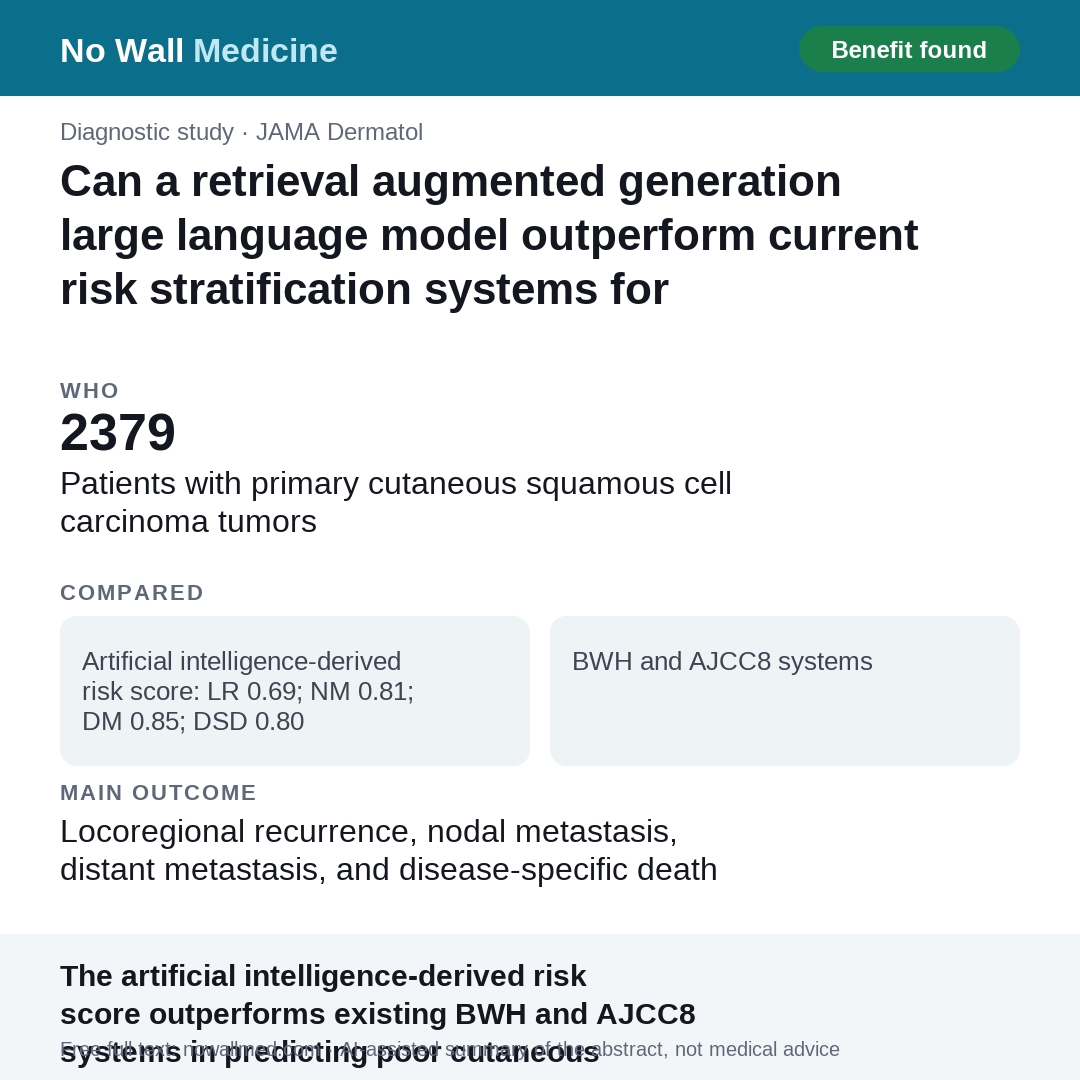
Retrieval Augmented Generation-Enabled Large Language Model for Risk Stratification of Cutaneous Squamous Cell Carcinoma
Diagnostic studyKey finding
Can a retrieval augmented generation large language model outperform current risk stratification systems for cutaneous squamous cell carcinoma?
Who
2379
Patients with primary cutaneous squamous cell carcinoma tumors
Compared
Artificial intelligence-derived risk score: LR 0.69; NM 0.81; DM 0.85; DSD 0.80
BWH and AJCC8 systems
Main outcome
Locoregional recurrence, nodal metastasis, distant metastasis, and disease-specific death
Bottom line: The artificial intelligence-derived risk score outperforms existing BWH and AJCC8 systems in predicting poor cutaneous squamous cell carcinoma outcomes.
JAMA Dermatol · 2025-06-11Download image
Health outcomes and psychosocial determinants in young carers: a systematic review
Systematic review and narrative synthesisMixed results
What are the long-term physical and mental health outcomes and psychosocial determinants in young carers?
Who
Young carers aged less than 25 years · High-income countries
Compared
Young carers
Non-carer comparison group
Main outcome
Physical and mental health outcomes and psychosocial determinants
Bottom line: Young carers face a small-to-moderate risk of poorer mental health, but physical health evidence remains inconclusive.
Lancet Public Health · 2025-06-11Download image

Evaluation of the risk of heart failure with tumour necrosis factor inhibitors: A large-scale meta-analysis in immune-mediated inflammatory diseases
Meta-analysis of 45 studiesNo clear difference
Does tumour necrosis factor inhibitor treatment increase heart failure risk in immune-mediated inflammatory diseases?
Who
Patients with immune-mediated inflammatory diseases
Compared
Tumour necrosis factor inhibitor treated
Non-treated controls
Main outcome
Incidence of worsening, de novo, and composite heart failure
Result: risk ratio 0.87 (95% CI 0.60 to 1.25) for de novo heart failure
Bottom line: Tumour necrosis factor inhibitors do not increase the risk of de novo or worsening heart failure in patients.
J Eur Acad Dermatol Venereol · 2025-06-11Download image

Outpatient or Inpatient Setting for Cervical Ripening Before Induction of Labour: An Individual Participant Data Meta-Analysis
Individual participant data meta-analysisNo clear difference
Is outpatient or inpatient cervical ripening setting better for induction of labour?
Who
2593
Pregnant individuals undergoing induction of labour
Compared
Outpatient setting: 67.8% vaginal birth
Inpatient setting: 70.2% vaginal birth
Main outcome
Vaginal birth, composite perinatal outcome, and composite maternal outcome
Result: aOR 0.95 (95% CI 0.70; 1.30) for vaginal birth
Bottom line: Outpatient cervical ripening with mechanical methods is comparable to inpatient settings for effectiveness and safety.
BJOG · 2025-06-11Download image

The efficacy of psychosocial interventions in relieving family caregiver burden in older adults with disabilities: a systematic review and network meta-analysis
Systematic review and network meta-analysisBenefit found
Which psychosocial interventions most effectively reduce family caregiver burden?
Who
4687
Family caregivers of older adults with disabilities
Compared
Mindfulness-based interventions: SMD -6.67 (95% CI: -12.94, -0.41)
Cognitive behavioural therapy: SMD -5.57 (95% CI: -8.59, -2.90)
Main outcome
Family caregiver burden
Bottom line: Mindfulness-based interventions were most effective overall, especially for cognitive impairment, while cognitive behavioural therapy excelled in home-based settings.
Age Ageing · 2025-06-11Download image

Timing of oral feeding following head and neck mucosal free flap reconstruction - A systematic review and meta-analysis
Systematic review and meta-analysis of 13 studiesBenefit found
Does early oral feeding after head and neck free flap reconstruction improve outcomes?
Who
1657
Patients undergoing head and neck mucosal free-flap reconstruction
Compared
Early feeding (≤5 days): 3.66% fistulas, 6.31% pneumonia, 9.85 days LOS
Late feeding (>5 days): 11.35% fistulas, 12.38% pneumonia, 13.11 days LOS
Main outcome
Fistulas, pneumonia, and length of hospital stay
Result: RR 0.37 (95%CI 0.22 to 0.64) for fistulas; MD -4.10 (95%CI -7.07 to -1.14) for LOS
Bottom line: Early oral feeding appears safe and is associated with reduced fistulas, pneumonia, and length of stay.
J Plast Reconstr Aesthet Surg · 2025-06-11Download image

Selection by Noncontrast Computed Tomography With or Without Computed Tomography Angiography Versus Computed Tomography Perfusion for Endovascular Therapy in Patients With Acute Ischemic Stroke: A Systematic Review and Meta-Analysis
Systematic review and meta-analysisMixed results
Does computed tomography perfusion versus noncontrast computed tomography improve outcomes for endovascular therapy?
Who
12199
Patients with acute ischemic stroke
Compared
Computed tomography perfusion
Noncontrast computed tomography plus angiography
Main outcome
Functional independence at 90 days
Result: odds ratio 1.09 (95% CI 0.98-1.21)
Bottom line: Computed tomography perfusion showed lower odds of death but similar functional independence compared to noncontrast computed tomography selection.
Limitation: Observational and post hoc studies showed moderate, serious, and critical risk of bias.
J Am Heart Assoc · 2025-06-11Download image

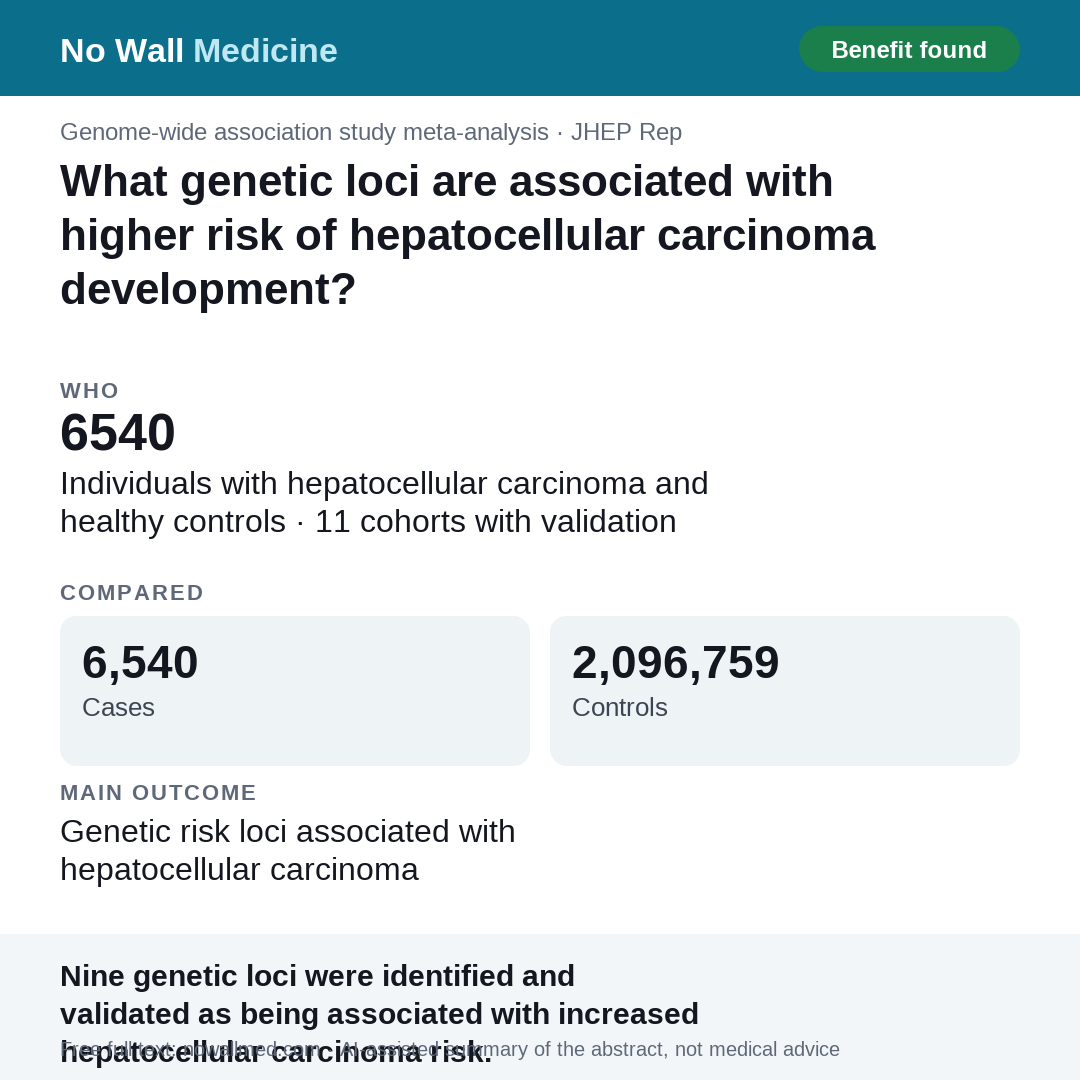
Genome-wide meta-analysis identifies nine loci associated with higher risk of hepatocellular carcinoma development
Genome-wide association study meta-analysisKey finding
What genetic loci are associated with higher risk of hepatocellular carcinoma development?
Who
6540
Individuals with hepatocellular carcinoma and healthy controls · 11 cohorts with validation in two independent cohorts
Compared
6,540Cases
2,096,759Controls
Main outcome
Genetic risk loci associated with hepatocellular carcinoma
Bottom line: Nine genetic loci were identified and validated as being associated with increased hepatocellular carcinoma risk.
JHEP Rep · 2025-06-11Download image
Health Equity Research in Orthopaedic Surgery: A Systematic Review and Needs Assessment
Systematic review and needs assessmentMixed results
What is the state of health equity research in orthopaedic surgery?
Who
855
English-language orthopaedic surgery publications from 2013 to 2022 · Clarivate Web of Science platform
Compared
91.7%Observational or experimental research studies
4.2%Studies focusing on interventions
0.9%Studies evaluating original interventions
0.1%Studies using qualitative methods
Main outcome
Content, quality, and impact of orthopaedic health equity research
Bottom line: Orthopaedic health equity research is increasing but lacks qualitative methods, community engagement, and federal funding.
JBJS Open Access · 2025-06-11Download image

Global Prevalence of Celiac Disease in Patients With Rome III and Rome IV Irritable Bowel Syndrome: A Systematic Review and Meta-Analysis
Systematic review and meta-analysisBenefit found
What is the prevalence of celiac disease in patients with irritable bowel syndrome?
Who
7209
Patients with irritable bowel syndrome using Rome III or Rome IV criteria · Global, limited studies from Europe and no studies from United States
Compared
Patients with irritable bowel syndrome: 6% (95% CI, 5%-8%) seroprevalence
Patients with irritable bowel syndrome: 2% (95% CI, 2%-3%) biopsy-proven prevalence
Main outcome
Prevalence of celiac disease
Result: odds ratio 4.42 (95% CI, 2.82-6.92)
Bottom line: Celiac disease is highly prevalent in patients with irritable bowel syndrome, requiring exclusion during diagnosis.
Limitation: Limited number of studies from Europe and no studies from the United States.
Am J Gastroenterol · 2025-06-10Download image

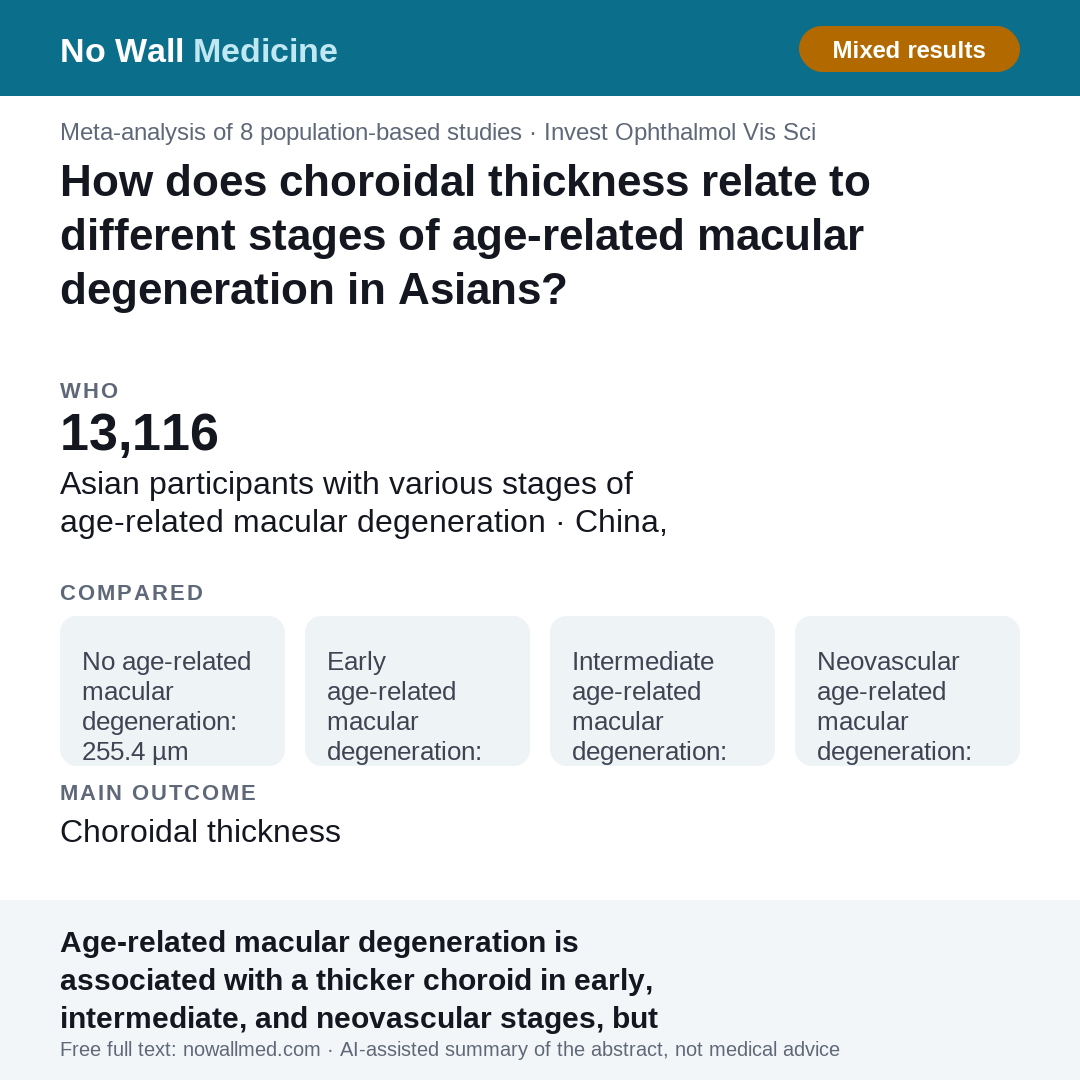
Relationship of Choroidal Thickness With Age-Related Macular Degeneration in Asians: An Asian Eye Epidemiology Consortium Meta-Analysis
Meta-analysis of 8 population-based studiesMixed results
How does choroidal thickness relate to different stages of age-related macular degeneration in Asians?
Who
13,116
Asian participants with various stages of age-related macular degeneration · China, Iran, Japan, and Singapore
Compared
No age-related macular degeneration: 255.4 µm
Early age-related macular degeneration: 263.59 µm
Intermediate age-related macular degeneration: 270.64 µm
Neovascular age-related macular degeneration: 273.32 µm
Main outcome
Choroidal thickness
Result: β = 11.51; 95% confidence interval 4.10-18.92
Bottom line: Age-related macular degeneration is associated with a thicker choroid in early, intermediate, and neovascular stages, but not geographic atrophy.
Invest Ophthalmol Vis Sci · 2025-06-10Download image
Adverse Outcomes Associated With Short-Acting Beta-Agonist Overuse in Asthma: A Systematic Review and Meta-Analysis
Systematic review and meta-analysisHarm found
Are short-acting beta-agonist overuse and asthma associated with adverse outcomes?
Who
Patients with asthma
Compared
Short-acting beta-agonist overuse: 2743 of 130,629 mortality; 60,320 of 165,271 exacerbations
Controls: 3534 of 300,451 mortality; 84,439 of 376,845 exacerbations
Main outcome
All-cause mortality and acute exacerbations
Result: RR 2.04 (95% CI 1.37-3.04) for mortality; RR 1.93 (95% CI 1.24-3.03) for exacerbations
Bottom line: Short-acting beta-agonist overuse is associated with increased mortality and acute exacerbations in patients with asthma.
Allergy · 2025-06-10Download image

FDA and EMA-approved noninvasive imaging techniques for basal cell carcinoma subtyping: A systematic review
Systematic reviewKey finding
What is the diagnostic accuracy of approved noninvasive imaging for basal cell carcinoma subtyping?
Who
2650
2650 basal cell carcinoma lesions
Compared
Dermoscopy: 81.9% sensitivity, 81.8% specificity for superficial basal cell carcinoma
Dermoscopy-guided high-frequency ultrasound: 82.4% sensitivity, 91.3% specificity
Line-field confocal optical coherence tomography: 100% sensitivity for infiltrative basal cell carcinoma
High-definition optical coherence tomography: 100% sensitivity for superficial basal cell carcinoma
Main outcome
Diagnostic accuracy of noninvasive imaging techniques
Bottom line: Line-field confocal optical coherence tomography and high-definition optical coherence tomography offer the highest accuracy for subtyping.
Limitation: Study heterogeneity and inconsistent protocols limit comparability.
JAAD Int · 2025-06-10Download image

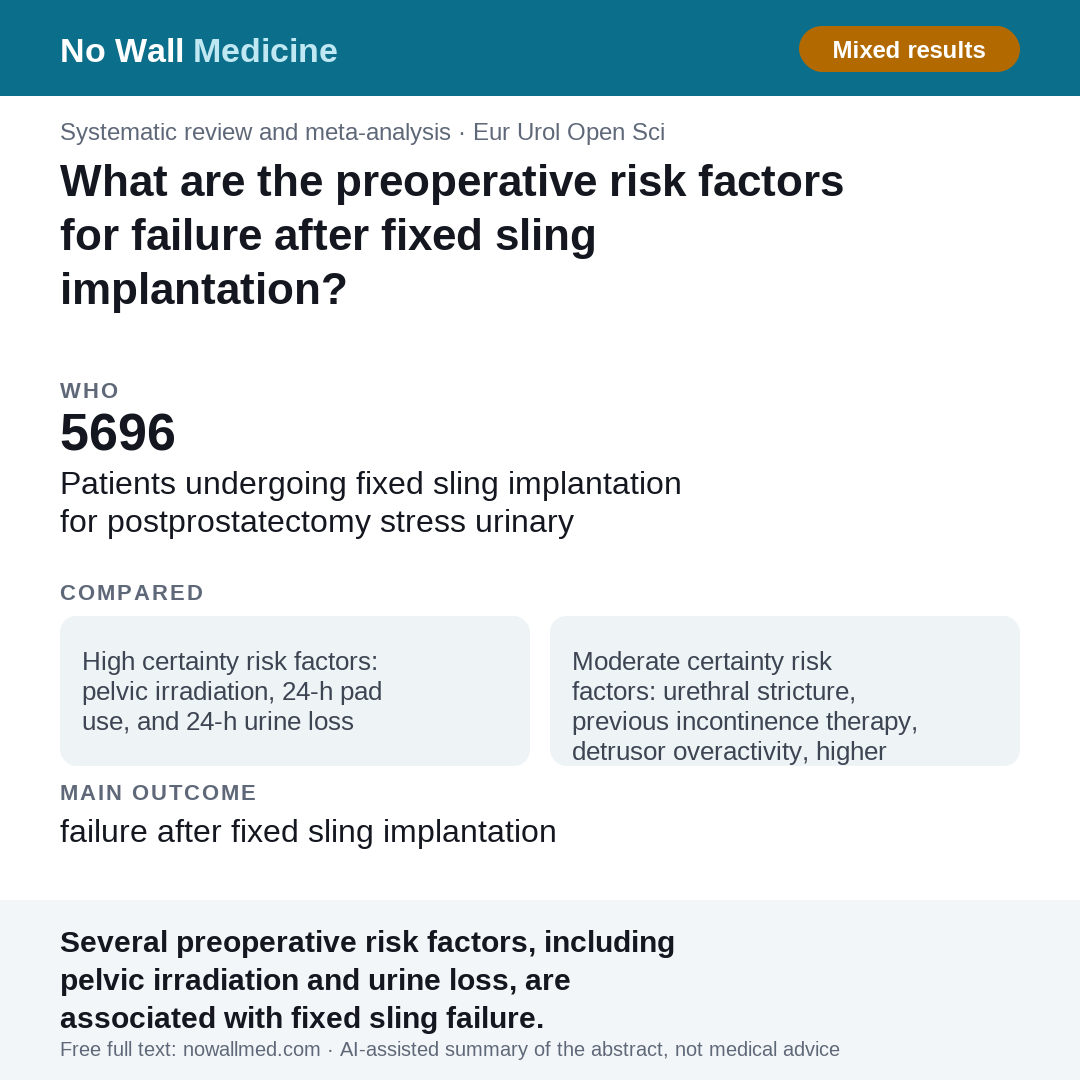
Preoperative Risk Factors for Failure After Fixed Sling Implantation for Postprostatectomy Stress Urinary Incontinence (FORESEE): A Systematic Review and Meta-analysis
Systematic review and meta-analysisMixed results
What are the preoperative risk factors for failure after fixed sling implantation?
Who
5696
Patients undergoing fixed sling implantation for postprostatectomy stress urinary incontinence
Compared
High certainty risk factors: pelvic irradiation, 24-h pad use, and 24-h urine loss
Moderate certainty risk factors: urethral stricture, previous incontinence therapy, detrusor overactivity, higher Male Stress Incontinence Grading Scale score, and unfavourable repositioning test
Main outcome
failure after fixed sling implantation
Bottom line: Several preoperative risk factors, including pelvic irradiation and urine loss, are associated with fixed sling failure.
Limitation: Heterogeneity and suboptimal study quality are the main limitations.
Eur Urol Open Sci · 2025-06-10Download image
Music therapy for the treatment of anxiety: a systematic review with multilevel meta-analyses
Meta-analysis of 51 trialsBenefit found
Music therapy for anxiety treatment
Who
10210
patients with anxiety · multiple settings
Compared
Music therapy: g = 0.357
Control
Main outcome
anxiety symptoms
Result: g = 0.357 (0.201 to 0.514)
Bottom line: Music therapy reduces anxiety symptoms
Funded by: University of Melbourne and NHL Stenden
eClinicalMedicine · 2025-06-09Download image

Global HPV vaccination programs and coverage rates: a systematic review
Systematic reviewKey finding
What is the status of global human papillomavirus vaccination programs and coverage rates?
Who
Girls aged 9-14 years in 194 WHO member states · Global, 194 WHO member states
Compared
61.6%First dose coverage (95% CI: 50.9%-71.8%)
47.6%Full dose coverage (39.7%-57.4%)
Main outcome
Human papillomavirus vaccination coverage rates
Bottom line: Global human papillomavirus vaccination coverage remains significantly below the 90% target for both first and full doses.
Funded by: CAMS Innovation Fund; National High Level Hospital Clinical Research Funding; Sanming Project
eClinicalMedicine · 2025-06-09Download image

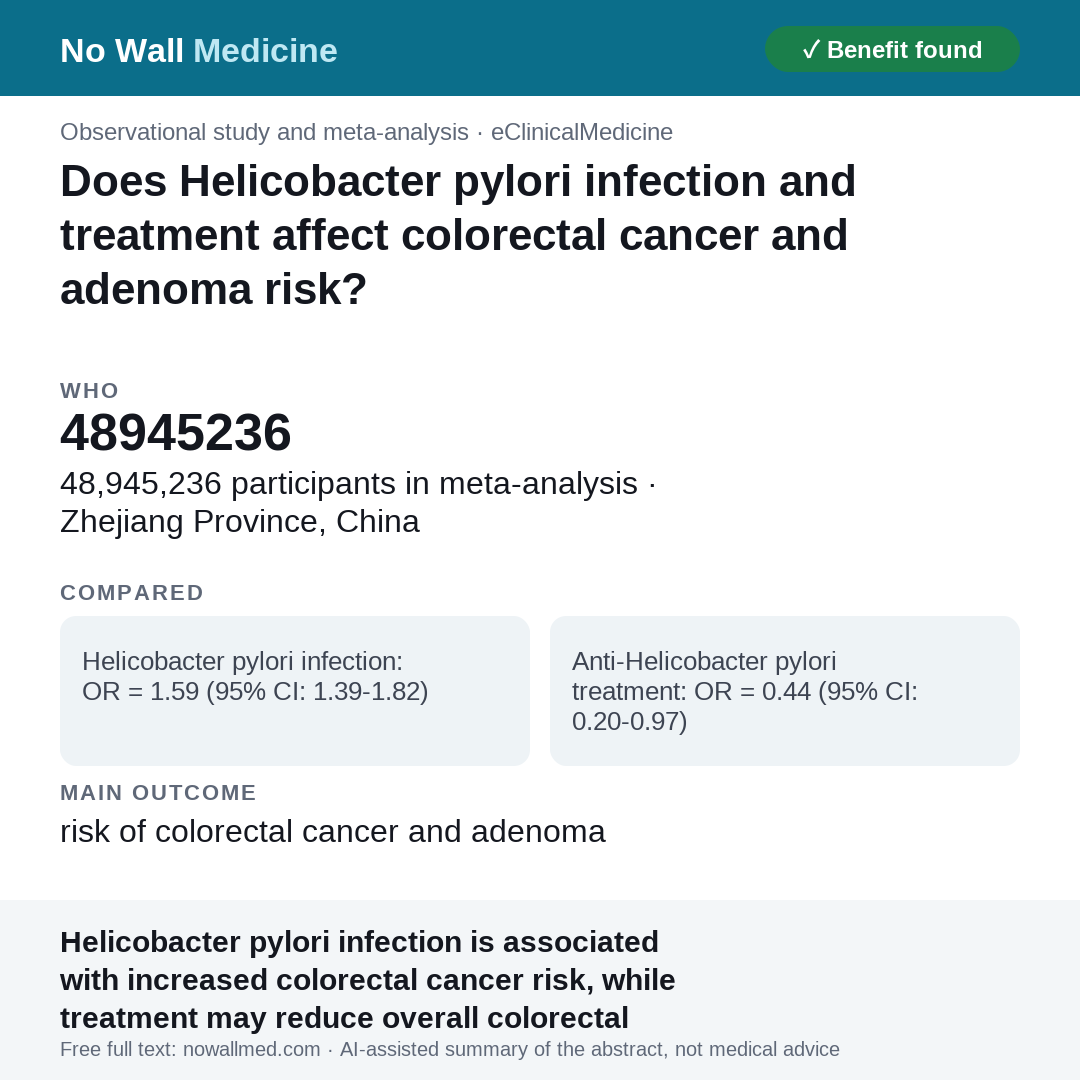
Helicobacter pylori infection, anti-Helicobacter pylori treatment and risk of colorectal cancer and adenoma: an observational study and a meta-analysis
Observational study and meta-analysisBenefit found
Does Helicobacter pylori infection and treatment affect colorectal cancer and adenoma risk?
Who
48945236
48,945,236 participants in meta-analysis · Zhejiang Province, China
Compared
Helicobacter pylori infection: OR = 1.59 (95% CI: 1.39-1.82)
Anti-Helicobacter pylori treatment: OR = 0.44 (95% CI: 0.20-0.97)
Main outcome
risk of colorectal cancer and adenoma
Result: OR = 1.49 (95% CI: 1.39-1.60) for overall colorectal neoplasia
Bottom line: Helicobacter pylori infection is associated with increased colorectal cancer risk, while treatment may reduce overall colorectal neoplasia risk.
Limitation: Effect of treatment necessitates further investigation through large-scale, randomized controlled trials with prolonged follow-up.
Funded by: National Natural Science Foundation of China and others
eClinicalMedicine · 2025-06-09Download image
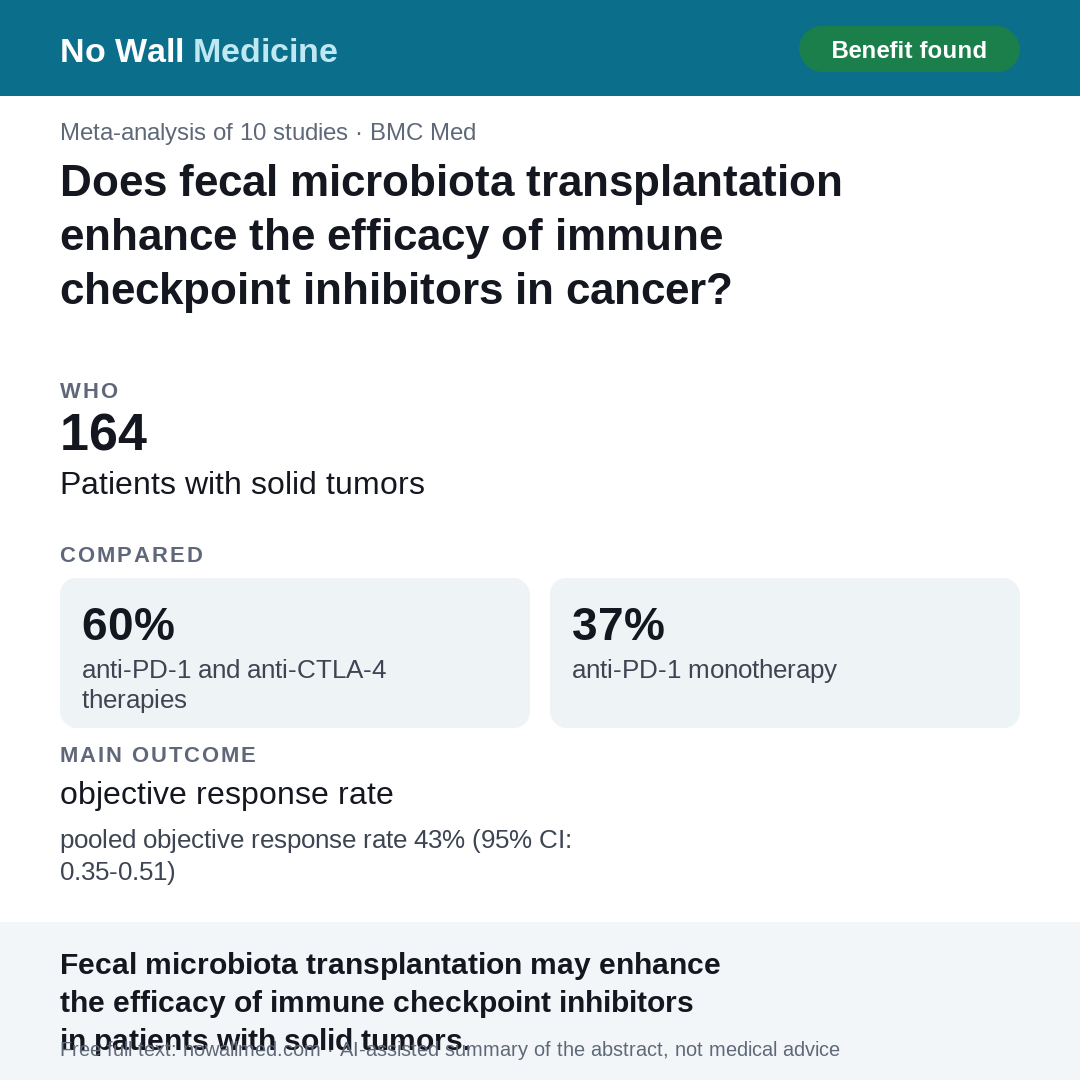
Microbiota boost immunotherapy? A meta-analysis dives into fecal microbiota transplantation and immune checkpoint inhibitors
Meta-analysis of 10 studiesBenefit found
Does fecal microbiota transplantation enhance the efficacy of immune checkpoint inhibitors in cancer?
Who
164
Patients with solid tumors
Compared
60%anti-PD-1 and anti-CTLA-4 therapies
37%anti-PD-1 monotherapy
Main outcome
objective response rate
Result: pooled objective response rate 43% (95% CI: 0.35-0.51)
Bottom line: Fecal microbiota transplantation may enhance the efficacy of immune checkpoint inhibitors in patients with solid tumors.
Limitation: larger-scale randomized controlled trials with long-term follow-up are required
BMC Med · 2025-06-09Download image
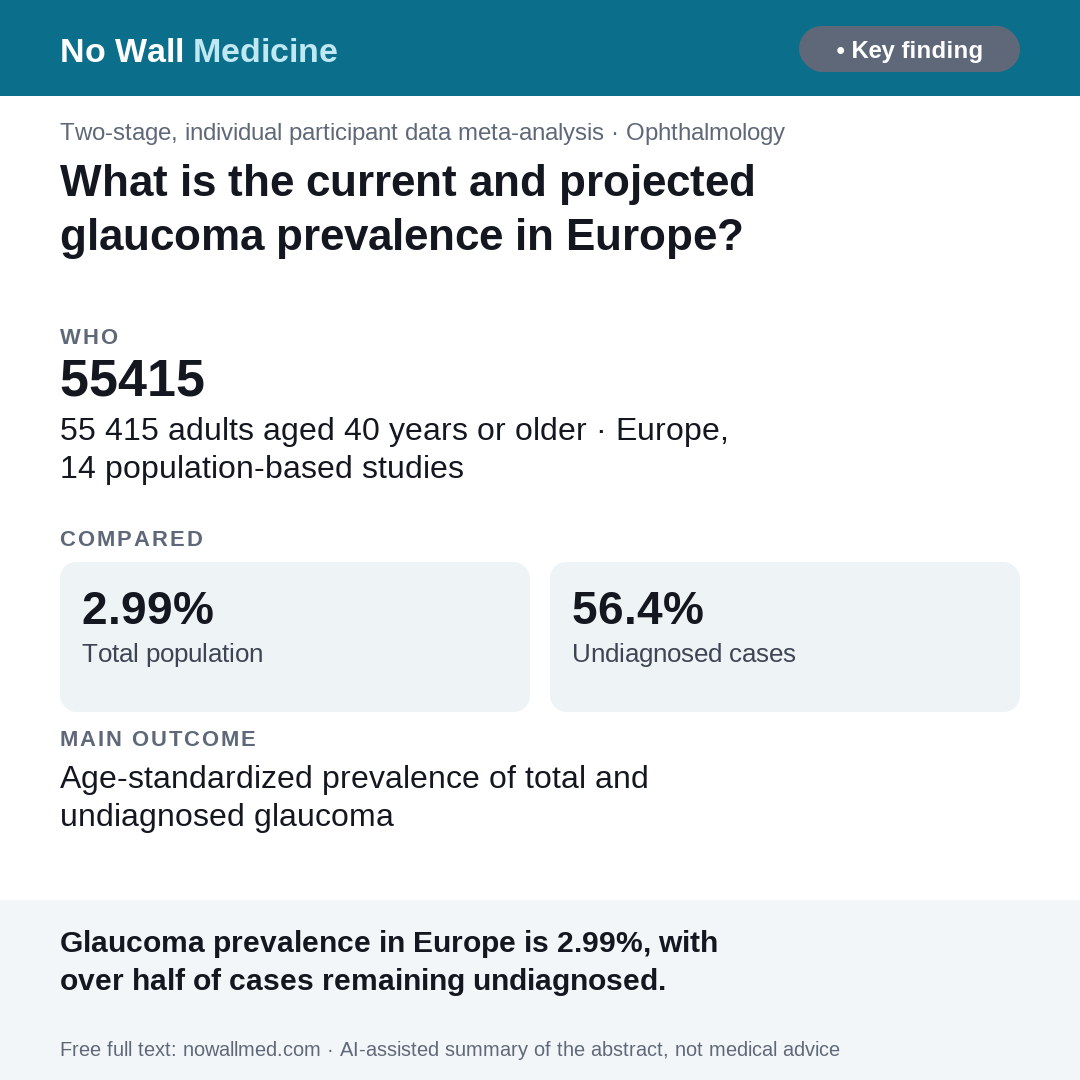
Prevalence of Glaucoma in Europe and Projections to 2050: Findings from the European Eye Epidemiology Consortium
Two-stage, individual participant data meta-analysisKey finding
What is the current and projected glaucoma prevalence in Europe?
Who
55415
55 415 adults aged 40 years or older · Europe, 14 population-based studies
Compared
2.99%Total population (95% CI 2.86%-3.12%)
56.4%Undiagnosed cases
Main outcome
Age-standardized prevalence of total and undiagnosed glaucoma
Bottom line: Glaucoma prevalence in Europe is 2.99%, with over half of cases remaining undiagnosed.
Ophthalmology · 2025-06-09Download image