Visual abstracts
New randomized trials and meta-analyses from leading journals at a glance: who was studied, what was compared, and what was found. Every paper is free to read in full.
All specialtiesCardiology 4763Oncology 4042Gastroenterology & Hepatology 1902Infectious Disease 3756Neurology 1872Psychiatry & Mental Health 2214Pulmonology 2042Critical Care 1319Endocrinology & Diabetes 2544Pediatrics 2889Surgery 2479Orthopedics & Sports Medicine 917Neurosurgery 525Cardiothoracic & Vascular Surgery 656Plastic & Reconstructive Surgery 574Nephrology 1107Rheumatology 810Hematology 1090Dermatology 611Ophthalmology 532Obstetrics & Gynecology 1645Public & Global Health 1037Radiology & Imaging 617Anesthesiology 957Urology 745ENT (Otolaryngology) 494Emergency Medicine 481Allergy & Immunology 309Geriatrics 972Family Medicine & Primary Care 533Medical Genetics & Genomics 659Pathology & Laboratory Medicine 156Physical Medicine & Rehabilitation 734Palliative Care 421Nutrition 1560Digital Health & AI 2133General Medicine 318
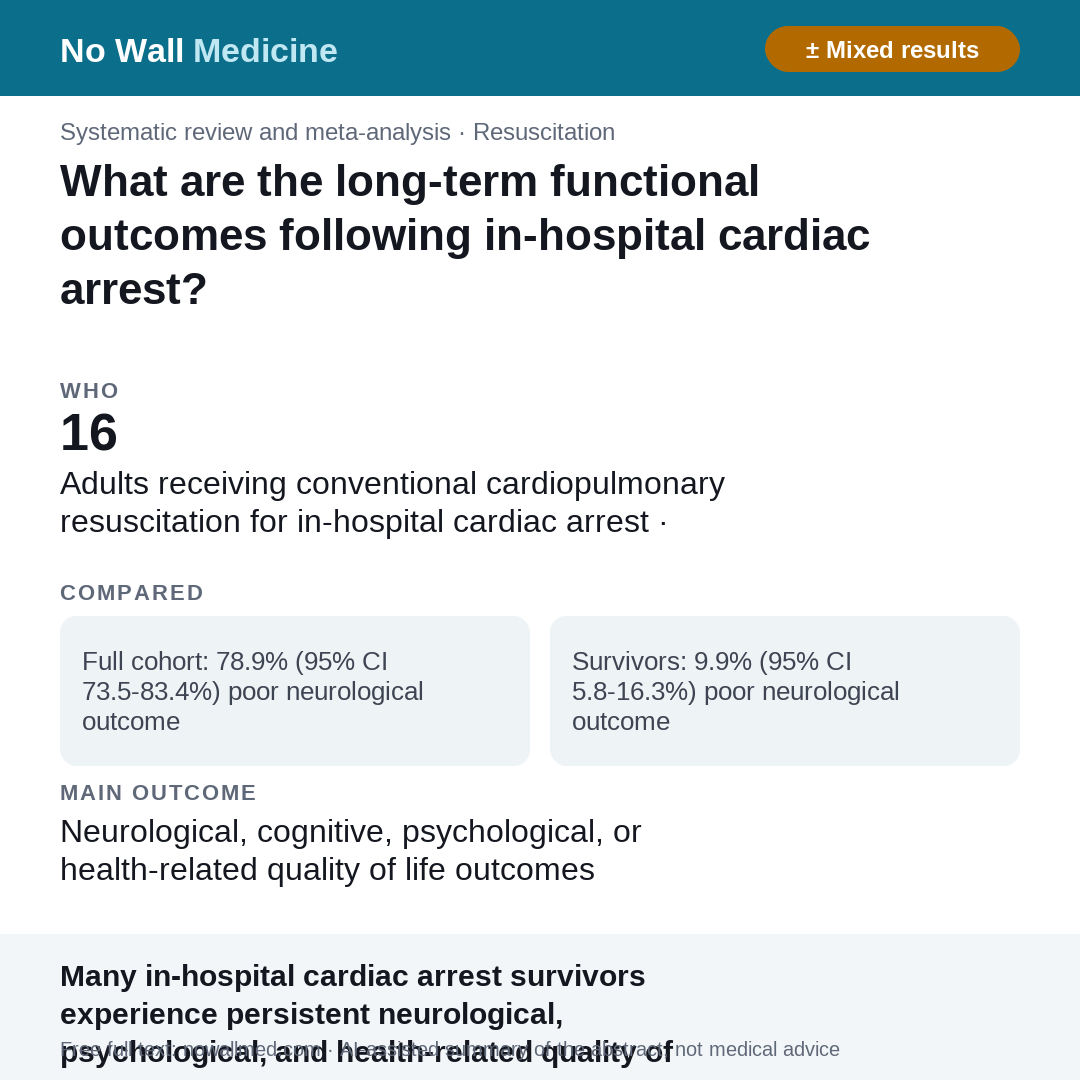
Long-term functional outcomes and health-related quality of life following in-hospital cardiac arrest (IHCA): A systematic review
Systematic review and meta-analysisMixed results
What are the long-term functional outcomes following in-hospital cardiac arrest?
Who
16
Adults receiving conventional cardiopulmonary resuscitation for in-hospital cardiac arrest · 21 countries
Compared
Full cohort: 78.9% (95% CI 73.5-83.4%) poor neurological outcome
Survivors: 9.9% (95% CI 5.8-16.3%) poor neurological outcome
Main outcome
Neurological, cognitive, psychological, or health-related quality of life outcomes
Bottom line: Many in-hospital cardiac arrest survivors experience persistent neurological, psychological, and health-related quality of life impairments.
Limitation: Wide variation in outcome measures, follow-up duration, and reporting methods limited synthesis.
Resuscitation · 2025-06-09Download image
Glucose Parameters, Inflammation Markers, and Gut Microbiota Changes of Gut Microbiome-Targeted Therapies in Type 2 Diabetes Mellitus: A Systematic Review and Meta-Analysis of Randomized Controlled Trials
Systematic review and meta-analysis of randomized controlled trialsBenefit found
Do gut microbiome-targeted therapies affect glucose, inflammation, and gut microbiota in type 2 diabetes?
Who
3390
Patients with type 2 diabetes mellitus
Compared
Gut microbiome-targeted therapies
Control
Main outcome
Glucometabolic, inflammatory factors and gut microbiota
Result: HbA1c MD -0.28% (95% CI -0.39, -0.17)
Bottom line: Gut microbiome-targeted therapies modestly improve glucose parameters, reduce inflammation, and enrich beneficial microbes in type 2 diabetes patients.
Limitation: Heterogeneity and limited long-term data
J Clin Endocrinol Metab · 2025-06-09Download image

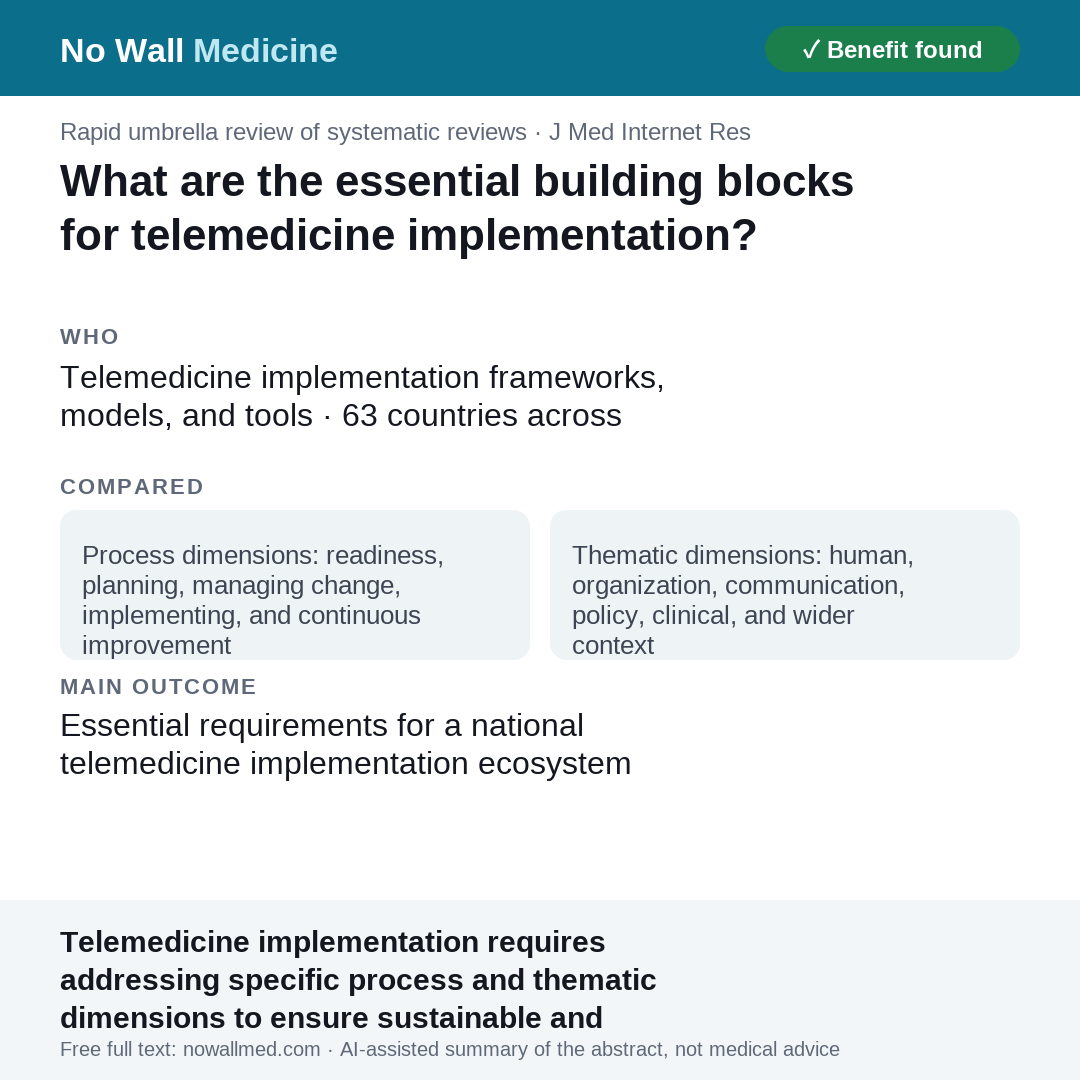
The State of the Art of Telemedicine Implementation Architecture: Rapid Umbrella Review of Systematic Reviews
Rapid umbrella review of systematic reviewsBenefit found
What are the essential building blocks for telemedicine implementation?
Who
Telemedicine implementation frameworks, models, and tools · 63 countries across multiple continents
Compared
Process dimensions: readiness, planning, managing change, implementing, and continuous improvement
Thematic dimensions: human, organization, communication, policy, clinical, and wider context
Main outcome
Essential requirements for a national telemedicine implementation ecosystem
Bottom line: Telemedicine implementation requires addressing specific process and thematic dimensions to ensure sustainable and scalable systems.
Limitation: Future research should focus on field-testing tools to evaluate usability and adaptability.
J Med Internet Res · 2025-06-09Download image
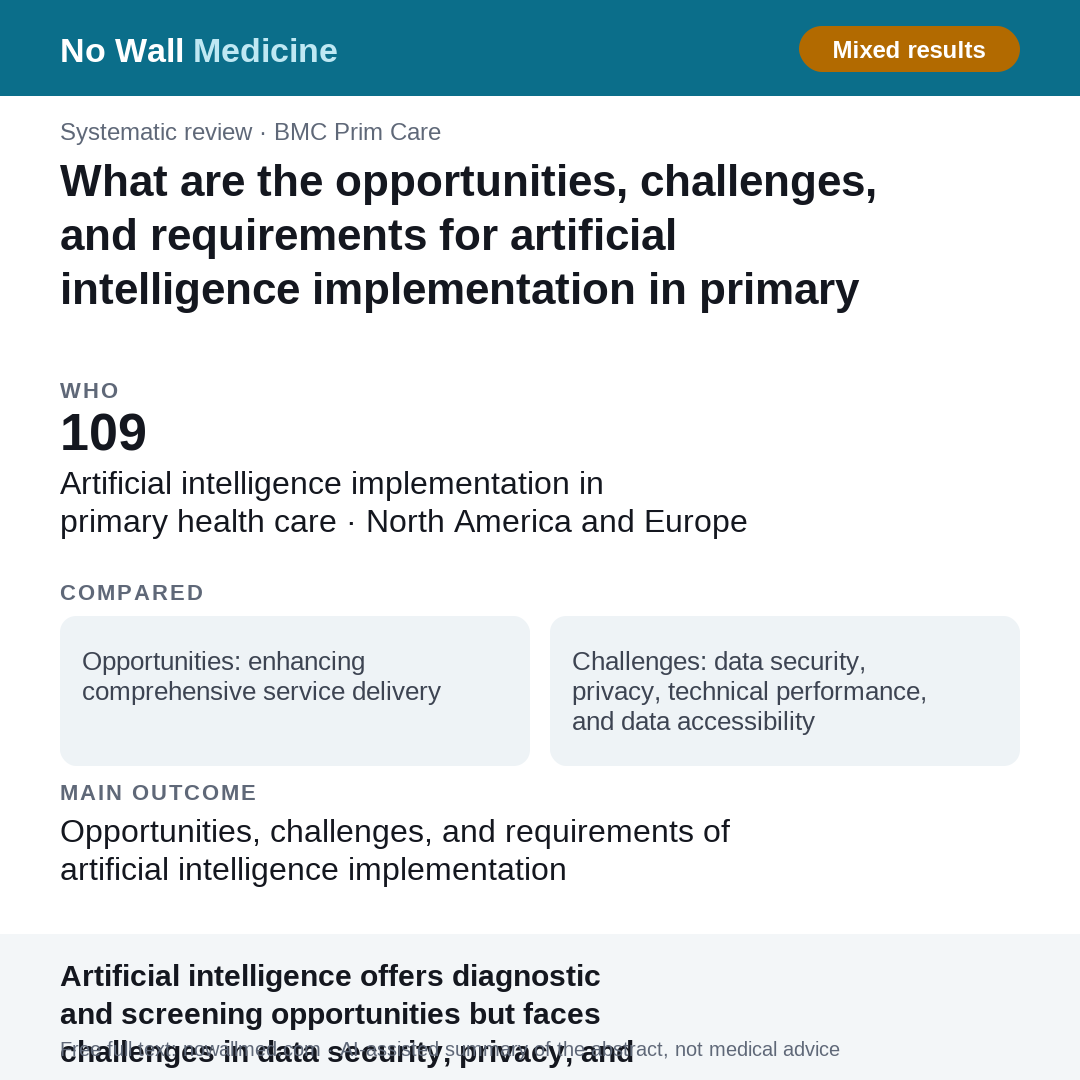
Opportunities, challenges, and requirements for Artificial Intelligence (AI) implementation in Primary Health Care (PHC): a systematic review
Systematic reviewMixed results
What are the opportunities, challenges, and requirements for artificial intelligence implementation in primary health care?
Who
Artificial intelligence implementation in primary health care · North America and Europe
Compared
Opportunities: enhancing comprehensive service delivery
Challenges: data security, privacy, technical performance, and data accessibility
Main outcome
Opportunities, challenges, and requirements of artificial intelligence implementation
Bottom line: Artificial intelligence offers diagnostic and screening opportunities but faces challenges in data security, privacy, and technical performance.
BMC Prim Care · 2025-06-09Download image
Civil society and perilous medicine in Africa: a systematic review
Systematic reviewUnclear result
Civil society role in conflict and health in Africa
Who
14
African communities in conflict · Africa
Compared
Civil society organisations
Government organisations
Main outcome
Health and conflict
Bottom line: CSOs play various roles in conflict and health
BMJ Glob Health · 2025-06-08Download image

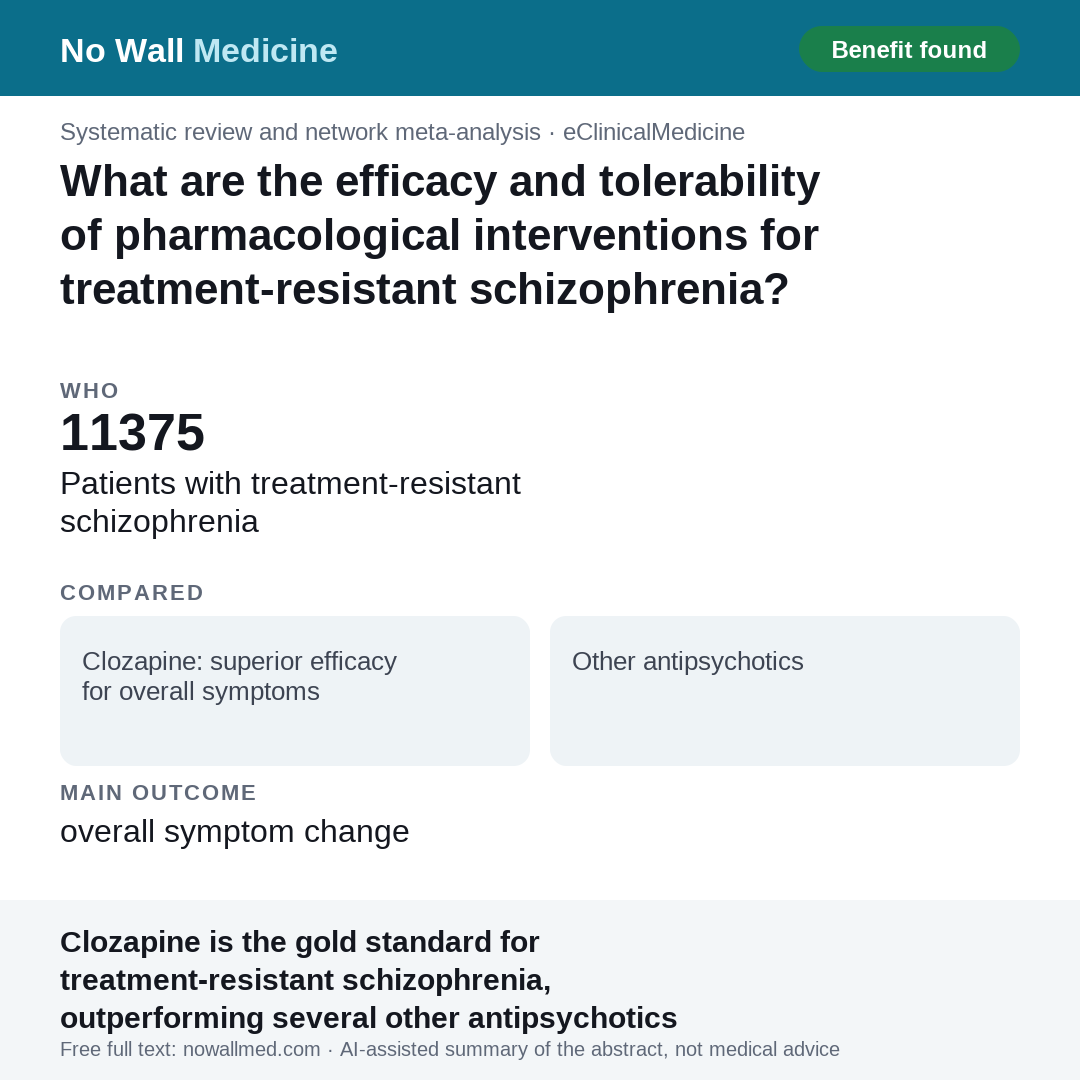
Efficacy and tolerability of pharmacological interventions for schizophrenia non-responsive to prior treatment: a systematic review and network meta-analysis
Systematic review and network meta-analysisBenefit found
What are the efficacy and tolerability of pharmacological interventions for treatment-resistant schizophrenia?
Who
11375
Patients with treatment-resistant schizophrenia
Compared
Clozapine: superior efficacy for overall symptoms
Other antipsychotics
Main outcome
overall symptom change
Bottom line: Clozapine is the gold standard for treatment-resistant schizophrenia, outperforming several other antipsychotics and certain combinations.
Limitation: Confidence in most estimates was low or very low and network sparsity increases chance findings.
eClinicalMedicine · 2025-06-07Download image
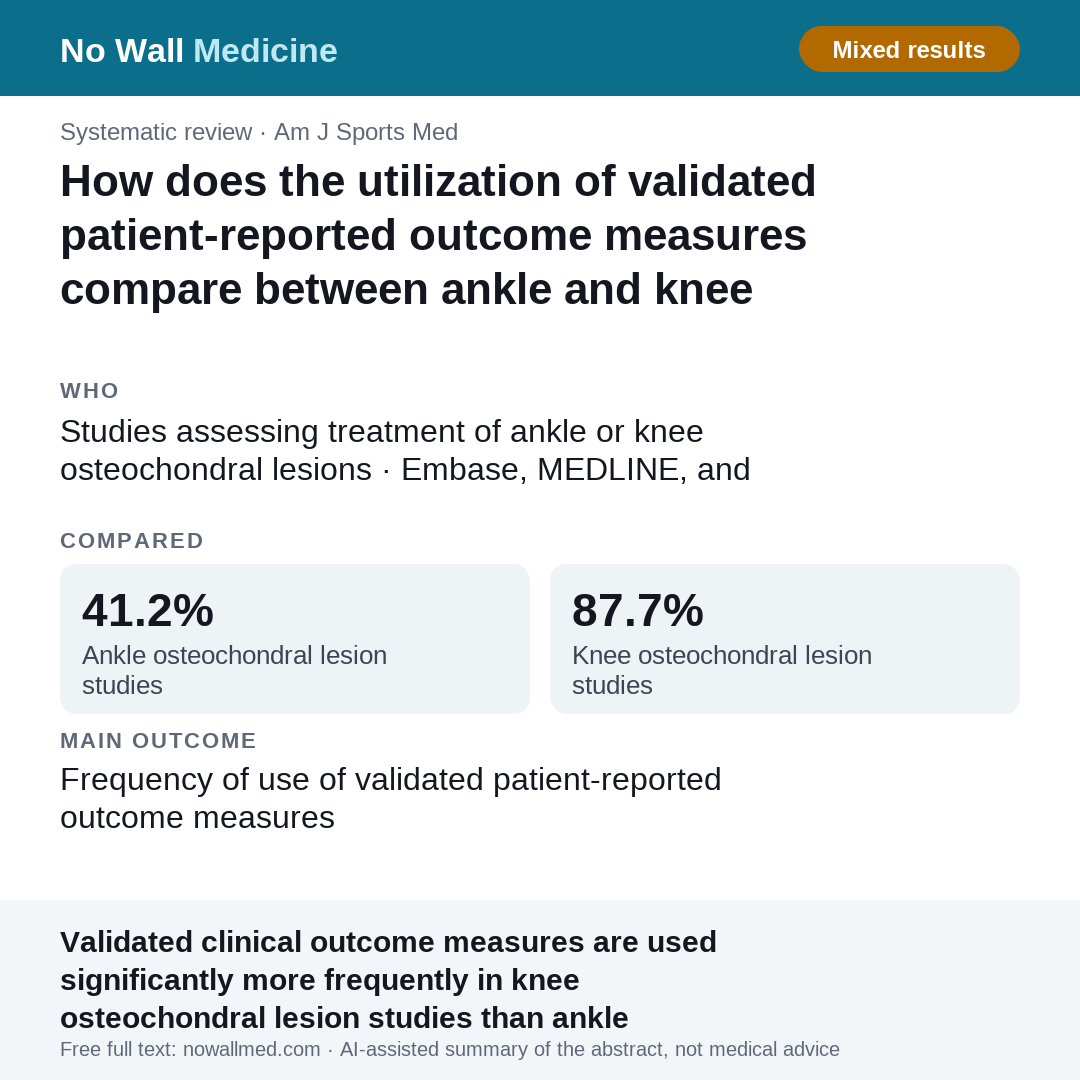
The Utilization of Patient-Reported Outcome Measures in Assessing the Treatment of Osteochondral Lesions of the Ankle Versus the Knee
Systematic reviewMixed results
How does the utilization of validated patient-reported outcome measures compare between ankle and knee osteochondral lesions?
Who
Studies assessing treatment of ankle or knee osteochondral lesions · Embase, MEDLINE, and CINAHL databases
Compared
41.2%Ankle osteochondral lesion studies
87.7%Knee osteochondral lesion studies
Main outcome
Frequency of use of validated patient-reported outcome measures
Bottom line: Validated clinical outcome measures are used significantly more frequently in knee osteochondral lesion studies than ankle studies.
Limitation: Low frequency of validated outcome measures in ankle literature may limit treatment effectiveness evaluation.
Am J Sports Med · 2025-06-07Download image
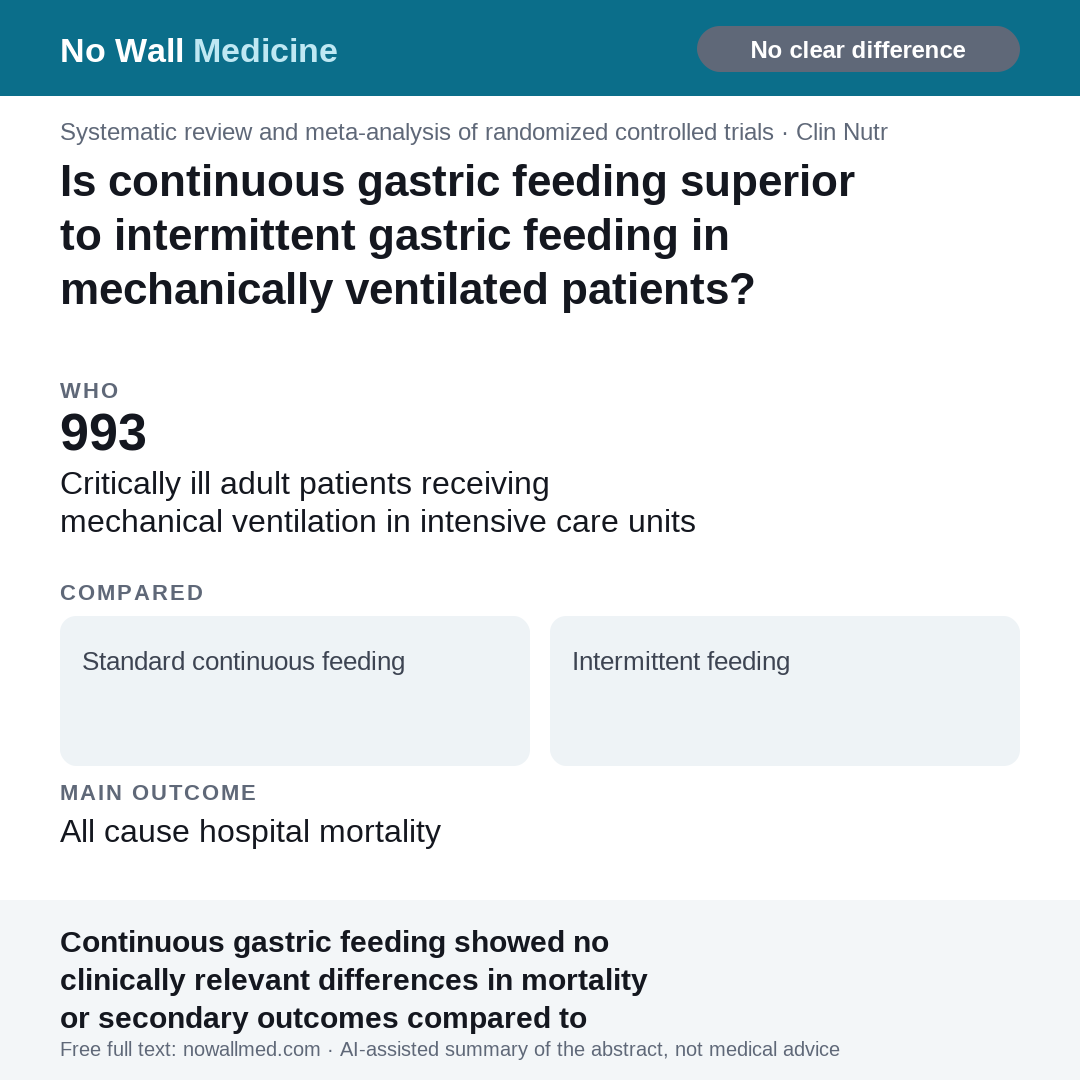
Standard continuous feeding versus intermittent feeding among mechanically ventilated patients in intensive care: A systematic review and meta-analysis of randomized controlled trials
Systematic review and meta-analysis of randomized controlled trialsNo clear difference
Is continuous gastric feeding superior to intermittent gastric feeding in mechanically ventilated patients?
Who
993
Critically ill adult patients receiving mechanical ventilation in intensive care units
Compared
Standard continuous feeding
Intermittent feeding
Main outcome
All cause hospital mortality
Result: risk ratio 0.97 (95 % confidence interval 0.72-1.32)
Bottom line: Continuous gastric feeding showed no clinically relevant differences in mortality or secondary outcomes compared to intermittent feeding.
Limitation: Substantial heterogeneity in outcomes selection, definitions, and reporting among included trials.
Clin Nutr · 2025-06-07Download image
Enhancing palliative care through university-community partnerships: a systematic review of models, impacts, and challenges
Systematic reviewBenefit found
Do university-community partnerships enhance palliative care
Who
students and communities
Compared
University-community partnerships
Control
Main outcome
palliative care education and delivery
Bottom line: University-community partnerships enhance palliative care
Limitation: limited to mostly qualitative studies
BMC Palliat Care · 2025-06-07Download image

Diagnosis melanoma with artificial intelligence systems: A meta-analysis study and systematic review
Meta-analysis of 39 studiesBenefit found
Can AI diagnose melanoma?
Who
2722
patients with dermoscopic images
Compared
All models: AUC 0.96
HYBRID models: AUC 0.98
Main outcome
melanoma diagnosis accuracy
Result: pooled AUC 0.96 (95% CI 0.94 to 0.98)
Bottom line: AI helps diagnose melanoma accurately
J Eur Acad Dermatol Venereol · 2025-06-06Download image

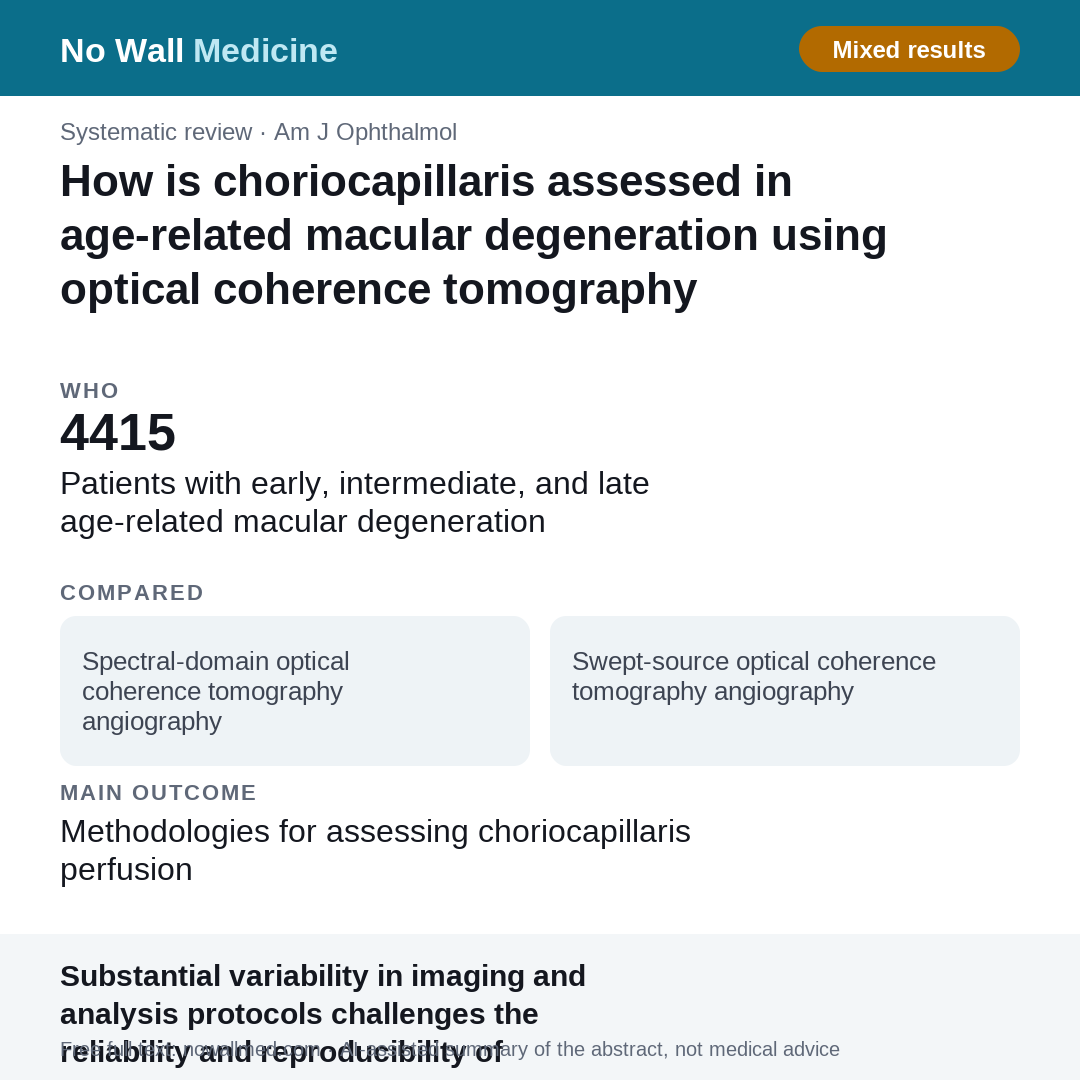
Choriocapillaris in Age-Related Macular Degeneration: A Systematic Review of Optical Coherence Tomography Angiography-Based Assessments and Challenges in Standardization
Systematic reviewMixed results
How is choriocapillaris assessed in age-related macular degeneration using optical coherence tomography angiography?
Who
4415
Patients with early, intermediate, and late age-related macular degeneration
Compared
Spectral-domain optical coherence tomography angiography
Swept-source optical coherence tomography angiography
Main outcome
Methodologies for assessing choriocapillaris perfusion
Bottom line: Substantial variability in imaging and analysis protocols challenges the reliability and reproducibility of choriocapillaris assessments in age-related macular degeneration.
Limitation: Inconsistencies in segmentation, thresholding, and compensation strategies limit comparability.
Am J Ophthalmol · 2025-06-06Download image
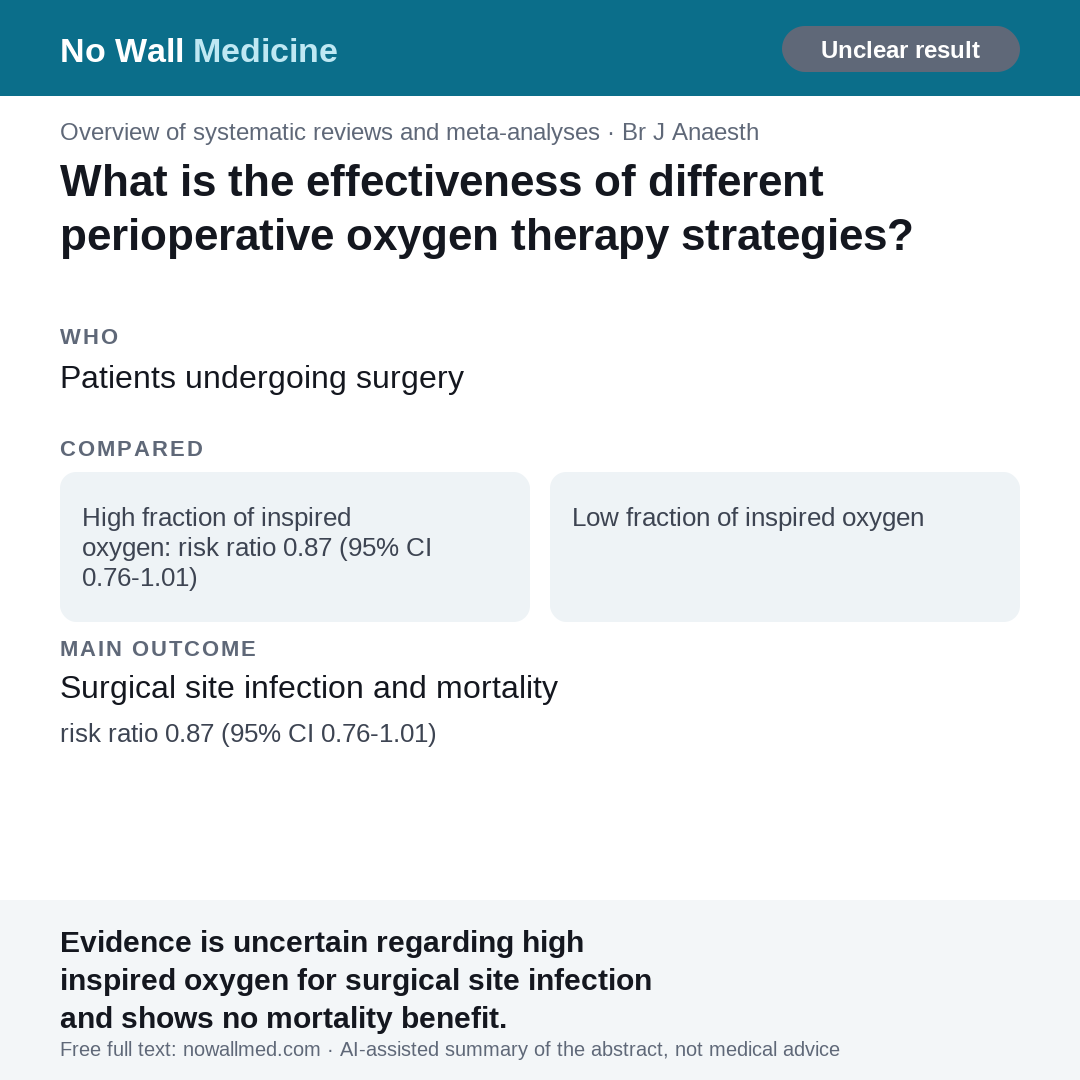
Perioperative oxygen therapy: an overview of systematic reviews and meta-analyses
Overview of systematic reviews and meta-analysesUnclear result
What is the effectiveness of different perioperative oxygen therapy strategies?
Who
Patients undergoing surgery
Compared
High fraction of inspired oxygen: risk ratio 0.87 (95% CI 0.76-1.01)
Low fraction of inspired oxygen
Main outcome
Surgical site infection and mortality
Result: risk ratio 0.87 (95% CI 0.76-1.01)
Bottom line: Evidence is uncertain regarding high inspired oxygen for surgical site infection and shows no mortality benefit.
Limitation: Low to very low certainty of evidence limits confidence in findings.
Br J Anaesth · 2025-06-06Download image
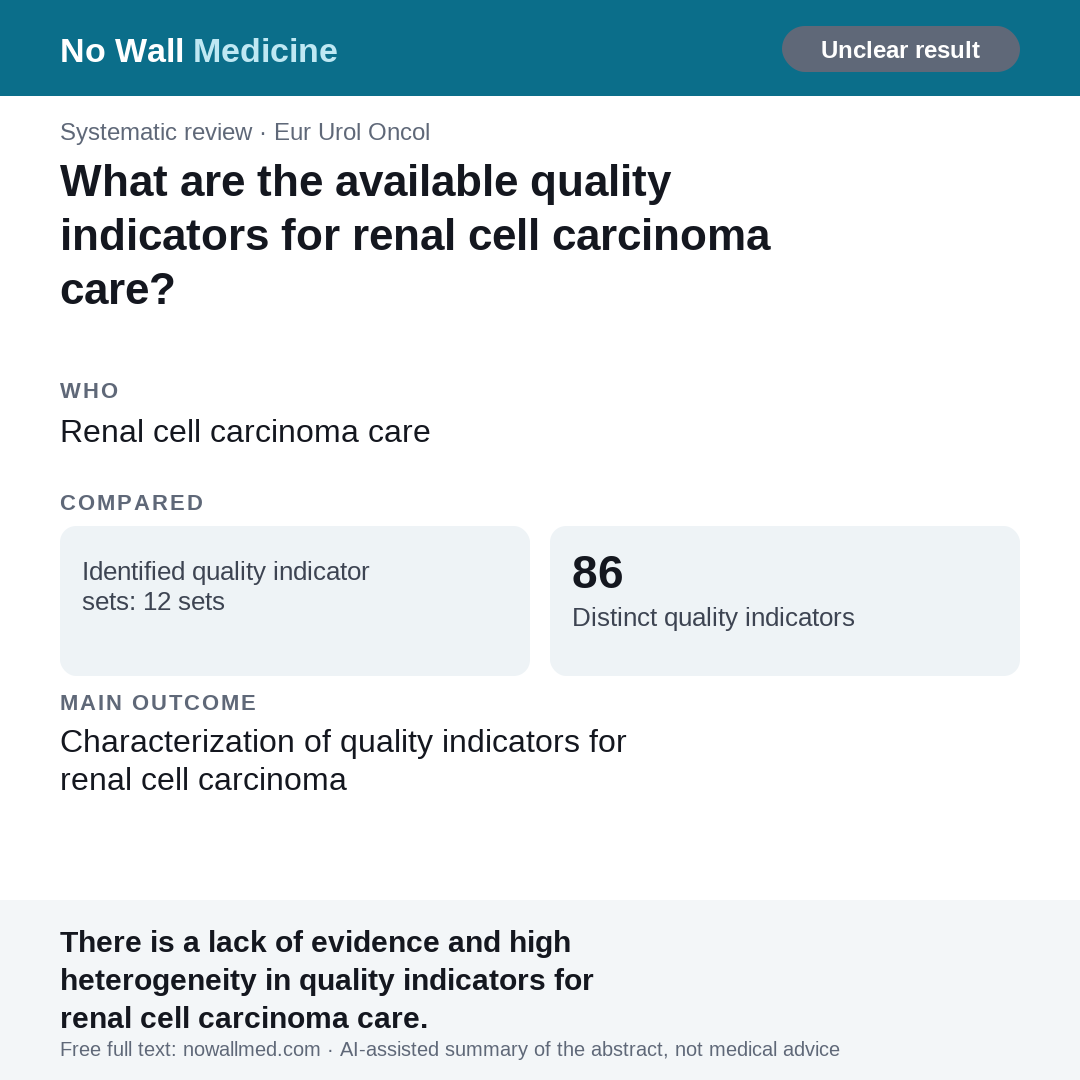
Quality Indicators for Renal Cancer Care: A Systematic Review
Systematic reviewUnclear result
What are the available quality indicators for renal cell carcinoma care?
Who
Renal cell carcinoma care
Compared
Identified quality indicator sets: 12 sets
86Distinct quality indicators
Main outcome
Characterization of quality indicators for renal cell carcinoma
Bottom line: There is a lack of evidence and high heterogeneity in quality indicators for renal cell carcinoma care.
Limitation: None of the piloted quality indicator sets have been validated externally.
Eur Urol Oncol · 2025-06-06Download image
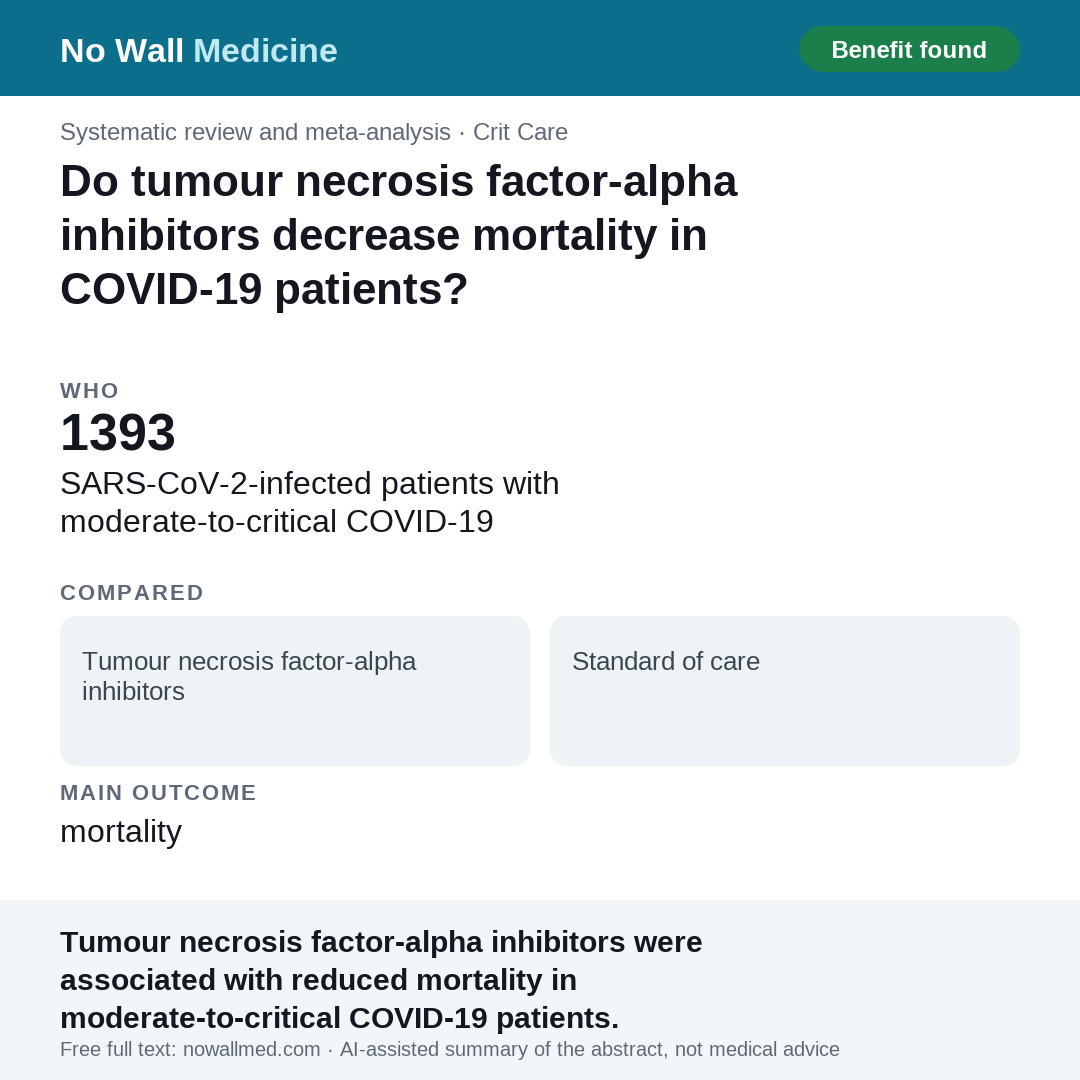
Tumour necrosis factor-alpha inhibitors decrease mortality in COVID-19: a systematic review and meta-analysis
Systematic review and meta-analysisKey finding
Do tumour necrosis factor-alpha inhibitors decrease mortality in COVID-19 patients?
Who
1393
SARS-CoV-2-infected patients with moderate-to-critical COVID-19
Compared
Tumour necrosis factor-alpha inhibitors
Standard of care
Main outcome
mortality
Result: odds ratio 0.67 (95% CI 0.44 to 1.00)
Bottom line: Tumour necrosis factor-alpha inhibitors were associated with reduced mortality in moderate-to-critical COVID-19 patients.
Crit Care · 2025-06-06Download image
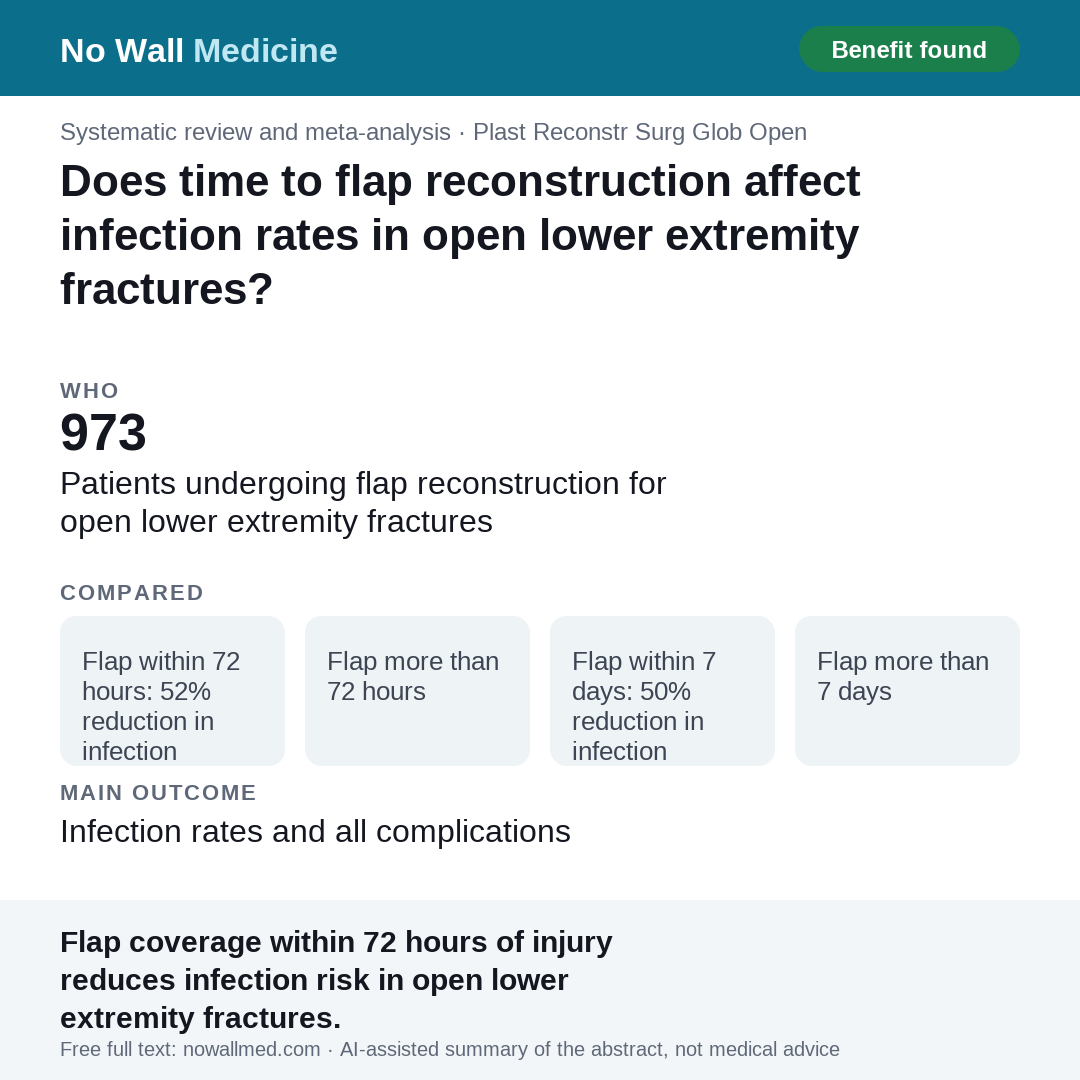
Early Flap Reconstruction and Infection Rates in Open Lower Extremity Fractures: A Systematic Review and Meta-analysis
Systematic review and meta-analysisBenefit found
Does time to flap reconstruction affect infection rates in open lower extremity fractures?
Who
973
Patients undergoing flap reconstruction for open lower extremity fractures
Compared
Flap within 72 hours: 52% reduction in infection
Flap more than 72 hours
Flap within 7 days: 50% reduction in infection
Flap more than 7 days
Main outcome
Infection rates and all complications
Result: risk ratio 0.48 (95% CI 0.25-0.89)
Bottom line: Flap coverage within 72 hours of injury reduces infection risk in open lower extremity fractures.
Plast Reconstr Surg Glob Open · 2025-06-06Download image
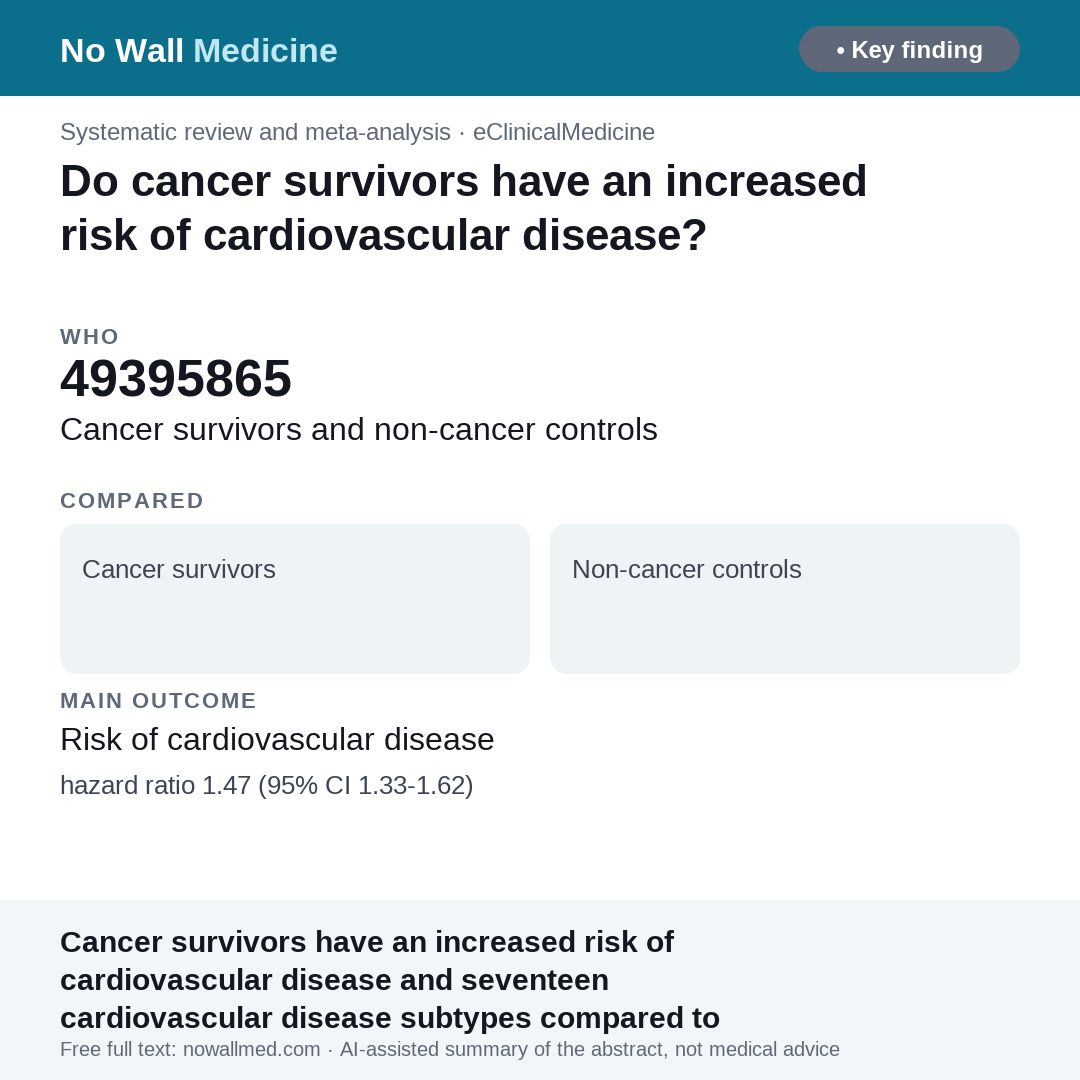
Risk of cardiovascular disease among cancer survivors: systematic review and meta-analysis
Systematic review and meta-analysisKey finding
Do cancer survivors have an increased risk of cardiovascular disease?
Who
49395865
Cancer survivors and non-cancer controls
Compared
Cancer survivors
Non-cancer controls
Main outcome
Risk of cardiovascular disease
Result: hazard ratio 1.47 (95% CI 1.33-1.62)
Bottom line: Cancer survivors have an increased risk of cardiovascular disease and seventeen cardiovascular disease subtypes compared to non-cancer controls.
Funded by: National Key R&D Program of China, National Natural Science Foundation of China
eClinicalMedicine · 2025-06-05Download image
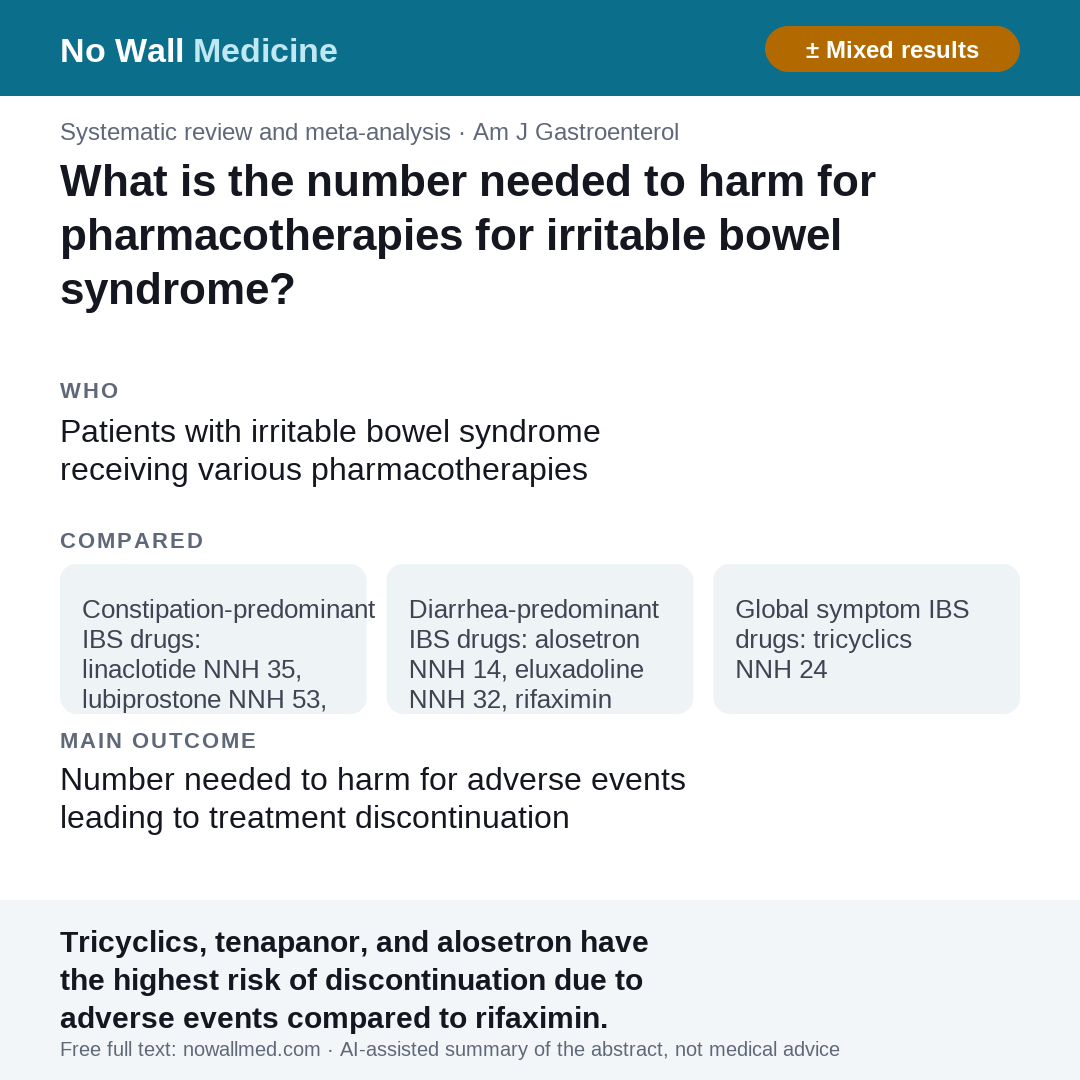
The Safety of Pharmacotherapy for Irritable Bowel Syndrome: A Systematic Review and Meta-Analysis
Systematic review and meta-analysisMixed results
What is the number needed to harm for pharmacotherapies for irritable bowel syndrome?
Who
Patients with irritable bowel syndrome receiving various pharmacotherapies
Compared
Constipation-predominant IBS drugs: linaclotide NNH 35, lubiprostone NNH 53, plecanatide NNH 59, tegaserod NNH 58, tenapanor NNH 16
Diarrhea-predominant IBS drugs: alosetron NNH 14, eluxadoline NNH 32, rifaximin and ramosetron negative value
Global symptom IBS drugs: tricyclics NNH 24
Main outcome
Number needed to harm for adverse events leading to treatment discontinuation
Bottom line: Tricyclics, tenapanor, and alosetron have the highest risk of discontinuation due to adverse events compared to rifaximin.
Am J Gastroenterol · 2025-06-05Download image
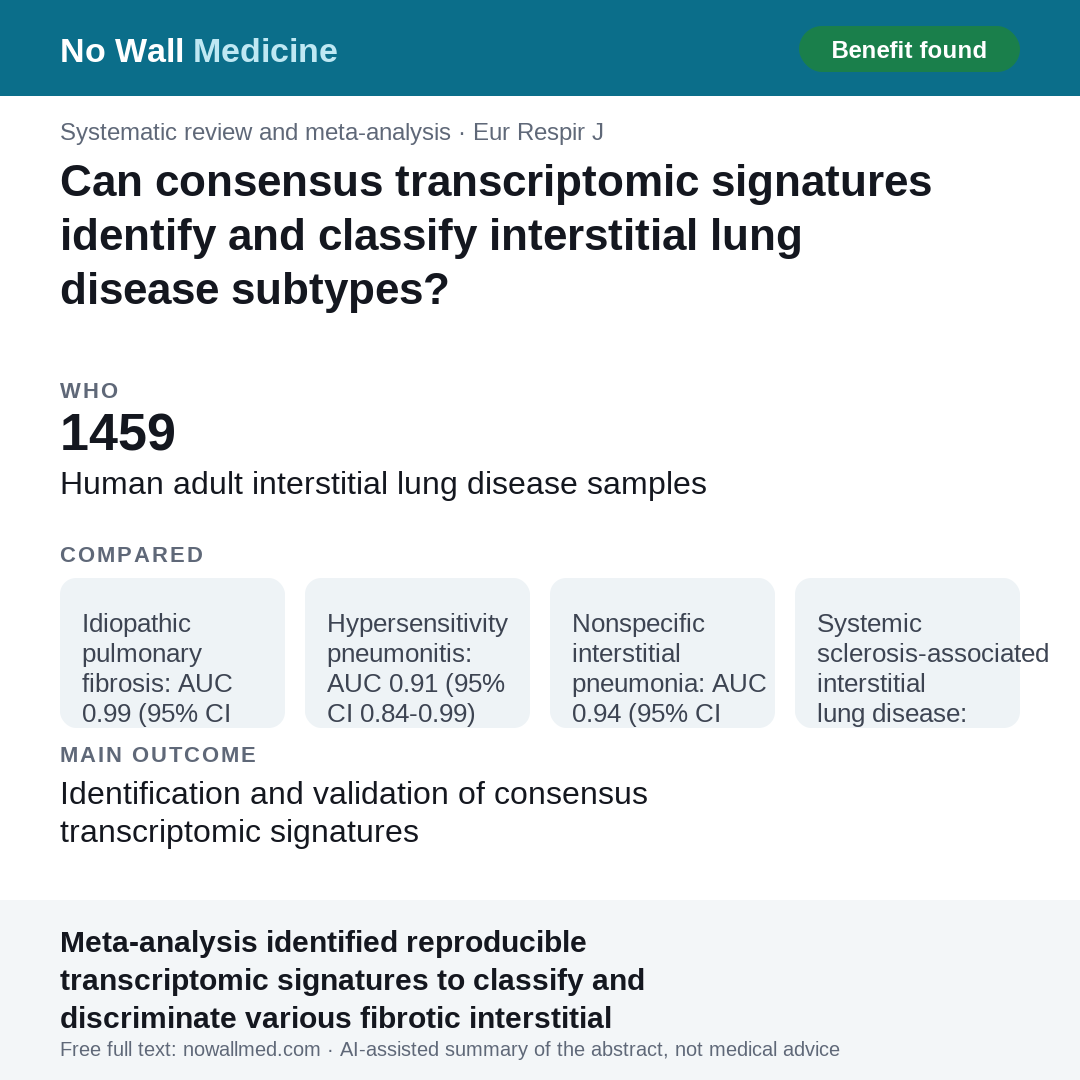
Transcriptomics of interstitial lung disease: a systematic review and meta-analysis
Systematic review and meta-analysisBenefit found
Can consensus transcriptomic signatures identify and classify interstitial lung disease subtypes?
Who
Human adult interstitial lung disease samples
Compared
Idiopathic pulmonary fibrosis: AUC 0.99 (95% CI 0.99-1.00)
Hypersensitivity pneumonitis: AUC 0.91 (95% CI 0.84-0.99)
Nonspecific interstitial pneumonia: AUC 0.94 (95% CI 0.88-0.99)
Systemic sclerosis-associated interstitial lung disease: AUC 0.98 (95% CI 0.93-1.00)
Main outcome
Identification and validation of consensus transcriptomic signatures
Bottom line: Meta-analysis identified reproducible transcriptomic signatures to classify and discriminate various fibrotic interstitial lung disease subtypes.
Eur Respir J · 2025-06-05Download image
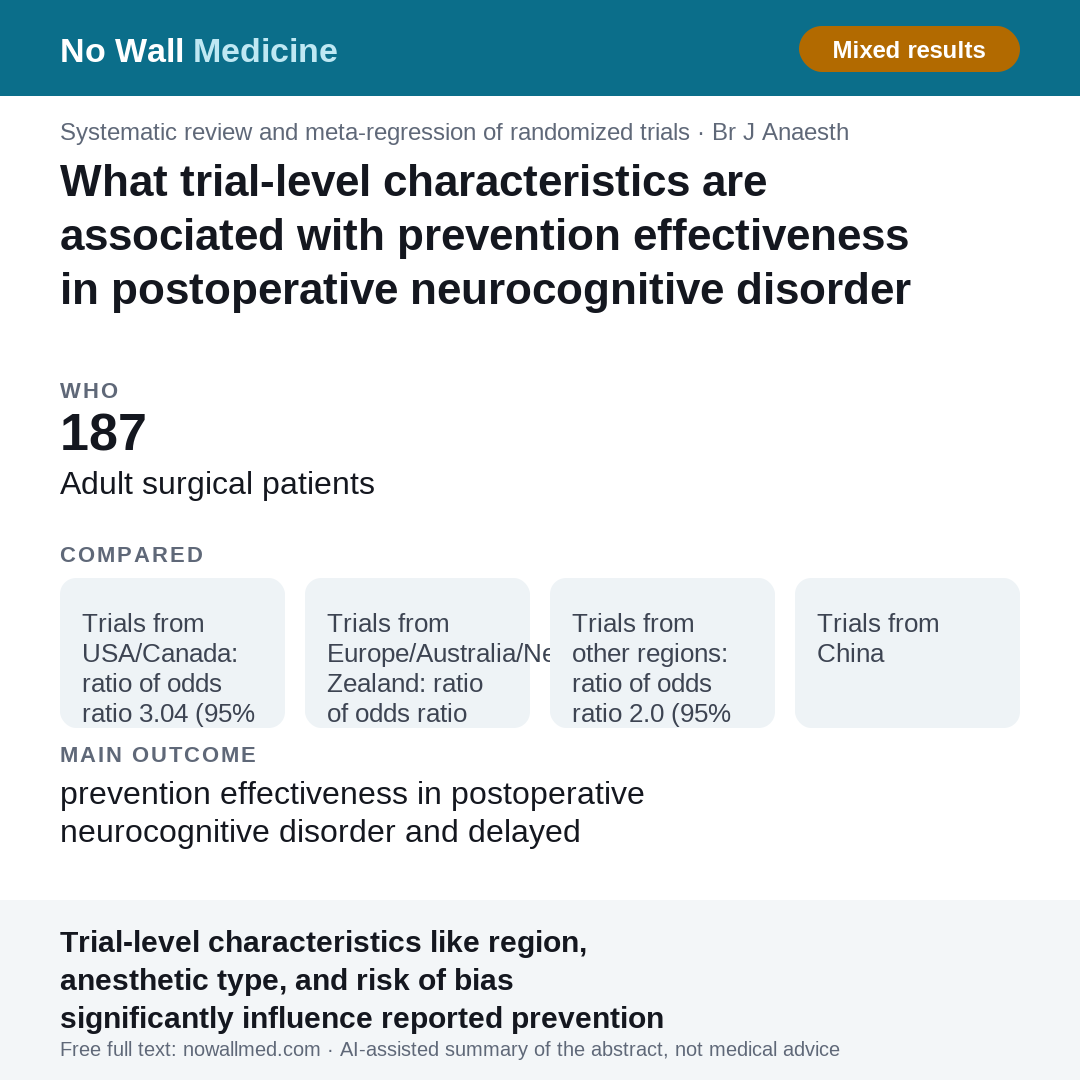
Patterns of prevention effectiveness in postoperative neurocognitive disorder and delayed neurocognitive recovery research: a systematic review with meta-regression of randomised trials
Systematic review and meta-regression of randomized trialsMixed results
What trial-level characteristics are associated with prevention effectiveness in postoperative neurocognitive disorder research?
Who
Adult surgical patients
Compared
Trials from USA/Canada: ratio of odds ratio 3.04 (95% CI 1.62-5.73)
Trials from Europe/Australia/New Zealand: ratio of odds ratio 1.58 (95% CI 1.04-2.40)
Trials from other regions: ratio of odds ratio 2.0 (95% CI 1.19-3.36)
Trials from China
Main outcome
prevention effectiveness in postoperative neurocognitive disorder and delayed neurocognitive recovery
Bottom line: Trial-level characteristics like region, anesthetic type, and risk of bias significantly influence reported prevention effectiveness in neurocognitive disorder research.
Limitation: Evidence certainty for dexmedetomidine benefits was very low.
Br J Anaesth · 2025-06-05Download image
Psychological interventions for adult earthquake-related post-traumatic stress disorder: systematic review and meta-analysis
Systematic review and meta-analysisBenefit found
Are psychological interventions effective for adult earthquake-related post-traumatic stress disorder?
Who
1315
Adults with substantial earthquake-related post-traumatic stress disorder symptoms
Compared
Psychological interventions
Control
Main outcome
Post-traumatic stress disorder, depression and anxiety symptoms
Result: overall effect size 2.11 (95% CI = 0.92, 3.31) for PTSD symptoms
Bottom line: Psychological interventions, especially cognitive behavioural therapy, are associated with good outcomes for earthquake-related post-traumatic stress disorder.
BJPsych Open · 2025-06-05Download image