Visual abstracts
New randomized trials and meta-analyses from leading journals at a glance: who was studied, what was compared, and what was found. Every paper is free to read in full.
All specialtiesCardiology 4877Oncology 4138Gastroenterology & Hepatology 1942Infectious Disease 3837Neurology 1905Psychiatry & Mental Health 2273Pulmonology 2143Critical Care 1365Endocrinology & Diabetes 2580Pediatrics 2980Surgery 2559Orthopedics & Sports Medicine 931Neurosurgery 537Cardiothoracic & Vascular Surgery 674Plastic & Reconstructive Surgery 591Nephrology 1133Rheumatology 823Hematology 1109Dermatology 621Ophthalmology 543Obstetrics & Gynecology 1686Public & Global Health 1058Radiology & Imaging 648Anesthesiology 986Urology 764ENT (Otolaryngology) 503Emergency Medicine 511Allergy & Immunology 313Geriatrics 981Family Medicine & Primary Care 562Medical Genetics & Genomics 676Pathology & Laboratory Medicine 159Physical Medicine & Rehabilitation 757Palliative Care 444Nutrition 1588Digital Health & AI 2201General Medicine 321
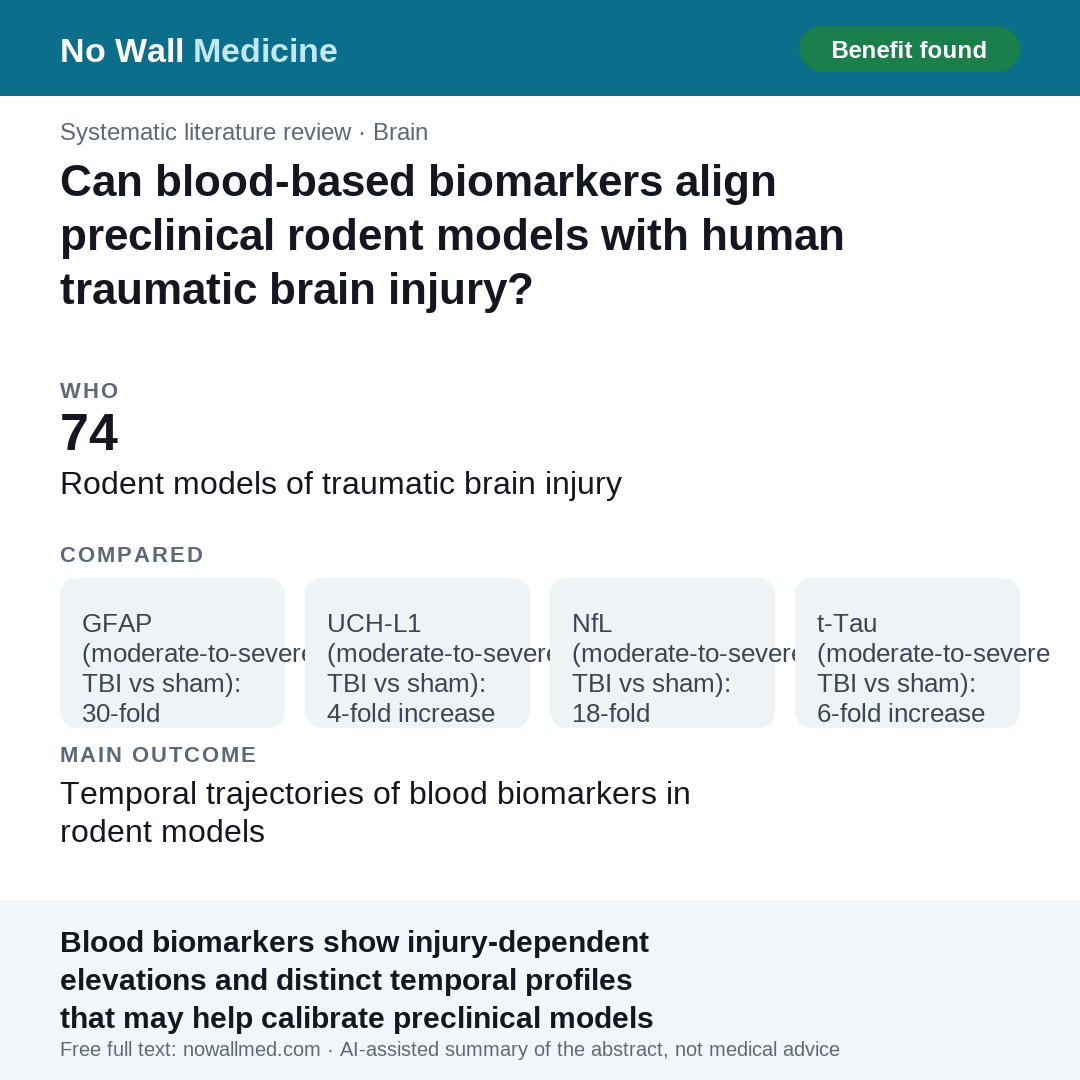
Exploiting blood-based biomarkers to align preclinical models with human traumatic brain injury
Systematic literature reviewBenefit found
Can blood-based biomarkers align preclinical rodent models with human traumatic brain injury?
Who
74
Rodent models of traumatic brain injury
Compared
GFAP (moderate-to-severe TBI vs sham): 30-fold increase
UCH-L1 (moderate-to-severe TBI vs sham): 4-fold increase
NfL (moderate-to-severe TBI vs sham): 18-fold increase
t-Tau (moderate-to-severe TBI vs sham): 6-fold increase
Main outcome
Temporal trajectories of blood biomarkers in rodent models
Bottom line: Blood biomarkers show injury-dependent elevations and distinct temporal profiles that may help calibrate preclinical models to human clinical observations.
Limitation: Relationship between Tau levels and underlying neurodegeneration has yet to be addressed.
Brain · 2024-11-13Download image
An international core outcome set for primary progressive aphasia (COS-PPA): Consensus-based recommendations for communication interventions across research and clinical settings
Consensus-based recommendationsUnclear result
Core outcomes for primary progressive aphasia
Who
82, 91
people with primary progressive aphasia and care partners · international
Compared
people with PPA
care partners
Main outcome
important outcome constructs
Bottom line: Core outcomes identified for primary progressive aphasia
Limitation: no measurement instruments agreed
Alzheimers Dement · 2024-11-13Download image

Impact of DPP-4 Inhibitors on Interleukin Levels in Type 2 Diabetes Mellitus
Meta-analysis of 14 randomized controlled trialsMixed results
Do dipeptidyl peptidase-4 inhibitors impact interleukin levels in type 2 diabetes mellitus?
Who
850
Patients with type 2 diabetes mellitus
Compared
Dipeptidyl peptidase-4 inhibitors
Placebo or active agents
Main outcome
Interleukin concentrations
Result: IL-6: -0.54 pg/mL (95% CI, -0.82 to -0.25); IL-1β: -16.33 pg/mL (95% CI, -19.56 to -13.11); IL-18: -13.55 pg/mL (95% CI, -76.95 to 49.85)
Bottom line: Dipeptidyl peptidase-4 inhibitors significantly lowered interleukin-6 and interleukin-1 beta concentrations in patients with type 2 diabetes mellitus.
J Clin Endocrinol Metab · 2024-11-13Download image

Mild behavioural impairment in Parkinson's disease: a systematic review
Systematic reviewMixed results
What are the prevalence and characteristics of mild behavioural impairment in Parkinson's disease?
Who
People with Parkinson's disease · Five separate research institutions
Compared
Mild behavioural impairment symptoms: Affective dysregulation and impulse control disorders were primary contributors
Mild behavioural impairment symptoms: Abnormal perception was least contributor
Main outcome
Prevalence and characteristics of mild behavioural impairment
Bottom line: Mild behavioural impairment in early-stage Parkinson's disease is characterized primarily by mood and impulse control disorders.
Limitation: Methodological differences and varying conceptualizations of mild behavioural impairment affected reported prevalence rates.
Age Ageing · 2024-11-13Download image

Editor's Choice - Reporting and Methodological Quality of Systematic Reviews Underpinning Clinical Practice Guidelines for Vascular Surgery: A Systematic Review
Systematic reviewMixed results
What is the reporting and methodological quality of systematic reviews informing vascular surgery guidelines?
Who
215
Systematic reviews informing vascular surgery clinical practice guidelines · MEDLINE and Embase
Compared
Reporting completeness (PRISMA): mean 63%
Methodological quality (AMSTAR 2): mean 50%
Main outcome
Reporting and methodological quality of systematic reviews
Bottom line: Systematic reviews informing vascular surgery guidelines were of moderate quality at best, with recent and funded reviews performing better.
Eur J Vasc Endovasc Surg · 2024-11-13Download image

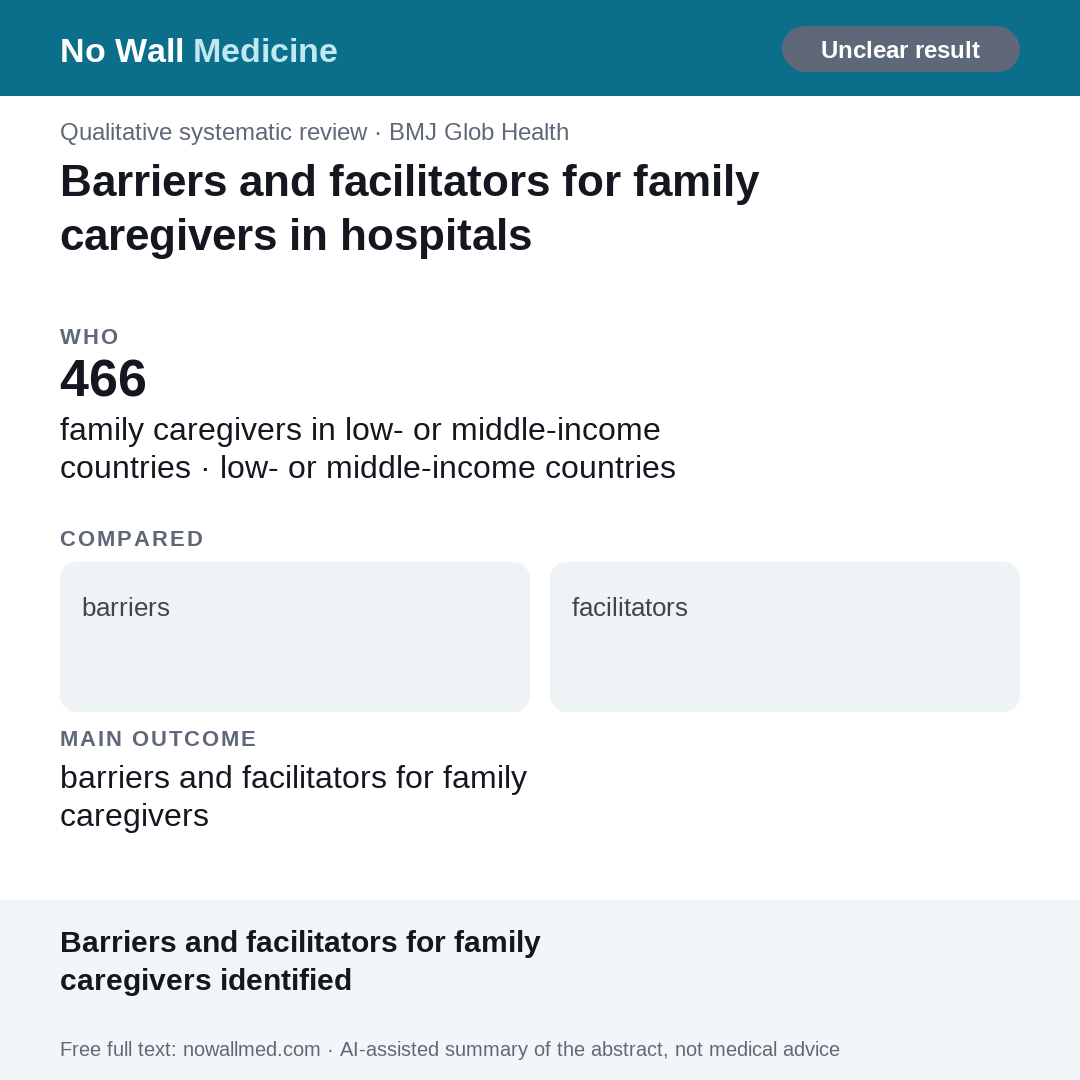
The barriers and facilitators family caregivers experience when participating in resource-limited hospital care: a qualitative systematic review
Qualitative systematic reviewUnclear result
Barriers and facilitators for family caregivers in hospitals
Who
466
family caregivers in low- or middle-income countries · low- or middle-income countries
Compared
barriers
facilitators
Main outcome
barriers and facilitators for family caregivers
Bottom line: Barriers and facilitators for family caregivers identified
Limitation: limited contexts and stakeholders
BMJ Glob Health · 2024-11-13Download image
Impact of fever on the outcome non-anoxic acute brain injury patients: a systematic review and meta-analysis
Systematic review and meta-analysisHarm found
Does fever impact neurological outcomes and mortality in acute brain injury patients?
Who
460,825
Patients with acute brain injury in intensive care units
Compared
Fever
No fever
Main outcome
Neurological outcome and mortality
Result: odds ratio 2.37 (95% CI 2.08-2.71) for unfavorable neurological outcome
Bottom line: Fever is associated with increased risk of poor neurological outcomes and mortality in acute brain injury patients.
Crit Care · 2024-11-13Download image

Exercise-based telerehabilitation for patients with multiple sclerosis using physical activity: a systematic review
Systematic reviewBenefit found
Is exercise-based telerehabilitation effective, feasible, safe, and adherent for multiple sclerosis patients?
Who
People with multiple sclerosis
Compared
Telerehabilitation: 5 out of 10 studies showed significant improvements
Usual care
Main outcome
Feasibility, effectiveness, safety, and adherence
Bottom line: Telerehabilitation is comparable to regular centre-based rehabilitation regarding feasibility, safety, and effectiveness.
J Rehabil Med · 2024-11-13Download image

Contraception with levonorgestrel-releasing intrauterine system versus copper intrauterine device: a meta-analysis of randomized controlled trials
Meta-analysis of 20 randomized controlled trialsBenefit found
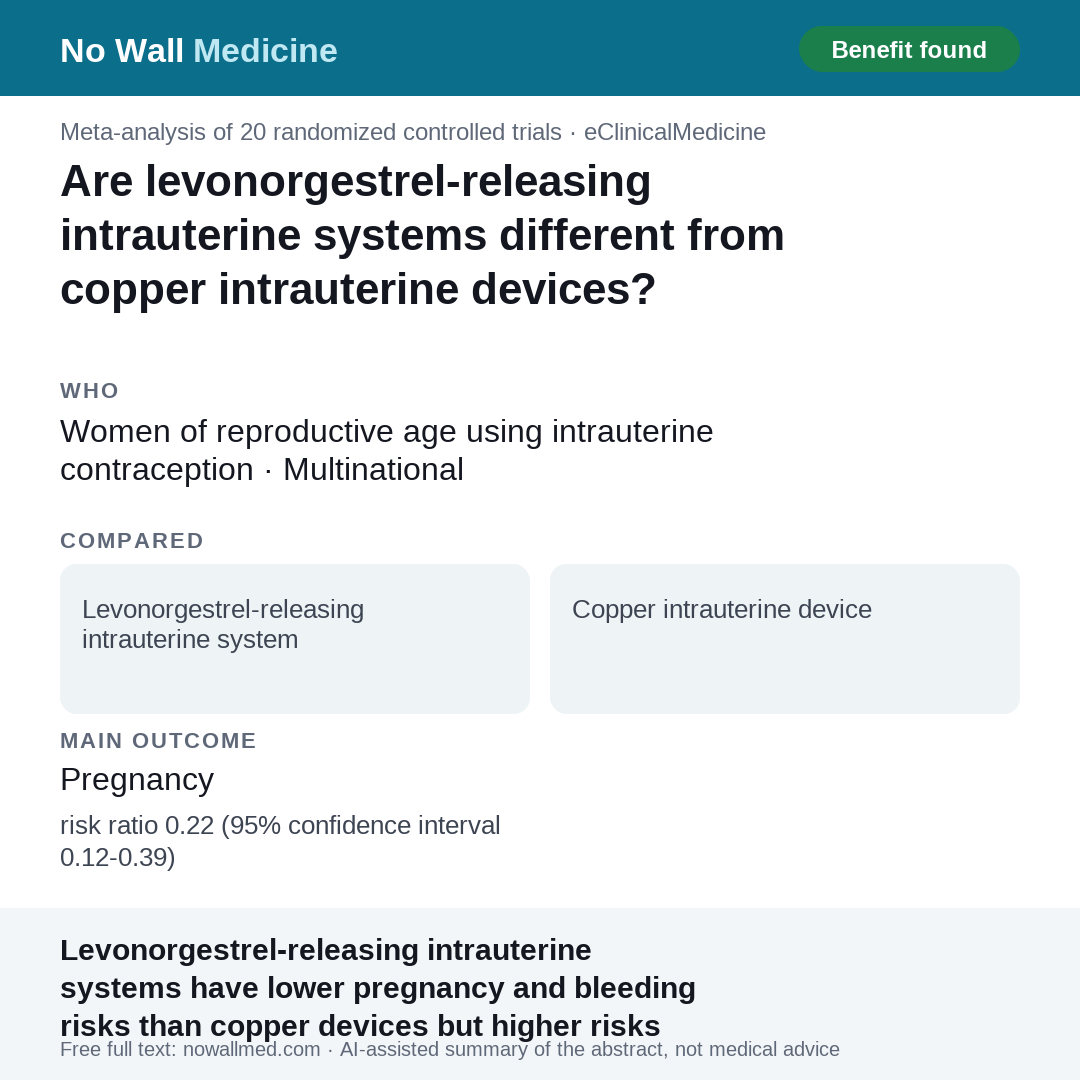
Are levonorgestrel-releasing intrauterine systems different from copper intrauterine devices?
Who
Women of reproductive age using intrauterine contraception · Multinational
Compared
Levonorgestrel-releasing intrauterine system
Copper intrauterine device
Main outcome
Pregnancy
Result: risk ratio 0.22 (95% confidence interval 0.12-0.39)
Bottom line: Levonorgestrel-releasing intrauterine systems have lower pregnancy and bleeding risks than copper devices but higher risks of amenorrhea.
Funded by: Hunan Provincial Natural Foundation of China and others
eClinicalMedicine · 2024-11-12Download image
Diagnostic test accuracy of the Fungitell serum (1→3)-β-D-glucan assay for the diagnosis of Pneumocystis jirovecii pneumonia: a systematic review and meta-analysis
Systematic review and meta-analysisBenefit found
What is the diagnostic accuracy of the Fungitell beta-D-glucan assay for Pneumocystis jirovecii pneumonia?
Who
5111
Patients with risk factors for Pneumocystis jirovecii pneumonia
Compared
Conventional cut-off 80 pg/mL: sensitivity 83.5% and specificity 75.5%
Rule-in threshold 400 pg/mL: sensitivity 63.5% and specificity 93.6%
Main outcome
Diagnostic test accuracy of the Fungitell beta-D-glucan assay
Bottom line: A categorical approach using 80 pg/mL to rule-out and 400 pg/mL to rule-in may improve interpretation.
Limitation: More accurate estimates of pretest probability and further external validation are required.
Clin Microbiol Infect · 2024-11-12Download image

Real-world use of androgen-deprivation therapy intensification for metastatic hormone-sensitive prostate cancer: a systematic review
Systematic literature review of real-world data studiesMixed results
What are the real-world treatment patterns for metastatic hormone-sensitive prostate cancer?
Who
Men with metastatic hormone-sensitive prostate cancer · North America, Europe, and Asia
Compared
Androgen-deprivation therapy monotherapy: predominantly used across geographies
Androgen-deprivation therapy intensification: increasing trend over the study period
Main outcome
Treatment patterns among men with metastatic hormone-sensitive prostate cancer
Bottom line: Androgen-deprivation therapy intensification is increasing, but use remains suboptimal as many patients still receive monotherapy only.
BJU Int · 2024-11-12Download image

Can Lifestyle and Behavioral Interventions Improve Weight Management in Individuals With Spinal Cord Injury? A Systematic Review and Meta-analysis
Systematic review and meta-analysis of 5 randomized controlled trialsBenefit found
Do lifestyle and behavioral interventions improve weight management in individuals with spinal cord injury?
Who
Individuals with spinal cord injury
Compared
Exercise regimen: BMI decrease mean difference -0.38 kg/m2
Usual activities: BMI decrease mean difference -0.38 kg/m2
Main outcome
Anthropometric indices and body composition
Result: mean difference -0.38 kg/m2 (95% CI, -0.57 to -0.19)
Bottom line: Exercise regimens compared to usual activities decrease body mass index and waist circumference in individuals with spinal cord injury.
Arch Phys Med Rehabil · 2024-11-12Download image

Comparing Interventions Used in Randomized Controlled Trials of Upper Extremity Motor Rehabilitation Post-stroke in High-Income Countries and Low-to-Middle-Income Countries
Systematic review of randomized controlled trialsMixed results
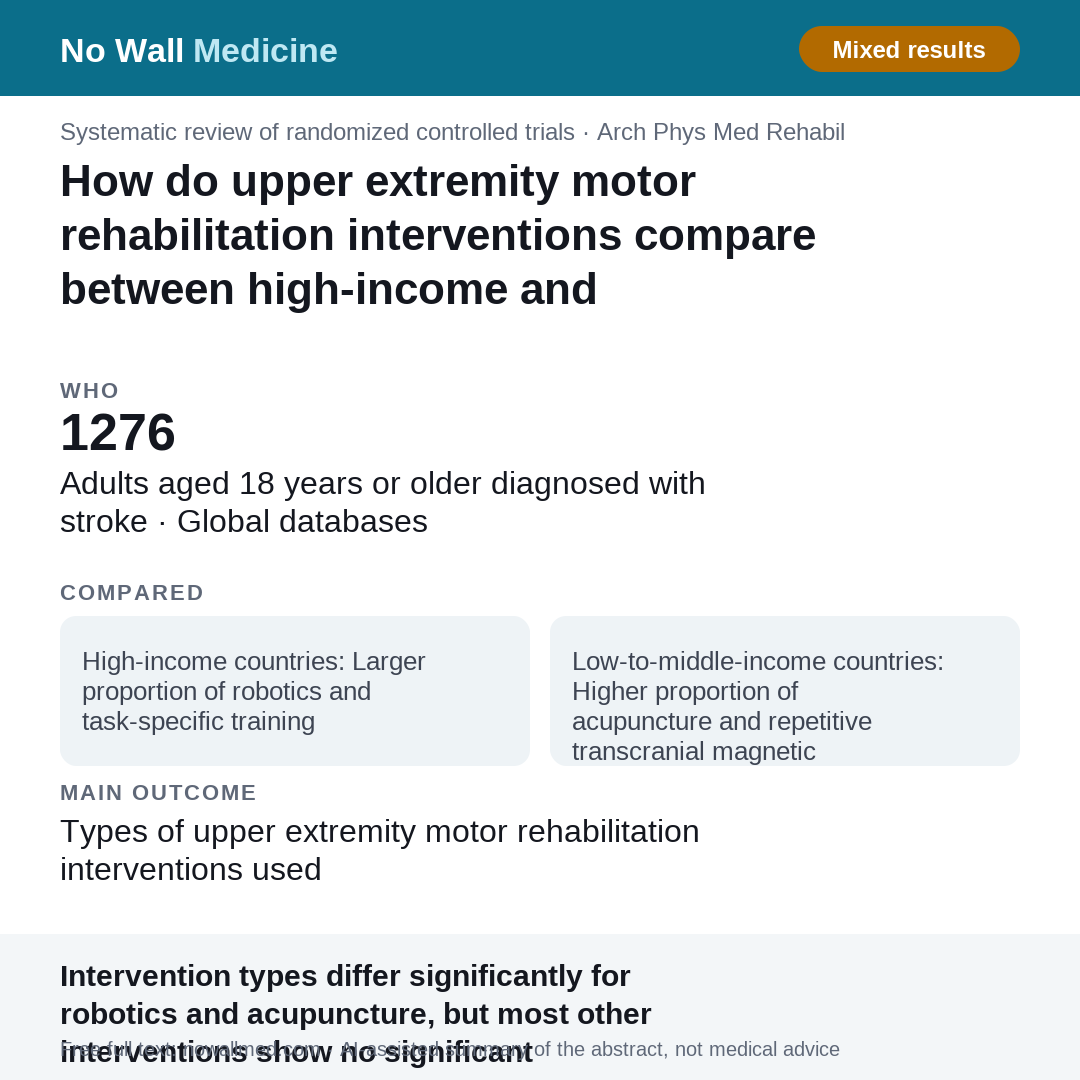
How do upper extremity motor rehabilitation interventions compare between high-income and low-to-middle-income countries?
Who
1276
Adults aged 18 years or older diagnosed with stroke · Global databases
Compared
High-income countries: Larger proportion of robotics and task-specific training
Low-to-middle-income countries: Higher proportion of acupuncture and repetitive transcranial magnetic stimulation
Main outcome
Types of upper extremity motor rehabilitation interventions used
Bottom line: Intervention types differ significantly for robotics and acupuncture, but most other interventions show no significant difference.
Arch Phys Med Rehabil · 2024-11-12Download image
A systematic review of observational studies on the association between diet quality patterns and visceral adipose tissue
Systematic reviewBenefit found
Diet quality and visceral adipose tissue
Who
disease-free adults and adolescents
Compared
a priori diet
a posteriori diet
Main outcome
visceral adipose tissue
Bottom line: High-quality diet inversely associated with visceral fat
Limitation: heterogeneity of literature
Br J Nutr · 2024-11-12Download image

Patient-reported outcome measures for life participation in patients with chronic kidney disease: a systematic review
Systematic reviewUnclear result
life participation in chronic kidney disease
Who
114
patients with chronic kidney disease
Compared
SF-36
KDQOL-SF
Main outcome
life participation
Bottom line: many measures vary in content
Clin Kidney J · 2024-11-12Download image

The Effects of Virtual Reality-Based Reminiscence Therapies for Older Adults With Cognitive Impairment: Systematic Review
Systematic reviewBenefit found
What are the effects of virtual reality-based reminiscence therapies for older adults with cognitive impairment?
Who
22
Older adults with cognitive impairment
Compared
Virtual reality-based reminiscence therapies: 100% maintained cognitive status and 100% reduced anxiety
Other stimulus materials
Main outcome
Cognitive-related outcomes
Bottom line: Virtual reality-based reminiscence therapies may improve memory, emotion, and cognitive status in older adults with cognitive impairment.
Limitation: Trial heterogeneity prevented meta-analysis to quantify the effect size.
J Med Internet Res · 2024-11-12Download image

The landscape of immune checkpoint inhibitor clinical trials in glioblastoma: A systematic review
Systematic review of clinical trialsNo clear difference
Do immune checkpoint inhibitors improve survival in glioblastoma patients?
Who
Patients with glioblastoma undergoing immunotherapy · ClinicalTrials.gov and PubMed databases
Compared
Immune checkpoint blockade
Standard of care
Main outcome
Overall survival
Bottom line: Immune checkpoint blockade has failed to improve overall survival compared to current standard of care in glioblastoma.
Limitation: Comparison was limited due to heterogeneity in study population and outcome operationalization.
Neurooncol Adv · 2024-11-12Download image

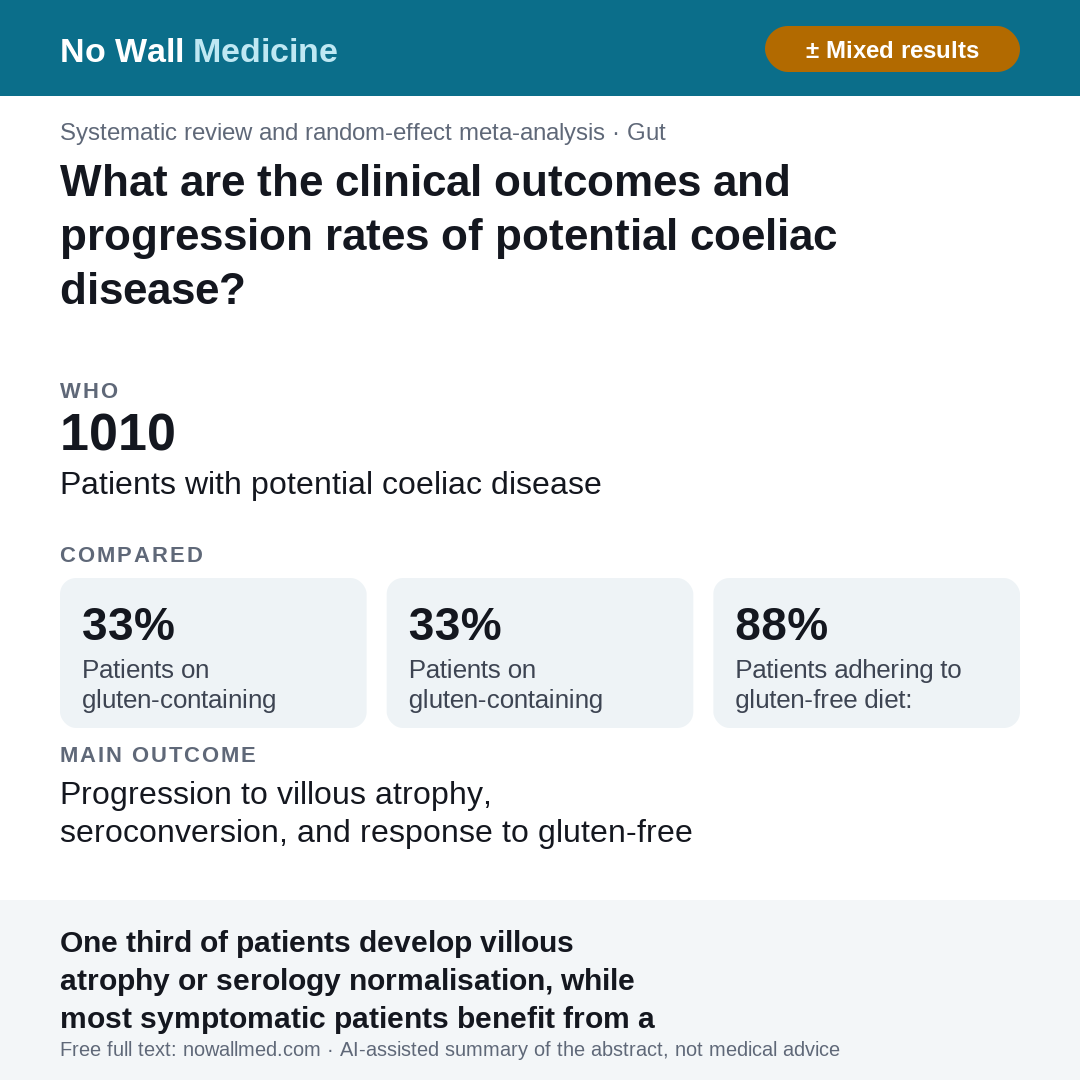
Clinical outcomes of potential coeliac disease: a systematic review and meta-analysis
Systematic review and random-effect meta-analysisMixed results
What are the clinical outcomes and progression rates of potential coeliac disease?
Who
1010
Patients with potential coeliac disease
Compared
33%Patients on gluten-containing diet: villous atrophy (95% CI 18% to 48%)
33%Patients on gluten-containing diet: serology normalisation (95% CI 17% to 48%)
88%Patients adhering to gluten-free diet: symptomatic improvement (95% CI 79% to 97%)
Main outcome
Progression to villous atrophy, seroconversion, and response to gluten-free diet
Bottom line: One third of patients develop villous atrophy or serology normalisation, while most symptomatic patients benefit from a gluten-free diet.
Gut · 2024-11-11Download image
Performance of stool-based molecular tests and processing methods for paediatric tuberculosis diagnosis: a systematic review and meta-analysis
Systematic review and meta-analysisBenefit found
What is the accuracy of stool-based molecular tests for paediatric tuberculosis diagnosis?
Who
Children younger than 16 years with presumptive tuberculosis
Compared
0·60Stool Xpert (95% CI 0·48-0·71)
0·73Stool Xpert Ultra (0·63-0·81)
0·44Other in-house molecular methods (0·29-0·60)
Main outcome
Sensitivity using any bacteriological confirmation as the reference standard
Result: stool Xpert Ultra sensitivity 0·73 (95% CI 0·63-0·81)
Bottom line: Stool-based Xpert Ultra improves bacteriological confirmation of tuberculosis in children, especially when using centrifuge-free simplified processing methods.
Funded by: EDCTP2 programme and European Society of Pediatric Infectious Diseases
Lancet Microbe · 2024-11-11Download image

Post-traumatic stress disorder and symptoms in paediatric cancer survivors and their family nucleus: systematic review, meta-analysis and meta-regression
Systematic review and meta-analysisBenefit found
What is the risk of post-traumatic stress disorder and symptom severity in pediatric cancer survivors and families?
Who
Pediatric cancer survivors and their family nucleus
Compared
Pediatric cancer survivors: risk ratio 2.36 (95% CI 1.37-4.06)
Family nucleus: risk ratio 1.13 (95% CI 0.59-5.00)
Main outcome
Post-traumatic stress disorder risk and symptom severity
Result: risk ratio 2.36 (95% CI 1.37-4.06)
Bottom line: Pediatric cancer survivors have an increased risk of post-traumatic stress disorder compared to non-cancer controls.
BJPsych Open · 2024-11-11Download image