Visual abstracts
New randomized trials and meta-analyses from leading journals at a glance: who was studied, what was compared, and what was found. Every paper is free to read in full.
All specialtiesCardiology 236Oncology 205Gastroenterology & Hepatology 112Infectious Disease 205Neurology 118Psychiatry & Mental Health 183Pulmonology 119Critical Care 75Endocrinology & Diabetes 143Pediatrics 117Surgery 79Orthopedics & Sports Medicine 49Neurosurgery 14Cardiothoracic & Vascular Surgery 26Plastic & Reconstructive Surgery 54Nephrology 53Rheumatology 53Hematology 66Dermatology 21Ophthalmology 39Obstetrics & Gynecology 81Public & Global Health 82Radiology & Imaging 22Anesthesiology 44Urology 56ENT (Otolaryngology) 34Emergency Medicine 25Allergy & Immunology 27Geriatrics 79Family Medicine & Primary Care 44Medical Genetics & Genomics 25Pathology & Laboratory Medicine 5Physical Medicine & Rehabilitation 67Palliative Care 40Nutrition 91Digital Health & AI 239General Medicine 36
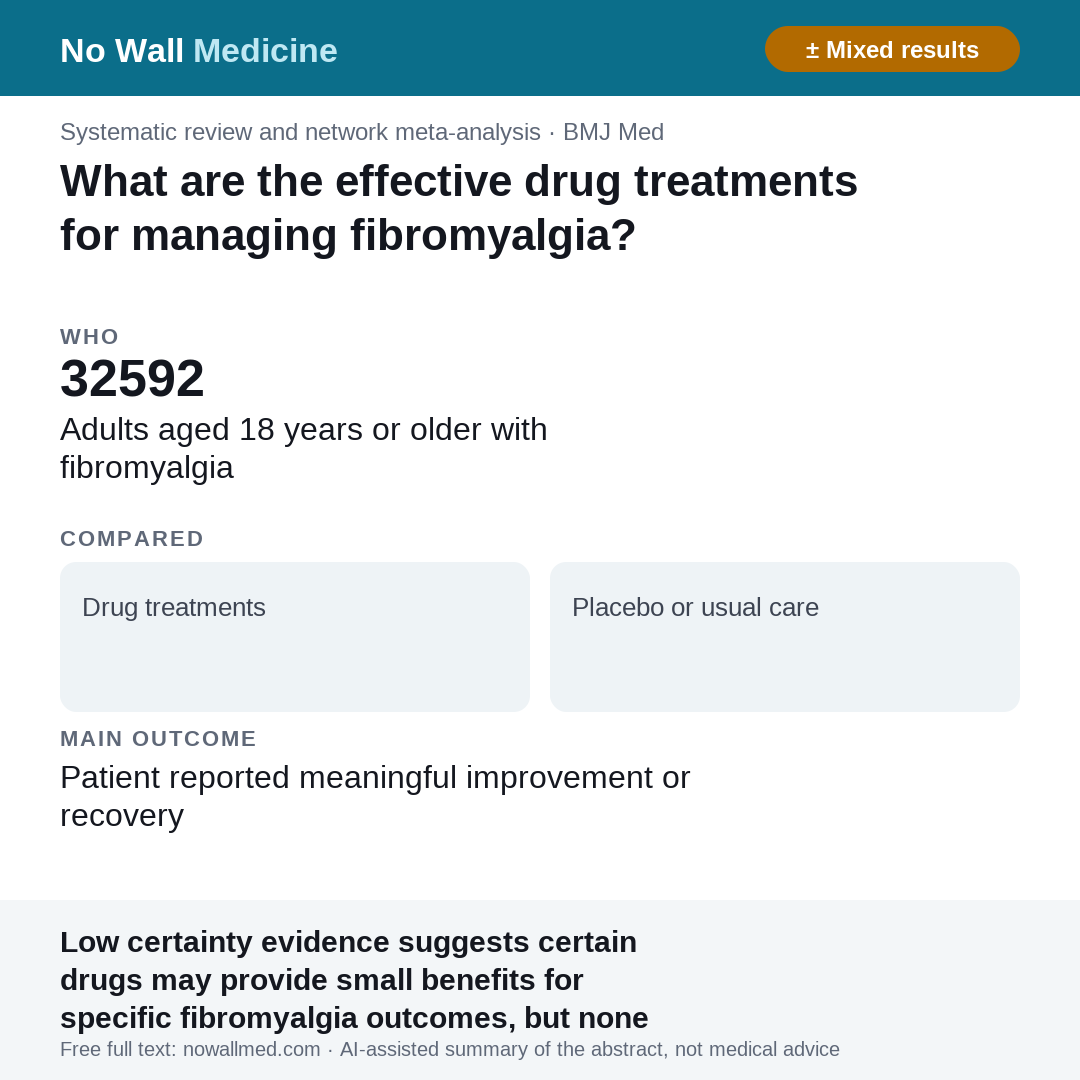
Drug treatments for fibromyalgia: systematic review and network meta-analysis of randomised trials
Systematic review and network meta-analysisMixed results
What are the effective drug treatments for managing fibromyalgia?
Who
32592
Adults aged 18 years or older with fibromyalgia
Compared
Drug treatments
Placebo or usual care
Main outcome
Patient reported meaningful improvement or recovery
Result: risk difference 105 to 283 more per 1000 patients
Bottom line: Low certainty evidence suggests certain drugs may provide small benefits for specific fibromyalgia outcomes, but none exceeded clinical importance thresholds.
BMJ Med · 2026-10-05Download image
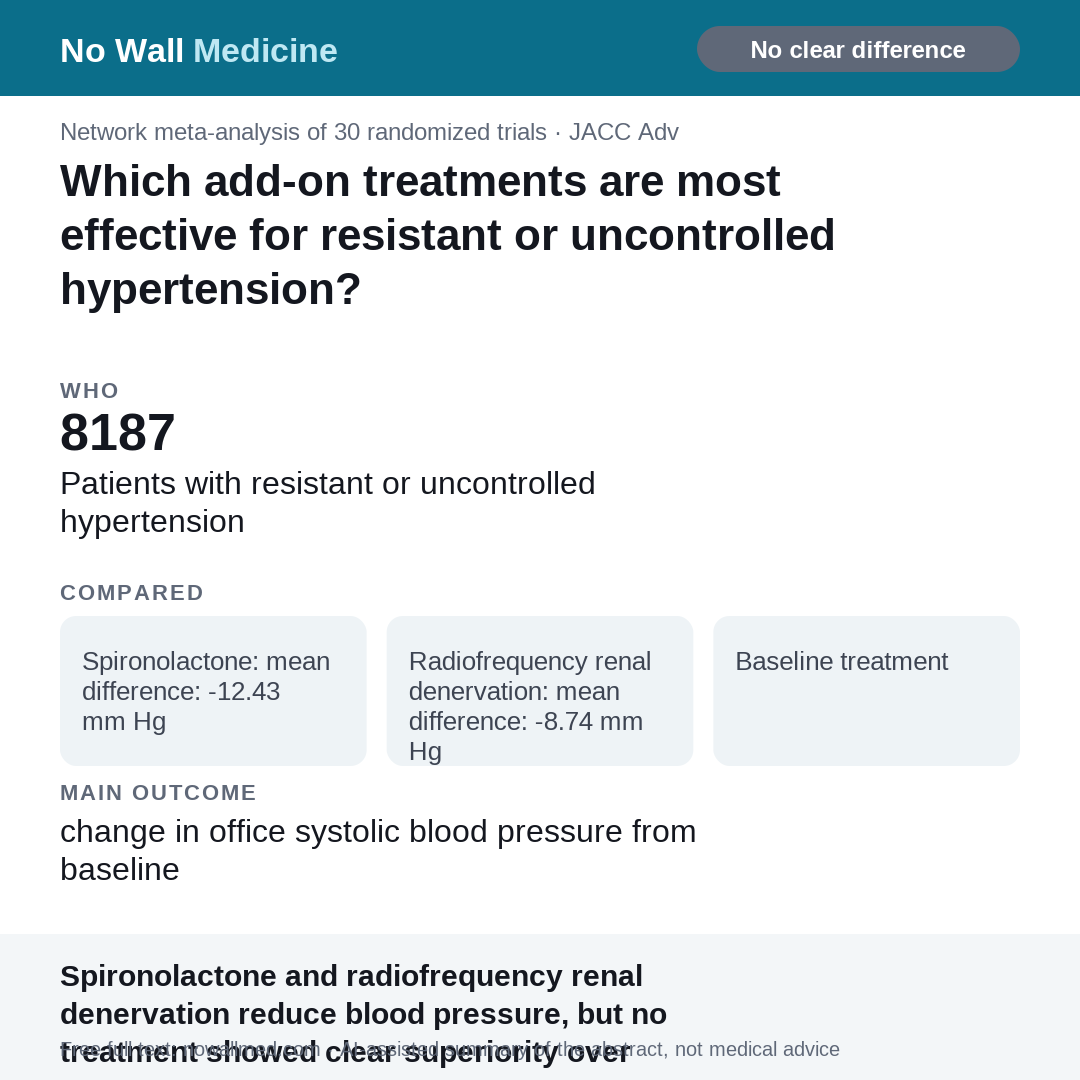
Comparative Efficacy of Treatments for Resistant or Uncontrolled Hypertension: A Network Meta-Analysis of Randomized Trials
Network meta-analysis of 30 randomized trialsNo clear difference
Which add-on treatments are most effective for resistant or uncontrolled hypertension?
Who
8187
Patients with resistant or uncontrolled hypertension
Compared
Spironolactone: mean difference: -12.43 mm Hg
Radiofrequency renal denervation: mean difference: -8.74 mm Hg
Baseline treatment
Main outcome
change in office systolic blood pressure from baseline
Result: no significant differences were observed between add-on treatments
Bottom line: Spironolactone and radiofrequency renal denervation reduce blood pressure, but no treatment showed clear superiority over another.
JACC Adv · 2026-10-05Download image
Machine Learning and Deep Learning for the Diagnosis of Cervical Degenerative Diseases: Systematic Review and Meta-Analysis
Meta-analysis of 30 studiesBenefit found
Do machine learning models diagnose cervical diseases accurately?
Who
25301
patients with cervical degenerative diseases
Compared
Traditional machine learning
Deep learning
Main outcome
diagnostic accuracy
Bottom line: Machine learning models diagnose cervical diseases accurately
Limitation: low certainty of evidence
J Med Internet Res · 2026-10-05Download image

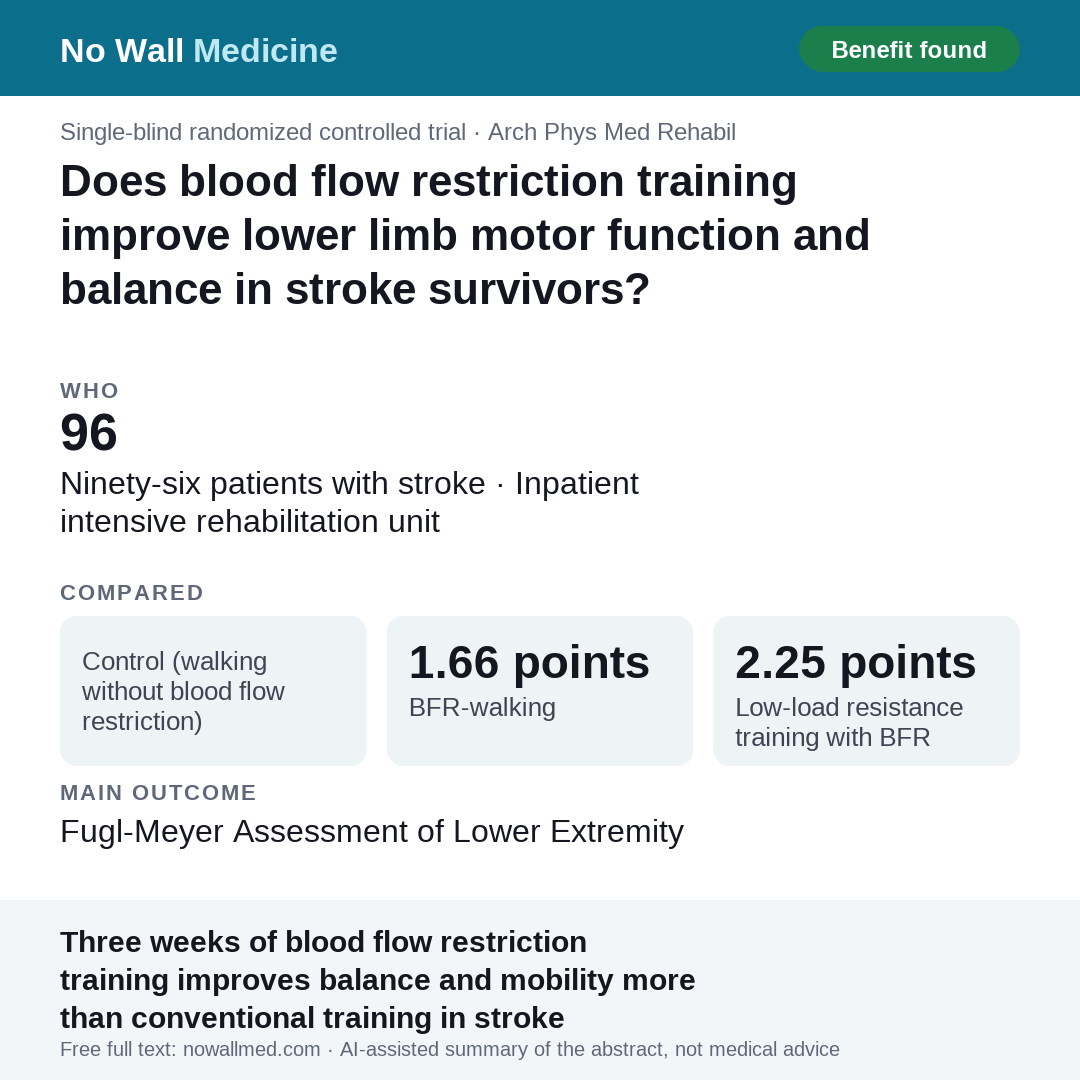
Effects of Blood Flow Restriction Training on Lower Limb Motor Function and Balance in Individuals With Stroke: A Randomized Controlled Trial
Single-blind randomized controlled trialBenefit found
Does blood flow restriction training improve lower limb motor function and balance in stroke survivors?
Who
96
Ninety-six patients with stroke · Inpatient intensive rehabilitation unit
Compared
Control (walking without blood flow restriction)
1.66 pointsBFR-walking (95% CI, 0.27-3.04)
2.25 pointsLow-load resistance training with BFR (95% CI, 0.86-3.64)
Main outcome
Fugl-Meyer Assessment of Lower Extremity
Result: adjusted mean difference vs control: 1.66 points (95% CI, 0.27-3.04) and 2.25 points (95% CI, 0.86-3.64)
Bottom line: Three weeks of blood flow restriction training improves balance and mobility more than conventional training in stroke survivors.
Arch Phys Med Rehabil · 2026-10-04Download image
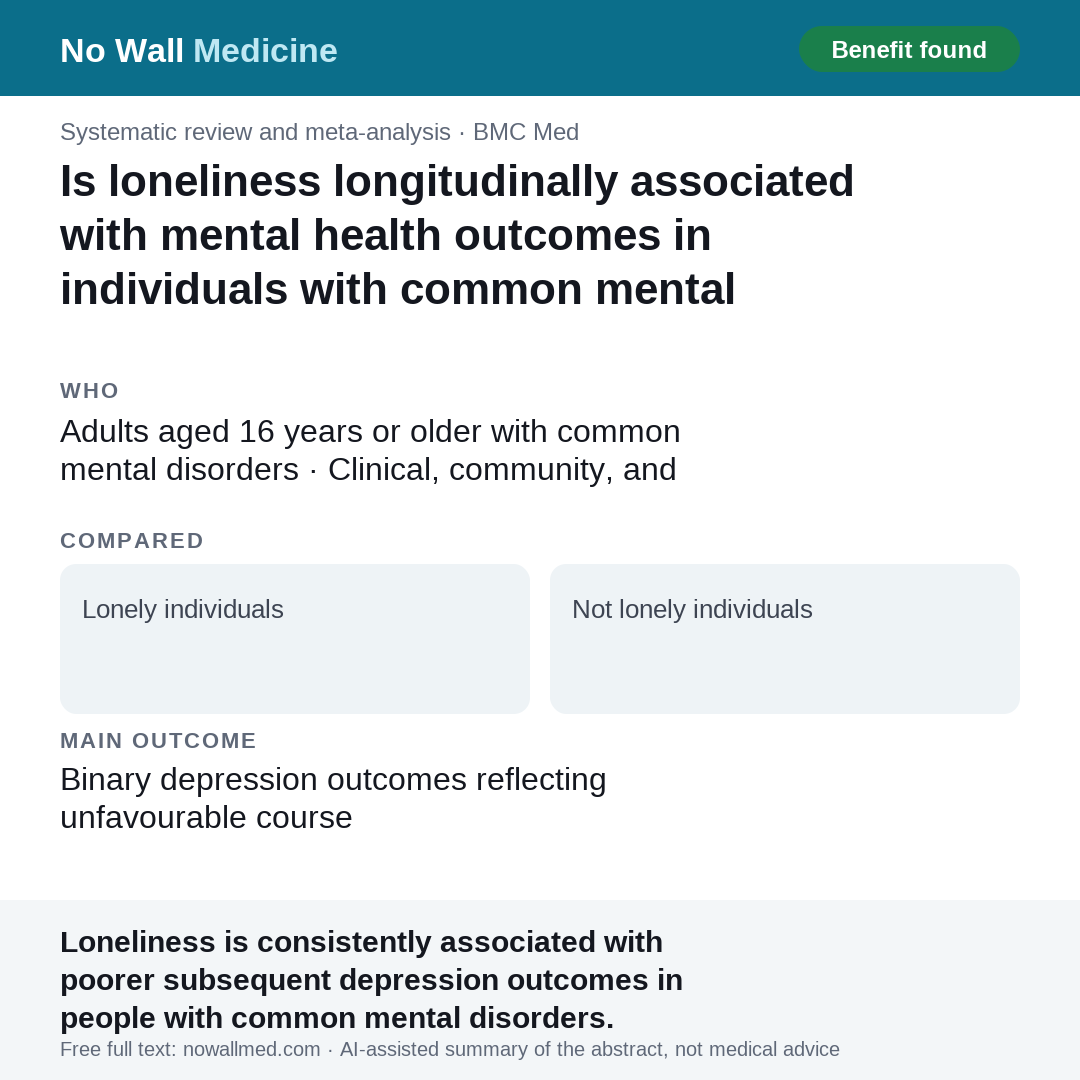
Longitudinal associations between loneliness and outcomes of Common Mental Disorders (CMDs): A systematic review and meta-analysis
Systematic review and meta-analysisBenefit found
Is loneliness longitudinally associated with mental health outcomes in individuals with common mental disorders?
Who
22
Adults aged 16 years or older with common mental disorders · Clinical, community, and treatment settings
Compared
Lonely individuals
Not lonely individuals
Main outcome
Binary depression outcomes reflecting unfavourable course
Result: adjusted odds ratio 3.26 (95% CI 2.26 to 4.70)
Bottom line: Loneliness is consistently associated with poorer subsequent depression outcomes in people with common mental disorders.
Limitation: Only one of the four meta-analyzed studies adjusted for baseline depressive symptom severity.
BMC Med · 2026-10-03Download image
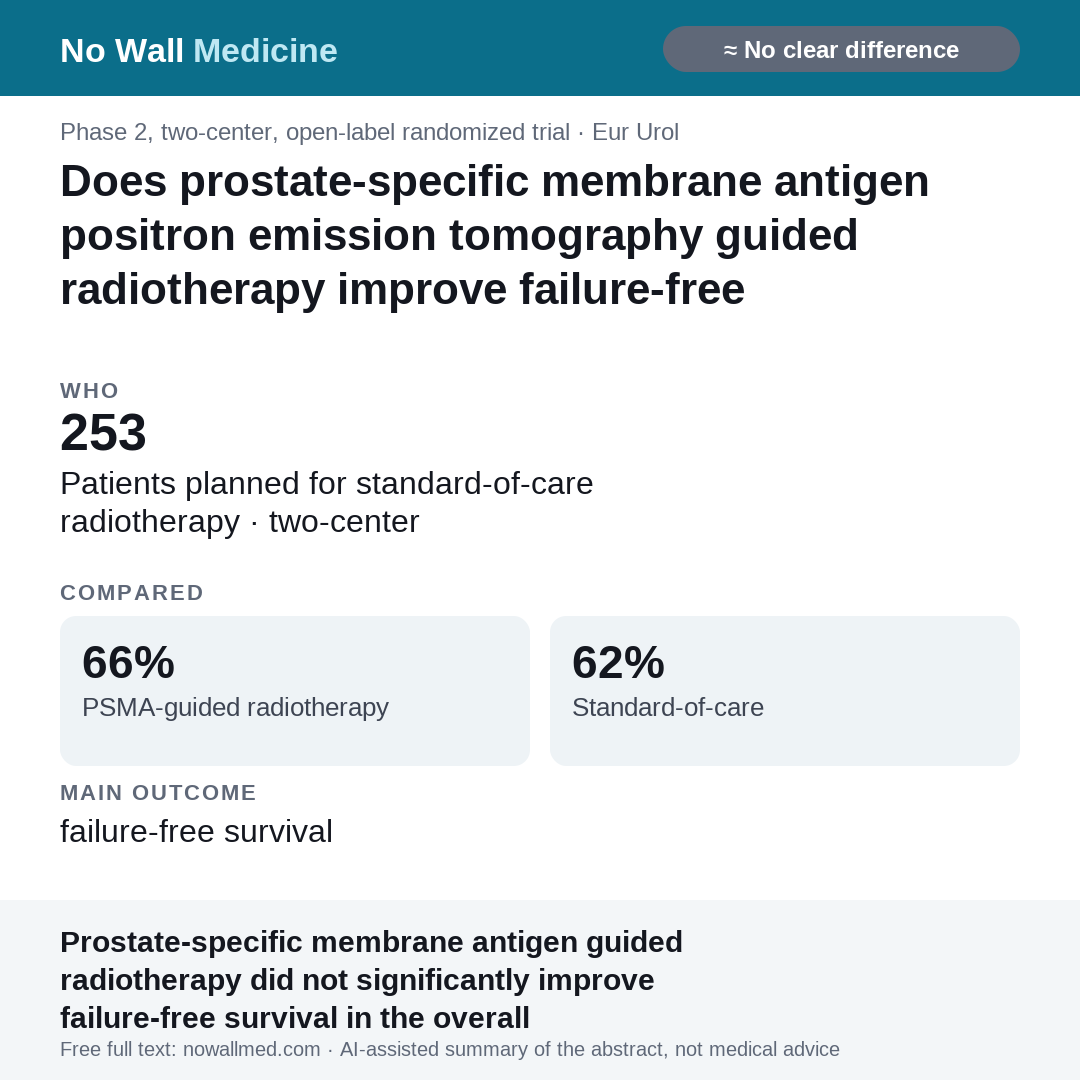
PSMA-PET/CT-guided Intensification of Radiation Therapy for Prostate Cancer (PSMAgRT): 5-yr Analysis of a Phase 2 Randomized Controlled Trial
Phase 2, two-center, open-label randomized trialNo clear difference
Does prostate-specific membrane antigen positron emission tomography guided radiotherapy improve failure-free survival?
Who
253
Patients planned for standard-of-care radiotherapy · two-center
Compared
66%PSMA-guided radiotherapy
62%Standard-of-care
Main outcome
failure-free survival
Result: hazard ratio 0.80 (one-sided 90% CI, upper bound 1.04)
Bottom line: Prostate-specific membrane antigen guided radiotherapy did not significantly improve failure-free survival in the overall population.
Limitation: phase 2 design with a heterogeneous population
Eur Urol · 2026-10-03Download image
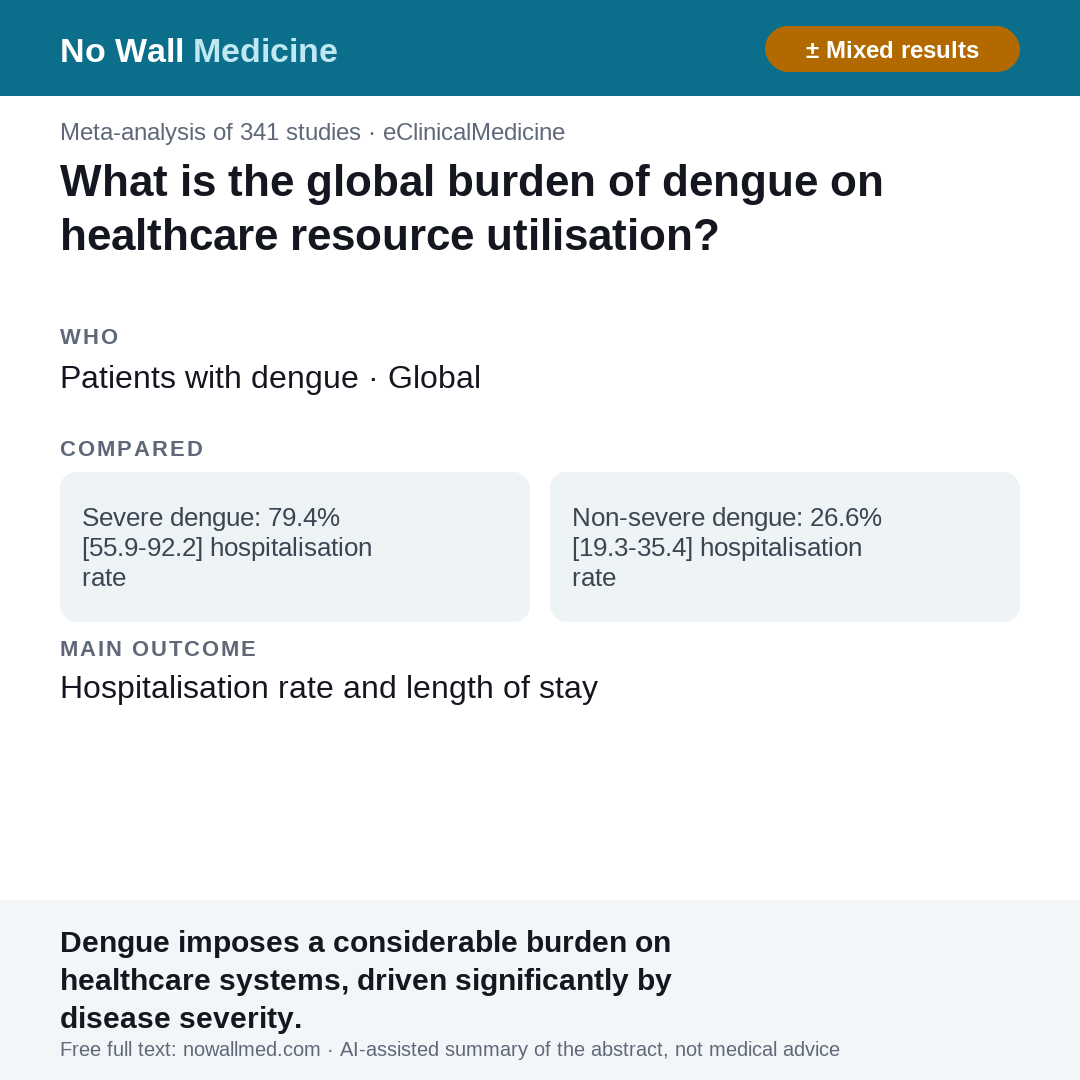
Global burden of dengue on healthcare systems: a meta-analysis of healthcare resource utilisation
Meta-analysis of 341 studiesMixed results
What is the global burden of dengue on healthcare resource utilisation?
Who
Patients with dengue · Global
Compared
Severe dengue: 79.4% [55.9-92.2] hospitalisation rate
Non-severe dengue: 26.6% [19.3-35.4] hospitalisation rate
Main outcome
Hospitalisation rate and length of stay
Bottom line: Dengue imposes a considerable burden on healthcare systems, driven significantly by disease severity.
Limitation: High heterogeneity between studies and interregional differences.
Funded by: Novartis Pharma AG
eClinicalMedicine · 2026-10-02Download image
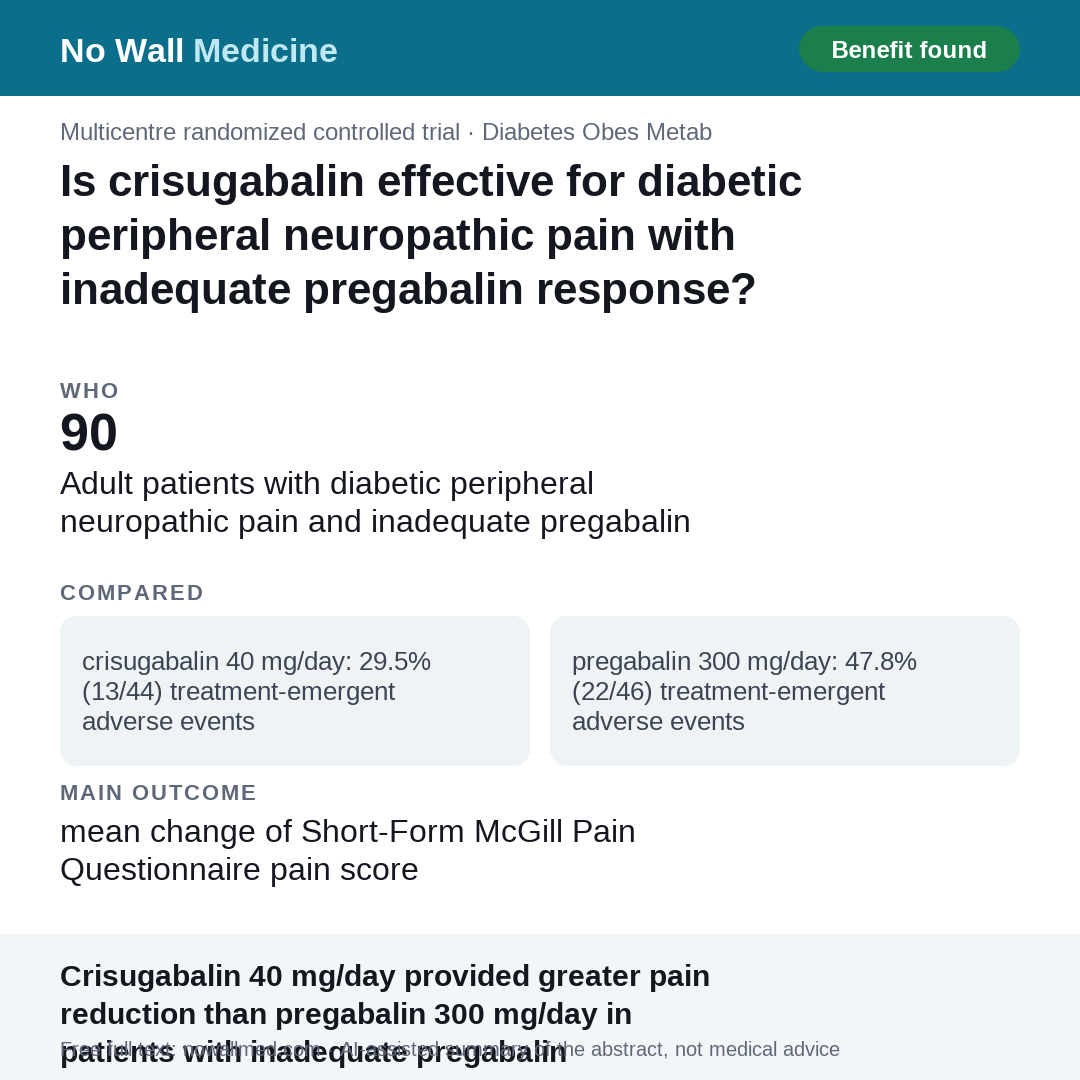
Efficacy and Safety of Crisugabalin for Inadequately Controlled Diabetic Peripheral Neuropathic Pain: A Randomized, Active-Controlled, Phase 2 Trial
Multicentre randomized controlled trialBenefit found
Is crisugabalin effective for diabetic peripheral neuropathic pain with inadequate pregabalin response?
Who
90
Adult patients with diabetic peripheral neuropathic pain and inadequate pregabalin response
Compared
crisugabalin 40 mg/day: 29.5% (13/44) treatment-emergent adverse events
pregabalin 300 mg/day: 47.8% (22/46) treatment-emergent adverse events
Main outcome
mean change of Short-Form McGill Pain Questionnaire pain score
Result: -7.2 (95% CI: -12.4, -2.0; ANCOVA p = 0.007)
Bottom line: Crisugabalin 40 mg/day provided greater pain reduction than pregabalin 300 mg/day in patients with inadequate pregabalin response.
Diabetes Obes Metab · 2026-10-02Download image
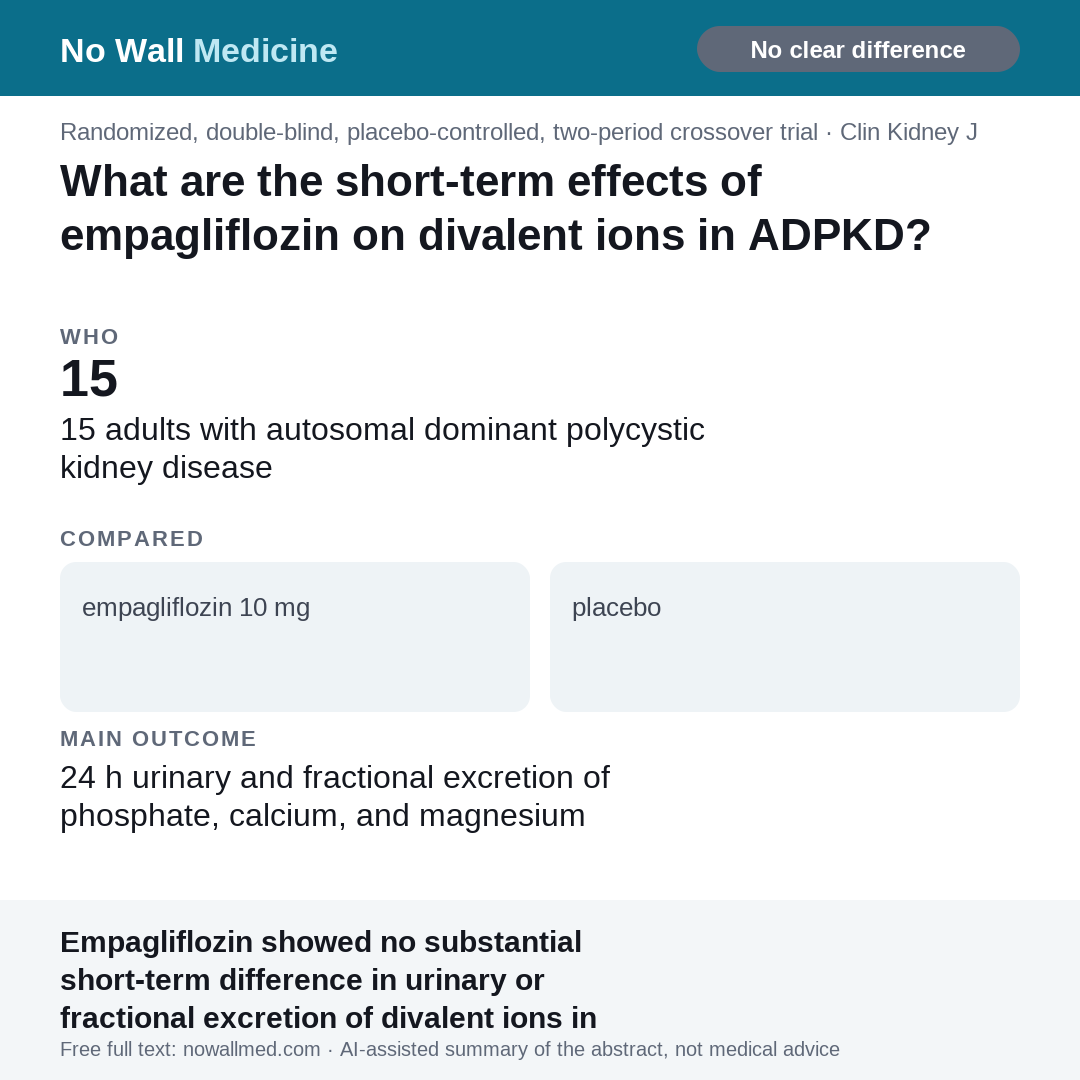
Short-term effects of an SGLT2 inhibitor on divalent ions in autosomal dominant polycystic kidney disease: a randomized crossover trial
Randomized, double-blind, placebo-controlled, two-period crossover trialNo clear difference
What are the short-term effects of empagliflozin on divalent ions in ADPKD?
Who
15
15 adults with autosomal dominant polycystic kidney disease
Compared
empagliflozin 10 mg
placebo
Main outcome
24 h urinary and fractional excretion of phosphate, calcium, and magnesium
Bottom line: Empagliflozin showed no substantial short-term difference in urinary or fractional excretion of divalent ions in ADPKD patients.
Limitation: Small sample size and exploratory nature of the analyses.
Clin Kidney J · 2026-10-02Download image
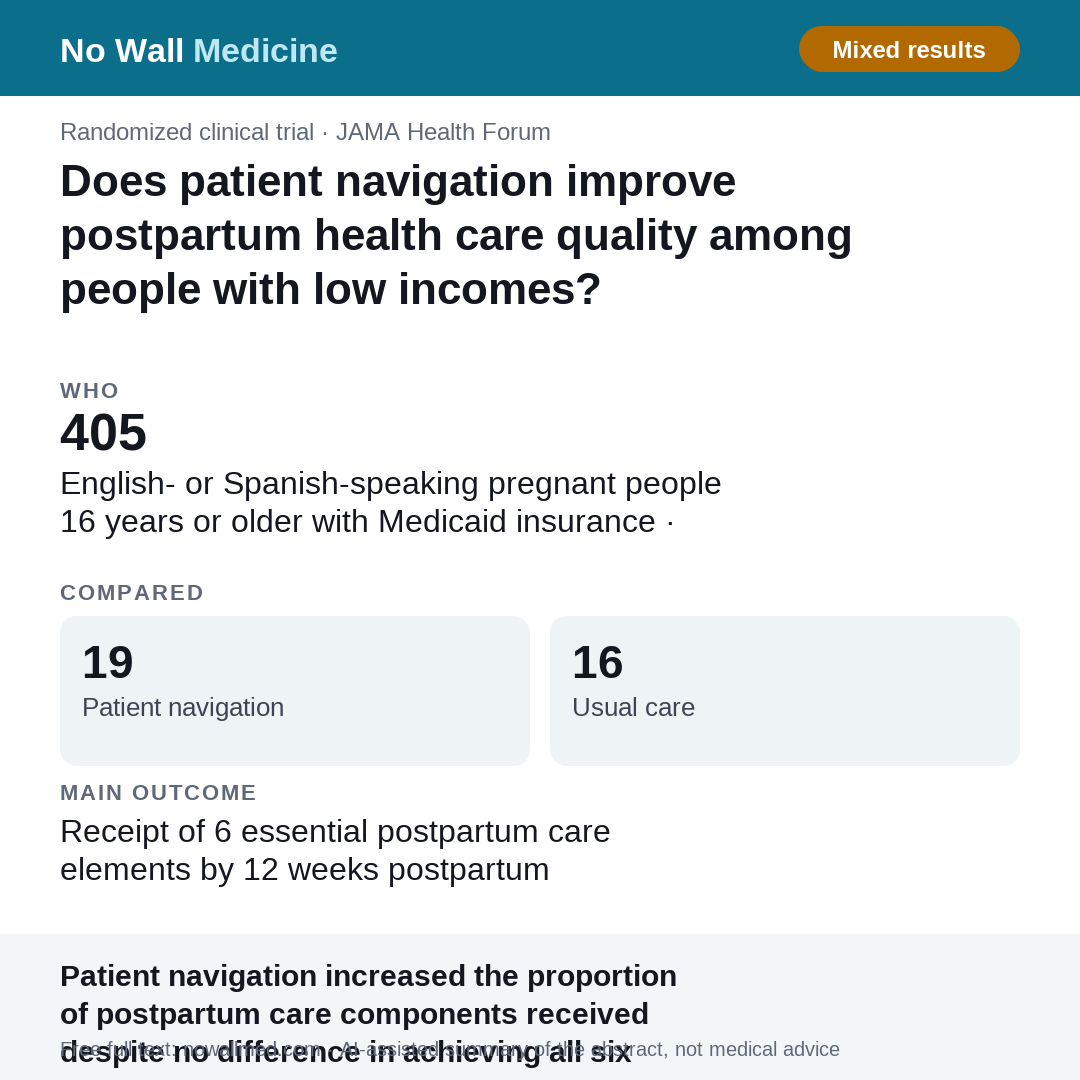
Patient Navigation and Postpartum Health Care Outcomes: A Randomized Clinical Trial
Randomized clinical trialMixed results
Does patient navigation improve postpartum health care quality among people with low incomes?
Who
405
English- or Spanish-speaking pregnant people 16 years or older with Medicaid insurance · Single urban academic medical center
Compared
19Patient navigation (9.4%)
16Usual care (7.9%)
Main outcome
Receipt of 6 essential postpartum care elements by 12 weeks postpartum
Bottom line: Patient navigation increased the proportion of postpartum care components received despite no difference in achieving all six essential elements.
JAMA Health Forum · 2026-10-02Download image
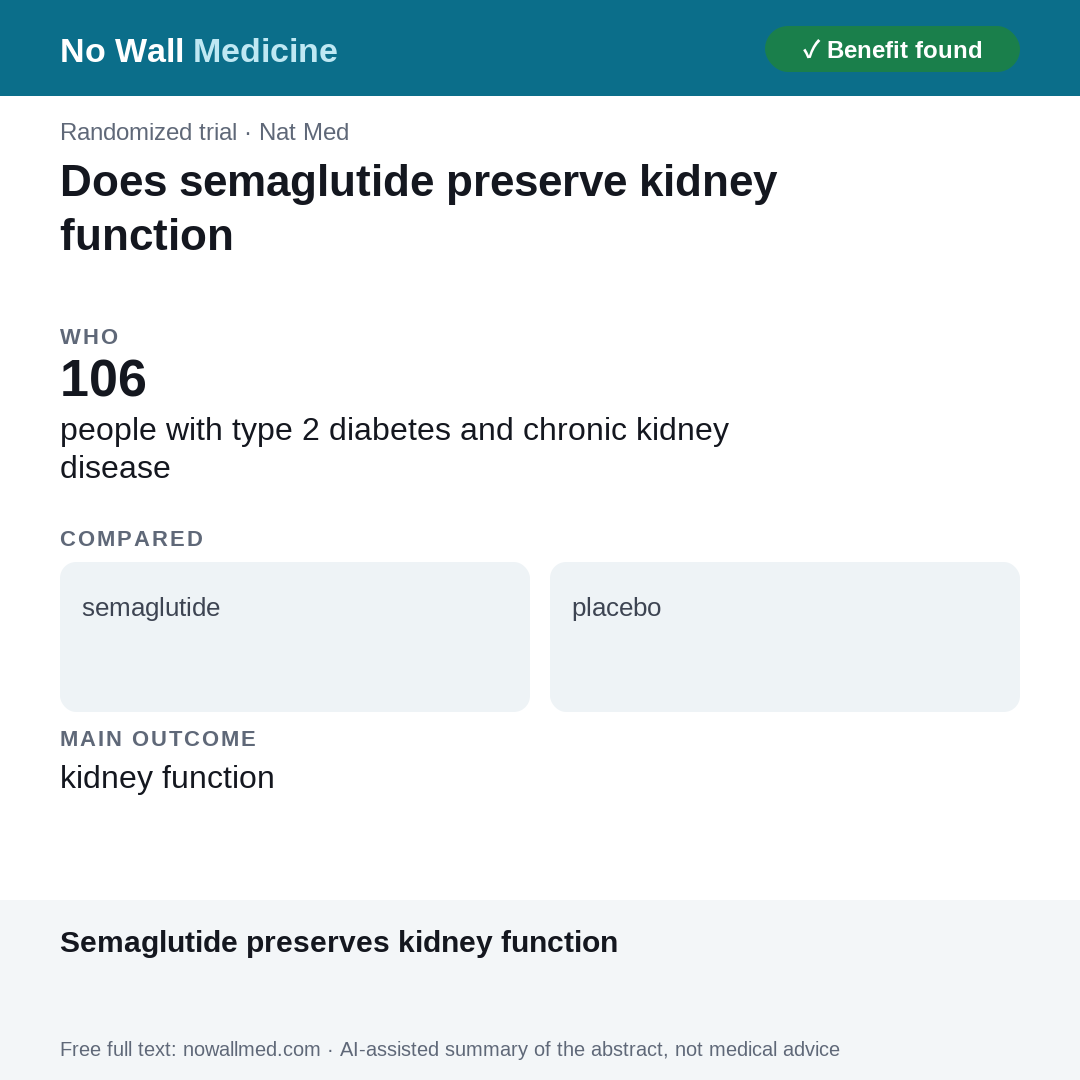
Effects of semaglutide on kidney disease in type 2 diabetes: a randomized placebo-controlled trial
Randomized trialBenefit found
Does semaglutide preserve kidney function
Who
106
people with type 2 diabetes and chronic kidney disease
Compared
semaglutide
placebo
Main outcome
kidney function
Bottom line: Semaglutide preserves kidney function
Nat Med · 2026-10-01Download image
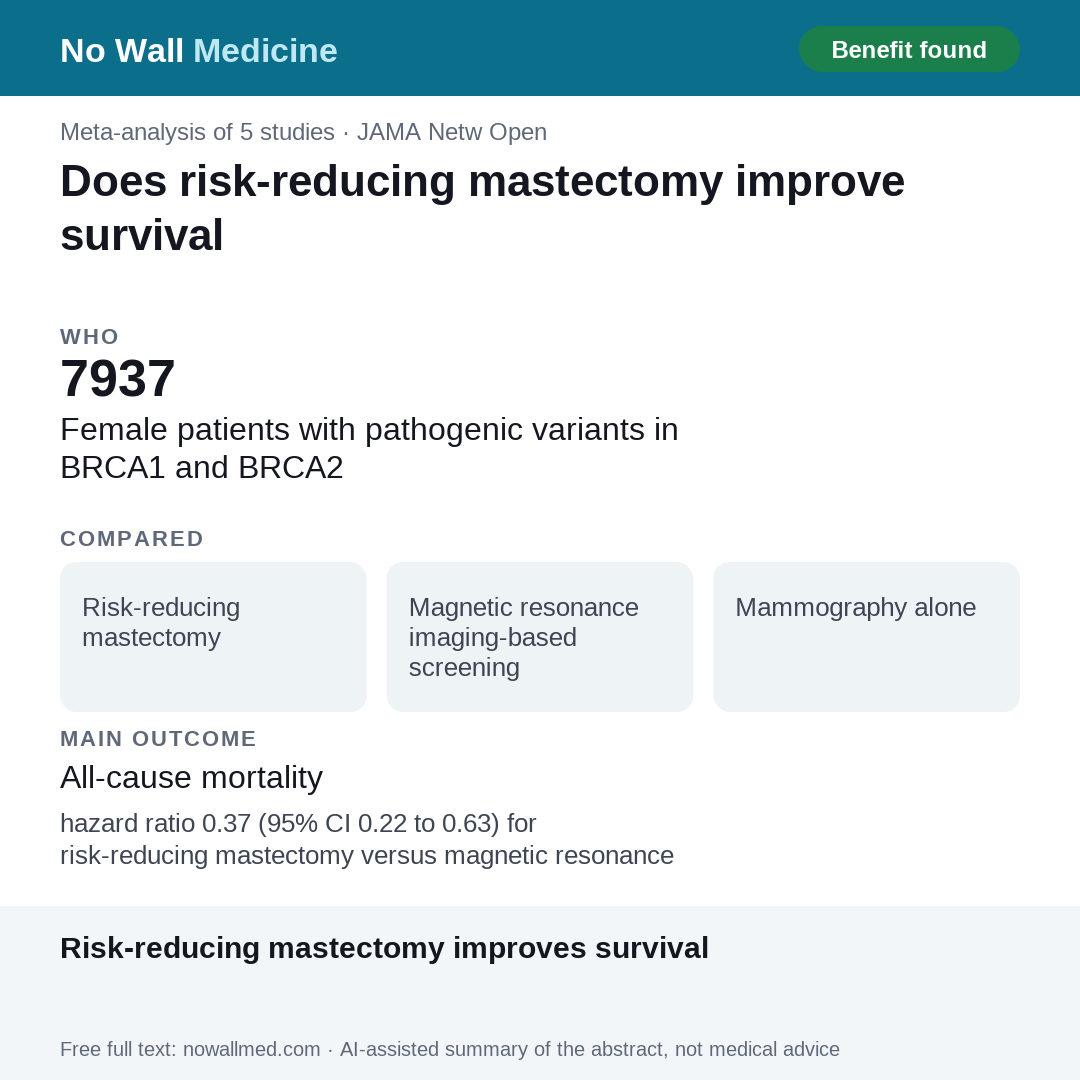
Survival After Risk-Reducing Mastectomy in Patients With Pathogenic Variants in BRCA1 and BRCA2: A Network Meta-Analysis
Meta-analysis of 5 studiesBenefit found
Does risk-reducing mastectomy improve survival
Who
7937
Female patients with pathogenic variants in BRCA1 and BRCA2
Compared
Risk-reducing mastectomy
Magnetic resonance imaging-based screening
Mammography alone
Main outcome
All-cause mortality
Result: hazard ratio 0.37 (95% CI 0.22 to 0.63) for risk-reducing mastectomy versus magnetic resonance imaging-based screening
Bottom line: Risk-reducing mastectomy improves survival
Limitation: Very low certainty of evidence
JAMA Netw Open · 2026-10-01Download image
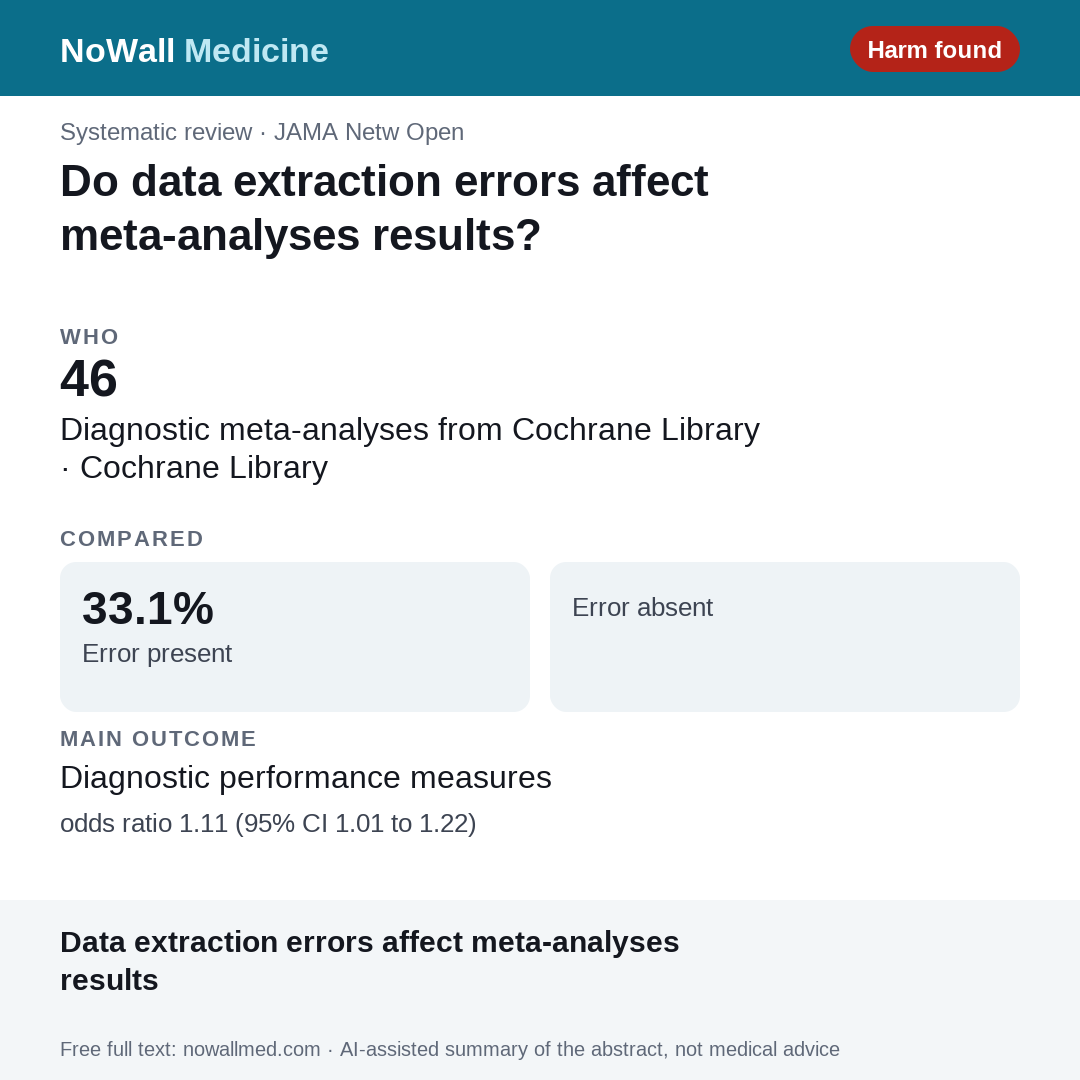
Data Extraction Errors and Diagnostic Conclusions of Meta-Analyses: A Systematic Review
Systematic reviewHarm found
Do data extraction errors affect meta-analyses results?
Who
46
Diagnostic meta-analyses from Cochrane Library · Cochrane Library
Compared
33.1%Error present
Error absent
Main outcome
Diagnostic performance measures
Result: odds ratio 1.11 (95% CI 1.01 to 1.22)
Bottom line: Data extraction errors affect meta-analyses results
JAMA Netw Open · 2026-10-01Download image
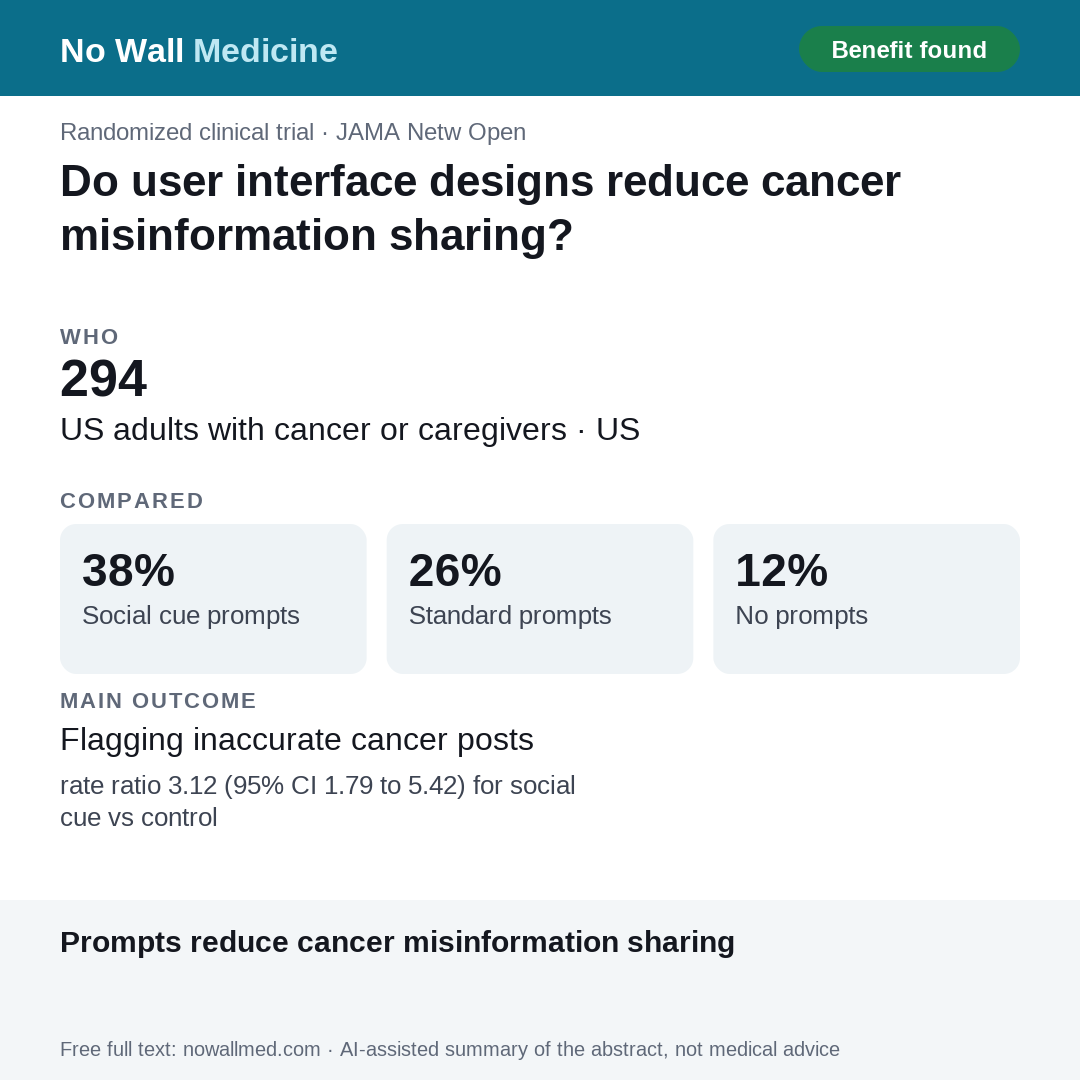
User Interface Designs to Address Cancer Misinformation: A Randomized Clinical Trial
Randomized clinical trialBenefit found
Do user interface designs reduce cancer misinformation sharing?
Who
294
US adults with cancer or caregivers · US
Compared
38%Social cue prompts (224/592)
26%Standard prompts (180/689)
12%No prompts (84/675)
Main outcome
Flagging inaccurate cancer posts
Result: rate ratio 3.12 (95% CI 1.79 to 5.42) for social cue vs control
Bottom line: Prompts reduce cancer misinformation sharing
JAMA Netw Open · 2026-10-01Download image
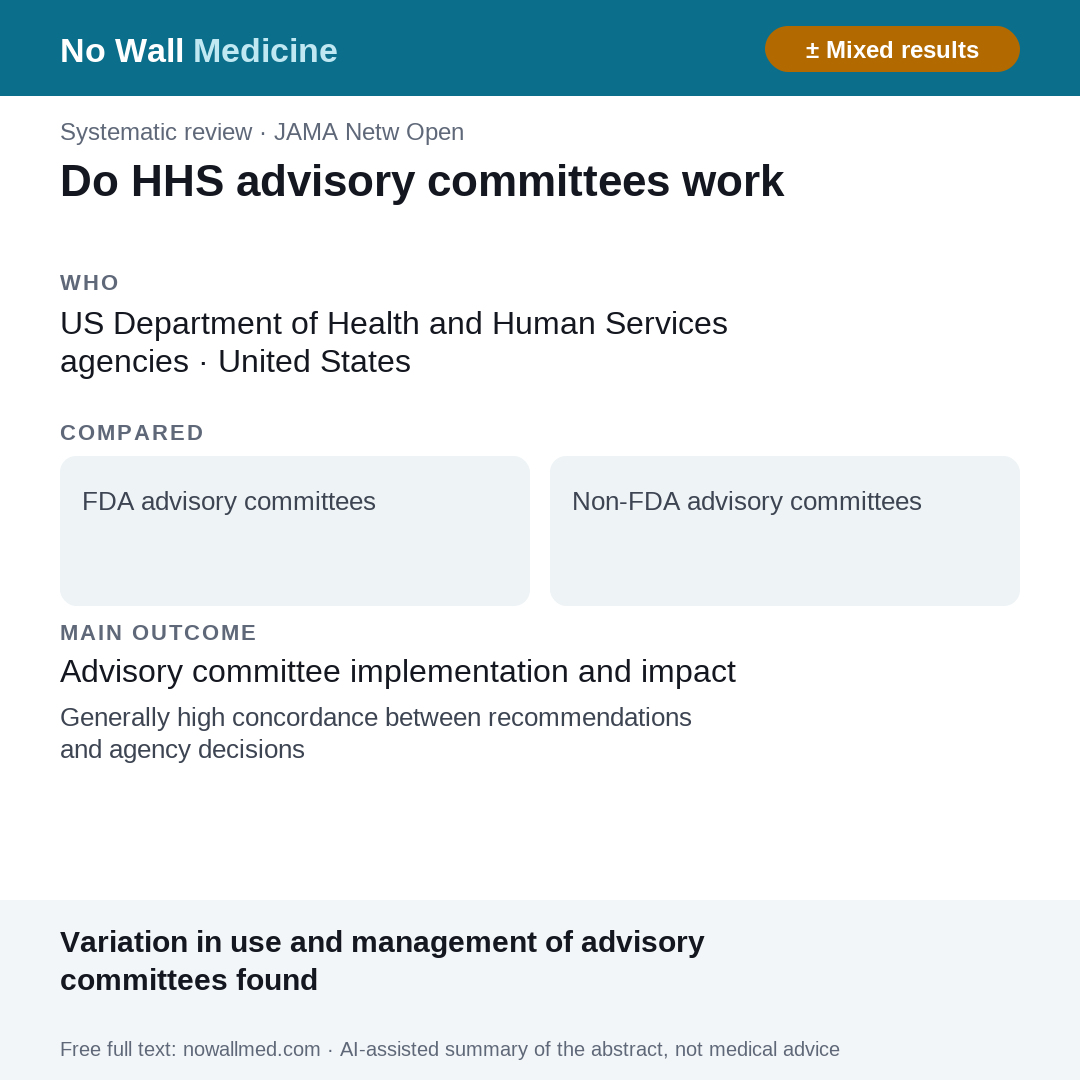
Studies of US Department of Health and Human Services Agency Advisory Committees: A Systematic Review
Systematic reviewMixed results
Do HHS advisory committees work
Who
146
US Department of Health and Human Services agencies · United States
Compared
FDA advisory committees
Non-FDA advisory committees
Main outcome
Advisory committee implementation and impact
Result: Generally high concordance between recommendations and agency decisions
Bottom line: Variation in use and management of advisory committees found
Limitation: Limited evidence on non-FDA advisory committees
JAMA Netw Open · 2026-10-01Download image
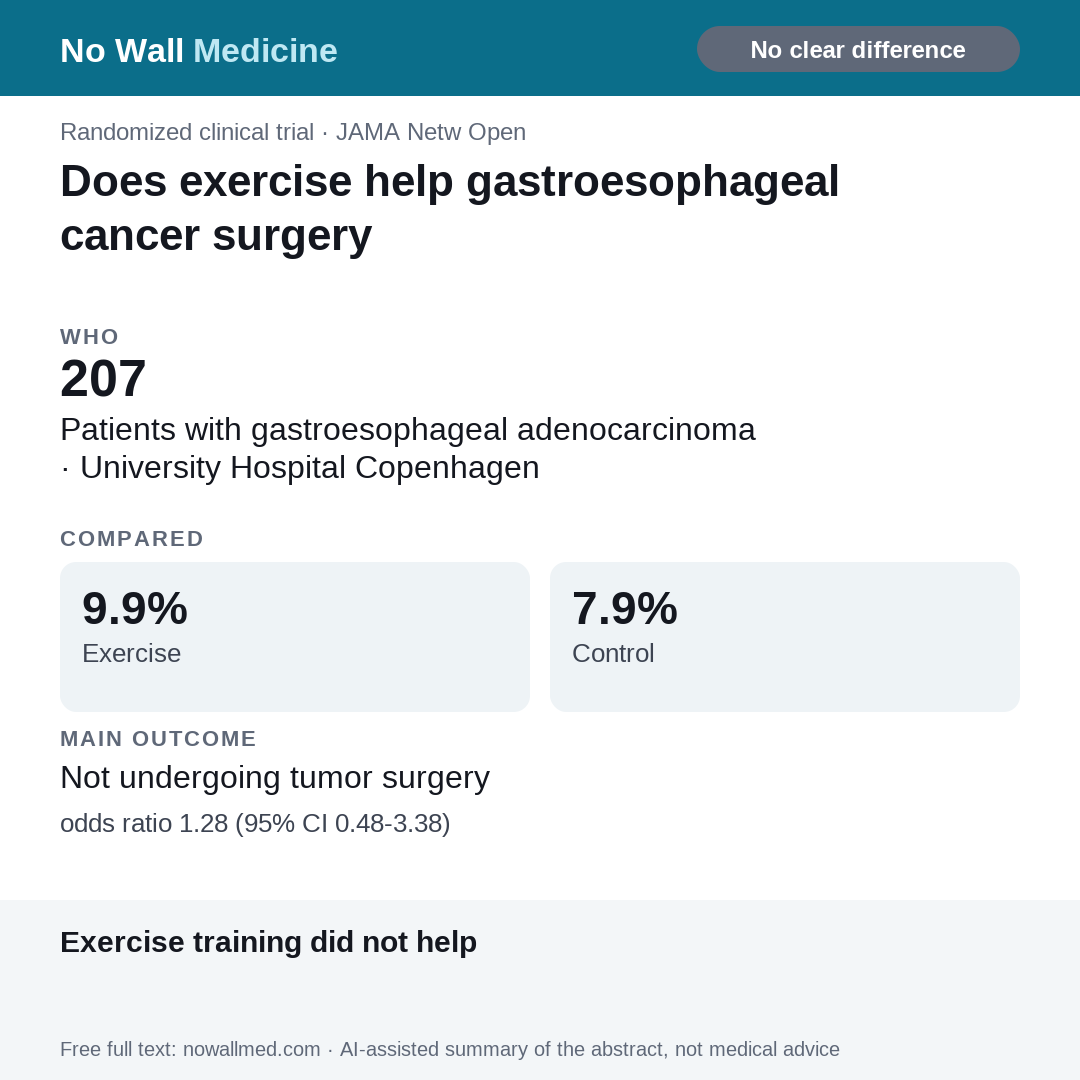
Exercise Training During Neoadjuvant Treatment for Gastroesophageal Cancer and Tumor Surgery: A Randomized Clinical Trial
Randomized clinical trialNo clear difference
Does exercise help gastroesophageal cancer surgery
Who
207
Patients with gastroesophageal adenocarcinoma · University Hospital Copenhagen
Compared
9.9%Exercise (10/101)
7.9%Control (8/101)
Main outcome
Not undergoing tumor surgery
Result: odds ratio 1.28 (95% CI 0.48-3.38)
Bottom line: Exercise training did not help
JAMA Netw Open · 2026-10-01Download image
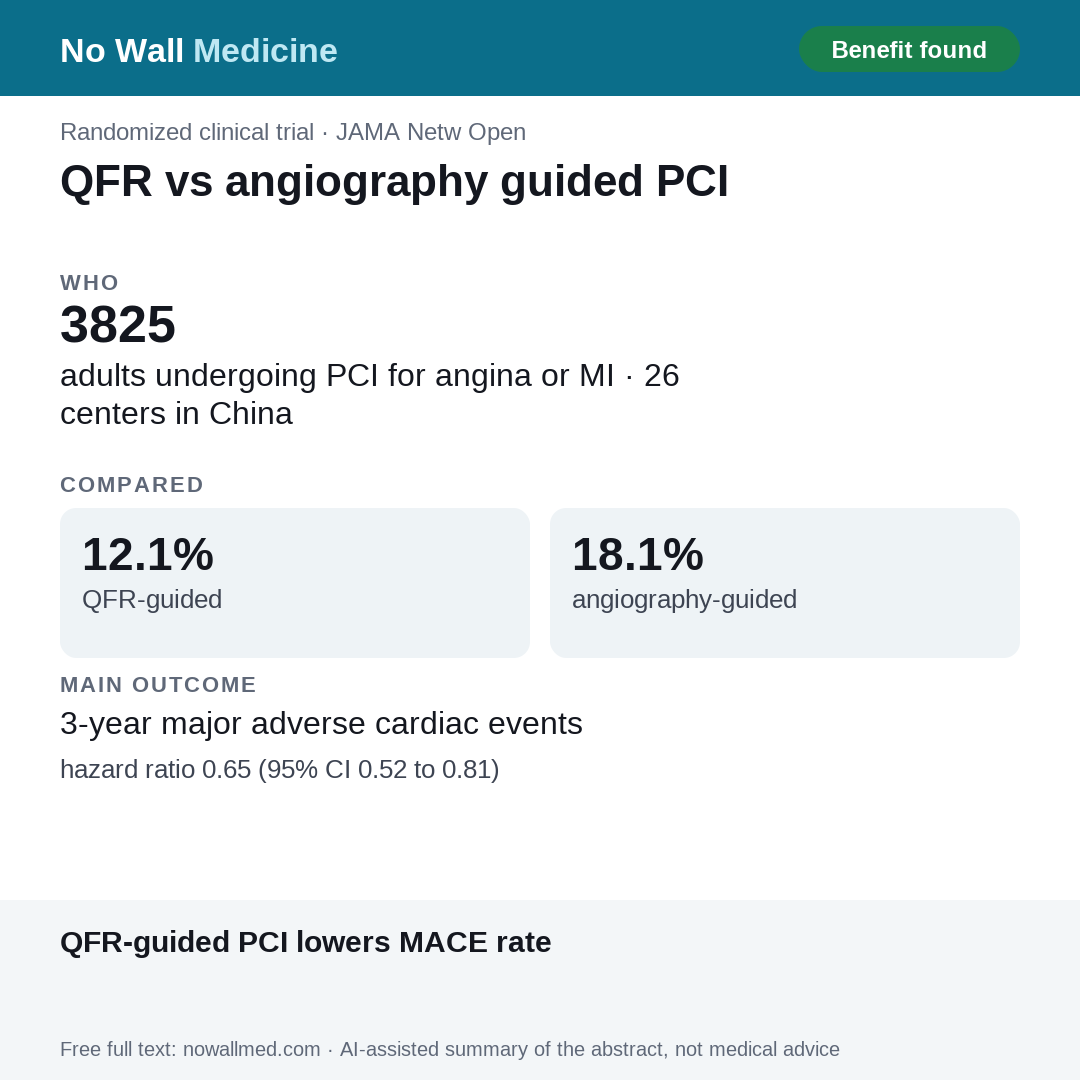
Quantitative Flow Ratio- vs Angiography-Guided Percutaneous Coronary Intervention: A Secondary Analysis of the FAVOR III China Trial
Randomized clinical trial secondary analysisBenefit found
Does QFR-guided PCI versus angiography-guided PCI affect 3-year outcomes by multivessel disease status?
Who
3825
Adults undergoing percutaneous coronary intervention for angina or myocardial infarction · 26 centers in China
Compared
12.1%QFR-guided PCI in MVD cohort
18.1%Angiography-guided PCI in MVD cohort
8.6%QFR-guided PCI in non-MVD cohort
11.0%Angiography-guided PCI in non-MVD cohort
Main outcome
3-year major adverse cardiac events
Result: hazard ratio 0.65 (95% CI 0.52-0.81) in MVD cohort
Bottom line: QFR-guided PCI was associated with lower 3-year major adverse cardiac events in patients with multivessel disease.
JAMA Netw Open · 2026-10-01Download image
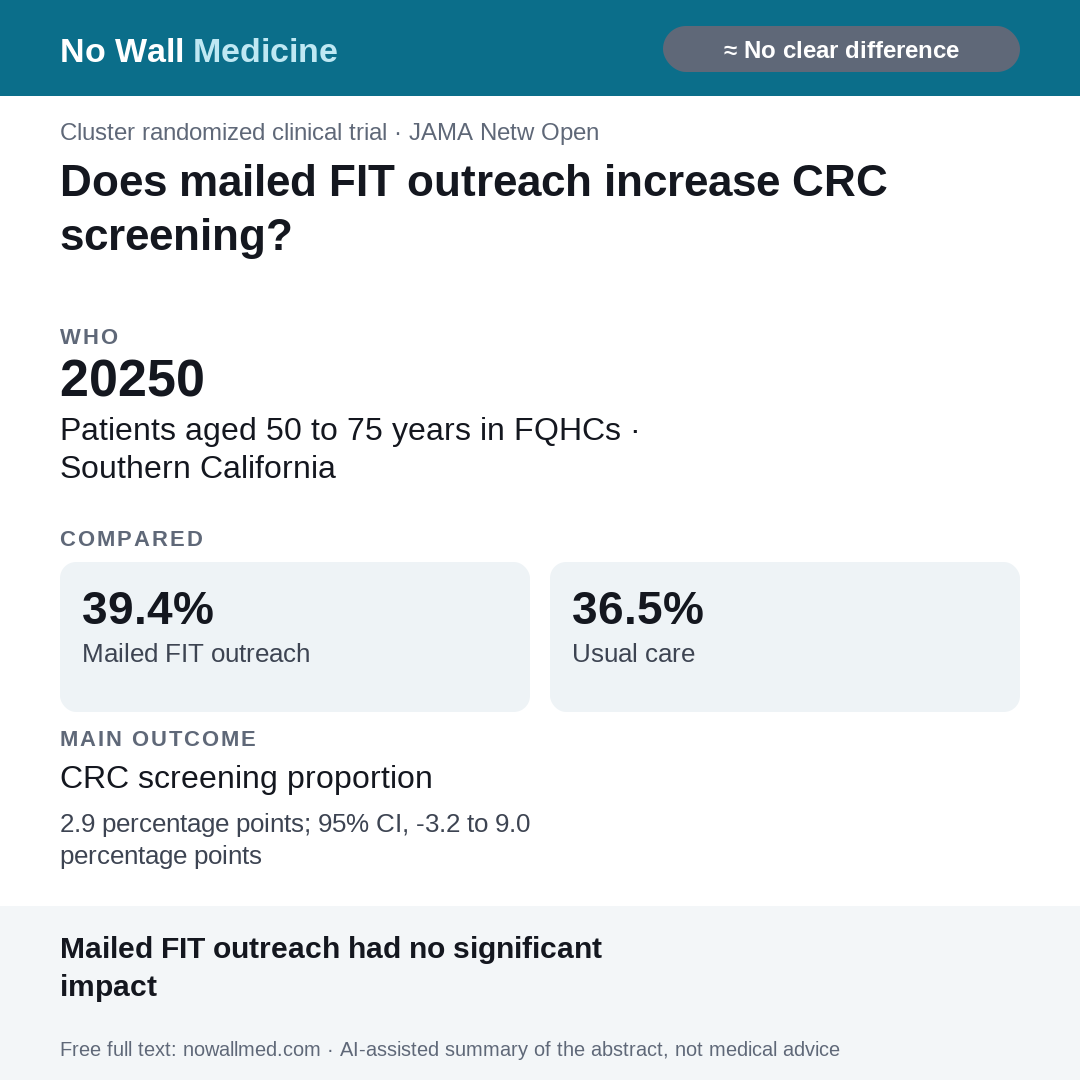
Fecal Immunochemical Test Outreach for Colorectal Cancer Screening in Community Health Centers: A Randomized Clinical Trial
Cluster randomized clinical trialNo clear difference
Does mailed FIT outreach increase CRC screening?
Who
20250
Patients aged 50 to 75 years in FQHCs · Southern California
Compared
39.4%Mailed FIT outreach (95% CI, 36.3% to 42.6%)
36.5%Usual care (95% CI, 31.2% to 42.2%)
Main outcome
CRC screening proportion
Result: 2.9 percentage points; 95% CI, -3.2 to 9.0 percentage points
Bottom line: Mailed FIT outreach had no significant impact
JAMA Netw Open · 2026-10-01Download image
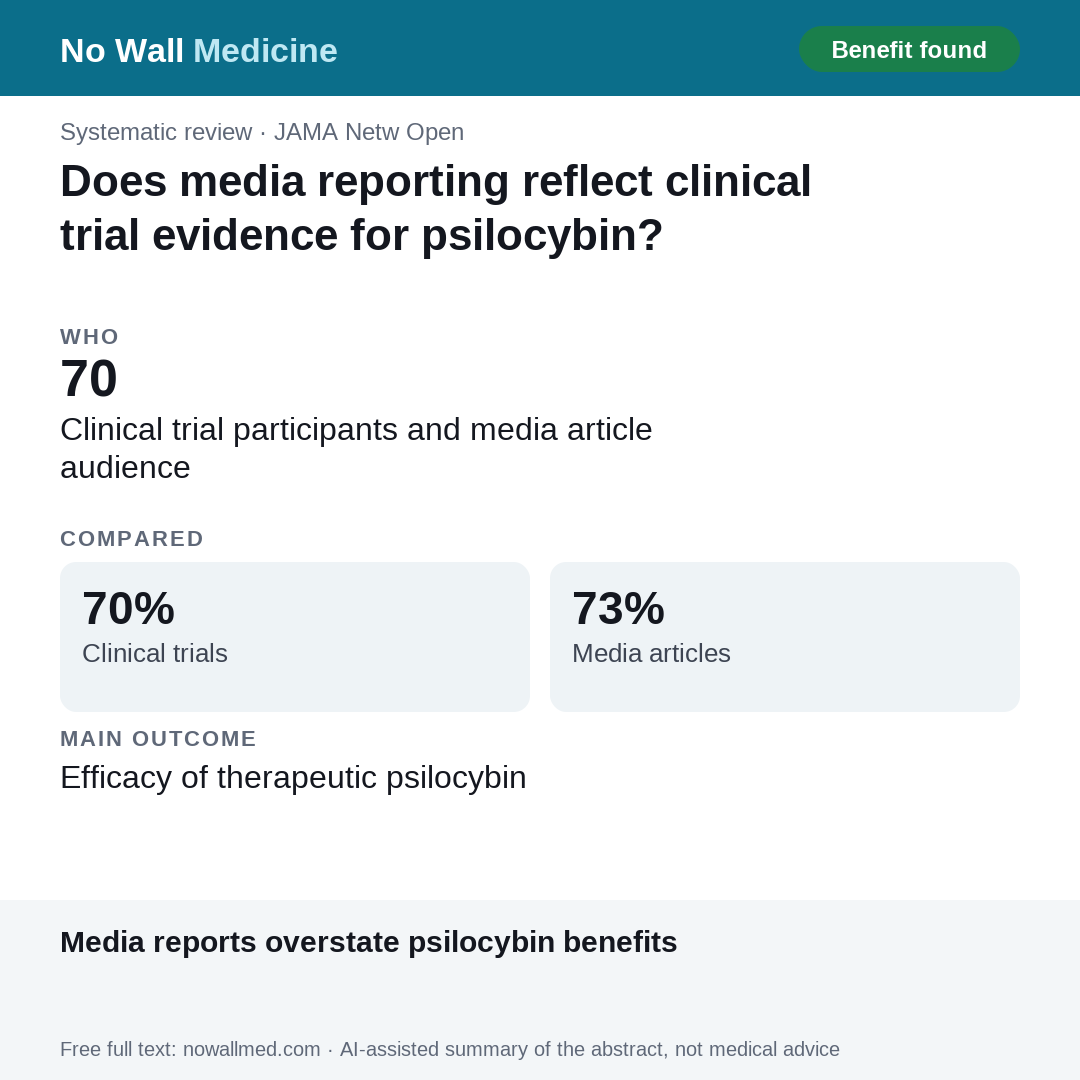
Clinical Evidence on Psilocybin and Its Representation in Media Reporting: A Systematic Review
Systematic reviewBenefit found
Does media reporting reflect clinical trial evidence for psilocybin?
Who
70
Clinical trial participants and media article audience
Compared
70%Clinical trials (49/70)
73%Media articles (125/172)
Main outcome
Efficacy of therapeutic psilocybin
Bottom line: Media reports overstate psilocybin benefits
Limitation: Small sample sizes and methodologic limitations
JAMA Netw Open · 2026-10-01Download image
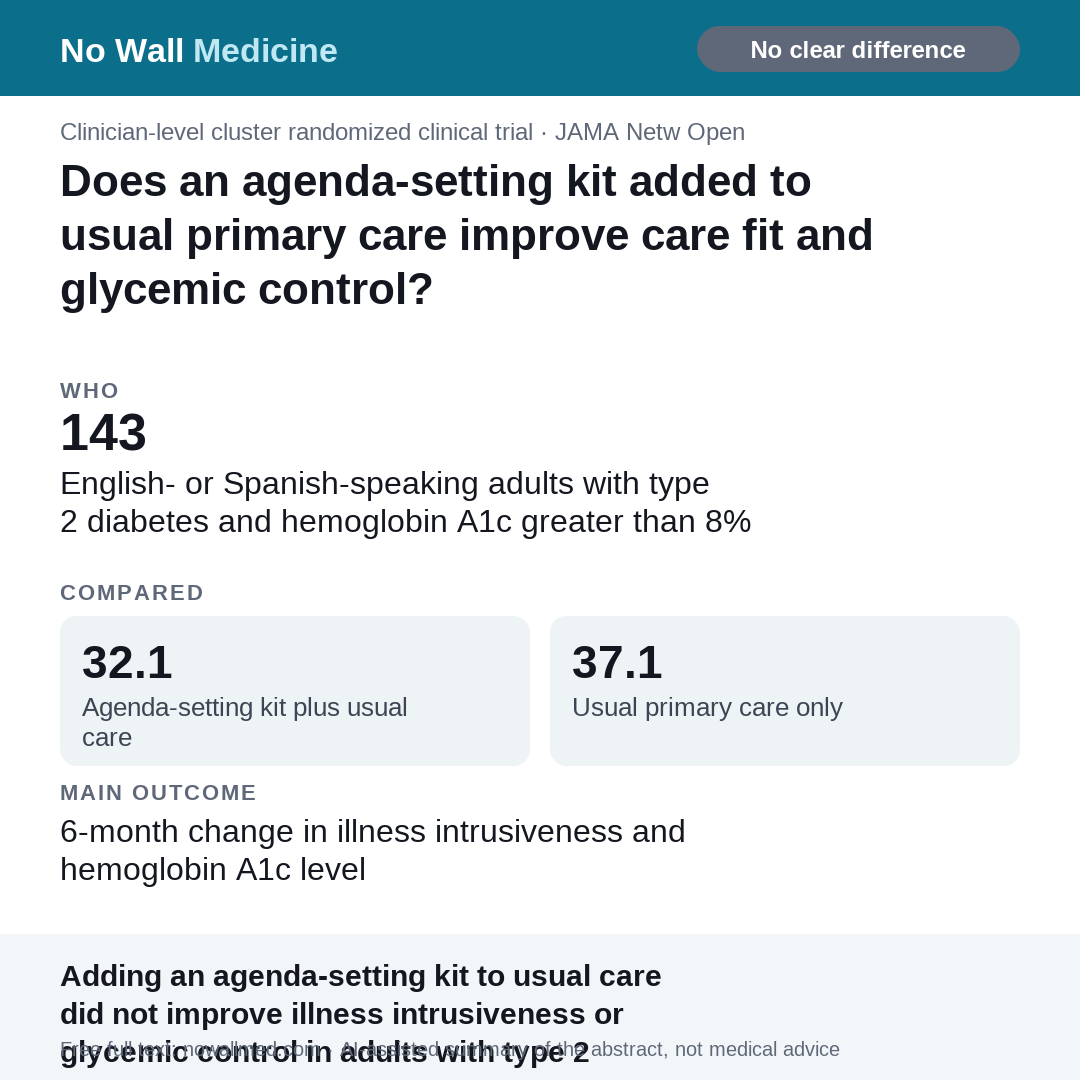
A Conversation Tool to Enhance Care for People With Type 2 Diabetes: The QBSafe Cluster Randomized Clinical Trial
Clinician-level cluster randomized clinical trialNo clear difference
Does an agenda-setting kit added to usual primary care improve care fit and glycemic control?
Who
143
English- or Spanish-speaking adults with type 2 diabetes and hemoglobin A1c greater than 8% · Federally qualified health center in New Haven, Connecticut
Compared
32.1Agenda-setting kit plus usual care (15.1)
37.1Usual primary care only (18.7)
Main outcome
6-month change in illness intrusiveness and hemoglobin A1c level
Result: adjusted mean difference, -3.9; 95% CI, -10.4 to 2.6
Bottom line: Adding an agenda-setting kit to usual care did not improve illness intrusiveness or glycemic control in adults with type 2 diabetes.
JAMA Netw Open · 2026-10-01Download image