Visual abstracts
New randomized trials and meta-analyses from leading journals at a glance: who was studied, what was compared, and what was found. Every paper is free to read in full.
All specialtiesCardiology 4763Oncology 4043Gastroenterology & Hepatology 1903Infectious Disease 3756Neurology 1872Psychiatry & Mental Health 2216Pulmonology 2044Critical Care 1319Endocrinology & Diabetes 2544Pediatrics 2889Surgery 2480Orthopedics & Sports Medicine 917Neurosurgery 525Cardiothoracic & Vascular Surgery 656Plastic & Reconstructive Surgery 574Nephrology 1107Rheumatology 810Hematology 1090Dermatology 611Ophthalmology 532Obstetrics & Gynecology 1645Public & Global Health 1037Radiology & Imaging 619Anesthesiology 958Urology 745ENT (Otolaryngology) 494Emergency Medicine 481Allergy & Immunology 309Geriatrics 972Family Medicine & Primary Care 534Medical Genetics & Genomics 659Pathology & Laboratory Medicine 156Physical Medicine & Rehabilitation 734Palliative Care 421Nutrition 1560Digital Health & AI 2137General Medicine 318
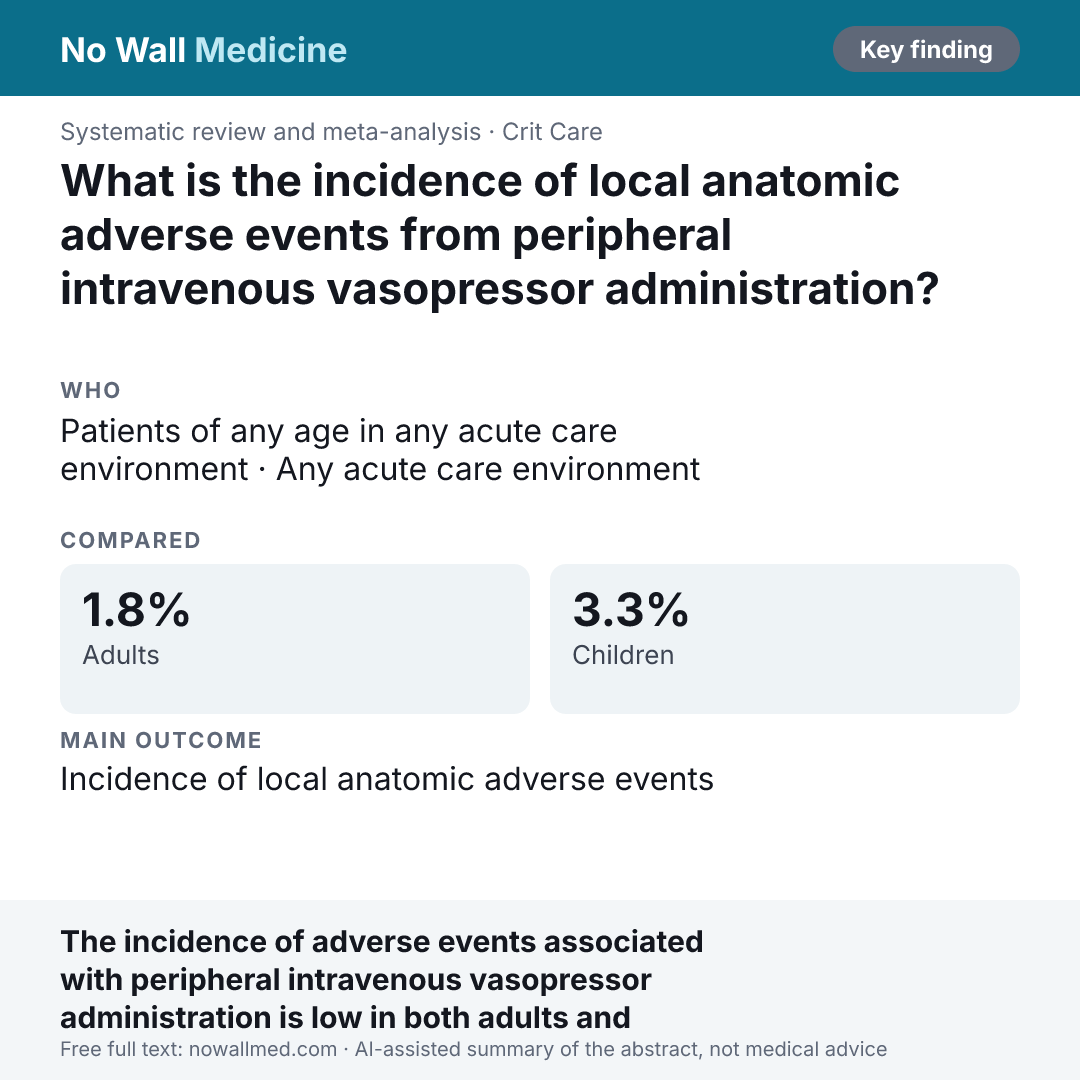
Adverse events associated with administration of vasopressor medications through a peripheral intravenous catheter: a systematic review and meta-analysis
Systematic review and meta-analysisKey finding
What is the incidence of local anatomic adverse events from peripheral intravenous vasopressor administration?
Who
Patients of any age in any acute care environment · Any acute care environment
Compared
1.8%Adults (95% CI 0.1-4.8%)
3.3%Children (95% CI 0.0-10.1%)
Main outcome
Incidence of local anatomic adverse events
Bottom line: The incidence of adverse events associated with peripheral intravenous vasopressor administration is low in both adults and children.
Limitation: Most studies had high or some concern for risk of bias.
Crit Care · 2021-04-16 · Save PNG
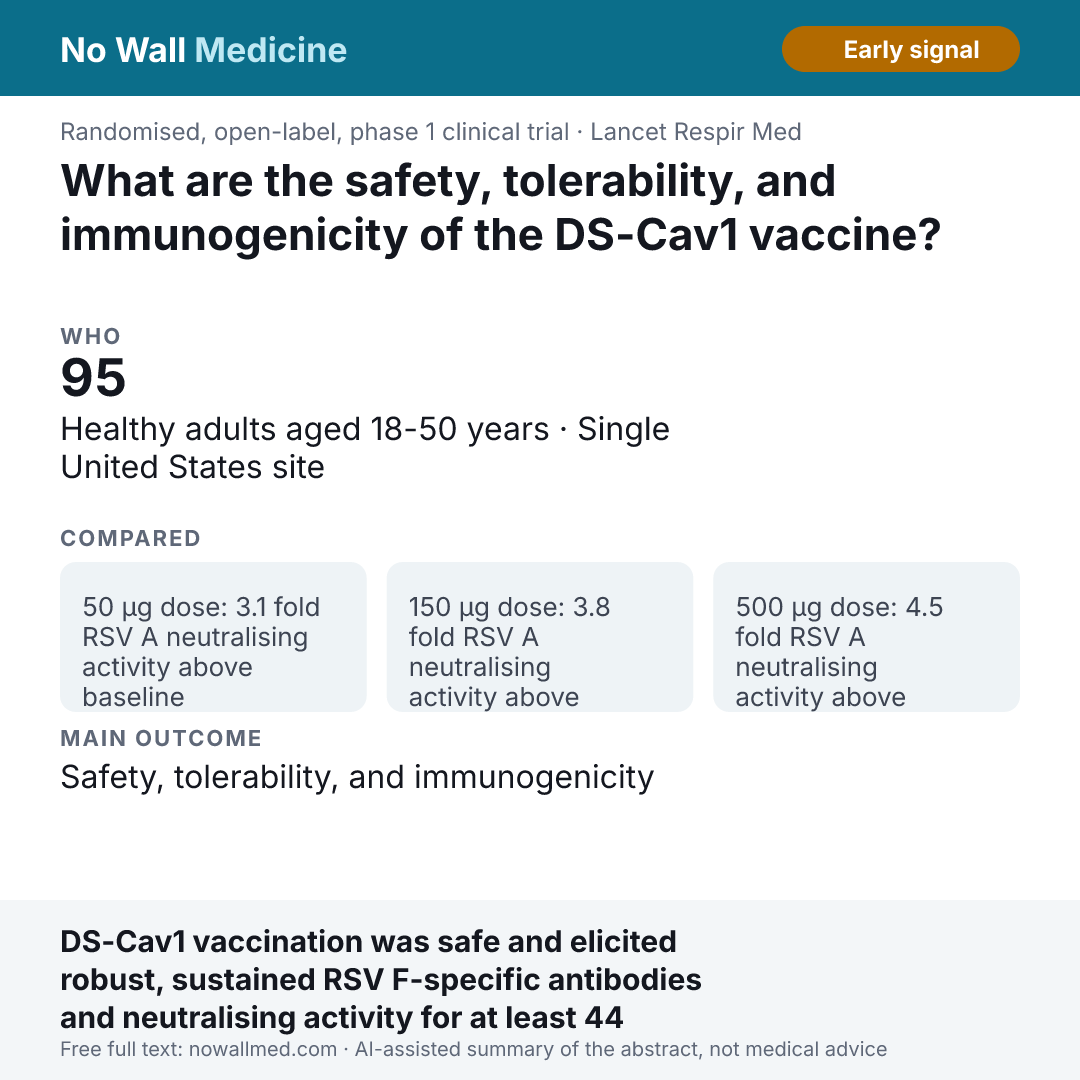
Safety, tolerability, and immunogenicity of the respiratory syncytial virus prefusion F subunit vaccine DS-Cav1: a phase 1, randomised, open-label, dose-escalation clinical trial
Randomised, open-label, phase 1 clinical trialEarly signal
What are the safety, tolerability, and immunogenicity of the DS-Cav1 vaccine?
Who
95
Healthy adults aged 18-50 years · Single United States site
Compared
50 μg dose: 3.1 fold RSV A neutralising activity above baseline
150 μg dose: 3.8 fold RSV A neutralising activity above baseline
500 μg dose: 4.5 fold RSV A neutralising activity above baseline
Main outcome
Safety, tolerability, and immunogenicity
Bottom line: DS-Cav1 vaccination was safe and elicited robust, sustained RSV F-specific antibodies and neutralising activity for at least 44 weeks.
Funded by: National Institutes of Allergy and Infectious Diseases
Lancet Respir Med · 2021-04-14 · Save PNG
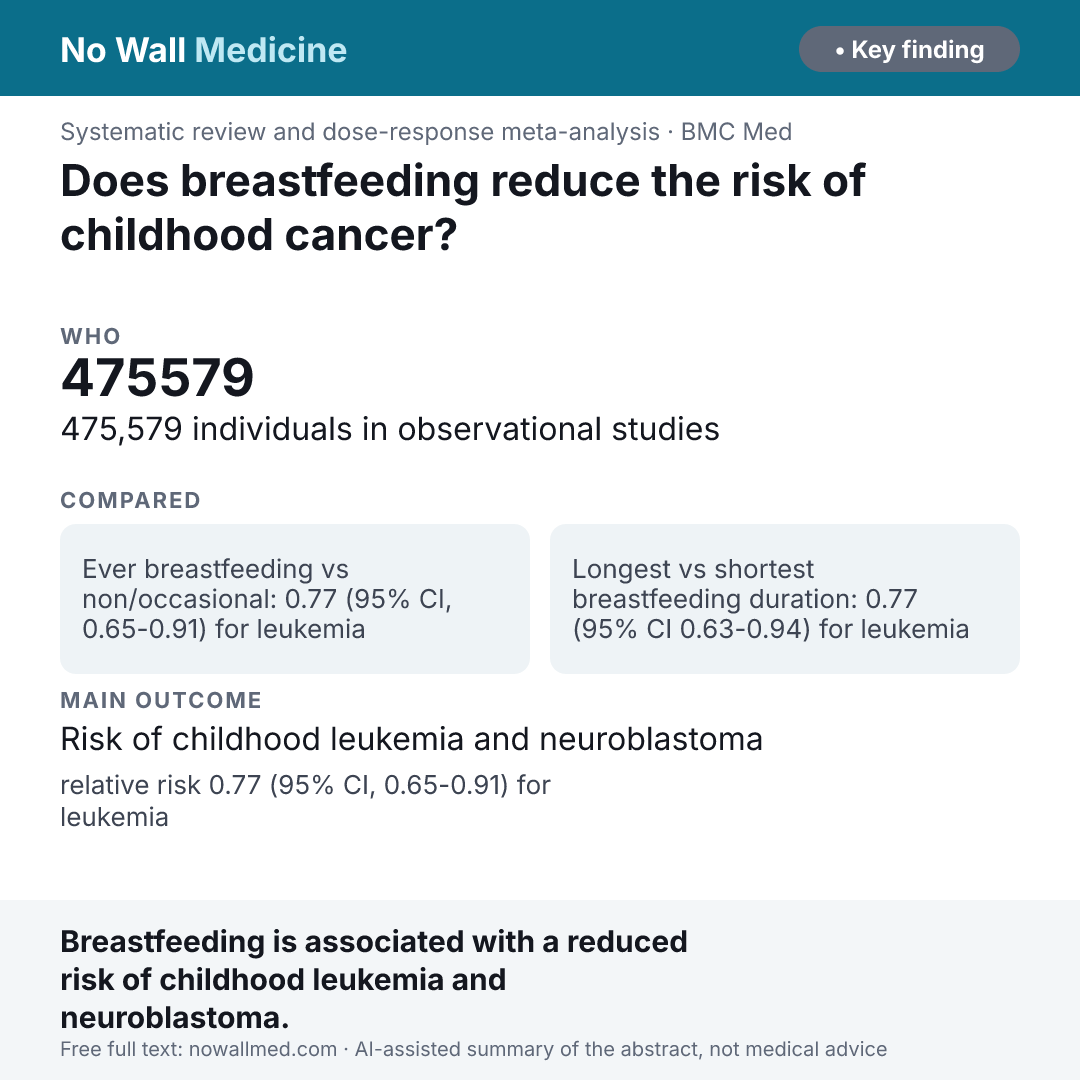
Breastfeeding and the risk of childhood cancer: a systematic review and dose-response meta-analysis
Systematic review and dose-response meta-analysisKey finding
Does breastfeeding reduce the risk of childhood cancer?
Who
475579
475,579 individuals in observational studies
Compared
Ever breastfeeding vs non/occasional: 0.77 (95% CI, 0.65-0.91) for leukemia
Longest vs shortest breastfeeding duration: 0.77 (95% CI 0.63-0.94) for leukemia
Main outcome
Risk of childhood leukemia and neuroblastoma
Result: relative risk 0.77 (95% CI, 0.65-0.91) for leukemia
Bottom line: Breastfeeding is associated with a reduced risk of childhood leukemia and neuroblastoma.
Limitation: Further studies are warranted to confirm the association with childhood neuroblastoma.
BMC Med · 2021-04-13 · Save PNG
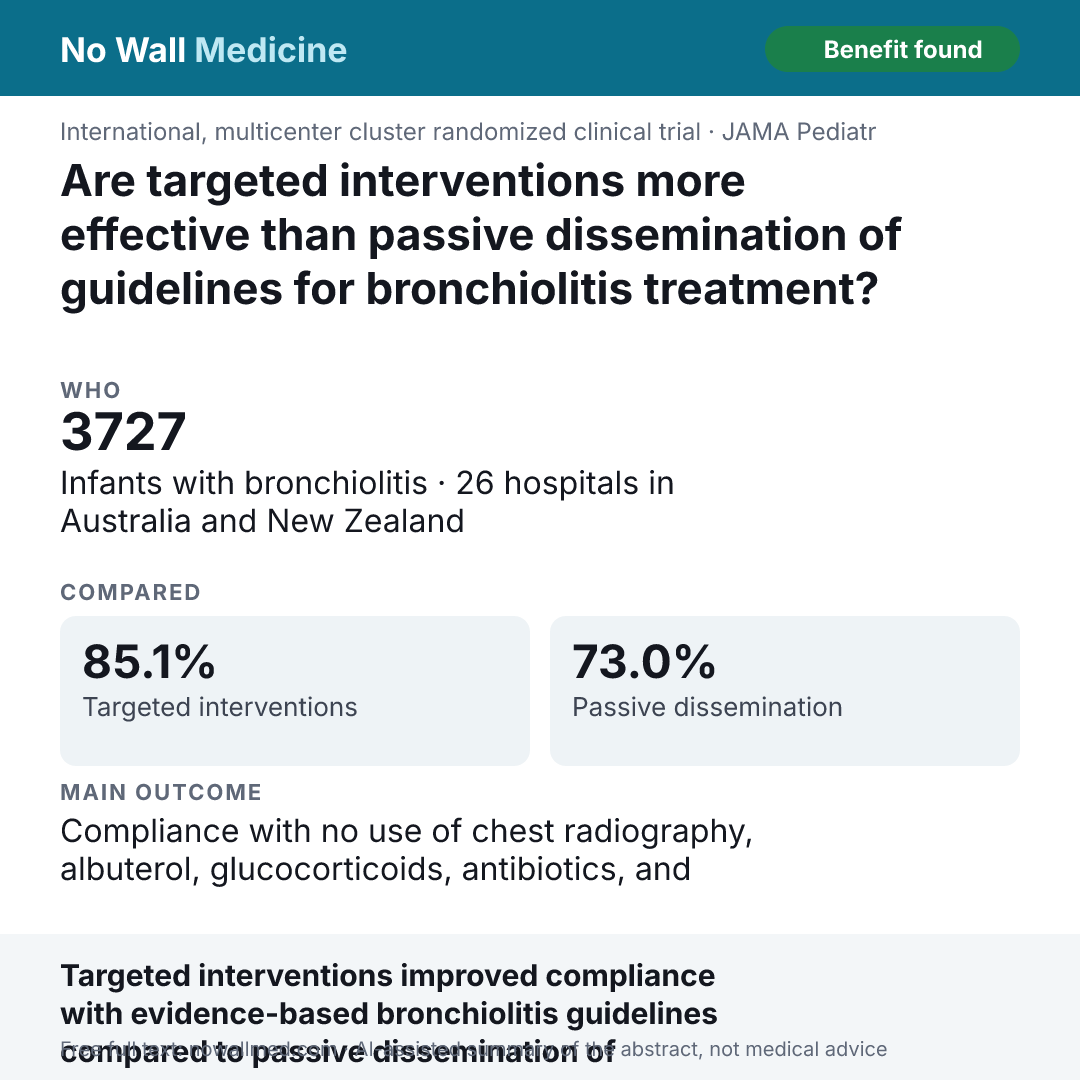
Effectiveness of Targeted Interventions on Treatment of Infants With Bronchiolitis: A Randomized Clinical Trial
International, multicenter cluster randomized clinical trialBenefit found
Are targeted interventions more effective than passive dissemination of guidelines for bronchiolitis treatment?
Who
3727
Infants with bronchiolitis · 26 hospitals in Australia and New Zealand
Compared
85.1%Targeted interventions (95% CI, 82.6%-89.7%)
73.0%Passive dissemination (95% CI, 65.3%-78.8%)
Main outcome
Compliance with no use of chest radiography, albuterol, glucocorticoids, antibiotics, and epinephrine
Result: adjusted risk difference, 14.1%; 95% CI, 6.5%-21.7%
Bottom line: Targeted interventions improved compliance with evidence-based bronchiolitis guidelines compared to passive dissemination of guidelines.
JAMA Pediatr · 2021-04-13 · Save PNG
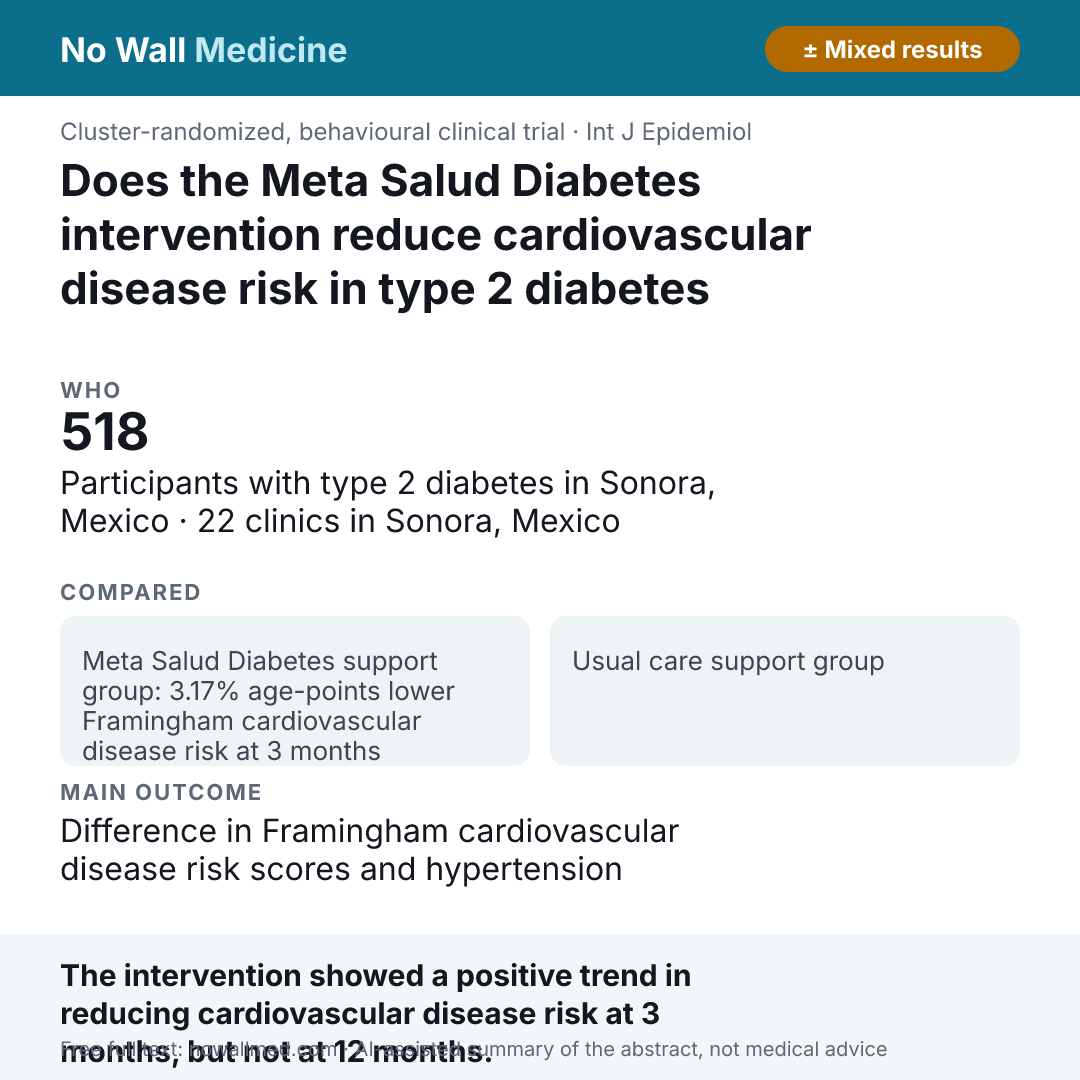
Meta Salud Diabetes for cardiovascular disease prevention in Mexico: a cluster-randomized behavioural clinical trial
Cluster-randomized, behavioural clinical trialMixed results
Does the Meta Salud Diabetes intervention reduce cardiovascular disease risk in type 2 diabetes patients?
Who
518
Participants with type 2 diabetes in Sonora, Mexico · 22 clinics in Sonora, Mexico
Compared
Meta Salud Diabetes support group: 3.17% age-points lower Framingham cardiovascular disease risk at 3 months
Usual care support group
Main outcome
Difference in Framingham cardiovascular disease risk scores and hypertension
Result: -3.17% age-points (95% CI -5.60 to -0.75) at 3 months
Bottom line: The intervention showed a positive trend in reducing cardiovascular disease risk at 3 months, but not at 12 months.
Int J Epidemiol · 2021-04-13 · Save PNG
Healthcare professionals' views of the use of oral morphine and transmucosal diamorphine in the management of paediatric breakthrough pain and the feasibility of a randomised controlled trial: A focus group study (DIPPER)
Focus group studyMixed results
What are healthcare professionals' views on transmucosal diamorphine versus oral morphine for paediatric breakthrough pain?
Who
28
Doctors, nurses and pharmacists caring for children with life-limiting illnesses · United Kingdom
Compared
Oral morphine: slow onset and unpredictable response
Transmucosal diamorphine: quick onset and easy administration
Main outcome
Healthcare professionals' perspectives on pain management and trial feasibility
Bottom line: Transmucosal diamorphine offers quick onset, but lacks licensed preparations and prescribing guidance for paediatric breakthrough pain management.
Palliat Med · 2021-04-13 · Save PNG

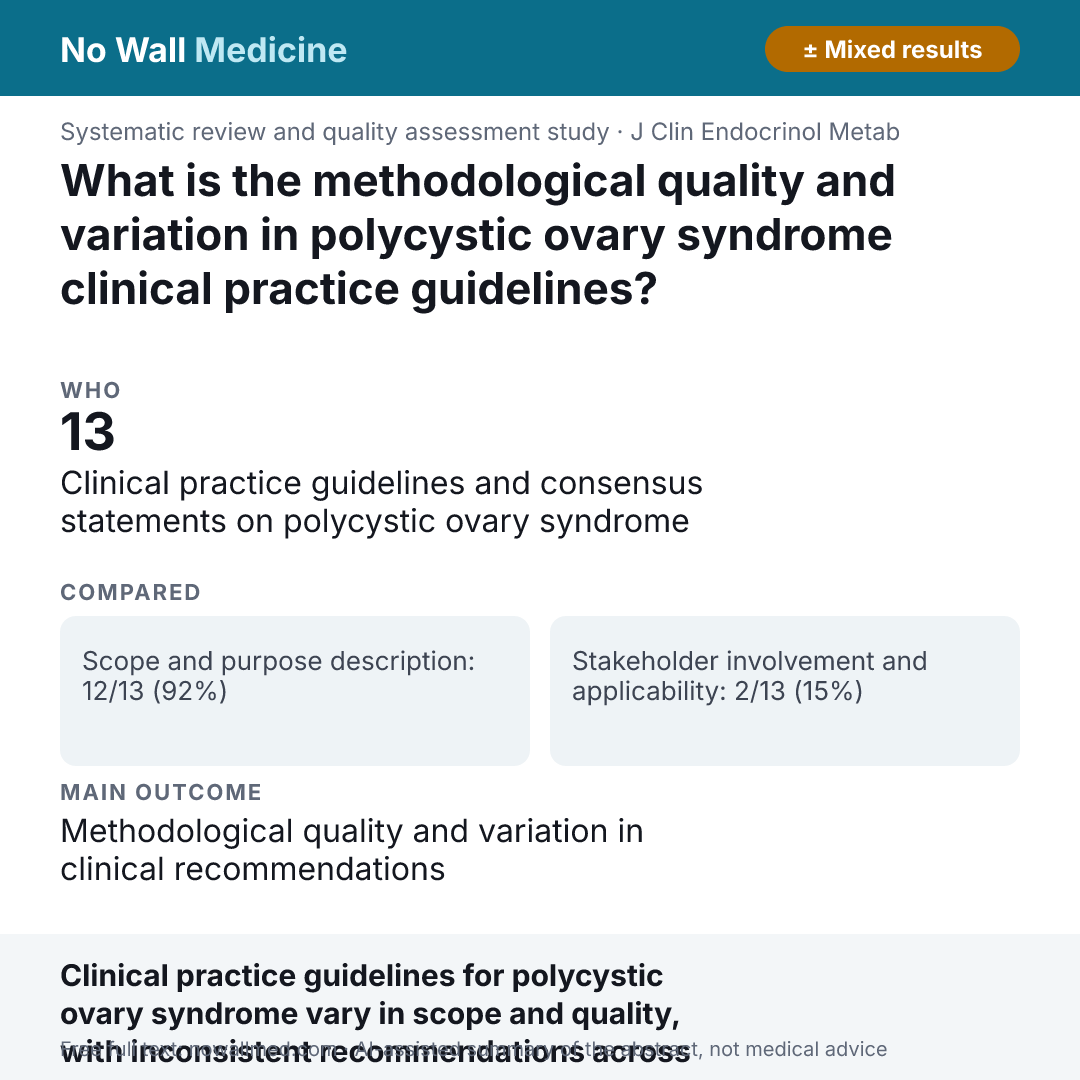
Clinical Practice Guidelines on the Diagnosis and Management of Polycystic Ovary Syndrome: A Systematic Review and Quality Assessment Study
Systematic review and quality assessment studyMixed results
What is the methodological quality and variation in polycystic ovary syndrome clinical practice guidelines?
Who
13
Clinical practice guidelines and consensus statements on polycystic ovary syndrome
Compared
Scope and purpose description: 12/13 (92%)
Stakeholder involvement and applicability: 2/13 (15%)
Main outcome
Methodological quality and variation in clinical recommendations
Bottom line: Clinical practice guidelines for polycystic ovary syndrome vary in scope and quality, with inconsistent recommendations across several disease domains.
J Clin Endocrinol Metab · 2021-04-12 · Save PNG
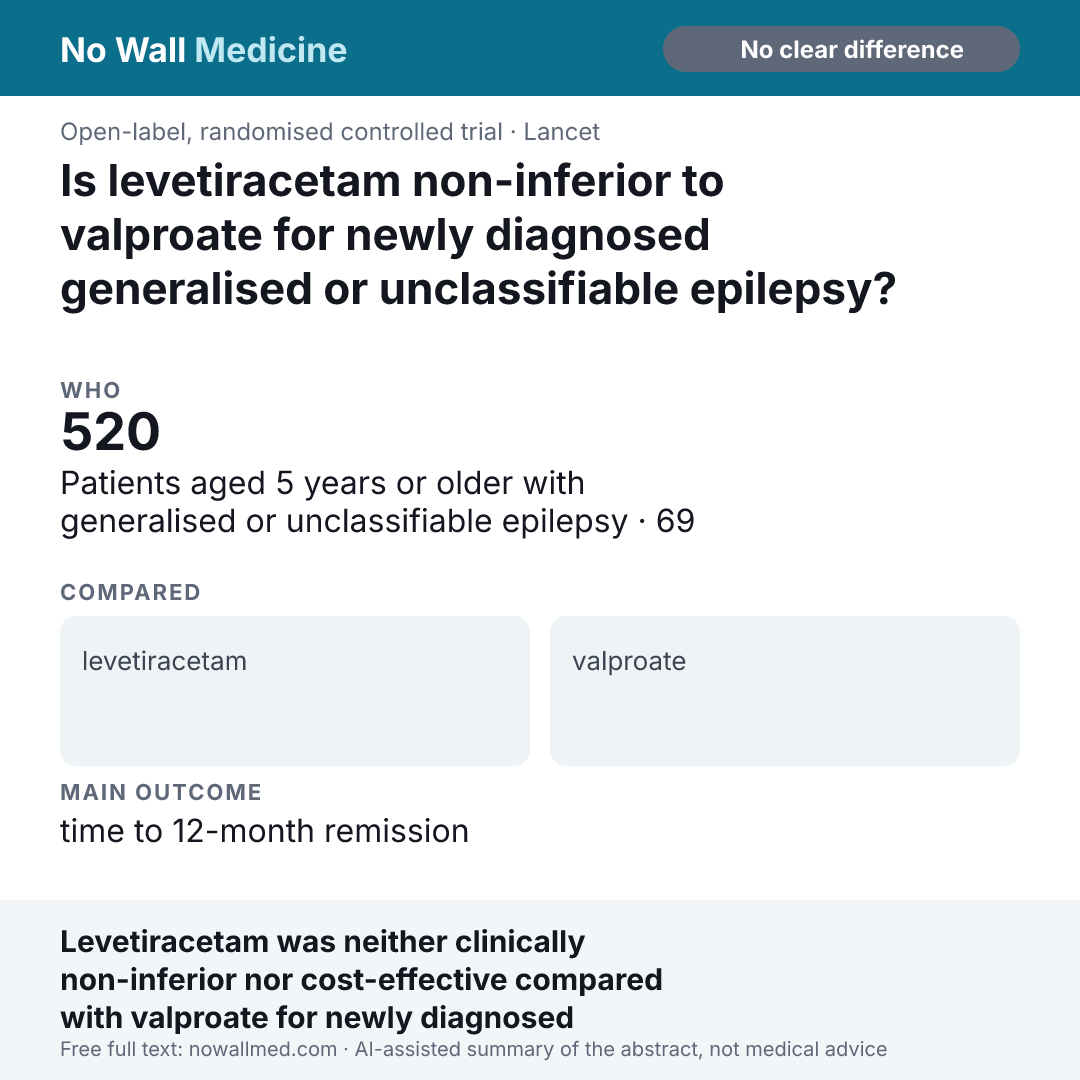
The SANAD II study of the effectiveness and cost-effectiveness of valproate versus levetiracetam for newly diagnosed generalised and unclassifiable epilepsy: an open-label, non-inferiority, multicentre, phase 4, randomised controlled trial
Open-label, randomised controlled trialNo clear difference
Is levetiracetam non-inferior to valproate for newly diagnosed generalised or unclassifiable epilepsy?
Who
520
Patients aged 5 years or older with generalised or unclassifiable epilepsy · 69 centres across the United Kingdom
Compared
levetiracetam
valproate
Main outcome
time to 12-month remission
Result: hazard ratio 1.19 (95% CI 0.96 to 1.47)
Bottom line: Levetiracetam was neither clinically non-inferior nor cost-effective compared with valproate for newly diagnosed generalised or unclassifiable epilepsy.
Funded by: National Institute for Health Research Health Technology Assessment Programme
Lancet · 2021-04-11 · Save PNG
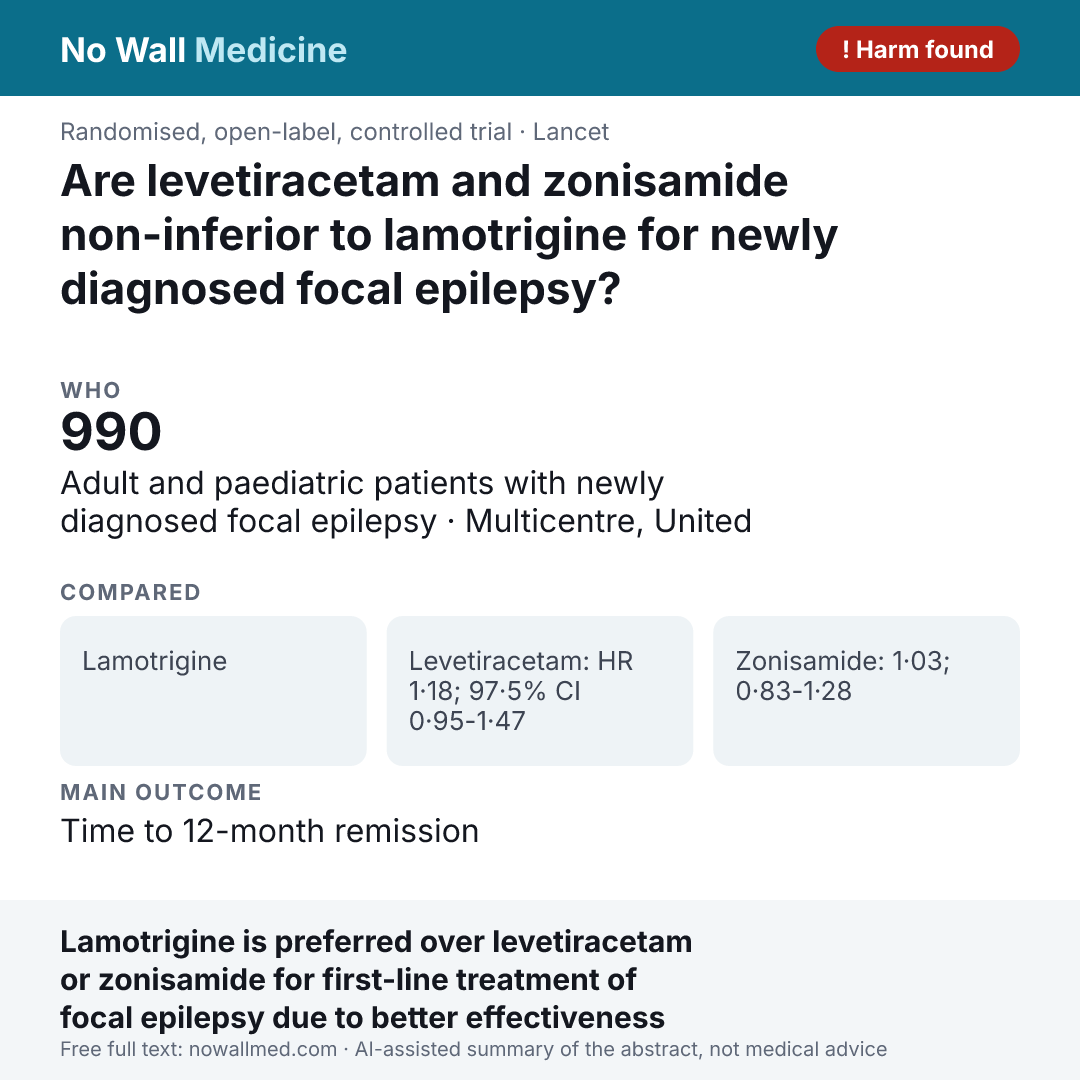
The SANAD II study of the effectiveness and cost-effectiveness of levetiracetam, zonisamide, or lamotrigine for newly diagnosed focal epilepsy: an open-label, non-inferiority, multicentre, phase 4, randomised controlled trial
Randomised, open-label, controlled trialHarm found
Are levetiracetam and zonisamide non-inferior to lamotrigine for newly diagnosed focal epilepsy?
Who
990
Adult and paediatric patients with newly diagnosed focal epilepsy · Multicentre, United Kingdom
Compared
Lamotrigine
Levetiracetam: HR 1·18; 97·5% CI 0·95-1·47
Zonisamide: 1·03; 0·83-1·28
Main outcome
Time to 12-month remission
Result: hazard ratio 1·18 (97.5% CI 0.95 to 1.47) for levetiracetam
Bottom line: Lamotrigine is preferred over levetiracetam or zonisamide for first-line treatment of focal epilepsy due to better effectiveness and cost-utility.
Lancet · 2021-04-11 · Save PNG
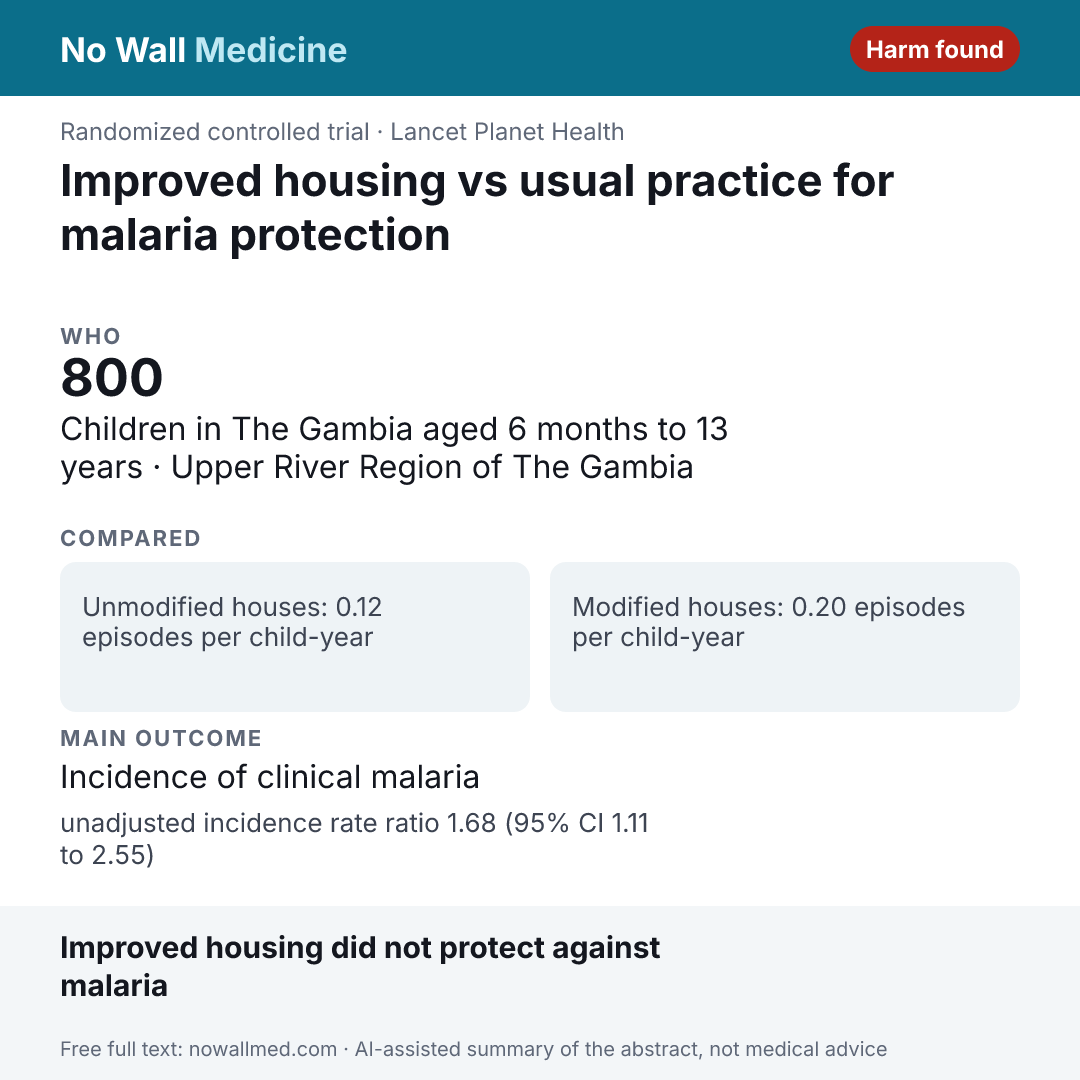
Improved housing versus usual practice for additional protection against clinical malaria in The Gambia (RooPfs): a household-randomised controlled trial
Randomized controlled trialHarm found
Improved housing vs usual practice for malaria protection
Who
800
Children in The Gambia aged 6 months to 13 years · Upper River Region of The Gambia
Compared
Unmodified houses: 0.12 episodes per child-year
Modified houses: 0.20 episodes per child-year
Main outcome
Incidence of clinical malaria
Result: unadjusted incidence rate ratio 1.68 (95% CI 1.11 to 2.55)
Bottom line: Improved housing did not protect against malaria
Funded by: Medical Research Council, UK Department for International Development, and Wellcome Trust
Lancet Planet Health · 2021-04-11 · Save PNG
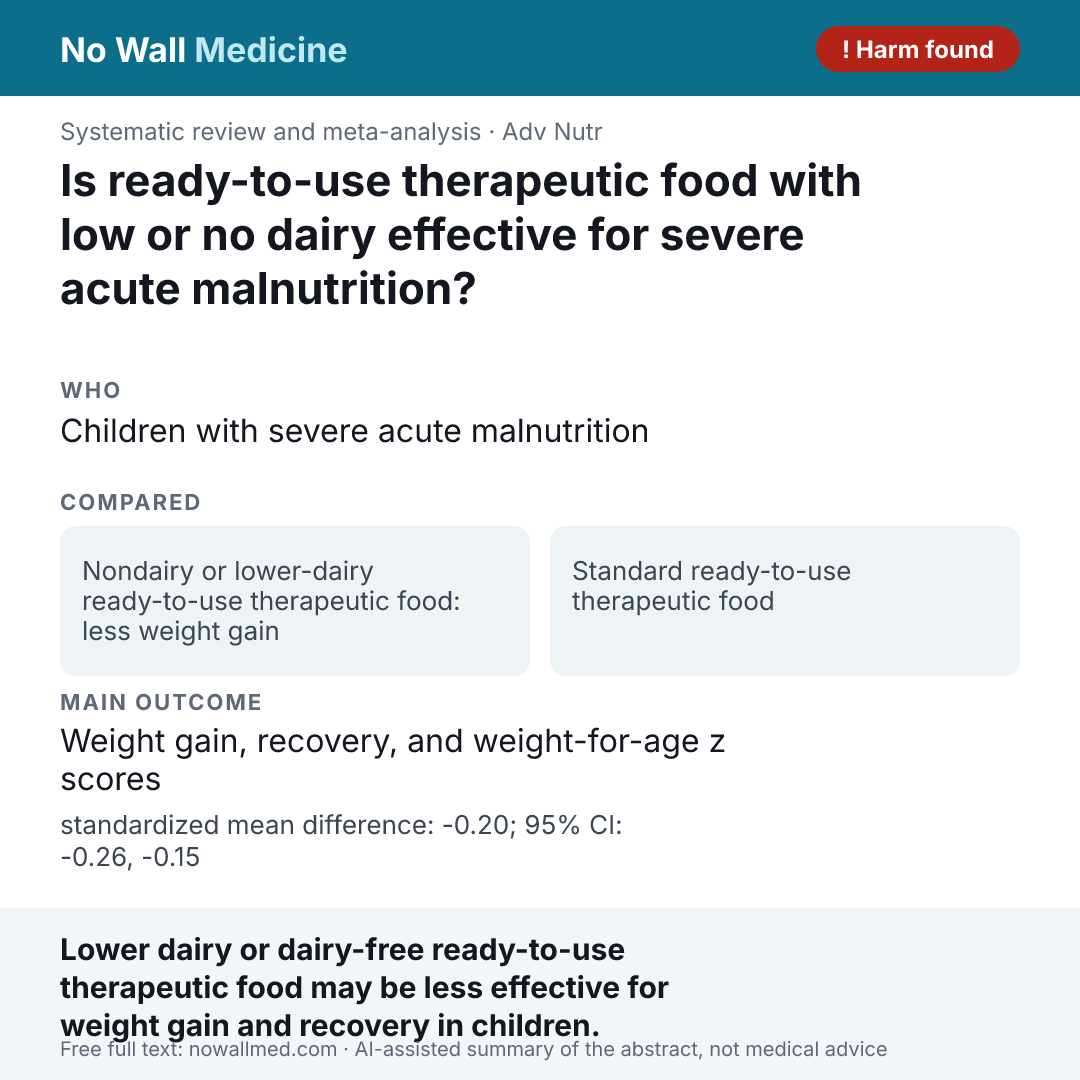
Ready-to-Use Therapeutic Food (RUTF) Containing Low or No Dairy Compared to Standard RUTF for Children with Severe Acute Malnutrition: A Systematic Review and Meta-Analysis
Systematic review and meta-analysisHarm found
Is ready-to-use therapeutic food with low or no dairy effective for severe acute malnutrition?
Who
Children with severe acute malnutrition
Compared
Nondairy or lower-dairy ready-to-use therapeutic food: less weight gain
Standard ready-to-use therapeutic food
Main outcome
Weight gain, recovery, and weight-for-age z scores
Result: standardized mean difference: -0.20; 95% CI: -0.26, -0.15
Bottom line: Lower dairy or dairy-free ready-to-use therapeutic food may be less effective for weight gain and recovery in children.
Adv Nutr · 2021-04-11 · Save PNG
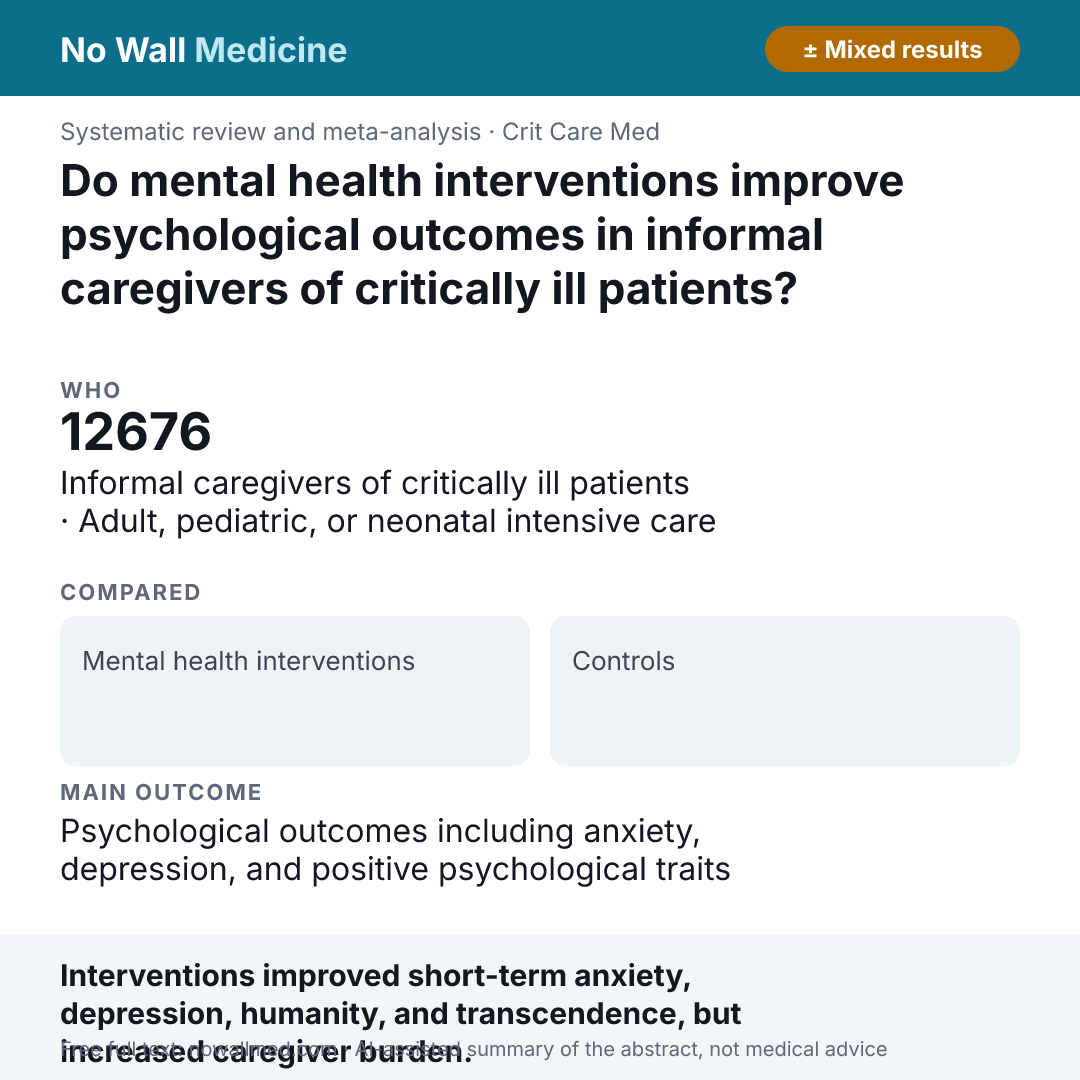
Mental Health Interventions to Improve Psychological Outcomes in Informal Caregivers of Critically Ill Patients: A Systematic Review and Meta-Analysis
Systematic review and meta-analysisMixed results
Do mental health interventions improve psychological outcomes in informal caregivers of critically ill patients?
Who
12676
Informal caregivers of critically ill patients · Adult, pediatric, or neonatal intensive care units
Compared
Mental health interventions
Controls
Main outcome
Psychological outcomes including anxiety, depression, and positive psychological traits
Result: anxiety ratio of means 0.92 (95% CI, 0.87-0.97); depression ratio of means 0.83 (95% CI, 0.69-0.99)
Bottom line: Interventions improved short-term anxiety, depression, humanity, and transcendence, but increased caregiver burden.
Crit Care Med · 2021-04-08 · Save PNG
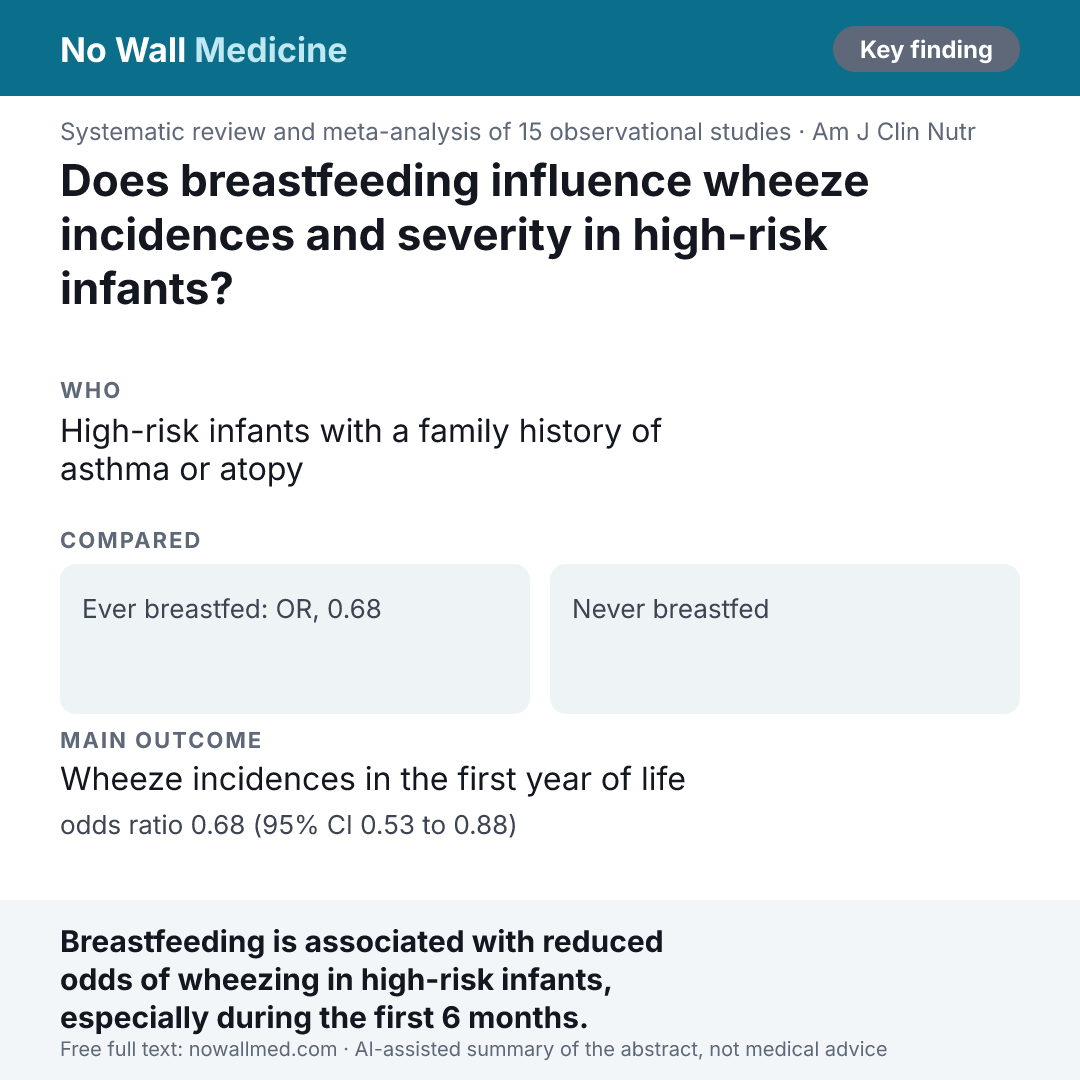
Efficacy and Safety of Topical Timolol for the Treatment of Infantile Hemangioma in the Early Proliferative Stage: A Randomized Clinical Trial
Randomized, double-blind, placebo-controlled, phase 2a pilot clinical trialNo clear difference
Is topical timolol effective for early proliferative infantile hemangioma?
Who
69
Infants aged 10 to 60 days with focal or segmental hemangiomas · Multicenter
Compared
11Topical timolol maleate solution 0.5% (42%)
11Placebo (36%)
Main outcome
Complete or nearly complete infantile hemangioma resolution
Result: odds ratio 1.33 (95% CI 0.45-3.89)
Bottom line: Topical timolol is well tolerated but provides limited benefit for lesion resolution during the early proliferative stage.
JAMA Dermatol · 2021-04-08 · Save PNG
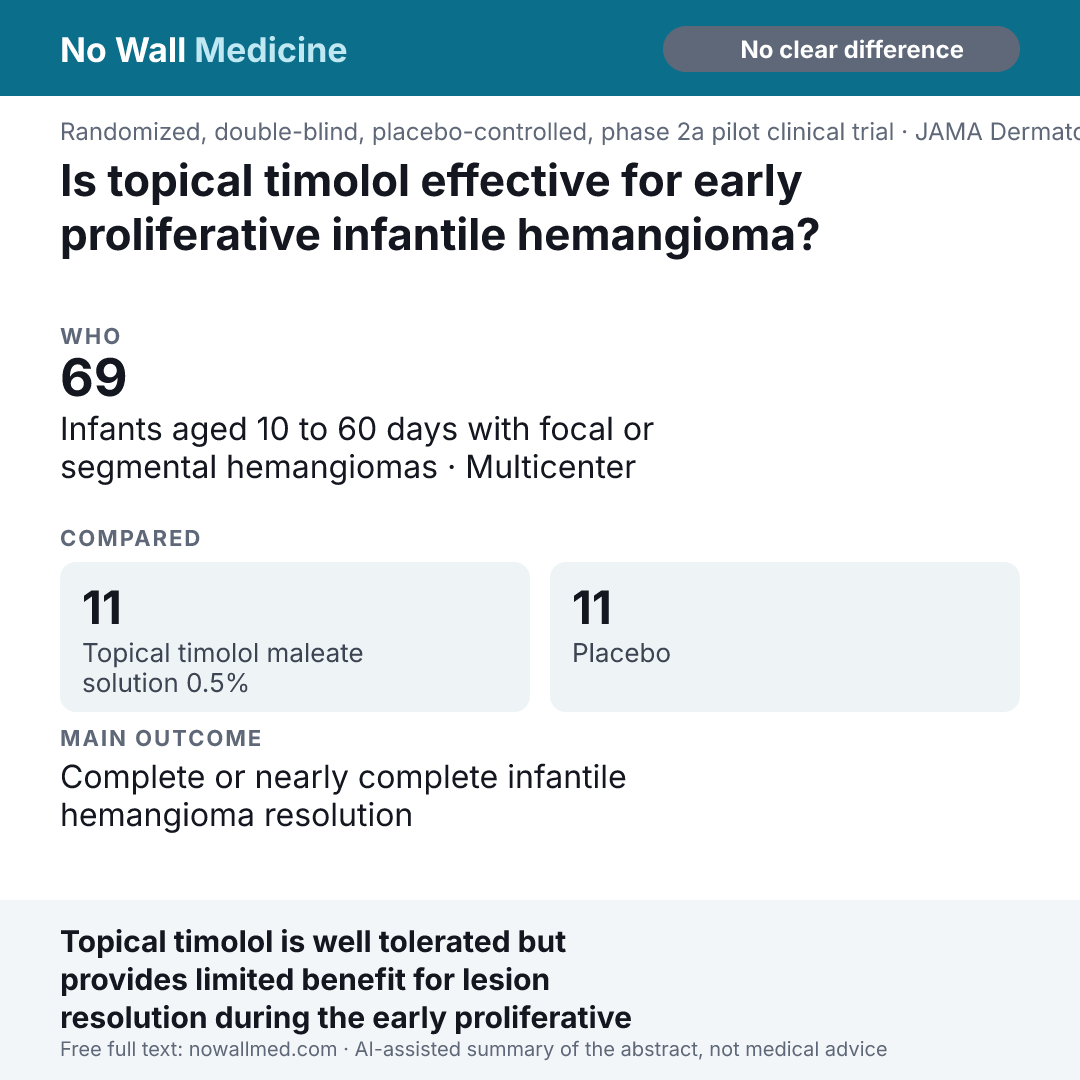
Breastfeeding and wheeze-related outcomes in high-risk infants: A systematic review and meta-analysis
Systematic review and meta-analysis of 15 observational studiesKey finding
Does breastfeeding influence wheeze incidences and severity in high-risk infants?
Who
High-risk infants with a family history of asthma or atopy
Compared
Ever breastfed: OR, 0.68
Never breastfed
Main outcome
Wheeze incidences in the first year of life
Result: odds ratio 0.68 (95% CI 0.53 to 0.88)
Bottom line: Breastfeeding is associated with reduced odds of wheezing in high-risk infants, especially during the first 6 months.
Am J Clin Nutr · 2021-04-08 · Save PNG
A Microbiota-Directed Food Intervention for Undernourished Children
Randomized trialBenefit found
Does a microbiota-directed complementary food prototype improve growth in undernourished children?
Who
118
Slum-dwelling Bangladeshi children with moderate acute malnutrition · Bangladesh
Compared
Microbiota-directed complementary food prototype
Ready-to-use supplementary food
Main outcome
Weight-for-length and weight-for-age z scores
Bottom line: Microbiota-directed complementary food prototype showed benefits for growth in children with moderate acute malnutrition.
Funded by: Bill and Melinda Gates Foundation and National Institutes of Health
NEJM · 2021-04-07 · Save PNG

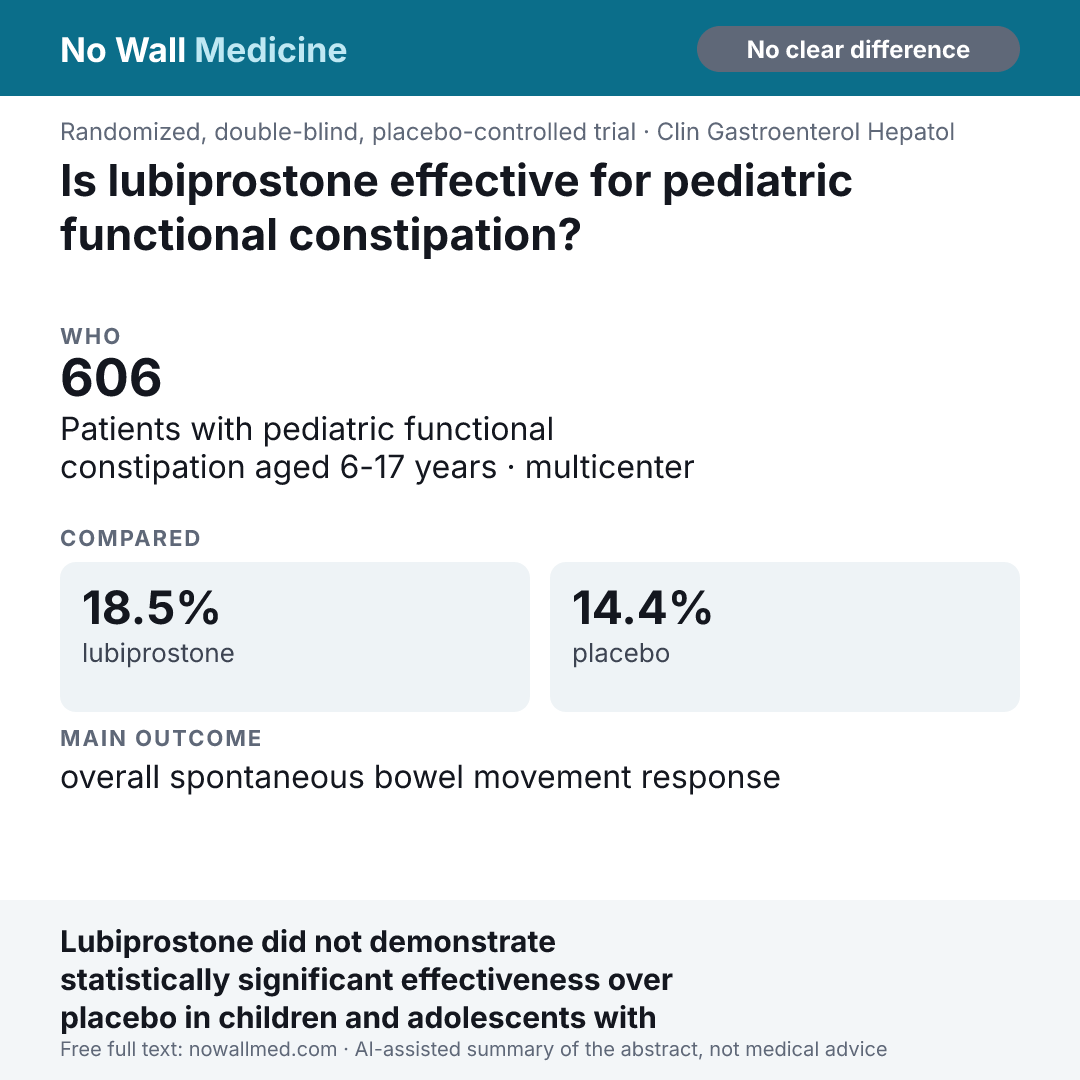
Lubiprostone for Pediatric Functional Constipation: Randomized, Controlled, Double-Blind Study With Long-term Extension
Randomized, double-blind, placebo-controlled trialNo clear difference
Is lubiprostone effective for pediatric functional constipation?
Who
606
Patients with pediatric functional constipation aged 6-17 years · multicenter
Compared
18.5%lubiprostone
14.4%placebo
Main outcome
overall spontaneous bowel movement response
Bottom line: Lubiprostone did not demonstrate statistically significant effectiveness over placebo in children and adolescents with pediatric functional constipation.
Clin Gastroenterol Hepatol · 2021-04-07 · Save PNG
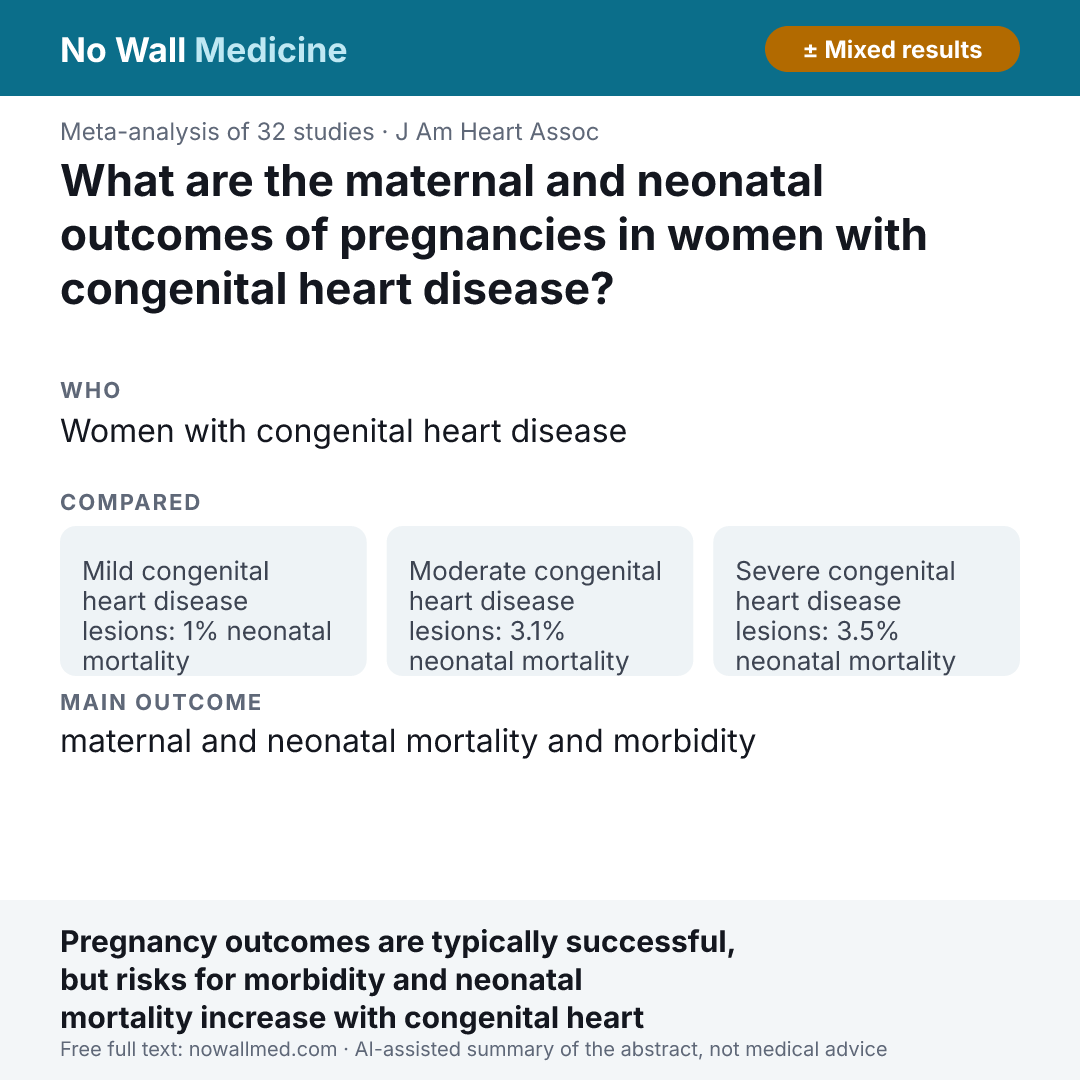
Maternal and Neonatal Outcomes of Pregnancies in Women With Congenital Heart Disease: A Meta-Analysis
Meta-analysis of 32 studiesMixed results
What are the maternal and neonatal outcomes of pregnancies in women with congenital heart disease?
Who
Women with congenital heart disease
Compared
Mild congenital heart disease lesions: 1% neonatal mortality
Moderate congenital heart disease lesions: 3.1% neonatal mortality
Severe congenital heart disease lesions: 3.5% neonatal mortality
Main outcome
maternal and neonatal mortality and morbidity
Bottom line: Pregnancy outcomes are typically successful, but risks for morbidity and neonatal mortality increase with congenital heart disease severity.
Limitation: There were too few maternal deaths in any group to pool data.
J Am Heart Assoc · 2021-04-06 · Save PNG
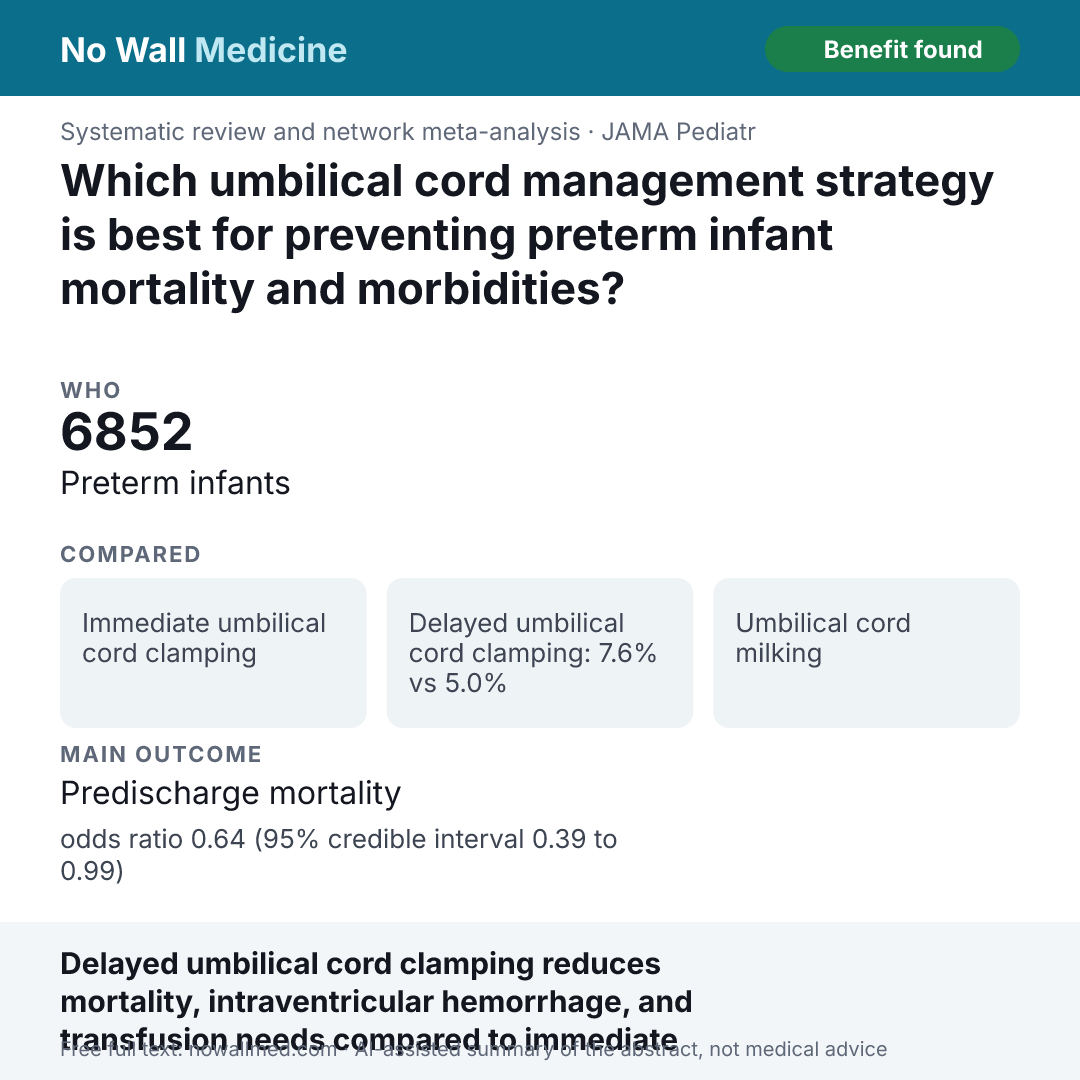
Association of Umbilical Cord Management Strategies With Outcomes of Preterm Infants: A Systematic Review and Network Meta-analysis
Systematic review and network meta-analysisBenefit found
Which umbilical cord management strategy is best for preventing preterm infant mortality and morbidities?
Who
6852
Preterm infants
Compared
Immediate umbilical cord clamping
Delayed umbilical cord clamping: 7.6% vs 5.0%
Umbilical cord milking
Main outcome
Predischarge mortality
Result: odds ratio 0.64 (95% credible interval 0.39 to 0.99)
Bottom line: Delayed umbilical cord clamping reduces mortality, intraventricular hemorrhage, and transfusion needs compared to immediate clamping in preterm infants.
JAMA Pediatr · 2021-04-05 · Save PNG
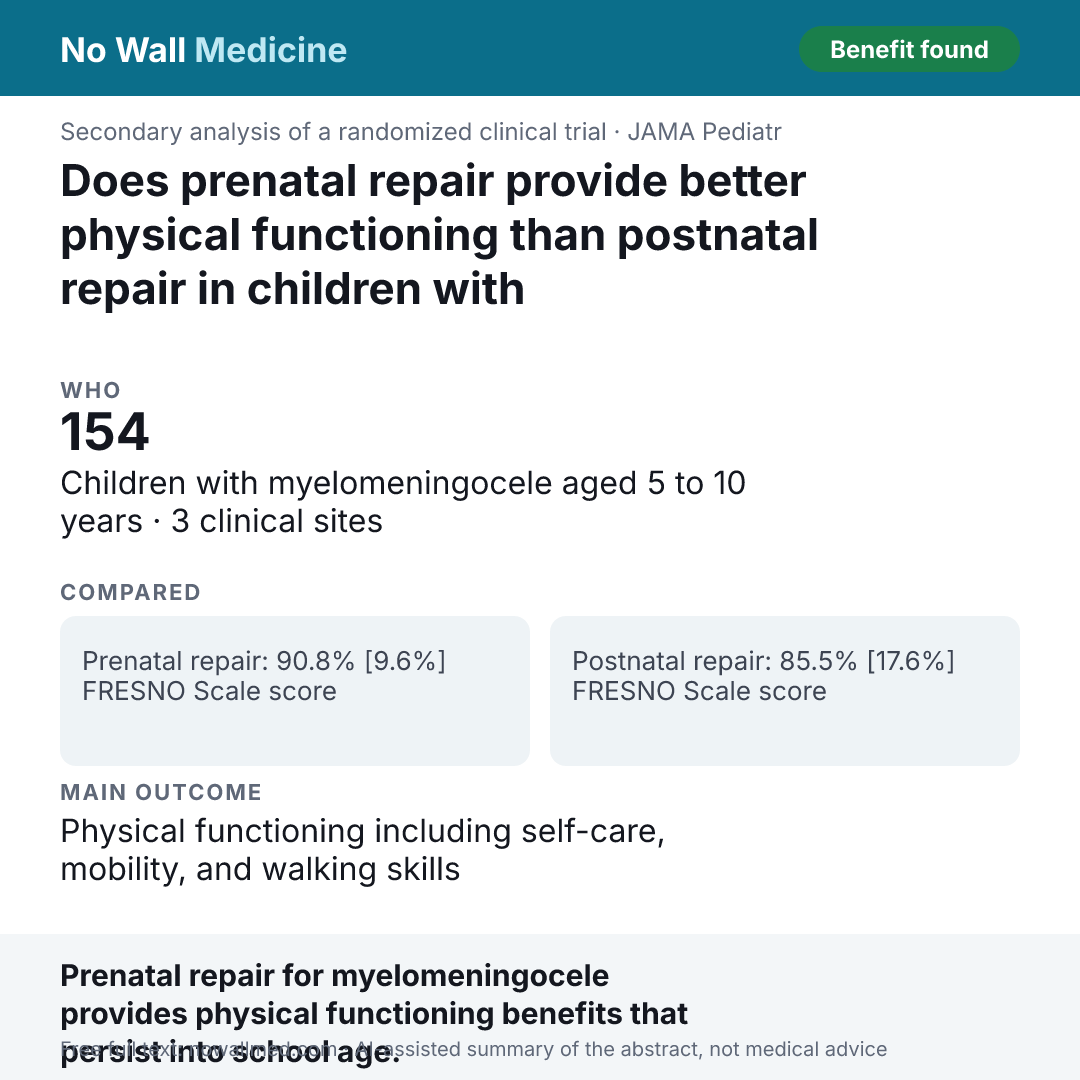
Prenatal Repair and Physical Functioning Among Children With Myelomeningocele: A Secondary Analysis of a Randomized Clinical Trial
Secondary analysis of a randomized clinical trialBenefit found
Does prenatal repair provide better physical functioning than postnatal repair in children with myelomeningocele?
Who
154
Children with myelomeningocele aged 5 to 10 years · 3 clinical sites
Compared
Prenatal repair: 90.8% [9.6%] FRESNO Scale score
Postnatal repair: 85.5% [17.6%] FRESNO Scale score
Main outcome
Physical functioning including self-care, mobility, and walking skills
Result: adjusted relative risk 1.70 (95% CI, 1.23-2.34) for community ambulation
Bottom line: Prenatal repair for myelomeningocele provides physical functioning benefits that persist into school age.
JAMA Pediatr · 2021-04-05 · Save PNG
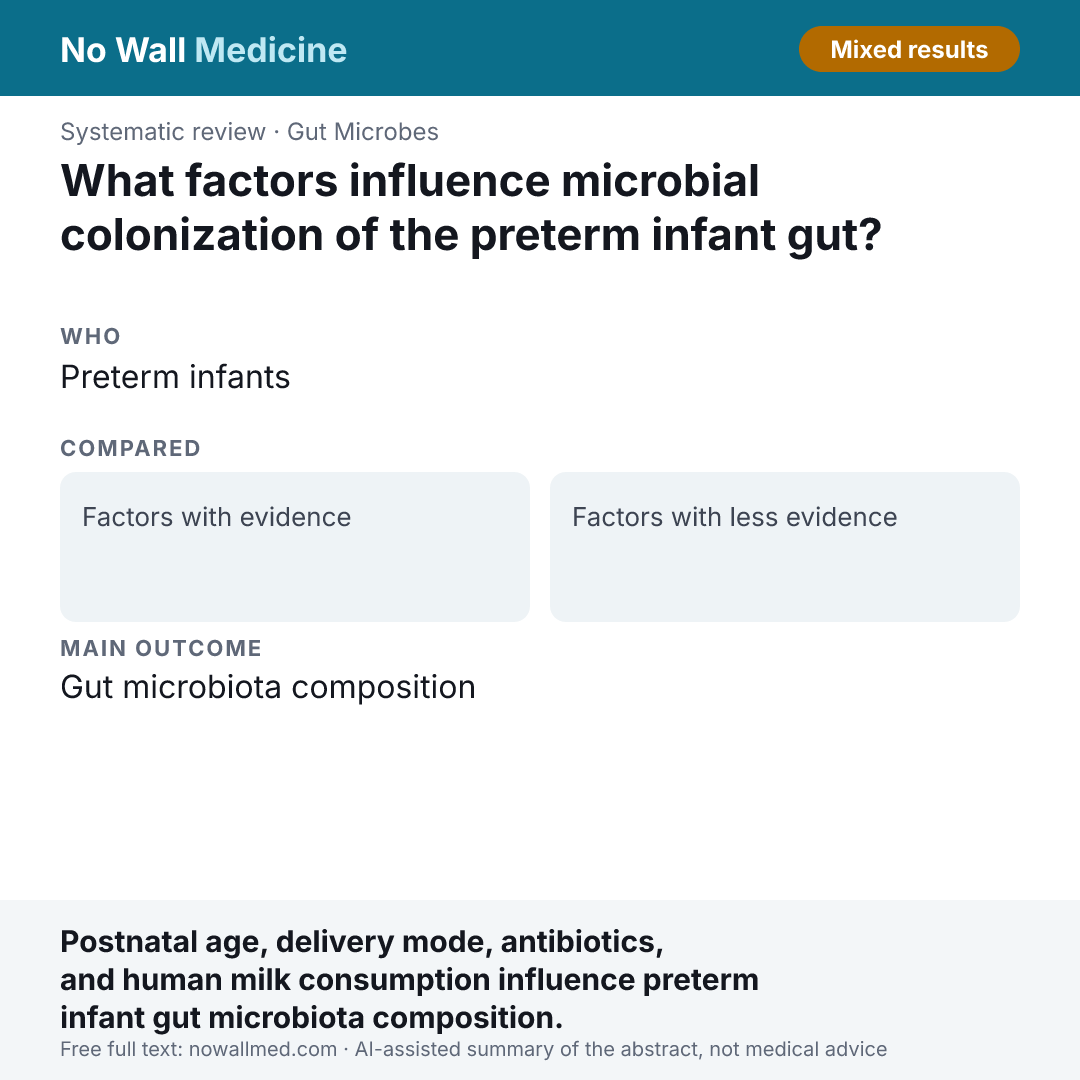
A systematic review of the factors influencing microbial colonization of the preterm infant gut
Systematic reviewMixed results
What factors influence microbial colonization of the preterm infant gut?
Who
Preterm infants
Compared
Factors with evidence
Factors with less evidence
Main outcome
Gut microbiota composition
Bottom line: Postnatal age, delivery mode, antibiotics, and human milk consumption influence preterm infant gut microbiota composition.
Gut Microbes · 2021-04-05 · Save PNG