Visual abstracts
New randomized trials and meta-analyses from leading journals at a glance: who was studied, what was compared, and what was found. Every paper is free to read in full.
All specialtiesCardiology 4877Oncology 4138Gastroenterology & Hepatology 1942Infectious Disease 3837Neurology 1905Psychiatry & Mental Health 2273Pulmonology 2143Critical Care 1365Endocrinology & Diabetes 2580Pediatrics 2980Surgery 2559Orthopedics & Sports Medicine 931Neurosurgery 537Cardiothoracic & Vascular Surgery 674Plastic & Reconstructive Surgery 591Nephrology 1133Rheumatology 823Hematology 1109Dermatology 621Ophthalmology 543Obstetrics & Gynecology 1686Public & Global Health 1058Radiology & Imaging 648Anesthesiology 986Urology 764ENT (Otolaryngology) 503Emergency Medicine 511Allergy & Immunology 313Geriatrics 981Family Medicine & Primary Care 562Medical Genetics & Genomics 676Pathology & Laboratory Medicine 159Physical Medicine & Rehabilitation 757Palliative Care 444Nutrition 1588Digital Health & AI 2201General Medicine 321
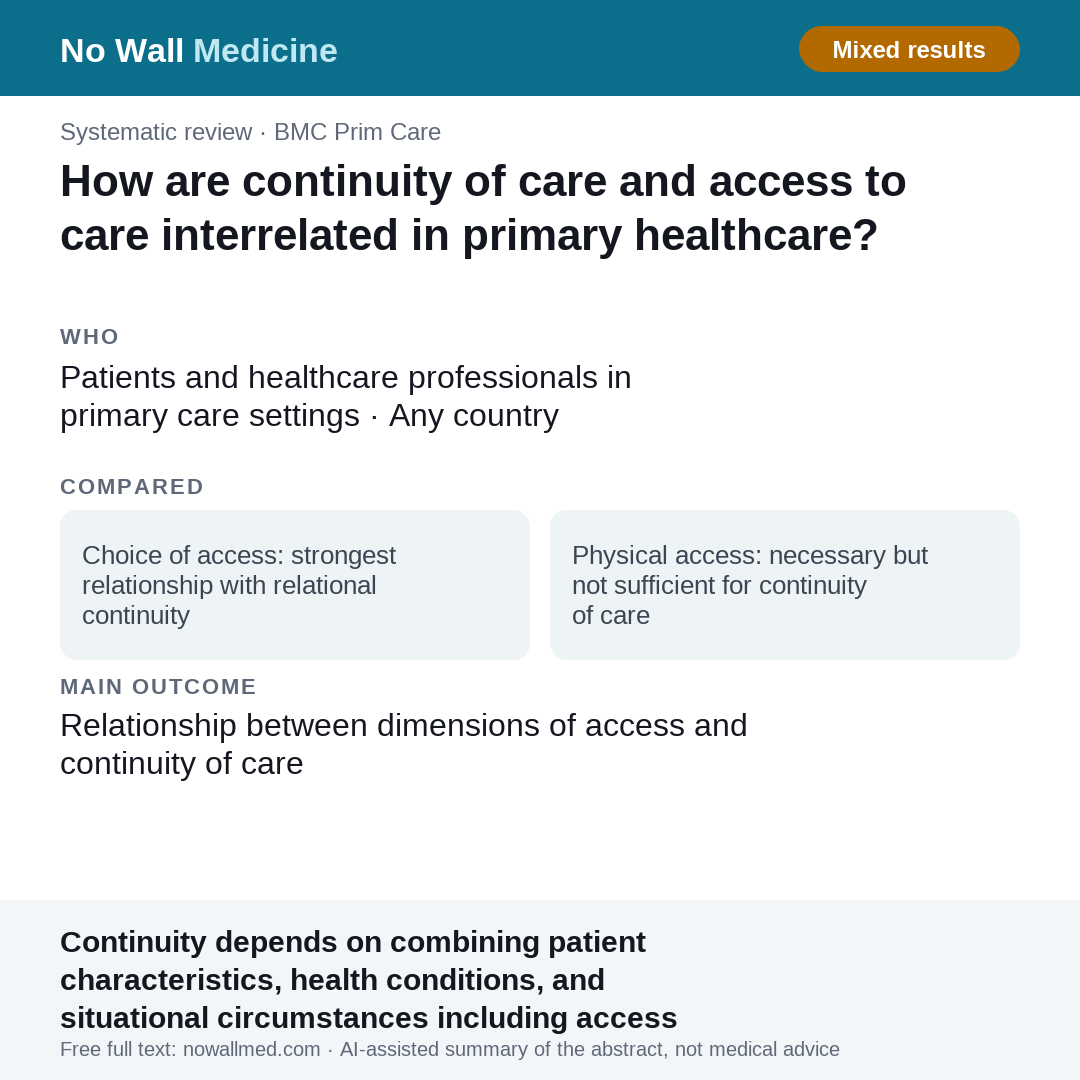
Access or continuity: a zero sum game? A systematic review of the literature examining the relationship between access and continuity in primary healthcare
Systematic reviewMixed results
How are continuity of care and access to care interrelated in primary healthcare?
Who
Patients and healthcare professionals in primary care settings · Any country
Compared
Choice of access: strongest relationship with relational continuity
Physical access: necessary but not sufficient for continuity of care
Main outcome
Relationship between dimensions of access and continuity of care
Bottom line: Continuity depends on combining patient characteristics, health conditions, and situational circumstances including access dimensions.
BMC Prim Care · 2025-07-02Download image
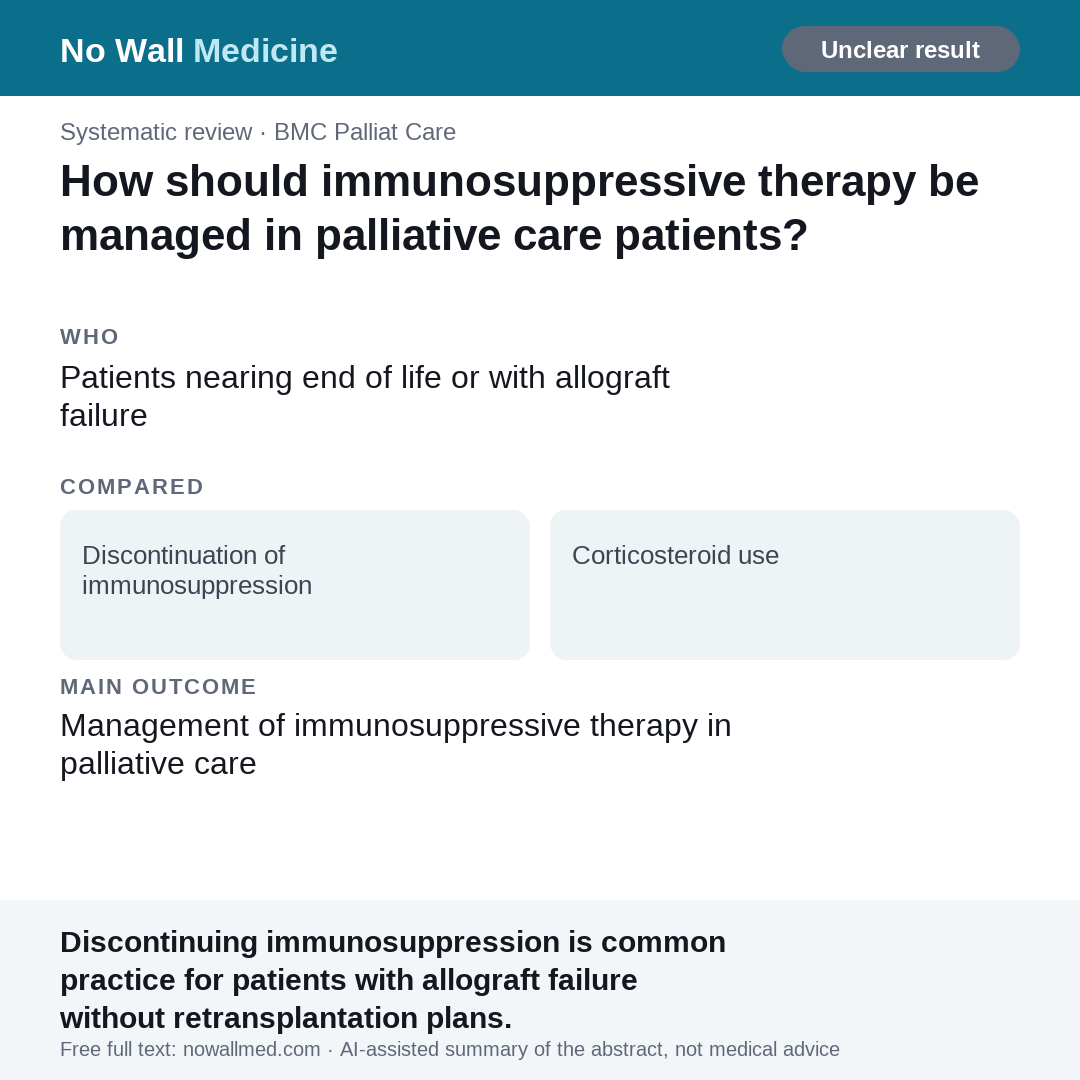
Immunosuppressant management in palliative care: a systematic review
Systematic reviewUnclear result
How should immunosuppressive therapy be managed in palliative care patients?
Who
Patients nearing end of life or with allograft failure
Compared
Discontinuation of immunosuppression
Corticosteroid use
Main outcome
Management of immunosuppressive therapy in palliative care
Bottom line: Discontinuing immunosuppression is common practice for patients with allograft failure without retransplantation plans.
BMC Palliat Care · 2025-07-02Download image
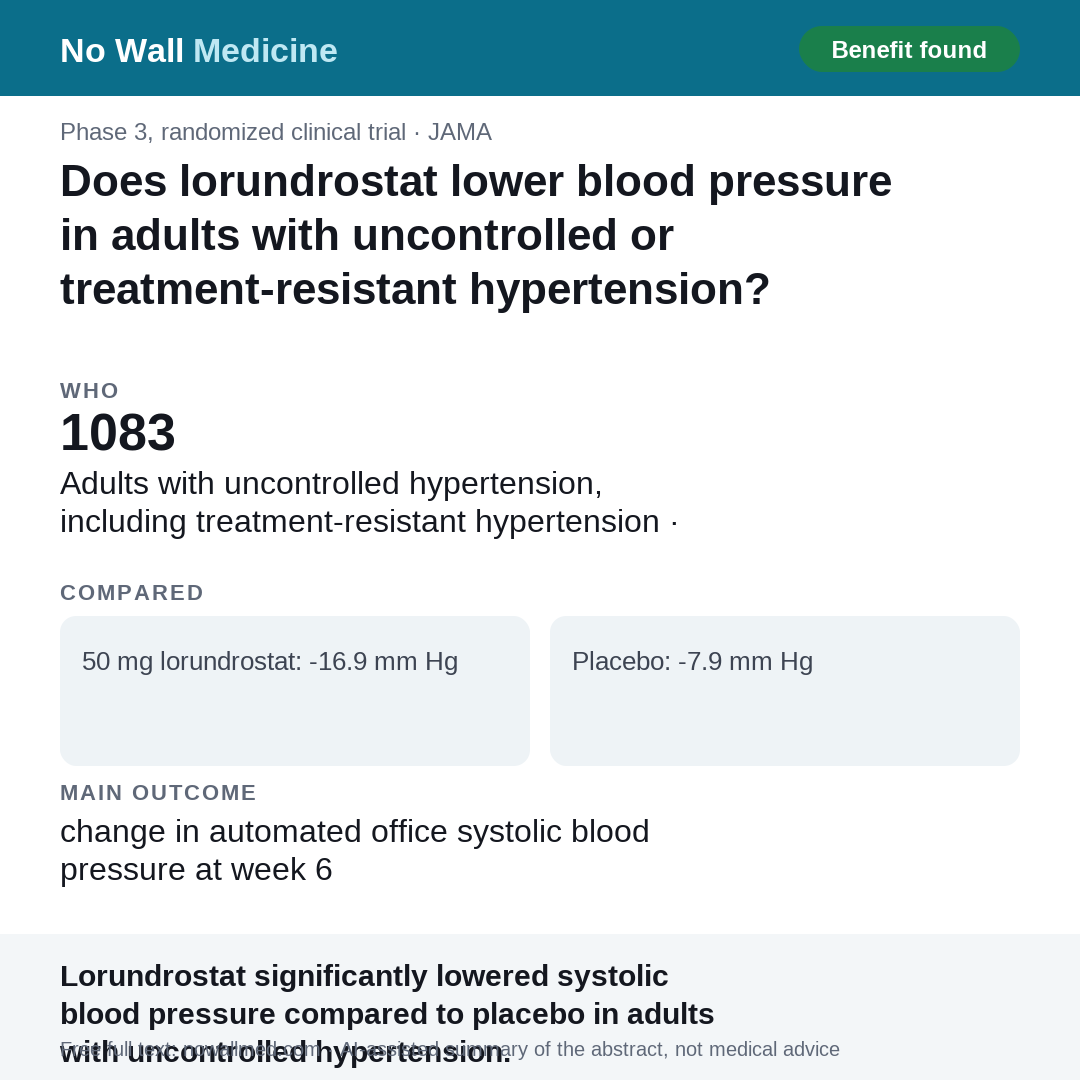
Lorundrostat in Participants With Uncontrolled Hypertension and Treatment-Resistant Hypertension: The Launch-HTN Randomized Clinical Trial
Phase 3, randomized clinical trialBenefit found
Does lorundrostat lower blood pressure in adults with uncontrolled or treatment-resistant hypertension?
Who
1083
Adults with uncontrolled hypertension, including treatment-resistant hypertension · 159 clinic sites across 13 countries
Compared
50 mg lorundrostat: -16.9 mm Hg
Placebo: -7.9 mm Hg
Main outcome
change in automated office systolic blood pressure at week 6
Result: least-squares mean difference, -9.1 mm Hg (95% CI, -13.3 to -4.9 mm Hg)
Bottom line: Lorundrostat significantly lowered systolic blood pressure compared to placebo in adults with uncontrolled hypertension.
JAMA · 2025-07-01Download image
Cost Analysis of the PARENT Trial of Community Health Workers in Early Childhood Preventive Care: A Secondary Analysis of a Cluster-Randomized Clinical Trial
Secondary analysis of a cluster-randomized clinical trialBenefit found
Was the PARENT intervention associated with lower non-well child care costs?
Who
937
937 enrolled parents with a child younger than 2 years · 10 clinics from 2 federally qualified health centers
Compared
Intervention group: lower costs for subspecialty referrals (-$213; 95% uncertainty interval [UI], -$540 to -$106)
Control group
Main outcome
2016 unit cost estimates for subspecialty referrals, urgent care, emergency department, and hospitalizations
Result: -$70; 95% UI, -$150 to -$13 for total cost of urgent care, emergency department, and hospitalizations
Bottom line: The intervention cost was offset by savings in non-well child care utilization and increased revenue from attendance.
JAMA Netw Open · 2025-07-01Download image
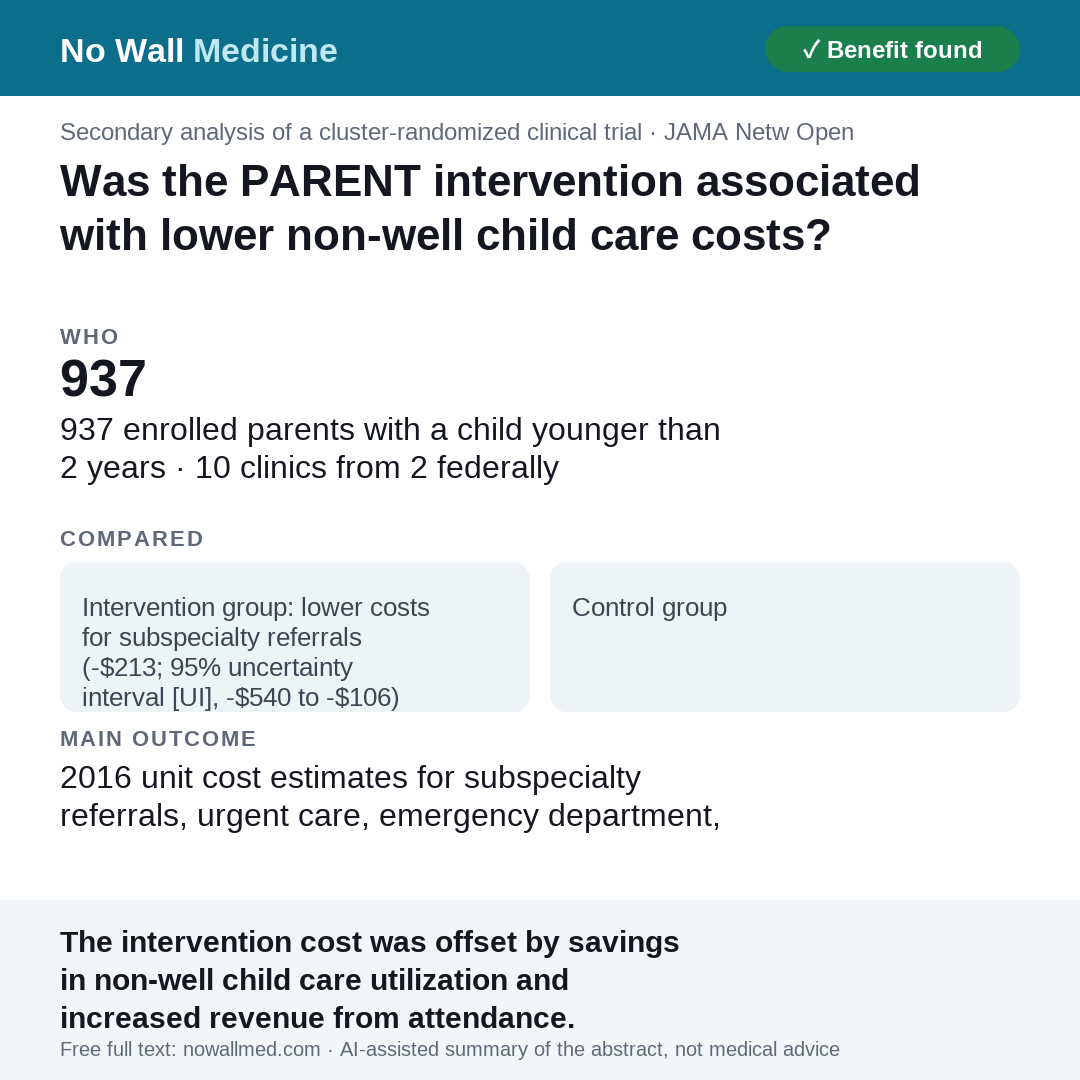
Housing and Support Intervention and Mortality Among Homeless Adults With Mental Illnesses: A Secondary Analysis of a Randomized Clinical Trial
Secondary analysis of a randomized clinical trialNo clear difference
Do housing and support interventions affect mortality among homeless adults with mental illnesses?
Who
2255
Homeless adults with mental illnesses · 5 Canadian cities
Compared
Housing First
Treatment as usual
Main outcome
Mortality rate
Result: adjusted hazard ratio 0.83 (95% CI 0.43-1.22)
Bottom line: The Housing First intervention was not directly associated with mortality risk among homeless adults with mental illnesses.
JAMA Netw Open · 2025-07-01Download image
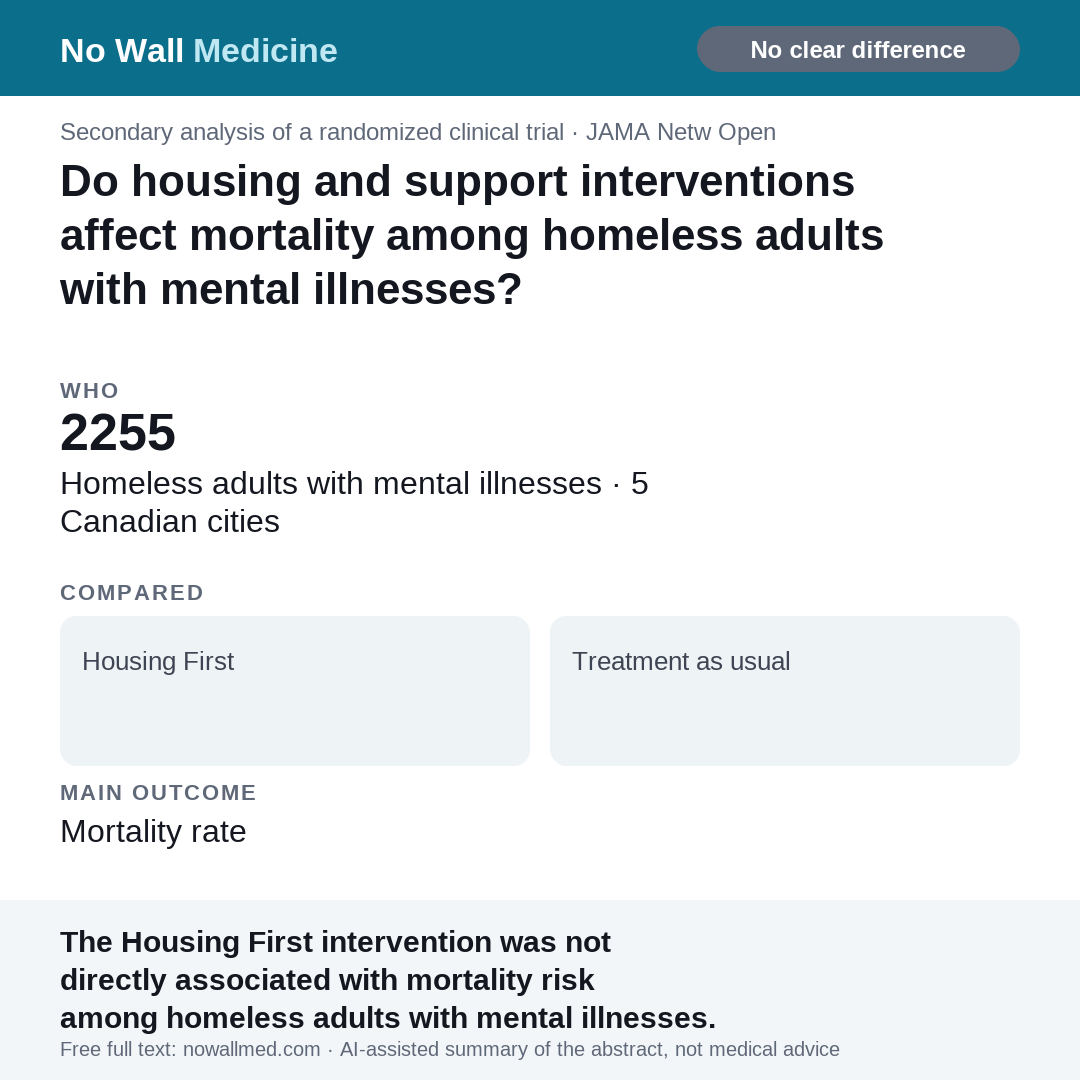
Early Cardiac Rehabilitation for Critically Ill Patients With Acute Decompensated Heart Failure: A Randomized Clinical Trial
Single-center, single-blind randomized clinical trialNo clear difference
Does early cardiac rehabilitation improve physical function and rehospitalization in critically ill heart failure patients?
Who
120
Critically ill patients with severe acute decompensated heart failure · Cardiac intensive care unit in China
Compared
28.3%Early progressive and personalized cardiac rehabilitation
26.6%Usual care
Main outcome
Short Physical Performance Battery score and 6-month rehospitalization rates
Result: hazard ratio 1.00 (95% CI 0.51-1.99)
Bottom line: Early cardiac rehabilitation did not significantly improve physical function or rehospitalization rates in critically ill heart failure patients.
JAMA Netw Open · 2025-07-01Download image
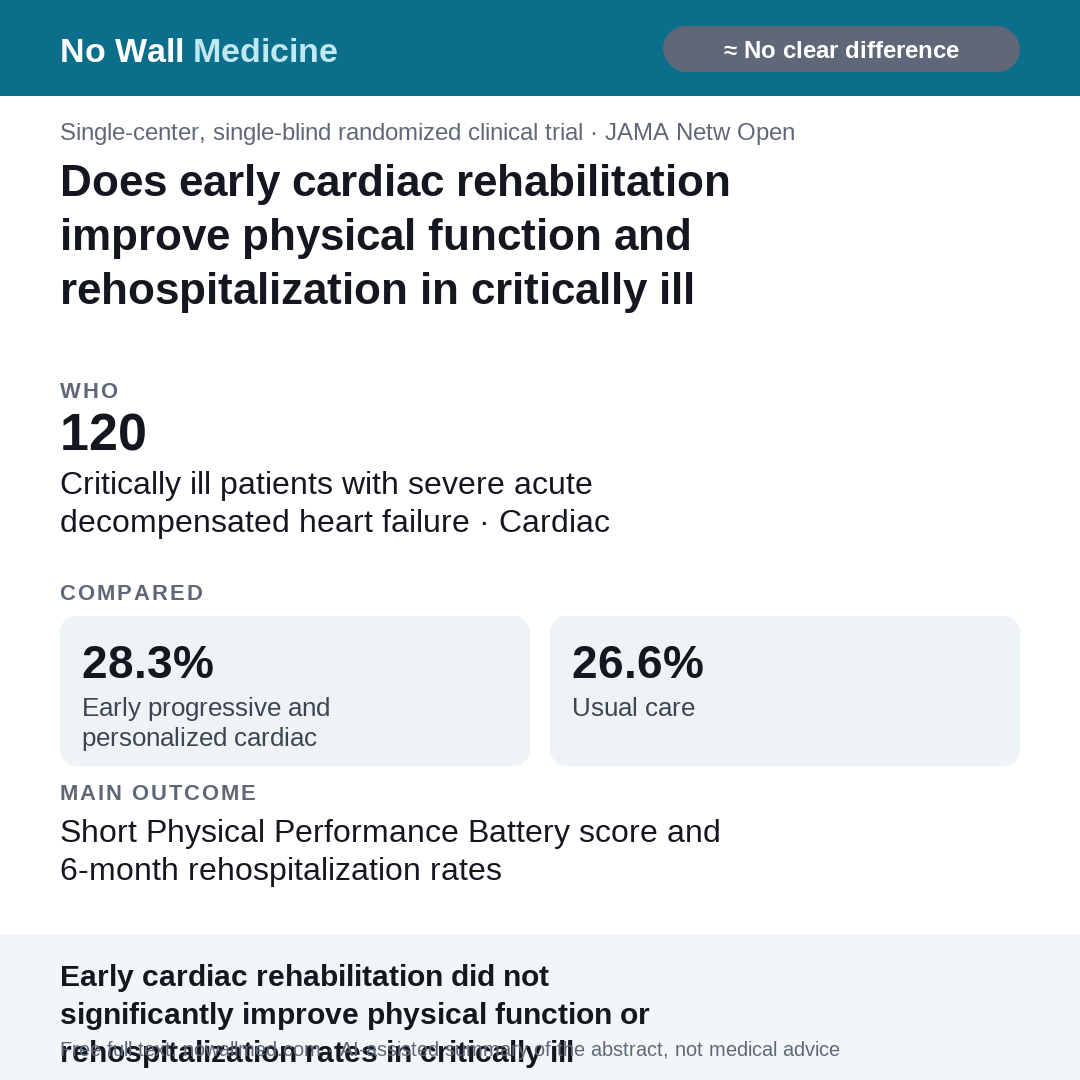
Adherence to Quality-of-Care Indicators and Mortality Outcomes in Patients With MRSA Bacteremia: A Post Hoc Analysis of the CAMERA2 Randomized Clinical Trial
Post hoc analysis of a randomized clinical trialNo clear difference
Does trial participation or quality-of-care indicator adherence improve mortality in MRSA bacteremia?
Who
722
Patients with methicillin-resistant Staphylococcus aureus bacteremia · 17 hospital sites from 4 countries
Compared
23.2%Nontrial patients (106 of 457)
19.1%Trial participants (48 of 251)
Main outcome
All-cause 90-day mortality
Result: adjusted hazard ratio 1.08 (95% CI 0.73 to 1.61)
Bottom line: Trial participation was not associated with lower mortality despite higher quality-of-care indicator adherence in trial groups.
JAMA Netw Open · 2025-07-01Download image
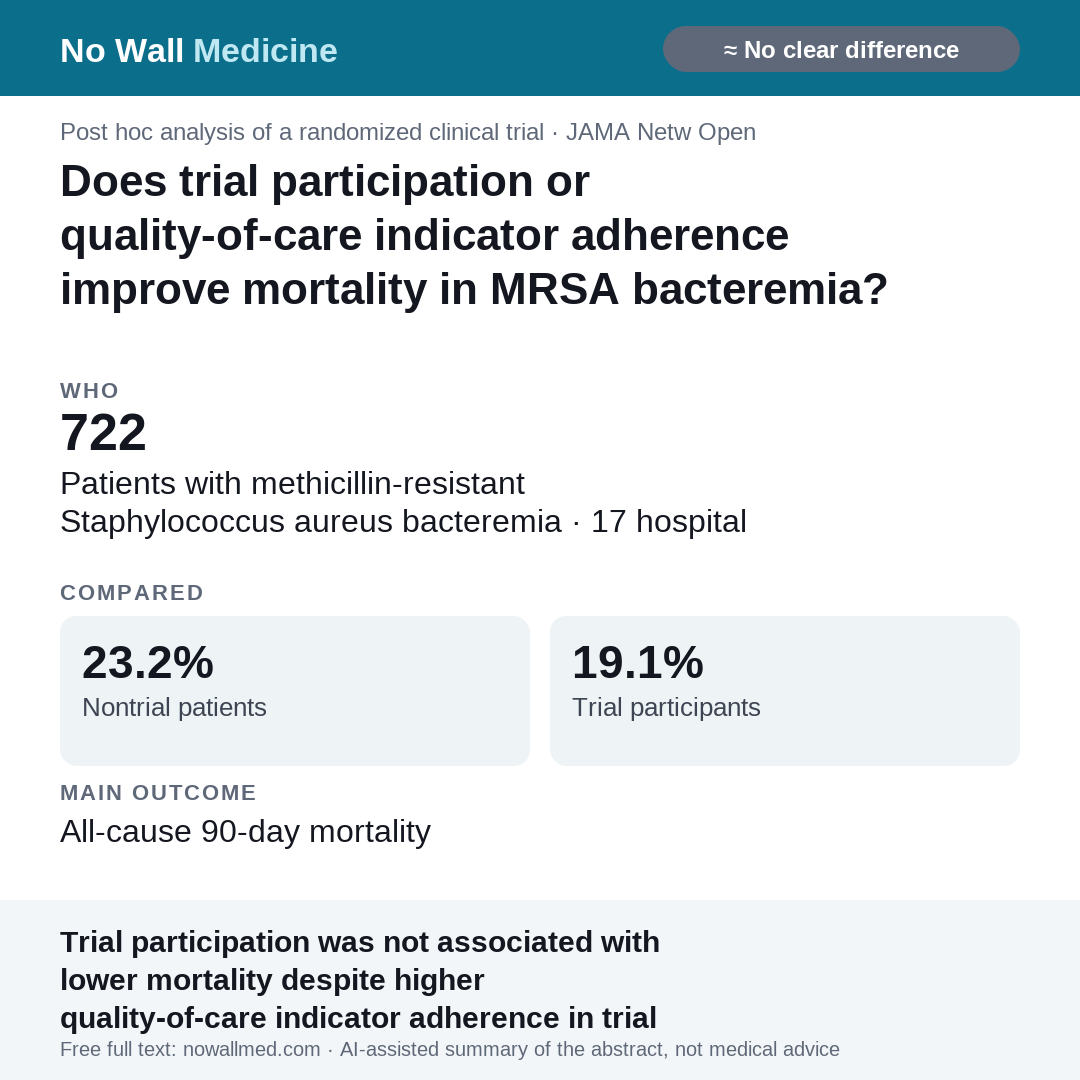
Modified Target Delineation and Moderately Hypofractionated Radiotherapy for High-Grade Glioma: A Randomized Clinical Trial
Single-center, 2-arm, open-label randomized clinical trialNo clear difference
Does modified target delineation and hypofractionated radiotherapy improve outcomes in high-grade glioma?
Who
154
Patients aged 18 to 70 years with newly diagnosed high-grade glioma · A Chinese medical center
Compared
Experimental arm: median PFS 15.5 months (95% CI, 11.7-19.3 months)
Standard arm: median PFS 13.5 months (95% CI, 8.7-18.3 months)
Main outcome
progression-free survival
Bottom line: Modified target delineation and hypofractionated radiotherapy showed comparable survival to standard radiotherapy with significantly smaller irradiation volumes.
JAMA Netw Open · 2025-07-01Download image
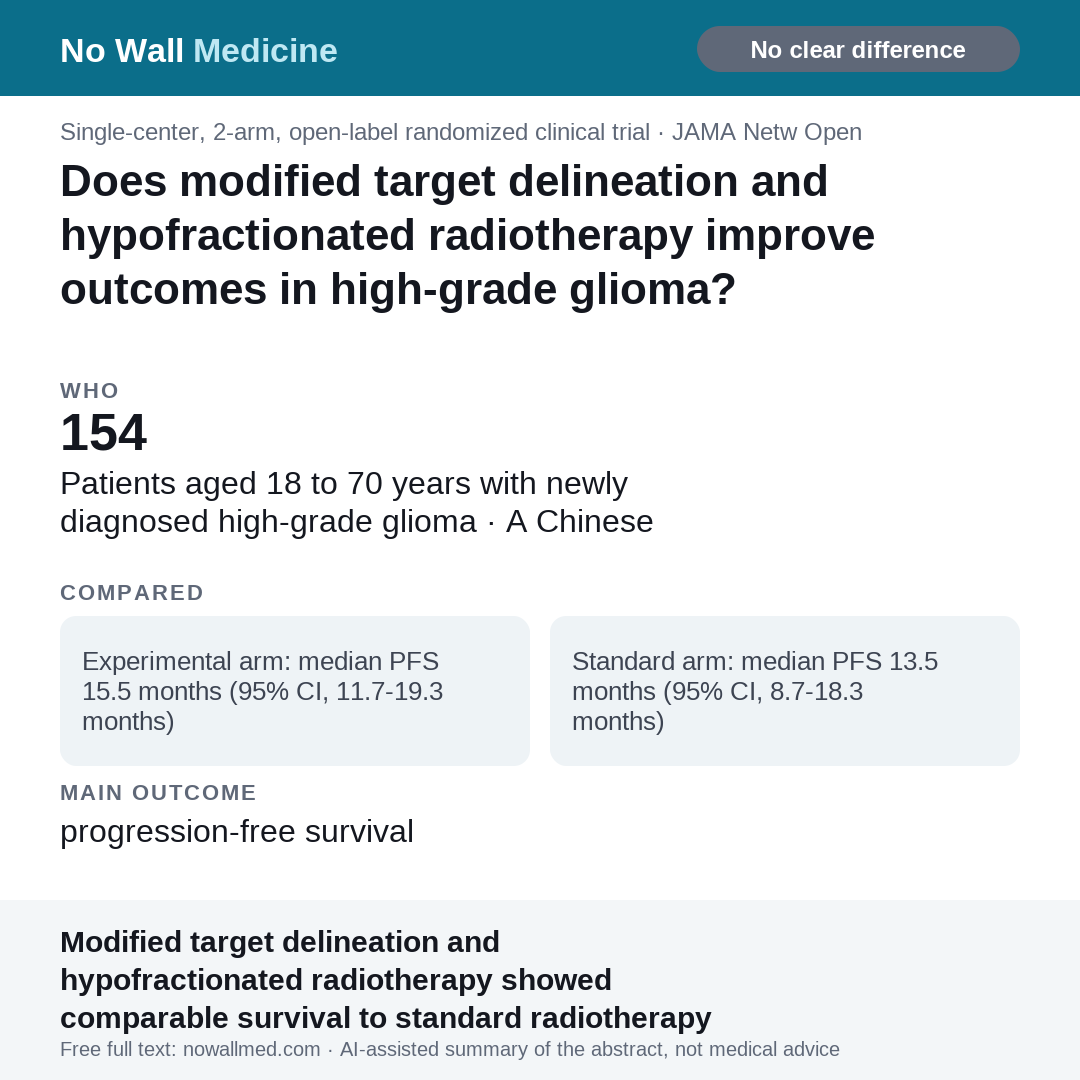
Operationalization of Artificial Intelligence Applications in the Intensive Care Unit: A Systematic Review
Systematic reviewUnclear result
What is the progress of artificial intelligence operationalization in intensive care units?
Who
1263
Adults aged 16 years or older in intensive care units
Compared
936Studies with technology readiness level 4 or below (74%)
24%Studies with external validation
25Studies with clinical integration (2%)
Main outcome
Technology readiness level and clinical implementation of artificial intelligence
Bottom line: Most artificial intelligence research in intensive care remains in early development stages with very little clinical implementation.
Limitation: High risk of bias was identified in 53% of studies due to methodological shortcomings.
JAMA Netw Open · 2025-07-01Download image
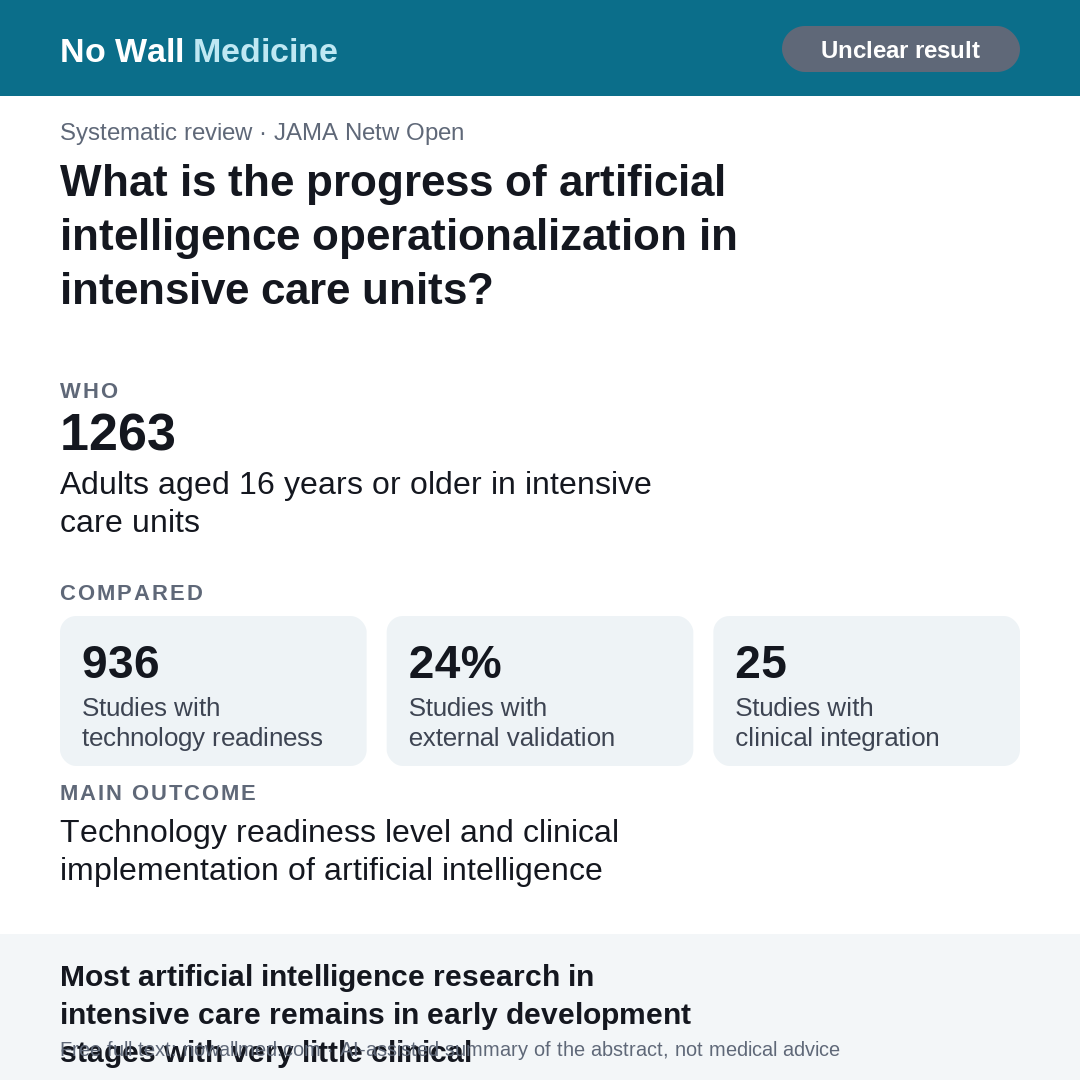
Guidelines on Placenta Accreta Spectrum Disorders: A Systematic Review
Systematic reviewMixed results
What are the areas of consensus and gaps in placenta accreta spectrum clinical practice guidelines?
Who
Clinical practice guidelines for placenta accreta spectrum · Global, including high-income and low- to middle-income countries
Compared
High agreement areas: specialized expertise (100%), antenatal management (88.9%), diagnosis (76.9%), and epidemiology (75.0%)
Poor consensus areas: cesarean hysterectomy management (38.5% insufficient evidence and 23.0% disagreement)
Main outcome
Consensus and evidence levels in clinical practice guidelines
Bottom line: Guidelines show high consensus in diagnosis and antenatal management but significant gaps in hemorrhage and postnatal management evidence.
Limitation: Only 5.6% of articles specifically addressed low- to middle-income countries.
JAMA Netw Open · 2025-07-01Download image
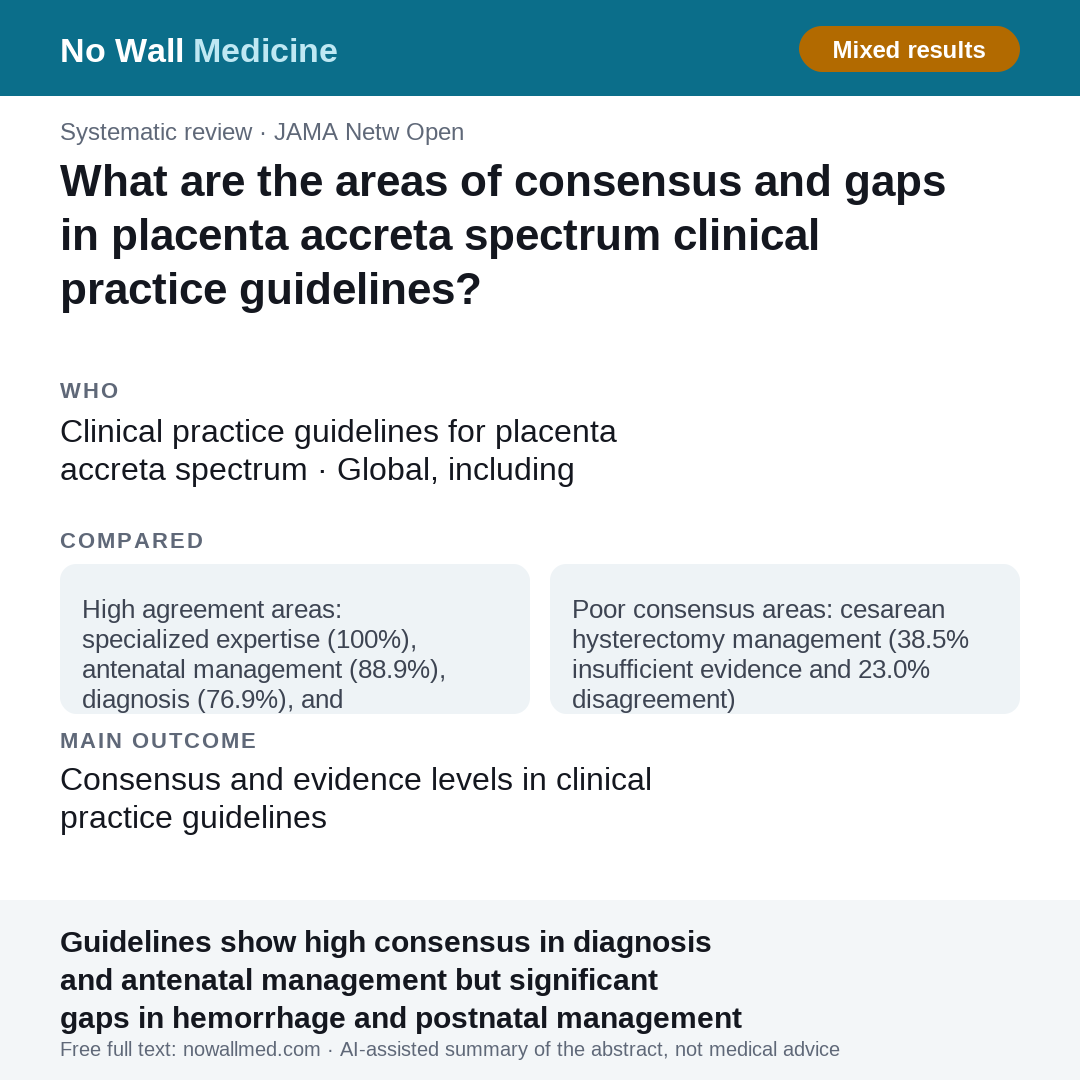
Homelessness, Patient Navigation, and Lung Cancer Screening in a Health Center Setting: A Subgroup Analysis of a Randomized Clinical Trial
Randomized clinical trialBenefit found
Does navigation help homeless lung cancer screening?
Who
260
Patients with history of homelessness · Boston Health Care
Compared
26.8%Currently homeless (15/56)
51.3%Formerly homeless (60/117)
Main outcome
Lung cancer screening completion
Result: Risk difference 19.7% vs 41.1%
Bottom line: Navigation helps homeless with lung cancer screening
Limitation: Communication challenges with currently homeless
JAMA Netw Open · 2025-07-01Download image
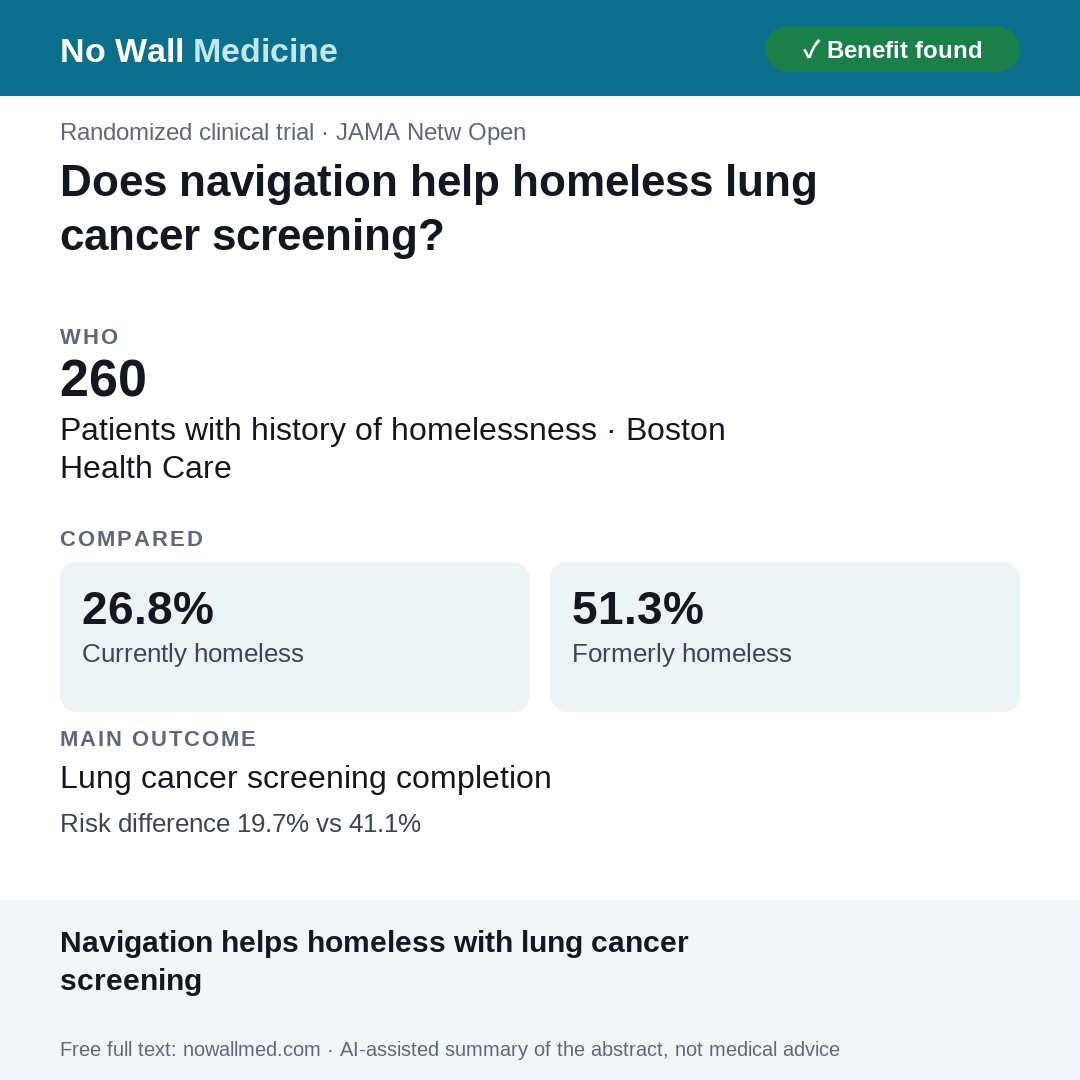
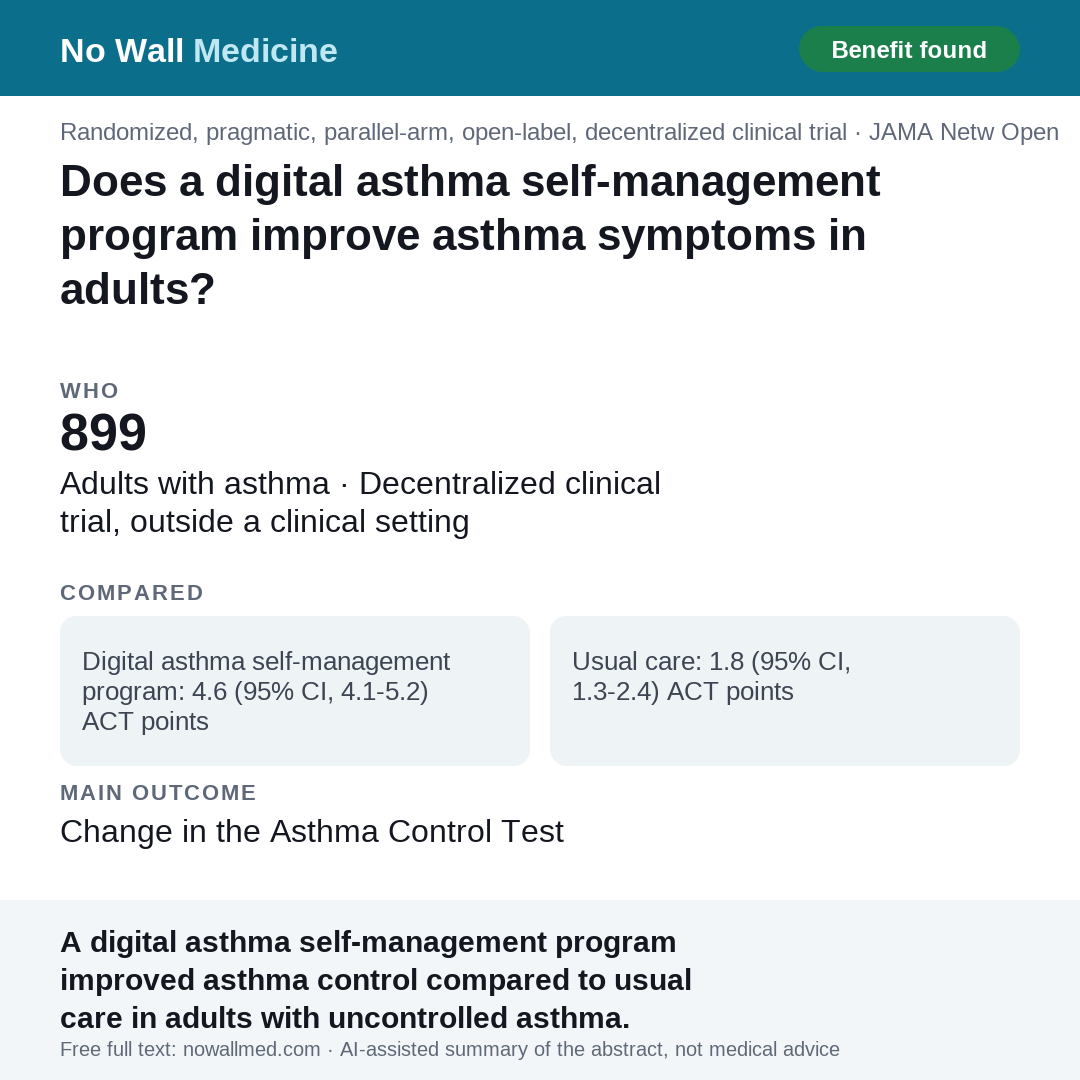
A Digital Asthma Self-Management Program for Adults: A Randomized Clinical Trial
Randomized, pragmatic, parallel-arm, open-label, decentralized clinical trialBenefit found
Does a digital asthma self-management program improve asthma symptoms in adults?
Who
899
Adults with asthma · Decentralized clinical trial, outside a clinical setting
Compared
Digital asthma self-management program: 4.6 (95% CI, 4.1-5.2) ACT points
Usual care: 1.8 (95% CI, 1.3-2.4) ACT points
Main outcome
Change in the Asthma Control Test
Result: adjusted difference, 2.8 (95% CI, 2.0-3.6) points
Bottom line: A digital asthma self-management program improved asthma control compared to usual care in adults with uncontrolled asthma.
Limitation: Race moderated the effect of the program on asthma control.
JAMA Netw Open · 2025-07-01Download image
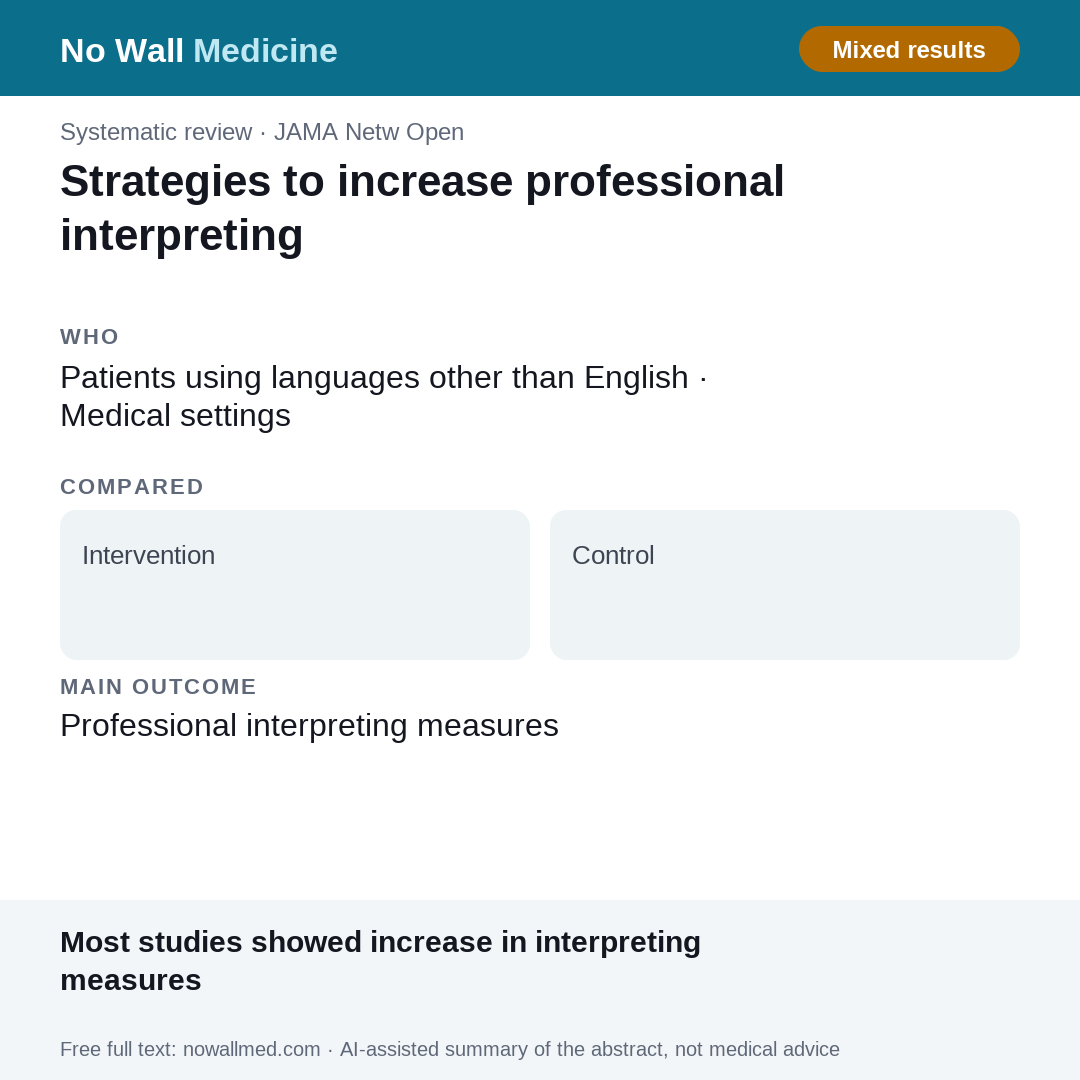
Strategies to Increase Professional Interpreting in Clinical Settings: A Systematic Review
Systematic reviewMixed results
Strategies to increase professional interpreting
Who
Patients using languages other than English · Medical settings
Compared
Intervention
Control
Main outcome
Professional interpreting measures
Bottom line: Most studies showed increase in interpreting measures
Limitation: Heterogeneity and risk of bias
JAMA Netw Open · 2025-07-01Download image
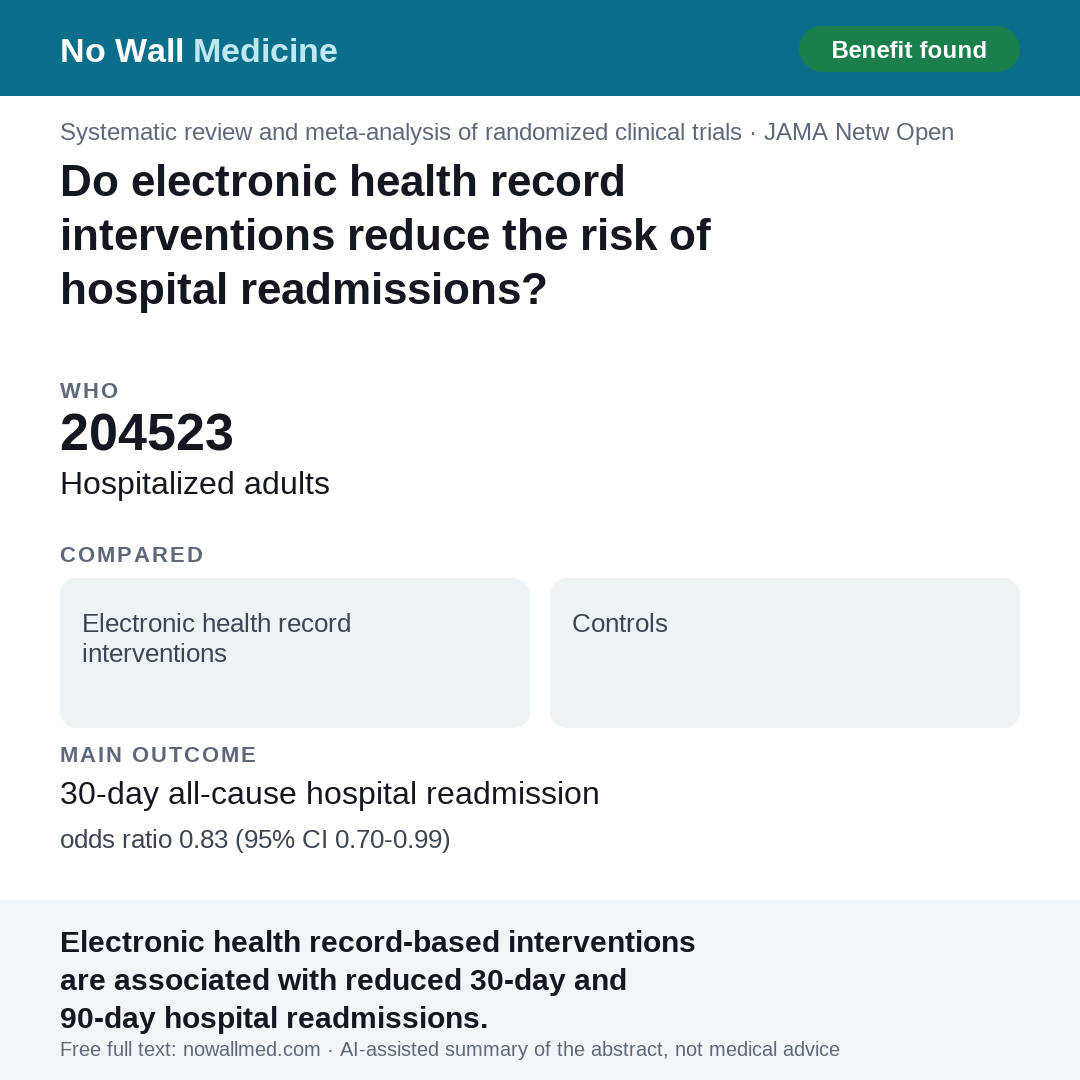
Electronic Health Record Interventions to Reduce Risk of Hospital Readmissions: A Systematic Review and Meta-Analysis
Systematic review and meta-analysis of randomized clinical trialsBenefit found
Do electronic health record interventions reduce the risk of hospital readmissions?
Who
204523
Hospitalized adults
Compared
Electronic health record interventions
Controls
Main outcome
30-day all-cause hospital readmission
Result: odds ratio 0.83 (95% CI 0.70-0.99)
Bottom line: Electronic health record-based interventions are associated with reduced 30-day and 90-day hospital readmissions.
Limitation: Future research should examine additional components to understand remaining gaps in effectiveness.
JAMA Netw Open · 2025-07-01Download image
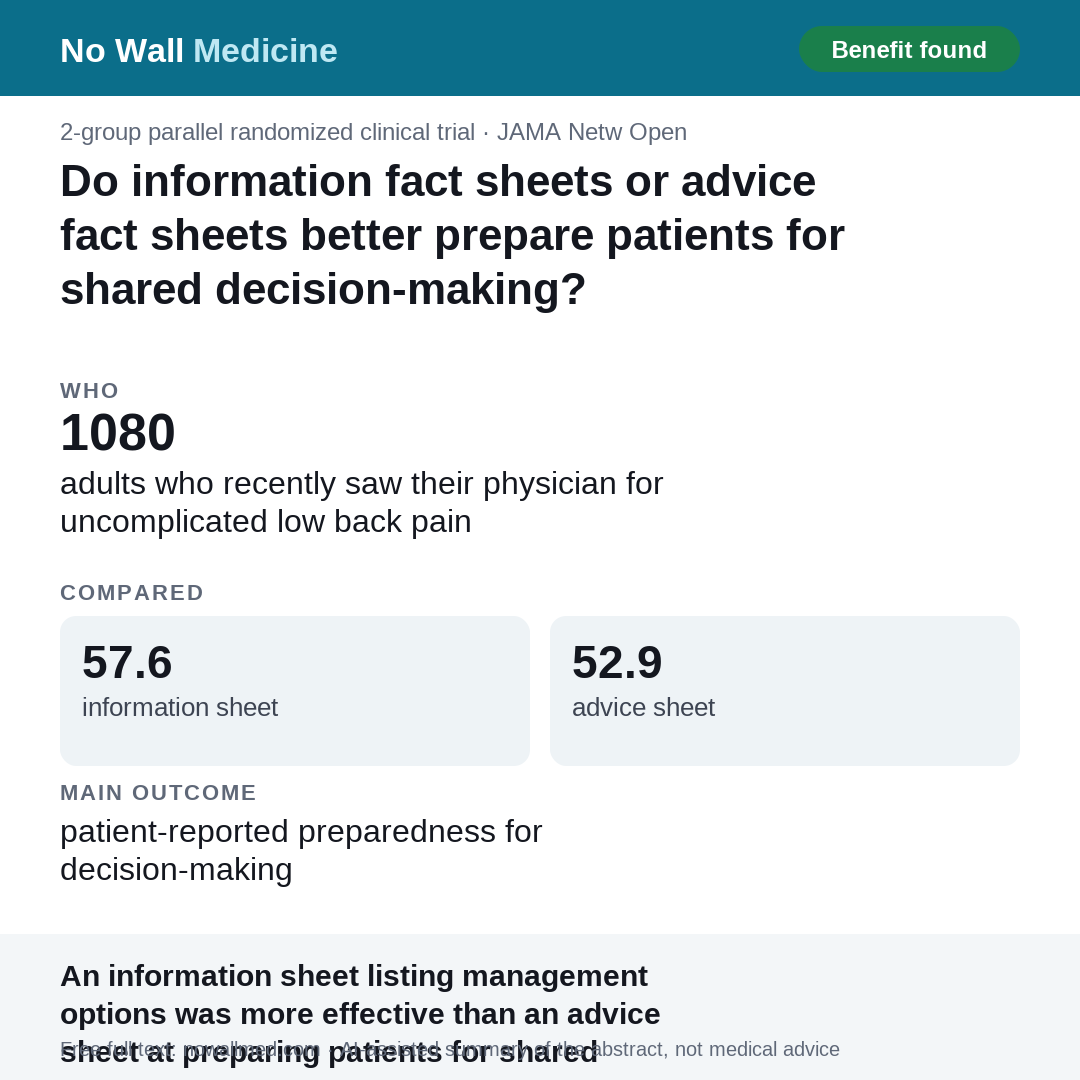
One-Page Patient Fact Sheets for Low Back Pain in Primary Care: A Randomized Clinical Trial
2-group parallel randomized clinical trialBenefit found
Do information fact sheets or advice fact sheets better prepare patients for shared decision-making?
Who
1080
adults who recently saw their physician for uncomplicated low back pain
Compared
57.6information sheet (26.5)
52.9advice sheet (26.2)
Main outcome
patient-reported preparedness for decision-making
Result: adjusted mean difference, 4.7 points; 95% CI, 1.0-8.5 points
Bottom line: An information sheet listing management options was more effective than an advice sheet at preparing patients for shared decision-making.
JAMA Netw Open · 2025-07-01Download image
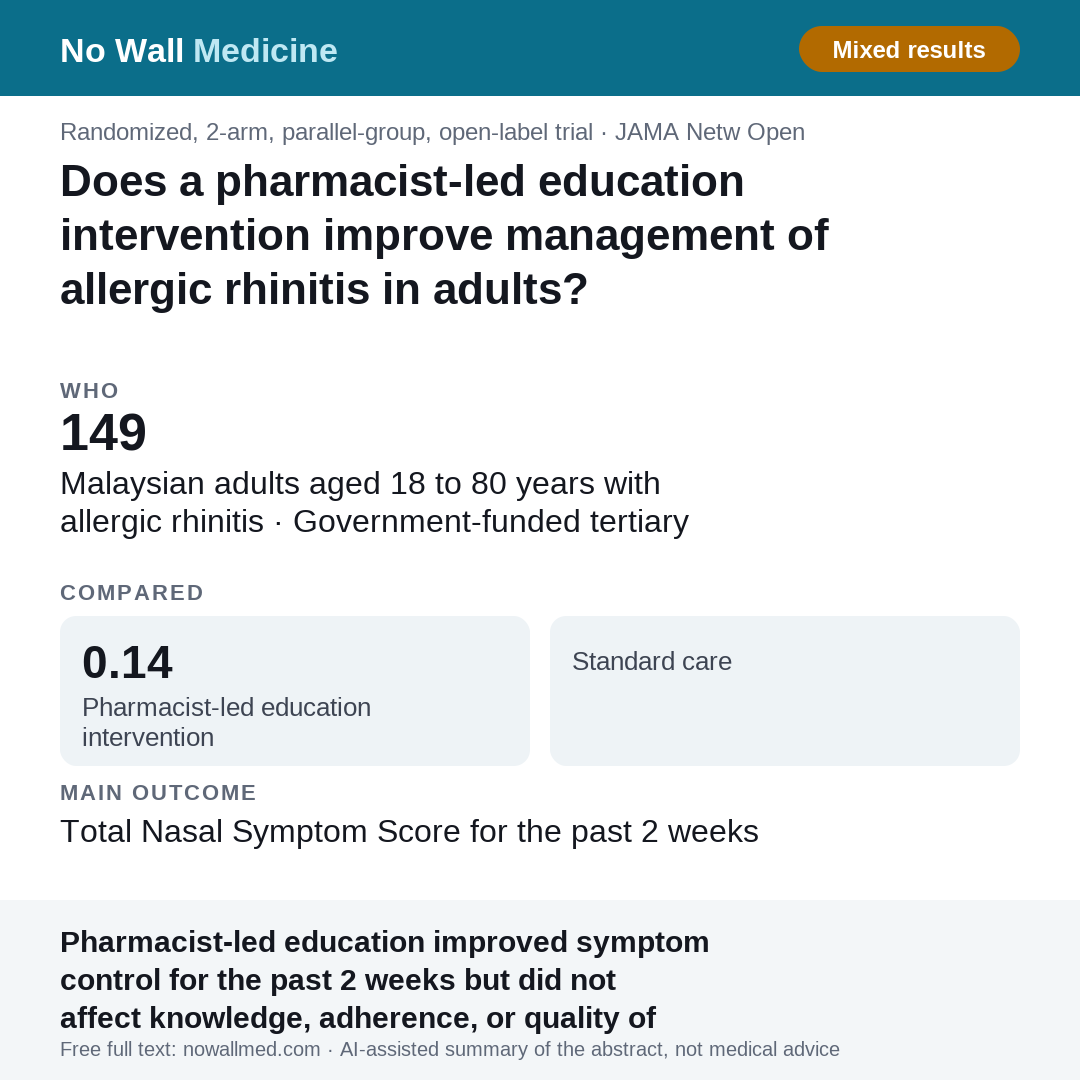
Pharmacist-Led Education Intervention for Adults With Allergic Rhinitis: A Randomized Clinical Trial
Randomized, 2-arm, parallel-group, open-label trialMixed results
Does a pharmacist-led education intervention improve management of allergic rhinitis in adults?
Who
149
Malaysian adults aged 18 to 80 years with allergic rhinitis · Government-funded tertiary referral hospital in northern Malaysia
Compared
0.14Pharmacist-led education intervention (95% CrI, 0.03-0.25)
Standard care
Main outcome
Total Nasal Symptom Score for the past 2 weeks
Result: estimate [SE], 0.14 [0.06]; 95% credible interval [CrI], 0.03-0.25
Bottom line: Pharmacist-led education improved symptom control for the past 2 weeks but did not affect knowledge, adherence, or quality of life.
JAMA Netw Open · 2025-07-01Download image
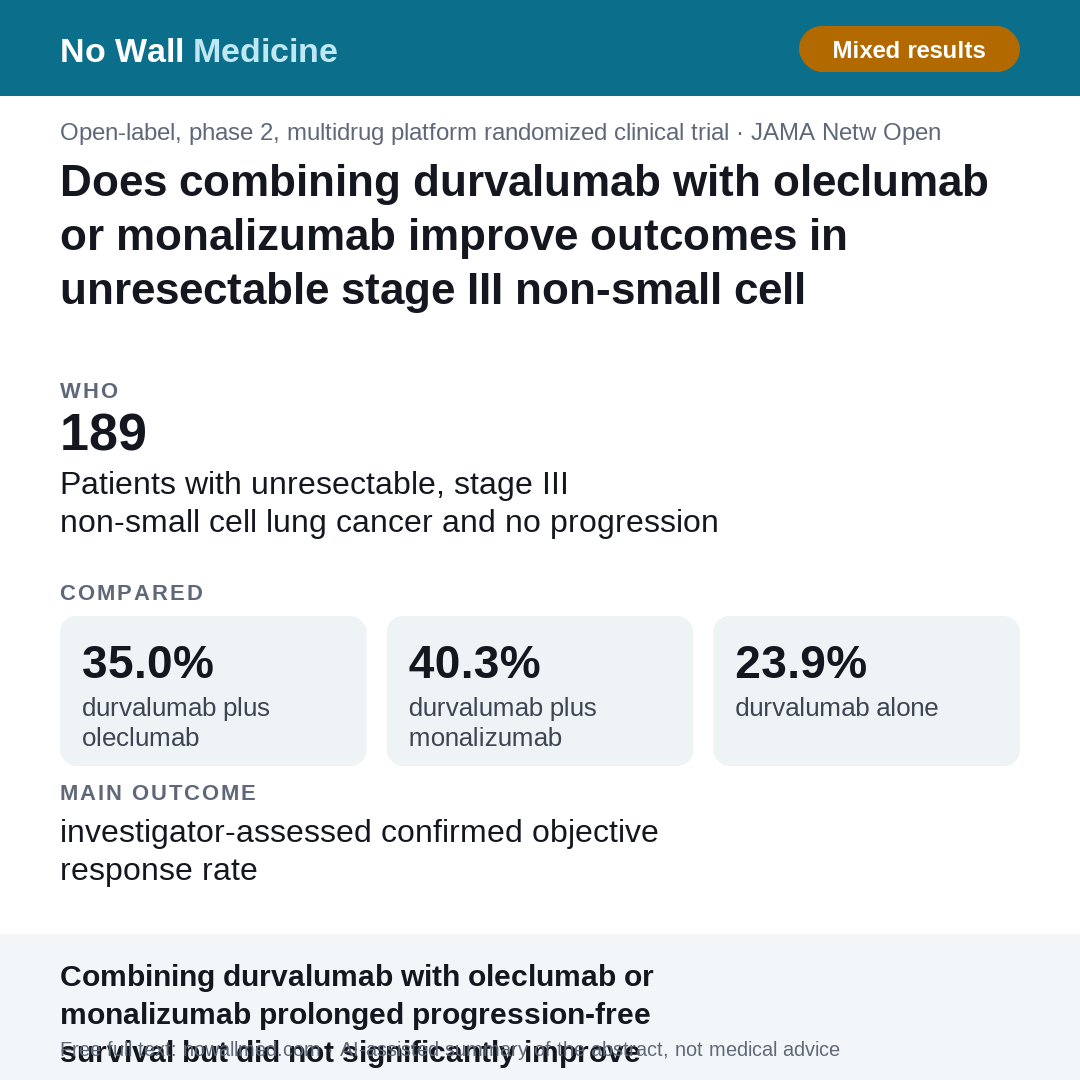
Durvalumab Alone or Combined With Novel Agents for Unresectable Stage III Non-Small Cell Lung Cancer: Update From the COAST Randomized Clinical Trial
Open-label, phase 2, multidrug platform randomized clinical trialMixed results
Does combining durvalumab with oleclumab or monalizumab improve outcomes in unresectable stage III non-small cell lung cancer?
Who
189
Patients with unresectable, stage III non-small cell lung cancer and no progression following chemoradiotherapy · 73 sites globally
Compared
35.0%durvalumab plus oleclumab (95% CI, 23.1%-48.4%)
40.3%durvalumab plus monalizumab (95% CI, 28.1%-53.6%)
23.9%durvalumab alone (95% CI, 14.3%-35.9%)
Main outcome
investigator-assessed confirmed objective response rate
Result: hazard ratio 0.59 (95% CI, 0.37-0.93) for oleclumab and 0.63 (95% CI, 0.40-0.99) for monalizumab for progression-free survival
Bottom line: Combining durvalumab with oleclumab or monalizumab prolonged progression-free survival but did not significantly improve objective response rate or overall survival.
Limitation: The difference in objective response rate was not statistically significant.
JAMA Netw Open · 2025-07-01Download image
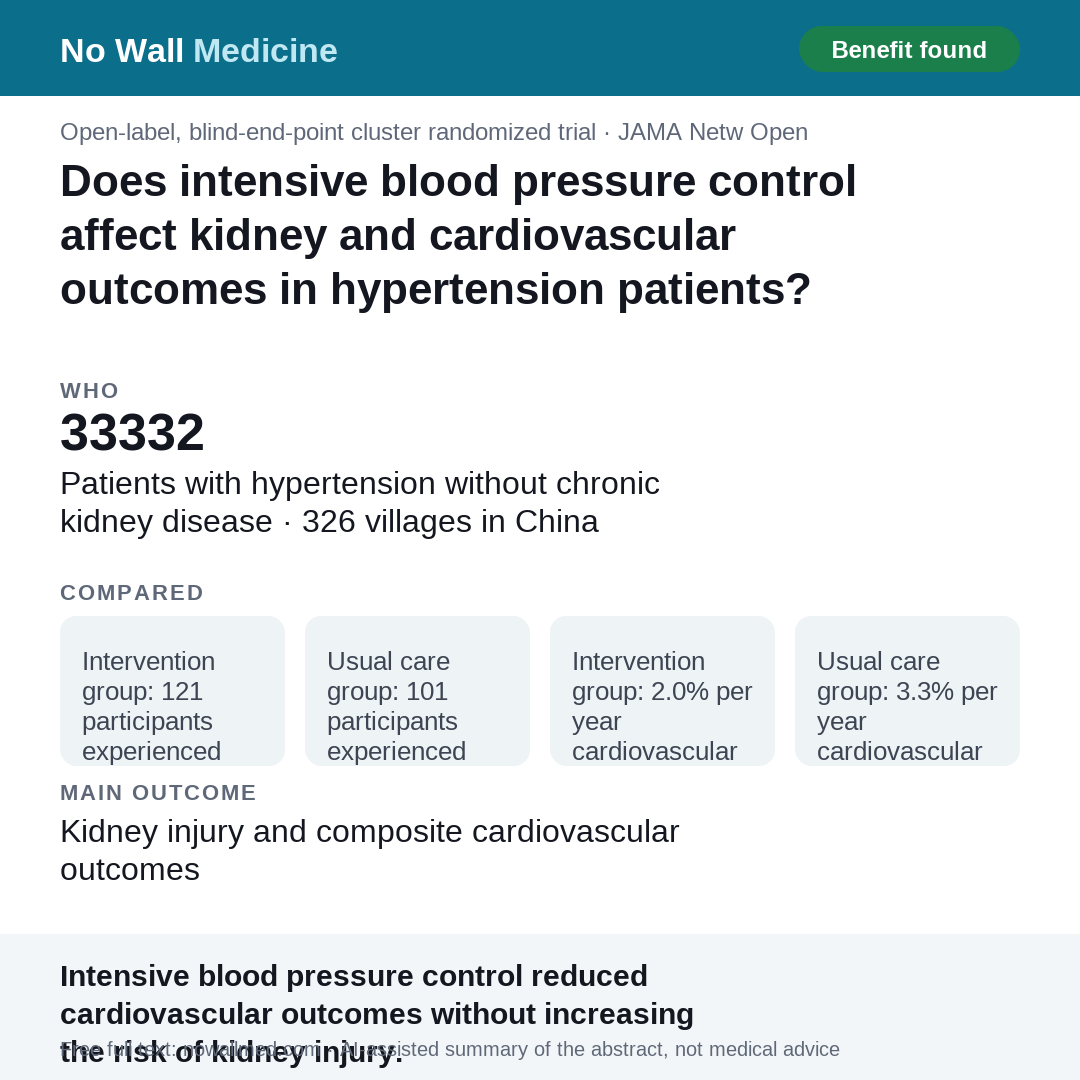
Intensive Systolic Blood Pressure Reduction and Kidney and Cardiovascular Outcomes: A Secondary Analysis of a Randomized Clinical Trial
Open-label, blind-end-point cluster randomized trialBenefit found
Does intensive blood pressure control affect kidney and cardiovascular outcomes in hypertension patients?
Who
33332
Patients with hypertension without chronic kidney disease · 326 villages in China
Compared
Intervention group: 121 participants experienced kidney outcome
Usual care group: 101 participants experienced kidney outcome
Intervention group: 2.0% per year cardiovascular outcome
Usual care group: 3.3% per year cardiovascular outcome
Main outcome
Kidney injury and composite cardiovascular outcomes
Result: hazard ratio 0.57 (95% CI 0.47-0.68)
Bottom line: Intensive blood pressure control reduced cardiovascular outcomes without increasing the risk of kidney injury.
JAMA Netw Open · 2025-07-01Download image
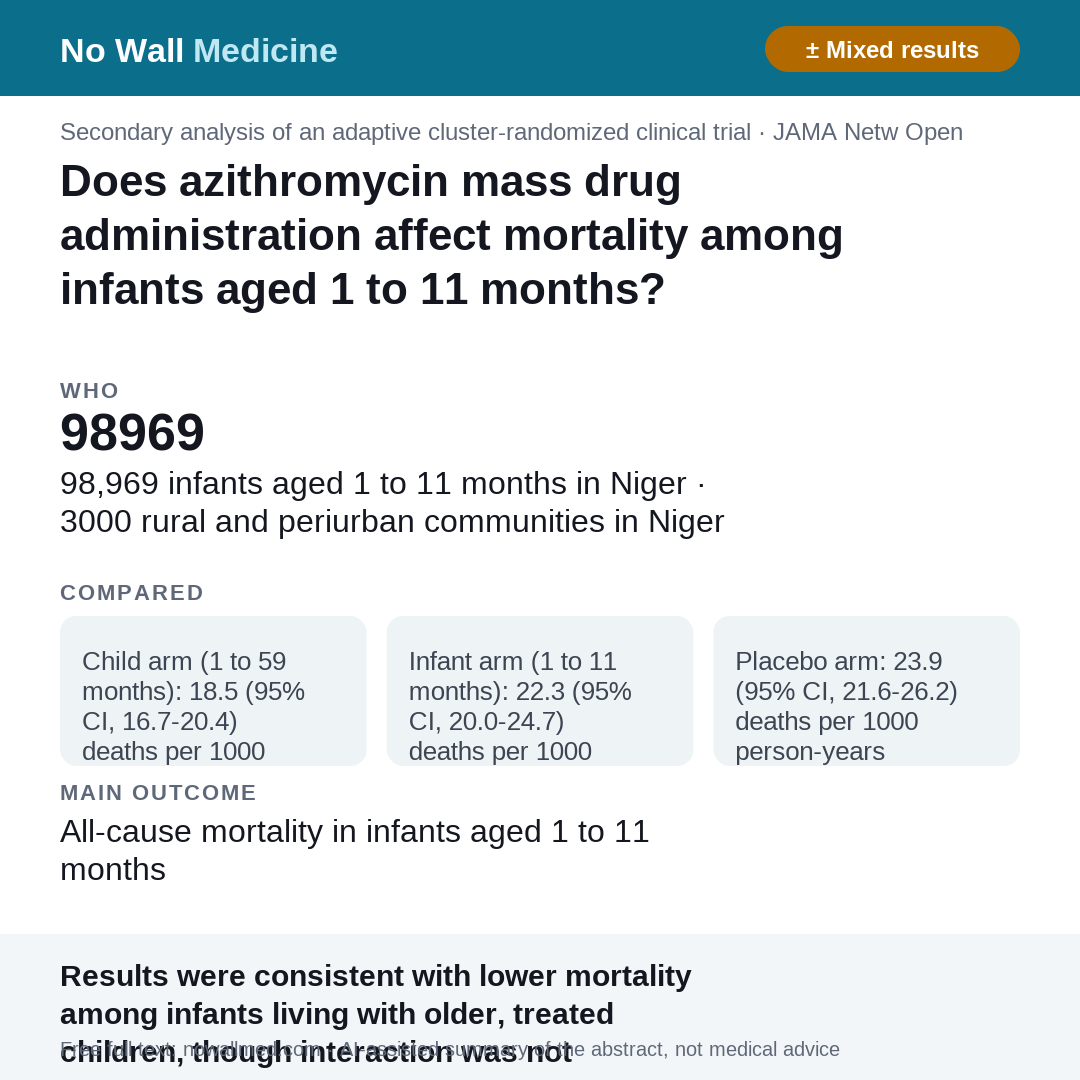
Spillover of Azithromycin Mass Drug Administration and Child Survival: A Secondary Analysis of a Cluster-Randomized Clinical Trial
Secondary analysis of an adaptive cluster-randomized clinical trialMixed results
Does azithromycin mass drug administration affect mortality among infants aged 1 to 11 months?
Who
98969
98,969 infants aged 1 to 11 months in Niger · 3000 rural and periurban communities in Niger
Compared
Child arm (1 to 59 months): 18.5 (95% CI, 16.7-20.4) deaths per 1000 person-years
Infant arm (1 to 11 months): 22.3 (95% CI, 20.0-24.7) deaths per 1000 person-years
Placebo arm: 23.9 (95% CI, 21.6-26.2) deaths per 1000 person-years
Main outcome
All-cause mortality in infants aged 1 to 11 months
Result: incidence rate ratio 0.78 (95% CI, 0.65-0.93)
Bottom line: Results were consistent with lower mortality among infants living with older, treated children, though interaction was not statistically significant.
JAMA Netw Open · 2025-07-01Download image
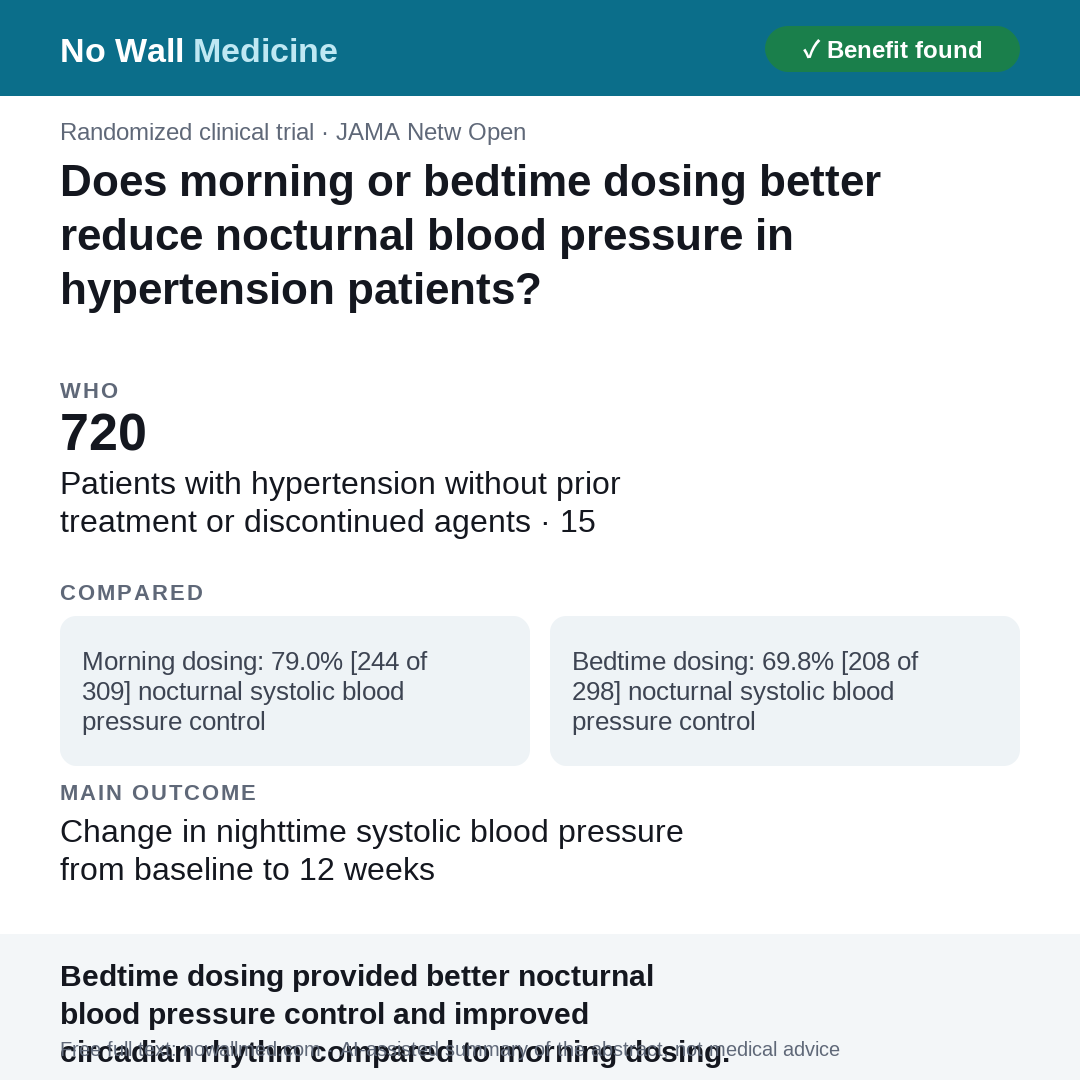
Morning vs Bedtime Dosing and Nocturnal Blood Pressure Reduction in Patients With Hypertension: The OMAN Randomized Clinical Trial
Randomized clinical trialBenefit found
Does morning or bedtime dosing better reduce nocturnal blood pressure in hypertension patients?
Who
720
Patients with hypertension without prior treatment or discontinued agents · 15 hospitals in China
Compared
Morning dosing: 79.0% [244 of 309] nocturnal systolic blood pressure control
Bedtime dosing: 69.8% [208 of 298] nocturnal systolic blood pressure control
Main outcome
Change in nighttime systolic blood pressure from baseline to 12 weeks
Result: -3.0 mm Hg (95% CI, -5.1 to -1.0 mm Hg)
Bottom line: Bedtime dosing provided better nocturnal blood pressure control and improved circadian rhythm compared to morning dosing.
JAMA Netw Open · 2025-07-01Download image