Visual abstracts
New randomized trials and meta-analyses from leading journals at a glance: who was studied, what was compared, and what was found. Every paper is free to read in full.
All specialtiesCardiology 4763Oncology 4042Gastroenterology & Hepatology 1902Infectious Disease 3756Neurology 1872Psychiatry & Mental Health 2214Pulmonology 2042Critical Care 1319Endocrinology & Diabetes 2544Pediatrics 2889Surgery 2479Orthopedics & Sports Medicine 917Neurosurgery 525Cardiothoracic & Vascular Surgery 656Plastic & Reconstructive Surgery 574Nephrology 1107Rheumatology 810Hematology 1090Dermatology 611Ophthalmology 532Obstetrics & Gynecology 1645Public & Global Health 1037Radiology & Imaging 617Anesthesiology 957Urology 745ENT (Otolaryngology) 494Emergency Medicine 481Allergy & Immunology 309Geriatrics 972Family Medicine & Primary Care 533Medical Genetics & Genomics 659Pathology & Laboratory Medicine 156Physical Medicine & Rehabilitation 734Palliative Care 421Nutrition 1560Digital Health & AI 2133General Medicine 318
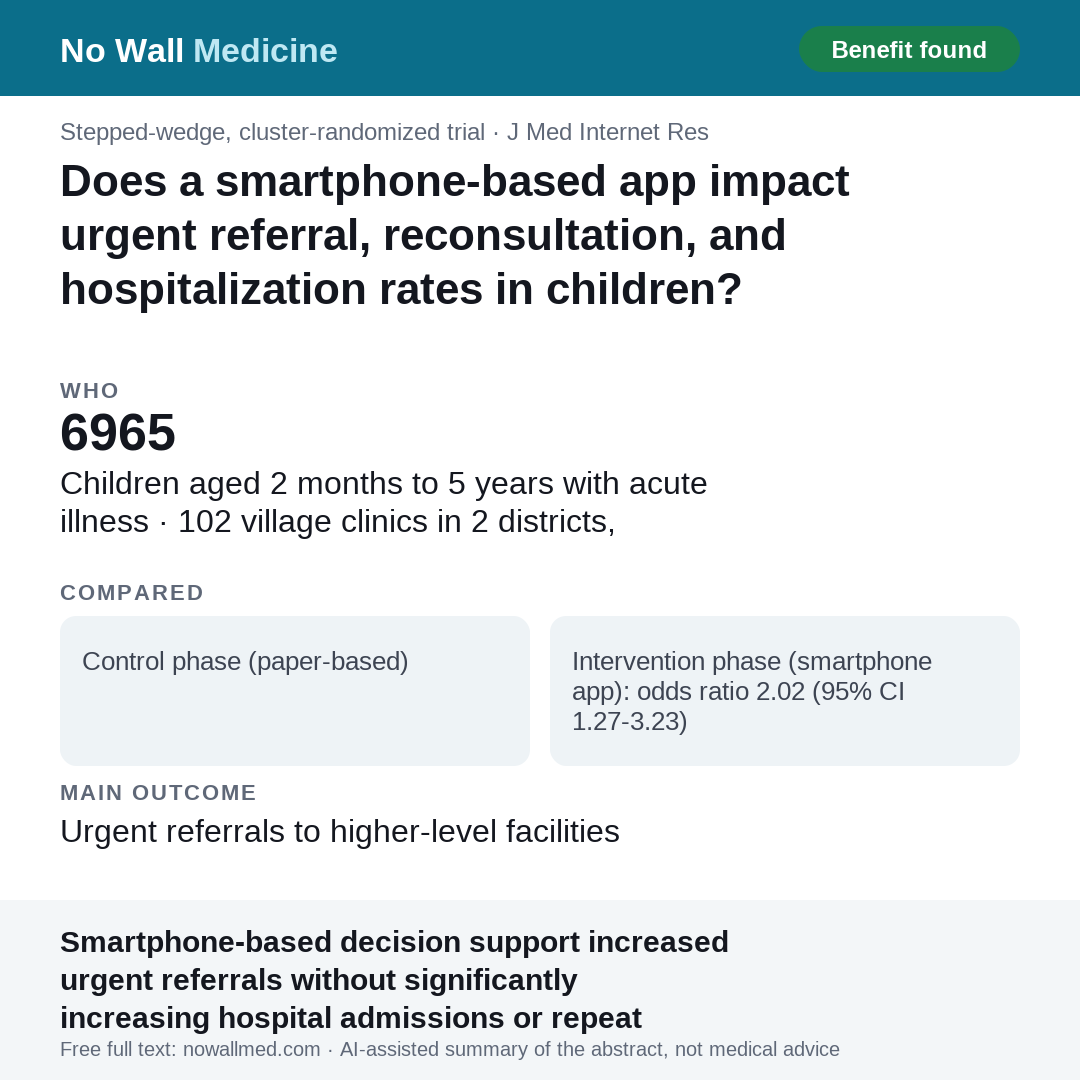
Effectiveness of Smartphone-Based Community Case Management on the Urgent Referral, Reconsultation, and Hospitalization of Children Aged Under 5 Years in Malawi: Cluster-Randomized, Stepped-Wedge Trial
Stepped-wedge, cluster-randomized trialBenefit found
Does a smartphone-based app impact urgent referral, reconsultation, and hospitalization rates in children?
Who
6965
Children aged 2 months to 5 years with acute illness · 102 village clinics in 2 districts, northern Malawi
Compared
Control phase (paper-based)
Intervention phase (smartphone app): odds ratio 2.02 (95% CI 1.27-3.23)
Main outcome
Urgent referrals to higher-level facilities
Result: odds ratio 2.02 (95% CI 1.27-3.23)
Bottom line: Smartphone-based decision support increased urgent referrals without significantly increasing hospital admissions or repeat consultations.
J Med Internet Res · 2021-10-20Download image
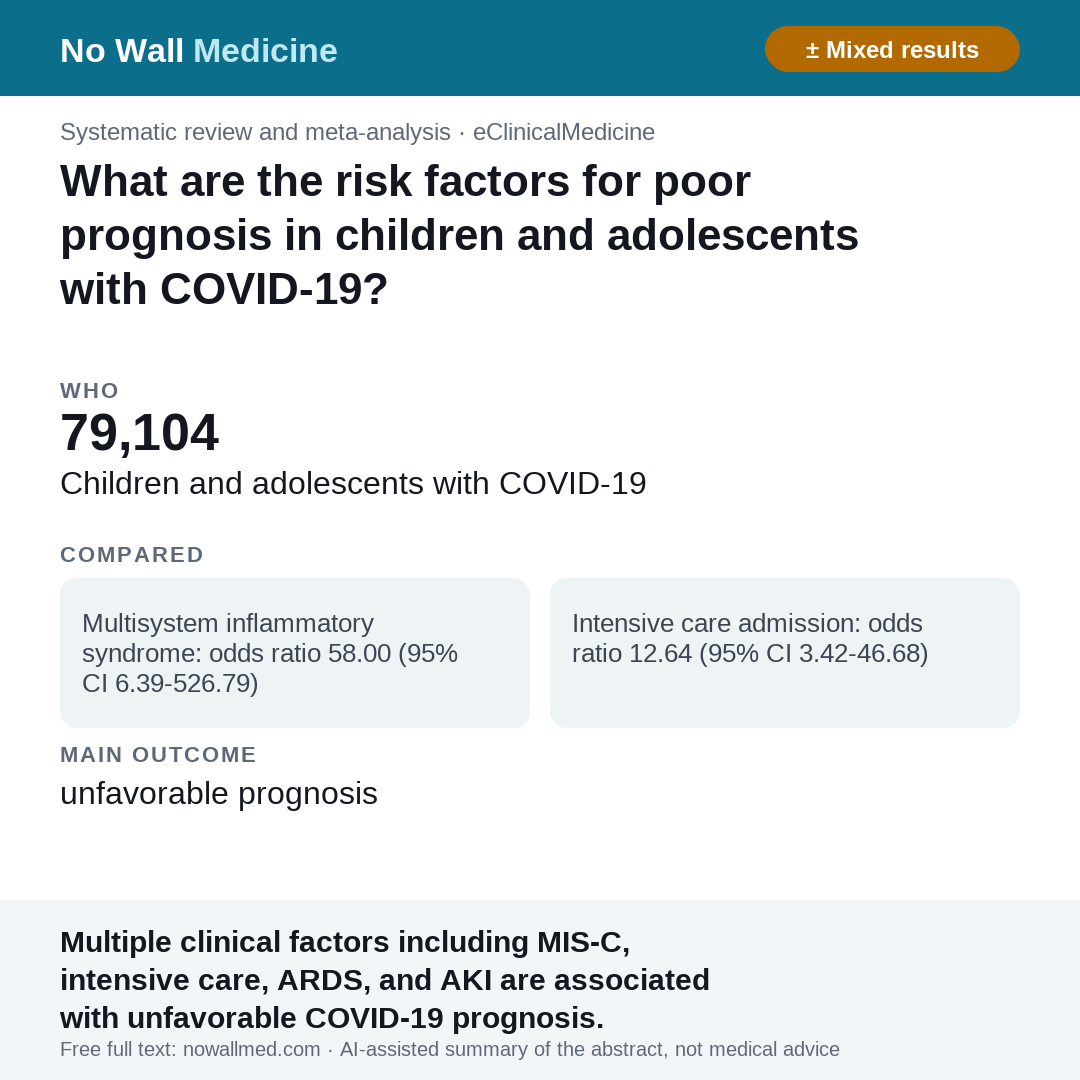
Risk factors for poor prognosis in children and adolescents with COVID-19: A systematic review and meta-analysis
Systematic review and meta-analysisMixed results
What are the risk factors for poor prognosis in children and adolescents with COVID-19?
Who
79,104
Children and adolescents with COVID-19
Compared
Multisystem inflammatory syndrome: odds ratio 58.00 (95% CI 6.39-526.79)
Intensive care admission: odds ratio 12.64 (95% CI 3.42-46.68)
Main outcome
unfavorable prognosis
Bottom line: Multiple clinical factors including MIS-C, intensive care, ARDS, and AKI are associated with unfavorable COVID-19 prognosis.
eClinicalMedicine · 2021-10-19Download image
A Systematic Review of Clinical Prediction Rules to Predict Hospitalisation in Children with Lower Respiratory Infection in Primary Care and their Validation in a New Cohort
Systematic review and cohort validationMixed results
Can clinical prediction rules predict hospitalisation in children with lower respiratory tract infection?
Who
Children aged 2-59 months with WHO-defined pneumonia · Two primary care facilities in Mzuzu, Malawi
Compared
STARWAVe rule for hospitalisation: area under the curve 0.80 (95% C.I 0.75-0.85)
STARWAVe rule for bacterial pneumonia: area under the curve 0.39 (95% C.I 0.25-0.54)
Main outcome
hospitalisation and confirmed diagnosis of bacterial pneumonia
Bottom line: The STARWAVe rule predicts hospitalisation well but poorly predicts confirmed bacterial pneumonia in this cohort.
Limitation: absence of a gold standard indicator for bacterial lower respiratory tract infection
eClinicalMedicine · 2021-10-18Download image

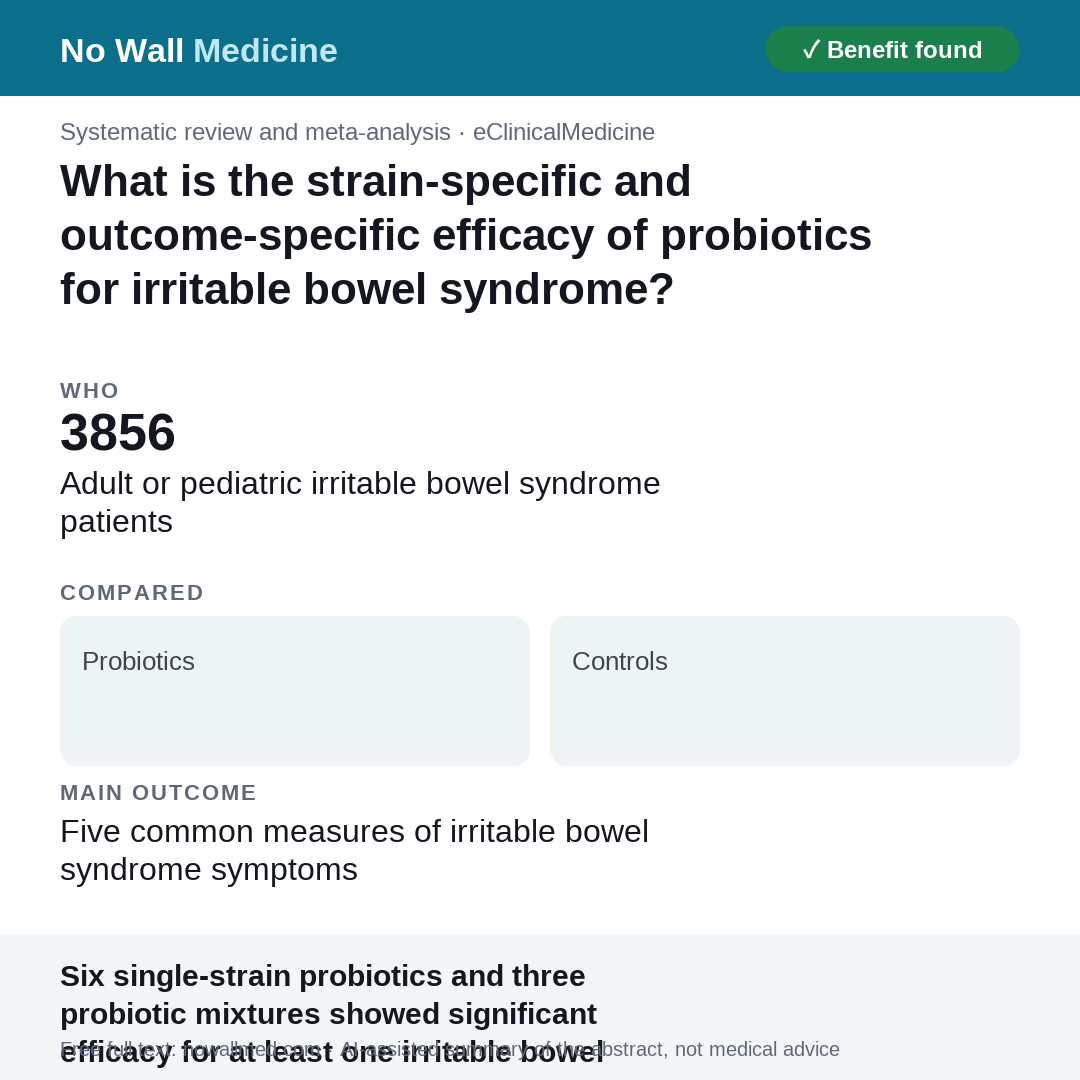
Strain-specific and outcome-specific efficacy of probiotics for the treatment of irritable bowel syndrome: A systematic review and meta-analysis
Systematic review and meta-analysisBenefit found
What is the strain-specific and outcome-specific efficacy of probiotics for irritable bowel syndrome?
Who
3856
Adult or pediatric irritable bowel syndrome patients
Compared
Probiotics
Controls
Main outcome
Five common measures of irritable bowel syndrome symptoms
Bottom line: Six single-strain probiotics and three probiotic mixtures showed significant efficacy for at least one irritable bowel syndrome outcome measure.
Limitation: Diversity of irritable bowel syndrome outcomes used and lack of confirmatory trials for some strains.
eClinicalMedicine · 2021-10-18Download image
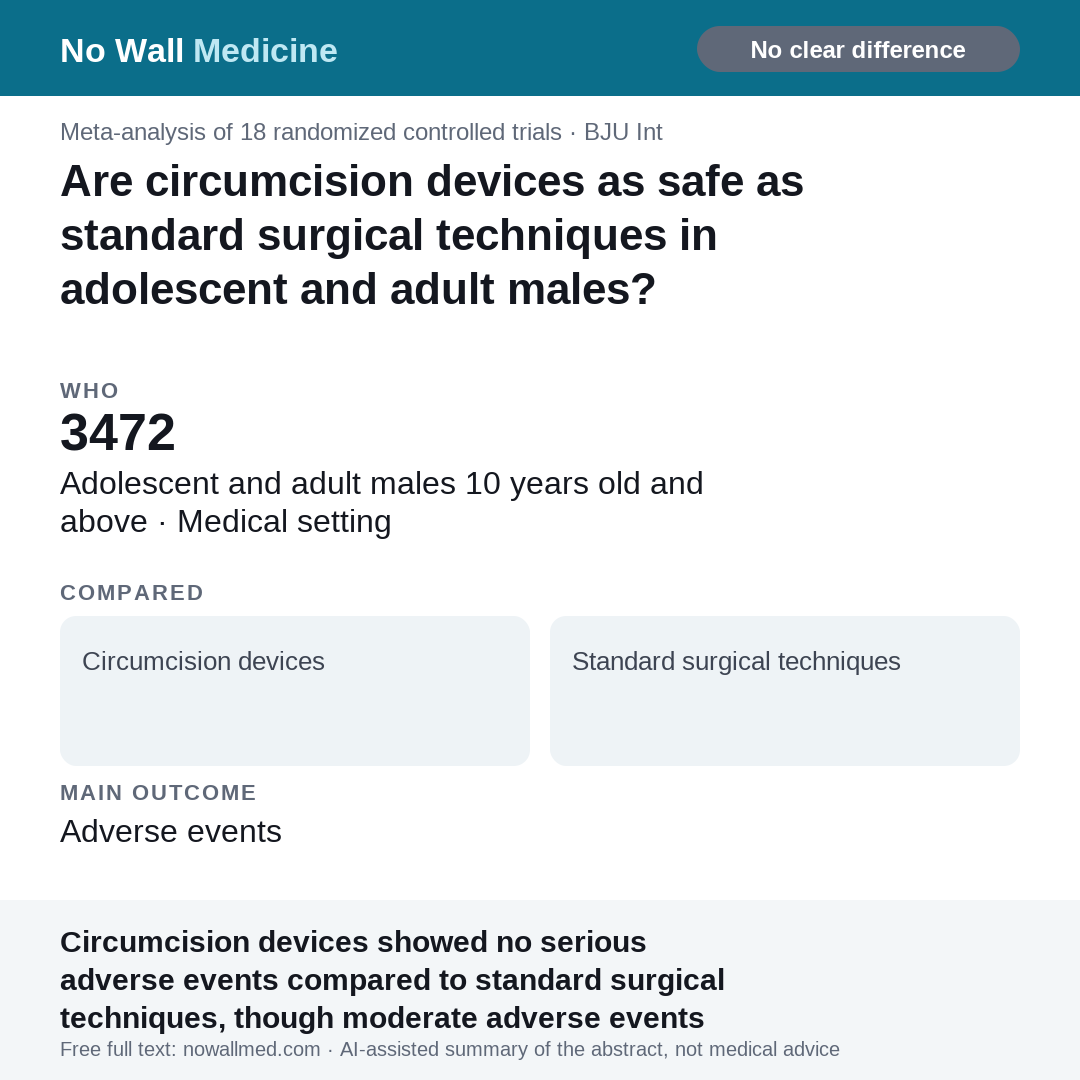
Circumcision devices versus standard surgical techniques in adolescent and adult male circumcisions: a Cochrane review
Meta-analysis of 18 randomized controlled trialsNo clear difference
Are circumcision devices as safe as standard surgical techniques in adolescent and adult males?
Who
3472
Adolescent and adult males 10 years old and above · Medical setting
Compared
Circumcision devices
Standard surgical techniques
Main outcome
Adverse events
Result: moderate adverse events RR 1.31 (95% CI 0.55-3.10); mild adverse events RR 1.09 (95% CI 0.44-2.72)
Bottom line: Circumcision devices showed no serious adverse events compared to standard surgical techniques, though moderate adverse events may slightly increase.
BJU Int · 2021-10-18Download image
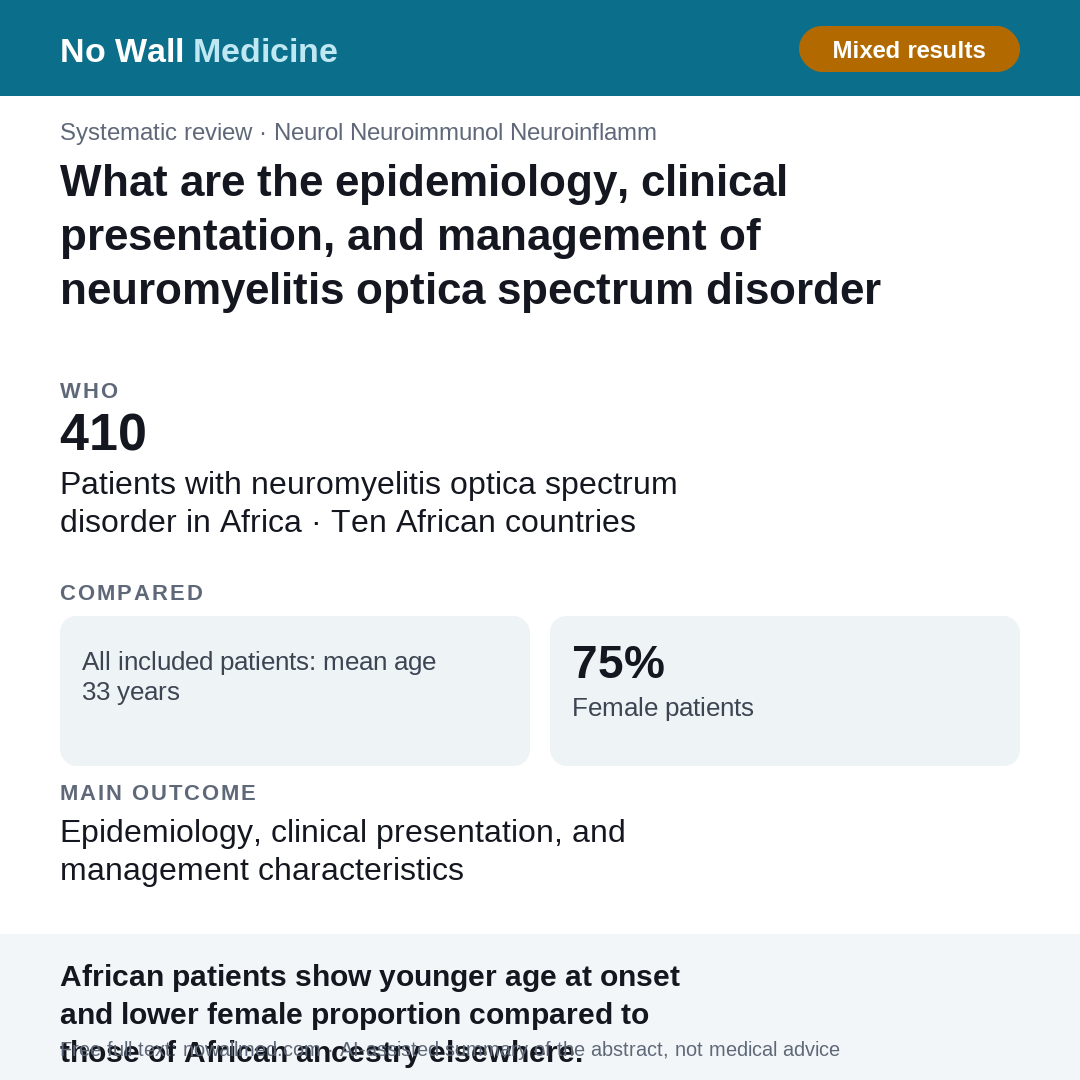
Neuromyelitis Optica Spectrum Disorders in Africa: A Systematic Review
Systematic reviewMixed results
What are the epidemiology, clinical presentation, and management of neuromyelitis optica spectrum disorder in Africa?
Who
410
Patients with neuromyelitis optica spectrum disorder in Africa · Ten African countries
Compared
All included patients: mean age 33 years
75%Female patients
Main outcome
Epidemiology, clinical presentation, and management characteristics
Bottom line: African patients show younger age at onset and lower female proportion compared to those of African ancestry elsewhere.
Neurol Neuroimmunol Neuroinflamm · 2021-10-18Download image
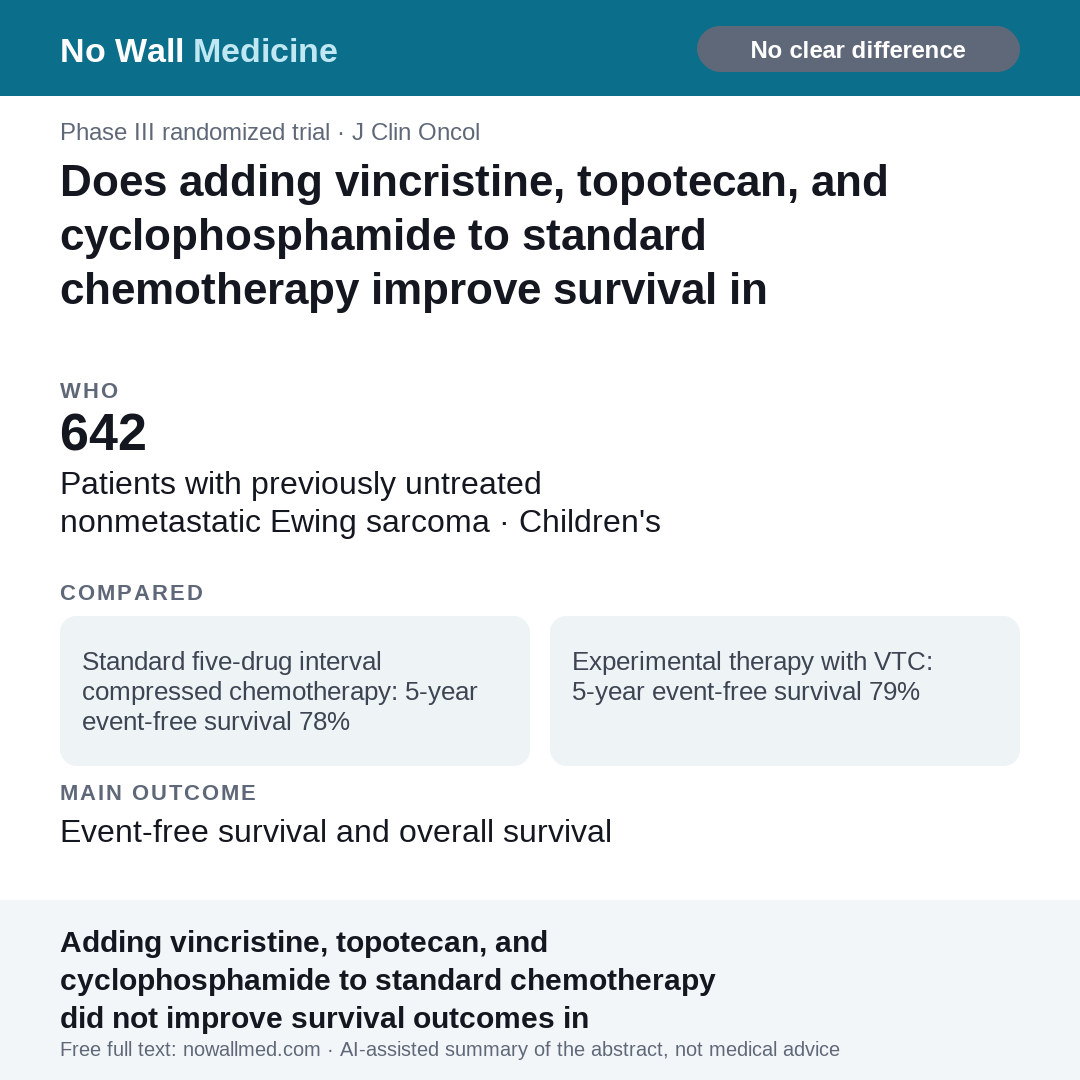
Phase III Trial Adding Vincristine-Topotecan-Cyclophosphamide to the Initial Treatment of Patients With Nonmetastatic Ewing Sarcoma: A Children's Oncology Group Report
Phase III randomized trialNo clear difference
Does adding vincristine, topotecan, and cyclophosphamide to standard chemotherapy improve survival in nonmetastatic Ewing sarcoma?
Who
642
Patients with previously untreated nonmetastatic Ewing sarcoma · Children's Oncology Group
Compared
Standard five-drug interval compressed chemotherapy: 5-year event-free survival 78%
Experimental therapy with VTC: 5-year event-free survival 79%
Main outcome
Event-free survival and overall survival
Bottom line: Adding vincristine, topotecan, and cyclophosphamide to standard chemotherapy did not improve survival outcomes in nonmetastatic Ewing sarcoma.
J Clin Oncol · 2021-10-15Download image
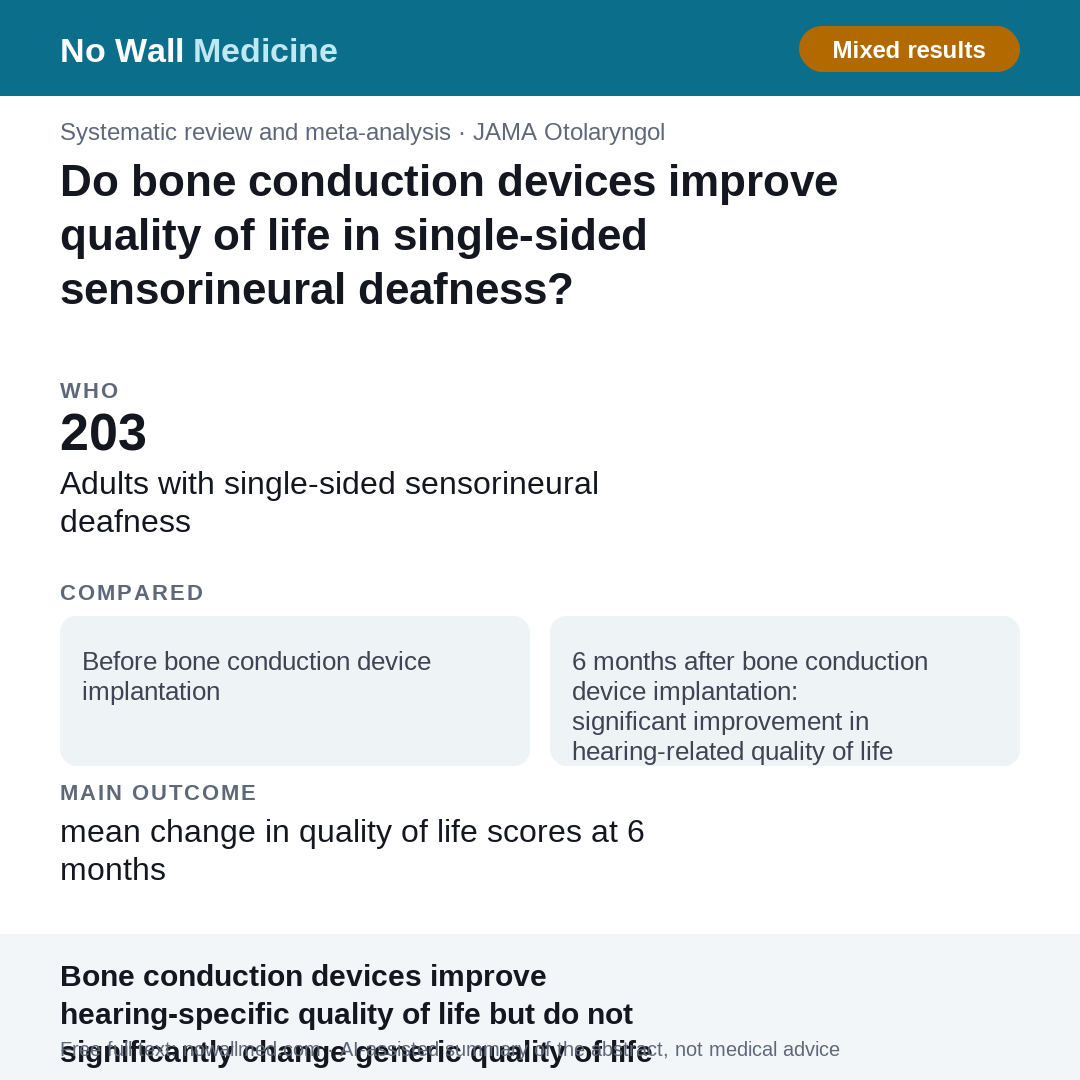
Association of Bone Conduction Devices for Single-Sided Sensorineural Deafness With Quality of Life: A Systematic Review and Meta-analysis
Systematic review and meta-analysis of 11 studiesKey finding
Association of bone conduction devices with quality of life in single-sided deafness
Who
203
Adults with single-sided sensorineural deafness undergoing unilateral bone conduction device implantation
Compared
15.50Bone conduction device (95% CI, 12.63-18.36)
No device
Main outcome
Mean change in quality of life scores at 6 months
Result: mean change, 15.50; 95% CI, 12.63-18.36
Bottom line: Bone conduction devices were linked to improved hearing-specific quality of life but not generic quality of life.
Limitation: Heterogeneous bone conduction devices and low to moderate risk of bias
JAMA Otolaryngol · 2021-10-15Download image
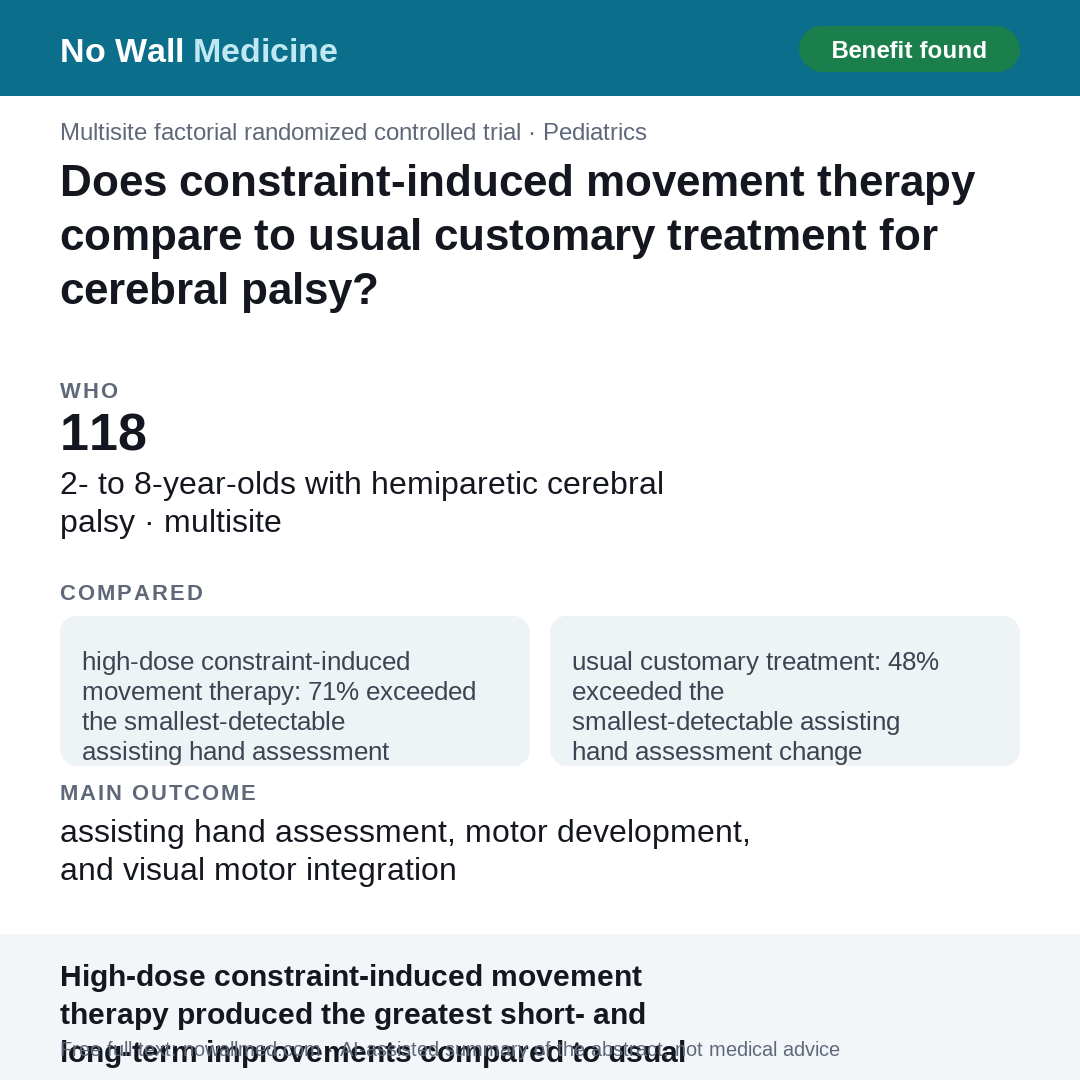
Constraint-Induced Movement Therapy for Cerebral Palsy: A Randomized Trial
Multisite factorial randomized controlled trialBenefit found
Does constraint-induced movement therapy compare to usual customary treatment for cerebral palsy?
Who
118
2- to 8-year-olds with hemiparetic cerebral palsy · multisite
Compared
high-dose constraint-induced movement therapy: 71% exceeded the smallest-detectable assisting hand assessment change
usual customary treatment: 48% exceeded the smallest-detectable assisting hand assessment change
Main outcome
assisting hand assessment, motor development, and visual motor integration
Bottom line: High-dose constraint-induced movement therapy produced the greatest short- and long-term improvements compared to usual customary treatment.
Pediatrics · 2021-10-14Download image
Prognostic factors for severe and recurrent Clostridioides difficile infection: a systematic review
Systematic review of cohort and case-control studiesUnclear result
What clinical prognostic factors are associated with severe or recurrent Clostridioides difficile infection?
Who
Patients 18 years or older diagnosed with Clostridioides difficile infection
Compared
Severe Clostridioides difficile infection
Recurrent Clostridioides difficile infection
Main outcome
Risk of severe or recurrent Clostridioides difficile infection
Bottom line: Age, comorbidities, healthcare-associated infection, and proton pump inhibitors are associated with infection risks.
Limitation: Future studies need standardized definitions and systematic reporting to allow for meaningful meta-analysis.
Clin Microbiol Infect · 2021-10-14Download image

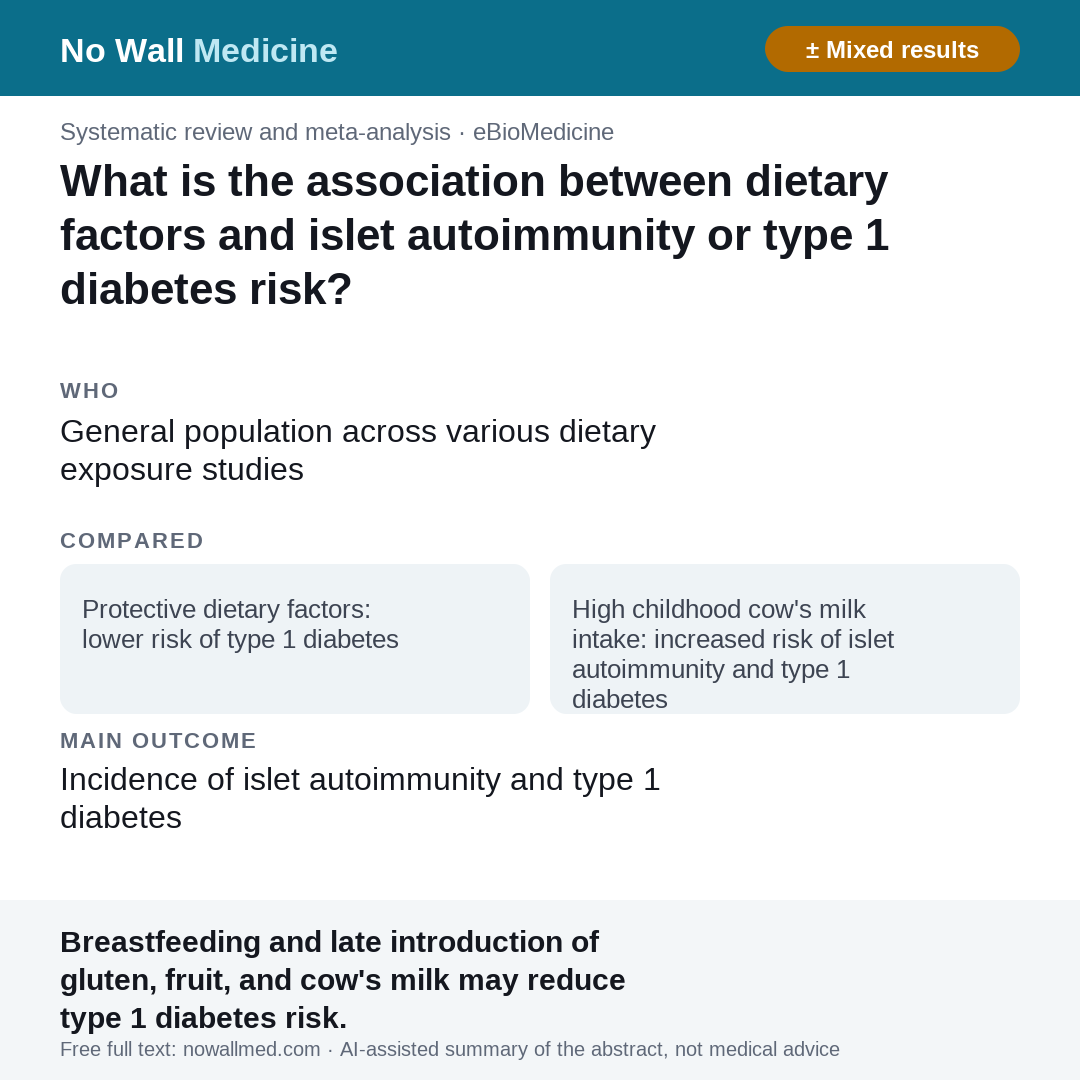
Dietary factors and risk of islet autoimmunity and type 1 diabetes: a systematic review and meta-analysis
Systematic review and meta-analysisMixed results
What is the association between dietary factors and islet autoimmunity or type 1 diabetes risk?
Who
General population across various dietary exposure studies
Compared
Protective dietary factors: lower risk of type 1 diabetes
High childhood cow's milk intake: increased risk of islet autoimmunity and type 1 diabetes
Main outcome
Incidence of islet autoimmunity and type 1 diabetes
Bottom line: Breastfeeding and late introduction of gluten, fruit, and cow's milk may reduce type 1 diabetes risk.
Limitation: For remaining dietary factors, there was no association or evidence was of low certainty.
Funded by: Swedish Research Council, FORTE, Novo Nordisk Foundation, Swedish Diabetes Foundation
eBioMedicine · 2021-10-14Download image
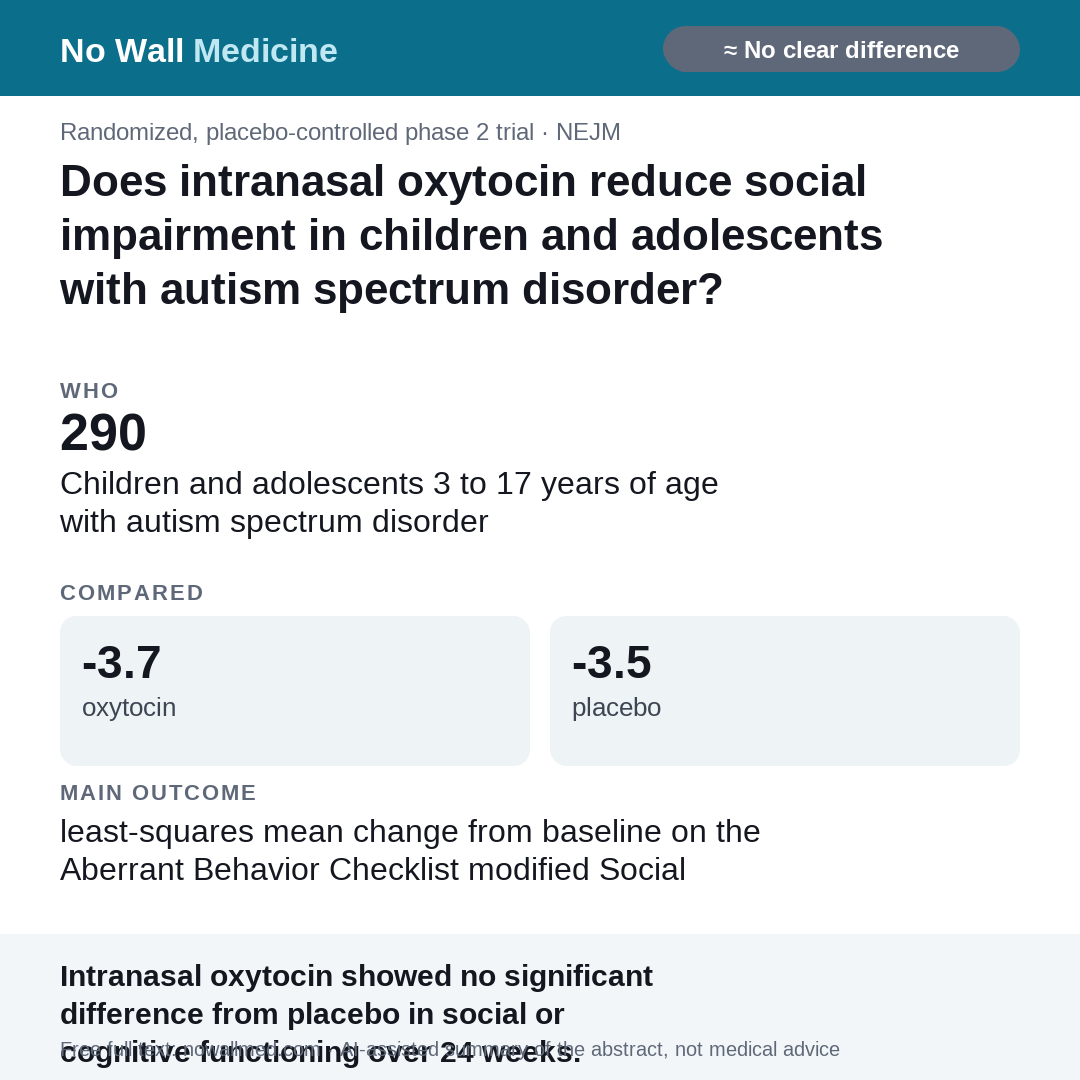
Intranasal Oxytocin in Children and Adolescents with Autism Spectrum Disorder
Randomized, placebo-controlled phase 2 trialNo clear difference
Does intranasal oxytocin reduce social impairment in children and adolescents with autism spectrum disorder?
Who
290
Children and adolescents 3 to 17 years of age with autism spectrum disorder
Compared
-3.7oxytocin
-3.5placebo
Main outcome
least-squares mean change from baseline on the Aberrant Behavior Checklist modified Social Withdrawal subscale
Result: least-squares mean difference, -0.2 (95% confidence interval, -1.5 to 1.0)
Bottom line: Intranasal oxytocin showed no significant difference from placebo in social or cognitive functioning over 24 weeks.
Funded by: National Institute of Child Health and Human Development
NEJM · 2021-10-13Download image
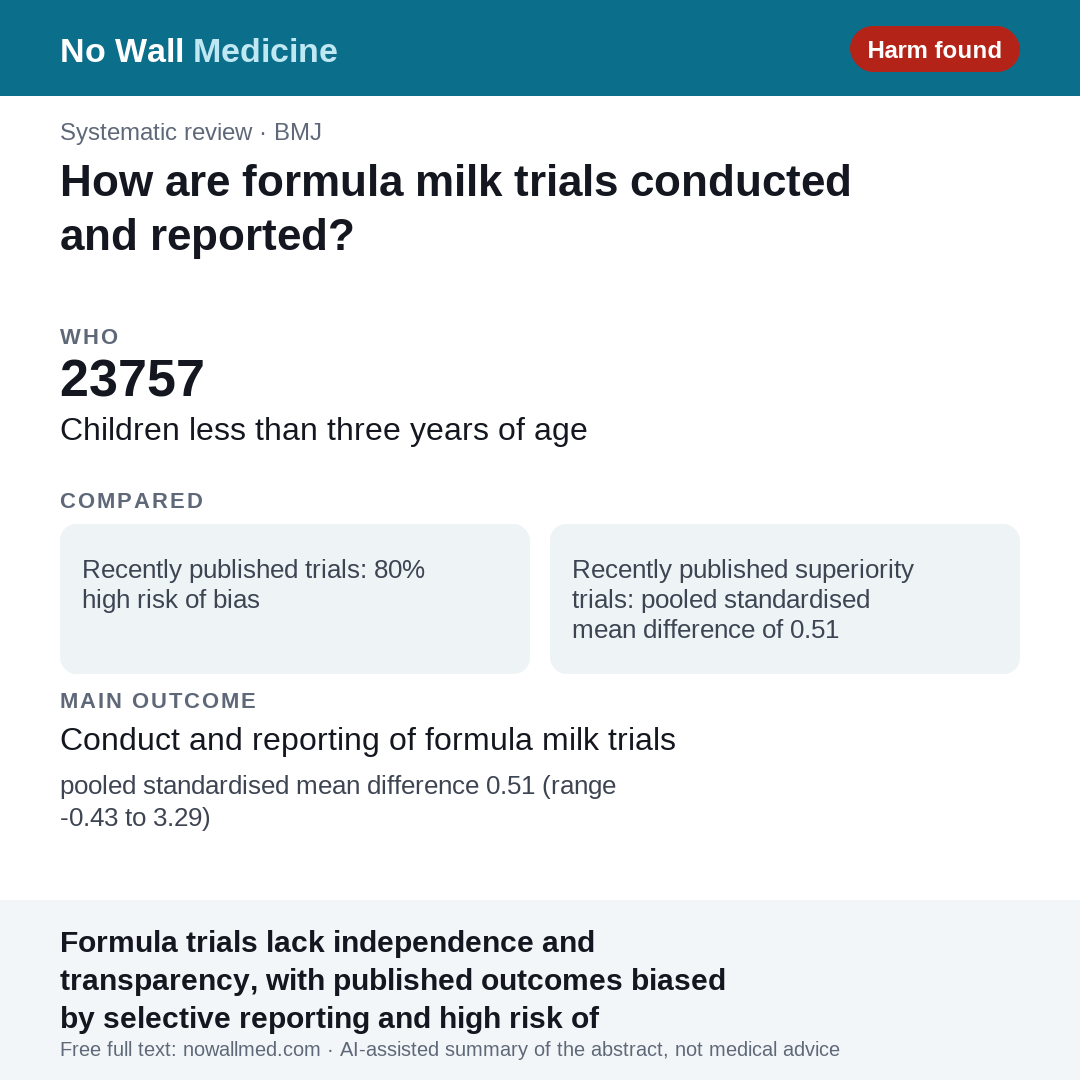
Conduct and reporting of formula milk trials: systematic review
Systematic reviewHarm found
How are formula milk trials conducted and reported?
Who
23757
Children less than three years of age
Compared
Recently published trials: 80% high risk of bias
Recently published superiority trials: pooled standardised mean difference of 0.51
Main outcome
Conduct and reporting of formula milk trials
Result: pooled standardised mean difference 0.51 (range -0.43 to 3.29)
Bottom line: Formula trials lack independence and transparency, with published outcomes biased by selective reporting and high risk of bias.
BMJ · 2021-10-13Download image
Life Expectancy in Duchenne Muscular Dystrophy: Reproduced Individual Patient Data Meta-analysis
Individual patient data meta-analysisKey finding
What is the life expectancy and mortality rate in Duchenne muscular dystrophy?
Who
2283
Patients with Duchenne muscular dystrophy
Compared
All patients: median life expectancy 22.0 years (95% CI 21.2, 22.4)
Patients born after 1990: median life expectancy 28.1 years (95% CI 25.1, 30.3)
Main outcome
Median life expectancy
Bottom line: Life expectancy for Duchenne muscular dystrophy patients has markedly increased in more recent birth cohorts.
Limitation: Absence of large-scale prospective cohort studies or trials reporting mortality data.
Neurology · 2021-10-13Download image

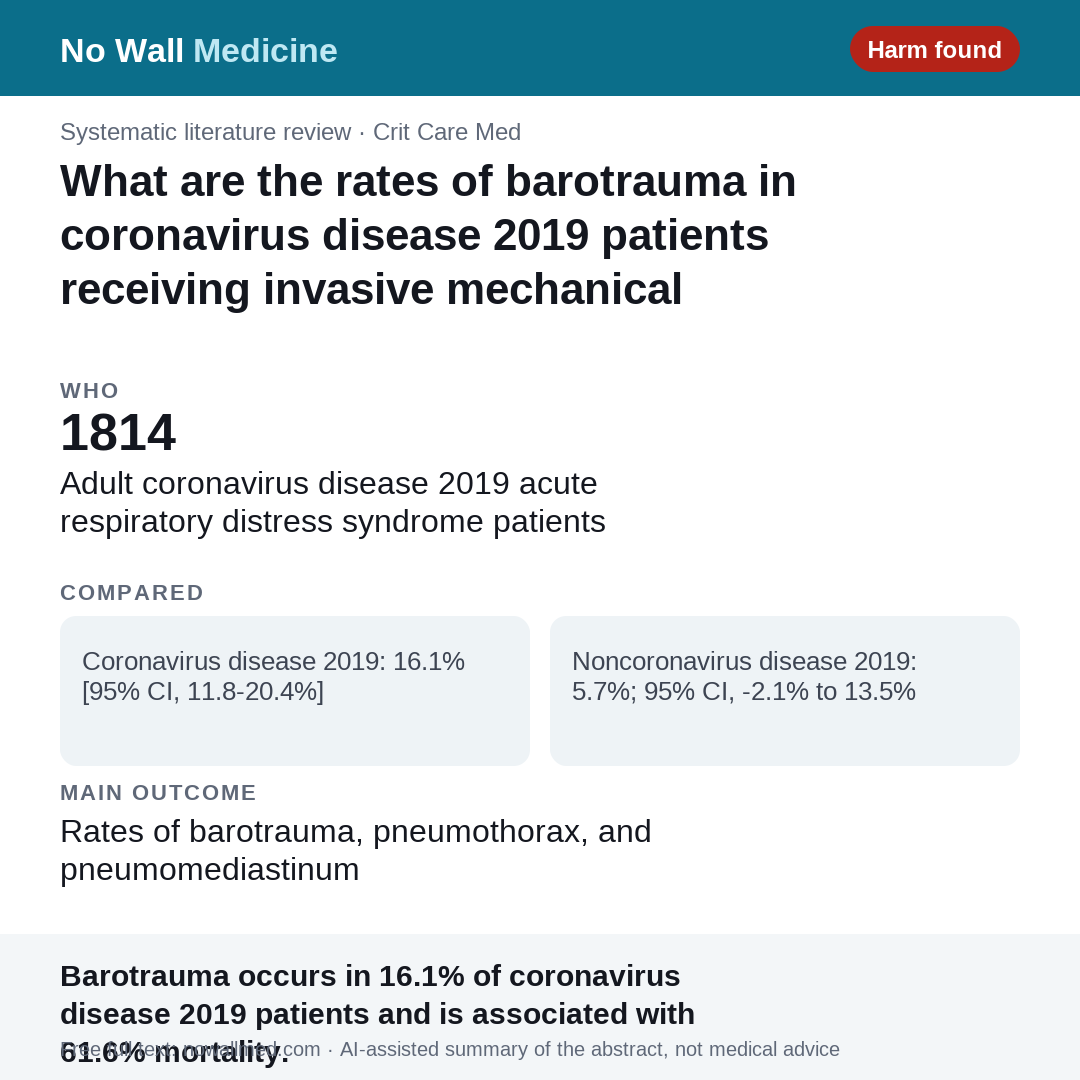
Barotrauma in Coronavirus Disease 2019 Patients Undergoing Invasive Mechanical Ventilation: A Systematic Literature Review
Systematic literature reviewHarm found
What are the rates of barotrauma in coronavirus disease 2019 patients receiving invasive mechanical ventilation?
Who
1814
Adult coronavirus disease 2019 acute respiratory distress syndrome patients receiving invasive mechanical ventilation
Compared
Coronavirus disease 2019: 16.1% [95% CI, 11.8-20.4%]
Noncoronavirus disease 2019: 5.7%; 95% CI, -2.1% to 13.5%
Main outcome
Rates of barotrauma, pneumothorax, and pneumomediastinum
Bottom line: Barotrauma occurs in 16.1% of coronavirus disease 2019 patients and is associated with 61.6% mortality.
Crit Care Med · 2021-10-13Download image
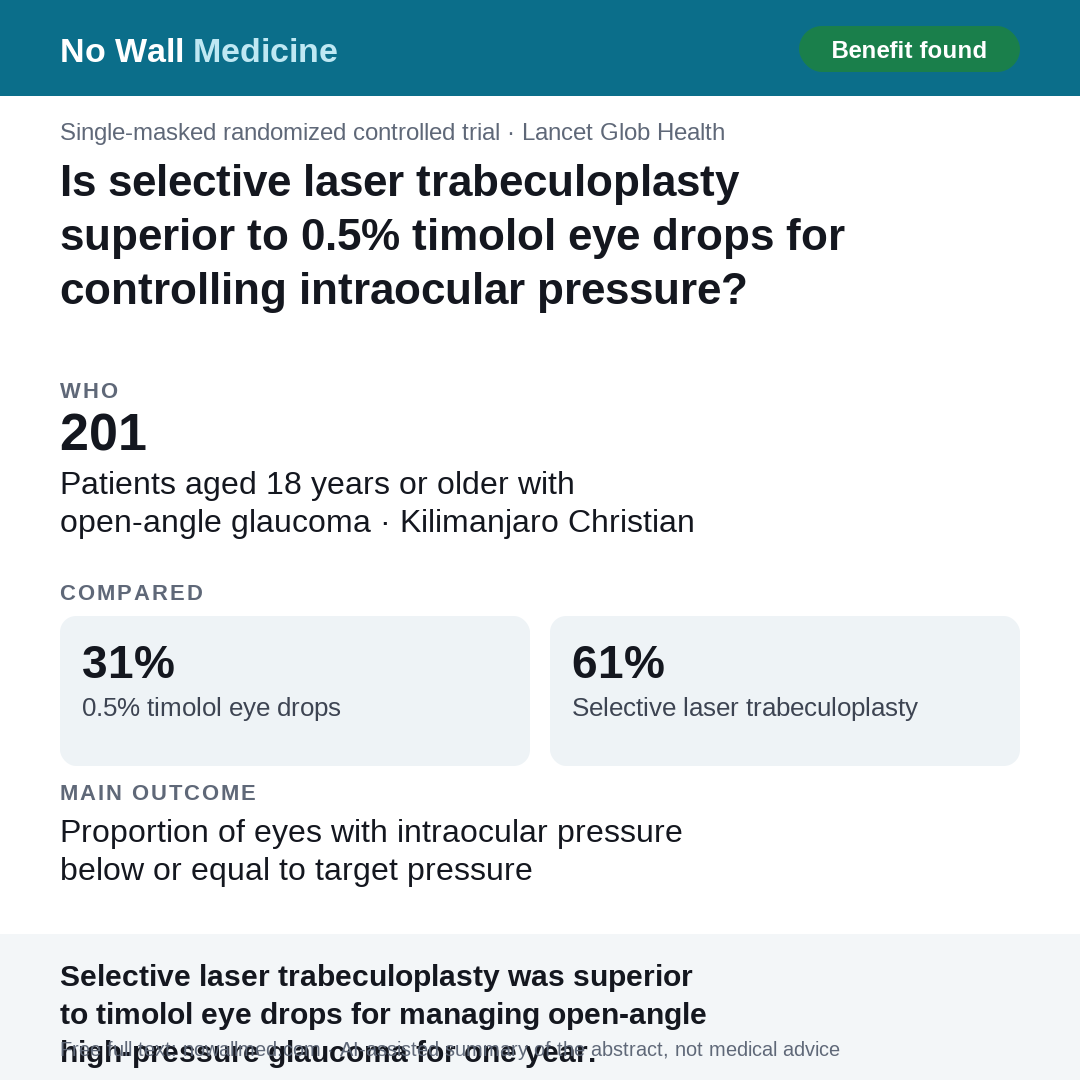
Selective laser trabeculoplasty versus 0·5% timolol eye drops for the treatment of glaucoma in Tanzania: a randomised controlled trial
Single-masked randomized controlled trialBenefit found
Is selective laser trabeculoplasty superior to 0.5% timolol eye drops for controlling intraocular pressure?
Who
201
Patients aged 18 years or older with open-angle glaucoma · Kilimanjaro Christian Medical Centre, Moshi, Tanzania
Compared
31%0.5% timolol eye drops (55/176)
61%Selective laser trabeculoplasty (99/163)
Main outcome
Proportion of eyes with intraocular pressure below or equal to target pressure
Result: odds ratio 3.37 (95% CI 1.96-5.80)
Bottom line: Selective laser trabeculoplasty was superior to timolol eye drops for managing open-angle high-pressure glaucoma for one year.
Funded by: Christian Blind Mission, Seeing is Believing Innovation Fund, and Wellcome Trust
Lancet Glob Health · 2021-10-13Download image
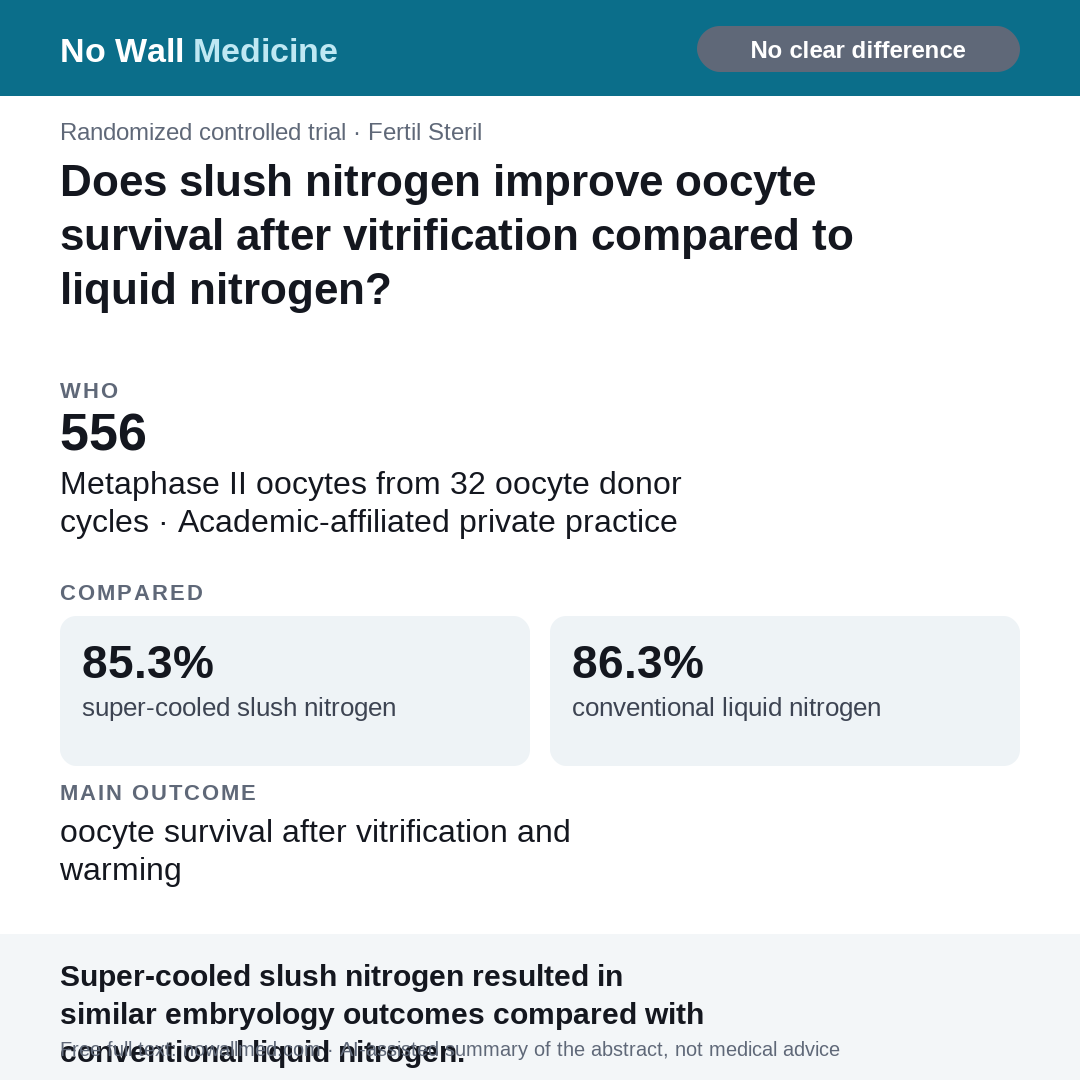
Embryology outcomes after oocyte vitrification with super-cooled slush nitrogen are similar to outcomes with conventional liquid nitrogen: a randomized controlled trial
Randomized controlled trialNo clear difference
Does slush nitrogen improve oocyte survival after vitrification compared to liquid nitrogen?
Who
556
Metaphase II oocytes from 32 oocyte donor cycles · Academic-affiliated private practice
Compared
85.3%super-cooled slush nitrogen
86.3%conventional liquid nitrogen
Main outcome
oocyte survival after vitrification and warming
Bottom line: Super-cooled slush nitrogen resulted in similar embryology outcomes compared with conventional liquid nitrogen.
Fertil Steril · 2021-10-13Download image
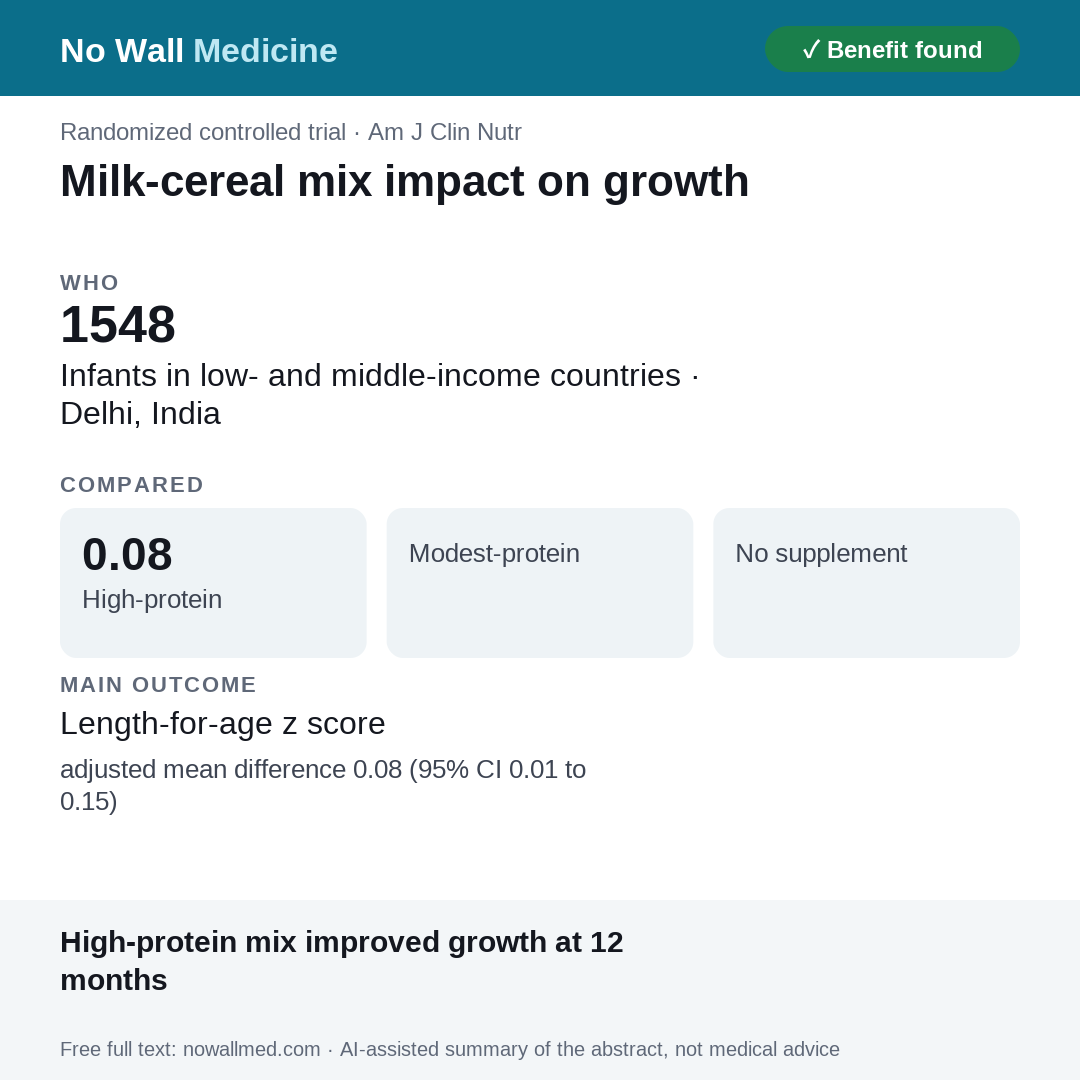
Impact of supplementation with milk-cereal mix during 6-12 months of age on growth at 12 months: a 3-arm randomized controlled trial in Delhi, India
Randomized controlled trialBenefit found
Milk-cereal mix impact on growth
Who
1548
Infants in low- and middle-income countries · Delhi, India
Compared
0.08High-protein (95% CI 0.01 to 0.15)
Modest-protein
No supplement
Main outcome
Length-for-age z score
Result: adjusted mean difference 0.08 (95% CI 0.01 to 0.15)
Bottom line: High-protein mix improved growth at 12 months
Am J Clin Nutr · 2021-10-13Download image
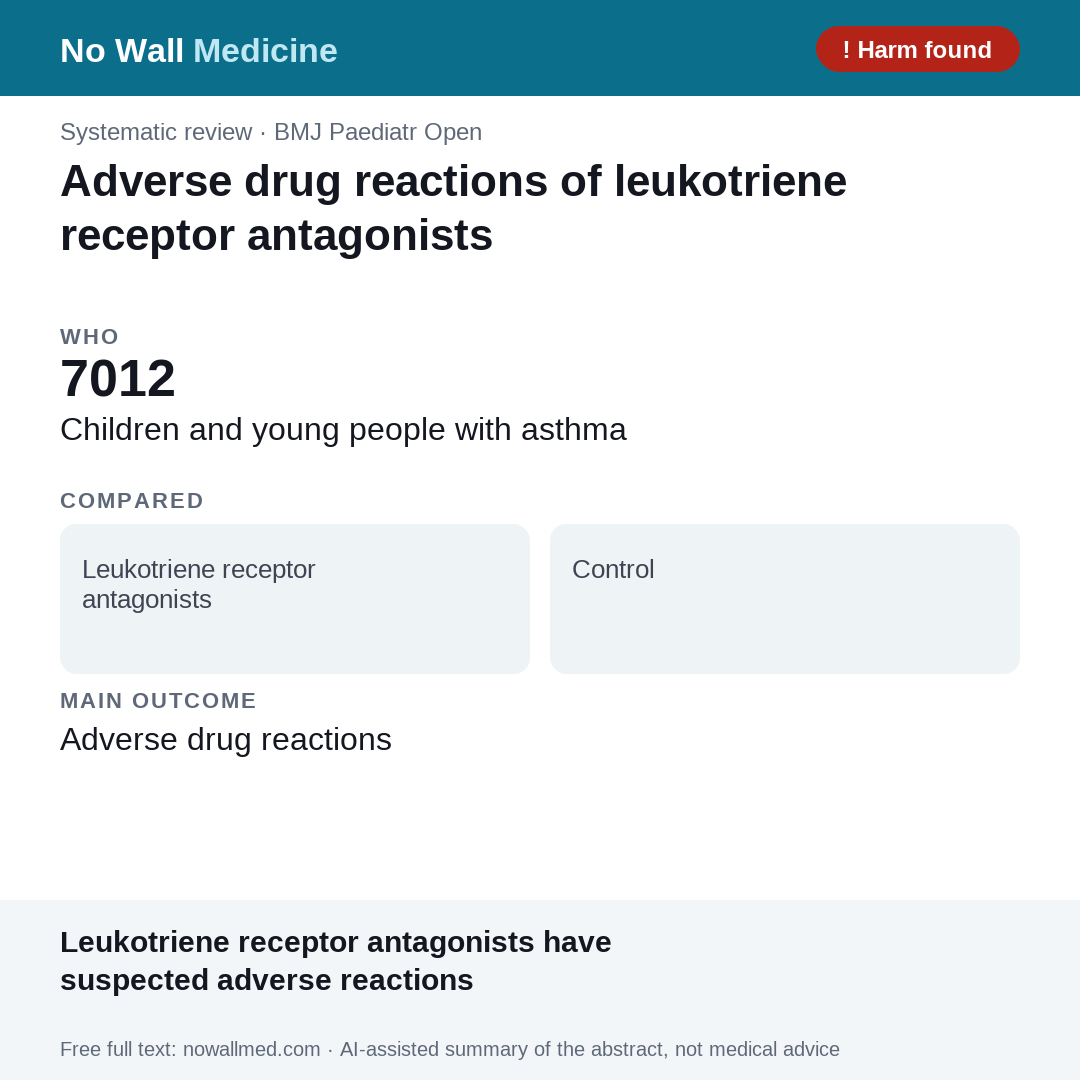
Adverse drug reactions of leukotriene receptor antagonists in children with asthma: a systematic review
Systematic reviewHarm found
Adverse drug reactions of leukotriene receptor antagonists
Who
7012
Children and young people with asthma
Compared
Leukotriene receptor antagonists
Control
Main outcome
Adverse drug reactions
Bottom line: Leukotriene receptor antagonists have suspected adverse reactions
BMJ Paediatr Open · 2021-10-13Download image
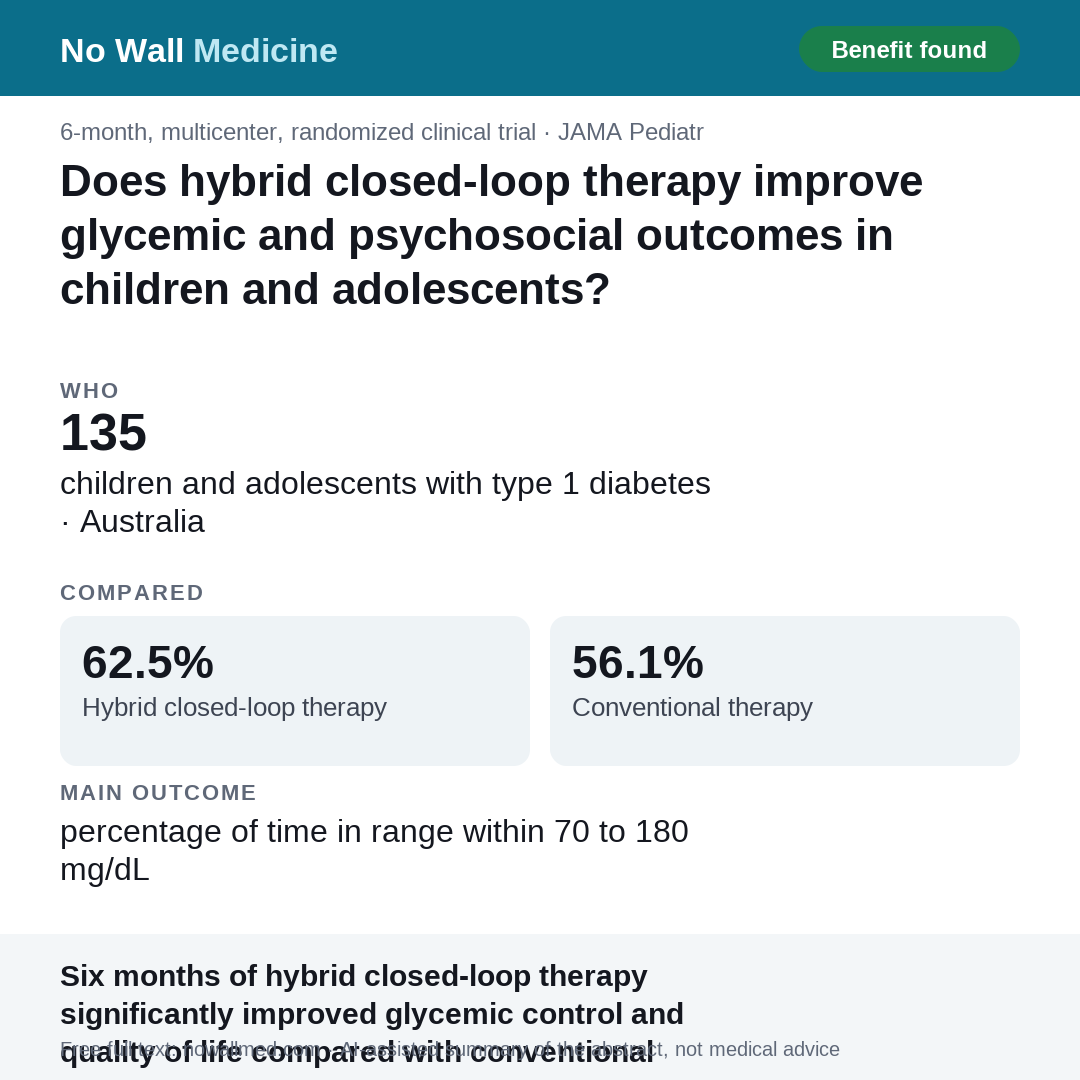
Effect of a Hybrid Closed-Loop System on Glycemic and Psychosocial Outcomes in Children and Adolescents With Type 1 Diabetes: A Randomized Clinical Trial
6-month, multicenter, randomized clinical trialBenefit found
Does hybrid closed-loop therapy improve glycemic and psychosocial outcomes in children and adolescents?
Who
135
children and adolescents with type 1 diabetes · Australia
Compared
62.5%Hybrid closed-loop therapy (12.0%)
56.1%Conventional therapy (12.2%)
Main outcome
percentage of time in range within 70 to 180 mg/dL
Result: mean adjusted difference 6.7% (95% CI, 2.7%-10.8%)
Bottom line: Six months of hybrid closed-loop therapy significantly improved glycemic control and quality of life compared with conventional therapy.
JAMA Pediatr · 2021-10-12Download image