Visual abstracts
New randomized trials and meta-analyses from leading journals at a glance: who was studied, what was compared, and what was found. Every paper is free to read in full.
All specialtiesCardiology 4763Oncology 4043Gastroenterology & Hepatology 1903Infectious Disease 3756Neurology 1872Psychiatry & Mental Health 2216Pulmonology 2044Critical Care 1319Endocrinology & Diabetes 2544Pediatrics 2889Surgery 2480Orthopedics & Sports Medicine 917Neurosurgery 525Cardiothoracic & Vascular Surgery 656Plastic & Reconstructive Surgery 574Nephrology 1107Rheumatology 810Hematology 1090Dermatology 611Ophthalmology 532Obstetrics & Gynecology 1645Public & Global Health 1037Radiology & Imaging 619Anesthesiology 958Urology 745ENT (Otolaryngology) 494Emergency Medicine 481Allergy & Immunology 309Geriatrics 972Family Medicine & Primary Care 534Medical Genetics & Genomics 659Pathology & Laboratory Medicine 156Physical Medicine & Rehabilitation 734Palliative Care 421Nutrition 1560Digital Health & AI 2137General Medicine 318
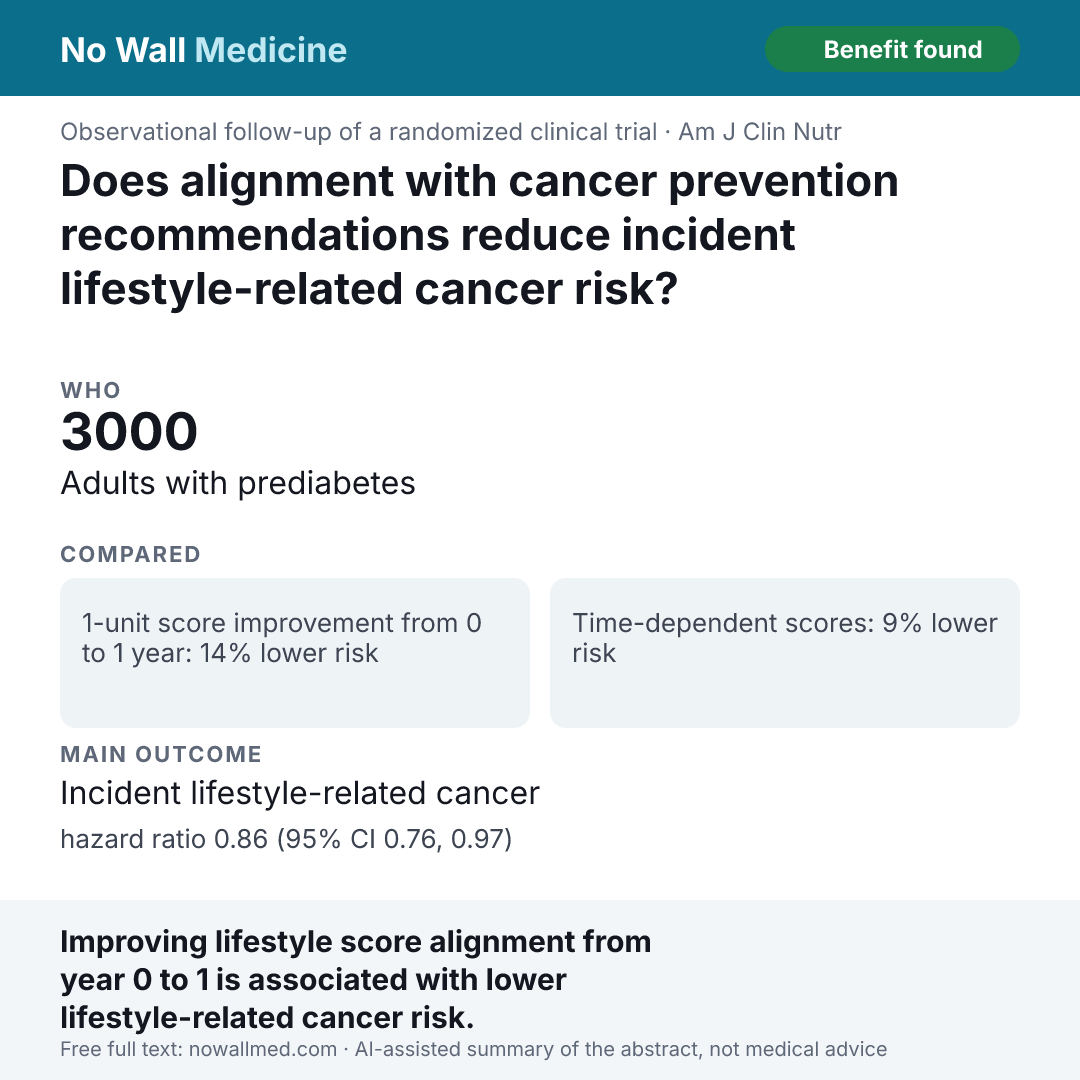
The 2018 World Cancer Research Fund/American Institute for Cancer Research Score and Cancer Risk: results from the diabetes prevention program outcomes study
Observational follow-up of a randomized clinical trialBenefit found
Does alignment with cancer prevention recommendations reduce incident lifestyle-related cancer risk?
Who
3000
Adults with prediabetes
Compared
1-unit score improvement from 0 to 1 year: 14% lower risk
Time-dependent scores: 9% lower risk
Main outcome
Incident lifestyle-related cancer
Result: hazard ratio 0.86 (95% CI 0.76, 0.97)
Bottom line: Improving lifestyle score alignment from year 0 to 1 is associated with lower lifestyle-related cancer risk.
Am J Clin Nutr · 2025-07-15 · Save PNG
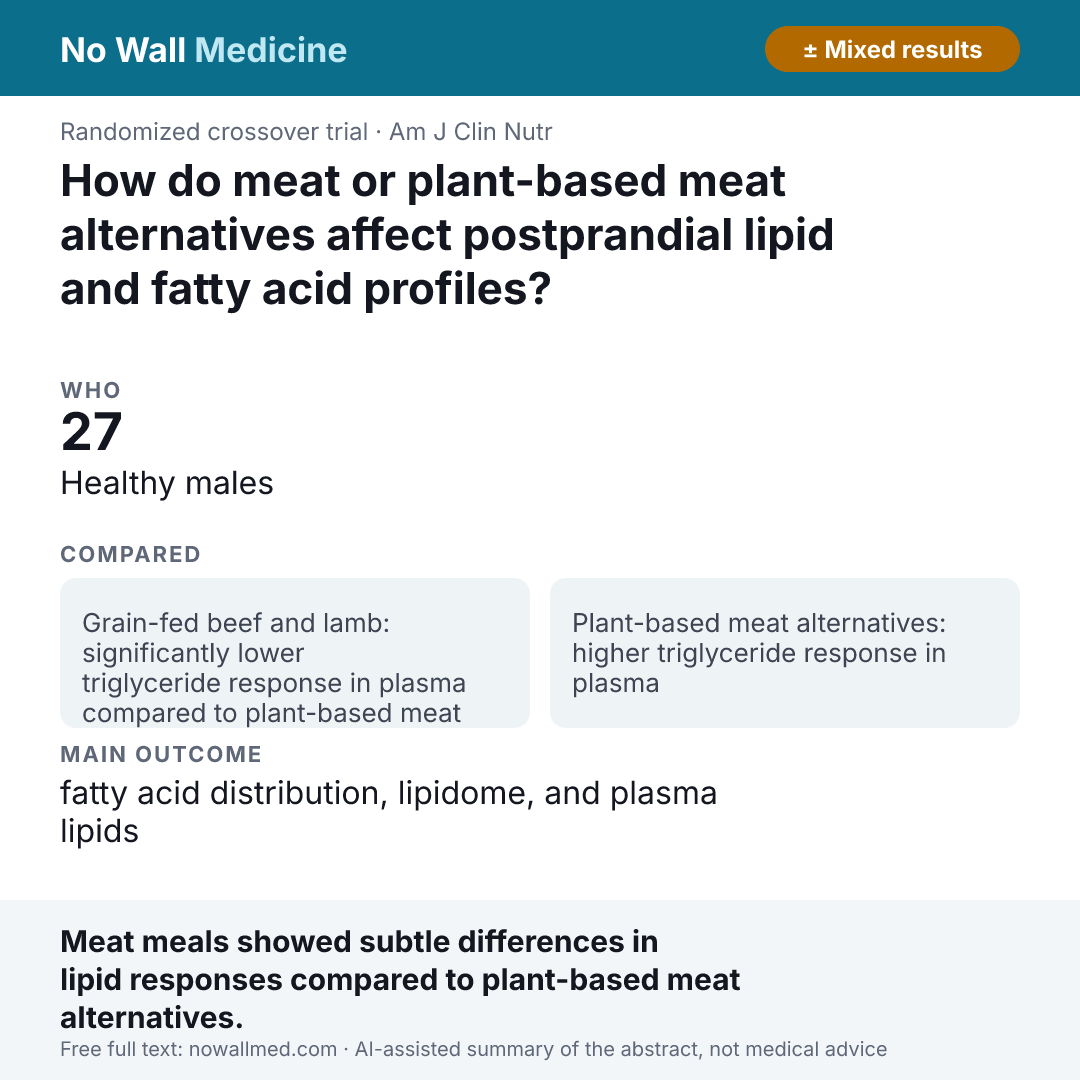
Plasma chylomicron-rich lipidomic and fatty acid profile following a meat or analog meal in healthy males: A randomized controlled trial
Randomized crossover trialMixed results
How do meat or plant-based meat alternatives affect postprandial lipid and fatty acid profiles?
Who
27
Healthy males
Compared
Grain-fed beef and lamb: significantly lower triglyceride response in plasma compared to plant-based meat alternatives
Plant-based meat alternatives: higher triglyceride response in plasma
Main outcome
fatty acid distribution, lipidome, and plasma lipids
Bottom line: Meat meals showed subtle differences in lipid responses compared to plant-based meat alternatives.
Am J Clin Nutr · 2025-07-15 · Save PNG
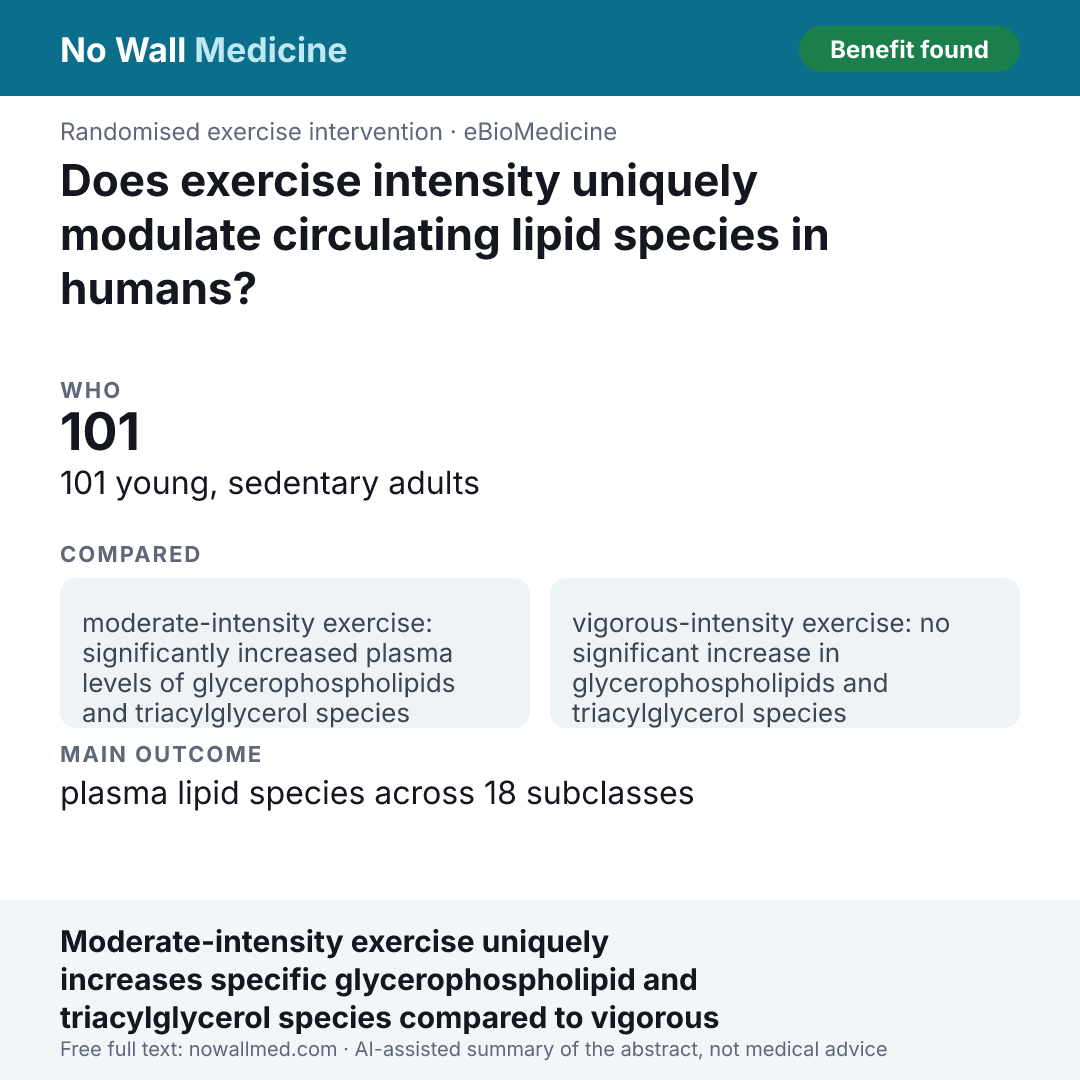
Moderate-intensity exercise training uniquely modulates circulating lipid species beyond classical lipid levels in humans
Randomised exercise interventionBenefit found
Does exercise intensity uniquely modulate circulating lipid species in humans?
Who
101
101 young, sedentary adults
Compared
moderate-intensity exercise: significantly increased plasma levels of glycerophospholipids and triacylglycerol species
vigorous-intensity exercise: no significant increase in glycerophospholipids and triacylglycerol species
Main outcome
plasma lipid species across 18 subclasses
Bottom line: Moderate-intensity exercise uniquely increases specific glycerophospholipid and triacylglycerol species compared to vigorous intensity.
Funded by: Junta de Andalucía, ERDF, Spanish Ministry of Economy, AstraZeneca HealthCare Foundation
eBioMedicine · 2025-07-15 · Save PNG
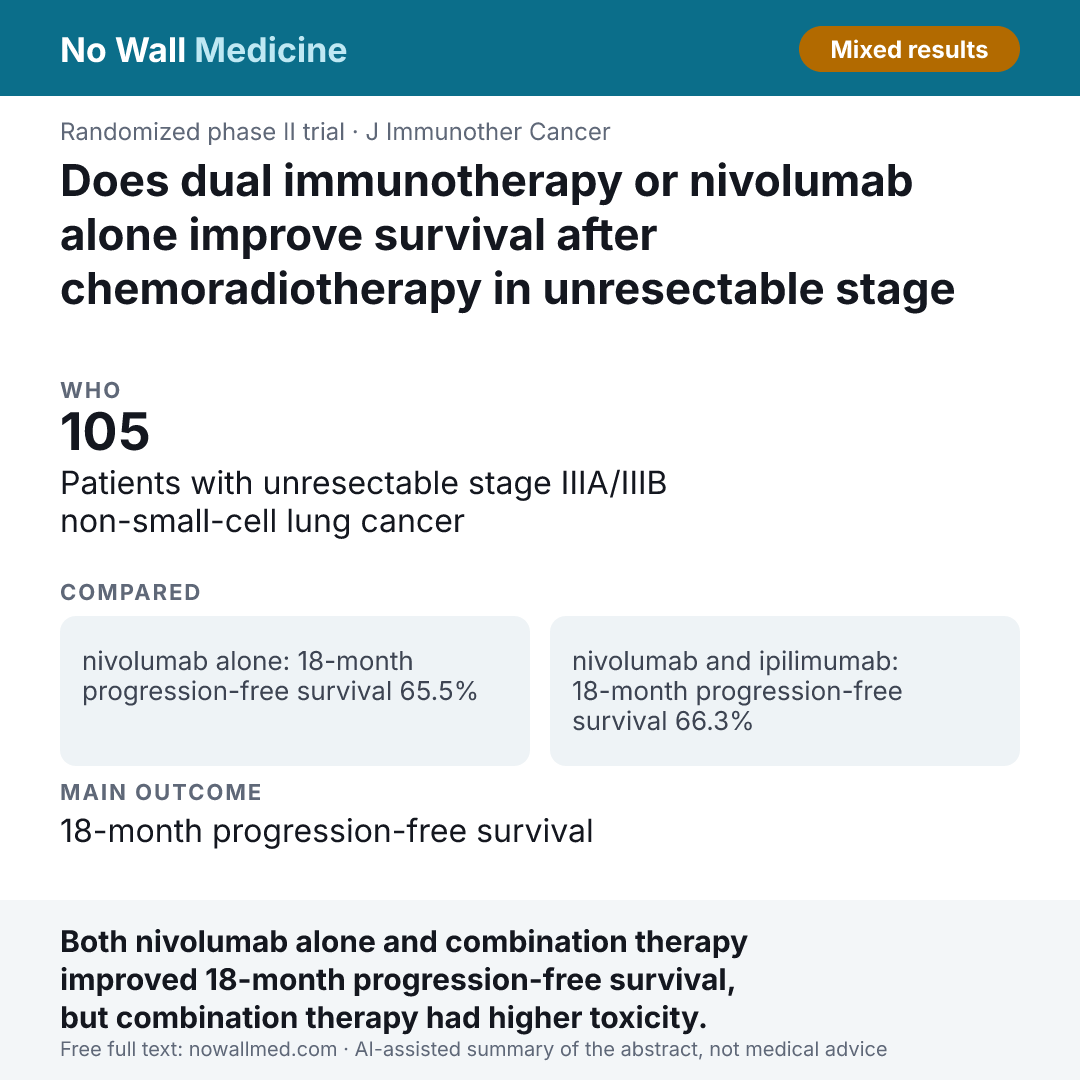
Randomized phase II study of consolidation immunotherapy with nivolumab and ipilimumab or nivolumab alone following concurrent chemoradiotherapy for unresectable stage IIIA/IIIB non-small-cell lung cancer (NSCLC): Big Ten Cancer Research Consortium LUN16-081
Randomized phase II trialMixed results
Does dual immunotherapy or nivolumab alone improve survival after chemoradiotherapy in unresectable stage III lung cancer?
Who
105
Patients with unresectable stage IIIA/IIIB non-small-cell lung cancer
Compared
nivolumab alone: 18-month progression-free survival 65.5%
nivolumab and ipilimumab: 18-month progression-free survival 66.3%
Main outcome
18-month progression-free survival
Bottom line: Both nivolumab alone and combination therapy improved 18-month progression-free survival, but combination therapy had higher toxicity.
J Immunother Cancer · 2025-07-15 · Save PNG
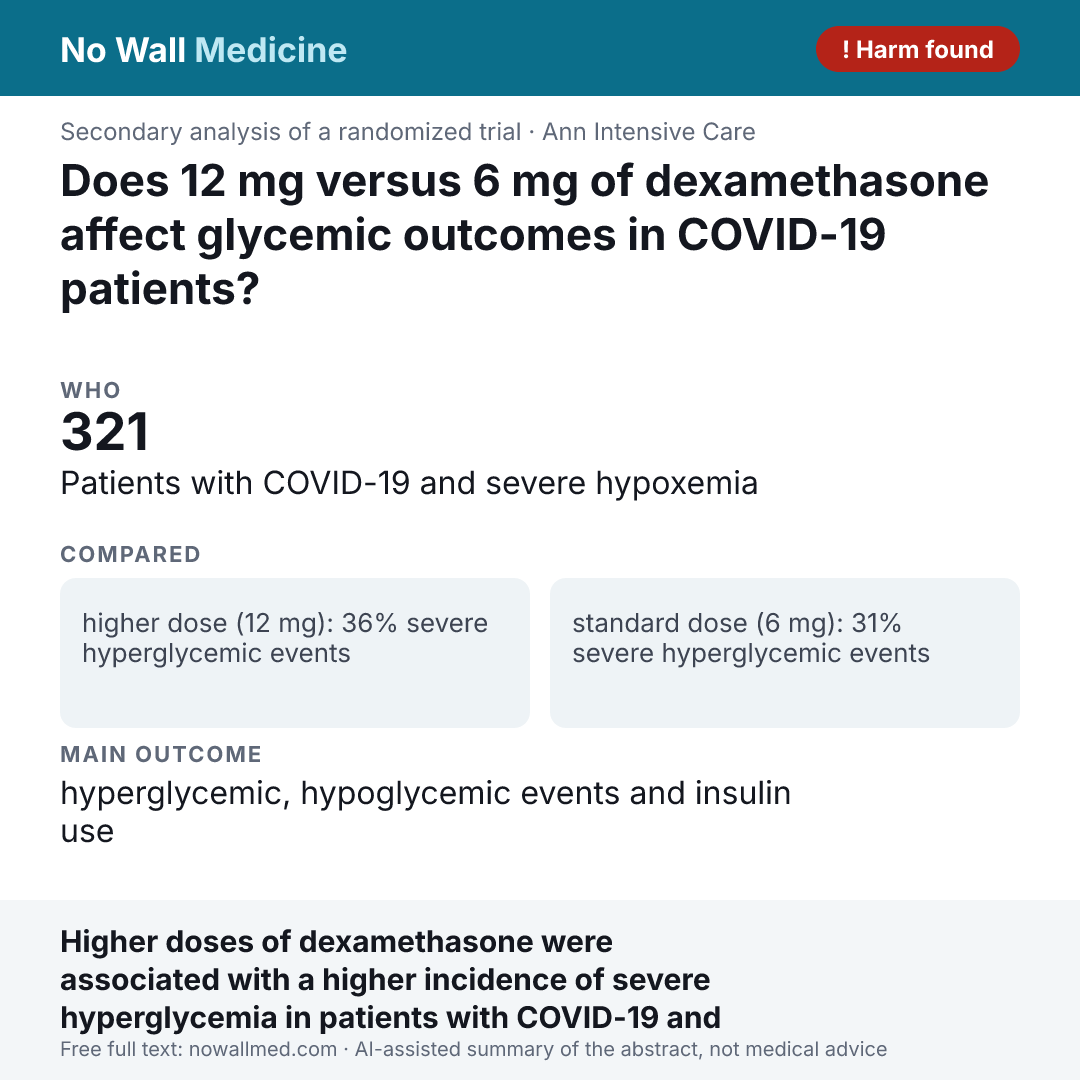
Hyperglycemia and insulin use in patients with COVID-19 and severe hypoxemia allocated to 12 mg vs. 6 mg of dexamethasone: a secondary analysis of the COVID STEROID 2 randomized trial
Secondary analysis of a randomized trialHarm found
Does 12 mg versus 6 mg of dexamethasone affect glycemic outcomes in COVID-19 patients?
Who
321
Patients with COVID-19 and severe hypoxemia
Compared
higher dose (12 mg): 36% severe hyperglycemic events
standard dose (6 mg): 31% severe hyperglycemic events
Main outcome
hyperglycemic, hypoglycemic events and insulin use
Result: adjusted subdistributional hazard ratio 1.76 (95% CI 1.22-2.54)
Bottom line: Higher doses of dexamethasone were associated with a higher incidence of severe hyperglycemia in patients with COVID-19 and severe hypoxemia.
Ann Intensive Care · 2025-07-15 · Save PNG
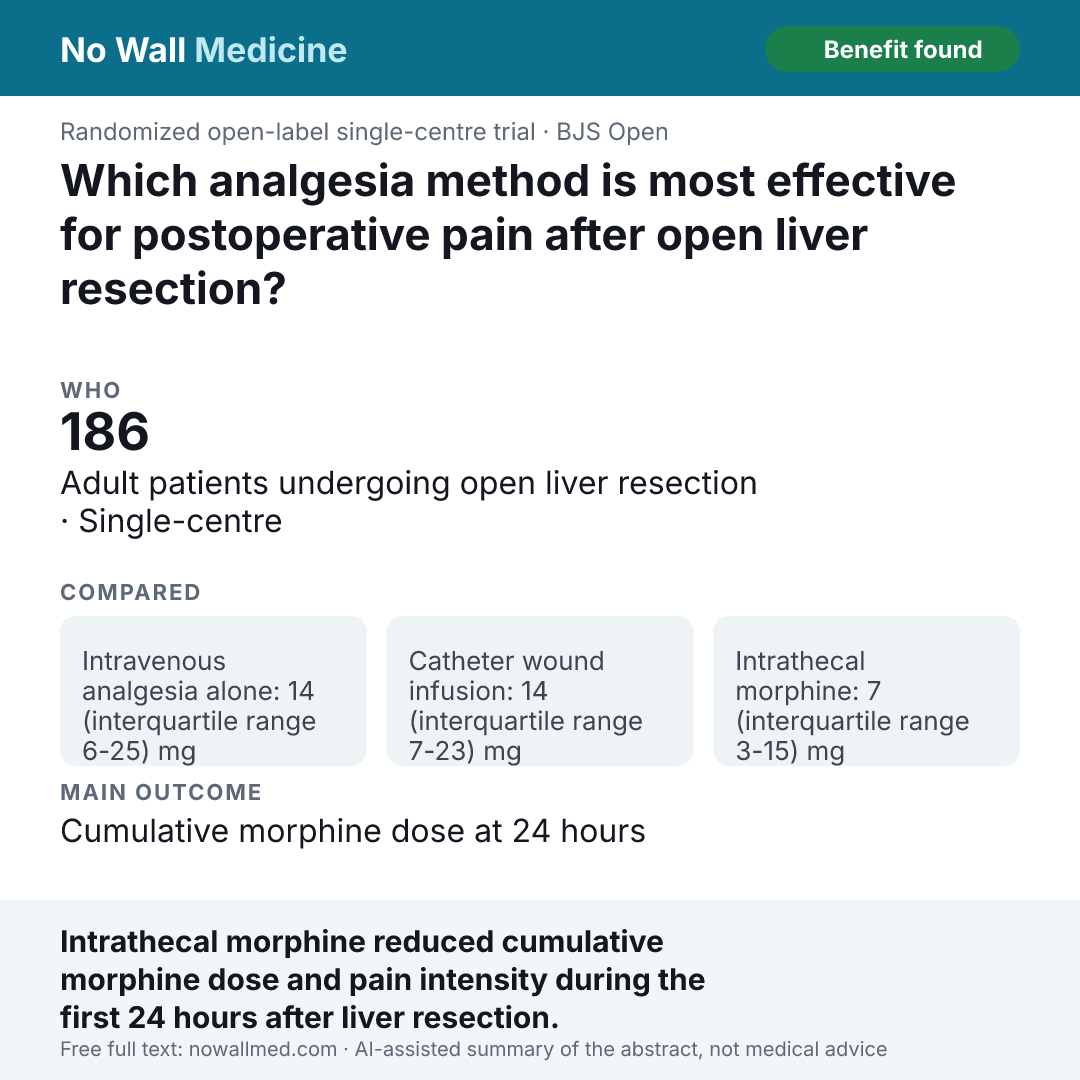
Comparison of catheter wound infusion, intrathecal morphine, and intravenous analgesia for postoperative pain management in open liver resection: randomized clinical trial
Randomized open-label single-centre trialBenefit found
Which analgesia method is most effective for postoperative pain after open liver resection?
Who
186
Adult patients undergoing open liver resection · Single-centre
Compared
Intravenous analgesia alone: 14 (interquartile range 6-25) mg
Catheter wound infusion: 14 (interquartile range 7-23) mg
Intrathecal morphine: 7 (interquartile range 3-15) mg
Main outcome
Cumulative morphine dose at 24 hours
Result: mean difference on log-transformed values 0.57 (95% confidence interval 0.21 to 0.93)
Bottom line: Intrathecal morphine reduced cumulative morphine dose and pain intensity during the first 24 hours after liver resection.
BJS Open · 2025-07-15 · Save PNG
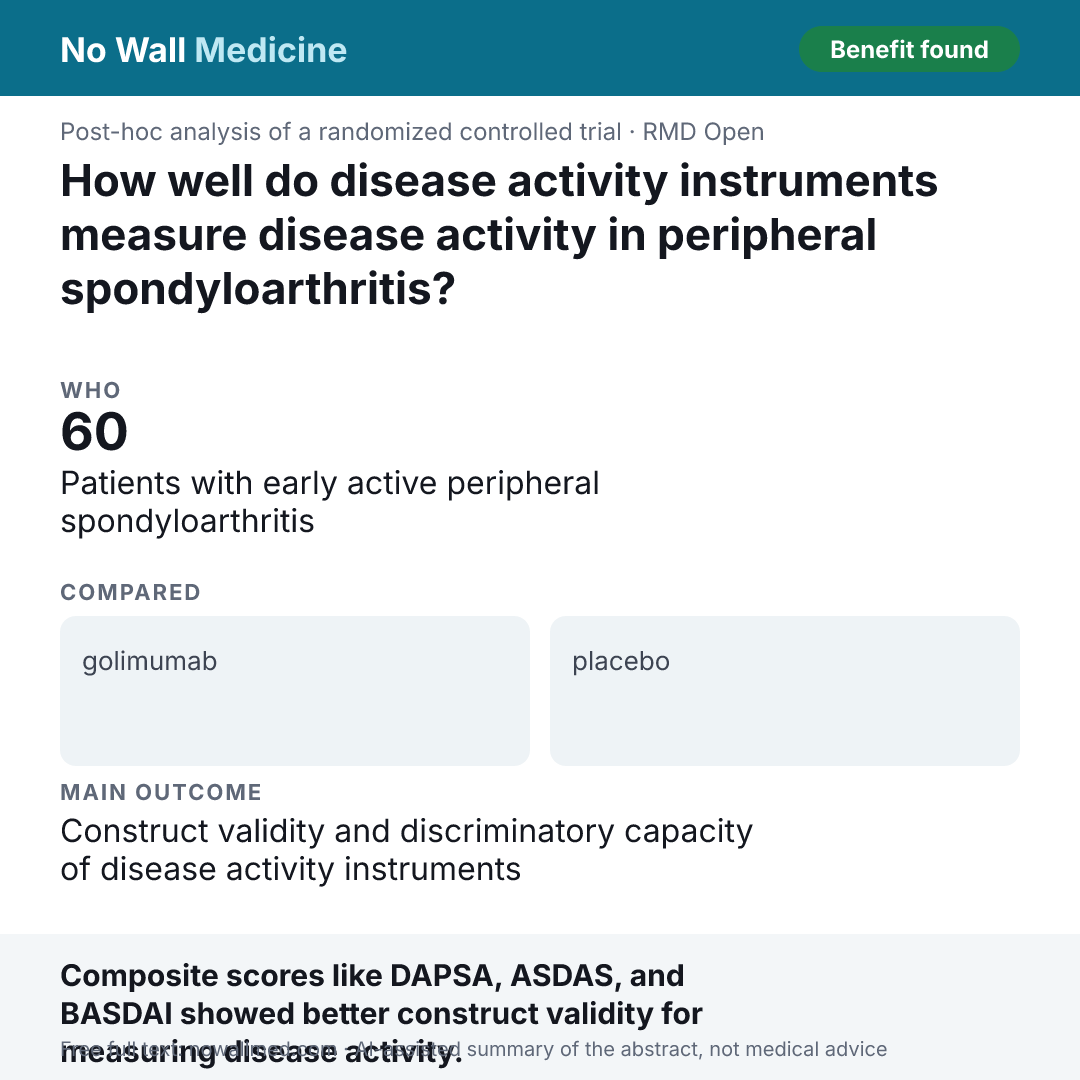
Measurement properties of disease activity instruments in peripheral spondyloarthritis: a post-hoc analysis of the CRESPA trial
Post-hoc analysis of a randomized controlled trialBenefit found
How well do disease activity instruments measure disease activity in peripheral spondyloarthritis?
Who
60
Patients with early active peripheral spondyloarthritis
Compared
golimumab
placebo
Main outcome
Construct validity and discriminatory capacity of disease activity instruments
Bottom line: Composite scores like DAPSA, ASDAS, and BASDAI showed better construct validity for measuring disease activity.
RMD Open · 2025-07-15 · Save PNG
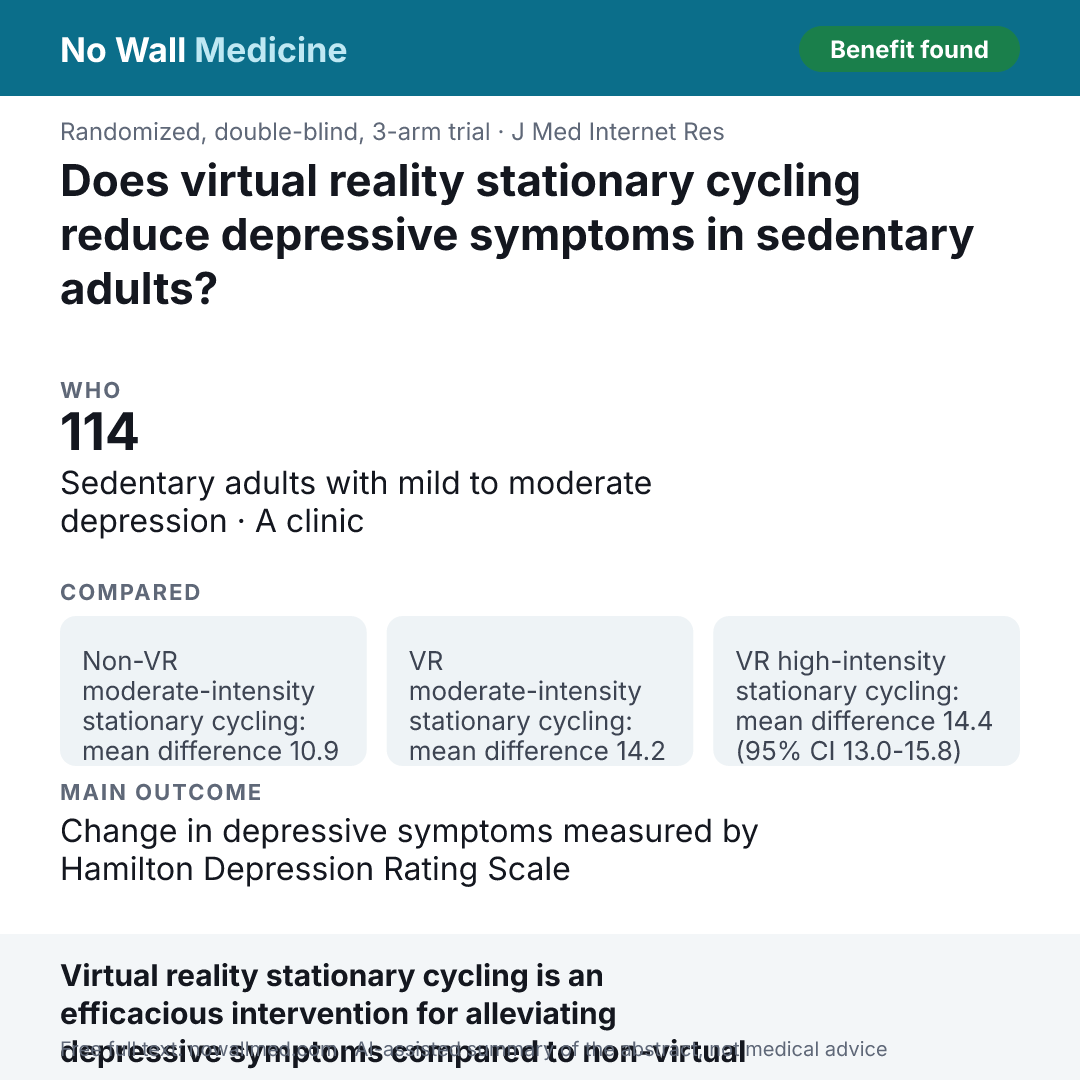
Stationary Cycling Exercise With Virtual Reality to Reduce Depressive Symptoms Among People With Mild to Moderate Depression: Randomized Controlled Trial
Randomized, double-blind, 3-arm trialBenefit found
Does virtual reality stationary cycling reduce depressive symptoms in sedentary adults?
Who
114
Sedentary adults with mild to moderate depression · A clinic
Compared
Non-VR moderate-intensity stationary cycling: mean difference 10.9 (95% CI 9.3-12.5)
VR moderate-intensity stationary cycling: mean difference 14.2 (95% CI 12.7-15.8)
VR high-intensity stationary cycling: mean difference 14.4 (95% CI 13.0-15.8)
Main outcome
Change in depressive symptoms measured by Hamilton Depression Rating Scale
Result: mean difference between groups: 3.3 (95% CI 1.9-4.9) and 3.9 (95% CI 2.5-5.2)
Bottom line: Virtual reality stationary cycling is an efficacious intervention for alleviating depressive symptoms compared to non-virtual reality cycling.
J Med Internet Res · 2025-07-15 · Save PNG
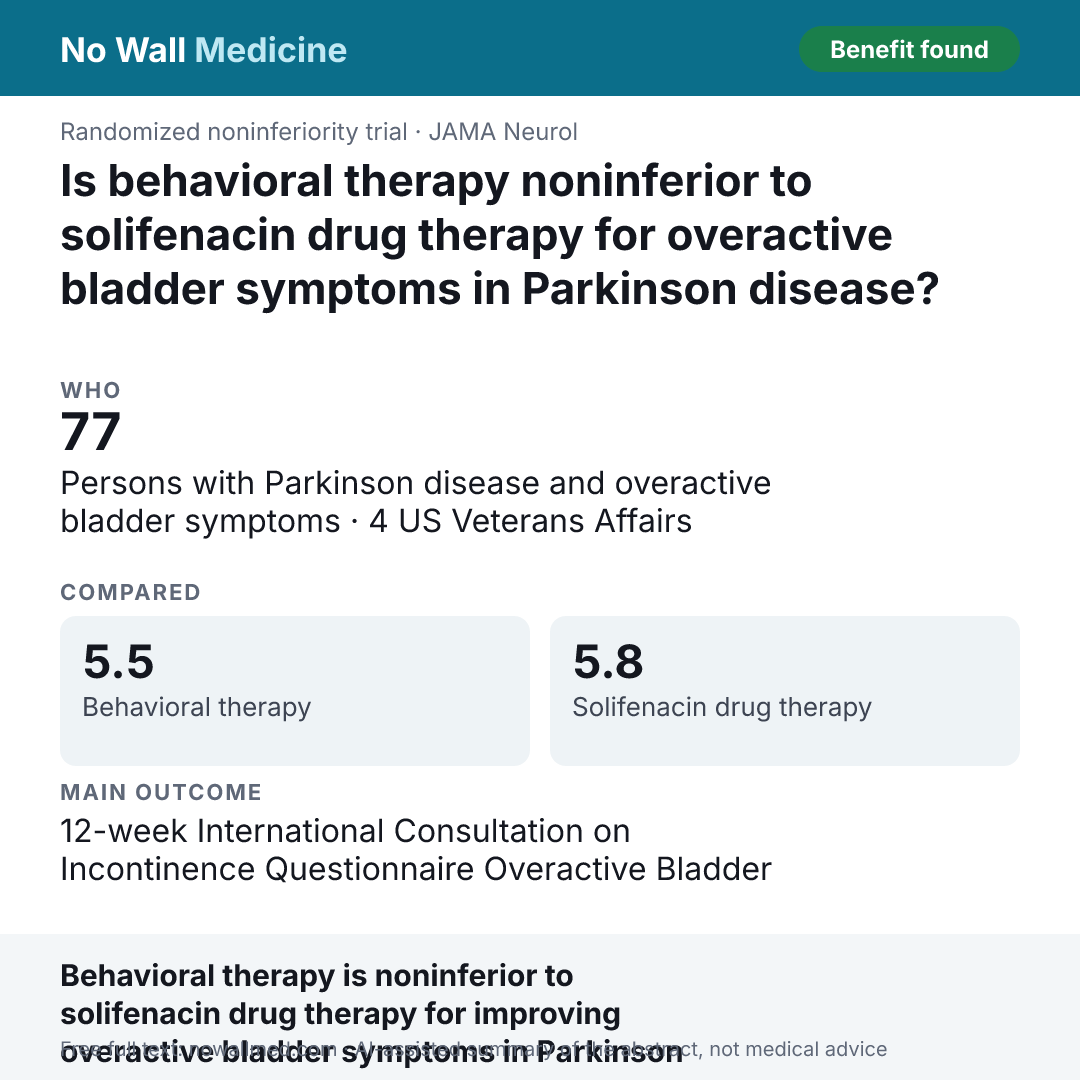
Behavioral Compared With Drug Therapy for Overactive Bladder Symptoms in Parkinson Disease: A Randomized Noninferiority Trial
Randomized noninferiority trialBenefit found
Is behavioral therapy noninferior to solifenacin drug therapy for overactive bladder symptoms in Parkinson disease?
Who
77
Persons with Parkinson disease and overactive bladder symptoms · 4 US Veterans Affairs health care systems
Compared
5.5Behavioral therapy (2.0)
5.8Solifenacin drug therapy (2.4)
Main outcome
12-week International Consultation on Incontinence Questionnaire Overactive Bladder symptom score
Bottom line: Behavioral therapy is noninferior to solifenacin drug therapy for improving overactive bladder symptoms in Parkinson disease.
JAMA Neurol · 2025-07-14 · Save PNG
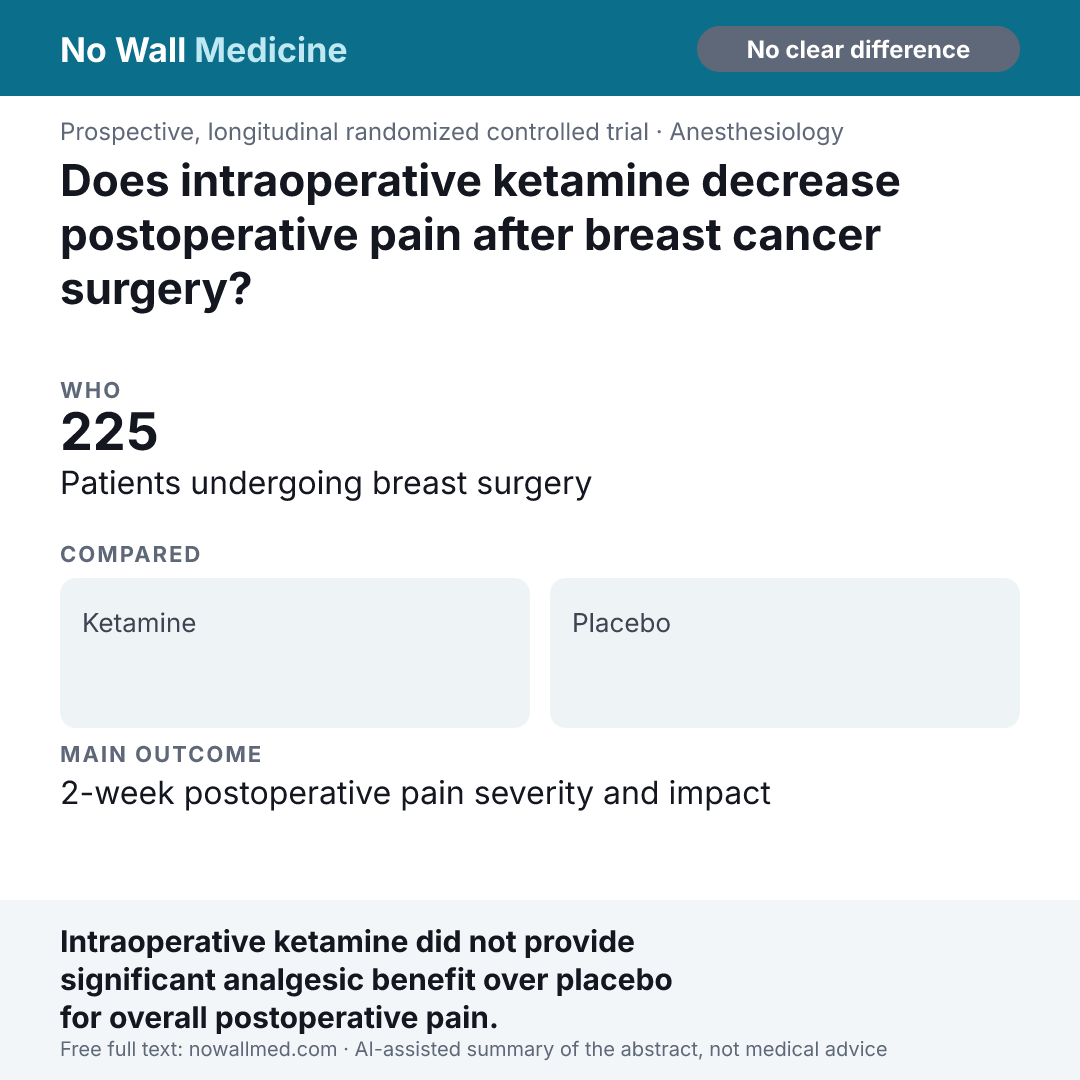
A Randomized Controlled Trial of Intraoperative Ketamine for Acute Postsurgical Pain after Breast Cancer Surgery: The Moderating Effect of Baseline Temporal Summation of Pain
Prospective, longitudinal randomized controlled trialNo clear difference
Does intraoperative ketamine decrease postoperative pain after breast cancer surgery?
Who
225
Patients undergoing breast surgery
Compared
Ketamine
Placebo
Main outcome
2-week postoperative pain severity and impact
Bottom line: Intraoperative ketamine did not provide significant analgesic benefit over placebo for overall postoperative pain.
Limitation: Exploratory moderation analysis suggested potential benefits for patients with higher baseline temporal summation of pain.
Anesthesiology · 2025-07-14 · Save PNG
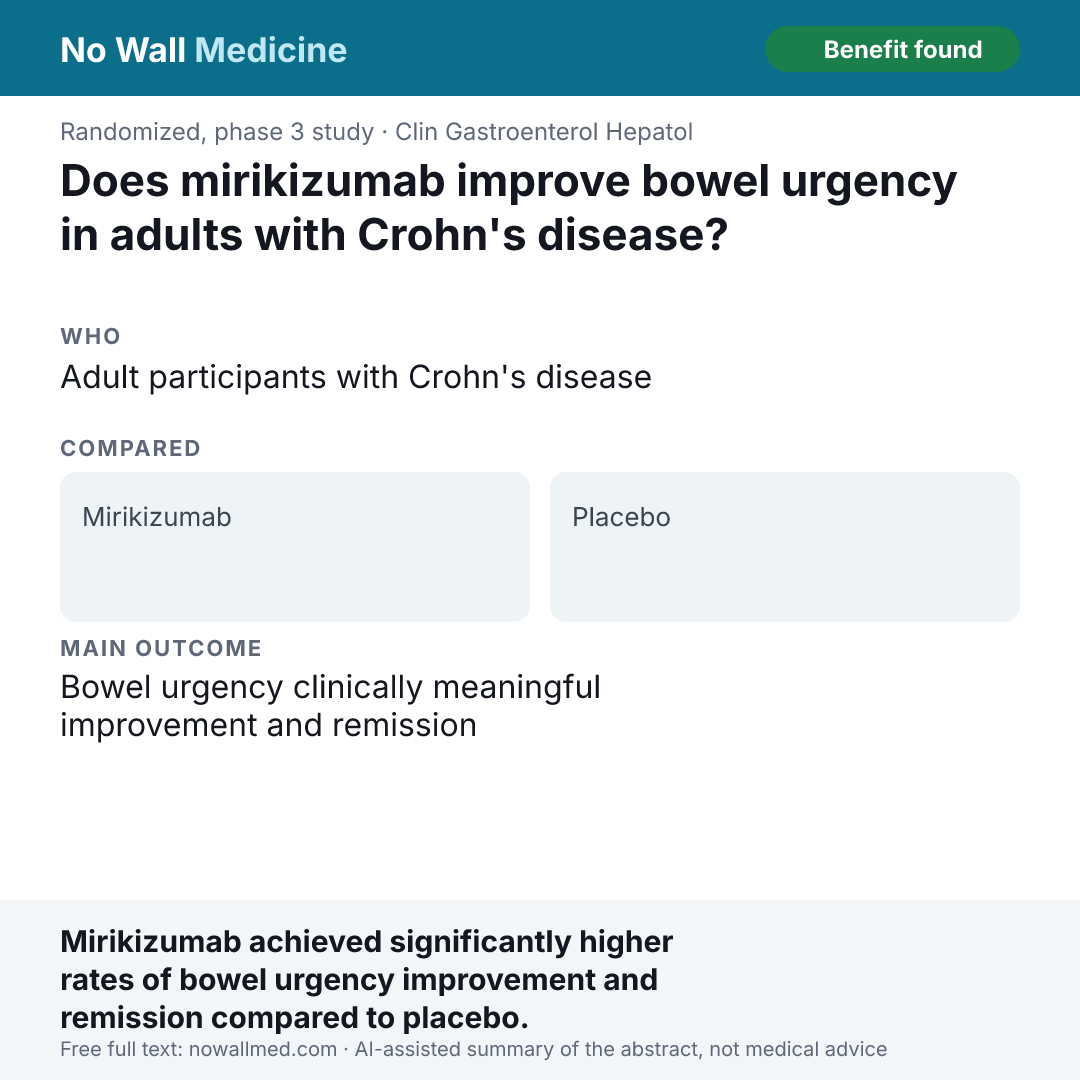
Bowel Urgency in Crohn's Disease: Effects of Mirikizumab in a Randomized Controlled Phase 3 Study
Randomized, phase 3 studyBenefit found
Does mirikizumab improve bowel urgency in adults with Crohn's disease?
Who
Adult participants with Crohn's disease
Compared
Mirikizumab
Placebo
Main outcome
Bowel urgency clinically meaningful improvement and remission
Bottom line: Mirikizumab achieved significantly higher rates of bowel urgency improvement and remission compared to placebo.
Clin Gastroenterol Hepatol · 2025-07-14 · Save PNG
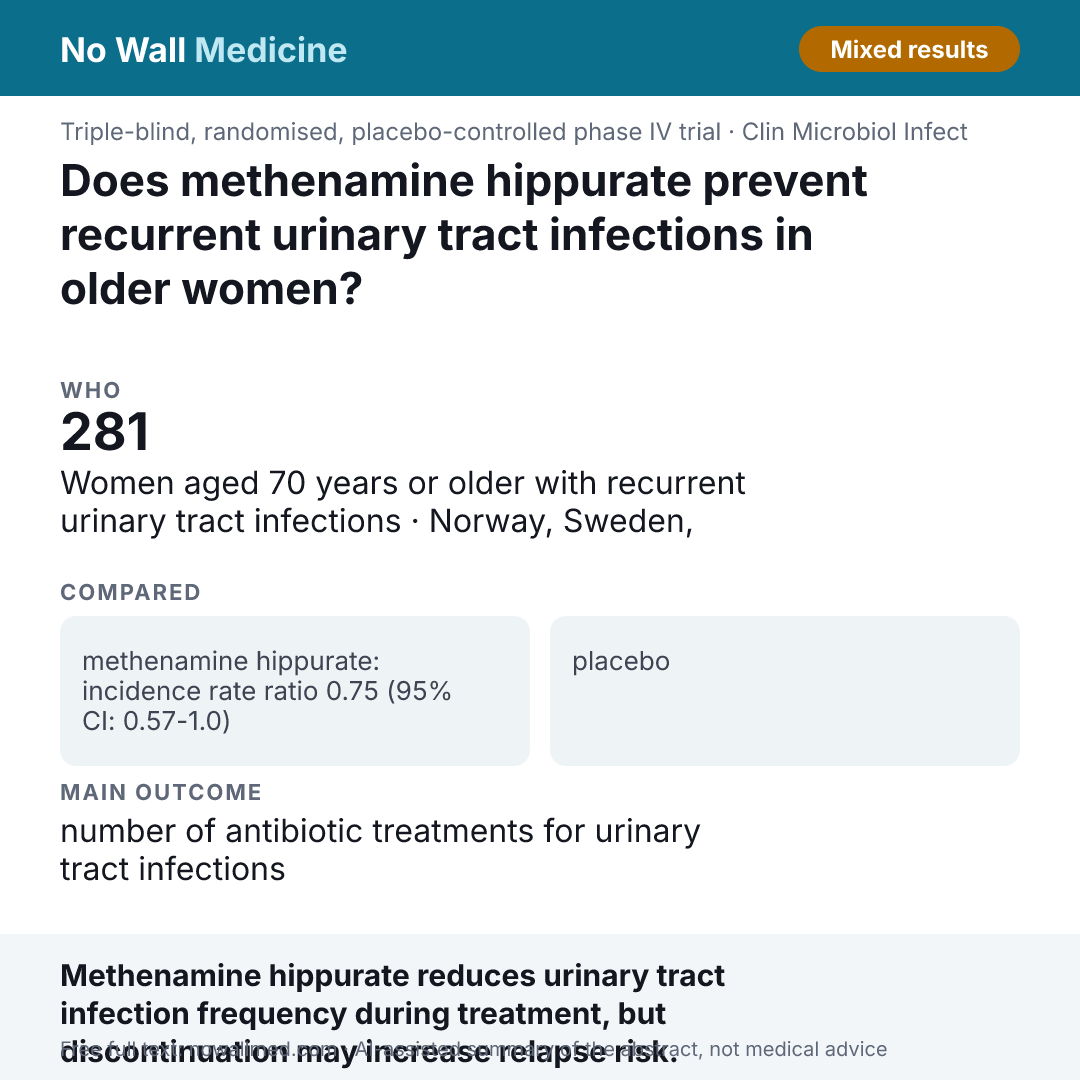
Methenamine hippurate as prophylaxis for recurrent urinary tract infections in older women-a triple-blind, randomised, placebo-controlled, phase IV trial (ImpresU)
Triple-blind, randomised, placebo-controlled phase IV trialMixed results
Does methenamine hippurate prevent recurrent urinary tract infections in older women?
Who
281
Women aged 70 years or older with recurrent urinary tract infections · Norway, Sweden, Poland, and The Netherlands
Compared
methenamine hippurate: incidence rate ratio 0.75 (95% CI: 0.57-1.0)
placebo
Main outcome
number of antibiotic treatments for urinary tract infections
Result: incidence rate ratio 0.75 (95% CI: 0.57-1.0)
Bottom line: Methenamine hippurate reduces urinary tract infection frequency during treatment, but discontinuation may increase relapse risk.
Limitation: Discontinuation after 6-month treatment duration seems to increase the risk of urinary tract infection relapses.
Clin Microbiol Infect · 2025-07-14 · Save PNG
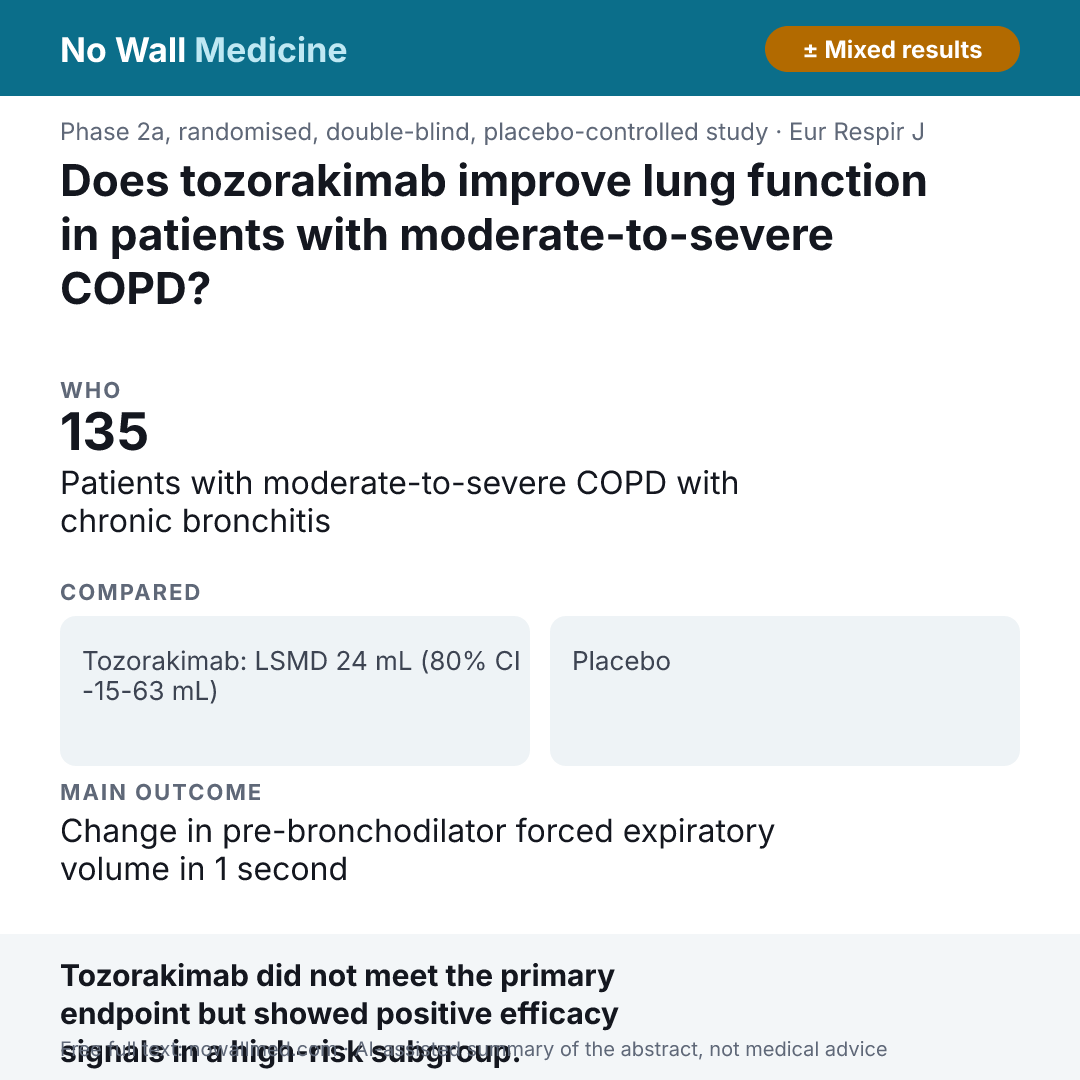
A phase 2a trial of the IL-33 monoclonal antibody tozorakimab in patients with COPD: FRONTIER-4
Phase 2a, randomised, double-blind, placebo-controlled studyMixed results
Does tozorakimab improve lung function in patients with moderate-to-severe COPD?
Who
135
Patients with moderate-to-severe COPD with chronic bronchitis
Compared
Tozorakimab: LSMD 24 mL (80% CI -15-63 mL)
Placebo
Main outcome
Change in pre-bronchodilator forced expiratory volume in 1 second
Result: LSMD 24 mL, 80% CI -15-63 mL
Bottom line: Tozorakimab did not meet the primary endpoint but showed positive efficacy signals in a high-risk subgroup.
Eur Respir J · 2025-07-14 · Save PNG
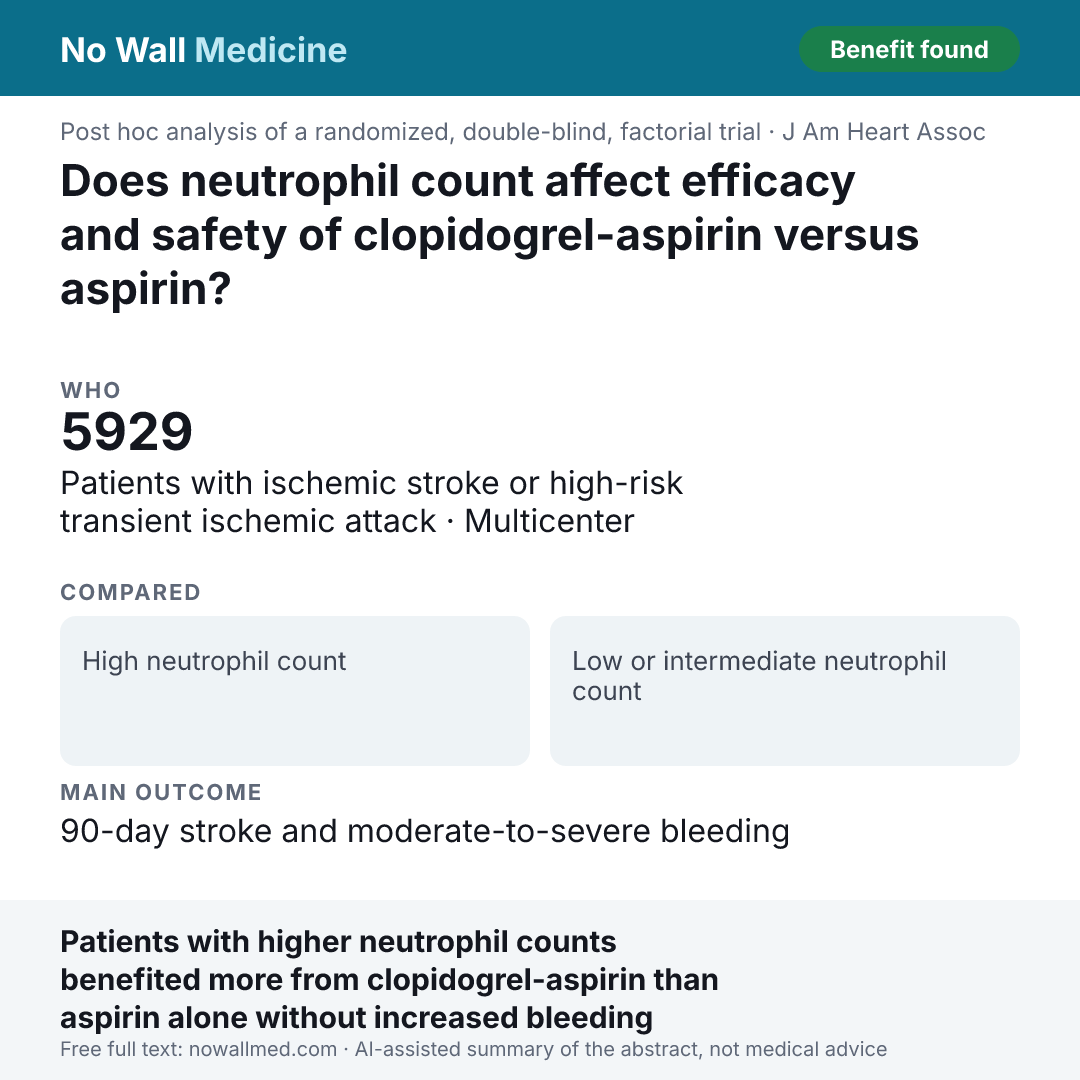
Relationship Between Neutrophil Count and 90-Day Outcomes and Effect of Dual Antiplatelet Therapy in Patients With Acute Ischemic Stroke or Transient Ischemic Attack: A Post Hoc Analysis of the INSPIRES Trial
Post hoc analysis of a randomized, double-blind, factorial trialBenefit found
Does neutrophil count affect efficacy and safety of clopidogrel-aspirin versus aspirin?
Who
5929
Patients with ischemic stroke or high-risk transient ischemic attack · Multicenter
Compared
High neutrophil count
Low or intermediate neutrophil count
Main outcome
90-day stroke and moderate-to-severe bleeding
Bottom line: Patients with higher neutrophil counts benefited more from clopidogrel-aspirin than aspirin alone without increased bleeding risk.
Limitation: Further research is needed to explore the mechanism.
J Am Heart Assoc · 2025-07-14 · Save PNG
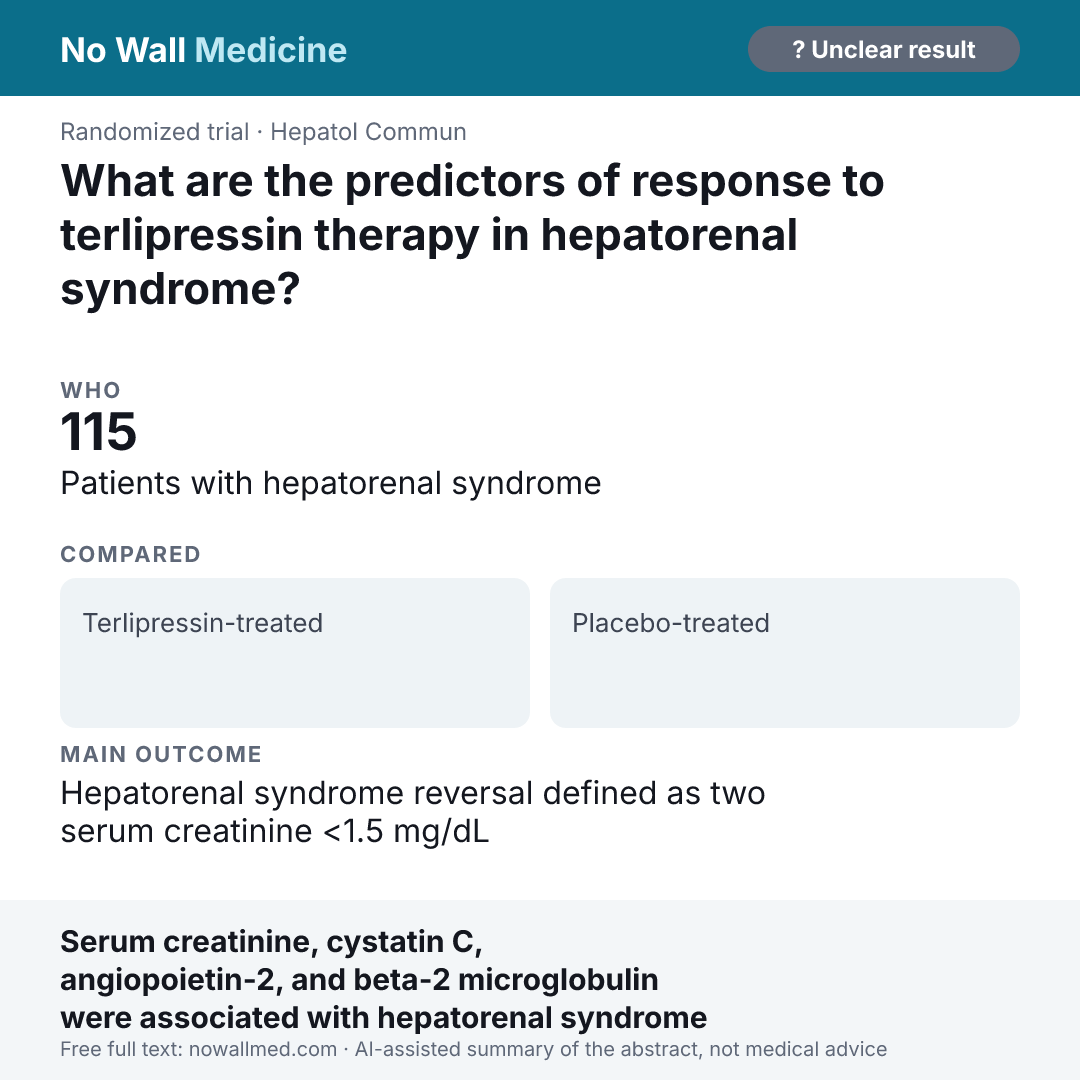
Predictors of response to terlipressin therapy in hepatorenal syndrome: Metabolomic and proteomic analysis from the CONFIRM trial
Randomized trialUnclear result
What are the predictors of response to terlipressin therapy in hepatorenal syndrome?
Who
115
Patients with hepatorenal syndrome
Compared
Terlipressin-treated
Placebo-treated
Main outcome
Hepatorenal syndrome reversal defined as two serum creatinine <1.5 mg/dL
Bottom line: Serum creatinine, cystatin C, angiopoietin-2, and beta-2 microglobulin were associated with hepatorenal syndrome reversal.
Hepatol Commun · 2025-07-14 · Save PNG
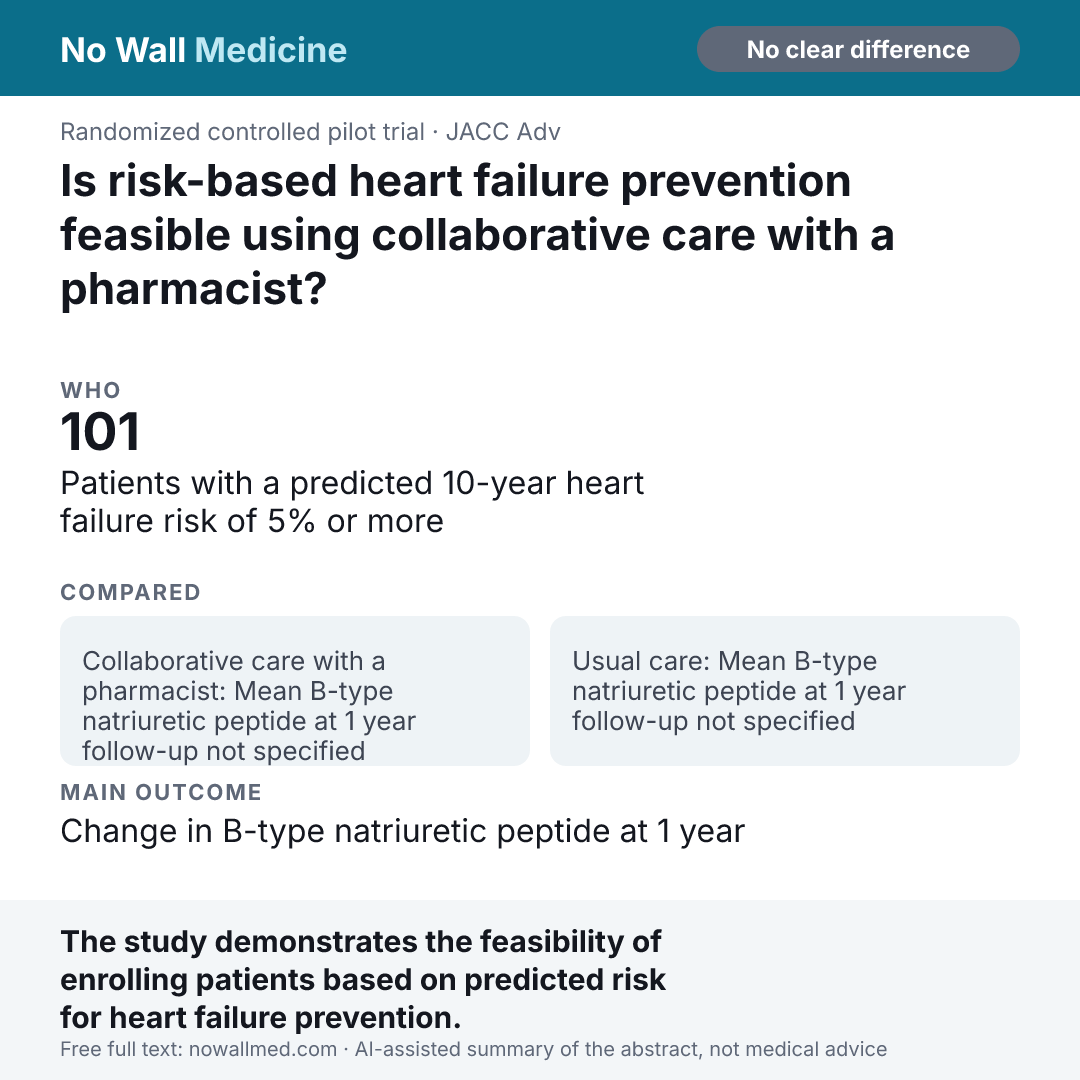
Feasibility of the Implementation of Tools for Heart Failure Risk Prediction: A Randomized Controlled Pilot Trial
Randomized controlled pilot trialNo clear difference
Is risk-based heart failure prevention feasible using collaborative care with a pharmacist?
Who
101
Patients with a predicted 10-year heart failure risk of 5% or more
Compared
Collaborative care with a pharmacist: Mean B-type natriuretic peptide at 1 year follow-up not specified
Usual care: Mean B-type natriuretic peptide at 1 year follow-up not specified
Main outcome
Change in B-type natriuretic peptide at 1 year
Result: -9.0 (-20.6 to 2.6, P = 0.13)
Bottom line: The study demonstrates the feasibility of enrolling patients based on predicted risk for heart failure prevention.
Limitation: Larger follow-up studies are needed to determine efficacy and long-term impact.
JACC Adv · 2025-07-14 · Save PNG
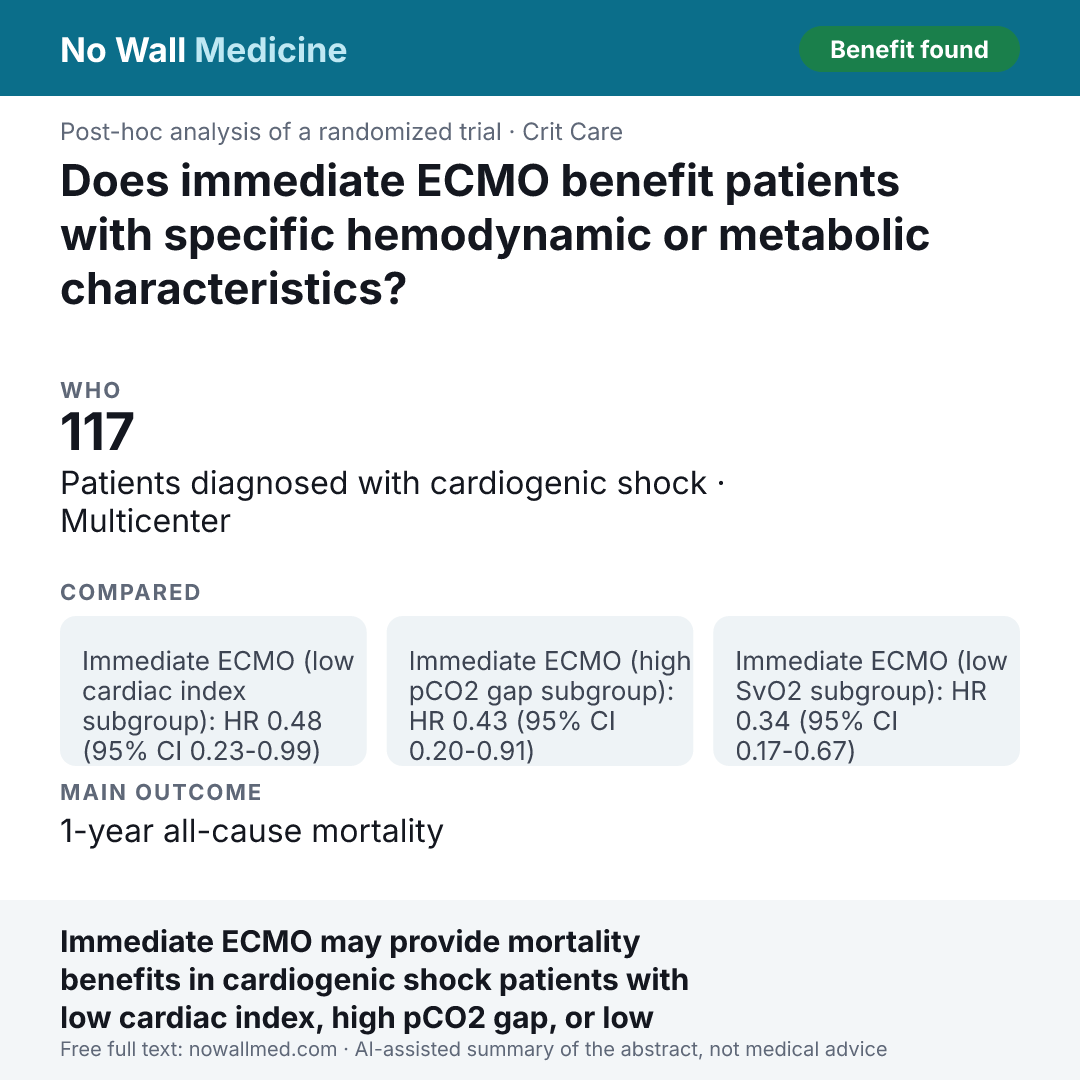
Cardiac index, SvO2 or pCO2 gap may determine benefit from ECMO in cardiogenic shock: post-hoc analysis of the multicenter, randomized ECMO-CS trial
Post-hoc analysis of a randomized trialBenefit found
Does immediate ECMO benefit patients with specific hemodynamic or metabolic characteristics?
Who
117
Patients diagnosed with cardiogenic shock · Multicenter
Compared
Immediate ECMO (low cardiac index subgroup): HR 0.48 (95% CI 0.23-0.99)
Immediate ECMO (high pCO2 gap subgroup): HR 0.43 (95% CI 0.20-0.91)
Immediate ECMO (low SvO2 subgroup): HR 0.34 (95% CI 0.17-0.67)
Main outcome
1-year all-cause mortality
Bottom line: Immediate ECMO may provide mortality benefits in cardiogenic shock patients with low cardiac index, high pCO2 gap, or low SvO2.
Crit Care · 2025-07-14 · Save PNG
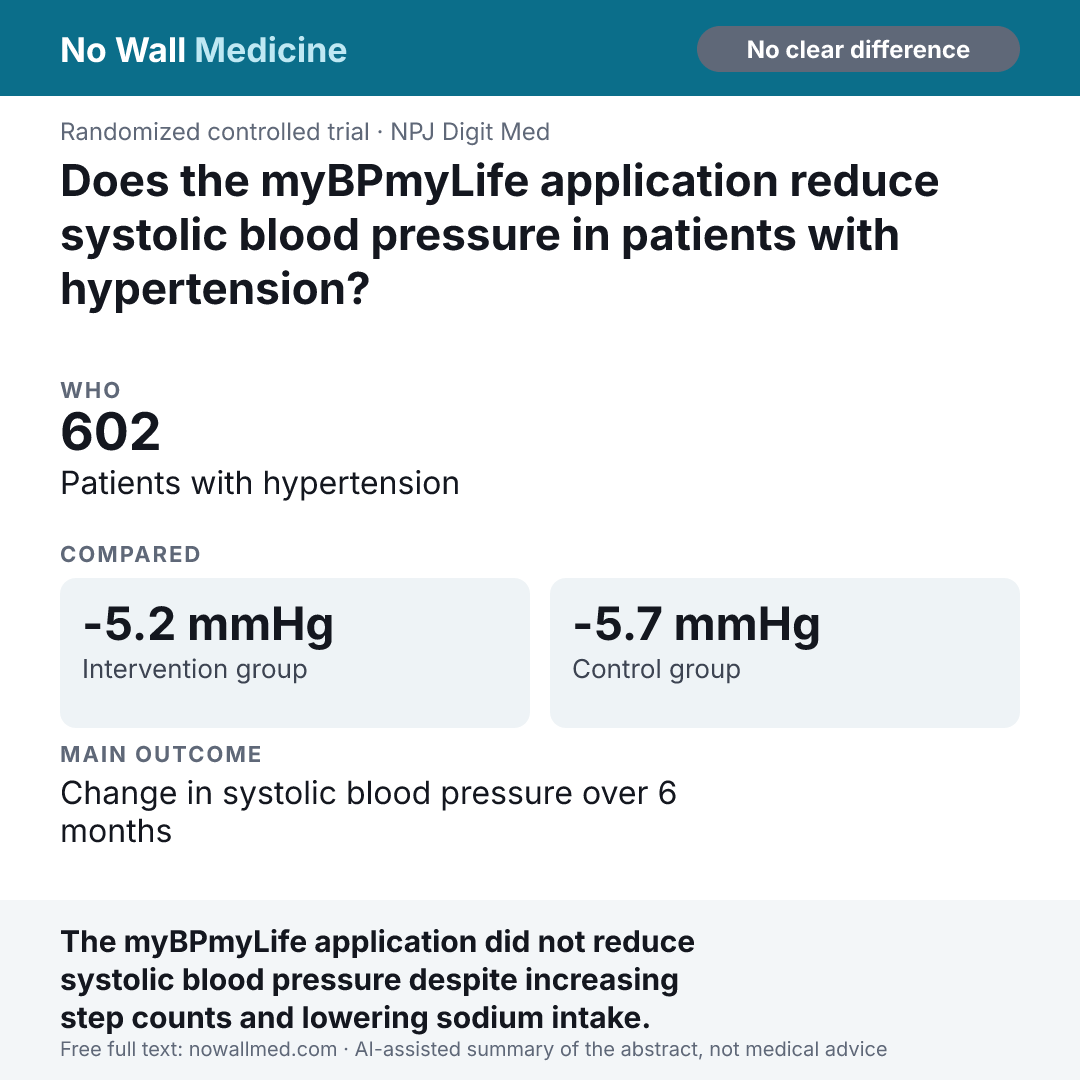
Physical activity and diet just-in-time adaptive intervention to reduce blood pressure: a randomized controlled trial
Randomized controlled trialNo clear difference
Does the myBPmyLife application reduce systolic blood pressure in patients with hypertension?
Who
602
Patients with hypertension
Compared
-5.2 mmHgIntervention group
-5.7 mmHgControl group
Main outcome
Change in systolic blood pressure over 6 months
Bottom line: The myBPmyLife application did not reduce systolic blood pressure despite increasing step counts and lowering sodium intake.
NPJ Digit Med · 2025-07-14 · Save PNG
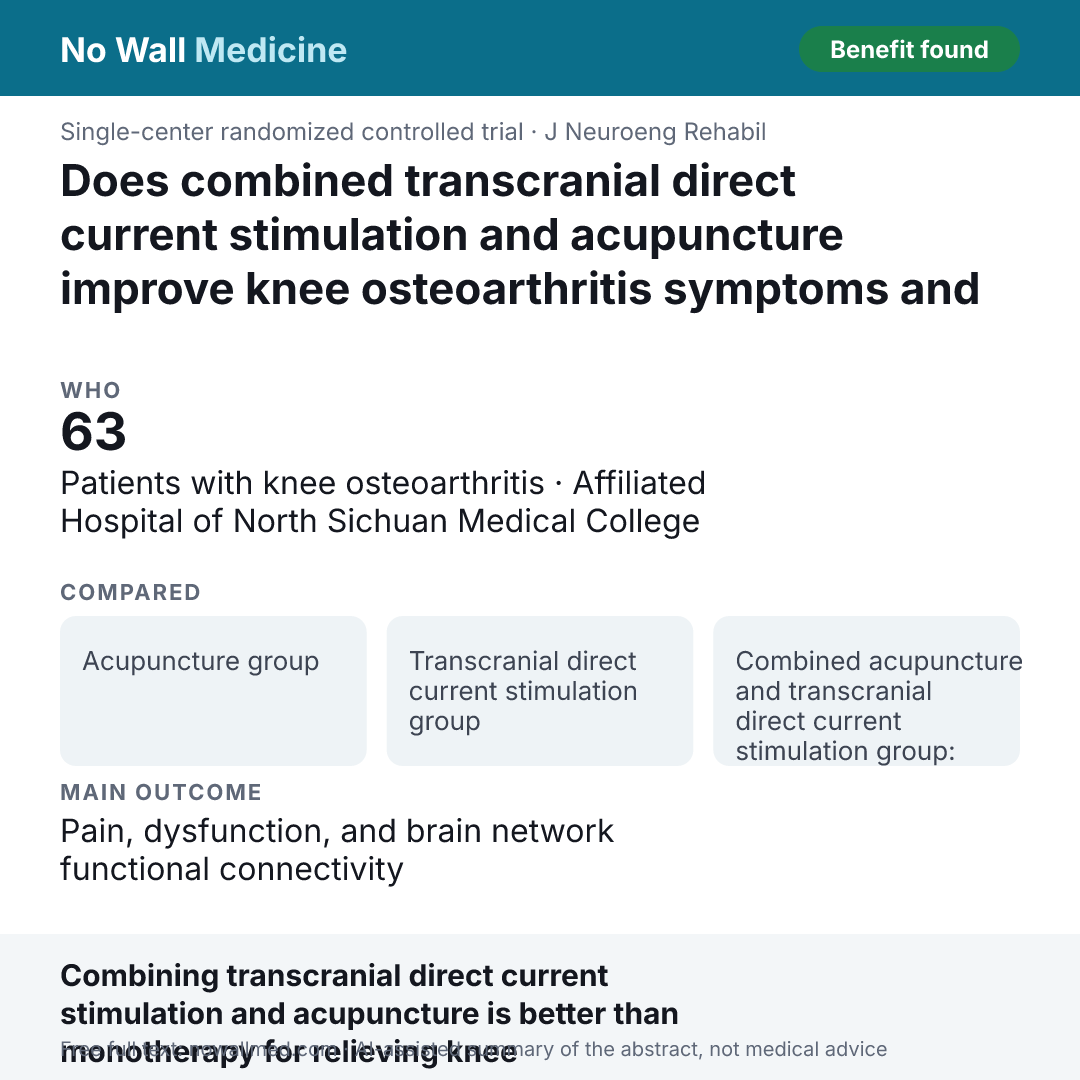
Effects of transcranial direct current stimulation combined with acupuncture therapy on brain network functional connectivity in patients with knee osteoarthritis: a single-center randomized controlled trial
Single-center randomized controlled trialBenefit found
Does combined transcranial direct current stimulation and acupuncture improve knee osteoarthritis symptoms and brain connectivity?
Who
63
Patients with knee osteoarthritis · Affiliated Hospital of North Sichuan Medical College
Compared
Acupuncture group
Transcranial direct current stimulation group
Combined acupuncture and transcranial direct current stimulation group: greater improvements in the VAS score, WOMAC score, and Lequesne indexes
Main outcome
Pain, dysfunction, and brain network functional connectivity
Bottom line: Combining transcranial direct current stimulation and acupuncture is better than monotherapy for relieving knee osteoarthritis pain and dysfunction.
J Neuroeng Rehabil · 2025-07-14 · Save PNG
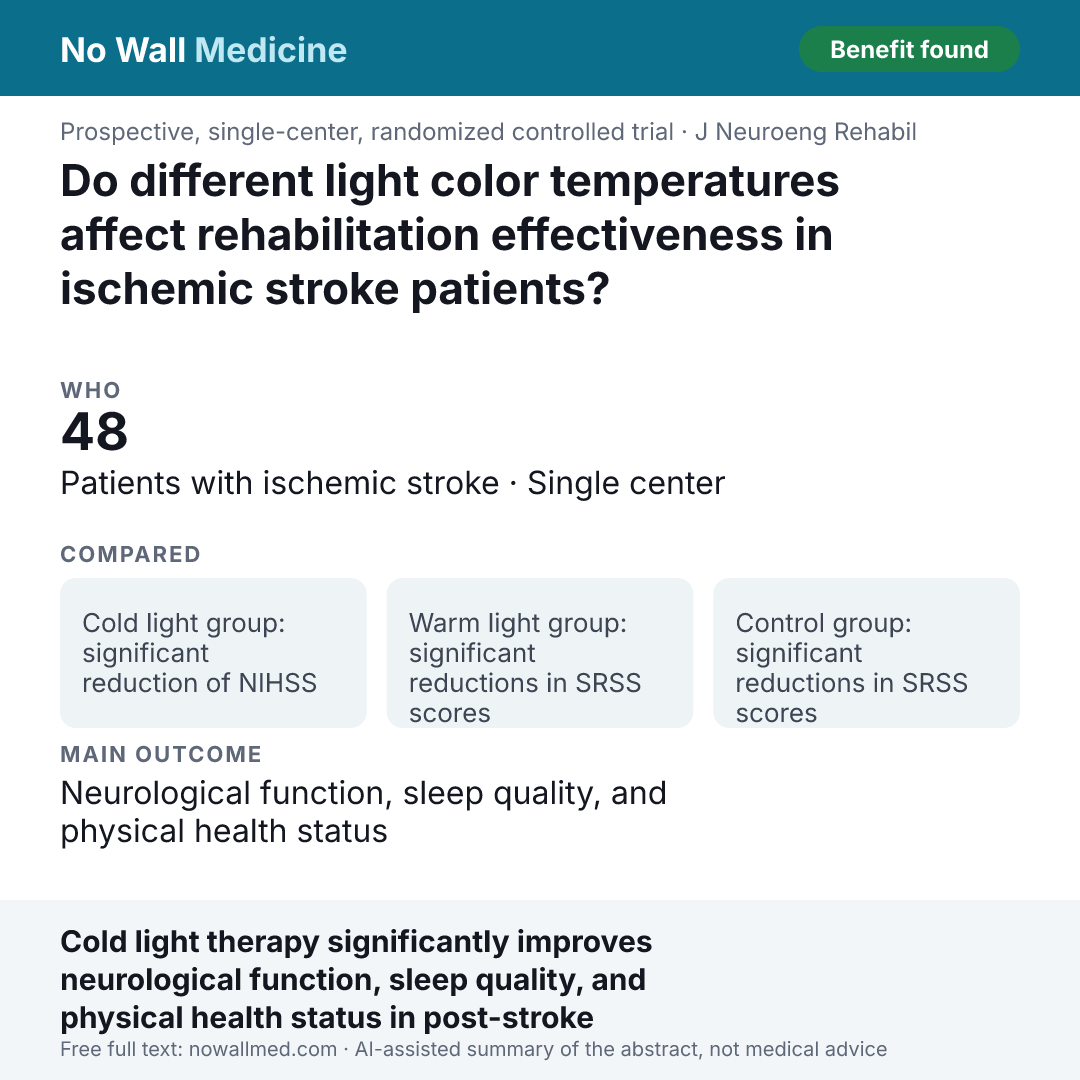
Different light color temperatures in the morning on the effectiveness of rehabilitation training in patients with ischemic stroke: a prospective, single-center, randomized controlled clinical trial
Prospective, single-center, randomized controlled trialBenefit found
Do different light color temperatures affect rehabilitation effectiveness in ischemic stroke patients?
Who
48
Patients with ischemic stroke · Single center
Compared
Cold light group: significant reduction of NIHSS
Warm light group: significant reductions in SRSS scores
Control group: significant reductions in SRSS scores
Main outcome
Neurological function, sleep quality, and physical health status
Bottom line: Cold light therapy significantly improves neurological function, sleep quality, and physical health status in post-stroke patients.
J Neuroeng Rehabil · 2025-07-14 · Save PNG