Visual abstracts
New randomized trials and meta-analyses from leading journals at a glance: who was studied, what was compared, and what was found. Every paper is free to read in full.
All specialtiesCardiology 4763Oncology 4042Gastroenterology & Hepatology 1902Infectious Disease 3756Neurology 1872Psychiatry & Mental Health 2214Pulmonology 2042Critical Care 1319Endocrinology & Diabetes 2544Pediatrics 2889Surgery 2479Orthopedics & Sports Medicine 917Neurosurgery 525Cardiothoracic & Vascular Surgery 656Plastic & Reconstructive Surgery 574Nephrology 1107Rheumatology 810Hematology 1090Dermatology 611Ophthalmology 532Obstetrics & Gynecology 1645Public & Global Health 1037Radiology & Imaging 617Anesthesiology 957Urology 745ENT (Otolaryngology) 494Emergency Medicine 481Allergy & Immunology 309Geriatrics 972Family Medicine & Primary Care 533Medical Genetics & Genomics 659Pathology & Laboratory Medicine 156Physical Medicine & Rehabilitation 734Palliative Care 421Nutrition 1560Digital Health & AI 2133General Medicine 318
Interventions in subacute paediatric inpatient neurorehabilitation: an umbrella review
Umbrella reviewUnclear result
Do inpatient neurorehabilitation interventions work
Who
paediatric patients with neurological injuries · inpatient
Compared
intervention
control
Main outcome
recovery after neurological injury
Bottom line: No evidence found for interventions
Limitation: lack of high-quality evidence
J Rehabil Med · 2025-04-02Download image

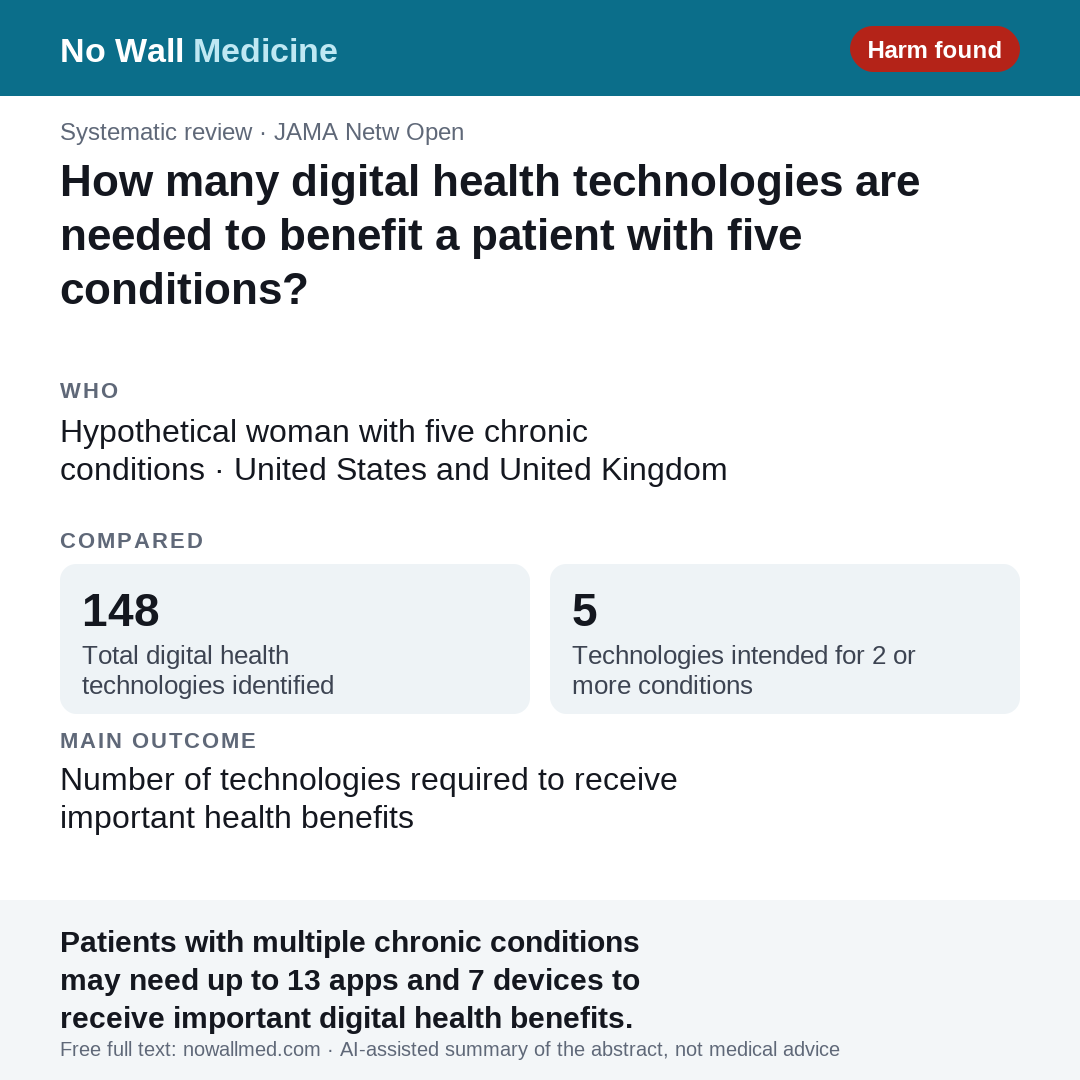
Cumulative Burden of Digital Health Technologies for Patients With Multimorbidity: A Systematic Review
Systematic reviewHarm found
How many digital health technologies are needed to benefit a patient with five conditions?
Who
Hypothetical woman with five chronic conditions · United States and United Kingdom
Compared
148Total digital health technologies identified
5Technologies intended for 2 or more conditions (3.4%)
Main outcome
Number of technologies required to receive important health benefits
Bottom line: Patients with multiple chronic conditions may need up to 13 apps and 7 devices to receive important digital health benefits.
JAMA Netw Open · 2025-04-01Download image
An Evidence Map of the Women Veterans' Health Literature, 2016 to 2023: A Systematic Review
Systematic reviewMixed results
What is the scope and breadth of women veterans' health literature from 2016 to 2023?
Who
932
Articles reporting on United States women veterans' health outcomes or care experiences · United States
Compared
Chronic medical conditions: 137 articles [15%]
General mental health: 203 articles [22%]
Interpersonal violence: 121 articles [13%]
Main outcome
Scope and breadth of published women veterans' health literature
Bottom line: Literature volume doubled between 2016 and 2023, but several important research gaps remain in women veterans' health.
Limitation: Several important research gaps remain within this field of study.
JAMA Netw Open · 2025-04-01Download image

Engagement in Hypertension and Diabetes Clinical Trials at Federally Qualified Health Centers: A Systematic Review
Systematic review and ordinal regression analysisMixed results
What are the levels of Federally Qualified Health Center engagement in hypertension and diabetes clinical trials?
Who
Federally Qualified Health Centers in the United States · United States
Compared
Higher physician to patient ratio: 54% (odds ratio 1.54; 95% CI, 1.06-2.23) higher odds
Higher education specialist to patient ratio: 41% (odds ratio 1.41; 95% CI, 1.03-1.94) higher odds
Main outcome
Levels of Federally Qualified Health Center engagement
Bottom line: Federally Qualified Health Centers show lower levels of engagement in hypertension and type 2 diabetes clinical trials.
JAMA Netw Open · 2025-04-01Download image

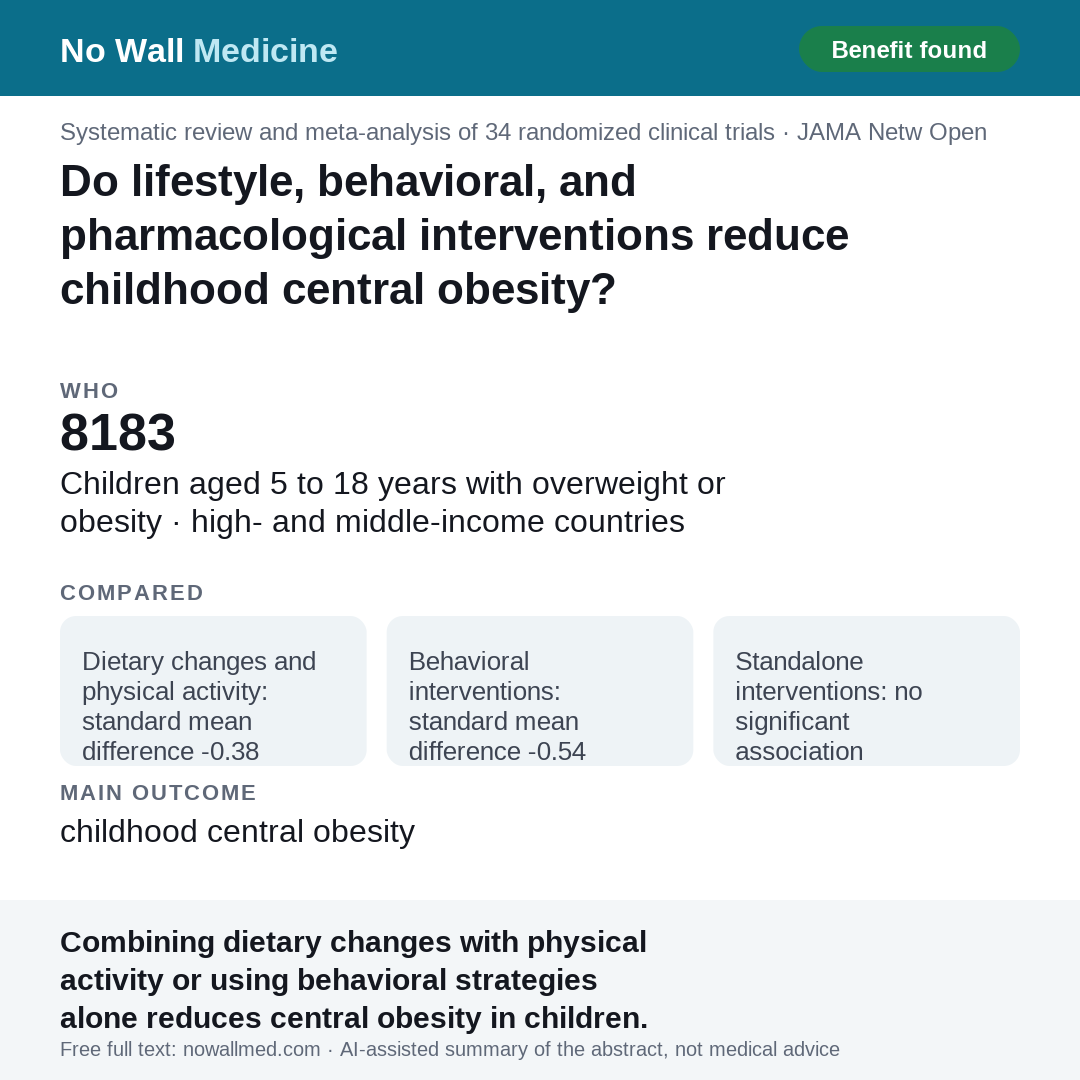
Interventions for Childhood Central Obesity: A Systematic Review and Meta-Analysis
Systematic review and meta-analysis of 34 randomized clinical trialsBenefit found
Do lifestyle, behavioral, and pharmacological interventions reduce childhood central obesity?
Who
8183
Children aged 5 to 18 years with overweight or obesity · high- and middle-income countries
Compared
Dietary changes and physical activity: standard mean difference -0.38 (95% CI -0.58 to -0.19)
Behavioral interventions: standard mean difference -0.54 (95% CI -1.06 to -0.03)
Standalone interventions: no significant association
Main outcome
childhood central obesity
Result: standard mean difference -0.38 (95% CI -0.58 to -0.19)
Bottom line: Combining dietary changes with physical activity or using behavioral strategies alone reduces central obesity in children.
Limitation: 8 studies were deemed to have a higher risk of bias
JAMA Netw Open · 2025-04-01Download image
Reporting of Noninferiority Margins on ClinicalTrials.gov: A Systematic Review
Systematic reviewHarm found
How is the noninferiority margin reported on ClinicalTrials.gov and in publications?
Who
Noninferiority trials registered on ClinicalTrials.gov · ClinicalTrials.gov
Compared
Trials completed 2010 to 2015: 3.0% reported margin at registration
Trials with results posted on ClinicalTrials.gov: 59.8% reported the noninferiority margin
Trials with corresponding publication: 94.2% reported the noninferiority margin
Trials posted 2022 to 2023: 9.2% reported margin at registration
Main outcome
Reporting of the noninferiority margin
Bottom line: Reporting of the noninferiority margin on ClinicalTrials.gov was low, suggesting a need for mandatory reporting at registration.
JAMA Netw Open · 2025-04-01Download image

Systematic review of the efficacy of pharmacological and non-pharmacological interventions for improving quality of life of people with dementia
Systematic review and meta-analysisBenefit found
Do pharmacological or non-pharmacological interventions improve quality of life for people with dementia?
Who
People with dementia
Compared
Group cognitive stimulation therapy: standardised mean difference 0.25
Other non-pharmacological interventions
Pharmacological interventions: limited
Main outcome
Quality of life
Result: standardised mean difference 0.25; P = 0.003
Bottom line: Non-pharmacological interventions, especially group cognitive stimulation therapy, improve quality of life for people with dementia.
Limitation: Current evidence supporting the use of any pharmacological intervention is limited.
Br J Psychiatry · 2025-04-01Download image

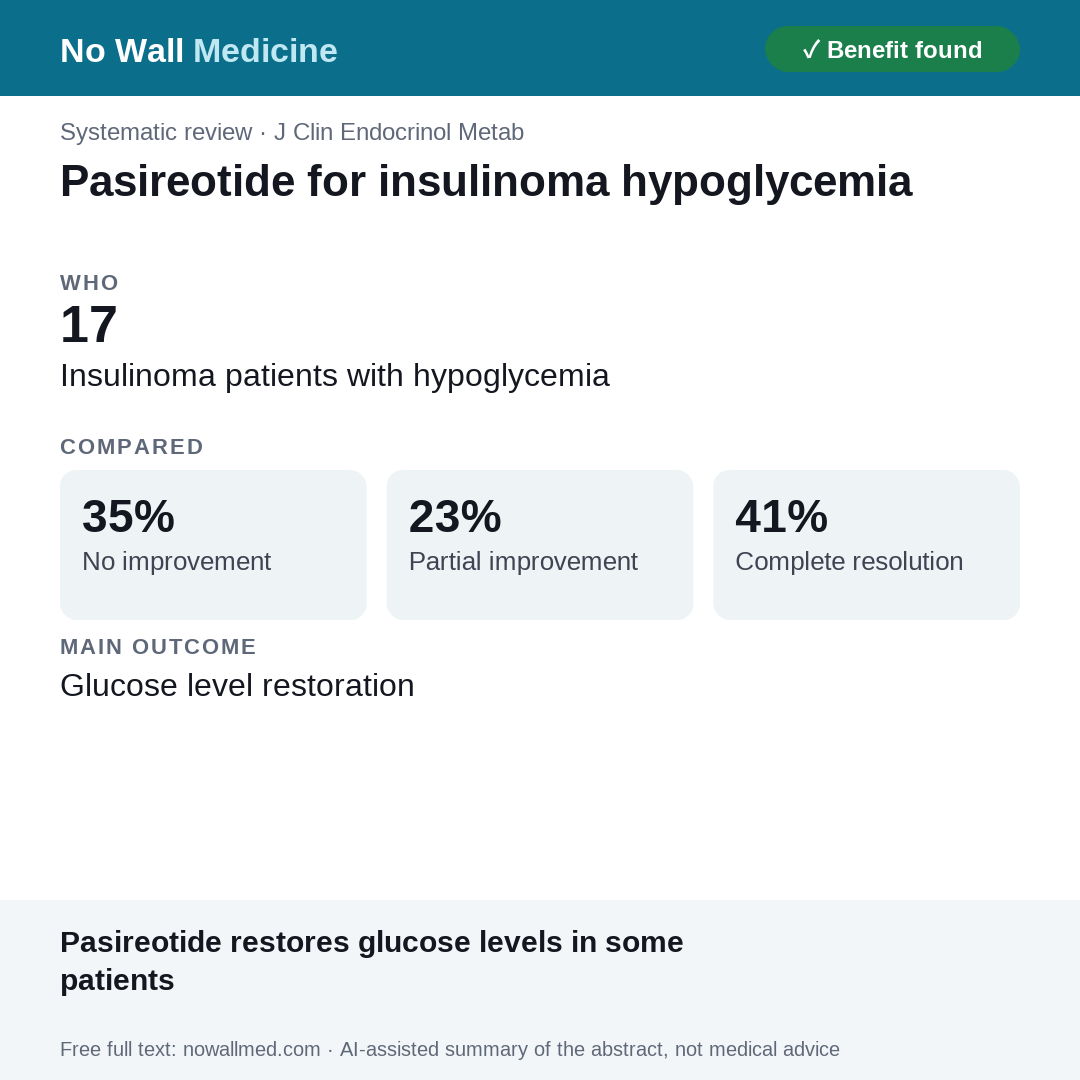
Efficacy and Safety of Pasireotide in Insulinoma-Associated Hypoglycemia
Systematic reviewBenefit found
Pasireotide for insulinoma hypoglycemia
Who
17
Insulinoma patients with hypoglycemia
Compared
35%No improvement
23%Partial improvement
41%Complete resolution
Main outcome
Glucose level restoration
Bottom line: Pasireotide restores glucose levels in some patients
Limitation: Small number of cases
J Clin Endocrinol Metab · 2025-04-01Download image
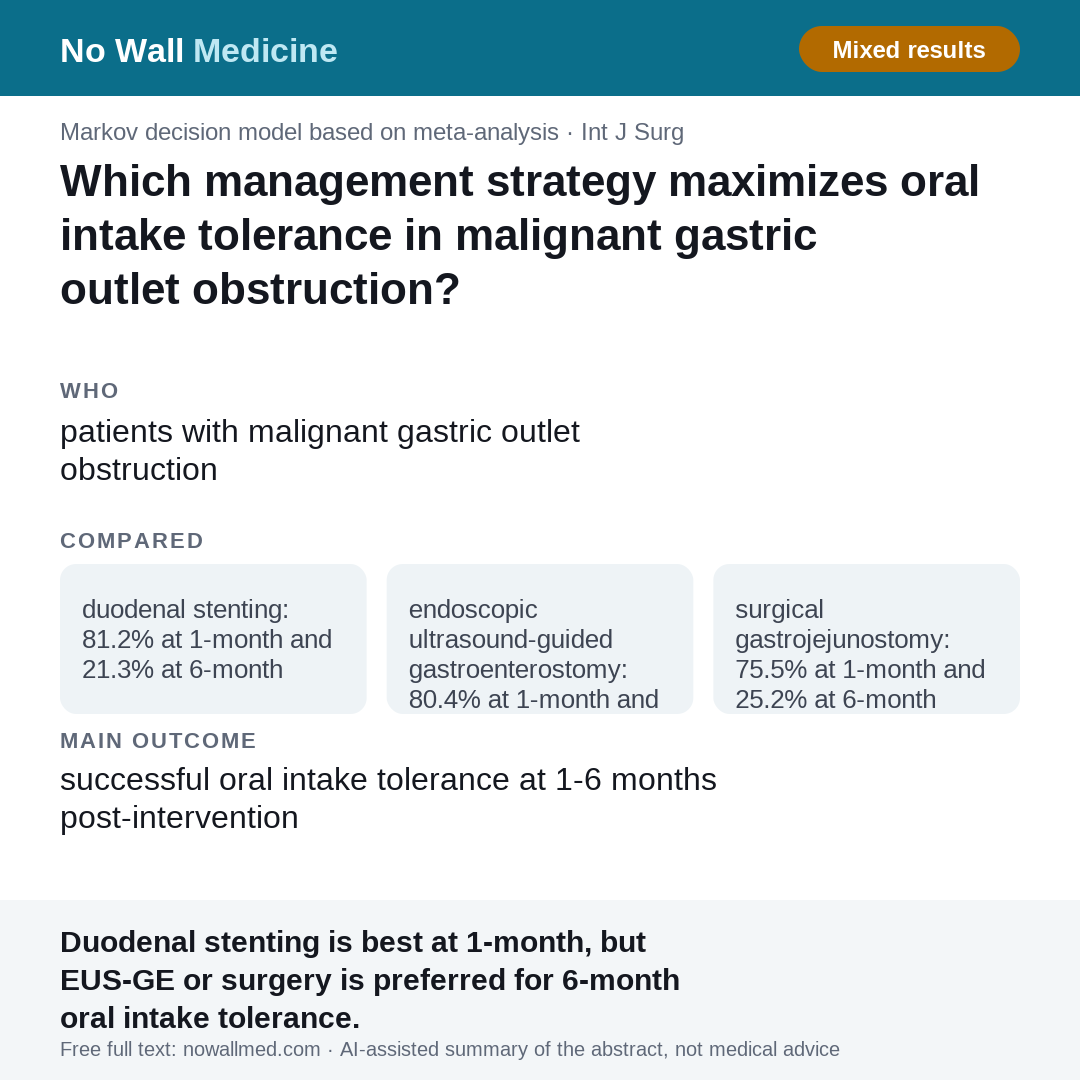
Maximizing oral intake tolerance in malignant gastric outlet obstruction - a Markov decision tree analysis comparing duodenal stenting, endoscopic ultrasound-guided gastroenterostomy and surgical gastrojejunostomy based on a meta-analysis of randomized controlled trials
Markov decision model based on meta-analysisMixed results
Which management strategy maximizes oral intake tolerance in malignant gastric outlet obstruction?
Who
patients with malignant gastric outlet obstruction
Compared
duodenal stenting: 81.2% at 1-month and 21.3% at 6-month
endoscopic ultrasound-guided gastroenterostomy: 80.4% at 1-month and 23.8% at 6-month
surgical gastrojejunostomy: 75.5% at 1-month and 25.2% at 6-month
Main outcome
successful oral intake tolerance at 1-6 months post-intervention
Bottom line: Duodenal stenting is best at 1-month, but EUS-GE or surgery is preferred for 6-month oral intake tolerance.
Limitation: scarcity of randomized controlled trials for endoscopic ultrasound-guided gastroenterostomy
Int J Surg · 2025-04-01Download image
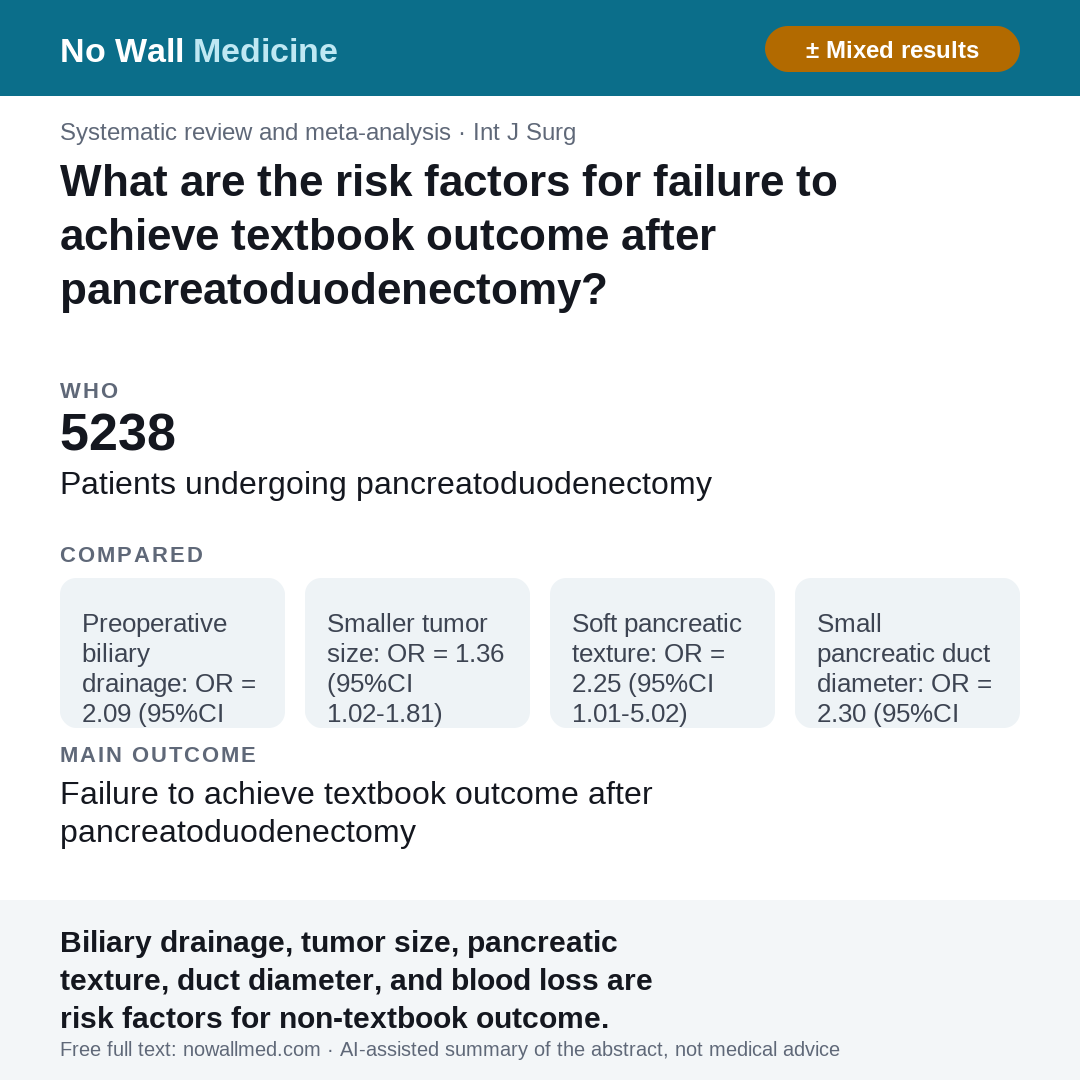
Risk factors of failure to achieve textbook outcome in patients after pancreatoduodenectomy: a systematic review and meta-analysis
Systematic review and meta-analysisMixed results
What are the risk factors for failure to achieve textbook outcome after pancreatoduodenectomy?
Who
5238
Patients undergoing pancreatoduodenectomy
Compared
Preoperative biliary drainage: OR = 2.09 (95%CI 1.30-3.36)
Smaller tumor size: OR = 1.36 (95%CI 1.02-1.81)
Soft pancreatic texture: OR = 2.25 (95%CI 1.01-5.02)
Small pancreatic duct diameter: OR = 2.30 (95%CI 1.62-3.28)
Main outcome
Failure to achieve textbook outcome after pancreatoduodenectomy
Bottom line: Biliary drainage, tumor size, pancreatic texture, duct diameter, and blood loss are risk factors for non-textbook outcome.
Int J Surg · 2025-04-01Download image
Rectal cancer approach strategies after neoadjuvant treatment - a systematic review and network meta-analysis
Systematic review and network meta-analysisMixed results
What are the long-term outcomes of different rectal cancer approach strategies after neoadjuvant treatment?
Who
2778
Patients with rectal cancer after neoadjuvant chemoradiotherapy
Compared
Total mesorectal excision surgery
Watch-and-wait: OR, 0.20; 95% CI, 0.12-0.35
Local excision: 3.00; 1.60-5.80
Main outcome
2-year local regrowth rate and overall survival
Result: OR, 0.37; 95% CI, 0.09-0.95
Bottom line: Total mesorectal excision reduces 2-year local regrowth, but watch-and-wait and local excision show noninferiority in long-term survival.
Limitation: Low-certainty evidence for 2-year local regrowth rate
Int J Surg · 2025-04-01Download image

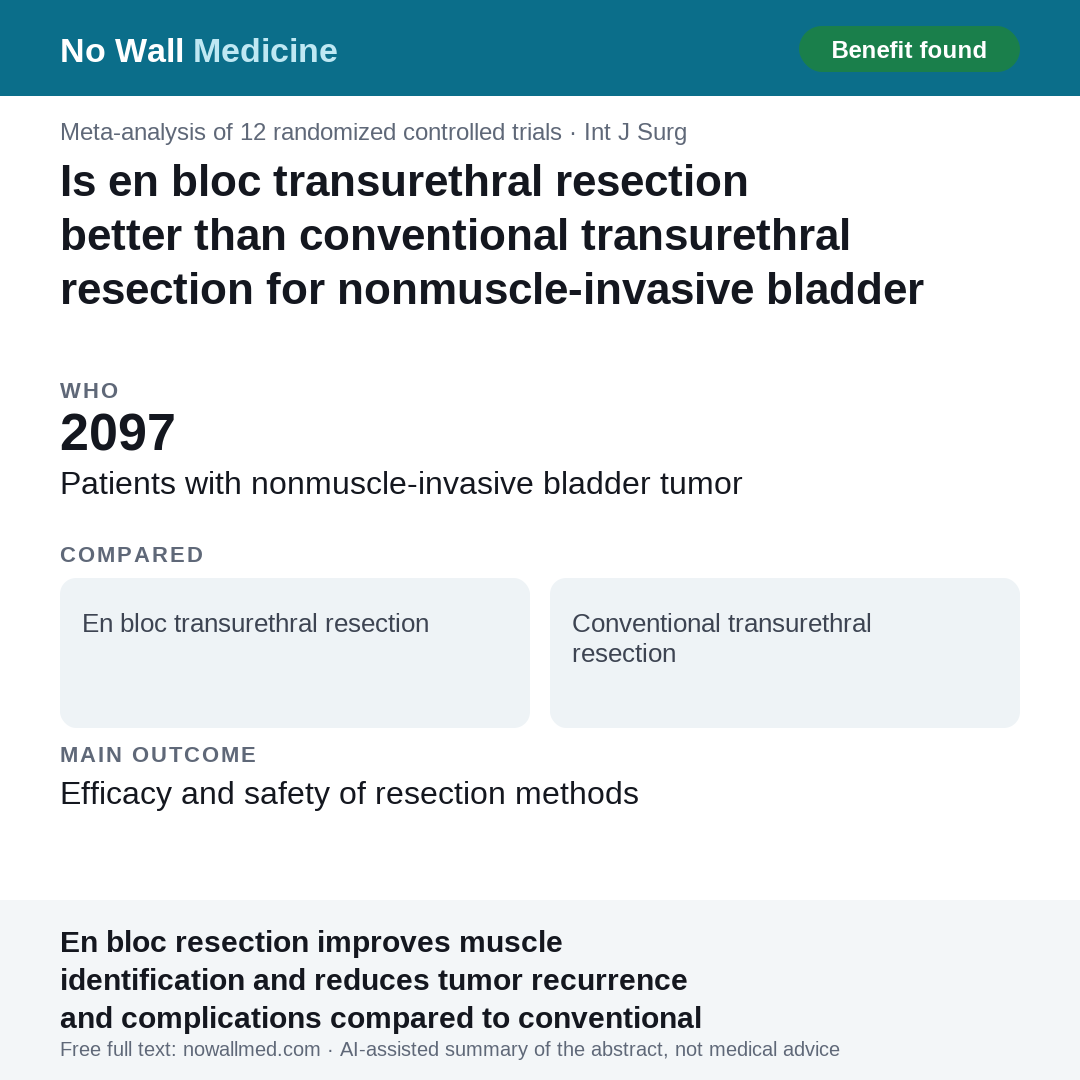
An updated systematic review, meta-analysis, and trial sequential analysis of the efficacy and safety of en bloc transurethral resection vs. conventional transurethral resection for nonmuscle-invasive bladder tumor
Meta-analysis of 12 randomized controlled trialsBenefit found
Is en bloc transurethral resection better than conventional transurethral resection for nonmuscle-invasive bladder tumor?
Who
2097
Patients with nonmuscle-invasive bladder tumor
Compared
En bloc transurethral resection
Conventional transurethral resection
Main outcome
Efficacy and safety of resection methods
Bottom line: En bloc resection improves muscle identification and reduces tumor recurrence and complications compared to conventional resection.
Int J Surg · 2025-04-01Download image
Essential components and validation of multi-specialty robotic surgical training curricula: a systematic review
Systematic reviewMixed results
What are the essential components and validity of multi-specialty robotic surgical training curricula?
Who
Studies reporting on robotic surgical training curricula · MEDLINE, EMBASE, Emcare, and CINAHL databases
Compared
Common curriculum components: didactic teaching (n = 48, 72.7%)
Common curriculum components: dry laboratory skills (n = 46, 69.7%)
Common curriculum components: virtual reality simulation (n = 44, 66.7%)
Main outcome
Essential components and validity of robotic training curricula
Bottom line: Robotic training includes didactic teaching, dry lab, and simulation, but assessment methods vary and validation gaps remain.
Limitation: Majority of studies were single-center and observational with moderate methodological quality.
Int J Surg · 2025-04-01Download image

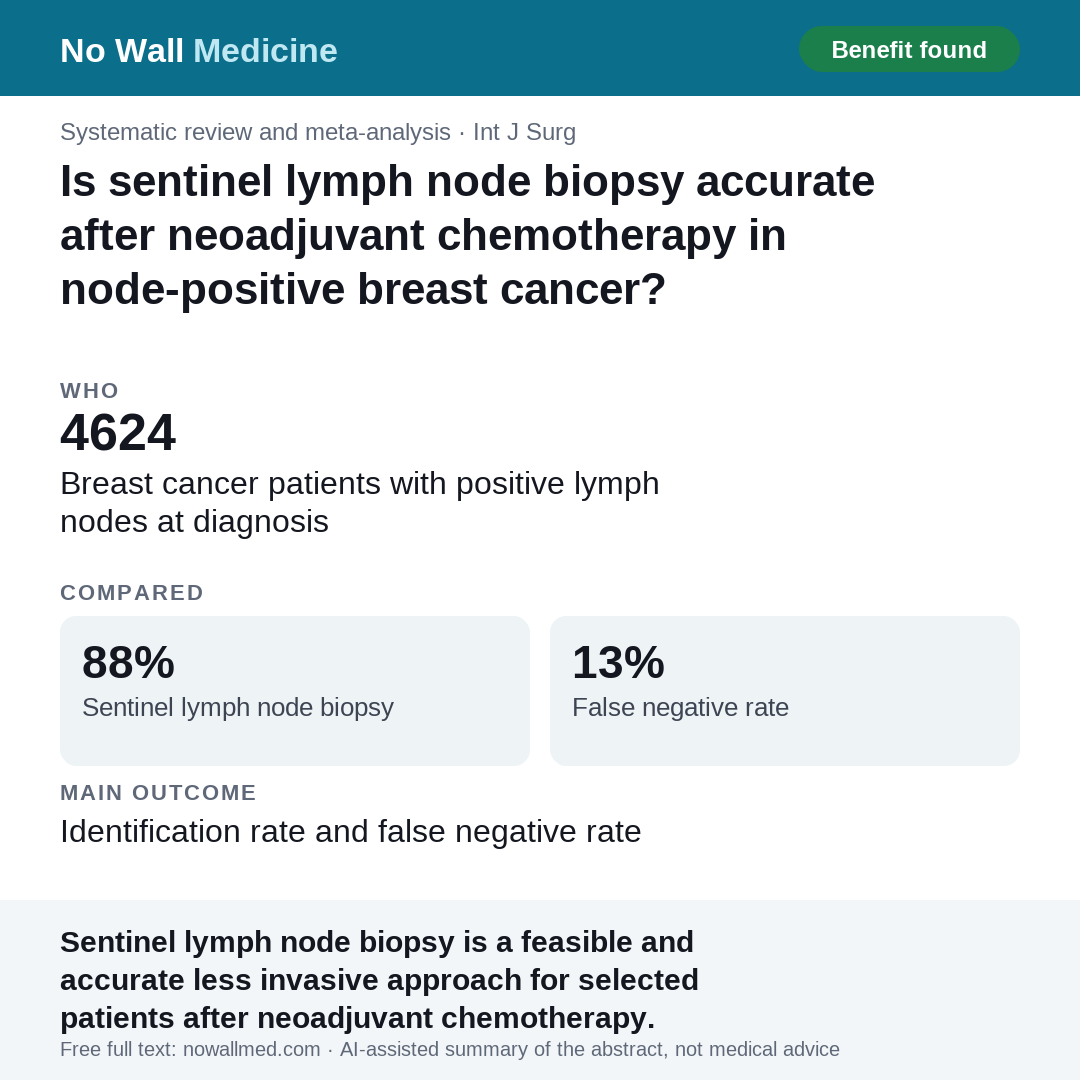
Performance of sentinel lymph node biopsy after neoadjuvant chemotherapy in clinically node-positive breast cancer patients: systematic review and meta-analysis
Systematic review and meta-analysisBenefit found
Is sentinel lymph node biopsy accurate after neoadjuvant chemotherapy in node-positive breast cancer?
Who
4624
Breast cancer patients with positive lymph nodes at diagnosis
Compared
88%Sentinel lymph node biopsy (95% confidence interval 86-90)
13%False negative rate (95% confidence interval 11-15)
Main outcome
Identification rate and false negative rate
Result: pooled identification rate 88% (95% CI 86-90) and pooled false negative rate 13% (95% CI 11-15)
Bottom line: Sentinel lymph node biopsy is a feasible and accurate less invasive approach for selected patients after neoadjuvant chemotherapy.
Int J Surg · 2025-04-01Download image
The efficacy of diltiazem, glyceryl trinitrate, nifedipine, minoxidil, and lidocaine for the medical management of anal fissure: a systematic review and network meta-analysis of randomized controlled trials
Systematic review and network meta-analysisMixed results
What are the most effective pharmacological treatments for medical management of anal fissure?
Who
1770
Participants with anal fissure
Compared
nifedipine: highest healing rate
diltiazem: lowest recurrence rate and most effective in pain reduction
minoxidil: relatively low incidence of adverse effects
lidocaine: lowest healing rate and least effective in alleviating pain
Main outcome
anal fissure healing
Bottom line: Nifedipine had the highest healing rate, while diltiazem is preferred for pain reduction despite needing more studies.
Int J Surg · 2025-04-01Download image

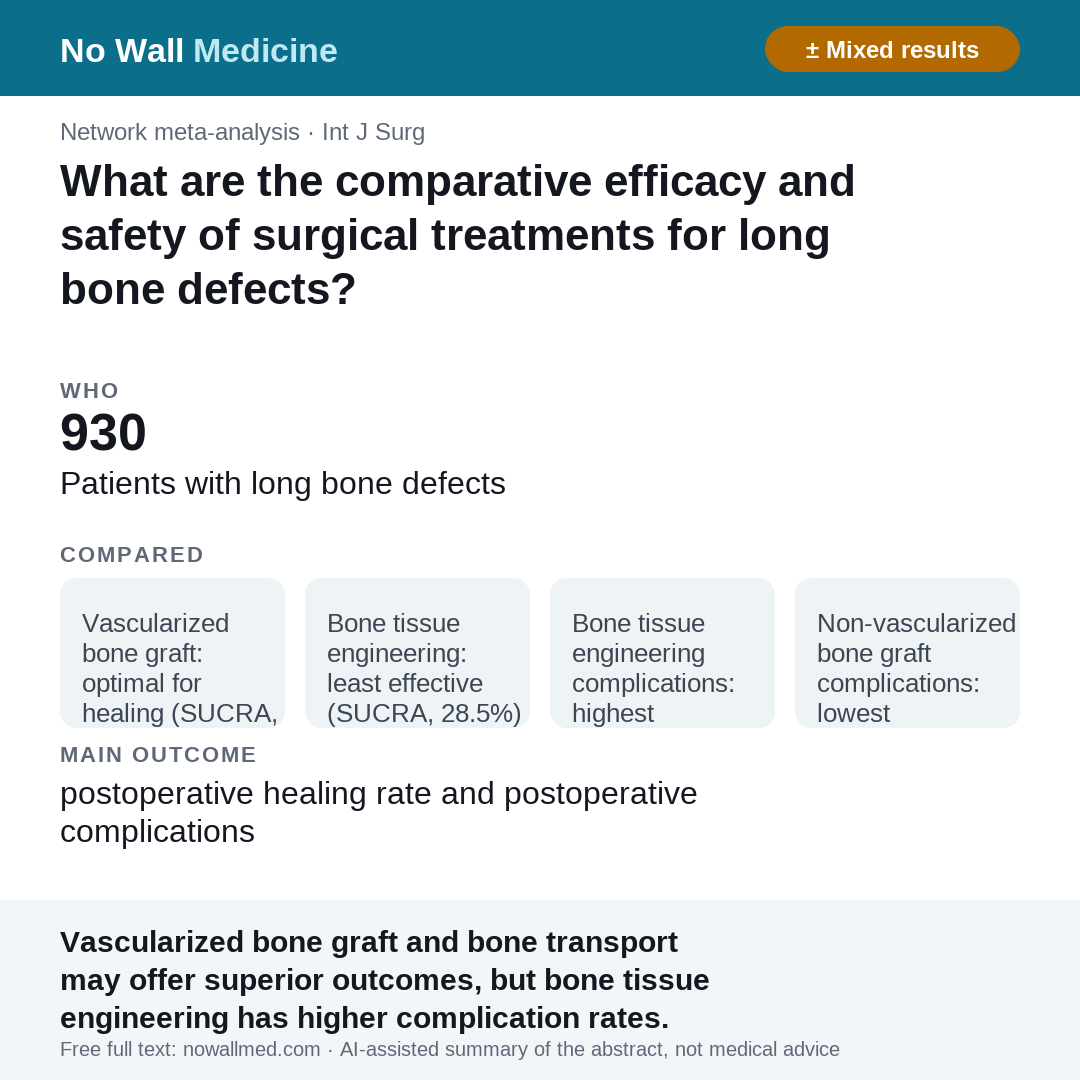
Evaluation of the comparative efficacy and safety of surgical strategies for long bone defects: a network meta-analysis
Network meta-analysisMixed results
What are the comparative efficacy and safety of surgical treatments for long bone defects?
Who
930
Patients with long bone defects
Compared
Vascularized bone graft: optimal for healing (SUCRA, 75.1%)
Bone tissue engineering: least effective (SUCRA, 28.5%)
Bone tissue engineering complications: highest complication rate (SUCRA, 90.9%)
Non-vascularized bone graft complications: lowest complication rate (SUCRA, 27.6%)
Main outcome
postoperative healing rate and postoperative complications
Bottom line: Vascularized bone graft and bone transport may offer superior outcomes, but bone tissue engineering has higher complication rates.
Limitation: Further high-quality, large-sample randomized controlled trials are required to confirm these findings.
Int J Surg · 2025-04-01Download image
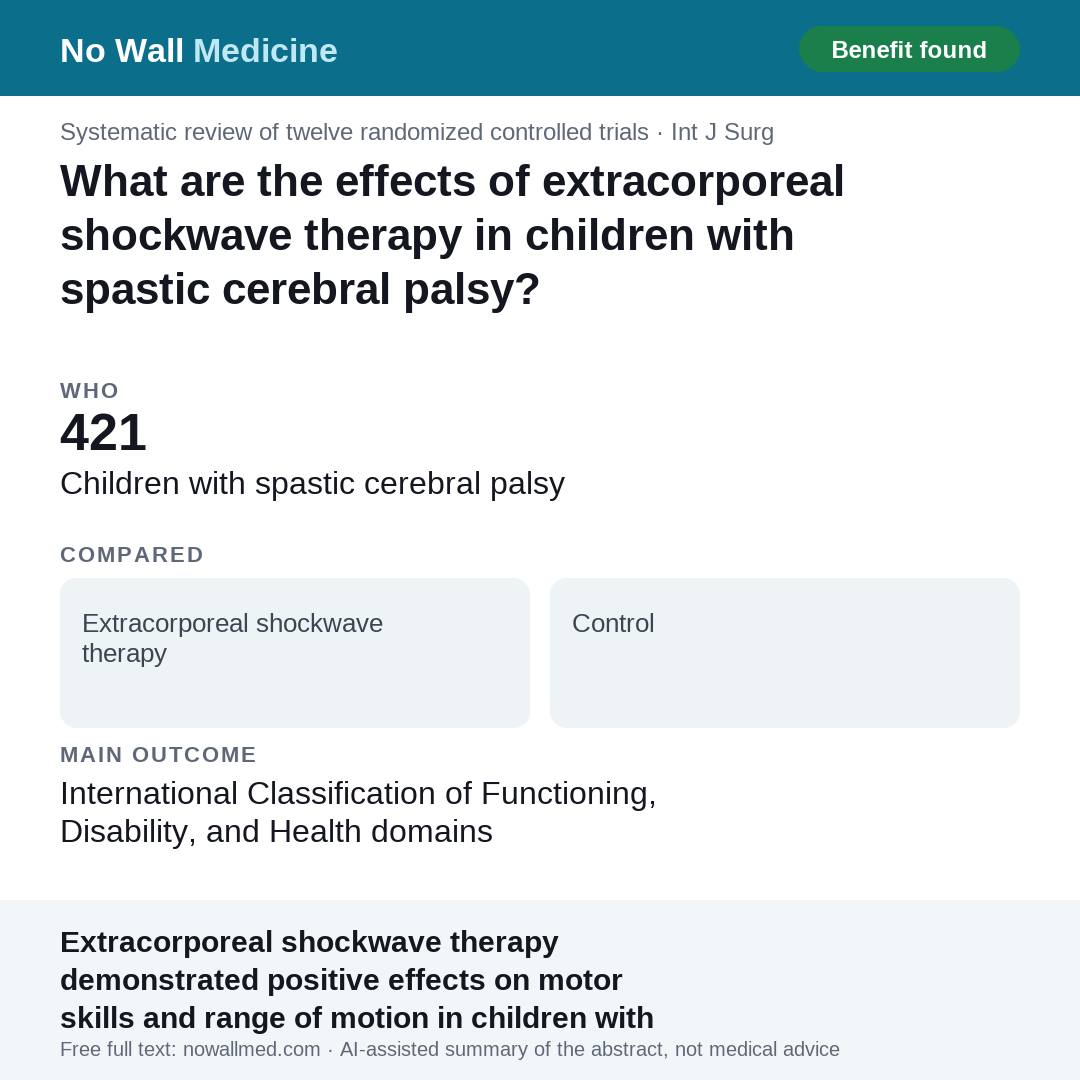
The effects of extracorporeal shock wave therapy in children with cerebral palsy: a systematic review
Systematic review of twelve randomized controlled trialsBenefit found
What are the effects of extracorporeal shockwave therapy in children with spastic cerebral palsy?
Who
421
Children with spastic cerebral palsy
Compared
Extracorporeal shockwave therapy
Control
Main outcome
International Classification of Functioning, Disability, and Health domains
Result: effect sizes ranging from moderate (0.65) to very large (14.62)
Bottom line: Extracorporeal shockwave therapy demonstrated positive effects on motor skills and range of motion in children with spastic cerebral palsy.
Limitation: PEDro scores ranged from three to eight
Int J Surg · 2025-04-01Download image
Anti-inflammatory interventions for the treatment and prevention of depression among older adults: a systematic review and meta-analysis
Systematic review and meta-analysis of 31 randomized controlled trialsBenefit found
Do anti-inflammatory interventions treat or prevent depression in older adults?
Who
Older adults
Compared
Anti-inflammatory interventions
Placebo
Main outcome
Mean change scores of depression scores
Result: standardized mean difference -0.57 (95% CI -0.98 to -0.15)
Bottom line: Anti-inflammatory interventions show moderate beneficial effects for treating and preventing depression among older adults.
Limitation: Substantial heterogeneity among included studies
Transl Psychiatry · 2025-04-01Download image

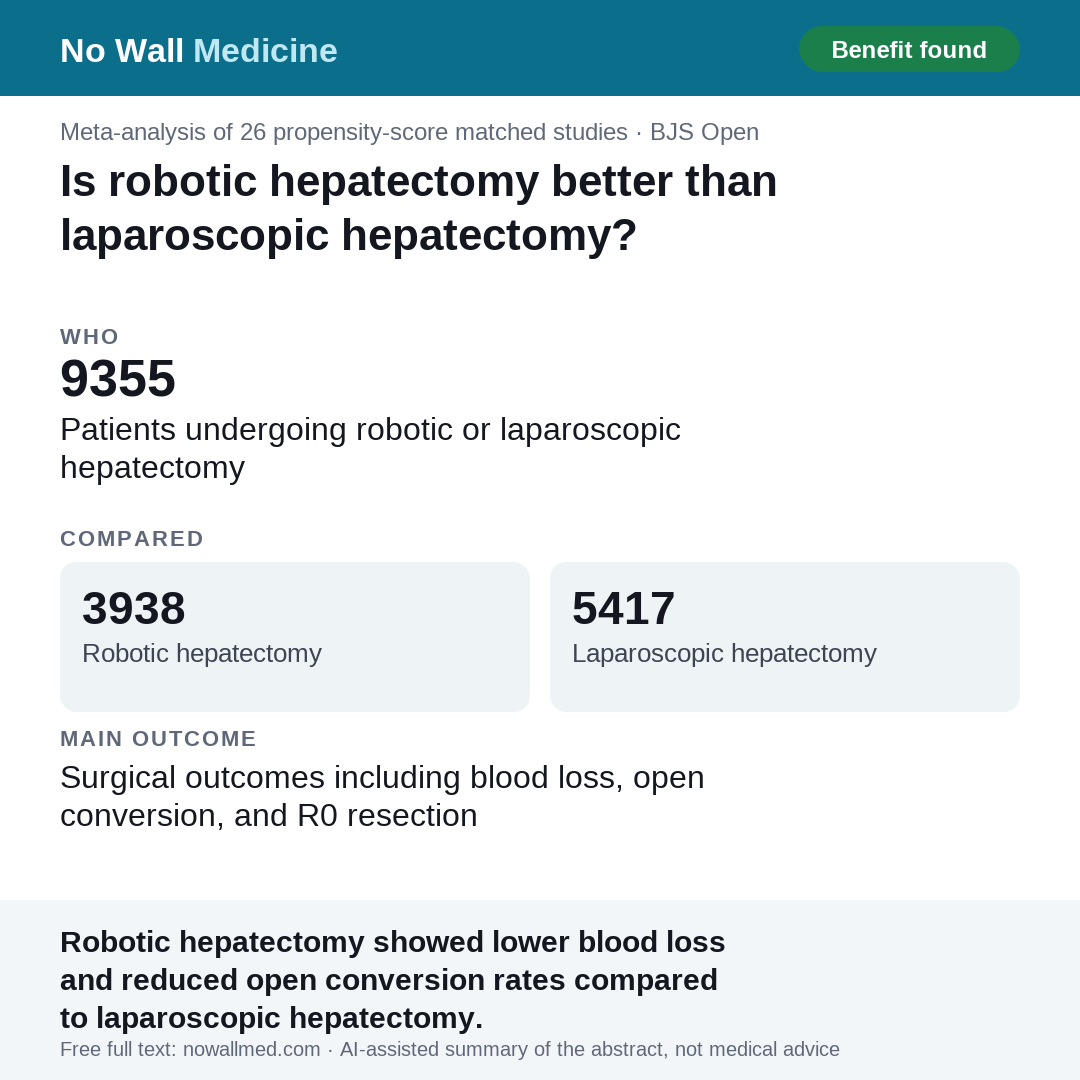
Robotic versus laparoscopic hepatectomy: meta-analysis of propensity-score matched studies
Meta-analysis of 26 propensity-score matched studiesBenefit found
Is robotic hepatectomy better than laparoscopic hepatectomy?
Who
9355
Patients undergoing robotic or laparoscopic hepatectomy
Compared
3938Robotic hepatectomy
5417Laparoscopic hepatectomy
Main outcome
Surgical outcomes including blood loss, open conversion, and R0 resection
Result: mean difference -86.22 (95% CI -116.49 to -55.95) for blood loss
Bottom line: Robotic hepatectomy showed lower blood loss and reduced open conversion rates compared to laparoscopic hepatectomy.
BJS Open · 2025-04-01Download image
Artificial Intelligence Performance in Image-Based Cancer Identification: Umbrella Review of Systematic Reviews
Umbrella review of systematic reviewsBenefit found
What is the performance of artificial intelligence in image-based cancer identification?
Who
Noninvasive imaging diagnosis across 8 major human system cancers
Compared
Esophageal cancer: sensitivity 90%-95% and specificity 80%-93.8%
Breast cancer: sensitivity 75.4%-92% and specificity 83%-90.6%
Ovarian cancer: sensitivity 75%-94% and specificity 75%-94%
Lung cancer: specificity 65% to 80%
Main outcome
Diagnostic performance of artificial intelligence algorithms
Bottom line: Artificial intelligence shows great potential for accurate cancer diagnosis, though hurdles remain before clinical implementation.
J Med Internet Res · 2025-04-01Download image