Visual abstracts
New randomized trials and meta-analyses from leading journals at a glance: who was studied, what was compared, and what was found. Every paper is free to read in full.
All specialtiesCardiology 840Oncology 760Gastroenterology & Hepatology 306Infectious Disease 626Neurology 350Psychiatry & Mental Health 430Pulmonology 365Critical Care 243Endocrinology & Diabetes 480Pediatrics 534Surgery 318Orthopedics & Sports Medicine 161Neurosurgery 89Cardiothoracic & Vascular Surgery 87Plastic & Reconstructive Surgery 117Nephrology 197Rheumatology 108Hematology 181Dermatology 76Ophthalmology 97Obstetrics & Gynecology 261Public & Global Health 167Radiology & Imaging 96Anesthesiology 107Urology 162ENT (Otolaryngology) 86Emergency Medicine 68Allergy & Immunology 58Geriatrics 160Family Medicine & Primary Care 111Medical Genetics & Genomics 91Pathology & Laboratory Medicine 24Physical Medicine & Rehabilitation 148Palliative Care 81Nutrition 223Digital Health & AI 460General Medicine 101
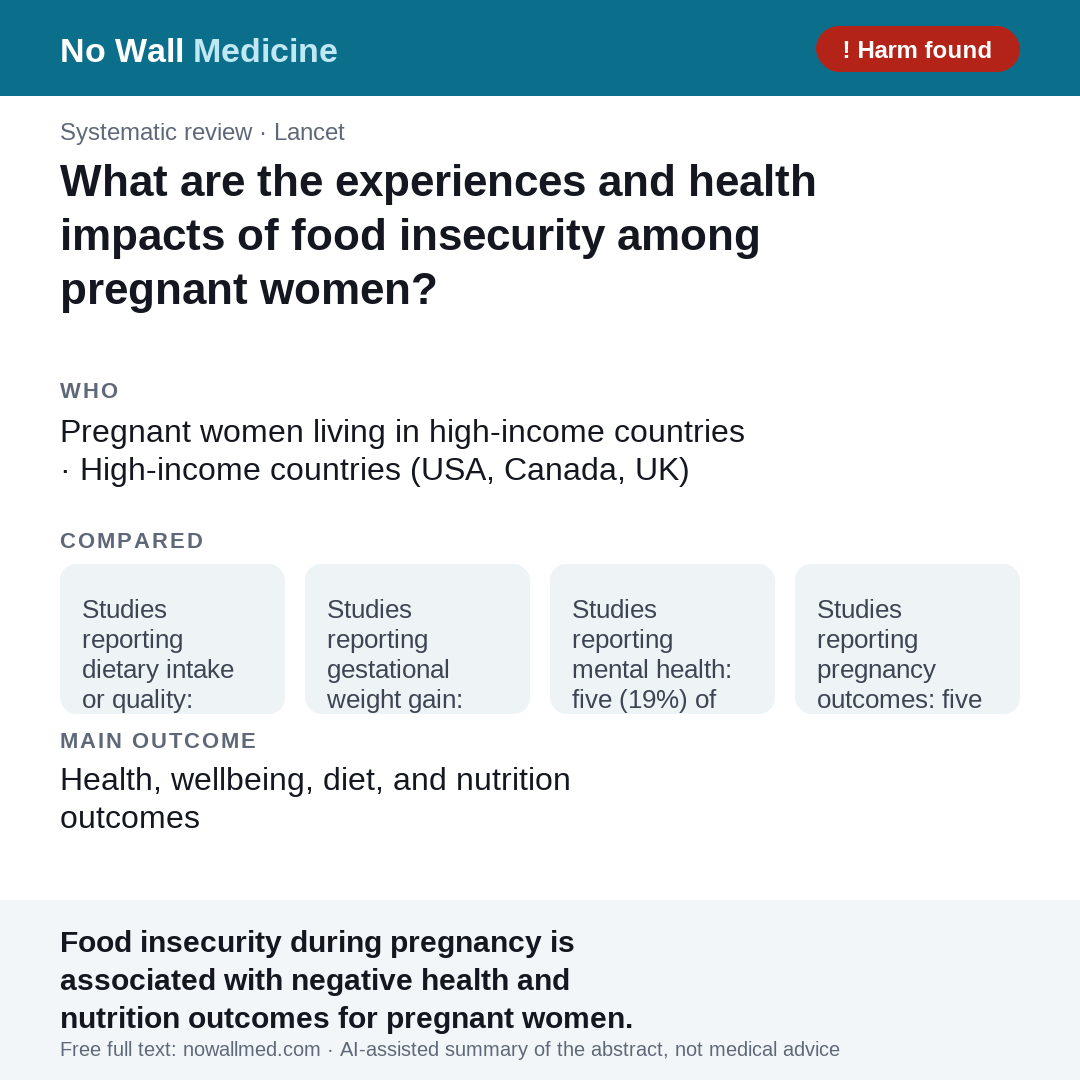
Food insecurity among pregnant women living in high-income countries: a systematic review
Systematic reviewHarm found
What are the experiences and health impacts of food insecurity among pregnant women?
Who
27
Pregnant women living in high-income countries · High-income countries (USA, Canada, UK)
Compared
Studies reporting dietary intake or quality: seven (26%) of 27
Studies reporting gestational weight gain: seven (26%) of 27
Studies reporting mental health: five (19%) of 27
Studies reporting pregnancy outcomes: five (19%) of 27
Main outcome
Health, wellbeing, diet, and nutrition outcomes
Bottom line: Food insecurity during pregnancy is associated with negative health and nutrition outcomes for pregnant women.
Limitation: The review had a restricted focus on studies conducted from 2008 onward.
Lancet · 2022-11-24Download image
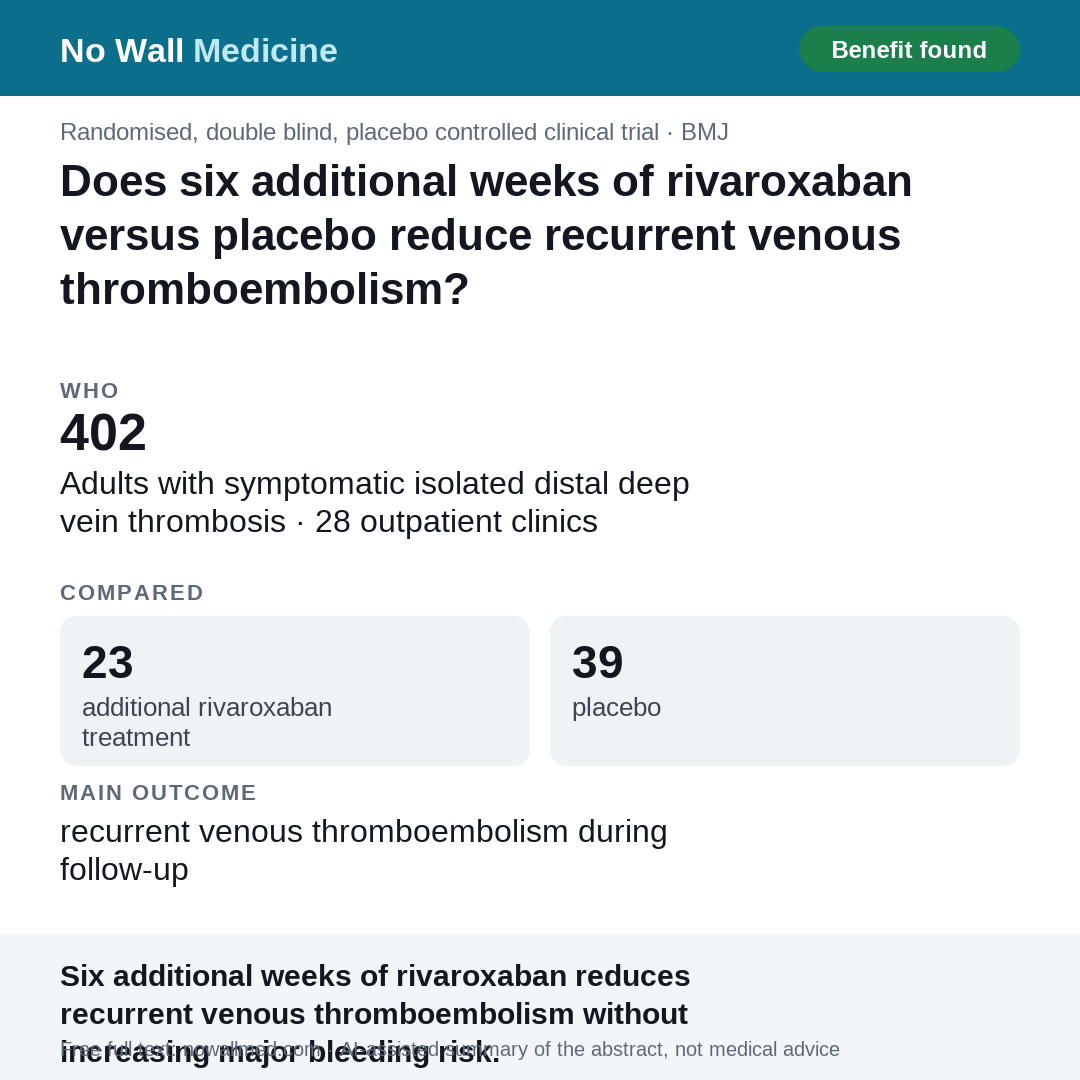
Rivaroxaban treatment for six weeks versus three months in patients with symptomatic isolated distal deep vein thrombosis: randomised controlled trial
Randomised, double blind, placebo controlled clinical trialBenefit found
Does six additional weeks of rivaroxaban versus placebo reduce recurrent venous thromboembolism?
Who
402
Adults with symptomatic isolated distal deep vein thrombosis · 28 outpatient clinics specialising in venous thromboembolism
Compared
23additional rivaroxaban treatment (11%)
39placebo (19%)
Main outcome
recurrent venous thromboembolism during follow-up
Result: relative risk 0.59 (95% confidence interval 0.36 to 0.95)
Bottom line: Six additional weeks of rivaroxaban reduces recurrent venous thromboembolism without increasing major bleeding risk.
BMJ · 2022-11-23Download image