Visual abstracts
New randomized trials and meta-analyses from leading journals at a glance: who was studied, what was compared, and what was found. Every paper is free to read in full.
All specialtiesCardiology 4763Oncology 4043Gastroenterology & Hepatology 1903Infectious Disease 3756Neurology 1872Psychiatry & Mental Health 2216Pulmonology 2044Critical Care 1319Endocrinology & Diabetes 2544Pediatrics 2889Surgery 2480Orthopedics & Sports Medicine 917Neurosurgery 525Cardiothoracic & Vascular Surgery 656Plastic & Reconstructive Surgery 574Nephrology 1107Rheumatology 810Hematology 1090Dermatology 611Ophthalmology 532Obstetrics & Gynecology 1645Public & Global Health 1037Radiology & Imaging 619Anesthesiology 958Urology 745ENT (Otolaryngology) 494Emergency Medicine 481Allergy & Immunology 309Geriatrics 972Family Medicine & Primary Care 534Medical Genetics & Genomics 659Pathology & Laboratory Medicine 156Physical Medicine & Rehabilitation 734Palliative Care 421Nutrition 1560Digital Health & AI 2137General Medicine 318
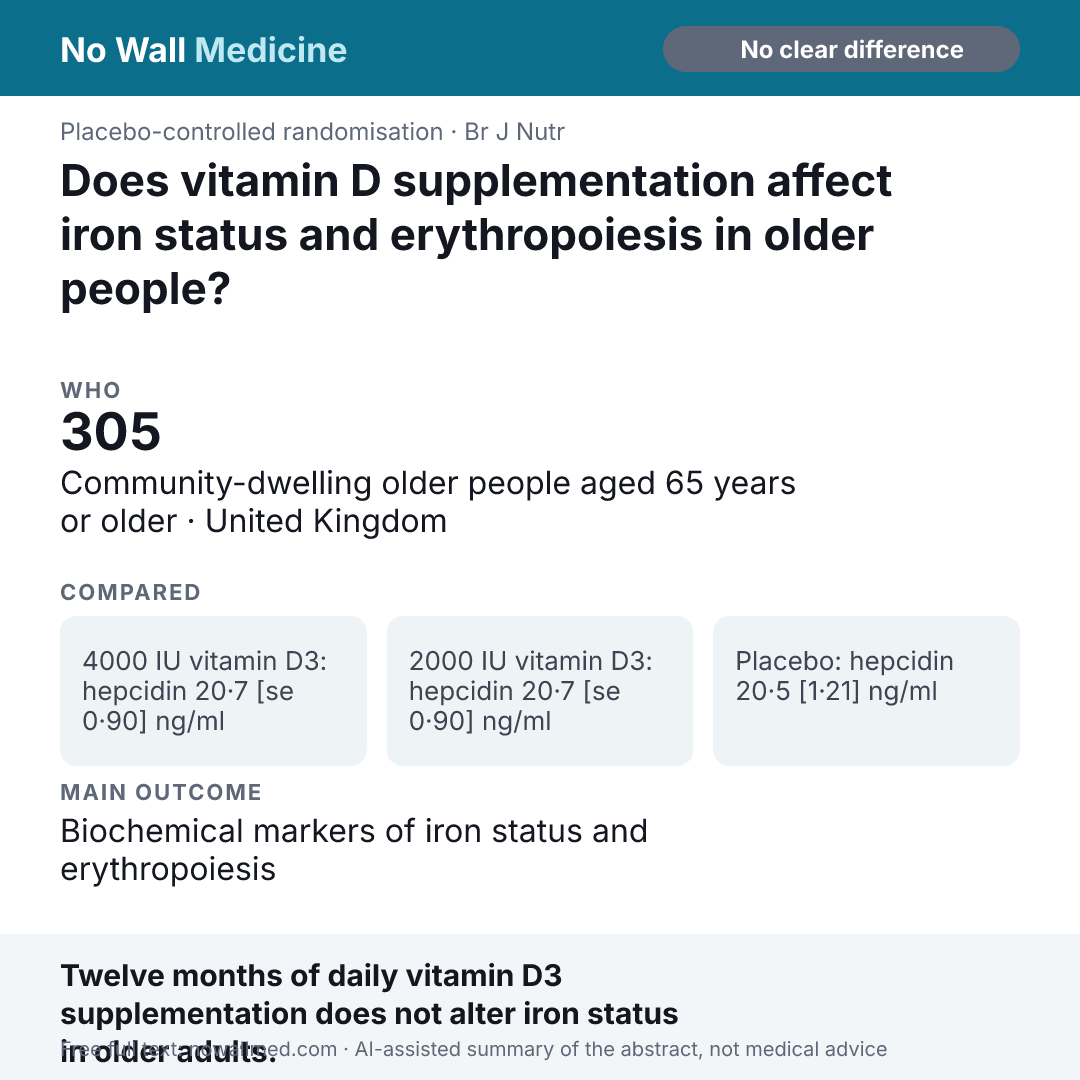
Cytarabine Pharmacogenomics and Outcomes Among Children and Young Adults With Acute Myeloid Leukemia
Multicenter, open-label randomized clinical trial and cohort studyBenefit found
Does the cytarabine pharmacogenomics score associate with survival in pediatric and young adult AML?
Who
1086
Children and young adults with newly diagnosed primary acute myeloid leukemia · Multicenter
Compared
Low cytarabine pharmacogenomics score: hazard ratio 1.42 (95% CI, 1.05-1.95)
High cytarabine pharmacogenomics score
Main outcome
event-free survival and overall survival
Result: hazard ratio 1.42 (95% CI, 1.05-1.95)
Bottom line: A low cytarabine pharmacogenomics score is associated with worse survival in pediatric and young adult acute myeloid leukemia patients.
JAMA Netw Open · 2025-06-02 · Save PNG
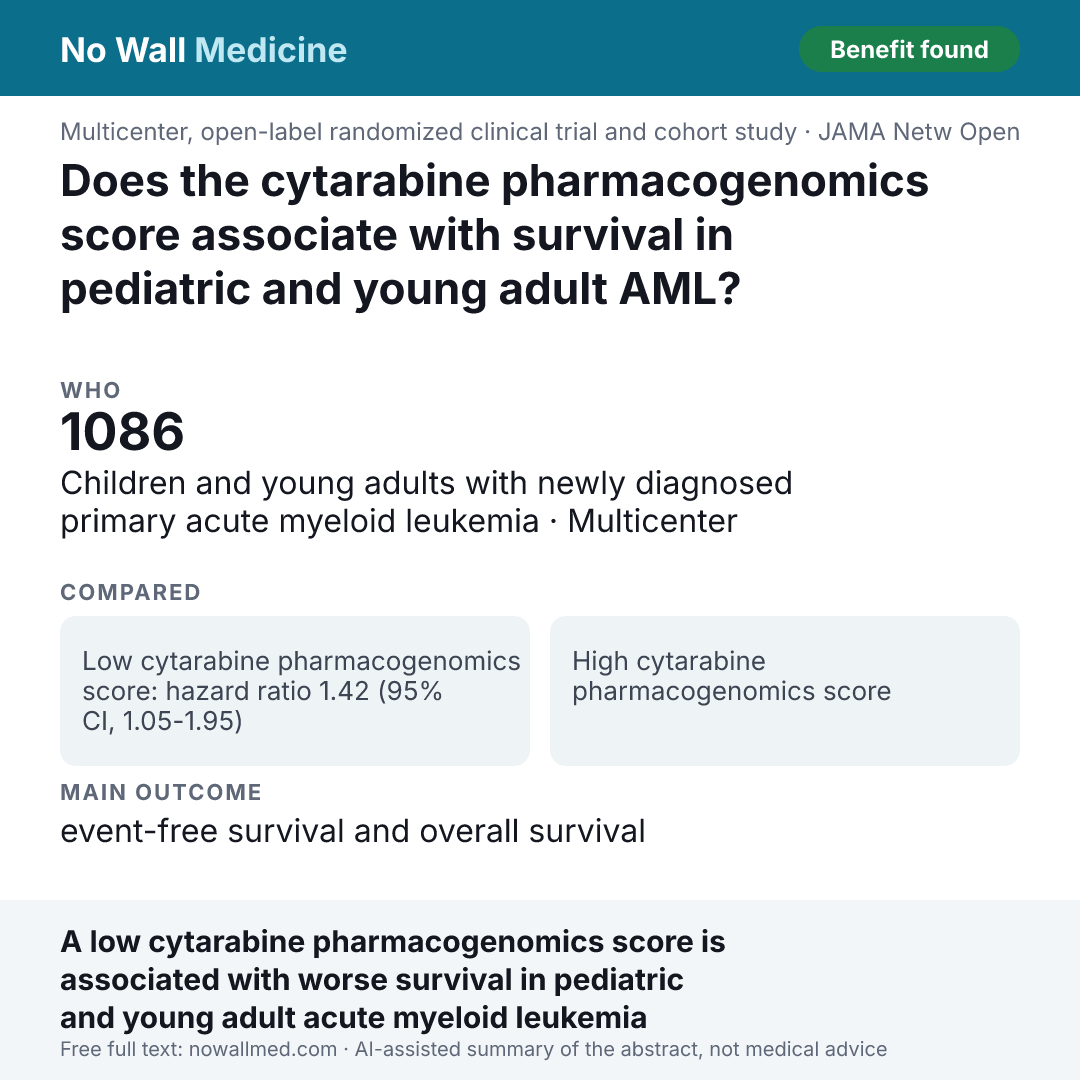
Weighted Vest Use or Resistance Exercise to Offset Weight Loss-Associated Bone Loss in Older Adults: A Randomized Clinical Trial
Single-blind, 12-month randomized clinical trialNo clear difference
Does weighted vest use or resistance exercise offset weight loss-associated bone loss in older adults?
Who
150
Older adults living with obesity · Academic medical center
Compared
Weight loss alone: -1.2% to -1.9%
Weight loss plus weighted vest: -1.2% to -1.9%
Weight loss plus progressive resistance training: -1.2% to -1.9%
Main outcome
Change in total hip trabecular volumetric bone mineral density and areal bone mineral density
Result: estimated treatment difference, +0.91 mg/cm3; 97.5% CI, -0.27 to 2.09 mg/cm3
Bottom line: Neither weighted vest use nor progressive resistance training mitigated weight loss-associated bone loss at the hip in older adults.
JAMA Netw Open · 2025-06-02 · Save PNG
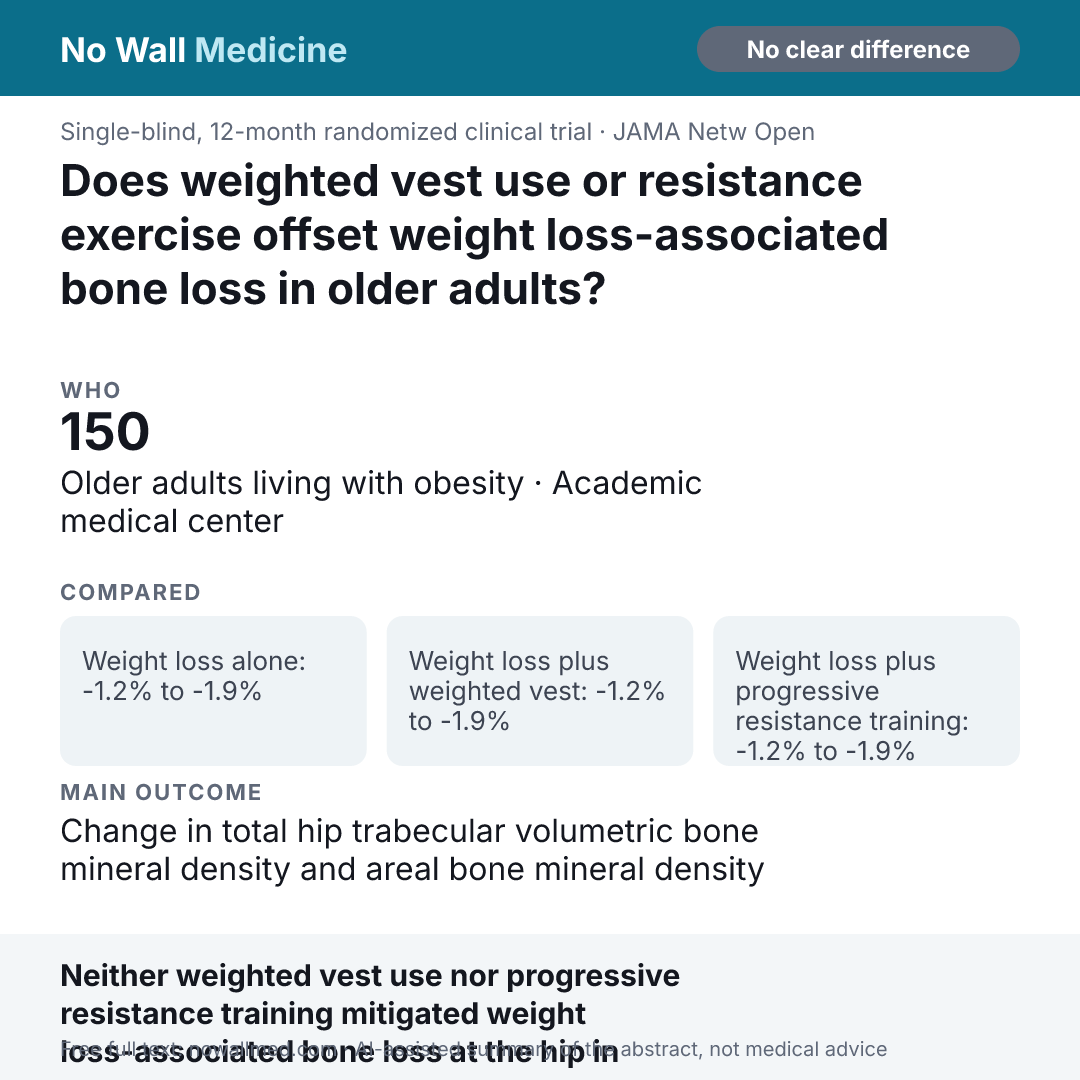
Front-of-Package Food Labels and Perceived Weight Stigmatization: A Randomized Clinical Trial
Randomized clinical trialMixed results
Do different front-of-package food labels impact perceived weight stigmatization?
Who
2522
United States adults aged 21 years or older · Online survey
Compared
Control labels
Nutrient warnings: MDE, 0.003 (95% CI, -0.10 to 0.11)
Text-only health warnings: MDE, 0.41 (95% CI, 0.30-0.51)
Graphic health warnings: MDE, 0.81 (95% CI, 0.71-0.92)
Main outcome
Perceived weight stigmatization
Bottom line: Nutrient warnings maximized effectiveness while minimizing stigmatization compared to graphic or text-only health warnings.
JAMA Netw Open · 2025-06-02 · Save PNG

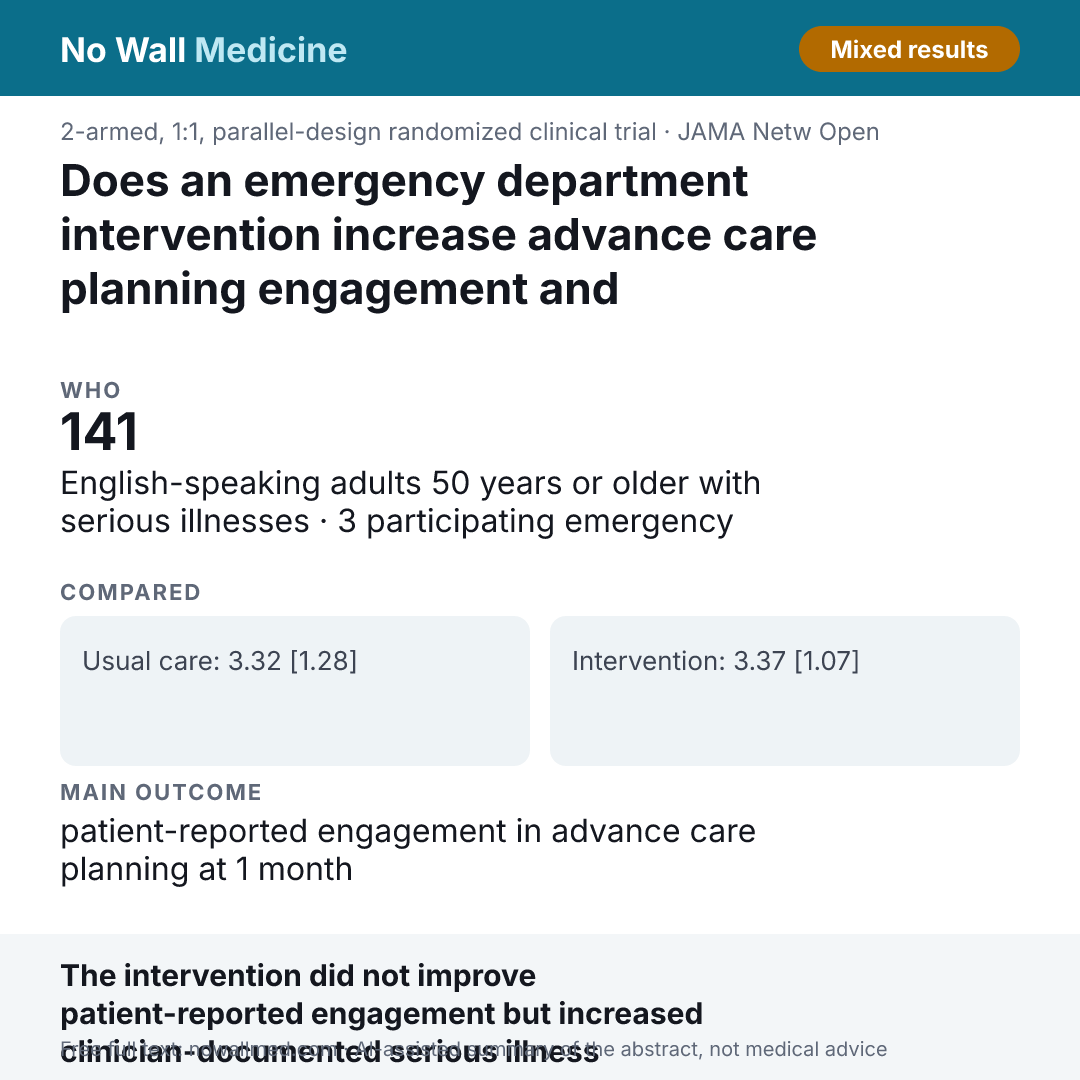
Serious Illness Conversations in the Emergency Department for Older Adults With Advanced Illnesses: A Randomized Clinical Trial
2-armed, 1:1, parallel-design randomized clinical trialMixed results
Does an emergency department intervention increase advance care planning engagement and clinician-documented conversations?
Who
141
English-speaking adults 50 years or older with serious illnesses · 3 participating emergency departments in Boston, Massachusetts
Compared
Usual care: 3.32 [1.28]
Intervention: 3.37 [1.07]
Main outcome
patient-reported engagement in advance care planning at 1 month
Bottom line: The intervention did not improve patient-reported engagement but increased clinician-documented serious illness conversations in medical records.
JAMA Netw Open · 2025-06-02 · Save PNG
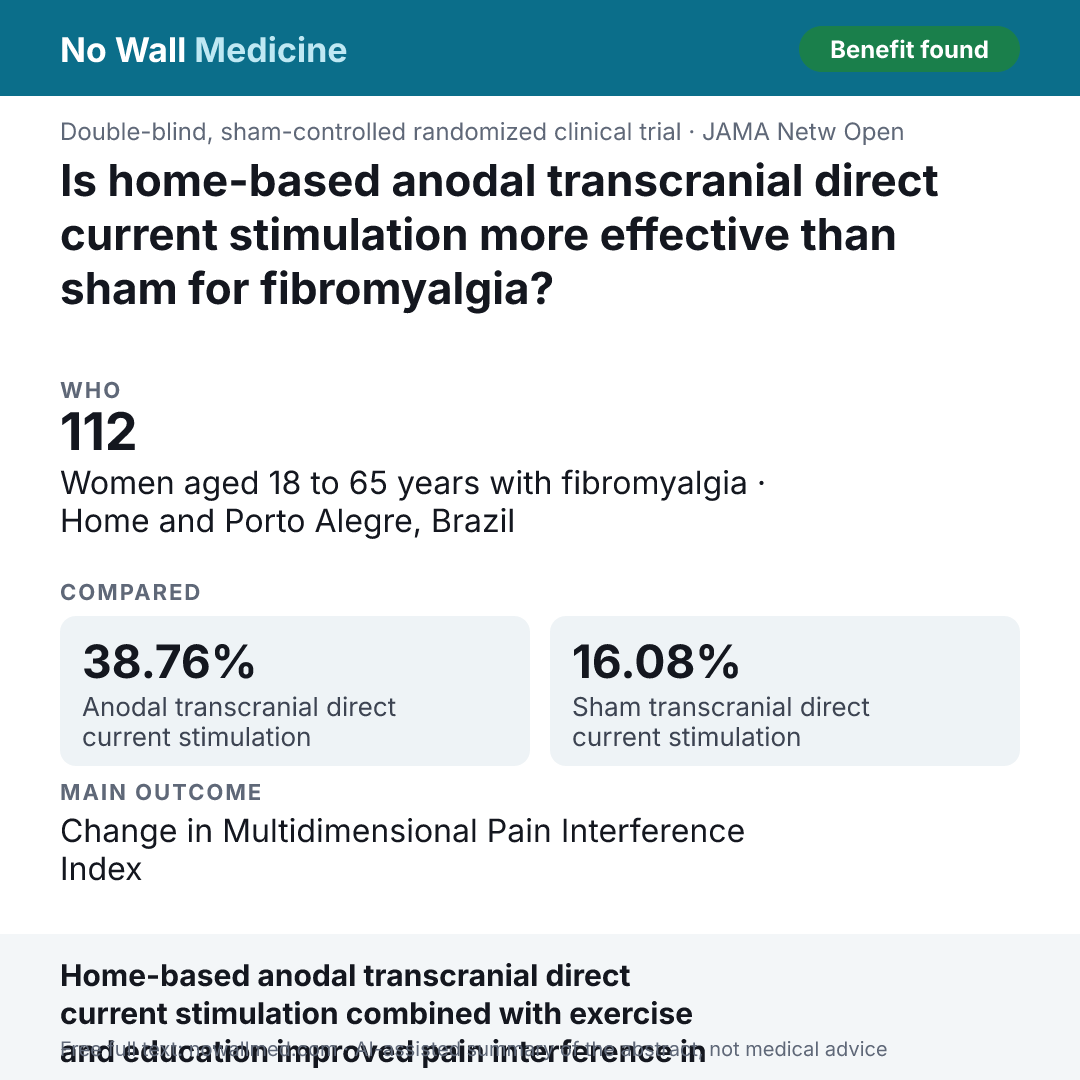
Erenumab for Chronic Cluster Headache: A Randomized Clinical Trial
Double-blind, placebo-controlled randomized clinical trialNo clear difference
Is erenumab superior to placebo for chronic cluster headache prophylaxis?
Who
81
Patients aged 18-65 years with chronic cluster headache · 11 sites in Germany
Compared
erenumab: -7.3 (8.6) per week
placebo: -5.9 (10.5) per week
Main outcome
reduction of mean weekly cluster headache attacks from baseline
Result: group difference, -1.5 (95% credible interval, -5.7 to 2.8)
Bottom line: Erenumab was not successful in the prophylaxis of attacks in patients with chronic cluster headache.
Limitation: Recruitment was stopped prematurely due to insufficient patient numbers meeting inclusion criteria.
JAMA Netw Open · 2025-06-02 · Save PNG
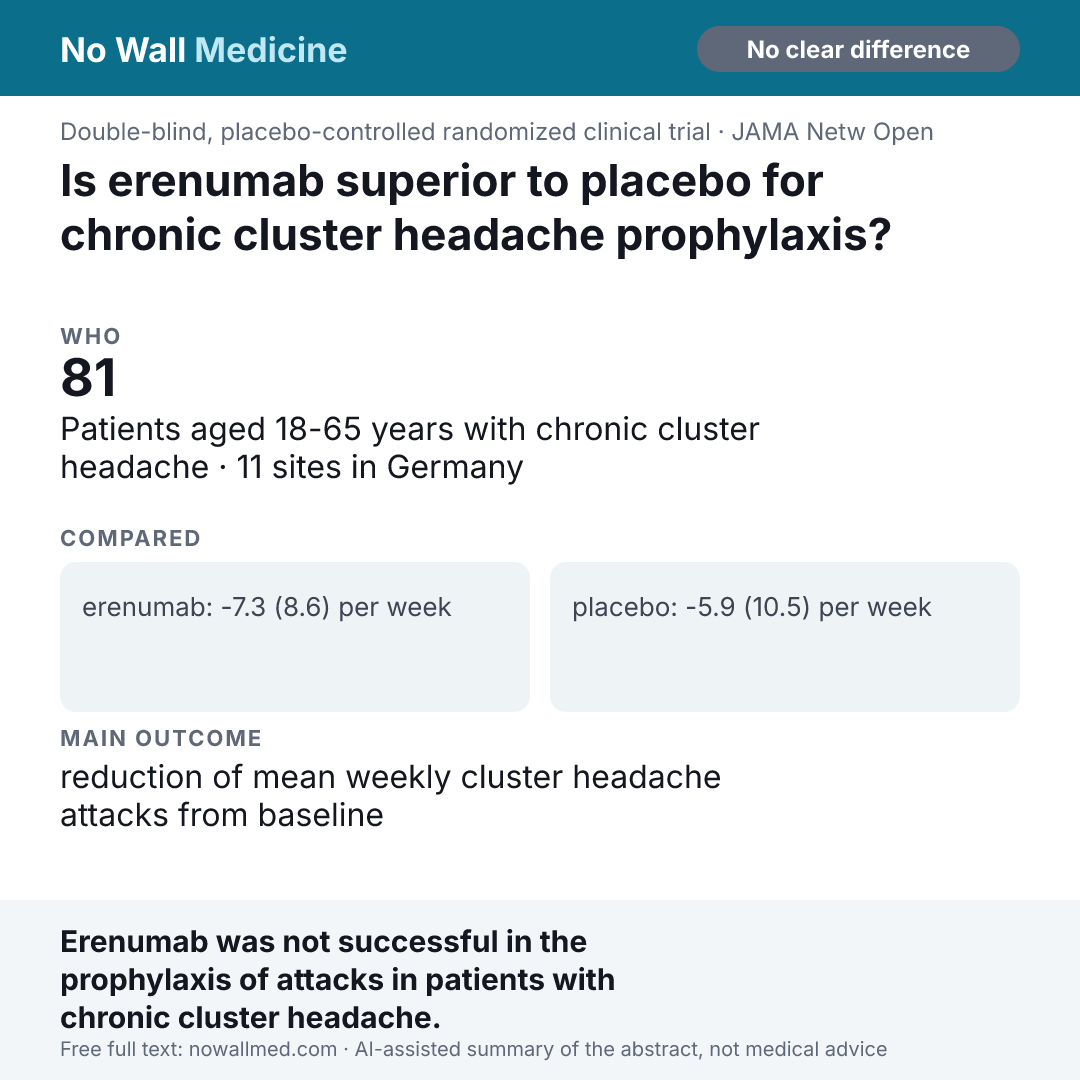
Feasibility of a Mind-Body Program for Chronic Pain: A Randomized Clinical Trial
Single-blind, 2-arm, feasibility randomized clinical trialBenefit found
Is a mind-body walking program and health education program feasible for sedentary adults with chronic pain?
Who
92
Sedentary adults with chronic musculoskeletal pain · Three US academic medical centers
Compared
Mind-body walking program: 97.6% (41/42) participant satisfaction
Health education program: 75.0% (30/40) participant satisfaction
Main outcome
Feasibility benchmarks including recruitment, retention, and satisfaction
Bottom line: Both programs were feasible, though the mind-body walking program met more benchmarks for expectancy and satisfaction.
Limitation: Analyses were conducted on observed data rather than following intent-to-treat principles.
JAMA Netw Open · 2025-06-02 · Save PNG
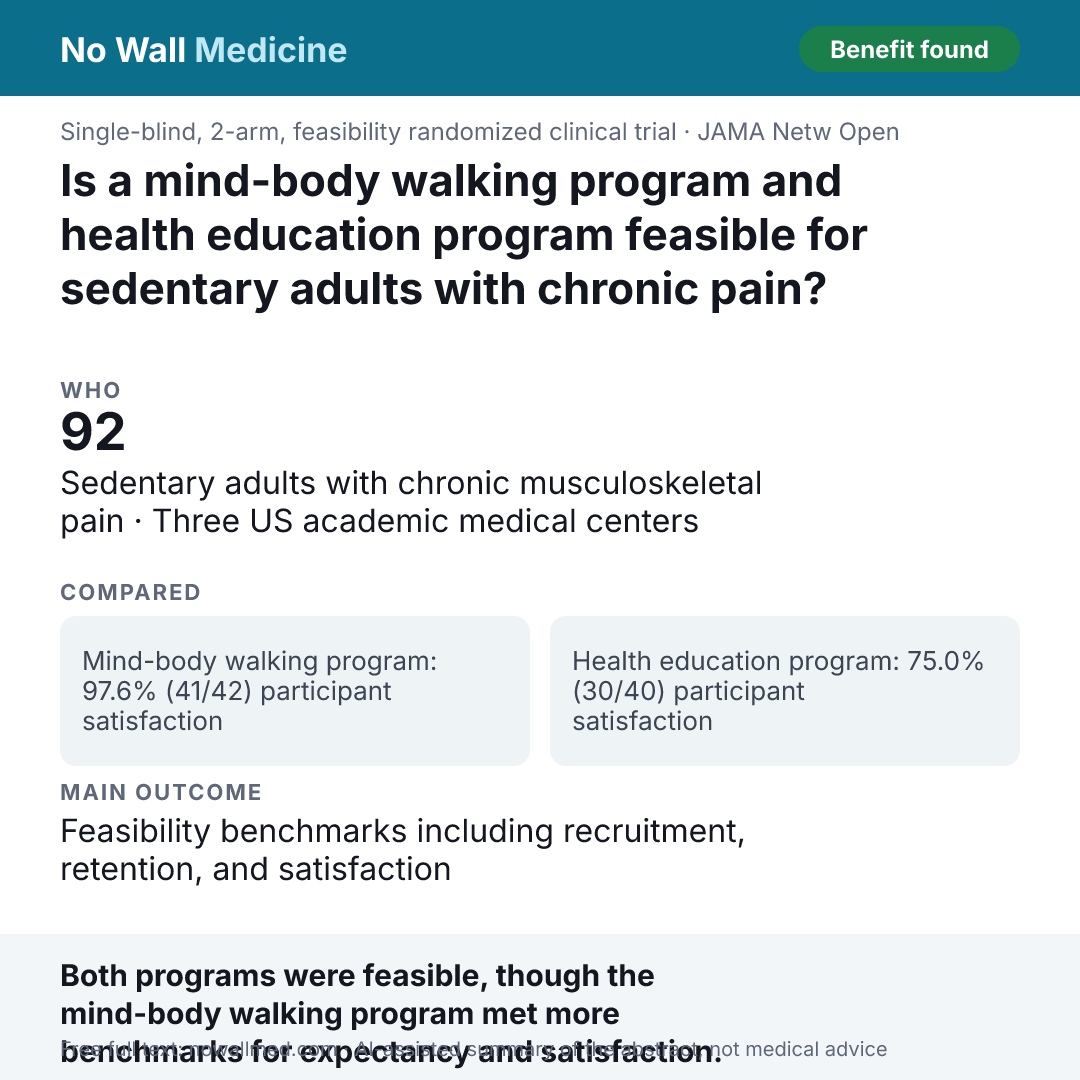
Repetitive Transcranial Magnetic Stimulation as Maintenance Treatment of Depression: The MAINT-R Randomized Clinical Trial
Randomized clinical trialNo clear difference
Is low-frequency rTMS as effective as lithium in preventing treatment-resistant depression relapse?
Who
75
Participants with treatment-resistant depression aged 18 years or older · Tokyo, Japan
Compared
low-frequency rTMS: 0.3 points difference
lithium pharmacotherapy: 0.3 points difference
Main outcome
between-group difference in baseline-adjusted Montgomery-Åsberg Depression Rating Scale scores
Result: 0.3 points (95% CI, -2.7 to 3.3 points)
Bottom line: Low-frequency rTMS showed comparable efficacy to lithium for preventing depression relapse with better safety and tolerance.
JAMA Netw Open · 2025-06-02 · Save PNG
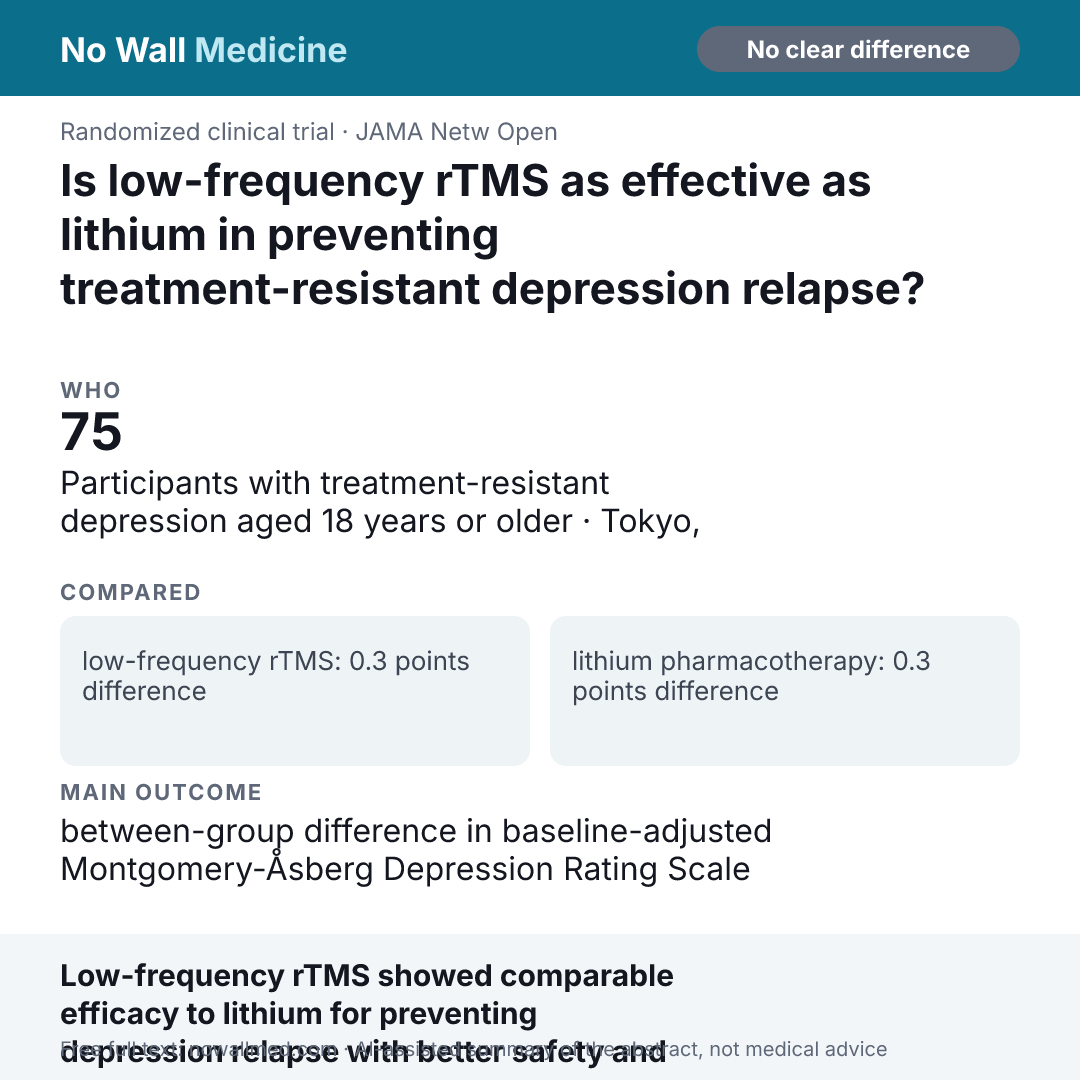
Home-Based Transcranial Direct Current Stimulation vs Placebo for Fibromyalgia: A Randomized Clinical Trial
Double-blind, sham-controlled randomized clinical trialBenefit found
Is home-based anodal transcranial direct current stimulation more effective than sham for fibromyalgia?
Who
112
Women aged 18 to 65 years with fibromyalgia · Home and Porto Alegre, Brazil
Compared
38.76%Anodal transcranial direct current stimulation (95% CI, -41.90% to -30.92%)
16.08%Sham transcranial direct current stimulation (95% CI, -21.42% to -10.41%)
Main outcome
Change in Multidimensional Pain Interference Index
Result: mean difference 22.68%; 95% CI, 12.79%-40.00%
Bottom line: Home-based anodal transcranial direct current stimulation combined with exercise and education improved pain interference in fibromyalgia patients.
JAMA Netw Open · 2025-06-02 · Save PNG
An Educational Video Game in Trauma Triage at Nontrauma Centers: A Secondary Analysis of a Randomized Clinical Trial
Process evaluation of a randomized clinical trialBenefit found
Does a customized video game improve trauma triage performance in physicians?
Who
800
Physicians responsible for trauma triage at various emergency departments · United States
Compared
22%Customized video game
38%Usual education
Main outcome
Undertriage rate
Result: percentage point difference, 16 (95% CI, 15-18)
Bottom line: A customized video game was associated with a reduction in undertriage among physicians performing trauma triage.
JAMA Netw Open · 2025-06-02 · Save PNG
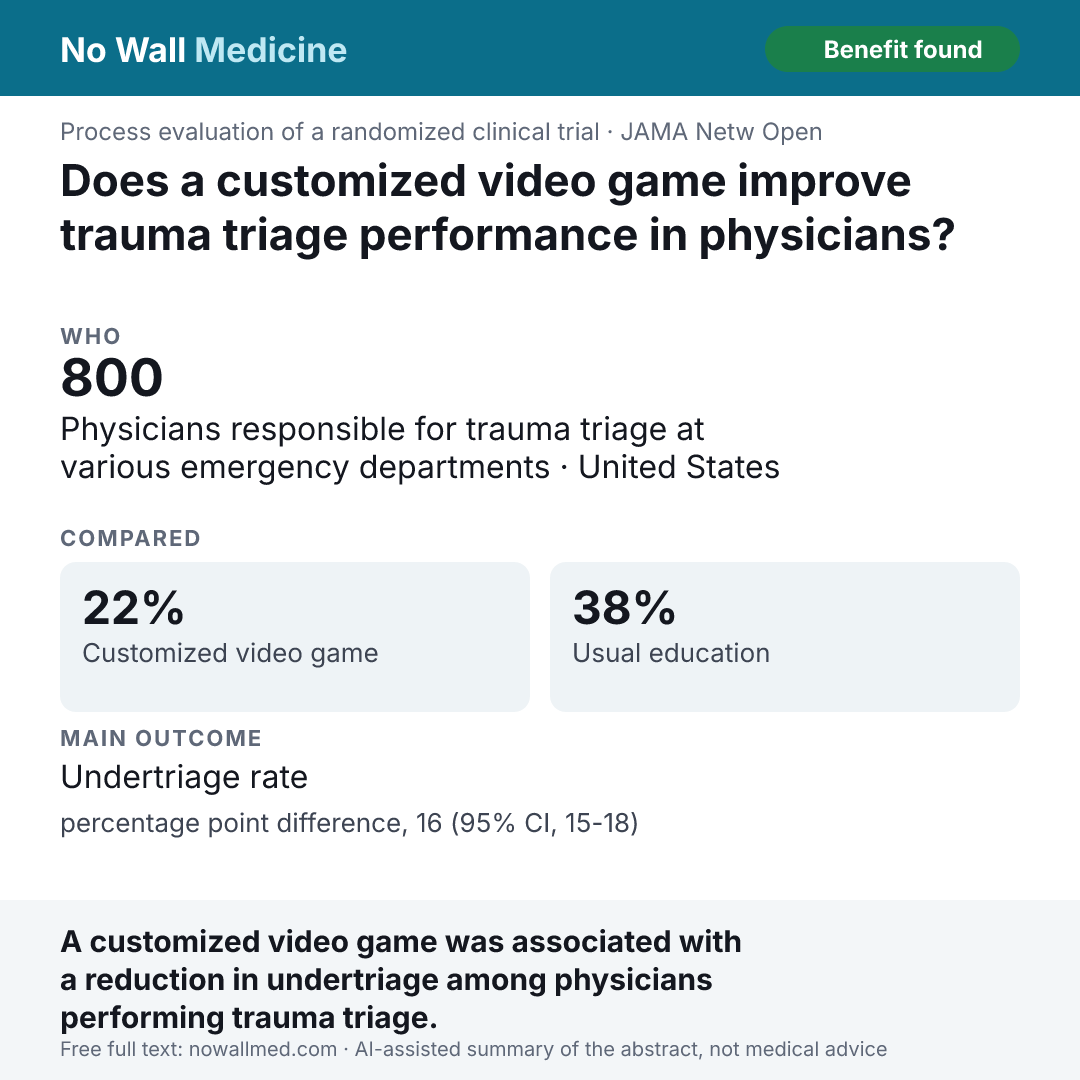
Provision of COVID-19 Self-Test Kits to Patients for Distribution to Social Contacts: A Randomized Clinical Trial
Randomized clinical trialNo clear difference
Does secondary distribution of COVID-19 self-test kits increase COVID-19 testing among social contacts?
Who
776
Adults aged 18 years or older at federally qualified health centers · 4 federally qualified health centers in Philadelphia, Pennsylvania
Compared
Self-test kit intervention group: 5 participants (1.3%)
Clinic test referral control group: 2 participants (0.5%)
Main outcome
Confirmed testing among at least 2 network contacts
Result: risk difference, 0.0077 (95% CI -0.0056 to 0.0210)
Bottom line: Secondary distribution of COVID-19 self-test kits had no effect on confirmed testing rates among social network contacts.
JAMA Netw Open · 2025-06-02 · Save PNG
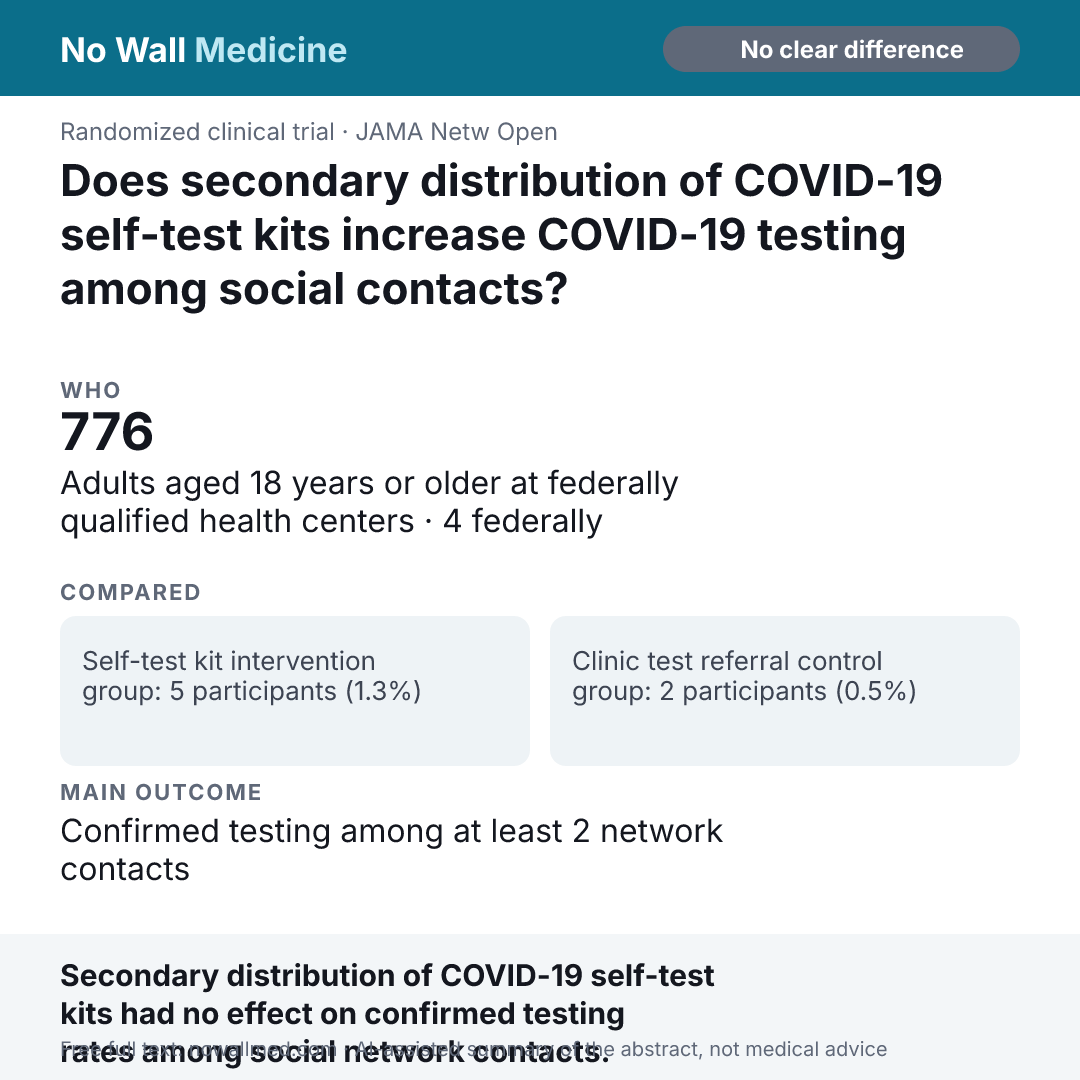
Three-Dimensional-Printed Models and Shared Decision-Making: A Cluster Randomized Clinical Trial
Single-center cluster randomized clinical trialBenefit found
Do 3D-printed models improve shared decision-making and reduce anxiety in colorectal surgery patients?
Who
51
Adult patients scheduled for colon or rectal resection · Colorectal surgery clinic at an academic medical institution
Compared
3D-printed model: 89.5 [17.6]
Usual care: 80.5 [14.4]
Main outcome
Patient perception of involvement in decision-making
Bottom line: Using 3D-printed models during preoperative visits improved shared decision-making and reduced patient anxiety levels.
JAMA Netw Open · 2025-06-02 · Save PNG
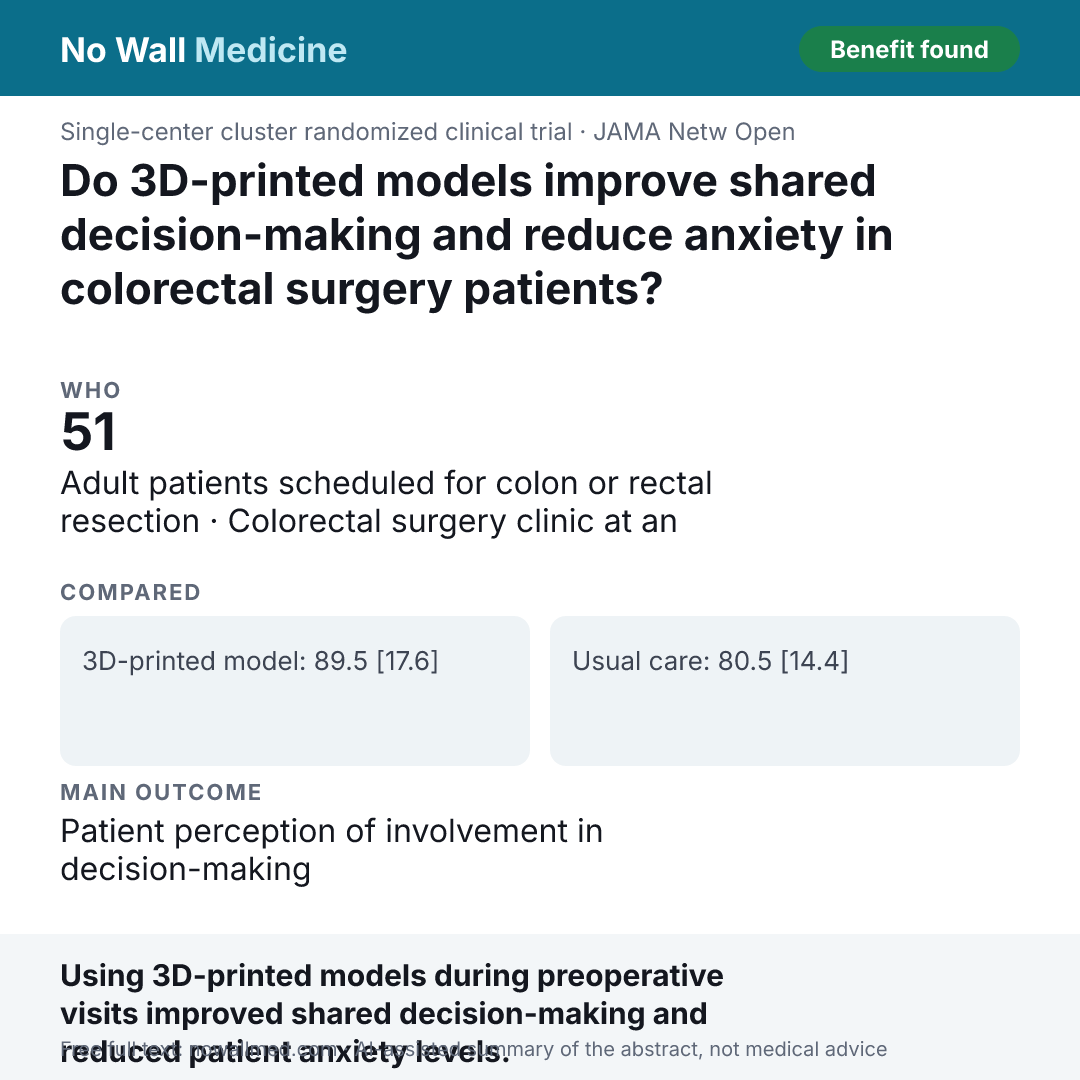
Neoadjuvant Osimertinib for Resectable EGFR-Mutated Non-Small Cell Lung Cancer
Randomized, controlled, phase III studyBenefit found
Does neoadjuvant osimertinib improve major pathologic response in resectable EGFR-mutated NSCLC?
Who
358
Patients with resectable, epidermal growth factor receptor-mutated, stage II-IIIB non-small cell lung cancer
Compared
26%Osimertinib plus chemotherapy
25%Osimertinib monotherapy
2%Placebo plus chemotherapy
Main outcome
Major pathologic response
Result: odds ratio 19.82 (95.002% CI, 4.60 to 85.33); odds ratio 19.28 (99.9% CI, 1.71 to 217.39)
Bottom line: Neoadjuvant osimertinib with or without chemotherapy significantly improves major pathologic response rates compared to chemotherapy alone.
J Clin Oncol · 2025-06-02 · Save PNG
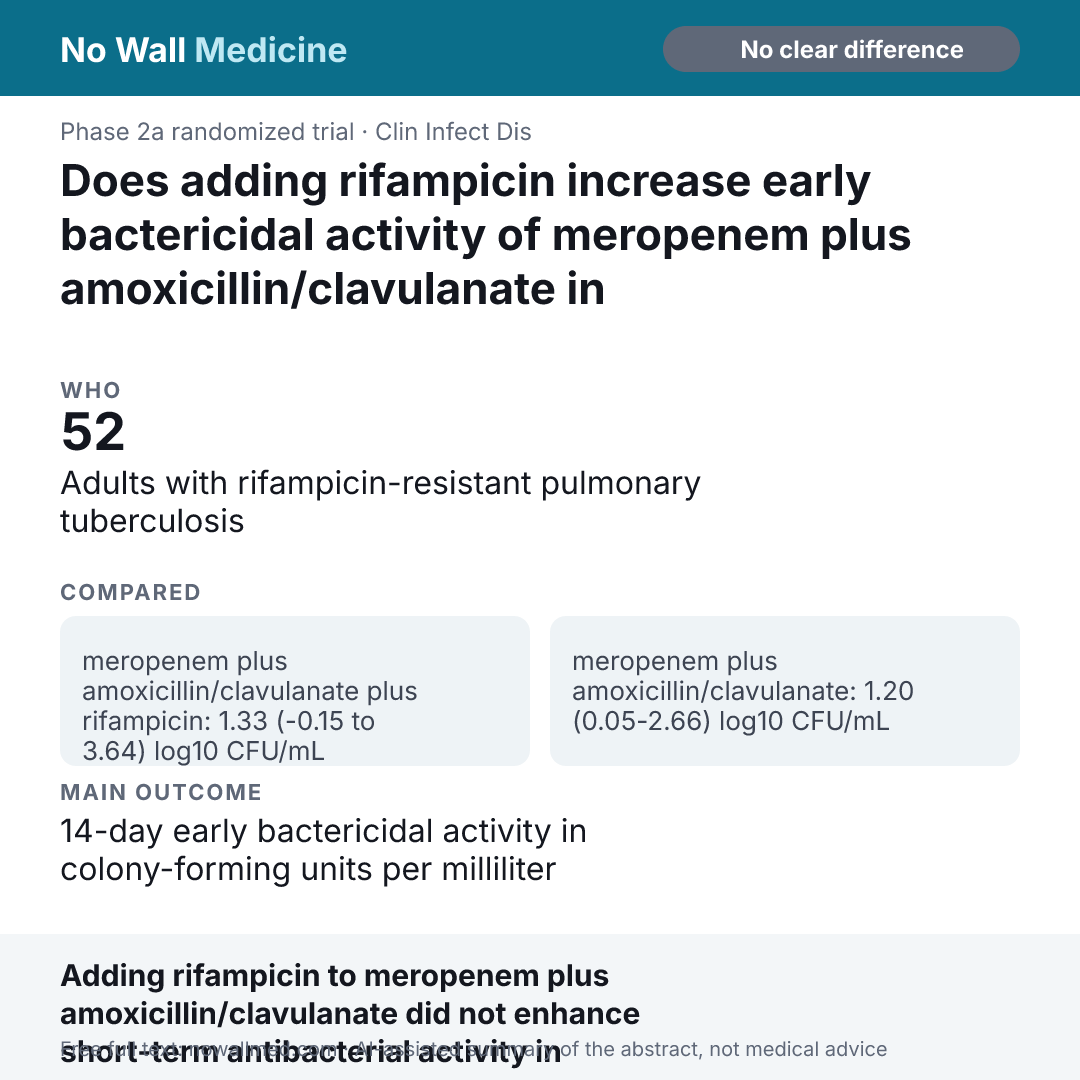
A Phase 2a Study of the Early Bactericidal Activity of Rifampicin in Combination With Meropenem Plus Amoxicillin/Clavulanate Among Adults With Rifampicin-Resistant Pulmonary Tuberculosis
Phase 2a randomized trialNo clear difference
Does adding rifampicin increase early bactericidal activity of meropenem plus amoxicillin/clavulanate in rifampicin-resistant tuberculosis?
Who
52
Adults with rifampicin-resistant pulmonary tuberculosis
Compared
meropenem plus amoxicillin/clavulanate plus rifampicin: 1.33 (-0.15 to 3.64) log10 CFU/mL
meropenem plus amoxicillin/clavulanate: 1.20 (0.05-2.66) log10 CFU/mL
Main outcome
14-day early bactericidal activity in colony-forming units per milliliter
Bottom line: Adding rifampicin to meropenem plus amoxicillin/clavulanate did not enhance short-term antibacterial activity in rifampicin-resistant tuberculosis patients.
Clin Infect Dis · 2025-06-02 · Save PNG
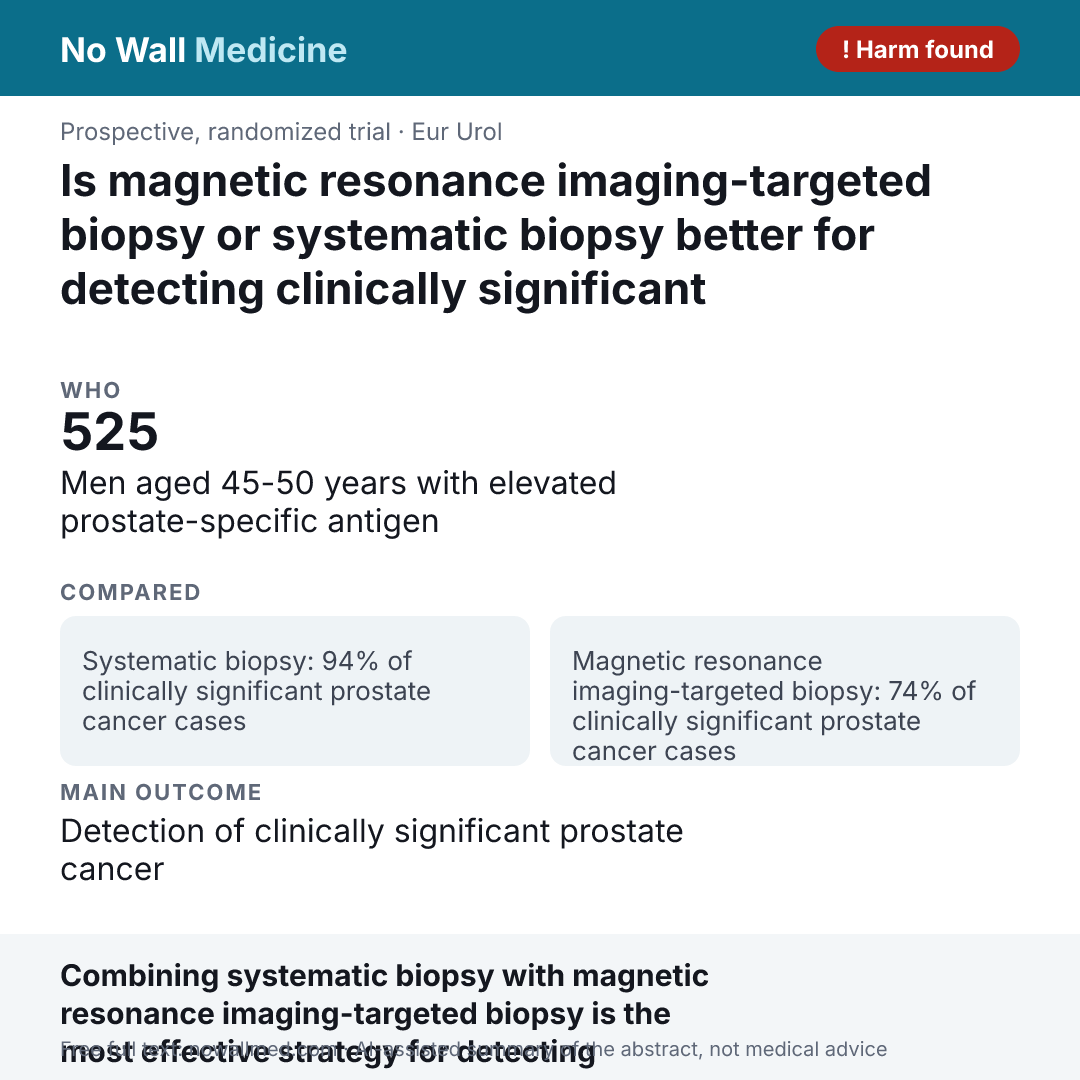
Prostate Cancer Detection in Younger Men: A Comparative Analysis of Systematic and Magnetic Resonance Imaging-targeted Biopsy in the PROBASE Trial
Prospective, randomized trialHarm found
Is magnetic resonance imaging-targeted biopsy or systematic biopsy better for detecting clinically significant prostate cancer?
Who
525
Men aged 45-50 years with elevated prostate-specific antigen
Compared
Systematic biopsy: 94% of clinically significant prostate cancer cases
Magnetic resonance imaging-targeted biopsy: 74% of clinically significant prostate cancer cases
Main outcome
Detection of clinically significant prostate cancer
Bottom line: Combining systematic biopsy with magnetic resonance imaging-targeted biopsy is the most effective strategy for detecting prostate cancer.
Eur Urol · 2025-06-02 · Save PNG
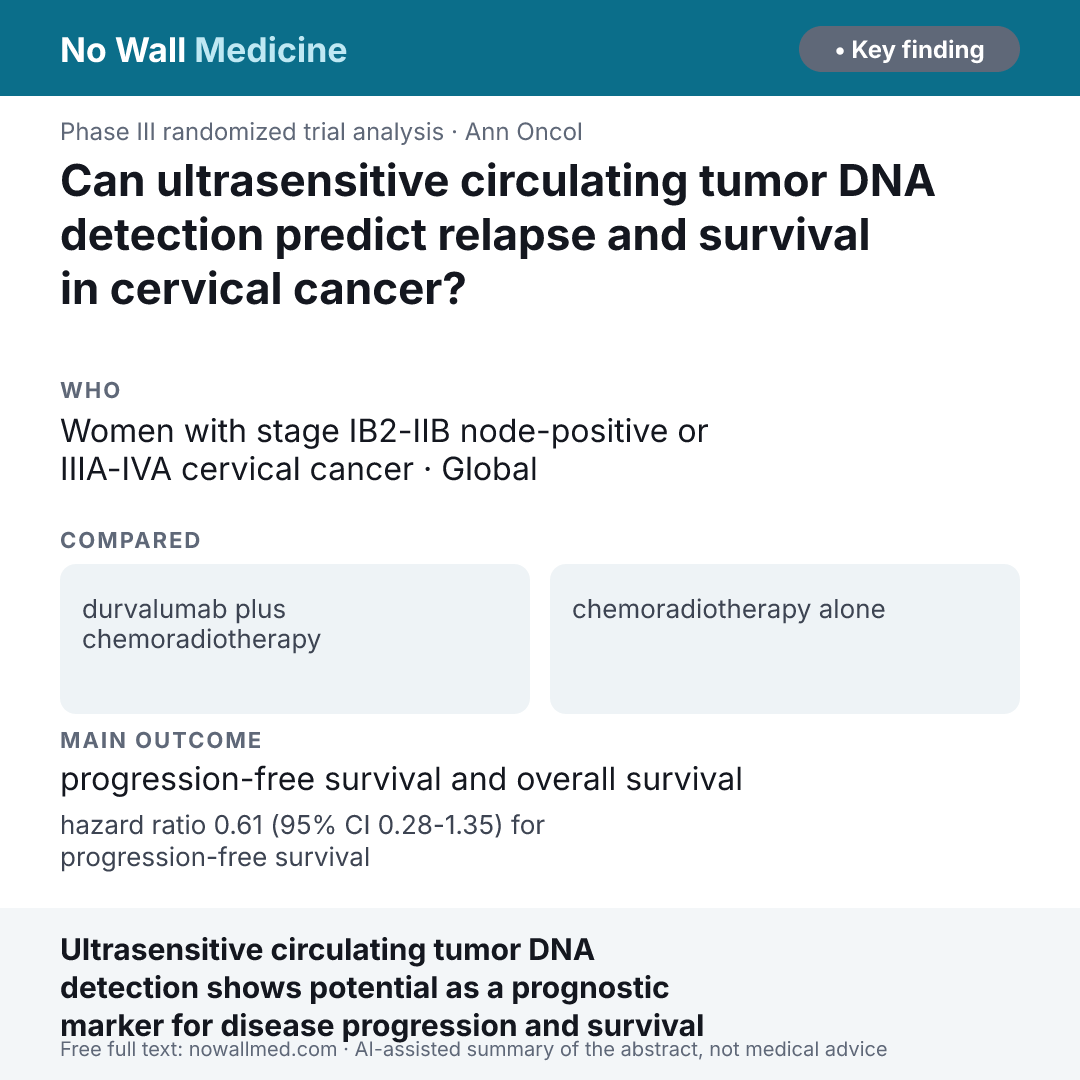
Ultrasensitive detection and tracking of circulating tumor DNA to predict relapse and survival in patients with locally advanced cervical cancer: phase III CALLA trial analyses
Phase III randomized trial analysisKey finding
Can ultrasensitive circulating tumor DNA detection predict relapse and survival in cervical cancer?
Who
Women with stage IB2-IIB node-positive or IIIA-IVA cervical cancer · Global
Compared
durvalumab plus chemoradiotherapy
chemoradiotherapy alone
Main outcome
progression-free survival and overall survival
Result: hazard ratio 0.61 (95% CI 0.28-1.35) for progression-free survival
Bottom line: Ultrasensitive circulating tumor DNA detection shows potential as a prognostic marker for disease progression and survival in cervical cancer.
Ann Oncol · 2025-06-02 · Save PNG
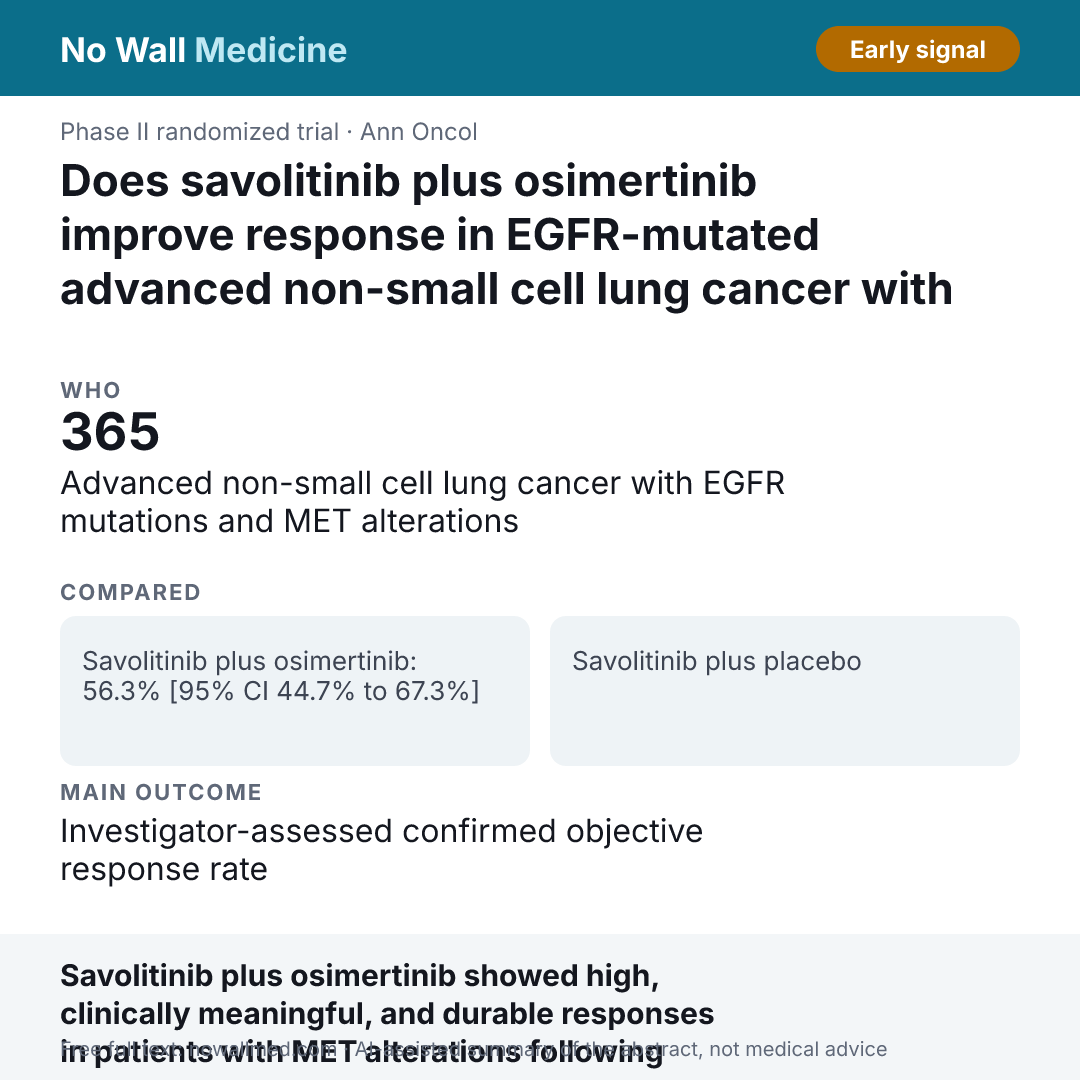
Savolitinib plus osimertinib in epidermal growth factor receptor (EGFR)-mutated advanced non-small cell lung cancer with MET overexpression and/or amplification following disease progression on osimertinib: primary results from the phase II SAVANNAH study
Phase II randomized trialEarly signal
Does savolitinib plus osimertinib improve response in EGFR-mutated advanced non-small cell lung cancer with MET alterations?
Who
365
Advanced non-small cell lung cancer with EGFR mutations and MET alterations
Compared
Savolitinib plus osimertinib: 56.3% [95% CI 44.7% to 67.3%]
Savolitinib plus placebo
Main outcome
Investigator-assessed confirmed objective response rate
Result: 56.3% [95% CI 44.7% to 67.3%]
Bottom line: Savolitinib plus osimertinib showed high, clinically meaningful, and durable responses in patients with MET alterations following osimertinib progression.
Ann Oncol · 2025-06-02 · Save PNG
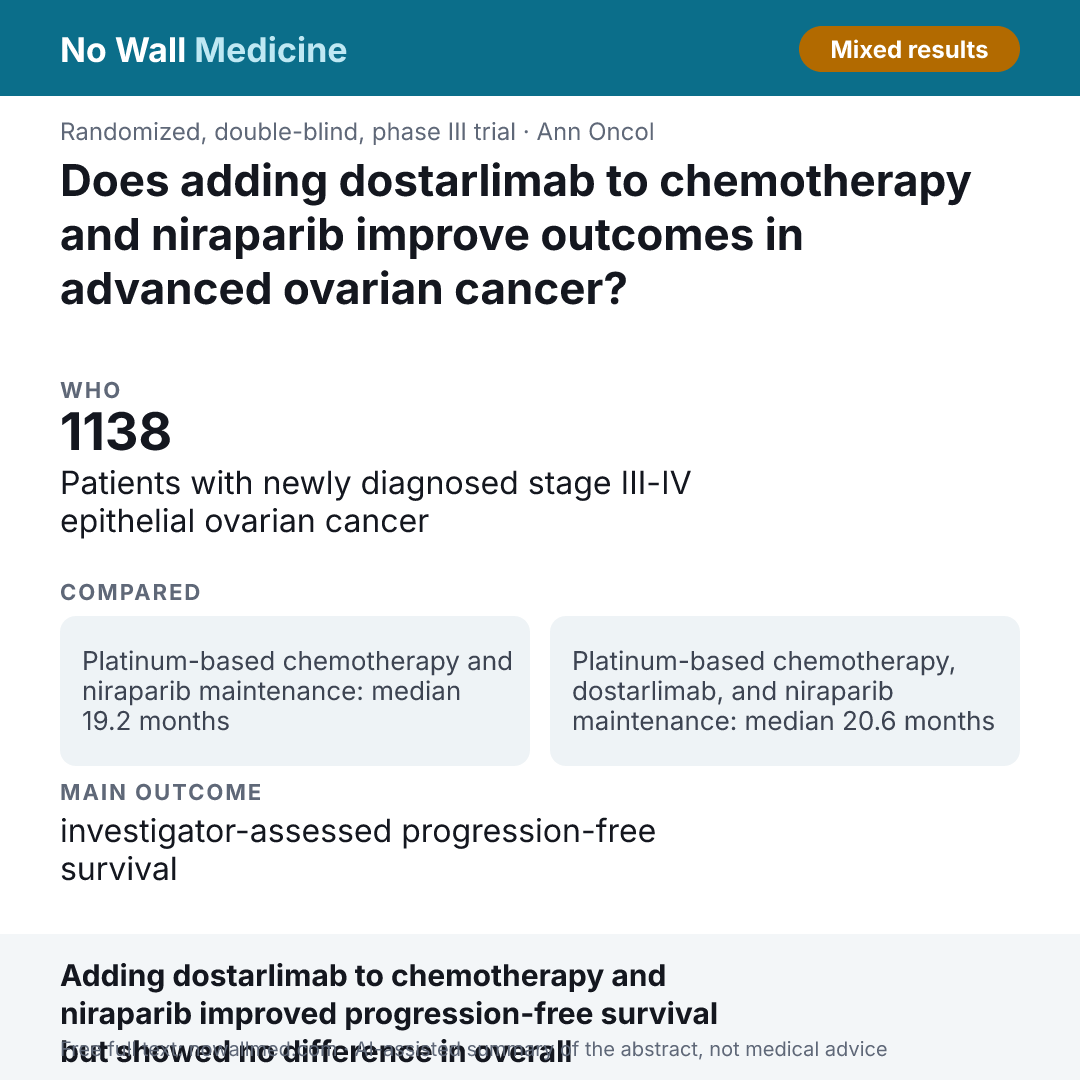
Dostarlimab and niraparib in primary advanced ovarian cancer
Randomized, double-blind, phase III trialMixed results
Does adding dostarlimab to chemotherapy and niraparib improve outcomes in advanced ovarian cancer?
Who
1138
Patients with newly diagnosed stage III-IV epithelial ovarian cancer
Compared
Platinum-based chemotherapy and niraparib maintenance: median 19.2 months
Platinum-based chemotherapy, dostarlimab, and niraparib maintenance: median 20.6 months
Main outcome
investigator-assessed progression-free survival
Result: hazard ratio 0.85 (95% CI 0.73-0.99)
Bottom line: Adding dostarlimab to chemotherapy and niraparib improved progression-free survival but showed no difference in overall survival.
Ann Oncol · 2025-06-02 · Save PNG
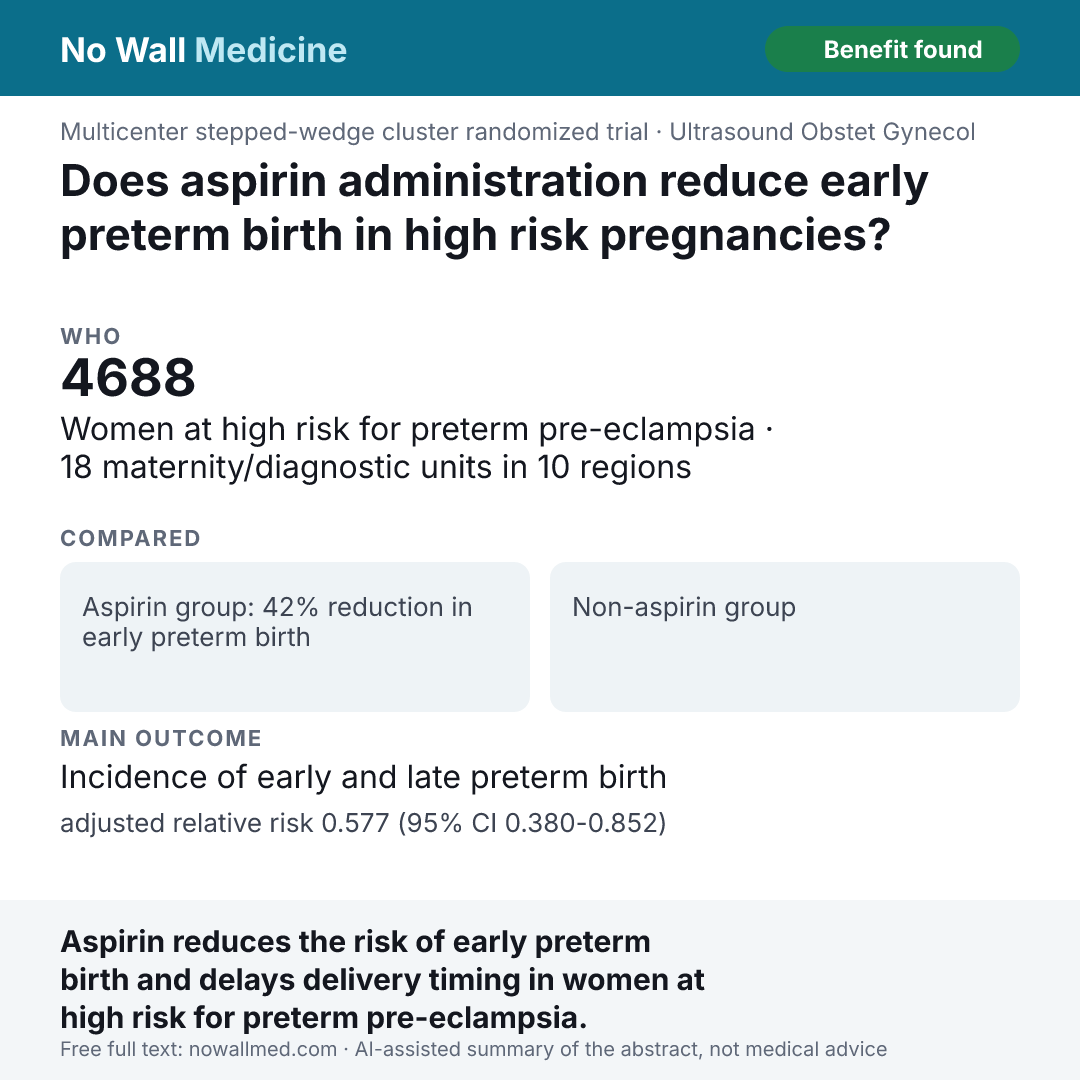
Aspirin delays preterm birth in pregnancies at high risk for preterm pre-eclampsia: evidence from randomized clinical trial in Asia
Multicenter stepped-wedge cluster randomized trialBenefit found
Does aspirin administration reduce early preterm birth in high risk pregnancies?
Who
4688
Women at high risk for preterm pre-eclampsia · 18 maternity/diagnostic units in 10 regions across Asia
Compared
Aspirin group: 42% reduction in early preterm birth
Non-aspirin group
Main outcome
Incidence of early and late preterm birth
Result: adjusted relative risk 0.577 (95% CI 0.380-0.852)
Bottom line: Aspirin reduces the risk of early preterm birth and delays delivery timing in women at high risk for preterm pre-eclampsia.
Ultrasound Obstet Gynecol · 2025-06-02 · Save PNG
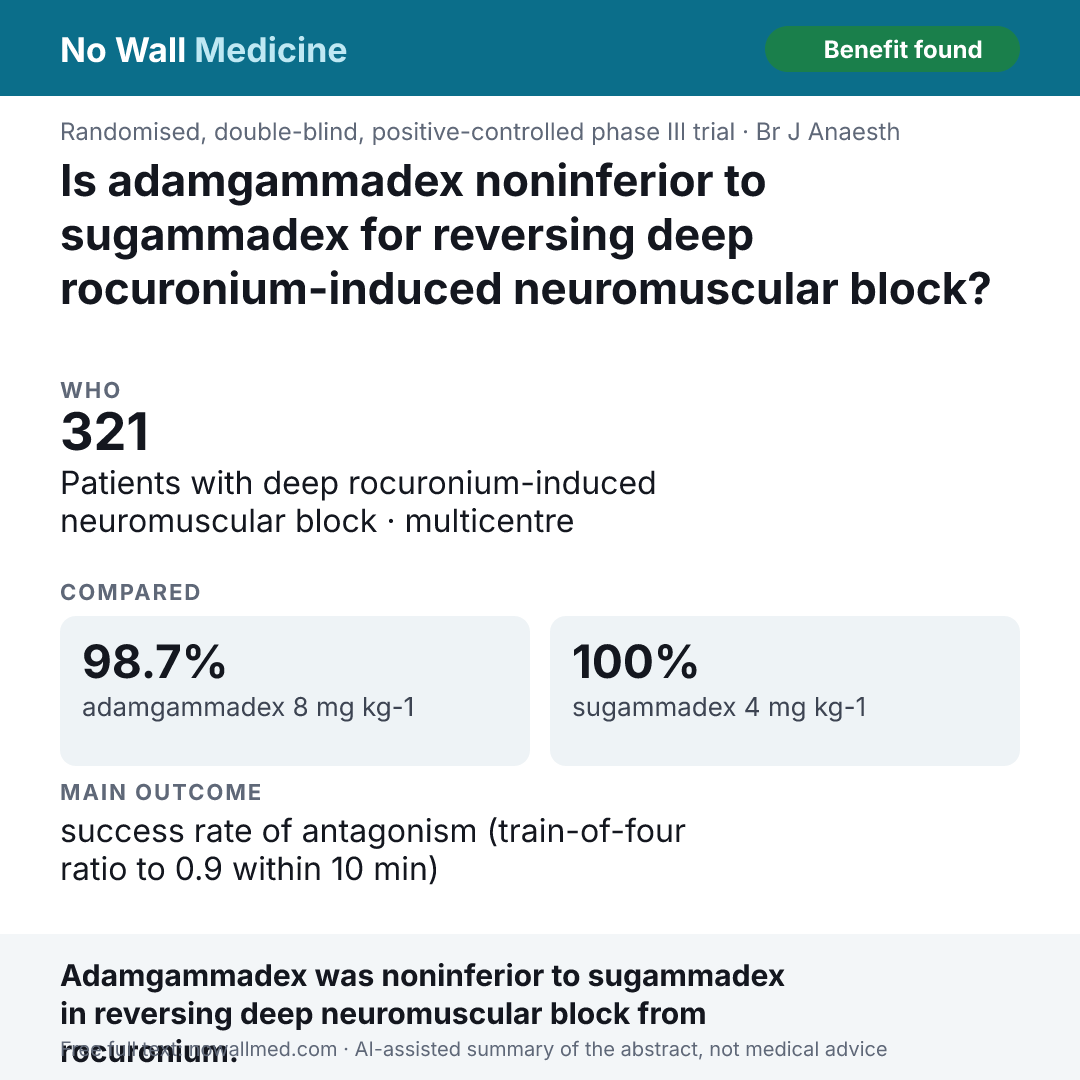
Efficacy and safety of adamgammadex for reversing rocuronium-induced deep neuromuscular block: a multicentre, randomised, double-blind, positive-controlled phase III trial
Randomised, double-blind, positive-controlled phase III trialBenefit found
Is adamgammadex noninferior to sugammadex for reversing deep rocuronium-induced neuromuscular block?
Who
321
Patients with deep rocuronium-induced neuromuscular block · multicentre
Compared
98.7%adamgammadex 8 mg kg-1
100%sugammadex 4 mg kg-1
Main outcome
success rate of antagonism (train-of-four ratio to 0.9 within 10 min)
Result: observed difference -1.3% (95% CI -4.6%, 1.2%)
Bottom line: Adamgammadex was noninferior to sugammadex in reversing deep neuromuscular block from rocuronium.
Br J Anaesth · 2025-06-02 · Save PNG
Effect of supplementation with vitamin D on biochemical markers of iron status and erythropoiesis in older people: BEST-D trial
Placebo-controlled randomisationNo clear difference
Does vitamin D supplementation affect iron status and erythropoiesis in older people?
Who
305
Community-dwelling older people aged 65 years or older · United Kingdom
Compared
4000 IU vitamin D3: hepcidin 20·7 [se 0·90] ng/ml
2000 IU vitamin D3: hepcidin 20·7 [se 0·90] ng/ml
Placebo: hepcidin 20·5 [1·21] ng/ml
Main outcome
Biochemical markers of iron status and erythropoiesis
Bottom line: Twelve months of daily vitamin D3 supplementation does not alter iron status in older adults.
Br J Nutr · 2025-06-02 · Save PNG