Visual abstracts
New randomized trials and meta-analyses from leading journals at a glance: who was studied, what was compared, and what was found. Every paper is free to read in full.
All specialtiesCardiology 4763Oncology 4043Gastroenterology & Hepatology 1903Infectious Disease 3756Neurology 1872Psychiatry & Mental Health 2216Pulmonology 2044Critical Care 1319Endocrinology & Diabetes 2544Pediatrics 2889Surgery 2480Orthopedics & Sports Medicine 917Neurosurgery 525Cardiothoracic & Vascular Surgery 656Plastic & Reconstructive Surgery 574Nephrology 1107Rheumatology 810Hematology 1090Dermatology 611Ophthalmology 532Obstetrics & Gynecology 1645Public & Global Health 1037Radiology & Imaging 619Anesthesiology 958Urology 745ENT (Otolaryngology) 494Emergency Medicine 481Allergy & Immunology 309Geriatrics 972Family Medicine & Primary Care 534Medical Genetics & Genomics 659Pathology & Laboratory Medicine 156Physical Medicine & Rehabilitation 734Palliative Care 421Nutrition 1560Digital Health & AI 2137General Medicine 318
Protocol for the diagnostic performance of C reactive protein, procalcitonin and interleukin-6 for serious bacterial infections among children ≤36 months old presenting with fever without source: a systematic review and meta-analysis
Systematic review and meta-analysis protocolUnclear result
What are the optimal biomarker thresholds for detecting serious bacterial infections in young children?
Who
Children aged 36 months or younger with fever without source
Compared
C reactive protein
Procalcitonin
Interleukin-6
Main outcome
Diagnostic accuracy of biomarkers for serious bacterial infections
Bottom line: This protocol outlines a planned meta-analysis to determine optimal biomarker thresholds for detecting serious bacterial infections.
BMJ Paediatr Open · 2024-03-18 · Save PNG

How Reliable Is Endoscopic Scoring of Postoperative Recurrence in Crohn Disease?: A Systematic Review and Meta-Analysis
Systematic review and meta-analysisMixed results
How reliable is endoscopic scoring of postoperative recurrence in Crohn disease?
Who
7751
Patients after ileocolic resection for Crohn disease
Compared
44.0%Rutgeerts score
41.1%Modified Rutgeerts score
Main outcome
Endoscopic recurrence rates within 12 months postoperatively
Result: 44.0% (95% confidence interval, 43.56-44.43)
Bottom line: Major variation in endoscopic recurrence rates suggests a high likelihood of inadequate diagnosis of disease recurrence.
Ann Surg Open · 2024-03-18 · Save PNG

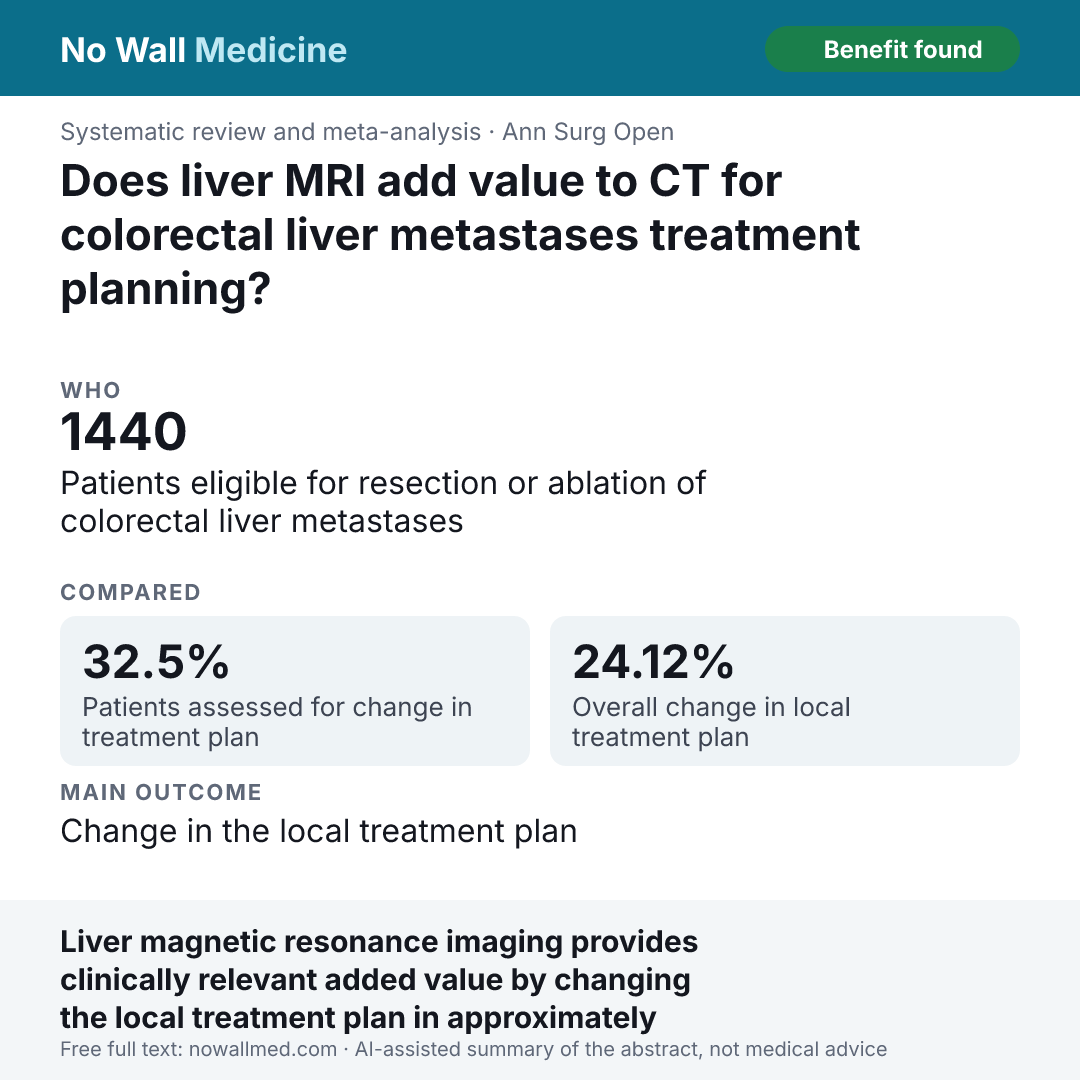
Added Value of Liver MRI in Patients Eligible for Surgical Resection or Ablation of Colorectal Liver Metastases Based on CT: A Systematic Review and Meta-Analysis
Systematic review and meta-analysisBenefit found
Does liver MRI add value to CT for colorectal liver metastases treatment planning?
Who
1440
Patients eligible for resection or ablation of colorectal liver metastases
Compared
32.5%Patients assessed for change in treatment plan (468/1440)
24.12%Overall change in local treatment plan
Main outcome
Change in the local treatment plan
Result: 24.12% (95% confidence interval, 15.58%-32.65%)
Bottom line: Liver magnetic resonance imaging provides clinically relevant added value by changing the local treatment plan in approximately one-fifth of patients.
Limitation: Findings should be confirmed by large prospective studies.
Ann Surg Open · 2024-03-18 · Save PNG
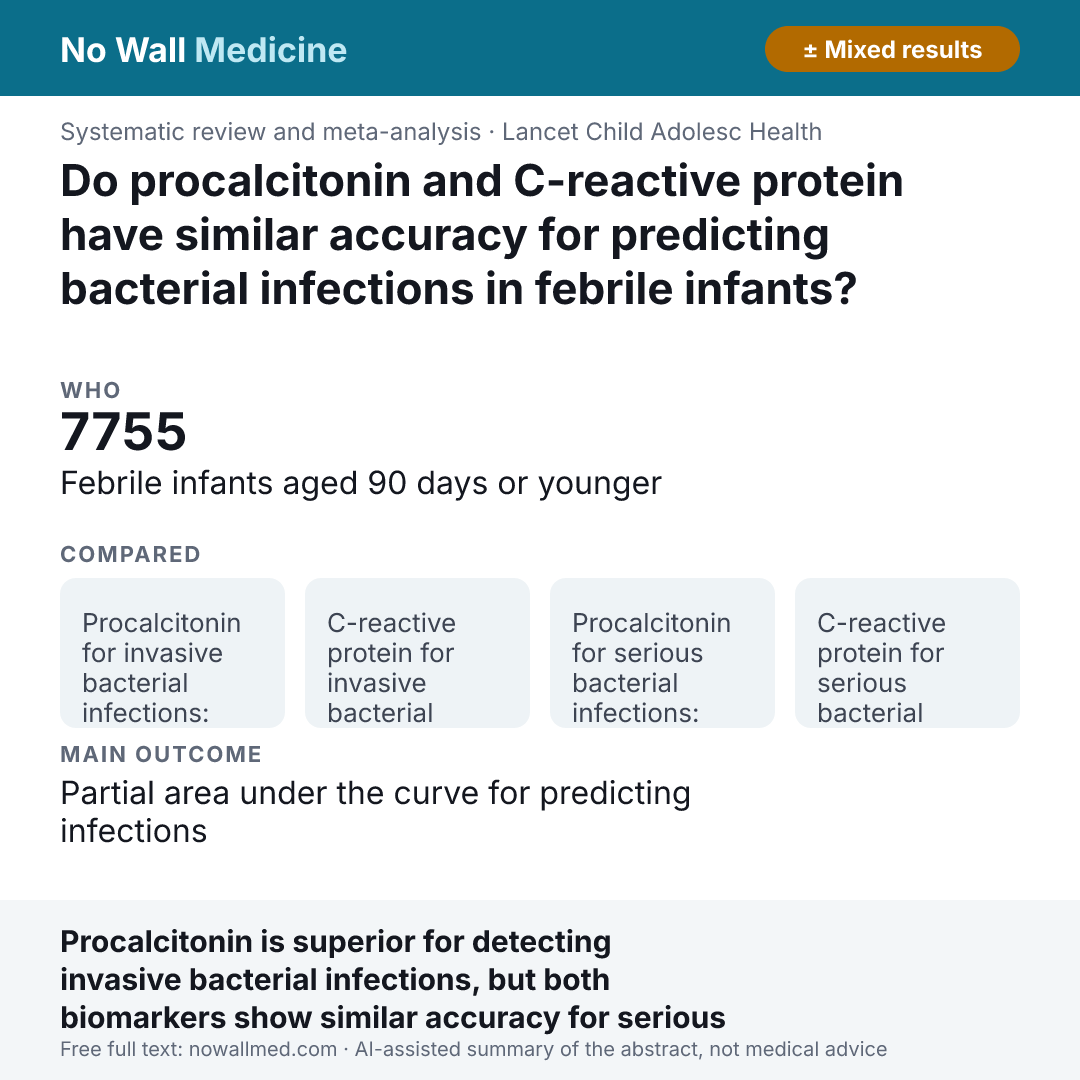
Diagnostic test accuracy of procalcitonin and C-reactive protein for predicting invasive and serious bacterial infections in young febrile infants: a systematic review and meta-analysis
Systematic review and meta-analysisMixed results
Do procalcitonin and C-reactive protein have similar accuracy for predicting bacterial infections in febrile infants?
Who
7755
Febrile infants aged 90 days or younger
Compared
Procalcitonin for invasive bacterial infections: pAUC 0·72 (95% CI 0·56-0·79)
C-reactive protein for invasive bacterial infections: pAUC 0·28 (95% CI 0·17-0·61)
Procalcitonin for serious bacterial infections: pAUC 0·55 (95% CI 0·44-0·69)
C-reactive protein for serious bacterial infections: pAUC 0·54 (95% CI 0·40-0·61)
Main outcome
Partial area under the curve for predicting infections
Result: pAUC 0·72 (95% CI 0·56-0·79) vs 0·28 (95% CI 0·17-0·61) for invasive infections
Bottom line: Procalcitonin is superior for detecting invasive bacterial infections, but both biomarkers show similar accuracy for serious bacterial infections.
Limitation: The absence of a single definition of serious bacterial infection across studies.
Lancet Child Adolesc Health · 2024-03-16 · Save PNG
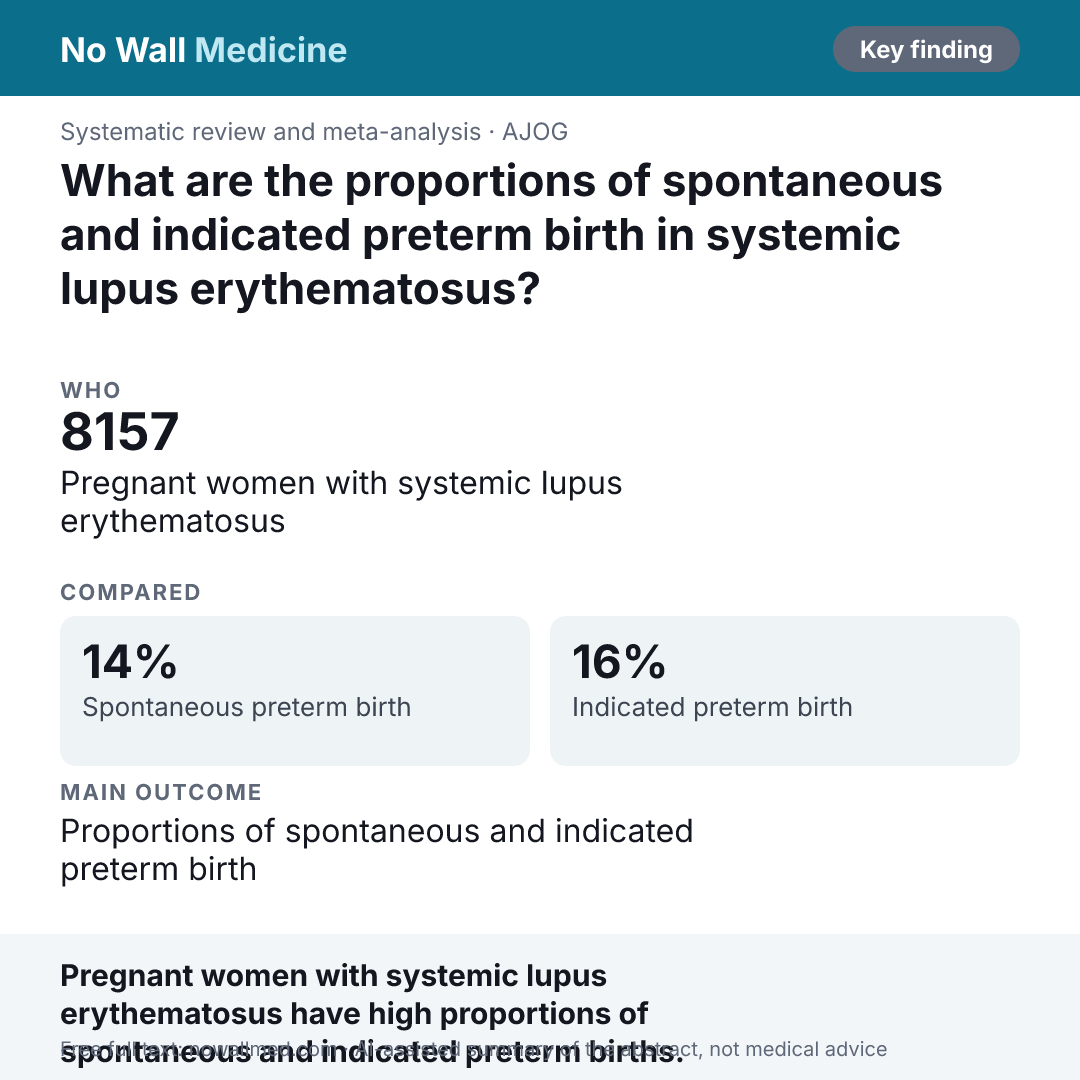
Systemic lupus erythematosus is associated with an increased frequency of spontaneous preterm births: systematic review and meta-analysis
Systematic review and meta-analysisKey finding
What are the proportions of spontaneous and indicated preterm birth in systemic lupus erythematosus?
Who
8157
Pregnant women with systemic lupus erythematosus
Compared
14%Spontaneous preterm birth (95% prediction interval, 0.04-0.27)
16%Indicated preterm birth (95% prediction interval, 0.03-0.35)
Main outcome
Proportions of spontaneous and indicated preterm birth
Result: 31% (95% prediction interval, 0.14-0.50) total preterm birth
Bottom line: Pregnant women with systemic lupus erythematosus have high proportions of spontaneous and indicated preterm births.
AJOG · 2024-03-16 · Save PNG
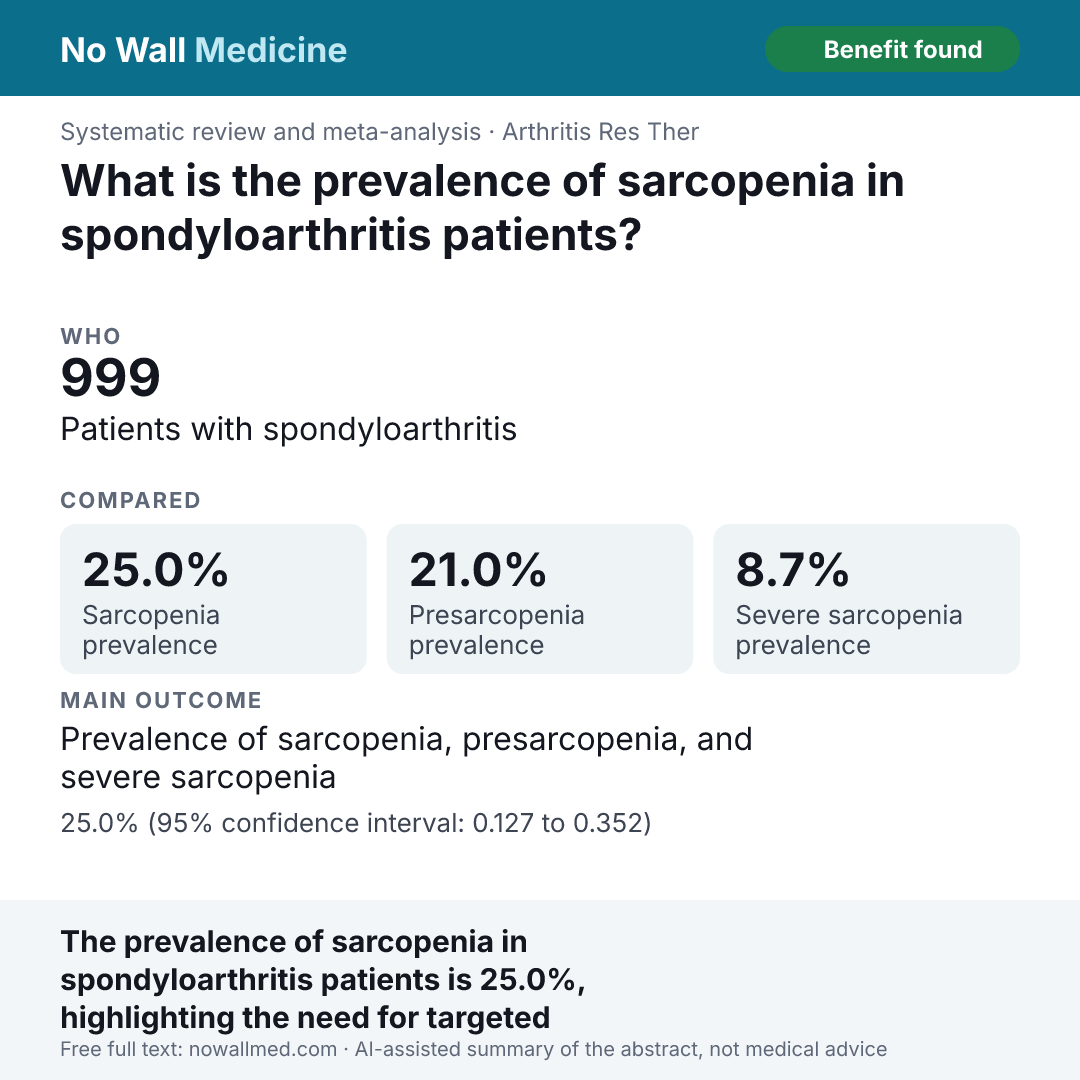
The prevalence of sarcopenia in spondyloarthritis patients: a meta-analysis
Systematic review and meta-analysisBenefit found
What is the prevalence of sarcopenia in spondyloarthritis patients?
Who
999
Patients with spondyloarthritis
Compared
25.0%Sarcopenia prevalence
21.0%Presarcopenia prevalence
8.7%Severe sarcopenia prevalence
Main outcome
Prevalence of sarcopenia, presarcopenia, and severe sarcopenia
Result: 25.0% (95% confidence interval: 0.127 to 0.352)
Bottom line: The prevalence of sarcopenia in spondyloarthritis patients is 25.0%, highlighting the need for targeted interventions.
Limitation: Further research is needed to explore underlying mechanisms and potential therapeutic strategies.
Arthritis Res Ther · 2024-03-16 · Save PNG
Assessing robustness to worst case publication bias using a simple subset meta-analysis
Methodological discussionUnclear result
How robust is a meta-analysis to worst case publication bias using non-affirmative studies?
Who
Meta-analyses including affirmative and non-affirmative studies
Compared
Uncorrected meta-analysis
Meta-analysis of non-affirmative studies
Main outcome
Robustness of meta-analysis conclusions to publication bias
Bottom line: A meta-analysis of non-affirmative studies can assess if publication bias would overturn original conclusions.
BMJ · 2024-03-15 · Save PNG

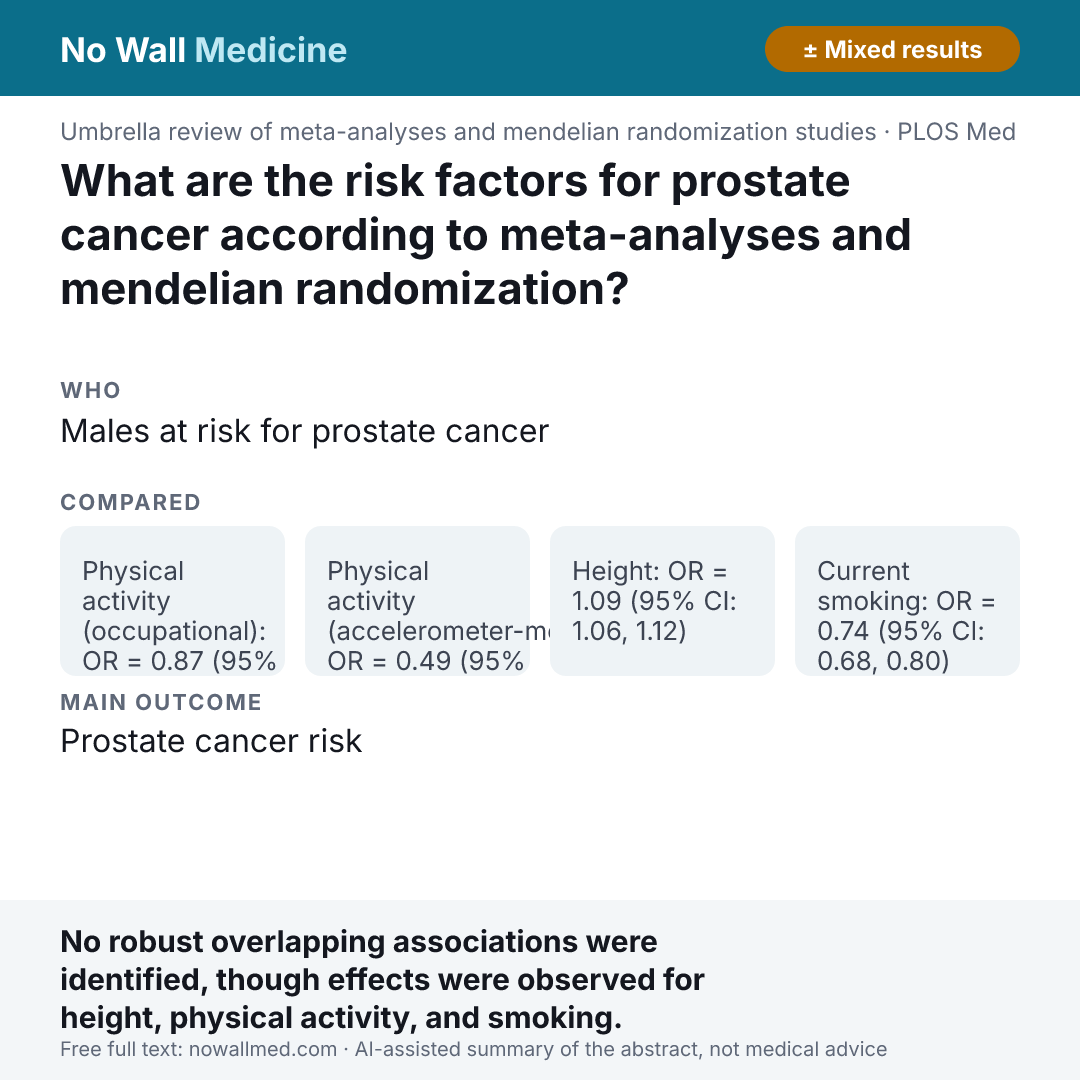
Risk factors for prostate cancer: An umbrella review of prospective observational studies and mendelian randomization analyses
Umbrella review of meta-analyses and mendelian randomization studiesMixed results
What are the risk factors for prostate cancer according to meta-analyses and mendelian randomization?
Who
Males at risk for prostate cancer
Compared
Physical activity (occupational): OR = 0.87 (95% CI: 0.80, 0.94)
Physical activity (accelerometer-measured): OR = 0.49 (95% CI: 0.33, 0.72)
Height: OR = 1.09 (95% CI: 1.06, 1.12)
Current smoking: OR = 0.74 (95% CI: 0.68, 0.80)
Main outcome
Prostate cancer risk
Bottom line: No robust overlapping associations were identified, though effects were observed for height, physical activity, and smoking.
Limitation: The evidence grading criteria could be expanded by considering more indices.
PLOS Med · 2024-03-15 · Save PNG
Effect of Glucagon-like Peptide-1 Receptor Agonists (GLP-1RA) on Weight Loss Following Bariatric Treatment
Systematic review and meta-analysisBenefit found
Do glucagon-like peptide-1 receptor agonists affect weight changes after metabolic bariatric surgery?
Who
1164
Patients who previously underwent metabolic bariatric surgery
Compared
Observational studies (GLP-1RA): weight-7.83 kg
4.36 kgRandomized controlled trials (GLP-1RA)
Randomized controlled trials (placebo)
Main outcome
Weight changes in kilograms
Result: weight reduction of 4.36 kg (95% CI, -0.42 to -8.30) compared to placebo
Bottom line: Glucagon-like peptide-1 receptor agonists can promote significant weight reduction with an acceptable safety profile after bariatric surgery.
J Clin Endocrinol Metab · 2024-03-15 · Save PNG

Thromboembolic risk of carfilzomib or bortezomib in combination with lenalidomide and dexamethasone for newly diagnosed multiple myeloma: A comparative systematic review and meta-analysis
Meta-analysis of one randomized trial and five cohort studiesBenefit found
What is the thromboembolic risk of carfilzomib versus bortezomib with lenalidomide and dexamethasone?
Who
2304
Patients with newly diagnosed multiple myeloma
Compared
Bortezomib, lenalidomide and dexamethasone: 6.16% VTE; 0.91% ATE
Carfilzomib, lenalidomide and dexamethasone: 8.87% VTE; 1.16% ATE
Main outcome
Venous thromboembolism and arterial thromboembolism
Result: odds ratio 0.53 (95% CI 0.32-0.88) for VTE
Bottom line: Bortezomib combination therapy showed lower venous thromboembolism risk compared to carfilzomib combination therapy in newly diagnosed multiple myeloma.
Limitation: Potential biases from retrospective studies, heterogeneity, and limited access to patient-level data.
Am J Hematol · 2024-03-15 · Save PNG

Prenatal Genome-Wide Sequencing analysis (Exome or Genome) in detecting pathogenic Single Nucleotide Variants in fetal Central Nervous System Anomalies: systematic review and meta-analysis
Systematic review and meta-analysisBenefit found
Does prenatal exome or genome sequencing increase diagnostic yield in fetal central nervous system anomalies?
Who
428
Fetuses with central nervous system anomalies
Compared
Prenatal exome or genome sequencing
Karyotype and chromosomal microarray analysis
Main outcome
Incremental diagnostic yield of pathogenic single nucleotide variants
Result: 38% (95% C.I.: [29%;47%])
Bottom line: Prenatal exome or genome sequencing provides a significant incremental diagnostic yield over karyotype and chromosomal microarray analysis in fetal central nervous system anomalies.
Eur J Hum Genet · 2024-03-15 · Save PNG

Validity of nutrition screening tools for risk of malnutrition among hospitalized adult patients: A systematic review and meta-analysis
Systematic review and meta-analysisMixed results
Which nutritional screening tool is most valid for assessing malnutrition risk in hospitalized adults?
Who
Hospitalized adult patients
Compared
Malnutrition Universal Screening Tool vs SGA: sensitivity 0.84 (95% CI 0.73-0.91), specificity 0.85 (0.75-0.91)
Malnutrition Universal Screening Tool vs ESPEN: sensitivity 0.97 (0.53-0.99), specificity 0.80 (0.50-0.94)
Malnutrition Screening Tool vs SGA: sensitivity 0.81 (0.67-0.90), specificity 0.79 (0.72-0.74)
Mini Nutritional Assessment-Short Form vs ESPEN: sensitivity 0.99 (0.41-0.99), specificity 0.60 (0.45-0.73)
Main outcome
Validity of nutritional screening tools for malnutrition risk
Bottom line: The Malnutrition Universal Screening Tool demonstrated high accuracy, but study quality varied greatly, potentially introducing bias.
Limitation: The quality of the included studies varied greatly, possibly introducing bias in the results.
Clin Nutr · 2024-03-15 · Save PNG

Quantifying Overlapping Forms of Malnutrition Across Latin America: A Systematic Literature Review and Meta-Analysis of Prevalence Estimates
Systematic literature review and meta-analysisMixed results
What is the prevalence of double burden of malnutrition typologies in Latin America and the Caribbean?
Who
Individuals across 27 Latin American and Caribbean countries · 27 Latin American and Caribbean countries
Compared
24.3%Adult with overweight and child with anemia (95% CI: 18.8%, 30.2%)
8.5%Adult with overweight and child with stunting (95% CI: 7.7, 9.3)
Main outcome
Prevalence of identified double burden of malnutrition typologies
Bottom line: Double burden of malnutrition prevalence in Latin America and the Caribbean ranges between 0% and 24%.
Limitation: All prevalences carried large heterogeneity (I2>90%) and life course estimates were insufficient.
Adv Nutr · 2024-03-15 · Save PNG

Vitamins C, E, and β-Carotene and Risk of Type 2 Diabetes: A Systematic Review and Meta-Analysis
Systematic review and meta-analysisMixed results
Do vitamins C, E, and beta-carotene reduce type 2 diabetes risk?
Who
Individuals in observational studies and randomized controlled trials
Compared
Dietary and circulating antioxidants: RR 0.76 (CI: 0.61, 0.95) for vitamin C
Antioxidant supplementation: RR 1.01 (CI: 0.93, 1.10) for vitamin E
Main outcome
Type 2 diabetes incidence and related traits
Result: RR 0.76 (CI: 0.61, 0.95) for vitamin C intake
Bottom line: Dietary antioxidants may lower type 2 diabetes risk, but supplementation showed no protective effect in randomized controlled trials.
Limitation: Certainty of evidence was low to moderate for several associations.
Adv Nutr · 2024-03-15 · Save PNG

Comparing interventions for early psychosis: a systematic review and component network meta-analysis
Systematic review and component network meta-analysisBenefit found
Which components of early psychosis intervention services are most effective?
Who
4599
Participants with early psychosis
Compared
Psychological interventions: iSMD -0.24 (95% CI -0.44 to -0.05) for negative symptoms
Addition of case management: iSMD -1.17 (95% CI -2.24 to -0.11) for negative symptoms
Main outcome
Negative and positive psychotic symptoms and social functioning
Bottom line: Psychological interventions and case management added to pharmacotherapy provide clinical benefits for early psychosis.
Limitation: Small number of studies and sparsely connected networks.
Funded by: National Institute for Health and Care Research
eClinicalMedicine · 2024-03-14 · Save PNG

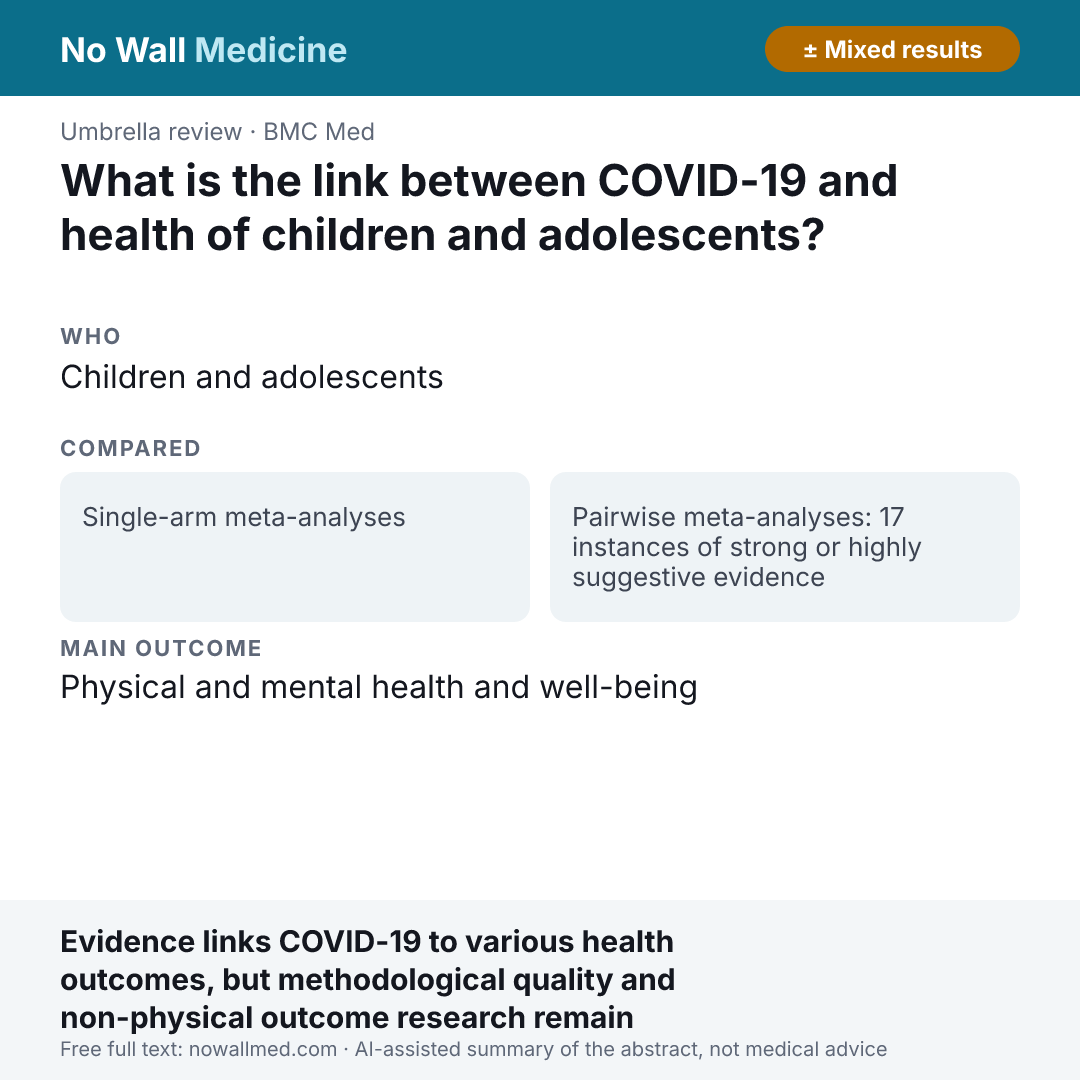
Evidence linking COVID-19 and the health/well-being of children and adolescents: an umbrella review
Umbrella reviewMixed results
What is the link between COVID-19 and health of children and adolescents?
Who
Children and adolescents
Compared
Single-arm meta-analyses
Pairwise meta-analyses: 17 instances of strong or highly suggestive evidence
Main outcome
Physical and mental health and well-being
Bottom line: Evidence links COVID-19 to various health outcomes, but methodological quality and non-physical outcome research remain suboptimal.
Limitation: The quality of evidence and methodological rigor were suboptimal.
BMC Med · 2024-03-13 · Save PNG
Efficacy and safety of gut microbiota-based therapies in autoimmune and rheumatic diseases: a systematic review and meta-analysis of 80 randomized controlled trials
Systematic review and meta-analysis of 80 randomized controlled trialsMixed results
Are gut microbiota-based therapies effective for autoimmune and rheumatic diseases?
Who
Patients with 14 types of autoimmune and rheumatic diseases
Compared
Gut microbiota-based therapies
Control
Main outcome
Symptoms and/or inflammatory factors
Bottom line: Gut microbiota-based therapies may improve several autoimmune diseases but show no significant effect for rheumatoid arthritis and spondyloarthritis.
BMC Med · 2024-03-13 · Save PNG

Cannabis and Cannabinoids in Adults With Cancer: ASCO Guideline
ASCO Guideline based on systematic reviewMixed results
Should cannabis and cannabinoids be used for adults with cancer?
Who
adults with cancer
Compared
Cancer-directed treatment
Refractory chemotherapy-induced nausea and vomiting: may improve
Main outcome
antineoplastic effects, toxicity, symptoms, and quality of life
Bottom line: Recommend against cannabis for cancer-directed treatment but it may improve refractory chemotherapy-induced nausea and vomiting.
J Clin Oncol · 2024-03-13 · Save PNG

Systematic Review of Household Transmission of Strep A: A Potential Site for Prevention That Has Eluded Attention
Systematic reviewUnclear result
How does Streptococcus pyogenes transmit among people within the household?
Who
28
People within the home · Global
Compared
Contact: n = 4
Vehicle: n = 2
Contact with animals: n = 1
Main outcome
Streptococcus pyogenes transmission mode
Bottom line: There is limited literature regarding household transmission of Streptococcus pyogenes, making understanding transmission imperative to guide control methods.
Limitation: Only 7 studies provided sufficient detail to identify the transmission mode.
Funded by: Australian National Health and Medical Research Council
J Infect Dis · 2024-03-13 · Save PNG

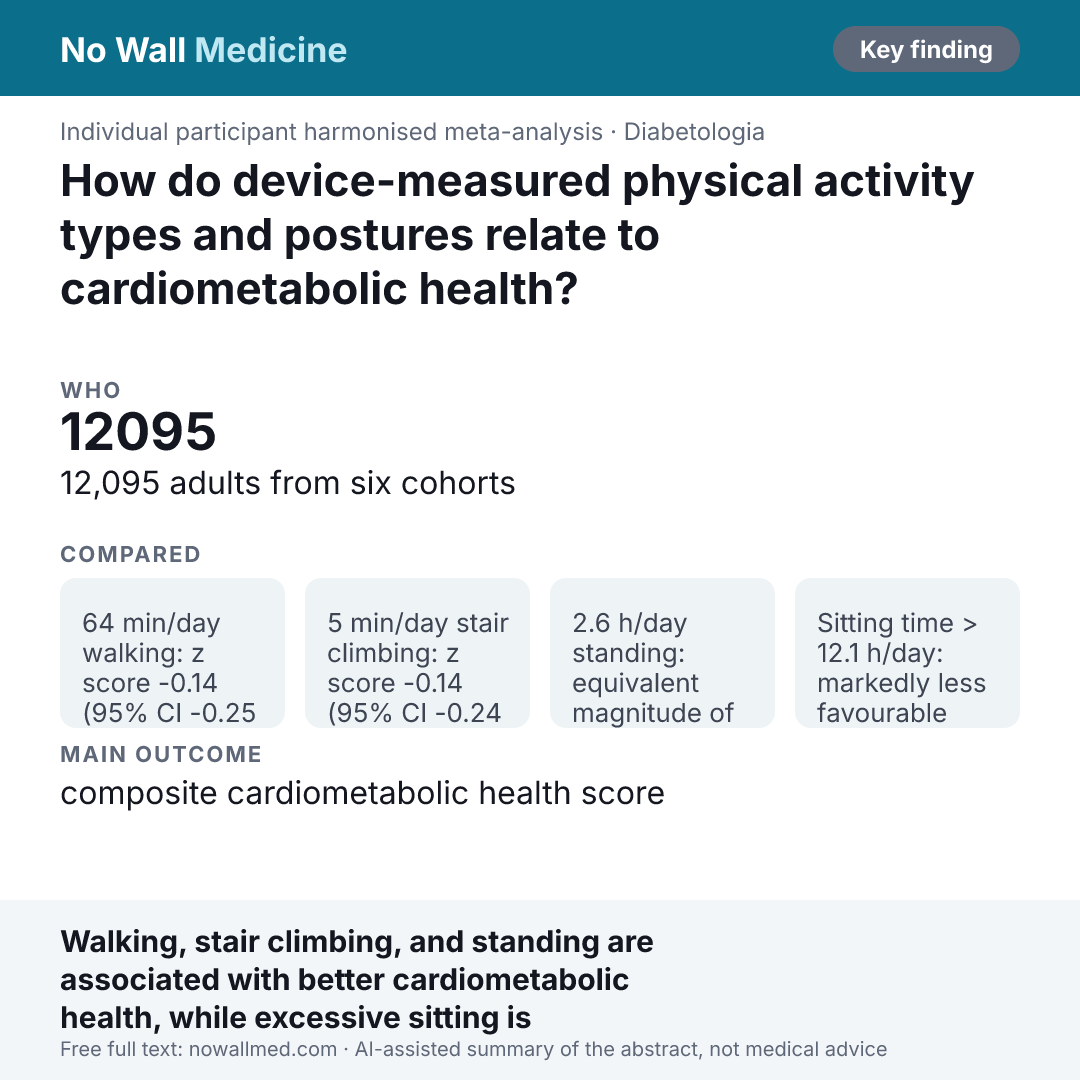
Relationship of device measured physical activity type and posture with cardiometabolic health markers: pooled dose-response associations from the Prospective Physical Activity, Sitting and Sleep Consortium
Individual participant harmonised meta-analysisKey finding
How do device-measured physical activity types and postures relate to cardiometabolic health?
Who
12095
12,095 adults from six cohorts
Compared
64 min/day walking: z score -0.14 (95% CI -0.25 to -0.02)
5 min/day stair climbing: z score -0.14 (95% CI -0.24 to -0.03)
2.6 h/day standing: equivalent magnitude of association
Sitting time > 12.1 h/day: markedly less favourable
Main outcome
composite cardiometabolic health score
Bottom line: Walking, stair climbing, and standing are associated with better cardiometabolic health, while excessive sitting is deleterious.
Diabetologia · 2024-03-13 · Save PNG