Visual abstracts
New randomized trials and meta-analyses from leading journals at a glance: who was studied, what was compared, and what was found. Every paper is free to read in full.
All specialtiesCardiology 1145Oncology 995Gastroenterology & Hepatology 397Infectious Disease 743Neurology 469Psychiatry & Mental Health 580Pulmonology 485Critical Care 331Endocrinology & Diabetes 636Pediatrics 683Surgery 497Orthopedics & Sports Medicine 219Neurosurgery 153Cardiothoracic & Vascular Surgery 122Plastic & Reconstructive Surgery 178Nephrology 243Rheumatology 147Hematology 232Dermatology 108Ophthalmology 128Obstetrics & Gynecology 349Public & Global Health 219Radiology & Imaging 142Anesthesiology 201Urology 207ENT (Otolaryngology) 155Emergency Medicine 123Allergy & Immunology 76Geriatrics 228Family Medicine & Primary Care 144Medical Genetics & Genomics 119Pathology & Laboratory Medicine 35Physical Medicine & Rehabilitation 195Palliative Care 106Nutrition 295Digital Health & AI 564General Medicine 110
Flying blind? Recommendations for monitoring of 10 common chronic diseases in guidelines from Germany, England, and Europe - a modified systematic review
Modified systematic reviewMixed results
What is the detail and evidence level of monitoring recommendations in clinical practice guidelines?
Who
Guidelines for 10 common chronic diseases · Germany, England, and Europe
Compared
Monitoring frequency detail: low level of detail in 34.4% of cases
Monitoring parameters detail: low level of detail in 25.2% of cases
Monitoring consequences detail: low level of detail in 84.7% of cases
Main outcome
Level of detail and level of evidence in monitoring recommendations
Bottom line: Monitoring recommendations often lack detail and high-quality evidence, potentially causing medical underuse, overuse, and unnecessary diagnostic cascades.
Limitation: Overcoming systemic barriers is essential to enable the generation of high-quality evidence on monitoring.
BMC Med · 2025-12-01Download image

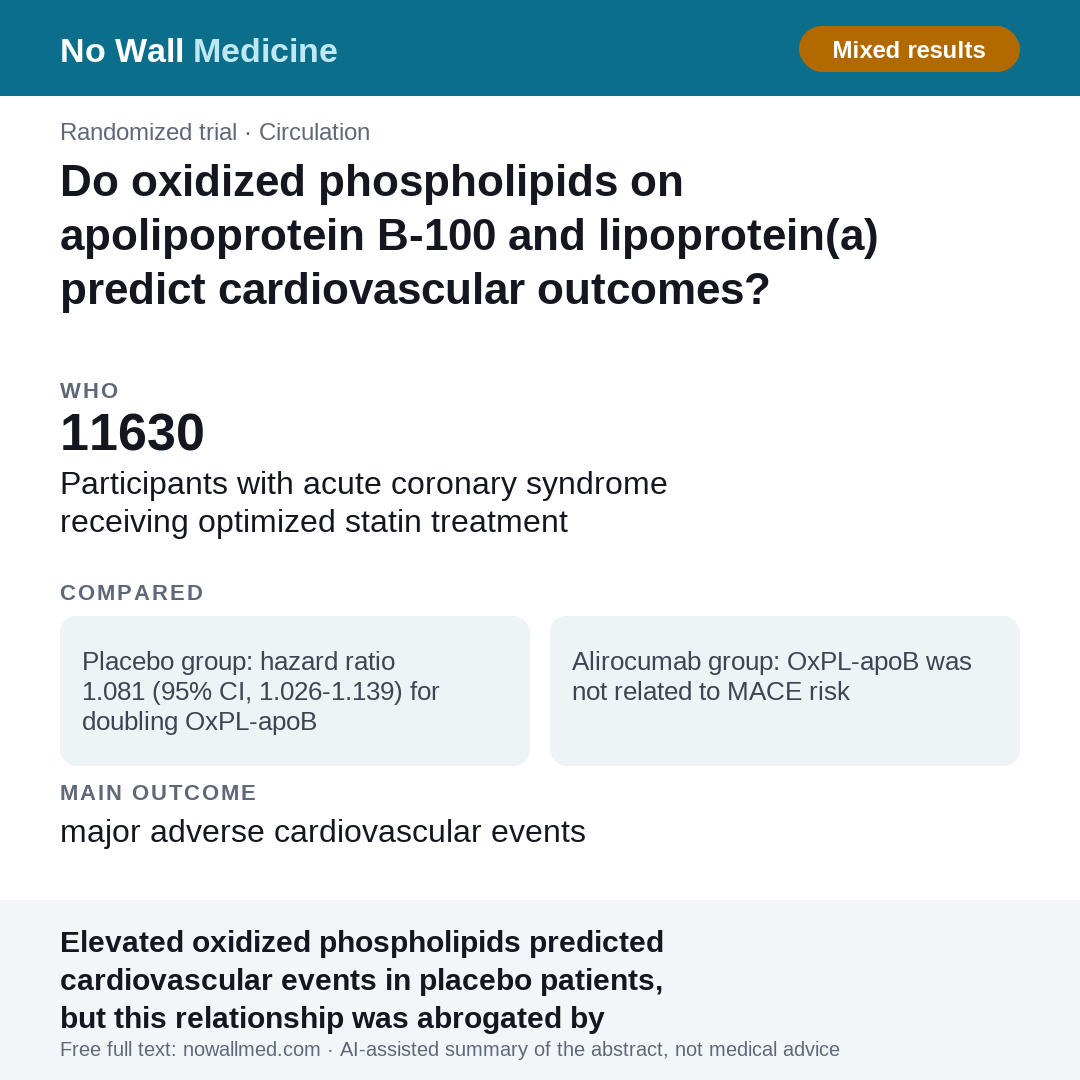
Oxidized Phospholipids, Lipoprotein(a), and Cardiovascular Outcomes After Acute Coronary Syndrome
Randomized trialMixed results
Do oxidized phospholipids on apolipoprotein B-100 and lipoprotein(a) predict cardiovascular outcomes?
Who
11630
Participants with acute coronary syndrome receiving optimized statin treatment
Compared
Placebo group: hazard ratio 1.081 (95% CI, 1.026-1.139) for doubling OxPL-apoB
Alirocumab group: OxPL-apoB was not related to MACE risk
Main outcome
major adverse cardiovascular events
Result: hazard ratio 1.081 (95% CI, 1.026-1.139)
Bottom line: Elevated oxidized phospholipids predicted cardiovascular events in placebo patients, but this relationship was abrogated by alirocumab treatment.
Circulation · 2025-12-01Download image
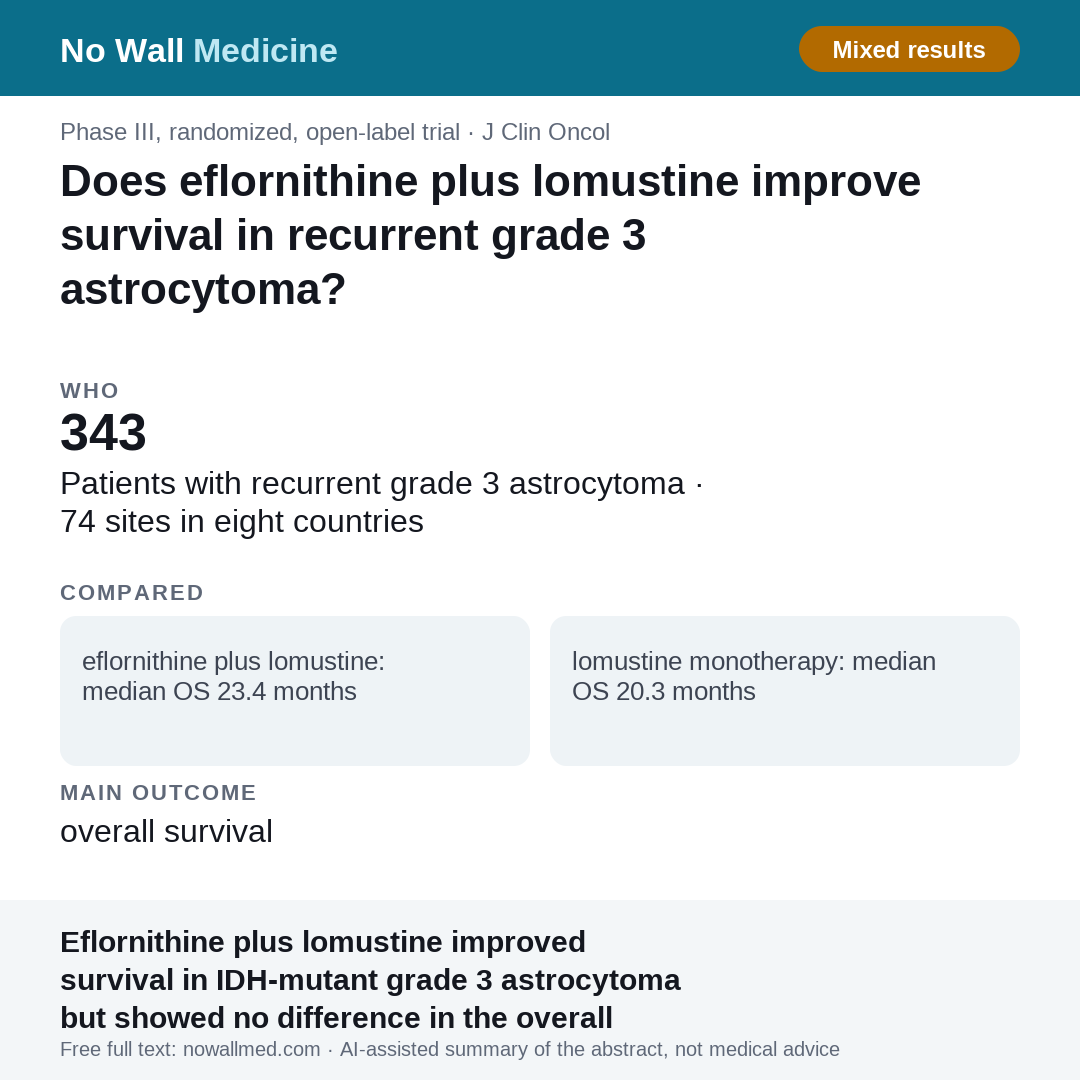
STELLAR: Phase III, Randomized, Open-Label Study of Eflornithine Plus Lomustine Versus Lomustine Alone in Patients With Recurrent Grade 3 Astrocytoma
Phase III, randomized, open-label trialMixed results
Does eflornithine plus lomustine improve survival in recurrent grade 3 astrocytoma?
Who
343
Patients with recurrent grade 3 astrocytoma · 74 sites in eight countries
Compared
eflornithine plus lomustine: median OS 23.4 months
lomustine monotherapy: median OS 20.3 months
Main outcome
overall survival
Result: hazard ratio 0.94
Bottom line: Eflornithine plus lomustine improved survival in IDH-mutant grade 3 astrocytoma but showed no difference in the overall population.
J Clin Oncol · 2025-12-01Download image
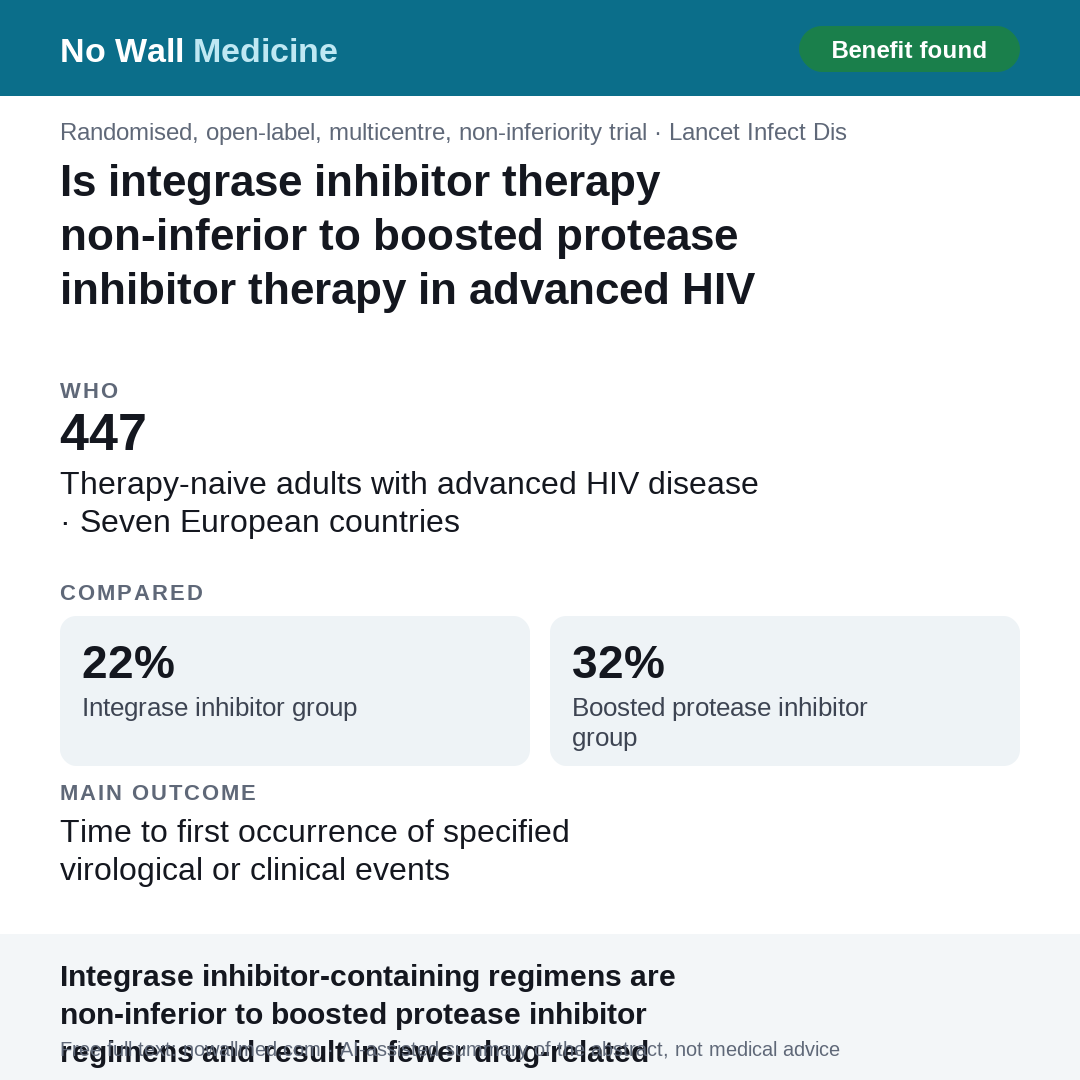
Integrase versus protease inhibitor therapy in advanced HIV disease (LAPTOP): a multicountry, randomised, open-label, non-inferiority trial
Randomised, open-label, multicentre, non-inferiority trialBenefit found
Is integrase inhibitor therapy non-inferior to boosted protease inhibitor therapy in advanced HIV disease?
Who
447
Therapy-naive adults with advanced HIV disease · Seven European countries
Compared
22%Integrase inhibitor group (49/220)
32%Boosted protease inhibitor group (70/222)
Main outcome
Time to first occurrence of specified virological or clinical events
Result: adjusted hazard ratio 0.70 (95% CI 0.48 to 1.00)
Bottom line: Integrase inhibitor-containing regimens are non-inferior to boosted protease inhibitor regimens and result in fewer drug-related adverse events.
Funded by: Gilead Sciences and Janssen Pharmaceuticals
Lancet Infect Dis · 2025-12-01Download image
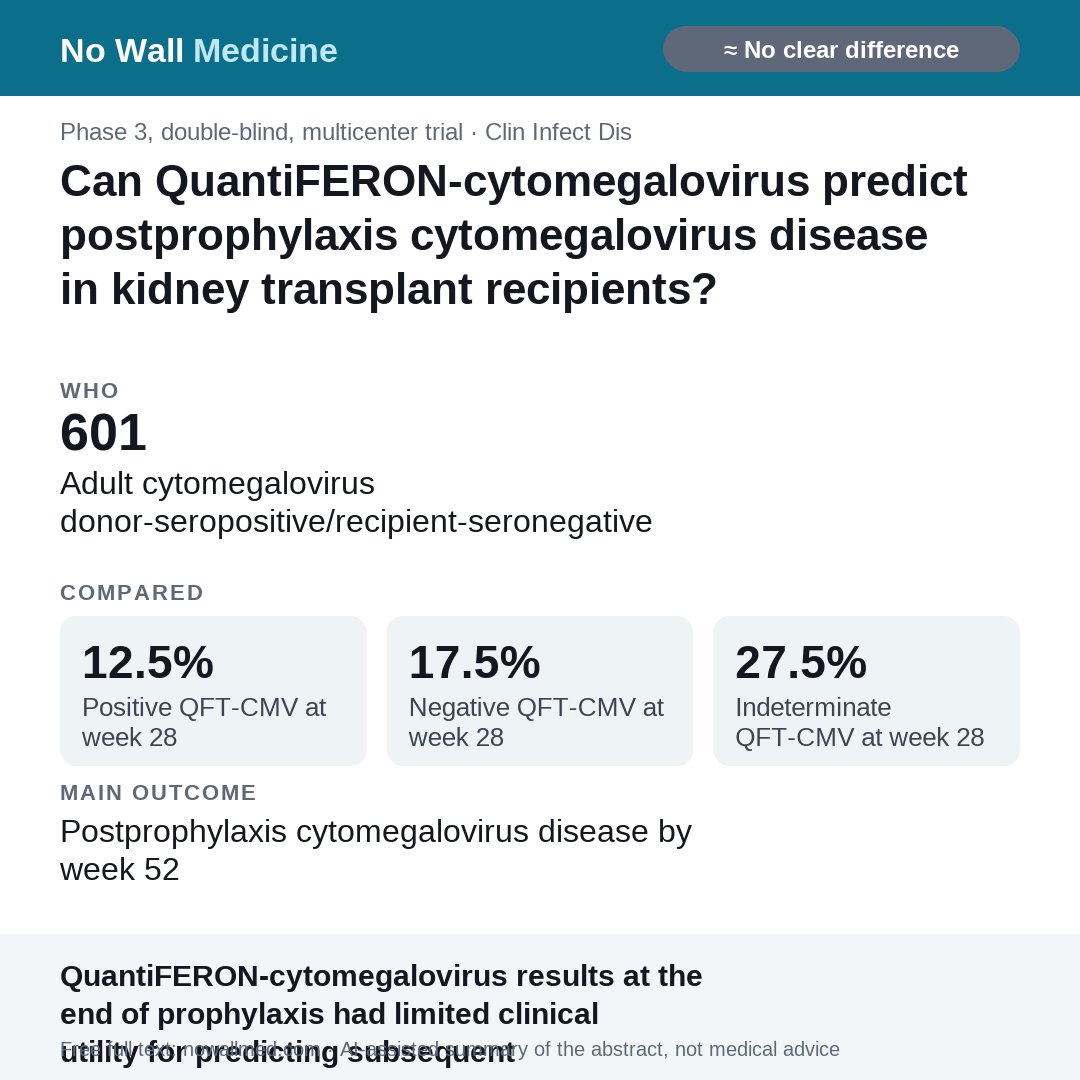
Cytomegalovirus (CMV)-Specific Cell-Mediated Immunity for Prediction of Postprophylaxis CMV Disease in a Phase 3 Trial of Letermovir Versus Valganciclovir Prophylaxis in Donor CMV-Seropositive/Recipient CMV-Seronegative Kidney Transplant Recipients
Phase 3, double-blind, multicenter trialNo clear difference
Can QuantiFERON-cytomegalovirus predict postprophylaxis cytomegalovirus disease in kidney transplant recipients?
Who
601
Adult cytomegalovirus donor-seropositive/recipient-seronegative kidney transplant recipients · multicenter
Compared
12.5%Positive QFT-CMV at week 28 (4/32)
17.5%Negative QFT-CMV at week 28 (66/377)
27.5%Indeterminate QFT-CMV at week 28 (14/51)
Main outcome
Postprophylaxis cytomegalovirus disease by week 52
Bottom line: QuantiFERON-cytomegalovirus results at the end of prophylaxis had limited clinical utility for predicting subsequent cytomegalovirus disease.
Clin Infect Dis · 2025-12-01Download image
Magnetic seed versus guidewire-based breast cancer localization with magnetic lymph node detection: cost-minimization analysis
Pragmatic randomized controlled trialBenefit found
Is magnetic seed localization more cost-effective than guidewire localization for breast cancer?
Who
426
Patients with non-palpable breast cancer
Compared
Guidewire: €3514
Magnetic seed: €3123
Main outcome
Total costs from a healthcare system perspective
Result: difference -€391 (95% c.i. -€422 to -€360)
Bottom line: Magnetic seeds were associated with reduced costs despite the higher device cost due to streamlined processes.
Br J Surg · 2025-12-01Download image
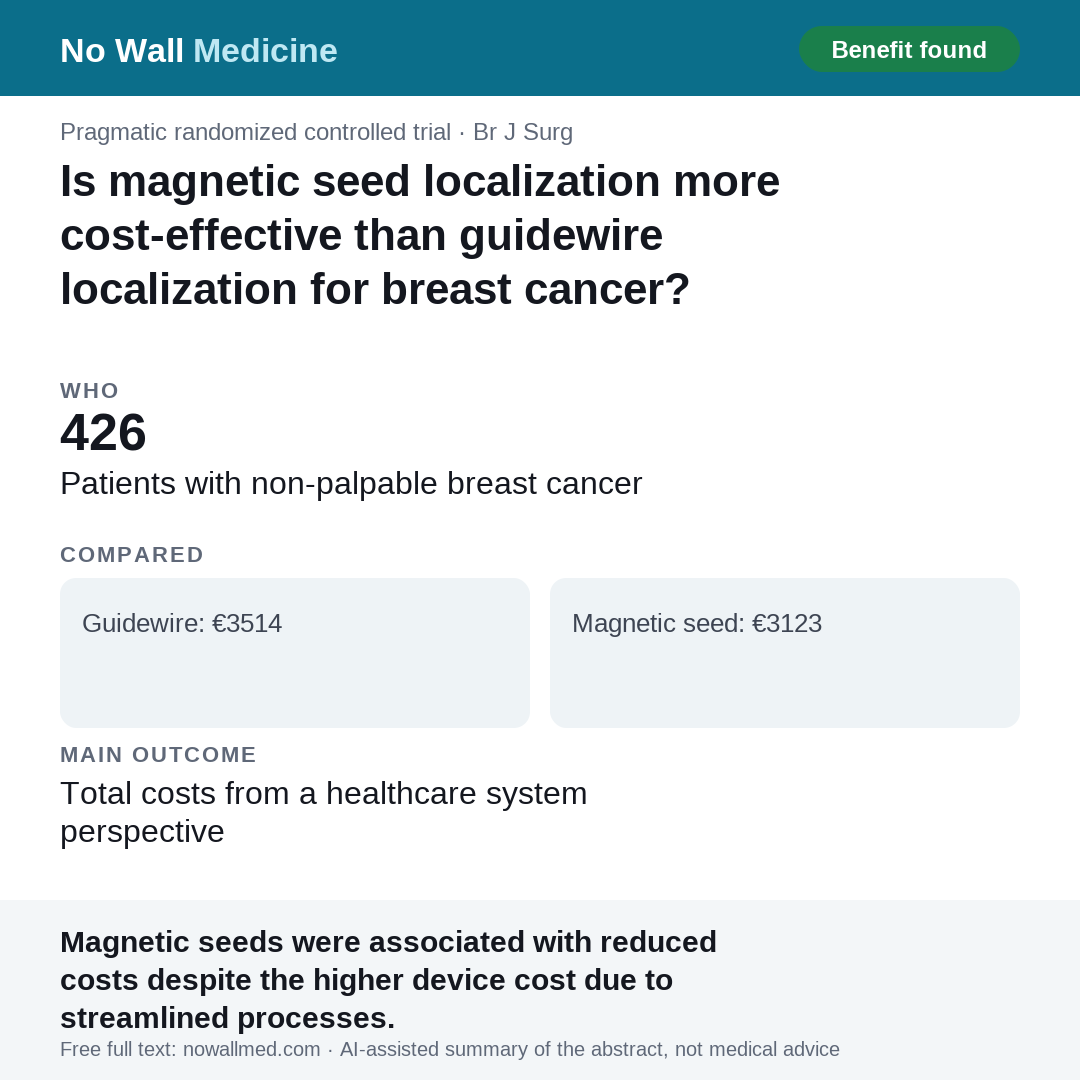
A Small-Volume Topical Ophthalmic Spray for Pupillary Dilation in Children: A Randomized, Masked, Noninferiority Trial
Prospective, randomized, single-masked clinical trialBenefit found
Is a topical ophthalmic spray noninferior to standard eye drops for pupillary dilation in children?
Who
67
Children 18 years of age or younger requiring pupillary dilation
Compared
standard eye drops: change in maximum pupil diameter 2.15 mm (95% CI, 1.96-2.35 mm)
automated microdosing spray: change in maximum pupil diameter 2.48 mm (95% CI, 2.09-2.87 mm)
Main outcome
change in maximum pupil diameter and pupillary constriction percentage
Bottom line: An ophthalmic spray was noninferior to traditional eye drops for pupillary dilation in children.
Ophthalmology · 2025-12-01Download image
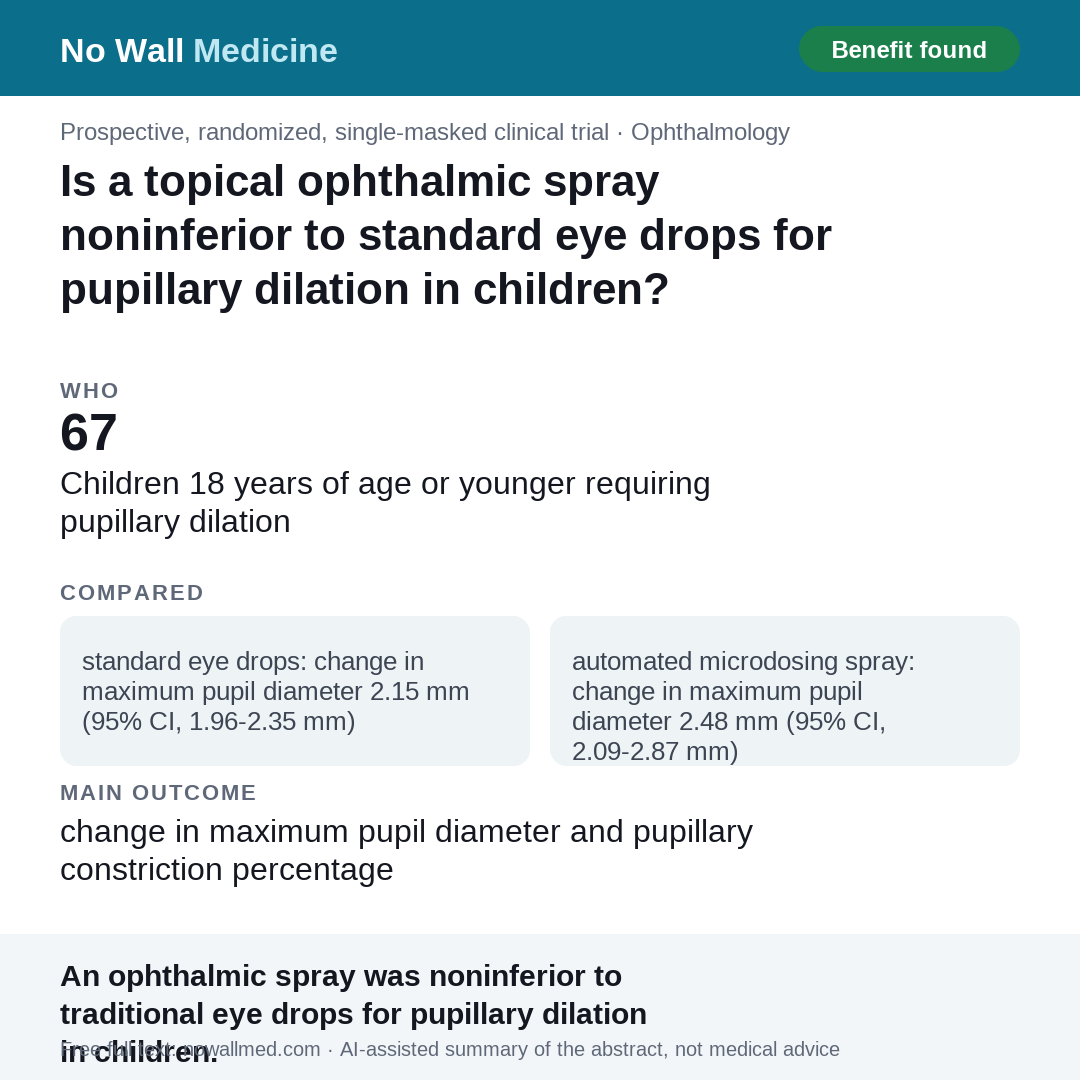
Automated Imaging as an Adjunct to Serum and Clinical Biomarkers: A New Validated Prediction Tool for Metastatic Castration-Resistant Prostate Cancer
Two randomized phase 3 trialsBenefit found
Does automated imaging improve risk stratification in metastatic castration-resistant prostate cancer?
Who
Patients with first-line metastatic castration-resistant prostate cancer
Compared
Clinical and serum biomarkers alone
Clinical, serum, and automated imaging
Main outcome
Overall survival
Bottom line: Automated imaging improves patient risk stratification compared to using serum biomarkers alone.
Clin Cancer Res · 2025-12-01Download image
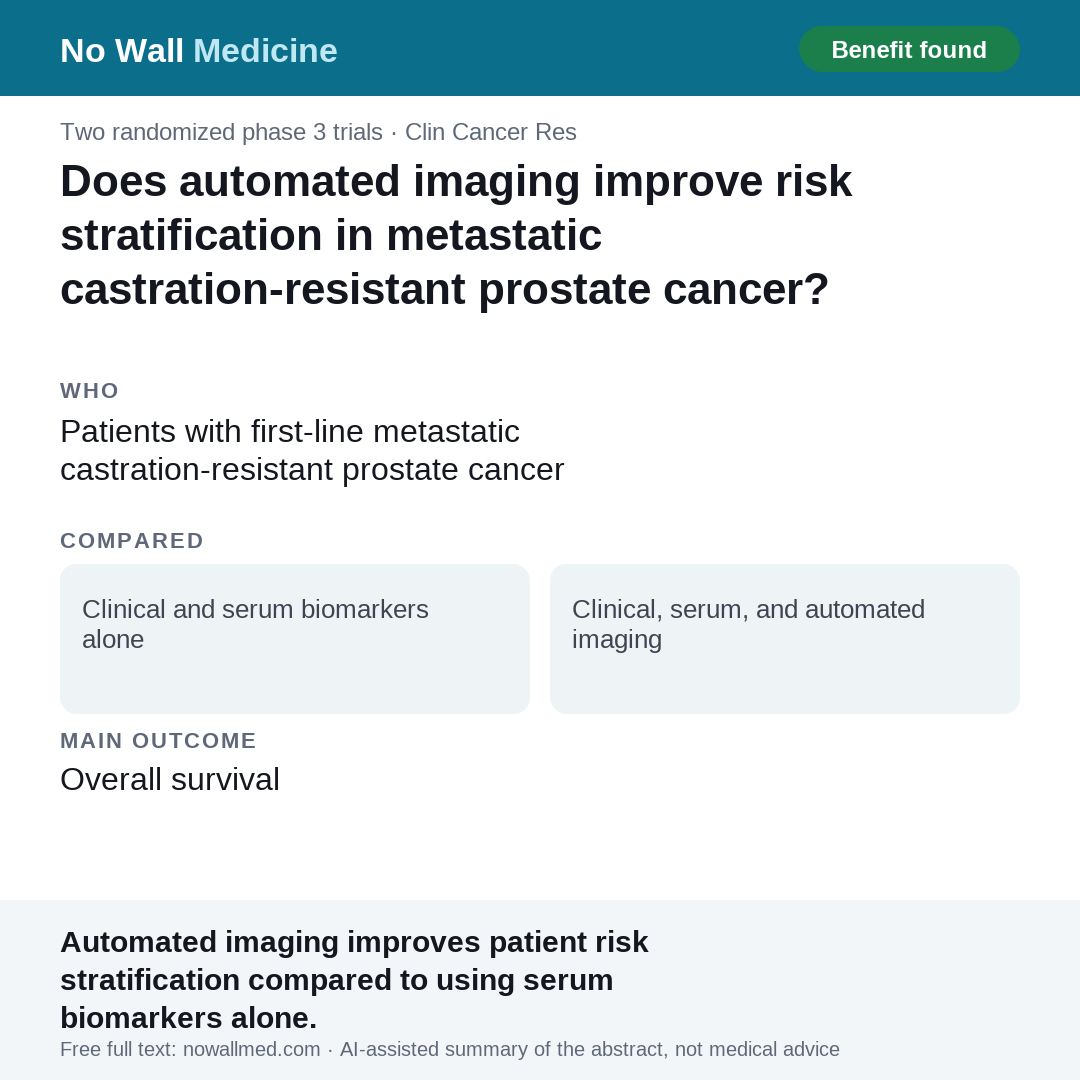
Fixed-dose combination bictegravir-emtricitabine-tenofovir alafenamide twice-daily for treatment of HIV during rifampicin-based tuberculosis treatment (INSIGHT Study): a phase 2b, open-label, randomised non-comparative trial
Phase 2b, open-label, randomised non-comparative trialBenefit found
Is twice-daily bictegravir-emtricitabine-tenofovir alafenamide effective for HIV during rifampicin-based tuberculosis treatment?
Who
122
Adults with HIV and tuberculosis on rifampicin-based treatment · Durban, South Africa
Compared
94%Bictegravir group (75/80)
95%Dolutegravir group (40/42)
Main outcome
HIV-1-RNA less than 50 copies per mL at week 24
Bottom line: Twice-daily bictegravir-emtricitabine-tenofovir alafenamide is effective for HIV treatment during rifampicin-based tuberculosis therapy.
Funded by: National Institutes of Health and South African Medical Research Council
Lancet HIV · 2025-12-01Download image
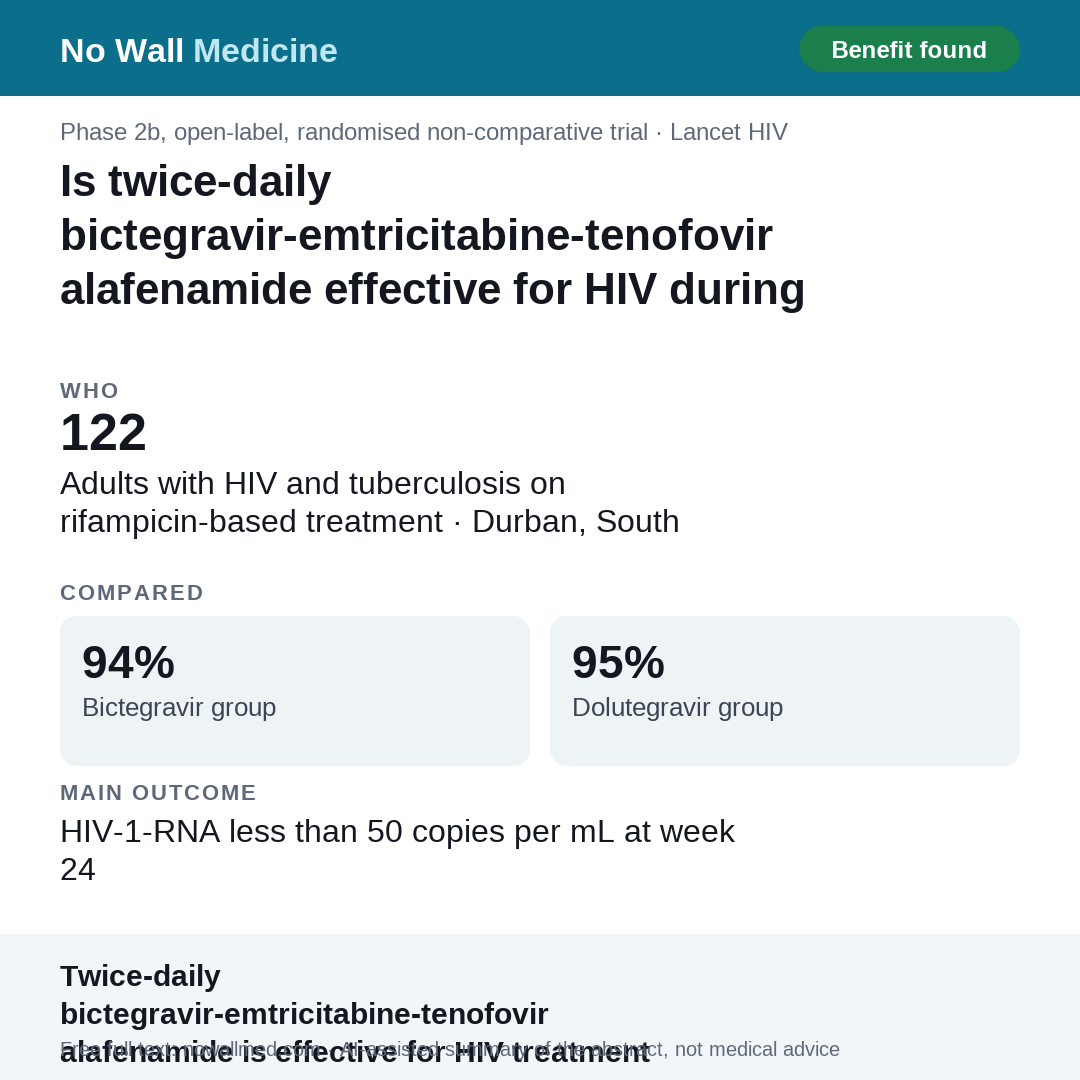
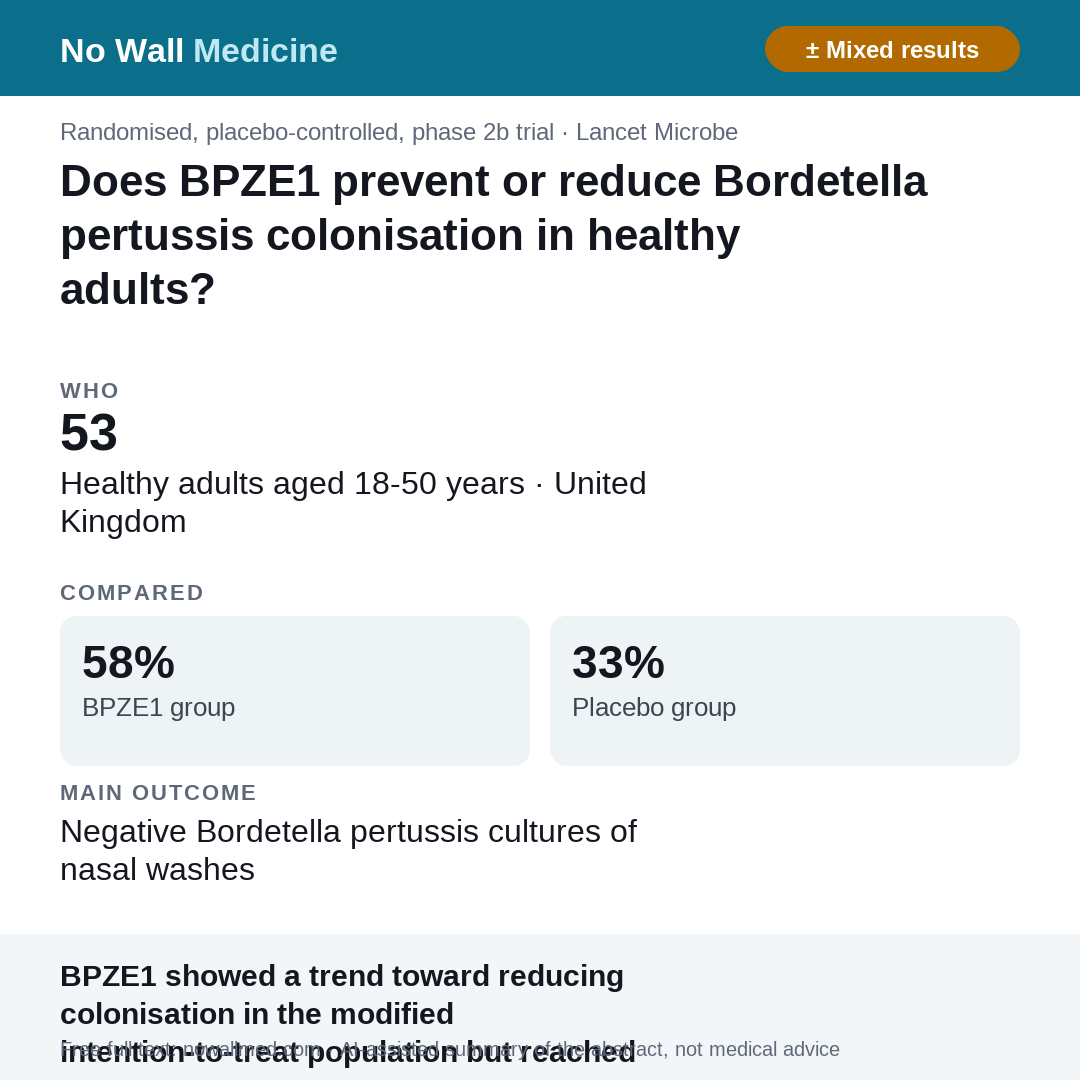
Efficacy, immunogenicity, and safety of the live attenuated nasal pertussis vaccine, BPZE1, in the UK: a randomised, placebo-controlled, phase 2b trial using a controlled human infection model with virulent Bordetella pertussis
Randomised, placebo-controlled, phase 2b trialMixed results
Does BPZE1 prevent or reduce Bordetella pertussis colonisation in healthy adults?
Who
53
Healthy adults aged 18-50 years · United Kingdom
Compared
58%BPZE1 group (14/24)
33%Placebo group (7/21)
Main outcome
Negative Bordetella pertussis cultures of nasal washes
Result: p=0.091
Bottom line: BPZE1 showed a trend toward reducing colonisation in the modified intention-to-treat population but reached significance in the per protocol population.
Limitation: Small sample size in the modified intention-to-treat population.
Lancet Microbe · 2025-12-01Download image
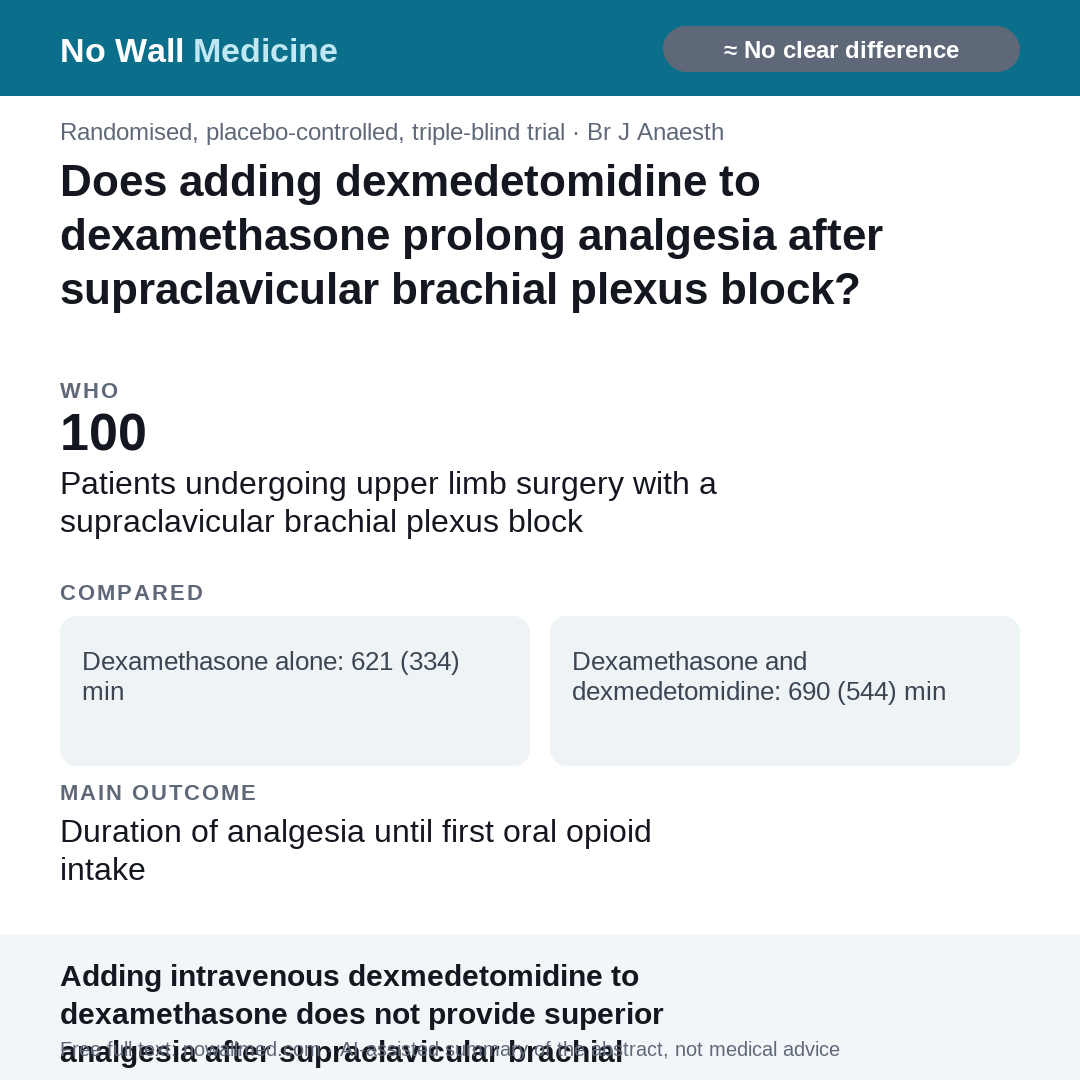
Duration of analgesia after supraclavicular brachial plexus block with intravenous dexamethasone with or without dexmedetomidine: a randomised, placebo-controlled, triple-blind trial
Randomised, placebo-controlled, triple-blind trialNo clear difference
Does adding dexmedetomidine to dexamethasone prolong analgesia after supraclavicular brachial plexus block?
Who
100
Patients undergoing upper limb surgery with a supraclavicular brachial plexus block
Compared
Dexamethasone alone: 621 (334) min
Dexamethasone and dexmedetomidine: 690 (544) min
Main outcome
Duration of analgesia until first oral opioid intake
Result: P=0.47
Bottom line: Adding intravenous dexmedetomidine to dexamethasone does not provide superior analgesia after supraclavicular brachial plexus block.
Br J Anaesth · 2025-12-01Download image
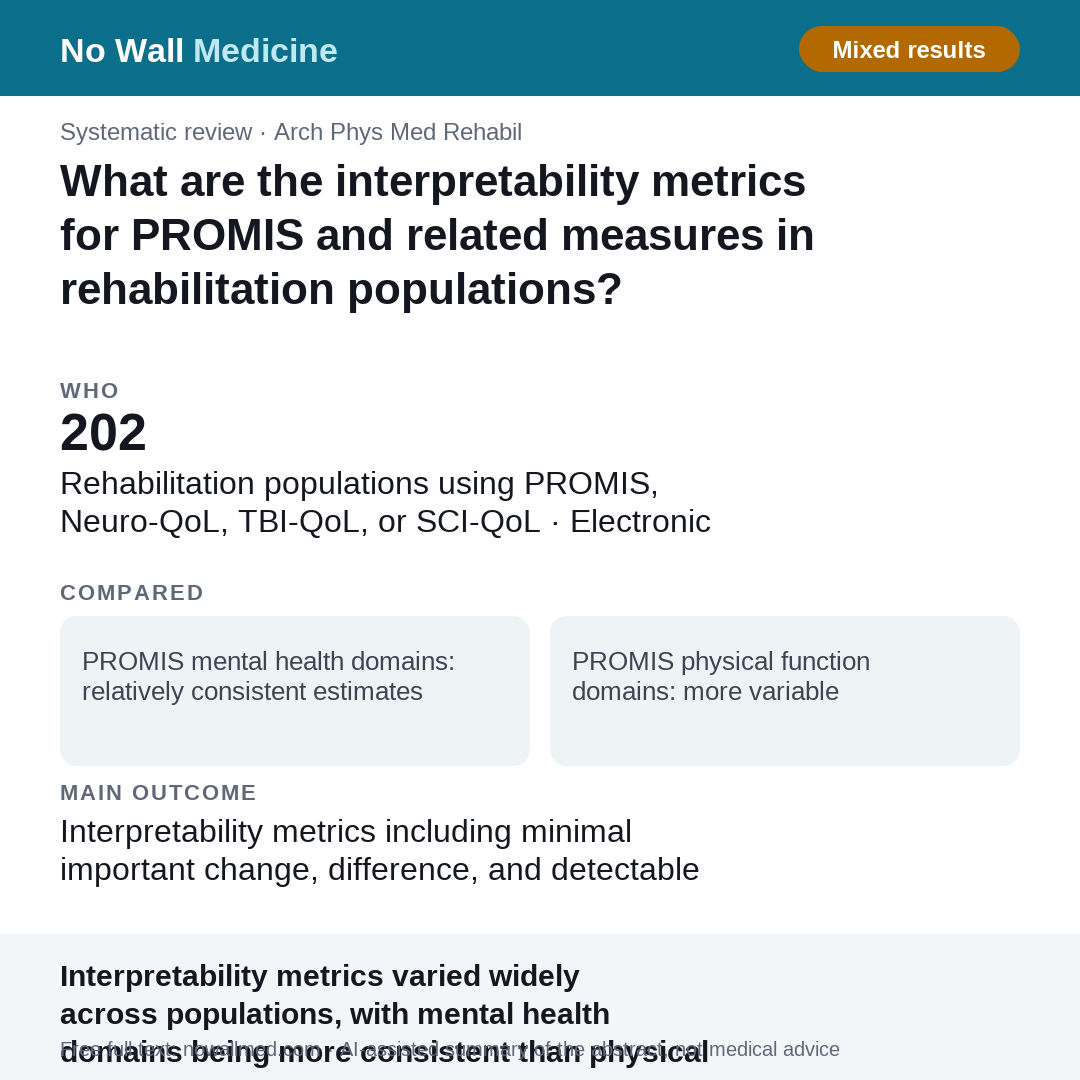
Enhancing Interpretability of Patient-Reported Outcomes Measurement Information System (PROMIS) and Related Measures in Rehabilitation Populations: A Systematic Review of Clinical and Research Applications
Systematic reviewMixed results
What are the interpretability metrics for PROMIS and related measures in rehabilitation populations?
Who
202
Rehabilitation populations using PROMIS, Neuro-QoL, TBI-QoL, or SCI-QoL · Electronic databases and clinical trial registries
Compared
PROMIS mental health domains: relatively consistent estimates
PROMIS physical function domains: more variable
Main outcome
Interpretability metrics including minimal important change, difference, and detectable change
Bottom line: Interpretability metrics varied widely across populations, with mental health domains being more consistent than physical function domains.
Limitation: Limited data were available for Spinal Cord Injury Quality of Life and Traumatic Brain Injury Quality of Life.
Arch Phys Med Rehabil · 2025-12-01Download image
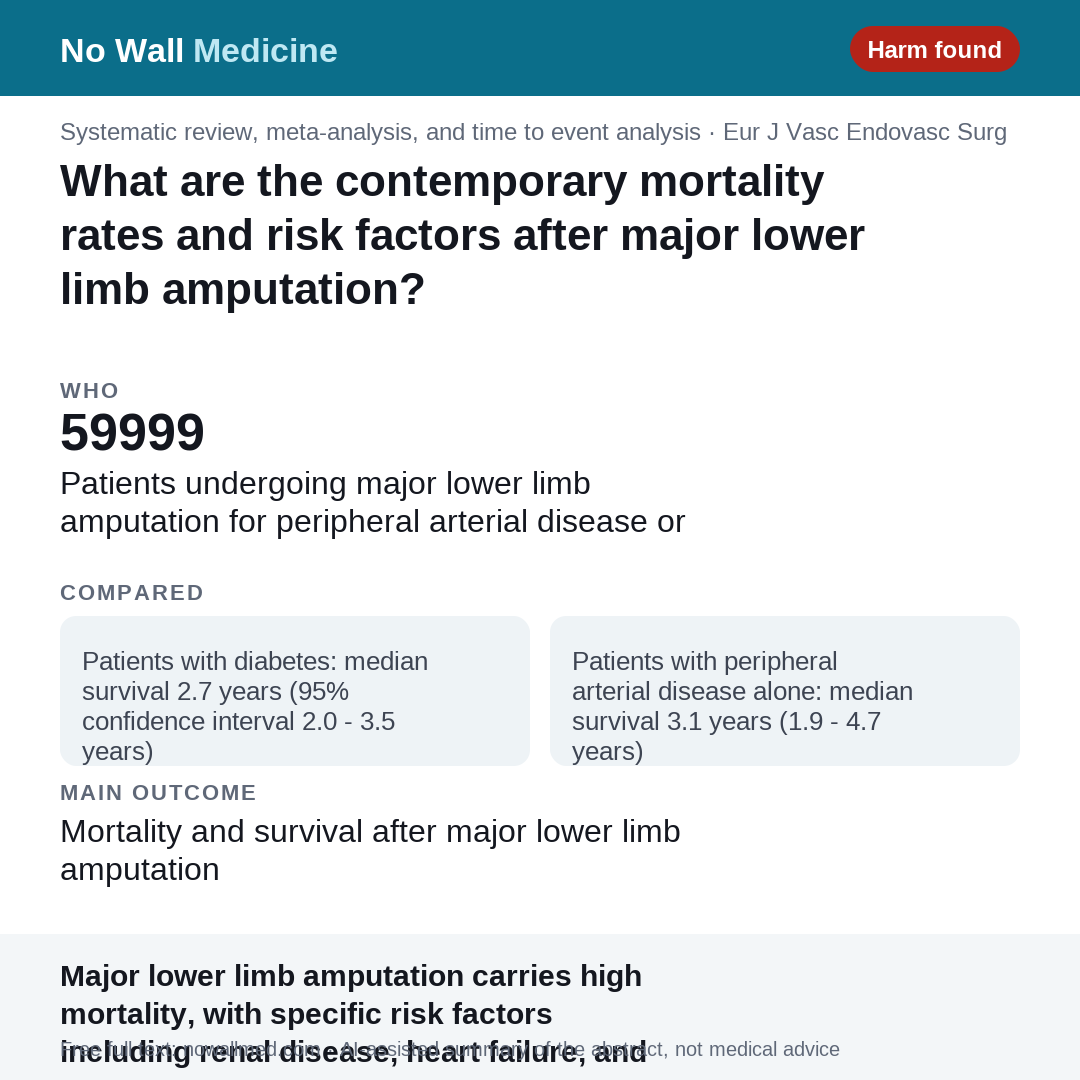
Editor's Choice - Systematic Review, Meta-analysis, and Time to Event Analysis of Contemporary Mortality after Major Lower Limb Amputation for Peripheral Arterial Disease or Diabetes Mellitus
Systematic review, meta-analysis, and time to event analysisHarm found
What are the contemporary mortality rates and risk factors after major lower limb amputation?
Who
59999
Patients undergoing major lower limb amputation for peripheral arterial disease or diabetes mellitus
Compared
Patients with diabetes: median survival 2.7 years (95% confidence interval 2.0 - 3.5 years)
Patients with peripheral arterial disease alone: median survival 3.1 years (1.9 - 4.7 years)
Main outcome
Mortality and survival after major lower limb amputation
Bottom line: Major lower limb amputation carries high mortality, with specific risk factors including renal disease, heart failure, and frailty.
Limitation: Subgroup analyses were of very low to moderate Grading of Recommendations Assessment, Development, and Evaluation certainty.
Eur J Vasc Endovasc Surg · 2025-12-01Download image
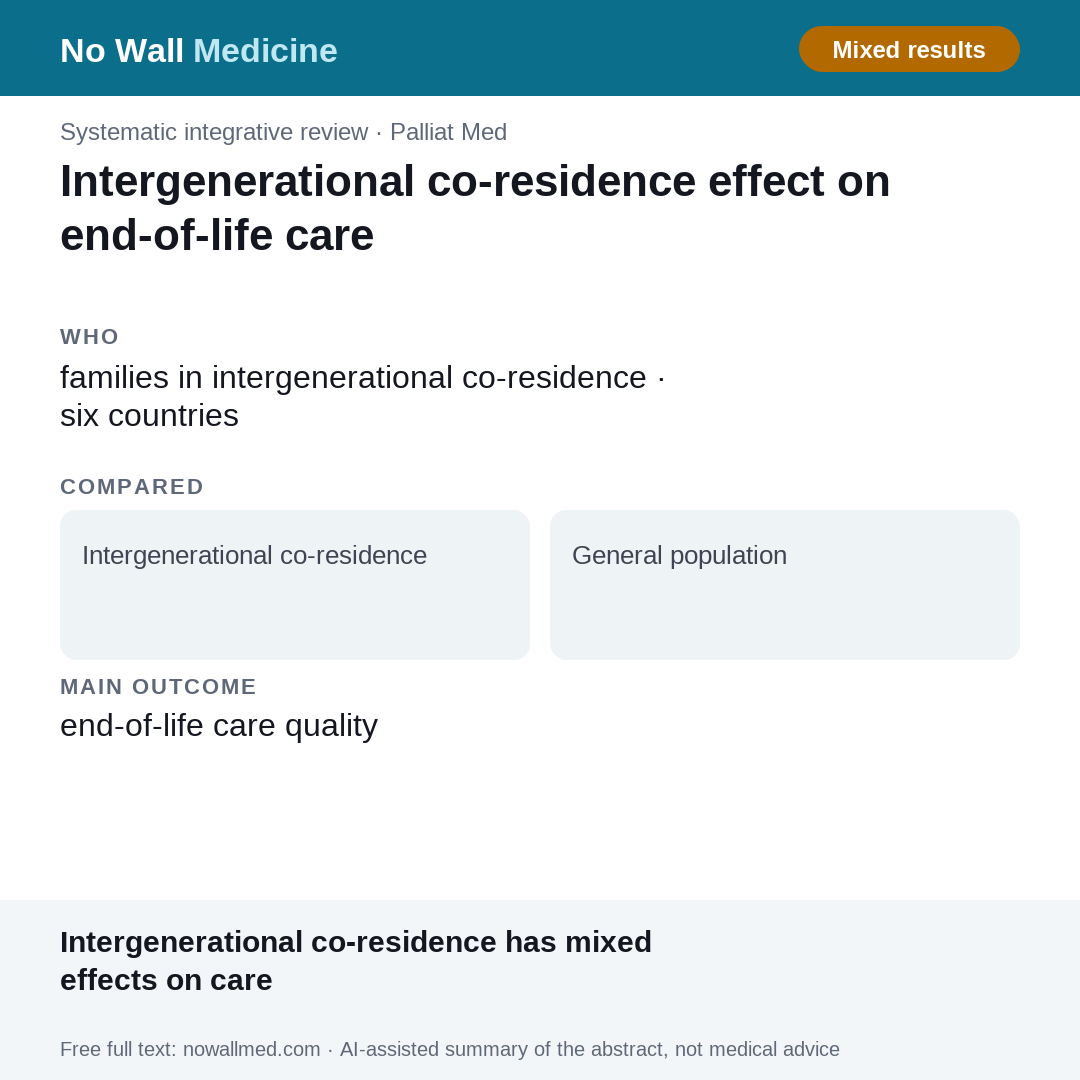
'Saying goodbye'. . . A systematic integrative review of palliative caregiving in intergenerational living contexts
Systematic integrative reviewMixed results
Intergenerational co-residence effect on end-of-life care
Who
families in intergenerational co-residence · six countries
Compared
Intergenerational co-residence
General population
Main outcome
end-of-life care quality
Bottom line: Intergenerational co-residence has mixed effects on care
Palliat Med · 2025-12-01Download image
Abbreviated gadoxetic acid-enhanced MRI versus ultrasonography for HCC surveillance in high-risk patients: A randomized trial protocol
Randomized controlled trial protocolUnclear result
Is abbreviated gadoxetic acid-enhanced MRI more effective than ultrasonography for hepatocellular carcinoma surveillance?
Who
806
High-risk patients with cirrhosis
Compared
Abbreviated gadoxetic acid-enhanced MRI
Ultrasonography
Main outcome
Detection rate of early-stage hepatocellular carcinoma
Bottom line: This randomized trial protocol aims to compare abbreviated MRI and ultrasonography for hepatocellular carcinoma surveillance.
Limitation: Follow-up is ongoing
Hepatol Commun · 2025-12-01Download image

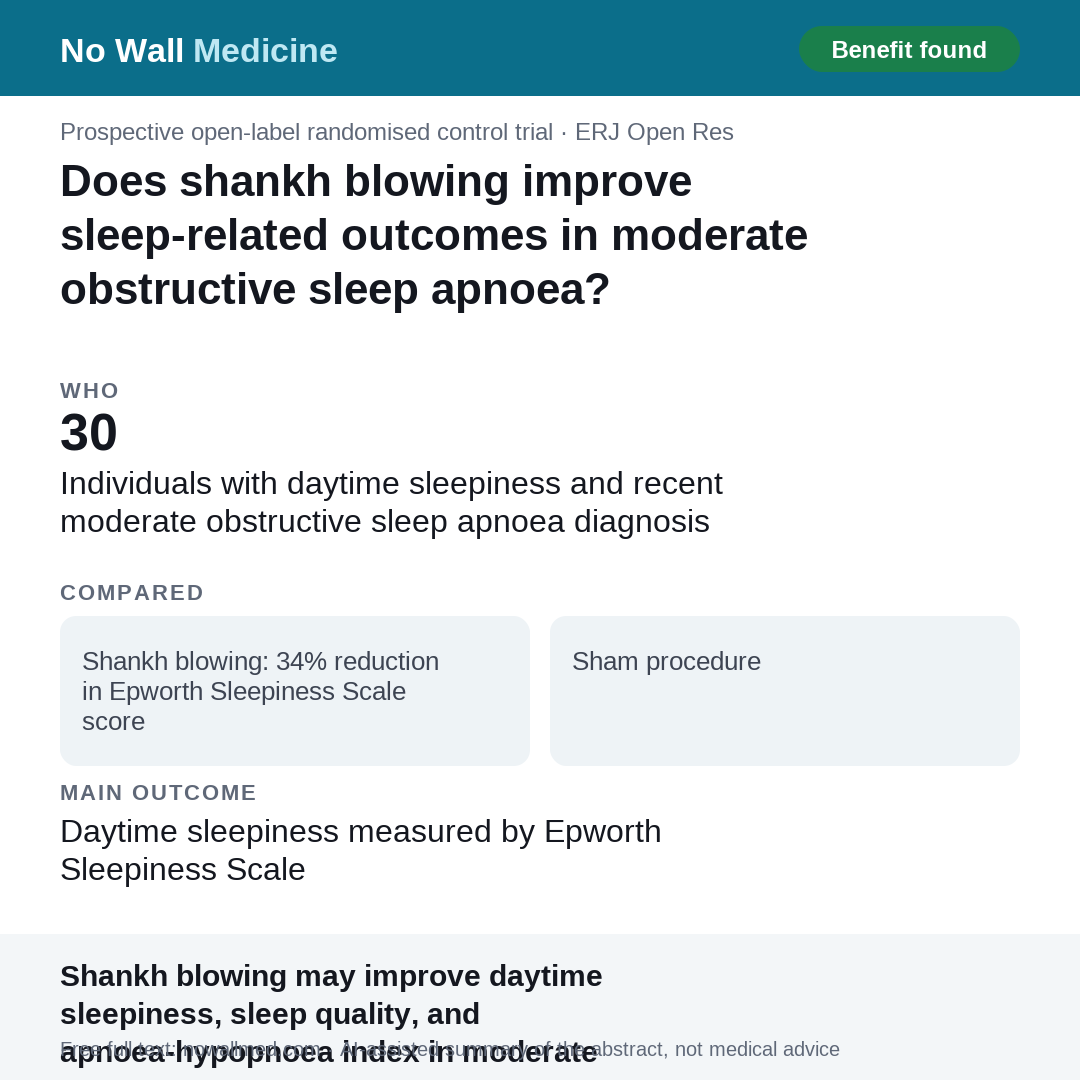
Efficacy of shankh blowing on moderate sleep apnoea: a randomised control trial
Prospective open-label randomised control trialBenefit found
Does shankh blowing improve sleep-related outcomes in moderate obstructive sleep apnoea?
Who
30
Individuals with daytime sleepiness and recent moderate obstructive sleep apnoea diagnosis
Compared
Shankh blowing: 34% reduction in Epworth Sleepiness Scale score
Sham procedure
Main outcome
Daytime sleepiness measured by Epworth Sleepiness Scale
Result: -4.69 points (95% CI -8.39 to -1.007) mean difference in Epworth Sleepiness Scale
Bottom line: Shankh blowing may improve daytime sleepiness, sleep quality, and apnoea-hypopnoea index in moderate obstructive sleep apnoea.
ERJ Open Res · 2025-12-01Download image
Diagnostic digital phenotyping in schizophrenia-spectrum disorders: a systematic review
Systematic reviewBenefit found
What is the diagnostic and predictive utility of digital phenotyping in schizophrenia-spectrum disorders?
Who
6294
Individuals with schizophrenia-spectrum disorders and controls
Compared
Schizophrenia-spectrum disorders: Hedges' g ≈ 1.20 for cognitive performance
Controls
Main outcome
Diagnostic and predictive utility of digital phenotyping
Result: Hedges' g ≈ 1.20 for cognitive performance
Bottom line: Digital phenotyping shows potential for differentiating schizophrenia-spectrum disorders, especially through cognitive performance measures.
Limitation: High heterogeneity and lack of methodological standardization in relapse prediction models.
NPJ Digit Med · 2025-12-01Download image

Knowledge-Practice Performance Gap in Clinical Large Language Models: Systematic Review of 39 Benchmarks
Systematic reviewHarm found
What is the performance gap between knowledge-based and practice-based medical large language model benchmarks?
Who
39
39 medical large language model benchmarks
Compared
Knowledge-based benchmarks: 84%-90%
Practice-based benchmarks: 45%-69%
Main outcome
Performance accuracy across different evaluation paradigms
Bottom line: High knowledge-based examination scores do not translate to clinical competence, showing a significant performance gap in practice-based assessments.
Limitation: 26% of benchmarks had insufficient methodological reporting for complete evaluation.
J Med Internet Res · 2025-12-01Download image

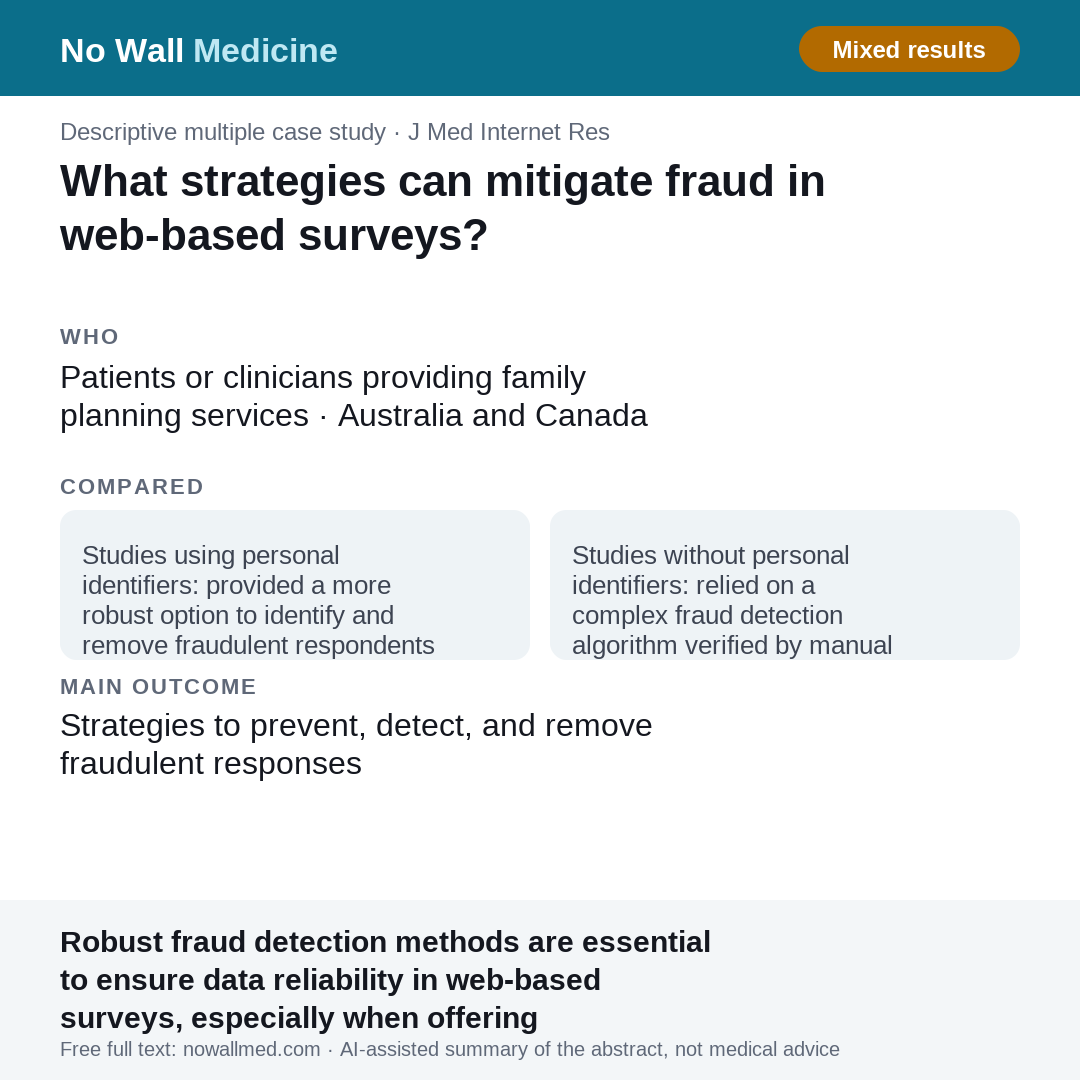
Exploring Methods to Mitigate Fraud in Web-Based Surveys: Multicase Study Analysis
Descriptive multiple case studyMixed results
What strategies can mitigate fraud in web-based surveys?
Who
Patients or clinicians providing family planning services · Australia and Canada
Compared
Studies using personal identifiers: provided a more robust option to identify and remove fraudulent respondents
Studies without personal identifiers: relied on a complex fraud detection algorithm verified by manual team review
Main outcome
Strategies to prevent, detect, and remove fraudulent responses
Bottom line: Robust fraud detection methods are essential to ensure data reliability in web-based surveys, especially when offering incentives.
J Med Internet Res · 2025-12-01Download image
A cluster randomized trial of a health coach-led patient activation program in type 2 diabetes in Singapore - a study protocol
Pragmatic cluster-randomized controlled trialUnclear result
Does the Patient Activation through Conversations program improve glycemic control in type 2 diabetes?
Who
432
Adults aged 21-64 with type 2 diabetes and HbA1c ≥ 8.0% · 3 polyclinics in Singapore
Compared
Patient Activation through Conversations program
Usual Care
Main outcome
Change in Glycated Hemoglobin levels
Bottom line: This study protocol describes a trial to assess health coaching effectiveness for glycemic control.
BMC Prim Care · 2025-12-01Download image
