Visual abstracts
New randomized trials and meta-analyses from leading journals at a glance: who was studied, what was compared, and what was found. Every paper is free to read in full.
All specialtiesCardiology 4877Oncology 4138Gastroenterology & Hepatology 1942Infectious Disease 3837Neurology 1905Psychiatry & Mental Health 2273Pulmonology 2143Critical Care 1365Endocrinology & Diabetes 2580Pediatrics 2980Surgery 2559Orthopedics & Sports Medicine 931Neurosurgery 537Cardiothoracic & Vascular Surgery 674Plastic & Reconstructive Surgery 591Nephrology 1133Rheumatology 823Hematology 1109Dermatology 621Ophthalmology 543Obstetrics & Gynecology 1686Public & Global Health 1058Radiology & Imaging 648Anesthesiology 986Urology 764ENT (Otolaryngology) 503Emergency Medicine 511Allergy & Immunology 313Geriatrics 981Family Medicine & Primary Care 562Medical Genetics & Genomics 676Pathology & Laboratory Medicine 159Physical Medicine & Rehabilitation 757Palliative Care 444Nutrition 1588Digital Health & AI 2201General Medicine 321
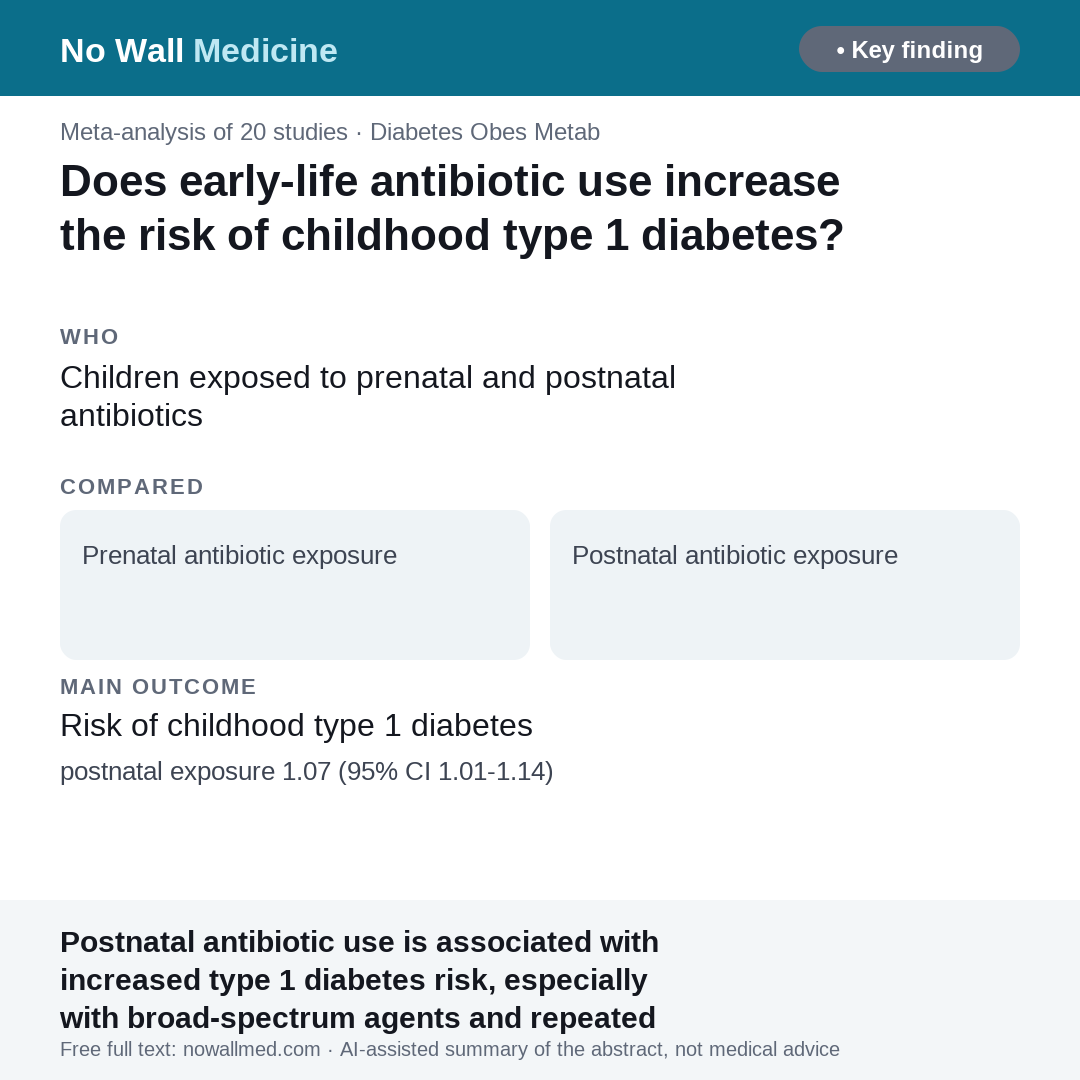
Antibiotic Exposure in Early Life and Risk of Type 1 Diabetes: A Meta-Analysis
Meta-analysis of 20 studiesBenefit found
Does early-life antibiotic use increase the risk of childhood type 1 diabetes?
Who
Children exposed to prenatal and postnatal antibiotics
Compared
Prenatal antibiotic exposure
Postnatal antibiotic exposure
Main outcome
Risk of childhood type 1 diabetes
Result: postnatal exposure 1.07 (95% CI 1.01-1.14)
Bottom line: Postnatal antibiotic use is associated with increased type 1 diabetes risk, especially with broad-spectrum agents and repeated courses.
Limitation: Variability in study design, exposure definitions, and potential confounding by indication.
Diabetes Obes Metab · 2026-03-11Download image
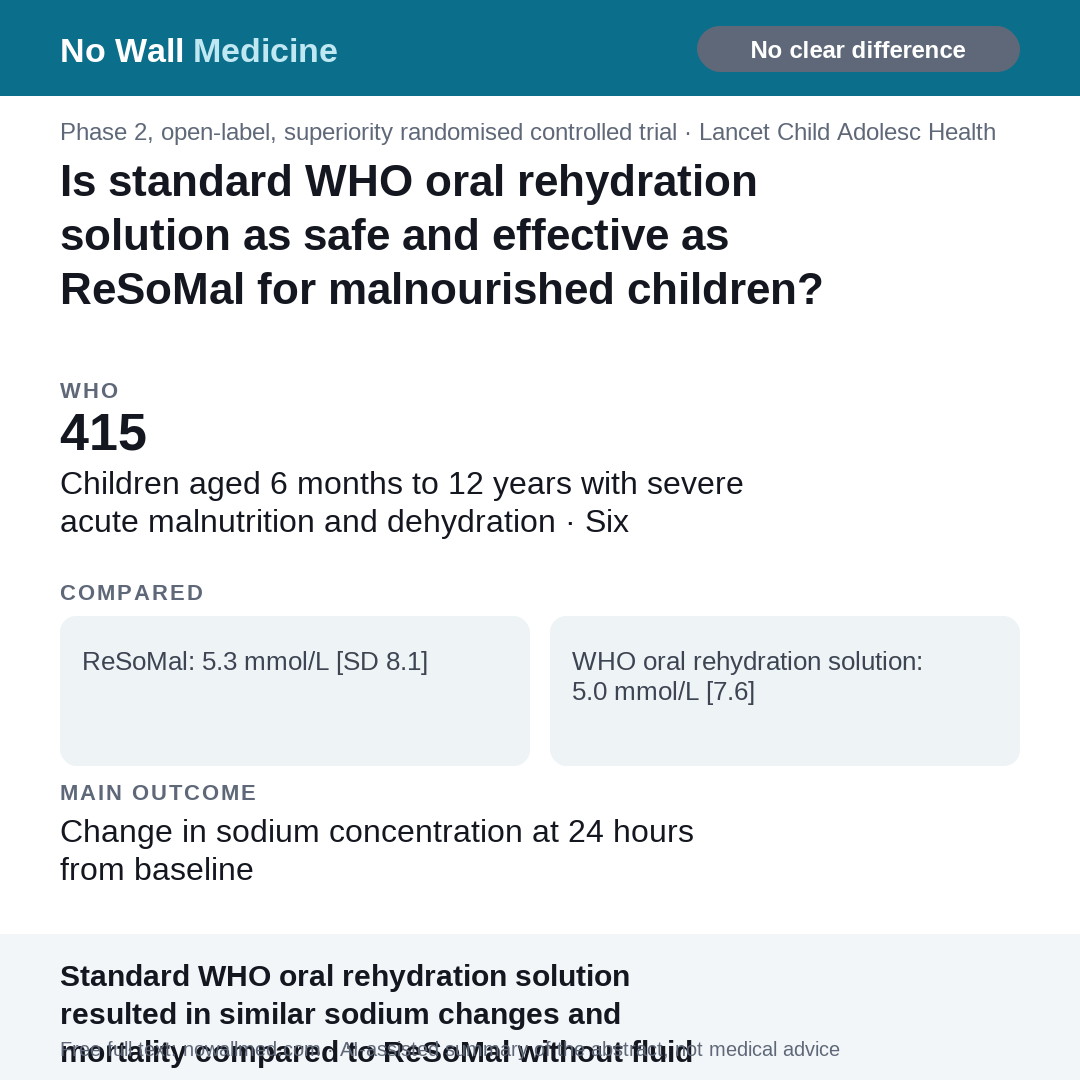
Oral rehydration for severe malnutrition in children with moderate and severe dehydration (GASTROSAM): a phase 2, open-label, superiority randomised controlled trial
Phase 2, open-label, superiority randomised controlled trialNo clear difference
Is standard WHO oral rehydration solution as safe and effective as ReSoMal for malnourished children?
Who
415
Children aged 6 months to 12 years with severe acute malnutrition and dehydration · Six hospitals in Kenya, Niger, Nigeria, and Uganda
Compared
ReSoMal: 5.3 mmol/L [SD 8.1]
WHO oral rehydration solution: 5.0 mmol/L [7.6]
Main outcome
Change in sodium concentration at 24 hours from baseline
Result: mean difference -0.6 (95% CI -1.9 to 0.7)
Bottom line: Standard WHO oral rehydration solution resulted in similar sodium changes and mortality compared to ReSoMal without fluid overload.
Funded by: Medical Research Council, UK Department for International Development, Wellcome, and Médecins Sans Frontières
Lancet Child Adolesc Health · 2026-03-10Download image
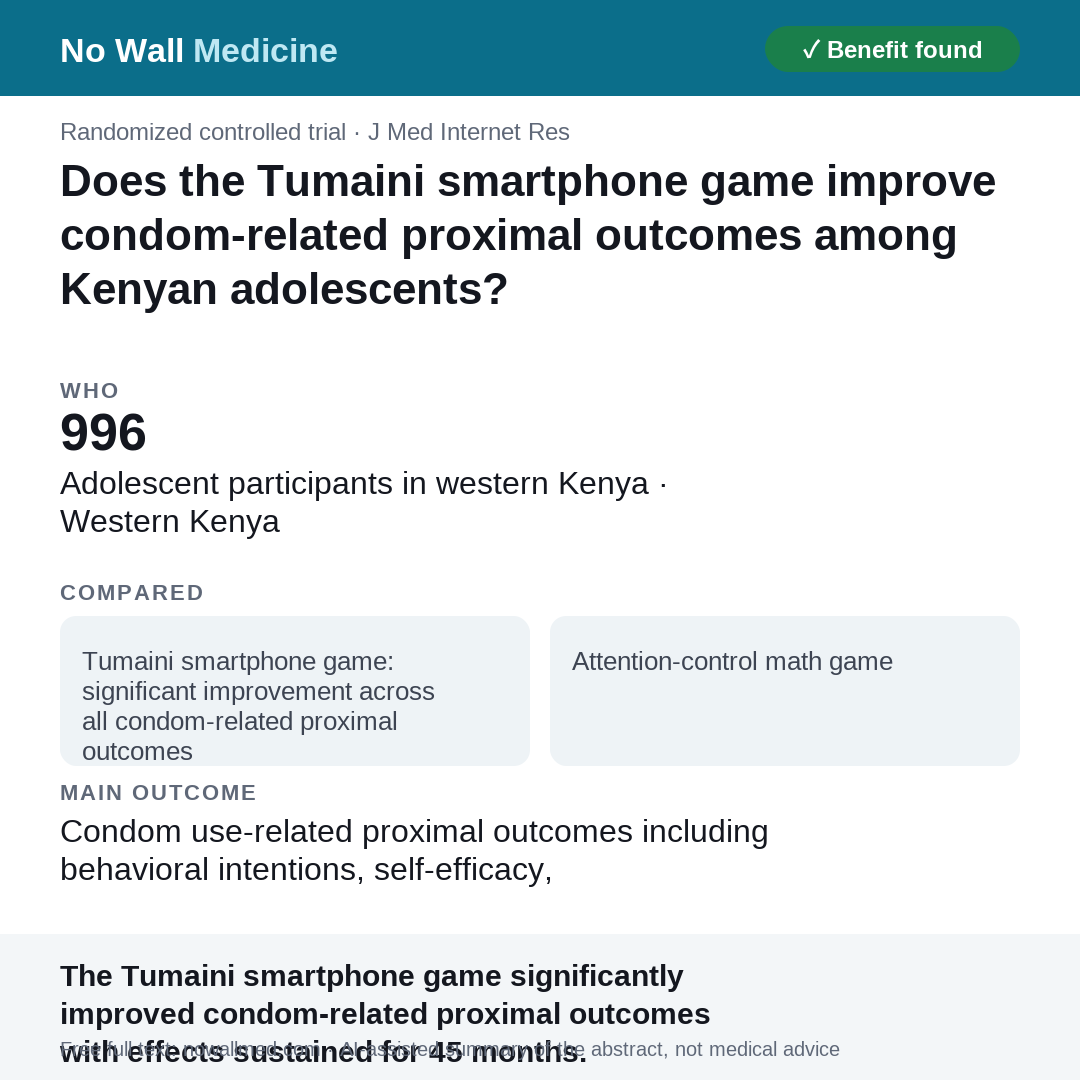
Longitudinal Effects of a Smartphone Game (Tumaini) for HIV Prevention Among Kenyan Adolescents: 45-Month Trajectories of Condom Use-Related Proximal Outcomes From a Randomized Controlled Trial
Randomized controlled trialBenefit found
Does the Tumaini smartphone game improve condom-related proximal outcomes among Kenyan adolescents?
Who
996
Adolescent participants in western Kenya · Western Kenya
Compared
Tumaini smartphone game: significant improvement across all condom-related proximal outcomes
Attention-control math game
Main outcome
Condom use-related proximal outcomes including behavioral intentions, self-efficacy, attitudes, and knowledge
Bottom line: The Tumaini smartphone game significantly improved condom-related proximal outcomes with effects sustained for 45 months.
J Med Internet Res · 2026-03-10Download image
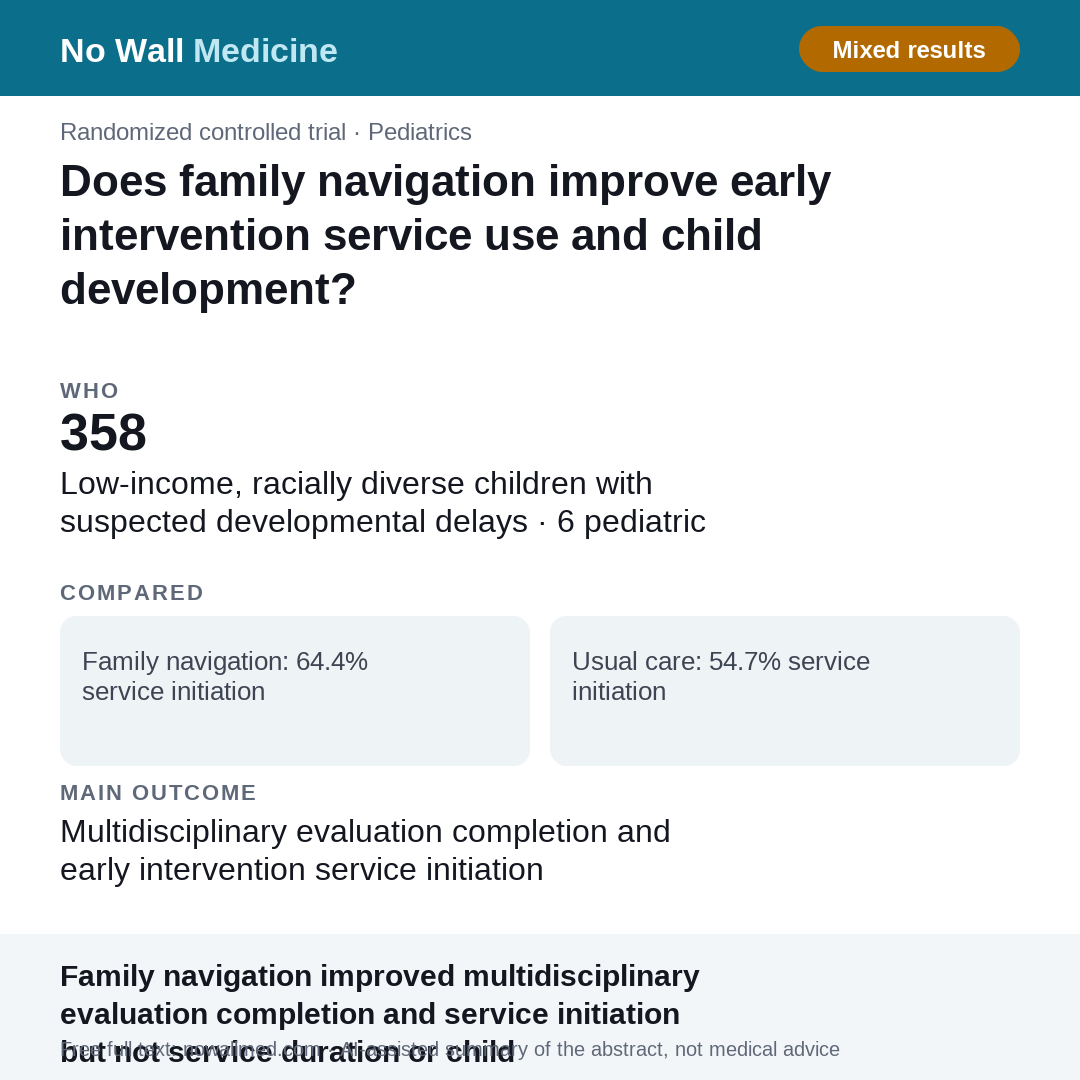
Family Navigation to Reduce Disparities in Early Intervention Services: A Randomized Controlled Trial
Randomized controlled trialMixed results
Does family navigation improve early intervention service use and child development?
Who
358
Low-income, racially diverse children with suspected developmental delays · 6 pediatric practices in a large urban community
Compared
Family navigation: 64.4% service initiation
Usual care: 54.7% service initiation
Main outcome
Multidisciplinary evaluation completion and early intervention service initiation
Result: adjusted odds ratio 2.1 (95% CI 1.2-3.5) for multidisciplinary evaluation completion
Bottom line: Family navigation improved multidisciplinary evaluation completion and service initiation but not service duration or child development.
Pediatrics · 2026-03-09Download image
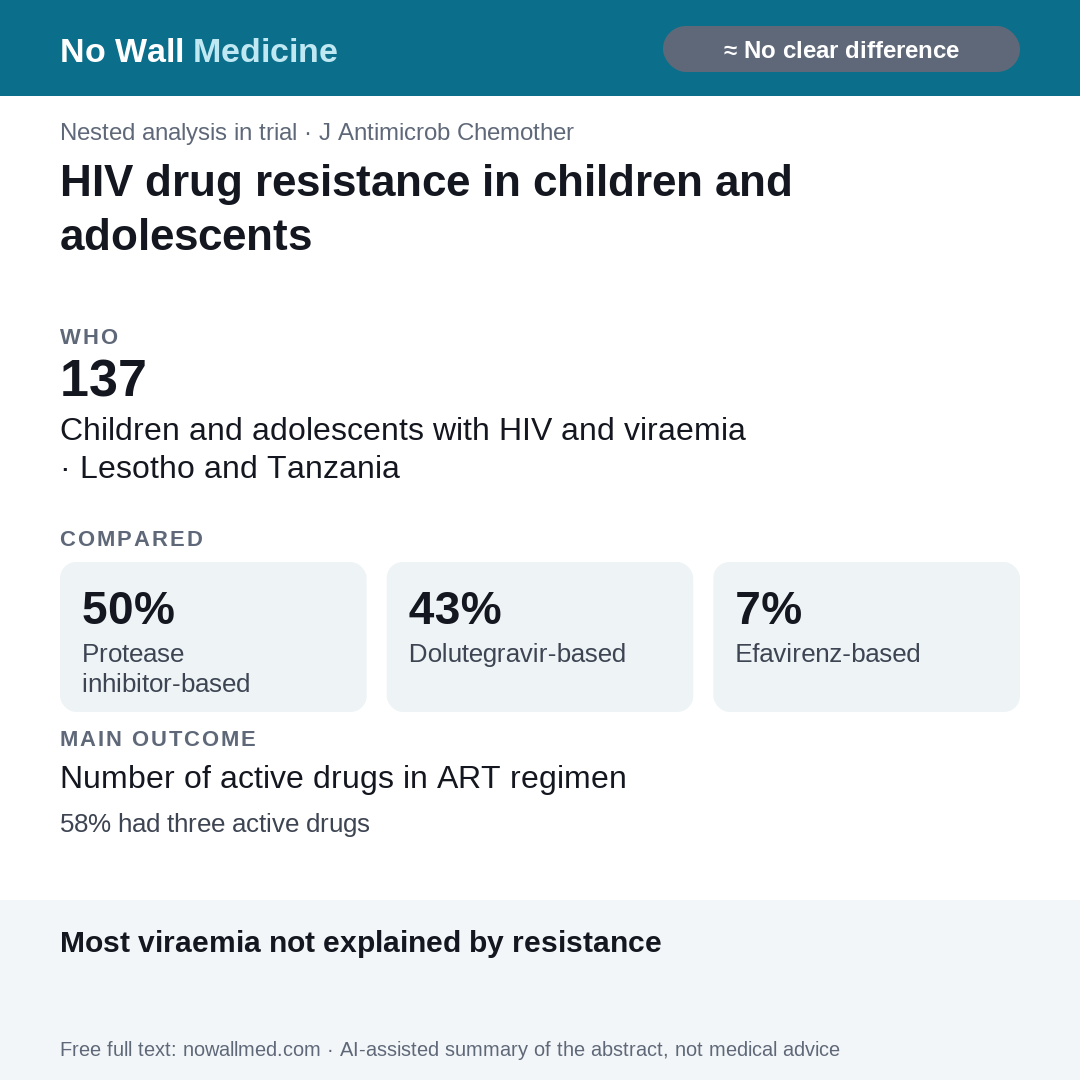
HIV drug resistance amongst children and adolescents with viraemia in Lesotho and Tanzania: a nested analysis in the GIVE MOVE trial
Nested analysis in trialNo clear difference
HIV drug resistance in children and adolescents
Who
137
Children and adolescents with HIV and viraemia · Lesotho and Tanzania
Compared
50%Protease inhibitor-based (69/137)
43%Dolutegravir-based (59/137)
7%Efavirenz-based (9/137)
Main outcome
Number of active drugs in ART regimen
Result: 58% had three active drugs
Bottom line: Most viraemia not explained by resistance
J Antimicrob Chemother · 2026-03-07Download image
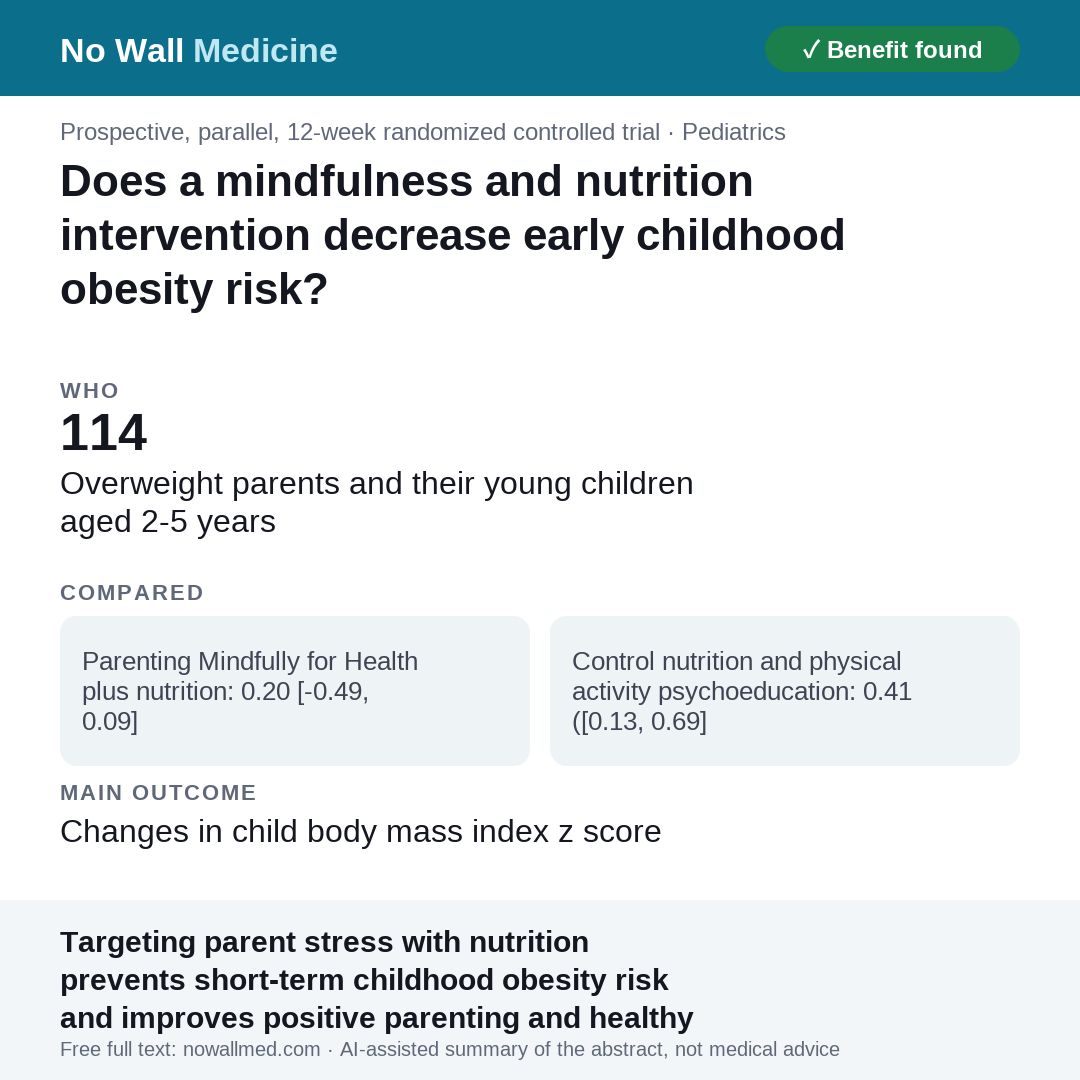
Mindfulness Intervention for Parent Stress and Childhood Obesity Risk: A Randomized Trial
Prospective, parallel, 12-week randomized controlled trialBenefit found
Does a mindfulness and nutrition intervention decrease early childhood obesity risk?
Who
114
Overweight parents and their young children aged 2-5 years
Compared
Parenting Mindfully for Health plus nutrition: 0.20 [-0.49, 0.09]
Control nutrition and physical activity psychoeducation: 0.41 ([0.13, 0.69]
Main outcome
Changes in child body mass index z score
Bottom line: Targeting parent stress with nutrition prevents short-term childhood obesity risk and improves positive parenting and healthy food intake.
Pediatrics · 2026-03-06Download image
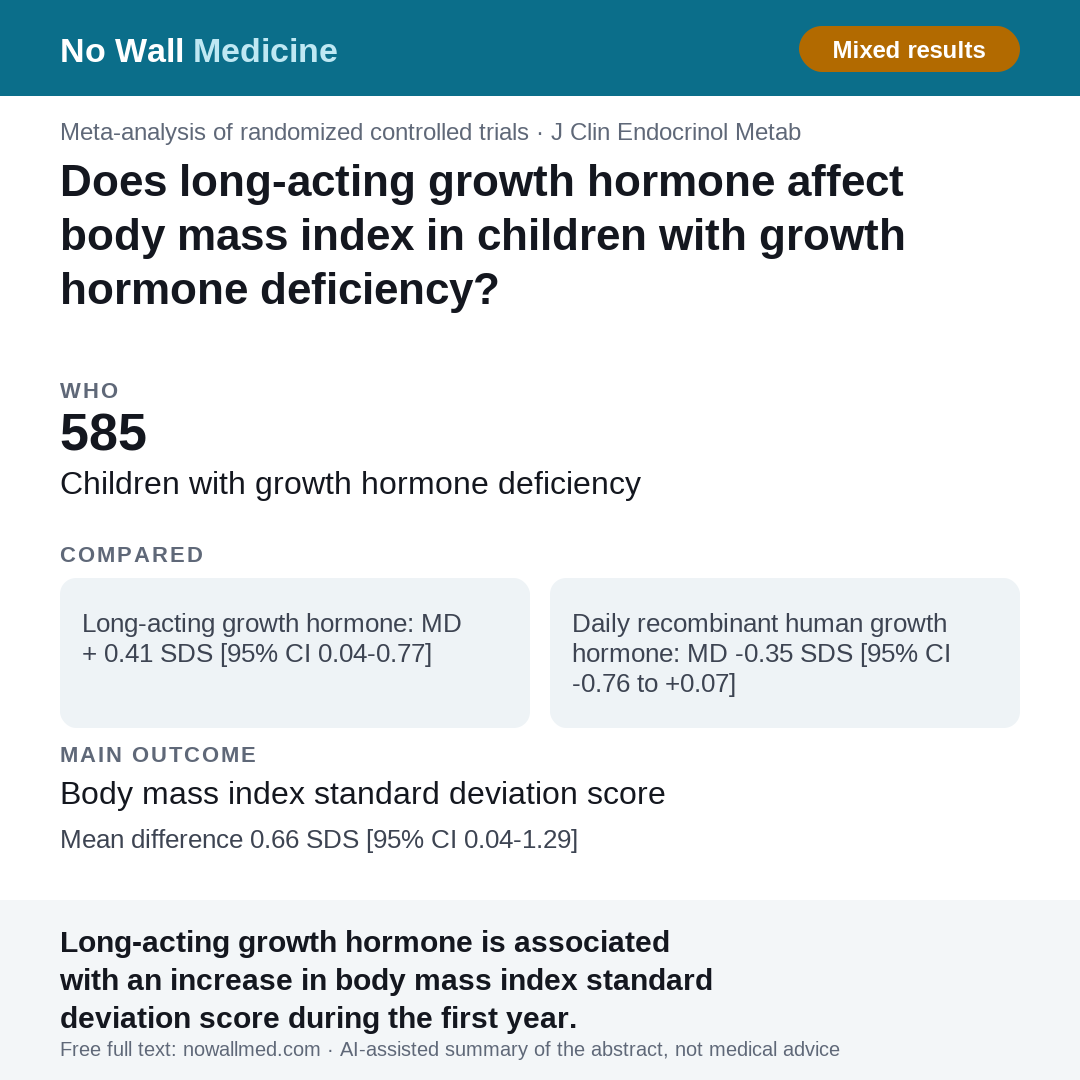
Long-acting growth hormone for treating growth hormone deficiency in children: a meta-analysis of randomized controlled trials focusing on changes in body mass index
Meta-analysis of randomized controlled trialsMixed results
Does long-acting growth hormone affect body mass index in children with growth hormone deficiency?
Who
585
Children with growth hormone deficiency
Compared
Long-acting growth hormone: MD + 0.41 SDS [95% CI 0.04-0.77]
Daily recombinant human growth hormone: MD -0.35 SDS [95% CI -0.76 to +0.07]
Main outcome
Body mass index standard deviation score
Result: Mean difference 0.66 SDS [95% CI 0.04-1.29]
Bottom line: Long-acting growth hormone is associated with an increase in body mass index standard deviation score during the first year.
J Clin Endocrinol Metab · 2026-03-06Download image
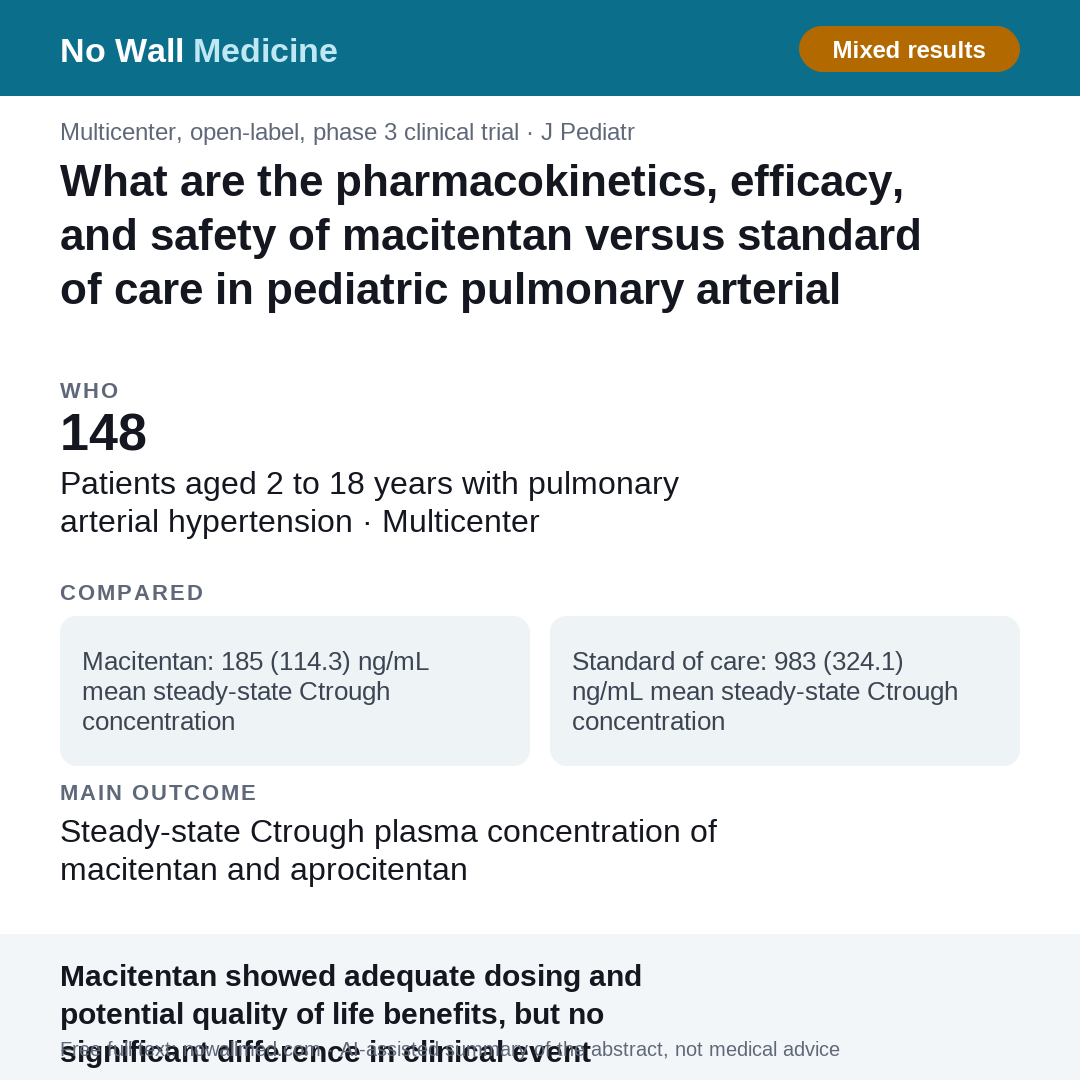
Macitentan in Pediatric Pulmonary Arterial Hypertension (TOMORROW): A Randomized Clinical Trial
Multicenter, open-label, phase 3 clinical trialMixed results
What are the pharmacokinetics, efficacy, and safety of macitentan versus standard of care in pediatric pulmonary arterial hypertension?
Who
148
Patients aged 2 to 18 years with pulmonary arterial hypertension · Multicenter
Compared
Macitentan: 185 (114.3) ng/mL mean steady-state Ctrough concentration
Standard of care: 983 (324.1) ng/mL mean steady-state Ctrough concentration
Main outcome
Steady-state Ctrough plasma concentration of macitentan and aprocitentan
Result: hazard ratio 0.828 (95% CI 0.460-1.492) for disease progression
Bottom line: Macitentan showed adequate dosing and potential quality of life benefits, but no significant difference in clinical event rates.
J Pediatr · 2026-03-06Download image
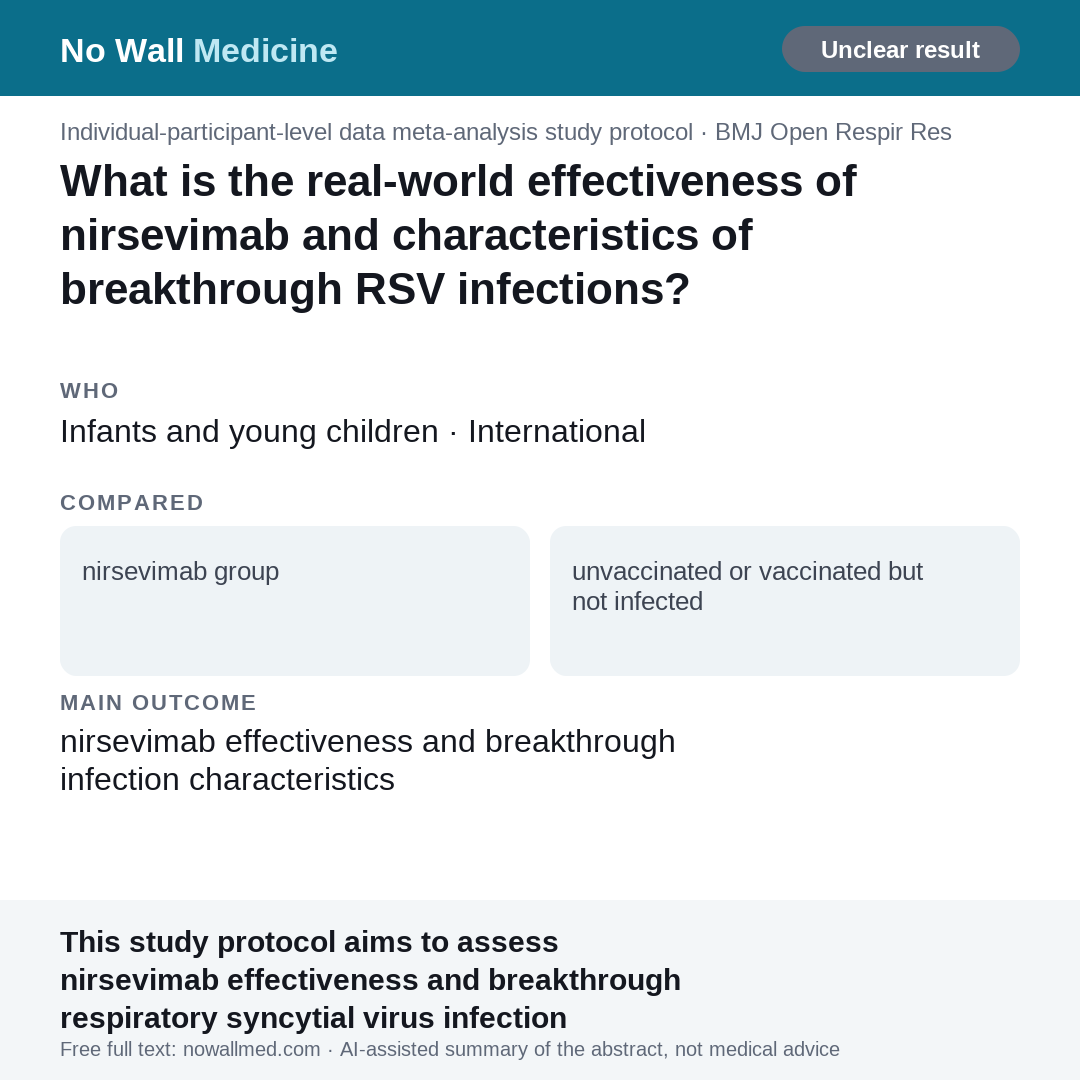
Understanding real-world effectiveness of nirsevimab and the characteristics of breakthrough RSV infections: a study protocol of individual-participant-level data meta-analysis (the GEMINI study)
Individual-participant-level data meta-analysis study protocolUnclear result
What is the real-world effectiveness of nirsevimab and characteristics of breakthrough RSV infections?
Who
Infants and young children · International
Compared
nirsevimab group
unvaccinated or vaccinated but not infected
Main outcome
nirsevimab effectiveness and breakthrough infection characteristics
Bottom line: This study protocol aims to assess nirsevimab effectiveness and breakthrough respiratory syncytial virus infection characteristics.
BMJ Open Respir Res · 2026-03-06Download image
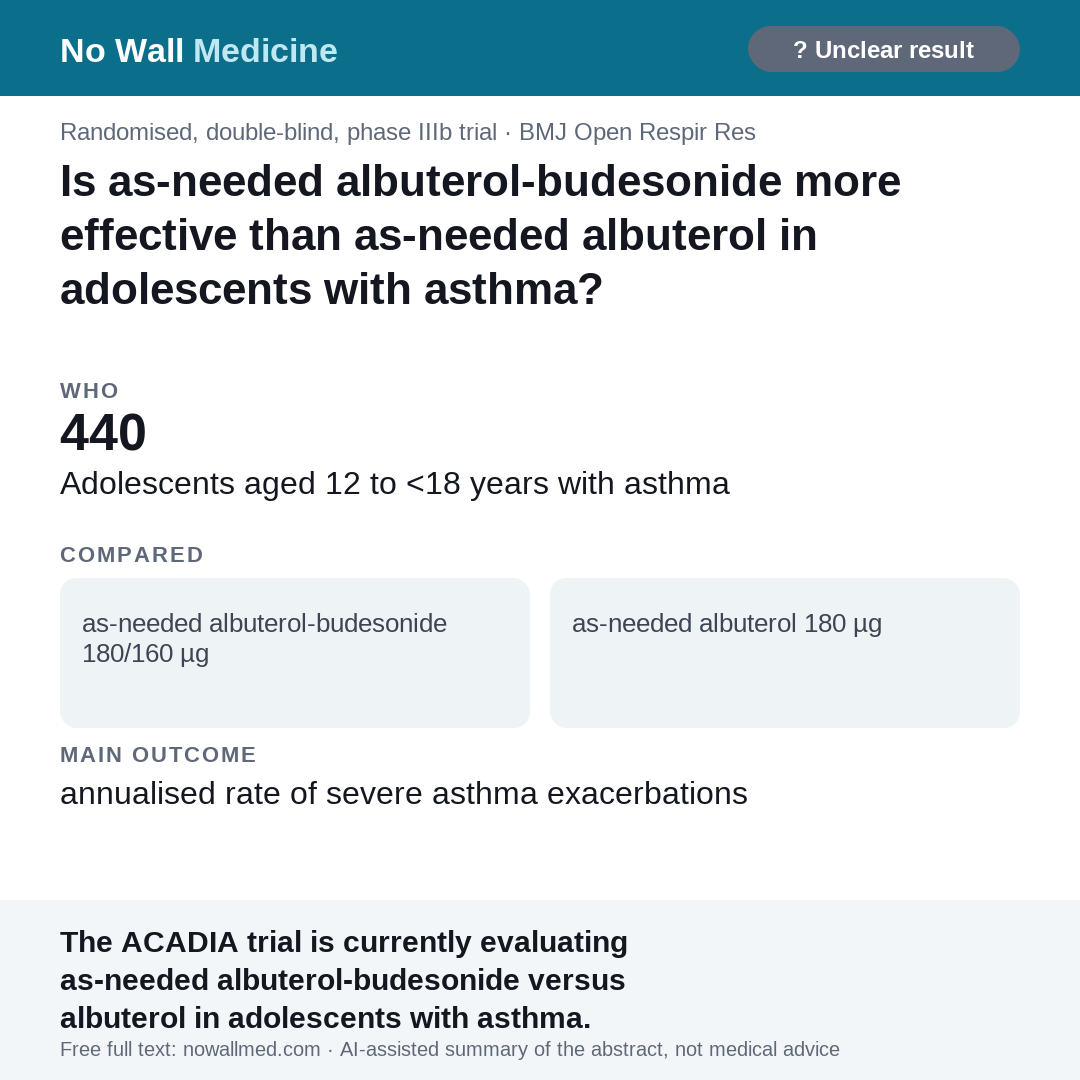
Efficacy and safety of as-needed albuterol-budesonide versus albuterol in patients with asthma aged 12 to <18 years: design of the randomised, double-blind, parallel-group phase IIIb ACADIA trial
Randomised, double-blind, phase IIIb trialUnclear result
Is as-needed albuterol-budesonide more effective than as-needed albuterol in adolescents with asthma?
Who
440
Adolescents aged 12 to <18 years with asthma
Compared
as-needed albuterol-budesonide 180/160 µg
as-needed albuterol 180 µg
Main outcome
annualised rate of severe asthma exacerbations
Bottom line: The ACADIA trial is currently evaluating as-needed albuterol-budesonide versus albuterol in adolescents with asthma.
BMJ Open Respir Res · 2026-03-06Download image
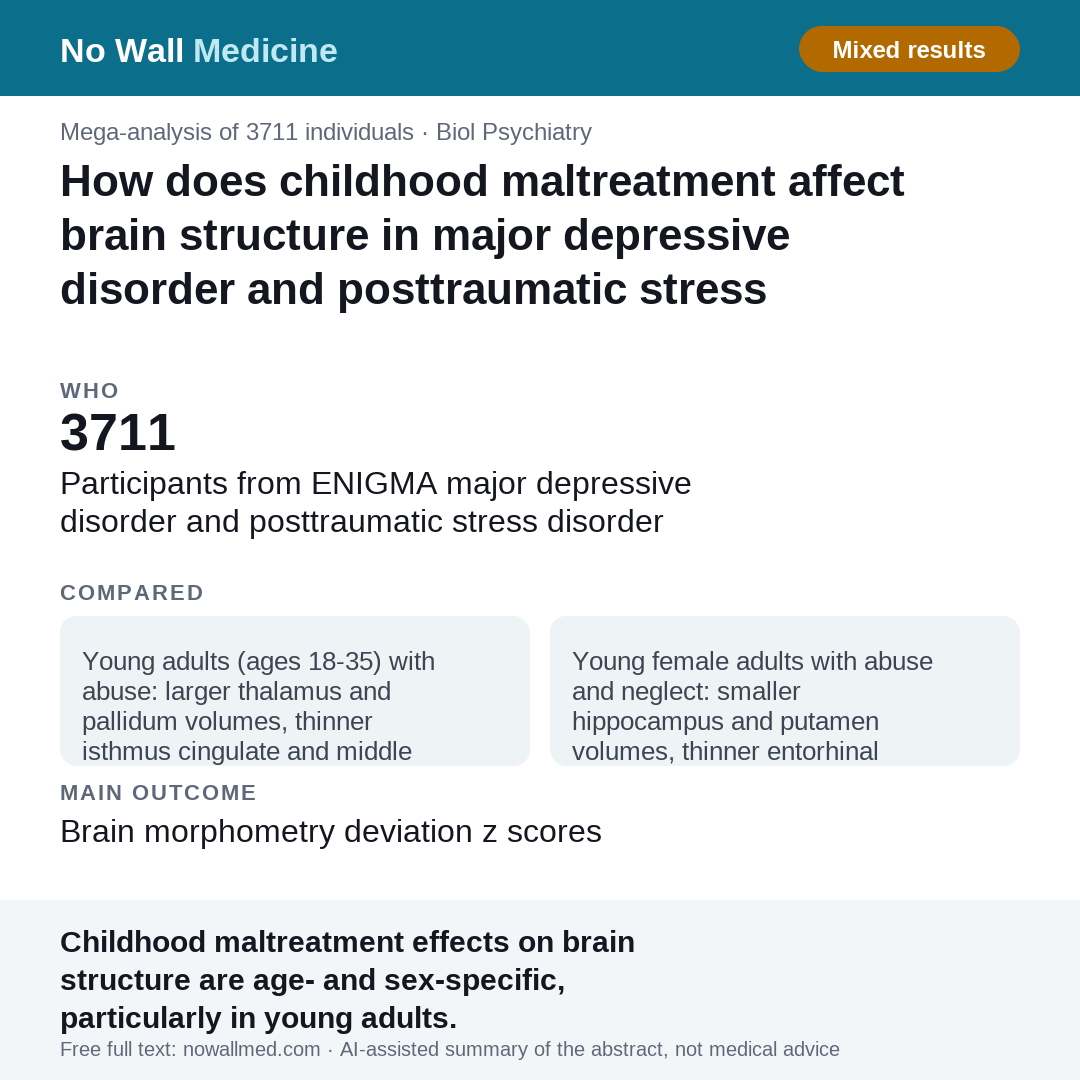
Childhood Maltreatment and Deviations From Normative Brain Structure: A Mega-Analysis of 3711 Individuals From the ENIGMA Major Depressive Disorder and ENIGMA Posttraumatic Stress Disorder Working Groups
Mega-analysis of 3711 individualsMixed results
How does childhood maltreatment affect brain structure in major depressive disorder and posttraumatic stress disorder?
Who
3711
Participants from ENIGMA major depressive disorder and posttraumatic stress disorder working groups · 25 sites
Compared
Young adults (ages 18-35) with abuse: larger thalamus and pallidum volumes, thinner isthmus cingulate and middle frontal regions
Young female adults with abuse and neglect: smaller hippocampus and putamen volumes, thinner entorhinal cortex
Main outcome
Brain morphometry deviation z scores
Bottom line: Childhood maltreatment effects on brain structure are age- and sex-specific, particularly in young adults.
Biol Psychiatry · 2026-03-05Download image
Randomised Phase 2b trial of rhIGF-1/rhIGFBP-3 (OHB-607) for bronchopulmonary dysplasia prevention in preterm neonates: study protocol
Phase 2b, multicentre, open-label, randomised trialUnclear result
Does rhIGF-1/rhIGFBP-3 prevent severe bronchopulmonary dysplasia in extremely premature infants?
Who
338
extremely premature infants · multicentre
Compared
OHB-607
Control
Main outcome
incidence of severe bronchopulmonary dysplasia or death by 36 weeks postmenstrual age
Bottom line: This study protocol describes a trial to investigate if OHB-607 prevents severe bronchopulmonary dysplasia in extremely premature infants.
BMJ Paediatr Open · 2026-03-05Download image

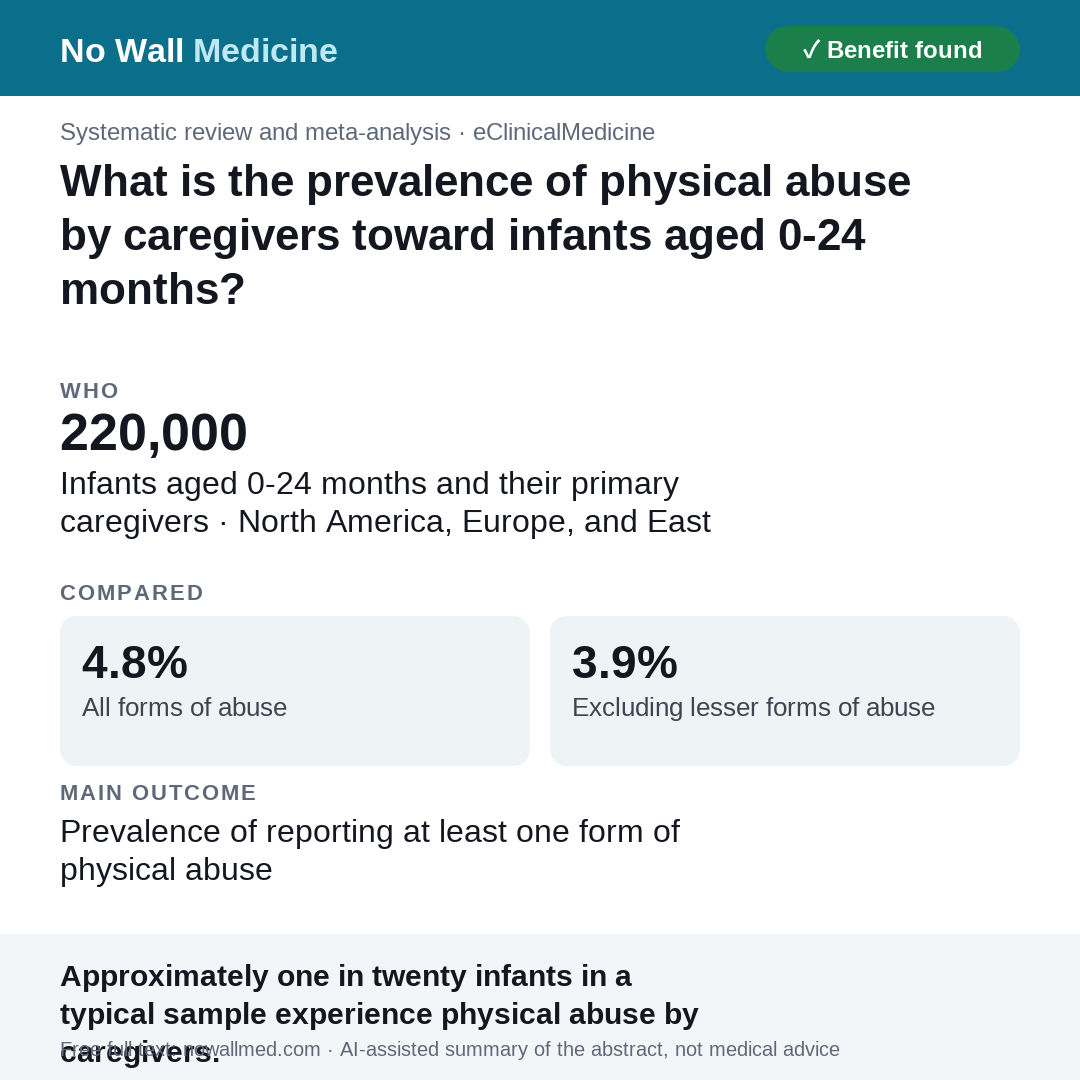
Prevalence of physical abuse by caregivers toward infants aged 0-24 months: a systematic review and meta-analysis
Systematic review and meta-analysisBenefit found
What is the prevalence of physical abuse by caregivers toward infants aged 0-24 months?
Who
220,000
Infants aged 0-24 months and their primary caregivers · North America, Europe, and East Asia
Compared
4.8%All forms of abuse
3.9%Excluding lesser forms of abuse
Main outcome
Prevalence of reporting at least one form of physical abuse
Result: 4.8%, 95% CI [2.6%, 7.5%]
Bottom line: Approximately one in twenty infants in a typical sample experience physical abuse by caregivers.
Limitation: Estimates are likely underreported due to the gap between self-reports and official statistics.
eClinicalMedicine · 2026-03-04Download image
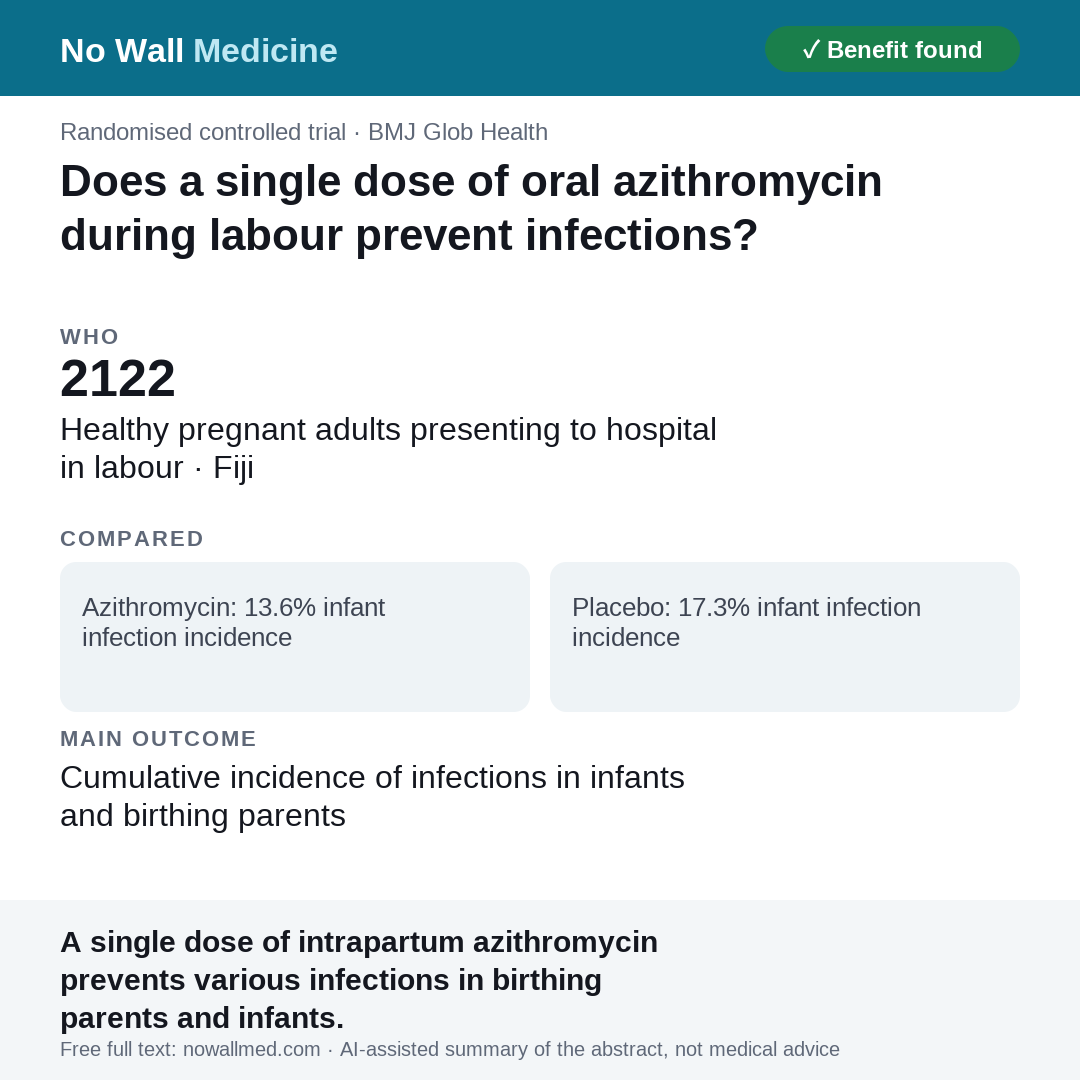
The efficacy of a single dose of oral azithromycin in labour to prevent infections in infants and birthing parents in Fiji: secondary outcomes from a randomised controlled trial
Randomised controlled trialBenefit found
Does a single dose of oral azithromycin during labour prevent infections?
Who
2122
Healthy pregnant adults presenting to hospital in labour · Fiji
Compared
Azithromycin: 13.6% infant infection incidence
Placebo: 17.3% infant infection incidence
Main outcome
Cumulative incidence of infections in infants and birthing parents
Result: risk ratio 0.79 (95% CI 0.63 to 0.99)
Bottom line: A single dose of intrapartum azithromycin prevents various infections in birthing parents and infants.
Limitation: Further research is required to characterise impacts on antimicrobial resistance and the infant microbiome.
BMJ Glob Health · 2026-03-04Download image
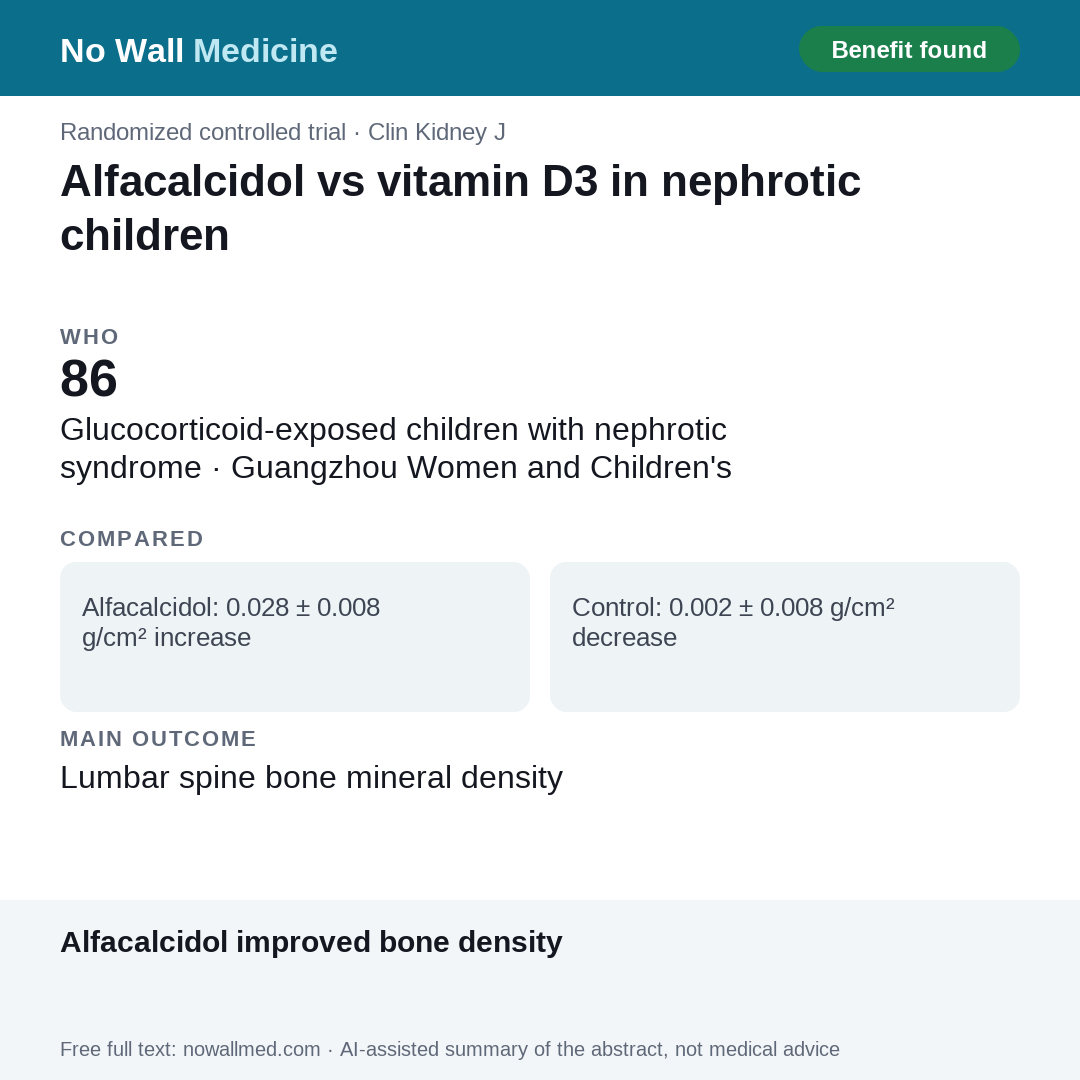
Alfacalcidol plus calcium versus cholecalciferol in glucocorticoid-exposed children with nephrotic syndrome: a randomized controlled trial
Randomized controlled trialBenefit found
Alfacalcidol vs vitamin D3 in nephrotic children
Who
86
Glucocorticoid-exposed children with nephrotic syndrome · Guangzhou Women and Children's Medical Center
Compared
Alfacalcidol: 0.028 ± 0.008 g/cm² increase
Control: 0.002 ± 0.008 g/cm² decrease
Main outcome
Lumbar spine bone mineral density
Bottom line: Alfacalcidol improved bone density
Clin Kidney J · 2026-03-03Download image
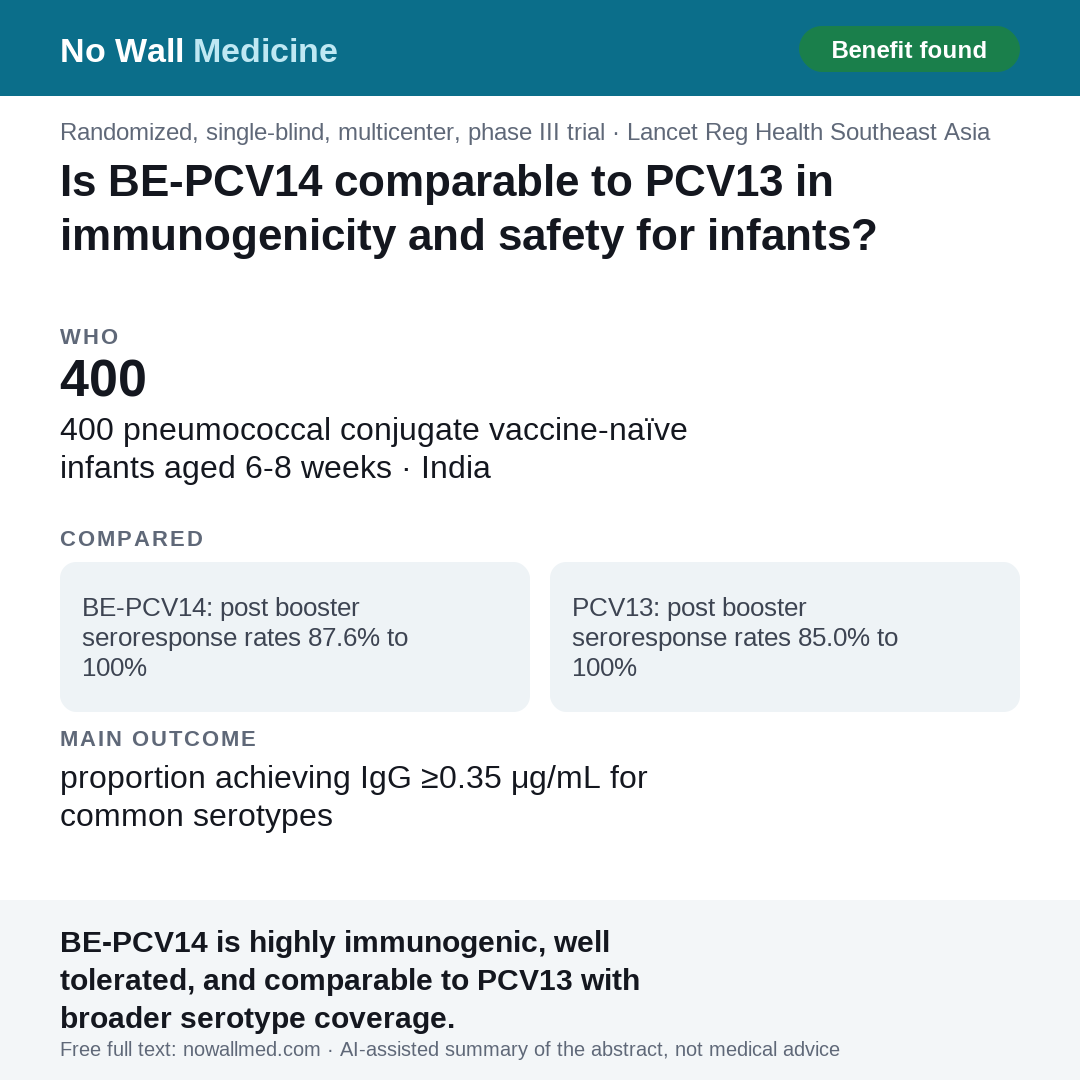
Immunogenicity and safety of biological E's 14-valent pneumococcal conjugate vaccine (PNEUBEVAX 14®) administered in a 2p + 1 schedule to healthy infants: a multicenter, randomized, active controlled, single-blind, phase III trial
Randomized, single-blind, multicenter, phase III trialBenefit found
Is BE-PCV14 comparable to PCV13 in immunogenicity and safety for infants?
Who
400
400 pneumococcal conjugate vaccine-naïve infants aged 6-8 weeks · India
Compared
BE-PCV14: post booster seroresponse rates 87.6% to 100%
PCV13: post booster seroresponse rates 85.0% to 100%
Main outcome
proportion achieving IgG ≥0.35 μg/mL for common serotypes
Bottom line: BE-PCV14 is highly immunogenic, well tolerated, and comparable to PCV13 with broader serotype coverage.
Funded by: Biological E. Limited
Lancet Reg Health Southeast Asia · 2026-03-03Download image
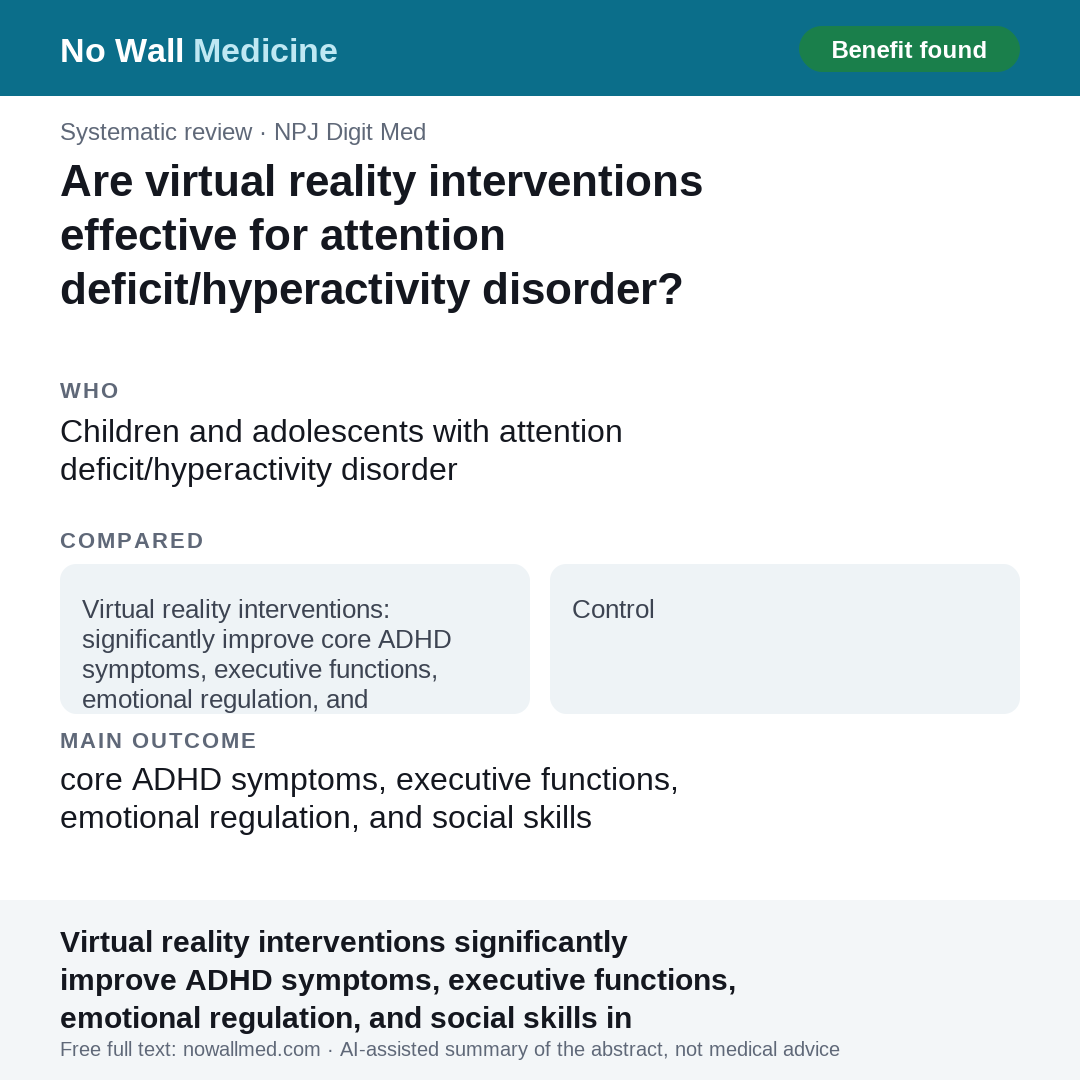
Virtual reality interventions for attention deficit/hyperactivity disorder: a systematic review
Systematic reviewBenefit found
Are virtual reality interventions effective for attention deficit/hyperactivity disorder?
Who
Children and adolescents with attention deficit/hyperactivity disorder
Compared
Virtual reality interventions: significantly improve core ADHD symptoms, executive functions, emotional regulation, and social skills
Control
Main outcome
core ADHD symptoms, executive functions, emotional regulation, and social skills
Bottom line: Virtual reality interventions significantly improve ADHD symptoms, executive functions, emotional regulation, and social skills in children and adolescents.
Limitation: adherence reporting was inconsistent across studies
NPJ Digit Med · 2026-03-03Download image
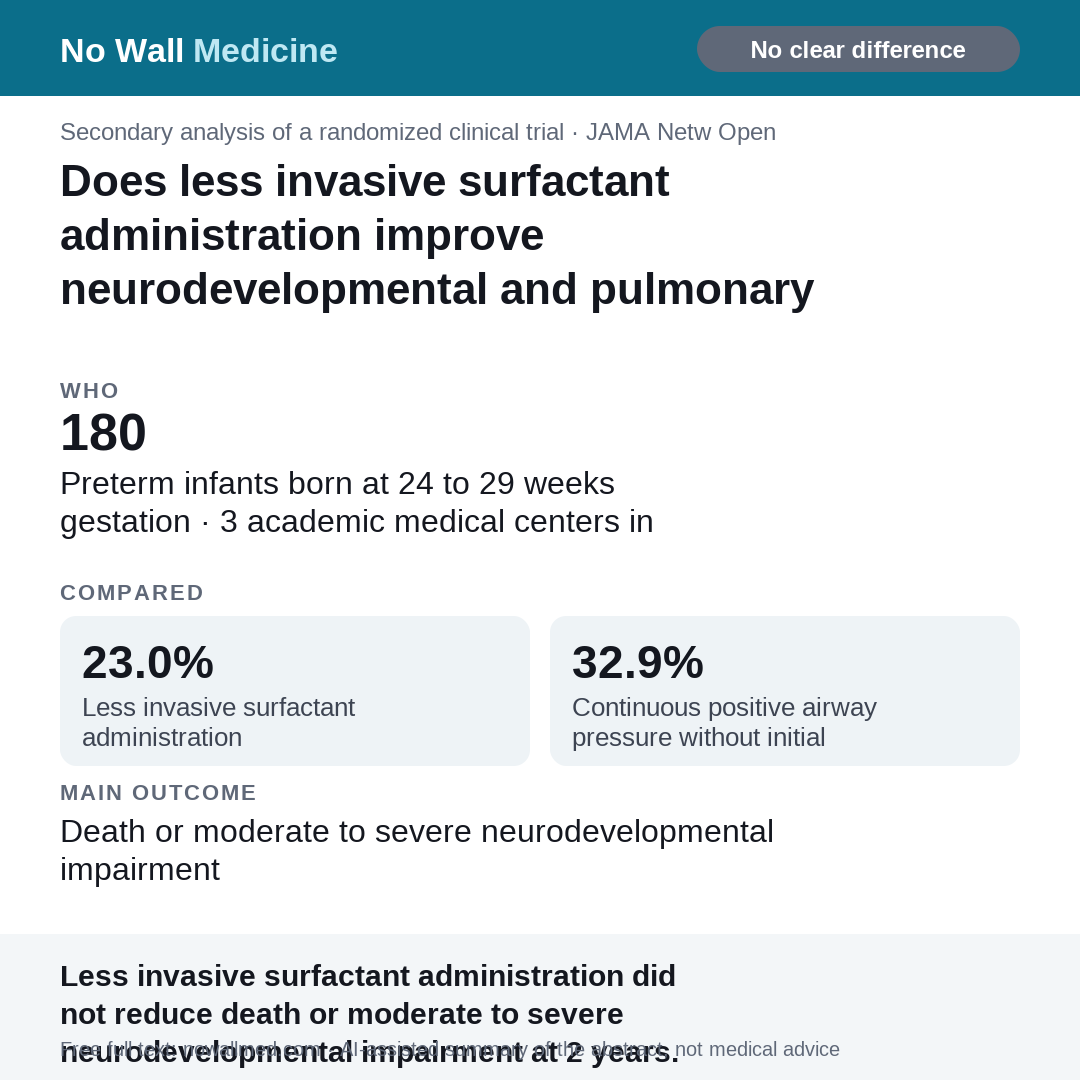
Two-Year Outcomes of Less Invasive Surfactant Administration Among Preterm Neonates: A Secondary Analysis of a Randomized Clinical Trial
Secondary analysis of a randomized clinical trialNo clear difference
Does less invasive surfactant administration improve neurodevelopmental and pulmonary outcomes at 2 years?
Who
180
Preterm infants born at 24 to 29 weeks gestation · 3 academic medical centers in California
Compared
23.0%Less invasive surfactant administration
32.9%Continuous positive airway pressure without initial surfactant
Main outcome
Death or moderate to severe neurodevelopmental impairment
Result: odds ratio 1.56 (95% CI 0.77-3.17)
Bottom line: Less invasive surfactant administration did not reduce death or moderate to severe neurodevelopmental impairment at 2 years.
JAMA Netw Open · 2026-03-02Download image
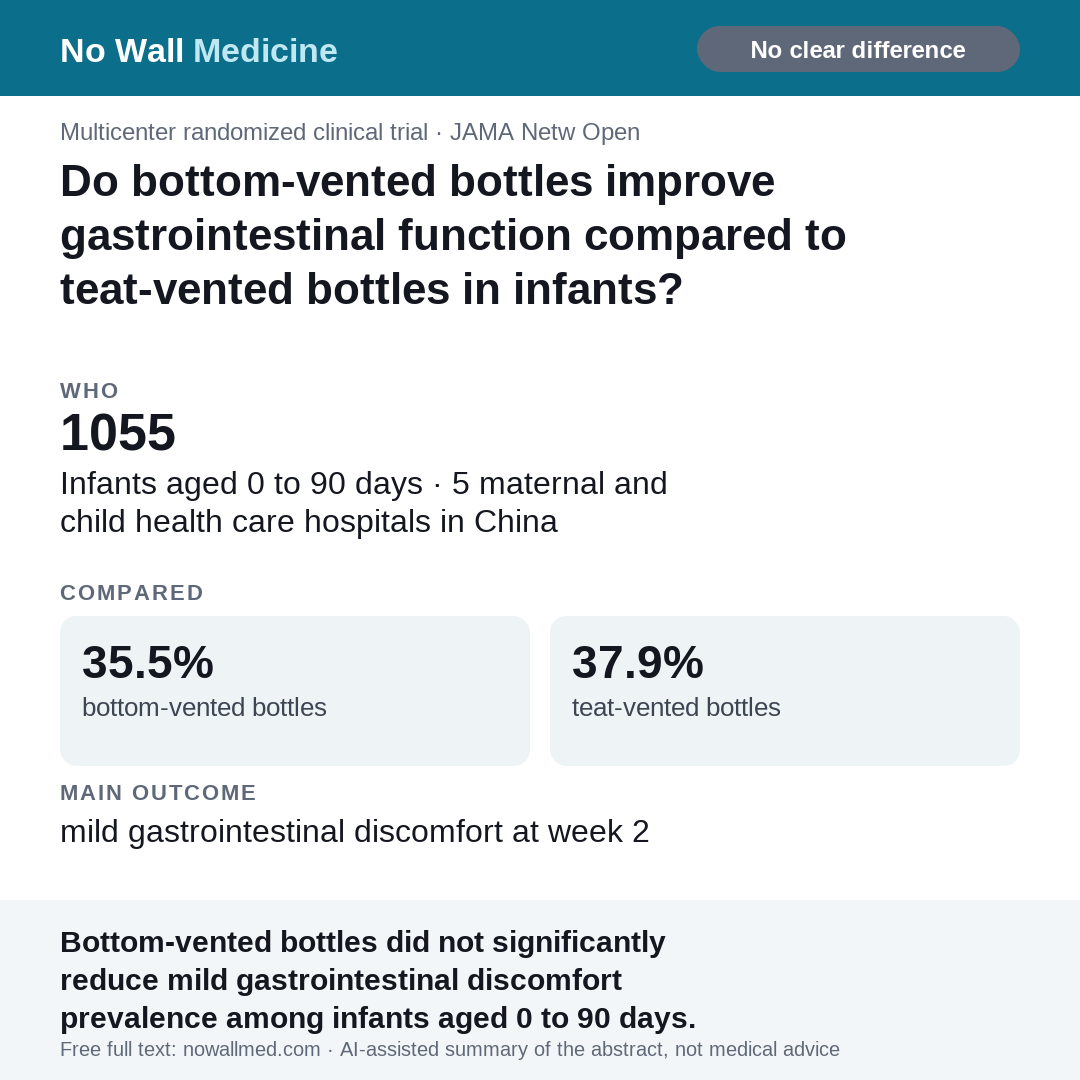
Feeding Bottles With Different Venting Methods and Gastrointestinal Discomfort in Infants: A Randomized Clinical Trial
Multicenter randomized clinical trialNo clear difference
Do bottom-vented bottles improve gastrointestinal function compared to teat-vented bottles in infants?
Who
1055
Infants aged 0 to 90 days · 5 maternal and child health care hospitals in China
Compared
35.5%bottom-vented bottles
37.9%teat-vented bottles
Main outcome
mild gastrointestinal discomfort at week 2
Result: relative risk 0.94 (95% CI 0.80 to 1.10)
Bottom line: Bottom-vented bottles did not significantly reduce mild gastrointestinal discomfort prevalence among infants aged 0 to 90 days.
Limitation: A significant reduction was only observed in an exploratory post hoc subgroup analysis of older infants.
JAMA Netw Open · 2026-03-02Download image
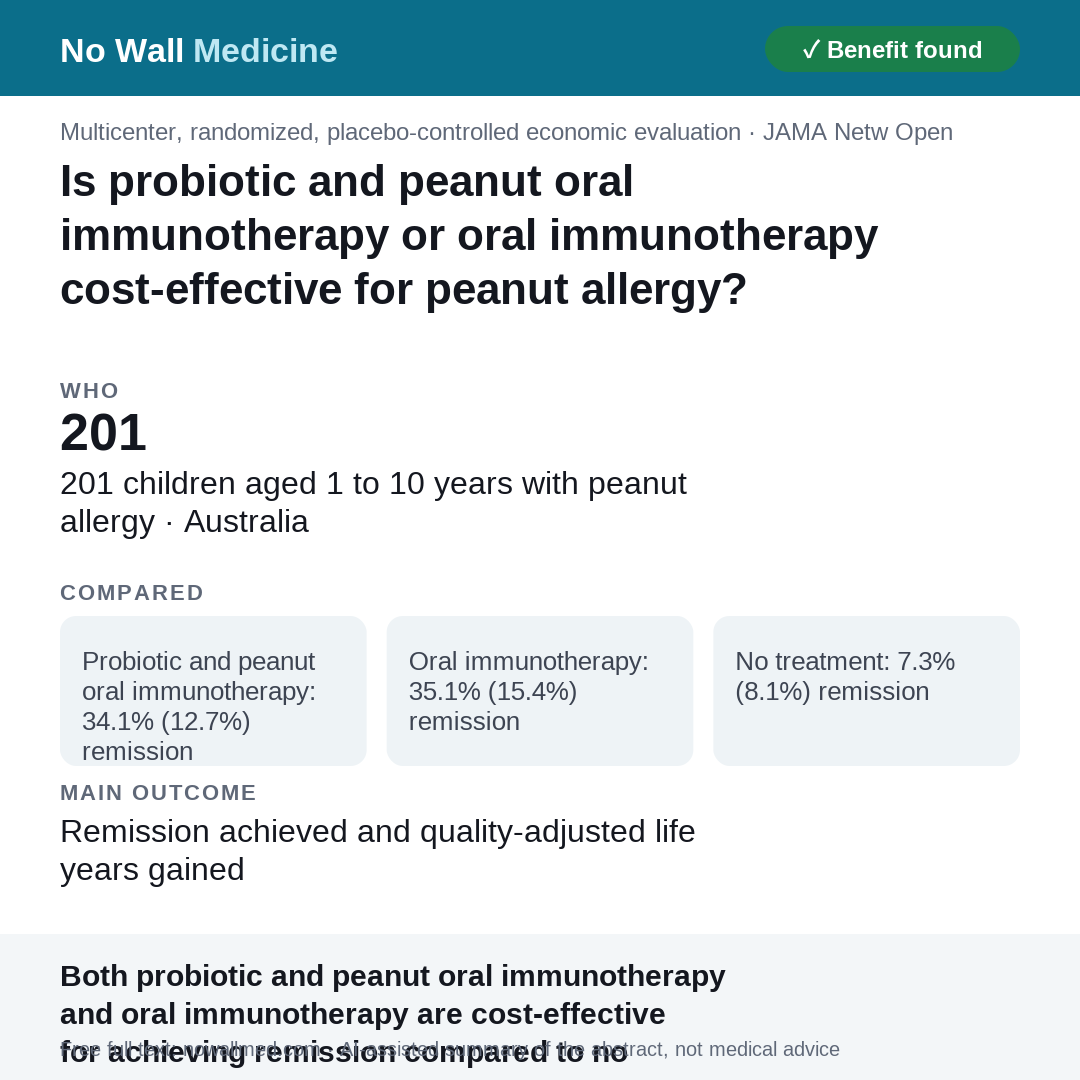
Cost-Effectiveness of Oral Immunotherapy Treatments vs No Treatment for Peanut Allergy in Children
Multicenter, randomized, placebo-controlled economic evaluationBenefit found
Is probiotic and peanut oral immunotherapy or oral immunotherapy cost-effective for peanut allergy?
Who
201
201 children aged 1 to 10 years with peanut allergy · Australia
Compared
Probiotic and peanut oral immunotherapy: 34.1% (12.7%) remission
Oral immunotherapy: 35.1% (15.4%) remission
No treatment: 7.3% (8.1%) remission
Main outcome
Remission achieved and quality-adjusted life years gained
Result: PPOIT: A$1384; 95% CI, A$1269-A$1415 per year of remission; OIT: A$1199; 95% CI, A$1091-A$1217 per year of remission
Bottom line: Both probiotic and peanut oral immunotherapy and oral immunotherapy are cost-effective for achieving remission compared to no treatment.
JAMA Netw Open · 2026-03-02Download image