Visual abstracts
New randomized trials and meta-analyses from leading journals at a glance: who was studied, what was compared, and what was found. Every paper is free to read in full.
All specialtiesCardiology 4763Oncology 4043Gastroenterology & Hepatology 1903Infectious Disease 3756Neurology 1872Psychiatry & Mental Health 2216Pulmonology 2044Critical Care 1319Endocrinology & Diabetes 2544Pediatrics 2889Surgery 2480Orthopedics & Sports Medicine 917Neurosurgery 525Cardiothoracic & Vascular Surgery 656Plastic & Reconstructive Surgery 574Nephrology 1107Rheumatology 810Hematology 1090Dermatology 611Ophthalmology 532Obstetrics & Gynecology 1645Public & Global Health 1037Radiology & Imaging 619Anesthesiology 958Urology 745ENT (Otolaryngology) 494Emergency Medicine 481Allergy & Immunology 309Geriatrics 972Family Medicine & Primary Care 534Medical Genetics & Genomics 659Pathology & Laboratory Medicine 156Physical Medicine & Rehabilitation 734Palliative Care 421Nutrition 1560Digital Health & AI 2137General Medicine 318
Dietary patterns and risk of multiple cancers: umbrella review of meta-analyses of prospective cohort studies
Umbrella review of meta-analysesKey finding
What is the association between dietary patterns and risk of various cancers?
Who
Prospective cohort studies
Compared
Adherence to 2007 WCRF/AICR recommendations: relative risk 0.93 (95% CI: 0.92, 0.95)
Prudent diet vs lowest category: relative risk 0.89 (95% CI: 0.85, 0.93)
Vegetable-fruit-soybean diet vs lowest category: relative risk 0.87 (95% CI: 0.83, 0.92)
Main outcome
Any incident cancers
Result: relative risk 0.93 (95% CI: 0.92, 0.95)
Bottom line: Adherence to certain healthy dietary patterns is associated with lower risk of all cancers and certain individual cancers.
Am J Clin Nutr · 2024-11-26 · Save PNG

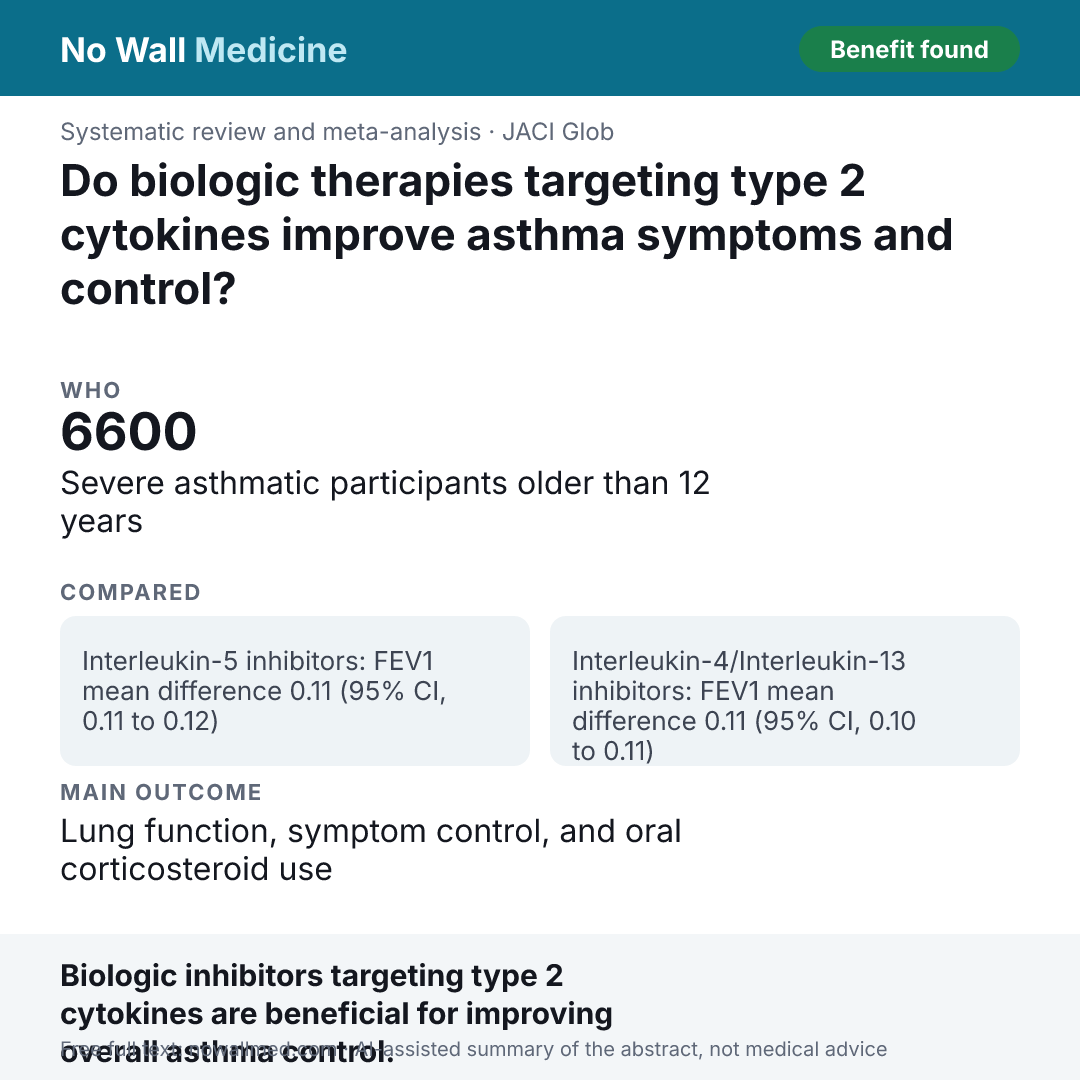
Biologic therapies targeting type 2 cytokines are effective at improving asthma symptoms and control-a systematic review and meta-analysis
Systematic review and meta-analysisBenefit found
Do biologic therapies targeting type 2 cytokines improve asthma symptoms and control?
Who
6600
Severe asthmatic participants older than 12 years
Compared
Interleukin-5 inhibitors: FEV1 mean difference 0.11 (95% CI, 0.11 to 0.12)
Interleukin-4/Interleukin-13 inhibitors: FEV1 mean difference 0.11 (95% CI, 0.10 to 0.11)
Main outcome
Lung function, symptom control, and oral corticosteroid use
Bottom line: Biologic inhibitors targeting type 2 cytokines are beneficial for improving overall asthma control.
JACI Glob · 2024-11-26 · Save PNG
Usability and Effectiveness of eHealth and mHealth Interventions That Support Self-Management and Health Care Transition in Adolescents and Young Adults With Chronic Disease: Systematic Review
Systematic reviewUnclear result
Do eHealth and mHealth interventions support self-management
Who
Adolescents and young adults with chronic disease
Compared
eHealth interventions
mHealth interventions
Main outcome
Self-management and health care transition
Bottom line: Limited data on effectiveness of eHealth and mHealth interventions
Limitation: Limited data available
J Med Internet Res · 2024-11-26 · Save PNG

Machine learning for prognostic prediction in coronary artery disease with SPECT data: a systematic review and meta-analysis
Systematic review and meta-analysisKey finding
Can machine learning models using SPECT data improve prognostic prediction in coronary artery disease?
Who
73,023
Coronary artery disease patients
Compared
Machine learning models: sensitivity and specificity exceeding 65%
Traditional models
Main outcome
Major adverse cardiovascular events and all-cause mortality
Bottom line: Machine learning models enhance prognostic prediction in coronary artery disease, especially when integrating demographic information with SPECT imaging.
EJNMMI Res · 2024-11-26 · Save PNG

Psychiatric Comorbidities in Persons With Epilepsy Compared With Persons Without Epilepsy: A Systematic Review and Meta-Analysis
Meta-analysis of 27 studiesMixed results
Psychiatric comorbidities in epilepsy
Who
565443
persons with and without epilepsy
Compared
with epilepsy
without epilepsy
Main outcome
prevalence of psychiatric disorders
Result: odds ratio 2.11 to 10.67
Bottom line: Most psychiatric comorbidities more prevalent in epilepsy
JAMA Neurol · 2024-11-25 · Save PNG

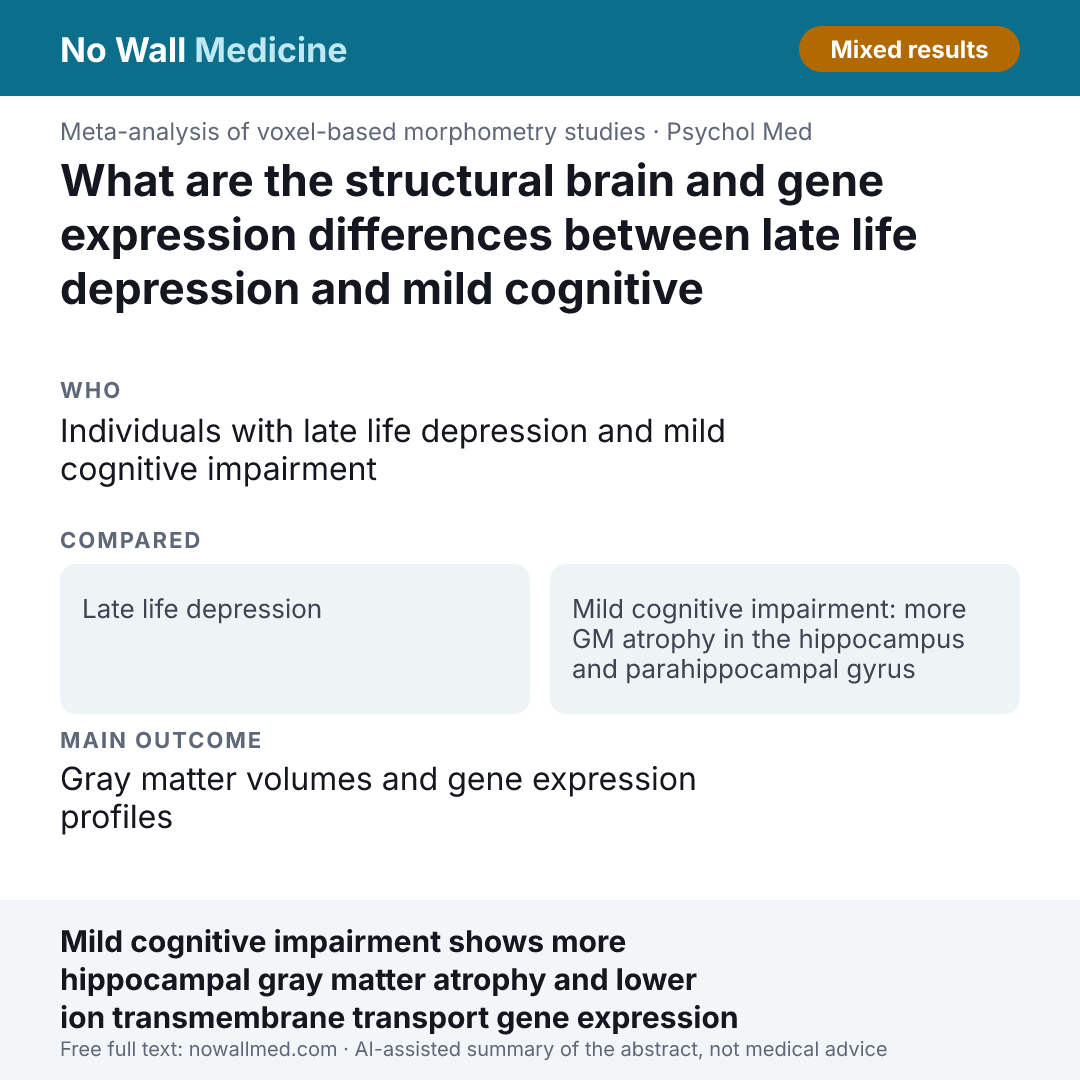
A comparative meta-analysis of structural magnetic resonance imaging studies and gene expression profiles revealing the similarities and differences between late life depression and mild cognitive impairment
Meta-analysis of voxel-based morphometry studiesMixed results
What are the structural brain and gene expression differences between late life depression and mild cognitive impairment?
Who
Individuals with late life depression and mild cognitive impairment
Compared
Late life depression
Mild cognitive impairment: more GM atrophy in the hippocampus and parahippocampal gyrus
Main outcome
Gray matter volumes and gene expression profiles
Bottom line: Mild cognitive impairment shows more hippocampal gray matter atrophy and lower ion transmembrane transport gene expression than late life depression.
Psychol Med · 2024-11-25 · Save PNG
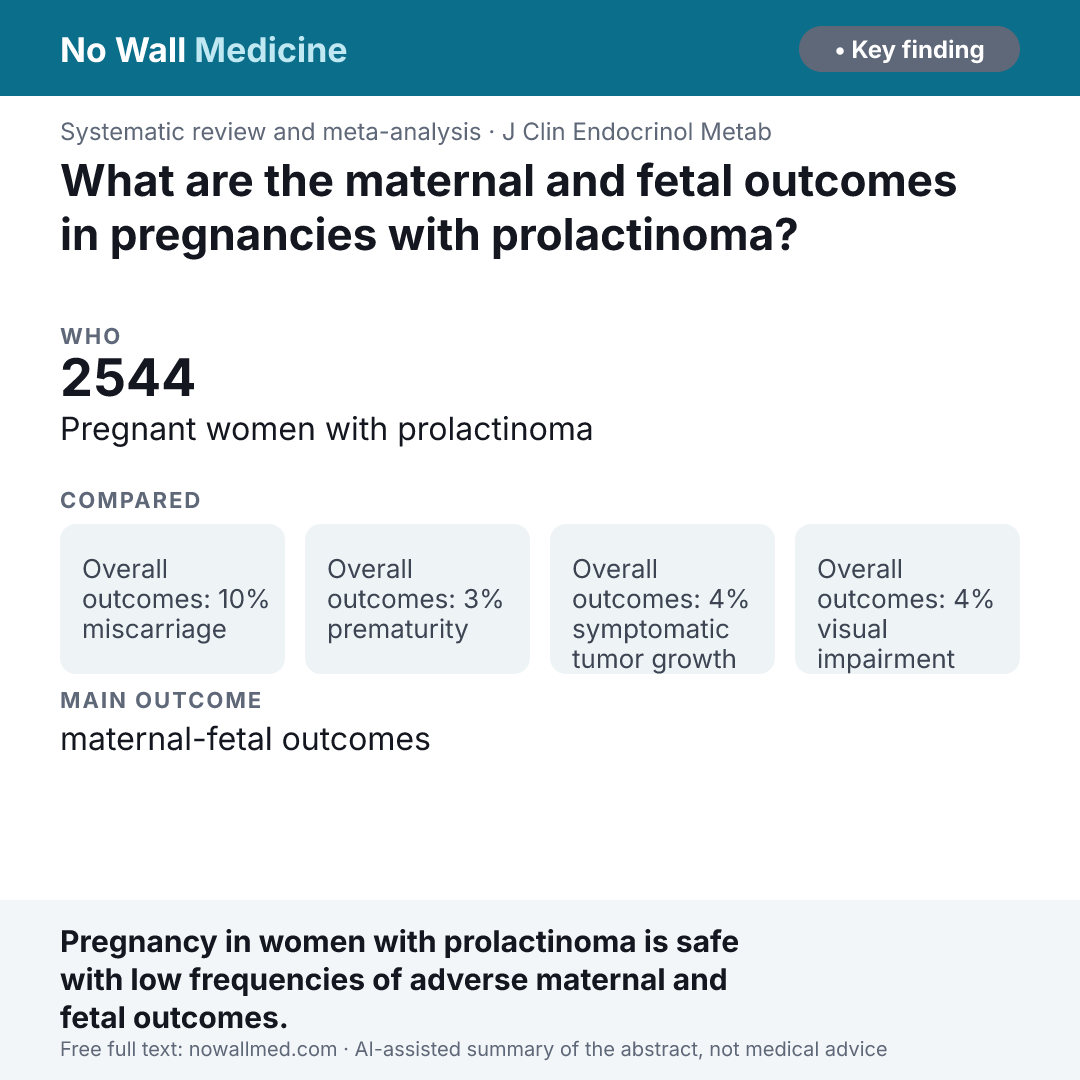
Disease Activity and Maternal-fetal Outcomes in Pregnant Women With Prolactinoma: A Systematic Review and Meta-analysis
Systematic review and meta-analysisKey finding
What are the maternal and fetal outcomes in pregnancies with prolactinoma?
Who
2544
Pregnant women with prolactinoma
Compared
Overall outcomes: 10% miscarriage
Overall outcomes: 3% prematurity
Overall outcomes: 4% symptomatic tumor growth
Overall outcomes: 4% visual impairment
Main outcome
maternal-fetal outcomes
Bottom line: Pregnancy in women with prolactinoma is safe with low frequencies of adverse maternal and fetal outcomes.
J Clin Endocrinol Metab · 2024-11-25 · Save PNG
Safety and Efficacy of Half-dose and Half-fluence Photodynamic Therapy in Chronic Central Serous Chorioretinopathy: A Systematic Review and Meta-analysis
Systematic review and meta-analysisNo clear difference
Is half-dose photodynamic therapy as effective and safe as half-fluence photodynamic therapy?
Who
Patients with chronic central serous chorioretinopathy
Compared
half-dose photodynamic therapy
half-fluence photodynamic therapy
Main outcome
best-corrected visual acuity
Bottom line: Both half-dose and half-fluence photodynamic therapy are effective and safe for treating chronic central serous chorioretinopathy.
Am J Ophthalmol · 2024-11-25 · Save PNG
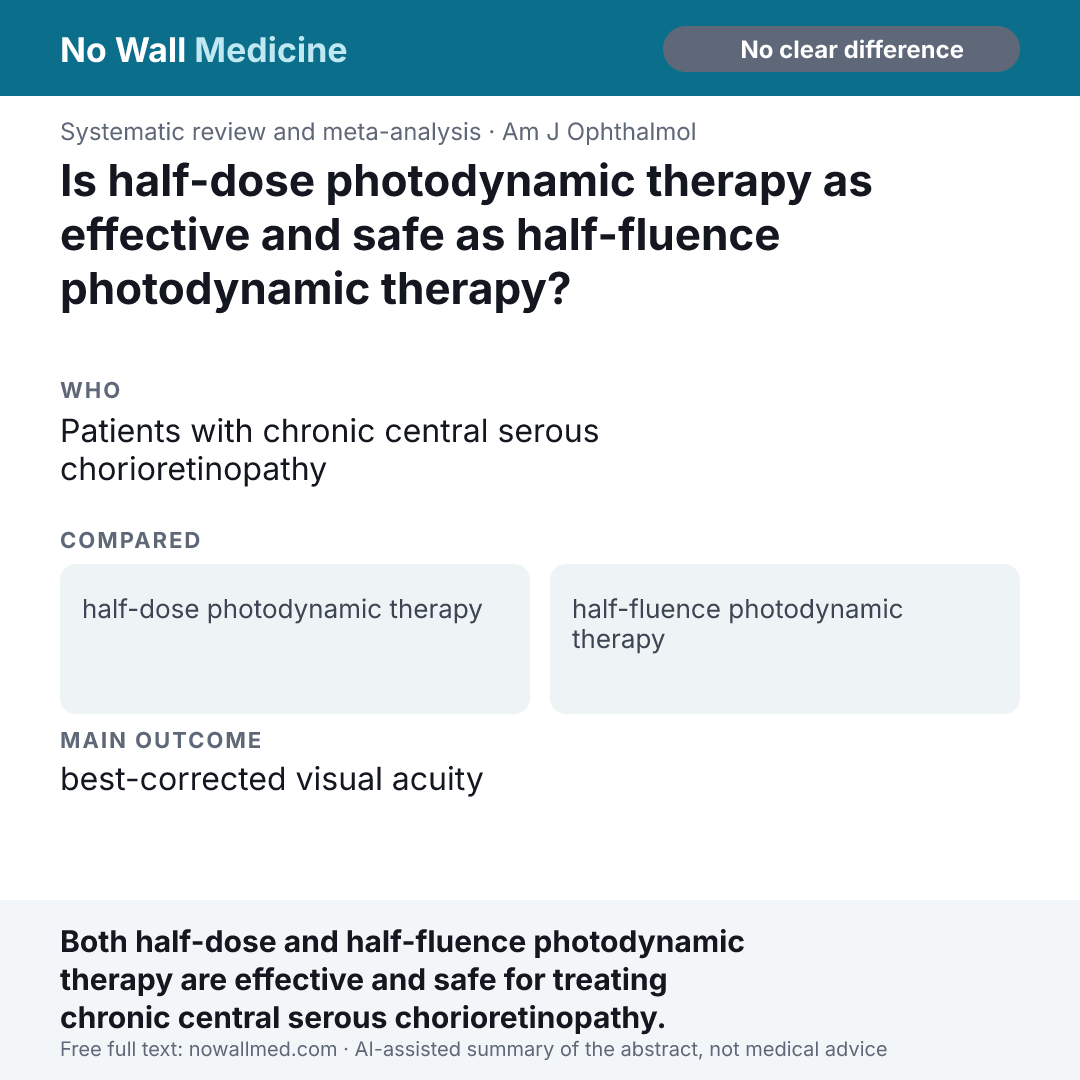
Predictors of Gastrostomy Tube Placement in Head and Neck Cancer Patients Undergoing Radiation or Chemoradiotherapy: A Systematic Review
Systematic review of sixteen retrospective studiesMixed results
What are the predictors of gastrostomy tube placement in head and neck cancer patients?
Who
11015
Head and neck cancer patients undergoing radiation or chemoradiotherapy
Compared
44%Overall prevalence
76%Reactive gastrostomy tube placement
Main outcome
Gastrostomy tube placement
Bottom line: Predictors for prophylactic and reactive gastrostomy tube placement vary based on clinical factors.
Head Neck · 2024-11-25 · Save PNG
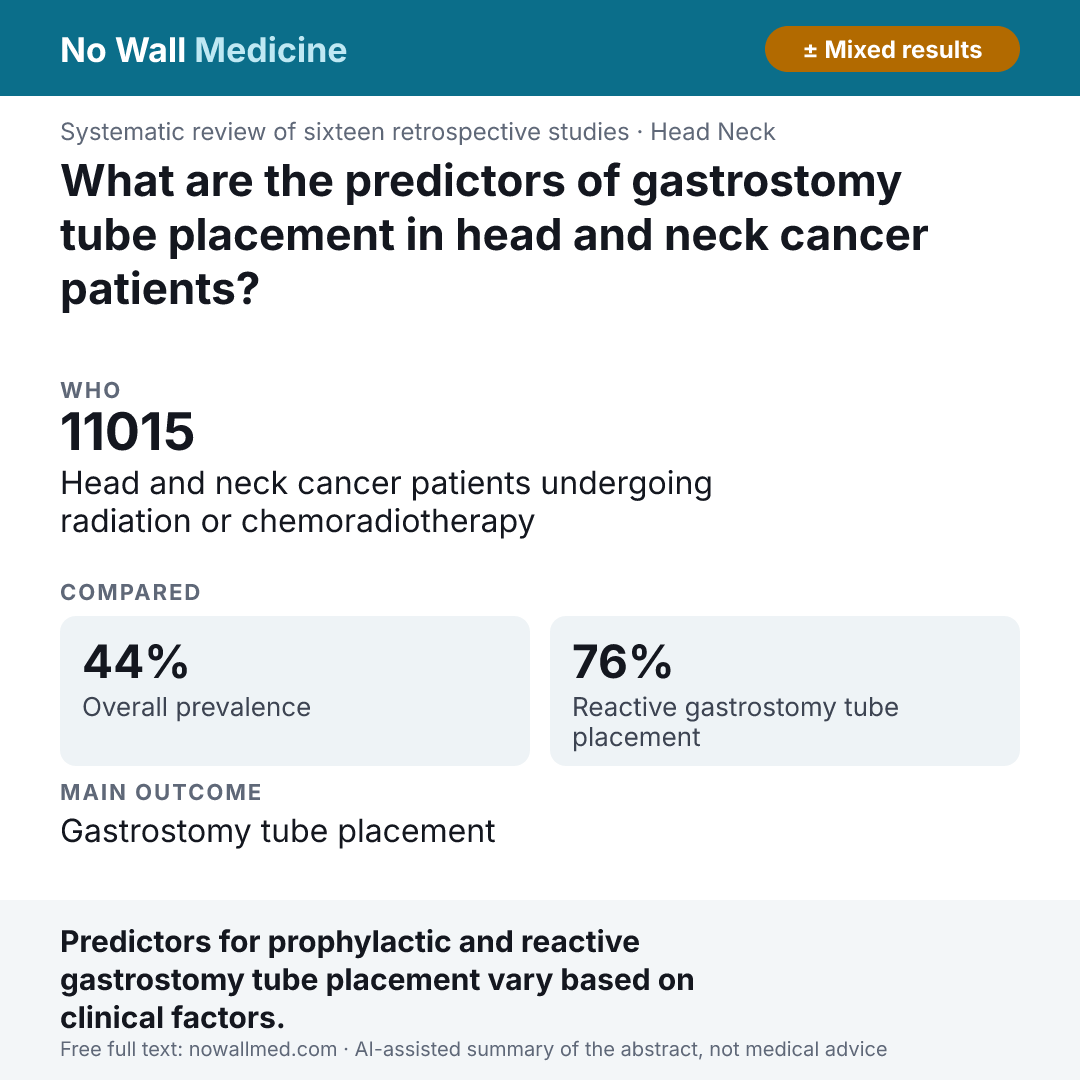
Inhaled antibiotics for treating pneumonia in invasively ventilated patients in intensive care unit: a meta-analysis of randomized clinical trials with trial sequential analysis
Meta-analysis of 11 randomized clinical trialsMixed results
Do adjuvant inhaled antibiotics improve microbiological eradication in invasively ventilated pneumonia patients?
Who
1472
Critically ill adult patients with pneumonia and invasive ventilation · Intensive care units
Compared
Inhaled antibiotics
Control group
Main outcome
Rate of microbiological eradication after treatment
Result: odds ratio 2.63 (95% CI 1.36-5.09)
Bottom line: Inhaled antibiotics increased microbiological eradication but did not improve clinical recovery or survival compared to intravenous therapy alone.
Limitation: Low certainty of evidence and high risk of publication bias
Crit Care · 2024-11-25 · Save PNG
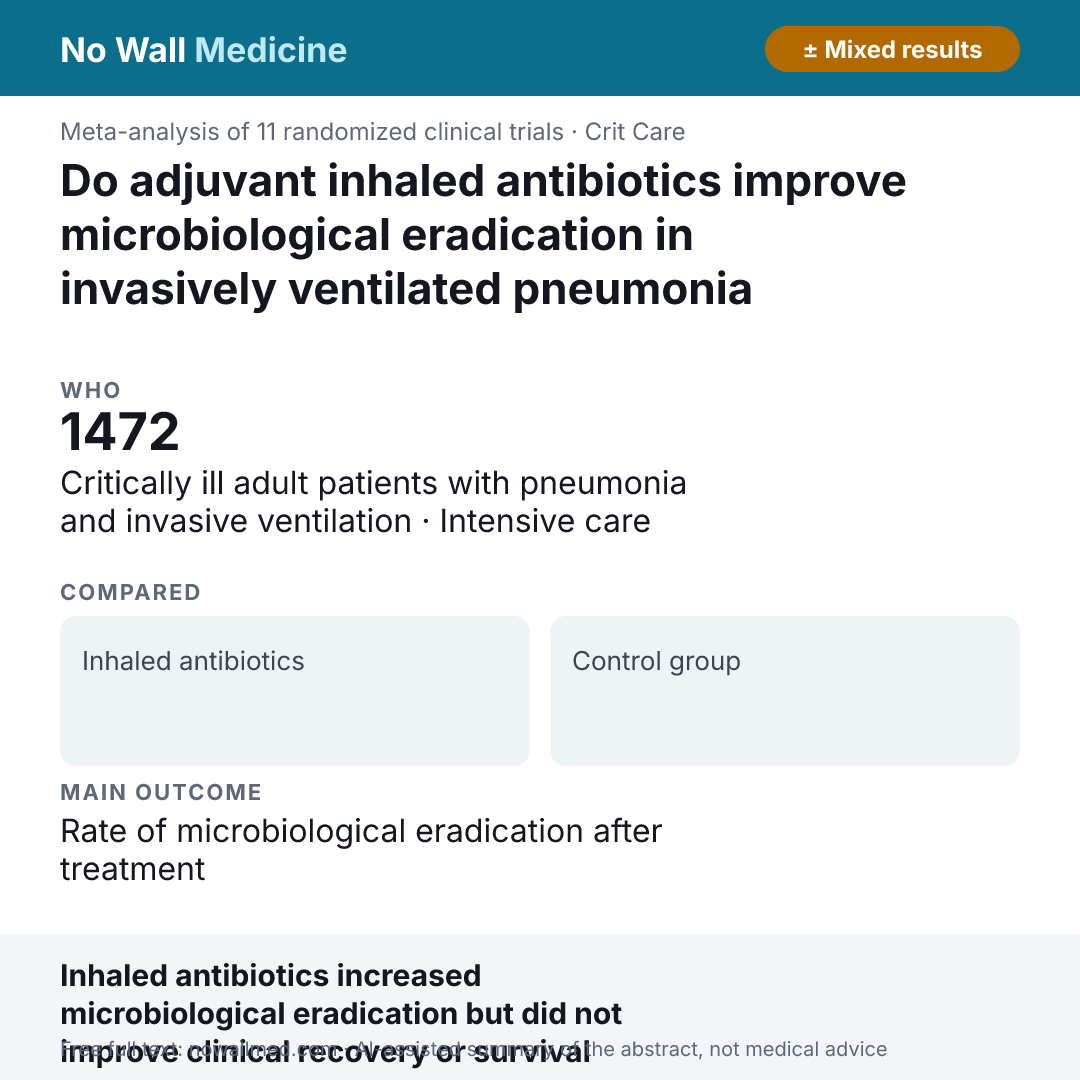
Implementation of Machine Learning Applications in Health Care Organizations: Systematic Review of Empirical Studies
Systematic literature reviewUnclear result
What are the characteristics and strategies for implementing machine learning in health care organizations?
Who
34
Empirical studies documenting machine learning implementation in clinical settings · Hospitals (29/34, 85%)
Compared
Prognosis support: 20/34, 59%
Diagnosis support: 10/34, 29%
Main outcome
Characteristics of machine learning applications and implementation processes
Bottom line: Implementation factors for machine learning are often transversal to digital health technologies rather than being machine learning specific.
Limitation: More research is needed to clarify factors relevant to implementing machine learning at the organizational level.
J Med Internet Res · 2024-11-25 · Save PNG
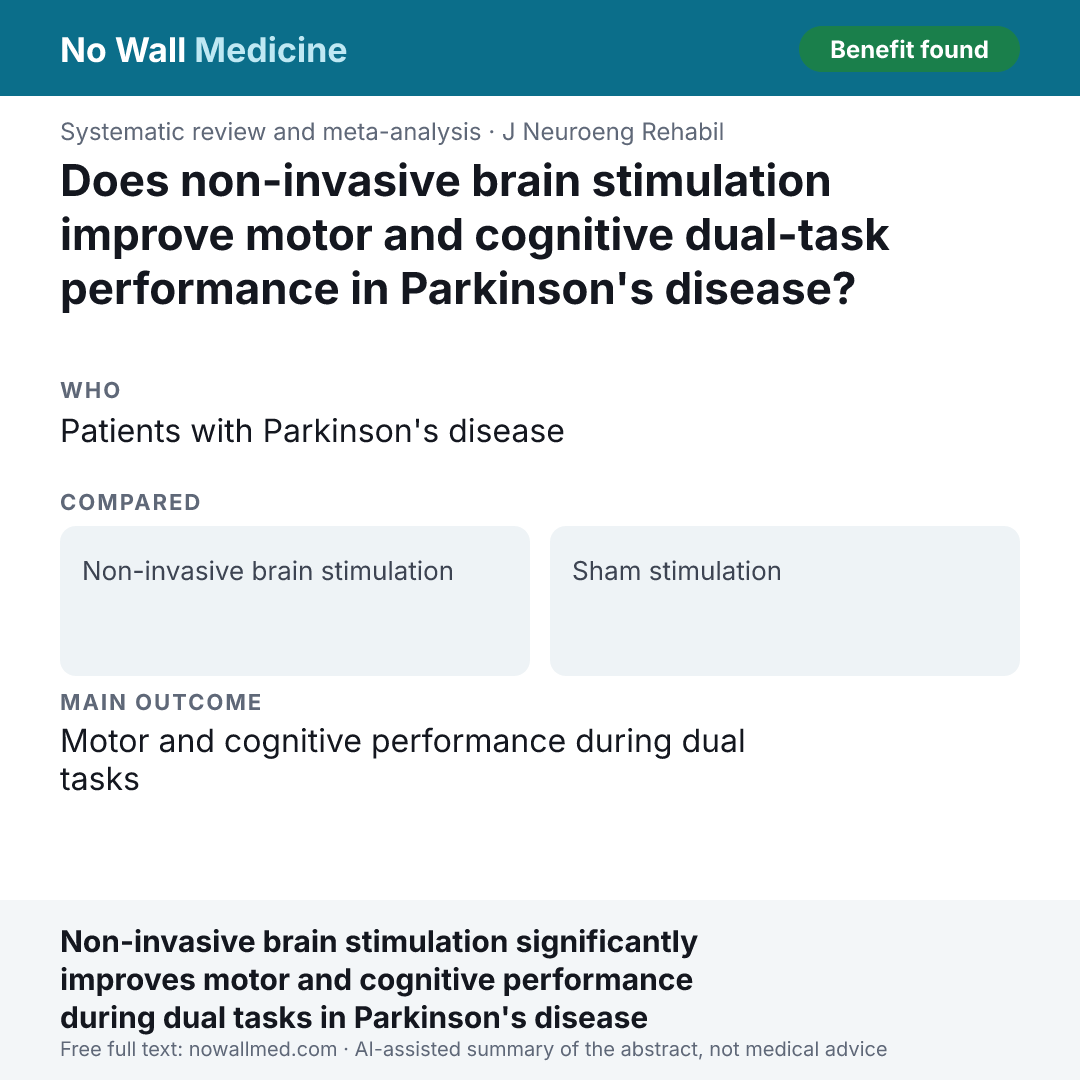
Non-invasive brain stimulation enhances motor and cognitive performances during dual tasks in patients with Parkinson's disease: a systematic review and meta-analysis
Systematic review and meta-analysisBenefit found
Does non-invasive brain stimulation improve motor and cognitive dual-task performance in Parkinson's disease?
Who
Patients with Parkinson's disease
Compared
Non-invasive brain stimulation
Sham stimulation
Main outcome
Motor and cognitive performance during dual tasks
Bottom line: Non-invasive brain stimulation significantly improves motor and cognitive performance during dual tasks in Parkinson's disease patients.
J Neuroeng Rehabil · 2024-11-25 · Save PNG
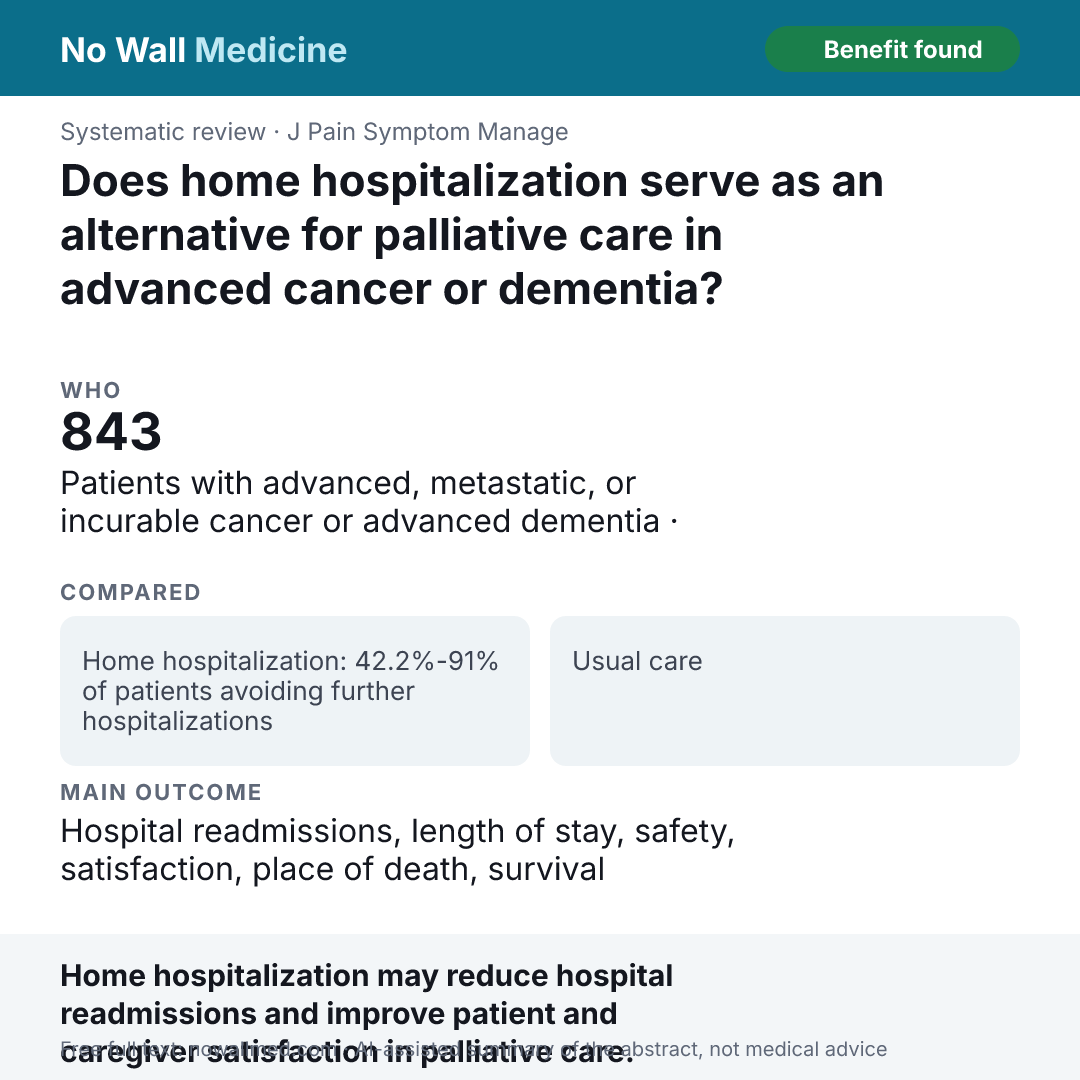
Home Hospitalization in Palliative Care for Advanced Cancer and Dementia: A Systematic Review
Systematic reviewBenefit found
Does home hospitalization serve as an alternative for palliative care in advanced cancer or dementia?
Who
843
Patients with advanced, metastatic, or incurable cancer or advanced dementia · Denmark, France, Spain, and Israel
Compared
Home hospitalization: 42.2%-91% of patients avoiding further hospitalizations
Usual care
Main outcome
Hospital readmissions, length of stay, safety, satisfaction, place of death, survival
Bottom line: Home hospitalization may reduce hospital readmissions and improve patient and caregiver satisfaction in palliative care.
Limitation: Heterogeneity in study designs and outcomes and moderate to high risk of bias.
J Pain Symptom Manage · 2024-11-24 · Save PNG
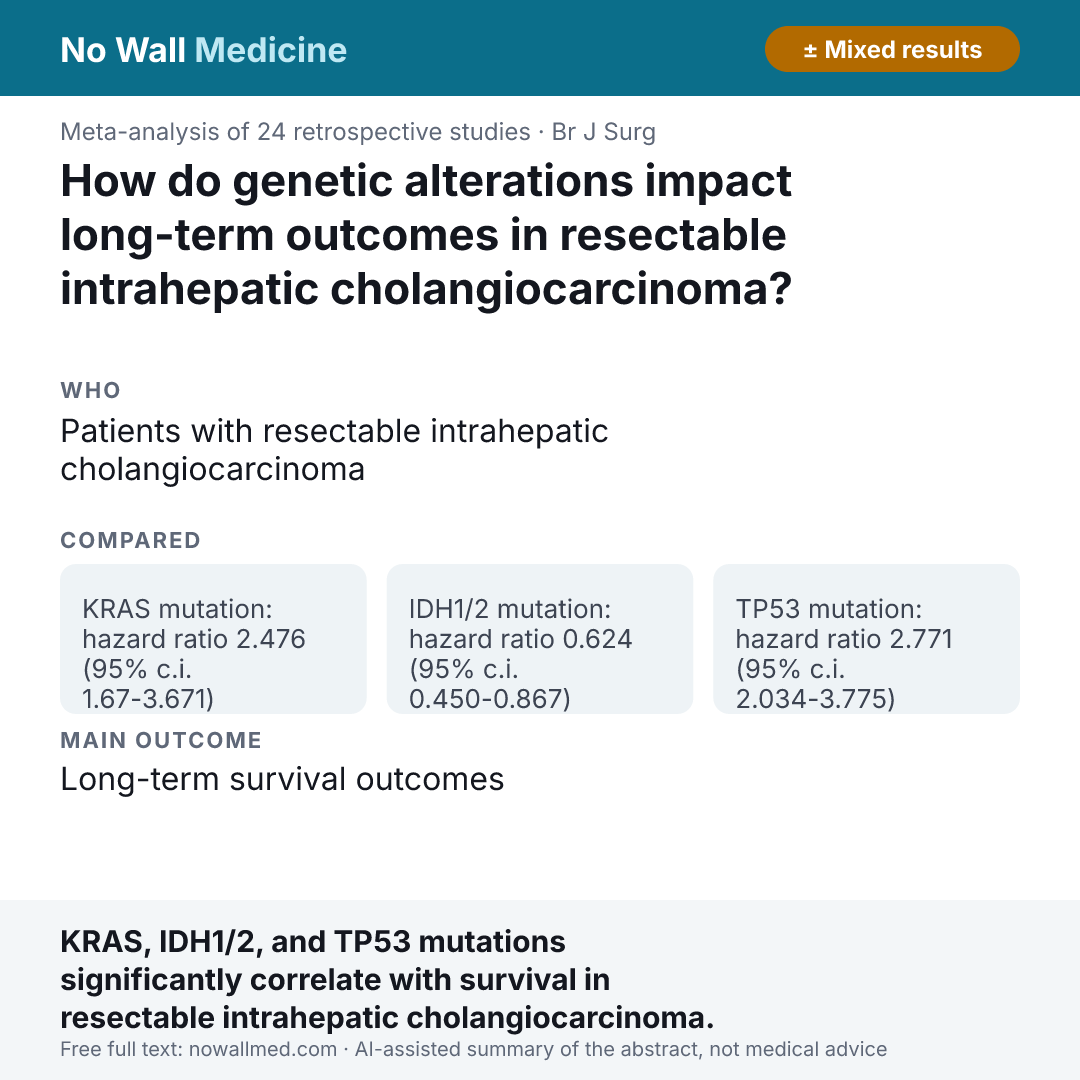
Impact of genetic alterations on long-term outcomes in resectable intrahepatic cholangiocarcinoma: meta-analysis
Meta-analysis of 24 retrospective studiesMixed results
How do genetic alterations impact long-term outcomes in resectable intrahepatic cholangiocarcinoma?
Who
Patients with resectable intrahepatic cholangiocarcinoma
Compared
KRAS mutation: hazard ratio 2.476 (95% c.i. 1.67-3.671)
IDH1/2 mutation: hazard ratio 0.624 (95% c.i. 0.450-0.867)
TP53 mutation: hazard ratio 2.771 (95% c.i. 2.034-3.775)
Main outcome
Long-term survival outcomes
Bottom line: KRAS, IDH1/2, and TP53 mutations significantly correlate with survival in resectable intrahepatic cholangiocarcinoma.
Limitation: Inconsistent results for infrequent gene alterations could potentially bias their prognostic meaning.
Br J Surg · 2024-11-23 · Save PNG
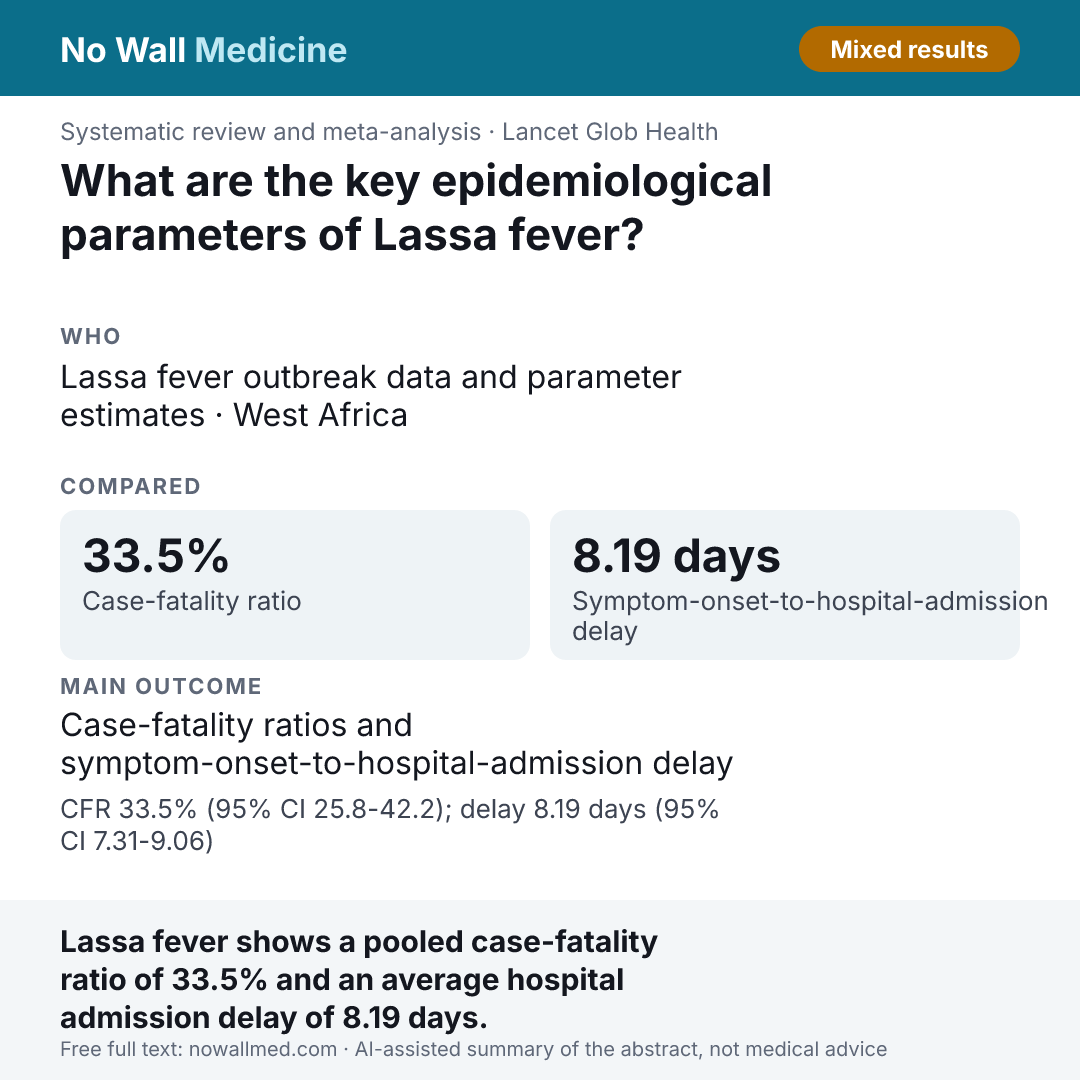
Lassa fever outbreaks, mathematical models, and disease parameters: a systematic review and meta-analysis
Systematic review and meta-analysisMixed results
What are the key epidemiological parameters of Lassa fever?
Who
Lassa fever outbreak data and parameter estimates · West Africa
Compared
33.5%Case-fatality ratio
8.19 daysSymptom-onset-to-hospital-admission delay
Main outcome
Case-fatality ratios and symptom-onset-to-hospital-admission delay
Result: CFR 33.5% (95% CI 25.8-42.2); delay 8.19 days (95% CI 7.31-9.06)
Bottom line: Lassa fever shows a pooled case-fatality ratio of 33.5% and an average hospital admission delay of 8.19 days.
Funded by: UK Medical Research Council, NIHR, Academy of Medical Sciences, and others
Lancet Glob Health · 2024-11-23 · Save PNG
Polygenic risk scores in the clinic: a systematic review of stakeholders' perspectives, attitudes, and experiences
Mixed-method systematic reviewMixed results
What are the perspectives, attitudes, and experiences of stakeholders regarding polygenic risk scores?
Who
Healthcare providers, patients, and the public
Compared
Healthcare providers
Patients: no psychosocial burden was reported
The public
Main outcome
Stakeholders' perspectives, attitudes, and experiences regarding polygenic risk scores
Bottom line: Stakeholder perspectives are context-dependent, showing significant knowledge gaps among providers but minimal psychosocial burden for patients.
Eur J Hum Genet · 2024-11-23 · Save PNG

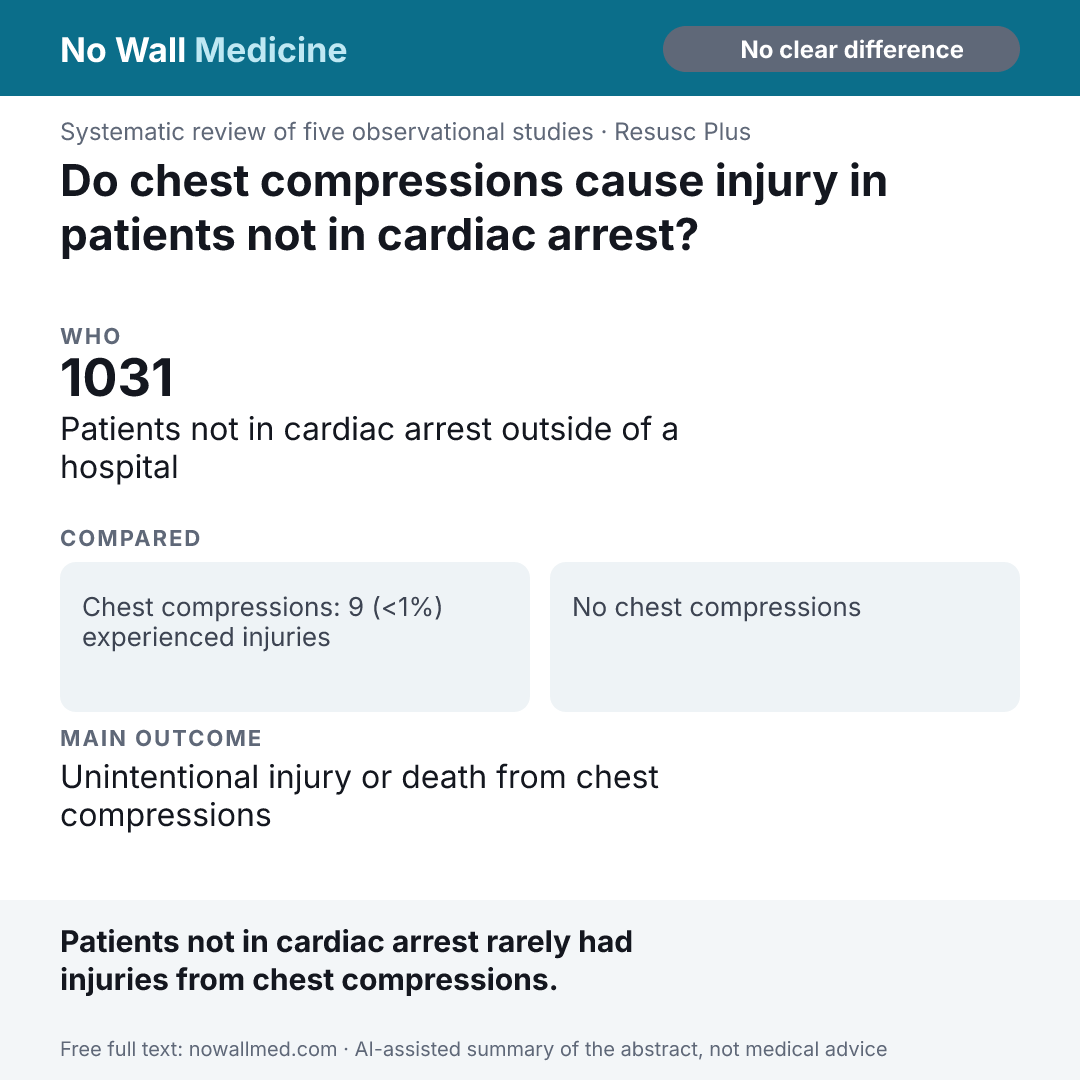
Does delivering chest compressions to patients who are not in cardiac arrest cause unintentional injury? A systematic review
Systematic review of five observational studiesNo clear difference
Do chest compressions cause injury in patients not in cardiac arrest?
Who
1031
Patients not in cardiac arrest outside of a hospital
Compared
Chest compressions: 9 (<1%) experienced injuries
No chest compressions
Main outcome
Unintentional injury or death from chest compressions
Bottom line: Patients not in cardiac arrest rarely had injuries from chest compressions.
Limitation: Evidence was of very low certainty due to risk of bias and imprecision.
Resusc Plus · 2024-11-23 · Save PNG
A Dutch paediatric palliative care guideline: a systematic review and recommendations on advance care planning and shared decision-making
Systematic reviewBenefit found
Does advance care planning improve care
Who
Children with life-threatening conditions · Netherlands
Compared
Advance care planning
No advance care planning
Main outcome
Quality of care
Bottom line: Advance care planning improves care
Limitation: Knowledge gaps
BMC Palliat Care · 2024-11-23 · Save PNG

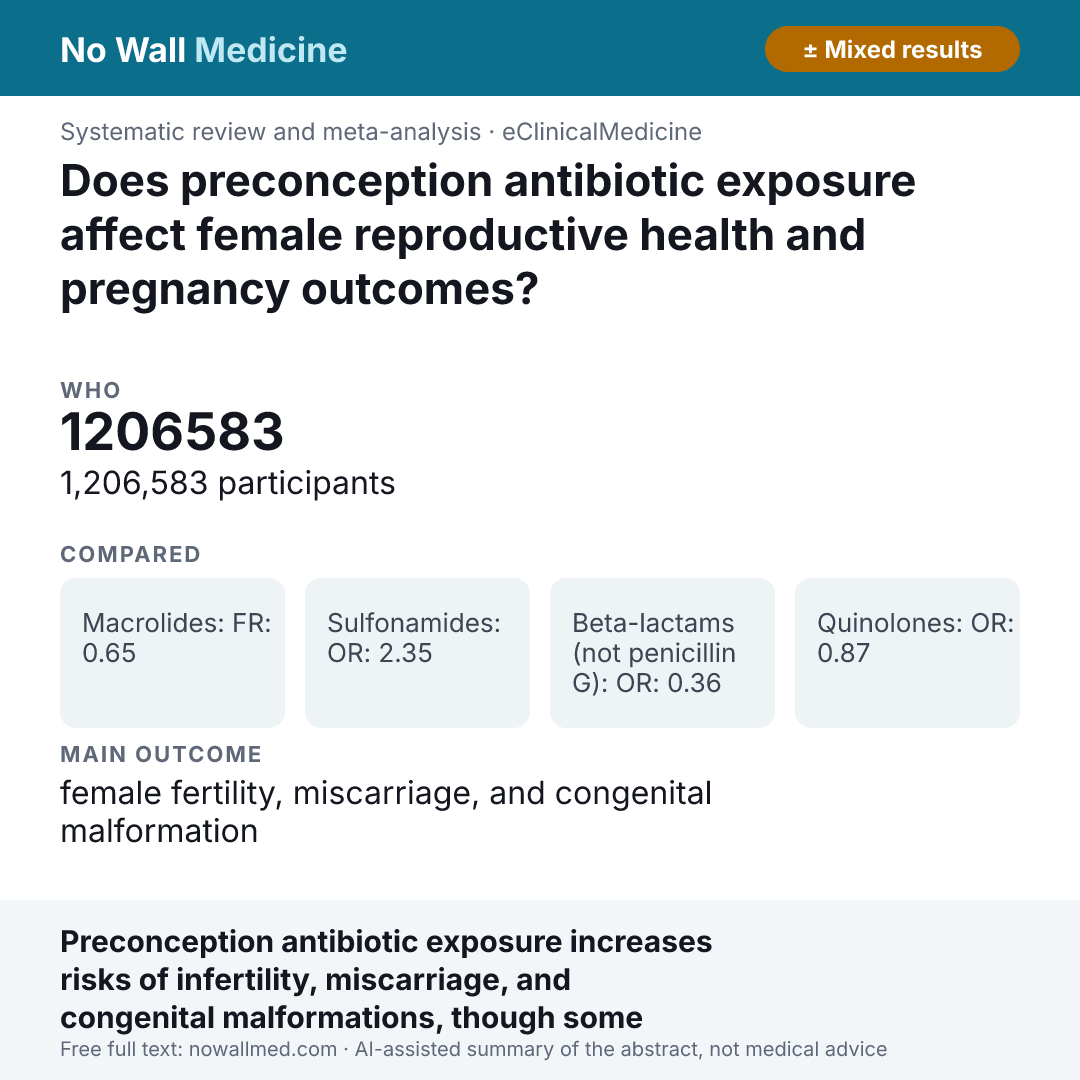
Effect of preconception antibiotics exposure on female reproductive health and pregnancy outcomes: a systematic review and meta-analysis
Systematic review and meta-analysisMixed results
Does preconception antibiotic exposure affect female reproductive health and pregnancy outcomes?
Who
1206583
1,206,583 participants
Compared
Macrolides: FR: 0.65
Sulfonamides: OR: 2.35
Beta-lactams (not penicillin G): OR: 0.36
Quinolones: OR: 0.87
Main outcome
female fertility, miscarriage, and congenital malformation
Bottom line: Preconception antibiotic exposure increases risks of infertility, miscarriage, and congenital malformations, though some classes show different effects.
Limitation: Further clinical and mechanistic studies are required to illustrate specific functions and cause effects.
Funded by: Leading Discipline Development Fund; Hong Kong Obstetrical and Gynaecological Trust Fund
eClinicalMedicine · 2024-11-22 · Save PNG
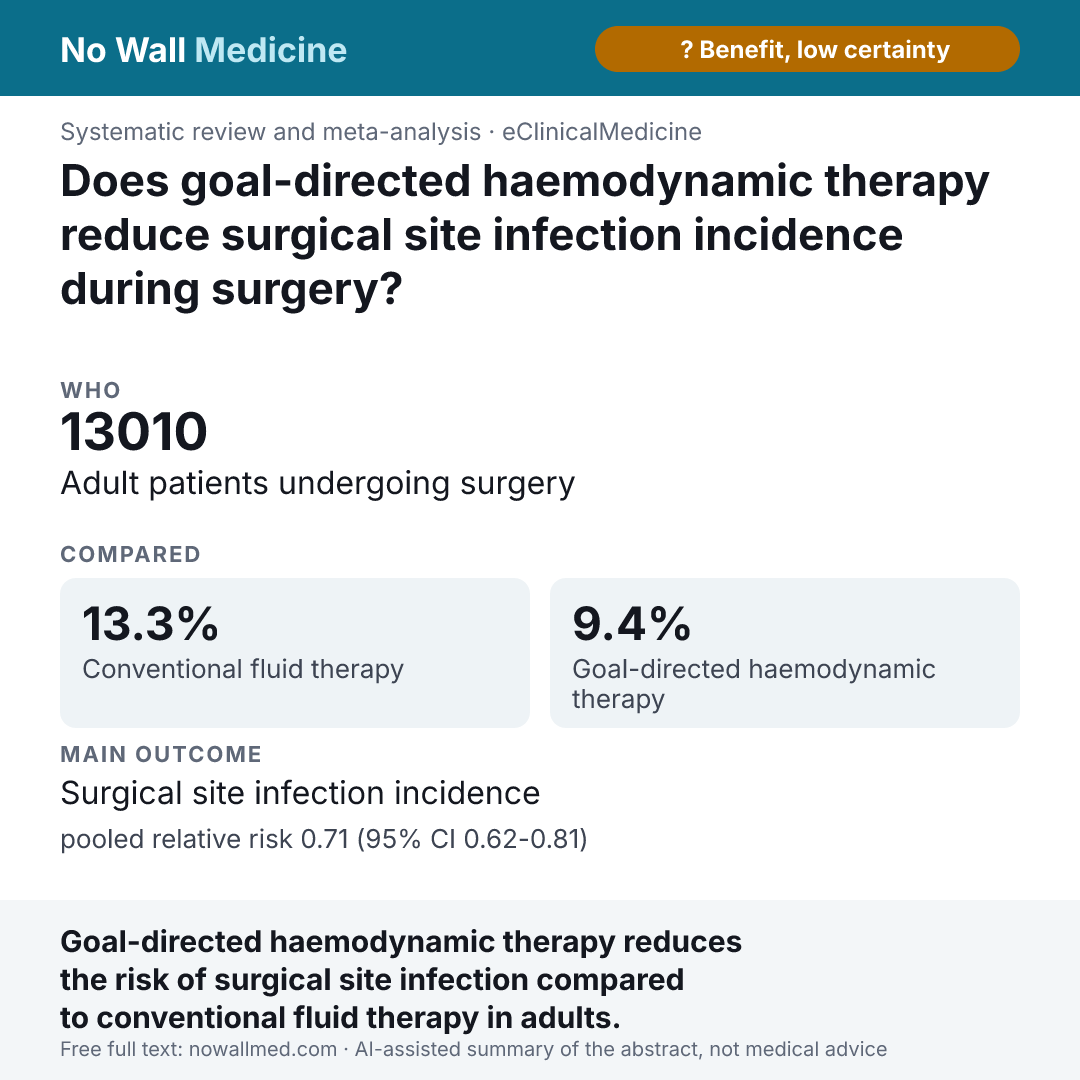
Systematic review and meta-analysis of goal-directed haemodynamic therapy algorithms during surgery for the prevention of surgical site infection
Systematic review and meta-analysisBenefit, low certainty
Does goal-directed haemodynamic therapy reduce surgical site infection incidence during surgery?
Who
13010
Adult patients undergoing surgery
Compared
13.3%Conventional fluid therapy
9.4%Goal-directed haemodynamic therapy
Main outcome
Surgical site infection incidence
Result: pooled relative risk 0.71 (95% CI 0.62-0.81)
Bottom line: Goal-directed haemodynamic therapy reduces the risk of surgical site infection compared to conventional fluid therapy in adults.
Funded by: Dutch Association for Quality Funds Medical Specialists
eClinicalMedicine · 2024-11-22 · Save PNG