Visual abstracts
New randomized trials and meta-analyses from leading journals at a glance: who was studied, what was compared, and what was found. Every paper is free to read in full.
All specialtiesCardiology 4877Oncology 4138Gastroenterology & Hepatology 1942Infectious Disease 3837Neurology 1905Psychiatry & Mental Health 2273Pulmonology 2143Critical Care 1365Endocrinology & Diabetes 2580Pediatrics 2980Surgery 2559Orthopedics & Sports Medicine 931Neurosurgery 537Cardiothoracic & Vascular Surgery 674Plastic & Reconstructive Surgery 591Nephrology 1133Rheumatology 823Hematology 1109Dermatology 621Ophthalmology 543Obstetrics & Gynecology 1686Public & Global Health 1058Radiology & Imaging 648Anesthesiology 986Urology 764ENT (Otolaryngology) 503Emergency Medicine 511Allergy & Immunology 313Geriatrics 981Family Medicine & Primary Care 562Medical Genetics & Genomics 676Pathology & Laboratory Medicine 159Physical Medicine & Rehabilitation 757Palliative Care 444Nutrition 1588Digital Health & AI 2201General Medicine 321
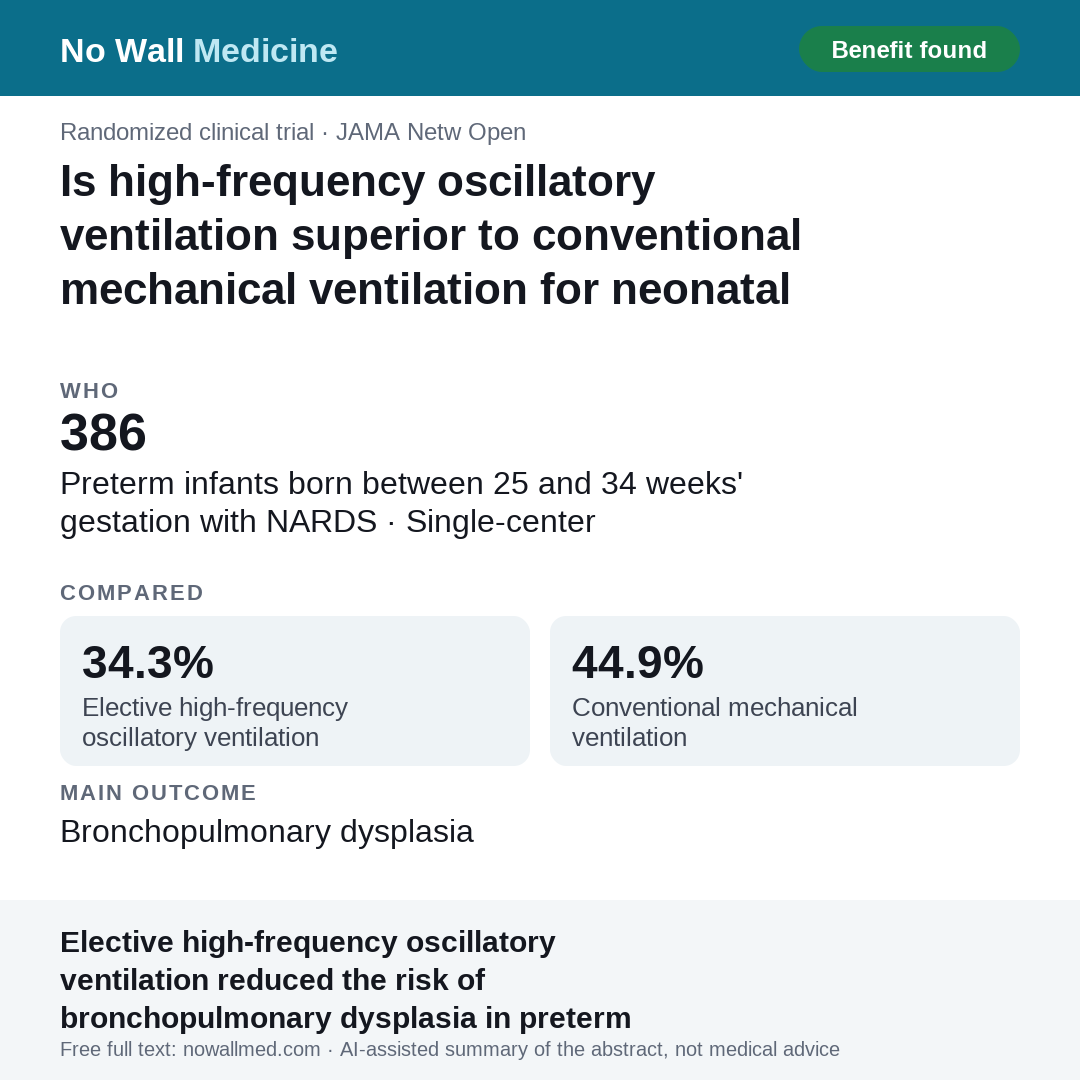
High-Frequency Oscillation vs Mechanical Ventilation for Neonatal Acute Respiratory Distress Syndrome: A Randomized Clinical Trial
Randomized clinical trialBenefit found
Is high-frequency oscillatory ventilation superior to conventional mechanical ventilation for neonatal acute respiratory distress syndrome?
Who
386
Preterm infants born between 25 and 34 weeks' gestation with NARDS · Single-center
Compared
34.3%Elective high-frequency oscillatory ventilation (definition 1)
44.9%Conventional mechanical ventilation (definition 1)
Main outcome
Bronchopulmonary dysplasia
Result: relative risk 0.92 (95% CI 0.86-0.99)
Bottom line: Elective high-frequency oscillatory ventilation reduced the risk of bronchopulmonary dysplasia in preterm infants with neonatal acute respiratory distress syndrome.
Limitation: Sensitivity analysis excluded 44 participants who crossed over between treatment groups
JAMA Netw Open · 2026-03-02Download image
Virtual Reality-Based Vision Therapy for Intermittent Exotropia: A Randomized Clinical Trial
Randomized clinical trialBenefit found
Is virtual reality-based vision therapy effective for intermittent exotropia in children?
Who
177
Children aged 6 to 18 years with untreated intermittent exotropia · 3 tertiary hospitals in China
Compared
-0.33Virtual reality-based vision therapy (-1.00 to 0.00)
0.00Control group (-0.33 to 0.33)
Main outcome
change in distance exotropia control score from baseline to week 12
Result: -0.33; 95% CI, -0.57 to -0.10
Bottom line: Virtual reality-based vision therapy provided modest improvement in distance exotropia control, especially with high training adherence.
Limitation: follow-up phase is ongoing
JAMA Netw Open · 2026-03-02Download image

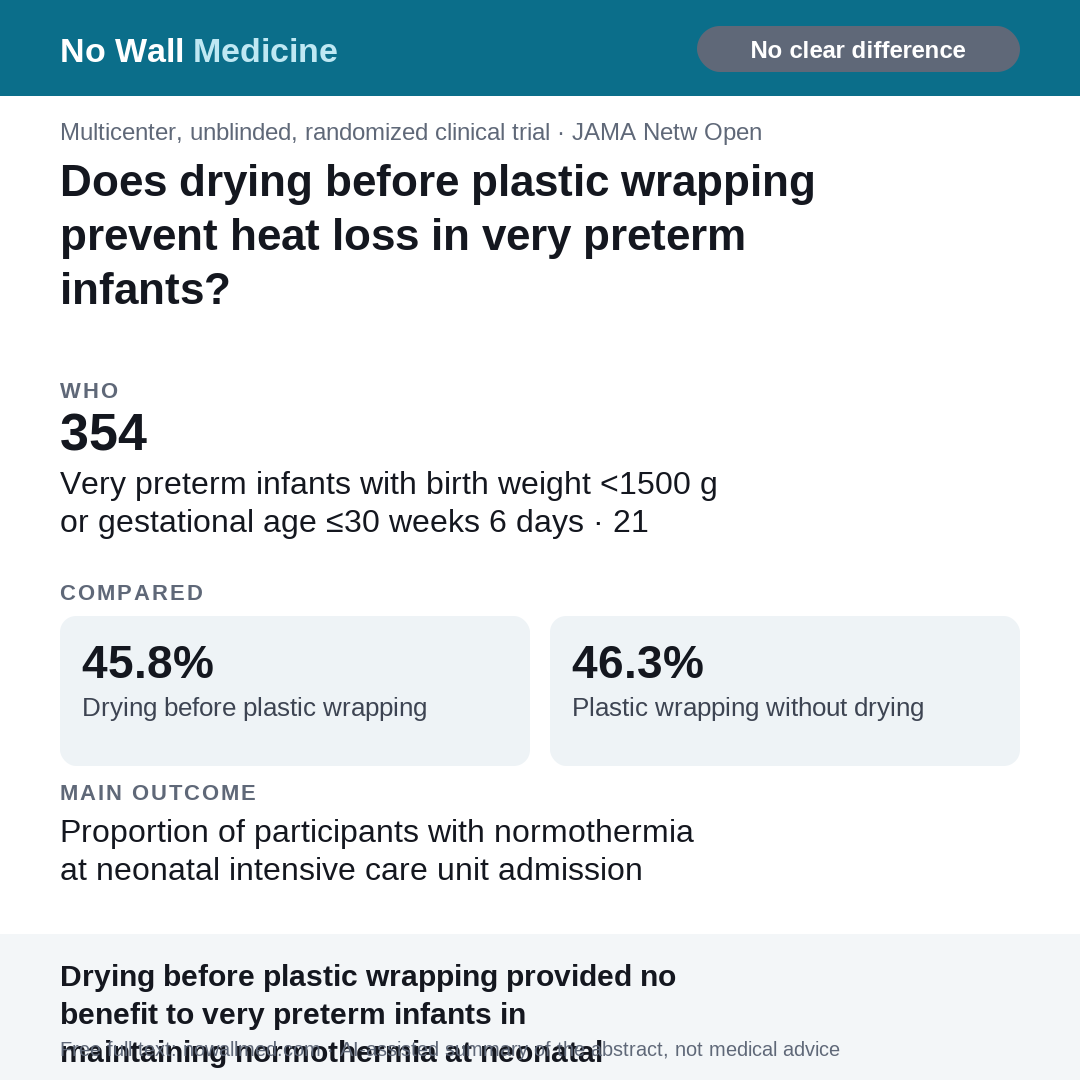
Drying Very Preterm Infants Before Plastic Wrapping at Birth: A Randomized Clinical Trial
Multicenter, unblinded, randomized clinical trialNo clear difference
Does drying before plastic wrapping prevent heat loss in very preterm infants?
Who
354
Very preterm infants with birth weight <1500 g or gestational age ≤30 weeks 6 days · 21 tertiary care hospitals in Italy
Compared
45.8%Drying before plastic wrapping (81/177)
46.3%Plastic wrapping without drying (82/177)
Main outcome
Proportion of participants with normothermia at neonatal intensive care unit admission
Result: risk ratio 0.99 (95% CI 0.79-1.24)
Bottom line: Drying before plastic wrapping provided no benefit to very preterm infants in maintaining normothermia at neonatal intensive care unit admission.
JAMA Netw Open · 2026-03-02Download image
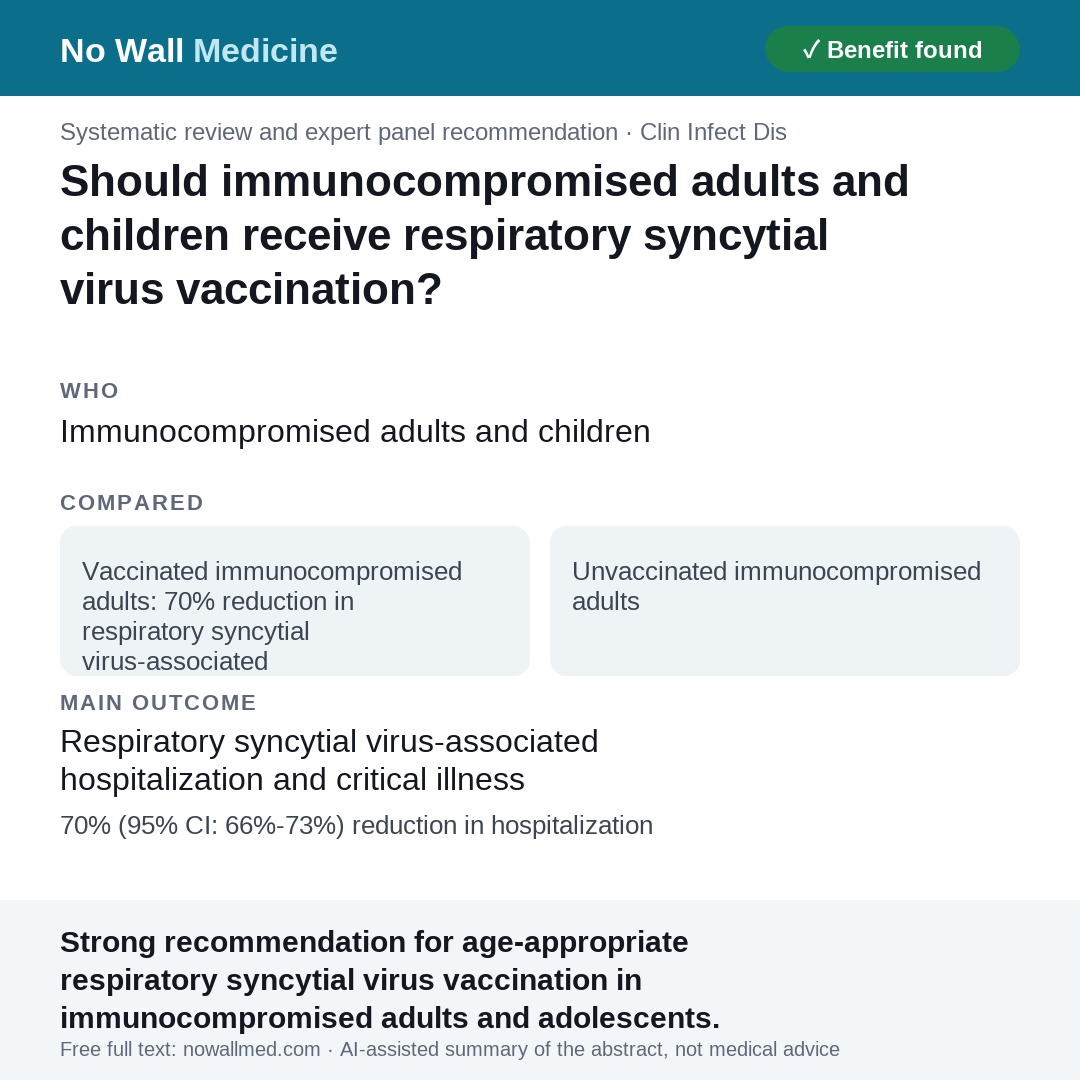
IDSA 2025 Guidelines on the Use of Vaccines for the Prevention of Seasonal RSV Infections in Immunocompromised Patients
Systematic review and expert panel recommendationBenefit found
Should immunocompromised adults and children receive respiratory syncytial virus vaccination?
Who
Immunocompromised adults and children
Compared
Vaccinated immunocompromised adults: 70% reduction in respiratory syncytial virus-associated hospitalization
Unvaccinated immunocompromised adults
Main outcome
Respiratory syncytial virus-associated hospitalization and critical illness
Result: 70% (95% CI: 66%-73%) reduction in hospitalization
Bottom line: Strong recommendation for age-appropriate respiratory syncytial virus vaccination in immunocompromised adults and adolescents.
Limitation: Direct evidence to guide vaccination in this population remains limited.
Clin Infect Dis · 2026-03-02Download image
Burden of Shigella and enterotoxigenic Escherichia coli infections among children under 5 years in Ethiopia, Kenya and Malawi: a systematic review and meta-analysis
Systematic review and meta-analysisUnclear result
What is the prevalence of Shigella and enterotoxigenic Escherichia coli in children?
Who
Children under 5 years in Ethiopia, Kenya and Malawi · Ethiopia, Kenya and Malawi
Compared
8%Shigella prevalence (95% CI 6% to 9%)
11%Enterotoxigenic Escherichia coli prevalence (95% CI 6% to 15%)
Main outcome
Prevalence of Shigella and enterotoxigenic Escherichia coli
Bottom line: Shigella and enterotoxigenic Escherichia coli show significant prevalence among children in Ethiopia, Kenya and Malawi.
Limitation: Differences in prevalence may be explained by the application of sensitive, molecular detection methods in Malawi.
BMJ Glob Health · 2026-03-02Download image

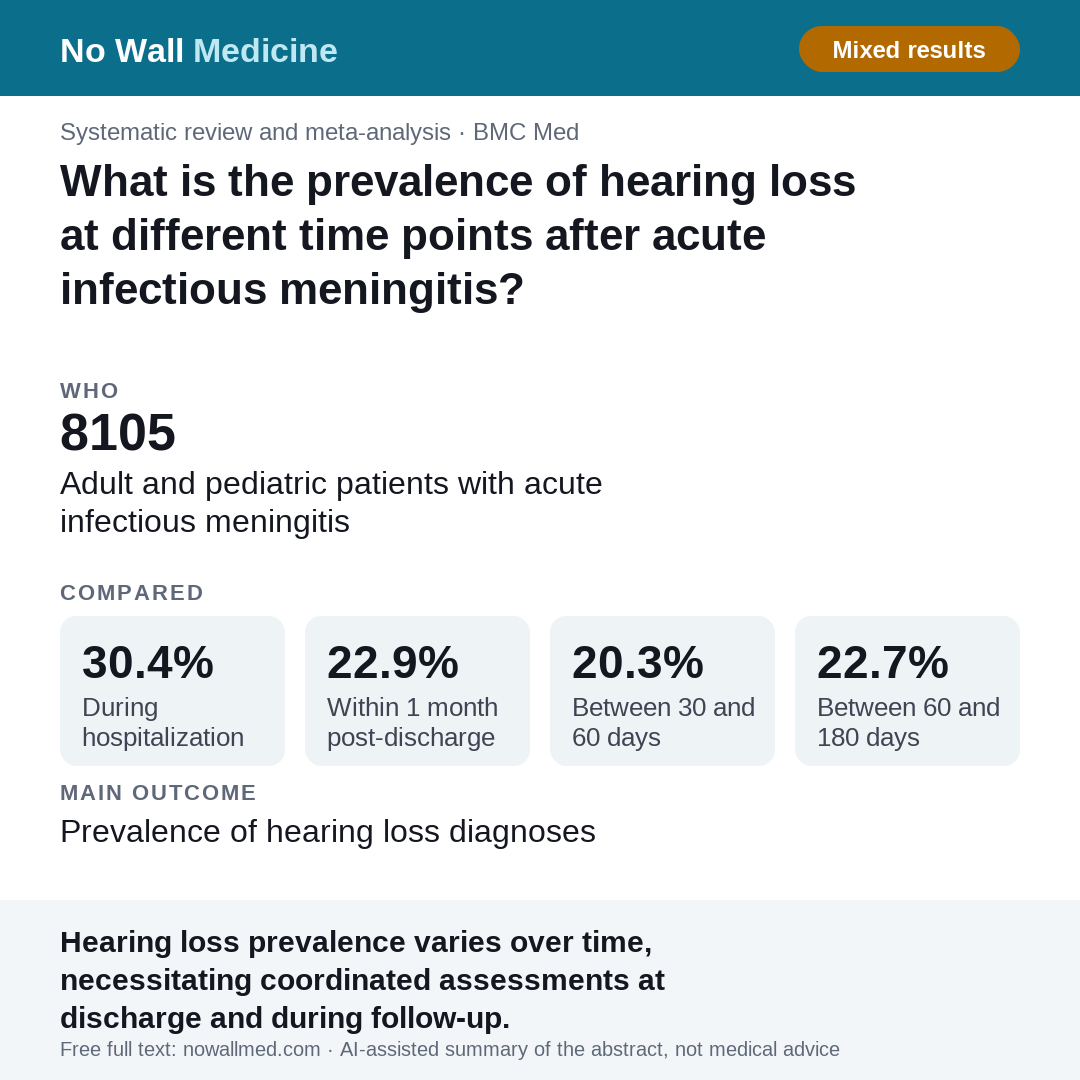
Detection of hearing loss by formal audiological testing after acute infectious meningitis: a global systematic review and meta-analysis
Systematic review and meta-analysisMixed results
What is the prevalence of hearing loss at different time points after acute infectious meningitis?
Who
8105
Adult and pediatric patients with acute infectious meningitis
Compared
30.4%During hospitalization or at discharge (95% CI 22.9-38%)
22.9%Within 1 month post-discharge (95% CI 12.6-33.1%)
20.3%Between 30 and 60 days post-discharge (95% CI 8.8-31.9%)
22.7%Between 60 and 180 days post-discharge (95% CI 12.1-33.4%)
Main outcome
Prevalence of hearing loss diagnoses
Bottom line: Hearing loss prevalence varies over time, necessitating coordinated assessments at discharge and during follow-up.
BMC Med · 2026-02-28Download image
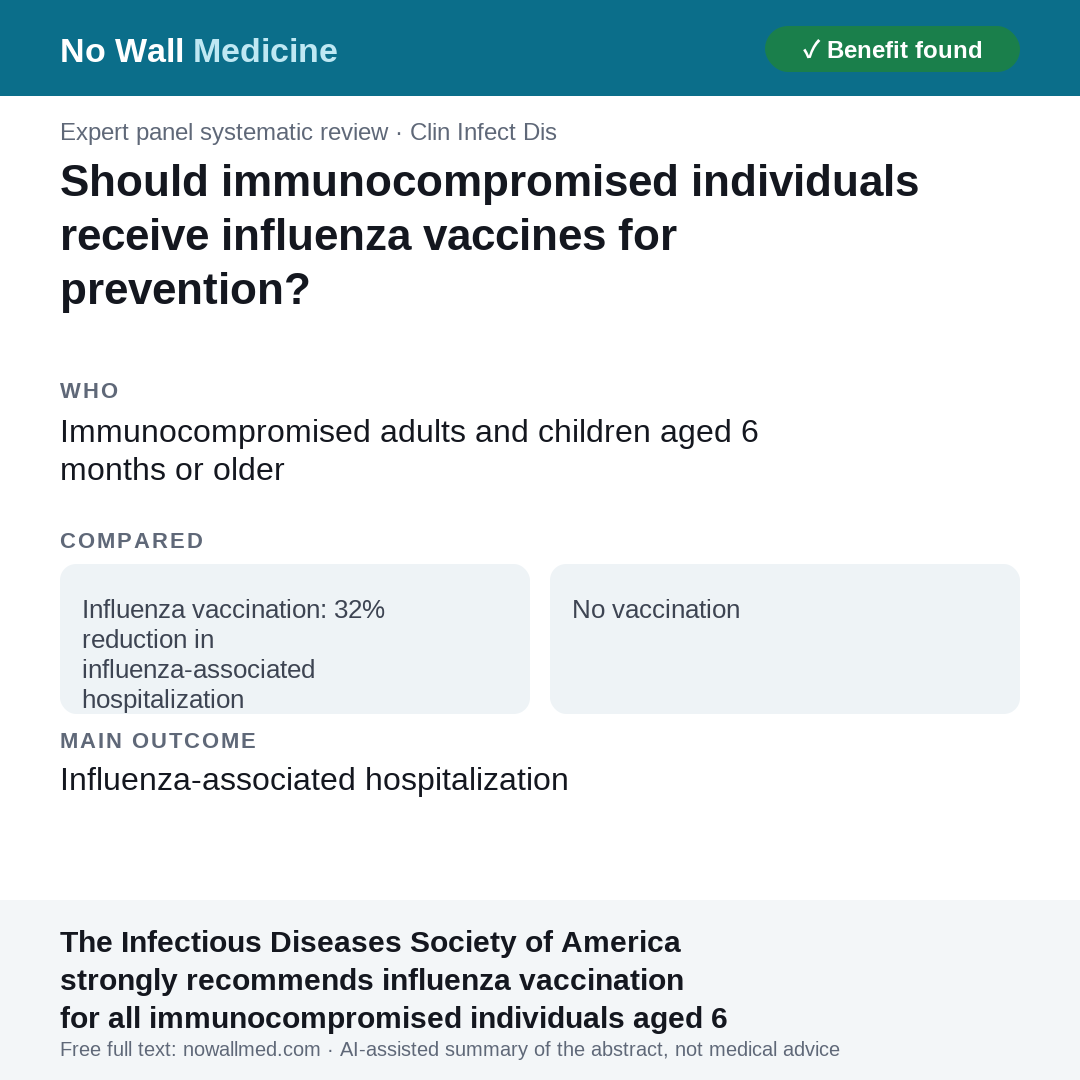
IDSA 2025 Guideline on the Use of Vaccines for the Prevention of Seasonal Influenza Infections in Immunocompromised Patients
Expert panel systematic reviewBenefit found
Should immunocompromised individuals receive influenza vaccines for prevention?
Who
Immunocompromised adults and children aged 6 months or older
Compared
Influenza vaccination: 32% reduction in influenza-associated hospitalization
No vaccination
Main outcome
Influenza-associated hospitalization
Bottom line: The Infectious Diseases Society of America strongly recommends influenza vaccination for all immunocompromised individuals aged 6 months or older.
Limitation: Direct evidence in immunocompromised populations was limited.
Clin Infect Dis · 2026-02-28Download image
Artificial intelligence for predicting paediatric acute kidney injury: a systematic review and meta-analysis
Systematic review and meta-analysisBenefit found
How well do artificial intelligence models predict acute kidney injury in children?
Who
33949
Paediatric patients
Compared
0.873Gradient boosting
Neural network
Logistic regression
Main outcome
Area under the curve for predicting acute kidney injury
Result: area under the curve 0.873 (95% confidence interval 0.836-0.909)
Bottom line: Artificial intelligence models show reasonable performance for predicting acute kidney injury in paediatric populations.
Limitation: Small sample size, heterogeneity, lack of validation cohorts, and inconsistent diagnostic criteria.
Clin Kidney J · 2026-02-28Download image

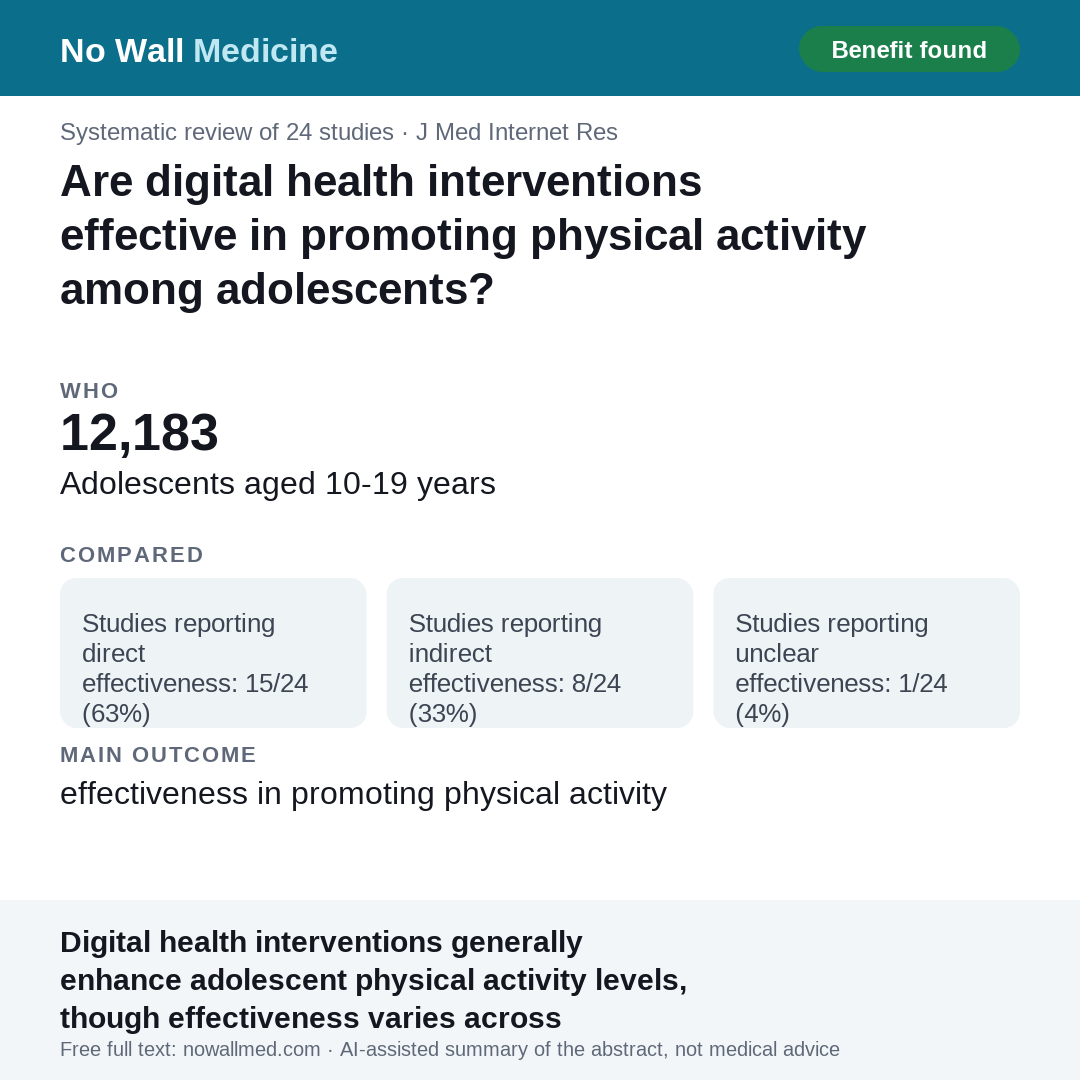
Digital Health Interventions to Promote Physical Activity Among Adolescents: Systematic Review
Systematic review of 24 studiesBenefit found
Are digital health interventions effective in promoting physical activity among adolescents?
Who
12,183
Adolescents aged 10-19 years
Compared
Studies reporting direct effectiveness: 15/24 (63%)
Studies reporting indirect effectiveness: 8/24 (33%)
Studies reporting unclear effectiveness: 1/24 (4%)
Main outcome
effectiveness in promoting physical activity
Bottom line: Digital health interventions generally enhance adolescent physical activity levels, though effectiveness varies across intervention types and study designs.
Limitation: methodological quality and insufficient follow-up
J Med Internet Res · 2026-02-27Download image
Effectiveness of a digital clinical decision support algorithm for guiding antibiotic prescribing in pediatric outpatient care in Rwanda: A pragmatic cluster non-randomized controlled trial
Pragmatic, open-label cluster non-randomized controlled trialBenefit found
Does a digital clinical decision support algorithm reduce antibiotic prescribing in pediatric outpatient care?
Who
47822
Acutely ill children aged 14 years or below · 32 Rwandan health centers
Compared
24.5%ePOCT+ digital algorithm
70.5%Standard care
Main outcome
Antibiotic prescriptions
Result: absolute difference -46.0, 95% CI [-52.5, -39.5]
Bottom line: The ePOCT+ algorithm substantially reduced antibiotic prescribing in Rwandan pediatric primary care without compromising clinical recovery.
Limitation: Non-randomized design and self-reported outcomes.
PLOS Med · 2026-02-26Download image

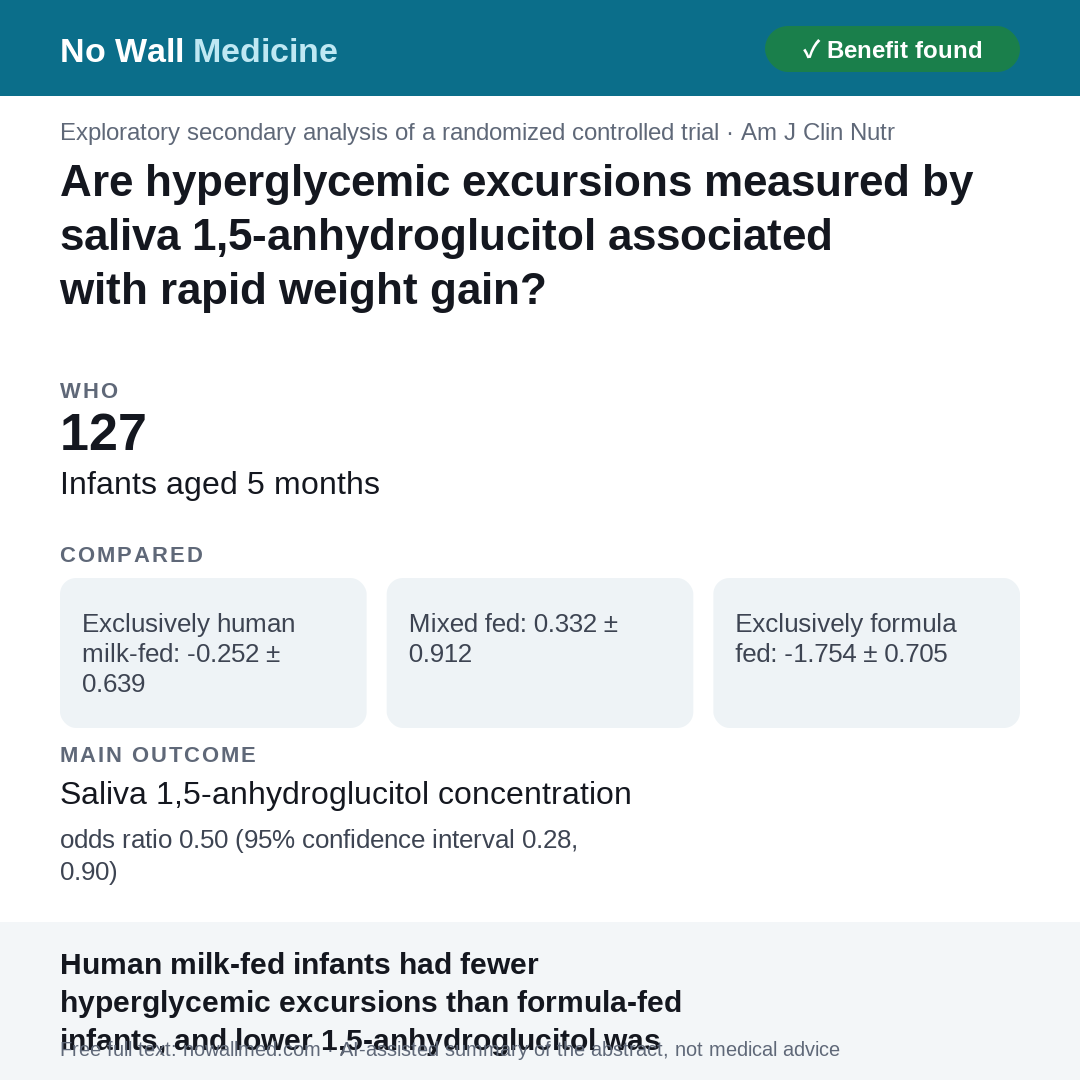
Infant hyperglycemic excursions by saliva 1,5-anhydroglucitol varied by weight status, rapid weight gain, and mode of feeding: an exploratory secondary analysis
Exploratory secondary analysis of a randomized controlled trialBenefit found
Are hyperglycemic excursions measured by saliva 1,5-anhydroglucitol associated with rapid weight gain?
Who
127
Infants aged 5 months
Compared
Exclusively human milk-fed: -0.252 ± 0.639
Mixed fed: 0.332 ± 0.912
Exclusively formula fed: -1.754 ± 0.705
Main outcome
Saliva 1,5-anhydroglucitol concentration
Result: odds ratio 0.50 (95% confidence interval 0.28, 0.90)
Bottom line: Human milk-fed infants had fewer hyperglycemic excursions than formula-fed infants, and lower 1,5-anhydroglucitol was associated with rapid weight gain.
Am J Clin Nutr · 2026-02-26Download image
Immunogenicity of Two Versus Three Doses of Hepatitis B Vaccine When Administered to Children Aged 2-18 Months: A Randomized Clinical Trial
Randomized clinical trialBenefit found
Is a 2-dose hepatitis B vaccination schedule as immunogenic as a 3-dose schedule in infants?
Who
Children aged 2 to 18 months
Compared
91.7%heterologous 2-dose schedule
90.9%homologous 2-dose schedule
94.2%3-dose schedule
Main outcome
seroprotection rates and anamnestic response after challenge dose
Bottom line: A heterologous 2-dose hepatitis B vaccination schedule provides similar anamnestic response and fewer local reactions than other schedules.
J Infect Dis · 2026-02-25Download image

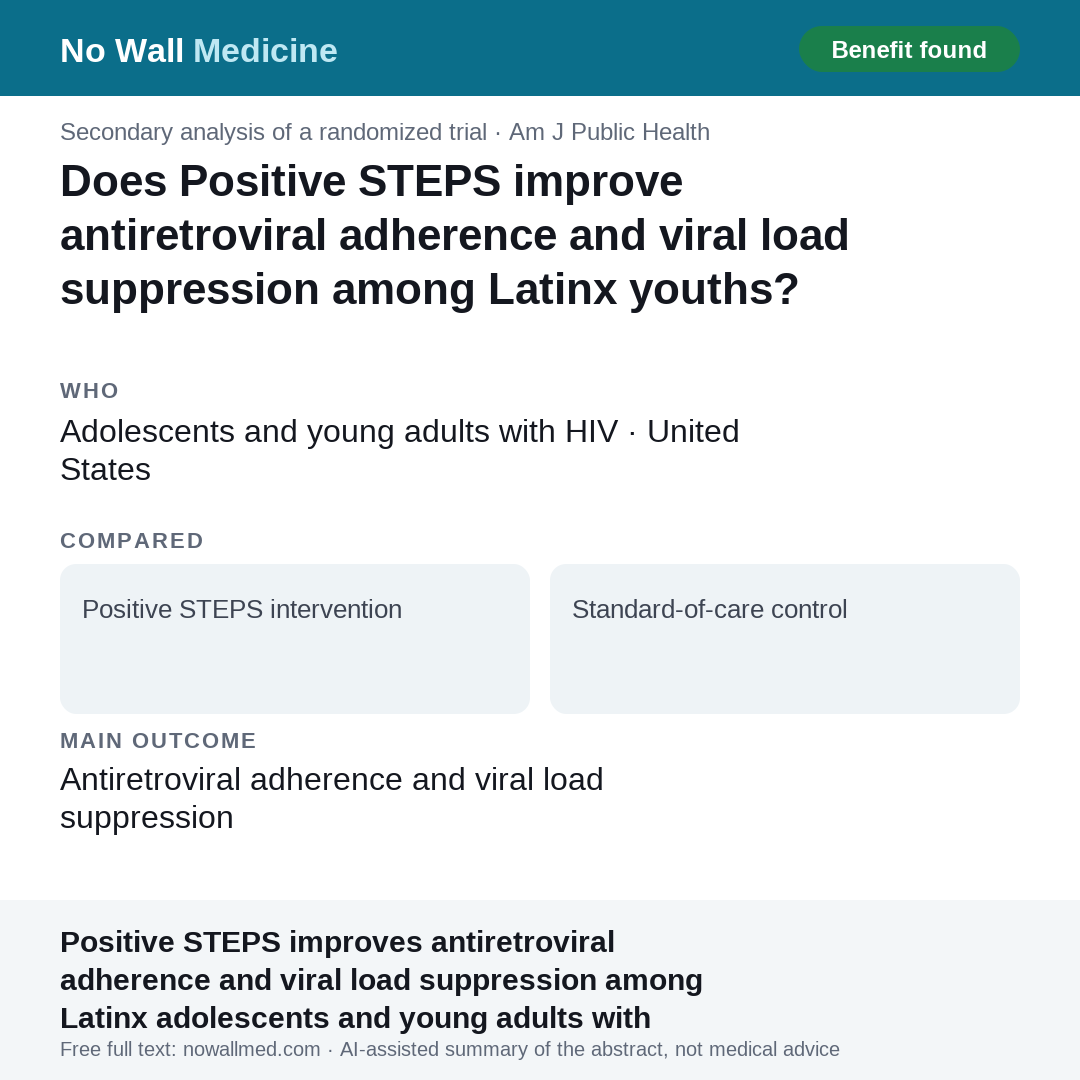
Moderated Effects of Latinx Ethnicity for a Stepped-Care, Technology and Counseling-Based Intervention (Positive STEPS) on Antiretroviral Adherence and Viral Load Suppression Among Youths With HIV, United States, 2018‒2023
Secondary analysis of a randomized trialBenefit found
Does Positive STEPS improve antiretroviral adherence and viral load suppression among Latinx youths?
Who
Adolescents and young adults with HIV · United States
Compared
Positive STEPS intervention
Standard-of-care control
Main outcome
Antiretroviral adherence and viral load suppression
Bottom line: Positive STEPS improves antiretroviral adherence and viral load suppression among Latinx adolescents and young adults with HIV.
Am J Public Health · 2026-02-25Download image
Diagnosis and management of paediatric magnet ingestion: a systematic review of clinical practice guidelines
Systematic review of clinical practice guidelinesMixed results
What are the current clinical practice guidelines for diagnosing and managing paediatric magnet ingestion?
Who
Children who have ingested magnets
Compared
Asymptomatic single magnets: conservative management is recommended
Prepyloric asymptomatic multiple magnets: endoscopic removal is recommended
Symptomatic multiple magnets: surgery is recommended
Main outcome
Diagnosis and management recommendations for magnet ingestion
Bottom line: Guidelines show consensus on some management strategies but vary in others and rely on low-quality evidence.
Limitation: Existing guidelines are based on low-quality evidence or expert consensus.
Emerg Med J · 2026-02-24Download image

Serotype-specific pneumococcal invasiveness: a global meta-analysis of paired estimates of disease incidence and carriage prevalence
Meta-analysis of 80 publicationsMixed results
What are the serotype-specific case-carrier ratios for pneumococcal disease across different settings?
Who
Children and individuals across various income settings and HIV statuses · 18 countries
Compared
Pre-PCV non-vaccine serotypes in LICs and LMICs: 177 [95% CI 124-251]
Pre-PCV non-vaccine serotypes in UMICs and HICs: 103 [60-176]
Post-PCV non-PCV13 serotypes in UMICs and HICs: 26 [22-30]
Post-PCV non-PCV13 serotypes in LICs and LMICs: 173 [139-216]
Main outcome
Case-carrier ratios (IPD incidence divided by carriage prevalence)
Bottom line: Pneumococcal invasiveness varies significantly by serotype, age, income group, HIV status, and vaccine introduction.
Limitation: Substantial variation in pneumococcal invasiveness remains unexplained.
Funded by: Wellcome Trust
Lancet Microbe · 2026-02-23Download image

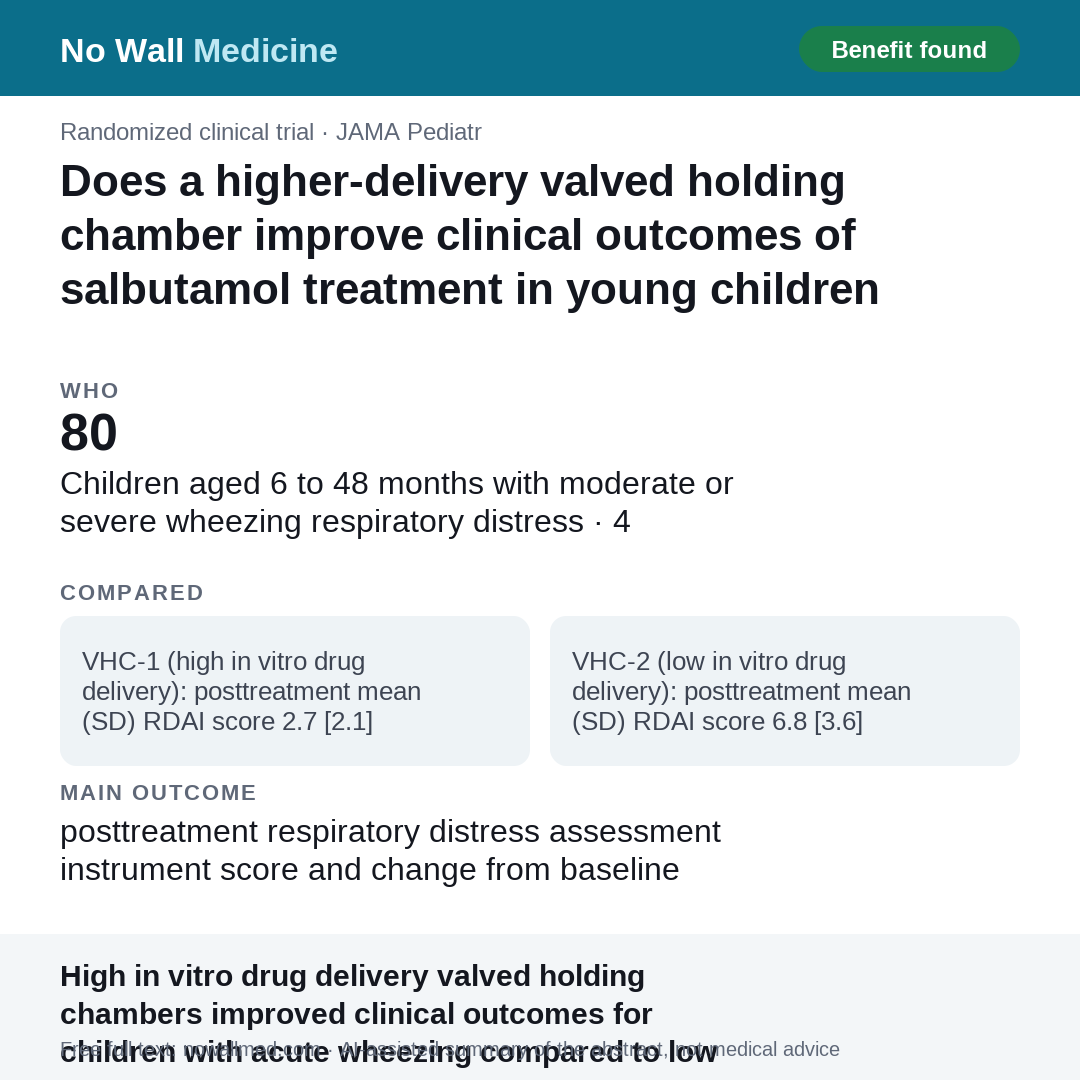
Valved Holding Chambers in Young Children With Acute Wheezing: A Randomized Clinical Trial
Randomized clinical trialBenefit found
Does a higher-delivery valved holding chamber improve clinical outcomes of salbutamol treatment in young children with acute wheezing?
Who
80
Children aged 6 to 48 months with moderate or severe wheezing respiratory distress · 4 pediatric emergency departments in Finland
Compared
VHC-1 (high in vitro drug delivery): posttreatment mean (SD) RDAI score 2.7 [2.1]
VHC-2 (low in vitro drug delivery): posttreatment mean (SD) RDAI score 6.8 [3.6]
Main outcome
posttreatment respiratory distress assessment instrument score and change from baseline
Result: mean difference -4.1 (95% CI, -5.4 to -2.7)
Bottom line: High in vitro drug delivery valved holding chambers improved clinical outcomes for children with acute wheezing compared to low delivery chambers.
JAMA Pediatr · 2026-02-23Download image
A One-Strength Dose Escalation Regimen for Birch Pollen Subcutaneous Immunotherapy Is Safe and Tolerable in Children, Adolescents, and Adults
Randomized trialBenefit found
Is a one-strength dose escalation regimen for birch pollen immunotherapy safe and tolerable?
Who
201
Patients aged 5 to 65 years
Compared
One-Strength group: 48.5% experienced at least one adverse drug reaction
Standard group: 32.0% experienced at least one adverse drug reaction
Main outcome
Safety and tolerability of dose escalation regimens
Bottom line: A one-strength dose escalation regimen for birch pollen immunotherapy is safe and well-tolerated in patients aged 5 to 65 years.
Allergy · 2026-02-23Download image

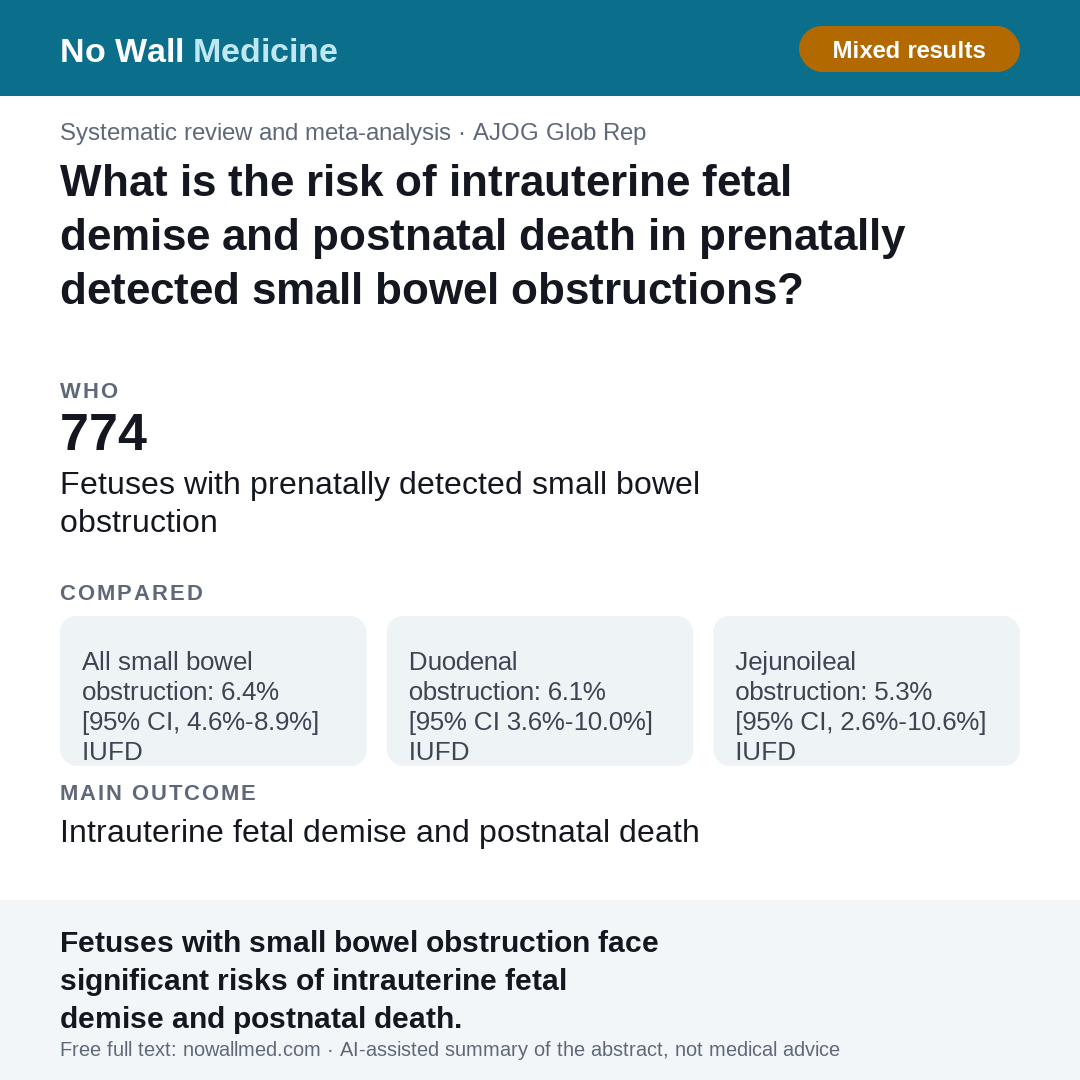
Mortality in prenatally detected congenital small bowel obstructions: systematic review and meta-analysis
Systematic review and meta-analysisMixed results
What is the risk of intrauterine fetal demise and postnatal death in prenatally detected small bowel obstructions?
Who
774
Fetuses with prenatally detected small bowel obstruction
Compared
All small bowel obstruction: 6.4% [95% CI, 4.6%-8.9%] IUFD
Duodenal obstruction: 6.1% [95% CI 3.6%-10.0%] IUFD
Jejunoileal obstruction: 5.3% [95% CI, 2.6%-10.6%] IUFD
Main outcome
Intrauterine fetal demise and postnatal death
Result: 6.4% [95% CI, 4.6%-8.9%] IUFD
Bottom line: Fetuses with small bowel obstruction face significant risks of intrauterine fetal demise and postnatal death.
AJOG Glob Rep · 2026-02-23Download image
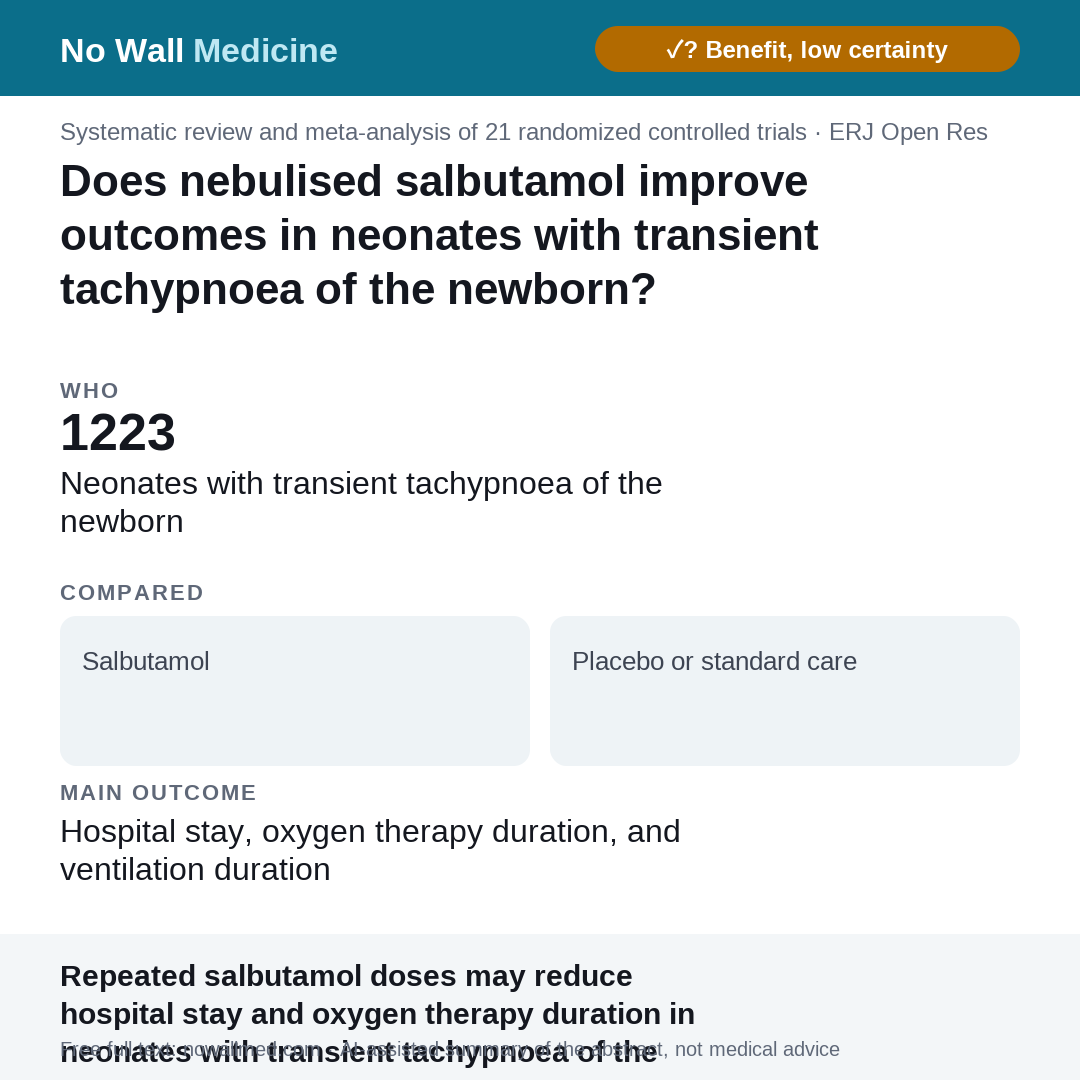
Effects of salbutamol in transient tachypnoea of the newborn: a systematic review and meta-analysis
Systematic review and meta-analysis of 21 randomized controlled trialsBenefit found
Does nebulised salbutamol improve outcomes in neonates with transient tachypnoea of the newborn?
Who
1223
Neonates with transient tachypnoea of the newborn
Compared
Salbutamol
Placebo or standard care
Main outcome
Hospital stay, oxygen therapy duration, and ventilation duration
Result: mean difference -2.3 days (95% CI -3.2 to -1.4 days)
Bottom line: Repeated salbutamol doses may reduce hospital stay and oxygen therapy duration in neonates with transient tachypnoea of the newborn.
Limitation: Low certainty of evidence for most outcomes and need for high-quality trials.
ERJ Open Res · 2026-02-23Download image
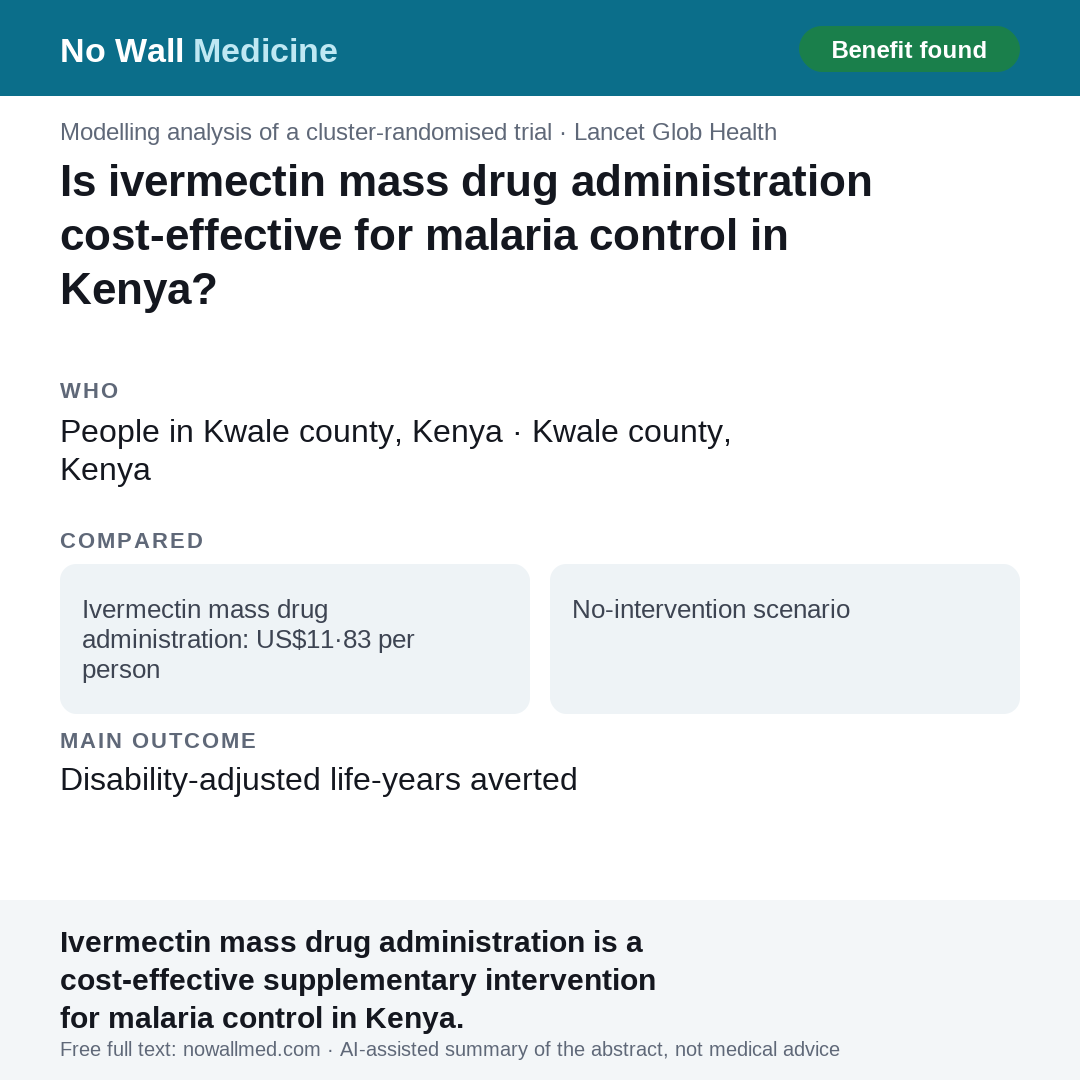
Cost and cost-effectiveness of ivermectin mass drug administration for malaria control in Kwale county, Kenya: a modelling analysis of a cluster-randomised trial
Modelling analysis of a cluster-randomised trialBenefit found
Is ivermectin mass drug administration cost-effective for malaria control in Kenya?
Who
People in Kwale county, Kenya · Kwale county, Kenya
Compared
Ivermectin mass drug administration: US$11·83 per person
No-intervention scenario
Main outcome
Disability-adjusted life-years averted
Result: $905·23 per DALY averted
Bottom line: Ivermectin mass drug administration is a cost-effective supplementary intervention for malaria control in Kenya.
Funded by: Unitaid through the BOHEMIA project
Lancet Glob Health · 2026-02-20Download image