Visual abstracts
New randomized trials and meta-analyses from leading journals at a glance: who was studied, what was compared, and what was found. Every paper is free to read in full.
All specialtiesCardiology 4763Oncology 4043Gastroenterology & Hepatology 1903Infectious Disease 3756Neurology 1872Psychiatry & Mental Health 2216Pulmonology 2044Critical Care 1319Endocrinology & Diabetes 2544Pediatrics 2889Surgery 2480Orthopedics & Sports Medicine 917Neurosurgery 525Cardiothoracic & Vascular Surgery 656Plastic & Reconstructive Surgery 574Nephrology 1107Rheumatology 810Hematology 1090Dermatology 611Ophthalmology 532Obstetrics & Gynecology 1645Public & Global Health 1037Radiology & Imaging 619Anesthesiology 958Urology 745ENT (Otolaryngology) 494Emergency Medicine 481Allergy & Immunology 309Geriatrics 972Family Medicine & Primary Care 534Medical Genetics & Genomics 659Pathology & Laboratory Medicine 156Physical Medicine & Rehabilitation 734Palliative Care 421Nutrition 1560Digital Health & AI 2137General Medicine 318
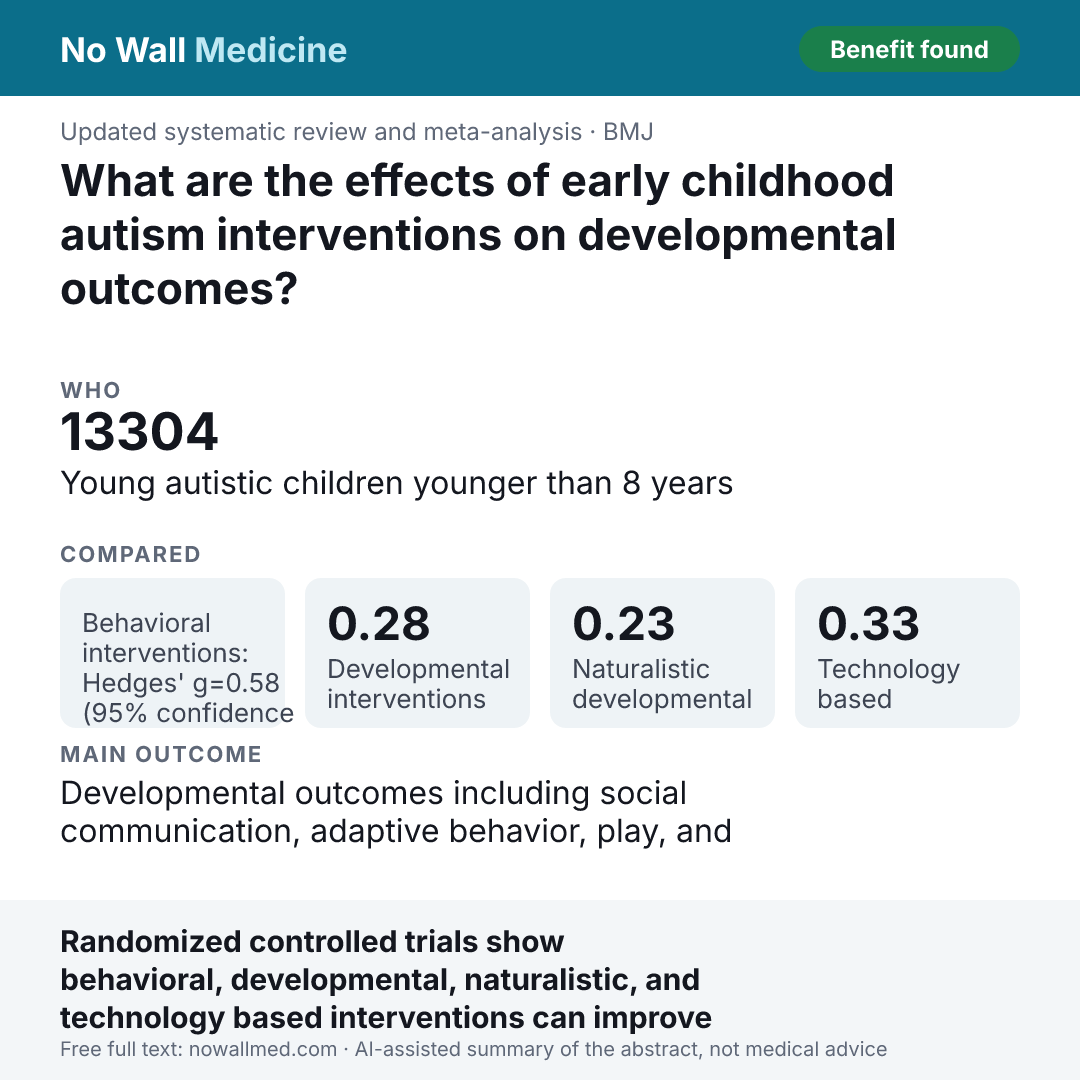
Autism intervention meta-analysis of early childhood studies (Project AIM): updated systematic review and secondary analysis
Updated systematic review and meta-analysisBenefit found
What are the effects of early childhood autism interventions on developmental outcomes?
Who
13304
Young autistic children younger than 8 years
Compared
Behavioral interventions: Hedges' g=0.58 (95% confidence interval 0.11 to 1.06)
0.28Developmental interventions (95% confidence interval 0.12 to 0.44)
0.23Naturalistic developmental behavioral interventions (95% confidence interval 0.02 to 0.43)
0.33Technology based interventions (95% confidence interval 0.02 to 0.64)
Main outcome
Developmental outcomes including social communication, adaptive behavior, play, and language
Bottom line: Randomized controlled trials show behavioral, developmental, naturalistic, and technology based interventions can improve various developmental outcomes in young autistic children.
Limitation: Adverse events were poorly monitored, but possibly common.
BMJ · 2023-11-14 · Save PNG
Epidemiology of Rotavirus in Humans, Animals, and the Environment in Africa: A Systematic Review and Meta-analysis
Systematic review and meta-analysisMixed results
What is the epidemiology of rotavirus in humans, animals, and the environment in Africa?
Who
Humans, animals, and environmental water sources in Africa · Africa
Compared
29.8%Humans with gastroenteritis (95% confidence interval 28.1%-31.5%)
15.4%Humans with nongastroenteritis illnesses
6.1%Apparently healthy individuals
9.3%Animals (95% CI 5.7%-13.7%)
Main outcome
Rotavirus prevalence and case fatality rate
Bottom line: Rotavirus shows significant prevalence in humans, animals, and water, necessitating a One Health approach in Africa.
J Infect Dis · 2023-11-14 · Save PNG

Electroencephalogram-based machine learning models to predict neurologic outcome after cardiac arrest: A systematic review
Systematic review of 17 studiesUnclear result
Which EEG-based machine learning models best predict neurologic outcome after cardiac arrest?
Who
Patients with cardiac arrest undergoing EEG-based machine learning prediction
Compared
Conventional ML (Random Forest): AUC 0.8 to 0.97
Deep Neural Network (CNN): AUC 0.7 to 0.92
Main outcome
Neurologic outcomes after cardiac arrest
Bottom line: Random Forest and CNN were the most common models with the highest AUCs for predicting neurologic outcomes.
Resuscitation · 2023-11-14 · Save PNG

Atopic Dermatitis and Cardiovascular Risk in Pediatric Patients: A Systematic Review and Meta-Analysis
Systematic review and meta-analysisUnclear result
Is childhood atopic dermatitis associated with cardiovascular risk factors and outcomes?
Who
577,148
Pediatric patients with atopic dermatitis
Compared
Atopic dermatitis
No atopic dermatitis
Main outcome
Cardiovascular risk factors and outcomes
Result: ischemic heart disease OR 1.68 (95% CI 1.29-2.19)
Bottom line: Data do not support a clinically meaningful increase in cardiovascular risk for children with atopic dermatitis.
Limitation: Studies lacked detail on disease severity and confounders like body mass index; certainty of evidence was very low.
J Invest Dermatol · 2023-11-14 · Save PNG

The evidence-based role of catecholaminergic PET tracers in Neuroblastoma. A systematic review and a head-to-head comparison with mIBG scintigraphy
Systematic reviewBenefit found
How do catecholaminergic PET tracers compare to metaiodobenzylguanidine scintigraphy in neuroblastoma?
Who
181
Children with neuroblastoma
Compared
PET catecholaminergic radiopharmaceuticals: detected significantly more lesions than scintigraphy in seven out of ten studies
metaiodobenzylguanidine scintigraphy
Main outcome
diagnostic performance via patient-based and lesion-based analysis
Bottom line: Catecholaminergic PET/CT shows superior diagnostic performance compared to metaiodobenzylguanidine scintigraphy in neuroblastoma.
Limitation: It is unknown if such superiority can influence clinical decision-making.
Eur J Nucl Med Mol Imaging · 2023-11-14 · Save PNG

Monogenic etiologies of persistent human papillomavirus infections: A comprehensive systematic review
Systematic reviewUnclear result
Monogenic etiologies of human papillomavirus infections
Who
842
Patients with persistent human papillomavirus infection
Compared
Patients with strong evidence genes
Patients with moderate evidence genes
Patients with weak evidence genes
Main outcome
Genetic etiologies identified
Bottom line: 83 monogenic etiologies of PHPVI identified
Genet Med · 2023-11-14 · Save PNG

Systematic Review of the Link Between Oxford MEST-C Classification and Complement Activation in IgA Nephropathy
Systematic reviewBenefit found
What is the link between Oxford MEST-C classification and complement activation in IgA nephropathy?
Who
10,082
Patients with IgA nephropathy
Compared
C1-2 class: C4d, C3, C5b9, MBL, C4, and factor H-related protein 5
All MEST-C classes: C3, FHR5, C4, and C4d
Main outcome
Association between complement proteins and MEST-C classification
Bottom line: Complement activation involving alternative and lectin pathways is associated with various MEST-C classification classes.
Kidney Int Rep · 2023-11-14 · Save PNG

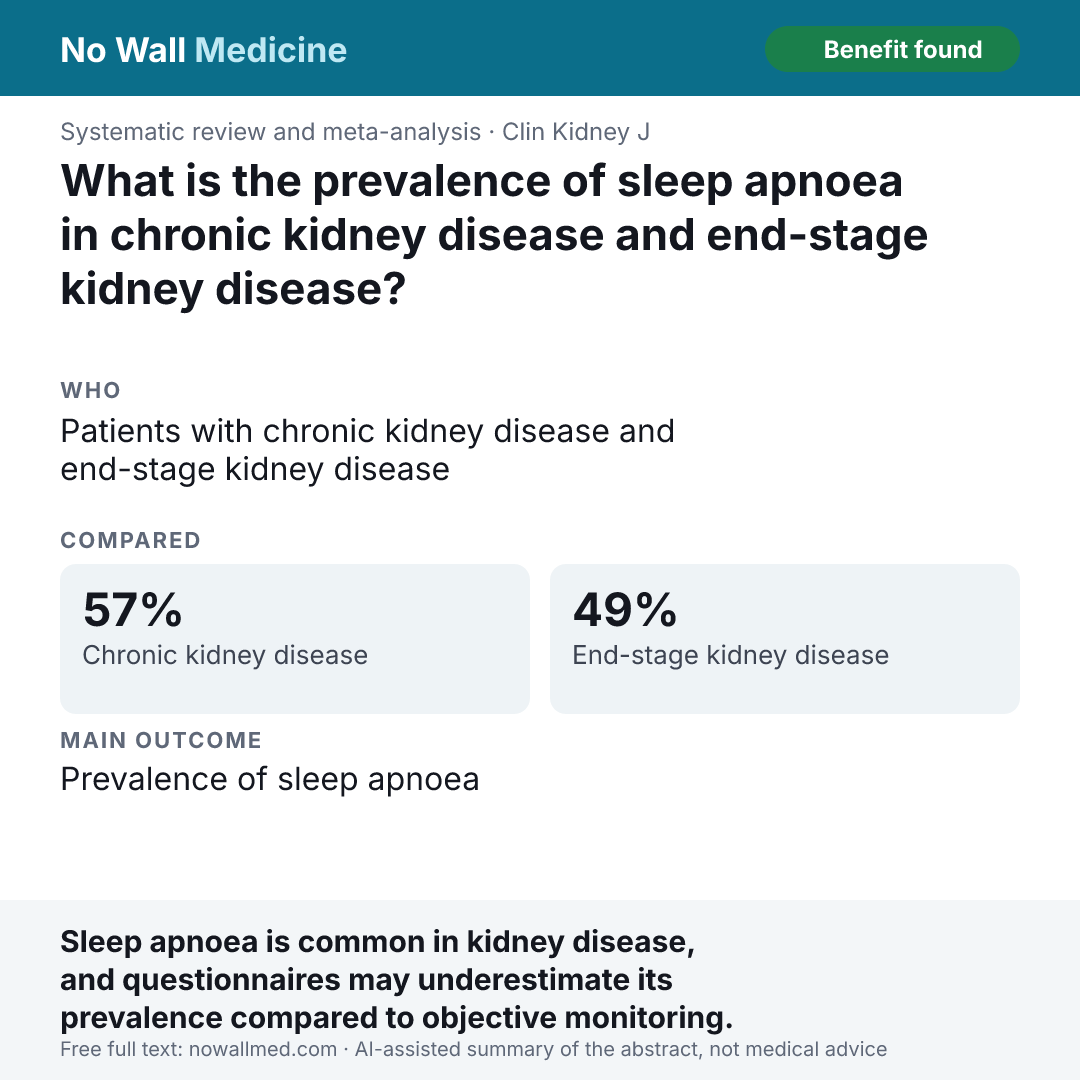
Sleep apnoea syndrome prevalence in chronic kidney disease and end-stage kidney disease patients: a systematic review and meta-analysis
Systematic review and meta-analysisBenefit found
What is the prevalence of sleep apnoea in chronic kidney disease and end-stage kidney disease?
Who
Patients with chronic kidney disease and end-stage kidney disease
Compared
57%Chronic kidney disease (95% CI 42%-71%)
49%End-stage kidney disease (95% CI 47%-52%)
Main outcome
Prevalence of sleep apnoea
Bottom line: Sleep apnoea is common in kidney disease, and questionnaires may underestimate its prevalence compared to objective monitoring.
Clin Kidney J · 2023-11-14 · Save PNG
Does the choice of chemoprophylaxis affect the prevention of deep vein thrombosis in lumbar fusion surgery? A systematic review of the literature
Systematic review and single-arm meta-analysisUnclear result
Does chemoprophylaxis choice affect deep vein thrombosis prevention in lumbar fusion surgery?
Who
8495
Adult patients undergoing elective lumbar fusion surgery
Compared
Low molecular weight heparin: DVT incidence 14% (95%CI [8%-20%])
Unfractionated heparin: DVT incidence 1% (95%CI [-6% - 8%])
Main outcome
Incidence of deep vein thrombosis and pulmonary embolism
Bottom line: Heterogeneity in data prevents conclusions regarding the comparative effectiveness of these chemoprophylaxis regimens.
Brain Spine · 2023-11-14 · Save PNG

Wearable Devices to Diagnose and Monitor the Progression of COVID-19 Through Heart Rate Variability Measurement: Systematic Review and Meta-Analysis
Systematic review and meta-analysisKey finding
Can wearable device heart rate variability measurements predict COVID-19 onset and progression?
Who
Individuals with COVID-19 and healthy individuals
Compared
COVID-19 patients: reduction in SDNN and RMSSD
Healthy individuals
Main outcome
Heart rate variability parameters
Result: SDNN decrease 3.25 ms (95% CI -5.34 to -1.16 ms); RMSSD decrease 1.24 ms (95% CI -3.71 to 1.23 ms)
Bottom line: Wearable devices measuring heart rate variability can help identify COVID-19 during the presymptomatic period and monitor symptom worsening.
J Med Internet Res · 2023-11-14 · Save PNG

Risk of Suicidal Ideation and Behavior in Individuals With Parkinson Disease: A Systematic Review and Meta-Analysis
Systematic review and meta-analysisKey finding
What is the prevalence and risk of suicidal ideation and behavior in Parkinson disease?
Who
505950
Adults with Parkinson disease
Compared
Parkinson disease patients: 22.2% suicidal ideation
Parkinson disease patients: 1.25% suicidal behavior
Controls
Main outcome
Prevalence and risk of suicidal ideation and behavior
Result: odds ratio 2.15 (95% CI 1.22-3.78)
Bottom line: Patients with Parkinson disease have a 22.2% prevalence of suicidal ideation and twice the risk of suicidal behavior.
JAMA Neurol · 2023-11-13 · Save PNG

The histologic fetal inflammatory response and neonatal outcomes: systematic review and meta-analysis
Systematic review and meta-analysisKey finding
Does histological fetal inflammatory response with chorioamnionitis affect neonatal outcomes?
Who
Infant-mother dyads with histological chorioamnionitis
Compared
Histological fetal inflammatory response
Histological chorioamnionitis alone
Main outcome
Neonatal outcomes including sepsis, dysplasia, hemorrhage, and retinopathy
Bottom line: Histological fetal inflammatory response is associated with increased risks of sepsis, bronchopulmonary dysplasia, hemorrhage, and retinopathy.
AJOG · 2023-11-13 · Save PNG

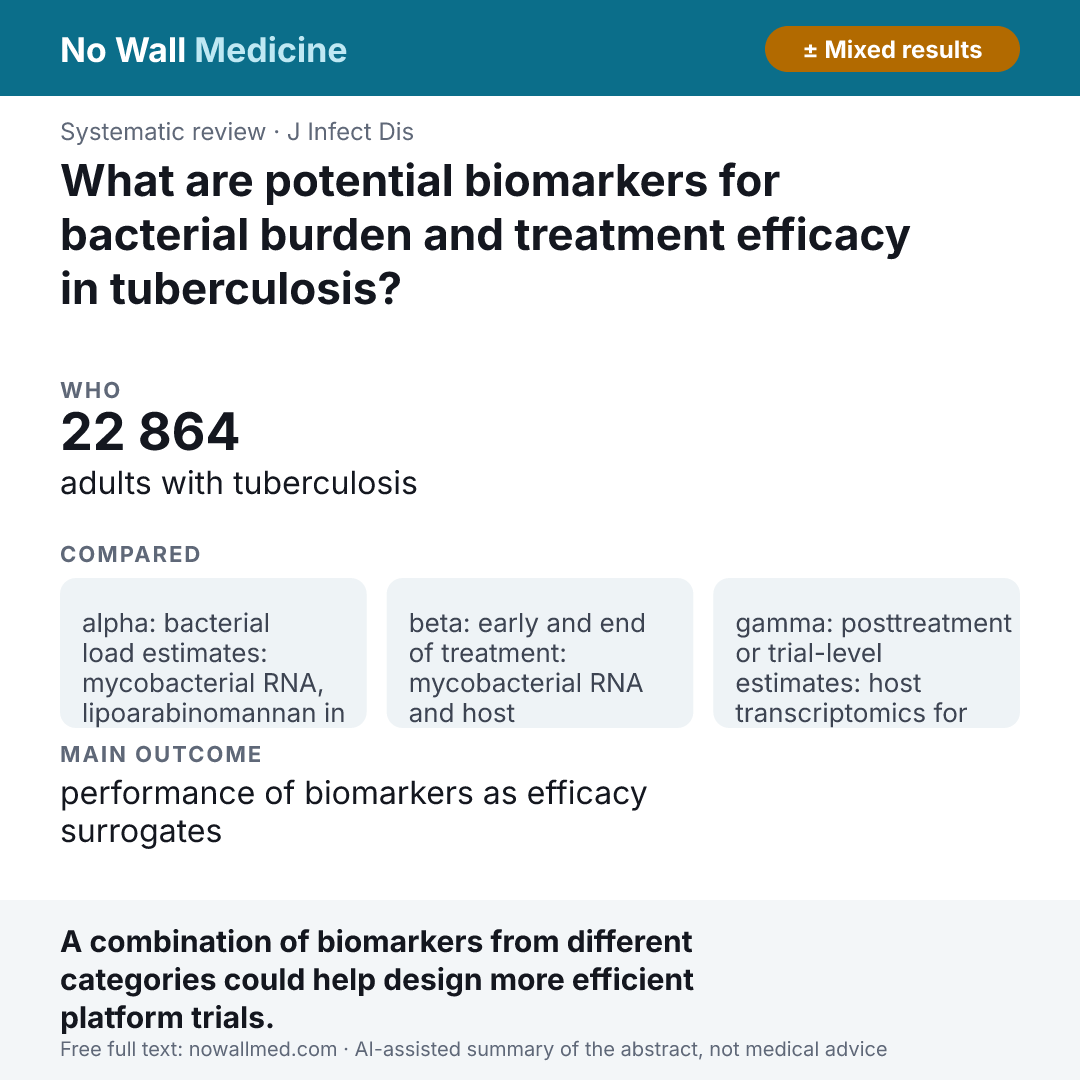
A Systematic Review of Potential Biomarkers for Bacterial Burden and Treatment Efficacy Assessment in Tuberculosis Platform-Based Clinical Trials
Systematic reviewMixed results
What are potential biomarkers for bacterial burden and treatment efficacy in tuberculosis?
Who
22 864
adults with tuberculosis
Compared
alpha: bacterial load estimates: mycobacterial RNA, lipoarabinomannan in sputum, and host metabolites in urine
beta: early and end of treatment: mycobacterial RNA and host transcriptomic or cytokine signatures
gamma: posttreatment or trial-level estimates: host transcriptomics for recurrence
Main outcome
performance of biomarkers as efficacy surrogates
Bottom line: A combination of biomarkers from different categories could help design more efficient platform trials.
J Infect Dis · 2023-11-13 · Save PNG
An umbrella review of candidate predictors of response, remission, recovery, and relapse across mental disorders
Umbrella reviewMixed results
What are the candidate predictors of response, remission, recovery, and relapse in mental disorders?
Who
299,888
Individuals with DSM/ICD-defined mental disorders
Compared
Systematic reviews: 4.3% at low risk of bias
Individual studies: 1.2% at low risk of bias
Main outcome
Response, remission, recovery, and relapse in mental disorders
Bottom line: Numerous predictors exist for response, remission, and relapse, but none were identified for recovery across mental disorders.
Limitation: High risk of bias and extraction of single predictors from multivariable models.
Mol Psychiatry · 2023-11-13 · Save PNG

Radiomics for the identification of extraprostatic extension with prostate MRI: a systematic review and meta-analysis
Systematic review and meta-analysisBenefit found
Can MRI radiomics identify extraprostatic extension in prostate cancer?
Who
Patients with prostate cancer
Compared
0.80Radiomics models
0.76Models including clinical data
Main outcome
Area under the receiver operating characteristic curves for extraprostatic extension
Result: pooled AUC 0.80
Bottom line: MRI radiomics shows promising predictive performance for identifying extraprostatic extension in prostate cancer.
Limitation: High statistical heterogeneity and limitations in study design and methodological quality.
Eur Radiol · 2023-11-13 · Save PNG

Phytosterol and phytostanol-mediated epigenetic changes in cancer and other non-communicable diseases: a systematic review
Systematic reviewBenefit found
Do phytosterols and phytostanols cause epigenetic changes in cancer and non-communicable diseases?
Who
Mammalian cells including breast, prostate, macrophage, aortic epithelia and lung
Compared
Phytosterols and phytostanols: inhibit histone deacetylase expression and activity
Phytosterols and phytostanols: inhibit DNA methyl transferase enzyme 1
Main outcome
epigenetic mechanisms including histone modification, DNA methylation and miRNA expression
Bottom line: Phytosterols and phytostanols alter molecular mechanisms of epigenetic inheritance in various mammalian cells.
Limitation: No studies exploring meiotic or transgenerational inheritance were found.
Br J Nutr · 2023-11-13 · Save PNG

Postpartum and non-postpartum depression: a population-based matched case-control study comparing polygenic risk scores for severe mental disorders
Nested case-control studyNo clear difference
Are postpartum depression and major depressive disorder genetically distinct disorders?
Who
50057
Women born from 1981 to 1997 in Denmark · Denmark
Compared
Postpartum depression
Major depressive disorder
Main outcome
Polygenic risk scores for severe mental disorders
Result: odds ratio 1.12 (95% CI: 0.97-1.29) for major depressive disorder
Bottom line: There was no clear evidence of distinct genetic make-up between postpartum depression and non-postpartum depression.
Transl Psychiatry · 2023-11-13 · Save PNG

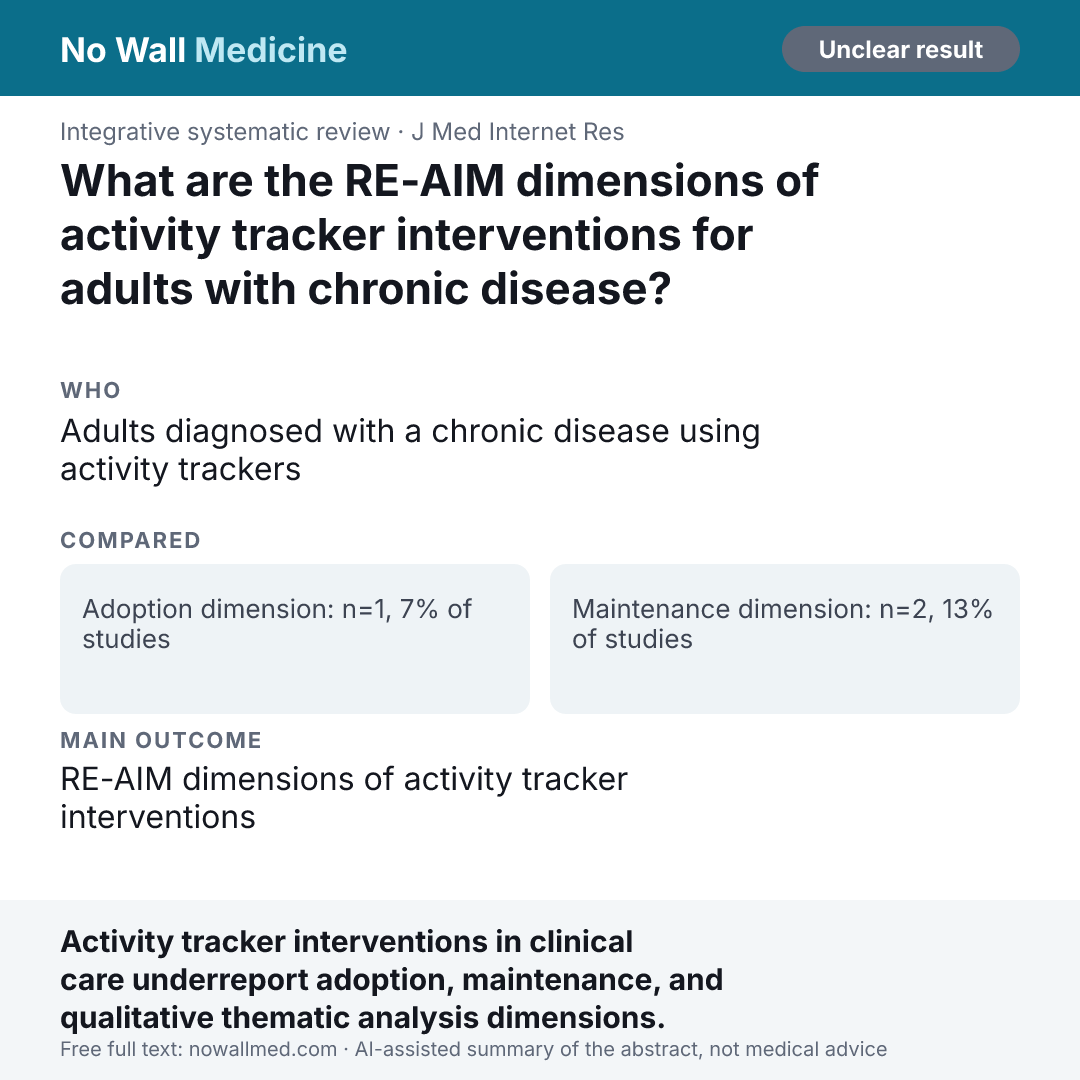
RE-AIM (Reach, Effectiveness, Adoption, Implementation, and Maintenance) Evaluation of the Use of Activity Trackers in the Clinical Care of Adults Diagnosed With a Chronic Disease: Integrative Systematic Review
Integrative systematic reviewUnclear result
What are the RE-AIM dimensions of activity tracker interventions for adults with chronic disease?
Who
Adults diagnosed with a chronic disease using activity trackers
Compared
Adoption dimension: n=1, 7% of studies
Maintenance dimension: n=2, 13% of studies
Main outcome
RE-AIM dimensions of activity tracker interventions
Bottom line: Activity tracker interventions in clinical care underreport adoption, maintenance, and qualitative thematic analysis dimensions.
Limitation: The review identified that adoption and maintenance dimensions were underreported in existing studies.
J Med Internet Res · 2023-11-13 · Save PNG
Influence of Pokémon GO on Physical Activity and Psychosocial Well-Being in Children and Adolescents: Systematic Review
Systematic reviewMixed results
Pokémon GO impact on kids
Who
children and adolescents · multiple countries
Compared
Pokémon GO users
non-users
Main outcome
physical activity and well-being
Bottom line: Pokémon GO boosts physical activity
Limitation: no randomized controlled trials
J Med Internet Res · 2023-11-13 · Save PNG

Evaluation of objective tools and artificial intelligence in robotic surgery technical skills assessment: a systematic review
Systematic reviewUnclear result
What objective tools and artificial intelligence can assess robotic surgery technical skills?
Who
Studies evaluating robotic surgery technical skills assessment tools
Compared
Artificial intelligence in laboratory: 60 per cent of methods reporting accuracies over 90 per cent
Artificial intelligence in real surgery: 67 to 100 per cent
Main outcome
Accuracy of artificial intelligence models in estimating skill or clinical outcomes
Bottom line: Manual and automated robotic surgery assessment tools are not well validated and require further evaluation for accreditation.
Br J Surg · 2023-11-12 · Save PNG