Visual abstracts
New randomized trials and meta-analyses from leading journals at a glance: who was studied, what was compared, and what was found. Every paper is free to read in full.
All specialtiesCardiology 4763Oncology 4043Gastroenterology & Hepatology 1903Infectious Disease 3756Neurology 1872Psychiatry & Mental Health 2216Pulmonology 2044Critical Care 1319Endocrinology & Diabetes 2544Pediatrics 2889Surgery 2480Orthopedics & Sports Medicine 917Neurosurgery 525Cardiothoracic & Vascular Surgery 656Plastic & Reconstructive Surgery 574Nephrology 1107Rheumatology 810Hematology 1090Dermatology 611Ophthalmology 532Obstetrics & Gynecology 1645Public & Global Health 1037Radiology & Imaging 619Anesthesiology 958Urology 745ENT (Otolaryngology) 494Emergency Medicine 481Allergy & Immunology 309Geriatrics 972Family Medicine & Primary Care 534Medical Genetics & Genomics 659Pathology & Laboratory Medicine 156Physical Medicine & Rehabilitation 734Palliative Care 421Nutrition 1560Digital Health & AI 2137General Medicine 318
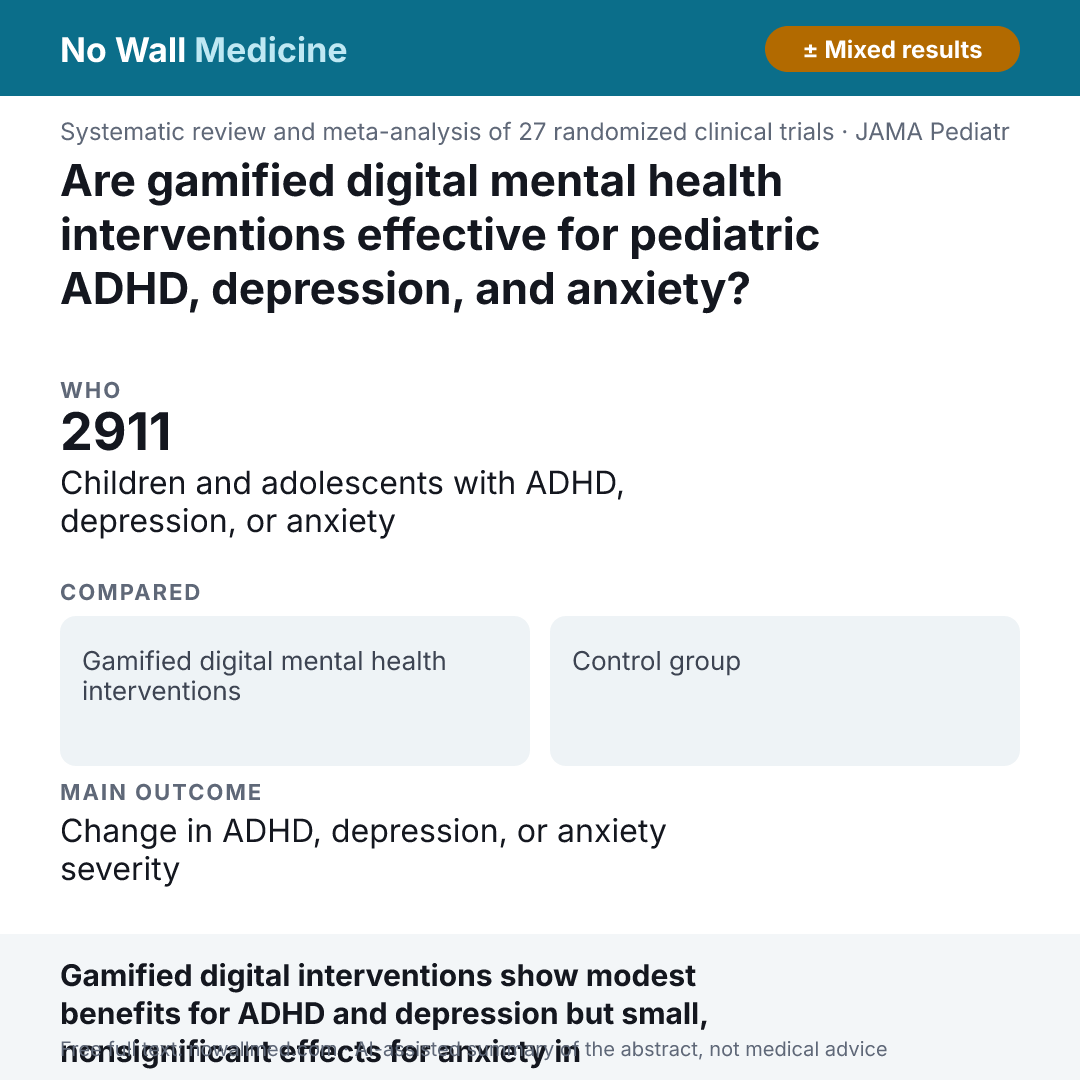
Efficacy of Gamified Digital Mental Health Interventions for Pediatric Mental Health Conditions: A Systematic Review and Meta-Analysis
Systematic review and meta-analysis of 27 randomized clinical trialsMixed results
Are gamified digital mental health interventions effective for pediatric ADHD, depression, and anxiety?
Who
2911
Children and adolescents with ADHD, depression, or anxiety
Compared
Gamified digital mental health interventions
Control group
Main outcome
Change in ADHD, depression, or anxiety severity
Result: ADHD g 0.28 (95% CI 0.09 to 0.48), depression g 0.28 (95% CI 0.08 to 0.47), anxiety g 0.07 (95% CI -0.02 to 0.17)
Bottom line: Gamified digital interventions show modest benefits for ADHD and depression but small, nonsignificant effects for anxiety in children.
JAMA Pediatr · 2024-09-23 · Save PNG
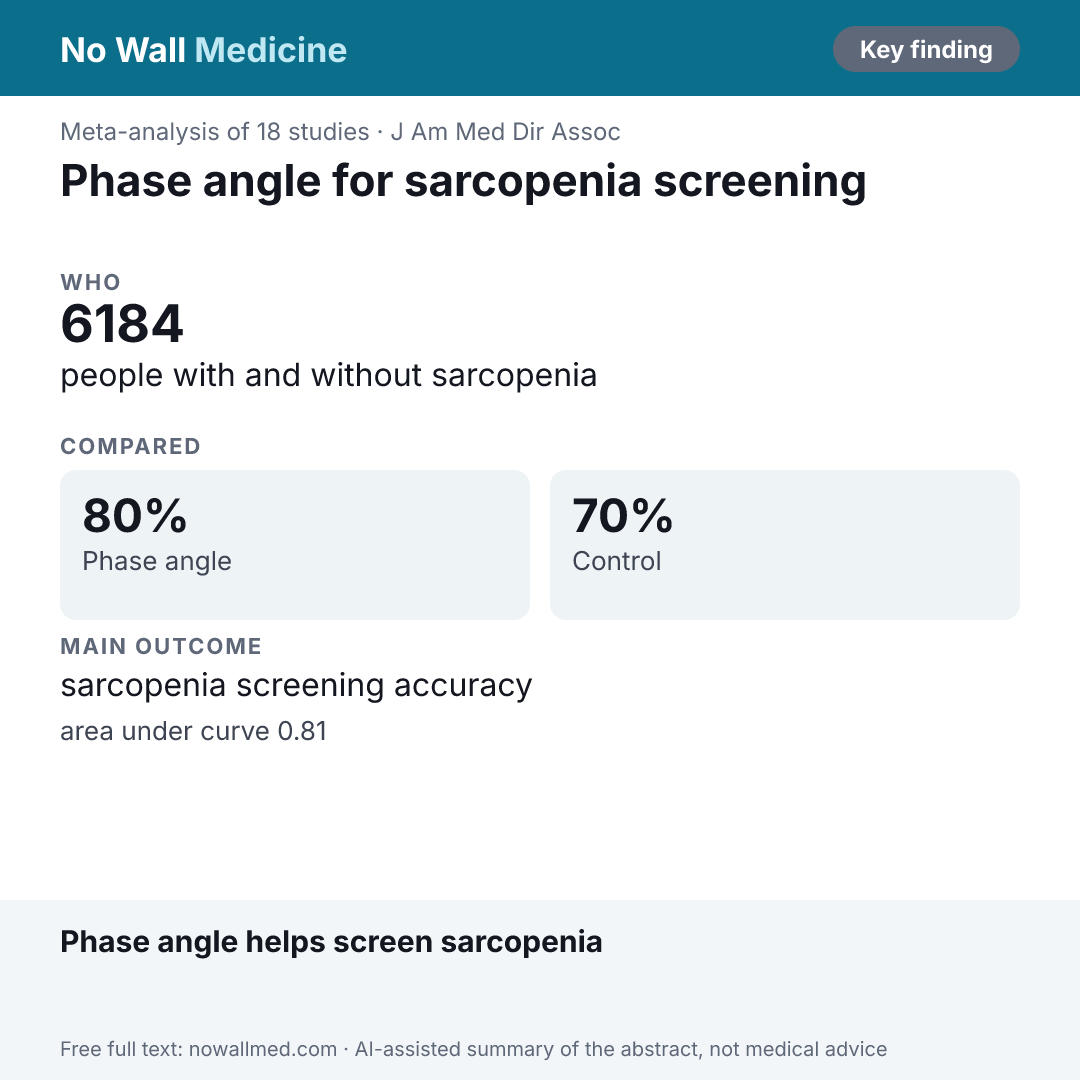
The Diagnostic Accuracy and Cutoff Value of Phase Angle for Screening Sarcopenia: A Systematic Review and Meta-Analysis
Meta-analysis of 18 studiesKey finding
Phase angle for sarcopenia screening
Who
6184
people with and without sarcopenia
Compared
80%Phase angle (sensitivity)
70%Control (specificity)
Main outcome
sarcopenia screening accuracy
Result: area under curve 0.81
Bottom line: Phase angle helps screen sarcopenia
J Am Med Dir Assoc · 2024-09-23 · Save PNG
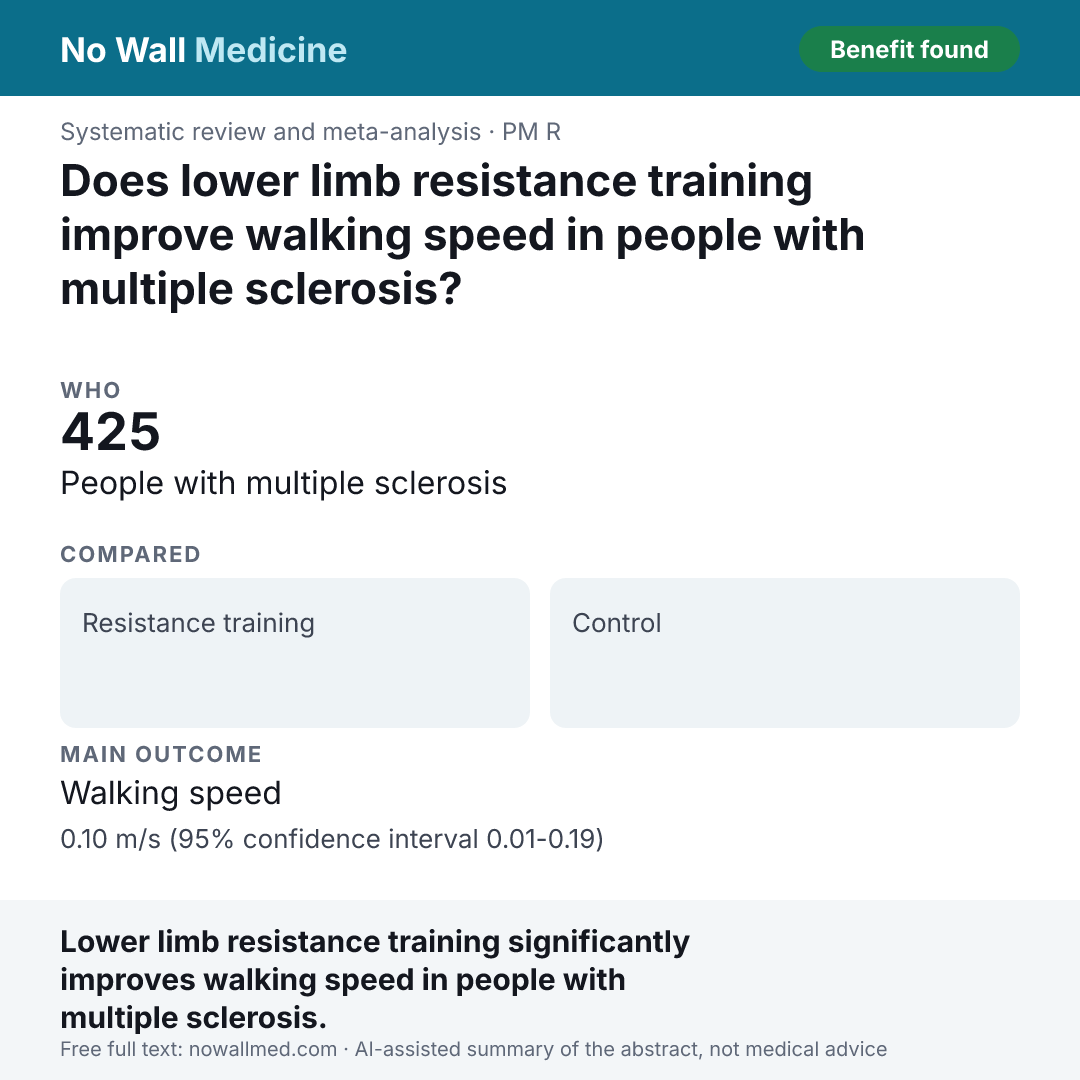
Changes in walking speed following resistance training in people with multiple sclerosis: A systematic review and meta-analysis
Systematic review and meta-analysisBenefit found
Does lower limb resistance training improve walking speed in people with multiple sclerosis?
Who
425
People with multiple sclerosis
Compared
Resistance training
Control
Main outcome
Walking speed
Result: 0.10 m/s (95% confidence interval 0.01-0.19)
Bottom line: Lower limb resistance training significantly improves walking speed in people with multiple sclerosis.
Limitation: Results were variable across studies and sensitivity analysis showed distance-dependent improvements.
PM R · 2024-09-23 · Save PNG
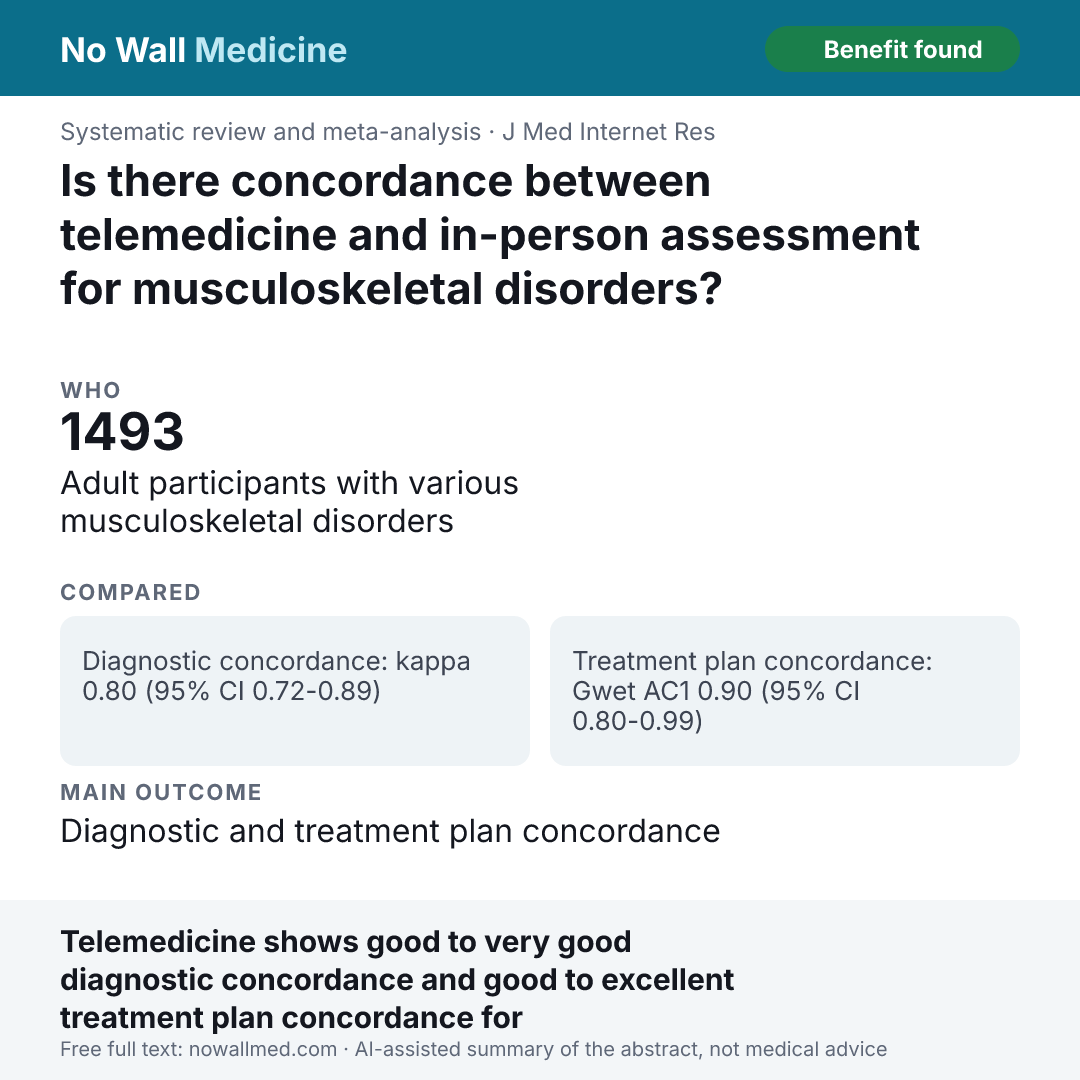
Investigating the Use of Telemedicine by Health Care Providers to Diagnose and Manage Patients With Musculoskeletal Disorders: Systematic Review and Meta-Analysis
Systematic review and meta-analysisBenefit found
Is there concordance between telemedicine and in-person assessment for musculoskeletal disorders?
Who
1493
Adult participants with various musculoskeletal disorders
Compared
Diagnostic concordance: kappa 0.80 (95% CI 0.72-0.89)
Treatment plan concordance: Gwet AC1 0.90 (95% CI 0.80-0.99)
Main outcome
Diagnostic and treatment plan concordance
Result: kappa 0.80 (95% CI 0.72-0.89)
Bottom line: Telemedicine shows good to very good diagnostic concordance and good to excellent treatment plan concordance for musculoskeletal disorders.
Limitation: Studies evaluating red and yellow flag detection and healthcare resource use are needed.
J Med Internet Res · 2024-09-23 · Save PNG
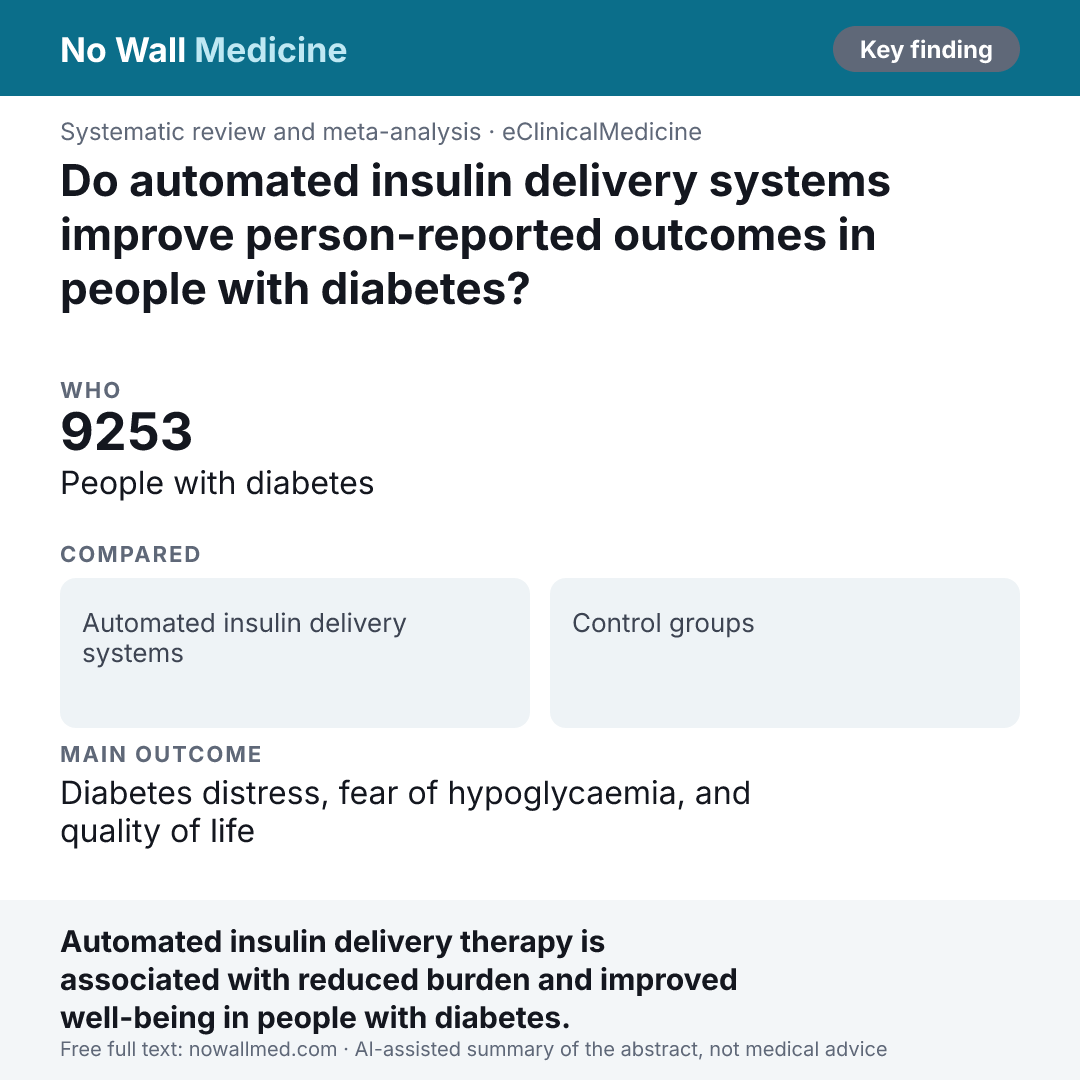
Effect of automated insulin delivery systems on person-reported outcomes in people with diabetes: a systematic review and meta-analysis
Systematic review and meta-analysisKey finding
Do automated insulin delivery systems improve person-reported outcomes in people with diabetes?
Who
9253
People with diabetes
Compared
Automated insulin delivery systems
Control groups
Main outcome
Diabetes distress, fear of hypoglycaemia, and quality of life
Result: standardised mean difference [-0.159 (-0.309, -0.010) to 0.347 (0.134, 0.560)]
Bottom line: Automated insulin delivery therapy is associated with reduced burden and improved well-being in people with diabetes.
Limitation: Limited number of studies pooled for some outcomes and large heterogeneity in questionnaires used.
eClinicalMedicine · 2024-09-21 · Save PNG
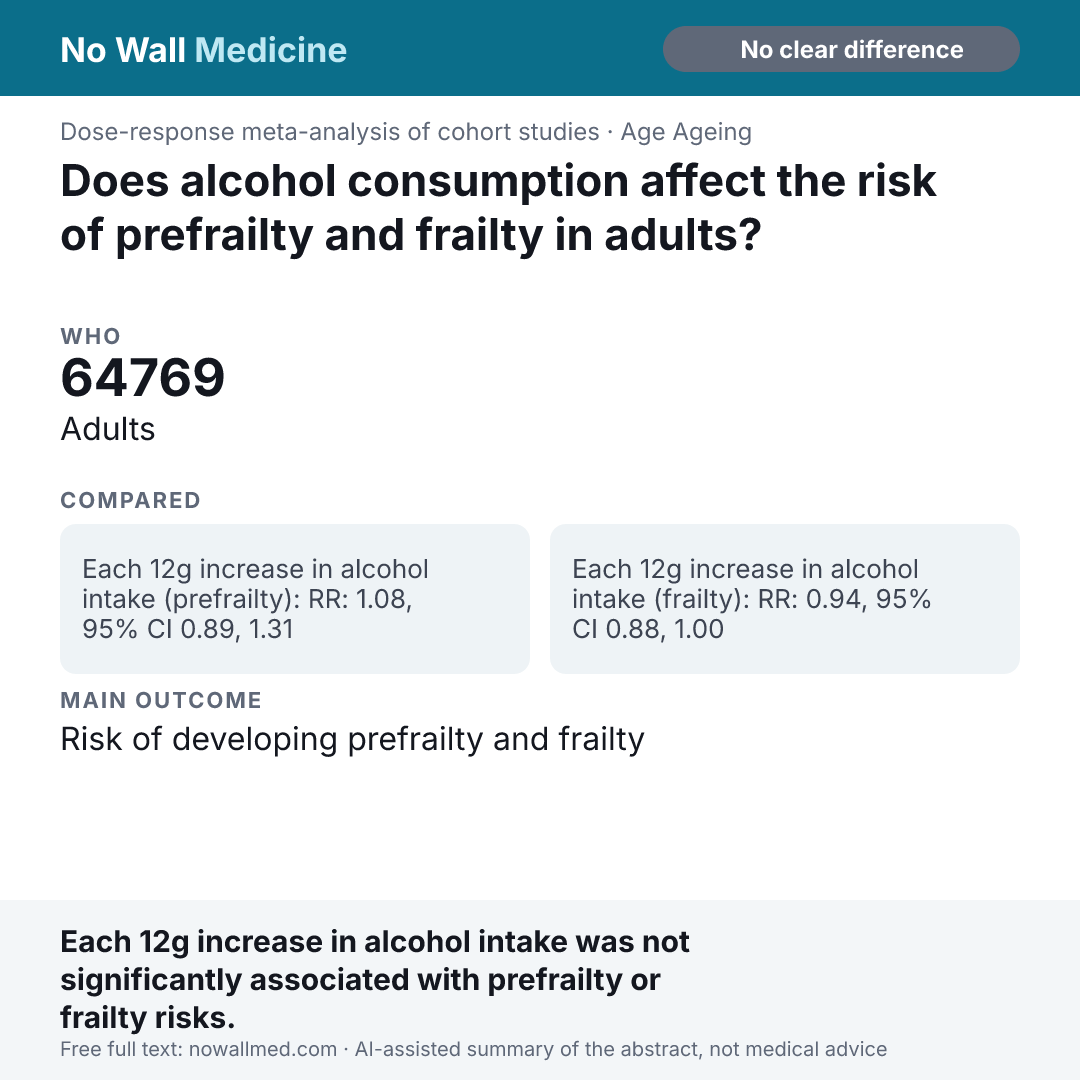
Alcohol consumption and frailty risk: a dose-response meta-analysis of cohort studies
Dose-response meta-analysis of cohort studiesNo clear difference
Does alcohol consumption affect the risk of prefrailty and frailty in adults?
Who
64769
Adults
Compared
Each 12g increase in alcohol intake (prefrailty): RR: 1.08, 95% CI 0.89, 1.31
Each 12g increase in alcohol intake (frailty): RR: 0.94, 95% CI 0.88, 1.00
Main outcome
Risk of developing prefrailty and frailty
Bottom line: Each 12g increase in alcohol intake was not significantly associated with prefrailty or frailty risks.
Limitation: Eight studies were rated to have a serious risk of bias and evidence quality was low.
Age Ageing · 2024-09-21 · Save PNG
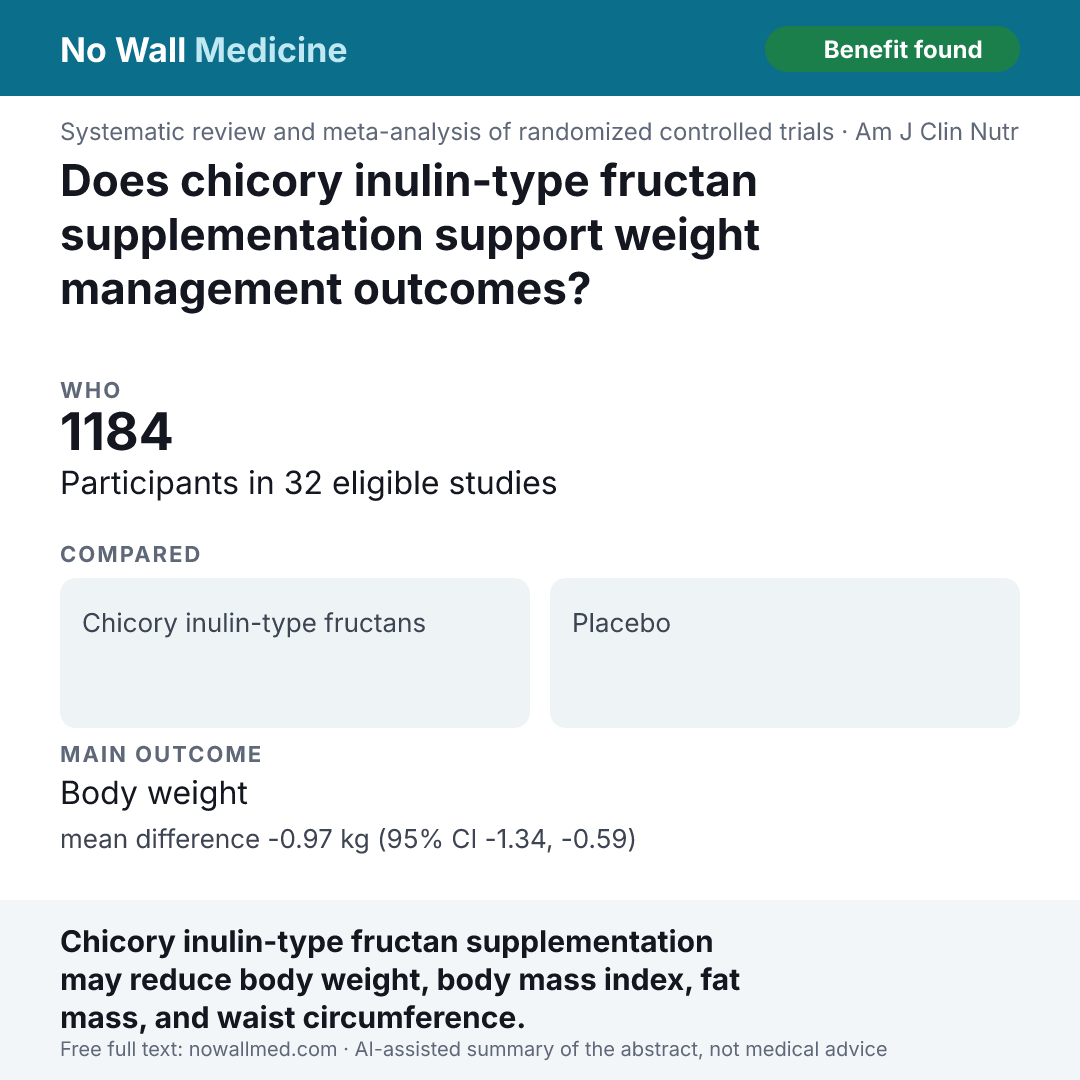
The effects of chicory inulin-type fructans supplementation on weight management outcomes: systematic review, meta-analysis, and meta-regression of randomized controlled trials
Systematic review and meta-analysis of randomized controlled trialsBenefit found
Does chicory inulin-type fructan supplementation support weight management outcomes?
Who
1184
Participants in 32 eligible studies
Compared
Chicory inulin-type fructans
Placebo
Main outcome
Body weight
Result: mean difference -0.97 kg (95% CI -1.34, -0.59)
Bottom line: Chicory inulin-type fructan supplementation may reduce body weight, body mass index, fat mass, and waist circumference.
Am J Clin Nutr · 2024-09-21 · Save PNG
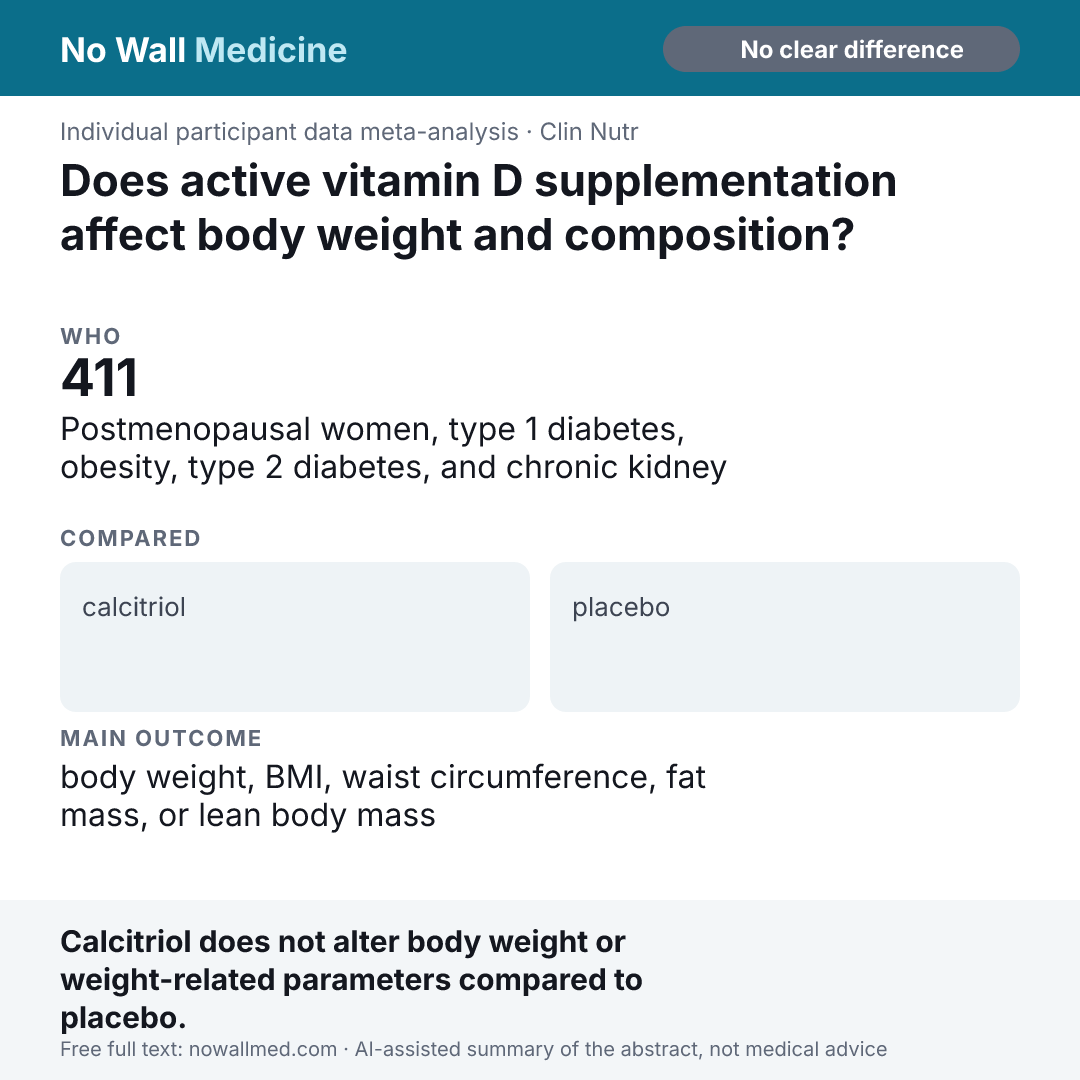
The effect of active vitamin D supplementation on body weight and composition: A meta-analysis of individual participant data
Individual participant data meta-analysisNo clear difference
Does active vitamin D supplementation affect body weight and composition?
Who
411
Postmenopausal women, type 1 diabetes, obesity, type 2 diabetes, and chronic kidney disease
Compared
calcitriol
placebo
Main outcome
body weight, BMI, waist circumference, fat mass, or lean body mass
Bottom line: Calcitriol does not alter body weight or weight-related parameters compared to placebo.
Limitation: Whether calcitriol lowers body weight in vitamin D-sufficient people with obesity remains to be elucidated.
Clin Nutr · 2024-09-21 · Save PNG
Effect of electronic alerts on the care and outcomes in patients with acute kidney injury: a meta-analysis and trial sequential analysis
Meta-analysis and trial sequential analysisNo clear difference
Do electronic alerts impact care and outcomes in patients with acute kidney injury?
Who
40,146
Patients with acute kidney injury
Compared
Electronic alerts
Usual care
Main outcome
Mortality, creatinine levels, AKI progression, dialysis, and AKI documentation
Result: relative risk 1.02 (95% CI 0.97-1.08)
Bottom line: Electronic alerts increased dialysis and AKI documentation but did not improve mortality or kidney function.
Limitation: Trial sequential analysis could not confirm increased odds of dialysis and AKI documentation.
BMC Med · 2024-09-20 · Save PNG
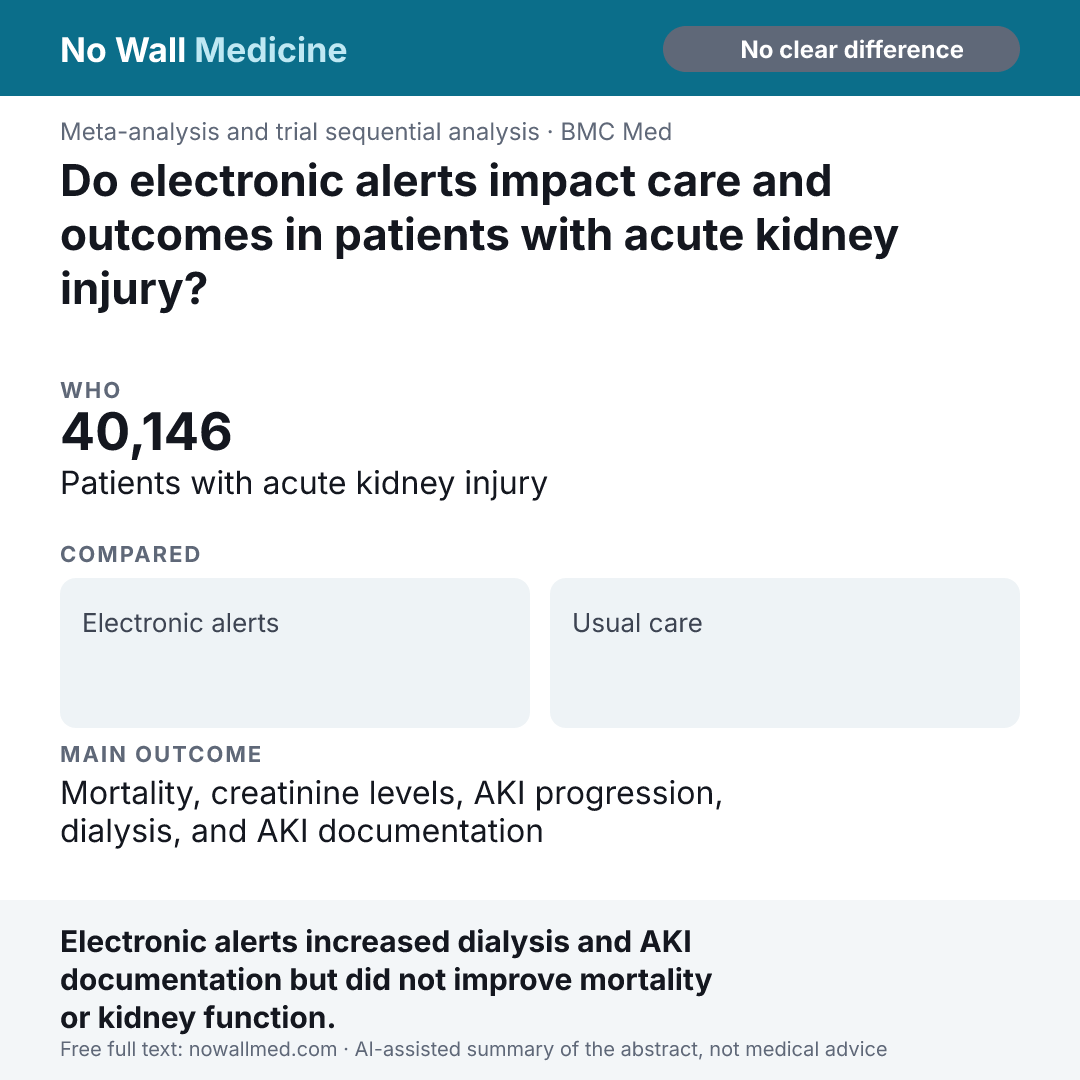
Harms with placebo in trials of biological therapies and small molecules as maintenance therapy in inflammatory bowel disease: a systematic review and meta-analysis
Meta-analysis of 45 randomized controlled trialsHarm found
Are there harms associated with receiving placebo during maintenance of remission trials in inflammatory bowel disease?
Who
16562
Adults with ulcerative colitis and luminal Crohn's disease
Compared
76.4%Active drug
75.5%Placebo
Main outcome
Any treatment-emergent adverse event
Result: RR 1.01, 95% CI 0.99-1.04
Bottom line: Placebo was associated with some clinically significant potential harms during maintenance of remission trials in inflammatory bowel disease.
Lancet Gastroenterol Hepatol · 2024-09-20 · Save PNG
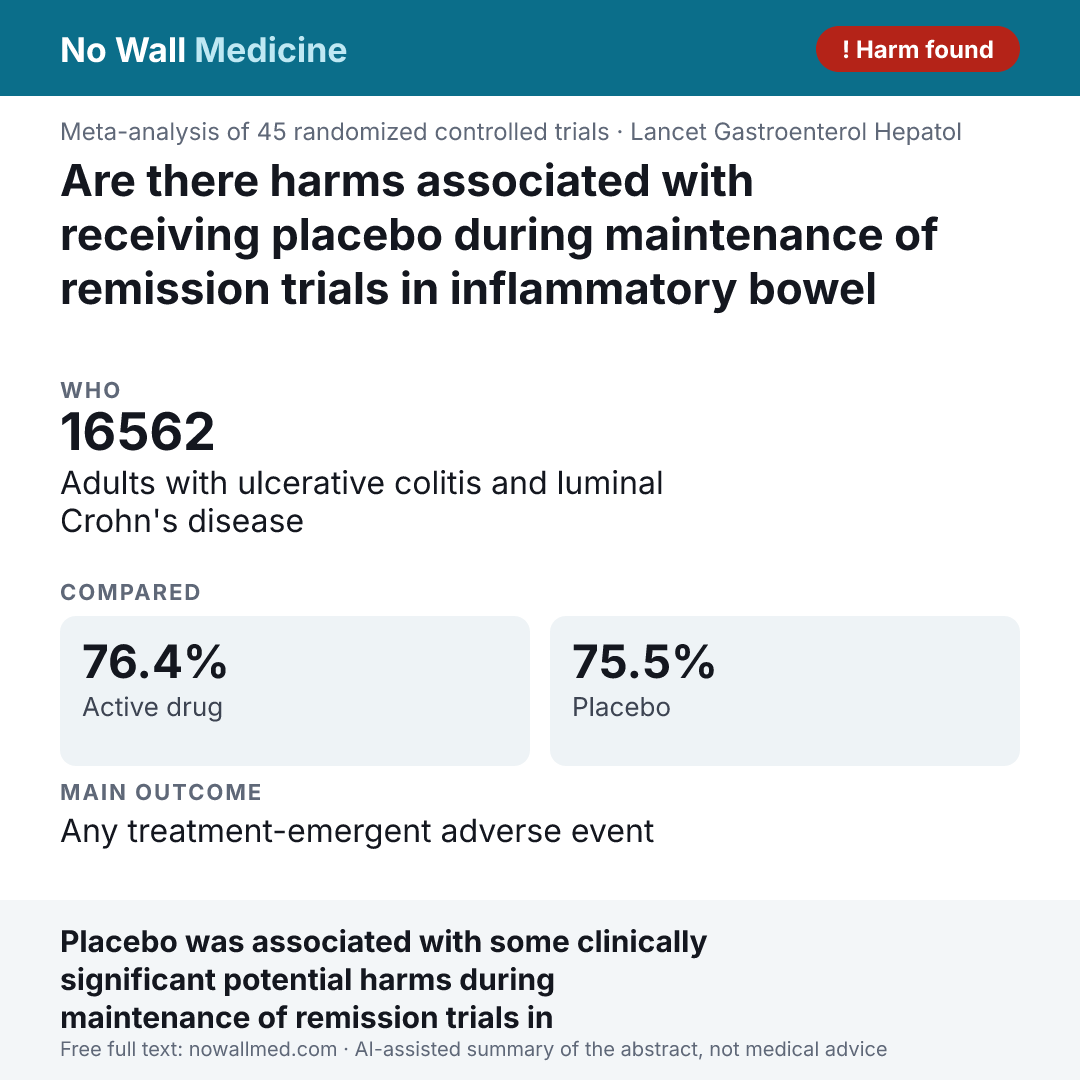
Harms with placebo in trials of biological therapies and small molecules as induction therapy in inflammatory bowel disease: a systematic review and meta-analysis
Meta-analysis of 47 randomized controlled trialsHarm found
Are there harms associated with receiving placebo in inflammatory bowel disease induction trials?
Who
20987
Adults with moderately to severely active ulcerative colitis or luminal Crohn's disease
Compared
53.7%Active drug
55.9%Placebo
Main outcome
Any treatment-emergent adverse event
Result: relative risk 0.97 (95% CI 0.94-1.00)
Bottom line: Placebo recipients in inflammatory bowel disease trials face higher risks of worsening disease activity and serious adverse events.
Lancet Gastroenterol Hepatol · 2024-09-20 · Save PNG
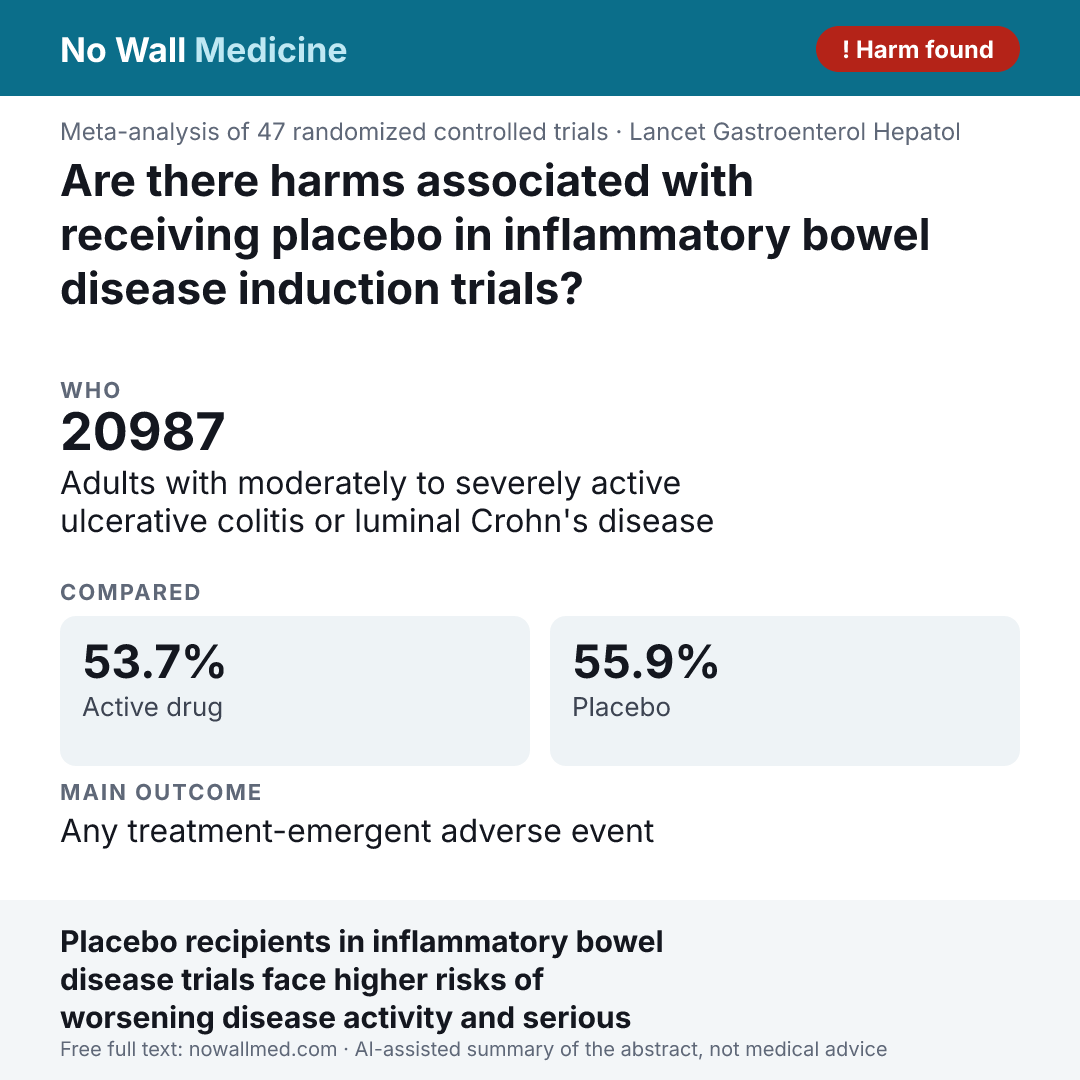
Intensification Approaches and Treatment Sequencing in Metastatic Castration-resistant Prostate Cancer: A Systematic Review
Systematic reviewBenefit found
What are the intensification approaches and optimal treatment sequencing for metastatic castration-resistant prostate cancer?
Who
Patients with metastatic castration-resistant prostate cancer
Compared
poly(ADP-ribose) polymerase inhibitor plus androgen receptor pathway inhibitor: improves radiographical progression-free survival
ipatasertib plus abiraterone: extends radiographical progression-free survival
radionuclide 177-Lu-PSMA-617 plus enzalutamide: prolongs progression-free survival
Main outcome
radiographical progression-free survival and progression-free survival
Bottom line: Intensified therapy combinations improve progression-free survival in specific metastatic castration-resistant prostate cancer subgroups.
Eur Urol · 2024-09-20 · Save PNG
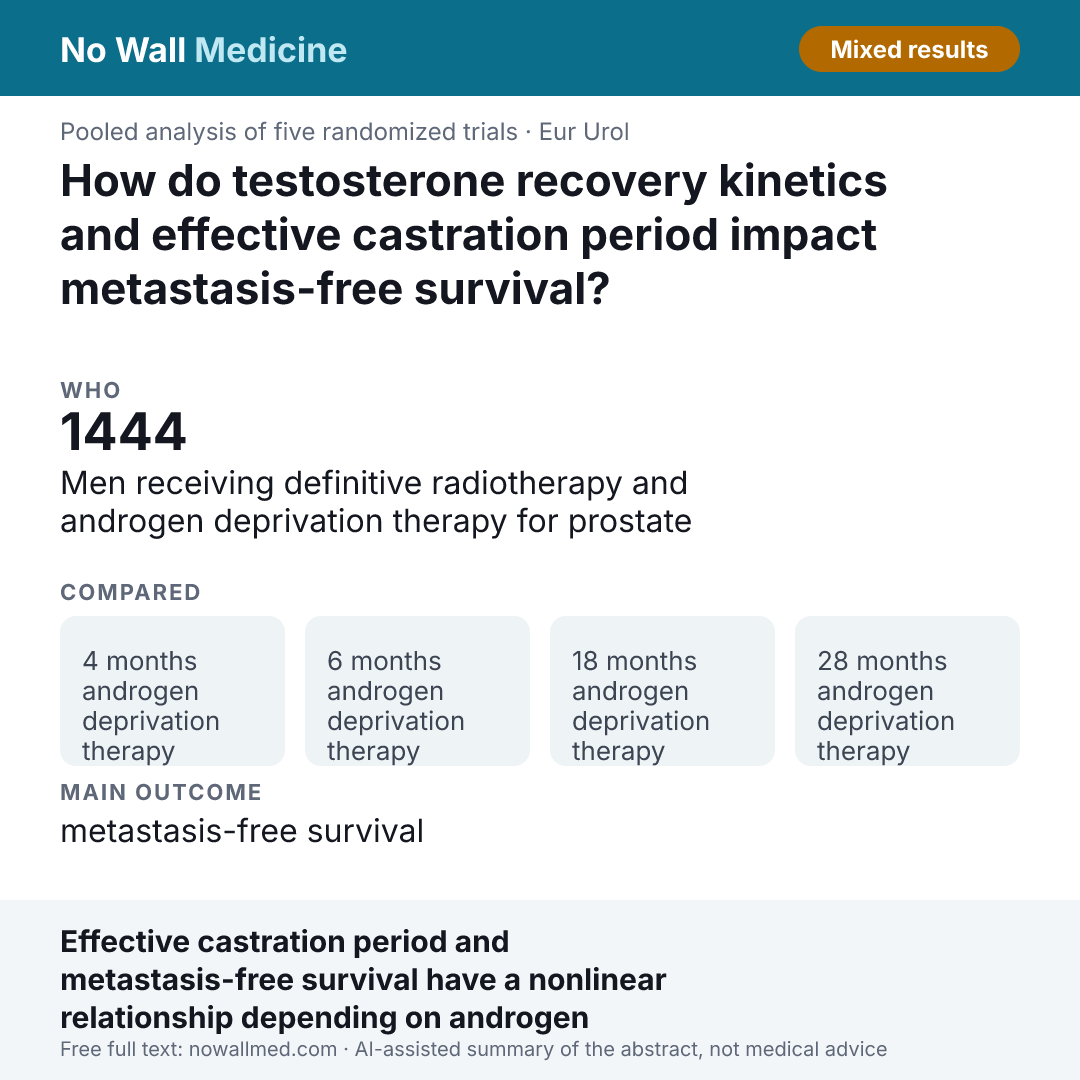
Testosterone Recovery Following Androgen Suppression and Prostate Radiotherapy (TRANSPORT): A Pooled Analysis of Five Randomized Trials from the Meta-Analysis of Randomized Trials in Cancer of the Prostate (MARCAP) Consortium
Pooled analysis of five randomized trialsMixed results
How do testosterone recovery kinetics and effective castration period impact metastasis-free survival?
Who
1444
Men receiving definitive radiotherapy and androgen deprivation therapy for prostate cancer
Compared
4 months androgen deprivation therapy
6 months androgen deprivation therapy
18 months androgen deprivation therapy
28 months androgen deprivation therapy
Main outcome
metastasis-free survival
Bottom line: Effective castration period and metastasis-free survival have a nonlinear relationship depending on androgen deprivation therapy duration.
Eur Urol · 2024-09-20 · Save PNG
Neural correlates of harm avoidance: a multimodal meta-analysis of brain structural and resting-state functional neuroimaging studies
Multimodal meta-analysisBenefit found
What are the structural and functional brain correlates of harm avoidance?
Who
3053
3053 healthy participants without psychiatric or neurological disorders
Compared
Structural neuroimaging: parietal and temporal cortices
Functional neuroimaging: prefrontal, temporal and parietal gray matter
Main outcome
Brain structural and resting-state functional neuroimaging correlates
Bottom line: Harm avoidance correlates with brain volume in parietal and temporal cortices and functional activity in prefrontal, temporal, and parietal areas.
Transl Psychiatry · 2024-09-20 · Save PNG

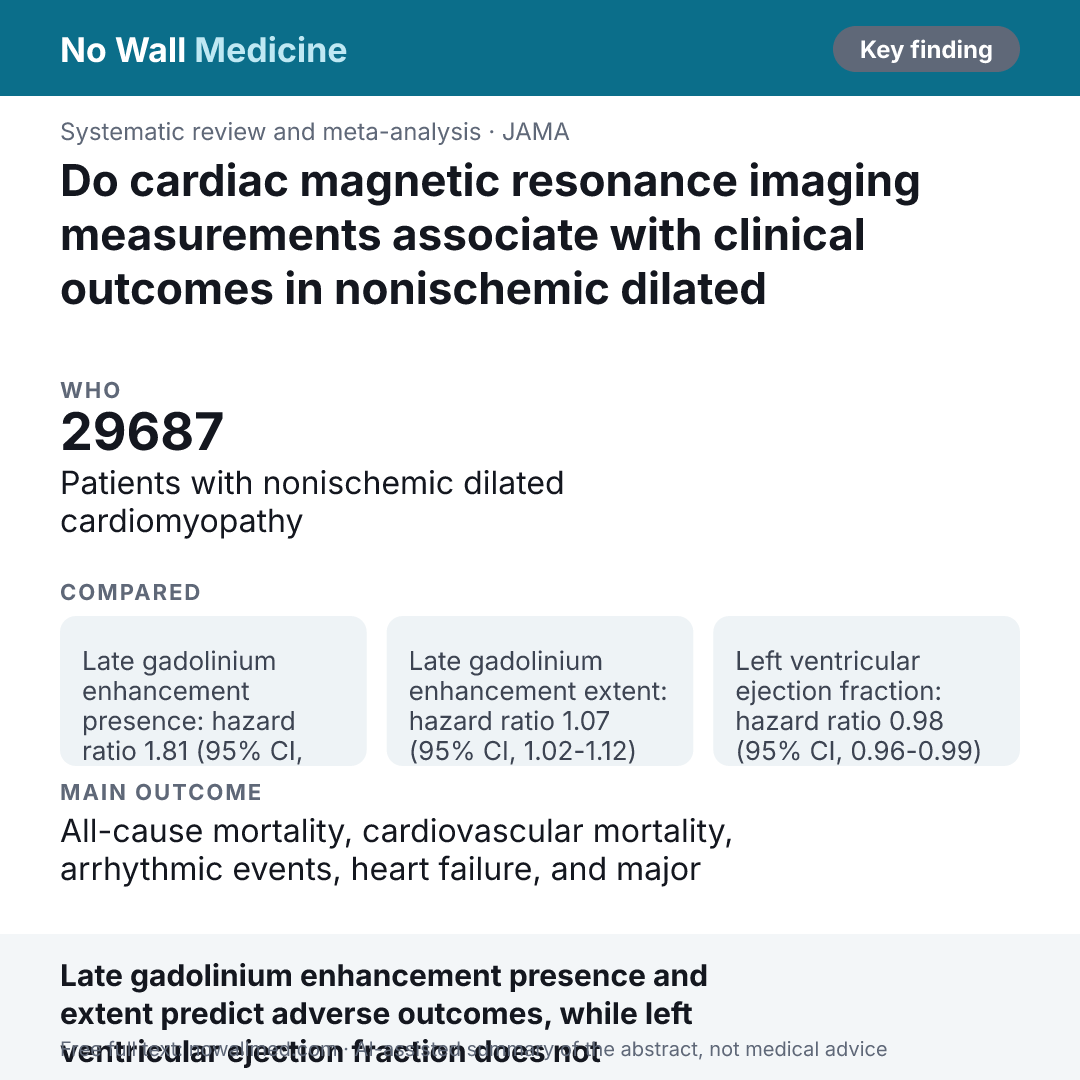
Risk Stratification in Nonischemic Dilated Cardiomyopathy Using CMR Imaging: A Systematic Review and Meta-Analysis
Systematic review and meta-analysisKey finding
Do cardiac magnetic resonance imaging measurements associate with clinical outcomes in nonischemic dilated cardiomyopathy?
Who
29687
Patients with nonischemic dilated cardiomyopathy
Compared
Late gadolinium enhancement presence: hazard ratio 1.81 (95% CI, 1.60-2.04) for all-cause mortality
Late gadolinium enhancement extent: hazard ratio 1.07 (95% CI, 1.02-1.12) for all-cause mortality
Left ventricular ejection fraction: hazard ratio 0.98 (95% CI, 0.96-0.99) for major adverse cardiac events
Main outcome
All-cause mortality, cardiovascular mortality, arrhythmic events, heart failure, and major adverse cardiac events
Bottom line: Late gadolinium enhancement presence and extent predict adverse outcomes, while left ventricular ejection fraction does not predict mortality.
Limitation: Limited data precluded definitive analysis for native T1 relaxation times, global longitudinal strain, and extracellular volume fraction mortality.
JAMA · 2024-09-19 · Save PNG
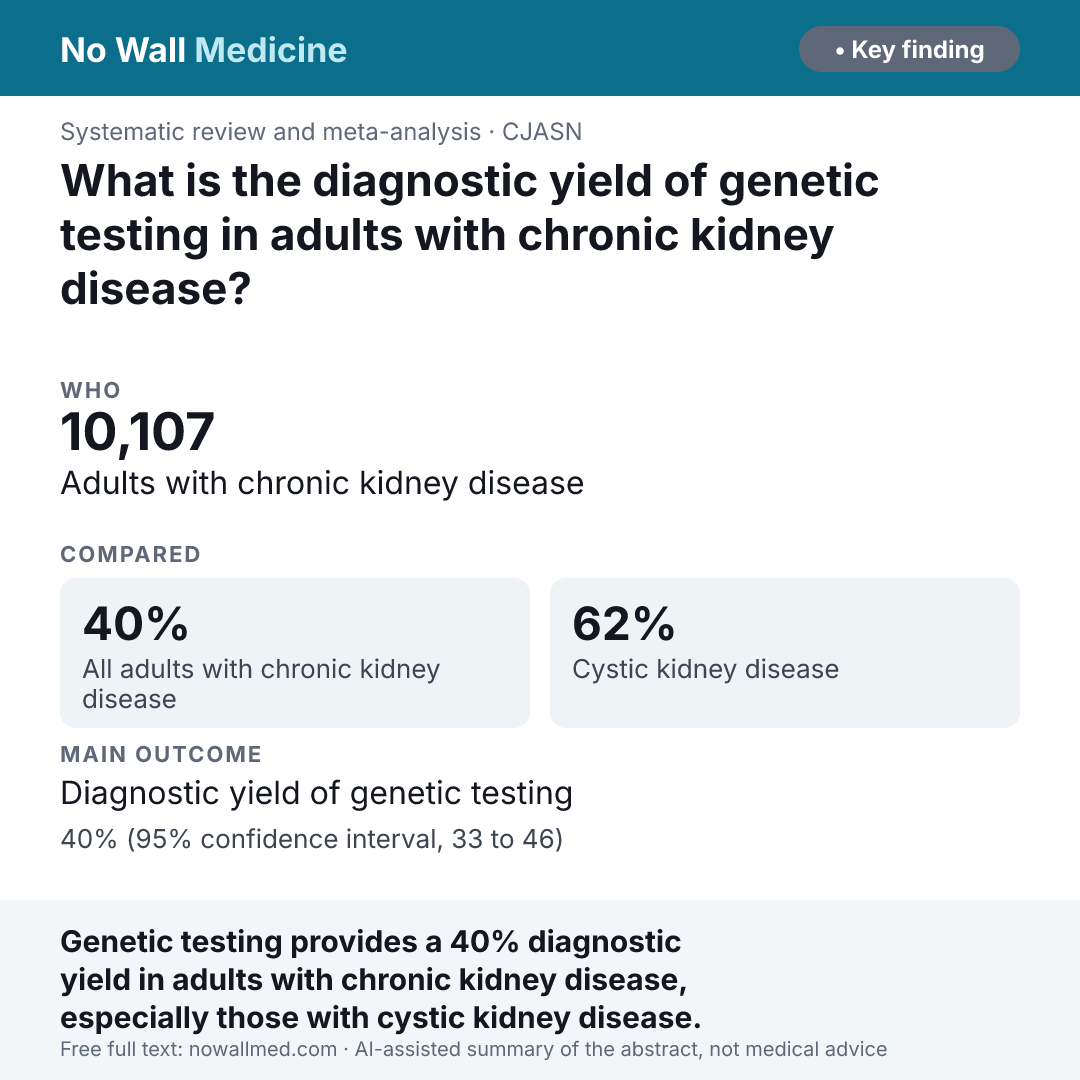
Utility of Genetic Testing in Adults with CKD: A Systematic Review and Meta-Analysis
Systematic review and meta-analysisKey finding
What is the diagnostic yield of genetic testing in adults with chronic kidney disease?
Who
10,107
Adults with chronic kidney disease
Compared
40%All adults with chronic kidney disease (95% confidence interval, 33 to 46)
62%Cystic kidney disease (95% confidence interval, 57 to 68)
Main outcome
Diagnostic yield of genetic testing
Result: 40% (95% confidence interval, 33 to 46)
Bottom line: Genetic testing provides a 40% diagnostic yield in adults with chronic kidney disease, especially those with cystic kidney disease.
Limitation: Heterogeneity in reporting, testing technologies, and cohort characteristics.
CJASN · 2024-09-19 · Save PNG
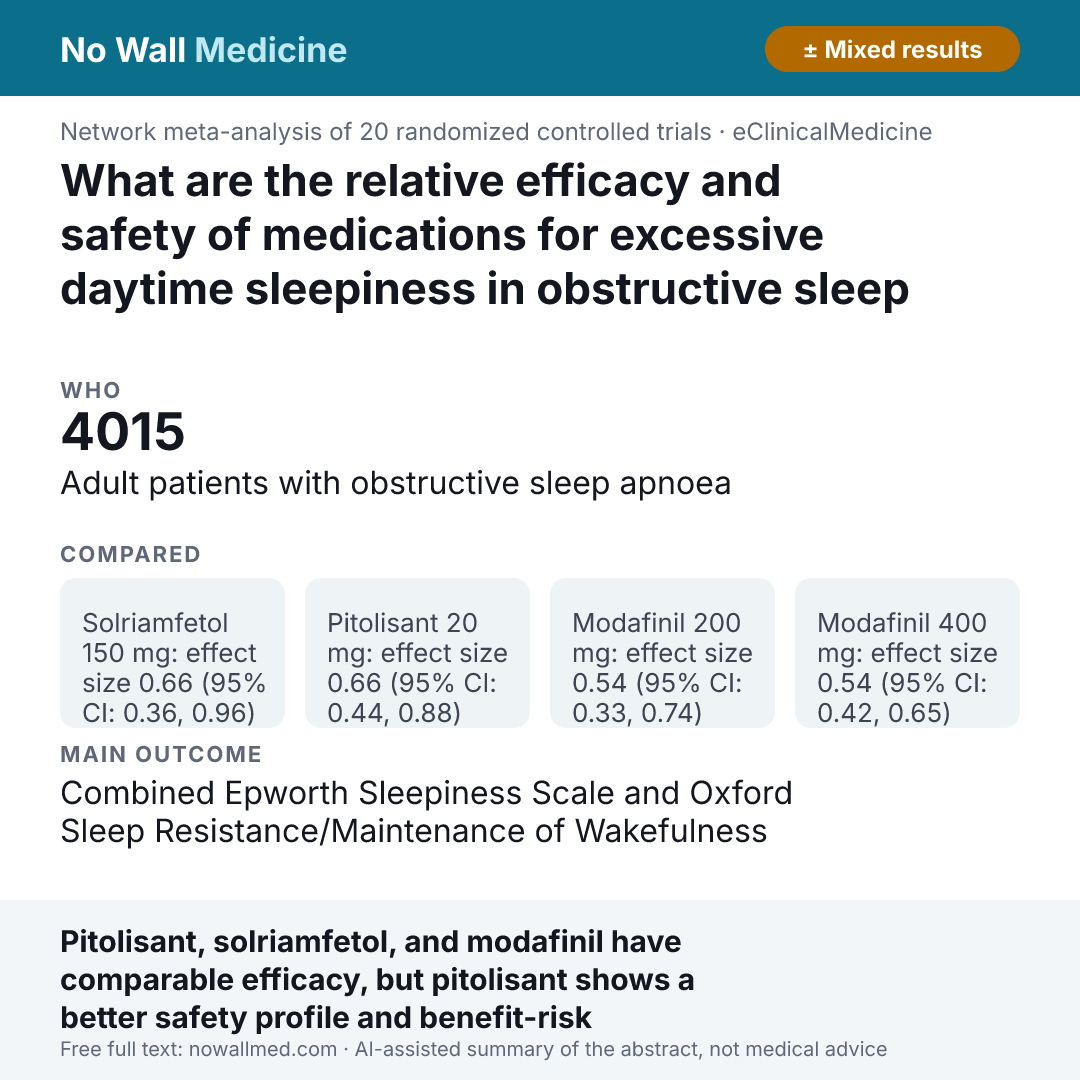
Comparative efficacy, safety and benefit/risk of alerting agents for excessive daytime sleepiness in patients with obstructive sleep apnoea: a network meta-analysis
Network meta-analysis of 20 randomized controlled trialsMixed results
What are the relative efficacy and safety of medications for excessive daytime sleepiness in obstructive sleep apnoea?
Who
4015
Adult patients with obstructive sleep apnoea
Compared
Solriamfetol 150 mg: effect size 0.66 (95% CI: 0.36, 0.96)
Pitolisant 20 mg: effect size 0.66 (95% CI: 0.44, 0.88)
Modafinil 200 mg: effect size 0.54 (95% CI: 0.33, 0.74)
Modafinil 400 mg: effect size 0.54 (95% CI: 0.42, 0.65)
Main outcome
Combined Epworth Sleepiness Scale and Oxford Sleep Resistance/Maintenance of Wakefulness Test Z-scores
Bottom line: Pitolisant, solriamfetol, and modafinil have comparable efficacy, but pitolisant shows a better safety profile and benefit-risk ratio.
Funded by: Bioprojet
eClinicalMedicine · 2024-09-19 · Save PNG
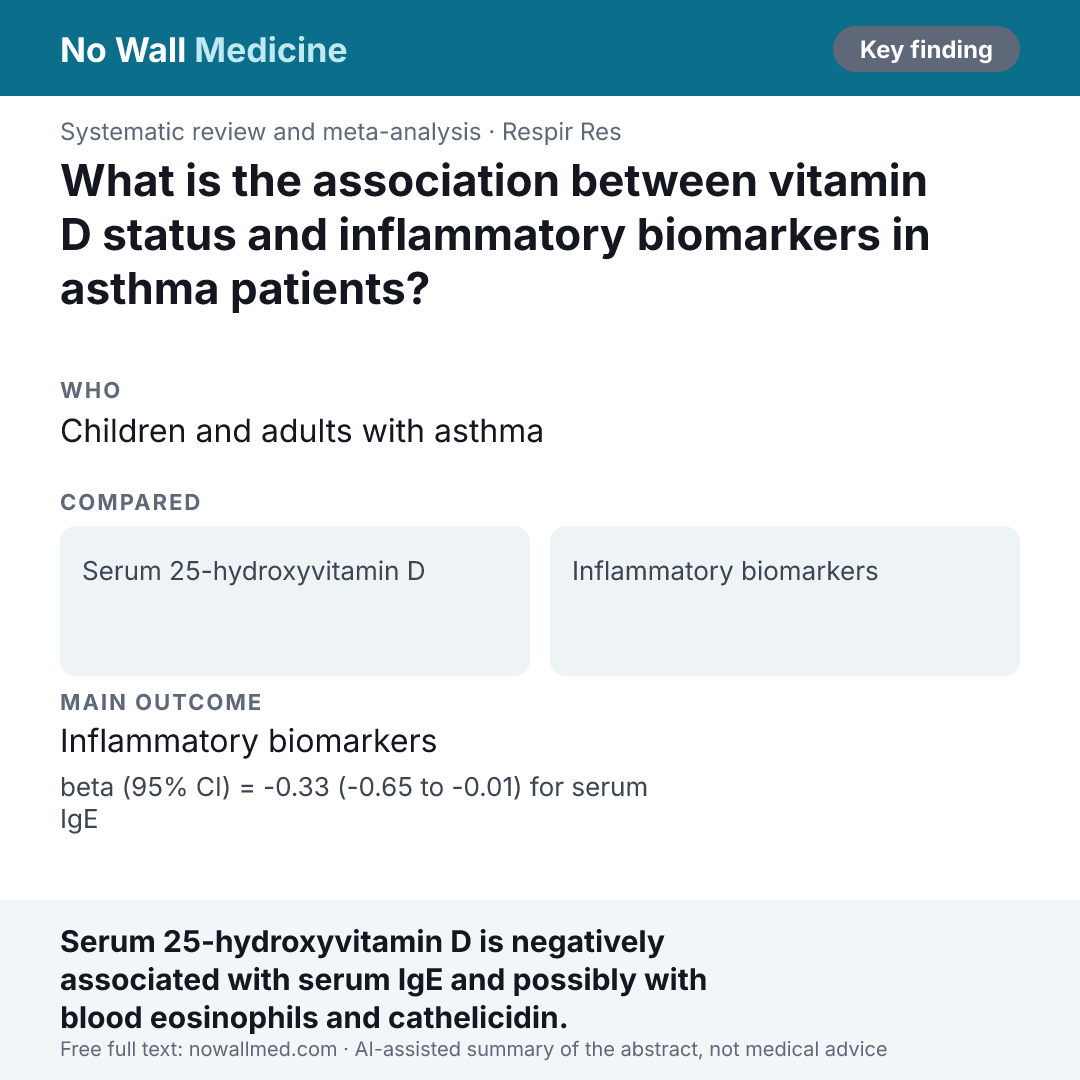
Associations between vitamin D status and biomarkers linked with inflammation in patients with asthma: a systematic review and meta-analysis of interventional and observational studies
Systematic review and meta-analysisKey finding
What is the association between vitamin D status and inflammatory biomarkers in asthma patients?
Who
Children and adults with asthma
Compared
Serum 25-hydroxyvitamin D
Inflammatory biomarkers
Main outcome
Inflammatory biomarkers
Result: beta (95% CI) = -0.33 (-0.65 to -0.01) for serum IgE
Bottom line: Serum 25-hydroxyvitamin D is negatively associated with serum IgE and possibly with blood eosinophils and cathelicidin.
Limitation: Future research should employ rigorous methodologies and standardized reporting for meta-analysis aggregation.
Respir Res · 2024-09-19 · Save PNG
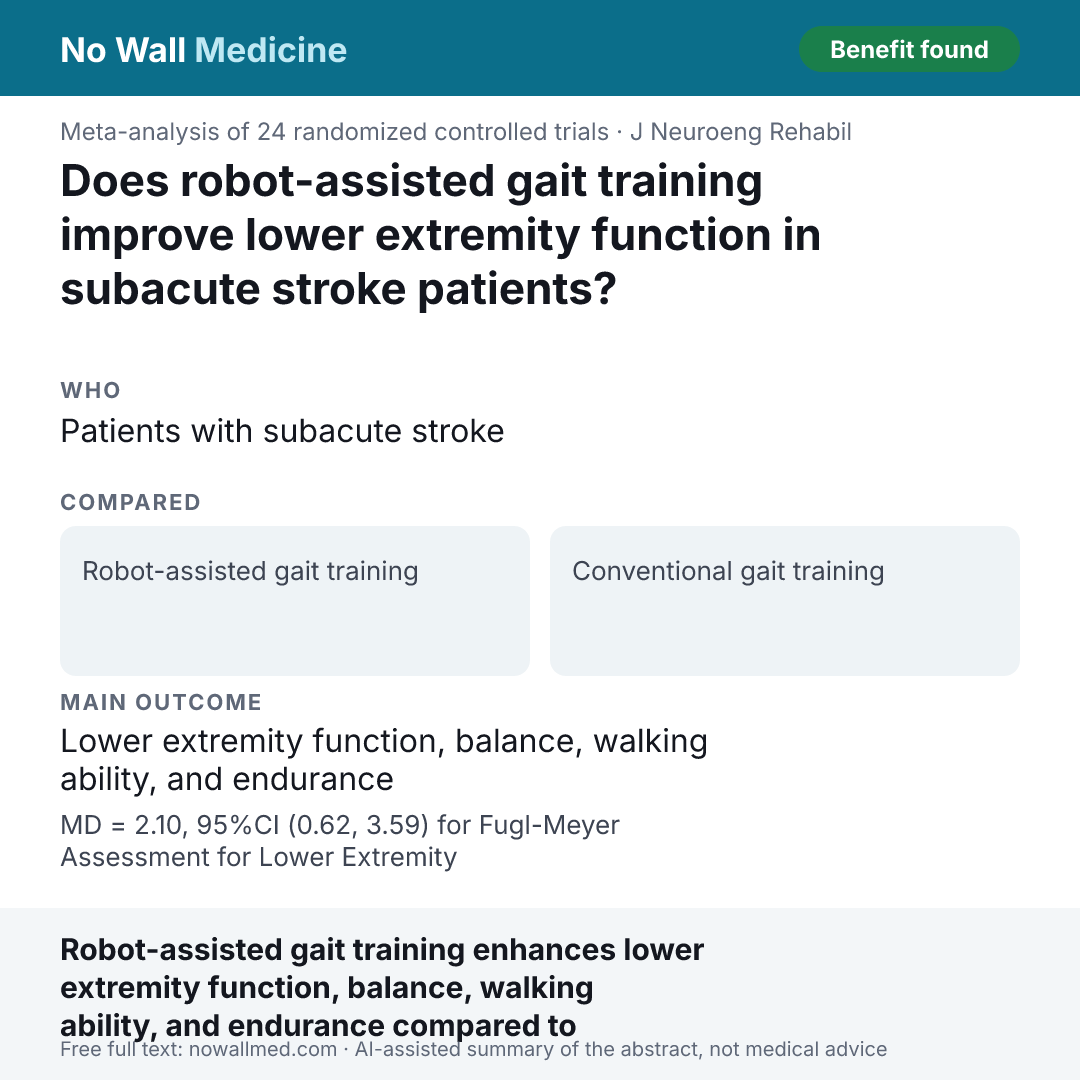
Efficacy of robot-assisted gait training on lower extremity function in subacute stroke patients: a systematic review and meta-analysis
Meta-analysis of 24 randomized controlled trialsBenefit found
Does robot-assisted gait training improve lower extremity function in subacute stroke patients?
Who
Patients with subacute stroke
Compared
Robot-assisted gait training
Conventional gait training
Main outcome
Lower extremity function, balance, walking ability, and endurance
Result: MD = 2.10, 95%CI (0.62, 3.59) for Fugl-Meyer Assessment for Lower Extremity
Bottom line: Robot-assisted gait training enhances lower extremity function, balance, walking ability, and endurance compared to conventional gait training.
Limitation: The quality of evidence for improvements in gait speed remains low.
J Neuroeng Rehabil · 2024-09-19 · Save PNG
Comparative effects of drug interventions for the acute management of migraine episodes in adults: systematic review and network meta-analysis
Systematic review and network meta-analysisBenefit found
Which oral monotherapies are most effective for acute migraine management in adults?
Who
89445
Adults with a diagnosis of migraine
Compared
Active interventions
Placebo
Main outcome
Pain freedom at two hours and sustained pain freedom to 24 hours
Result: odds ratios from 1.73 (95% CI 1.27 to 2.34) to 5.19 (4.25 to 6.33)
Bottom line: Eletriptan, rizatriptan, sumatriptan, and zolmitriptan were most effective for acute migraine treatment.
Limitation: Confidence in accordance with CINeMA ranged from high to very low.
BMJ · 2024-09-18 · Save PNG