Visual abstracts
New randomized trials and meta-analyses from leading journals at a glance: who was studied, what was compared, and what was found. Every paper is free to read in full.
All specialtiesCardiology 4763Oncology 4043Gastroenterology & Hepatology 1903Infectious Disease 3756Neurology 1872Psychiatry & Mental Health 2216Pulmonology 2044Critical Care 1319Endocrinology & Diabetes 2544Pediatrics 2889Surgery 2480Orthopedics & Sports Medicine 917Neurosurgery 525Cardiothoracic & Vascular Surgery 656Plastic & Reconstructive Surgery 574Nephrology 1107Rheumatology 810Hematology 1090Dermatology 611Ophthalmology 532Obstetrics & Gynecology 1645Public & Global Health 1037Radiology & Imaging 619Anesthesiology 958Urology 745ENT (Otolaryngology) 494Emergency Medicine 481Allergy & Immunology 309Geriatrics 972Family Medicine & Primary Care 534Medical Genetics & Genomics 659Pathology & Laboratory Medicine 156Physical Medicine & Rehabilitation 734Palliative Care 421Nutrition 1560Digital Health & AI 2137General Medicine 318
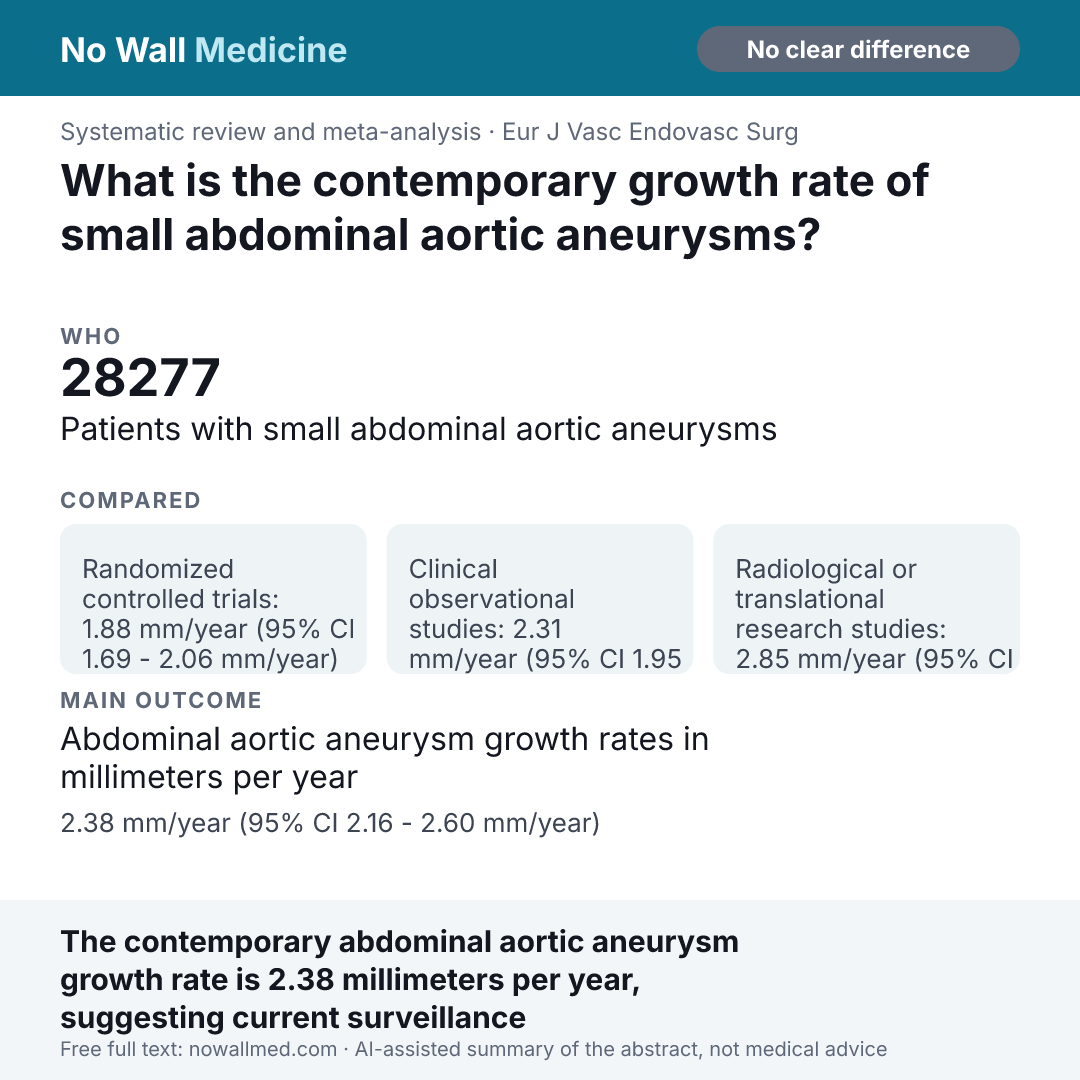
Editor's Choice - Systematic Review and Meta-Analysis of Contemporary Abdominal Aortic Aneurysm Growth Rates
Systematic review and meta-analysisNo clear difference
What is the contemporary growth rate of small abdominal aortic aneurysms?
Who
28277
Patients with small abdominal aortic aneurysms
Compared
Randomized controlled trials: 1.88 mm/year (95% CI 1.69 - 2.06 mm/year)
Clinical observational studies: 2.31 mm/year (95% CI 1.95 - 2.67 mm/year)
Radiological or translational research studies: 2.85 mm/year (95% CI 2.44 - 3.26 mm/year)
Main outcome
Abdominal aortic aneurysm growth rates in millimeters per year
Result: 2.38 mm/year (95% CI 2.16 - 2.60 mm/year)
Bottom line: The contemporary abdominal aortic aneurysm growth rate is 2.38 millimeters per year, suggesting current surveillance recommendations remain valid.
Limitation: High heterogeneity, small study publication bias, and 27 studies with moderate to high risk of bias.
Eur J Vasc Endovasc Surg · 2023-09-28 · Save PNG
Educational Effectiveness of Telementoring as a Continuing Professional Development Intervention for Surgeons in Practice: A Systematic Review
Systematic reviewKey finding
Is telementoring effective for surgeons
Who
178
surgeons in practice
Compared
Telementoring
Control
Main outcome
educational effectiveness
Bottom line: Telementoring is effective for surgeons
Ann Surg Open · 2023-09-28 · Save PNG

Psychological interventions for the prevention of depression relapse: systematic review and network meta-analysis
Systematic review and network meta-analysisBenefit found
How effective are psychological interventions for preventing depression relapse?
Who
2871
Patients with depression
Compared
Psychological interventions
Supportive counseling
Main outcome
Depression relapse
Bottom line: Psychological interventions are more effective than supportive counseling for preventing depression relapse.
Transl Psychiatry · 2023-09-28 · Save PNG

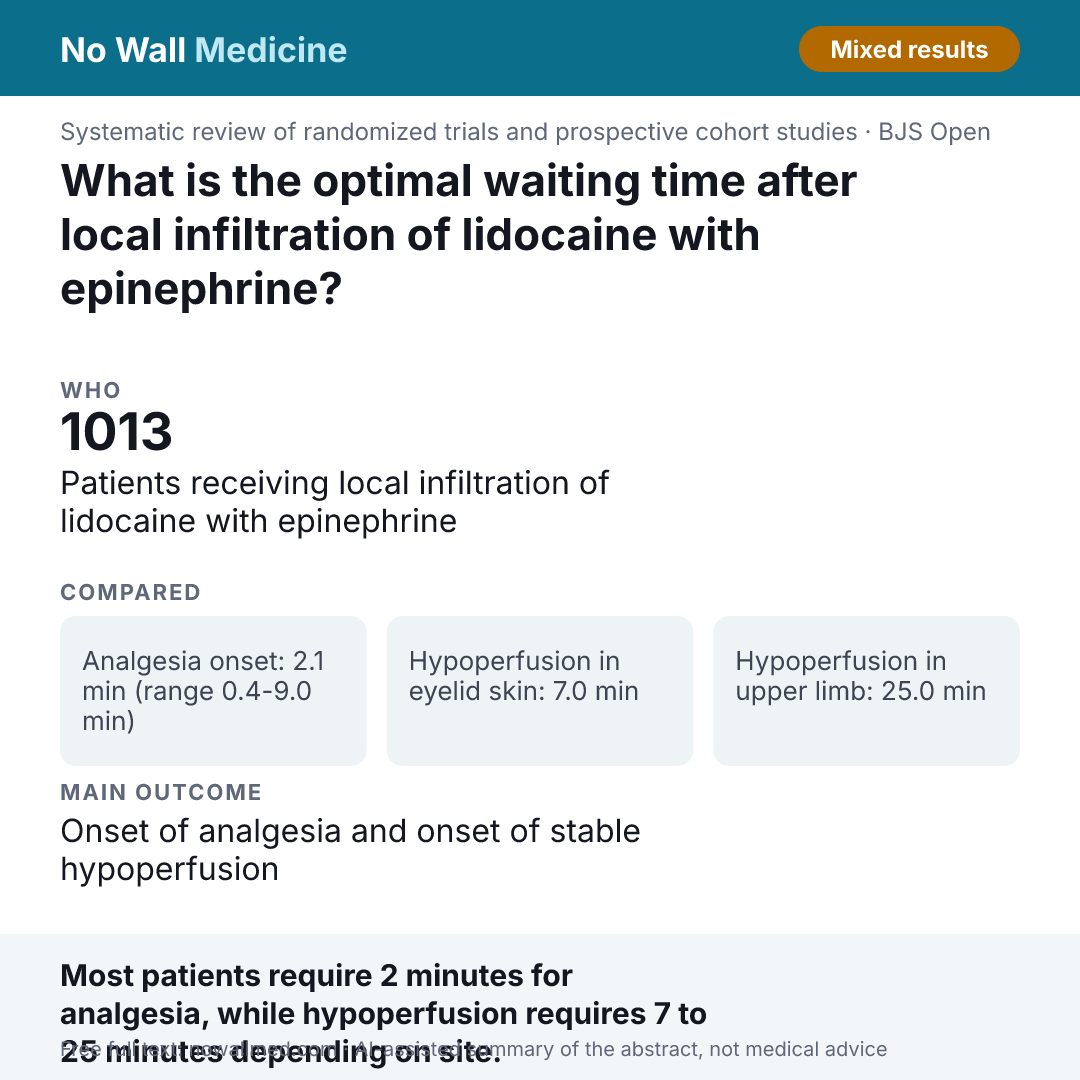
How long to wait after local infiltration anaesthesia: systematic review
Systematic review of randomized trials and prospective cohort studiesMixed results
What is the optimal waiting time after local infiltration of lidocaine with epinephrine?
Who
1013
Patients receiving local infiltration of lidocaine with epinephrine
Compared
Analgesia onset: 2.1 min (range 0.4-9.0 min)
Hypoperfusion in eyelid skin: 7.0 min
Hypoperfusion in upper limb: 25.0 min
Main outcome
Onset of analgesia and onset of stable hypoperfusion
Bottom line: Most patients require 2 minutes for analgesia, while hypoperfusion requires 7 to 25 minutes depending on site.
Limitation: Results varied significantly due to differences in anatomic sites, depth, resolution, and artefacts.
BJS Open · 2023-09-28 · Save PNG
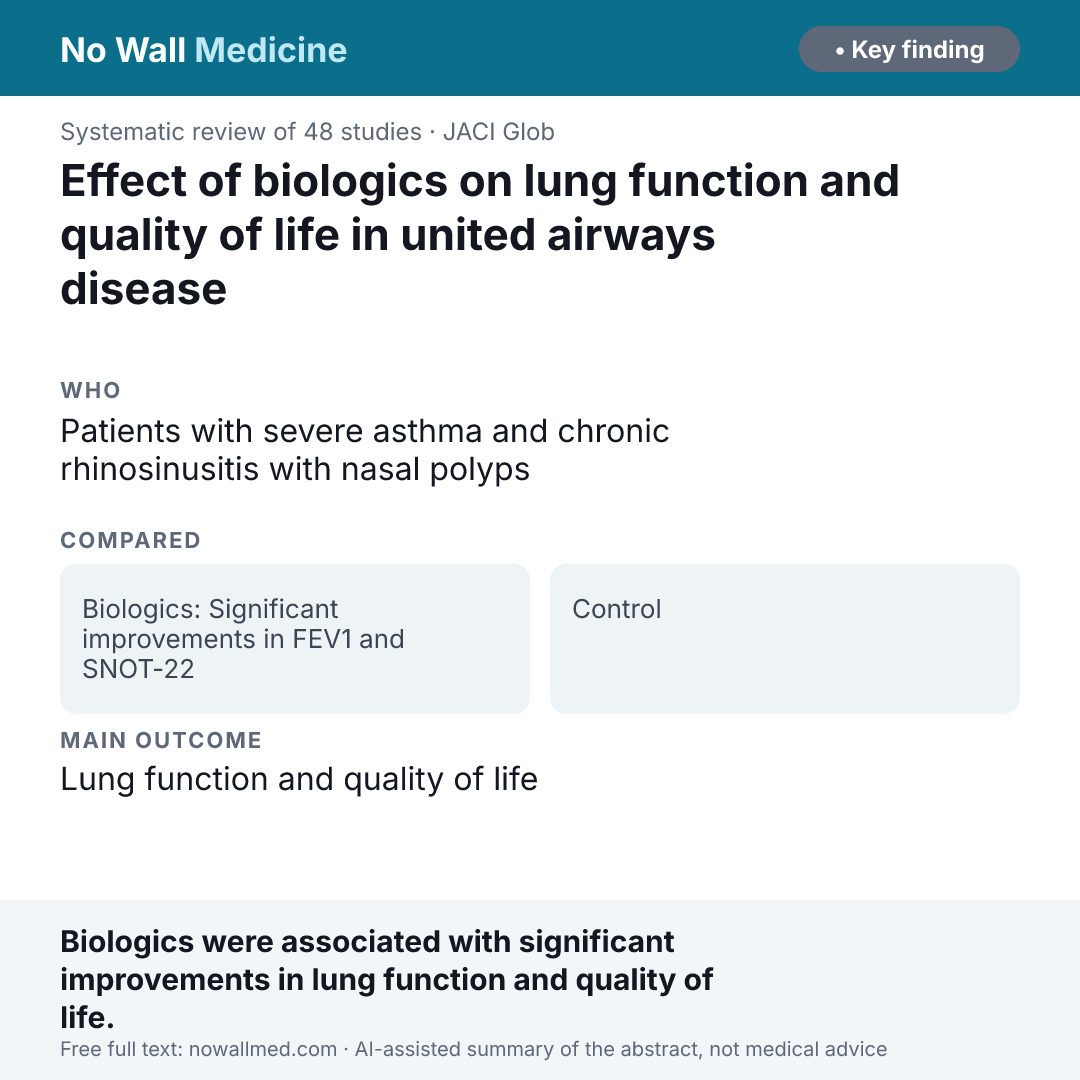
The effect of biologics in lung function and quality of life of patients with united airways disease: A systematic review
Systematic review of 48 studiesKey finding
Effect of biologics on lung function and quality of life in united airways disease
Who
Patients with severe asthma and chronic rhinosinusitis with nasal polyps
Compared
Biologics: Significant improvements in FEV1 and SNOT-22
Control
Main outcome
Lung function and quality of life
Bottom line: Biologics were associated with significant improvements in lung function and quality of life.
Limitation: High heterogeneity of populations and outcome measurements across studies
JACI Glob · 2023-09-28 · Save PNG
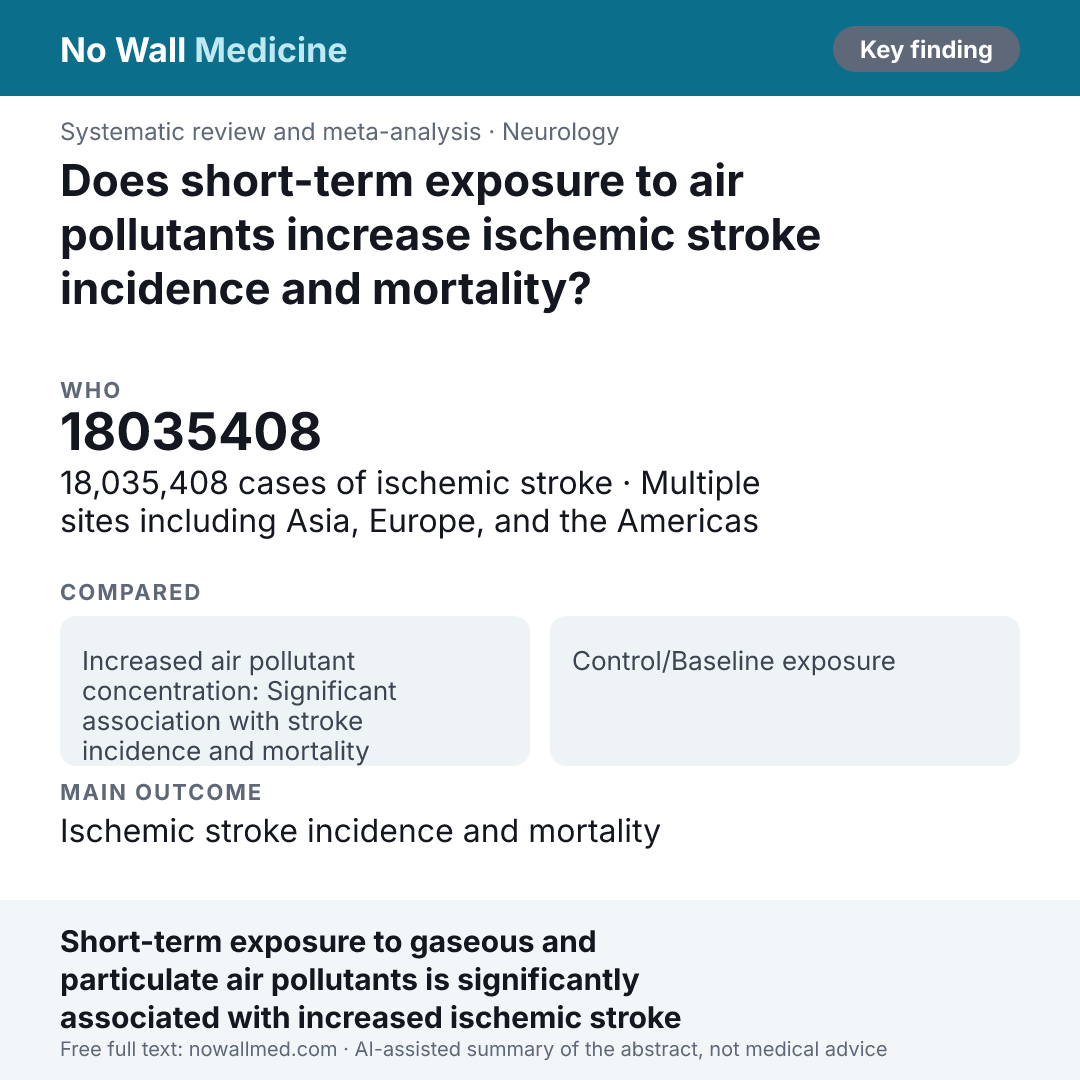
Short-term Exposure to Air Pollution and Ischemic Stroke: A Systematic Review and Meta-analysis
Systematic review and meta-analysisKey finding
Does short-term exposure to air pollutants increase ischemic stroke incidence and mortality?
Who
18035408
18,035,408 cases of ischemic stroke · Multiple sites including Asia, Europe, and the Americas
Compared
Increased air pollutant concentration: Significant association with stroke incidence and mortality
Control/Baseline exposure
Main outcome
Ischemic stroke incidence and mortality
Result: RR = 1.28 (95% CI 1.21-1.36) for nitrogen dioxide incidence
Bottom line: Short-term exposure to gaseous and particulate air pollutants is significantly associated with increased ischemic stroke incidence and mortality.
Limitation: None of the included studies were conducted in Africa.
Neurology · 2023-09-27 · Save PNG
Emotional Experience of People With Schizophrenia and People at Risk for Psychosis: A Meta-Analysis
Meta-analysis of 111 studiesHarm found
Do people with schizophrenia or at risk for psychosis have aberrant emotional experiences of normative stimuli?
Who
6913
People with schizophrenia, at risk for psychosis, and healthy controls
Compared
Clinical groups combined: less positive pleasant stimuli (Hedges g = -0.19)
Healthy controls
Main outcome
Three scales of emotional experience in response to stimuli
Result: Hedges g = -0.19 (pleasant unipolar positive), Hedges g = -0.28 (pleasant bipolar valence)
Bottom line: People with schizophrenia or at risk for psychosis experience aberrant emotions, including less positive responses to pleasant stimuli.
JAMA Psychiatry · 2023-09-27 · Save PNG

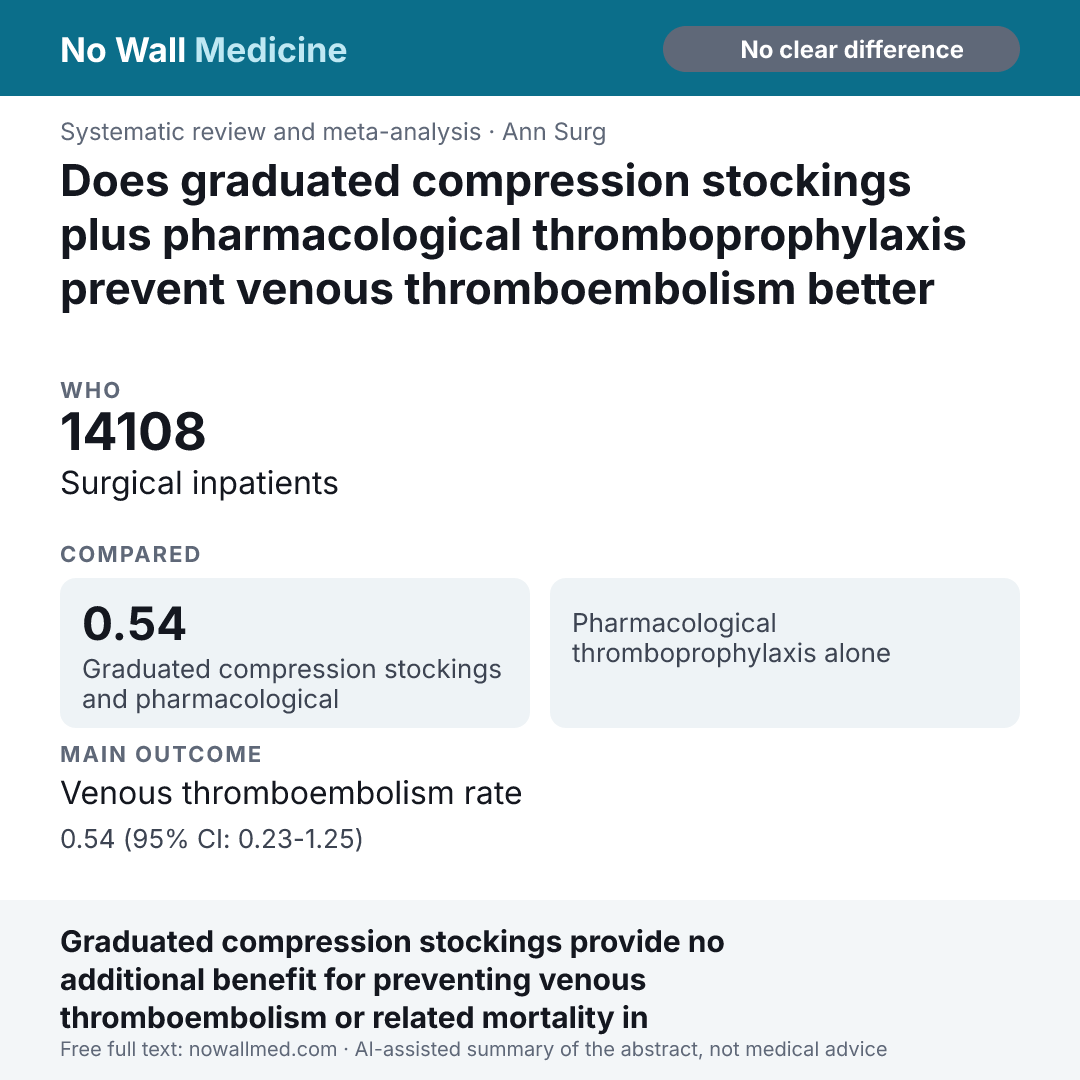
An Updated Systematic Review and Meta-analysis of the Impact of Graduated Compression Stockings in Addition to Pharmacological Thromboprophylaxis for Prevention of Venous Thromboembolism in Surgical Inpatients
Systematic review and meta-analysisNo clear difference
Does graduated compression stockings plus pharmacological thromboprophylaxis prevent venous thromboembolism better than pharmacological thromboprophylaxis alone?
Who
14108
Surgical inpatients
Compared
0.54Graduated compression stockings and pharmacological thromboprophylaxis (95% CI: 0.23-1.25)
Pharmacological thromboprophylaxis alone
Main outcome
Venous thromboembolism rate
Result: 0.54 (95% CI: 0.23-1.25)
Bottom line: Graduated compression stockings provide no additional benefit for preventing venous thromboembolism or related mortality in surgical inpatients.
Ann Surg · 2023-09-27 · Save PNG
Systematic review of deep learning image analyses for the diagnosis and monitoring of skin disease
Systematic reviewMixed results
How accurate are deep learning image analyses for diagnosing and monitoring skin diseases?
Who
64
Studies applying deep learning to skin images
Compared
Acne diagnosis accuracy: median 94%, IQR 86-98
Rosacea diagnosis accuracy: 94%, 90-97
Eczema diagnosis accuracy: 93%, 90-99
Psoriasis diagnosis accuracy: 89%, 78-92
Main outcome
Accuracy of deep learning algorithms in disease diagnosis or severity assessment
Bottom line: Deep learning shows potential for skin disease diagnosis, but current research has significant methodological and reporting limitations.
Limitation: High risk-of-bias and high-level applicability concerns in most studies, with limited reporting on ethnicity or skin type.
NPJ Digit Med · 2023-09-27 · Save PNG

Antidepressant and antipsychotic side-effects and personalised prescribing: a systematic review and digital tool development
Umbrella review and digital tool developmentBenefit found
Can a digital tool support personalised prescribing based on antidepressant and antipsychotic side-effects?
Who
65594
Adults with schizophrenia or major depressive disorder
Compared
Antipsychotics: 32 drugs and 14 side-effects
Antidepressants: 37 drugs and nine side-effects
Main outcome
Side-effect databases and a digital decision support tool
Bottom line: A digital tool was developed to help clinicians and patients balance side-effects through personalised, evidence-based prescribing decisions.
Funded by: National Institute for Health and Care Research, Maudsley Charity, Wellcome Trust, Medical Research Council
Lancet Psychiatry · 2023-09-26 · Save PNG

Comparative efficacy and safety of non-neuraxial analgesic techniques for midline laparotomy: a systematic review and frequentist network meta-analysis of randomised controlled trials
Systematic review and network meta-analysisBenefit, low certainty
Which non-neuraxial analgesic techniques are most effective after midline laparotomy?
Who
4410
Adult patients undergoing midline laparotomy
Compared
continuous rectus sheath block
continuous transversus abdominis plane block
placebo/no intervention
Main outcome
24-h cumulative opioid consumption and 24-h resting pain score
Bottom line: Continuous rectus sheath block and continuous transversus abdominis plane block were most efficacious for reducing opioid consumption and pain.
Limitation: Future studies should compare techniques for upper versus lower midline laparotomy.
Br J Anaesth · 2023-09-26 · Save PNG

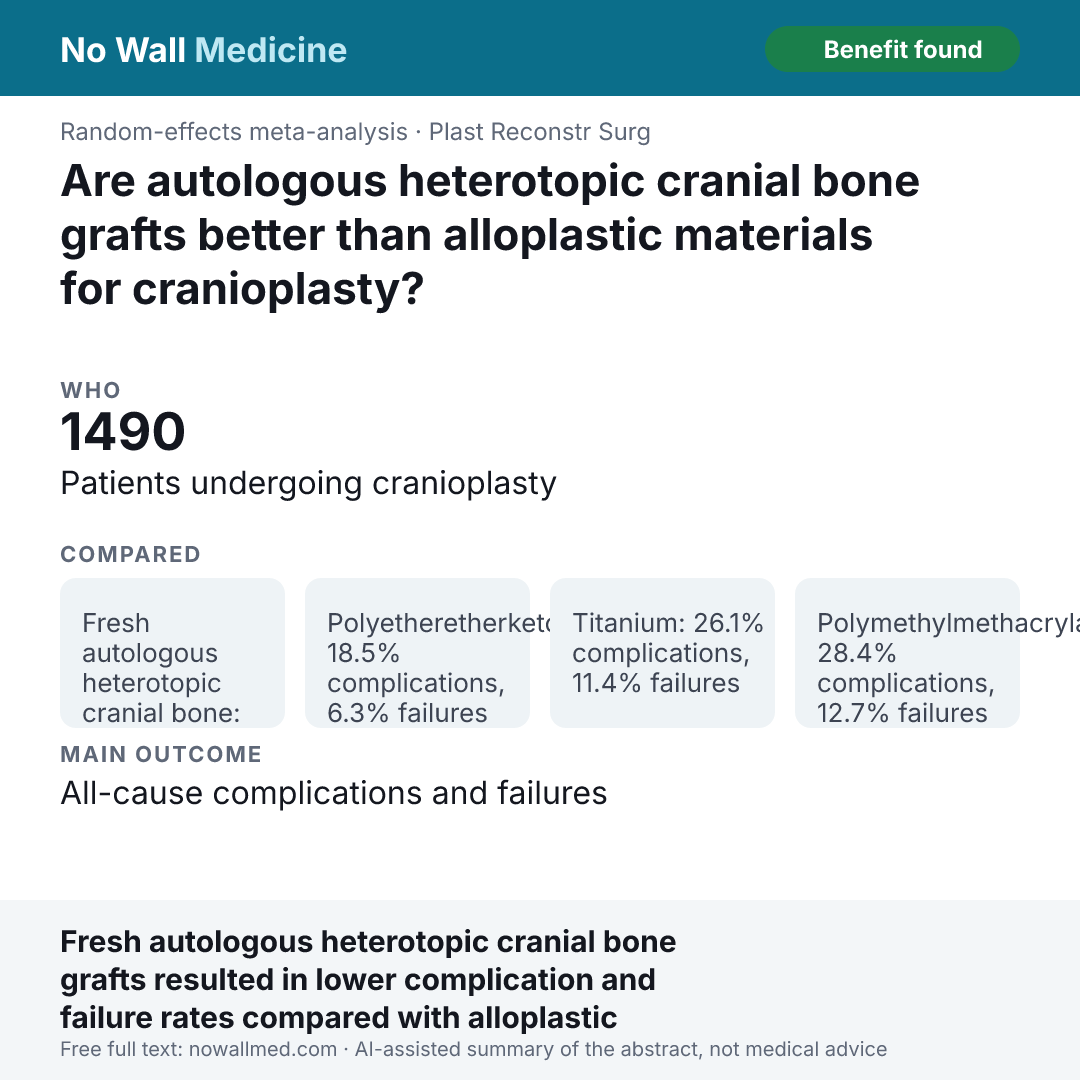
Complications and Failures of Autologous Heterotopic Cranial Bone versus Alloplastic Cranioplasties
Random-effects meta-analysisBenefit found
Are autologous heterotopic cranial bone grafts better than alloplastic materials for cranioplasty?
Who
1490
Patients undergoing cranioplasty
Compared
Fresh autologous heterotopic cranial bone: 6.2% complications, 2.2% failures
Polyetheretherketone: 18.5% complications, 6.3% failures
Titanium: 26.1% complications, 11.4% failures
Polymethylmethacrylate: 28.4% complications, 12.7% failures
Main outcome
All-cause complications and failures
Bottom line: Fresh autologous heterotopic cranial bone grafts resulted in lower complication and failure rates compared with alloplastic materials.
Plast Reconstr Surg · 2023-09-26 · Save PNG
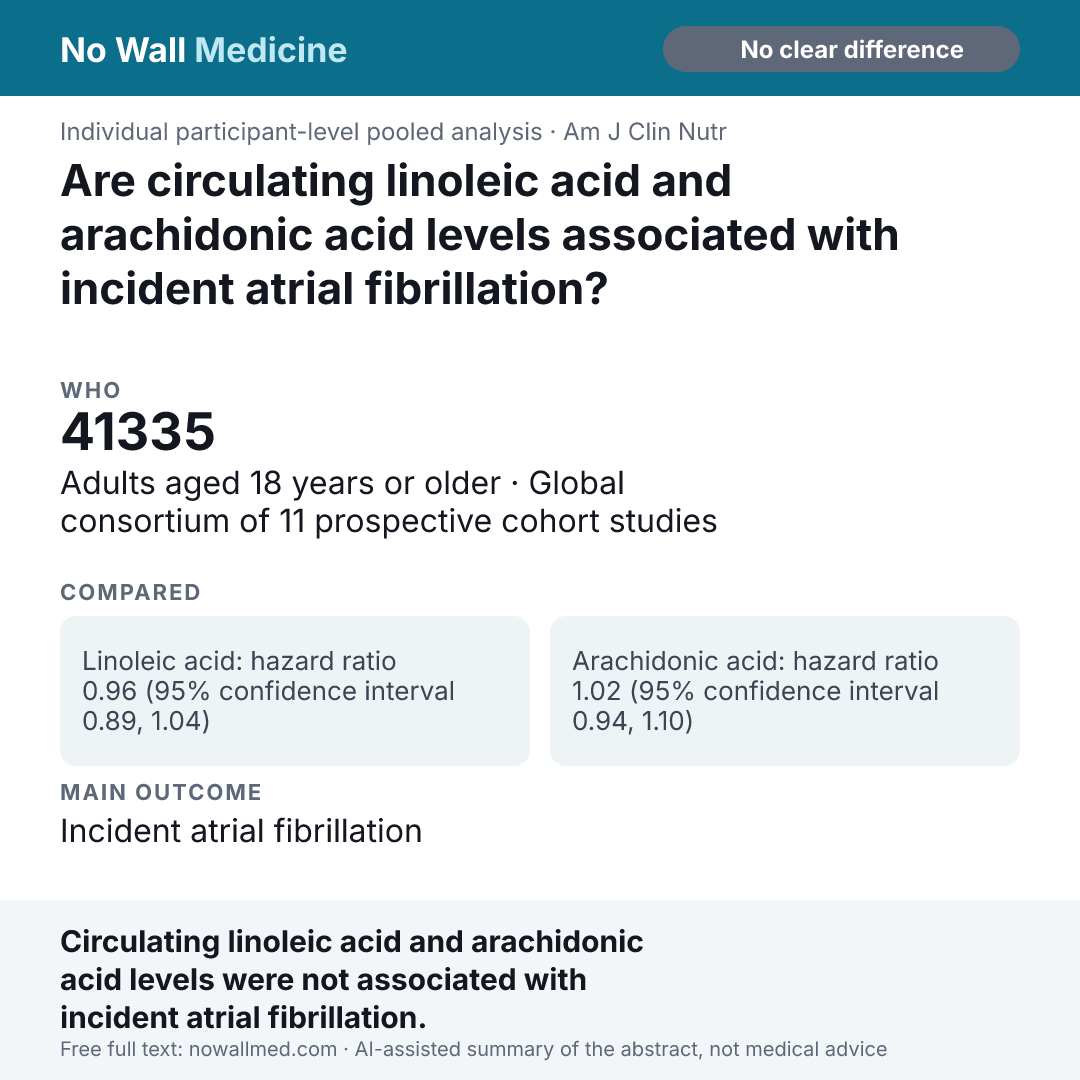
n-6 fatty acid biomarkers and incident atrial fibrillation: an individual participant-level pooled analysis of 11 international prospective studies
Individual participant-level pooled analysisNo clear difference
Are circulating linoleic acid and arachidonic acid levels associated with incident atrial fibrillation?
Who
41335
Adults aged 18 years or older · Global consortium of 11 prospective cohort studies
Compared
Linoleic acid: hazard ratio 0.96 (95% confidence interval 0.89, 1.04)
Arachidonic acid: hazard ratio 1.02 (95% confidence interval 0.94, 1.10)
Main outcome
Incident atrial fibrillation
Bottom line: Circulating linoleic acid and arachidonic acid levels were not associated with incident atrial fibrillation.
Am J Clin Nutr · 2023-09-26 · Save PNG
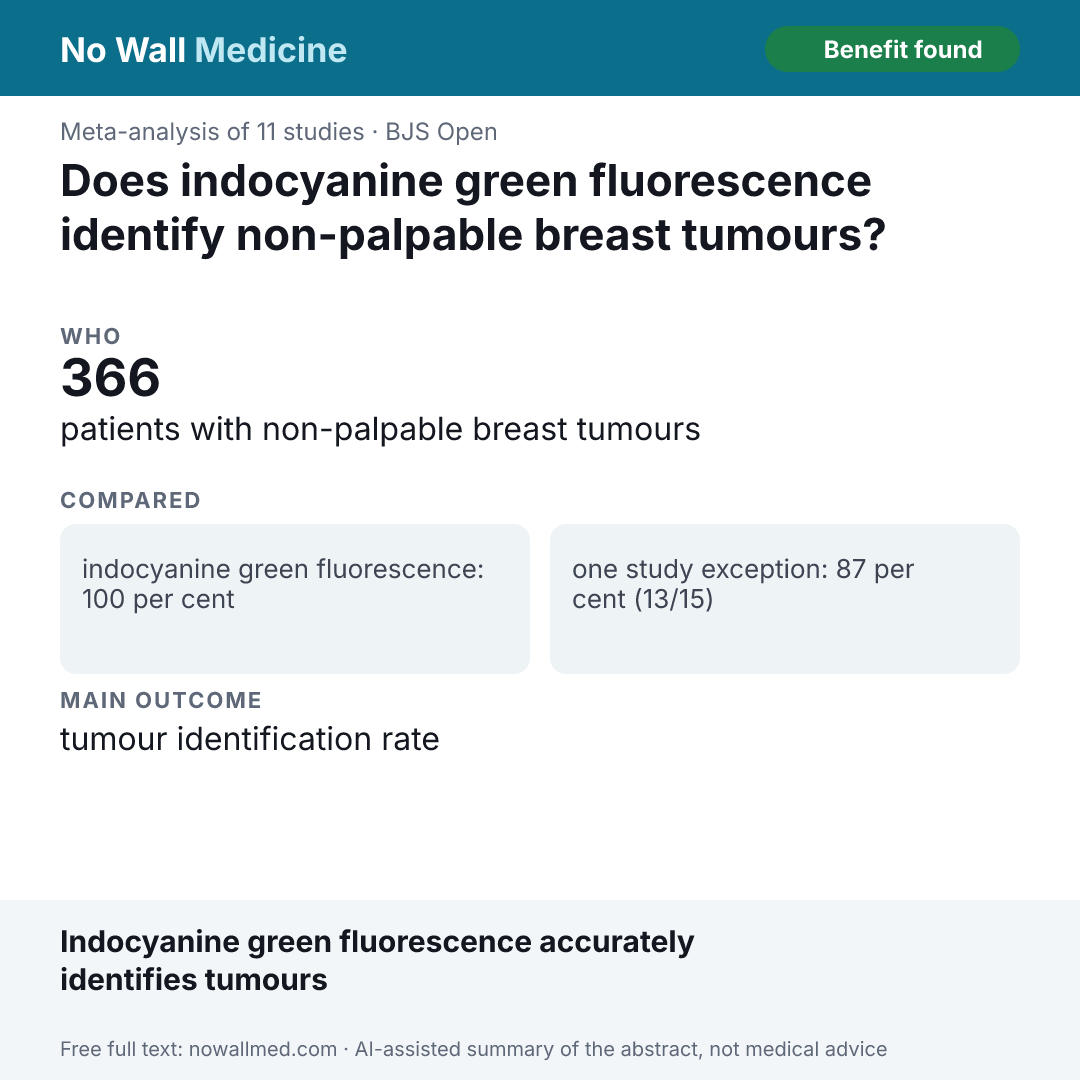
Efficacy of indocyanine green fluorescence for the identification of non-palpable breast tumours: systematic review
Meta-analysis of 11 studiesBenefit found
Does indocyanine green fluorescence identify non-palpable breast tumours?
Who
366
patients with non-palpable breast tumours
Compared
indocyanine green fluorescence: 100 per cent
one study exception: 87 per cent (13/15)
Main outcome
tumour identification rate
Bottom line: Indocyanine green fluorescence accurately identifies tumours
Limitation: limited number of studies
BJS Open · 2023-09-26 · Save PNG
Identifying malnutrition in emergency general surgery: systematic review
Systematic reviewUnclear result
Methods to define malnutrition in surgery
Who
adult emergency general surgery patients
Compared
nutrition screening tools
assessment tools
Main outcome
malnutrition identification
Bottom line: Variation in malnutrition identification methods exists
BJS Open · 2023-09-26 · Save PNG

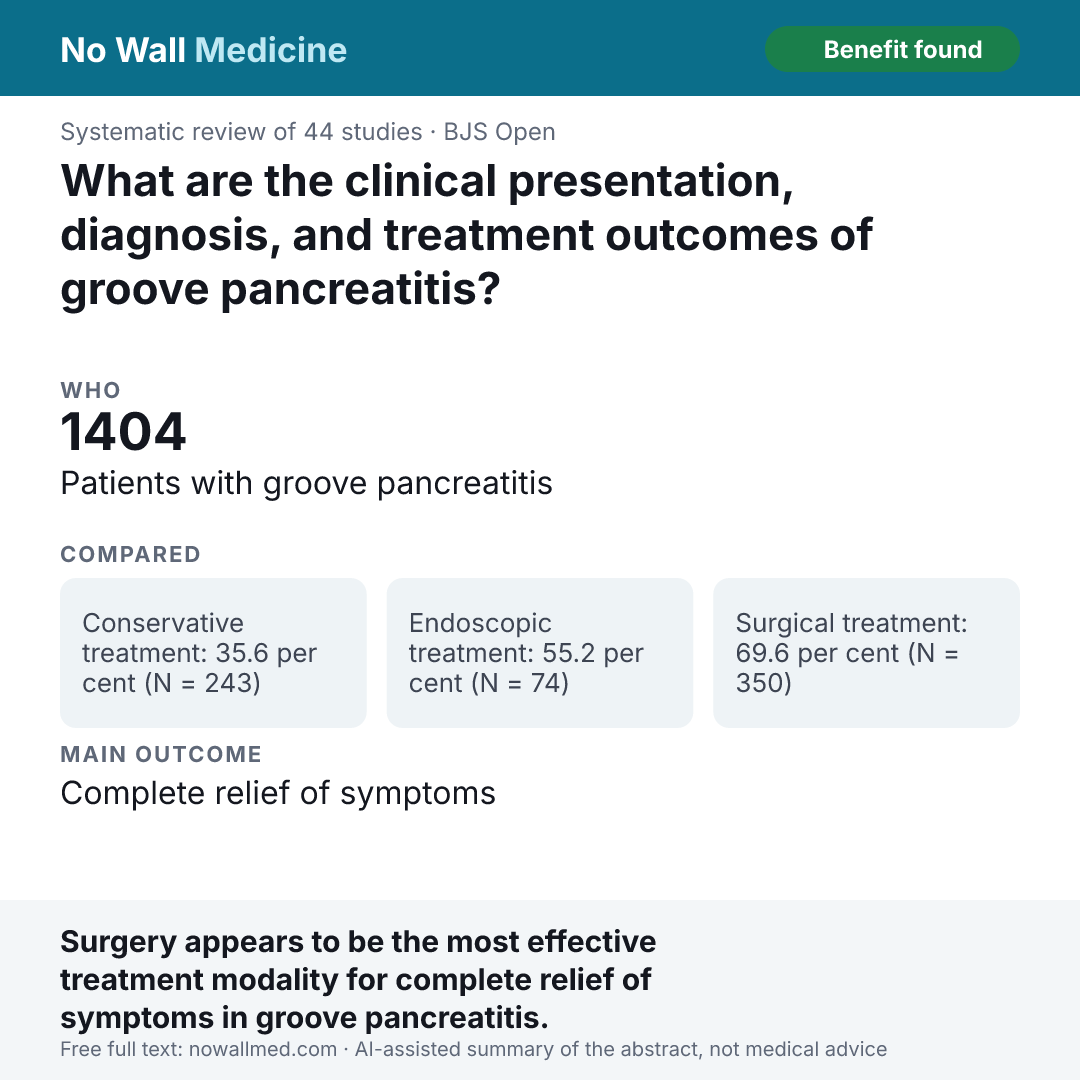
Systematic review on groove pancreatitis: management of a rare disease
Systematic review of 44 studiesBenefit found
What are the clinical presentation, diagnosis, and treatment outcomes of groove pancreatitis?
Who
1404
Patients with groove pancreatitis
Compared
Conservative treatment: 35.6 per cent (N = 243)
Endoscopic treatment: 55.2 per cent (N = 74)
Surgical treatment: 69.6 per cent (N = 350)
Main outcome
Complete relief of symptoms
Bottom line: Surgery appears to be the most effective treatment modality for complete relief of symptoms in groove pancreatitis.
BJS Open · 2023-09-26 · Save PNG
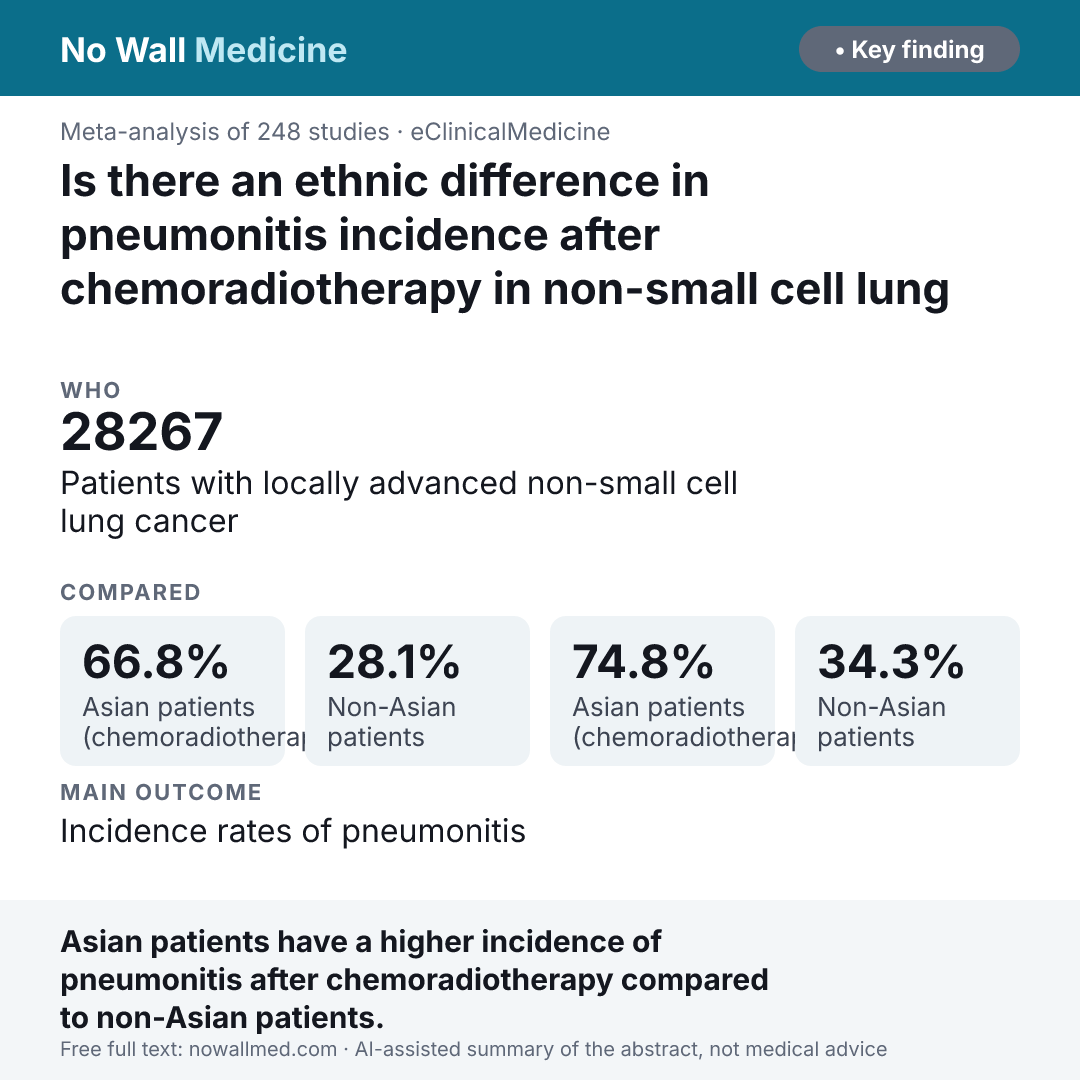
Comparison of post-chemoradiotherapy pneumonitis between Asian and non-Asian patients with locally advanced non-small cell lung cancer: a systematic review and meta-analysis
Meta-analysis of 248 studiesKey finding
Is there an ethnic difference in pneumonitis incidence after chemoradiotherapy in non-small cell lung cancer?
Who
28267
Patients with locally advanced non-small cell lung cancer
Compared
66.8%Asian patients (chemoradiotherapy without immunotherapy) (95% CI: 59.2%-73.9%)
28.1%Non-Asian patients (chemoradiotherapy without immunotherapy) (95% CI: 20.4%-36.4%)
74.8%Asian patients (chemoradiotherapy plus immunotherapy) (95% CI: 63.7%-84.5%)
34.3%Non-Asian patients (chemoradiotherapy plus immunotherapy) (95% CI: 28.7%-40.2%)
Main outcome
Incidence rates of pneumonitis
Bottom line: Asian patients have a higher incidence of pneumonitis after chemoradiotherapy compared to non-Asian patients.
eClinicalMedicine · 2023-09-25 · Save PNG
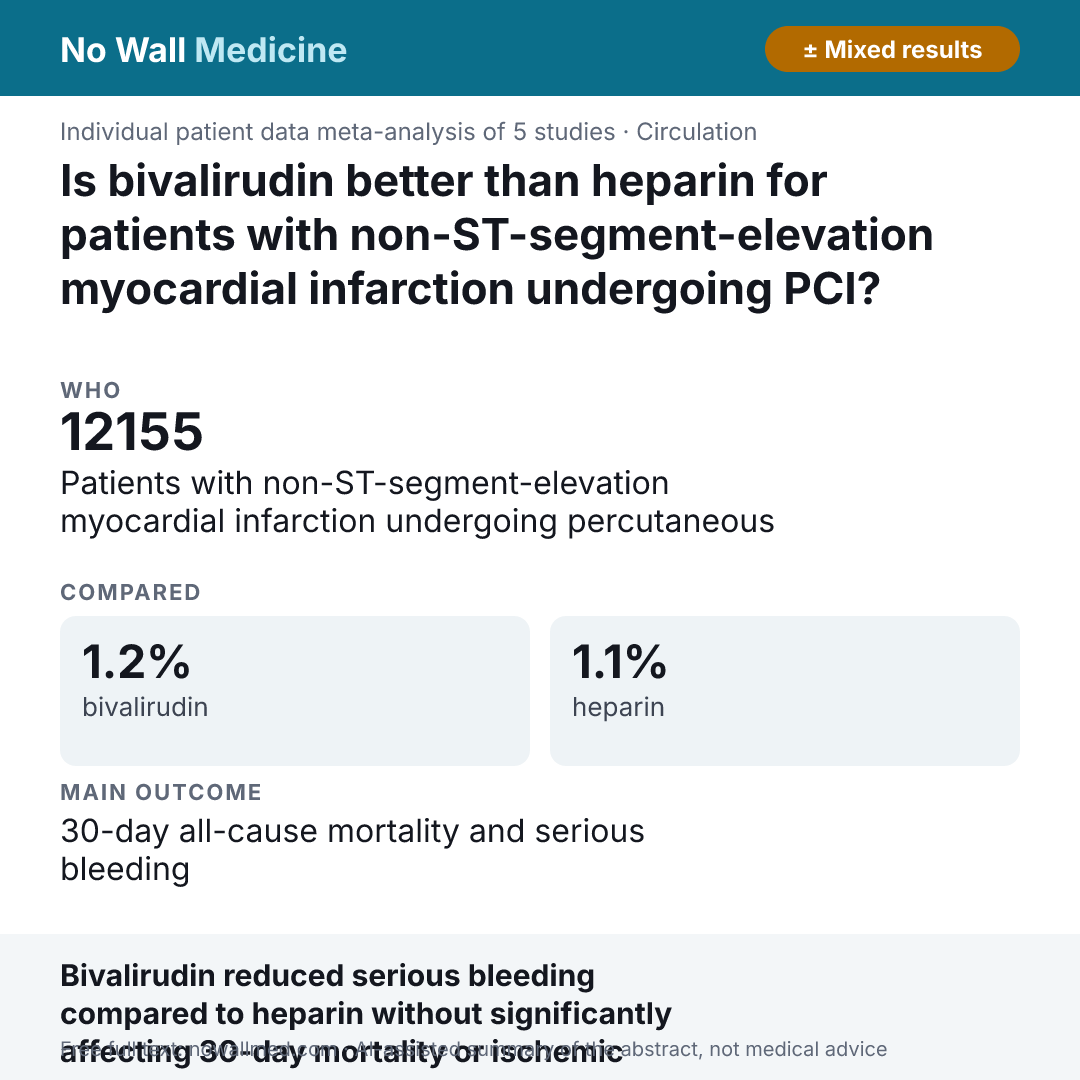
Bivalirudin Versus Heparin During PCI in NSTEMI: Individual Patient Data Meta-Analysis of Large Randomized Trials
Individual patient data meta-analysis of 5 studiesMixed results
Is bivalirudin better than heparin for patients with non-ST-segment-elevation myocardial infarction undergoing PCI?
Who
12155
Patients with non-ST-segment-elevation myocardial infarction undergoing percutaneous coronary intervention
Compared
1.2%bivalirudin
1.1%heparin
Main outcome
30-day all-cause mortality and serious bleeding
Result: adjusted odds ratio 0.59 (95% CI 0.48-0.72) for serious bleeding
Bottom line: Bivalirudin reduced serious bleeding compared to heparin without significantly affecting 30-day mortality or ischemic events.
Circulation · 2023-09-25 · Save PNG
Risk, protective, and biomarkers of dementia in Indigenous peoples: A systematic review
Systematic reviewUnclear result
Dementia factors in Indigenous peoples
Who
Indigenous peoples worldwide
Compared
Modifiable risk factors
Protective factors
Main outcome
Dementia and cognitive impairment
Bottom line: Modifiable risk factors identified
Alzheimers Dement · 2023-09-25 · Save PNG

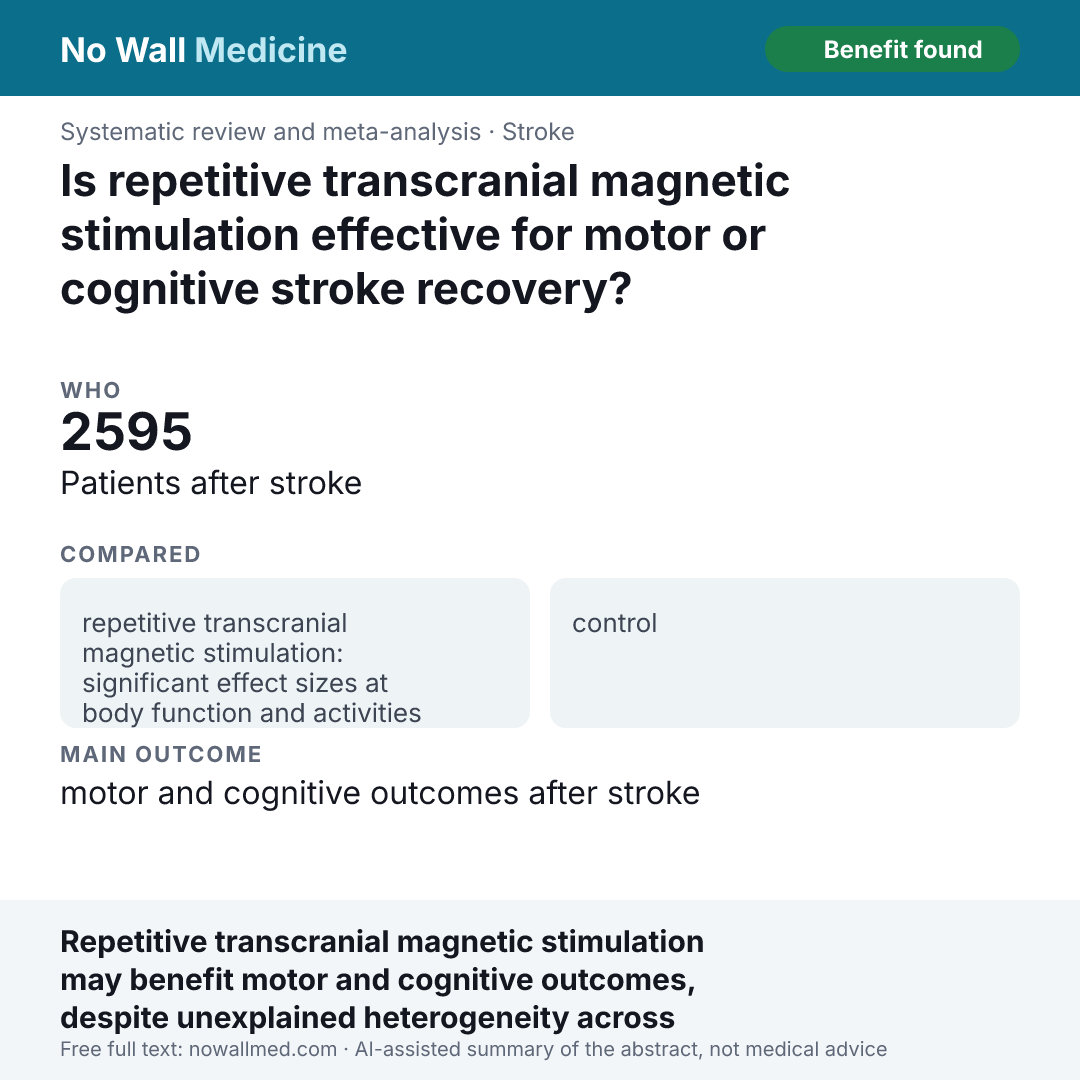
Evidence of rTMS for Motor or Cognitive Stroke Recovery: Hype or Hope?
Systematic review and meta-analysisBenefit found
Is repetitive transcranial magnetic stimulation effective for motor or cognitive stroke recovery?
Who
2595
Patients after stroke
Compared
repetitive transcranial magnetic stimulation: significant effect sizes at body function and activities
control
Main outcome
motor and cognitive outcomes after stroke
Bottom line: Repetitive transcranial magnetic stimulation may benefit motor and cognitive outcomes, despite unexplained heterogeneity across small trials.
Limitation: unexplained heterogeneity across many small sampled trials
Stroke · 2023-09-25 · Save PNG