Visual abstracts
New randomized trials and meta-analyses from leading journals at a glance: who was studied, what was compared, and what was found. Every paper is free to read in full.
All specialtiesCardiology 4765Oncology 4048Gastroenterology & Hepatology 1906Infectious Disease 3759Neurology 1874Psychiatry & Mental Health 2217Pulmonology 2046Critical Care 1323Endocrinology & Diabetes 2545Pediatrics 2891Surgery 2482Orthopedics & Sports Medicine 917Neurosurgery 526Cardiothoracic & Vascular Surgery 657Plastic & Reconstructive Surgery 574Nephrology 1108Rheumatology 810Hematology 1090Dermatology 611Ophthalmology 532Obstetrics & Gynecology 1646Public & Global Health 1037Radiology & Imaging 620Anesthesiology 958Urology 745ENT (Otolaryngology) 494Emergency Medicine 481Allergy & Immunology 309Geriatrics 973Family Medicine & Primary Care 534Medical Genetics & Genomics 659Pathology & Laboratory Medicine 156Physical Medicine & Rehabilitation 736Palliative Care 421Nutrition 1561Digital Health & AI 2136General Medicine 316
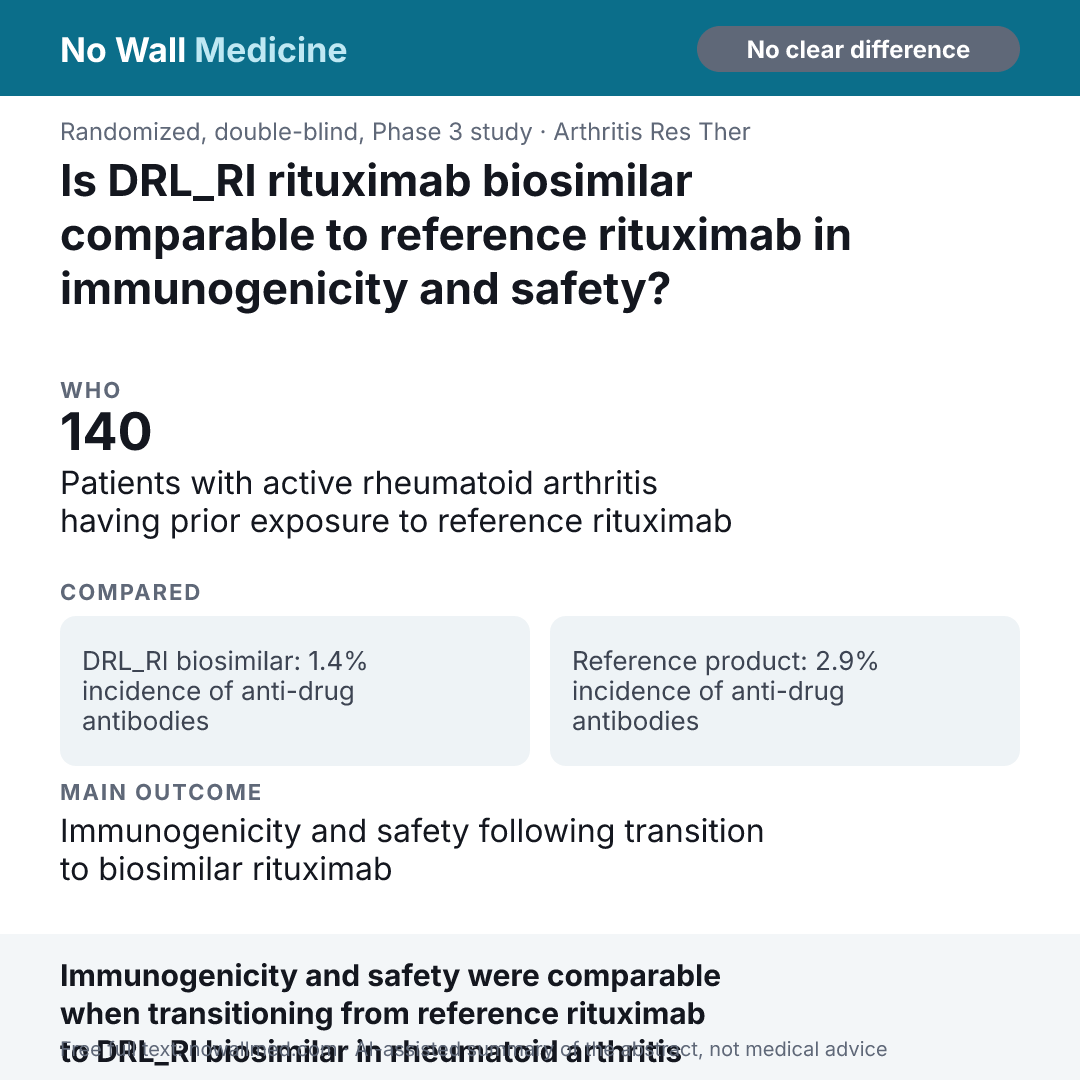
Comparing immunogenicity and safety following transition from reference rituximab to biosimilar rituximab (DRL_RI) in patients with rheumatoid arthritis: a randomized, double-blind, phase 3 study
Randomized, double-blind, Phase 3 studyNo clear difference
Is DRL_RI rituximab biosimilar comparable to reference rituximab in immunogenicity and safety?
Who
140
Patients with active rheumatoid arthritis having prior exposure to reference rituximab
Compared
DRL_RI biosimilar: 1.4% incidence of anti-drug antibodies
Reference product: 2.9% incidence of anti-drug antibodies
Main outcome
Immunogenicity and safety following transition to biosimilar rituximab
Bottom line: Immunogenicity and safety were comparable when transitioning from reference rituximab to DRL_RI biosimilar in rheumatoid arthritis patients.
Arthritis Res Ther · 2024-12-21 · Save PNG
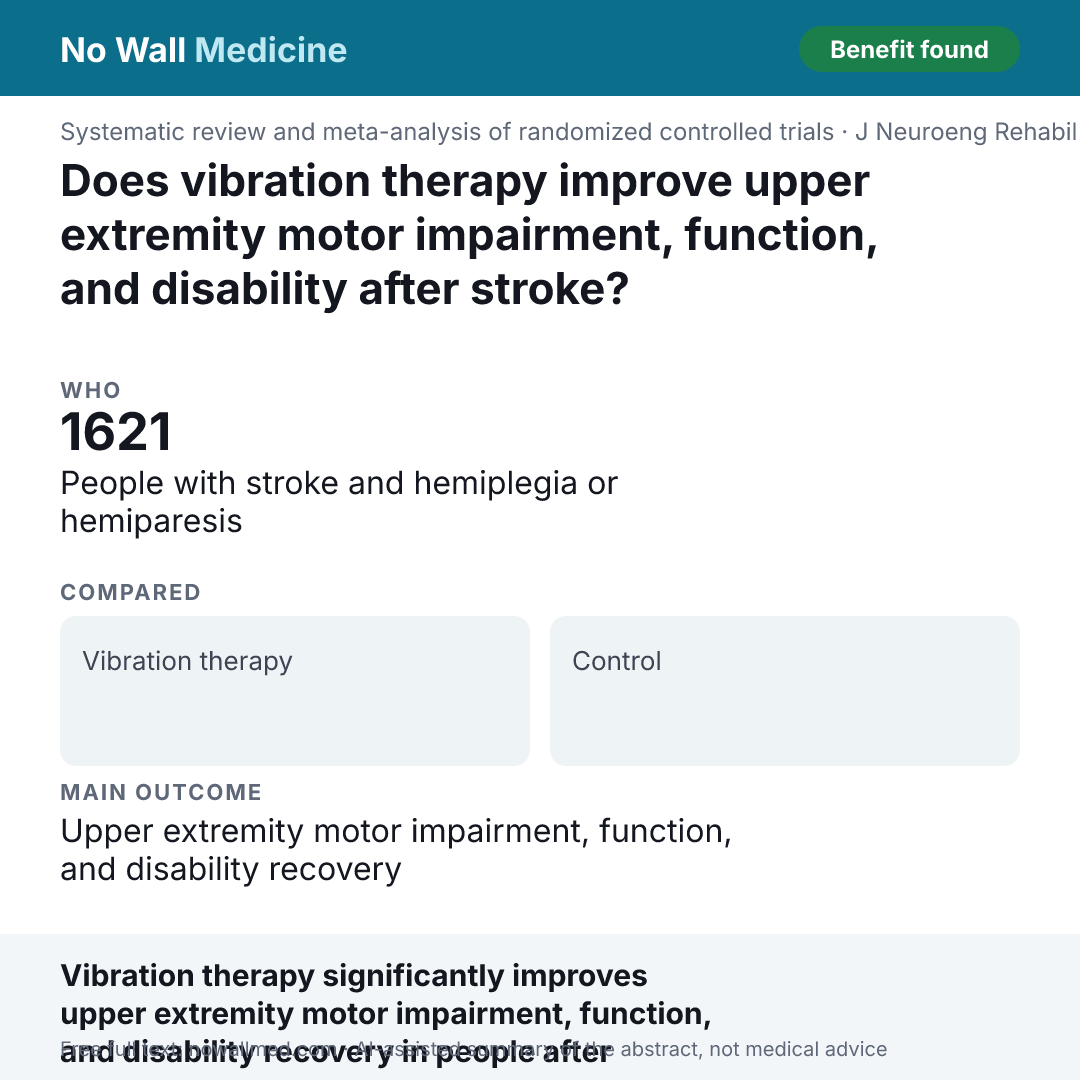
Upper extremity function and disability recovery with vibration therapy after stroke: a systematic review and meta-analysis of RCTs
Systematic review and meta-analysis of randomized controlled trialsBenefit found
Does vibration therapy improve upper extremity motor impairment, function, and disability after stroke?
Who
1621
People with stroke and hemiplegia or hemiparesis
Compared
Vibration therapy
Control
Main outcome
Upper extremity motor impairment, function, and disability recovery
Result: SMD 1.19 for impairment, 0.62 for function, 1.01 for disability
Bottom line: Vibration therapy significantly improves upper extremity motor impairment, function, and disability recovery in people after stroke.
J Neuroeng Rehabil · 2024-12-21 · Save PNG
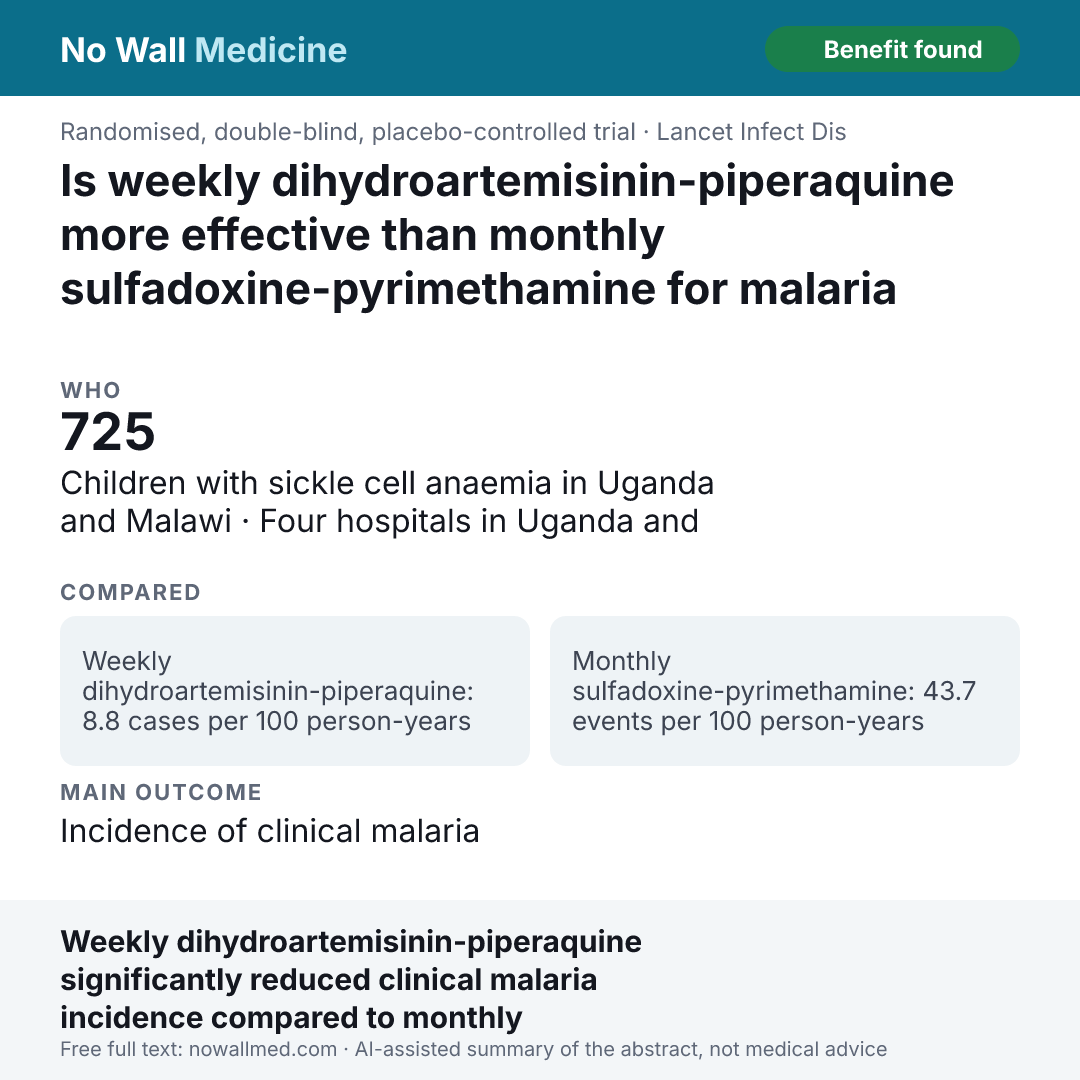
Weekly dihydroartemisinin-piperaquine versus monthly sulfadoxine-pyrimethamine for malaria chemoprevention in children with sickle cell anaemia in Uganda and Malawi (CHEMCHA): a randomised, double-blind, placebo-controlled trial
Randomised, double-blind, placebo-controlled trialBenefit found
Is weekly dihydroartemisinin-piperaquine more effective than monthly sulfadoxine-pyrimethamine for malaria chemoprevention?
Who
725
Children with sickle cell anaemia in Uganda and Malawi · Four hospitals in Uganda and Malawi
Compared
Weekly dihydroartemisinin-piperaquine: 8.8 cases per 100 person-years
Monthly sulfadoxine-pyrimethamine: 43.7 events per 100 person-years
Main outcome
Incidence of clinical malaria
Result: incidence rate ratio 0.20 (95% CI 0.14-0.30)
Bottom line: Weekly dihydroartemisinin-piperaquine significantly reduced clinical malaria incidence compared to monthly sulfadoxine-pyrimethamine in children with sickle cell anaemia.
Lancet Infect Dis · 2024-12-20 · Save PNG
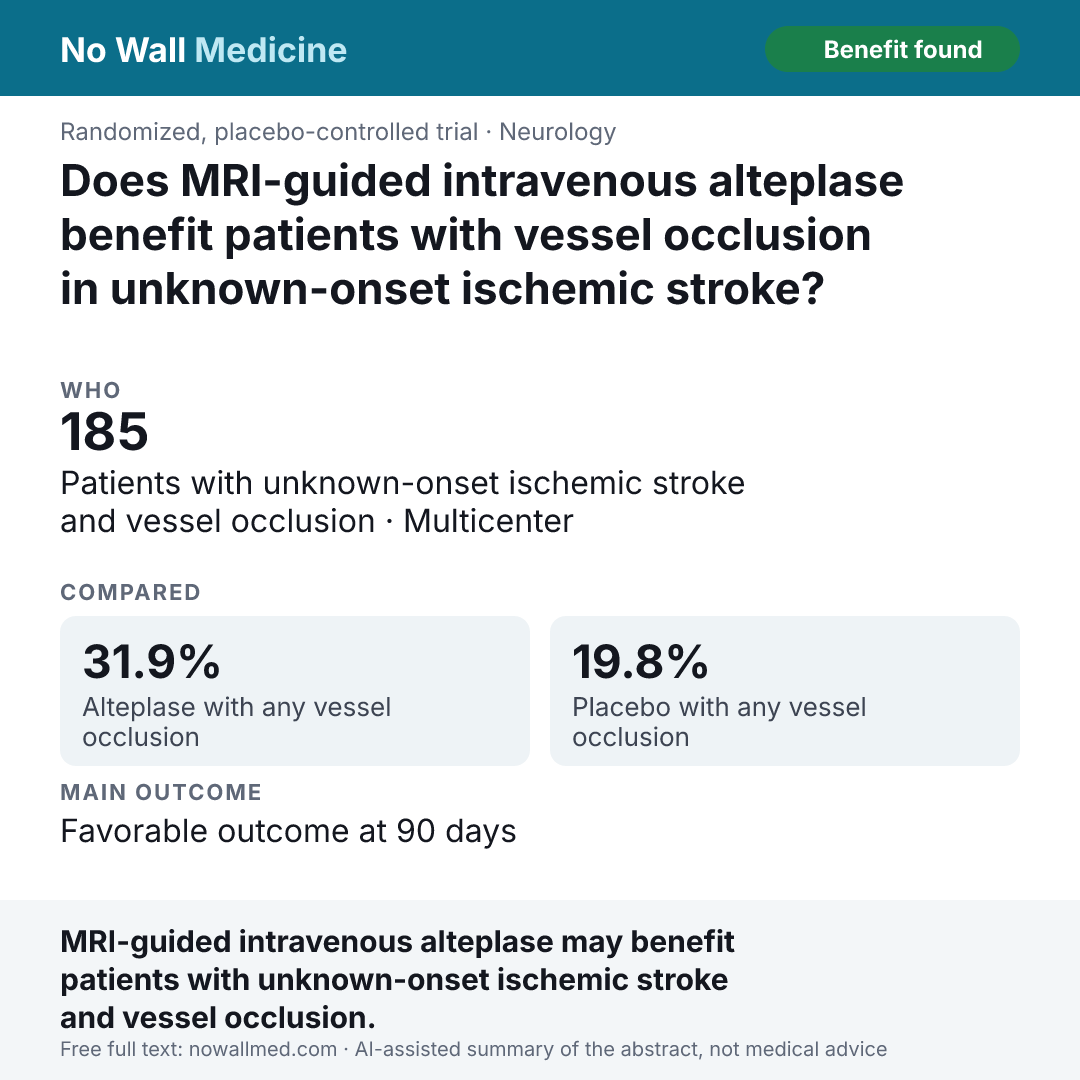
Effect of IV Thrombolysis With Alteplase in Patients With Vessel Occlusion in the WAKE-UP Trial
Randomized, placebo-controlled trialBenefit found
Does MRI-guided intravenous alteplase benefit patients with vessel occlusion in unknown-onset ischemic stroke?
Who
185
Patients with unknown-onset ischemic stroke and vessel occlusion · Multicenter
Compared
31.9%Alteplase with any vessel occlusion
19.8%Placebo with any vessel occlusion
Main outcome
Favorable outcome at 90 days
Result: adjusted odds ratio 2.04 (95% CI 1.00-4.18)
Bottom line: MRI-guided intravenous alteplase may benefit patients with unknown-onset ischemic stroke and vessel occlusion.
Neurology · 2024-12-20 · Save PNG
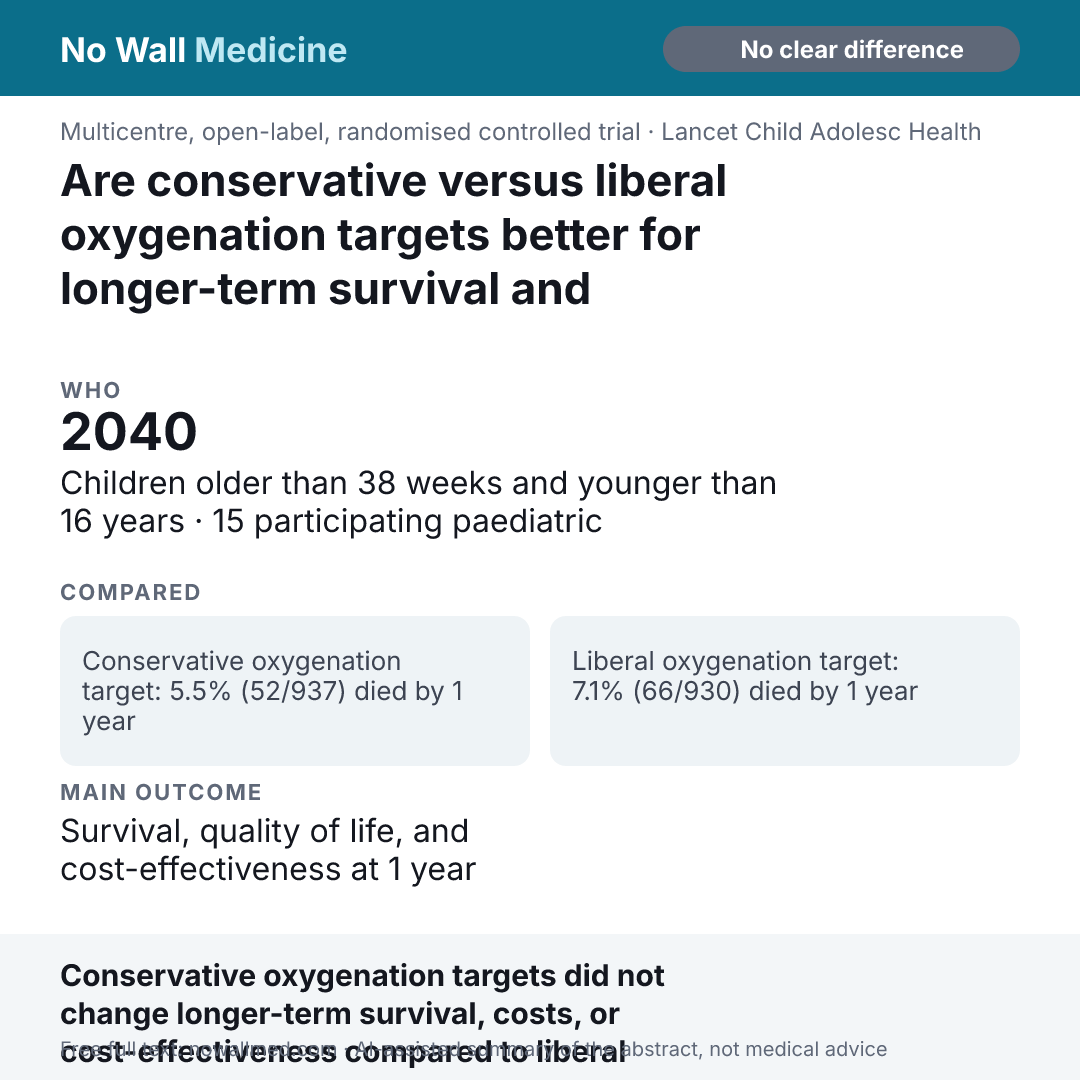
Longer-term survival, quality of life, and cost-effectiveness of conservative versus liberal oxygenation targets in critically ill children: a pre-specified analysis from Oxy-PICU, a multicentre, open, parallel-group, randomised controlled trial
Multicentre, open-label, randomised controlled trialNo clear difference
Are conservative versus liberal oxygenation targets better for longer-term survival and cost-effectiveness?
Who
2040
Children older than 38 weeks and younger than 16 years · 15 participating paediatric intensive care units in England and Scotland
Compared
Conservative oxygenation target: 5.5% (52/937) died by 1 year
Liberal oxygenation target: 7.1% (66/930) died by 1 year
Main outcome
Survival, quality of life, and cost-effectiveness at 1 year
Result: adjusted hazard ratio 0.77 (95% CI 0.53 to 1.10)
Bottom line: Conservative oxygenation targets did not change longer-term survival, costs, or cost-effectiveness compared to liberal oxygenation.
Funded by: UK National Institute for Health and Social Care Research
Lancet Child Adolesc Health · 2024-12-20 · Save PNG
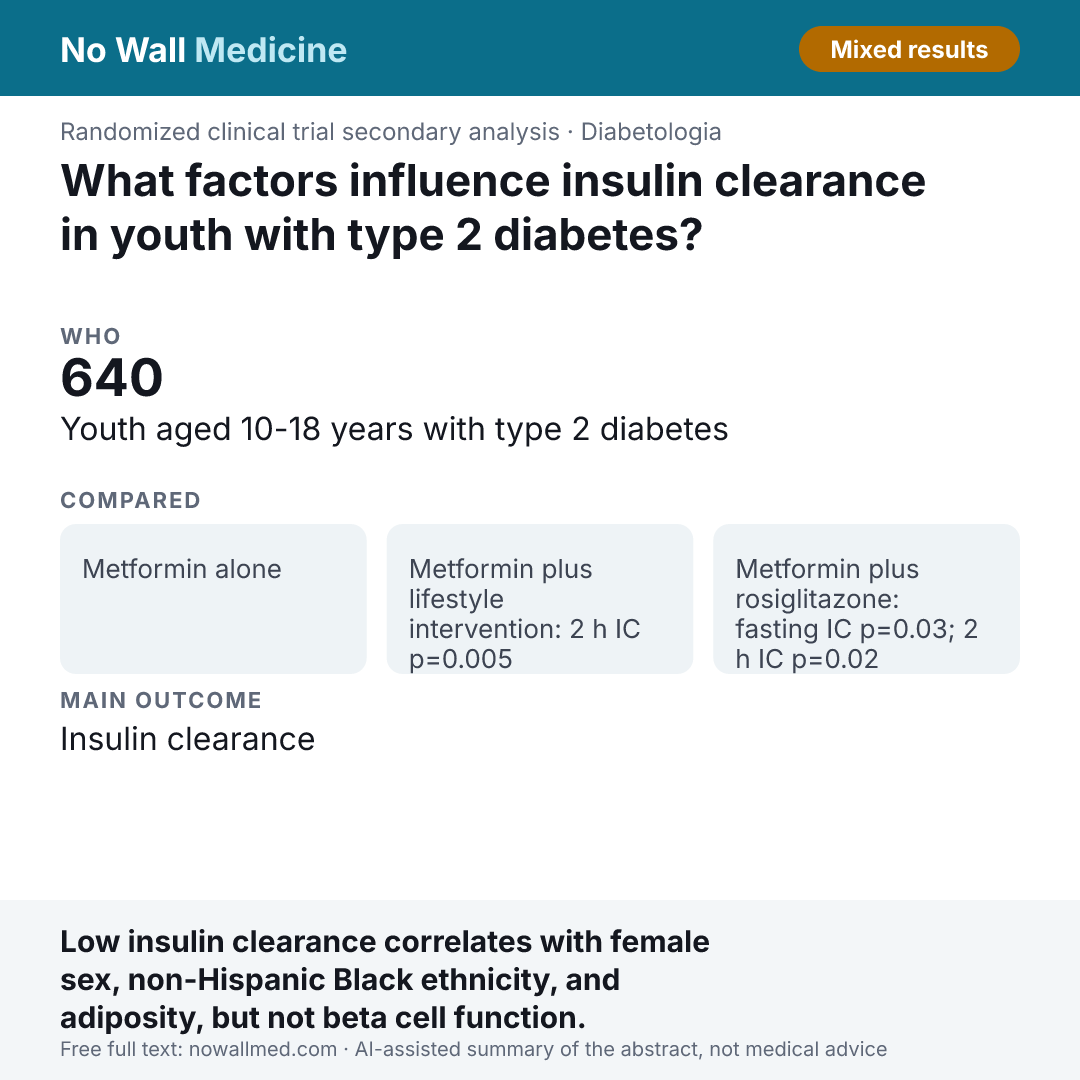
Insulin clearance at randomisation and in response to treatment in youth with type 2 diabetes: a secondary analysis of the TODAY randomised clinical trial
Randomized clinical trial secondary analysisMixed results
What factors influence insulin clearance in youth with type 2 diabetes?
Who
640
Youth aged 10-18 years with type 2 diabetes
Compared
Metformin alone
Metformin plus lifestyle intervention: 2 h IC p=0.005
Metformin plus rosiglitazone: fasting IC p=0.03; 2 h IC p=0.02
Main outcome
Insulin clearance
Bottom line: Low insulin clearance correlates with female sex, non-Hispanic Black ethnicity, and adiposity, but not beta cell function.
Diabetologia · 2024-12-20 · Save PNG
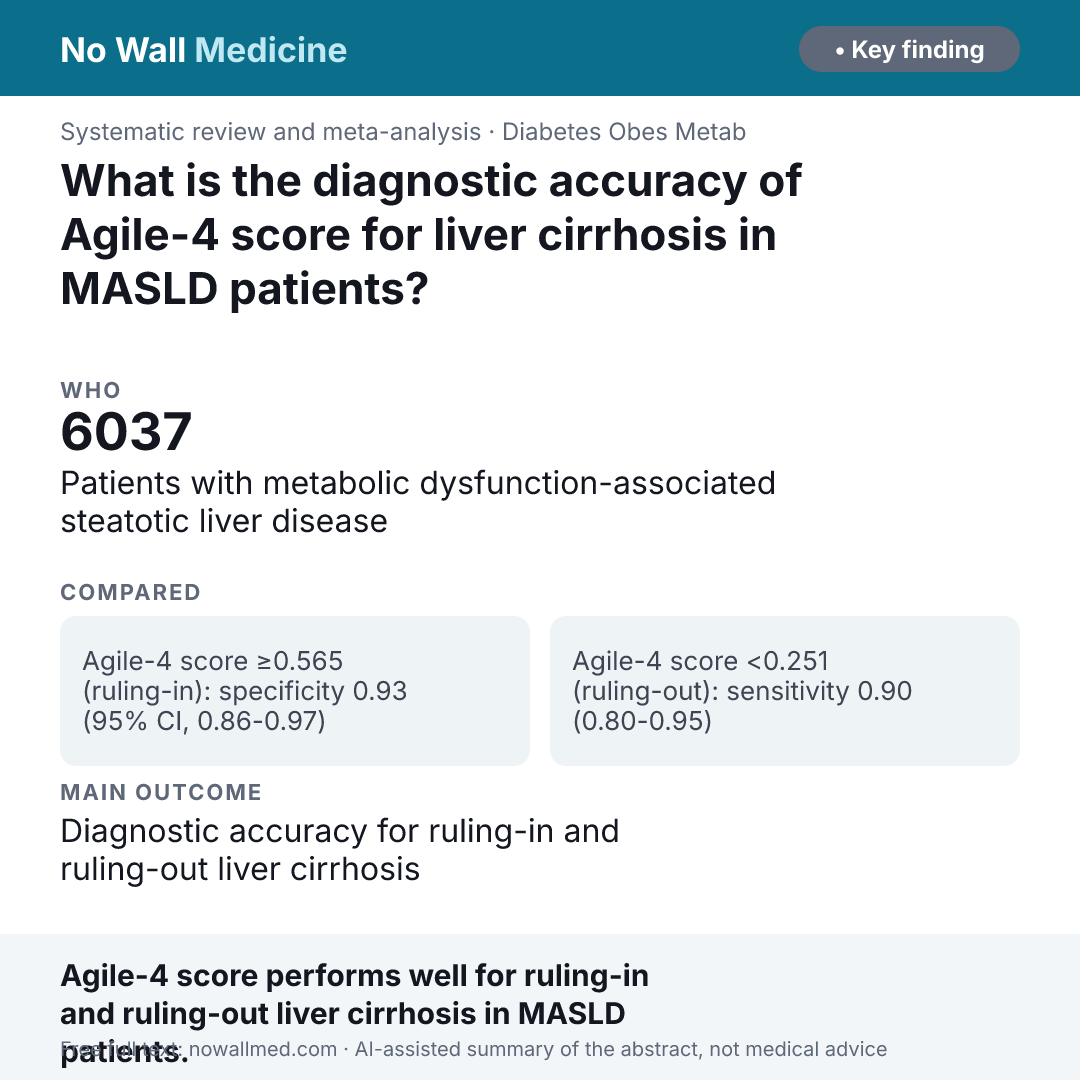
Diagnostic accuracy of Agile-4 score for liver cirrhosis in patients with metabolic dysfunction-associated steatotic liver disease. A systematic review and meta-analysis of diagnostic test accuracy studies
Systematic review and meta-analysisKey finding
What is the diagnostic accuracy of Agile-4 score for liver cirrhosis in MASLD patients?
Who
6037
Patients with metabolic dysfunction-associated steatotic liver disease
Compared
Agile-4 score ≥0.565 (ruling-in): specificity 0.93 (95% CI, 0.86-0.97)
Agile-4 score <0.251 (ruling-out): sensitivity 0.90 (0.80-0.95)
Main outcome
Diagnostic accuracy for ruling-in and ruling-out liver cirrhosis
Bottom line: Agile-4 score performs well for ruling-in and ruling-out liver cirrhosis in MASLD patients.
Limitation: High or unclear risk for bias due to patient selection and blinding concerns.
Diabetes Obes Metab · 2024-12-20 · Save PNG
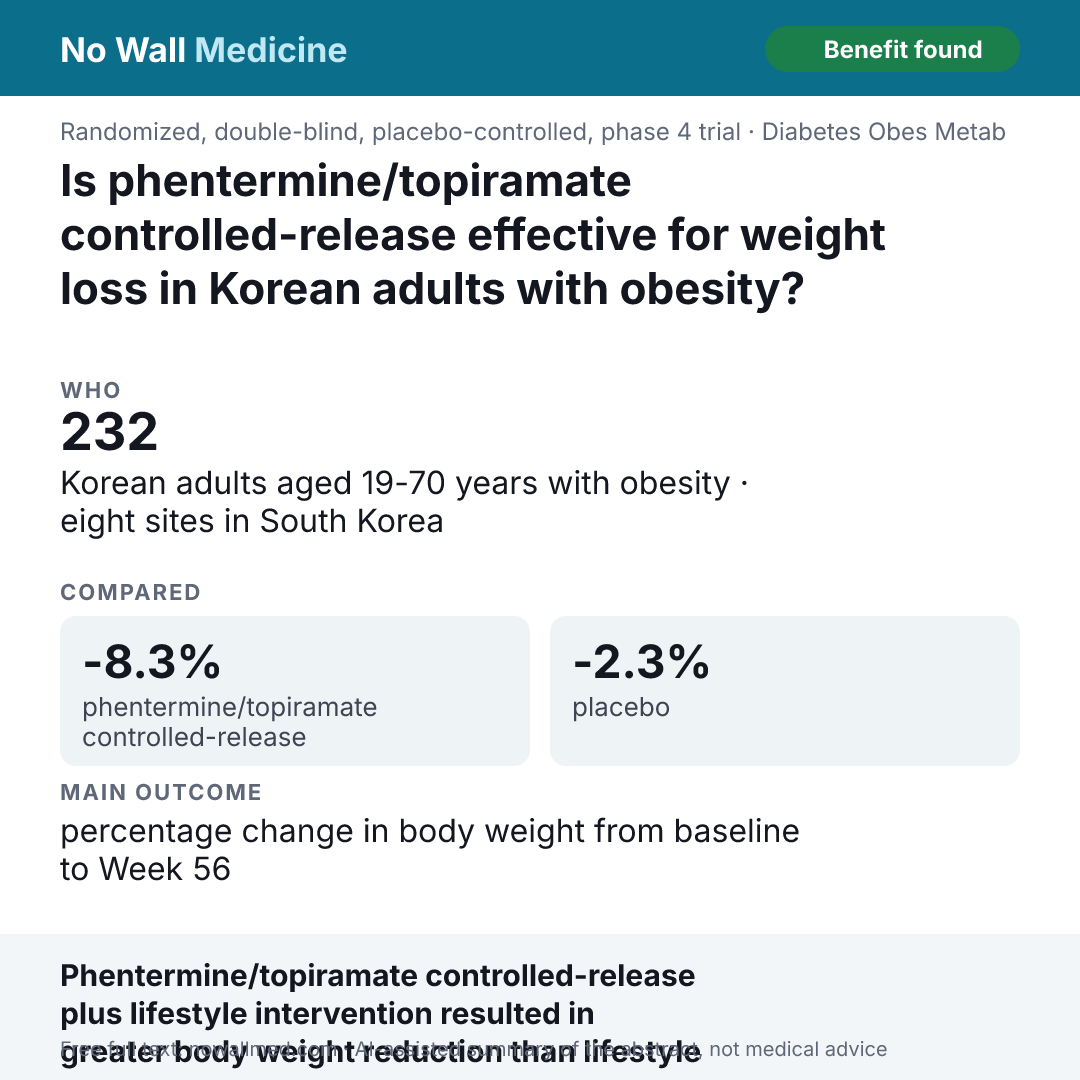
Evaluation of the efficacy and safety of controlled-release phentermine/topiramate in adults with obesity in Korea: A randomized, double-blind, placebo-controlled, phase 4 trial (QUEEN's study)
Randomized, double-blind, placebo-controlled, phase 4 trialBenefit found
Is phentermine/topiramate controlled-release effective for weight loss in Korean adults with obesity?
Who
232
Korean adults aged 19-70 years with obesity · eight sites in South Korea
Compared
-8.3%phentermine/topiramate controlled-release
-2.3%placebo
Main outcome
percentage change in body weight from baseline to Week 56
Result: treatment difference -6.1% (95% CI -7.7 to -4.5)
Bottom line: Phentermine/topiramate controlled-release plus lifestyle intervention resulted in greater body weight reduction than lifestyle intervention alone.
Diabetes Obes Metab · 2024-12-20 · Save PNG
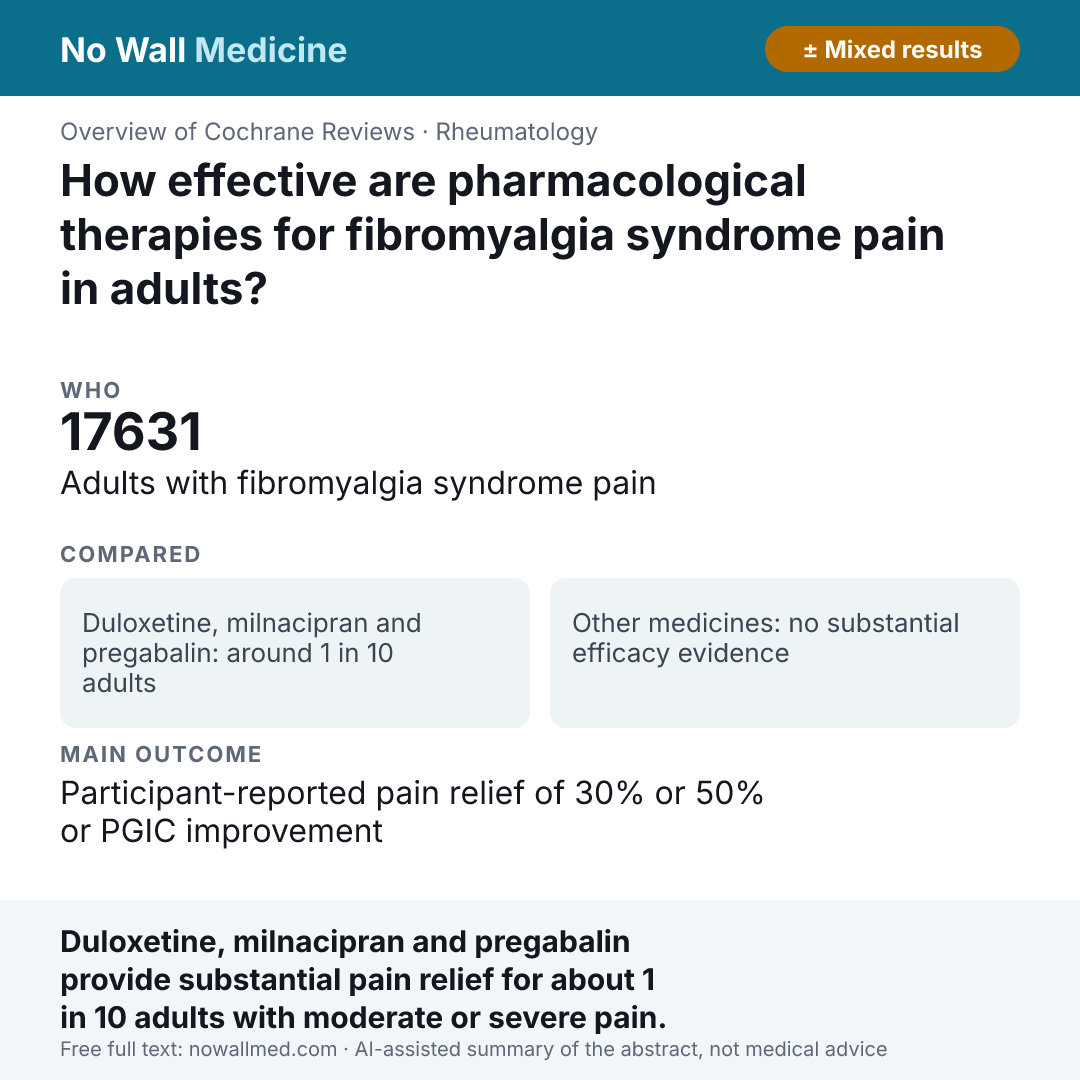
Effectiveness of pharmacological therapies for fibromyalgia syndrome in adults: an overview of Cochrane Reviews
Overview of Cochrane ReviewsMixed results
How effective are pharmacological therapies for fibromyalgia syndrome pain in adults?
Who
17631
Adults with fibromyalgia syndrome pain
Compared
Duloxetine, milnacipran and pregabalin: around 1 in 10 adults
Other medicines: no substantial efficacy evidence
Main outcome
Participant-reported pain relief of 30% or 50% or PGIC improvement
Bottom line: Duloxetine, milnacipran and pregabalin provide substantial pain relief for about 1 in 10 adults with moderate or severe pain.
Limitation: No evidence about who might benefit or experience adverse events.
Rheumatology · 2024-12-20 · Save PNG
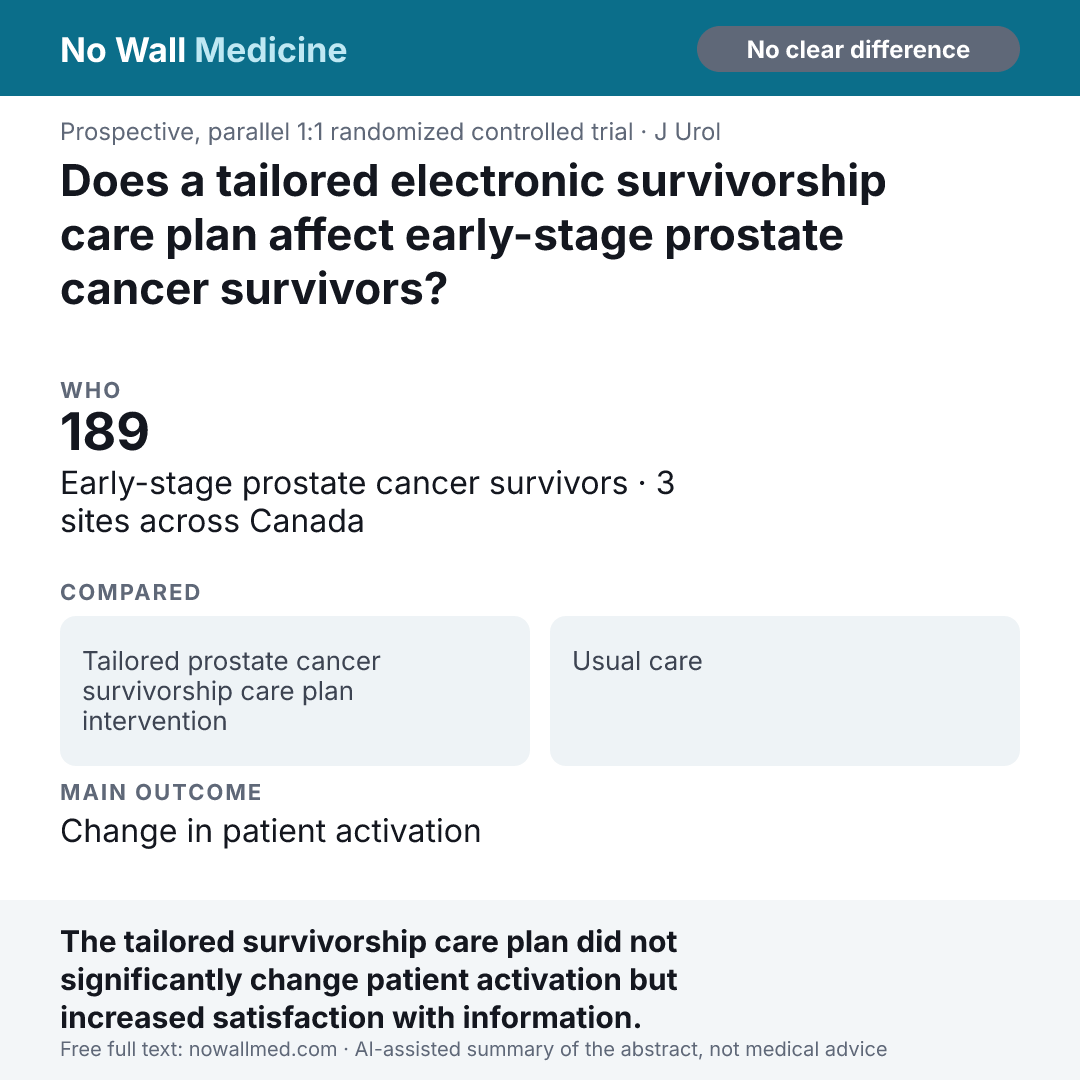
A Tailored Electronic Survivorship Care Plan for Prostate Cancer Survivors: A Multicenter Randomized Controlled Trial
Prospective, parallel 1:1 randomized controlled trialNo clear difference
Does a tailored electronic survivorship care plan affect early-stage prostate cancer survivors?
Who
189
Early-stage prostate cancer survivors · 3 sites across Canada
Compared
Tailored prostate cancer survivorship care plan intervention
Usual care
Main outcome
Change in patient activation
Bottom line: The tailored survivorship care plan did not significantly change patient activation but increased satisfaction with information.
J Urol · 2024-12-20 · Save PNG
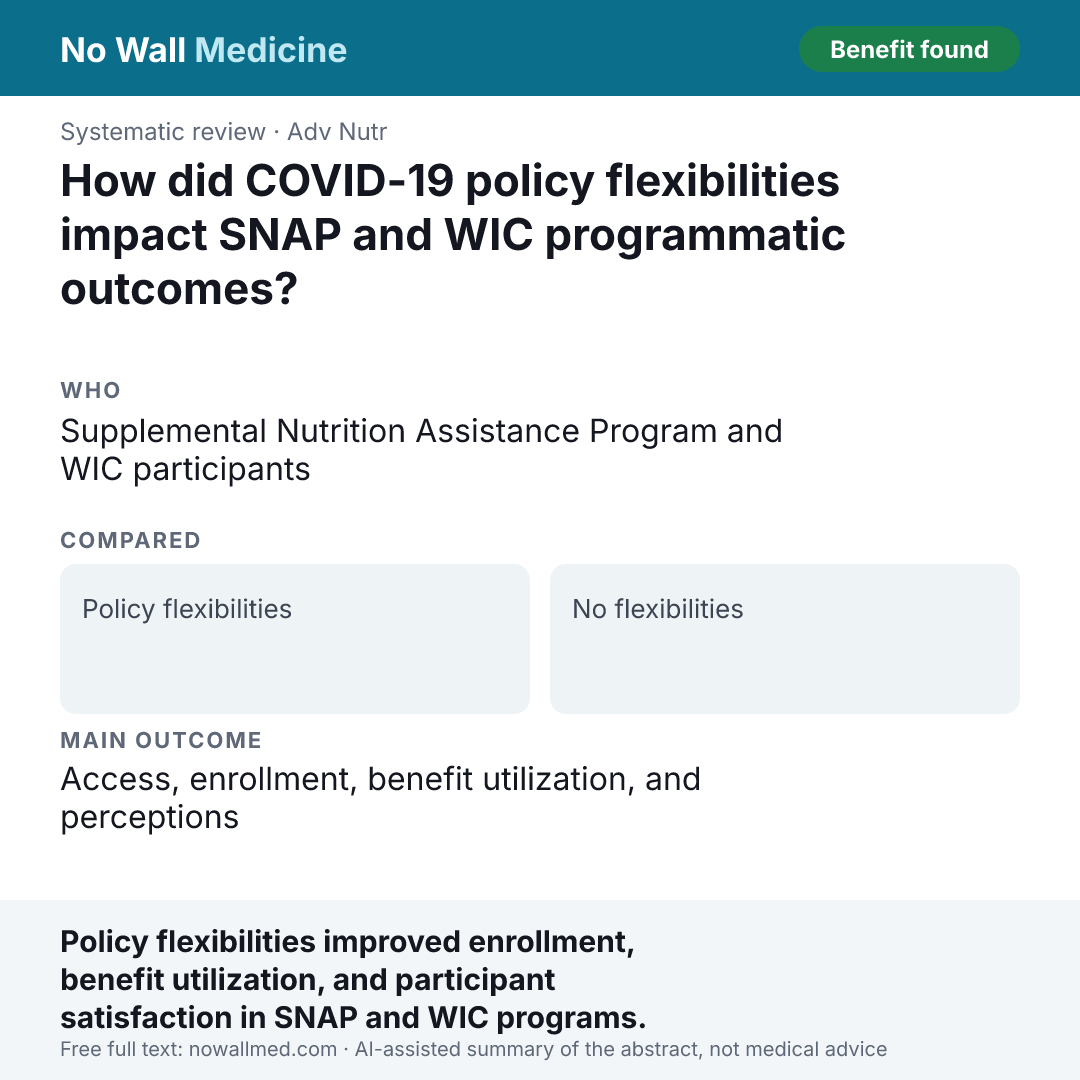
A Systematic Review: The Impact of COVID-19 Policy Flexibilities on SNAP and WIC Programmatic Outcomes
Systematic reviewBenefit found
How did COVID-19 policy flexibilities impact SNAP and WIC programmatic outcomes?
Who
Supplemental Nutrition Assistance Program and WIC participants
Compared
Policy flexibilities
No flexibilities
Main outcome
Access, enrollment, benefit utilization, and perceptions
Bottom line: Policy flexibilities improved enrollment, benefit utilization, and participant satisfaction in SNAP and WIC programs.
Limitation: Potential risks of bias including selection bias and confounding bias.
Adv Nutr · 2024-12-20 · Save PNG
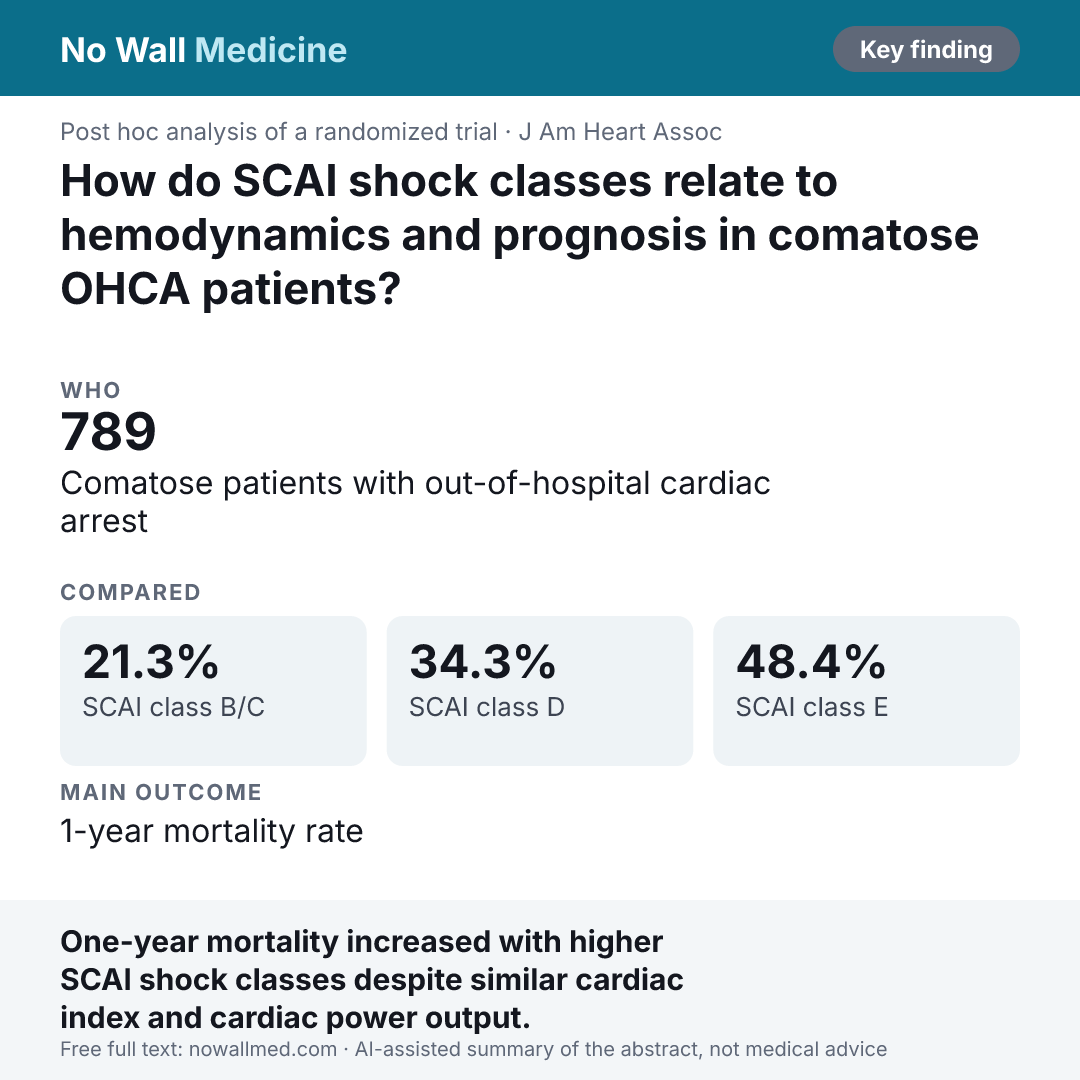
Hemodynamic Characteristics and Prognostic Implication of Modified Society for Cardiovascular Angiography and Interventions Shock Classification in Comatose Patients With Out-of-Hospital Cardiac Arrest
Post hoc analysis of a randomized trialKey finding
How do SCAI shock classes relate to hemodynamics and prognosis in comatose OHCA patients?
Who
789
Comatose patients with out-of-hospital cardiac arrest
Compared
21.3%SCAI class B/C
34.3%SCAI class D
48.4%SCAI class E
Main outcome
1-year mortality rate
Bottom line: One-year mortality increased with higher SCAI shock classes despite similar cardiac index and cardiac power output.
J Am Heart Assoc · 2024-12-20 · Save PNG
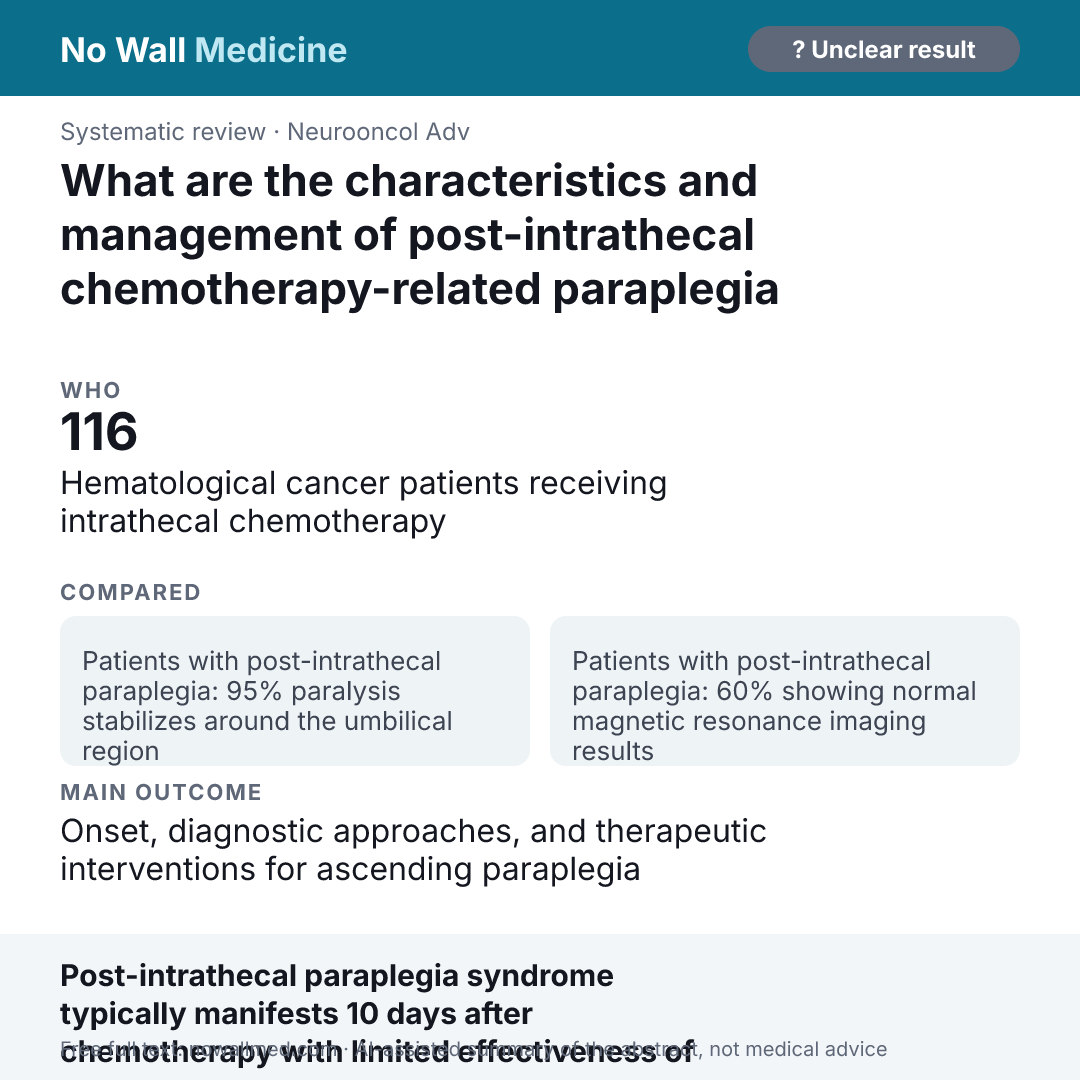
Post-intrathecal chemotherapy-related paraplegia syndrome in hematological cancer patients: A systematic review
Systematic reviewUnclear result
What are the characteristics and management of post-intrathecal chemotherapy-related paraplegia syndrome?
Who
116
Hematological cancer patients receiving intrathecal chemotherapy
Compared
Patients with post-intrathecal paraplegia: 95% paralysis stabilizes around the umbilical region
Patients with post-intrathecal paraplegia: 60% showing normal magnetic resonance imaging results
Main outcome
Onset, diagnostic approaches, and therapeutic interventions for ascending paraplegia
Bottom line: Post-intrathecal paraplegia syndrome typically manifests 10 days after chemotherapy with limited effectiveness of common treatments.
Neurooncol Adv · 2024-12-20 · Save PNG
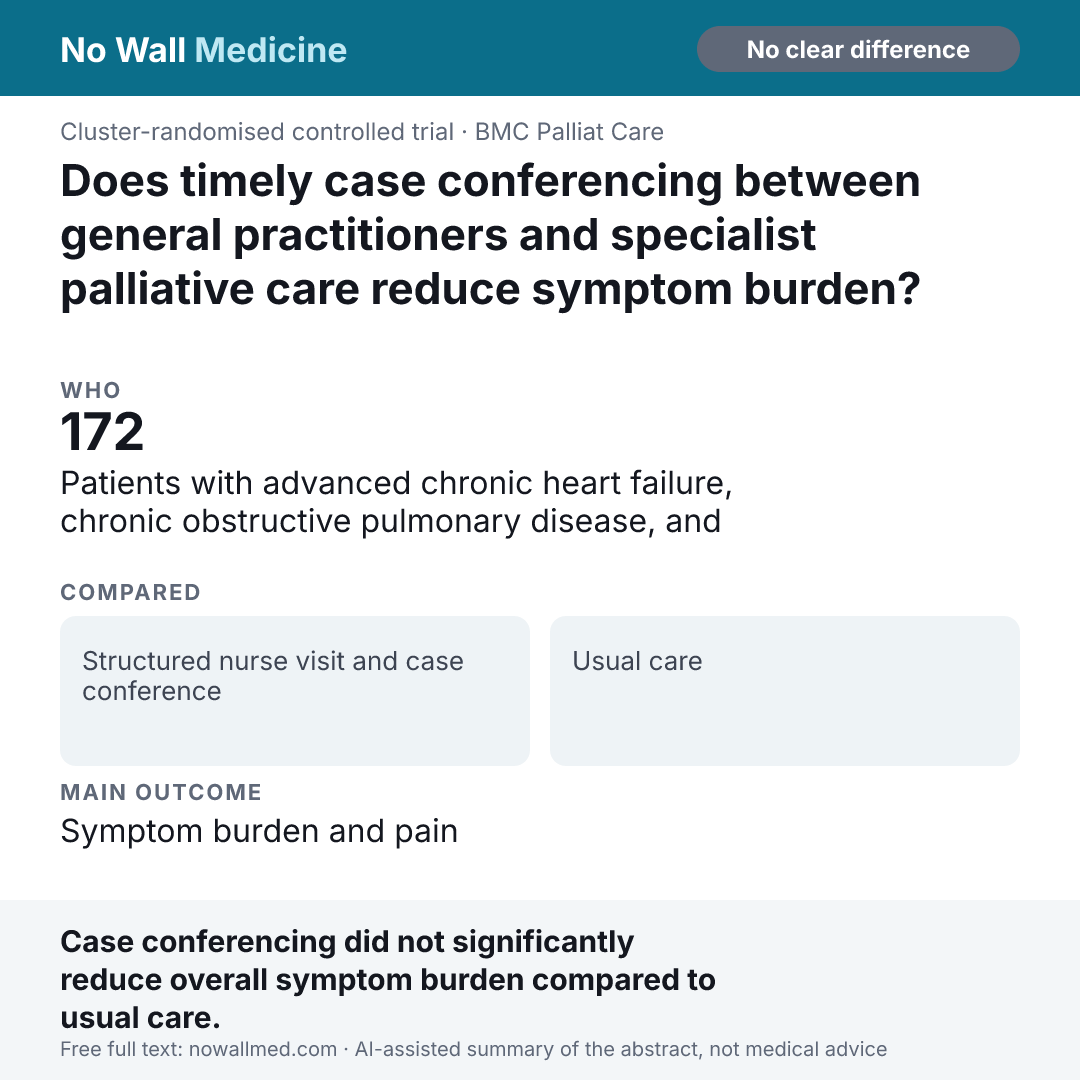
Effects of timely case conferencing between general practitioners and specialist palliative care services on symptom burden in patients with advanced chronic disease: results of the cluster-randomised controlled KOPAL trial
Cluster-randomised controlled trialNo clear difference
Does timely case conferencing between general practitioners and specialist palliative care reduce symptom burden?
Who
172
Patients with advanced chronic heart failure, chronic obstructive pulmonary disease, and dementia · 49 German general practitioner practices
Compared
Structured nurse visit and case conference
Usual care
Main outcome
Symptom burden and pain
Result: -0.561 (95% CI -3.201 to 2.079)
Bottom line: Case conferencing did not significantly reduce overall symptom burden compared to usual care.
Limitation: Further studies are needed to address symptom burden and pain in other patient groups.
BMC Palliat Care · 2024-12-20 · Save PNG
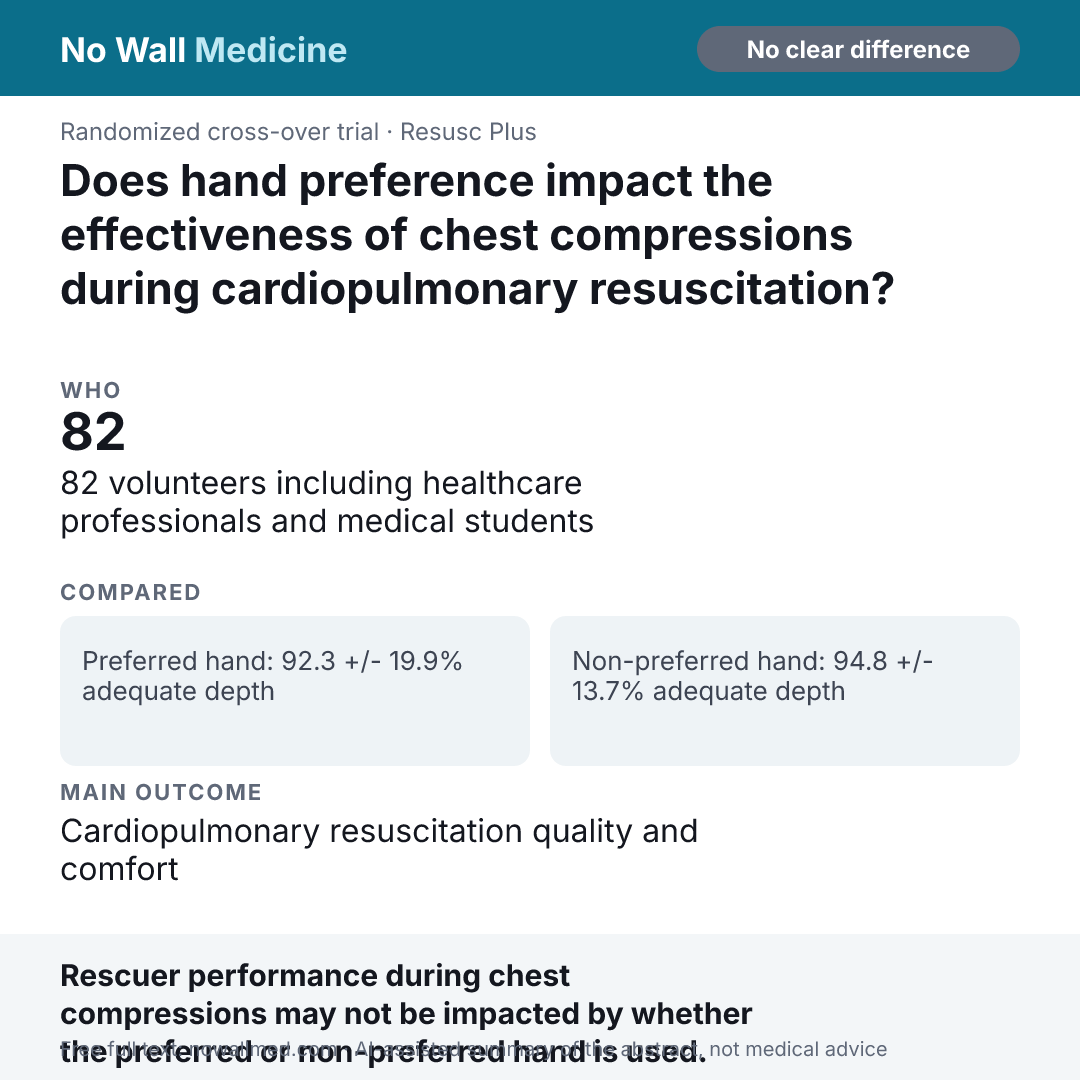
Hands at work: A randomised cross-over mannequin-based trial exploring the impact of hand preference of health care professionals on effectiveness of chest compressions
Randomized cross-over trialNo clear difference
Does hand preference impact the effectiveness of chest compressions during cardiopulmonary resuscitation?
Who
82
82 volunteers including healthcare professionals and medical students
Compared
Preferred hand: 92.3 +/- 19.9% adequate depth
Non-preferred hand: 94.8 +/- 13.7% adequate depth
Main outcome
Cardiopulmonary resuscitation quality and comfort
Bottom line: Rescuer performance during chest compressions may not be impacted by whether the preferred or non-preferred hand is used.
Resusc Plus · 2024-12-20 · Save PNG
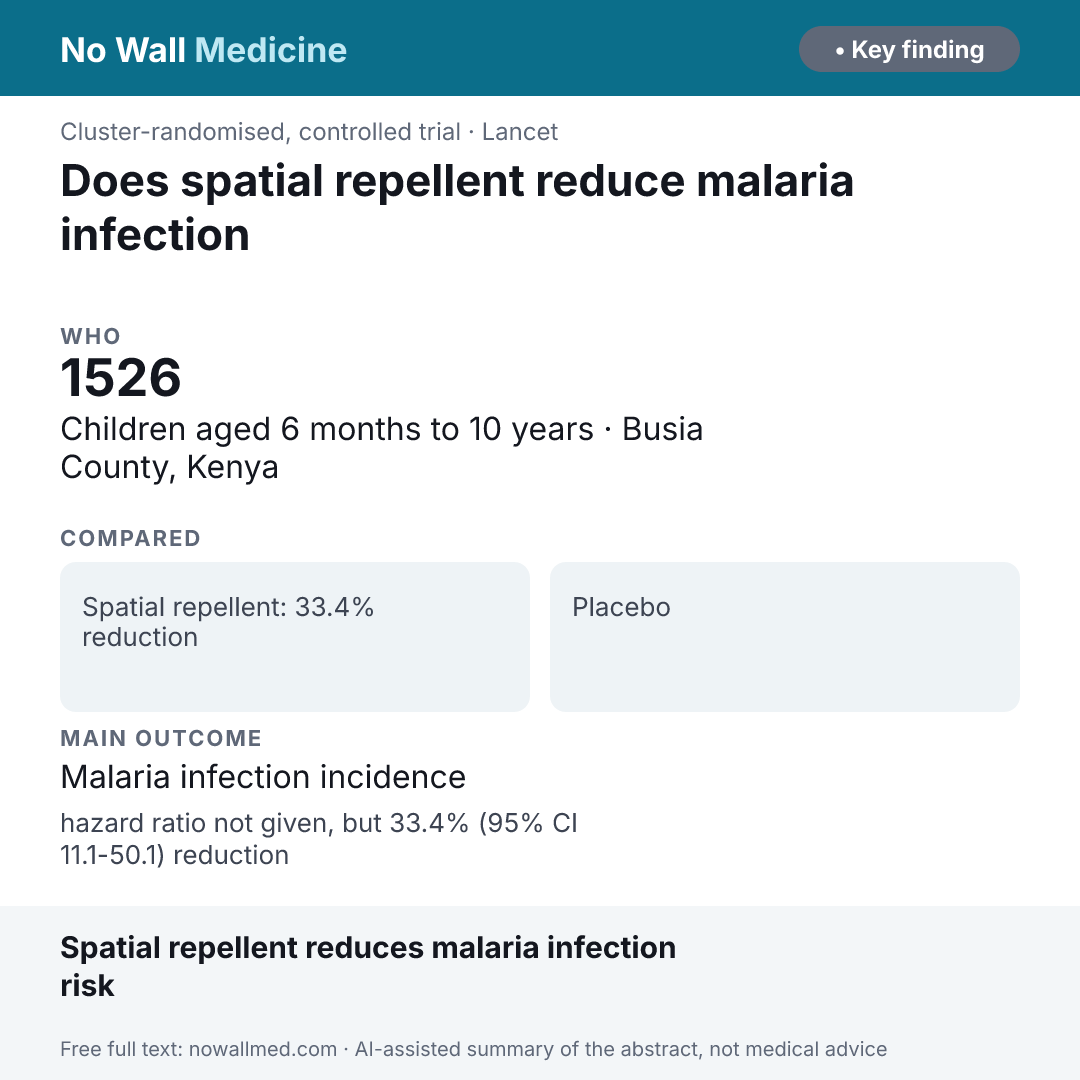
Effect of a spatial repellent on malaria incidence in an area of western Kenya characterised by high malaria transmission, insecticide resistance, and universal coverage of insecticide treated nets (part of the AEGIS Consortium): a cluster-randomised, controlled trial
Cluster-randomised, controlled trialKey finding
Does spatial repellent reduce malaria infection
Who
1526
Children aged 6 months to 10 years · Busia County, Kenya
Compared
Spatial repellent: 33.4% reduction
Placebo
Main outcome
Malaria infection incidence
Result: hazard ratio not given, but 33.4% (95% CI 11.1-50.1) reduction
Bottom line: Spatial repellent reduces malaria infection risk
Funded by: Unitaid to University of Notre Dame
Lancet · 2024-12-19 · Save PNG
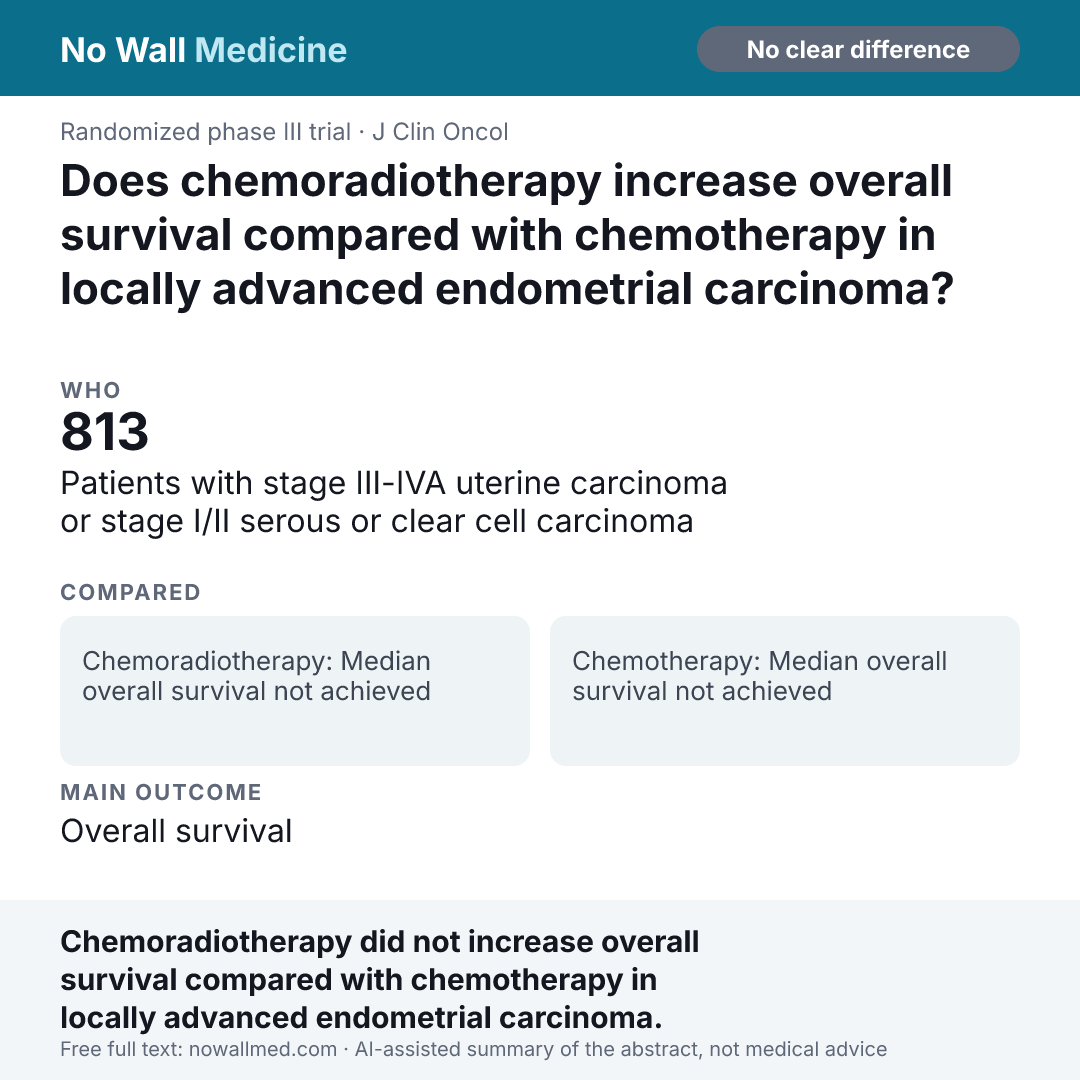
Long-Term Follow-Up and Overall Survival in NRG258, a Randomized Phase III Trial of Chemoradiation Versus Chemotherapy for Locally Advanced Endometrial Carcinoma
Randomized phase III trialNo clear difference
Does chemoradiotherapy increase overall survival compared with chemotherapy in locally advanced endometrial carcinoma?
Who
813
Patients with stage III-IVA uterine carcinoma or stage I/II serous or clear cell carcinoma
Compared
Chemoradiotherapy: Median overall survival not achieved
Chemotherapy: Median overall survival not achieved
Main outcome
Overall survival
Result: hazard ratio 1.05 (95% CI 0.82 to 1.34)
Bottom line: Chemoradiotherapy did not increase overall survival compared with chemotherapy in locally advanced endometrial carcinoma.
J Clin Oncol · 2024-12-19 · Save PNG
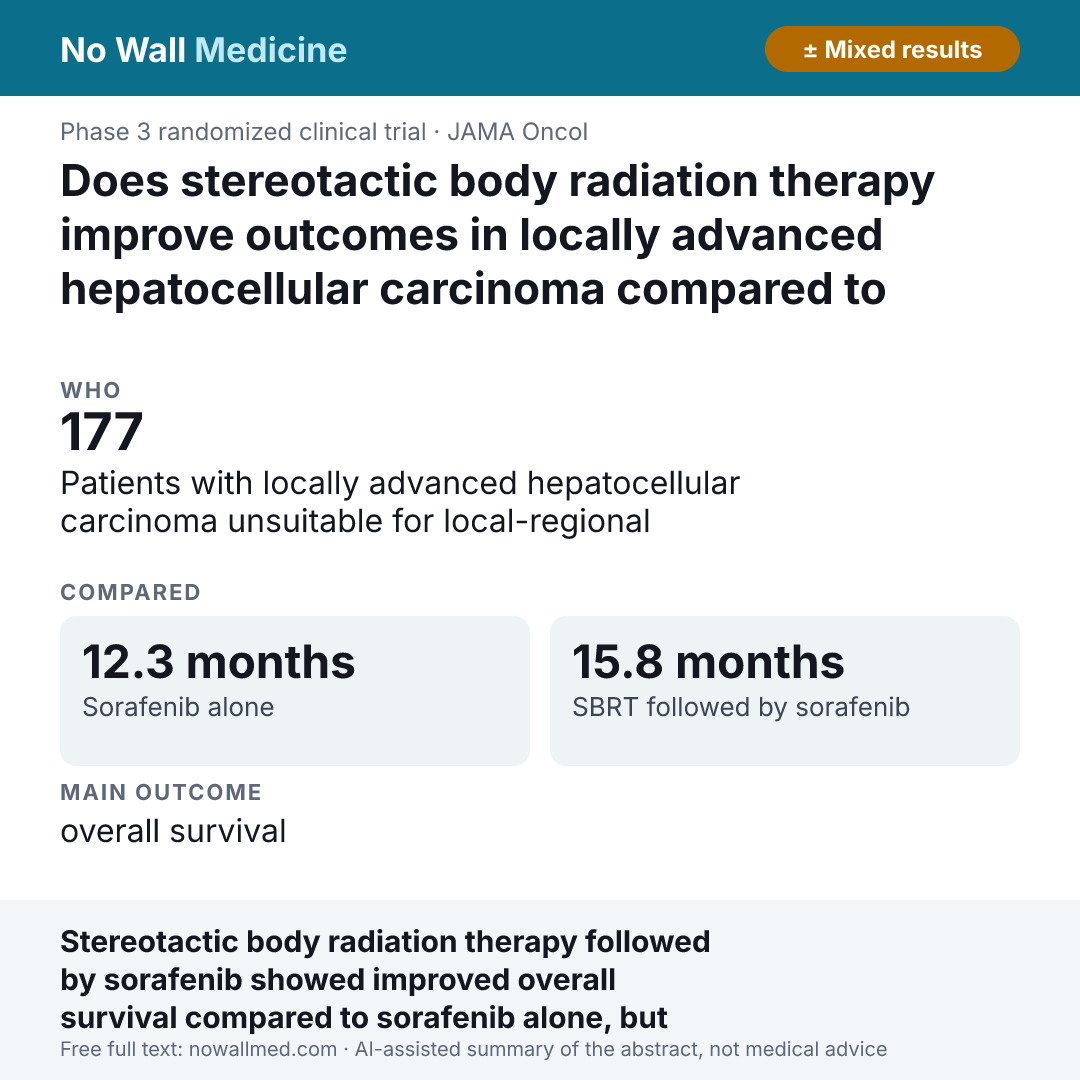
Stereotactic Body Radiotherapy vs Sorafenib Alone in Hepatocellular Carcinoma: The NRG Oncology/RTOG 1112 Phase 3 Randomized Clinical Trial
Phase 3 randomized clinical trialMixed results
Does stereotactic body radiation therapy improve outcomes in locally advanced hepatocellular carcinoma compared to sorafenib alone?
Who
177
Patients with locally advanced hepatocellular carcinoma unsuitable for local-regional therapies · Multicenter
Compared
12.3 monthsSorafenib alone
15.8 monthsSBRT followed by sorafenib
Main outcome
overall survival
Result: hazard ratio 0.77 (90% CI, 0.59-1.01)
Bottom line: Stereotactic body radiation therapy followed by sorafenib showed improved overall survival compared to sorafenib alone, but not statistically significantly.
JAMA Oncol · 2024-12-19 · Save PNG
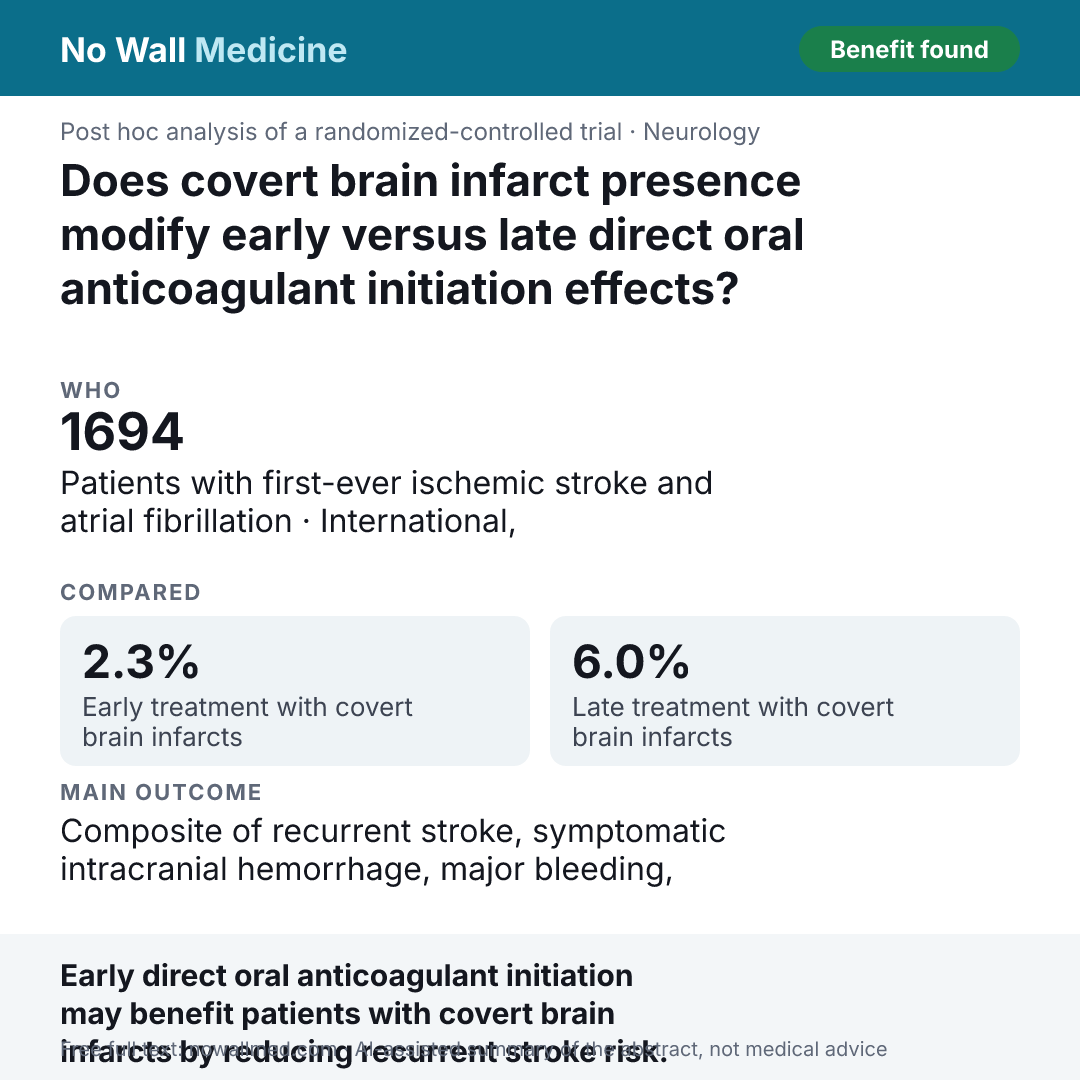
Early vs Late Anticoagulation After Ischemic Stroke in Patients With Atrial Fibrillation and Covert Brain Infarcts
Post hoc analysis of a randomized-controlled trialBenefit found
Does covert brain infarct presence modify early versus late direct oral anticoagulant initiation effects?
Who
1694
Patients with first-ever ischemic stroke and atrial fibrillation · International, multicenter
Compared
2.3%Early treatment with covert brain infarcts
6.0%Late treatment with covert brain infarcts
Main outcome
Composite of recurrent stroke, symptomatic intracranial hemorrhage, major bleeding, embolism, or vascular death
Result: adjusted risk difference -3.6%, 95% CI -6.6 to -0.6
Bottom line: Early direct oral anticoagulant initiation may benefit patients with covert brain infarcts by reducing recurrent stroke risk.
Neurology · 2024-12-19 · Save PNG
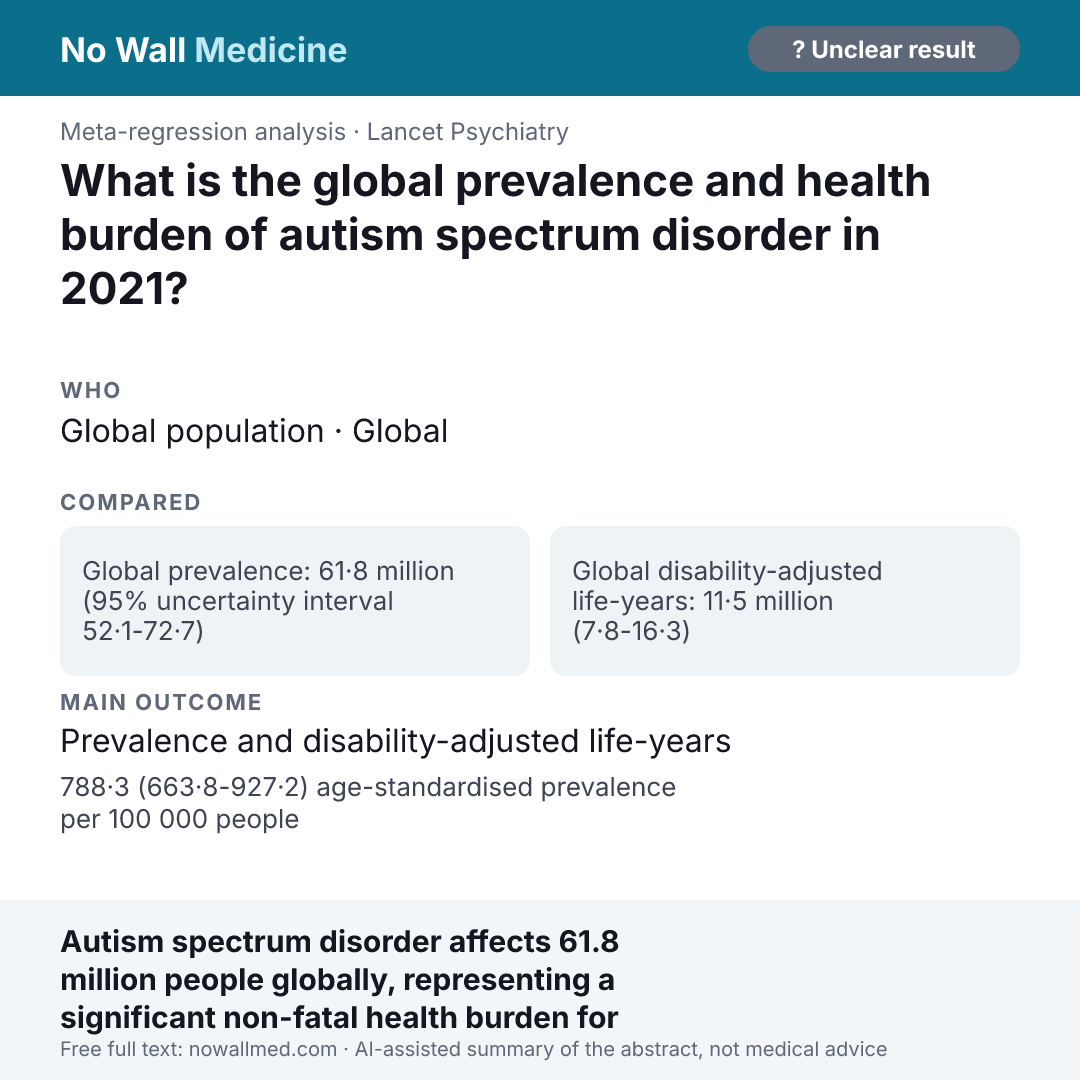
The global epidemiology and health burden of the autism spectrum: findings from the Global Burden of Disease Study 2021
Meta-regression analysisUnclear result
What is the global prevalence and health burden of autism spectrum disorder in 2021?
Who
Global population · Global
Compared
Global prevalence: 61·8 million (95% uncertainty interval 52·1-72·7)
Global disability-adjusted life-years: 11·5 million (7·8-16·3)
Main outcome
Prevalence and disability-adjusted life-years
Result: 788·3 (663·8-927·2) age-standardised prevalence per 100 000 people
Bottom line: Autism spectrum disorder affects 61.8 million people globally, representing a significant non-fatal health burden for those under 20.
Funded by: Queensland Health and the Bill & Melinda Gates Foundation
Lancet Psychiatry · 2024-12-19 · Save PNG