Visual abstracts
New randomized trials and meta-analyses from leading journals at a glance: who was studied, what was compared, and what was found. Every paper is free to read in full.
All specialtiesCardiology 4763Oncology 4042Gastroenterology & Hepatology 1902Infectious Disease 3756Neurology 1872Psychiatry & Mental Health 2214Pulmonology 2042Critical Care 1319Endocrinology & Diabetes 2544Pediatrics 2889Surgery 2479Orthopedics & Sports Medicine 917Neurosurgery 525Cardiothoracic & Vascular Surgery 656Plastic & Reconstructive Surgery 574Nephrology 1107Rheumatology 810Hematology 1090Dermatology 611Ophthalmology 532Obstetrics & Gynecology 1645Public & Global Health 1037Radiology & Imaging 617Anesthesiology 957Urology 745ENT (Otolaryngology) 494Emergency Medicine 481Allergy & Immunology 309Geriatrics 972Family Medicine & Primary Care 533Medical Genetics & Genomics 659Pathology & Laboratory Medicine 156Physical Medicine & Rehabilitation 734Palliative Care 421Nutrition 1560Digital Health & AI 2133General Medicine 318
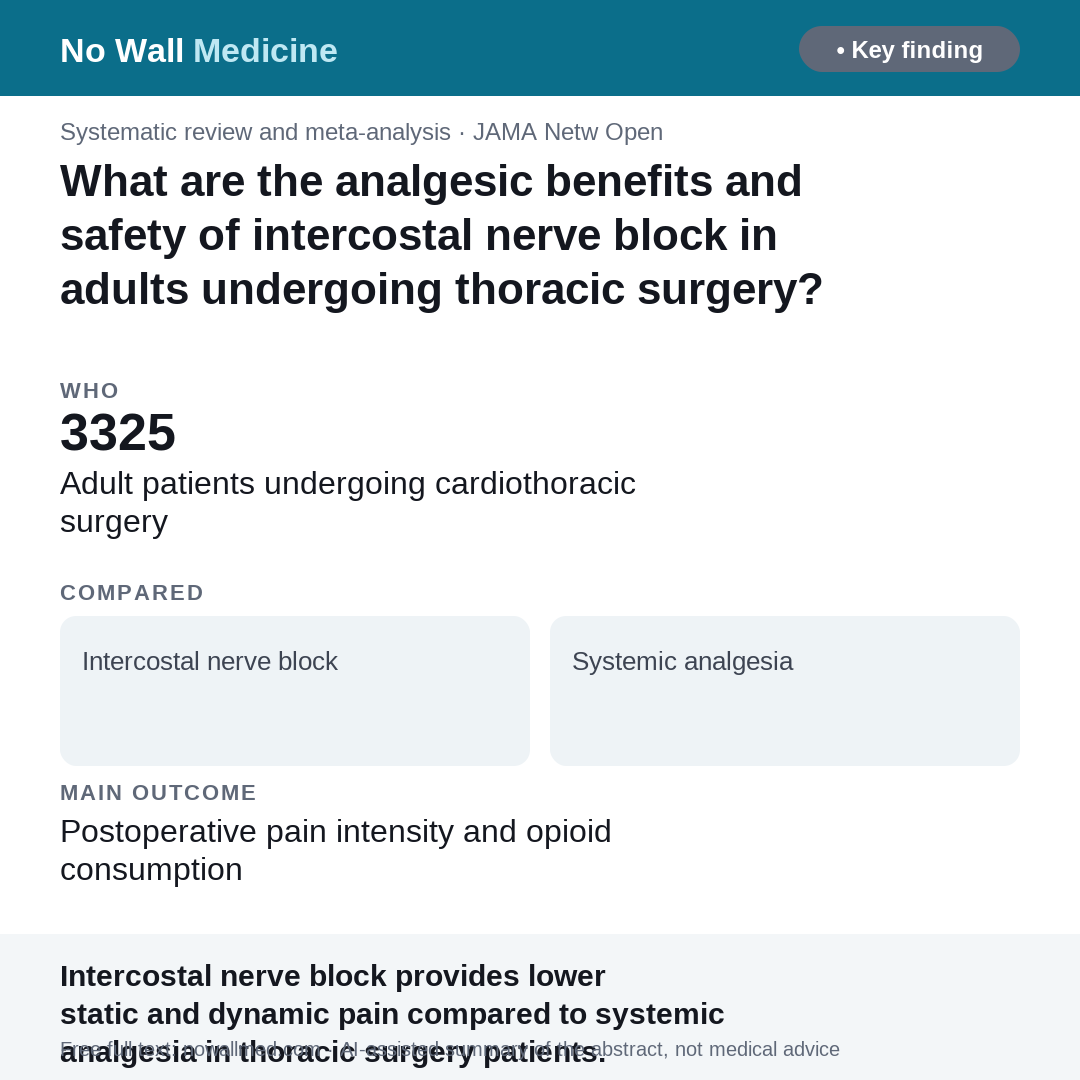
Assessment of Intercostal Nerve Block Analgesia for Thoracic Surgery: A Systematic Review and Meta-analysis
Systematic review and meta-analysisKey finding
What are the analgesic benefits and safety of intercostal nerve block in adults undergoing thoracic surgery?
Who
3325
Adult patients undergoing cardiothoracic surgery
Compared
Intercostal nerve block
Systemic analgesia
Main outcome
Postoperative pain intensity and opioid consumption
Result: mean score difference, -1.40 points [95% CI, -1.46 to -1.33 points]
Bottom line: Intercostal nerve block provides lower static and dynamic pain compared to systemic analgesia in thoracic surgery patients.
Limitation: Experimental studies had a high risk of bias in allocation concealment, blinding, and outcome assessment.
JAMA Netw Open · 2021-11-01Download image
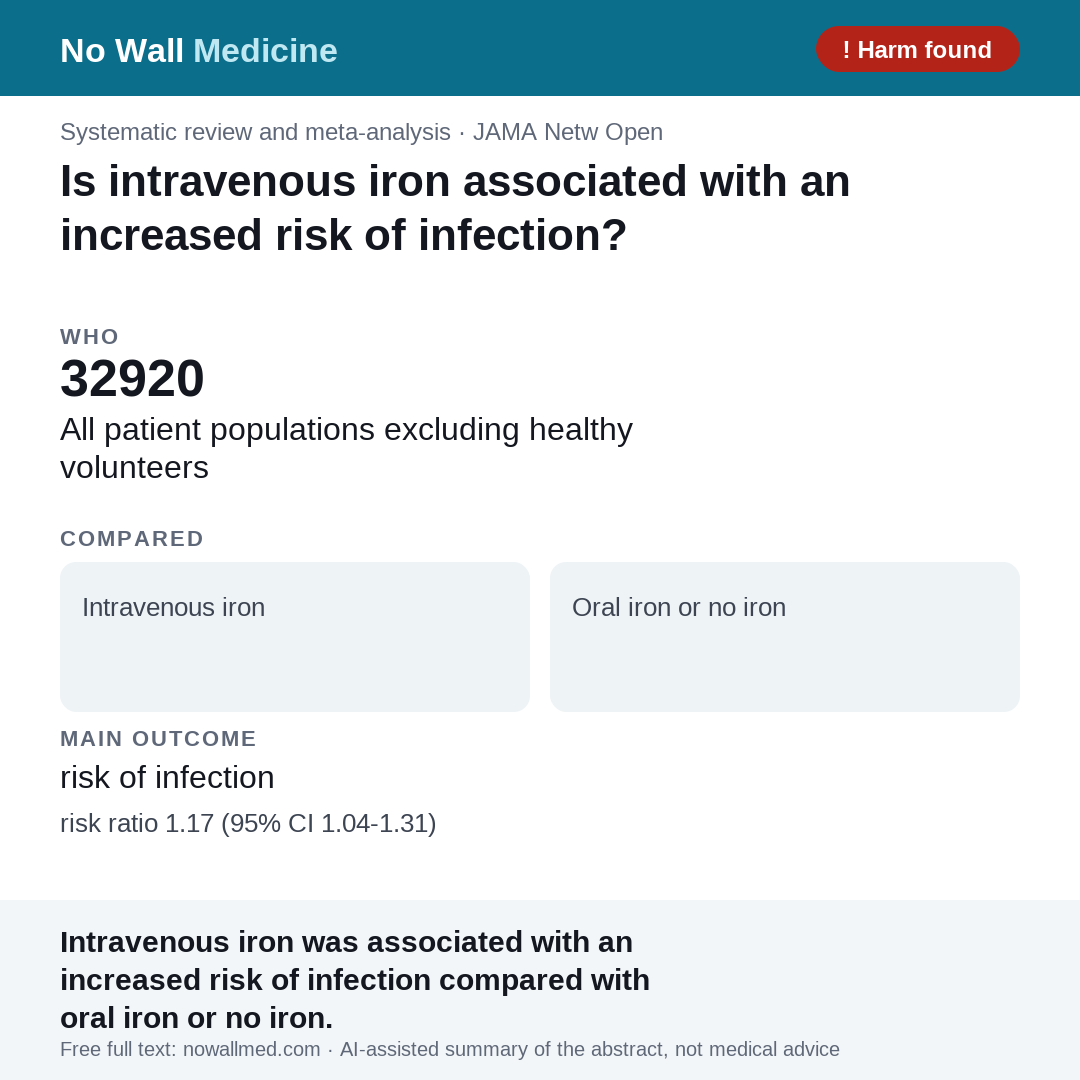
Risk of Infection Associated With Administration of Intravenous Iron: A Systematic Review and Meta-analysis
Systematic review and meta-analysisHarm found
Is intravenous iron associated with an increased risk of infection?
Who
32920
All patient populations excluding healthy volunteers
Compared
Intravenous iron
Oral iron or no iron
Main outcome
risk of infection
Result: risk ratio 1.17 (95% CI 1.04-1.31)
Bottom line: Intravenous iron was associated with an increased risk of infection compared with oral iron or no iron.
Limitation: Well-designed studies using standardized definitions of infection are required to understand the balance of risk and benefit.
JAMA Netw Open · 2021-11-01Download image
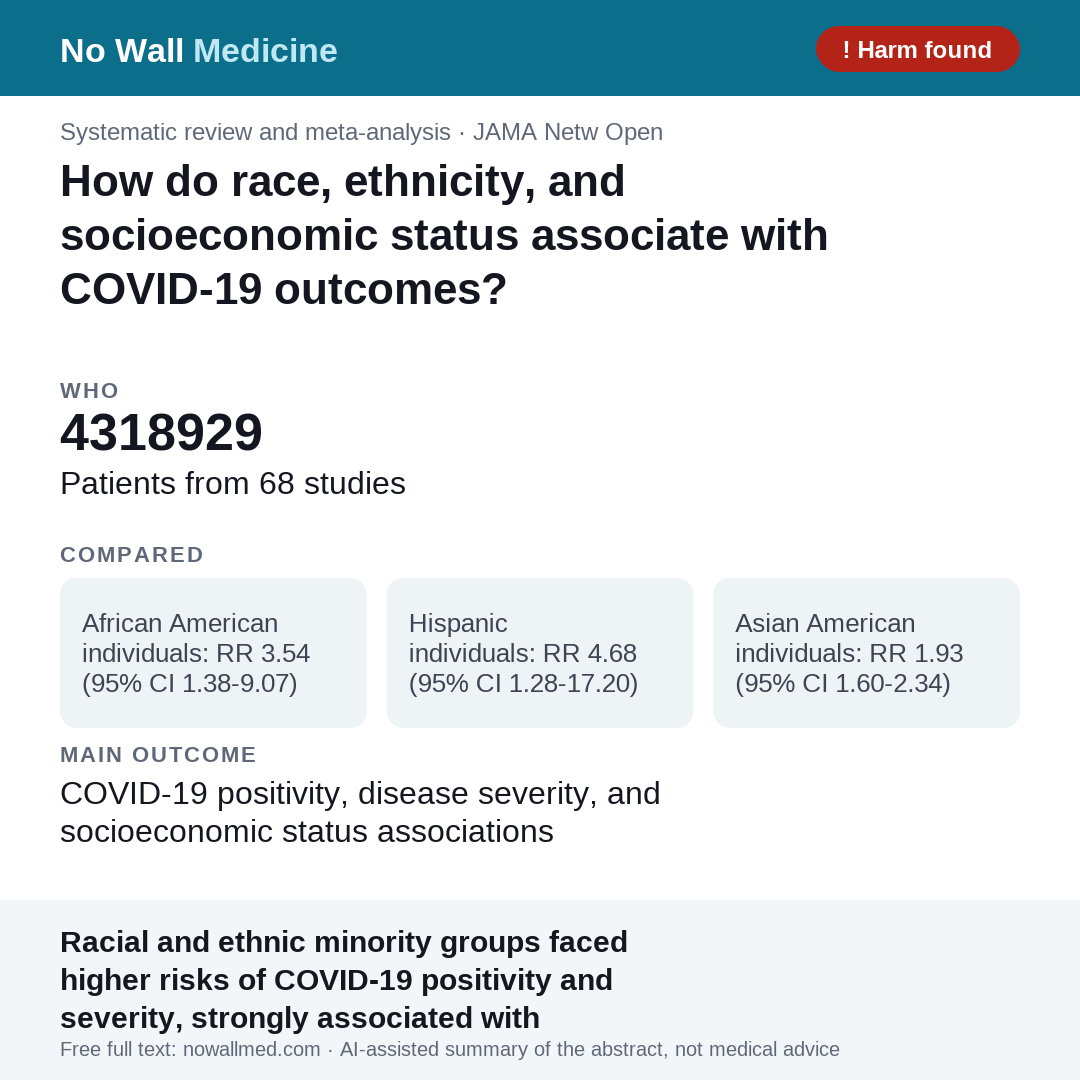
Disparities in COVID-19 Outcomes by Race, Ethnicity, and Socioeconomic Status: A Systematic-Review and Meta-analysis
Systematic review and meta-analysisHarm found
How do race, ethnicity, and socioeconomic status associate with COVID-19 outcomes?
Who
4318929
Patients from 68 studies
Compared
African American individuals: RR 3.54 (95% CI 1.38-9.07)
Hispanic individuals: RR 4.68 (95% CI 1.28-17.20)
Asian American individuals: RR 1.93 (95% CI 1.60-2.34)
Main outcome
COVID-19 positivity, disease severity, and socioeconomic status associations
Bottom line: Racial and ethnic minority groups faced higher risks of COVID-19 positivity and severity, strongly associated with socioeconomic determinants.
JAMA Netw Open · 2021-11-01Download image
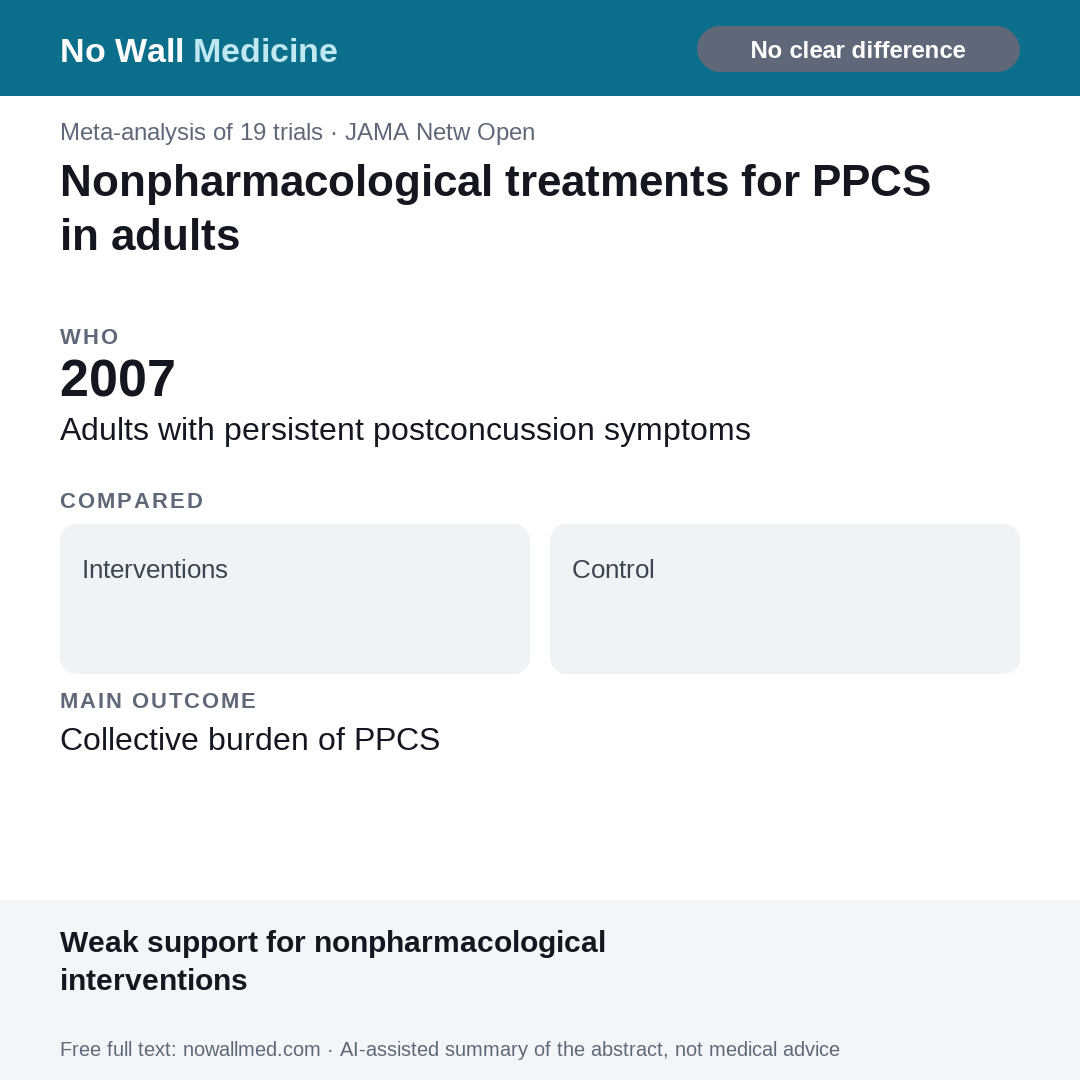
Nonpharmacological Treatment of Persistent Postconcussion Symptoms in Adults: A Systematic Review and Meta-analysis and Guideline Recommendation
Meta-analysis of 19 trialsNo clear difference
Nonpharmacological treatments for PPCS in adults
Who
2007
Adults with persistent postconcussion symptoms
Compared
Interventions
Control
Main outcome
Collective burden of PPCS
Bottom line: Weak support for nonpharmacological interventions
Limitation: Very low to low certainty of evidence
JAMA Netw Open · 2021-11-01Download image
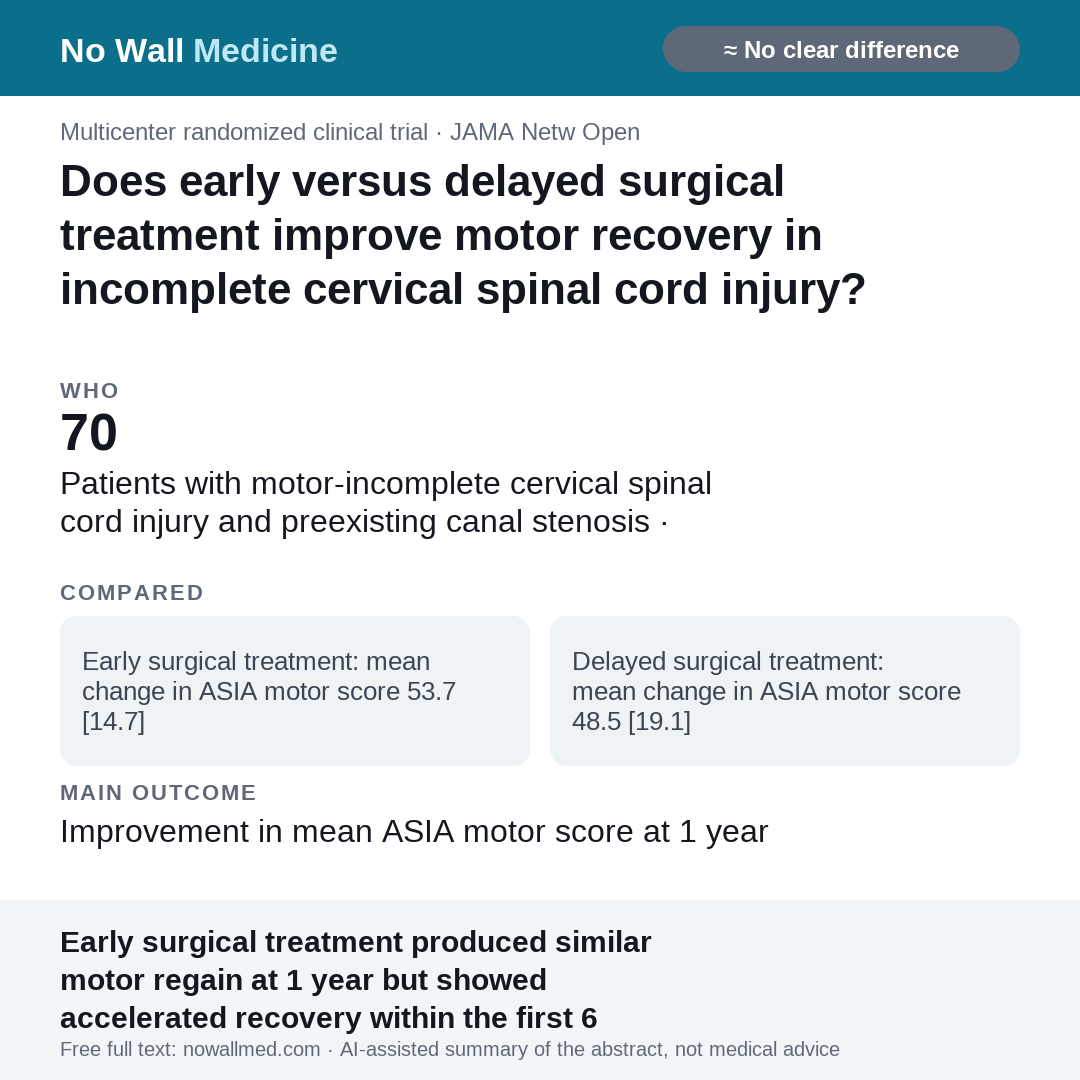
Effect of Early vs Delayed Surgical Treatment on Motor Recovery in Incomplete Cervical Spinal Cord Injury With Preexisting Cervical Stenosis: A Randomized Clinical Trial
Multicenter randomized clinical trialNo clear difference
Does early versus delayed surgical treatment improve motor recovery in incomplete cervical spinal cord injury?
Who
70
Patients with motor-incomplete cervical spinal cord injury and preexisting canal stenosis · 43 tertiary referral centers in Japan
Compared
Early surgical treatment: mean change in ASIA motor score 53.7 [14.7]
Delayed surgical treatment: mean change in ASIA motor score 48.5 [19.1]
Main outcome
Improvement in mean ASIA motor score at 1 year
Result: difference 5.2; 95% CI, -4.2 to 14.5
Bottom line: Early surgical treatment produced similar motor regain at 1 year but showed accelerated recovery within the first 6 months.
JAMA Netw Open · 2021-11-01Download image
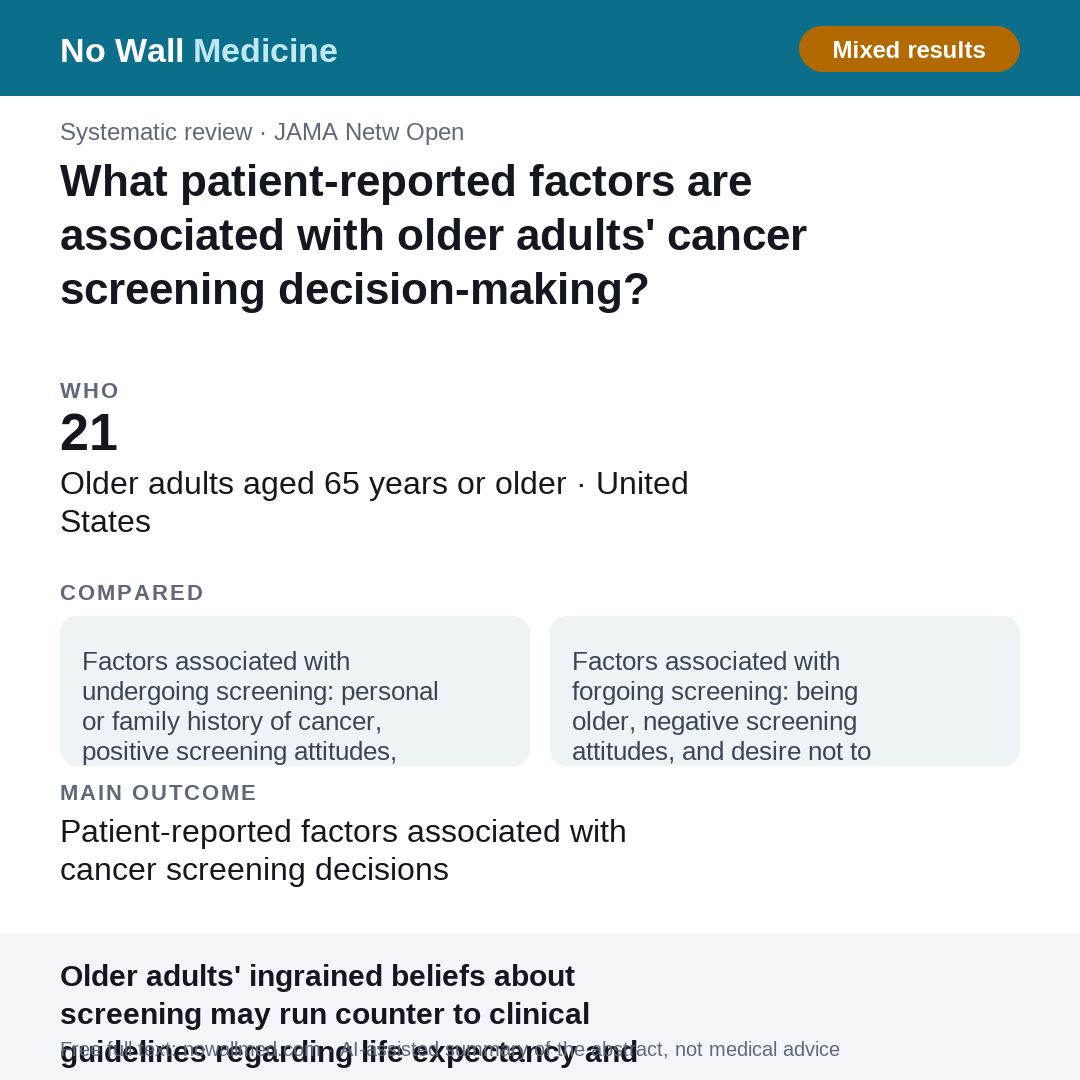
Patient-Reported Factors Associated With Older Adults' Cancer Screening Decision-making: A Systematic Review
Systematic reviewMixed results
What patient-reported factors are associated with older adults' cancer screening decision-making?
Who
Older adults aged 65 years or older · United States
Compared
Factors associated with undergoing screening: personal or family history of cancer, positive screening attitudes, routine or habit, to gain knowledge, friends, and a physician's recommendation
Factors associated with forgoing screening: being older, negative screening attitudes, and desire not to know about cancer
Main outcome
Patient-reported factors associated with cancer screening decisions
Bottom line: Older adults' ingrained beliefs about screening may run counter to clinical guidelines regarding life expectancy and health status.
JAMA Netw Open · 2021-11-01Download image
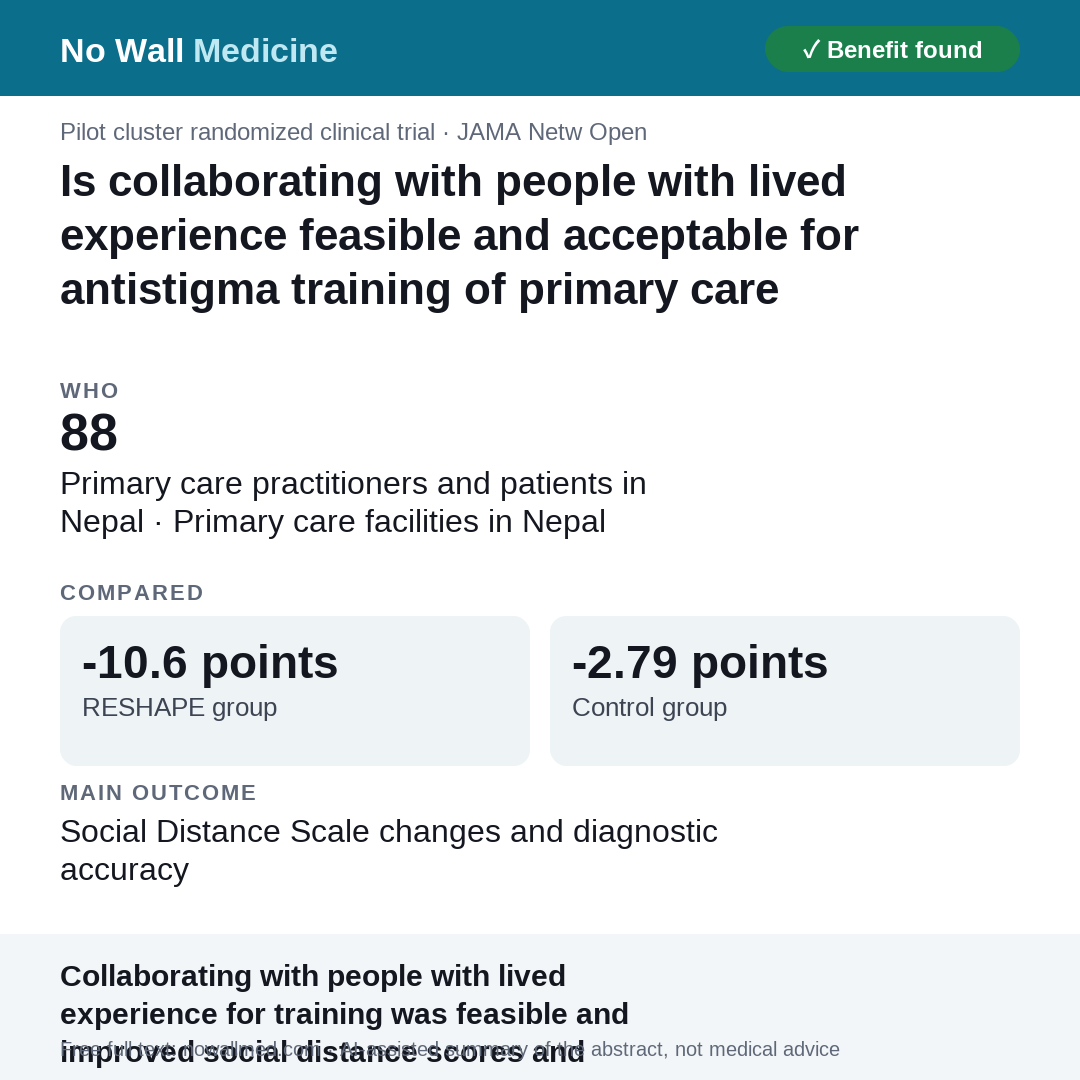
Collaboration With People With Lived Experience of Mental Illness to Reduce Stigma and Improve Primary Care Services: A Pilot Cluster Randomized Clinical Trial
Pilot cluster randomized clinical trialBenefit found
Is collaborating with people with lived experience feasible and acceptable for antistigma training of primary care practitioners?
Who
88
Primary care practitioners and patients in Nepal · Primary care facilities in Nepal
Compared
-10.6 pointsRESHAPE group (95% CI, -14.5 to -6.74 points)
-2.79 pointsControl group (-8.29 to 2.70 points)
Main outcome
Social Distance Scale changes and diagnostic accuracy
Bottom line: Collaborating with people with lived experience for training was feasible and improved social distance scores and diagnostic accuracy.
JAMA Netw Open · 2021-11-01Download image
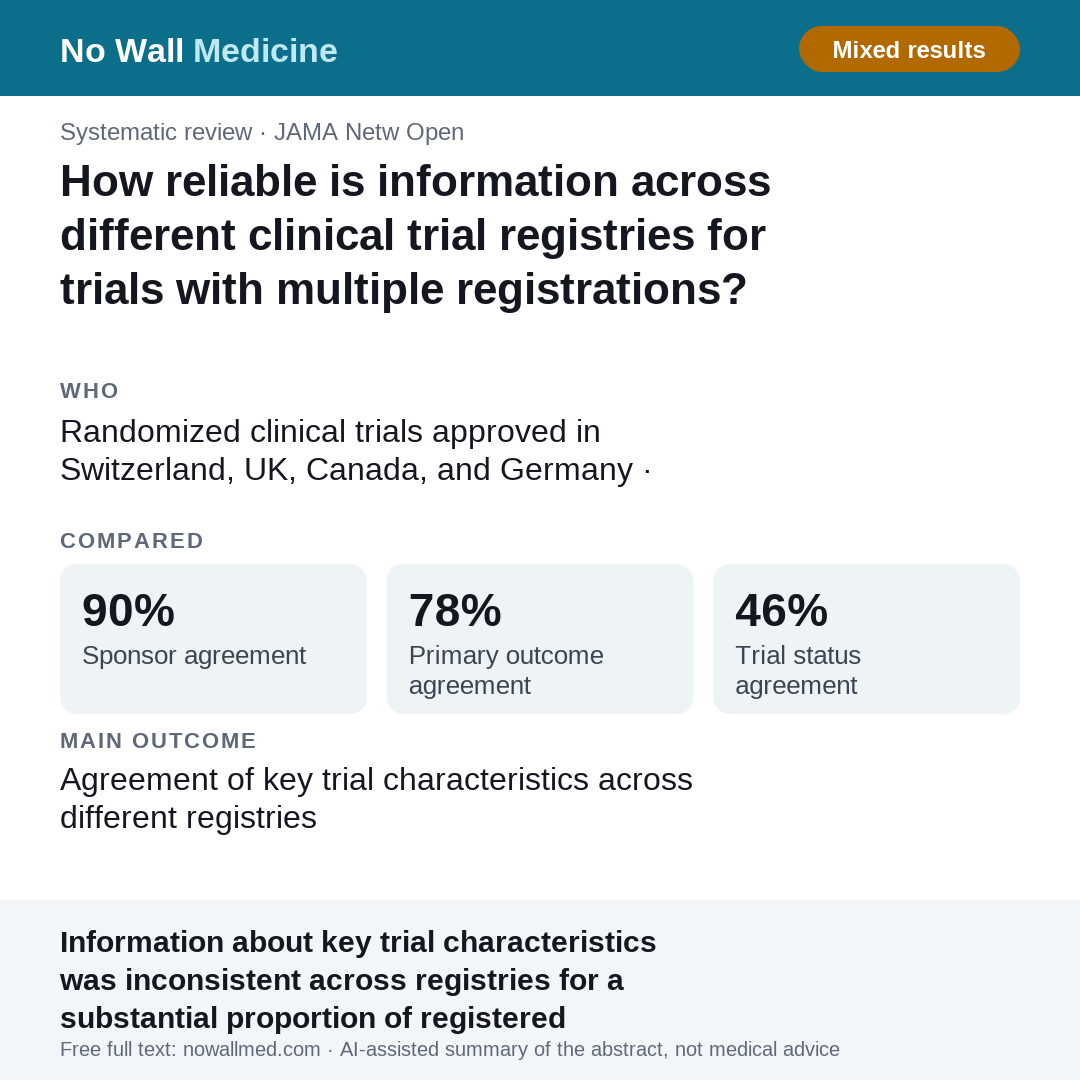
Reliability of Trial Information Across Registries for Trials With Multiple Registrations: A Systematic Review
Systematic reviewMixed results
How reliable is information across different clinical trial registries for trials with multiple registrations?
Who
Randomized clinical trials approved in Switzerland, UK, Canada, and Germany · Switzerland, UK, Canada, and Germany
Compared
90%Sponsor agreement (178/197)
78%Primary outcome agreement (154/197)
46%Trial status agreement (90/197)
Main outcome
Agreement of key trial characteristics across different registries
Bottom line: Information about key trial characteristics was inconsistent across registries for a substantial proportion of registered randomized clinical trials.
Limitation: Different legal requirements were stated as the main reason for inconsistencies.
JAMA Netw Open · 2021-11-01Download image
Comparison of Clinical Outcomes of Robot-Assisted, Video-Assisted, and Open Esophagectomy for Esophageal Cancer: A Systematic Review and Meta-analysis
Systematic review and meta-analysisBenefit, low certainty
How do clinical outcomes compare for robot-assisted, video-assisted, and open esophagectomy?
Who
9355
Patients undergoing esophagectomy for esophageal cancer
Compared
Robot-assisted minimally invasive esophagectomy
Video-assisted minimally invasive esophagectomy
Main outcome
Intraoperative, short-term, and long-term oncologic outcomes
Result: risk difference -0.06 (95% CI, -0.11 to -0.01) for pulmonary complications
Bottom line: Robot-assisted esophagectomy had similar outcomes to video-assisted approaches but fewer pulmonary complications.
Limitation: Studies on long-term functional and cancer outcomes are needed.
JAMA Netw Open · 2021-11-01Download image

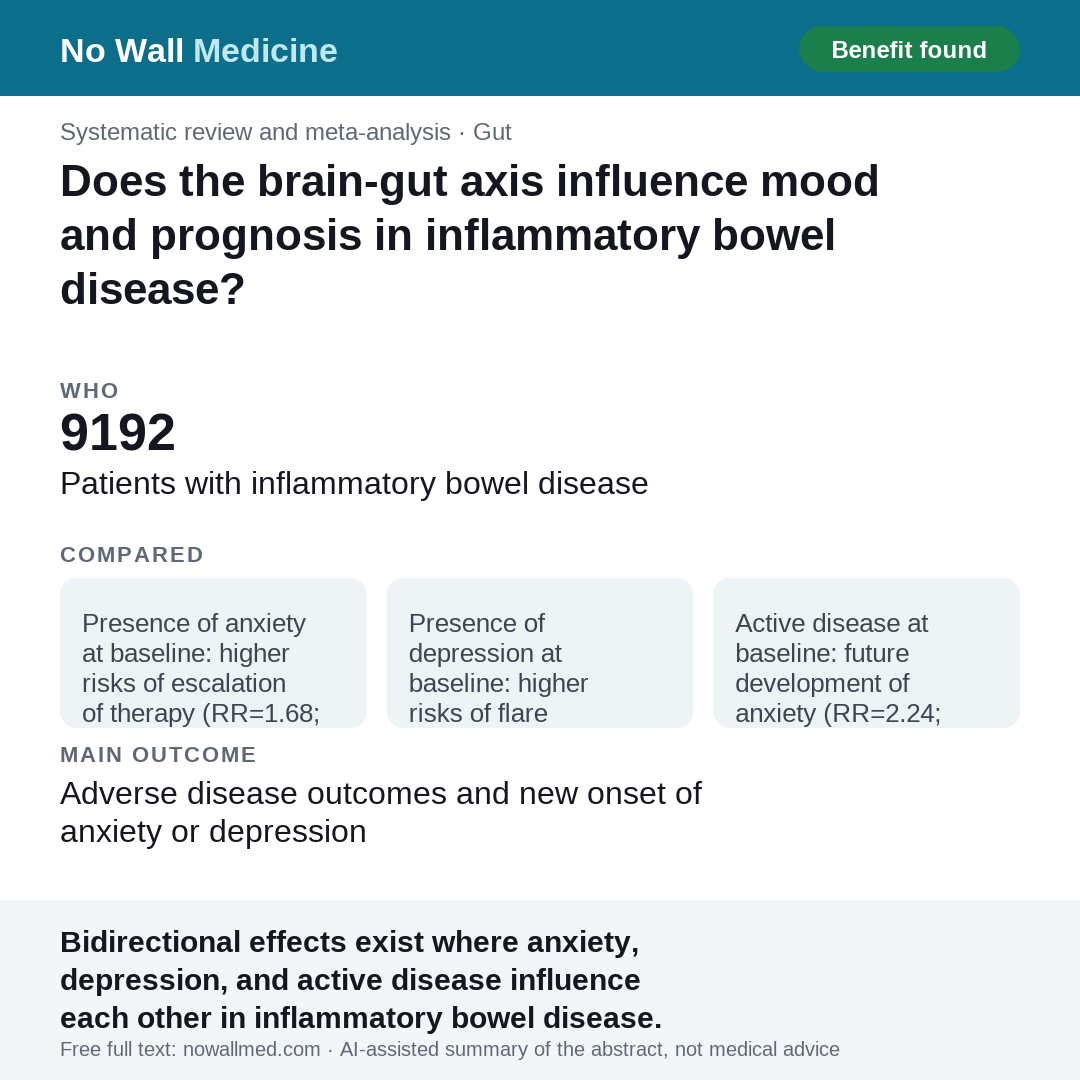
Bidirectional brain-gut axis effects influence mood and prognosis in IBD: a systematic review and meta-analysis
Systematic review and meta-analysisKey finding
Does the brain-gut axis influence mood and prognosis in inflammatory bowel disease?
Who
9192
Patients with inflammatory bowel disease
Compared
Presence of anxiety at baseline: higher risks of escalation of therapy (RR=1.68; 95% CI 1.18 to 2.40)
Presence of depression at baseline: higher risks of flare (RR=1.60; 95% CI 1.21 to 2.12)
Active disease at baseline: future development of anxiety (RR=2.24; 95% CI 1.25 to 4.01)
Main outcome
Adverse disease outcomes and new onset of anxiety or depression
Bottom line: Bidirectional effects exist where anxiety, depression, and active disease influence each other in inflammatory bowel disease.
Gut · 2021-11-01Download image
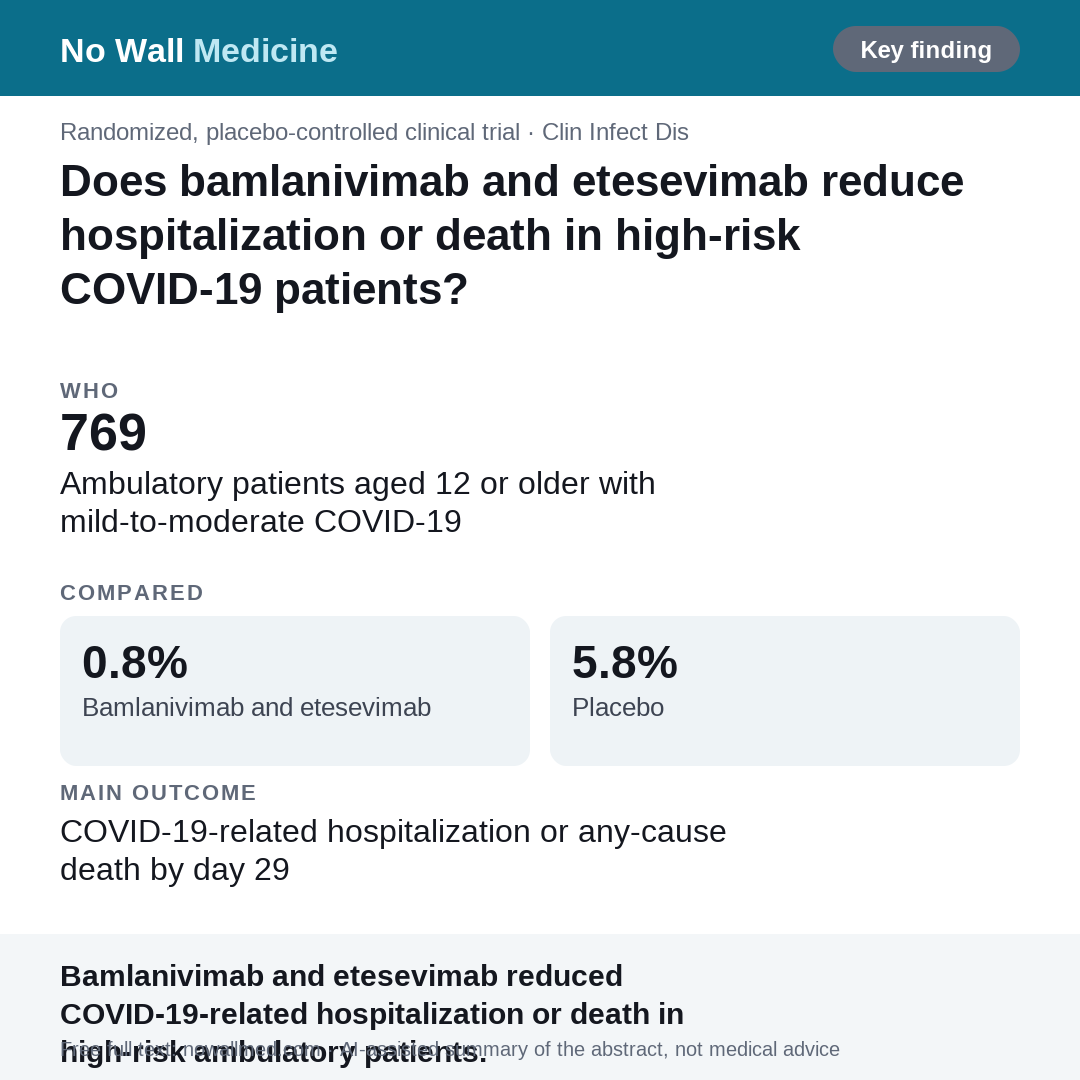
A Randomized, Placebo-Controlled Clinical Trial of Bamlanivimab and Etesevimab Together in High-Risk Ambulatory Patients With COVID-19 and Validation of the Prognostic Value of Persistently High Viral Load
Randomized, placebo-controlled clinical trialKey finding
Does bamlanivimab and etesevimab reduce hospitalization or death in high-risk COVID-19 patients?
Who
769
Ambulatory patients aged 12 or older with mild-to-moderate COVID-19
Compared
0.8%Bamlanivimab and etesevimab (4/511)
5.8%Placebo (15/258)
Main outcome
COVID-19-related hospitalization or any-cause death by day 29
Result: Δ -5.0 (95% CI -8.0 to -2.1)
Bottom line: Bamlanivimab and etesevimab reduced COVID-19-related hospitalization or death in high-risk ambulatory patients.
Clin Infect Dis · 2021-11-01Download image
A Dual, Systematic Approach to Malaria Diagnostic Biomarker Discovery
Systematic review and in silico analysisBenefit found
What are novel diagnostic biomarkers for uncomplicated malaria?
Who
Plasmodium falciparum proteins
Compared
Systematic review
In silico analysis
Main outcome
Identification of novel malaria diagnostic biomarkers
Bottom line: Two novel malaria diagnostic biomarkers were identified for use in rapid diagnostic tests.
Clin Infect Dis · 2021-11-01Download image

Preclinical models versus clinical renal ischemia reperfusion injury: A systematic review based on metabolic signatures
Systematic reviewUnclear result
How do preclinical models compare to clinical renal ischemia reperfusion injury metabolic signatures?
Who
Preclinical studies and clinical studies of renal ischemia reperfusion injury
Compared
Preclinical studies
Clinical studies
Main outcome
Metabolic signatures and methodological alignment
Bottom line: Profound methodological challenges exist in aligning preclinical metabolic data with clinical renal ischemia reperfusion injury.
Am J Transplant · 2021-11-01Download image
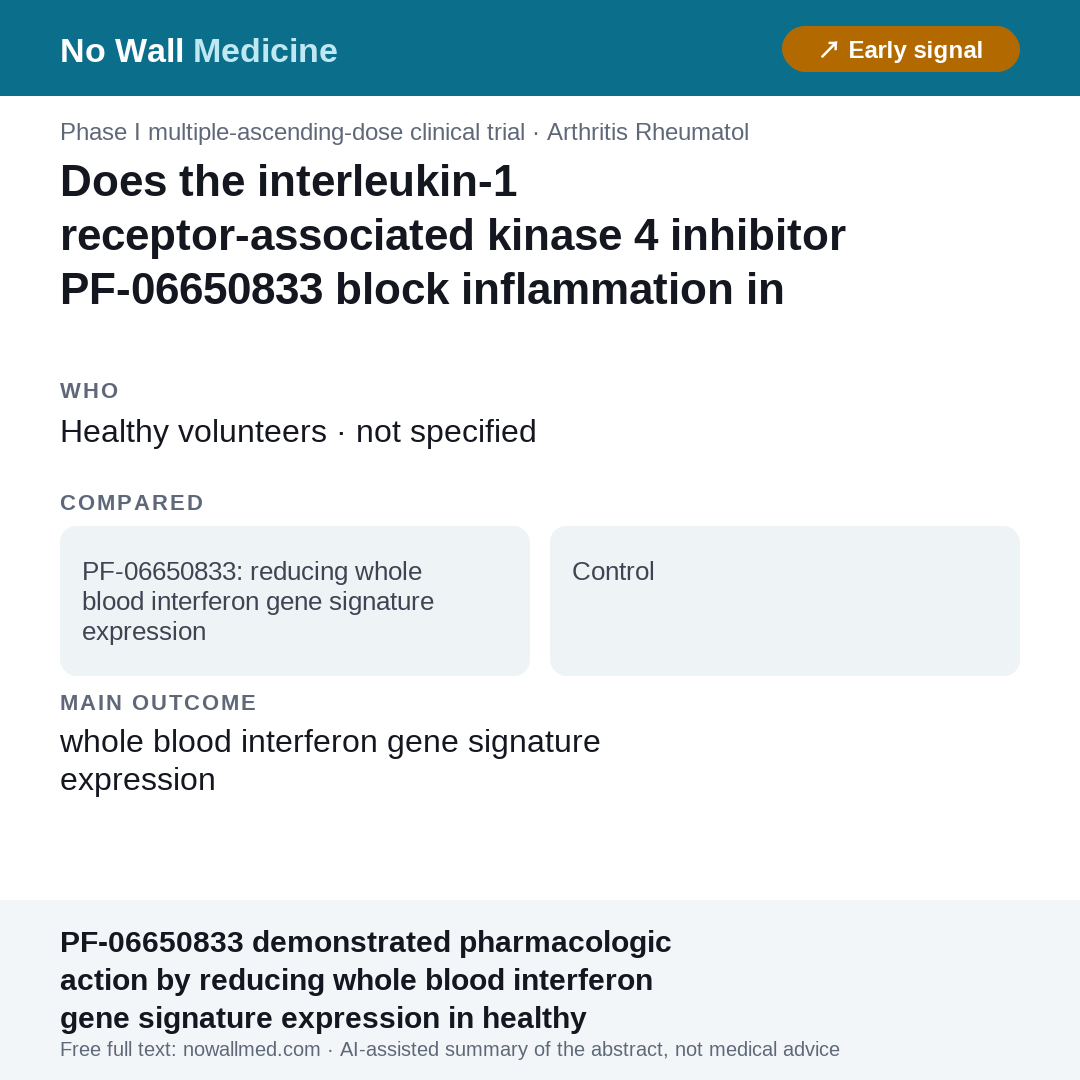
The Interleukin-1 Receptor-Associated Kinase 4 Inhibitor PF-06650833 Blocks Inflammation in Preclinical Models of Rheumatic Disease and in Humans Enrolled in a Randomized Clinical Trial
Phase I multiple-ascending-dose clinical trialEarly signal
Does the interleukin-1 receptor-associated kinase 4 inhibitor PF-06650833 block inflammation in rheumatic disease?
Who
Healthy volunteers · not specified
Compared
PF-06650833: reducing whole blood interferon gene signature expression
Control
Main outcome
whole blood interferon gene signature expression
Bottom line: PF-06650833 demonstrated pharmacologic action by reducing whole blood interferon gene signature expression in healthy volunteers.
Arthritis Rheumatol · 2021-11-01Download image
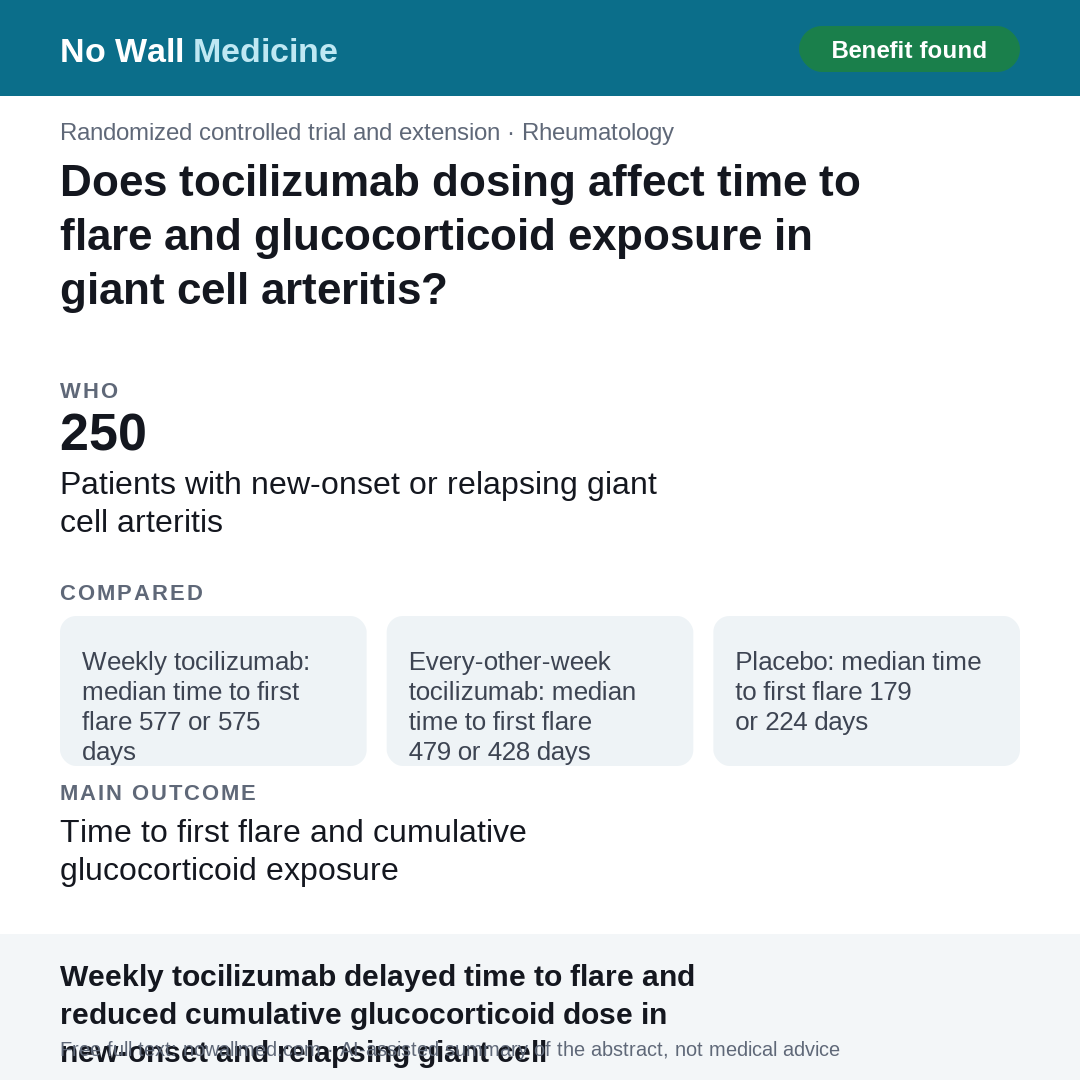
New-onset versus relapsing giant cell arteritis treated with tocilizumab: 3-year results from a randomized controlled trial and extension
Randomized controlled trial and extensionBenefit found
Does tocilizumab dosing affect time to flare and glucocorticoid exposure in giant cell arteritis?
Who
250
Patients with new-onset or relapsing giant cell arteritis
Compared
Weekly tocilizumab: median time to first flare 577 or 575 days
Every-other-week tocilizumab: median time to first flare 479 or 428 days
Placebo: median time to first flare 179 or 224 days
Main outcome
Time to first flare and cumulative glucocorticoid exposure
Bottom line: Weekly tocilizumab delayed time to flare and reduced cumulative glucocorticoid dose in new-onset and relapsing giant cell arteritis.
Rheumatology · 2021-11-01Download image
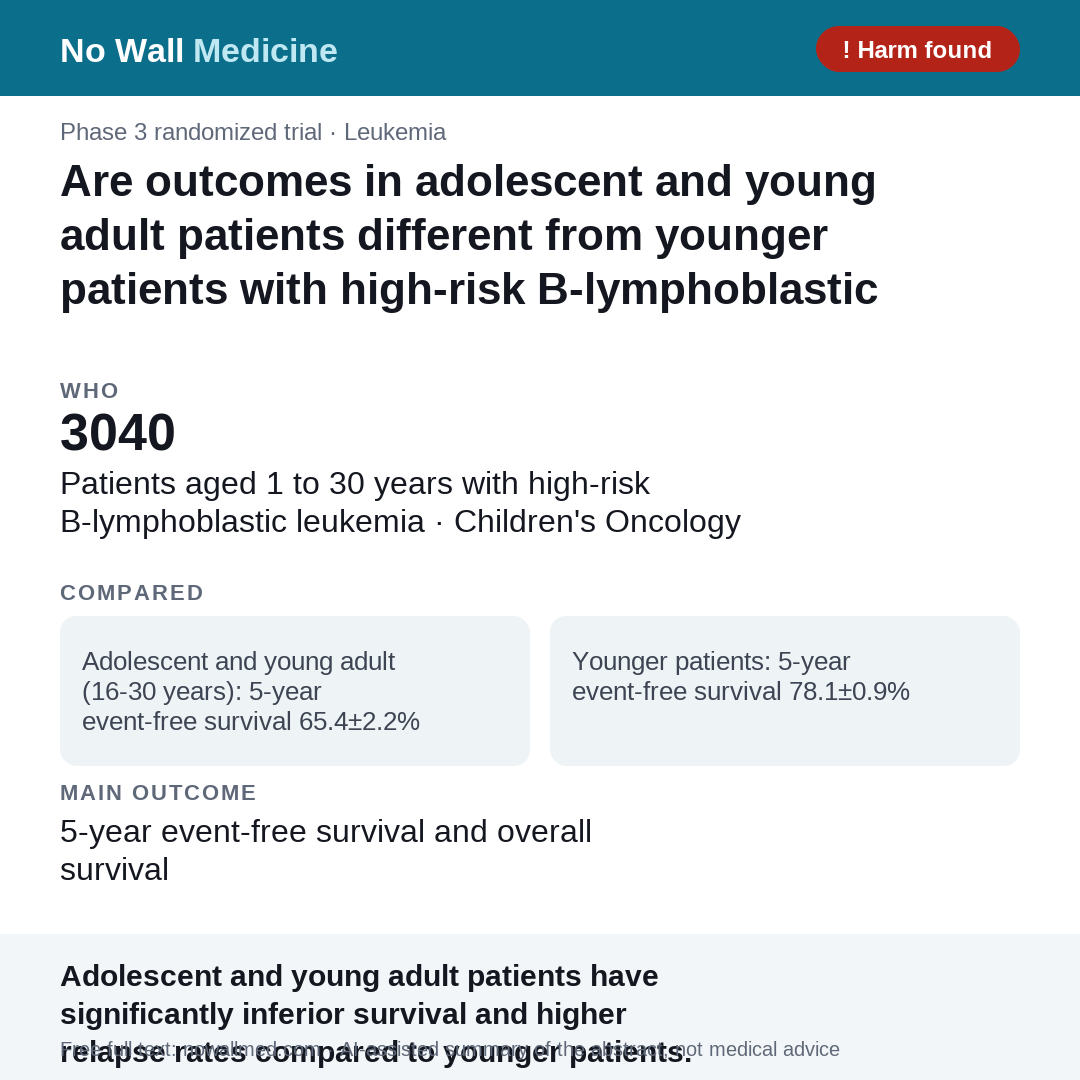
Outcomes in adolescent and young adult patients (16 to 30 years) compared to younger patients treated for high-risk B-lymphoblastic leukemia: report from Children's Oncology Group Study AALL0232
Phase 3 randomized trialHarm found
Are outcomes in adolescent and young adult patients different from younger patients with high-risk B-lymphoblastic leukemia?
Who
3040
Patients aged 1 to 30 years with high-risk B-lymphoblastic leukemia · Children's Oncology Group
Compared
Adolescent and young adult (16-30 years): 5-year event-free survival 65.4±2.2%
Younger patients: 5-year event-free survival 78.1±0.9%
Main outcome
5-year event-free survival and overall survival
Bottom line: Adolescent and young adult patients have significantly inferior survival and higher relapse rates compared to younger patients.
Leukemia · 2021-11-01Download image
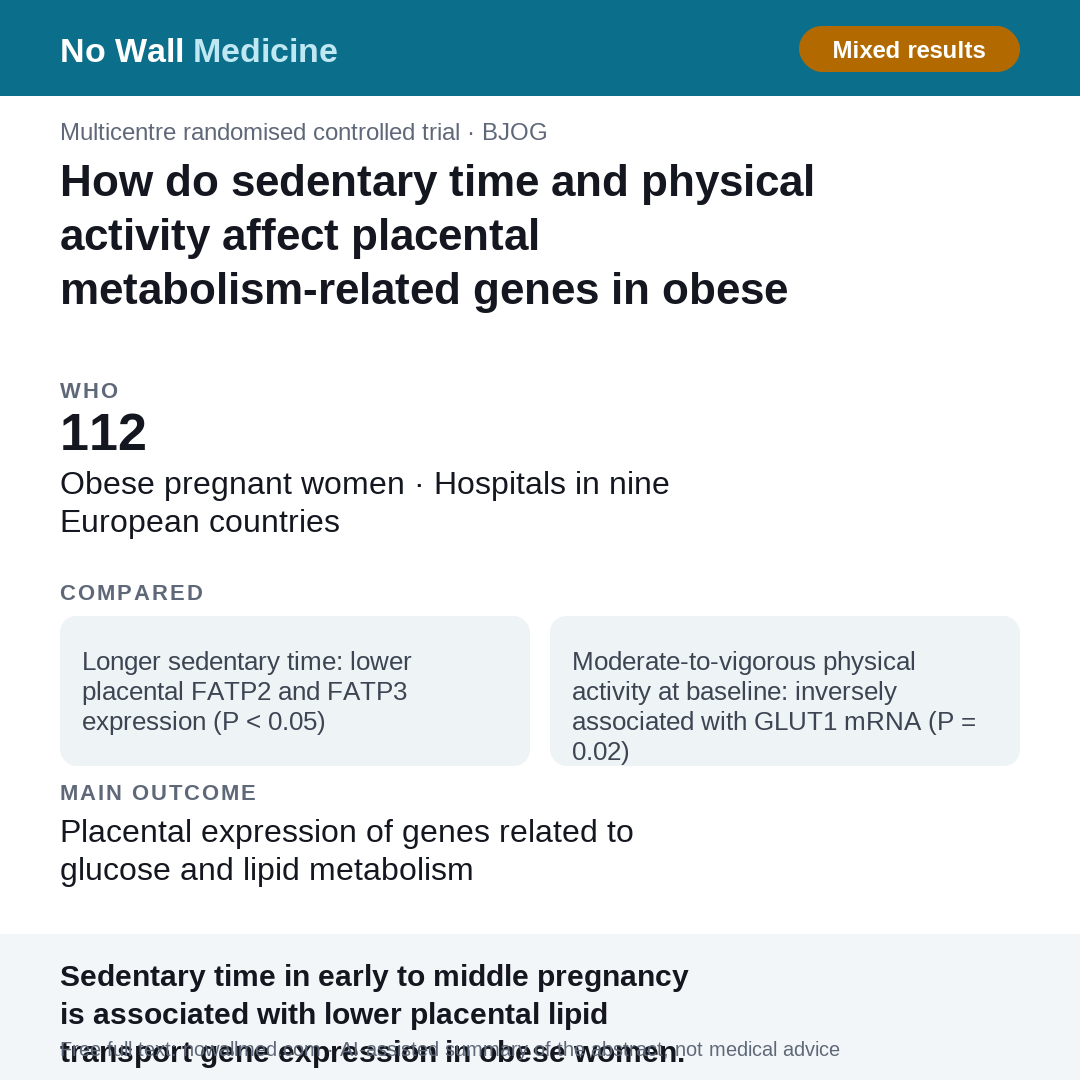
The unexplored role of sedentary time and physical activity in glucose and lipid metabolism-related placental mRNAs in pregnant women who are obese: the DALI lifestyle randomised controlled trial
Multicentre randomised controlled trialMixed results
How do sedentary time and physical activity affect placental metabolism-related genes in obese pregnant women?
Who
112
Obese pregnant women · Hospitals in nine European countries
Compared
Longer sedentary time: lower placental FATP2 and FATP3 expression (P < 0.05)
Moderate-to-vigorous physical activity at baseline: inversely associated with GLUT1 mRNA (P = 0.02)
Main outcome
Placental expression of genes related to glucose and lipid metabolism
Bottom line: Sedentary time in early to middle pregnancy is associated with lower placental lipid transport gene expression in obese women.
BJOG · 2021-11-01Download image
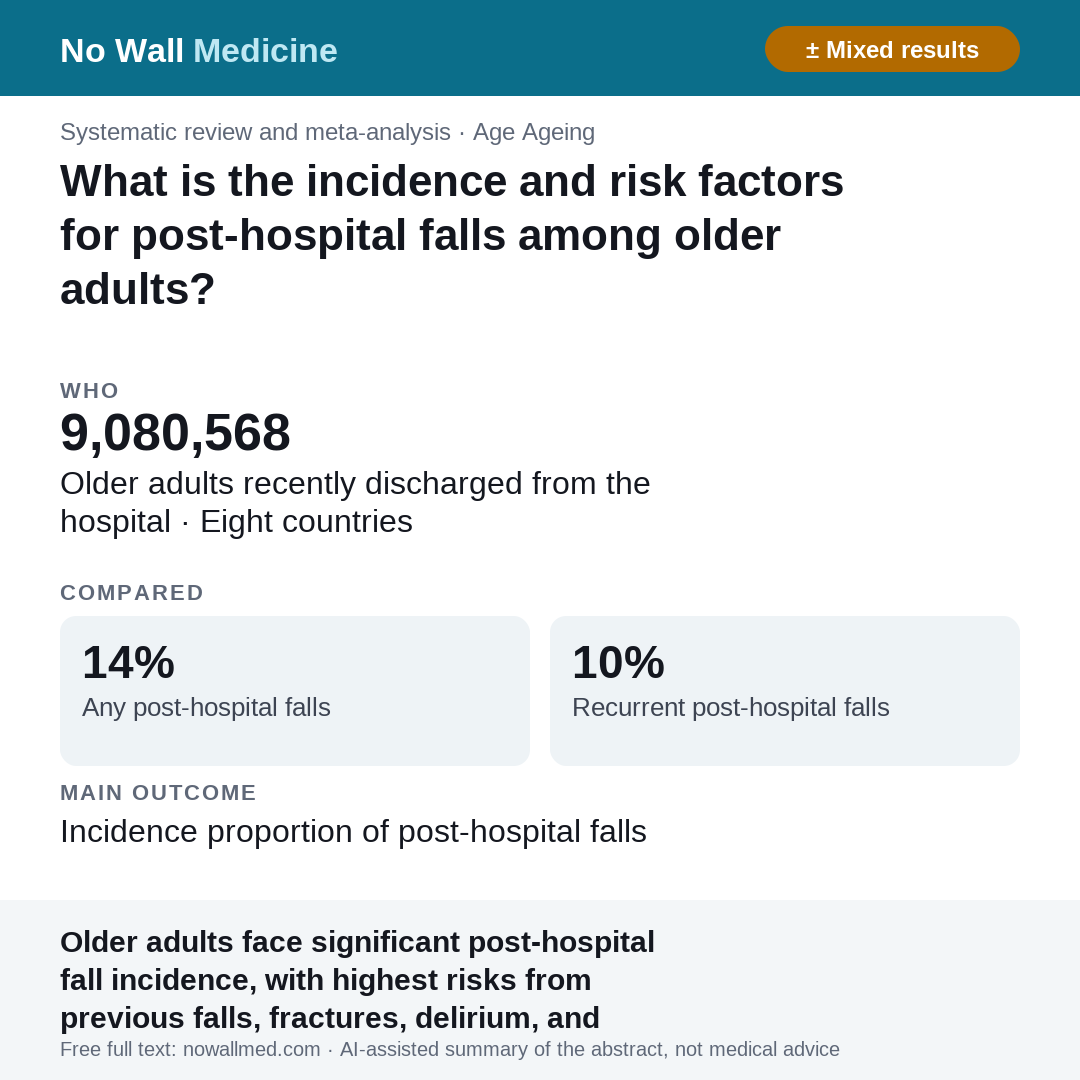
Post-hospital falls incidence and risk factors among older adults: a systematic review and meta-analysis
Systematic review and meta-analysisMixed results
What is the incidence and risk factors for post-hospital falls among older adults?
Who
9,080,568
Older adults recently discharged from the hospital · Eight countries
Compared
14%Any post-hospital falls (95% CI: 13%-15%)
10%Recurrent post-hospital falls (95% CI: 5%-14%)
Main outcome
Incidence proportion of post-hospital falls
Bottom line: Older adults face significant post-hospital fall incidence, with highest risks from previous falls, fractures, delirium, and neurological diseases.
Age Ageing · 2021-11-01Download image
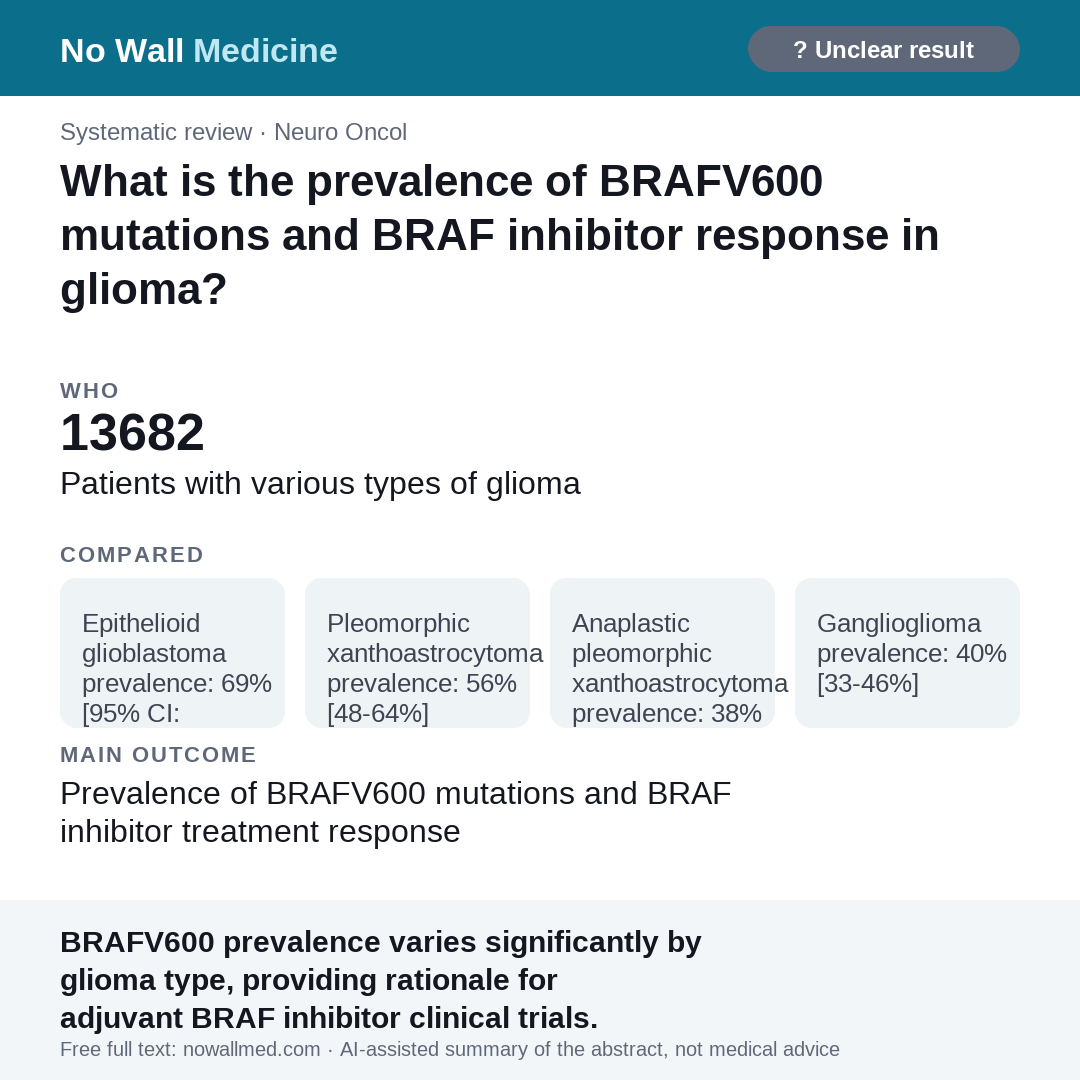
Prevalence of BRAFV600 in glioma and use of BRAF Inhibitors in patients with BRAFV600 mutation-positive glioma: systematic review
Systematic reviewUnclear result
What is the prevalence of BRAFV600 mutations and BRAF inhibitor response in glioma?
Who
13682
Patients with various types of glioma
Compared
Epithelioid glioblastoma prevalence: 69% [95% CI: 45-89%]
Pleomorphic xanthoastrocytoma prevalence: 56% [48-64%]
Anaplastic pleomorphic xanthoastrocytoma prevalence: 38% [23-54%]
Ganglioglioma prevalence: 40% [33-46%]
Main outcome
Prevalence of BRAFV600 mutations and BRAF inhibitor treatment response
Bottom line: BRAFV600 prevalence varies significantly by glioma type, providing rationale for adjuvant BRAF inhibitor clinical trials.
Neuro Oncol · 2021-11-01Download image
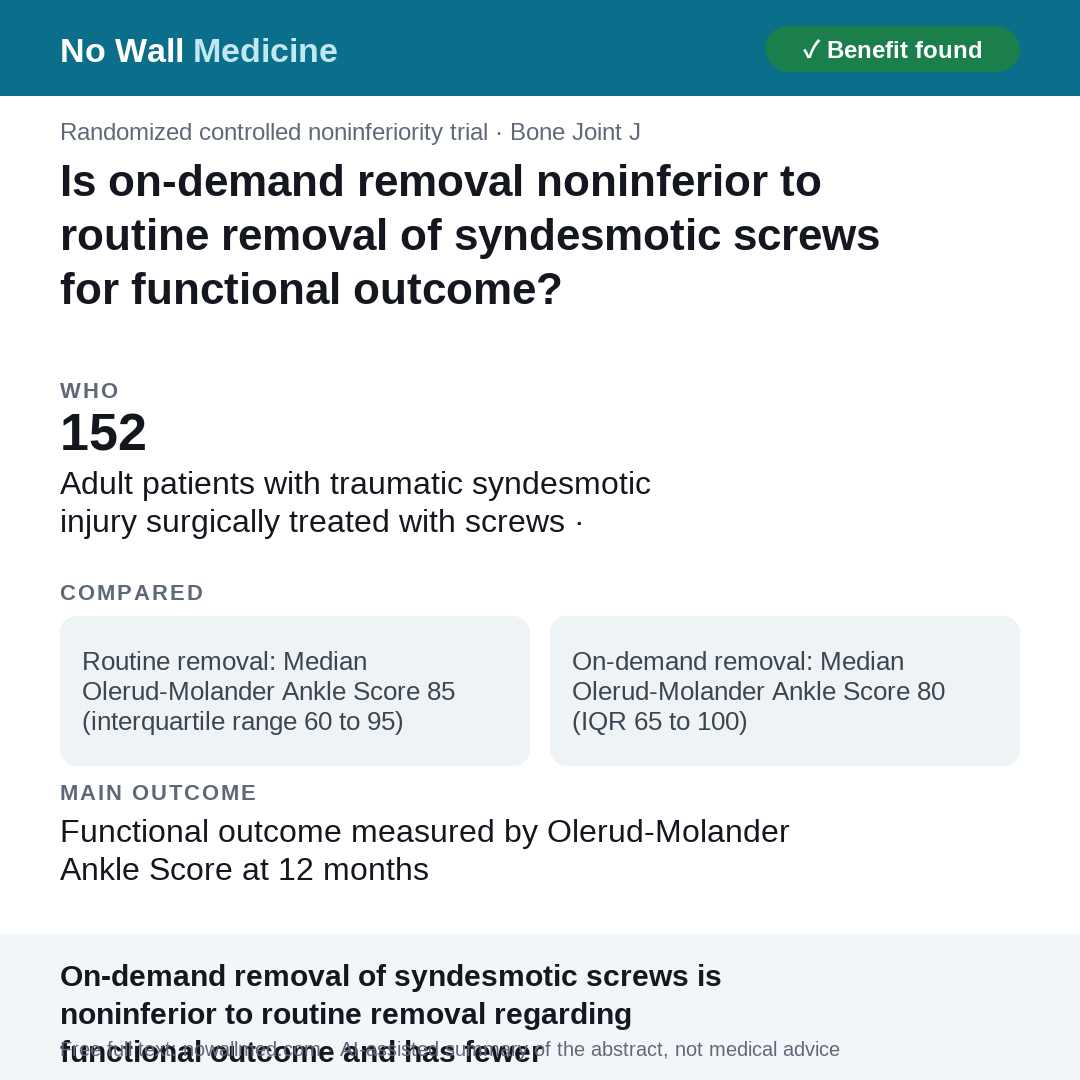
Functional outcome of routine versus on-demand removal of the syndesmotic screw: a multicentre randomized controlled trial
Randomized controlled noninferiority trialBenefit found
Is on-demand removal noninferior to routine removal of syndesmotic screws for functional outcome?
Who
152
Adult patients with traumatic syndesmotic injury surgically treated with screws · multicentre
Compared
Routine removal: Median Olerud-Molander Ankle Score 85 (interquartile range 60 to 95)
On-demand removal: Median Olerud-Molander Ankle Score 80 (IQR 65 to 100)
Main outcome
Functional outcome measured by Olerud-Molander Ankle Score at 12 months
Result: observed effect size was significantly within the equivalent bounds of -10 and 10 scale points (p < 0.001)
Bottom line: On-demand removal of syndesmotic screws is noninferior to routine removal regarding functional outcome and has fewer complications.
Bone Joint J · 2021-11-01Download image