Visual abstracts
New randomized trials and meta-analyses from leading journals at a glance: who was studied, what was compared, and what was found. Every paper is free to read in full.
All specialtiesCardiology 4763Oncology 4042Gastroenterology & Hepatology 1902Infectious Disease 3756Neurology 1872Psychiatry & Mental Health 2214Pulmonology 2042Critical Care 1319Endocrinology & Diabetes 2544Pediatrics 2889Surgery 2479Orthopedics & Sports Medicine 917Neurosurgery 525Cardiothoracic & Vascular Surgery 656Plastic & Reconstructive Surgery 574Nephrology 1107Rheumatology 810Hematology 1090Dermatology 611Ophthalmology 532Obstetrics & Gynecology 1645Public & Global Health 1037Radiology & Imaging 617Anesthesiology 957Urology 745ENT (Otolaryngology) 494Emergency Medicine 481Allergy & Immunology 309Geriatrics 972Family Medicine & Primary Care 533Medical Genetics & Genomics 659Pathology & Laboratory Medicine 156Physical Medicine & Rehabilitation 734Palliative Care 421Nutrition 1560Digital Health & AI 2133General Medicine 318
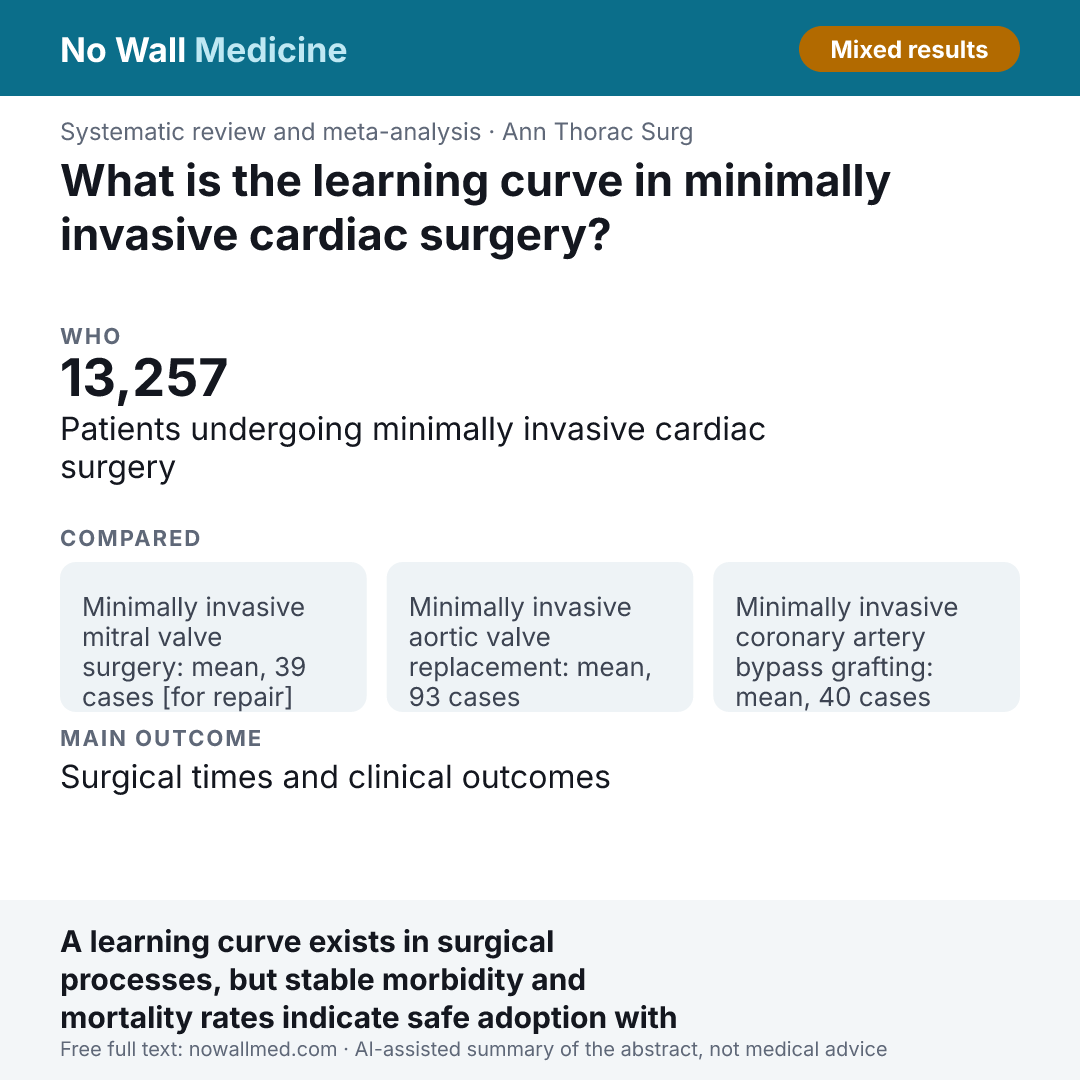
Defining the Learning Curve in Minimally Invasive Cardiac Surgery: A Systematic Review and Meta-Analysis
Systematic review and meta-analysisMixed results
What is the learning curve in minimally invasive cardiac surgery?
Who
13,257
Patients undergoing minimally invasive cardiac surgery
Compared
Minimally invasive mitral valve surgery: mean, 39 cases [for repair] and 78 [for replacement]
Minimally invasive aortic valve replacement: mean, 93 cases
Minimally invasive coronary artery bypass grafting: mean, 40 cases
Main outcome
Surgical times and clinical outcomes
Bottom line: A learning curve exists in surgical processes, but stable morbidity and mortality rates indicate safe adoption with training.
Limitation: Significant heterogeneity across studies prevents precise learning curve characterization.
Ann Thorac Surg · 2025-08-29 · Save PNG
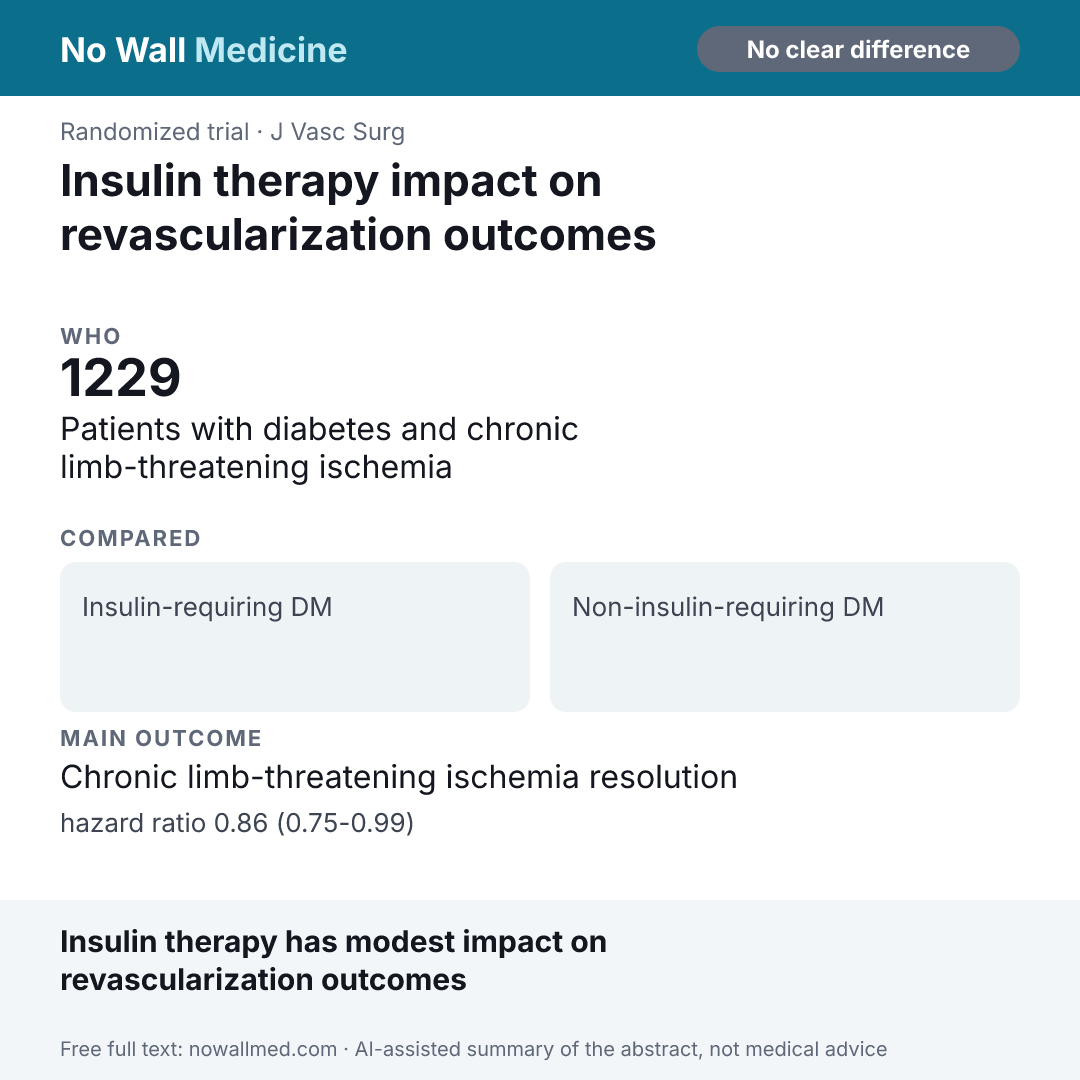
Insulin therapy and outcomes of revascularization procedures for chronic limb-threatening ischemia in the BEST-CLI trial
Randomized trialNo clear difference
Insulin therapy impact on revascularization outcomes
Who
1229
Patients with diabetes and chronic limb-threatening ischemia
Compared
Insulin-requiring DM
Non-insulin-requiring DM
Main outcome
Chronic limb-threatening ischemia resolution
Result: hazard ratio 0.86 (0.75-0.99)
Bottom line: Insulin therapy has modest impact on revascularization outcomes
J Vasc Surg · 2025-08-29 · Save PNG
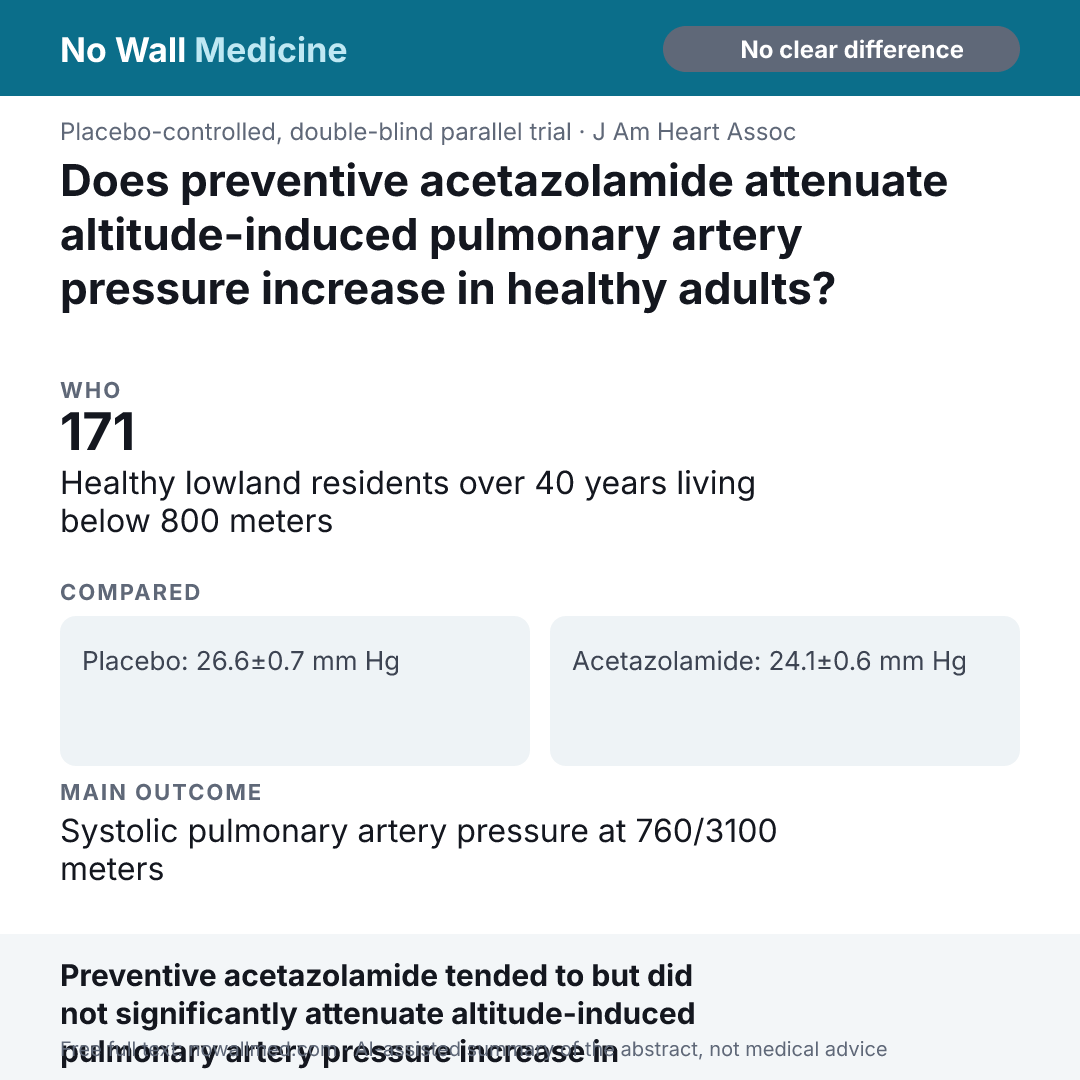
Effect of Acetazolamide on Pulmonary Hemodynamics and Right Heart Function in Healthy Adults Going to Altitude: A Randomized Controlled Trial
Placebo-controlled, double-blind parallel trialNo clear difference
Does preventive acetazolamide attenuate altitude-induced pulmonary artery pressure increase in healthy adults?
Who
171
Healthy lowland residents over 40 years living below 800 meters
Compared
Placebo: 26.6±0.7 mm Hg
Acetazolamide: 24.1±0.6 mm Hg
Main outcome
Systolic pulmonary artery pressure at 760/3100 meters
Result: -2.5 (95% CI, -5.3 to 0.4) mm Hg
Bottom line: Preventive acetazolamide tended to but did not significantly attenuate altitude-induced pulmonary artery pressure increase in healthy middle-aged adults.
J Am Heart Assoc · 2025-08-29 · Save PNG
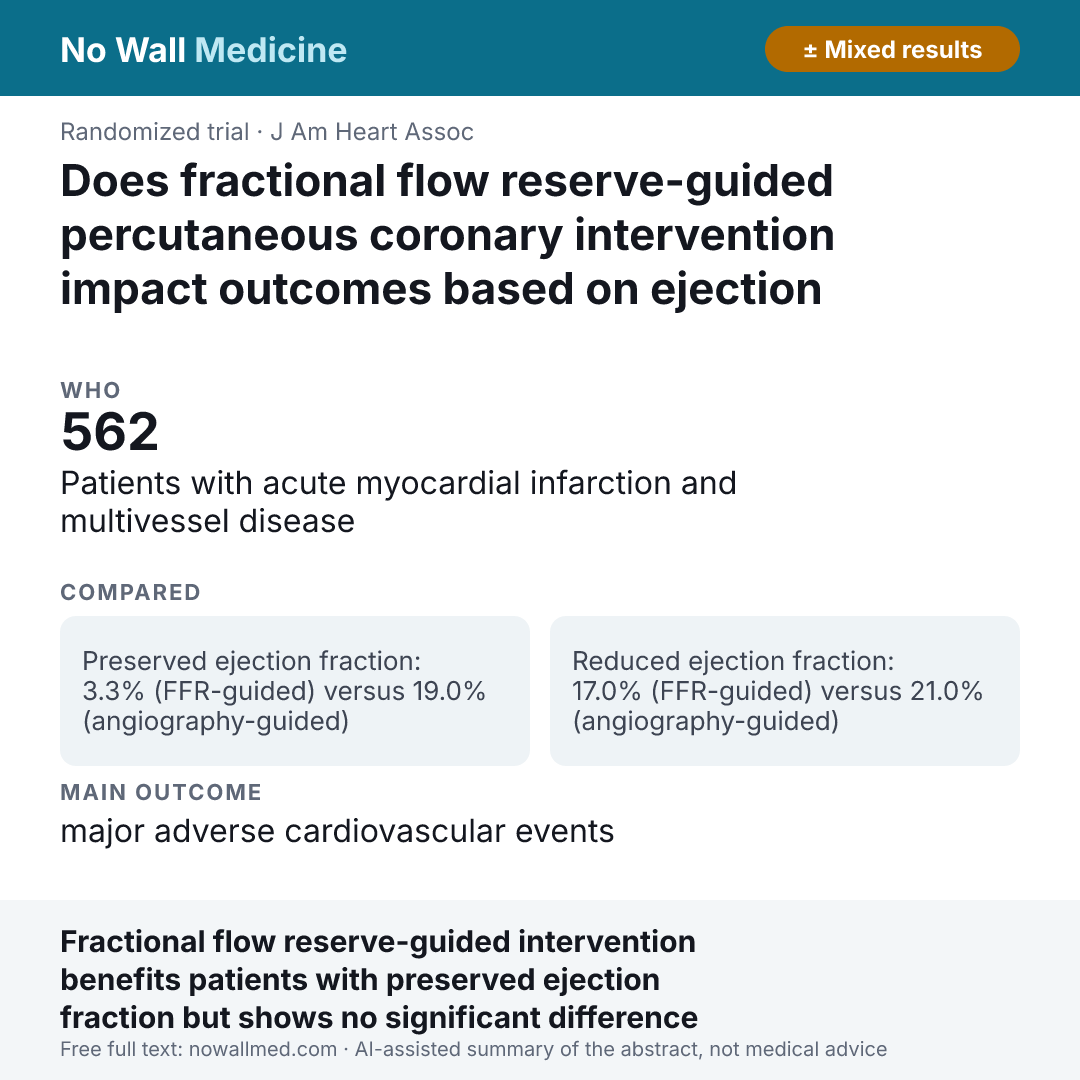
Clinical Relevance of Fractional Flow Reserve-Guided Percutaneous Coronary Interevention According to Left Ventricular Ejection Fraction in Patients With Acute Myocardial Infarction and Multivessel Disease
Randomized trialMixed results
Does fractional flow reserve-guided percutaneous coronary intervention impact outcomes based on ejection fraction?
Who
562
Patients with acute myocardial infarction and multivessel disease
Compared
Preserved ejection fraction: 3.3% (FFR-guided) versus 19.0% (angiography-guided)
Reduced ejection fraction: 17.0% (FFR-guided) versus 21.0% (angiography-guided)
Main outcome
major adverse cardiovascular events
Result: hazard ratio 0.26 (95% CI 0.11-0.66) for preserved ejection fraction
Bottom line: Fractional flow reserve-guided intervention benefits patients with preserved ejection fraction but shows no significant difference in those with reduced ejection fraction.
J Am Heart Assoc · 2025-08-29 · Save PNG
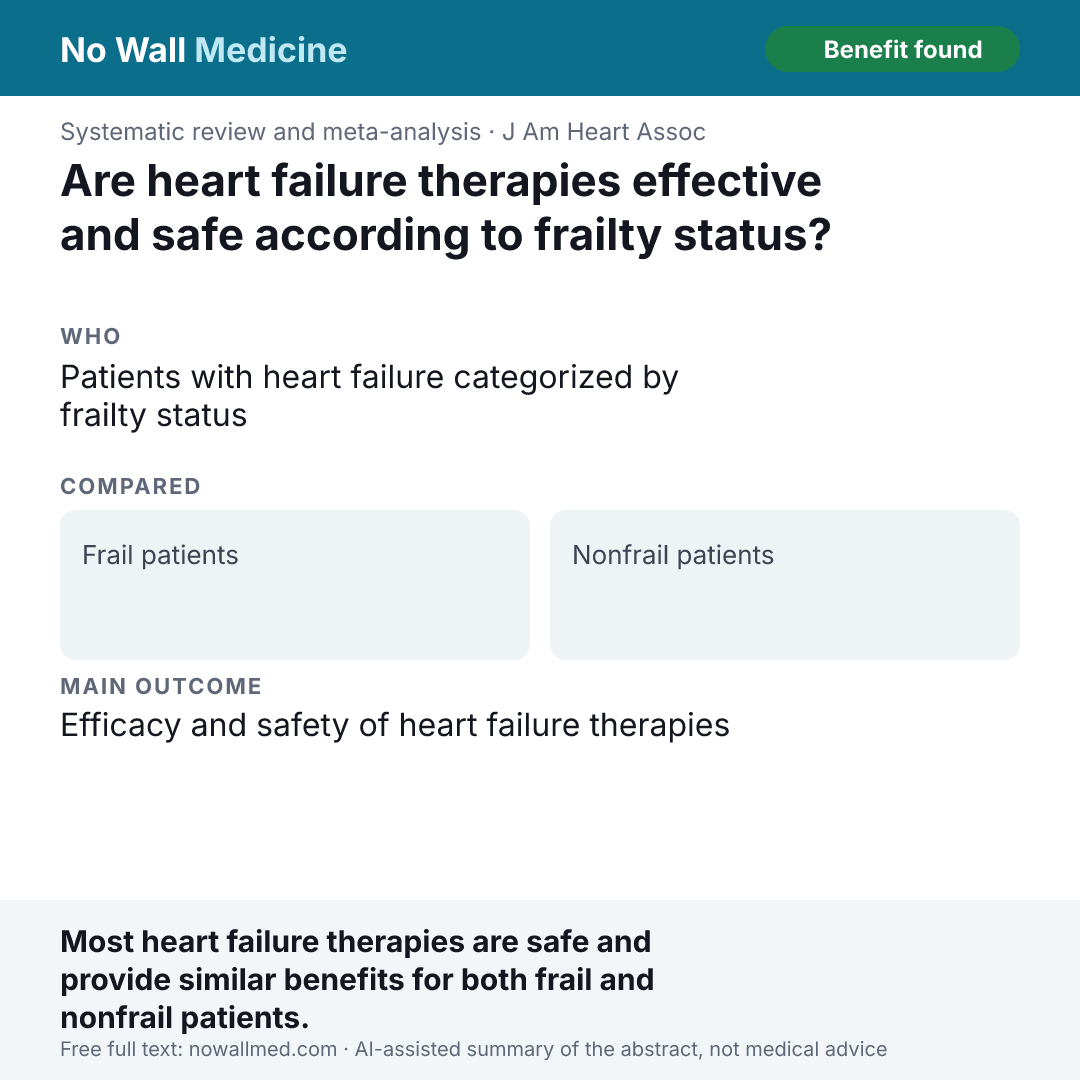
Efficacy and Safety of Heart Failure Treatment According to Frailty Status: A Systematic Review
Systematic review and meta-analysisBenefit found
Are heart failure therapies effective and safe according to frailty status?
Who
Patients with heart failure categorized by frailty status
Compared
Frail patients
Nonfrail patients
Main outcome
Efficacy and safety of heart failure therapies
Bottom line: Most heart failure therapies are safe and provide similar benefits for both frail and nonfrail patients.
J Am Heart Assoc · 2025-08-29 · Save PNG
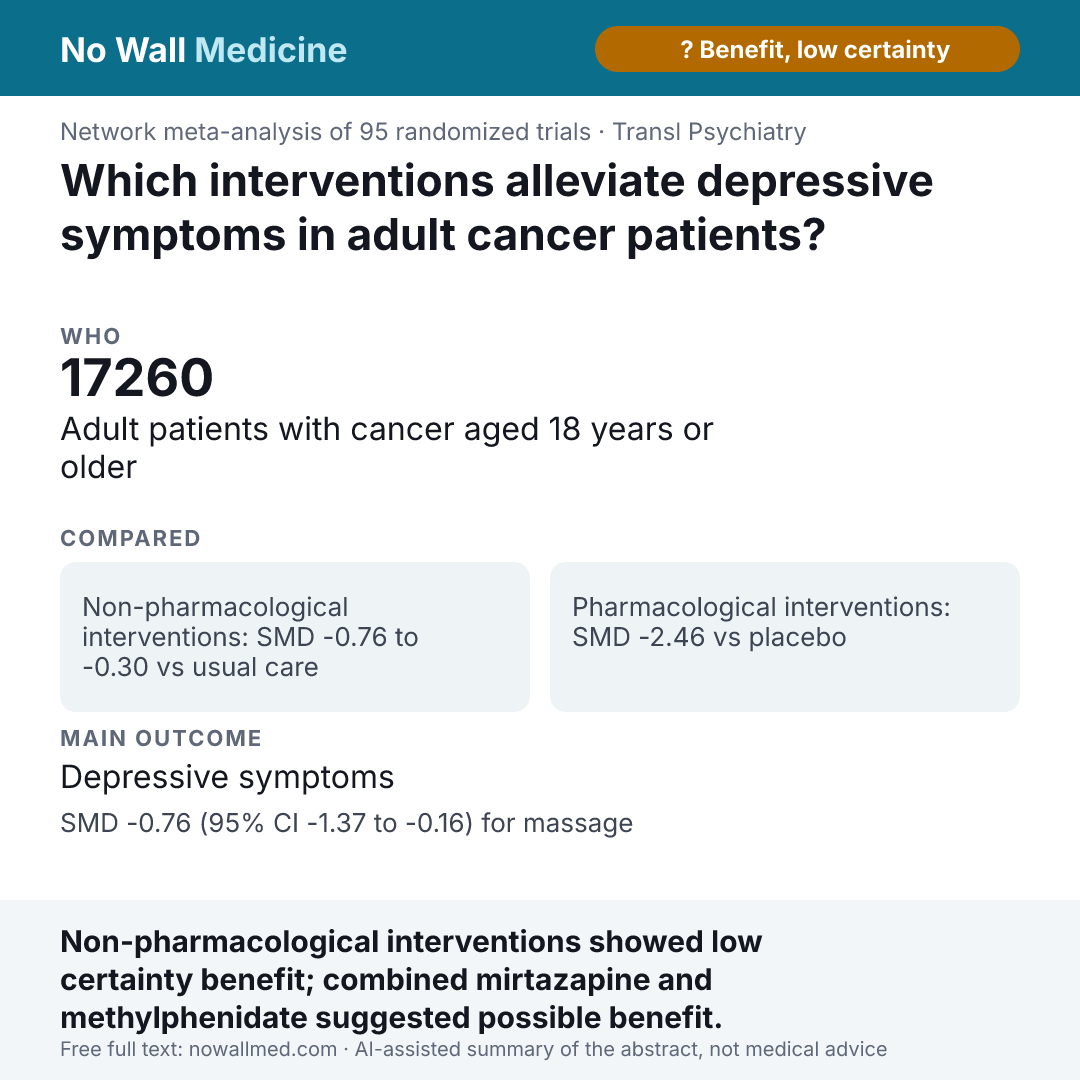
Treatments of depressive symptoms in cancer patients: A systematic review and network meta-analysis
Network meta-analysis of 95 randomized trialsBenefit, low certainty
Which interventions alleviate depressive symptoms in adult cancer patients?
Who
17260
Adult patients with cancer aged 18 years or older
Compared
Non-pharmacological interventions: SMD -0.76 to -0.30 vs usual care
Pharmacological interventions: SMD -2.46 vs placebo
Main outcome
Depressive symptoms
Result: SMD -0.76 (95% CI -1.37 to -0.16) for massage
Bottom line: Non-pharmacological interventions showed low certainty benefit; combined mirtazapine and methylphenidate suggested possible benefit.
Limitation: Overall evidence quality was low, reflecting substantial variability and limited data
Transl Psychiatry · 2025-08-29 · Save PNG
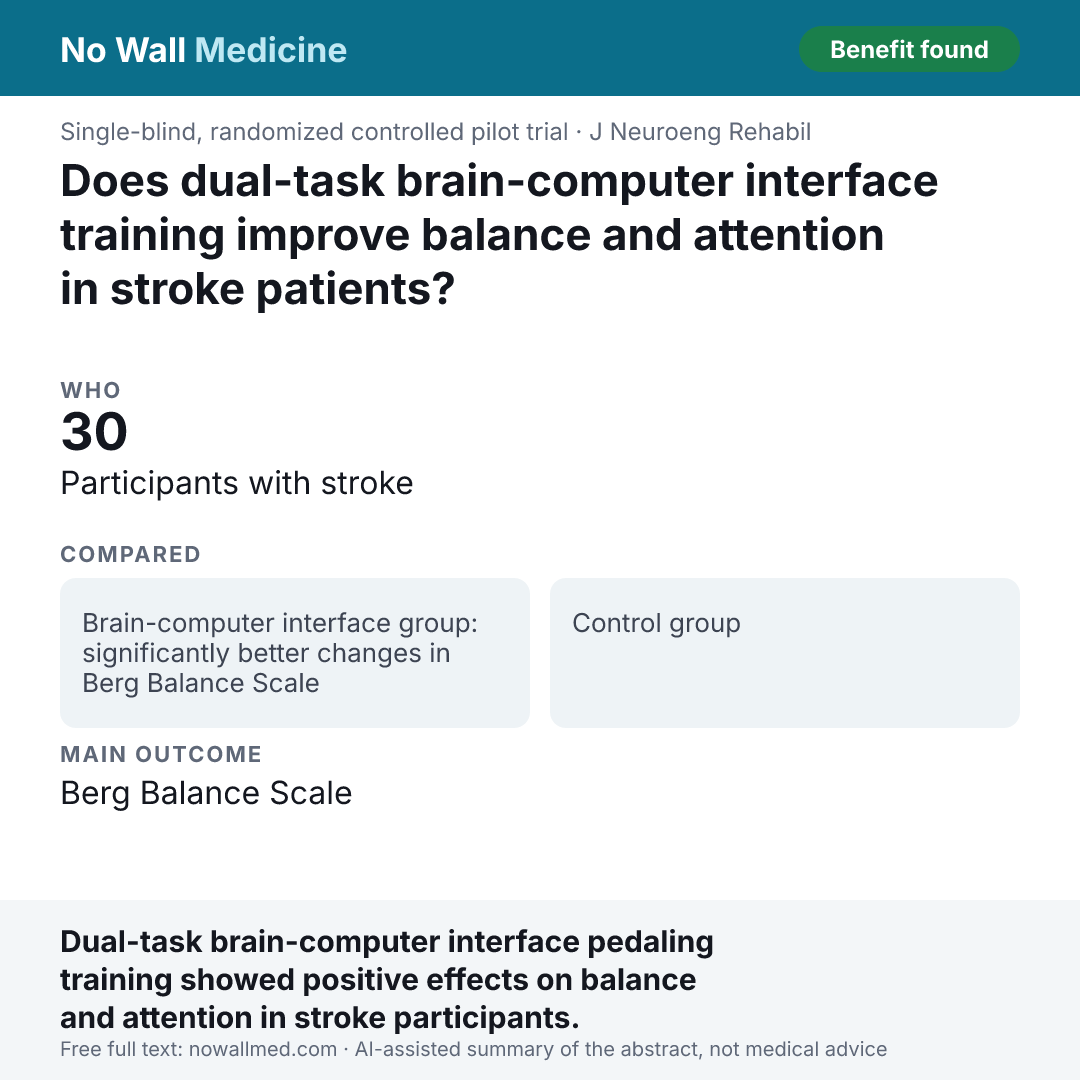
Effects of dual-task mode brain-computer interface based on motor imagery and virtual reality on balance and attention in patients with stroke: a randomized controlled pilot trial
Single-blind, randomized controlled pilot trialBenefit found
Does dual-task brain-computer interface training improve balance and attention in stroke patients?
Who
30
Participants with stroke
Compared
Brain-computer interface group: significantly better changes in Berg Balance Scale
Control group
Main outcome
Berg Balance Scale
Bottom line: Dual-task brain-computer interface pedaling training showed positive effects on balance and attention in stroke participants.
Limitation: The study is a preliminary pilot trial.
J Neuroeng Rehabil · 2025-08-29 · Save PNG
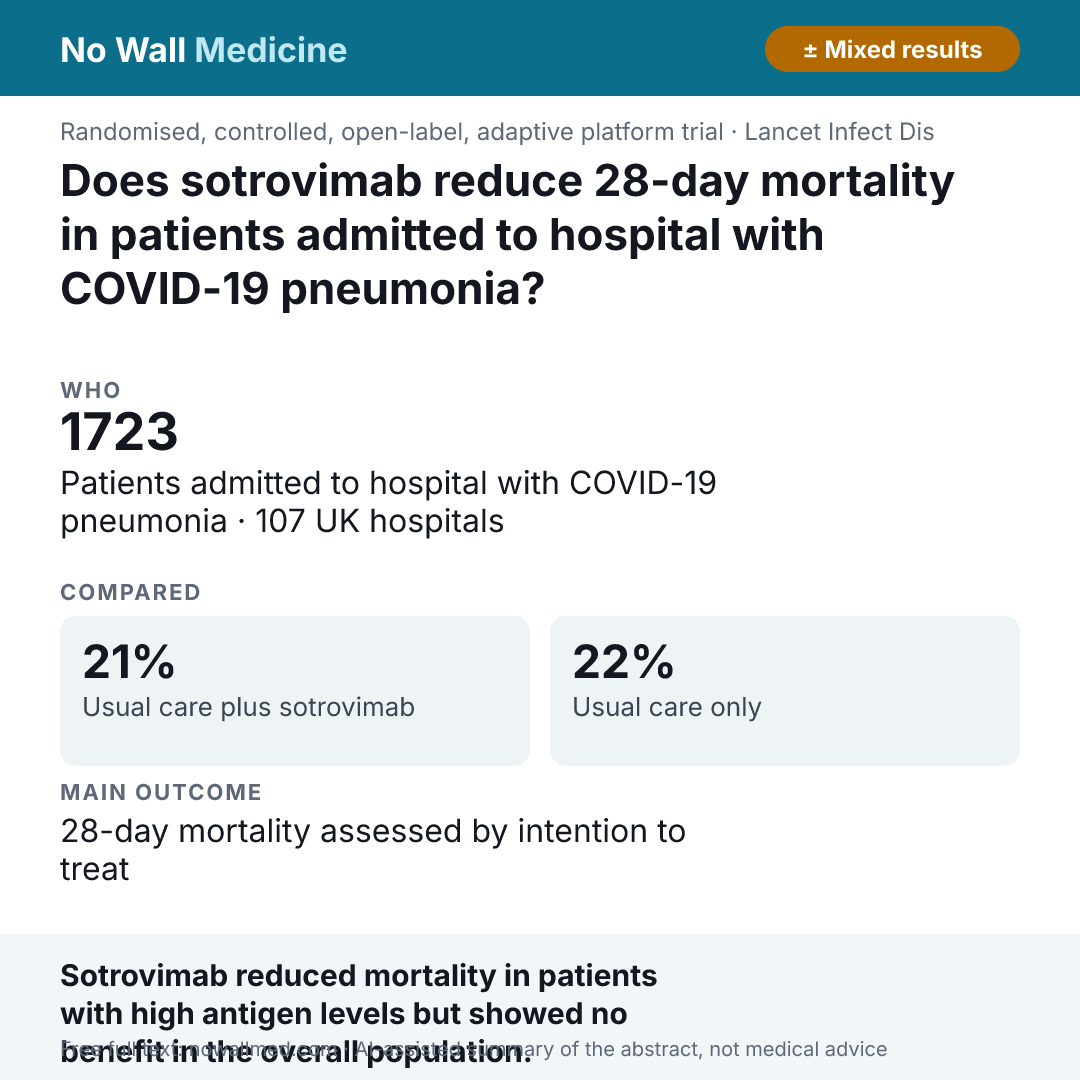
Sotrovimab versus usual care in patients admitted to hospital with COVID-19 (RECOVERY): a randomised, controlled, open-label, platform trial
Randomised, controlled, open-label, adaptive platform trialMixed results
Does sotrovimab reduce 28-day mortality in patients admitted to hospital with COVID-19 pneumonia?
Who
1723
Patients admitted to hospital with COVID-19 pneumonia · 107 UK hospitals
Compared
21%Usual care plus sotrovimab (177/828)
22%Usual care only (201/895)
Main outcome
28-day mortality assessed by intention to treat
Result: 0.95 (95% CI 0.77-1.16)
Bottom line: Sotrovimab reduced mortality in patients with high antigen levels but showed no benefit in the overall population.
Limitation: The emergence of high-level resistance to sotrovimab among subsequent SARS-CoV-2 variants restricts its current usefulness.
Funded by: UK Research and Innovation and National Institute for Health and Care Research
Lancet Infect Dis · 2025-08-28 · Save PNG
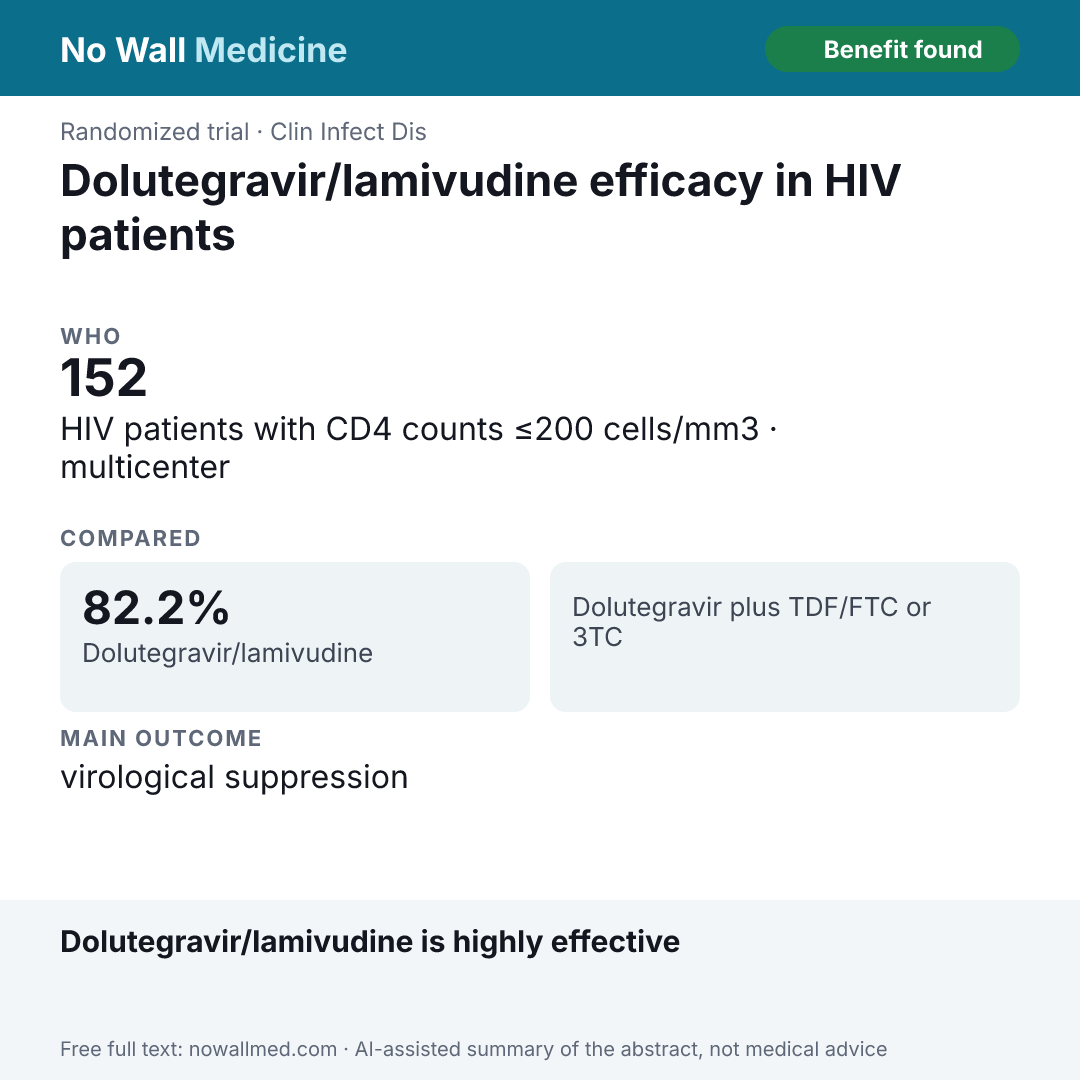
Efficacy and Safety of Dual Therapy With Dolutegravir/Lamivudine in Treatment-naive Persons With CD4 Counts <200/mm3: 48-Week Results of the DOLCE Study
Randomized trialBenefit found
Dolutegravir/lamivudine efficacy in HIV patients
Who
152
HIV patients with CD4 counts ≤200 cells/mm3 · multicenter
Compared
82.2%Dolutegravir/lamivudine (125/152)
Dolutegravir plus TDF/FTC or 3TC
Main outcome
virological suppression
Bottom line: Dolutegravir/lamivudine is highly effective
Clin Infect Dis · 2025-08-28 · Save PNG
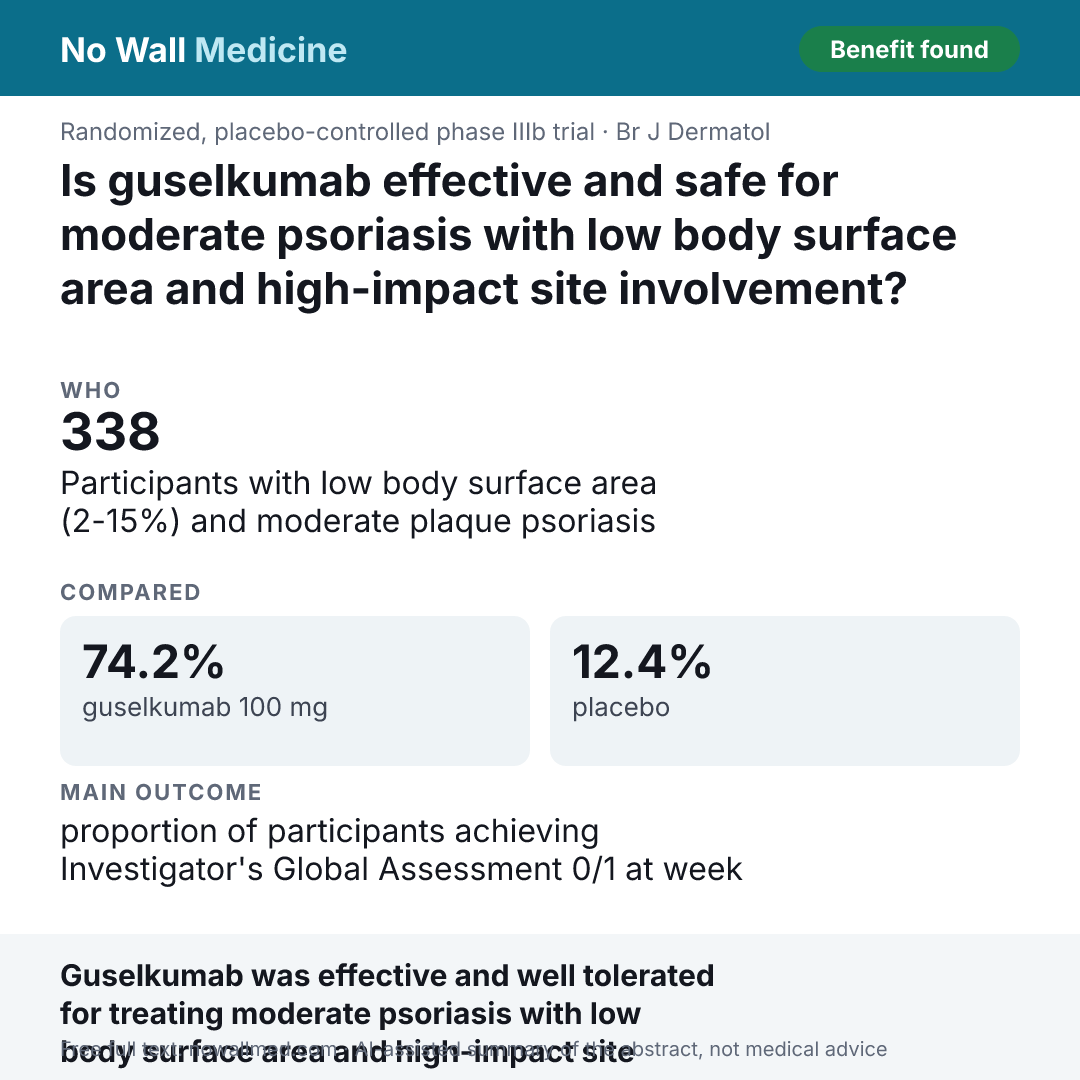
SPECTREM phase IIIb clinical trial results through week 16: guselkumab efficacy and safety for the treatment of low body surface area, moderate psoriasis with high-impact site involvement
Randomized, placebo-controlled phase IIIb trialBenefit found
Is guselkumab effective and safe for moderate psoriasis with low body surface area and high-impact site involvement?
Who
338
Participants with low body surface area (2-15%) and moderate plaque psoriasis
Compared
74.2%guselkumab 100 mg
12.4%placebo
Main outcome
proportion of participants achieving Investigator's Global Assessment 0/1 at week 16
Bottom line: Guselkumab was effective and well tolerated for treating moderate psoriasis with low body surface area and high-impact site involvement.
Br J Dermatol · 2025-08-28 · Save PNG
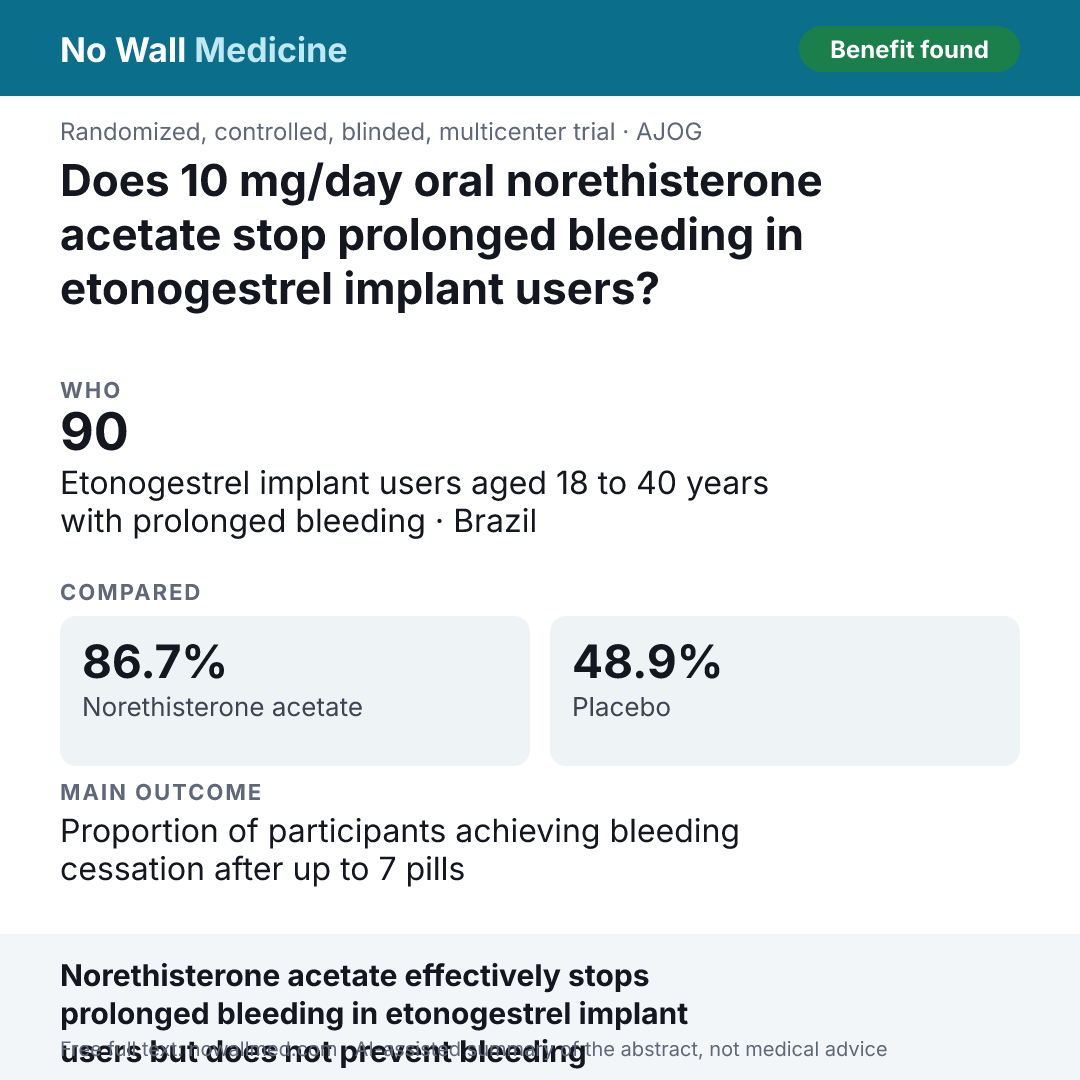
Norethisterone for prolonged uterine bleeding associated with etonogestrel implant (IMPLANET): a randomized controlled trial
Randomized, controlled, blinded, multicenter trialBenefit found
Does 10 mg/day oral norethisterone acetate stop prolonged bleeding in etonogestrel implant users?
Who
90
Etonogestrel implant users aged 18 to 40 years with prolonged bleeding · Brazil
Compared
86.7%Norethisterone acetate
48.9%Placebo
Main outcome
Proportion of participants achieving bleeding cessation after up to 7 pills
Result: adjusted risk difference, 35.6% (95% confidence interval, 17.1%-54.0%)
Bottom line: Norethisterone acetate effectively stops prolonged bleeding in etonogestrel implant users but does not prevent bleeding recurrence.
AJOG · 2025-08-28 · Save PNG
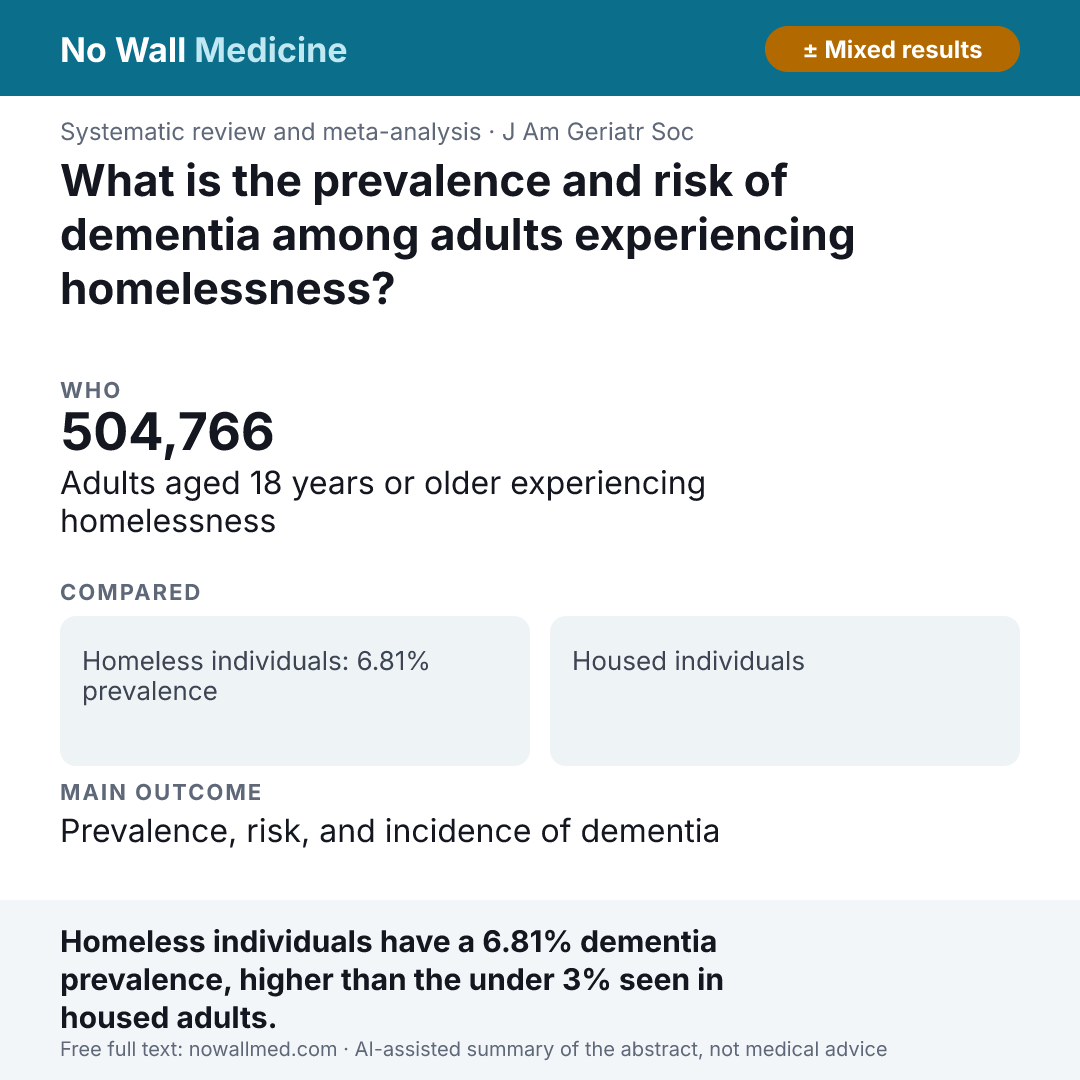
Prevalence and Risk of Dementia Among Adults Who Have Experienced Homelessness, a Meta-Analysis
Systematic review and meta-analysisMixed results
What is the prevalence and risk of dementia among adults experiencing homelessness?
Who
504,766
Adults aged 18 years or older experiencing homelessness
Compared
Homeless individuals: 6.81% prevalence
Housed individuals
Main outcome
Prevalence, risk, and incidence of dementia
Result: risk ratio 1.03 (95% CI 0.52, 2.03)
Bottom line: Homeless individuals have a 6.81% dementia prevalence, higher than the under 3% seen in housed adults.
J Am Geriatr Soc · 2025-08-28 · Save PNG
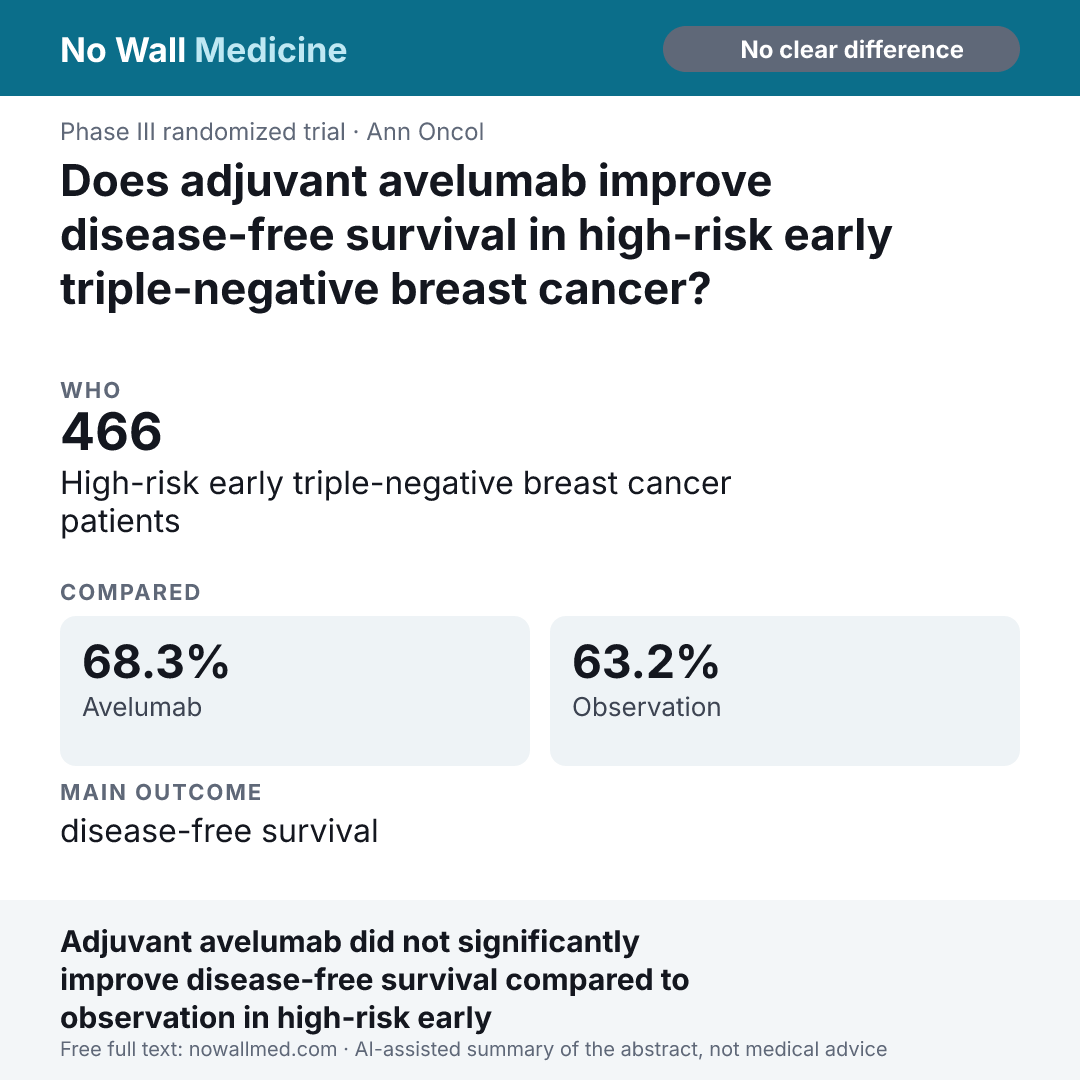
A-BRAVE trial: a phase III randomized trial with anti-PD-L1 avelumab in high-risk triple-negative early breast cancer patients
Phase III randomized trialNo clear difference
Does adjuvant avelumab improve disease-free survival in high-risk early triple-negative breast cancer?
Who
466
High-risk early triple-negative breast cancer patients
Compared
68.3%Avelumab
63.2%Observation
Main outcome
disease-free survival
Result: hazard ratio 0.81 (95% CI 0.61-1.09)
Bottom line: Adjuvant avelumab did not significantly improve disease-free survival compared to observation in high-risk early triple-negative breast cancer.
Limitation: A descriptive analysis suggests a potential favorable impact on overall survival.
Ann Oncol · 2025-08-28 · Save PNG
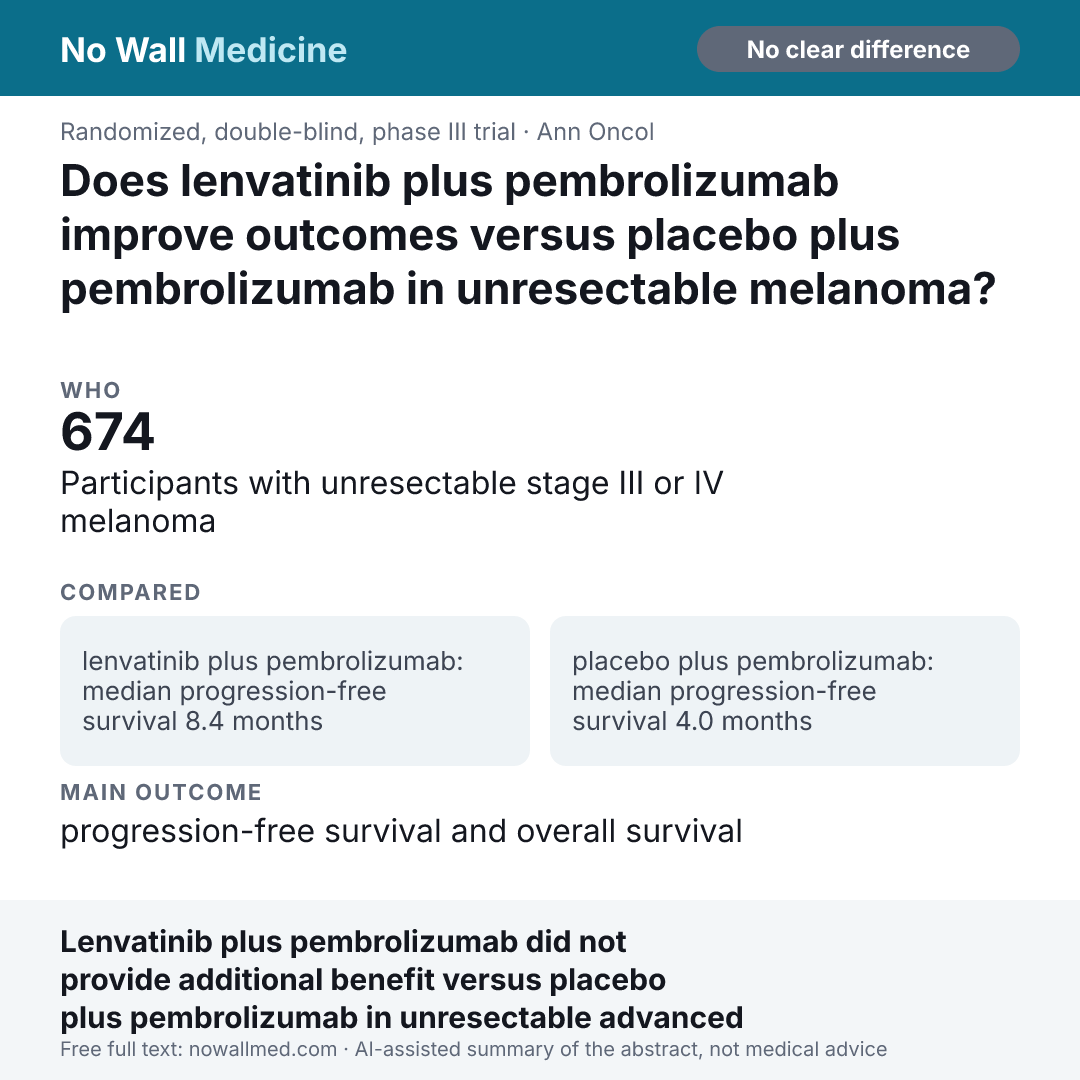
Randomized, double-blind, phase III LEAP-003 study of first-line lenvatinib plus pembrolizumab versus placebo plus pembrolizumab for unresectable or metastatic melanoma
Randomized, double-blind, phase III trialNo clear difference
Does lenvatinib plus pembrolizumab improve outcomes versus placebo plus pembrolizumab in unresectable melanoma?
Who
674
Participants with unresectable stage III or IV melanoma
Compared
lenvatinib plus pembrolizumab: median progression-free survival 8.4 months
placebo plus pembrolizumab: median progression-free survival 4.0 months
Main outcome
progression-free survival and overall survival
Result: hazard ratio 0.83 (95% CI 0.69-1.00)
Bottom line: Lenvatinib plus pembrolizumab did not provide additional benefit versus placebo plus pembrolizumab in unresectable advanced melanoma.
Ann Oncol · 2025-08-28 · Save PNG
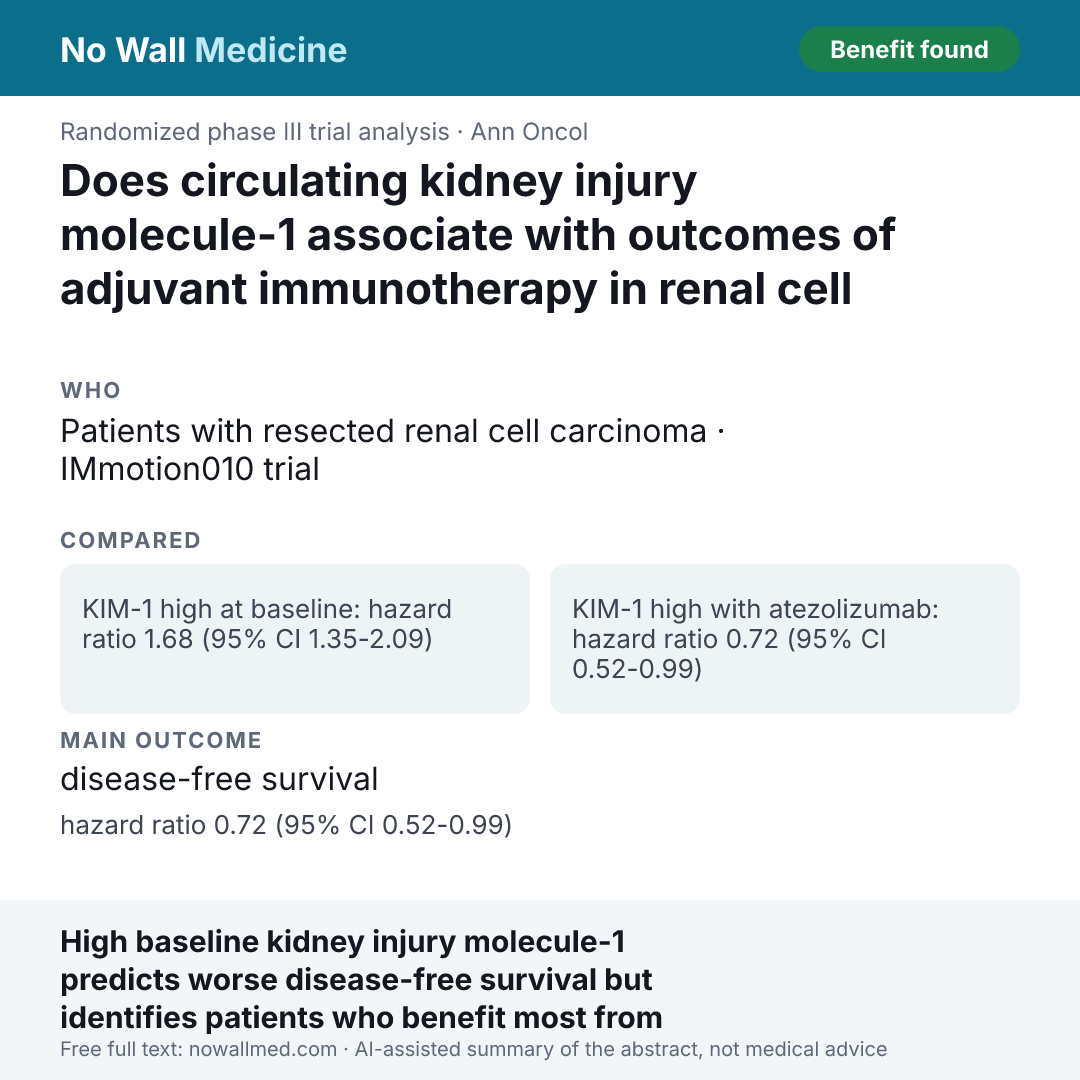
Circulating kidney injury molecule-1 (KIM-1) and association with outcome to adjuvant immunotherapy in renal cell carcinoma
Randomized phase III trial analysisBenefit found
Does circulating kidney injury molecule-1 associate with outcomes of adjuvant immunotherapy in renal cell carcinoma?
Who
Patients with resected renal cell carcinoma · IMmotion010 trial
Compared
KIM-1 high at baseline: hazard ratio 1.68 (95% CI 1.35-2.09)
KIM-1 high with atezolizumab: hazard ratio 0.72 (95% CI 0.52-0.99)
Main outcome
disease-free survival
Result: hazard ratio 0.72 (95% CI 0.52-0.99)
Bottom line: High baseline kidney injury molecule-1 predicts worse disease-free survival but identifies patients who benefit most from adjuvant atezolizumab.
Ann Oncol · 2025-08-28 · Save PNG
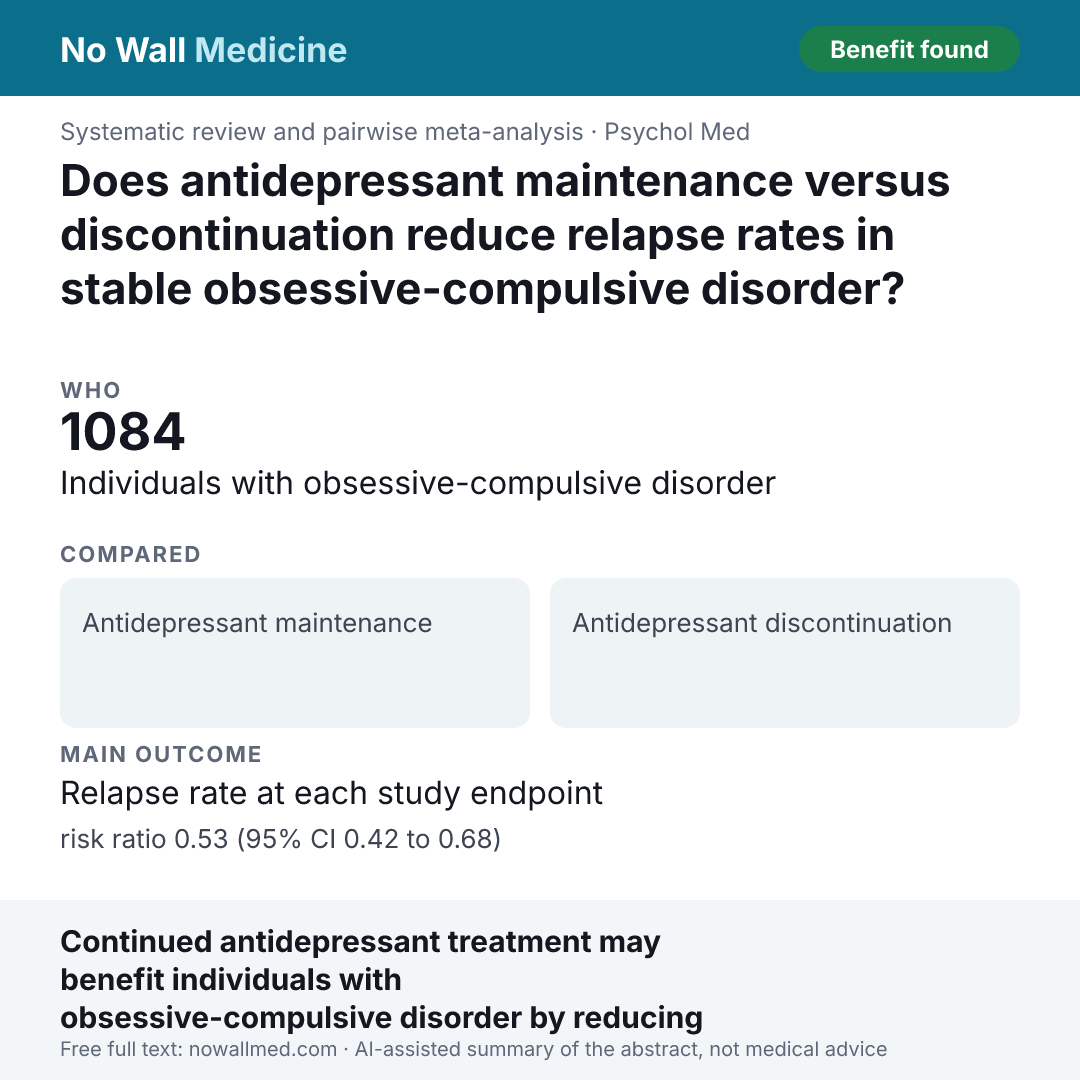
Relapse rates in stable obsessive-compulsive disorder after antidepressant discontinuation versus maintenance: A systematic review and meta-analysis
Systematic review and pairwise meta-analysisBenefit found
Does antidepressant maintenance versus discontinuation reduce relapse rates in stable obsessive-compulsive disorder?
Who
1084
Individuals with obsessive-compulsive disorder
Compared
Antidepressant maintenance
Antidepressant discontinuation
Main outcome
Relapse rate at each study endpoint
Result: risk ratio 0.53 (95% CI 0.42 to 0.68)
Bottom line: Continued antidepressant treatment may benefit individuals with obsessive-compulsive disorder by reducing relapse rates.
Psychol Med · 2025-08-28 · Save PNG
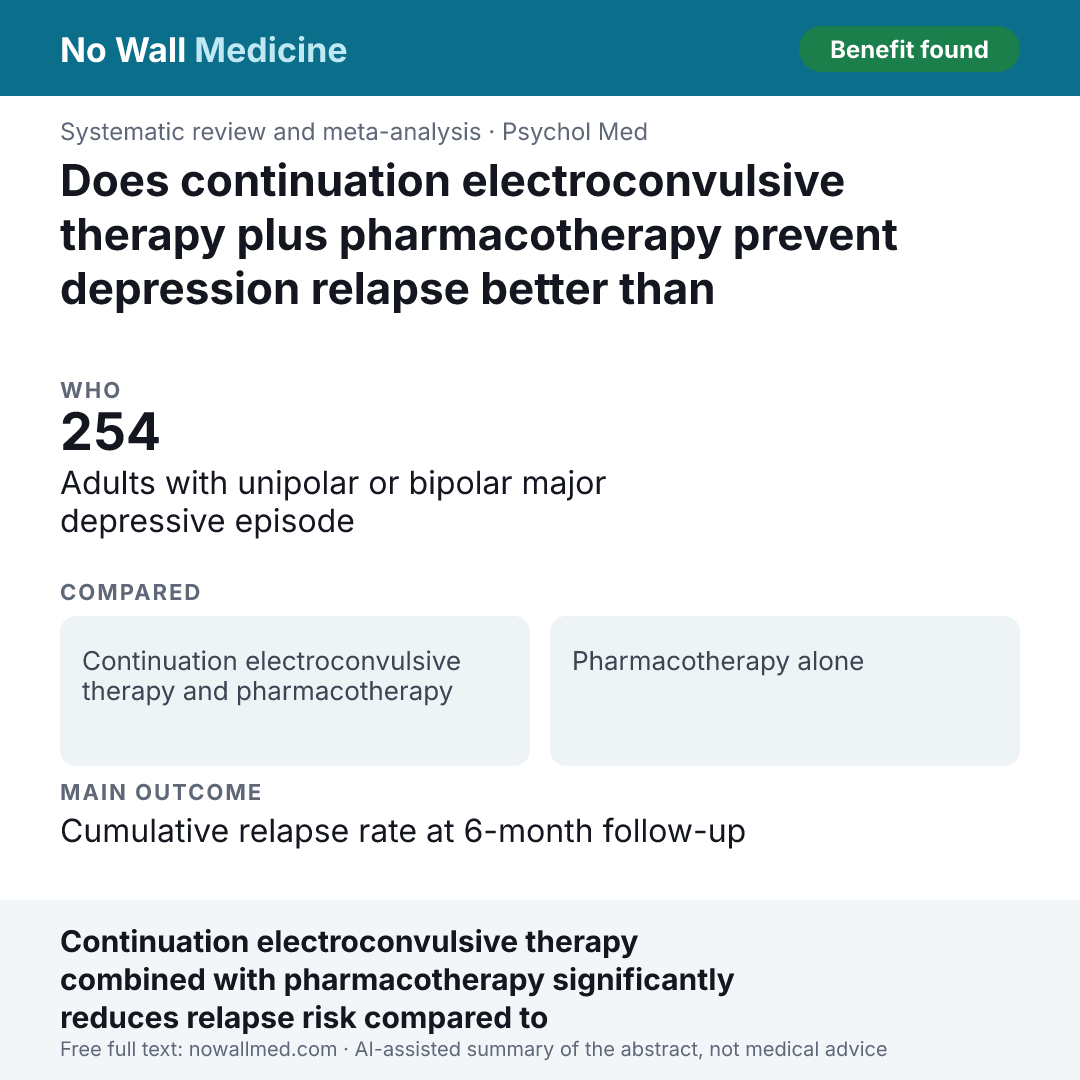
Continuation electroconvulsive therapy combined with pharmacotherapy for depression relapse prevention: A systematic review and meta-analysis
Systematic review and meta-analysisBenefit found
Does continuation electroconvulsive therapy plus pharmacotherapy prevent depression relapse better than pharmacotherapy alone?
Who
254
Adults with unipolar or bipolar major depressive episode
Compared
Continuation electroconvulsive therapy and pharmacotherapy
Pharmacotherapy alone
Main outcome
Cumulative relapse rate at 6-month follow-up
Result: relative risk 0.57 (95% CI 0.37-0.88)
Bottom line: Continuation electroconvulsive therapy combined with pharmacotherapy significantly reduces relapse risk compared to pharmacotherapy alone.
Psychol Med · 2025-08-28 · Save PNG
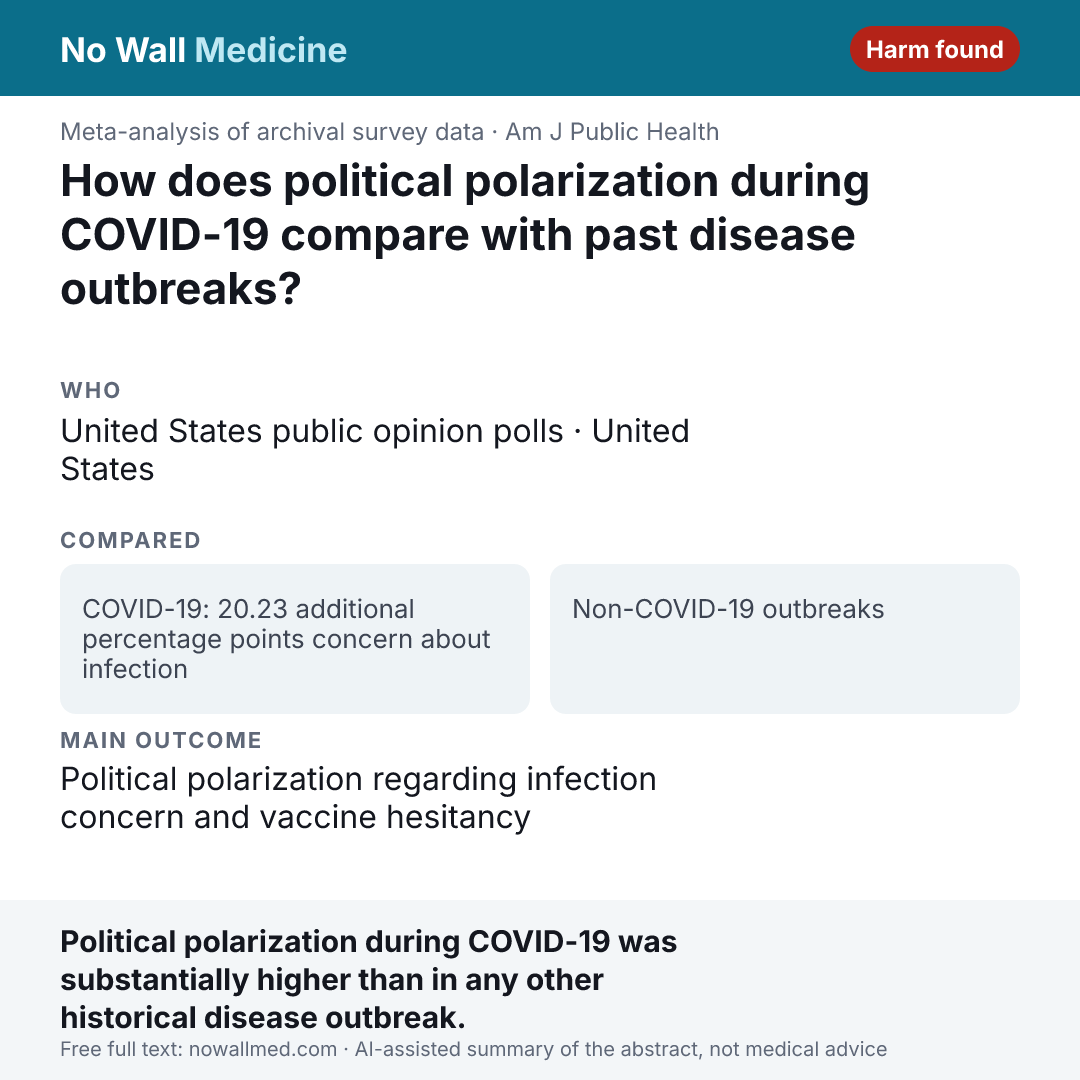
Political Polarization During Disease Outbreaks: A Meta-Analysis of Archival Survey Data From Polio to COVID-19
Meta-analysis of archival survey dataHarm found
How does political polarization during COVID-19 compare with past disease outbreaks?
Who
United States public opinion polls · United States
Compared
COVID-19: 20.23 additional percentage points concern about infection
Non-COVID-19 outbreaks
Main outcome
Political polarization regarding infection concern and vaccine hesitancy
Result: 20.23 (95% CI 12.30, 28.17) and 25.89 (95% CI 6.63, 45.16) additional percentage points
Bottom line: Political polarization during COVID-19 was substantially higher than in any other historical disease outbreak.
Am J Public Health · 2025-08-28 · Save PNG
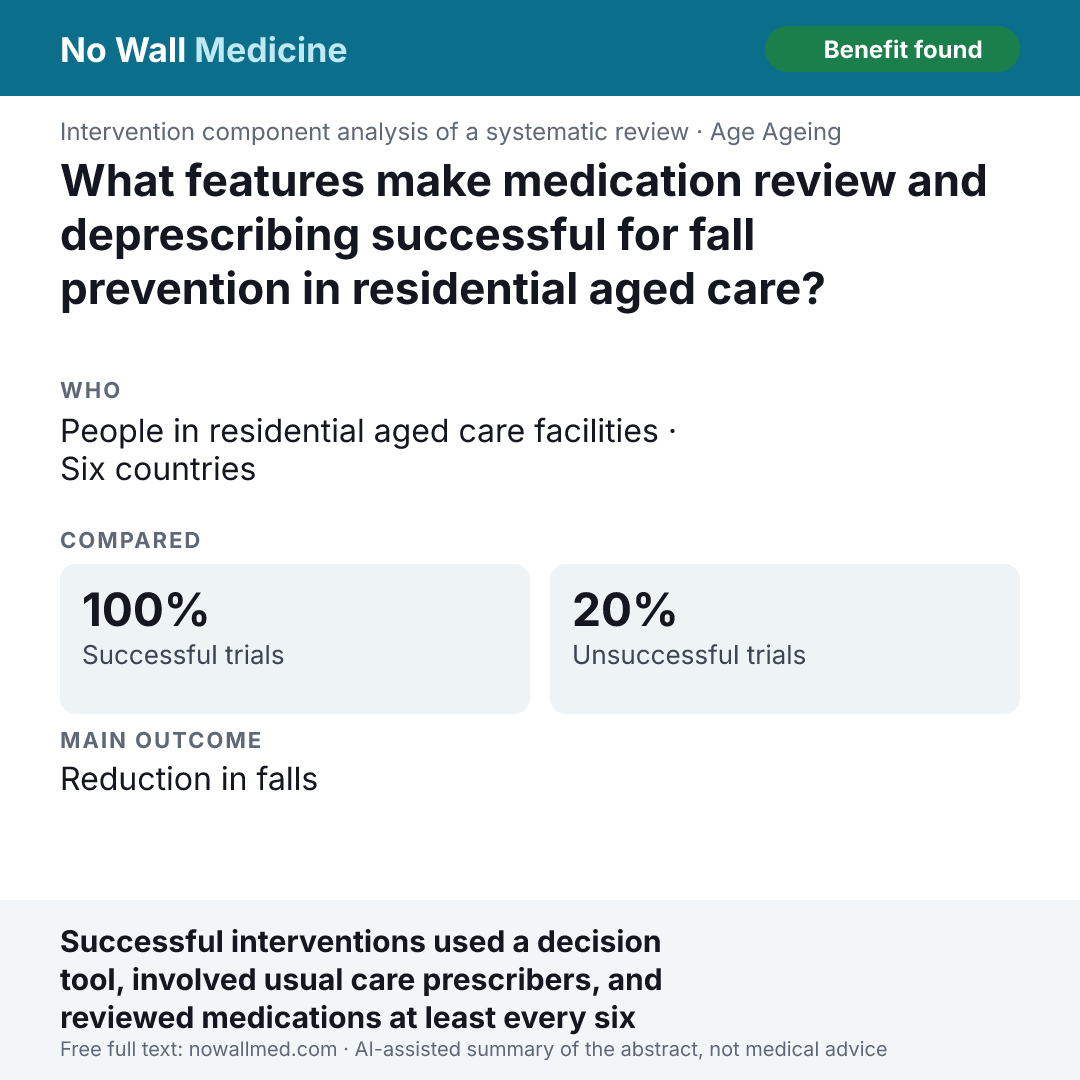
Features of successful medication review and deprescribing interventions for fall prevention in residential aged care facilities: an intervention component analysis of an updated systematic review
Intervention component analysis of a systematic reviewBenefit found
What features make medication review and deprescribing successful for fall prevention in residential aged care?
Who
People in residential aged care facilities · Six countries
Compared
100%Successful trials (3/3)
20%Unsuccessful trials (2/10)
Main outcome
Reduction in falls
Bottom line: Successful interventions used a decision tool, involved usual care prescribers, and reviewed medications at least every six months.
Age Ageing · 2025-08-28 · Save PNG
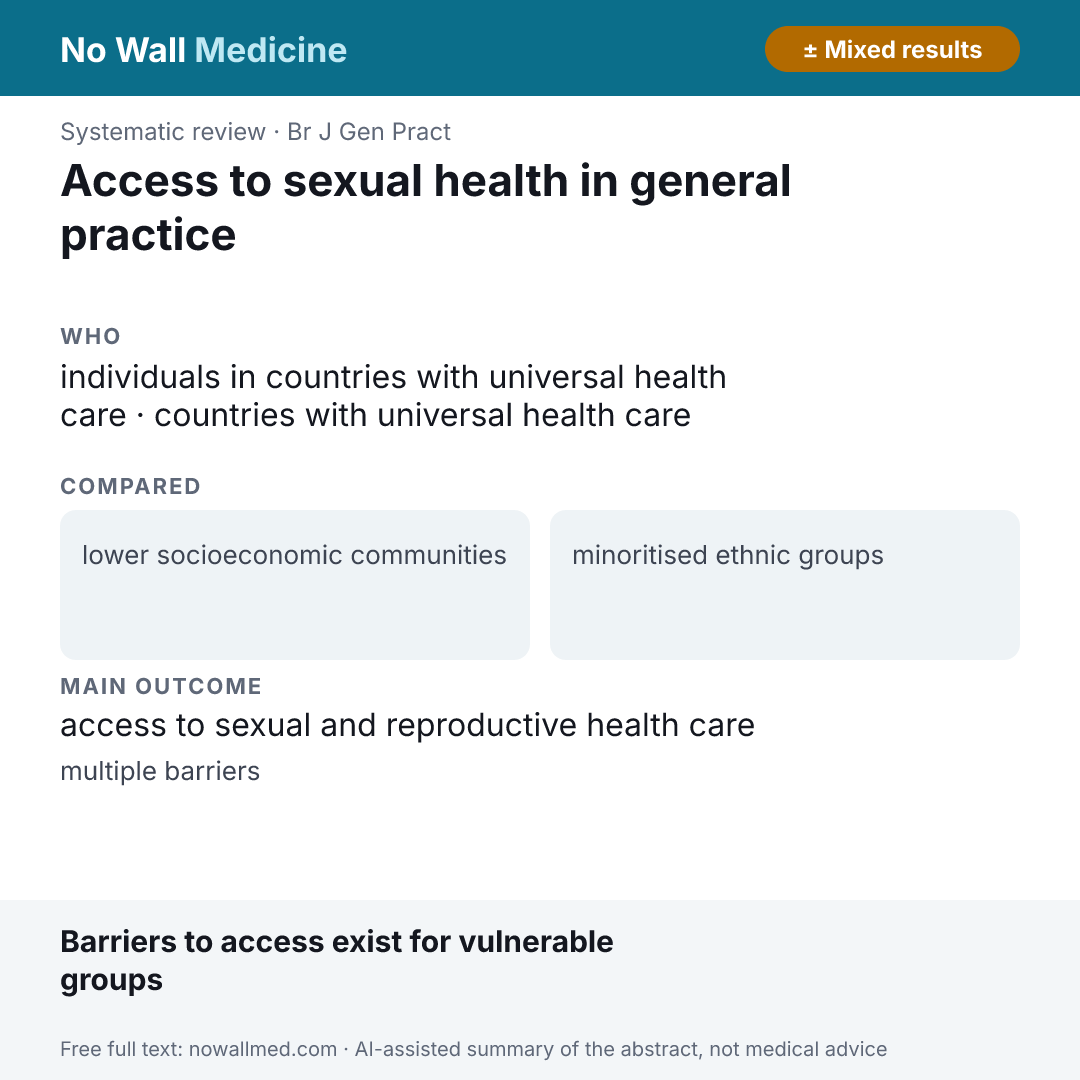
Understanding access to sexual and reproductive health in general practice using an adapted Candidacy Framework: a systematic review and qualitative evidence synthesis
Systematic reviewMixed results
Access to sexual health in general practice
Who
individuals in countries with universal health care · countries with universal health care
Compared
lower socioeconomic communities
minoritised ethnic groups
Main outcome
access to sexual and reproductive health care
Result: multiple barriers
Bottom line: Barriers to access exist for vulnerable groups
Limitation: limited inclusion of demographics
Br J Gen Pract · 2025-08-28 · Save PNG