Visual abstracts
New randomized trials and meta-analyses from leading journals at a glance: who was studied, what was compared, and what was found. Every paper is free to read in full.
All specialtiesCardiology 247Oncology 214Gastroenterology & Hepatology 119Infectious Disease 211Neurology 123Psychiatry & Mental Health 189Pulmonology 126Critical Care 78Endocrinology & Diabetes 149Pediatrics 117Surgery 83Orthopedics & Sports Medicine 52Neurosurgery 14Cardiothoracic & Vascular Surgery 28Plastic & Reconstructive Surgery 58Nephrology 56Rheumatology 56Hematology 69Dermatology 23Ophthalmology 42Obstetrics & Gynecology 81Public & Global Health 86Radiology & Imaging 23Anesthesiology 45Urology 62ENT (Otolaryngology) 36Emergency Medicine 26Allergy & Immunology 28Geriatrics 80Family Medicine & Primary Care 45Medical Genetics & Genomics 25Pathology & Laboratory Medicine 5Physical Medicine & Rehabilitation 68Palliative Care 41Nutrition 94Digital Health & AI 244General Medicine 37
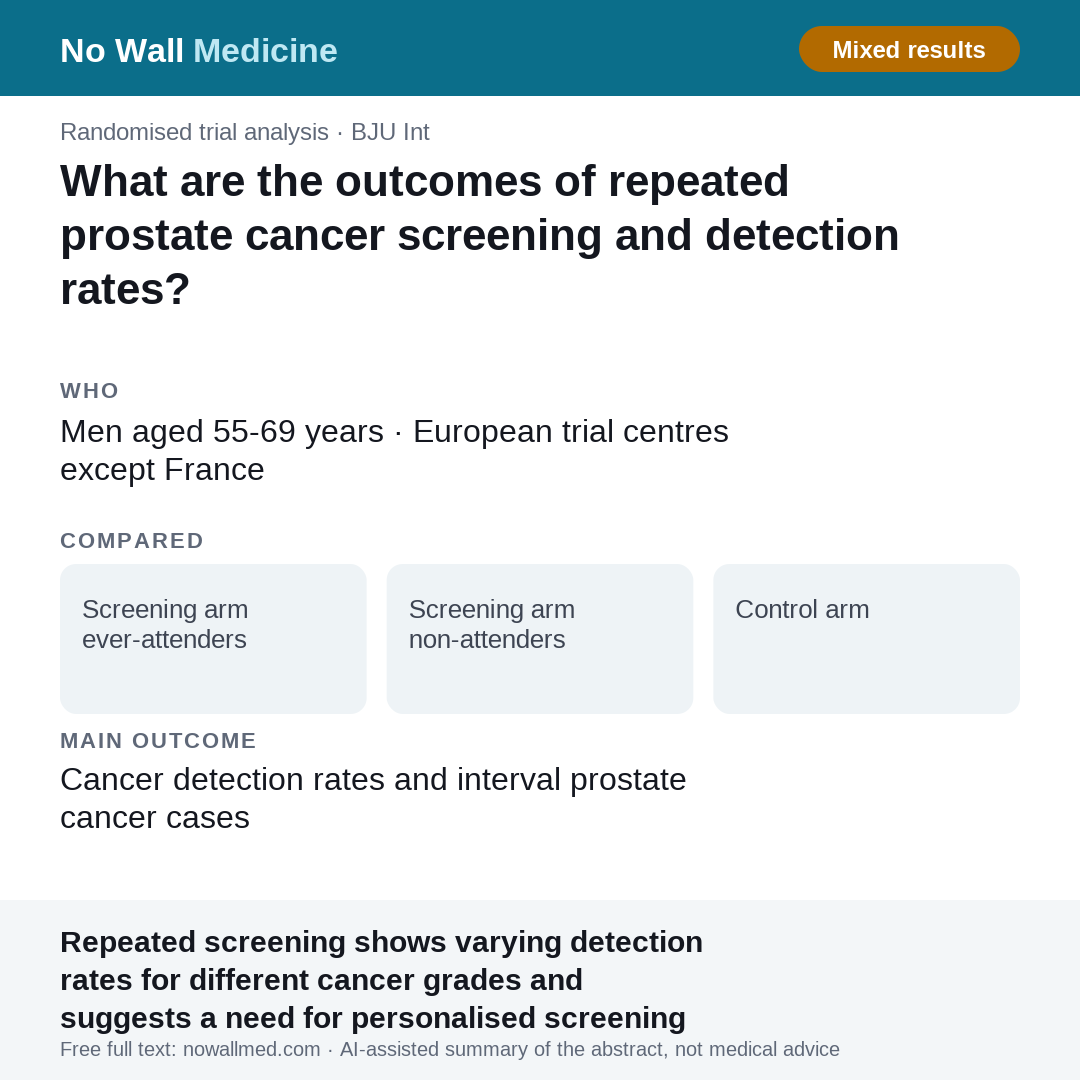
Cancer detection in the European Randomised Study of Screening for Prostate Cancer (ERSPC)
Randomised trial analysisMixed results
What are the outcomes of repeated prostate cancer screening and detection rates?
Who
Men aged 55-69 years · European trial centres except France
Compared
Screening arm ever-attenders
Screening arm non-attenders
Control arm
Main outcome
Cancer detection rates and interval prostate cancer cases
Bottom line: Repeated screening shows varying detection rates for different cancer grades and suggests a need for personalised screening approaches.
BJU Int · 2026-07-04Download image
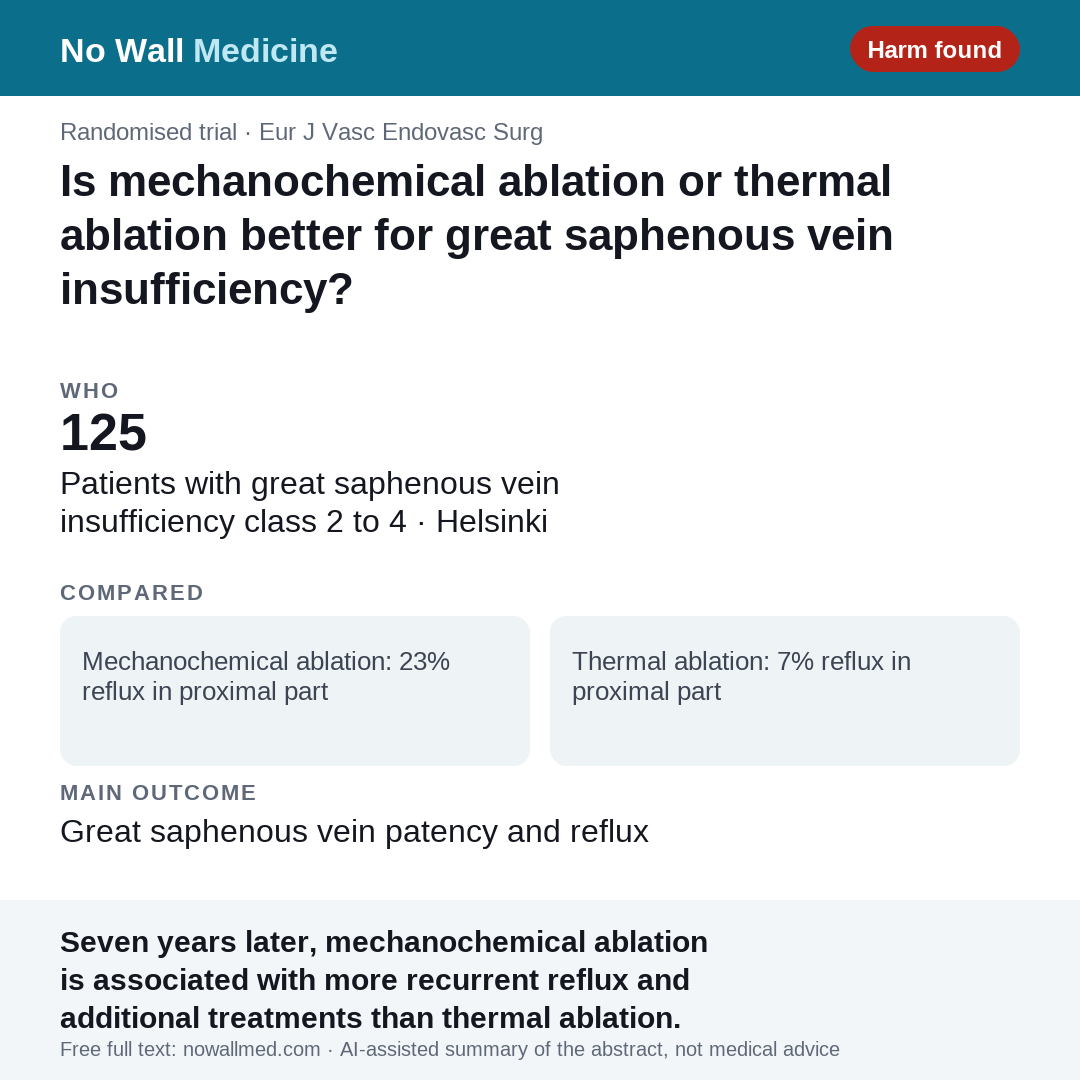
Randomised Trial of Mechanochemical or Thermal Ablation for Great Saphenous Vein Insufficiency: Seven Year Follow Up
Randomised trialHarm found
Is mechanochemical ablation or thermal ablation better for great saphenous vein insufficiency?
Who
125
Patients with great saphenous vein insufficiency class 2 to 4 · Helsinki University Hospital
Compared
Mechanochemical ablation: 23% reflux in proximal part
Thermal ablation: 7% reflux in proximal part
Main outcome
Great saphenous vein patency and reflux
Bottom line: Seven years later, mechanochemical ablation is associated with more recurrent reflux and additional treatments than thermal ablation.
Eur J Vasc Endovasc Surg · 2026-07-04Download image
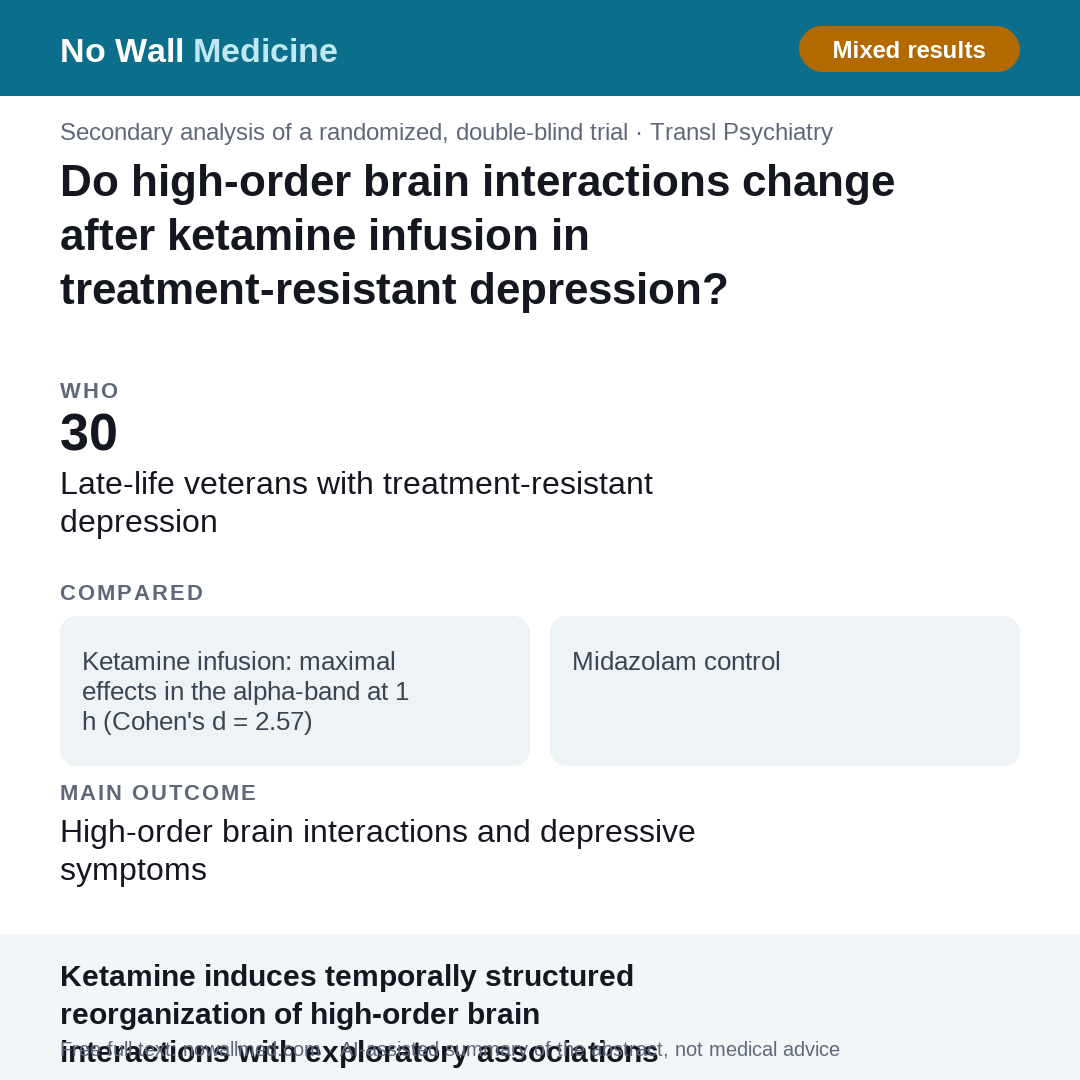
High-order brain interactions during ketamine-induced state changes: A functional marker of response in late-life treatment-resistant depression?
Secondary analysis of a randomized, double-blind trialMixed results
Do high-order brain interactions change after ketamine infusion in treatment-resistant depression?
Who
30
Late-life veterans with treatment-resistant depression
Compared
Ketamine infusion: maximal effects in the alpha-band at 1 h (Cohen's d = 2.57)
Midazolam control
Main outcome
High-order brain interactions and depressive symptoms
Bottom line: Ketamine induces temporally structured reorganization of high-order brain interactions with exploratory associations to clinical outcomes.
Transl Psychiatry · 2026-07-04Download image
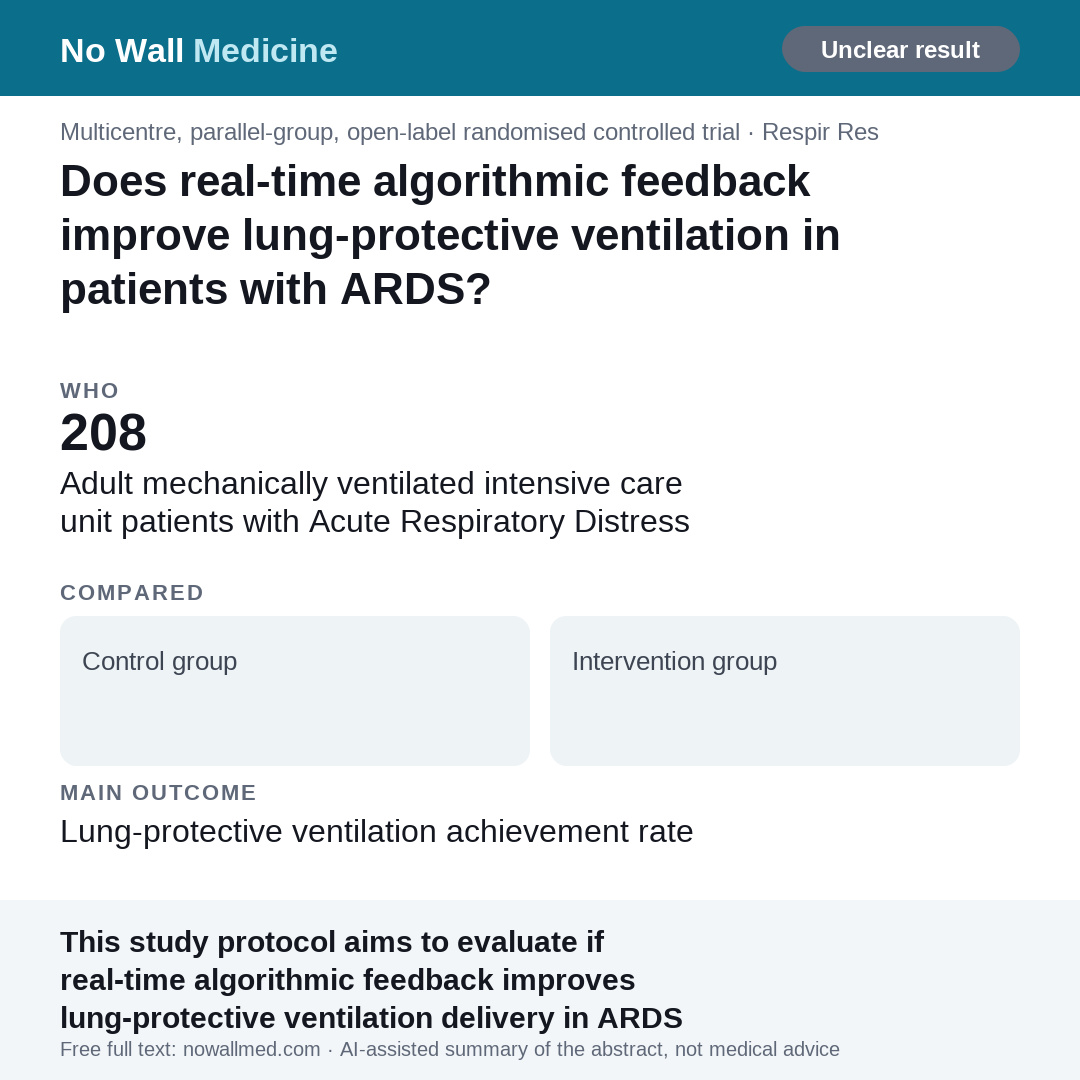
Real-time algorithm-driven ventilation feedback to improve lung-protective ventilation in patients with ARDS (REALVENT-study): study protocol for a multicentre randomised controlled trial
Multicentre, parallel-group, open-label randomised controlled trialUnclear result
Does real-time algorithmic feedback improve lung-protective ventilation in patients with ARDS?
Who
208
Adult mechanically ventilated intensive care unit patients with Acute Respiratory Distress Syndrome · Nine intensive care units in mainland China
Compared
Control group
Intervention group
Main outcome
Lung-protective ventilation achievement rate
Bottom line: This study protocol aims to evaluate if real-time algorithmic feedback improves lung-protective ventilation delivery in ARDS patients.
Respir Res · 2026-07-04Download image
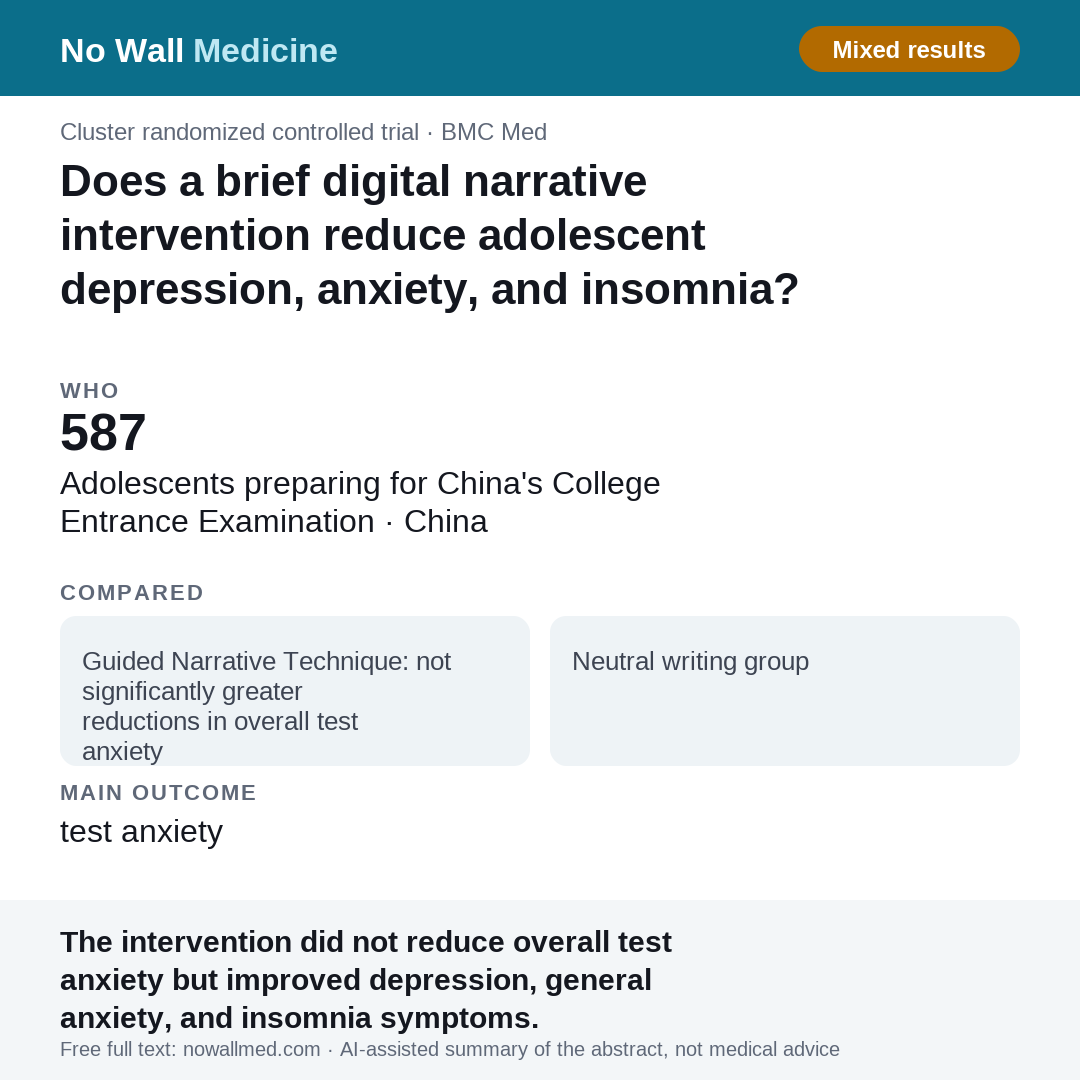
Brief digital narrative intervention for adolescent depression, anxiety, and insomnia during academic stress: a cluster randomized controlled trial
Cluster randomized controlled trialMixed results
Does a brief digital narrative intervention reduce adolescent depression, anxiety, and insomnia?
Who
587
Adolescents preparing for China's College Entrance Examination · China
Compared
Guided Narrative Technique: not significantly greater reductions in overall test anxiety
Neutral writing group
Main outcome
test anxiety
Result: d = 0.18 (95% CI [0.01, 0.36]) for TAI worry subscale
Bottom line: The intervention did not reduce overall test anxiety but improved depression, general anxiety, and insomnia symptoms.
Limitation: warranting further evaluation in adequately powered trials
BMC Med · 2026-07-03Download image
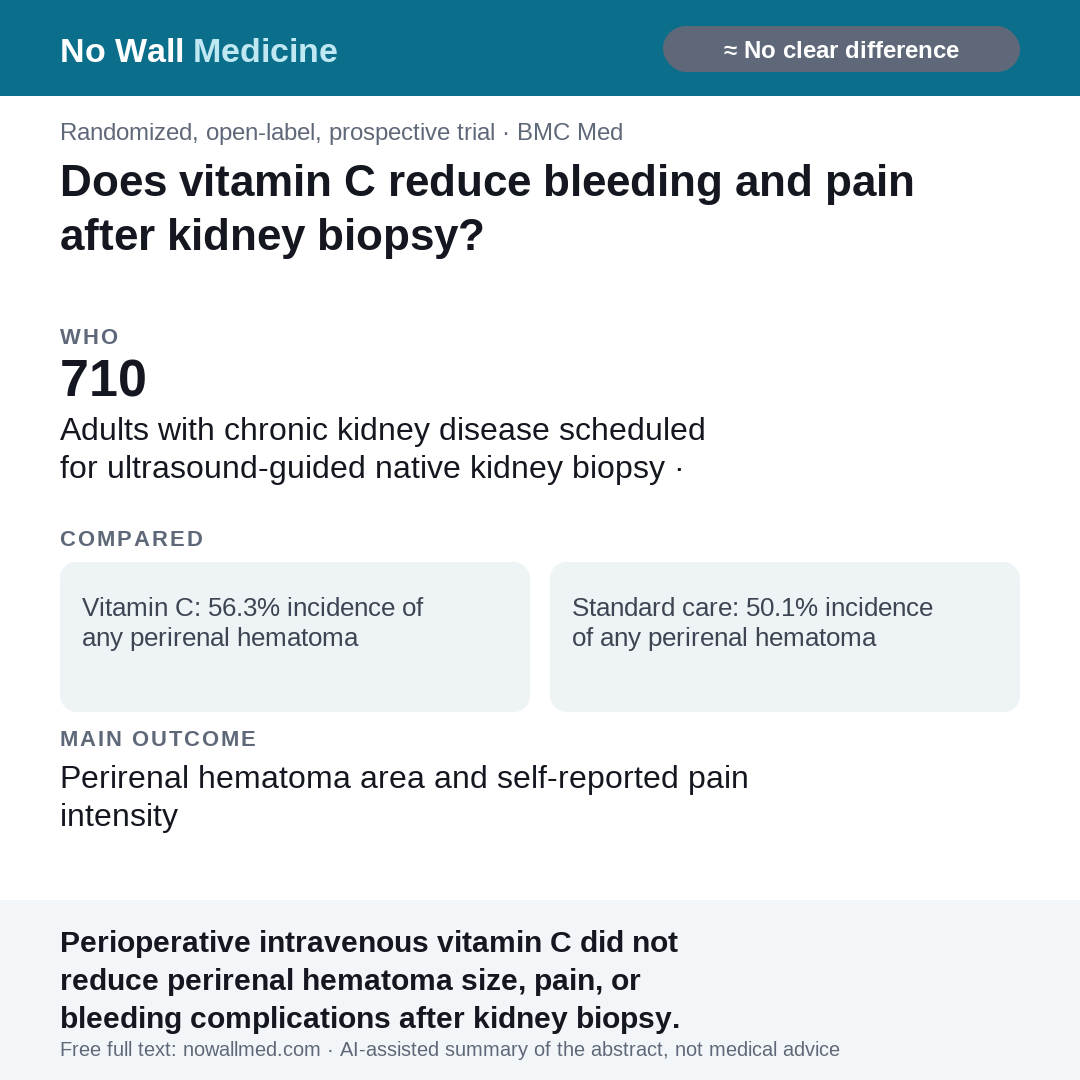
Effect of Vitamin C on bleeding and pain after kidney biopsy: a randomized controlled trial
Randomized, open-label, prospective trialNo clear difference
Does vitamin C reduce bleeding and pain after kidney biopsy?
Who
710
Adults with chronic kidney disease scheduled for ultrasound-guided native kidney biopsy · Single-center
Compared
Vitamin C: 56.3% incidence of any perirenal hematoma
Standard care: 50.1% incidence of any perirenal hematoma
Main outcome
Perirenal hematoma area and self-reported pain intensity
Result: risk ratio 1.12 (95% CI, 0.98-1.29)
Bottom line: Perioperative intravenous vitamin C did not reduce perirenal hematoma size, pain, or bleeding complications after kidney biopsy.
BMC Med · 2026-07-03Download image
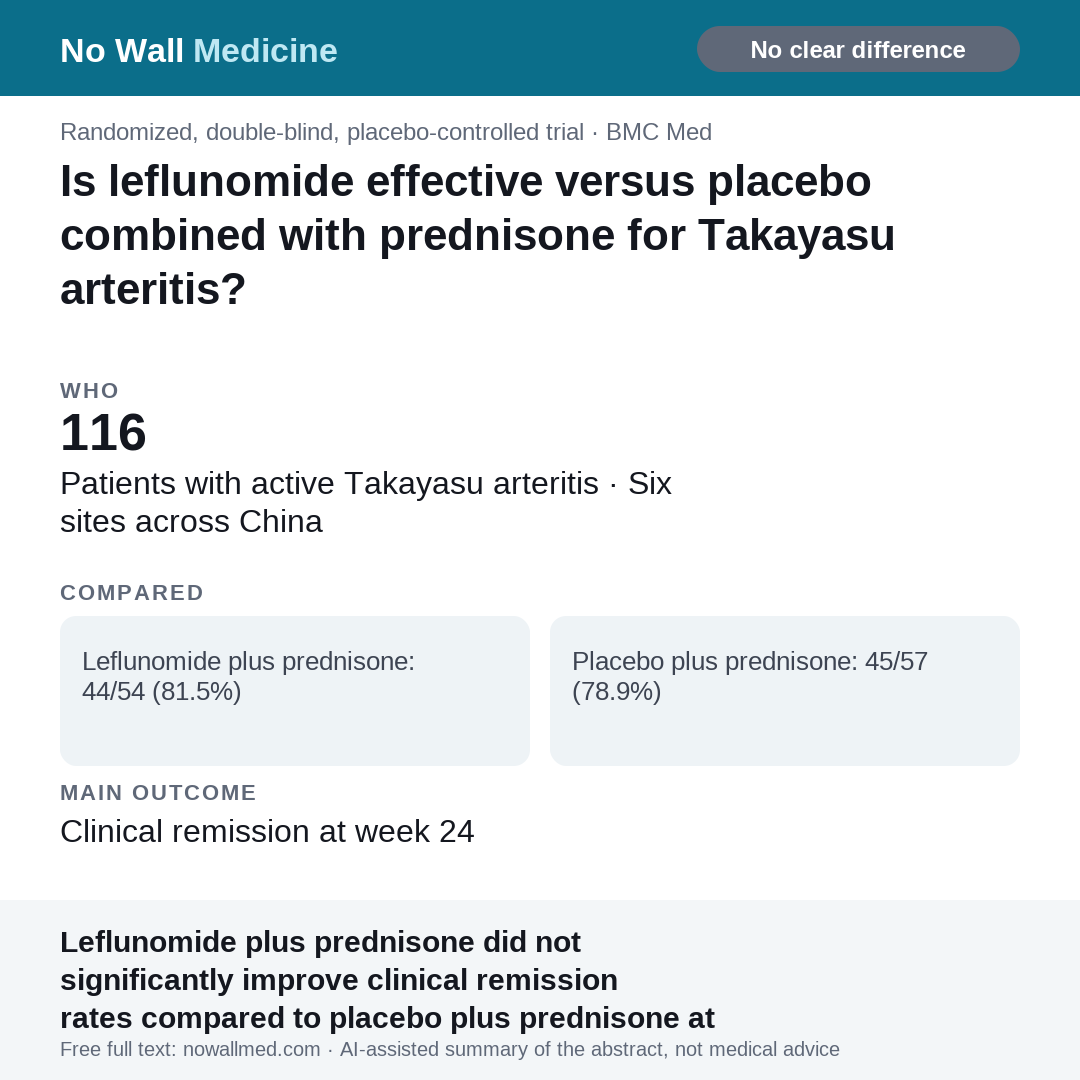
Efficacy of leflunomide in active Takayasu arteritis: a randomized double-blind placebo-controlled trial : Takayasu arteritis clinical trial in China (TACTIC)
Randomized, double-blind, placebo-controlled trialNo clear difference
Is leflunomide effective versus placebo combined with prednisone for Takayasu arteritis?
Who
116
Patients with active Takayasu arteritis · Six sites across China
Compared
Leflunomide plus prednisone: 44/54 (81.5%)
Placebo plus prednisone: 45/57 (78.9%)
Main outcome
Clinical remission at week 24
Result: risk difference: 2.6, 95%CI: -12.5, 17.2
Bottom line: Leflunomide plus prednisone did not significantly improve clinical remission rates compared to placebo plus prednisone at week 24.
BMC Med · 2026-07-03Download image
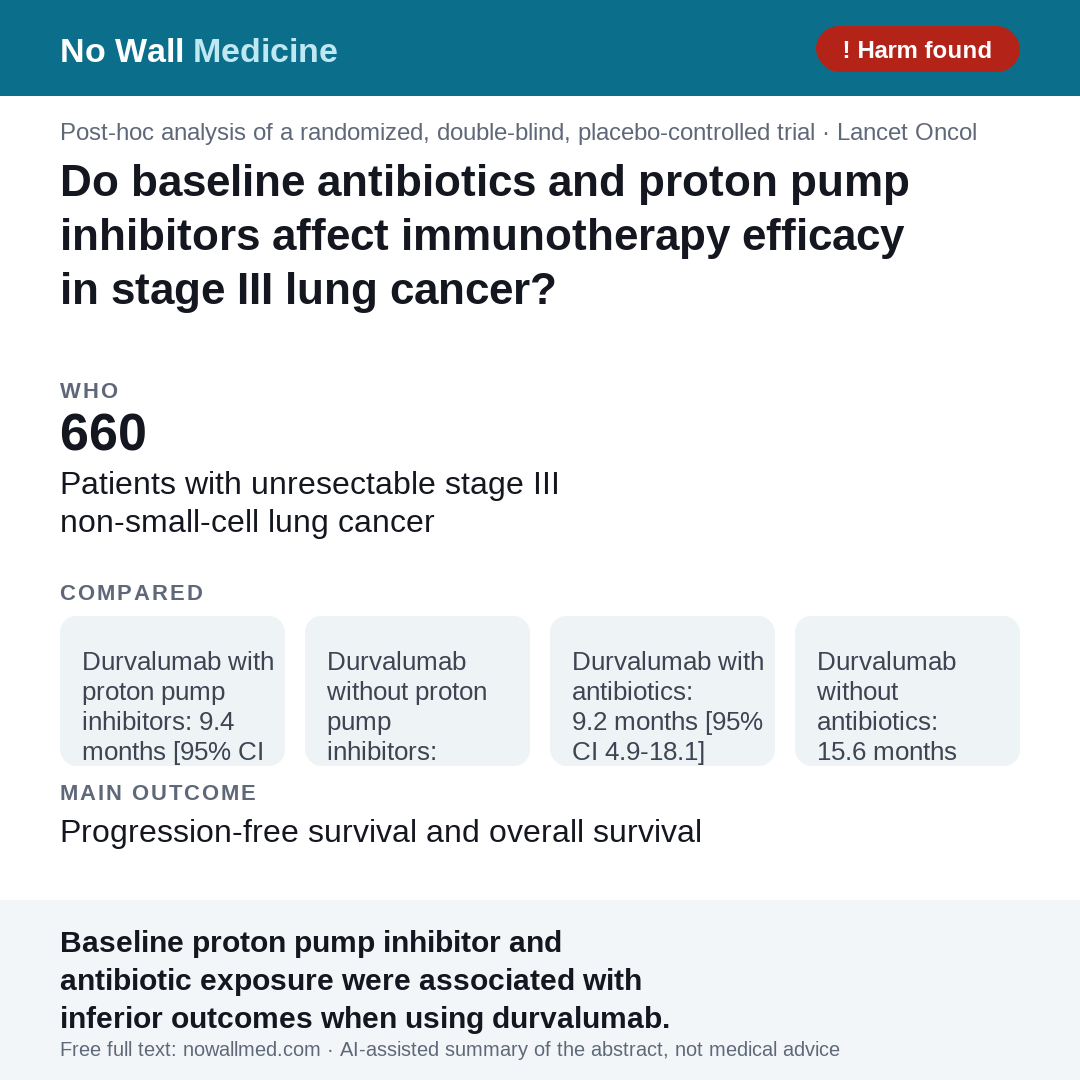
Differential impact of proton pump inhibitors and antibiotics on immunotherapy efficacy after chemoradiotherapy in locally advanced non-small-cell lung cancer: a post-hoc analysis of the PACIFIC trial
Post-hoc analysis of a randomized, double-blind, placebo-controlled trialHarm found
Do baseline antibiotics and proton pump inhibitors affect immunotherapy efficacy in stage III lung cancer?
Who
660
Patients with unresectable stage III non-small-cell lung cancer
Compared
Durvalumab with proton pump inhibitors: 9.4 months [95% CI 7.6-13.7] progression-free survival
Durvalumab without proton pump inhibitors: 17.2 months [15.4-23.2] progression-free survival
Durvalumab with antibiotics: 9.2 months [95% CI 4.9-18.1] progression-free survival
Durvalumab without antibiotics: 15.6 months [13.6-17.6] progression-free survival
Main outcome
Progression-free survival and overall survival
Result: hazard ratio 1.57 (95% CI 1.28-1.93) for proton pump inhibitors
Bottom line: Baseline proton pump inhibitor and antibiotic exposure were associated with inferior outcomes when using durvalumab.
Lancet Oncol · 2026-07-03Download image
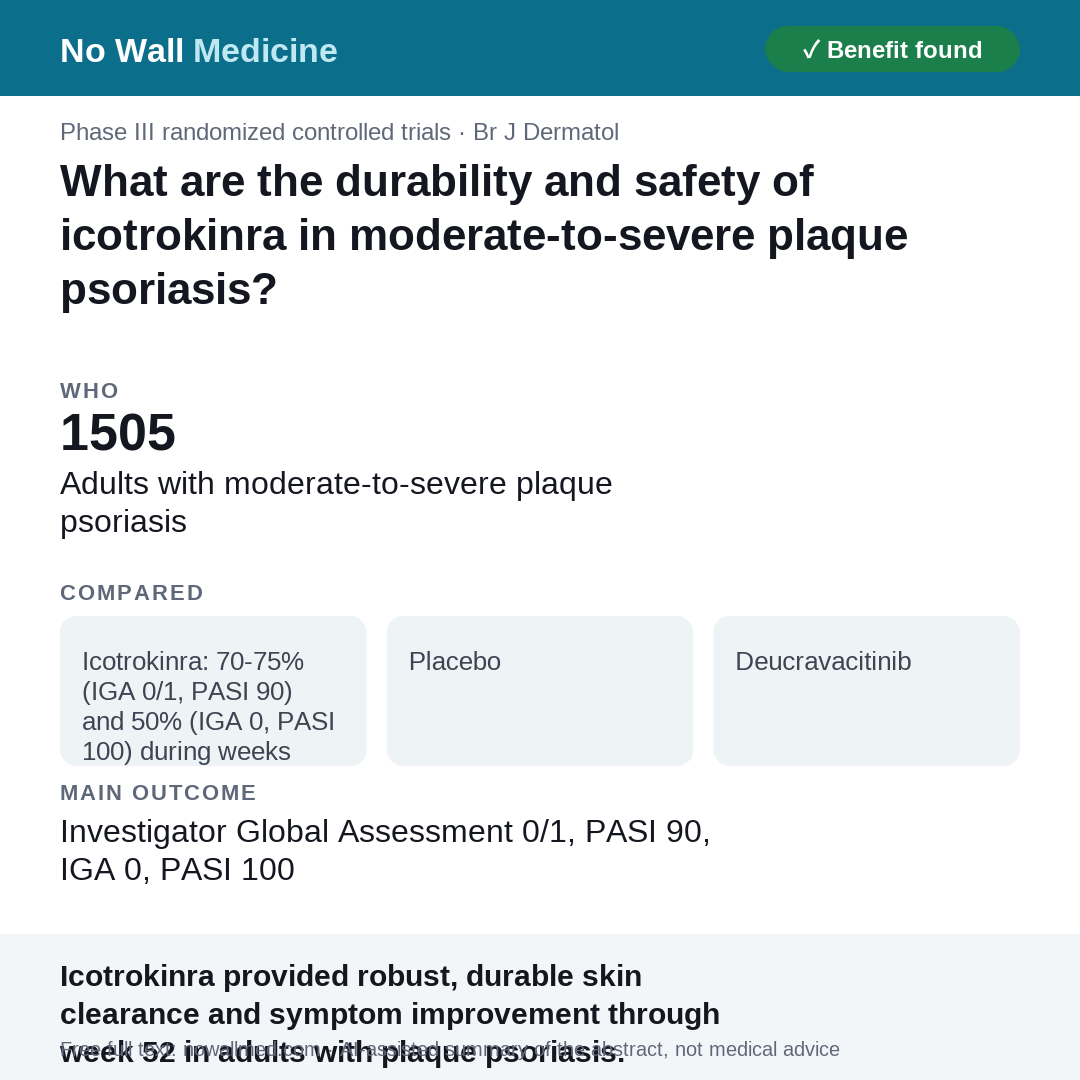
Durability of response to icotrokinra in adults with moderate-to-severe plaque psoriasis: 1-year results from the phase III, placebo- and active comparator-controlled ICONIC-ADVANCE 1 and ICONIC-ADVANCE 2 trials
Phase III randomized controlled trialsBenefit found
What are the durability and safety of icotrokinra in moderate-to-severe plaque psoriasis?
Who
1505
Adults with moderate-to-severe plaque psoriasis
Compared
Icotrokinra: 70-75% (IGA 0/1, PASI 90) and 50% (IGA 0, PASI 100) during weeks 24-52
Placebo
Deucravacitinib
Main outcome
Investigator Global Assessment 0/1, PASI 90, IGA 0, PASI 100
Bottom line: Icotrokinra provided robust, durable skin clearance and symptom improvement through week 52 in adults with plaque psoriasis.
Br J Dermatol · 2026-07-03Download image
A review of the randomized clinical trial results from the Staphylococcus aureus network adaptive platform (SNAP) meticillin-susceptible (MSSA) and penicillin-susceptible (PSSA) domains and CloCeBa
Review of randomized clinical trialsBenefit found
Is cefazolin a safer and equally efficacious treatment for Staphylococcus aureus bacteraemia?
Who
Patients with meticillin-susceptible Staphylococcus aureus bloodstream infection
Compared
flucloxacillin
cefazolin
Main outcome
acute kidney injury and efficacy in Staphylococcus aureus bacteraemia
Bottom line: Cefazolin provides a safer and equally efficacious treatment for Staphylococcus aureus bacteraemia compared to flucloxacillin.
J Antimicrob Chemother · 2026-07-03Download image

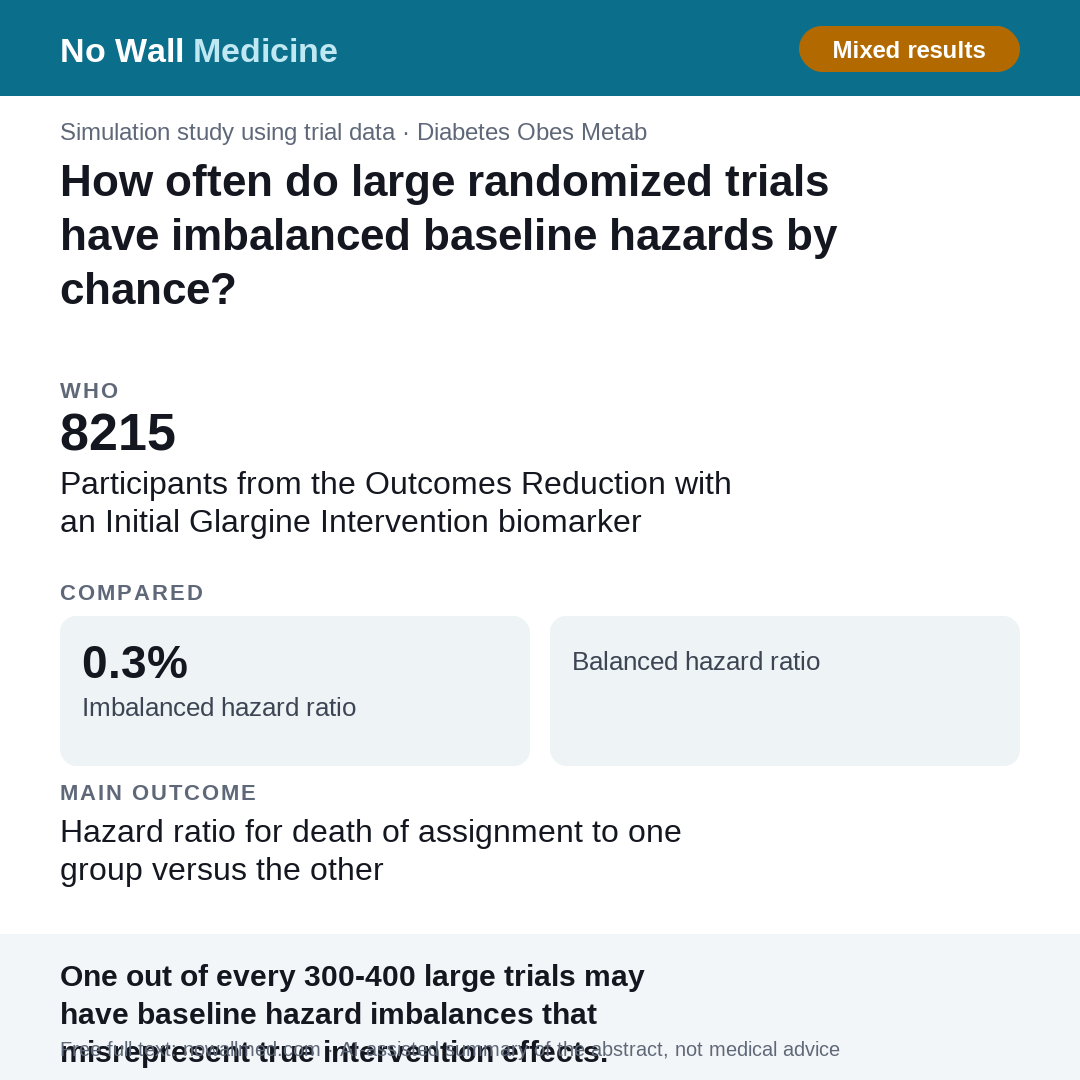
A Highly Powered Large Outcomes Randomised Controlled Trial Will Usually, but Not Always, Have Balanced Groups at Baseline
Simulation study using trial dataMixed results
How often do large randomized trials have imbalanced baseline hazards by chance?
Who
8215
Participants from the Outcomes Reduction with an Initial Glargine Intervention biomarker study
Compared
0.3%Imbalanced hazard ratio
Balanced hazard ratio
Main outcome
Hazard ratio for death of assignment to one group versus the other
Result: median of 3 (IQR 2, 4) of 1000 randomisations had hazard ratio < 0.85 or > 1.18
Bottom line: One out of every 300-400 large trials may have baseline hazard imbalances that misrepresent true intervention effects.
Diabetes Obes Metab · 2026-07-03Download image
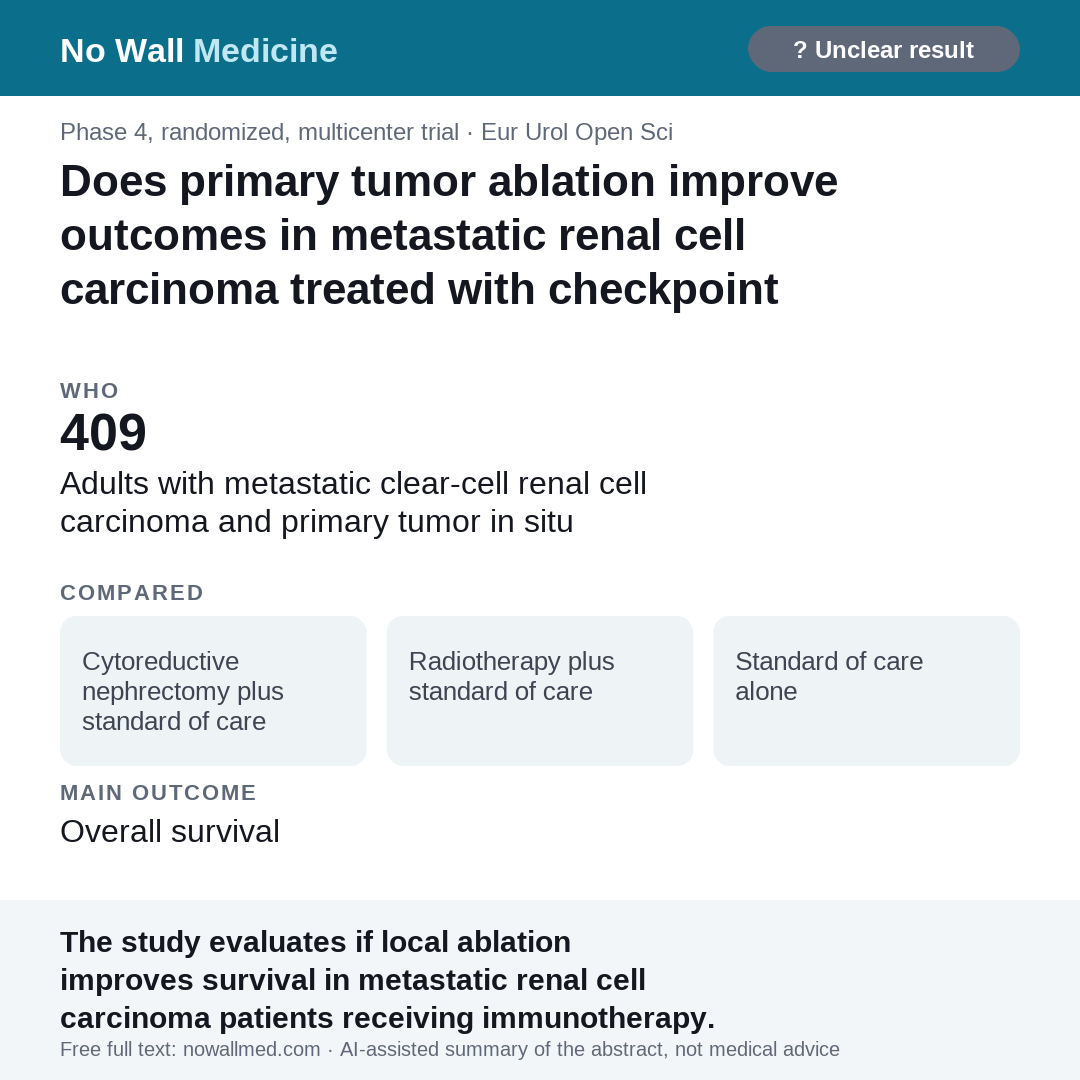
The ITALIC-RCC: A Randomized Trial on Clinical and Humoral Impact of Primary Tumor Ablation by Surgery or Radiotherapy in Metastatic Renal Cell Carcinoma Treated with Checkpoint Inhibitors
Phase 4, randomized, multicenter trialUnclear result
Does primary tumor ablation improve outcomes in metastatic renal cell carcinoma treated with checkpoint inhibitors?
Who
409
Adults with metastatic clear-cell renal cell carcinoma and primary tumor in situ
Compared
Cytoreductive nephrectomy plus standard of care
Radiotherapy plus standard of care
Standard of care alone
Main outcome
Overall survival
Bottom line: The study evaluates if local ablation improves survival in metastatic renal cell carcinoma patients receiving immunotherapy.
Eur Urol Open Sci · 2026-07-03Download image
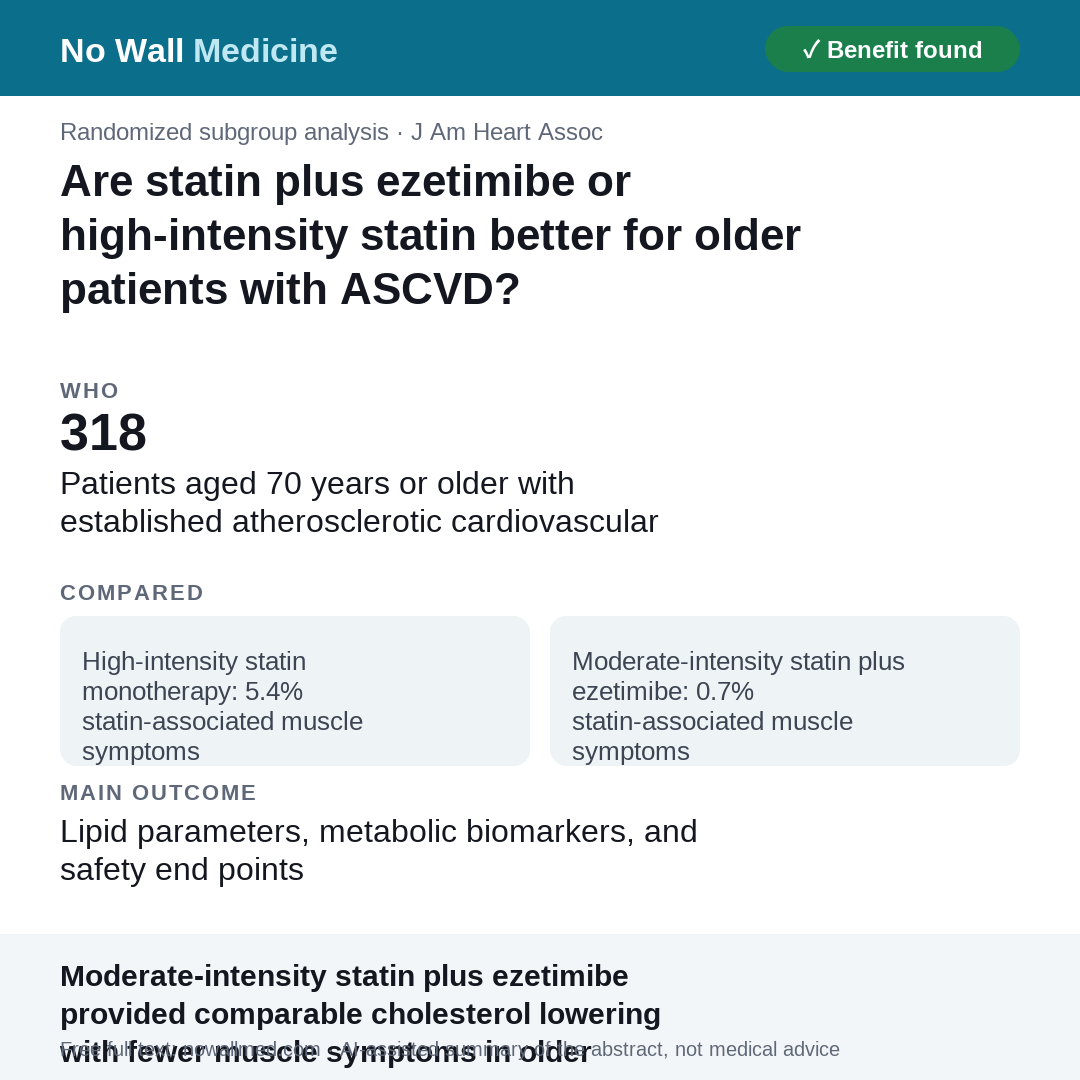
Metabolic and Safety Outcomes of Statin-Ezetimibe Versus High-Intensity Statin in Older Patients
Randomized subgroup analysisBenefit found
Are statin plus ezetimibe or high-intensity statin better for older patients with ASCVD?
Who
318
Patients aged 70 years or older with established atherosclerotic cardiovascular disease
Compared
High-intensity statin monotherapy: 5.4% statin-associated muscle symptoms
Moderate-intensity statin plus ezetimibe: 0.7% statin-associated muscle symptoms
Main outcome
Lipid parameters, metabolic biomarkers, and safety end points
Bottom line: Moderate-intensity statin plus ezetimibe provided comparable cholesterol lowering with fewer muscle symptoms in older patients.
J Am Heart Assoc · 2026-07-03Download image
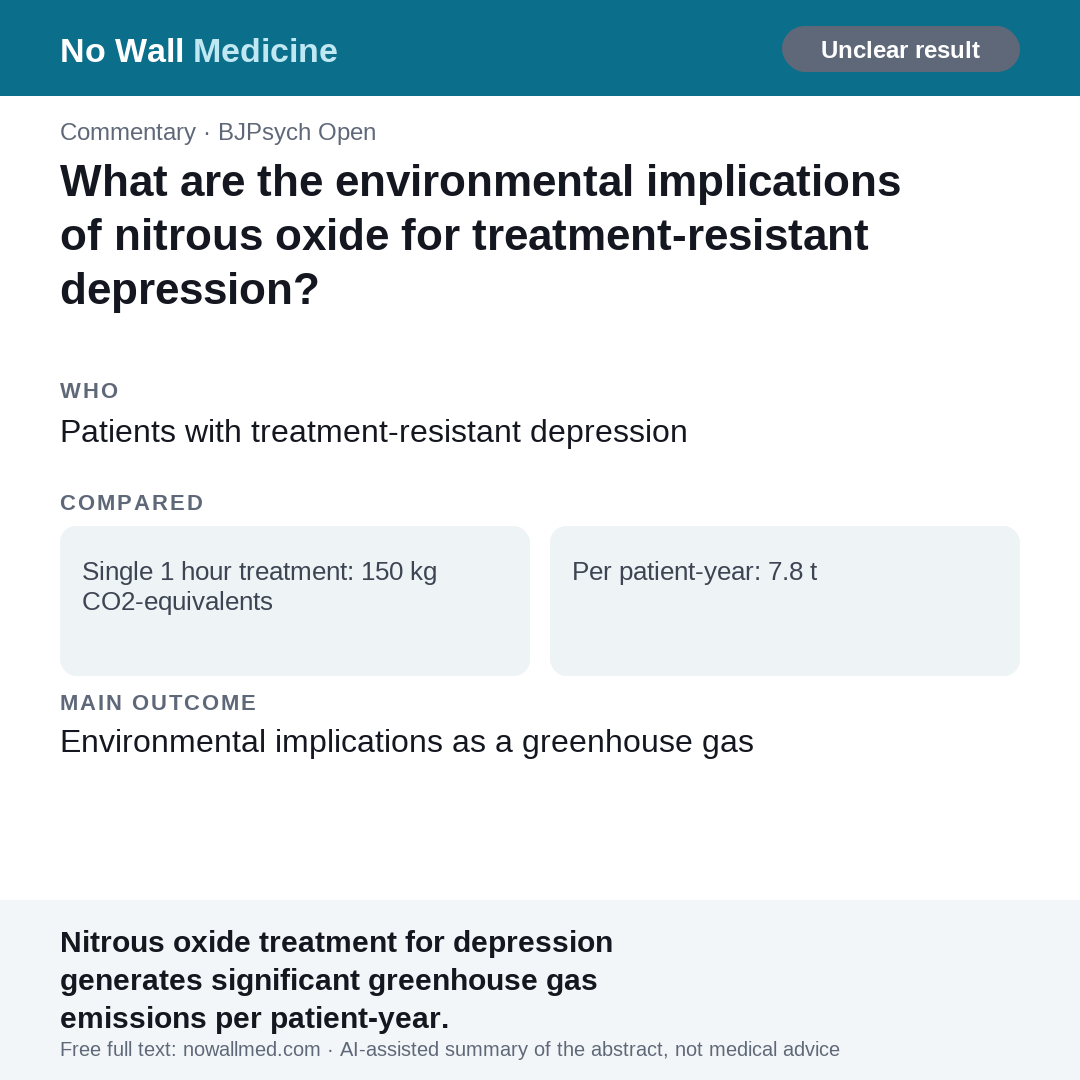
Sustained mood improvement with laughing gas exposure (SMILE): a randomised, placebo-controlled pilot trial of nitrous oxide for treatment-resistant depression: commentary, Kalmar et al
CommentaryUnclear result
What are the environmental implications of nitrous oxide for treatment-resistant depression?
Who
Patients with treatment-resistant depression
Compared
Single 1 hour treatment: 150 kg CO2-equivalents
Per patient-year: 7.8 t
Main outcome
Environmental implications as a greenhouse gas
Bottom line: Nitrous oxide treatment for depression generates significant greenhouse gas emissions per patient-year.
BJPsych Open · 2026-07-03Download image
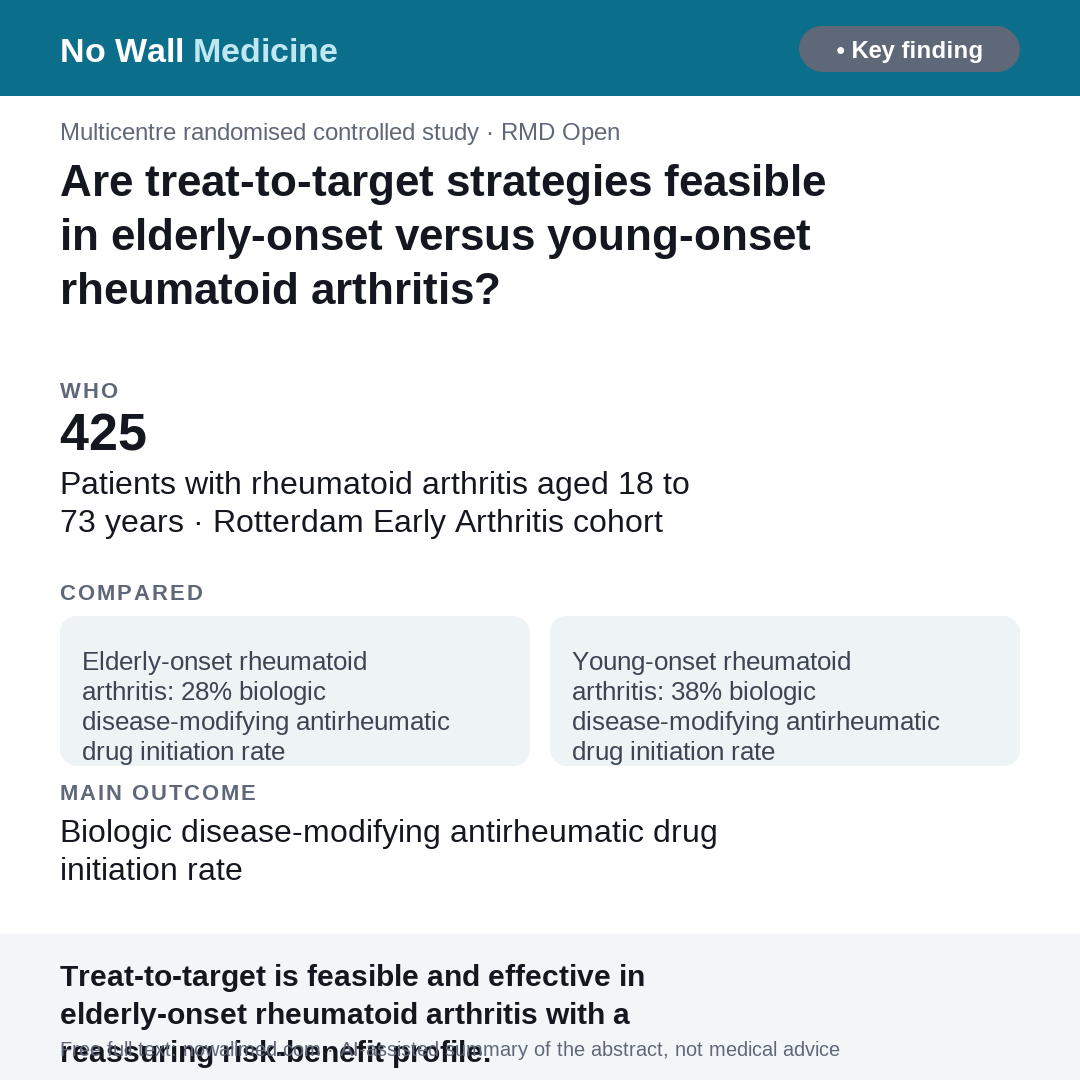
Treat-to-target strategies are feasible in elderly-onset rheumatoid arthritis given its reassuring risk-benefit profile
Multicentre randomised controlled studyBenefit found
Are treat-to-target strategies feasible in elderly-onset versus young-onset rheumatoid arthritis?
Who
425
Patients with rheumatoid arthritis aged 18 to 73 years · Rotterdam Early Arthritis cohort
Compared
Elderly-onset rheumatoid arthritis: 28% biologic disease-modifying antirheumatic drug initiation rate
Young-onset rheumatoid arthritis: 38% biologic disease-modifying antirheumatic drug initiation rate
Main outcome
Biologic disease-modifying antirheumatic drug initiation rate
Result: hazard ratio 0.7 (95% CI 0.4 to 1)
Bottom line: Treat-to-target is feasible and effective in elderly-onset rheumatoid arthritis with a reassuring risk-benefit profile.
RMD Open · 2026-07-03Download image
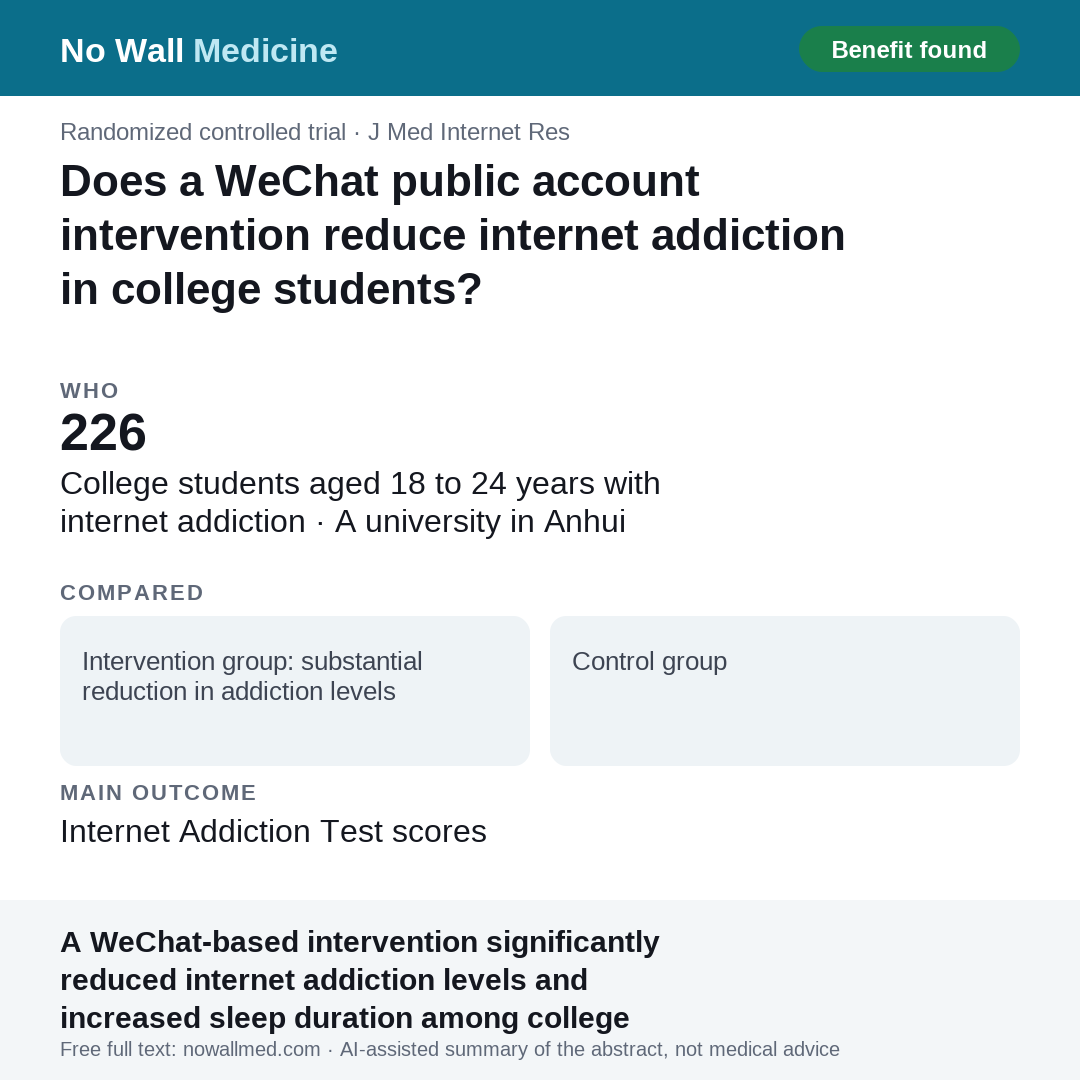
Effectiveness of WeChat Public Account Intervention Based on the Information-Motivation-Behavioral Skills Model Among College Students With Internet Addiction: Randomized Controlled Trial
Randomized controlled trialBenefit found
Does a WeChat public account intervention reduce internet addiction in college students?
Who
226
College students aged 18 to 24 years with internet addiction · A university in Anhui Province, China
Compared
Intervention group: substantial reduction in addiction levels
Control group
Main outcome
Internet Addiction Test scores
Result: adjusted mean change -4.531 (95% CI -7.281 to -1.781)
Bottom line: A WeChat-based intervention significantly reduced internet addiction levels and increased sleep duration among college students.
J Med Internet Res · 2026-07-03Download image
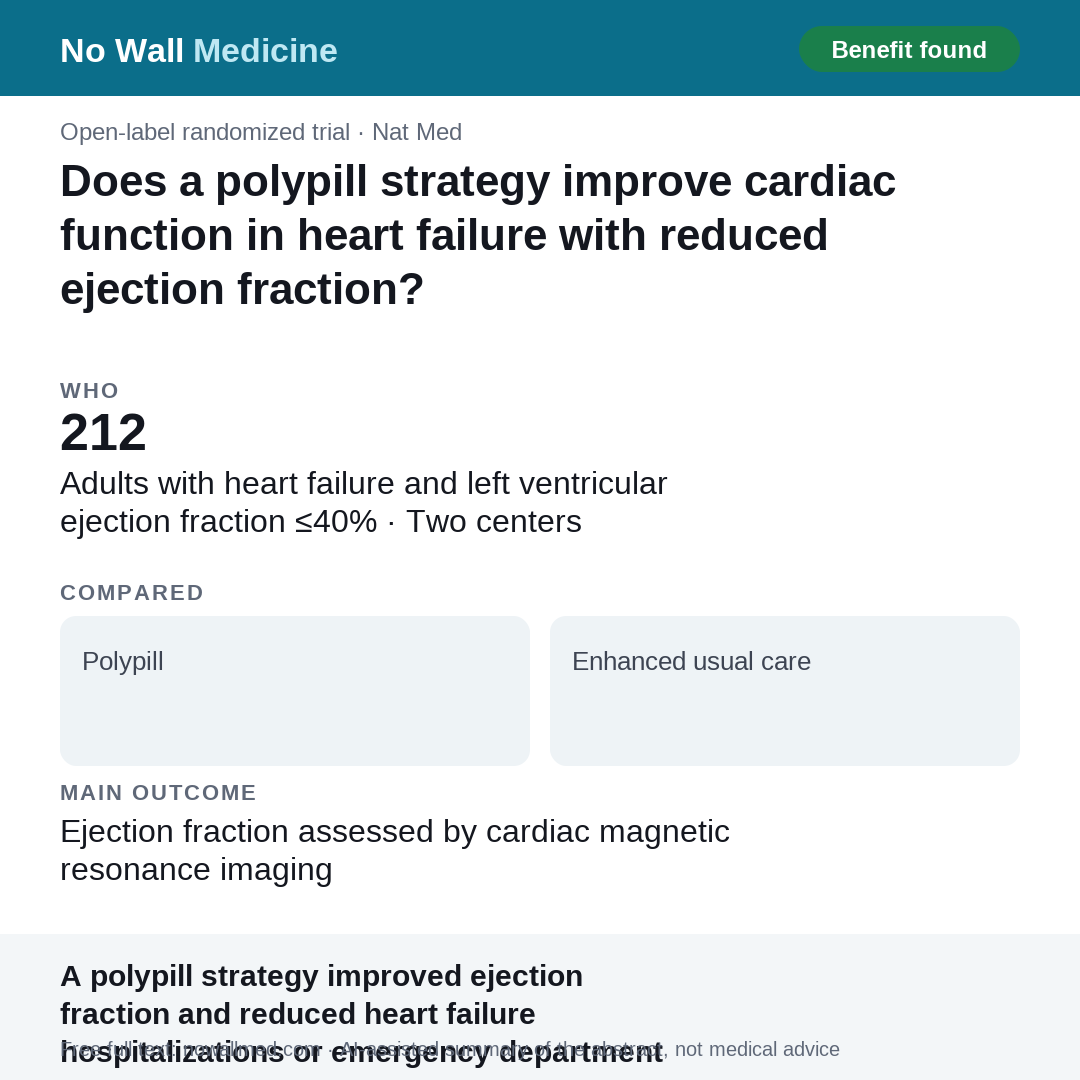
Polypill for heart failure with reduced ejection fraction: the POLY-HF randomized trial
Open-label randomized trialBenefit found
Does a polypill strategy improve cardiac function in heart failure with reduced ejection fraction?
Who
212
Adults with heart failure and left ventricular ejection fraction ≤40% · Two centers
Compared
Polypill
Enhanced usual care
Main outcome
Ejection fraction assessed by cardiac magnetic resonance imaging
Result: between-group difference, 3.3 percentage points, 95% confidence interval, 0.2-6.4
Bottom line: A polypill strategy improved ejection fraction and reduced heart failure hospitalizations or emergency department visits compared to enhanced usual care.
Nat Med · 2026-07-02Download image
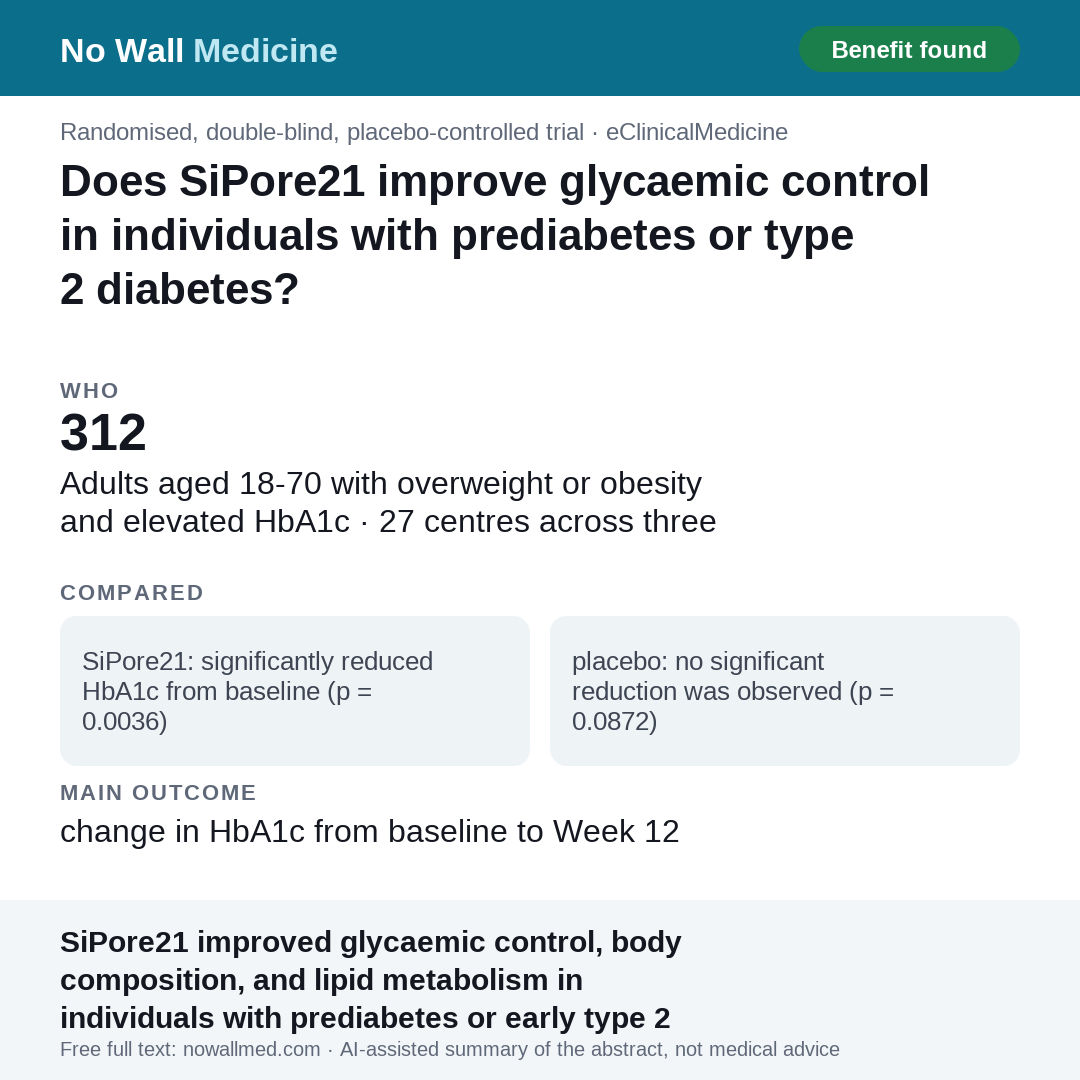
Effect of engineered mesoporous silica particles with tailored pore size on glycaemic control in individuals with prediabetes or type 2 diabetes: a randomised, double-blind, placebo-controlled SHINE trial
Randomised, double-blind, placebo-controlled trialBenefit found
Does SiPore21 improve glycaemic control in individuals with prediabetes or type 2 diabetes?
Who
312
Adults aged 18-70 with overweight or obesity and elevated HbA1c · 27 centres across three European countries
Compared
SiPore21: significantly reduced HbA1c from baseline (p = 0.0036)
placebo: no significant reduction was observed (p = 0.0872)
Main outcome
change in HbA1c from baseline to Week 12
Bottom line: SiPore21 improved glycaemic control, body composition, and lipid metabolism in individuals with prediabetes or early type 2 diabetes.
Funded by: Sigrid Therapeutics AB
eClinicalMedicine · 2026-07-02Download image
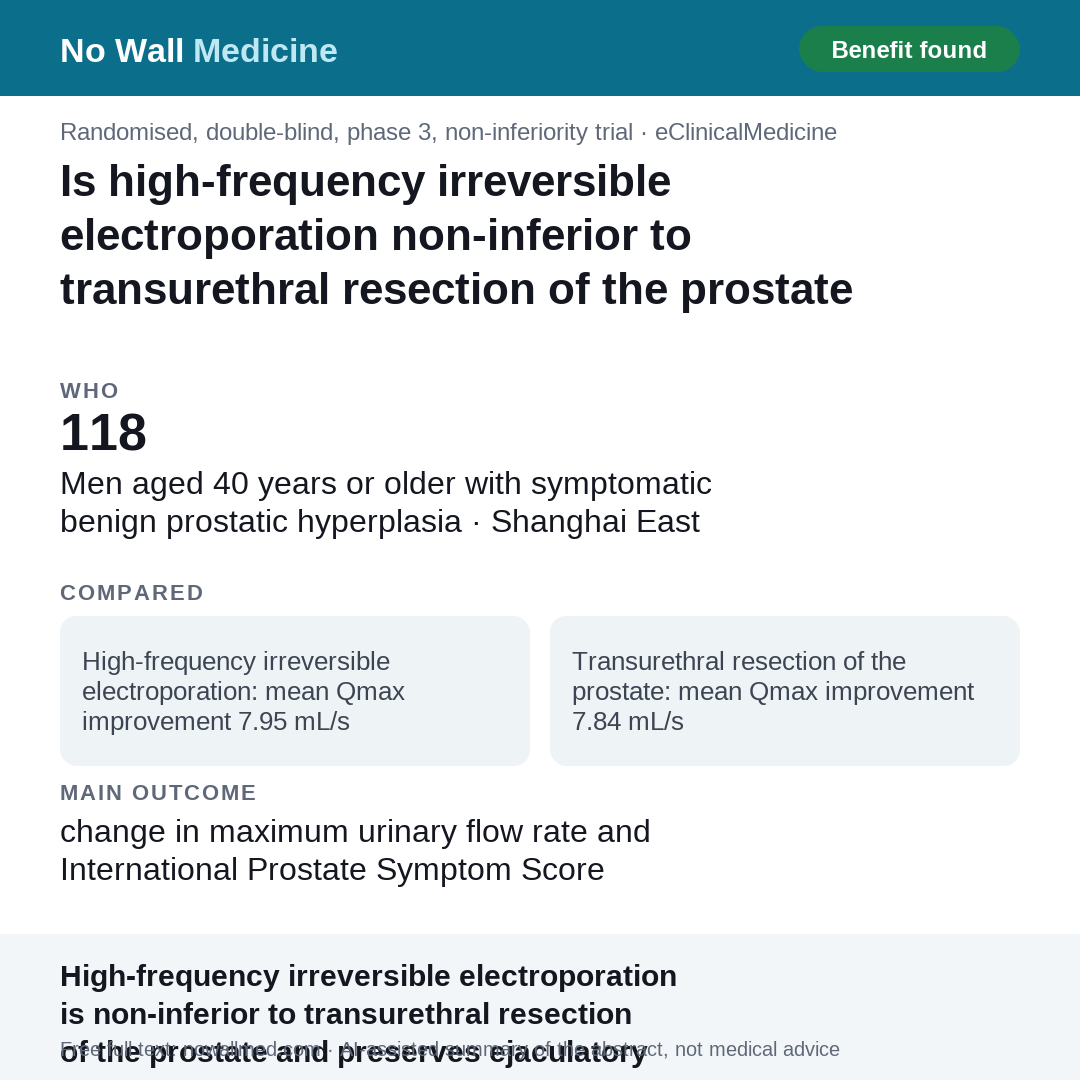
High-frequency irreversible electroporation versus transurethral resection of the prostate for benign prostatic hyperplasia (GIANT): a single-centre, randomised, double-blind, phase 3, non-inferiority trial
Randomised, double-blind, phase 3, non-inferiority trialBenefit found
Is high-frequency irreversible electroporation non-inferior to transurethral resection of the prostate for benign prostatic hyperplasia?
Who
118
Men aged 40 years or older with symptomatic benign prostatic hyperplasia · Shanghai East Hospital, China
Compared
High-frequency irreversible electroporation: mean Qmax improvement 7.95 mL/s
Transurethral resection of the prostate: mean Qmax improvement 7.84 mL/s
Main outcome
Change from baseline in maximum urinary flow rate and International Prostate Symptom Score
Result: adjusted difference 0.11 mL/s, 95% CI -2.52 to 2.73
Bottom line: High-frequency irreversible electroporation is non-inferior to transurethral resection of the prostate and preserves ejaculatory function.
Funded by: National Natural Science Foundation of China
eClinicalMedicine · 2026-07-02Download image
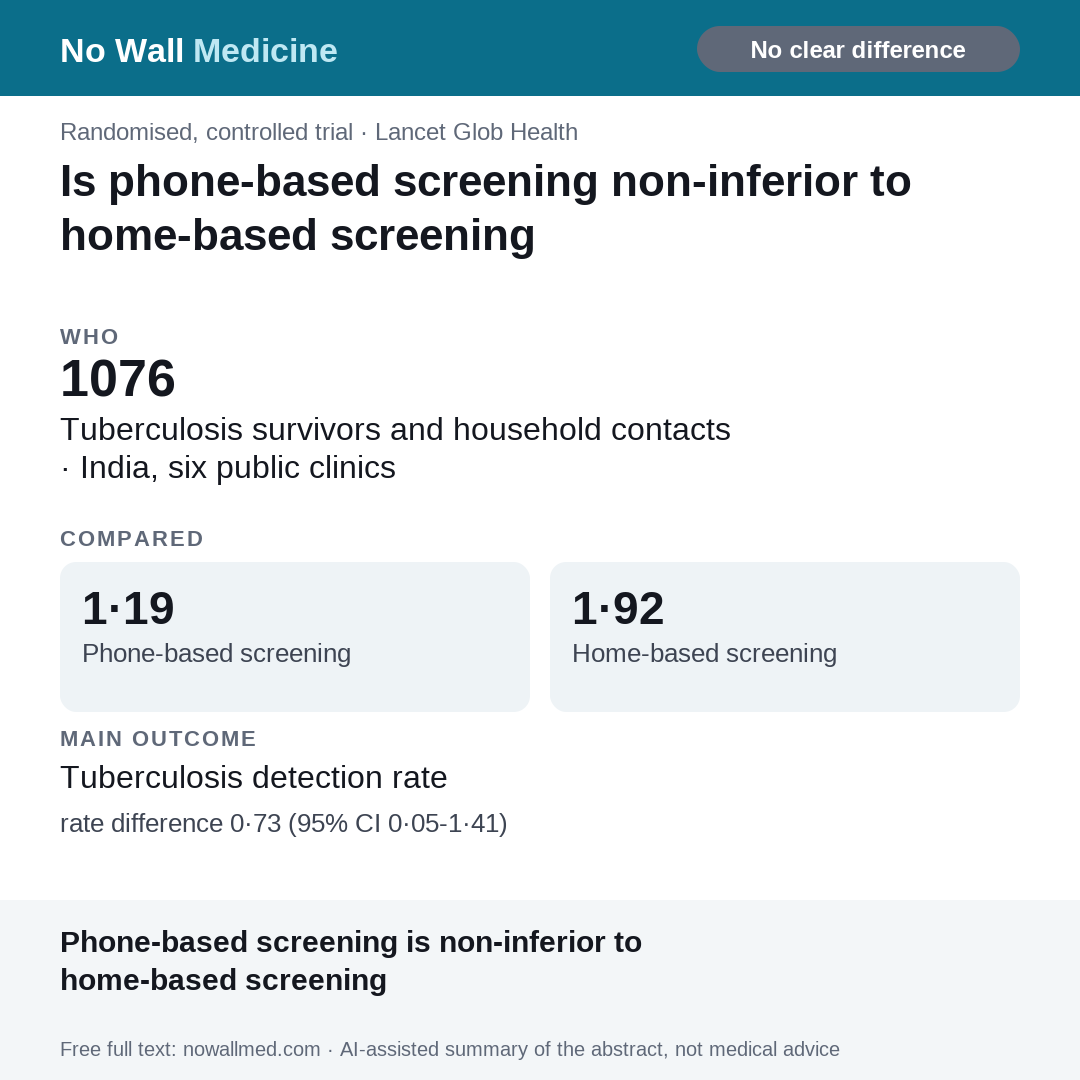
Phone-based screening versus home-based screening after tuberculosis in India (TB Aftermath): a multicentre, open-label, randomised, controlled, non-inferiority trial
Randomised, controlled trialNo clear difference
Is phone-based screening non-inferior to home-based screening
Who
1076
Tuberculosis survivors and household contacts · India, six public clinics
Compared
1·19Phone-based screening (95% CI 0·82-1·71)
1·92Home-based screening (1·37-2·45)
Main outcome
Tuberculosis detection rate
Result: rate difference 0·73 (95% CI 0·05-1·41)
Bottom line: Phone-based screening is non-inferior to home-based screening
Funded by: US National Institute of Allergy and Infectious Diseases
Lancet Glob Health · 2026-07-02Download image