Visual abstracts
New randomized trials and meta-analyses from leading journals at a glance: who was studied, what was compared, and what was found. Every paper is free to read in full.
All specialtiesCardiology 2388Oncology 2047Gastroenterology & Hepatology 913Infectious Disease 1490Neurology 951Psychiatry & Mental Health 1126Pulmonology 1001Critical Care 662Endocrinology & Diabetes 1248Pediatrics 1402Surgery 1216Orthopedics & Sports Medicine 436Neurosurgery 295Cardiothoracic & Vascular Surgery 258Plastic & Reconstructive Surgery 361Nephrology 499Rheumatology 341Hematology 514Dermatology 274Ophthalmology 278Obstetrics & Gynecology 783Public & Global Health 436Radiology & Imaging 327Anesthesiology 480Urology 405ENT (Otolaryngology) 305Emergency Medicine 270Allergy & Immunology 147Geriatrics 506Family Medicine & Primary Care 279Medical Genetics & Genomics 257Pathology & Laboratory Medicine 77Physical Medicine & Rehabilitation 401Palliative Care 204Nutrition 628Digital Health & AI 1175General Medicine 177
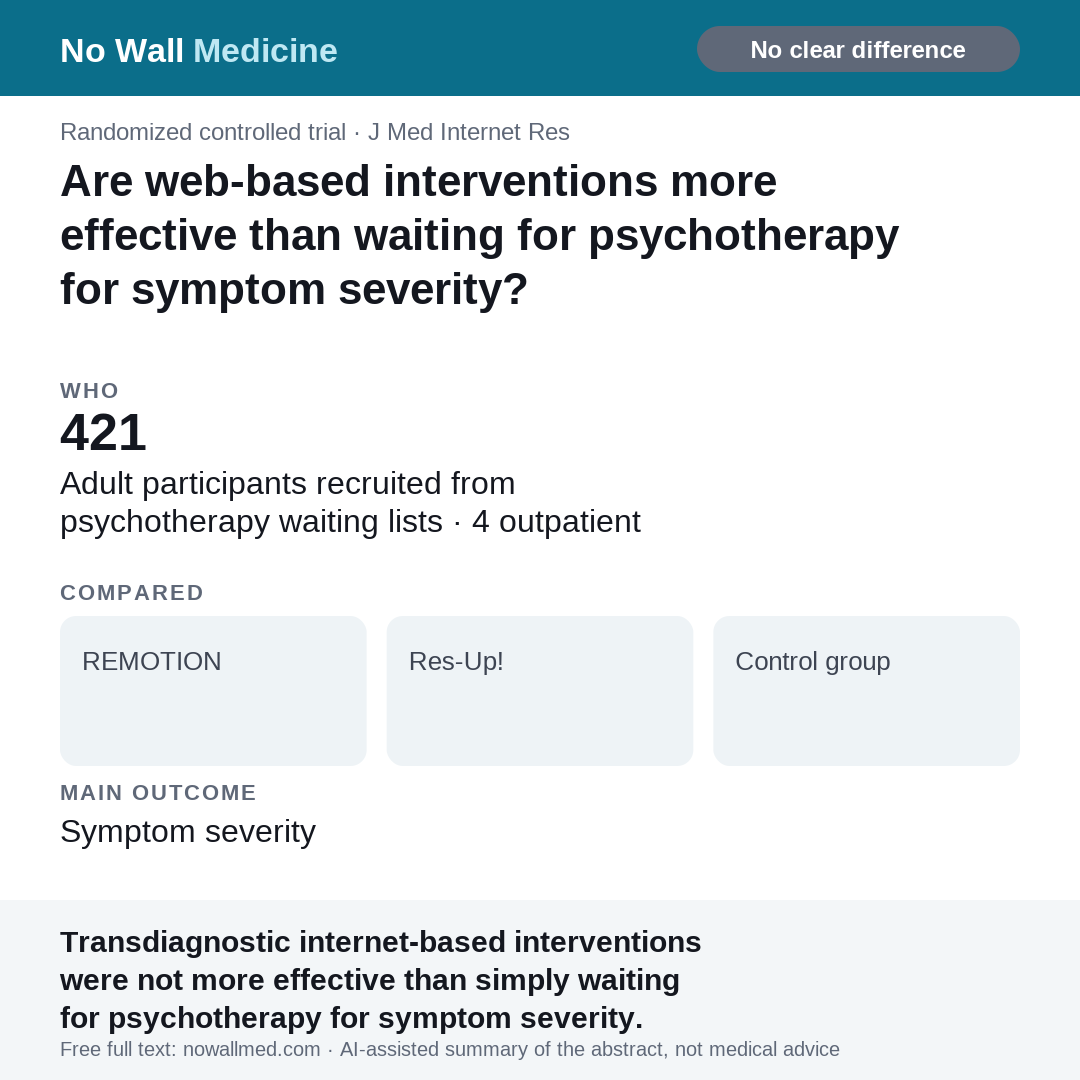
Evaluation of Two Web-Based Interventions (REMOTION and Res-Up!) for Clients From Psychotherapy Waitlists in Routine Outpatient Psychotherapy (Therapy Online Plus-TOP): Randomized Controlled Trial
Randomized controlled trialNo clear difference
Are web-based interventions more effective than waiting for psychotherapy for symptom severity?
Who
421
Adult participants recruited from psychotherapy waiting lists · 4 outpatient centers in Germany
Compared
REMOTION
Res-Up!
Control group
Main outcome
Symptom severity
Bottom line: Transdiagnostic internet-based interventions were not more effective than simply waiting for psychotherapy for symptom severity.
J Med Internet Res · 2026-07-08Download image
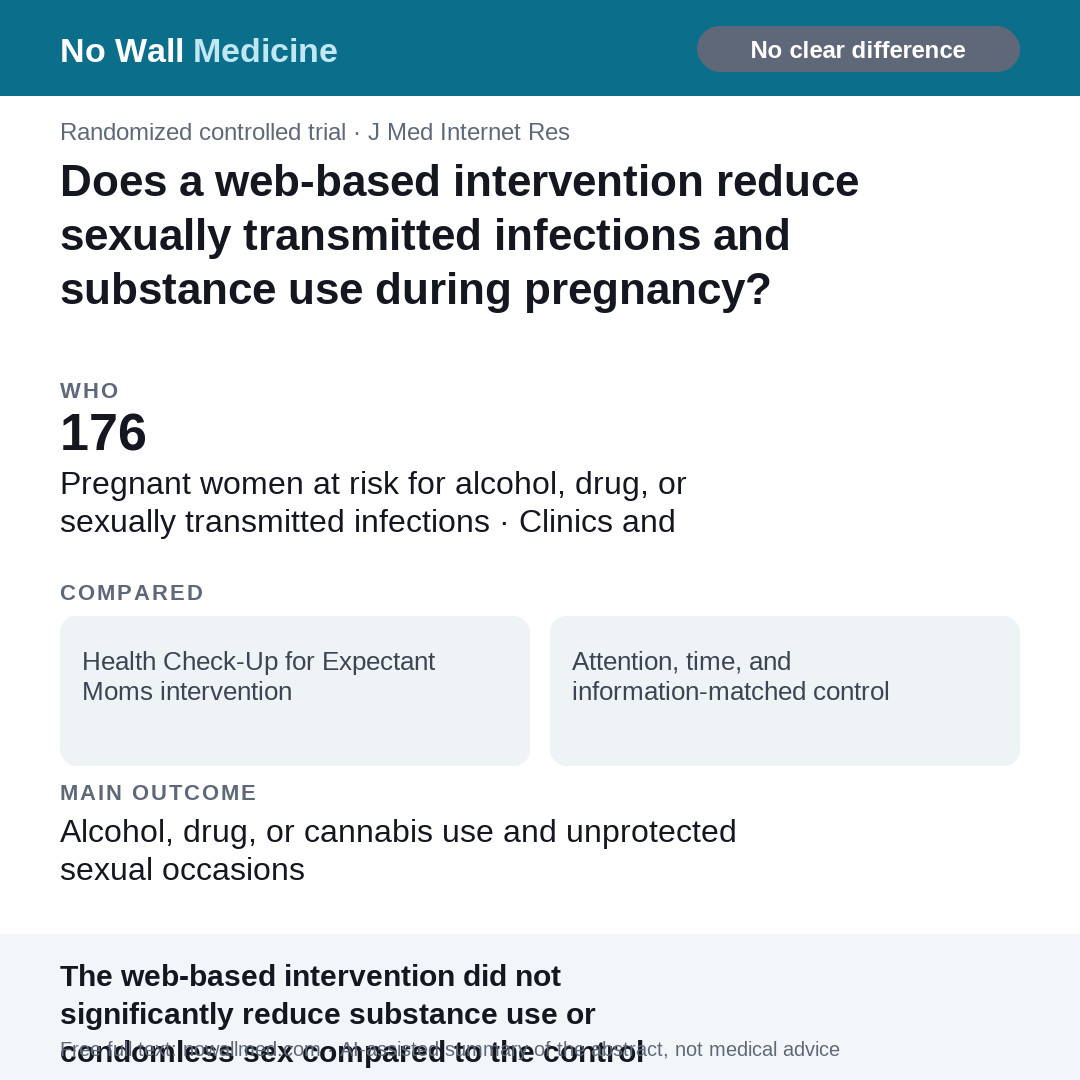
A Web-Based Intervention for Reducing Sexually Transmitted Infections and Substance Use During Pregnancy: Randomized Controlled Trial
Randomized controlled trialNo clear difference
Does a web-based intervention reduce sexually transmitted infections and substance use during pregnancy?
Who
176
Pregnant women at risk for alcohol, drug, or sexually transmitted infections · Clinics and social media in Michigan
Compared
Health Check-Up for Expectant Moms intervention
Attention, time, and information-matched control
Main outcome
Alcohol, drug, or cannabis use and unprotected sexual occasions
Bottom line: The web-based intervention did not significantly reduce substance use or condomless sex compared to the control group.
Limitation: The sample was largely low-risk, making intervention effects difficult to observe due to spontaneous self-change.
J Med Internet Res · 2026-07-08Download image
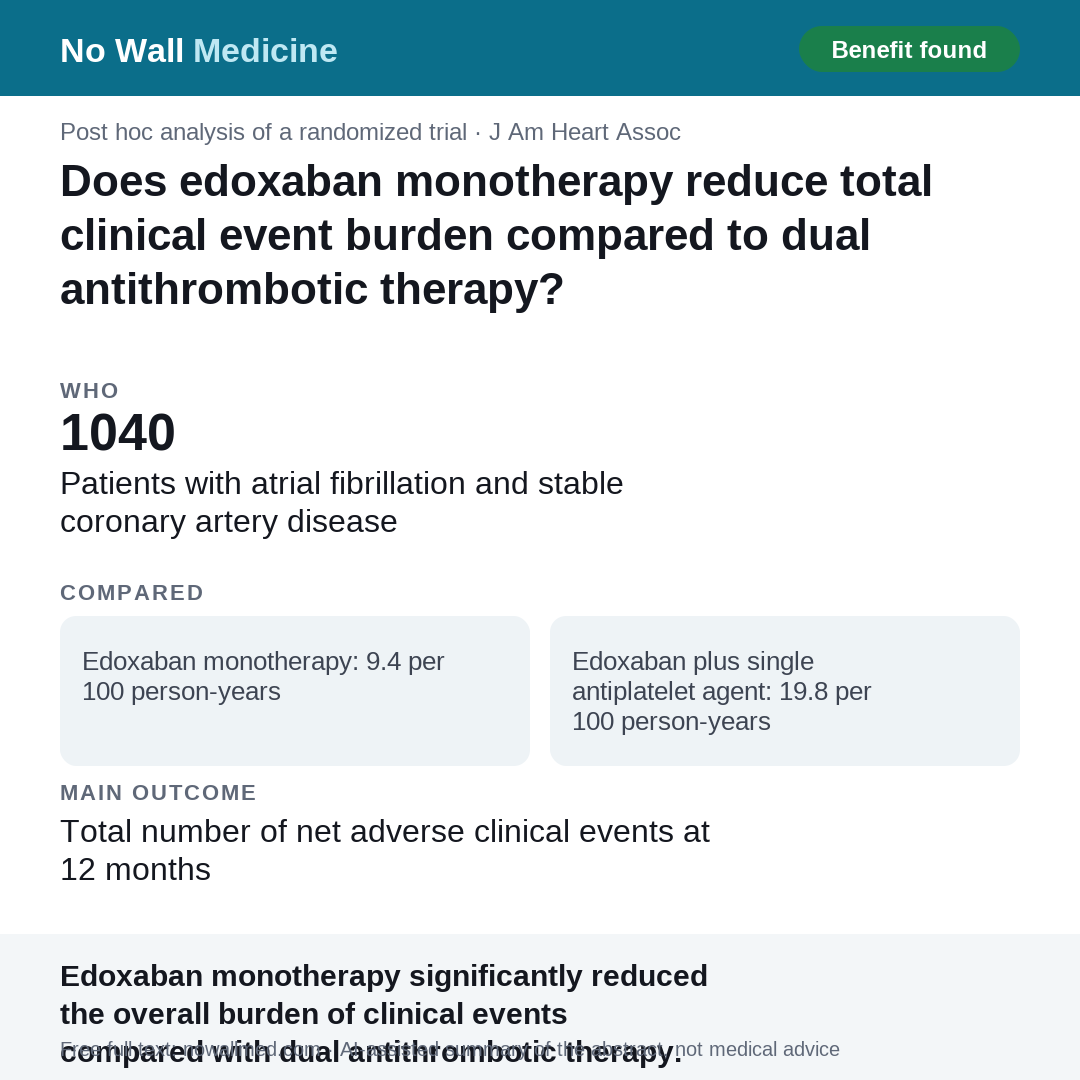
Total Clinical Event Burden With Edoxaban Monotherapy Versus Dual Antithrombotic Therapy in Atrial Fibrillation and Stable Coronary Artery Disease: Insights From the EPIC-CAD Trial
Post hoc analysis of a randomized trialBenefit found
Does edoxaban monotherapy reduce total clinical event burden compared to dual antithrombotic therapy?
Who
1040
Patients with atrial fibrillation and stable coronary artery disease
Compared
Edoxaban monotherapy: 9.4 per 100 person-years
Edoxaban plus single antiplatelet agent: 19.8 per 100 person-years
Main outcome
Total number of net adverse clinical events at 12 months
Result: incidence rate ratio, 0.47 (95% CI, 0.34-0.67)
Bottom line: Edoxaban monotherapy significantly reduced the overall burden of clinical events compared with dual antithrombotic therapy.
J Am Heart Assoc · 2026-07-08Download image
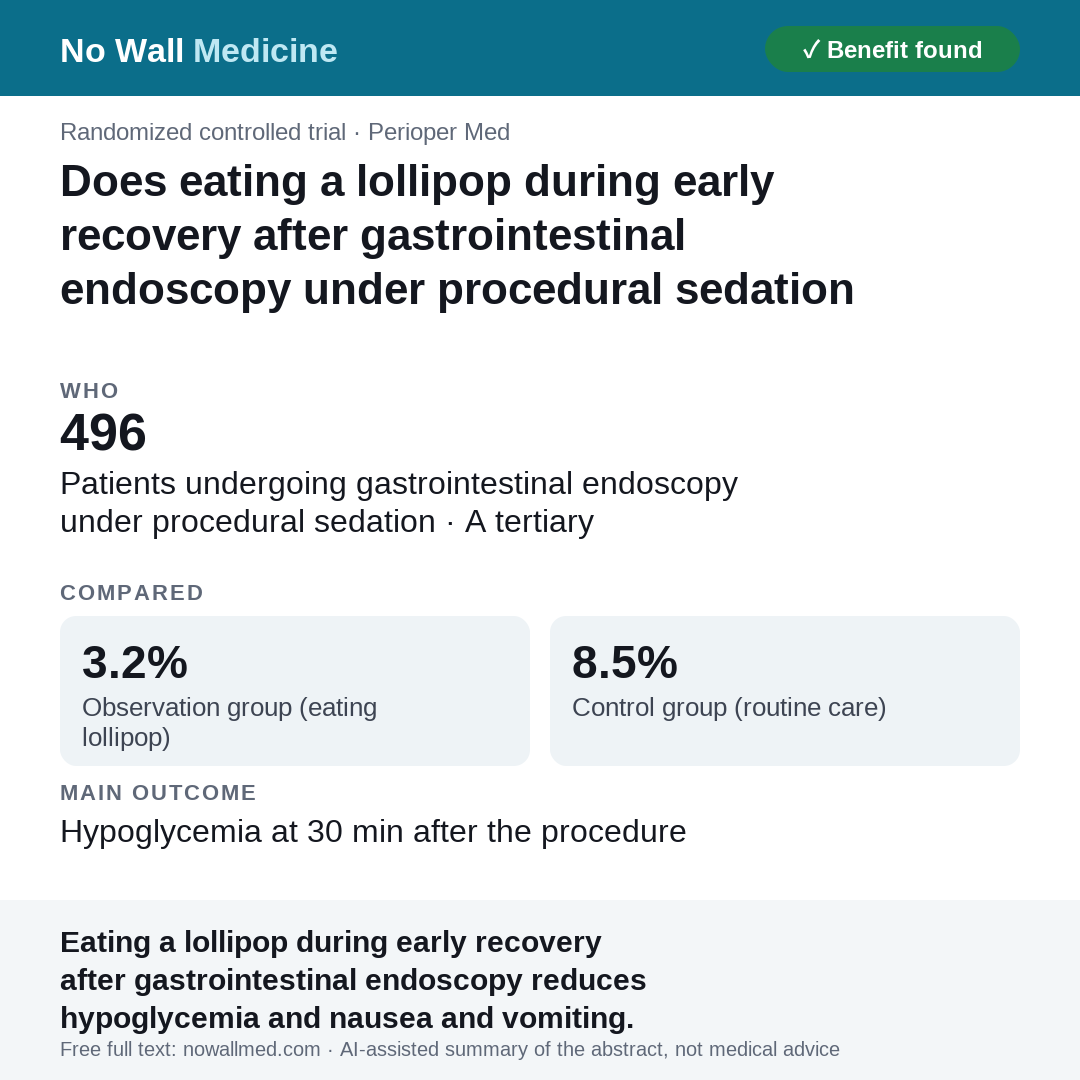
The effect of eating lollipop at early stage of recovery after gastrointestinal endoscopy under procedural sedation: a randomized controlled trial
Randomized controlled trialBenefit found
Does eating a lollipop during early recovery after gastrointestinal endoscopy under procedural sedation reduce adverse reactions?
Who
496
Patients undergoing gastrointestinal endoscopy under procedural sedation · A tertiary hospital in Sichuan Province, China
Compared
3.2%Observation group (eating lollipop)
8.5%Control group (routine care)
Main outcome
Hypoglycemia at 30 min after the procedure
Result: relative risk, 0.38 (95% CI, 0.17-0.84)
Bottom line: Eating a lollipop during early recovery after gastrointestinal endoscopy reduces hypoglycemia and nausea and vomiting.
Perioper Med · 2026-07-08Download image
Bispecific 10E8.4/iMab broadly neutralizing antibody in people with or without HIV-1: a partially randomized phase 1 trial
Partially randomized phase 1 trialBenefit found
What are the safety and tolerability of bispecific 10E8.4/iMab antibody?
Who
54
People living with or without HIV-1
Compared
10E8.4/iMab: No treatment-related serious adverse events or adverse events grade 3 or higher
Placebo
Main outcome
Safety and tolerability within 2 weeks of administration
Bottom line: The bispecific 10E8.4/iMab antibody was met for safety and tolerability in people with or without HIV-1.
Nat Med · 2026-07-07Download image

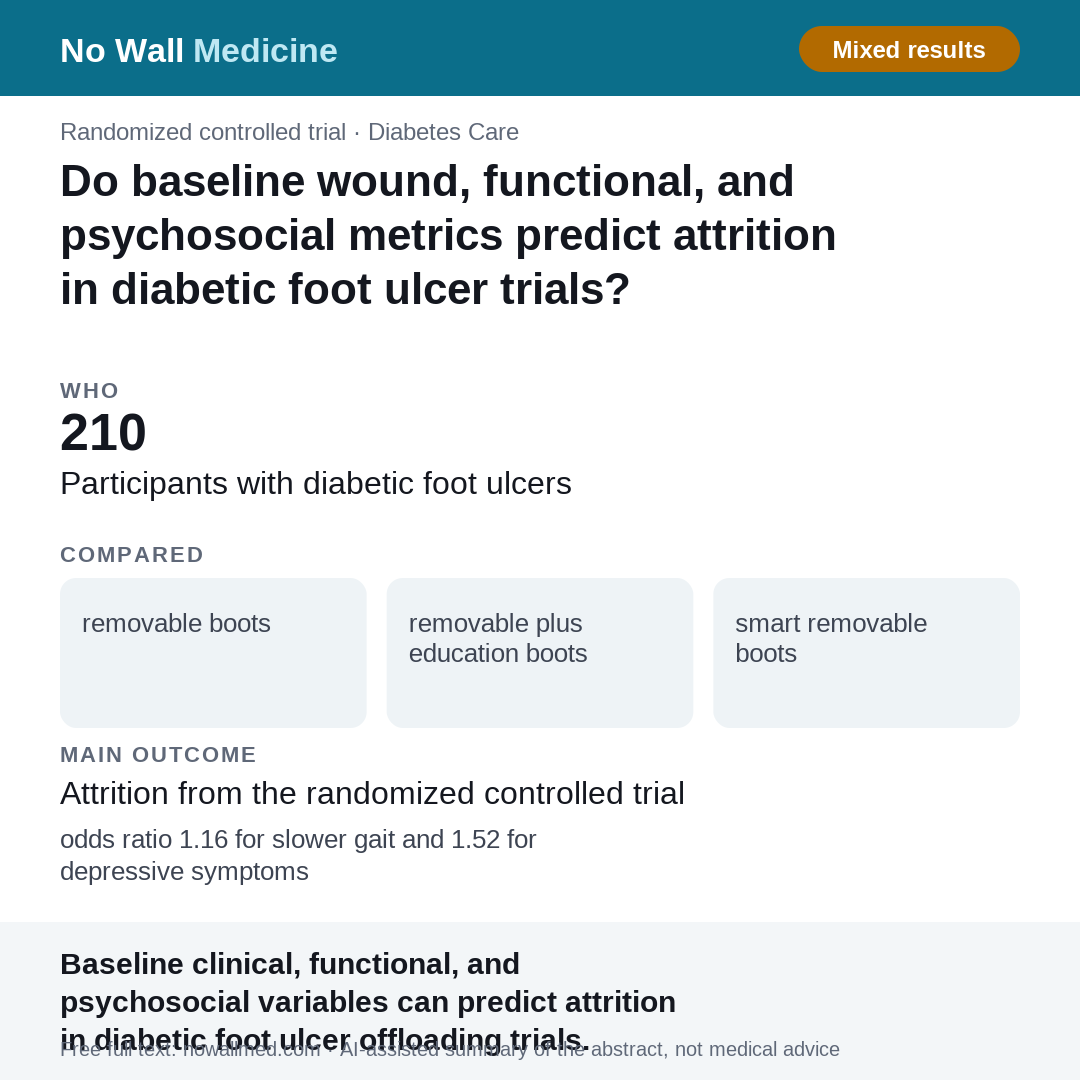
Predicting the Path to Attrition: Multidomain Risk Assessment in Diabetic Foot Ulcer Offloading Randomized Controlled Trials
Randomized controlled trialMixed results
Do baseline wound, functional, and psychosocial metrics predict attrition in diabetic foot ulcer trials?
Who
210
Participants with diabetic foot ulcers
Compared
removable boots
removable plus education boots
smart removable boots
Main outcome
Attrition from the randomized controlled trial
Result: odds ratio 1.16 for slower gait and 1.52 for depressive symptoms
Bottom line: Baseline clinical, functional, and psychosocial variables can predict attrition in diabetic foot ulcer offloading trials.
Diabetes Care · 2026-07-07Download image
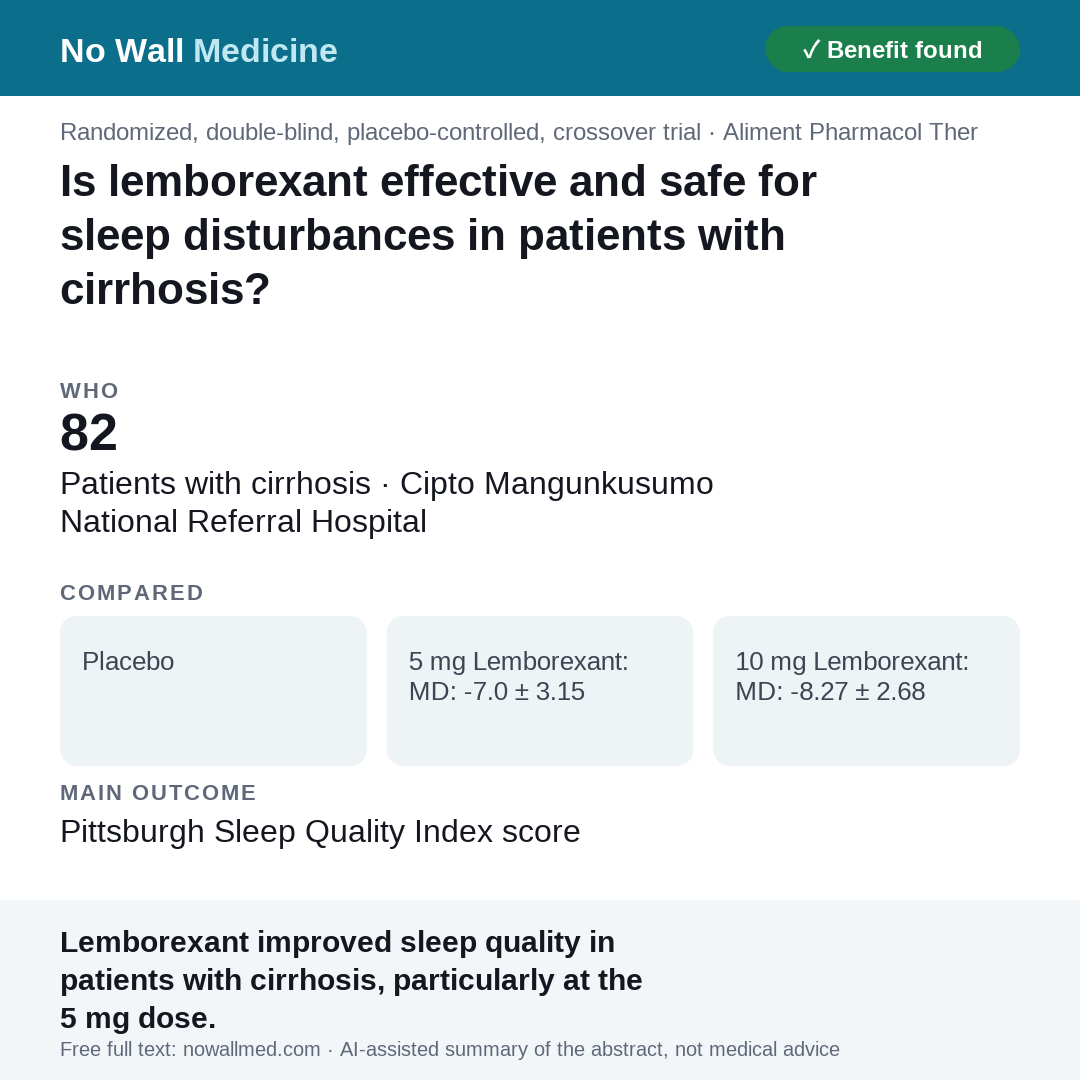
Clinical Trial: Lemborexant Efficacy and Safety in Liver Cirrhosis-Randomized, Double-Blind, Crossover Clinical Trial
Randomized, double-blind, placebo-controlled, crossover trialBenefit found
Is lemborexant effective and safe for sleep disturbances in patients with cirrhosis?
Who
82
Patients with cirrhosis · Cipto Mangunkusumo National Referral Hospital
Compared
Placebo
5 mg Lemborexant: MD: -7.0 ± 3.15
10 mg Lemborexant: MD: -8.27 ± 2.68
Main outcome
Pittsburgh Sleep Quality Index score
Bottom line: Lemborexant improved sleep quality in patients with cirrhosis, particularly at the 5 mg dose.
Limitation: Larger studies with longer follow-up are warranted to strengthen evidence.
Aliment Pharmacol Ther · 2026-07-07Download image
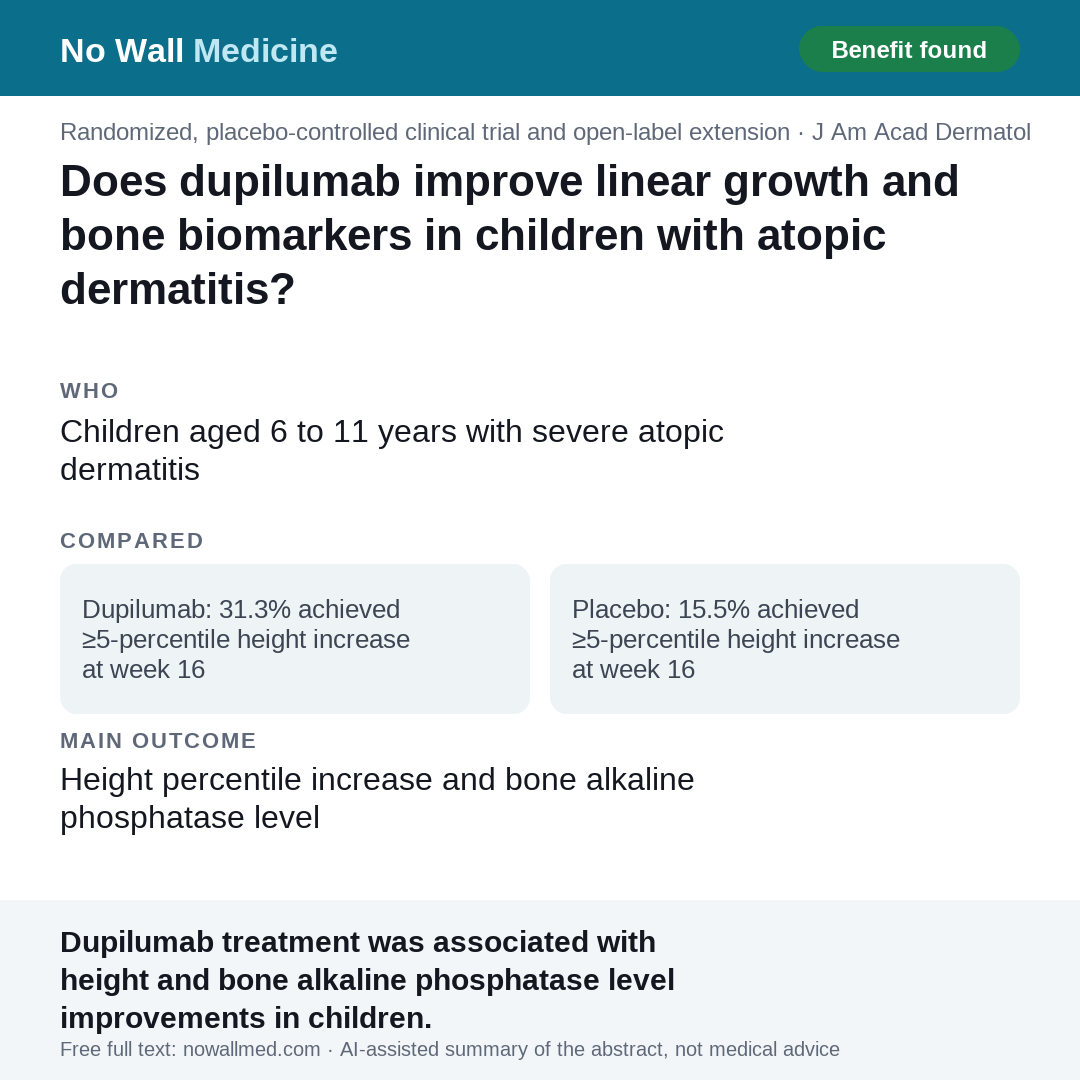
Dupilumab treatment improves linear growth and bone biomarkers in children with atopic dermatitis: Post hoc analysis of a phase 3 randomized, placebo-controlled clinical trial and an open-label extension study
Randomized, placebo-controlled clinical trial and open-label extensionBenefit found
Does dupilumab improve linear growth and bone biomarkers in children with atopic dermatitis?
Who
Children aged 6 to 11 years with severe atopic dermatitis
Compared
Dupilumab: 31.3% achieved ≥5-percentile height increase at week 16
Placebo: 15.5% achieved ≥5-percentile height increase at week 16
Main outcome
Height percentile increase and bone alkaline phosphatase level
Bottom line: Dupilumab treatment was associated with height and bone alkaline phosphatase level improvements in children.
Limitation: One-year duration.
J Am Acad Dermatol · 2026-07-07Download image
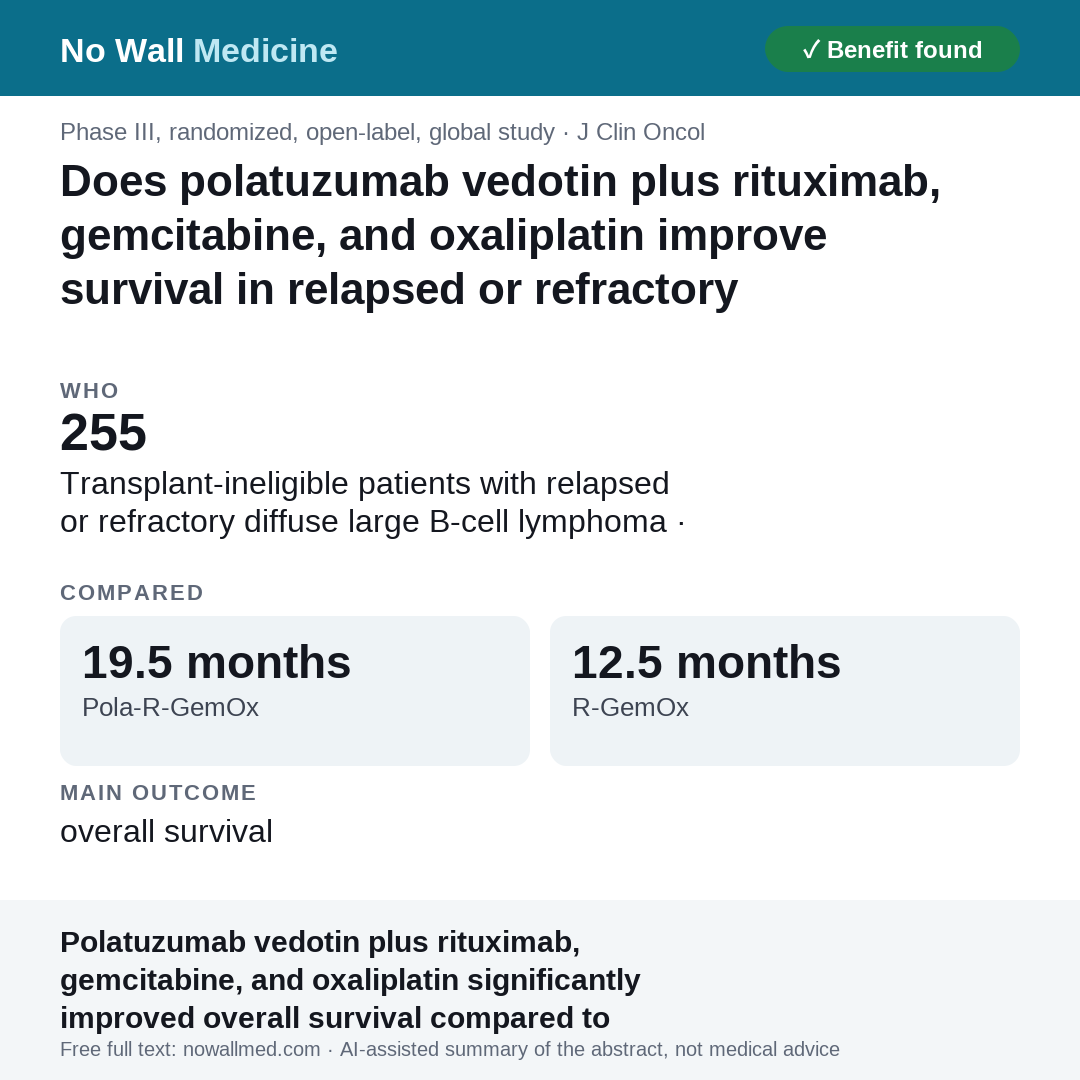
Polatuzumab Vedotin Plus Rituximab, Gemcitabine, and Oxaliplatin in Relapsed or Refractory Diffuse Large B-Cell Lymphoma: Results From the Phase III, Randomized POLARGO Trial
Phase III, randomized, open-label, global studyBenefit found
Does polatuzumab vedotin plus rituximab, gemcitabine, and oxaliplatin improve survival in relapsed or refractory diffuse large B-cell lymphoma?
Who
255
Transplant-ineligible patients with relapsed or refractory diffuse large B-cell lymphoma · Global
Compared
19.5 monthsPola-R-GemOx (95% CI, 13.3 to not estimable)
12.5 monthsR-GemOx (95% CI, 8.9 to 15.8)
Main outcome
overall survival
Result: hazard ratio 0.6 (95% CI 0.43 to 0.83)
Bottom line: Polatuzumab vedotin plus rituximab, gemcitabine, and oxaliplatin significantly improved overall survival compared to rituximab, gemcitabine, and oxaliplatin alone.
J Clin Oncol · 2026-07-06Download image
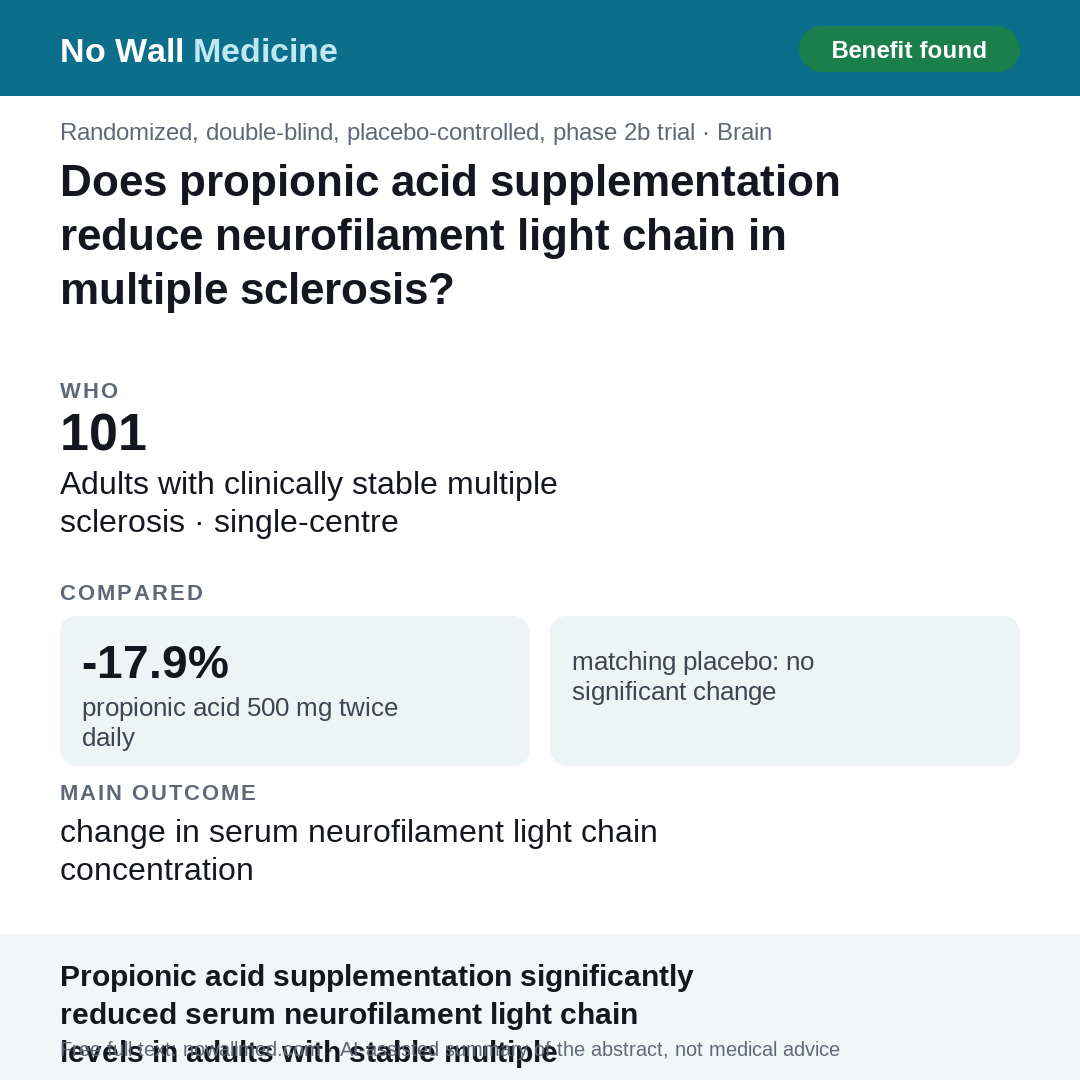
Propionic acid in multiple sclerosis: a phase 2b, double-blind, randomized placebo-controlled trial
Randomized, double-blind, placebo-controlled, phase 2b trialBenefit found
Does propionic acid supplementation reduce neurofilament light chain in multiple sclerosis?
Who
101
Adults with clinically stable multiple sclerosis · single-centre
Compared
-17.9%propionic acid 500 mg twice daily
matching placebo: no significant change
Main outcome
change in serum neurofilament light chain concentration
Result: mean difference 0.91 pg/ml (95% CI 0.02 to 1.79)
Bottom line: Propionic acid supplementation significantly reduced serum neurofilament light chain levels in adults with stable multiple sclerosis.
Brain · 2026-07-06Download image
Semaglutide Injection Once-Weekly for Weight Management in Adults: Results From A Randomized Phase III, Active-Controlled Study
Randomized, Phase III, non-inferiority studyBenefit found
Is synthetic semaglutide injection non-inferior to Wegovy for weight management?
Who
270
Adults with obesity or overweight with or without comorbidities · 21 centers in India
Compared
Test semaglutide: -13.8% ± 4.28%
Reference semaglutide: -14.1% ± 4.11%
Main outcome
percentage change in bodyweight from baseline to Week 24
Result: least-squares mean difference of 0.26% (95% CI: -0.86% to 1.39%)
Bottom line: Synthetic semaglutide injection was non-inferior to Wegovy for weight management in adults over 24 weeks.
Diabetes Obes Metab · 2026-07-06Download image

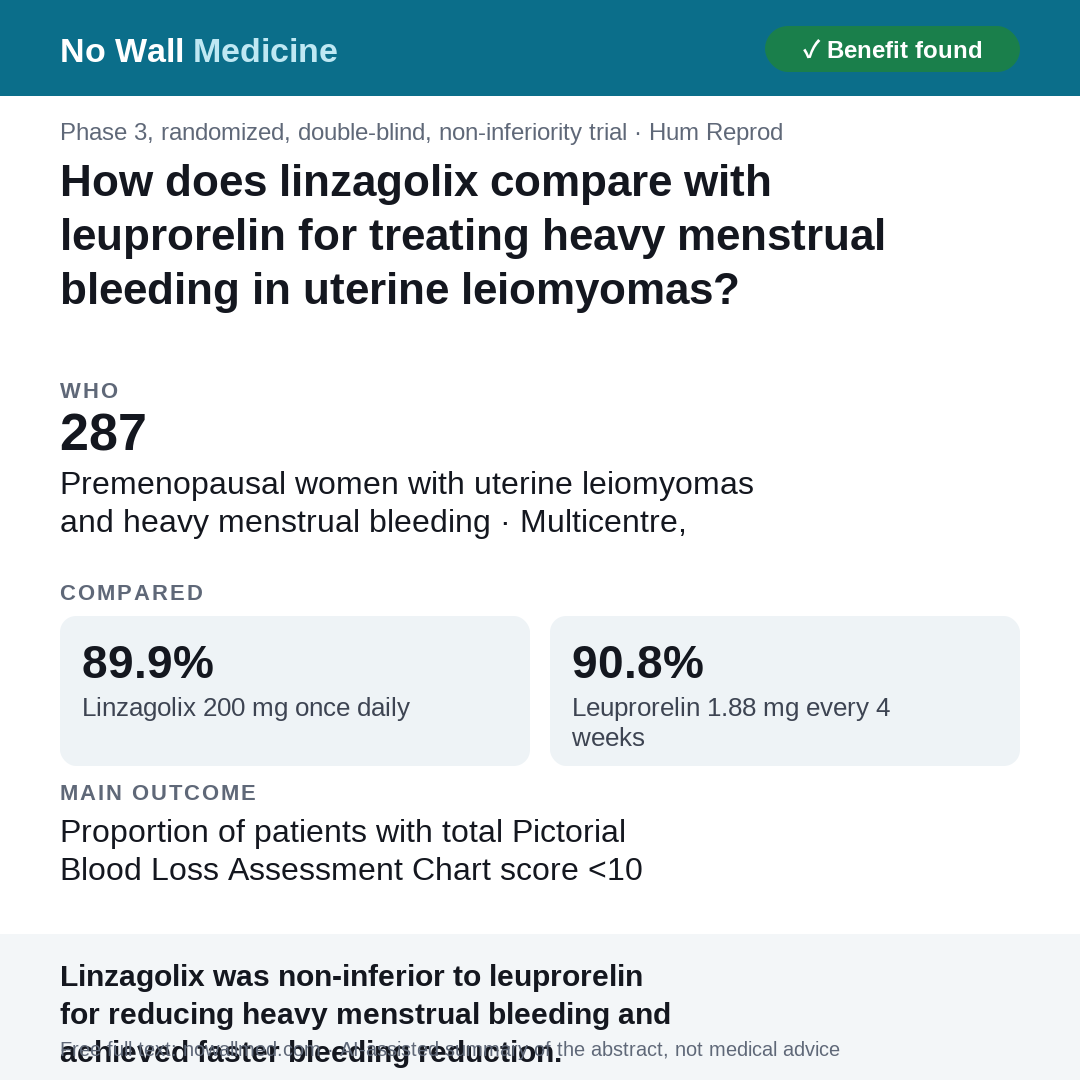
Linzagolix versus leuprorelin in Japanese women with uterine leiomyomas: a phase 3, randomized, active-controlled, non-inferiority trial
Phase 3, randomized, double-blind, non-inferiority trialBenefit found
How does linzagolix compare with leuprorelin for treating heavy menstrual bleeding in uterine leiomyomas?
Who
287
Premenopausal women with uterine leiomyomas and heavy menstrual bleeding · Multicentre, Japan
Compared
89.9%Linzagolix 200 mg once daily (95% CI, 83.7, 94.4)
90.8%Leuprorelin 1.88 mg every 4 weeks (84.7, 95.0)
Main outcome
Proportion of patients with total Pictorial Blood Loss Assessment Chart score <10
Result: difference, -0.9% [-8.6, 6.9]
Bottom line: Linzagolix was non-inferior to leuprorelin for reducing heavy menstrual bleeding and achieved faster bleeding reduction.
Limitation: Further studies are needed to compare linzagolix with other antagonists and evaluate longer-term safety.
Hum Reprod · 2026-07-06Download image
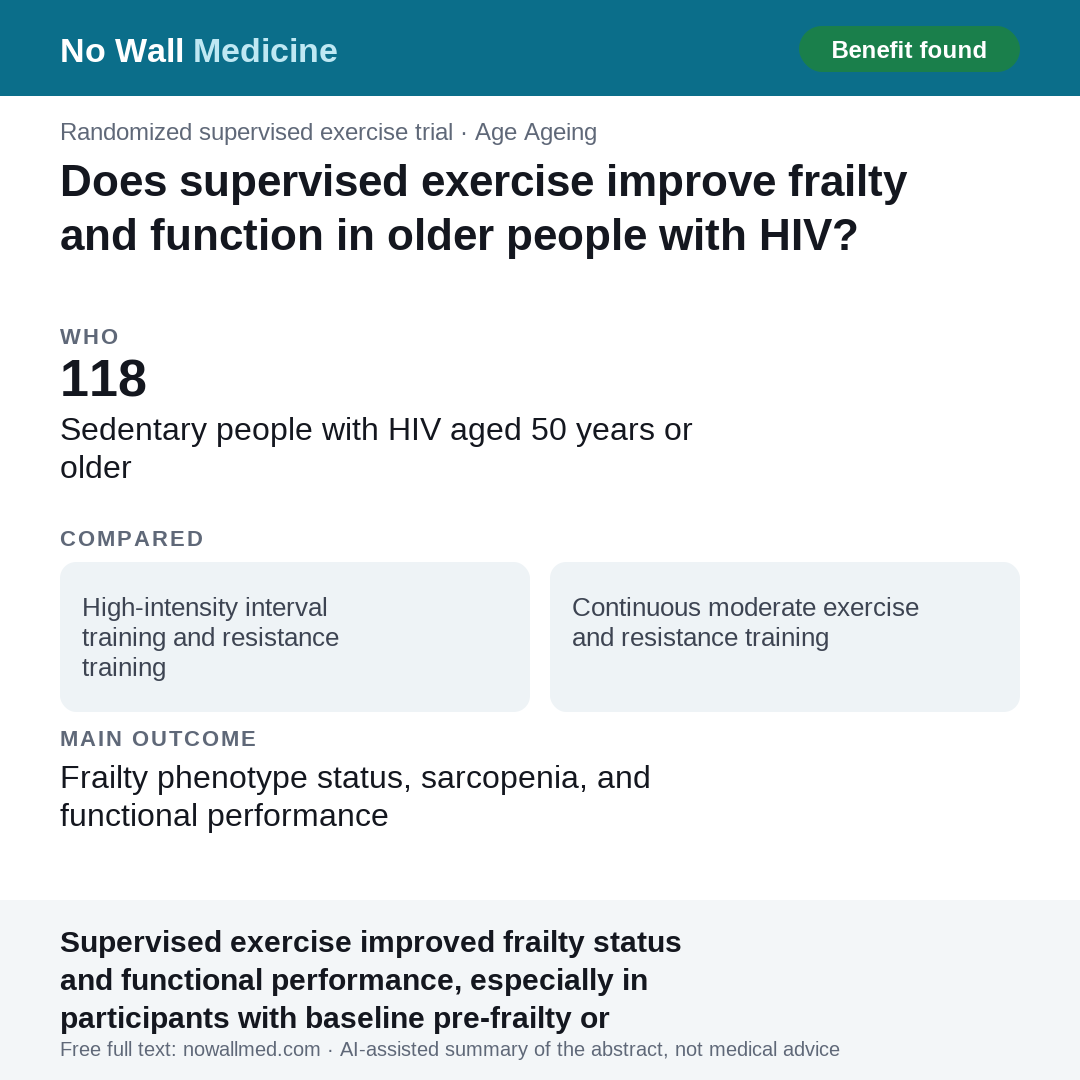
Frailty phenotype transitions and functional improvements during a supervised exercise trial in older people with HIV: results from the HEALTH Trial
Randomized supervised exercise trialBenefit found
Does supervised exercise improve frailty and function in older people with HIV?
Who
118
Sedentary people with HIV aged 50 years or older
Compared
High-intensity interval training and resistance training
Continuous moderate exercise and resistance training
Main outcome
Frailty phenotype status, sarcopenia, and functional performance
Bottom line: Supervised exercise improved frailty status and functional performance, especially in participants with baseline pre-frailty or frailty.
Limitation: Low sarcopenia prevalence limited conclusions regarding categorical sarcopenia outcomes.
Age Ageing · 2026-07-06Download image
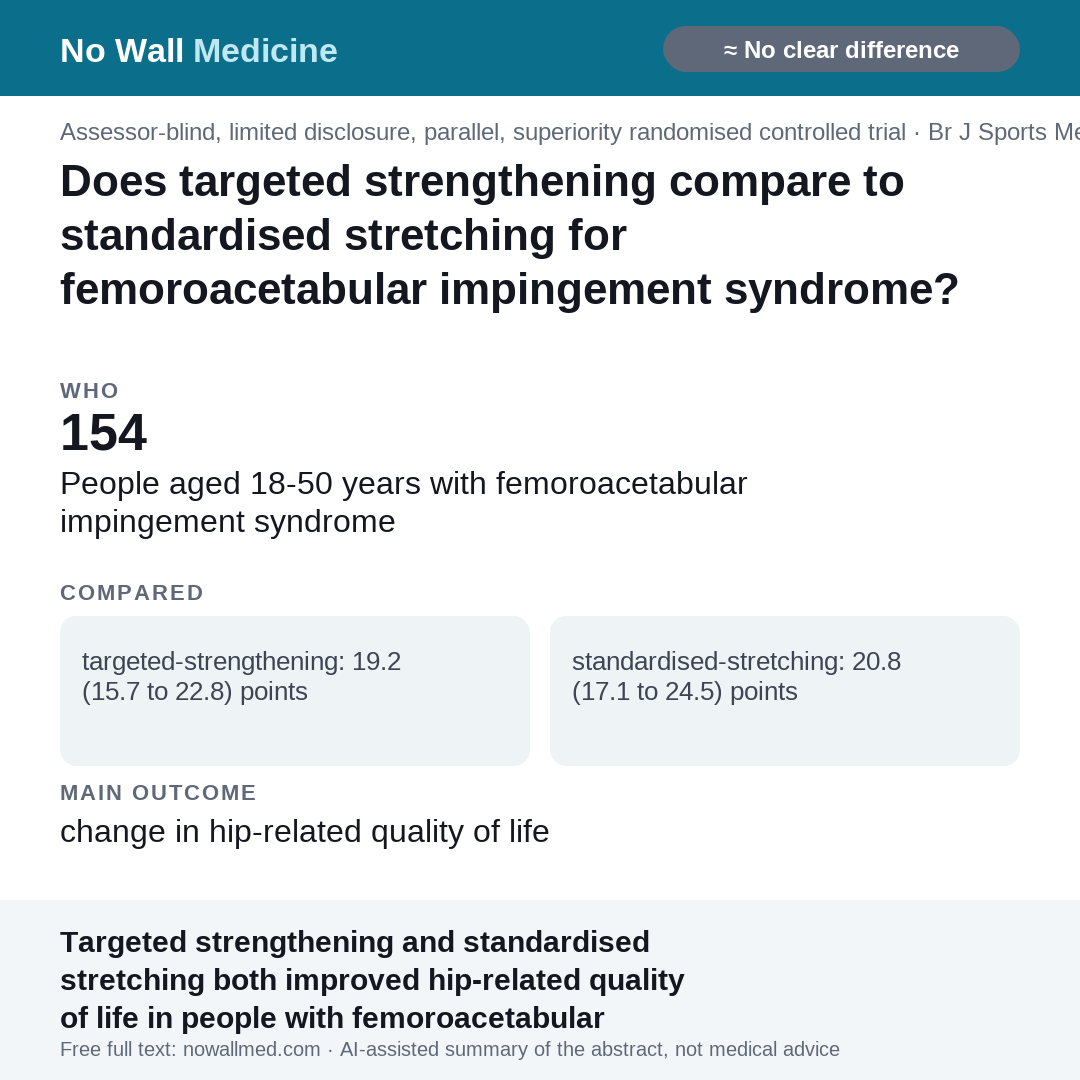
Physiotherapist-led treatment for femoroacetabular impingement syndrome (the PhysioFIRST study): an assessor-blinded, limited disclosure randomised controlled trial
Assessor-blind, limited disclosure, parallel, superiority randomised controlled trialNo clear difference
Does targeted strengthening compare to standardised stretching for femoroacetabular impingement syndrome?
Who
154
People aged 18-50 years with femoroacetabular impingement syndrome
Compared
targeted-strengthening: 19.2 (15.7 to 22.8) points
standardised-stretching: 20.8 (17.1 to 24.5) points
Main outcome
change in hip-related quality of life
Result: mean difference (95% CI) 0.2 (-5.9 to 6.3)
Bottom line: Targeted strengthening and standardised stretching both improved hip-related quality of life in people with femoroacetabular impingement syndrome.
Br J Sports Med · 2026-07-06Download image
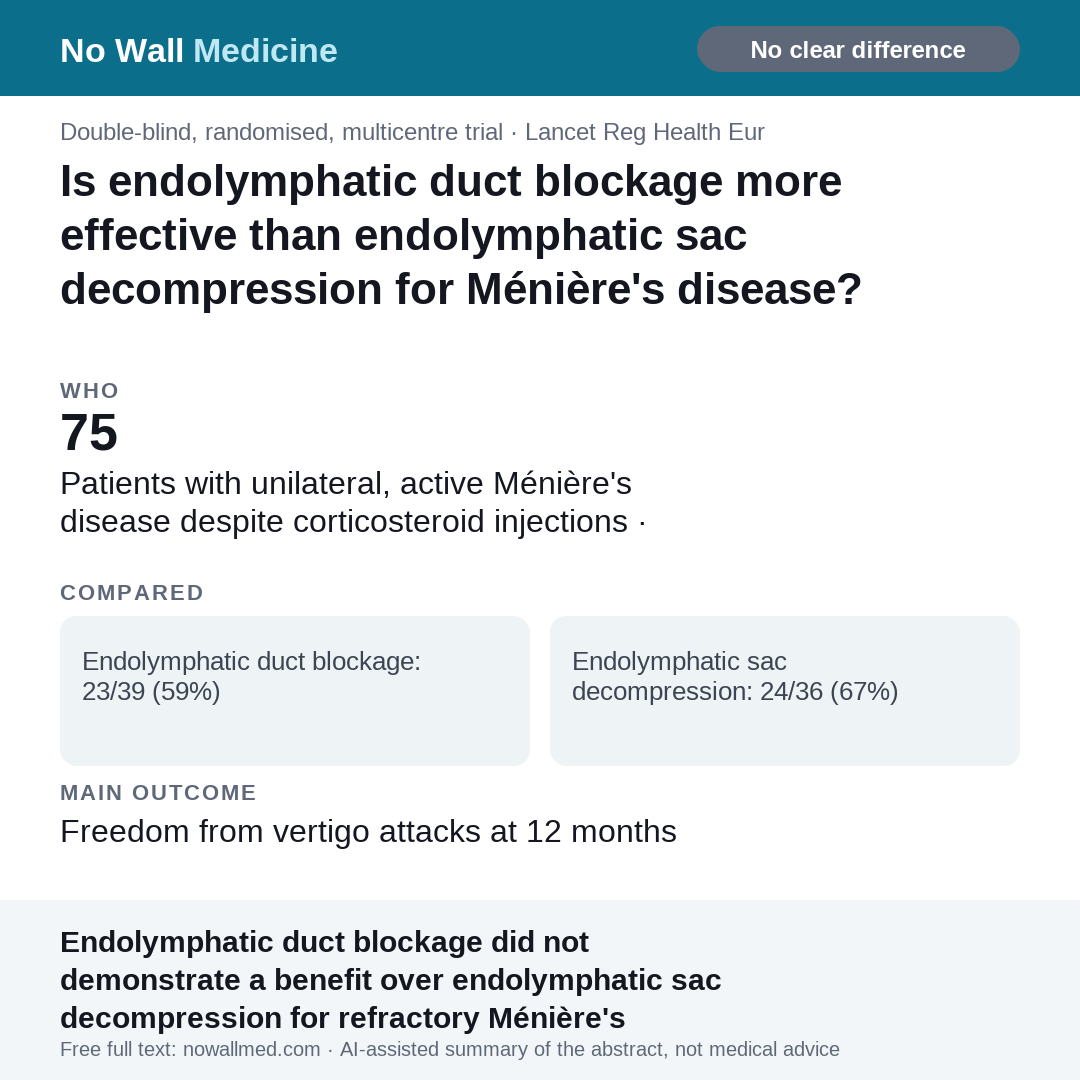
Endolymphatic duct blockage for Ménière's disease: a double-blind, randomised controlled trial
Double-blind, randomised, multicentre trialNo clear difference
Is endolymphatic duct blockage more effective than endolymphatic sac decompression for Ménière's disease?
Who
75
Patients with unilateral, active Ménière's disease despite corticosteroid injections · Seven hospitals in the Netherlands
Compared
Endolymphatic duct blockage: 23/39 (59%)
Endolymphatic sac decompression: 24/36 (67%)
Main outcome
Freedom from vertigo attacks at 12 months
Result: OR 0.72, 95% CI 0.28-1.84
Bottom line: Endolymphatic duct blockage did not demonstrate a benefit over endolymphatic sac decompression for refractory Ménière's disease.
Funded by: Dutch National Healthcare Institute and ZonMw
Lancet Reg Health Eur · 2026-07-06Download image
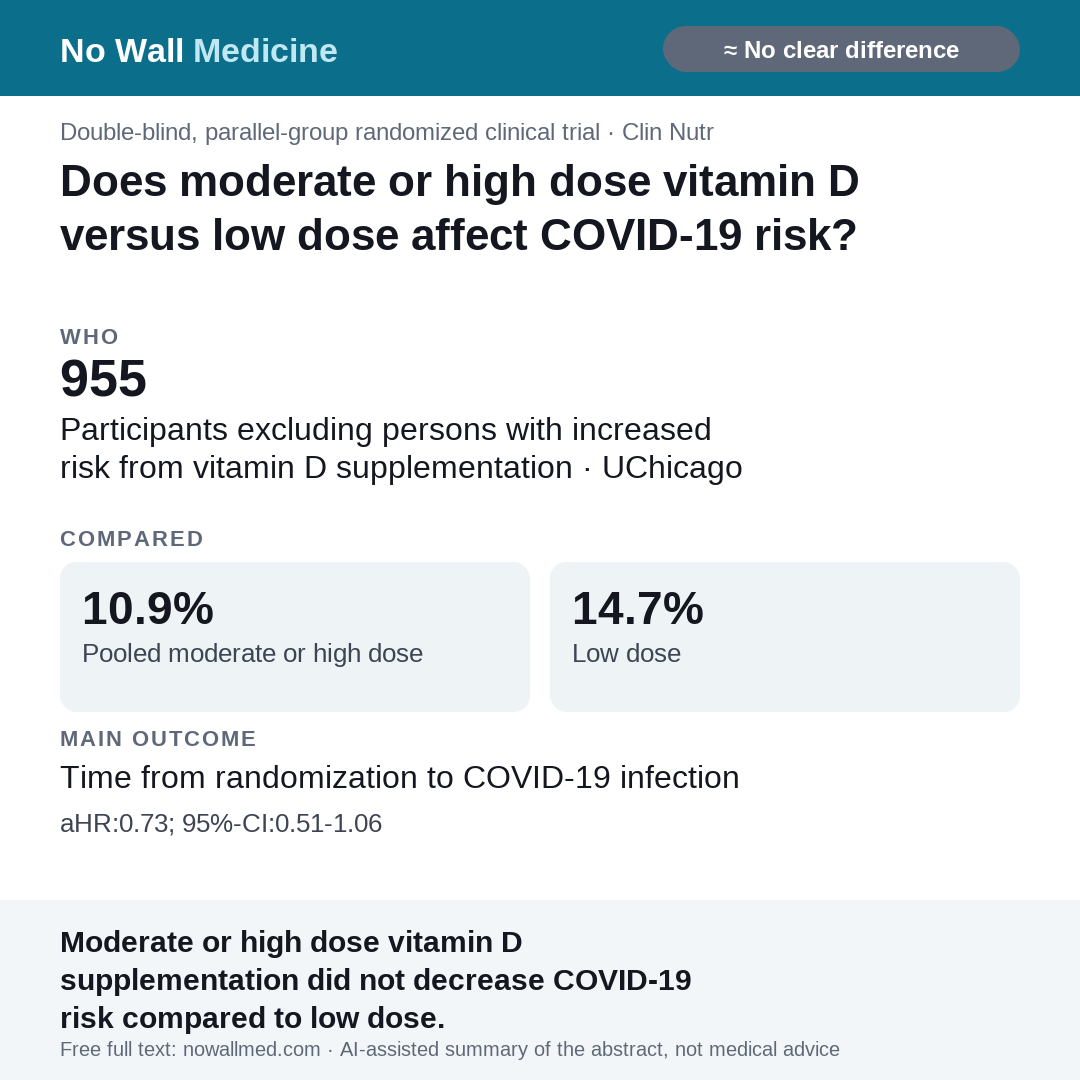
Effect of moderate or high versus low dose daily vitamin D on COVID-19 incidence: A double-blind, parallel-group randomized clinical trial
Double-blind, parallel-group randomized clinical trialNo clear difference
Does moderate or high dose vitamin D versus low dose affect COVID-19 risk?
Who
955
Participants excluding persons with increased risk from vitamin D supplementation · UChicago Medicine or Rush University Medical Center
Compared
10.9%Pooled moderate or high dose (50/461)
14.7%Low dose (68/462)
Main outcome
Time from randomization to COVID-19 infection
Result: aHR:0.73; 95%-CI:0.51-1.06
Bottom line: Moderate or high dose vitamin D supplementation did not decrease COVID-19 risk compared to low dose.
Limitation: Further study is warranted of the effects of higher doses and vitamin D levels.
Clin Nutr · 2026-07-04Download image
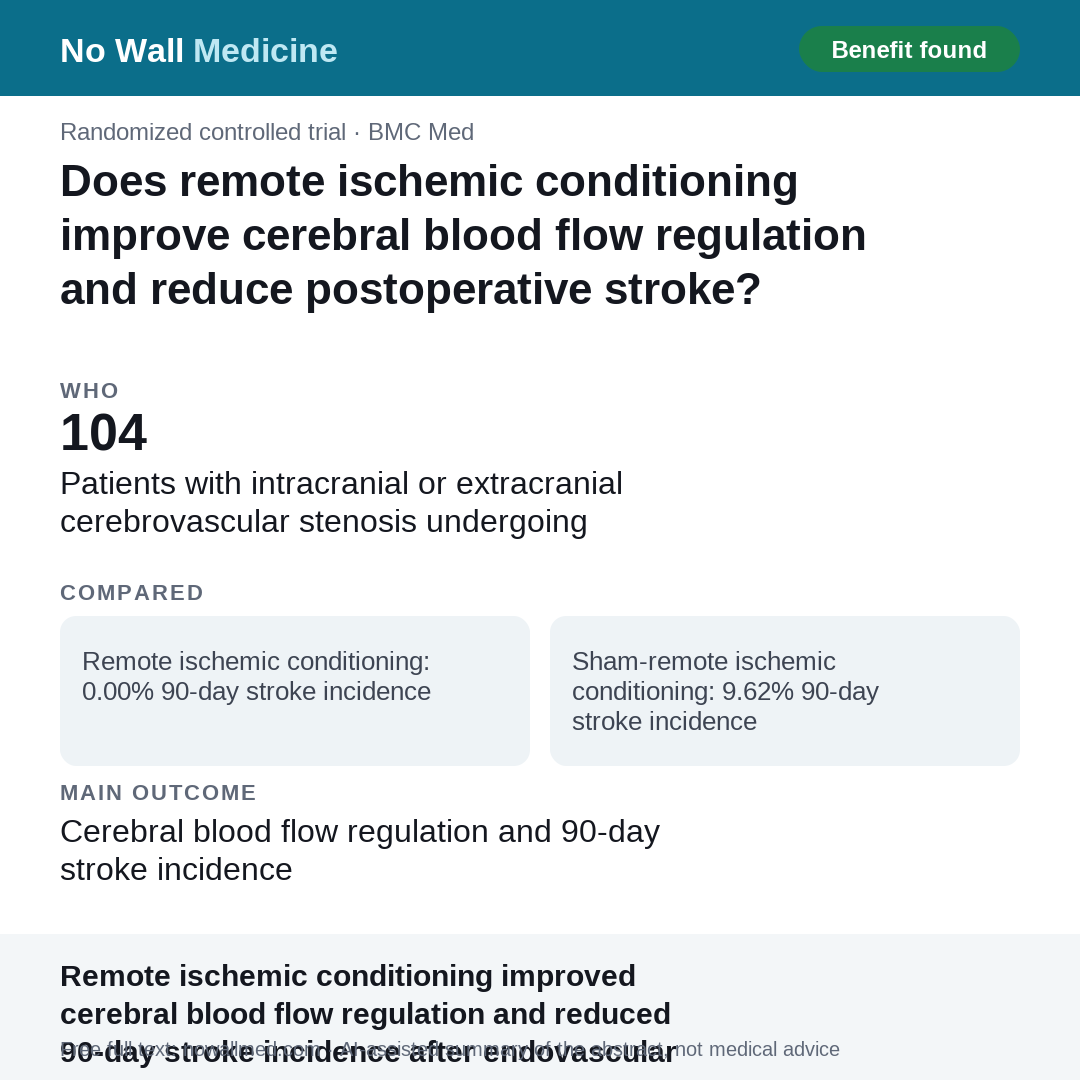
Efficacy of remote ischemic conditioning on cerebral blood flow regulation in patients with endovascular stenting: a randomized controlled trial
Randomized controlled trialBenefit found
Does remote ischemic conditioning improve cerebral blood flow regulation and reduce postoperative stroke?
Who
104
Patients with intracranial or extracranial cerebrovascular stenosis undergoing endovascular stenting
Compared
Remote ischemic conditioning: 0.00% 90-day stroke incidence
Sham-remote ischemic conditioning: 9.62% 90-day stroke incidence
Main outcome
Cerebral blood flow regulation and 90-day stroke incidence
Bottom line: Remote ischemic conditioning improved cerebral blood flow regulation and reduced 90-day stroke incidence after endovascular stenting.
BMC Med · 2026-07-04Download image
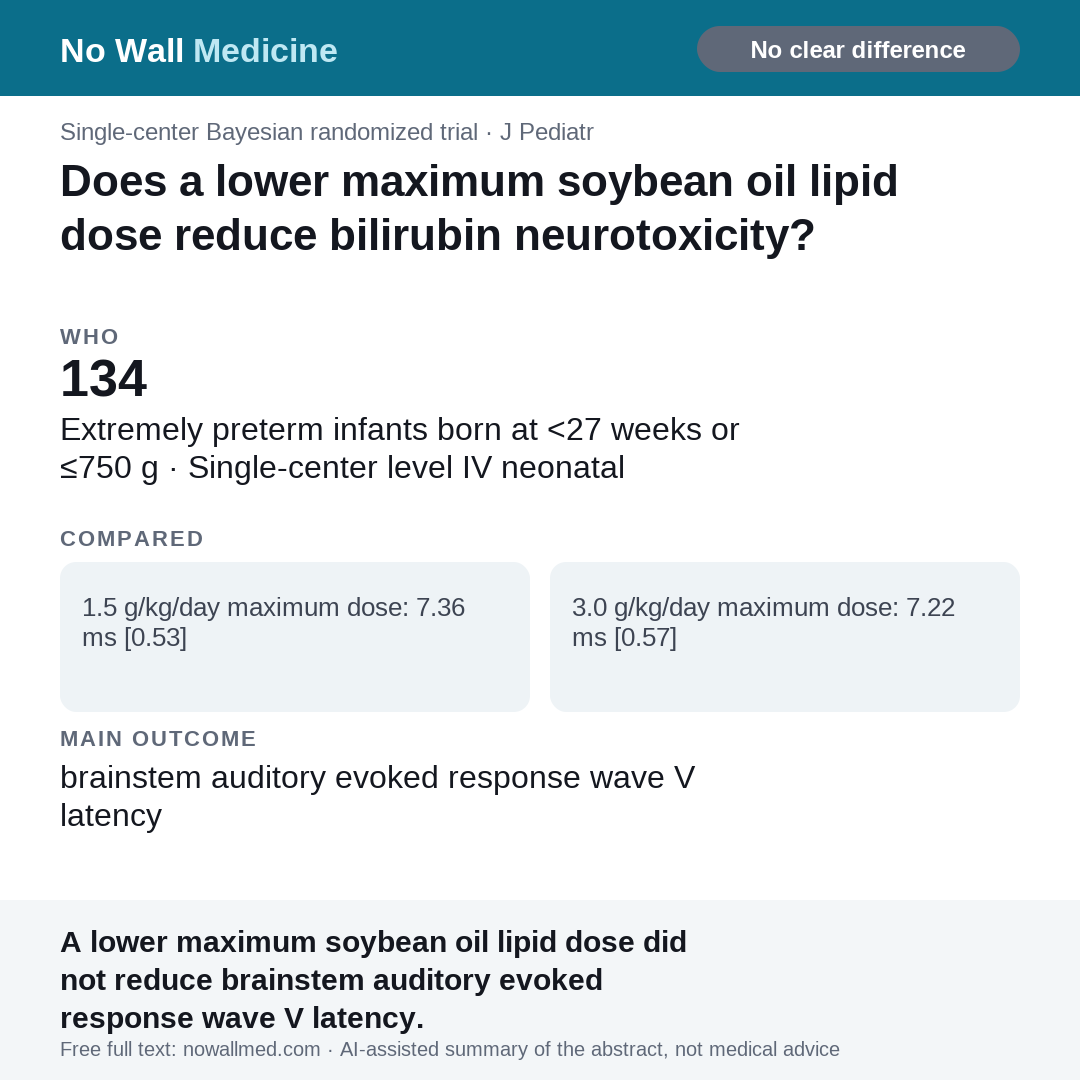
Parenteral Lipid Dose and Bilirubin Neurotoxicity in Extremely Preterm Infants: A Factorial Randomized Trial
Single-center Bayesian randomized trialNo clear difference
Does a lower maximum soybean oil lipid dose reduce bilirubin neurotoxicity?
Who
134
Extremely preterm infants born at <27 weeks or ≤750 g · Single-center level IV neonatal intensive care unit
Compared
1.5 g/kg/day maximum dose: 7.36 ms [0.53]
3.0 g/kg/day maximum dose: 7.22 ms [0.57]
Main outcome
brainstem auditory evoked response wave V latency
Result: adjusted mean difference -0.14 (95% CrI -0.34 to 0.06)
Bottom line: A lower maximum soybean oil lipid dose did not reduce brainstem auditory evoked response wave V latency.
J Pediatr · 2026-07-04Download image
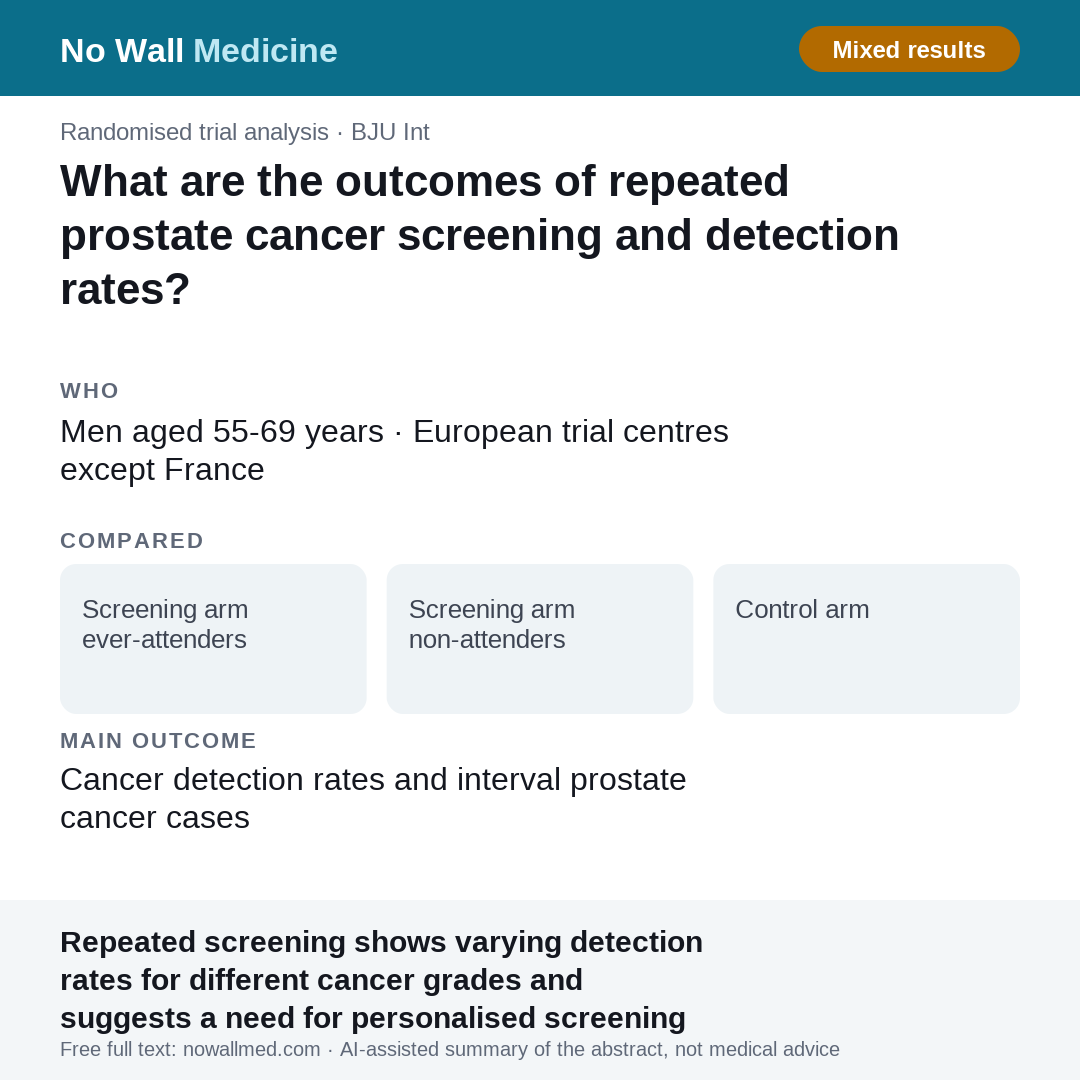
Cancer detection in the European Randomised Study of Screening for Prostate Cancer (ERSPC)
Randomised trial analysisMixed results
What are the outcomes of repeated prostate cancer screening and detection rates?
Who
Men aged 55-69 years · European trial centres except France
Compared
Screening arm ever-attenders
Screening arm non-attenders
Control arm
Main outcome
Cancer detection rates and interval prostate cancer cases
Bottom line: Repeated screening shows varying detection rates for different cancer grades and suggests a need for personalised screening approaches.
BJU Int · 2026-07-04Download image
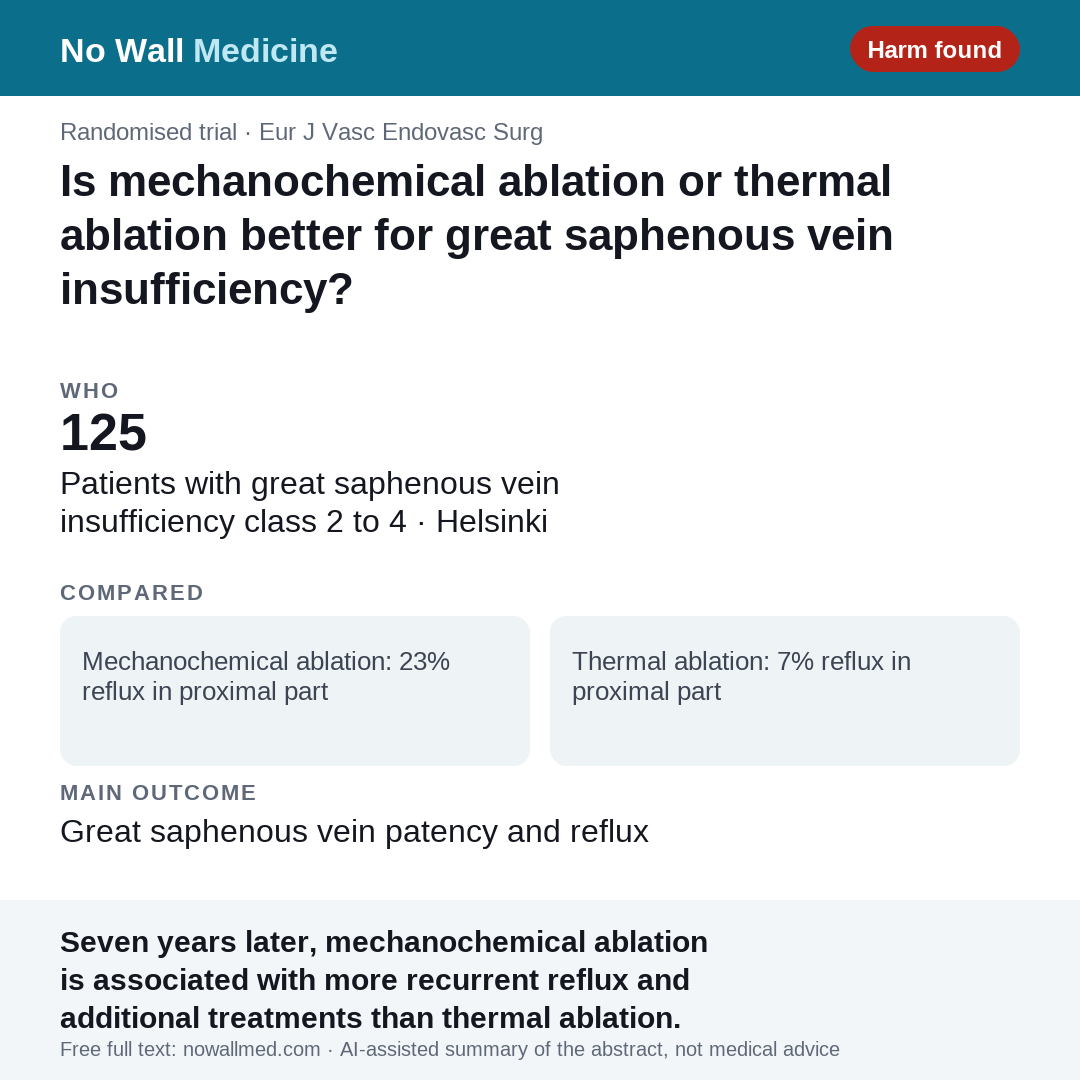
Randomised Trial of Mechanochemical or Thermal Ablation for Great Saphenous Vein Insufficiency: Seven Year Follow Up
Randomised trialHarm found
Is mechanochemical ablation or thermal ablation better for great saphenous vein insufficiency?
Who
125
Patients with great saphenous vein insufficiency class 2 to 4 · Helsinki University Hospital
Compared
Mechanochemical ablation: 23% reflux in proximal part
Thermal ablation: 7% reflux in proximal part
Main outcome
Great saphenous vein patency and reflux
Bottom line: Seven years later, mechanochemical ablation is associated with more recurrent reflux and additional treatments than thermal ablation.
Eur J Vasc Endovasc Surg · 2026-07-04Download image