Visual abstracts
New randomized trials and meta-analyses from leading journals at a glance: who was studied, what was compared, and what was found. Every paper is free to read in full.
All specialtiesCardiology 2223Oncology 1895Gastroenterology & Hepatology 838Infectious Disease 1396Neurology 898Psychiatry & Mental Health 1061Pulmonology 936Critical Care 619Endocrinology & Diabetes 1172Pediatrics 1291Surgery 1116Orthopedics & Sports Medicine 410Neurosurgery 273Cardiothoracic & Vascular Surgery 241Plastic & Reconstructive Surgery 341Nephrology 471Rheumatology 308Hematology 484Dermatology 260Ophthalmology 263Obstetrics & Gynecology 728Public & Global Health 417Radiology & Imaging 307Anesthesiology 443Urology 383ENT (Otolaryngology) 286Emergency Medicine 243Allergy & Immunology 136Geriatrics 472Family Medicine & Primary Care 256Medical Genetics & Genomics 239Pathology & Laboratory Medicine 74Physical Medicine & Rehabilitation 382Palliative Care 191Nutrition 590Digital Health & AI 1128General Medicine 167
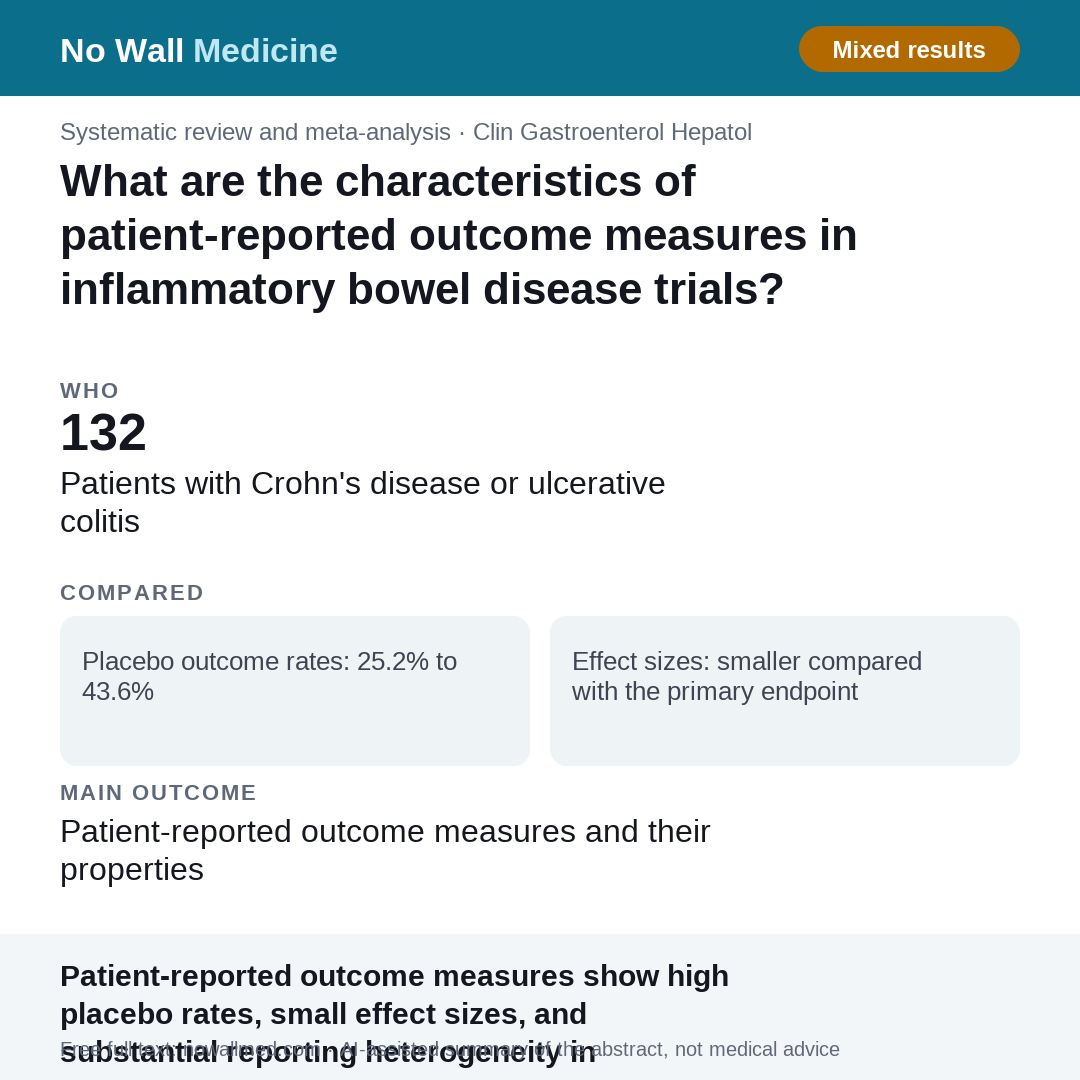
Patient-Reported Outcomes in Clinical Trials of Inflammatory Bowel Disease: A Systematic Review and Meta-Analysis
Systematic review and meta-analysisMixed results
What are the characteristics of patient-reported outcome measures in inflammatory bowel disease trials?
Who
132
Patients with Crohn's disease or ulcerative colitis
Compared
Placebo outcome rates: 25.2% to 43.6%
Effect sizes: smaller compared with the primary endpoint
Main outcome
Patient-reported outcome measures and their properties
Bottom line: Patient-reported outcome measures show high placebo rates, small effect sizes, and substantial reporting heterogeneity in inflammatory bowel disease trials.
Clin Gastroenterol Hepatol · 2026-05-28Download image
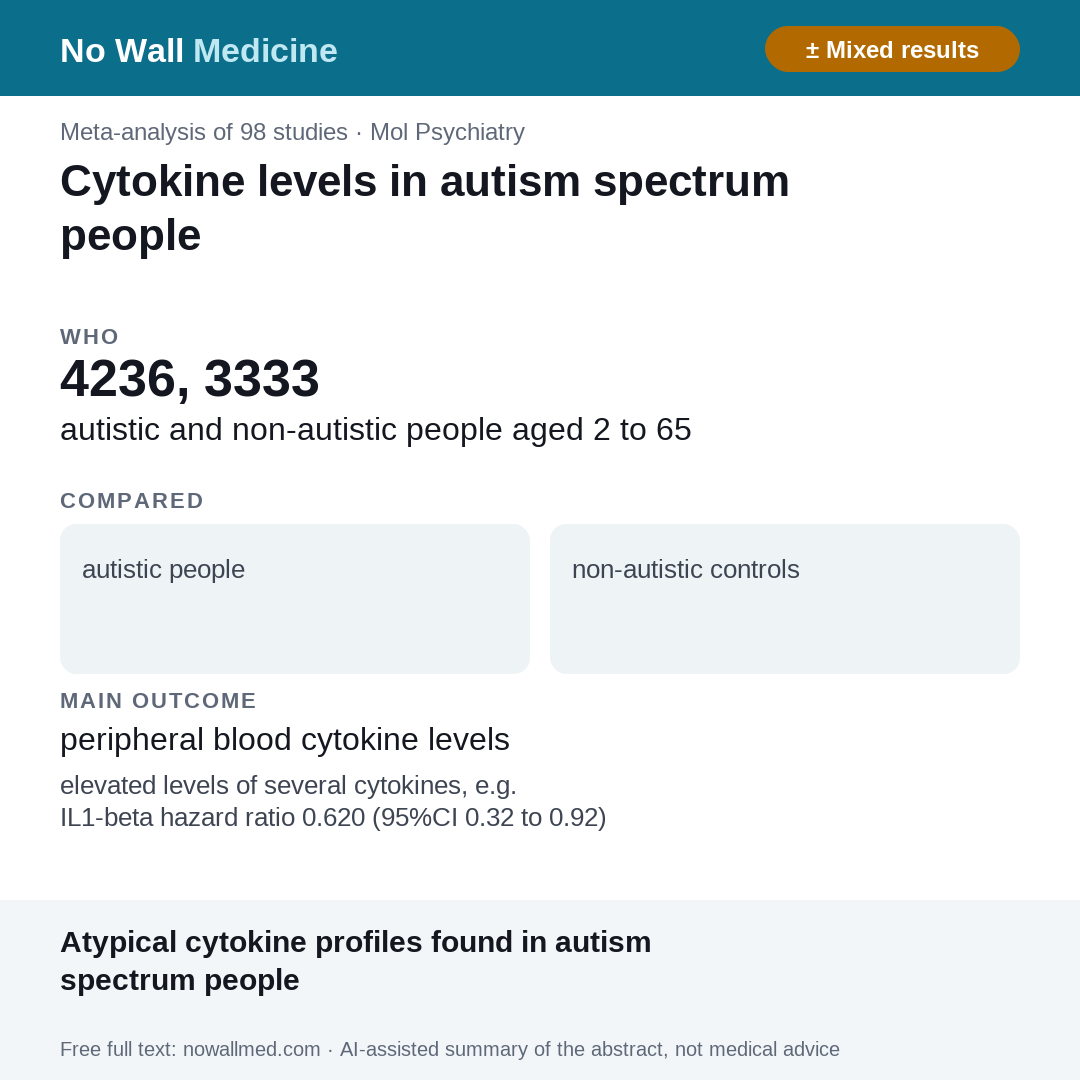
Atypical cytokine profiles in people on the autism spectrum: a comprehensive systematic review and meta-analysis including 54 cytokines
Meta-analysis of 98 studiesMixed results
Cytokine levels in autism spectrum people
Who
4236, 3333
autistic and non-autistic people aged 2 to 65
Compared
autistic people
non-autistic controls
Main outcome
peripheral blood cytokine levels
Result: elevated levels of several cytokines, e.g. IL1-beta hazard ratio 0.620 (95%CI 0.32 to 0.92)
Bottom line: Atypical cytokine profiles found in autism spectrum people
Limitation: over a third of studies had high risk of bias
Mol Psychiatry · 2026-05-28Download image
Factors influencing UK medical students' choice of general practice: a systematic review
Systematic review of empirical literatureMixed results
What factors influence United Kingdom medical students' choice of general practice?
Who
United Kingdom undergraduate medical students · United Kingdom medical education contexts
Compared
Educational factors
Hidden curriculum
Clinical placements and role models
Main outcome
Factors influencing career choice in general practice
Bottom line: Medical education structures, institutional cultures, and clinical exposure significantly influence medical students' decisions regarding general practice careers.
Br J Gen Pract · 2026-05-28Download image

General practice incentives: a review of the international literature
Systematic review of reviewsMixed results
How do general practice funding models affect quality outcomes in multidisciplinary primary care?
Who
People with complex chronic conditions · International
Compared
Blended payment models: small improvements in quality outcomes
Capitation payments as part of blended payments: no evidence that it improved quality of care
Main outcome
Quality outcomes in multidisciplinary primary and preventive care
Bottom line: Blended payment models show promise with small quality improvements, but evidence for pay-for-performance effectiveness is highly variable.
Br J Gen Pract · 2026-05-28Download image

Systematic review and meta-analysis of interventions for mental health in extreme weather events
Systematic review and meta-analysisBenefit found
Are interventions effective for mental health in people affected by extreme weather events?
Who
People affected by extreme weather events
Compared
Intervention
Control
Main outcome
Post-traumatic stress disorder, depression, anxiety, stress, functioning, and well-being
Result: standardised mean difference -2.92 (95% CI -4.53 to -1.31) for PTSD
Bottom line: Interventions significantly improve mental health symptoms following extreme weather events and should be integrated into disaster management plans.
BMJ Glob Health · 2026-05-28Download image

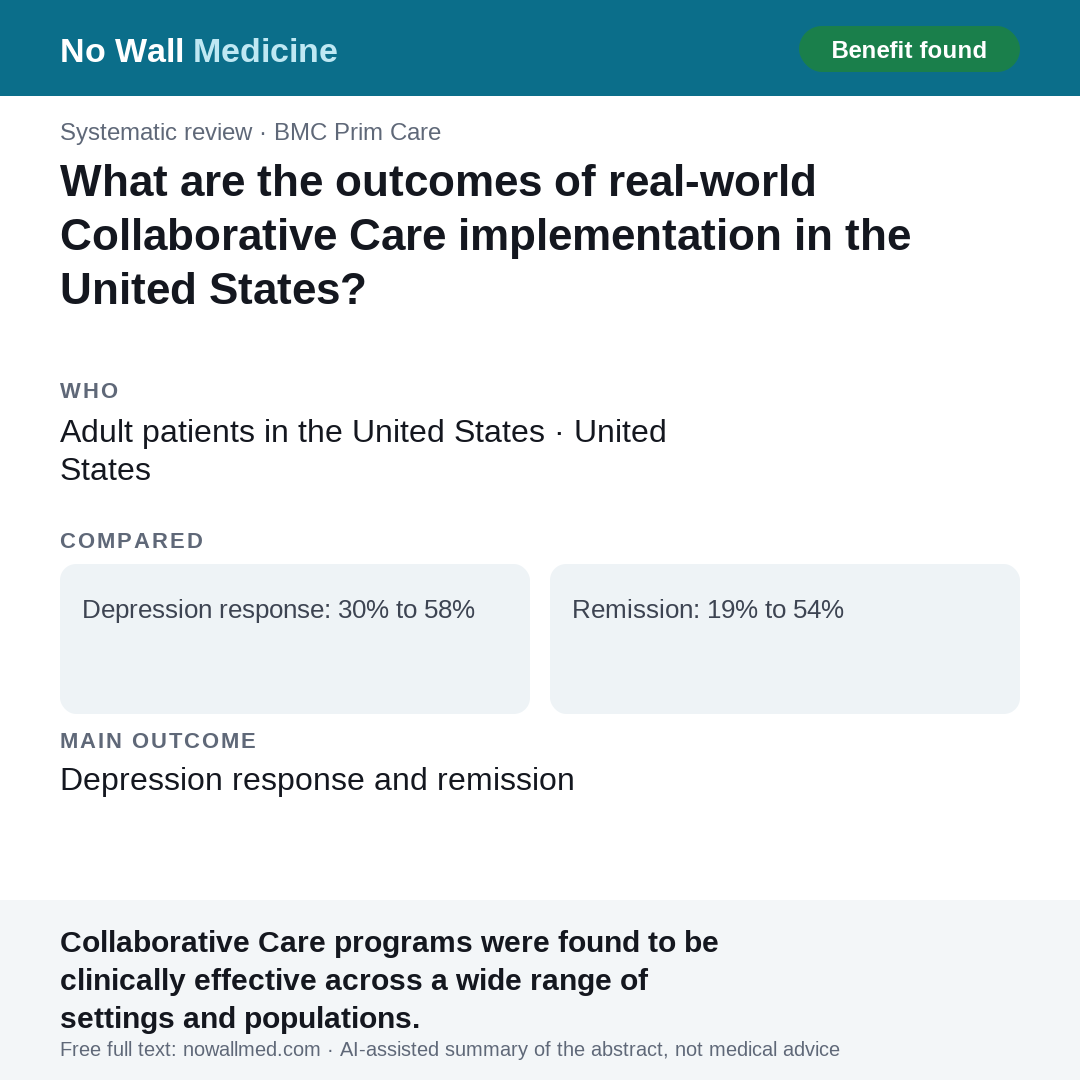
Real-world implementation of Collaborative Care in the United States: a systematic review
Systematic reviewBenefit found
What are the outcomes of real-world Collaborative Care implementation in the United States?
Who
Adult patients in the United States · United States
Compared
Depression response: 30% to 58%
Remission: 19% to 54%
Main outcome
Depression response and remission
Bottom line: Collaborative Care programs were found to be clinically effective across a wide range of settings and populations.
BMC Prim Care · 2026-05-28Download image
A Systematic Review of Pain Drawings for Perioperative Patient Management
Systematic review of 26 studiesBenefit found
Do pain drawings help patient management?
Who
5977
pediatric and adult surgical patients
Compared
Pain drawings
Standard care
Main outcome
pain management
Bottom line: Pain drawings help patient management
Limitation: heterogeneity in methodology
Plast Reconstr Surg Glob Open · 2026-05-28Download image

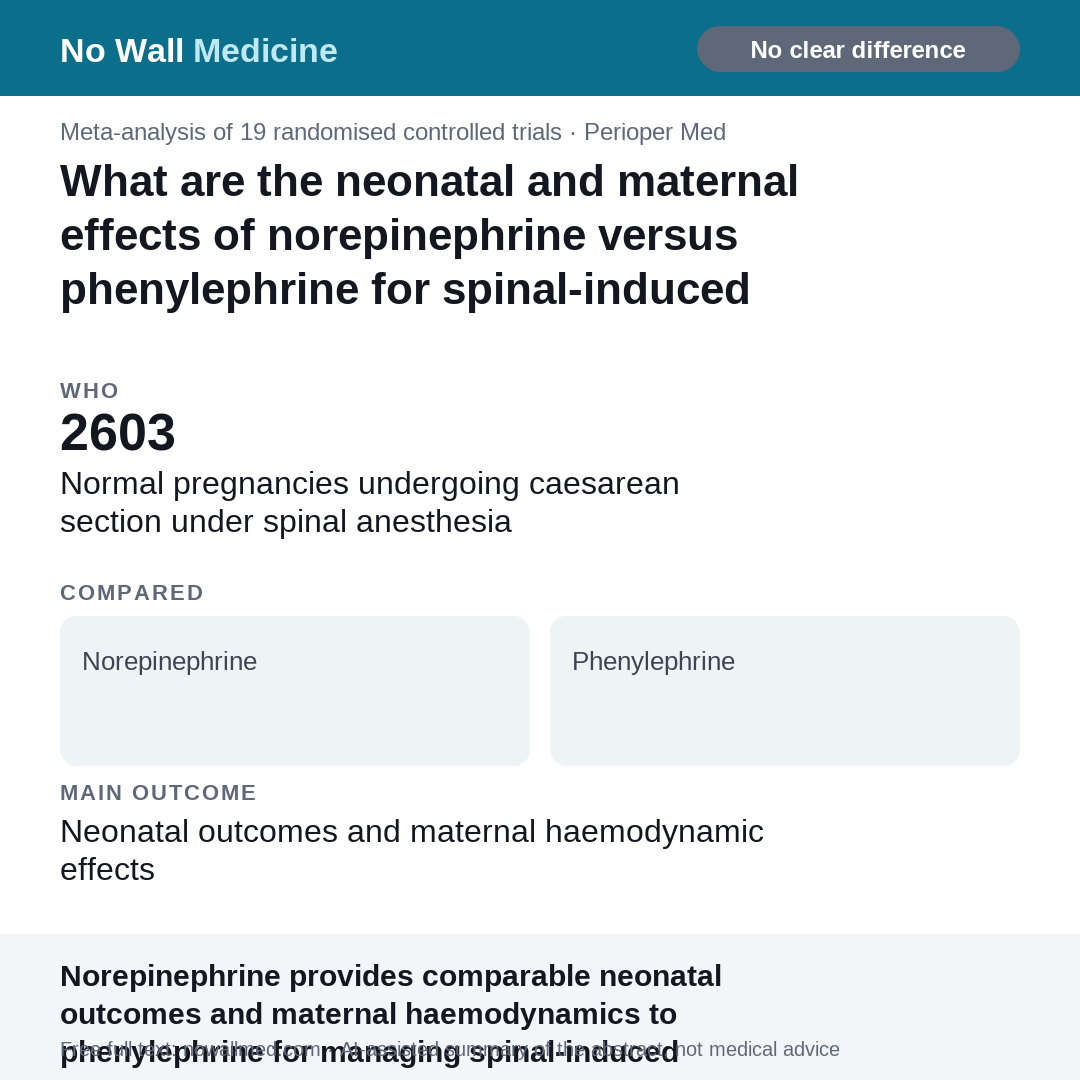
Neonatal outcome following norepinephrine versus phenylephrine for treatment of spinal-induced hypotension among women undergoing caesarean section: systematic review and meta-analysis of randomised controlled trials
Meta-analysis of 19 randomised controlled trialsNo clear difference
What are the neonatal and maternal effects of norepinephrine versus phenylephrine for spinal-induced hypotension?
Who
2603
Normal pregnancies undergoing caesarean section under spinal anesthesia
Compared
Norepinephrine
Phenylephrine
Main outcome
Neonatal outcomes and maternal haemodynamic effects
Bottom line: Norepinephrine provides comparable neonatal outcomes and maternal haemodynamics to phenylephrine for managing spinal-induced hypotension.
Perioper Med · 2026-05-28Download image
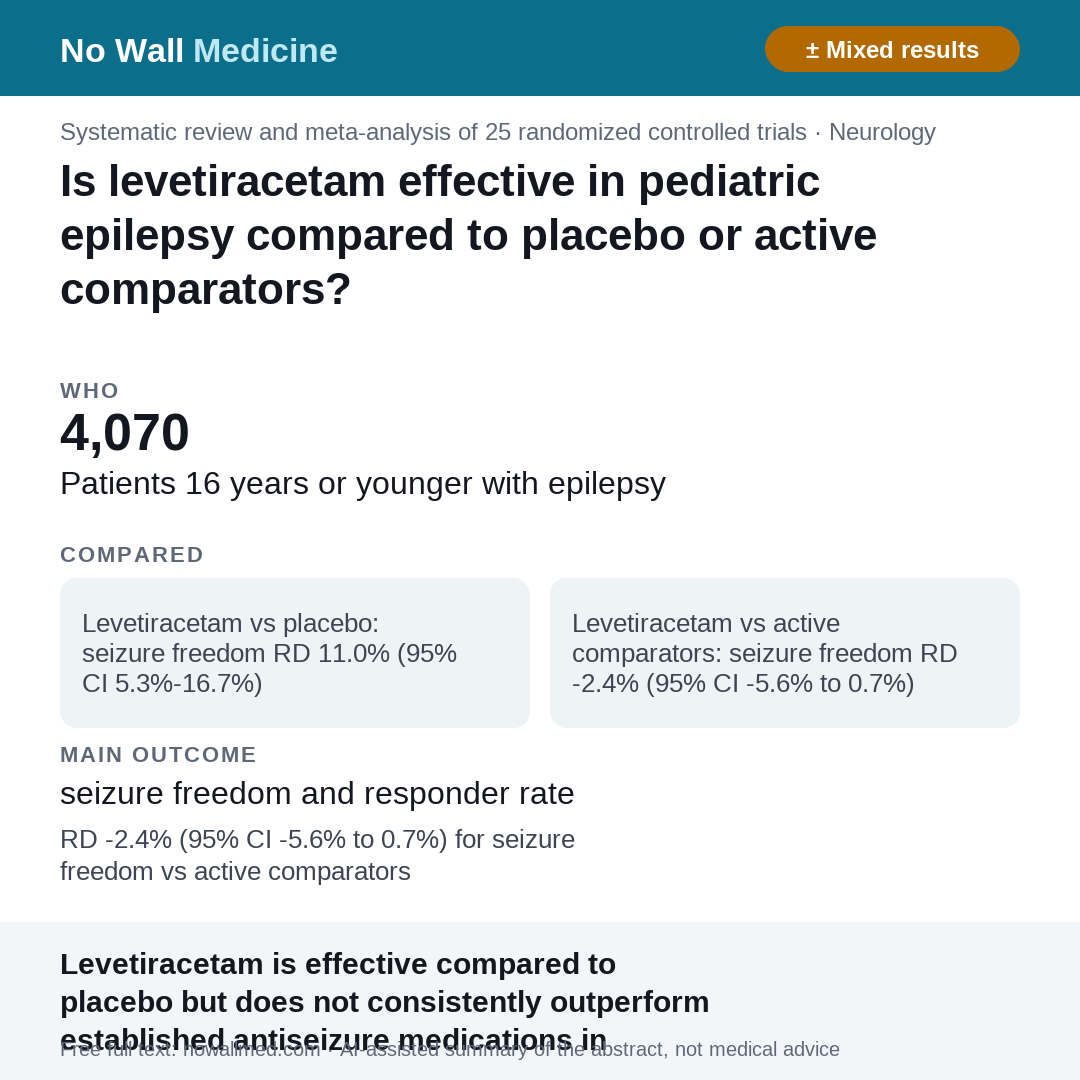
Efficacy of Levetiracetam in Patients With Pediatric Epilepsy: A Systematic Review and Meta-Analysis
Systematic review and meta-analysis of 25 randomized controlled trialsMixed results
Is levetiracetam effective in pediatric epilepsy compared to placebo or active comparators?
Who
4,070
Patients 16 years or younger with epilepsy
Compared
Levetiracetam vs placebo: seizure freedom RD 11.0% (95% CI 5.3%-16.7%)
Levetiracetam vs active comparators: seizure freedom RD -2.4% (95% CI -5.6% to 0.7%)
Main outcome
seizure freedom and responder rate
Result: RD -2.4% (95% CI -5.6% to 0.7%) for seizure freedom vs active comparators
Bottom line: Levetiracetam is effective compared to placebo but does not consistently outperform established antiseizure medications in pediatric epilepsy.
Limitation: Substantial heterogeneity, frequent high risk of bias, variable follow-up, and publication bias.
Neurology · 2026-05-27Download image
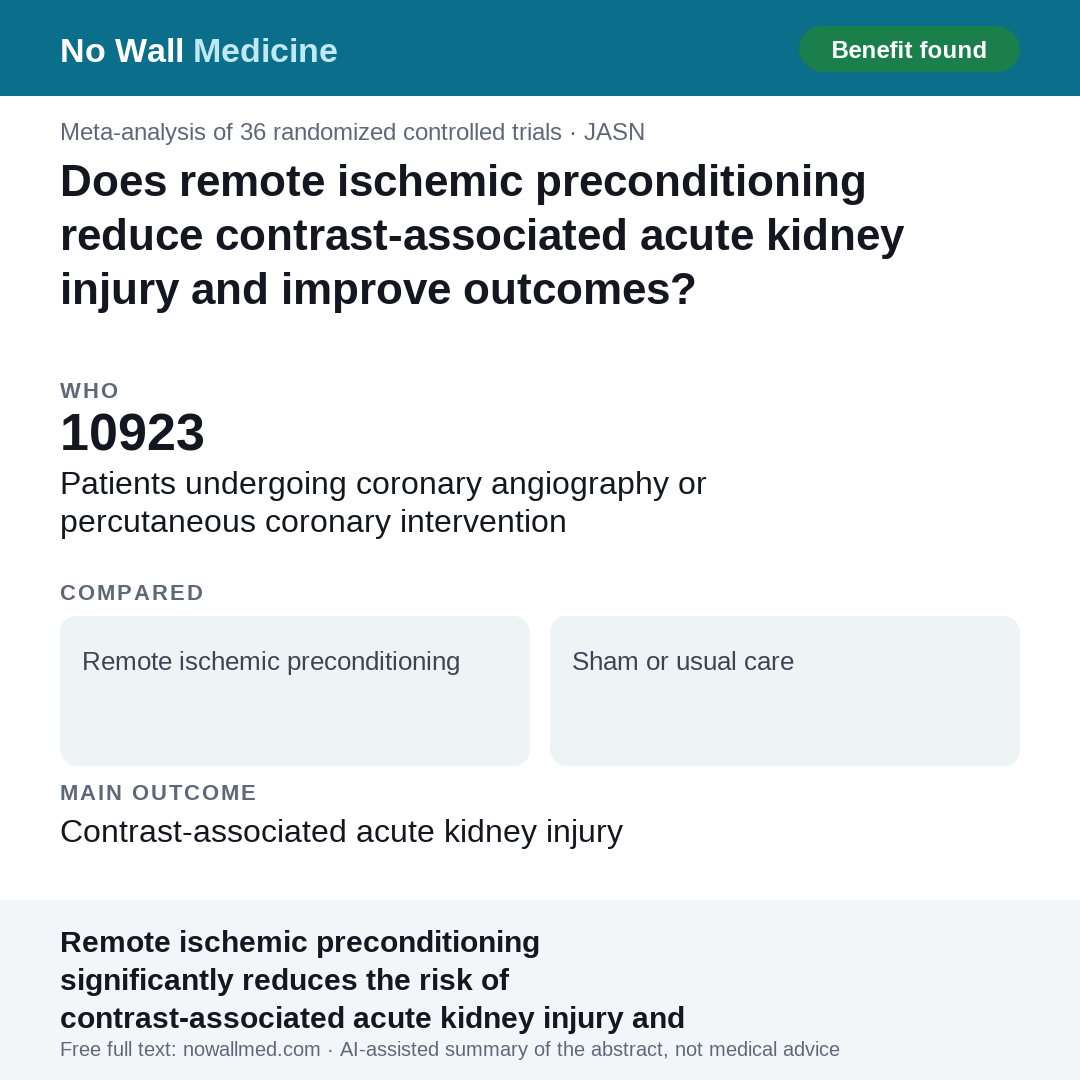
Remote Ischemic Preconditioning for Prevention of Contrast-Associated Acute Kidney Injury following Coronary Angiography or Percutaneous Coronary Intervention
Meta-analysis of 36 randomized controlled trialsBenefit found
Does remote ischemic preconditioning reduce contrast-associated acute kidney injury and improve outcomes?
Who
10923
Patients undergoing coronary angiography or percutaneous coronary intervention
Compared
Remote ischemic preconditioning
Sham or usual care
Main outcome
Contrast-associated acute kidney injury
Result: risk ratio 0.54 (95% CI 0.45 to 0.65)
Bottom line: Remote ischemic preconditioning significantly reduces the risk of contrast-associated acute kidney injury and in-hospital major adverse cardiovascular events.
JASN · 2026-05-27Download image
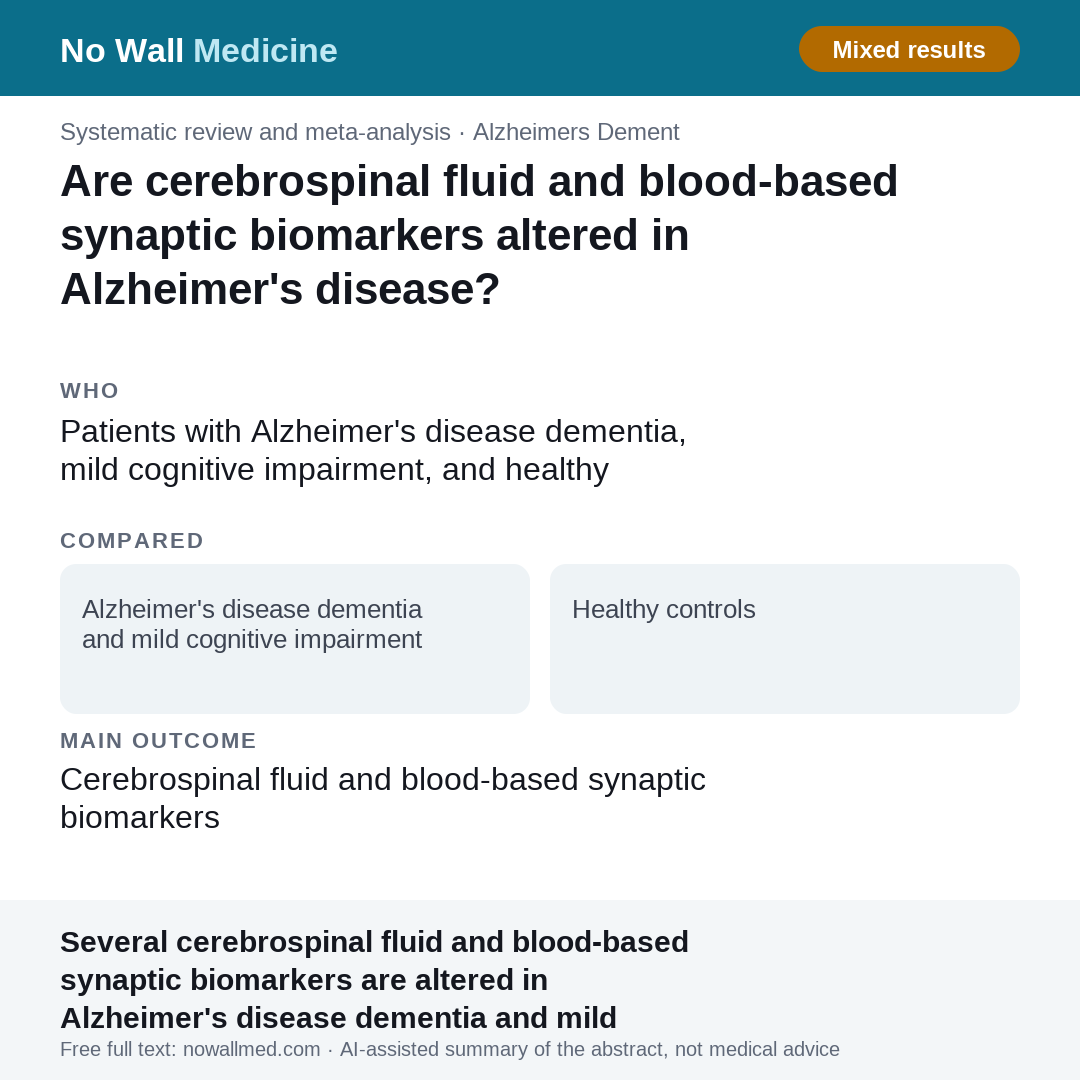
Synaptic biomarkers in Alzheimer's disease dementia and mild cognitive impairment: A systematic review and meta-analysis
Systematic review and meta-analysisMixed results
Are cerebrospinal fluid and blood-based synaptic biomarkers altered in Alzheimer's disease?
Who
Patients with Alzheimer's disease dementia, mild cognitive impairment, and healthy controls
Compared
Alzheimer's disease dementia and mild cognitive impairment
Healthy controls
Main outcome
Cerebrospinal fluid and blood-based synaptic biomarkers
Bottom line: Several cerebrospinal fluid and blood-based synaptic biomarkers are altered in Alzheimer's disease dementia and mild cognitive impairment.
Alzheimers Dement · 2026-05-27Download image
Beyond fear circuits: multiscale neurobiological architecture of panic disorder
Meta-analysis of functional neuroimaging experimentsMixed results
What is the multiscale neurobiological architecture of panic disorder?
Who
Patients with panic disorder
Compared
Panic disorder: increased activity in a prefrontal-hippocampus-brainstem axis
Control
Main outcome
Patterns of altered brain activity
Bottom line: Panic disorder involves widespread neural alterations across a prefrontal-hippocampus-brainstem axis beyond traditional fear circuitry.
Mol Psychiatry · 2026-05-27Download image

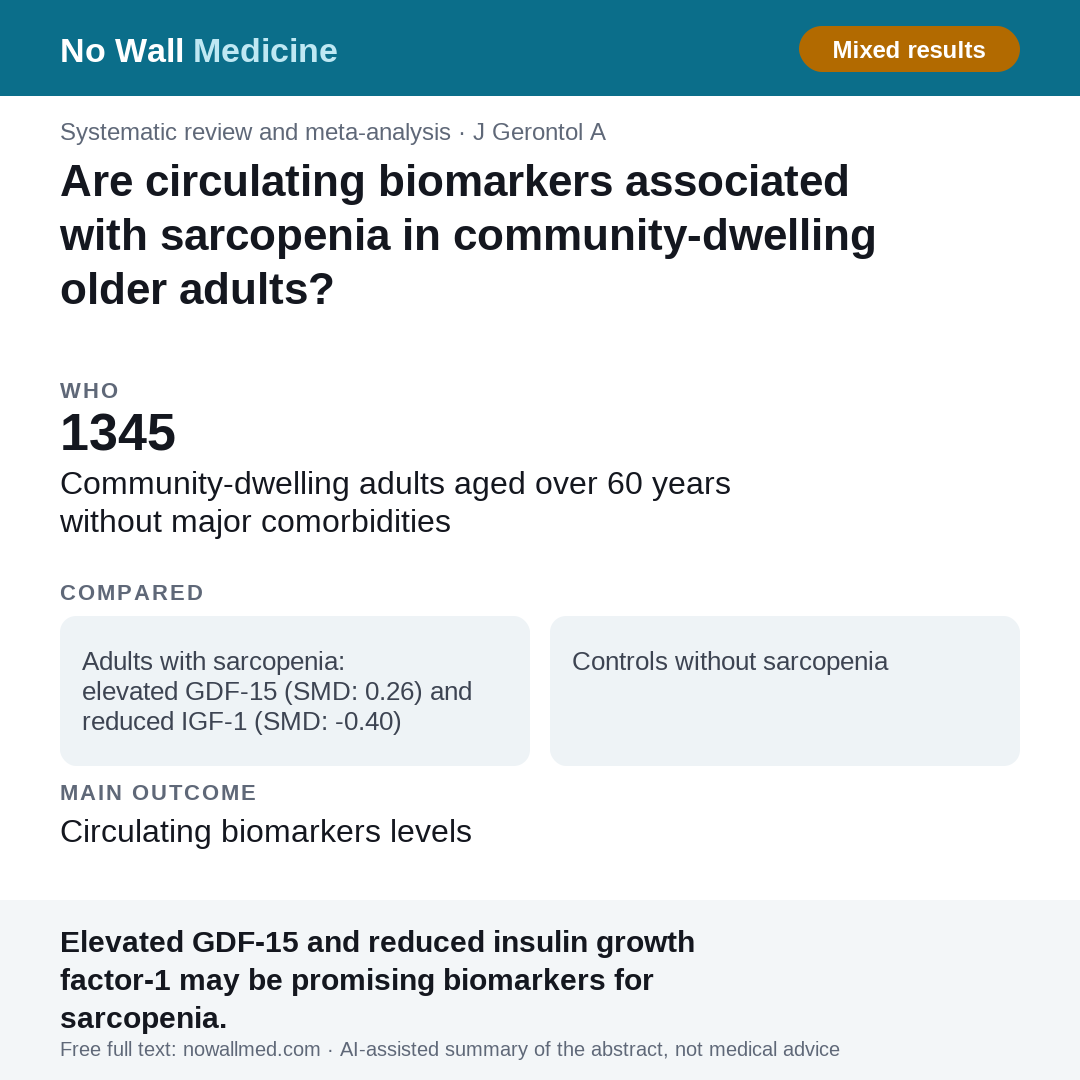
Circulating biomarkers in older adults with and without sarcopenia: a systematic review and meta-analysis
Systematic review and meta-analysisMixed results
Are circulating biomarkers associated with sarcopenia in community-dwelling older adults?
Who
1345
Community-dwelling adults aged over 60 years without major comorbidities
Compared
Adults with sarcopenia: elevated GDF-15 (SMD: 0.26) and reduced IGF-1 (SMD: -0.40)
Controls without sarcopenia
Main outcome
Circulating biomarkers levels
Result: GDF-15 SMD: 0.26 (95% CI 0.03 to 0.50); IGF-1 SMD: -0.40 (95% CI -0.54 to -0.27)
Bottom line: Elevated GDF-15 and reduced insulin growth factor-1 may be promising biomarkers for sarcopenia.
Limitation: Larger, longitudinal studies are needed to address heterogeneity and causality.
J Gerontol A · 2026-05-27Download image
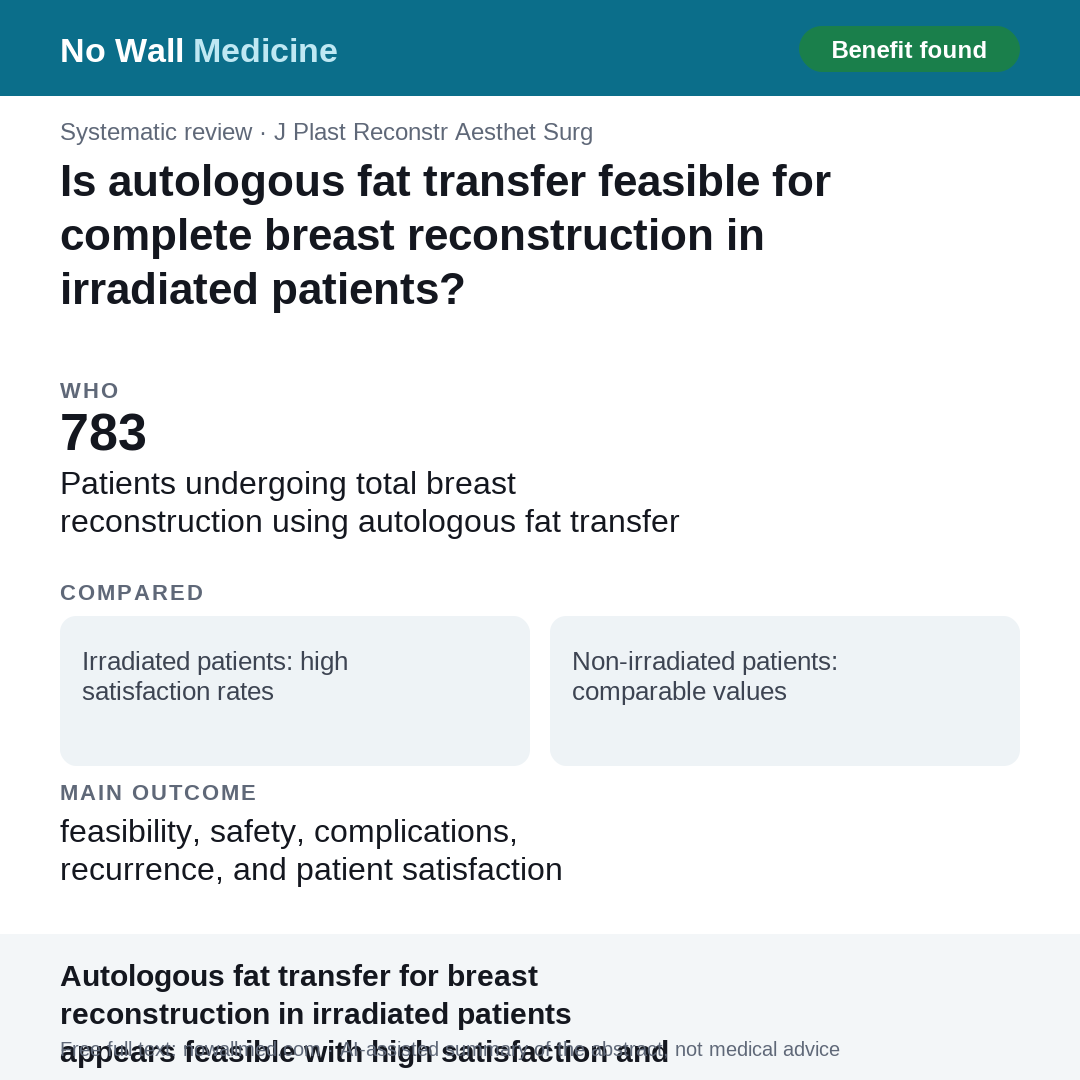
Autologous fat transfer for complete breast reconstruction in irradiated breast cancer patients: A systematic review
Systematic reviewBenefit found
Is autologous fat transfer feasible for complete breast reconstruction in irradiated patients?
Who
783
Patients undergoing total breast reconstruction using autologous fat transfer after radiotherapy
Compared
Irradiated patients: high satisfaction rates
Non-irradiated patients: comparable values
Main outcome
feasibility, safety, complications, recurrence, and patient satisfaction
Bottom line: Autologous fat transfer for breast reconstruction in irradiated patients appears feasible with high satisfaction and acceptable complications.
Limitation: The available evidence is predominantly retrospective and heterogeneous.
J Plast Reconstr Aesthet Surg · 2026-05-27Download image
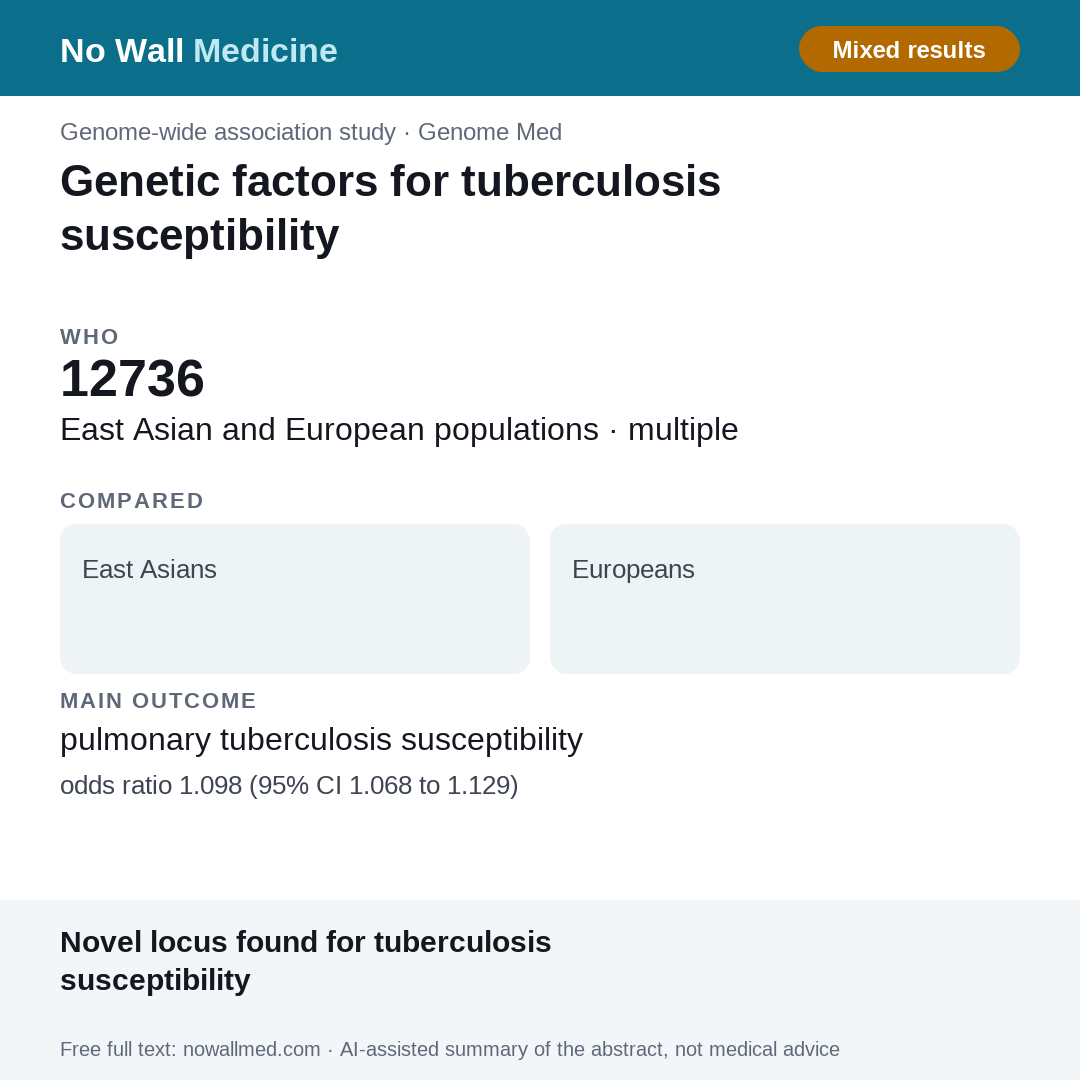
Genome-wide association study reveals a novel tuberculosis susceptibility locus in multiple East Asian and European populations
Genome-wide association studyMixed results
Genetic factors for tuberculosis susceptibility
Who
12736
East Asian and European populations · multiple
Compared
East Asians
Europeans
Main outcome
pulmonary tuberculosis susceptibility
Result: odds ratio 1.098 (95% CI 1.068 to 1.129)
Bottom line: Novel locus found for tuberculosis susceptibility
Limitation: unexplained heritability remains
Genome Med · 2026-05-27Download image
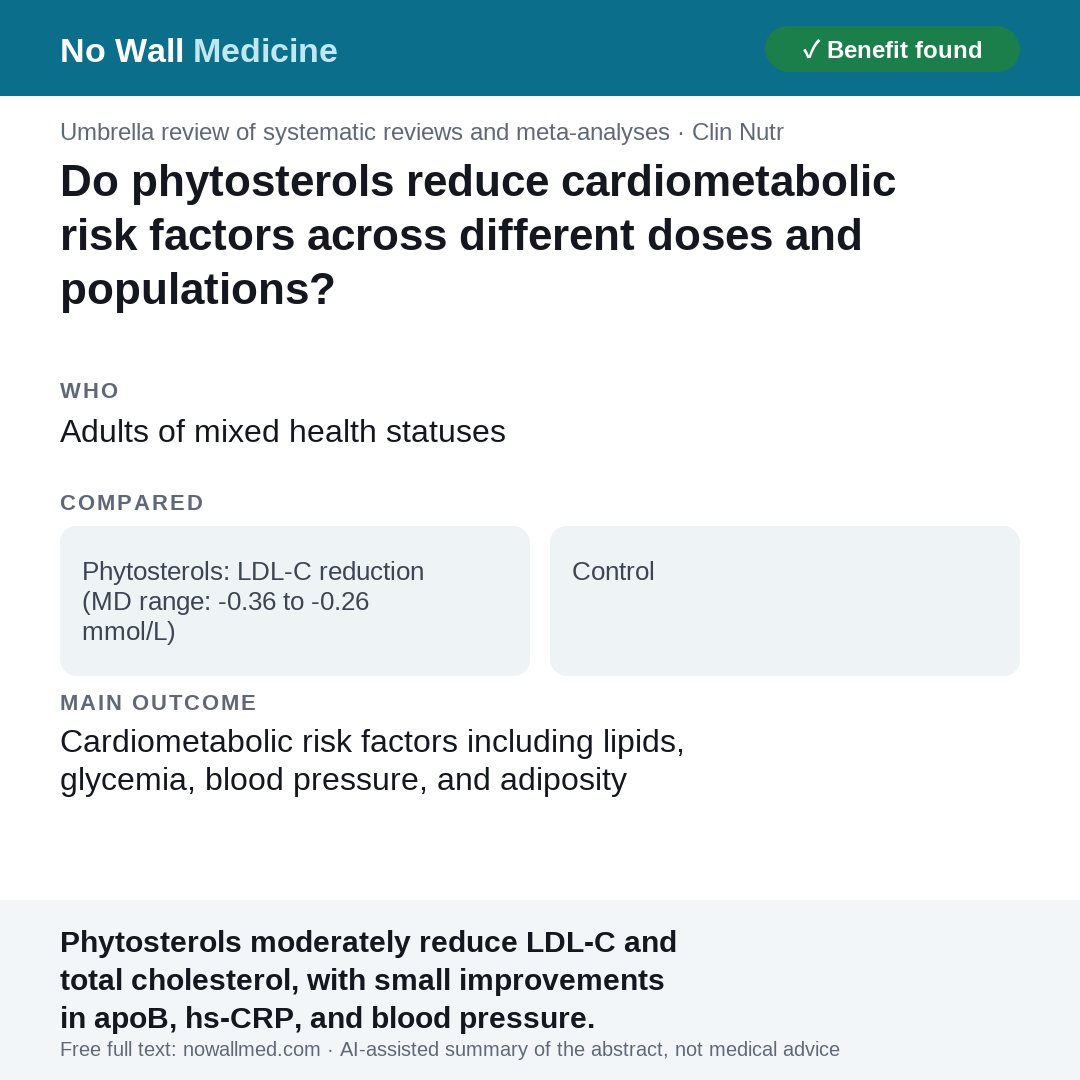
Efficacy of phytosterols for reduction of cardiometabolic risk factors: An umbrella review of systematic reviews and meta-analyses and updated dose-response meta-analyses of randomized trials
Umbrella review of systematic reviews and meta-analysesBenefit found
Do phytosterols reduce cardiometabolic risk factors across different doses and populations?
Who
Adults of mixed health statuses
Compared
Phytosterols: LDL-C reduction (MD range: -0.36 to -0.26 mmol/L)
Control
Main outcome
Cardiometabolic risk factors including lipids, glycemia, blood pressure, and adiposity
Bottom line: Phytosterols moderately reduce LDL-C and total cholesterol, with small improvements in apoB, hs-CRP, and blood pressure.
Limitation: Certainty of evidence was downgraded for inconsistency, imprecision and/or publication bias.
Clin Nutr · 2026-05-26Download image
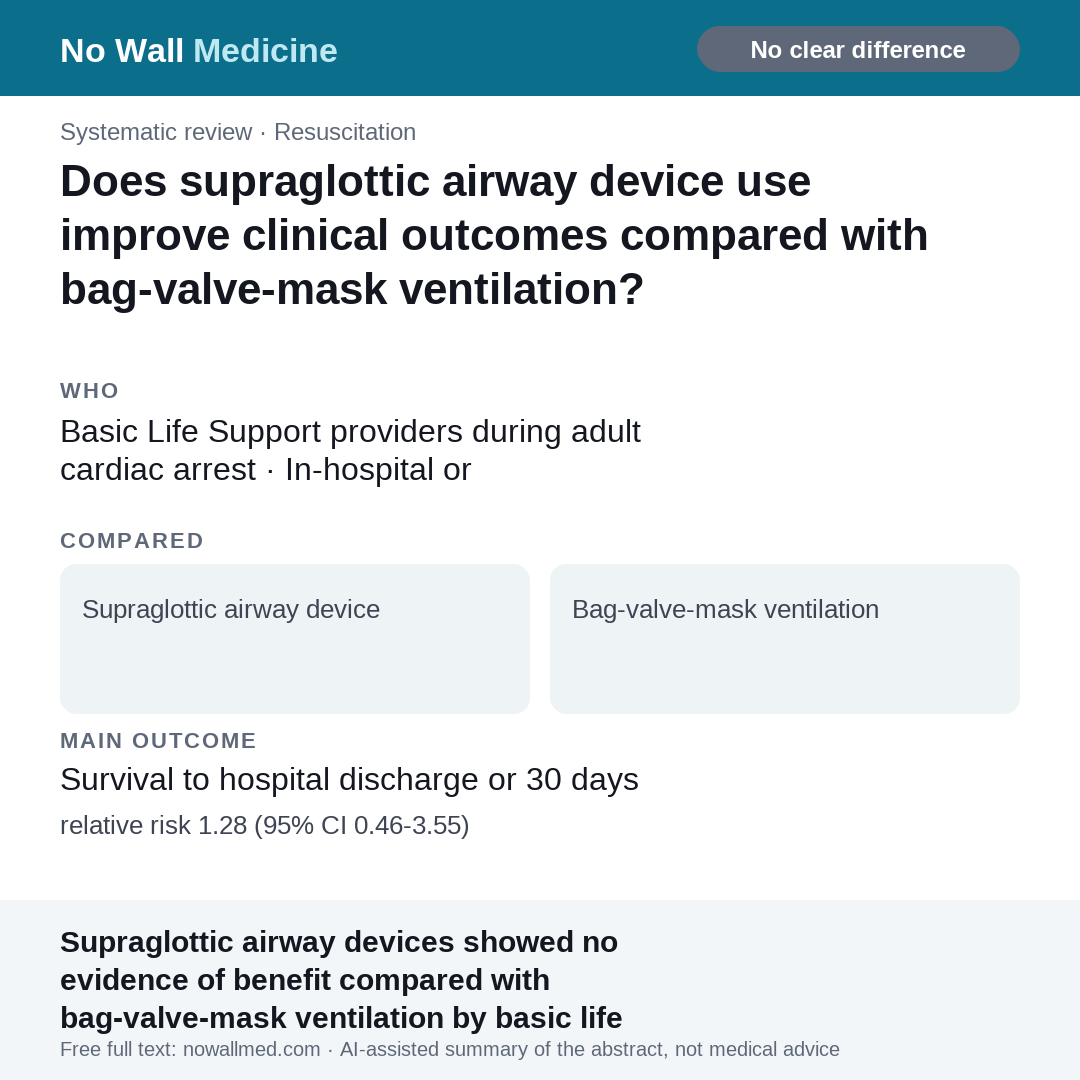
Airway management with a supraglottic airway device during resuscitation by basic life support providers: a systematic review
Systematic reviewNo clear difference
Does supraglottic airway device use improve clinical outcomes compared with bag-valve-mask ventilation?
Who
Basic Life Support providers during adult cardiac arrest · In-hospital or out-of-hospital
Compared
Supraglottic airway device
Bag-valve-mask ventilation
Main outcome
Survival to hospital discharge or 30 days
Result: relative risk 1.28 (95% CI 0.46-3.55)
Bottom line: Supraglottic airway devices showed no evidence of benefit compared with bag-valve-mask ventilation by basic life support providers.
Limitation: Considerable heterogeneity among studies and lack of data for first rescuers or first responders.
Resuscitation · 2026-05-26Download image
Complexity in disguise: a systematic review of fractal analysis in psychiatric neuroimaging
Systematic reviewMixed results
Fractal analysis in psychiatric neuroimaging
Who
Young adults with psychiatric conditions
Compared
Psychiatric patients
Control groups
Main outcome
Brain pattern alterations
Bottom line: Fractal analysis shows consistent patterns across disorders
Limitation: Lack of standardized protocol
Eur Radiol · 2026-05-26Download image

Association of Advanced Access With Primary Care Performance: A Systematic Review
Systematic review and narrative synthesisBenefit found
Does advanced access improve primary care performance compared to traditional scheduling?
Who
Patients in primary care settings · Universal and non-universal health care systems
Compared
Advanced access
Traditional scheduling
Main outcome
Wait time, continuity of care, emergency department use, and patient satisfaction
Bottom line: Advanced access improves appointment timeliness, continuity of care, and patient satisfaction across diverse health care systems.
Ann Fam Med · 2026-05-26Download image

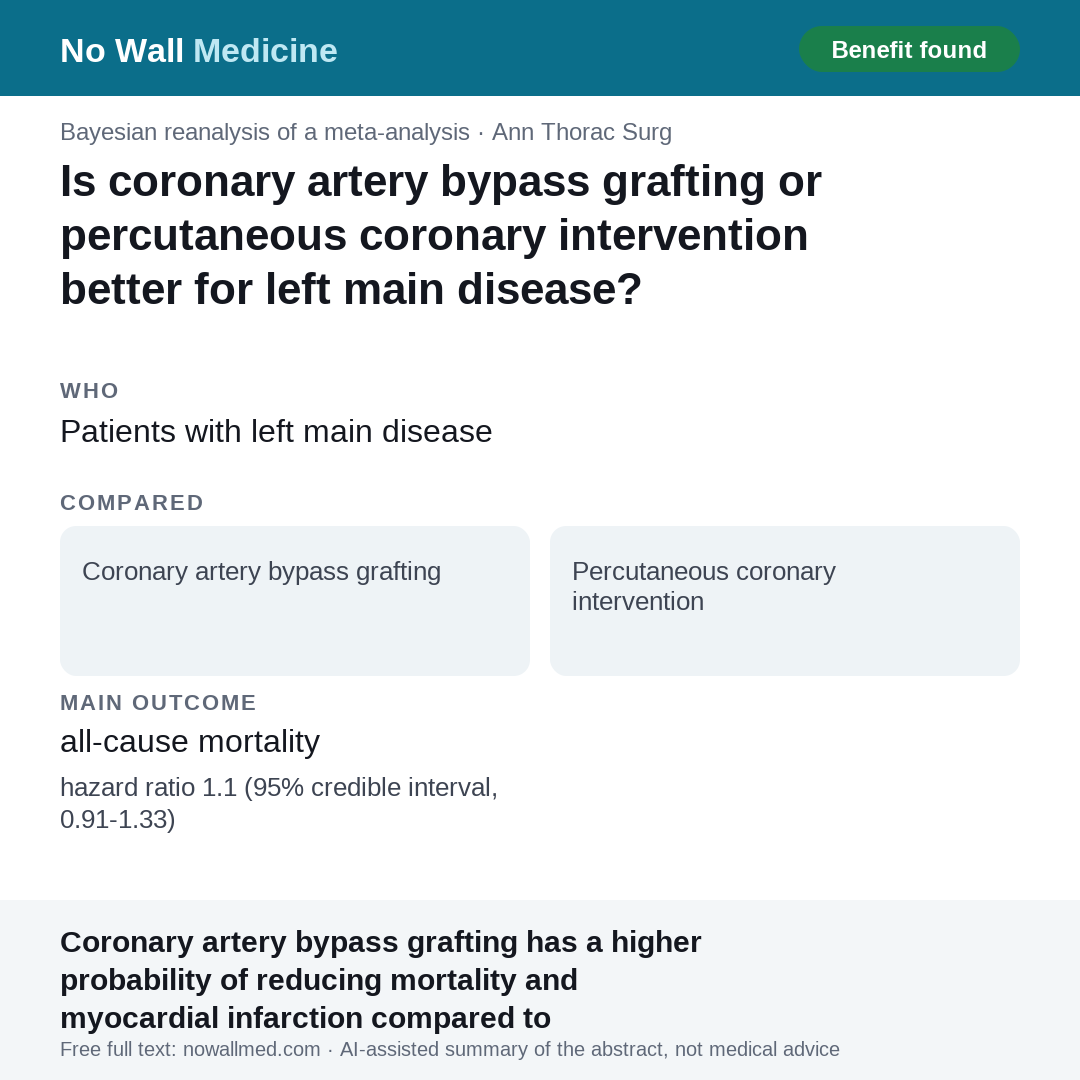
Bayesian Reanalysis of Revascularization Strategies for Left Main Disease: Coronary Artery Bypass Grafting vs Percutaneous Intervention
Bayesian reanalysis of a meta-analysisBenefit found
Is coronary artery bypass grafting or percutaneous coronary intervention better for left main disease?
Who
Patients with left main disease
Compared
Coronary artery bypass grafting
Percutaneous coronary intervention
Main outcome
all-cause mortality
Result: hazard ratio 1.1 (95% credible interval, 0.91-1.33)
Bottom line: Coronary artery bypass grafting has a higher probability of reducing mortality and myocardial infarction compared to percutaneous coronary intervention.
Ann Thorac Surg · 2026-05-26Download image