Visual abstracts
New randomized trials and meta-analyses from leading journals at a glance: who was studied, what was compared, and what was found. Every paper is free to read in full.
All specialtiesCardiology 2506Oncology 2131Gastroenterology & Hepatology 951Infectious Disease 1569Neurology 995Psychiatry & Mental Health 1161Pulmonology 1043Critical Care 691Endocrinology & Diabetes 1303Pediatrics 1466Surgery 1276Orthopedics & Sports Medicine 457Neurosurgery 305Cardiothoracic & Vascular Surgery 276Plastic & Reconstructive Surgery 376Nephrology 518Rheumatology 361Hematology 546Dermatology 284Ophthalmology 297Obstetrics & Gynecology 817Public & Global Health 456Radiology & Imaging 343Anesthesiology 499Urology 423ENT (Otolaryngology) 307Emergency Medicine 279Allergy & Immunology 155Geriatrics 524Family Medicine & Primary Care 291Medical Genetics & Genomics 276Pathology & Laboratory Medicine 78Physical Medicine & Rehabilitation 416Palliative Care 212Nutrition 656Digital Health & AI 1215General Medicine 183
Key themes and approaches in palliative and end-of-life care education for the general public: a systematic review
Systematic reviewUnclear result
Key themes in palliative care education
Who
10307
general public and volunteers
Compared
palliative care education
control
Main outcome
community involvement in caregiving
Bottom line: Education improves community caregiving involvement
BMC Palliat Care · 2025-08-07Download image

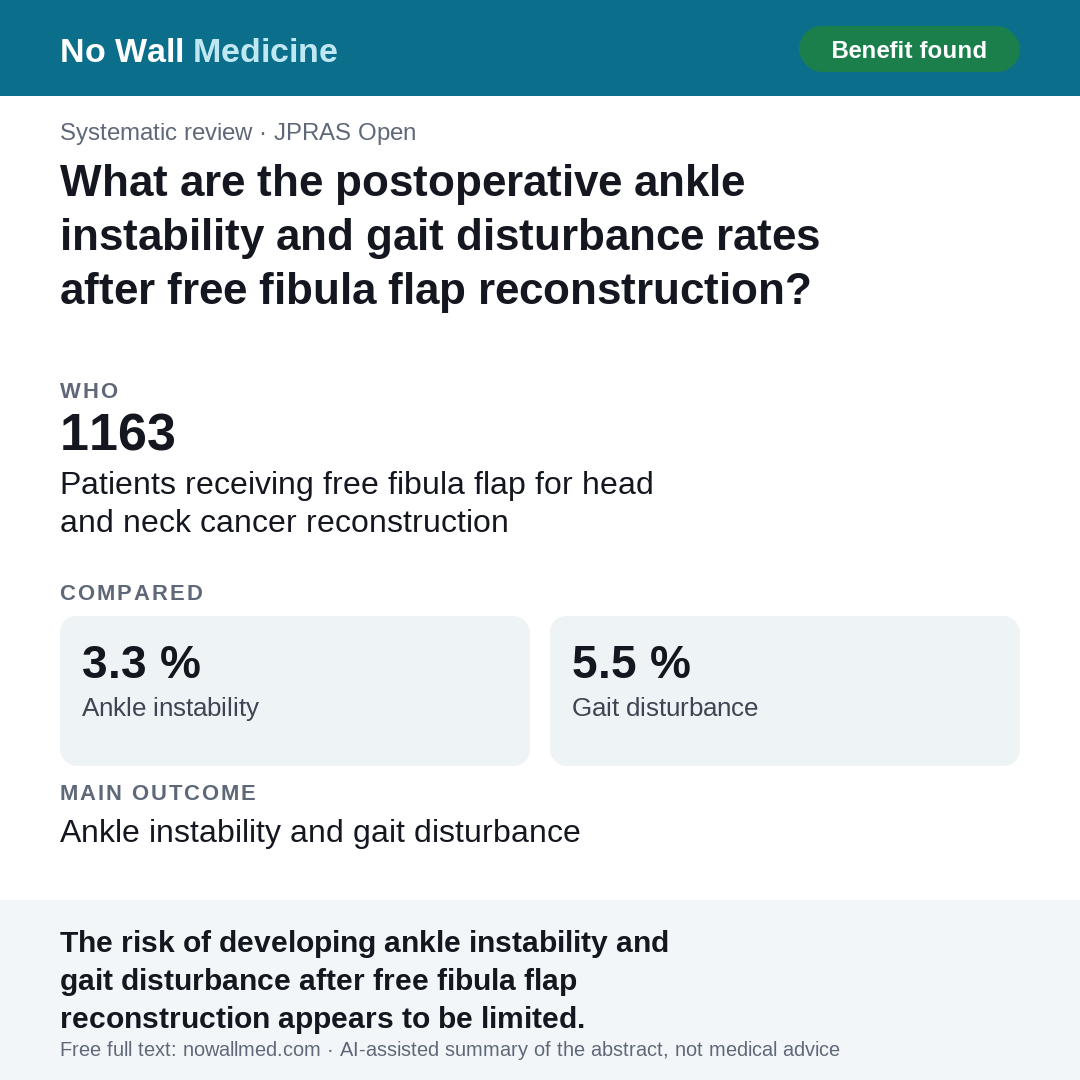
Ankle instability and gait disturbance after free fibula flap reconstruction in head and neck cancer reconstruction: A systematic review
Systematic reviewBenefit found
What are the postoperative ankle instability and gait disturbance rates after free fibula flap reconstruction?
Who
1163
Patients receiving free fibula flap for head and neck cancer reconstruction
Compared
3.3 %Ankle instability
5.5 %Gait disturbance
Main outcome
Ankle instability and gait disturbance
Bottom line: The risk of developing ankle instability and gait disturbance after free fibula flap reconstruction appears to be limited.
Limitation: Heterogeneity in literature and potential underreporting of complications.
JPRAS Open · 2025-08-07Download image
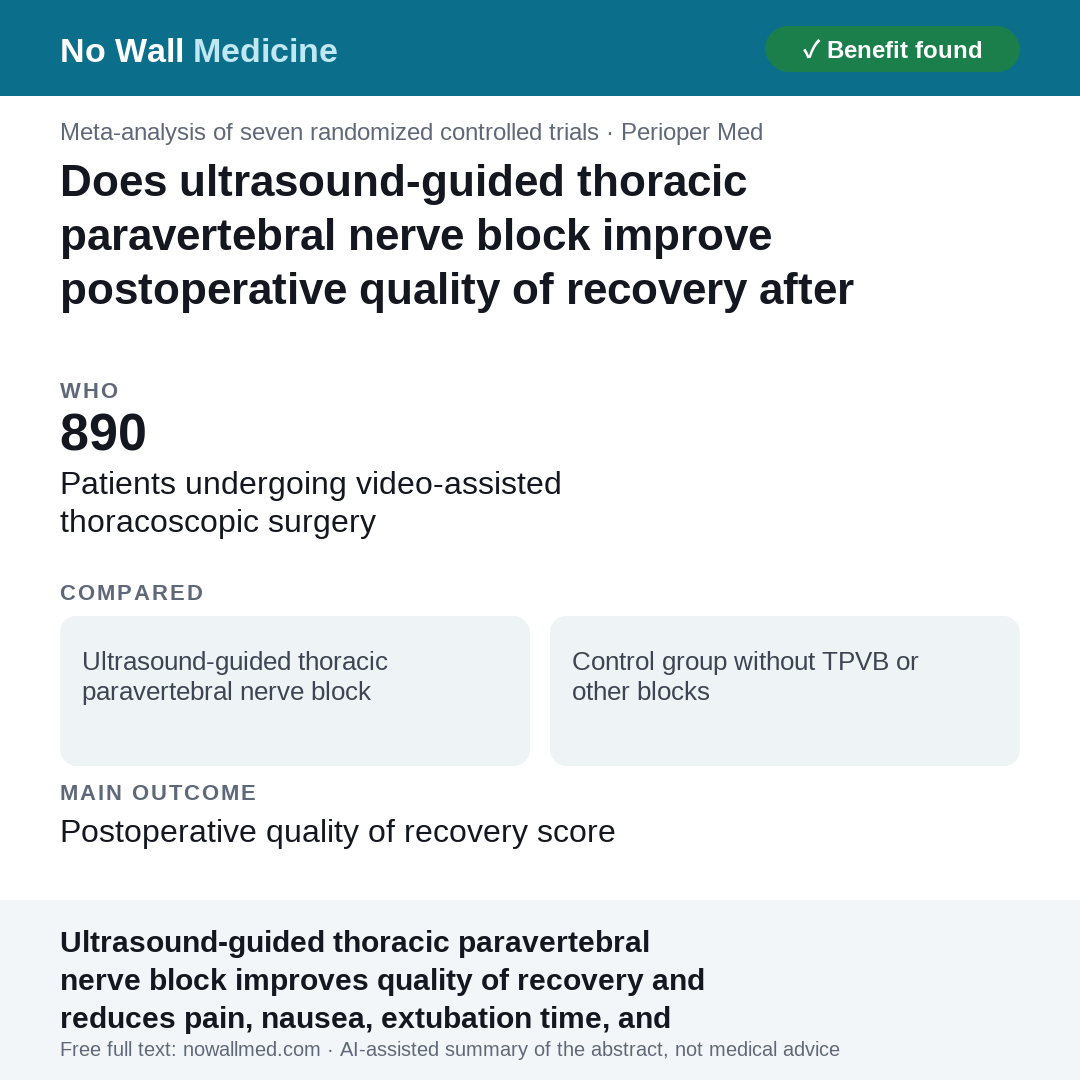
The impact of ultrasound-guided thoracic paravertebral nerve block on the quality of recovery after video-assisted thoracoscopic surgery: a meta-analysis of randomized controlled trials
Meta-analysis of seven randomized controlled trialsBenefit found
Does ultrasound-guided thoracic paravertebral nerve block improve postoperative quality of recovery after video-assisted thoracoscopic surgery?
Who
890
Patients undergoing video-assisted thoracoscopic surgery
Compared
Ultrasound-guided thoracic paravertebral nerve block
Control group without TPVB or other blocks
Main outcome
Postoperative quality of recovery score
Result: mean difference 10.48 (95% CI 5.33 to 15.64)
Bottom line: Ultrasound-guided thoracic paravertebral nerve block improves quality of recovery and reduces pain, nausea, extubation time, and hospital stay.
Perioper Med · 2025-08-07Download image
Total and specific potato intake and risk of type 2 diabetes: results from three US cohort studies and a substitution meta-analysis of prospective cohorts
Prospective cohort study and dose-response meta-analysisHarm found
Does total and specific potato intake affect type 2 diabetes risk?
Who
587081
Men and women free of diabetes, cardiovascular disease, or cancer · United States
Compared
Total potato intake: hazard ratio 1.03 (95% CI 1.02 to 1.05)
Fried potatoes: hazard ratio 1.16 (95% CI 1.09 to 1.23)
Main outcome
Incident type 2 diabetes
Result: hazard ratio 1.03 (95% CI 1.02 to 1.05)
Bottom line: Higher intake of French fries is associated with increased type 2 diabetes risk, while replacing potatoes with whole grains lowers risk.
BMJ · 2025-08-06Download image

Early detection of sexually transmitted infections from skin lesions with deep learning: a systematic review and meta-analysis
Systematic review and meta-analysisBenefit found
How accurate are deep learning algorithms in detecting sexually transmitted infections from skin lesions?
Who
Clinical skin lesion images of sexually transmitted infections
Compared
Mpox: sensitivity 0·97 (95% CI 0·95-0·98) and specificity 0·99 (0·98-0·99)
Scabies: sensitivity 0·95 (0·90-0·98) and specificity 0·97 (0·86-0·99)
Main outcome
Diagnostic performance assessed by pooled sensitivity and specificity
Bottom line: Deep learning shows potential for early detection of sexually transmitted infections, but generalisability to real-world practice remains a challenge.
Limitation: Limited heterogeneous data and quality issues regarding data, labelling, and bias assessments may impede generalisability.
Funded by: City University of Hong Kong
Lancet Digit Health · 2025-08-06Download image

Nomenclature, definitions, and methodological approaches to estimate the association between antimicrobial treatment and clinical outcomes of drug-resistant bloodstream infections
Systematic reviewMixed results
How does misaligned initial antibiotic treatment affect clinical outcomes in drug-resistant bloodstream infections?
Who
187
Patients with drug-resistant bloodstream infections caused by ESKAPE pathogens · PubMed and EMBASE
Compared
Misaligned initial antibiotic treatment: association in 122 of 186 studies (65.6%) for mortality
Hospital length of stay: shown in two of nine studies
Main outcome
mortality and hospital length of stay
Bottom line: Misaligned initial antibiotic treatment is associated with mortality in most studies, but high methodological heterogeneity and bias exist.
Limitation: No study scored a low risk of bias due to residual confounding and time-dependent bias.
Clin Microbiol Infect · 2025-08-06Download image

Arterial spin labeling MRI in patients undergoing carotid artery revascularization: a systematic review of the hemodynamic changes and clinical implications
Systematic reviewBenefit found
Can arterial spin labeling MRI assess cerebral blood flow changes in carotid stenosis patients?
Who
710
Patients with carotid stenosis undergoing carotid endarterectomy or carotid artery stenting
Compared
Preoperative: consistently identified perfusion deficits ipsilateral to stenosis
Post-revascularization: perfusion deficits improved
Main outcome
cerebral blood flow changes and clinical implications
Bottom line: Arterial spin labeling MRI is a valuable non-invasive tool for assessing hemodynamic changes and predicting hyperperfusion risk.
Eur Radiol · 2025-08-06Download image

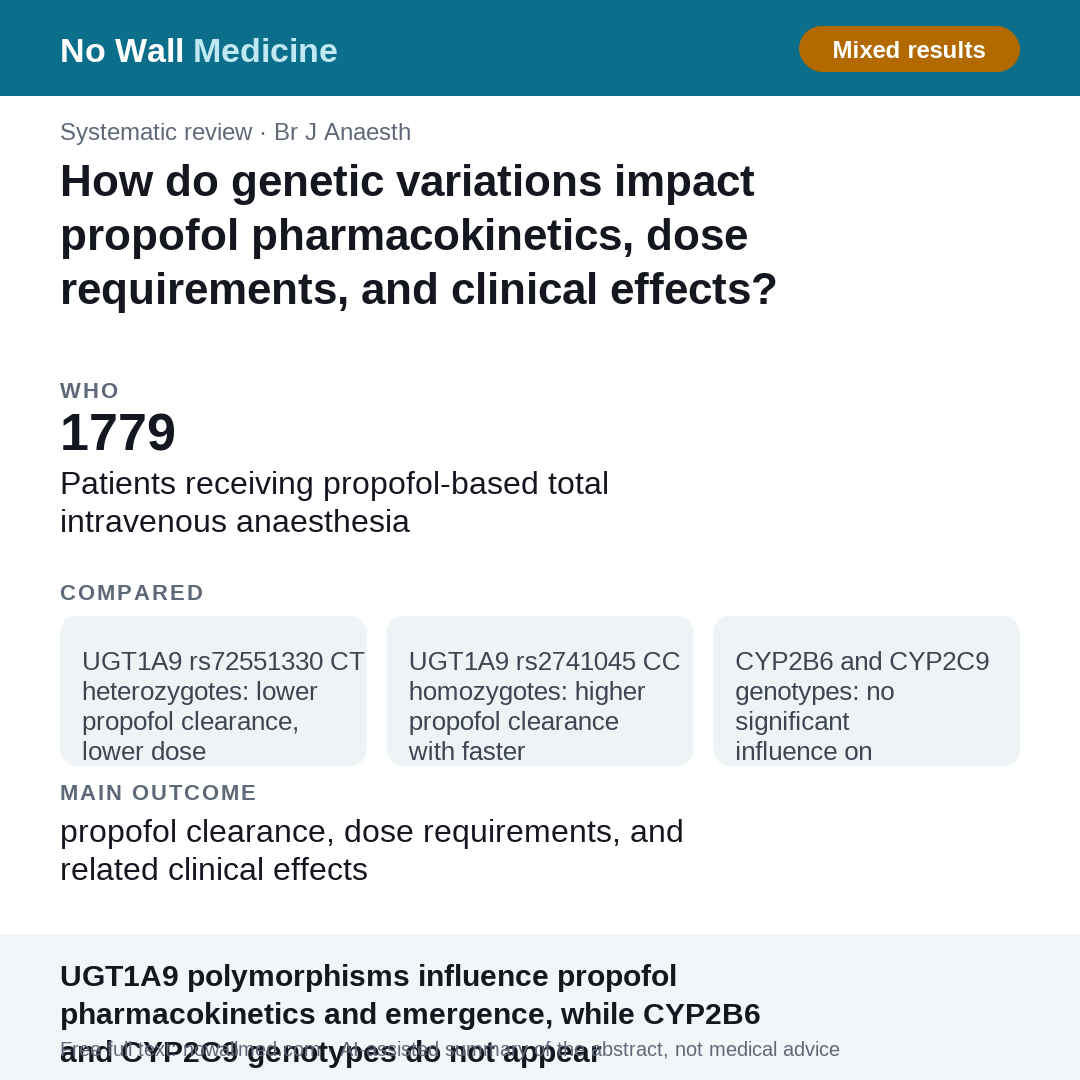
Impact of genetic variations on the pharmacokinetics, dose requirements, and clinical effects of propofol: a systematic review
Systematic reviewMixed results
How do genetic variations impact propofol pharmacokinetics, dose requirements, and clinical effects?
Who
1779
Patients receiving propofol-based total intravenous anaesthesia
Compared
UGT1A9 rs72551330 CT heterozygotes: lower propofol clearance, lower dose requirements, and longer emergence times
UGT1A9 rs2741045 CC homozygotes: higher propofol clearance with faster emergence
CYP2B6 and CYP2C9 genotypes: no significant influence on propofol pharmacokinetics or clinical outcomes
Main outcome
propofol clearance, dose requirements, and related clinical effects
Bottom line: UGT1A9 polymorphisms influence propofol pharmacokinetics and emergence, while CYP2B6 and CYP2C9 genotypes do not appear significant.
Br J Anaesth · 2025-08-06Download image
Effects of isolated single fibers, fiber mixtures, and fiber-rich whole foods on glucose homeostasis in individuals with overweight and obesity: A systematic review and meta-analysis
Systematic review and meta-analysisBenefit found
Do dietary fibers improve glucose homeostasis in individuals with overweight and obesity?
Who
3420
Individuals with overweight or obesity without type 2 diabetes mellitus
Compared
Dietary fiber supplementation
Placebo treatments
Main outcome
Glucose homeostasis and insulin resistance markers
Result: fasting glucose -0.07 mmol/L (95 % CI: -0.12, -0.02)
Bottom line: Dietary fiber supplementation improves glucose homeostasis and insulin sensitivity in individuals with overweight and obesity.
Clin Nutr · 2025-08-06Download image

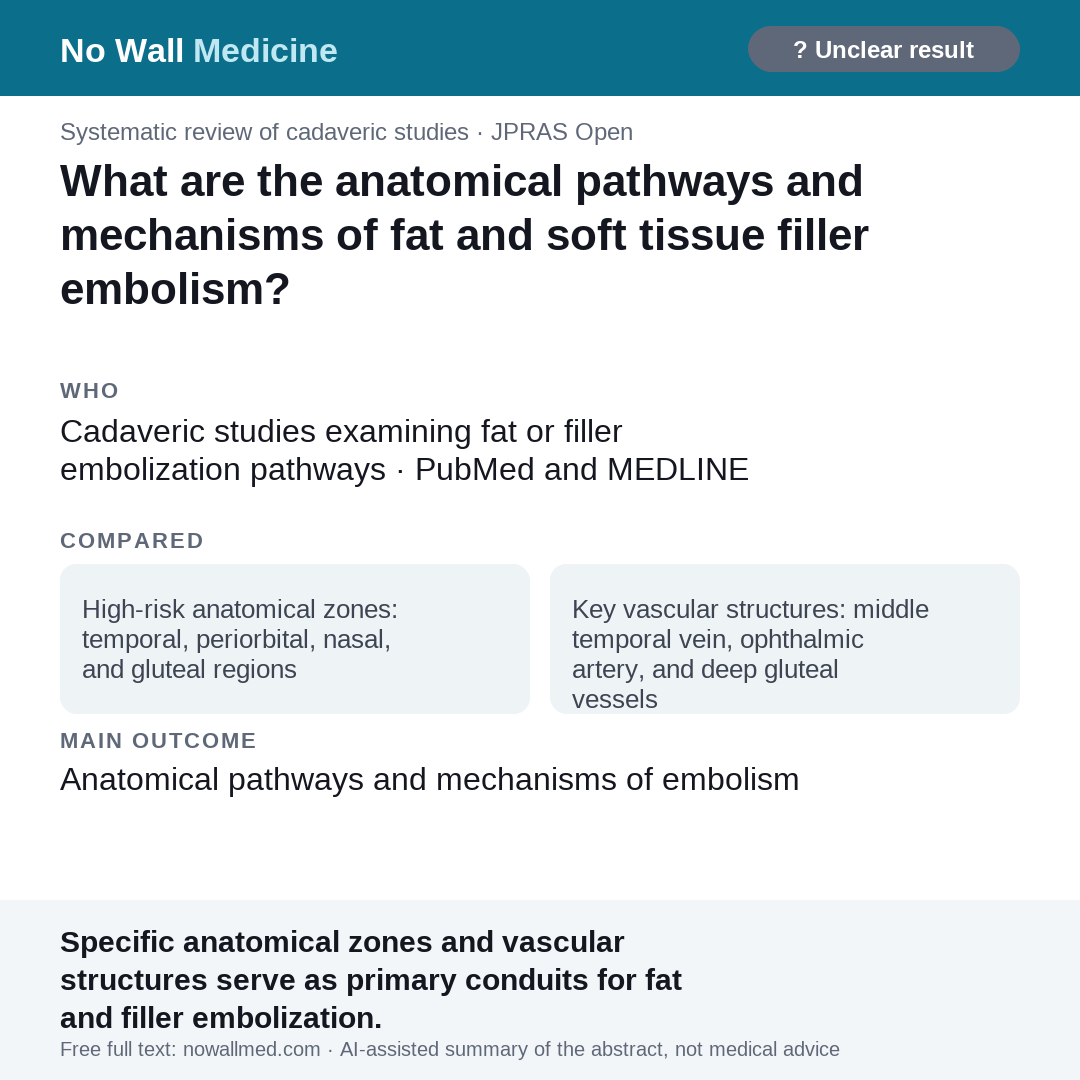
Mechanisms of fat and soft tissue filler embolism following aesthetic injections: A cadaveric systematic review
Systematic review of cadaveric studiesUnclear result
What are the anatomical pathways and mechanisms of fat and soft tissue filler embolism?
Who
Cadaveric studies examining fat or filler embolization pathways · PubMed and MEDLINE
Compared
High-risk anatomical zones: temporal, periorbital, nasal, and gluteal regions
Key vascular structures: middle temporal vein, ophthalmic artery, and deep gluteal vessels
Main outcome
Anatomical pathways and mechanisms of embolism
Bottom line: Specific anatomical zones and vascular structures serve as primary conduits for fat and filler embolization.
Limitation: Differences from in vivo conditions and variations in injection techniques.
JPRAS Open · 2025-08-06Download image
Neoadjuvant Immunotherapy in Bladder Cancer: Ushering in a New Era of Treatment-A Systematic Review of Current Evidence
Systematic review of prospective studiesBenefit found
What is the efficacy and safety of neoadjuvant immunotherapy for bladder cancer?
Who
Patients with muscle-invasive bladder cancer
Compared
Neoadjuvant immunotherapy: 54% pathological complete response rate
Chemotherapy alone
Main outcome
pathological complete response, overall survival, and adverse events
Bottom line: Neoadjuvant immunotherapy shows promising efficacy and manageable adverse events for muscle-invasive bladder cancer.
Limitation: Financial toxicity, absence of predictive biomarkers, and risk of significant immune-related adverse events.
Eur Urol Open Sci · 2025-08-06Download image

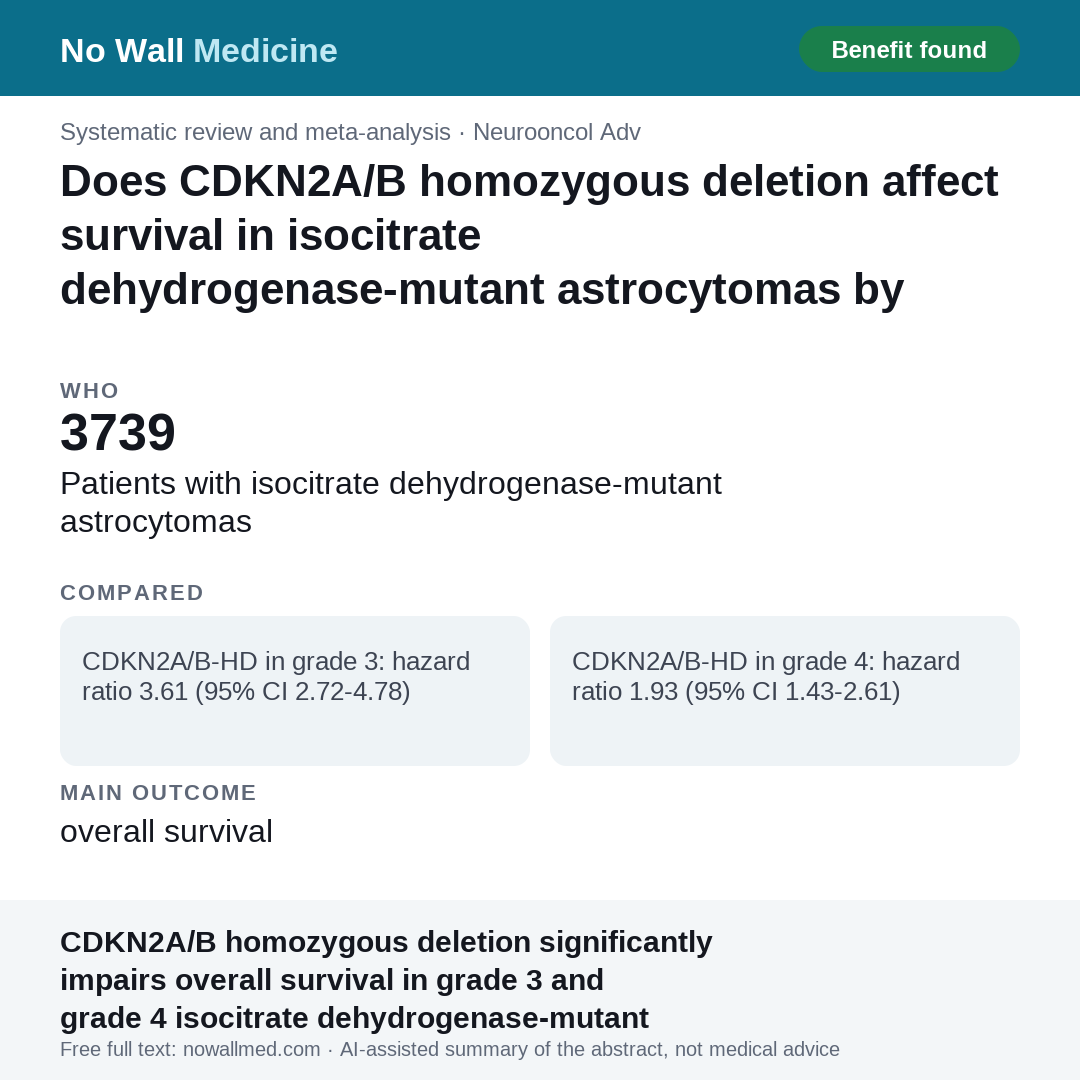
Prognostic implication of CDKN2A/B homozygous deletion on histological grades in isocitrate dehydrogenase-mutant astrocytomas: A systematic review and meta-analysis
Systematic review and meta-analysisBenefit found
Does CDKN2A/B homozygous deletion affect survival in isocitrate dehydrogenase-mutant astrocytomas by histological grade?
Who
3739
Patients with isocitrate dehydrogenase-mutant astrocytomas
Compared
CDKN2A/B-HD in grade 3: hazard ratio 3.61 (95% CI 2.72-4.78)
CDKN2A/B-HD in grade 4: hazard ratio 1.93 (95% CI 1.43-2.61)
Main outcome
overall survival
Result: hazard ratio 3.61 (95% CI 2.72-4.78) for grade 3; hazard ratio 1.93 (95% CI 1.43-2.61) for grade 4
Bottom line: CDKN2A/B homozygous deletion significantly impairs overall survival in grade 3 and grade 4 isocitrate dehydrogenase-mutant astrocytomas.
Limitation: evidence is insufficient for the classification of grade 2 with CDKN2A/B-HD due to paucity of data
Neurooncol Adv · 2025-08-06Download image
Outcomes of Open Versus Closed Rhinoplasty, a Systematic Review and Meta-analysis
Systematic review and meta-analysisNo clear difference
Are open and closed rhinoplasty techniques different in functional and aesthetic outcomes?
Who
1067
Adults undergoing rhinoplasty
Compared
Open rhinoplasty
Closed rhinoplasty
Main outcome
Rhinoplasty Outcome Evaluation score and Nasal Obstruction Symptom Evaluation score
Result: standardized mean difference -0.16 for ROE and 0.21 for NOSE
Bottom line: Open and closed rhinoplasty techniques show similar efficacy for functional and aesthetic outcomes.
Limitation: Absence of sample size calculations and biased endpoint assessments.
Plast Reconstr Surg Glob Open · 2025-08-06Download image

Comparative Efficacy and Recurrence of Combination Therapies in Keloid Management: A Systematic Review and Network Meta-analysis
Network meta-analysis of 22 randomized controlled trialsBenefit found
Which combination therapies are most effective for keloid management and recurrence reduction?
Who
1398
Patients with keloids
Compared
Triamcinolone Acetonide monotherapy
Triamcinolone Acetonide, 5-Fluorouracil and Pulsed Dye Laser: RR 2.98
Triamcinolone Acetonide and 5-Fluorouracil: RR 1.43
Triamcinolone Acetonide and bleomycin: RR 0.04
Main outcome
efficacy and recurrence rates
Result: RR 2.98 (95% CI: 1.26 to 7.02); RR 1.43 (95% CI: 1.05 to 1.93); RR 0.04 (95% CI: 0.00 to 0.84); RR 0.23 (95% CI: 0.07 to 0.73)
Bottom line: Combination therapies like Triamcinolone Acetonide with 5-Fluorouracil or bleomycin outperform Triamcinolone Acetonide monotherapy for keloid management.
Plast Reconstr Surg Glob Open · 2025-08-06Download image

Neurocognitive evaluation in patients with intracranial Meningiomas: A systematic review
Systematic reviewMixed results
Neurocognitive evaluation in meningioma patients
Who
patients with intracranial meningiomas
Compared
Meningioma patients
Postoperative patients
Main outcome
cognitive function
Bottom line: Meningiomas impact cognitive function, improve postoperatively
Brain Spine · 2025-08-06Download image

Does preoperative physical therapy/prehabilitation affect outcome or complications after surgery for lumbar disc herniation? A systematic review
Systematic review of five studiesMixed results
Does preoperative physical therapy affect outcomes or complications after lumbar disc herniation surgery?
Who
736
Adult patients undergoing lumbar spine surgery
Compared
Prehabilitation: short-term improvements in pain, functional outcomes, and psychological readiness
Standard preoperative care
Main outcome
Postoperative outcomes and complications
Bottom line: Prehabilitation enhances short-term recovery, but long-term effectiveness remains uncertain as outcomes converge over time.
Limitation: Clinical heterogeneity and lack of lumbar disc herniation specific trials.
Brain Spine · 2025-08-06Download image

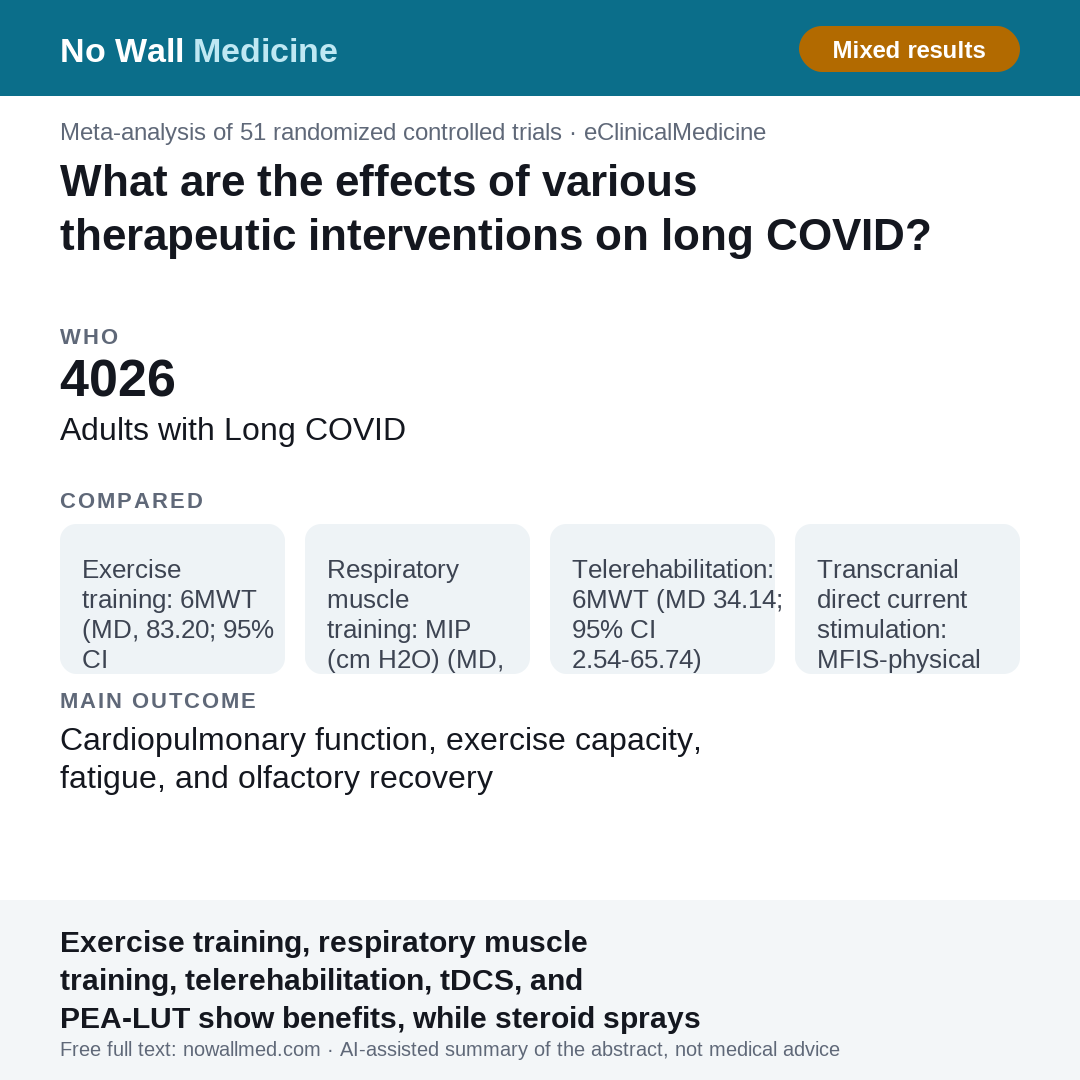
Effects of therapeutic interventions on long COVID: a meta-analysis of randomized controlled trials
Meta-analysis of 51 randomized controlled trialsMixed results
What are the effects of various therapeutic interventions on long COVID?
Who
4026
Adults with Long COVID
Compared
Exercise training: 6MWT (MD, 83.20; 95% CI 52.04-114.37)
Respiratory muscle training: MIP (cm H2O) (MD, 19.69; 95% CI 10.14-29.24)
Telerehabilitation: 6MWT (MD 34.14; 95% CI 2.54-65.74)
Transcranial direct current stimulation: MFIS-physical (MD, -2.29; 95% CI -4.36 to -0.22)
Main outcome
Cardiopulmonary function, exercise capacity, fatigue, and olfactory recovery
Bottom line: Exercise training, respiratory muscle training, telerehabilitation, tDCS, and PEA-LUT show benefits, while steroid sprays and olfactory training lack efficacy.
Limitation: The abstract mentions the need for large-scale trials to optimize dosing and long-term outcomes.
Funded by: Hunan Provincial Natural Foundation of China and others
eClinicalMedicine · 2025-08-05Download image
The Prognostic Accuracy of Frailty and Vulnerability Screening for Older Adults in the Emergency Department: A Systematic Review and Meta-analysis
Systematic review and meta-analysisMixed results
Which frailty or vulnerability screening instrument has the highest prognostic accuracy in the emergency department?
Who
125,412
Older adults aged 60 years or more presenting to the emergency department
Compared
Identification of Seniors at Risk: AUC 0.84 (0.60-0.89)
Clinical Frailty Scale: AUC 0.82 (0.77 to 0.85)
Main outcome
Prognostic accuracy for adverse outcomes
Bottom line: Current screening instruments fail to identify older individuals who will experience adverse outcomes as standalone prognostic tools.
Ann Emerg Med · 2025-08-05Download image

Genetic characterization of preschool wheeze phenotypes
Meta-analysis of genome-wide association studiesMixed results
Genetic basis of preschool wheeze
Who
13000
children with early-onset wheeze · 15 cohorts
Compared
early-onset wheeze
persistent wheeze
early transient wheeze
Main outcome
genetic association with wheeze
Result: odds ratio 1.26 (95% confidence interval 1.17-1.33)
Bottom line: Distinct genetic patterns for wheeze phenotypes found
JACI · 2025-08-05Download image

Prevalence and correlates of anemia following Roux-en-Y gastric bypass: a systematic review and meta-analysis
Systematic review and meta-analysisHarm found
What is the prevalence and associated factors of anemia after Roux-en-Y gastric bypass?
Who
12,262
Patients undergoing Roux-en-Y gastric bypass
Compared
26%Overall postoperative anemia prevalence
15%≤1 year post-surgery
27%>1-5 years post-surgery
35%>5 years post-surgery
Main outcome
Prevalence of anemia following Roux-en-Y gastric bypass
Bottom line: Anemia prevalence increases over time following Roux-en-Y gastric bypass, necessitating long-term hematologic surveillance and optimized nutrient repletion.
Int J Surg · 2025-08-05Download image