Visual abstracts
New randomized trials and meta-analyses from leading journals at a glance: who was studied, what was compared, and what was found. Every paper is free to read in full.
All specialtiesCardiology 4833Oncology 4115Gastroenterology & Hepatology 1934Infectious Disease 3825Neurology 1901Psychiatry & Mental Health 2256Pulmonology 2082Critical Care 1346Endocrinology & Diabetes 2572Pediatrics 2940Surgery 2525Orthopedics & Sports Medicine 926Neurosurgery 534Cardiothoracic & Vascular Surgery 671Plastic & Reconstructive Surgery 591Nephrology 1124Rheumatology 823Hematology 1104Dermatology 620Ophthalmology 543Obstetrics & Gynecology 1684Public & Global Health 1056Radiology & Imaging 641Anesthesiology 962Urology 754ENT (Otolaryngology) 503Emergency Medicine 489Allergy & Immunology 313Geriatrics 982Family Medicine & Primary Care 541Medical Genetics & Genomics 675Pathology & Laboratory Medicine 157Physical Medicine & Rehabilitation 751Palliative Care 424Nutrition 1580Digital Health & AI 2195General Medicine 321
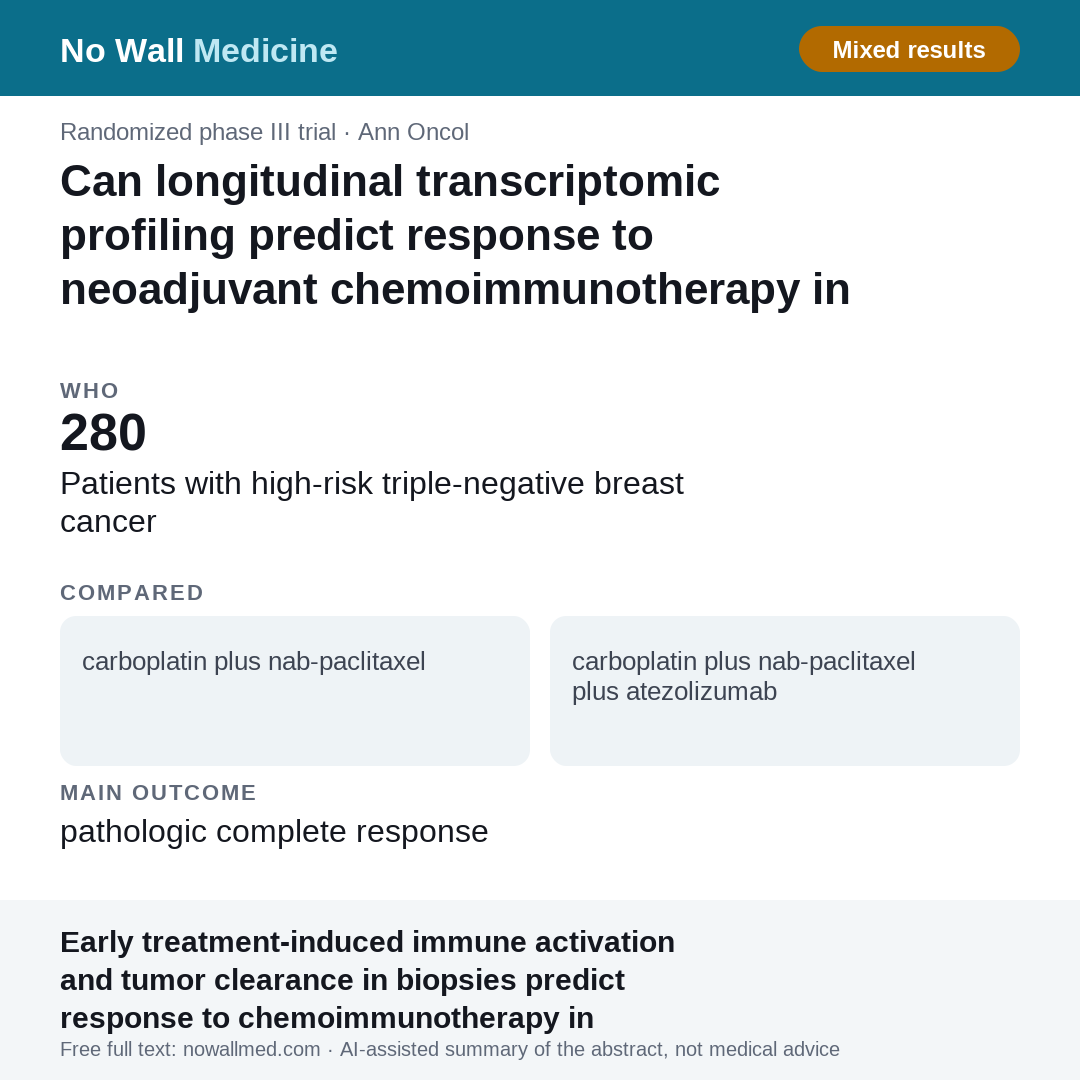
Longitudinal transcriptomic profiling identifies predictors of response to neoadjuvant chemoimmunotherapy in triple-negative breast cancer: results from the NeoTRIPaPDL1 trial
Randomized phase III trialMixed results
Can longitudinal transcriptomic profiling predict response to neoadjuvant chemoimmunotherapy in triple-negative breast cancer?
Who
280
Patients with high-risk triple-negative breast cancer
Compared
carboplatin plus nab-paclitaxel
carboplatin plus nab-paclitaxel plus atezolizumab
Main outcome
pathologic complete response
Bottom line: Early treatment-induced immune activation and tumor clearance in biopsies predict response to chemoimmunotherapy in triple-negative breast cancer.
Ann Oncol · 2026-05-19Download image
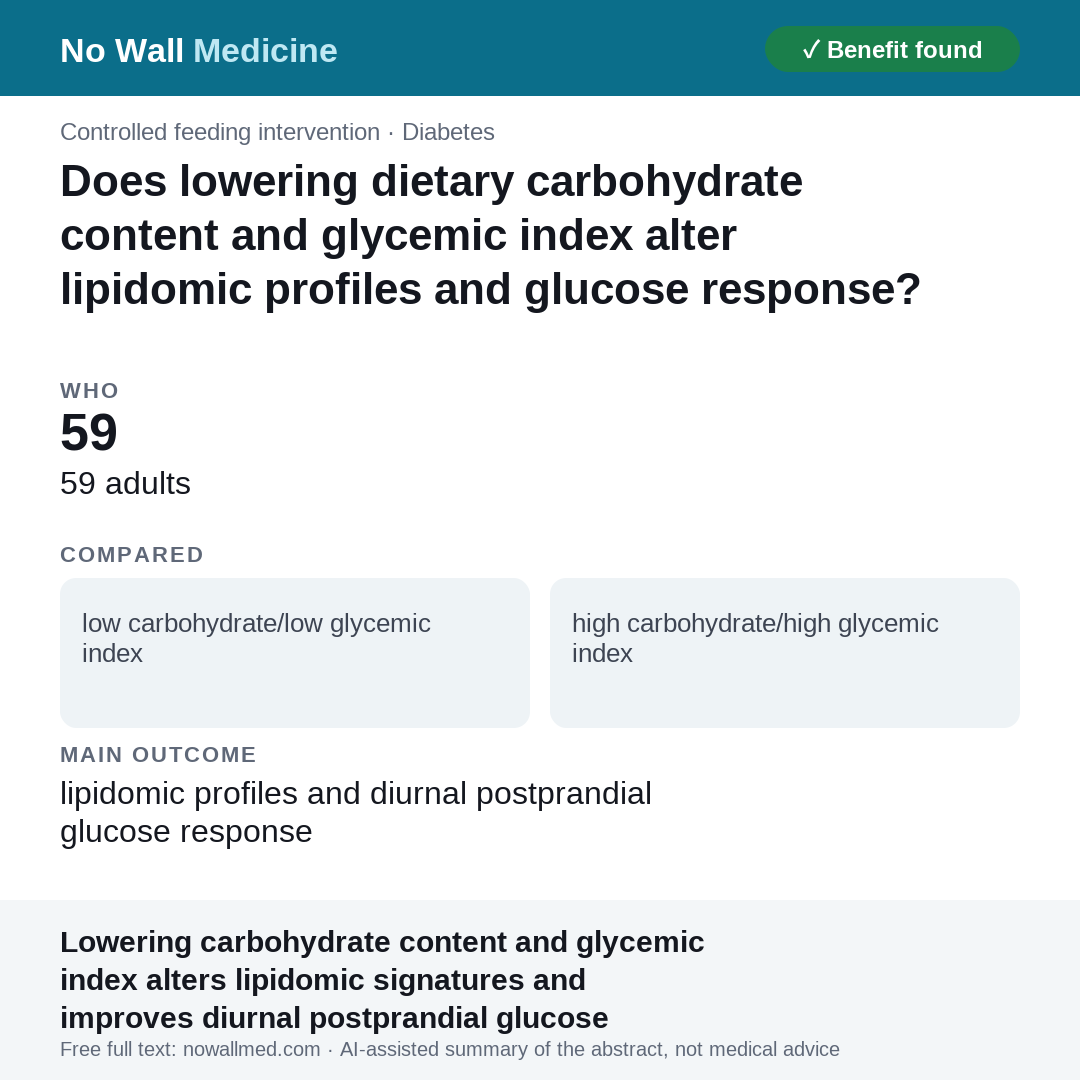
Effects of Dietary Carbohydrate Amount and Glycemic Index on Blood Lipidomic Signatures and Diurnal Postprandial Glucose Responses: The OmniCarb Trial
Controlled feeding interventionBenefit found
Does lowering dietary carbohydrate content and glycemic index alter lipidomic profiles and glucose response?
Who
59
59 adults
Compared
low carbohydrate/low glycemic index
high carbohydrate/high glycemic index
Main outcome
lipidomic profiles and diurnal postprandial glucose response
Bottom line: Lowering carbohydrate content and glycemic index alters lipidomic signatures and improves diurnal postprandial glucose responses.
Diabetes · 2026-05-19Download image
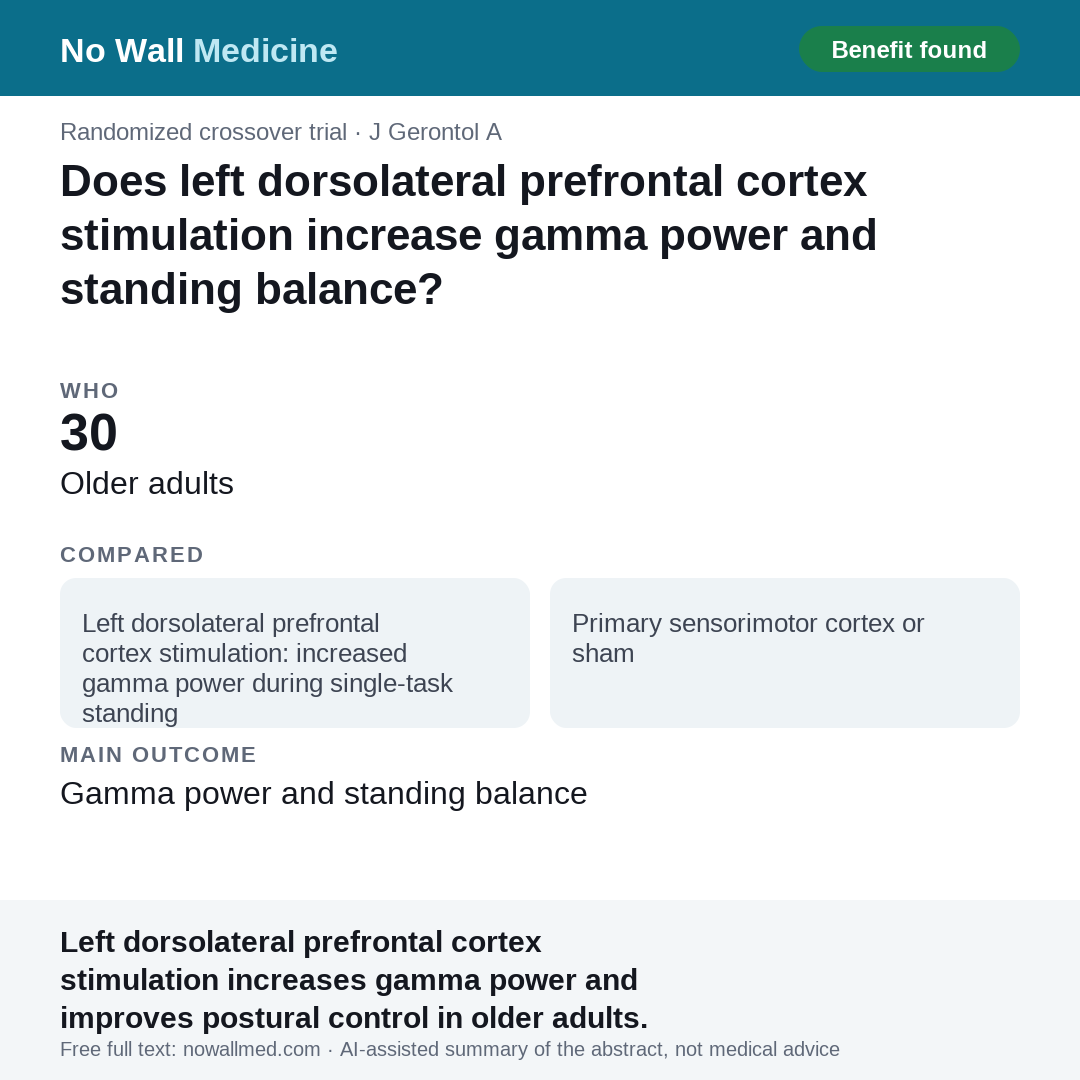
Transcranial direct current stimulation targeting the left dorsolateral prefrontal cortex increases gamma power and standing balance in older adults
Randomized crossover trialBenefit found
Does left dorsolateral prefrontal cortex stimulation increase gamma power and standing balance?
Who
30
Older adults
Compared
Left dorsolateral prefrontal cortex stimulation: increased gamma power during single-task standing
Primary sensorimotor cortex or sham
Main outcome
Gamma power and standing balance
Bottom line: Left dorsolateral prefrontal cortex stimulation increases gamma power and improves postural control in older adults.
J Gerontol A · 2026-05-19Download image
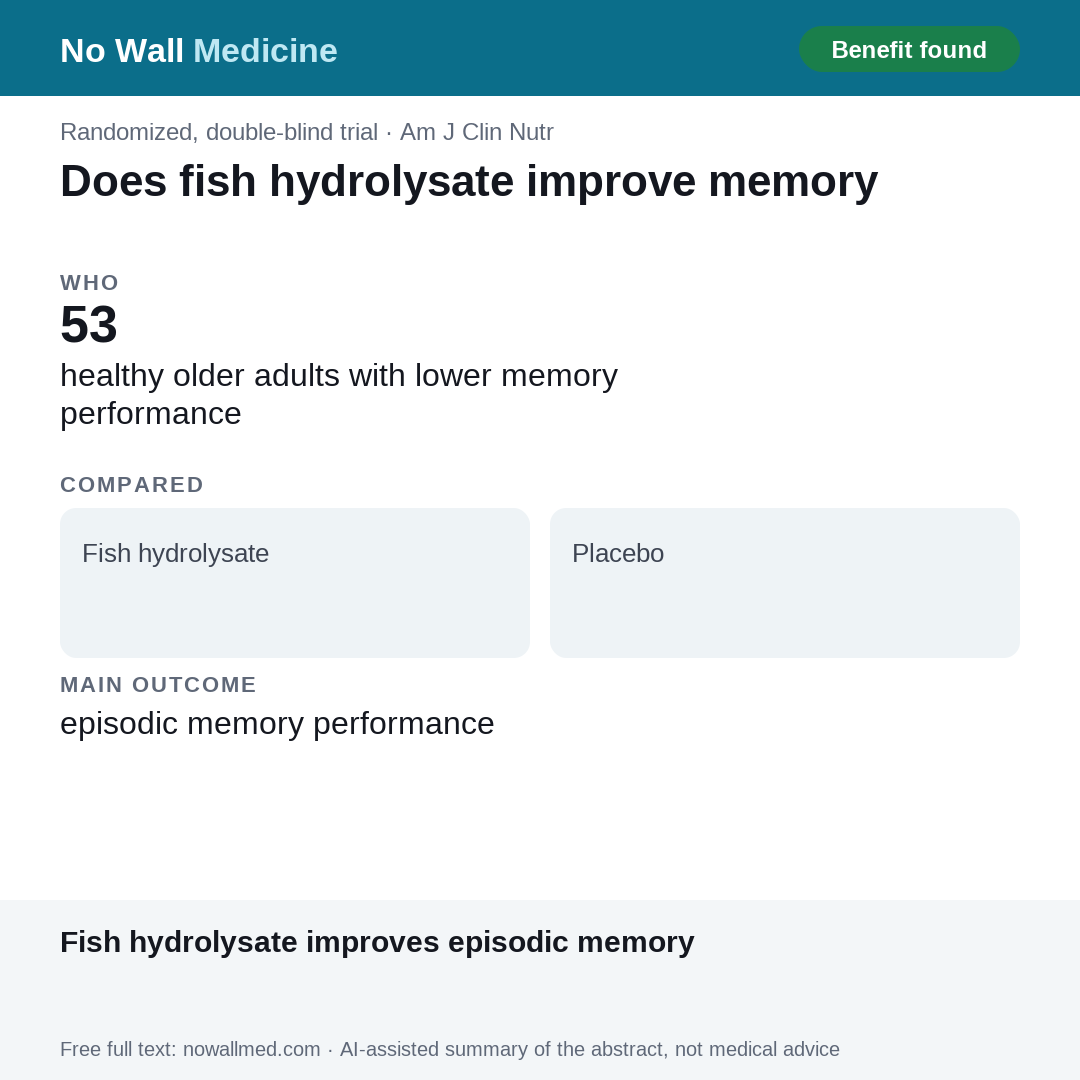
Dietary fish hydrolysate improves episodic memory in healthy elderly with lower level of memory performance: a double-blind, randomized, placebo-controlled clinical study
Randomized, double-blind trialBenefit found
Does fish hydrolysate improve memory
Who
53
healthy older adults with lower memory performance
Compared
Fish hydrolysate
Placebo
Main outcome
episodic memory performance
Bottom line: Fish hydrolysate improves episodic memory
Am J Clin Nutr · 2026-05-19Download image
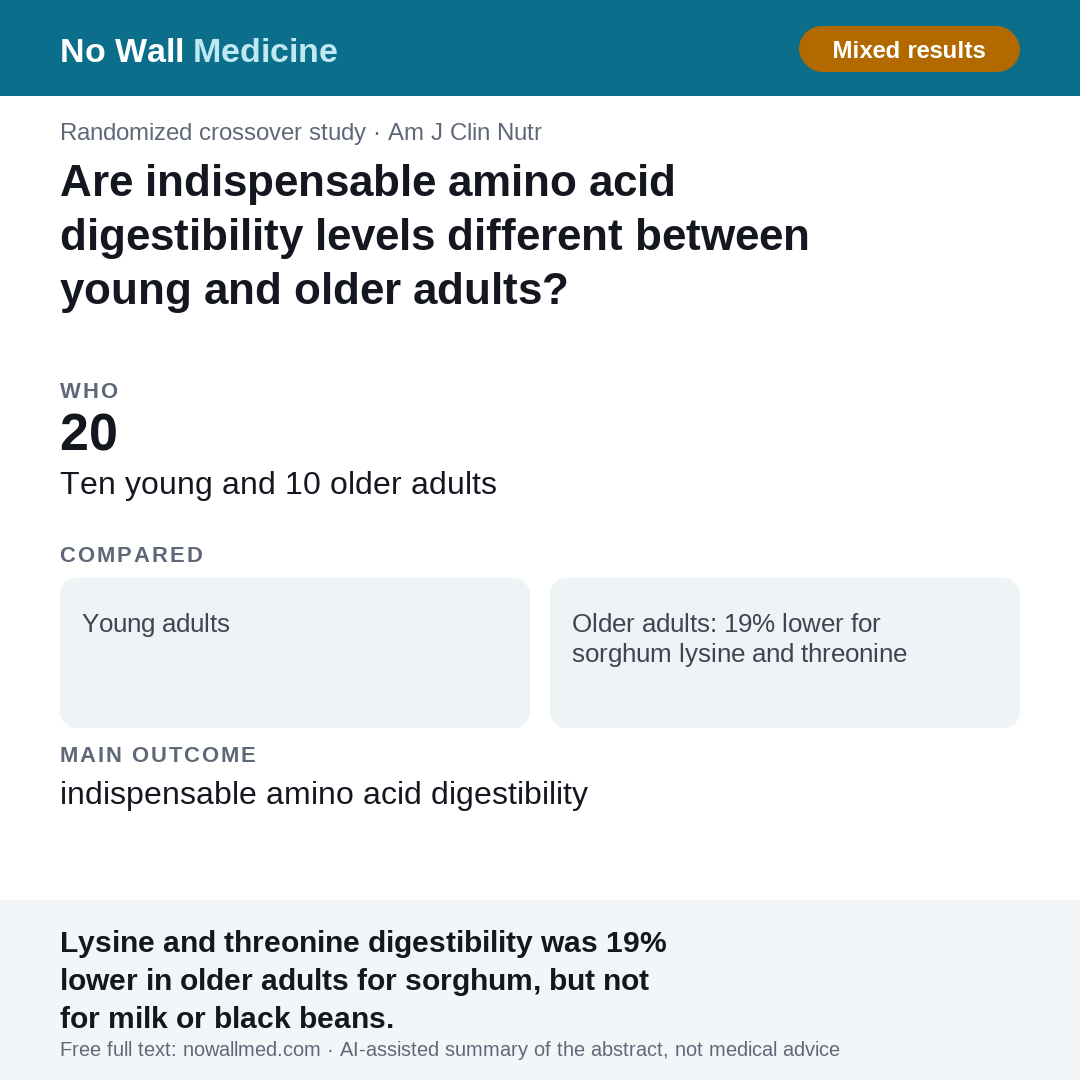
Differences in amino acid digestibility between young and older adults: a randomized crossover study using the dual tracer method
Randomized crossover studyMixed results
Are indispensable amino acid digestibility levels different between young and older adults?
Who
20
Ten young and 10 older adults
Compared
Young adults
Older adults: 19% lower for sorghum lysine and threonine
Main outcome
indispensable amino acid digestibility
Bottom line: Lysine and threonine digestibility was 19% lower in older adults for sorghum, but not for milk or black beans.
Am J Clin Nutr · 2026-05-19Download image
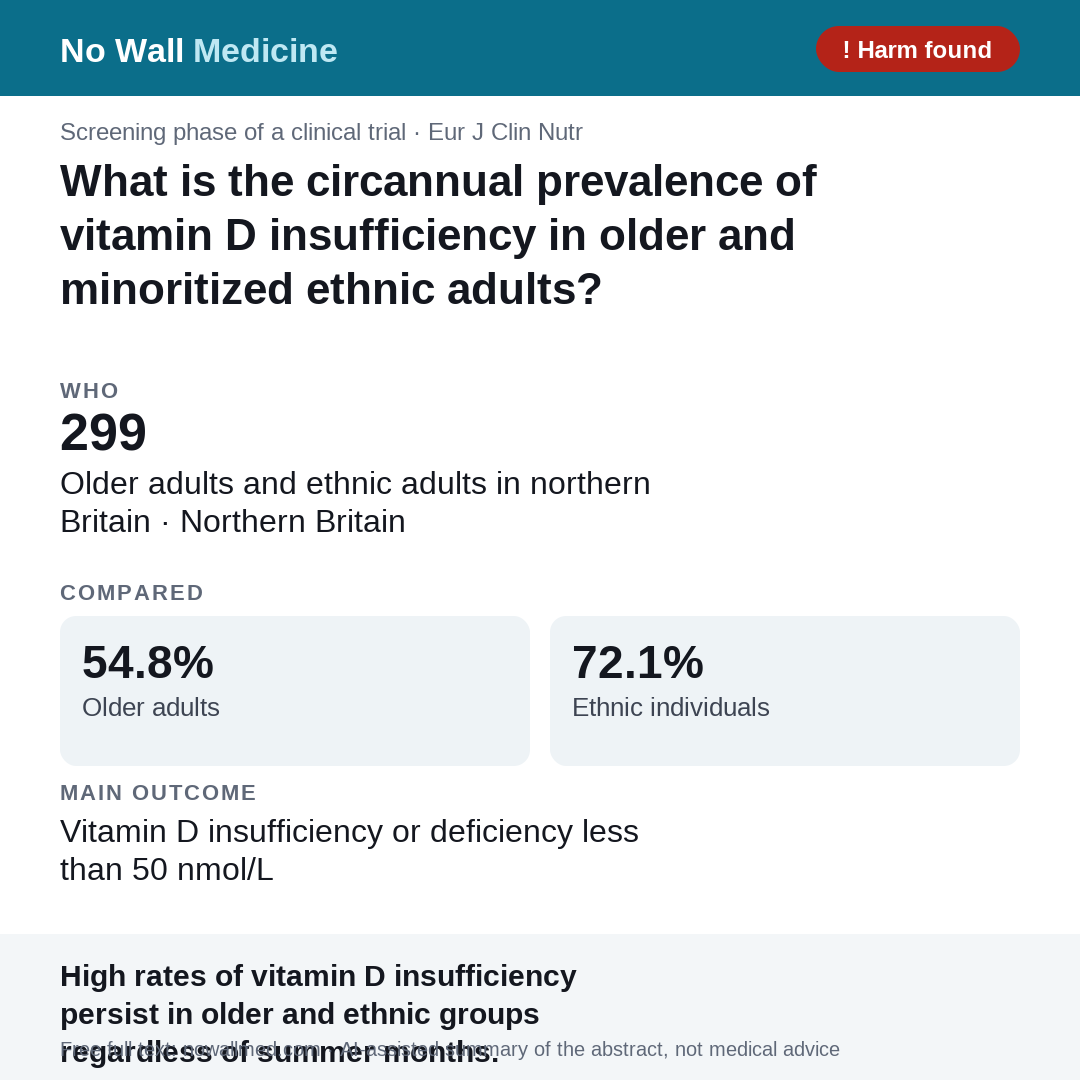
Circannual prevalence of vitamin D insufficiency in older and minoritized ethnic adults in Northern Britain: screening outcomes from a clinical trial
Screening phase of a clinical trialHarm found
What is the circannual prevalence of vitamin D insufficiency in older and minoritized ethnic adults?
Who
299
Older adults and ethnic adults in northern Britain · Northern Britain
Compared
54.8%Older adults
72.1%Ethnic individuals
Main outcome
Vitamin D insufficiency or deficiency less than 50 nmol/L
Bottom line: High rates of vitamin D insufficiency persist in older and ethnic groups regardless of summer months.
Eur J Clin Nutr · 2026-05-19Download image
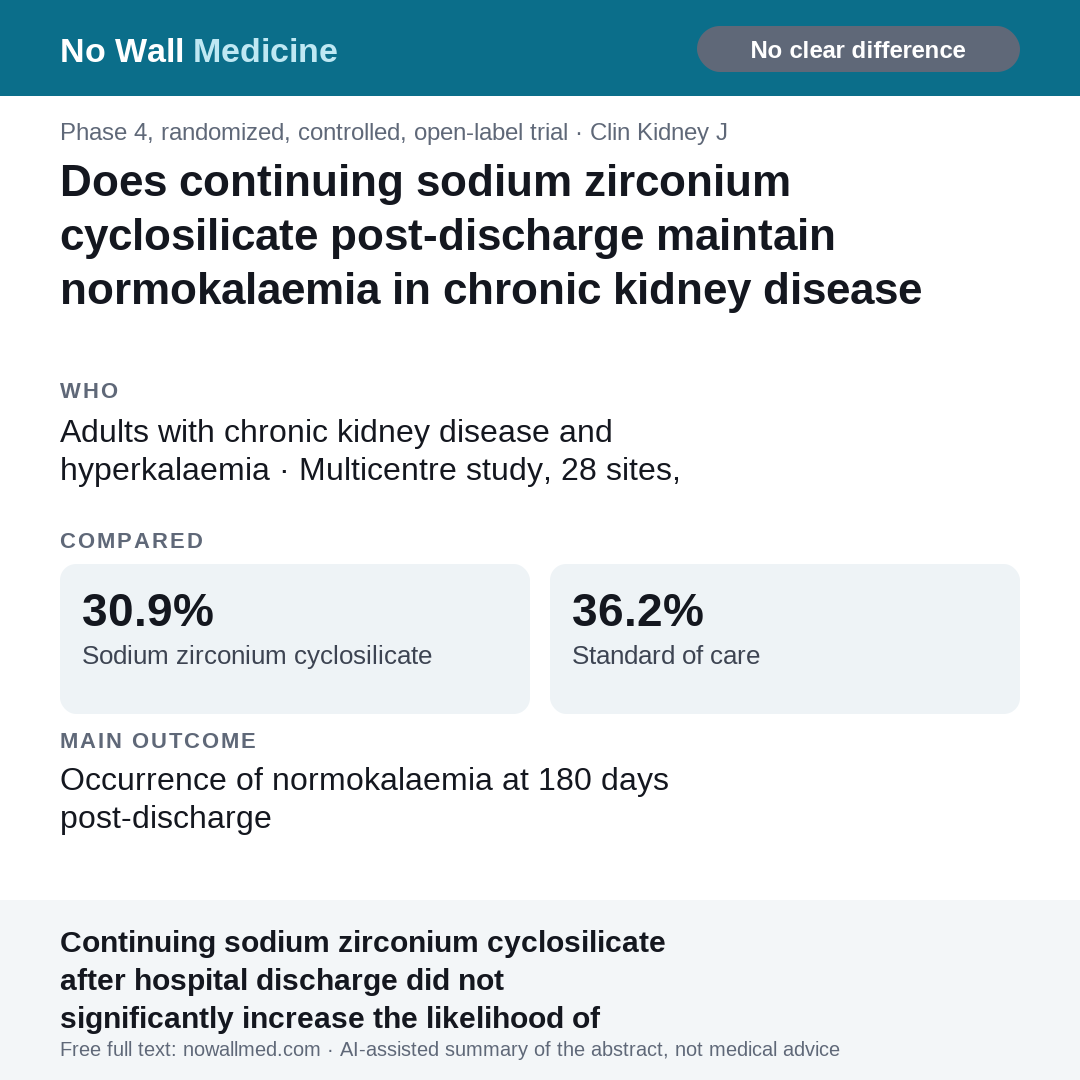
Sodium zirconium cyclosilicate post hospital discharge to prevent hyperkalaemia: phase 4, randomized CONTINUITY trial
Phase 4, randomized, controlled, open-label trialNo clear difference
Does continuing sodium zirconium cyclosilicate post-discharge maintain normokalaemia in chronic kidney disease patients?
Who
Adults with chronic kidney disease and hyperkalaemia · Multicentre study, 28 sites, six European countries
Compared
30.9%Sodium zirconium cyclosilicate
36.2%Standard of care
Main outcome
Occurrence of normokalaemia at 180 days post-discharge
Result: odds ratio 0.81 (95% CI 0.39-1.66)
Bottom line: Continuing sodium zirconium cyclosilicate after hospital discharge did not significantly increase the likelihood of maintaining normokalaemia.
Limitation: High and imbalanced levels of missing serum potassium measurements at 180 days.
Clin Kidney J · 2026-05-19Download image
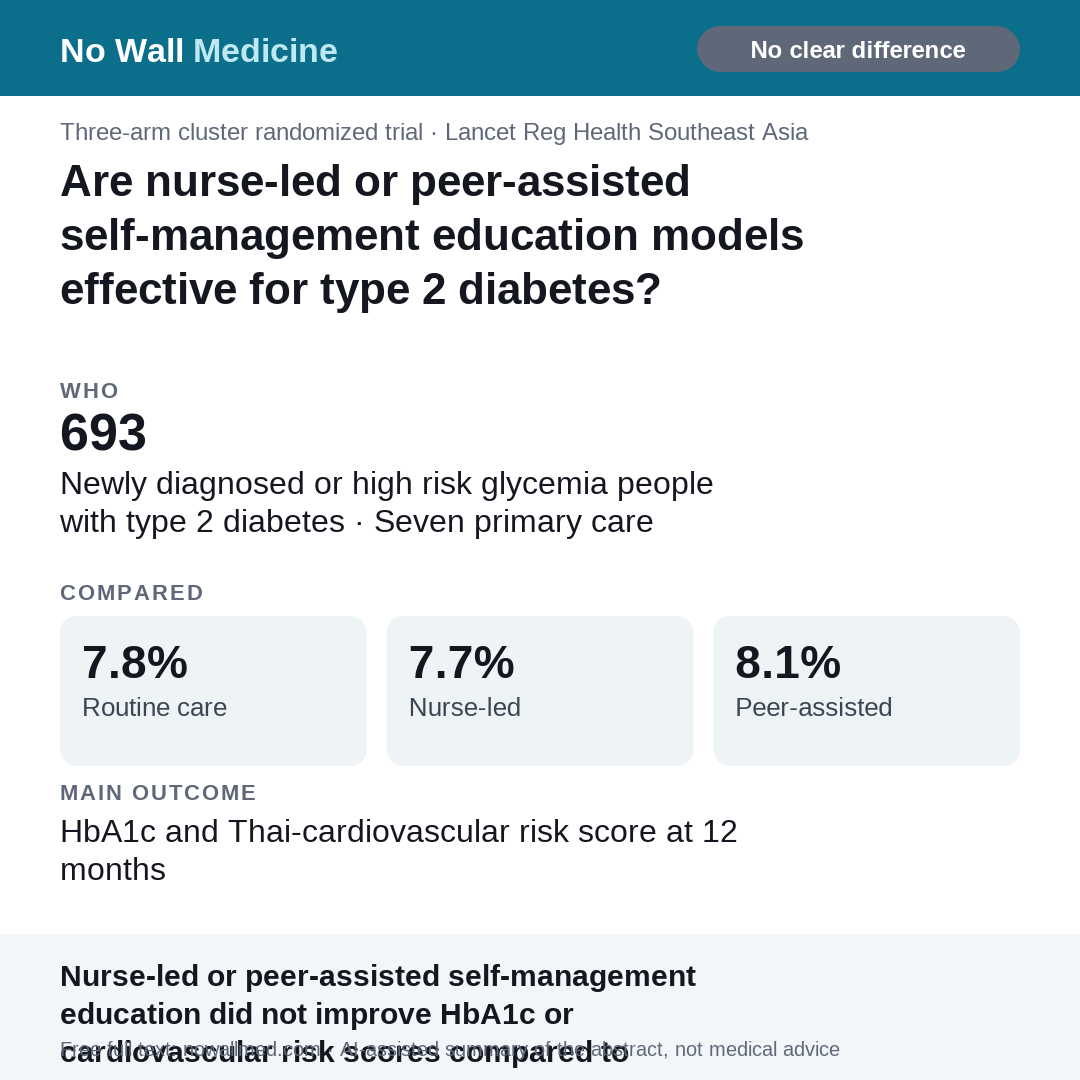
Self-management education and support for type 2 diabetes in Thailand: a cluster randomized trial (2019-2021)
Three-arm cluster randomized trialNo clear difference
Are nurse-led or peer-assisted self-management education models effective for type 2 diabetes?
Who
693
Newly diagnosed or high risk glycemia people with type 2 diabetes · Seven primary care units in Thailand
Compared
7.8%Routine care (SD 1.6)
7.7%Nurse-led (SD 1.3)
8.1%Peer-assisted (SD 1.6)
Main outcome
HbA1c and Thai-cardiovascular risk score at 12 months
Result: HbA1c difference: -0.1% (-0.4 to 0.1) and 0.1% (-0.2 to 0.5)
Bottom line: Nurse-led or peer-assisted self-management education did not improve HbA1c or cardiovascular risk scores compared to routine care.
Funded by: UK Medical Research Council and Thailand Research Fund
Lancet Reg Health Southeast Asia · 2026-05-19Download image
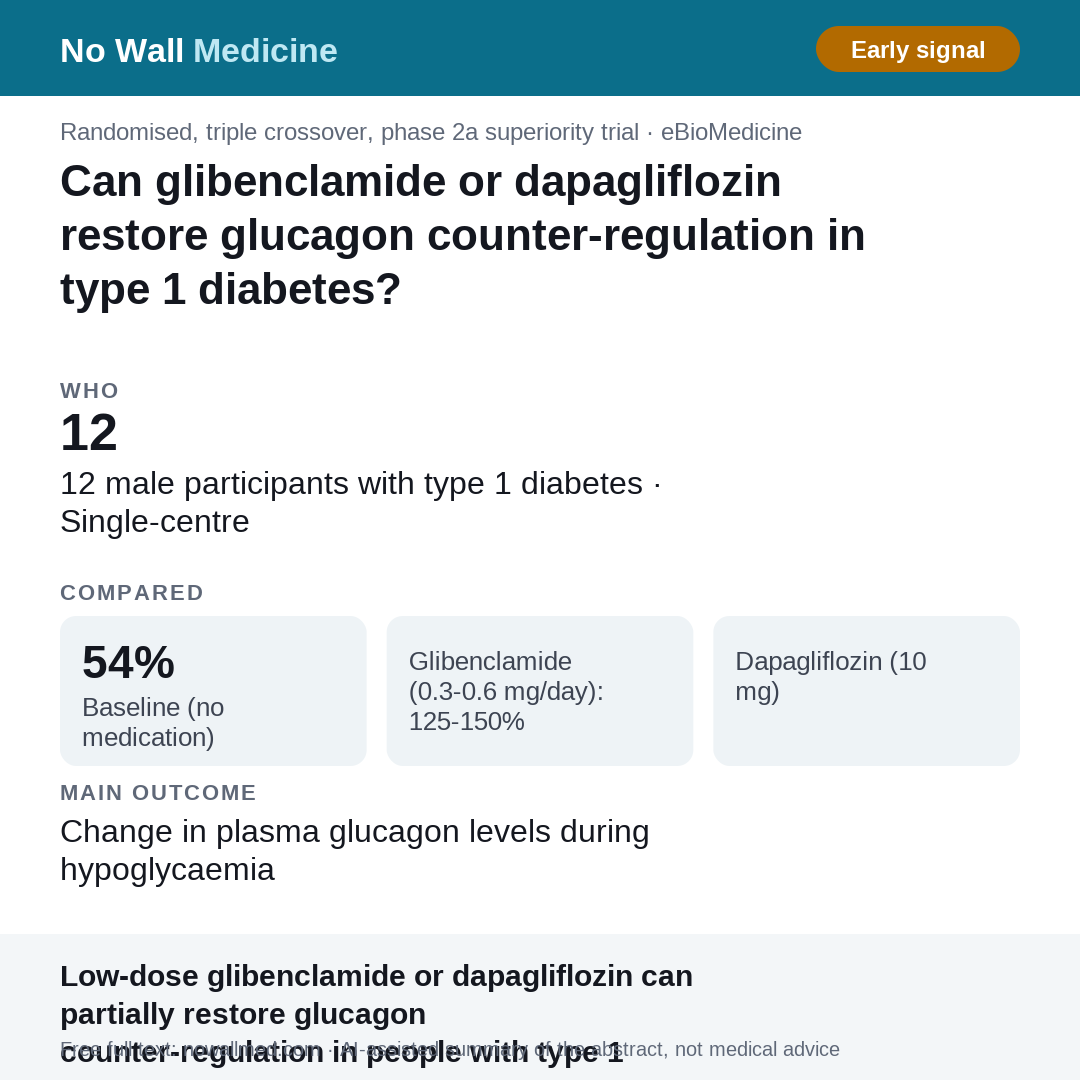
Partial restoration of counterregulatory circulating glucagon by dapagliflozin and low-dose glibenclamide in men with type 1 diabetes: in vitro studies and randomised clinical crossover trial
Randomised, triple crossover, phase 2a superiority trialEarly signal
Can glibenclamide or dapagliflozin restore glucagon counter-regulation in type 1 diabetes?
Who
12
12 male participants with type 1 diabetes · Single-centre
Compared
54%Baseline (no medication)
Glibenclamide (0.3-0.6 mg/day): 125-150%
Dapagliflozin (10 mg)
Main outcome
Change in plasma glucagon levels during hypoglycaemia
Bottom line: Low-dose glibenclamide or dapagliflozin can partially restore glucagon counter-regulation in people with type 1 diabetes.
Funded by: The Leona M. and Harry B. Helmsley Charitable Trust
eBioMedicine · 2026-05-19Download image
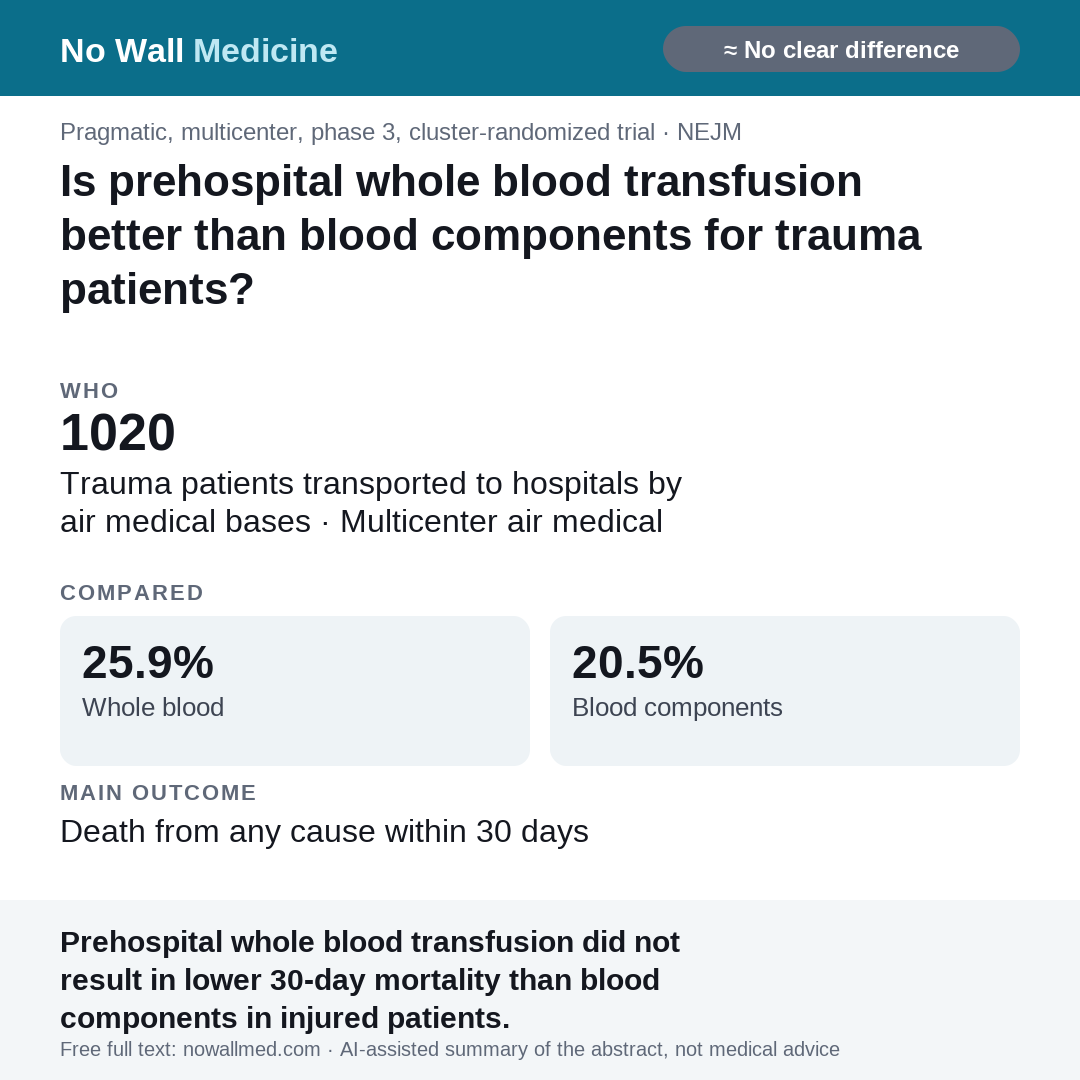
Prehospital Resuscitation with Type O Whole Blood for Trauma and Hemorrhage
Pragmatic, multicenter, phase 3, cluster-randomized trialNo clear difference
Is prehospital whole blood transfusion better than blood components for trauma patients?
Who
1020
Trauma patients transported to hospitals by air medical bases · Multicenter air medical bases
Compared
25.9%Whole blood
20.5%Blood components
Main outcome
Death from any cause within 30 days
Result: adjusted odds ratio 1.24 (95% CI 0.87 to 1.76)
Bottom line: Prehospital whole blood transfusion did not result in lower 30-day mortality than blood components in injured patients.
Funded by: Defense Health Agency Research Technology Portfolio Management
NEJM · 2026-05-18Download image
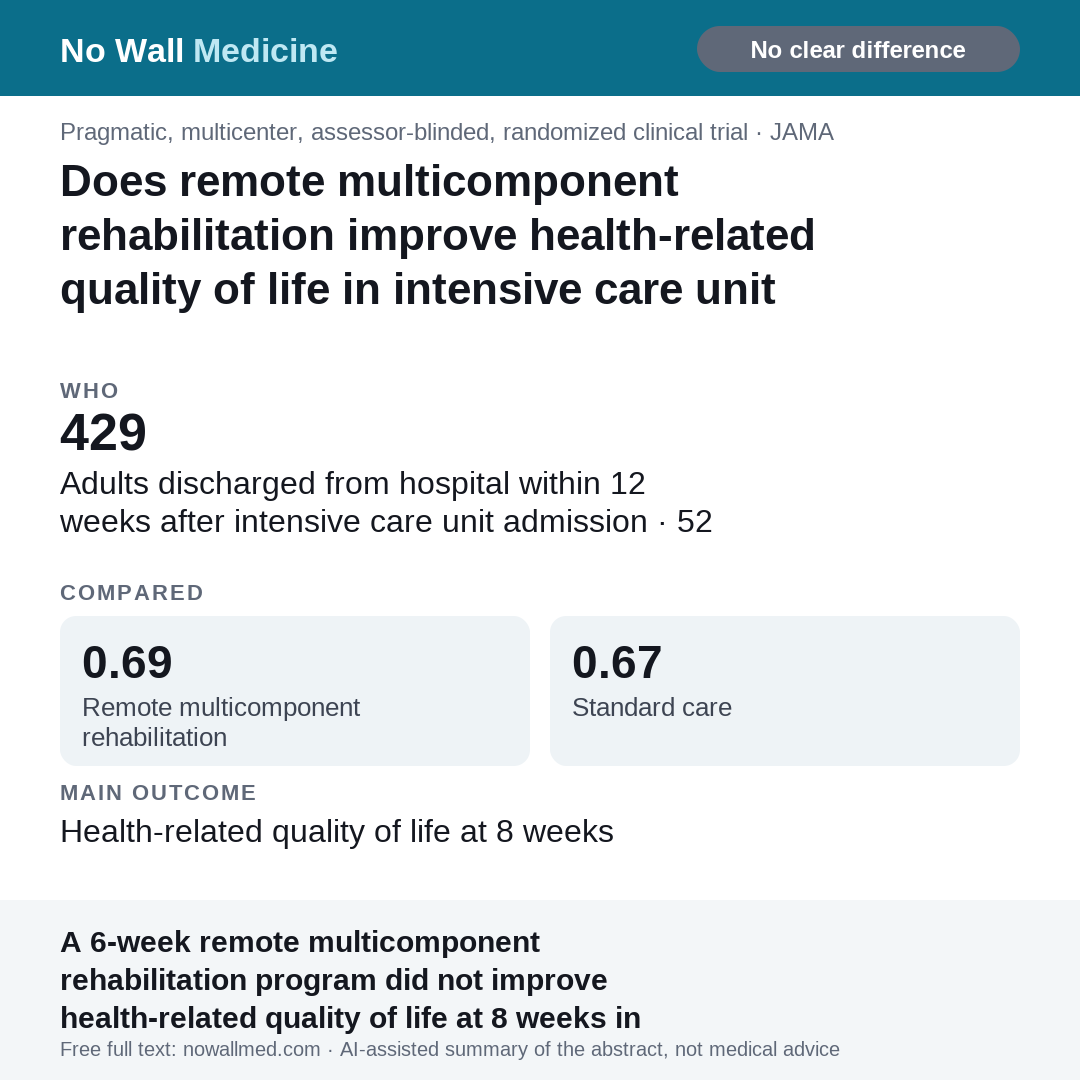
Remote Multicomponent Rehabilitation in Intensive Care Unit Survivors: A Randomized Clinical Trial
Pragmatic, multicenter, assessor-blinded, randomized clinical trialNo clear difference
Does remote multicomponent rehabilitation improve health-related quality of life in intensive care unit survivors?
Who
429
Adults discharged from hospital within 12 weeks after intensive care unit admission · 52 National Health Service hospitals in the UK
Compared
0.69Remote multicomponent rehabilitation (SD, 0.26)
0.67Standard care (SD, 0.27)
Main outcome
Health-related quality of life at 8 weeks
Result: adjusted mean difference, 0.04 (95% CI, -0.001 to 0.09)
Bottom line: A 6-week remote multicomponent rehabilitation program did not improve health-related quality of life at 8 weeks in intensive care survivors.
JAMA · 2026-05-18Download image
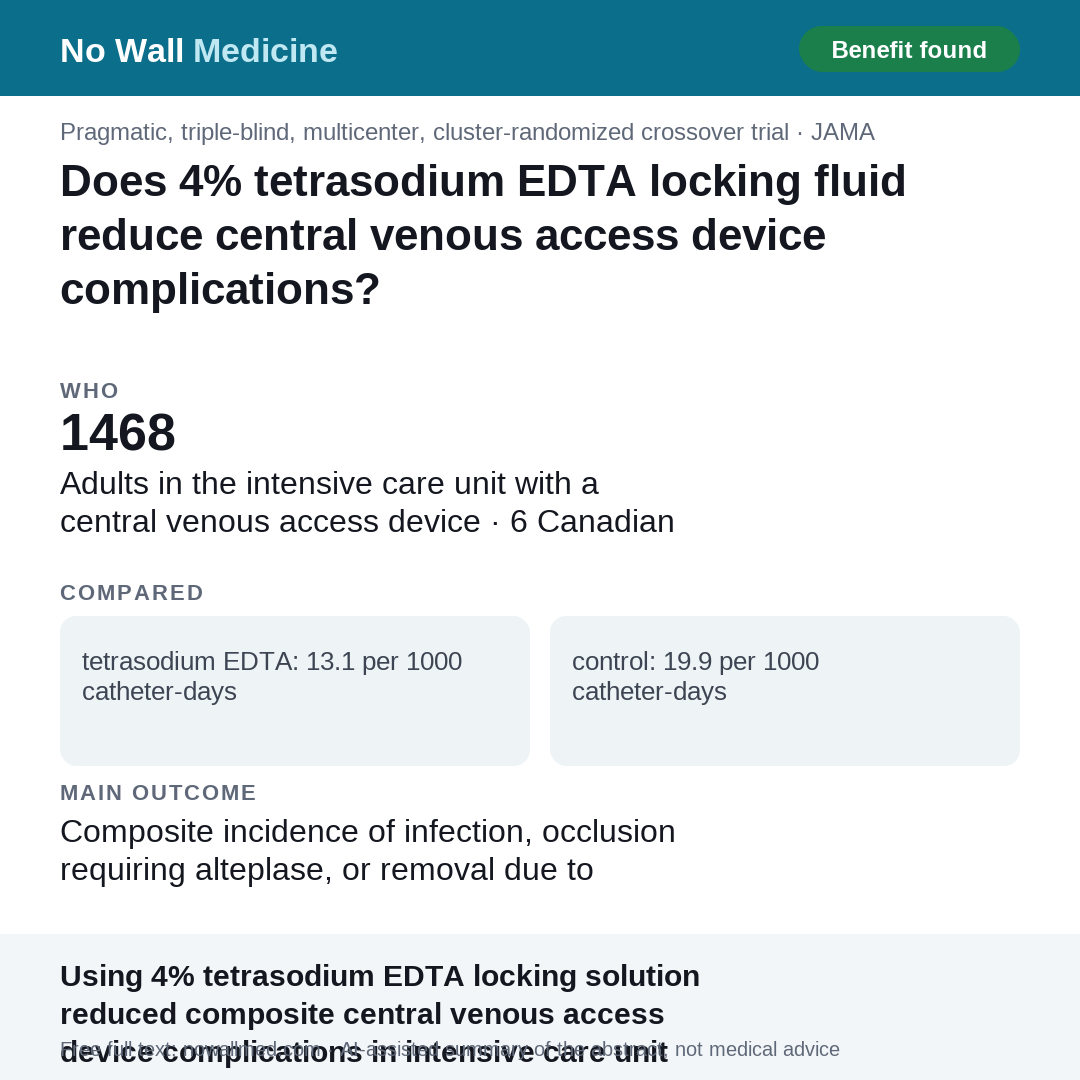
4% Tetrasodium EDTA to Prevent Central Venous Access Device-Associated Complications: A Randomized Clinical Trial
Pragmatic, triple-blind, multicenter, cluster-randomized crossover trialBenefit found
Does 4% tetrasodium EDTA locking fluid reduce central venous access device complications?
Who
1468
Adults in the intensive care unit with a central venous access device · 6 Canadian hospitals
Compared
tetrasodium EDTA: 13.1 per 1000 catheter-days
control: 19.9 per 1000 catheter-days
Main outcome
Composite incidence of infection, occlusion requiring alteplase, or removal due to occlusion
Result: rate ratio 0.68 (95% CI 0.47-0.96)
Bottom line: Using 4% tetrasodium EDTA locking solution reduced composite central venous access device complications in intensive care unit patients.
JAMA · 2026-05-18Download image
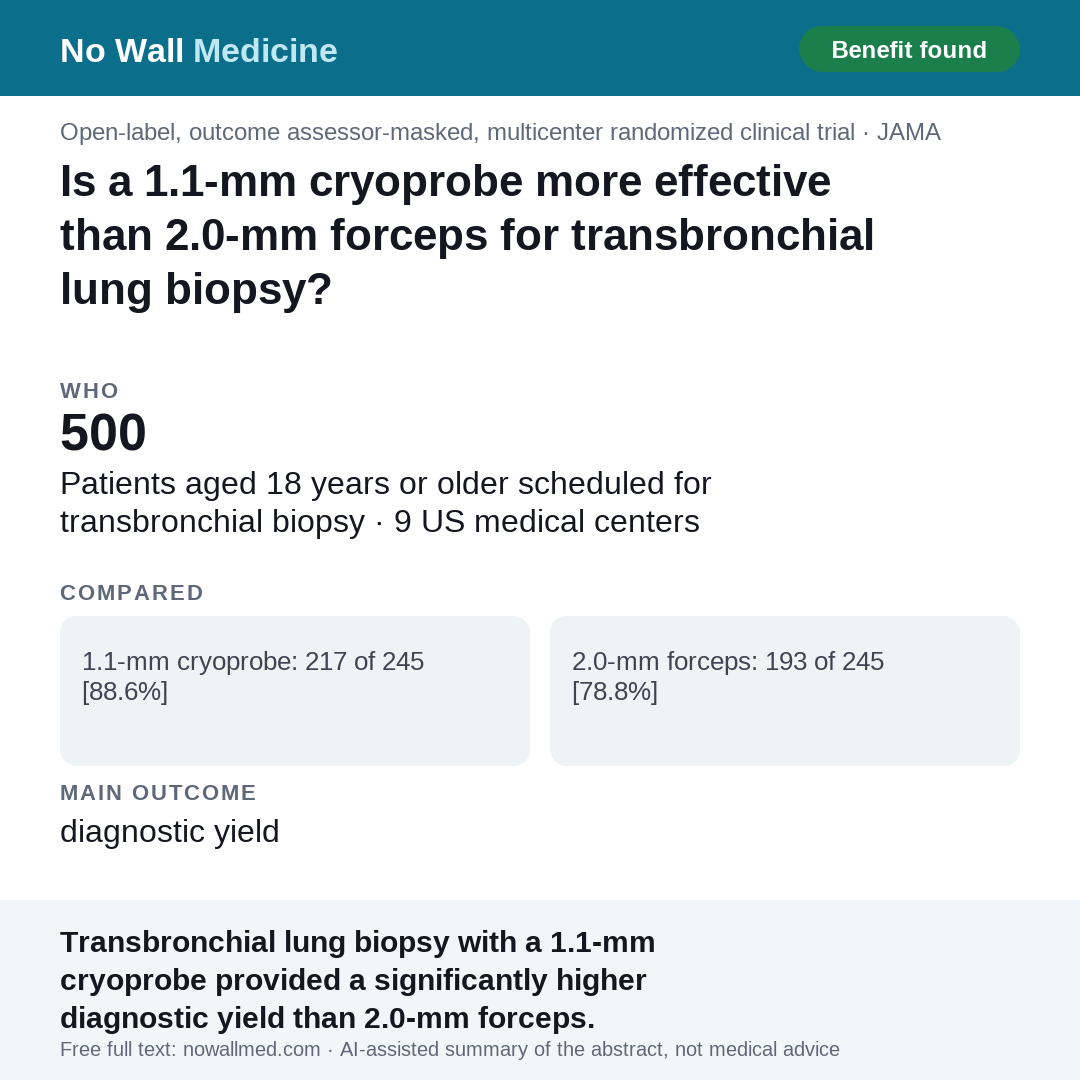
Cryobiopsy vs Forceps for Bronchoscopic Lung Biopsy: The FROSTBITE-2 Randomized Clinical Trial
Open-label, outcome assessor-masked, multicenter randomized clinical trialBenefit found
Is a 1.1-mm cryoprobe more effective than 2.0-mm forceps for transbronchial lung biopsy?
Who
500
Patients aged 18 years or older scheduled for transbronchial biopsy · 9 US medical centers
Compared
1.1-mm cryoprobe: 217 of 245 [88.6%]
2.0-mm forceps: 193 of 245 [78.8%]
Main outcome
diagnostic yield
Result: absolute difference, 9.8%; 95% CI, 3.3%-16.3%
Bottom line: Transbronchial lung biopsy with a 1.1-mm cryoprobe provided a significantly higher diagnostic yield than 2.0-mm forceps.
JAMA · 2026-05-18Download image
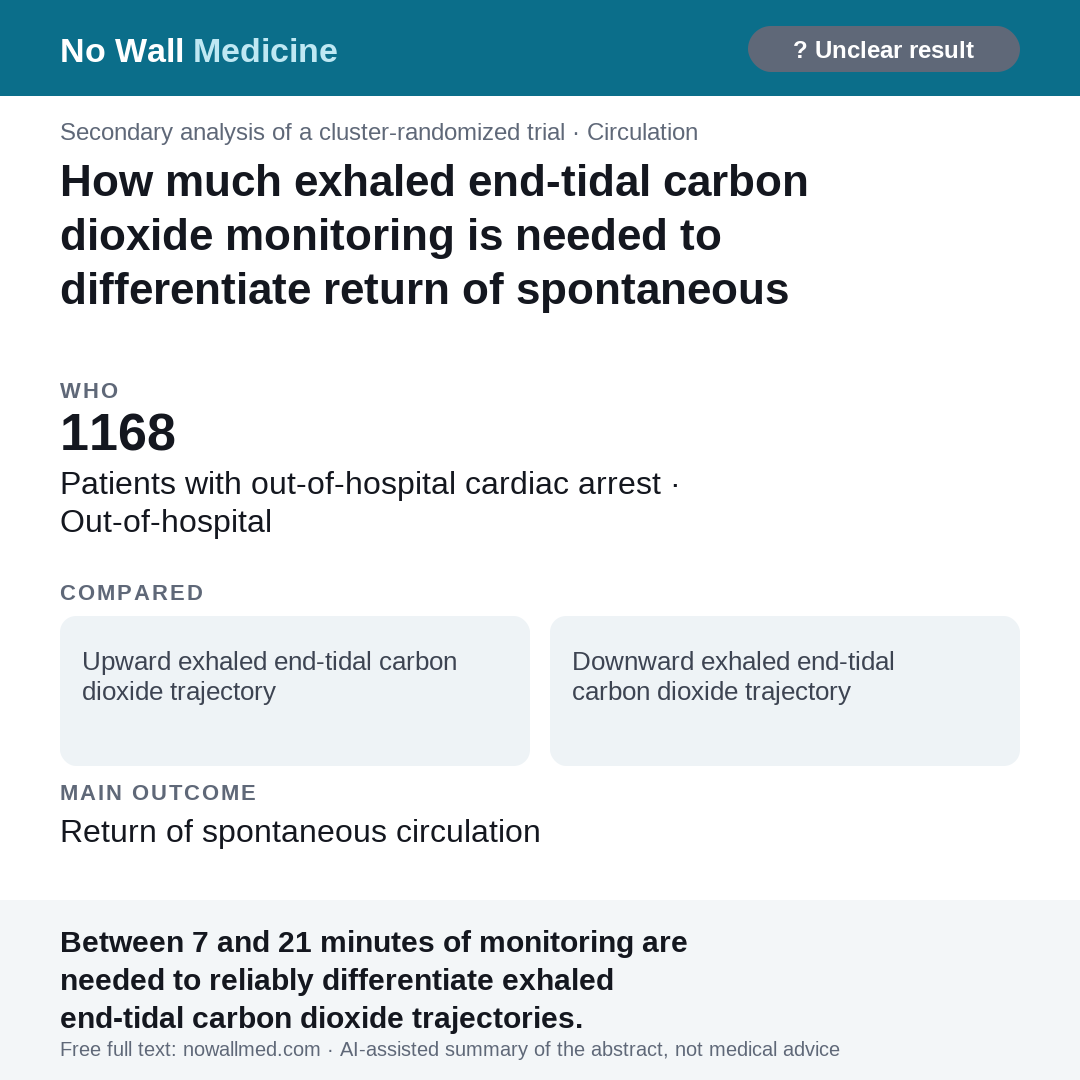
Resuscitation From Out-of-Hospital Cardiac Arrest: When Is EtCO2 Reliably Associated With ROSC?
Secondary analysis of a cluster-randomized trialUnclear result
How much exhaled end-tidal carbon dioxide monitoring is needed to differentiate return of spontaneous circulation?
Who
1168
Patients with out-of-hospital cardiac arrest · Out-of-hospital
Compared
Upward exhaled end-tidal carbon dioxide trajectory
Downward exhaled end-tidal carbon dioxide trajectory
Main outcome
Return of spontaneous circulation
Bottom line: Between 7 and 21 minutes of monitoring are needed to reliably differentiate exhaled end-tidal carbon dioxide trajectories.
Circulation · 2026-05-18Download image
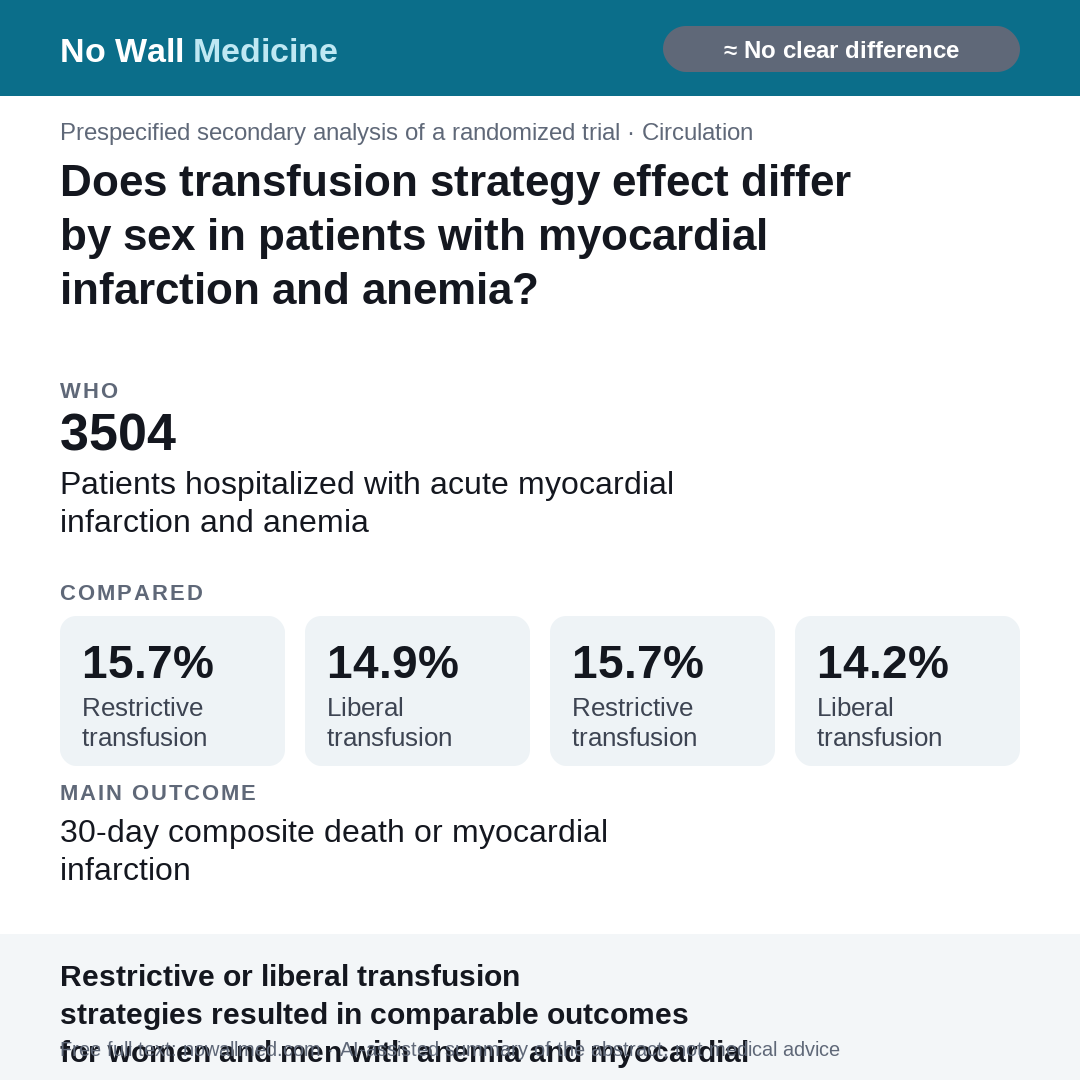
Comparative Efficacy of Transfusion Strategies in Women and Men With Myocardial Infarction and Anemia: Prespecified Secondary Findings From the MINT Trial
Prespecified secondary analysis of a randomized trialNo clear difference
Does transfusion strategy effect differ by sex in patients with myocardial infarction and anemia?
Who
3504
Patients hospitalized with acute myocardial infarction and anemia
Compared
15.7%Restrictive transfusion strategy in women
14.9%Liberal transfusion strategy in women
15.7%Restrictive transfusion strategy in men
14.2%Liberal transfusion strategy in men
Main outcome
30-day composite death or myocardial infarction
Result: interaction P=0.60
Bottom line: Restrictive or liberal transfusion strategies resulted in comparable outcomes for women and men with anemia and myocardial infarction.
Circulation · 2026-05-18Download image
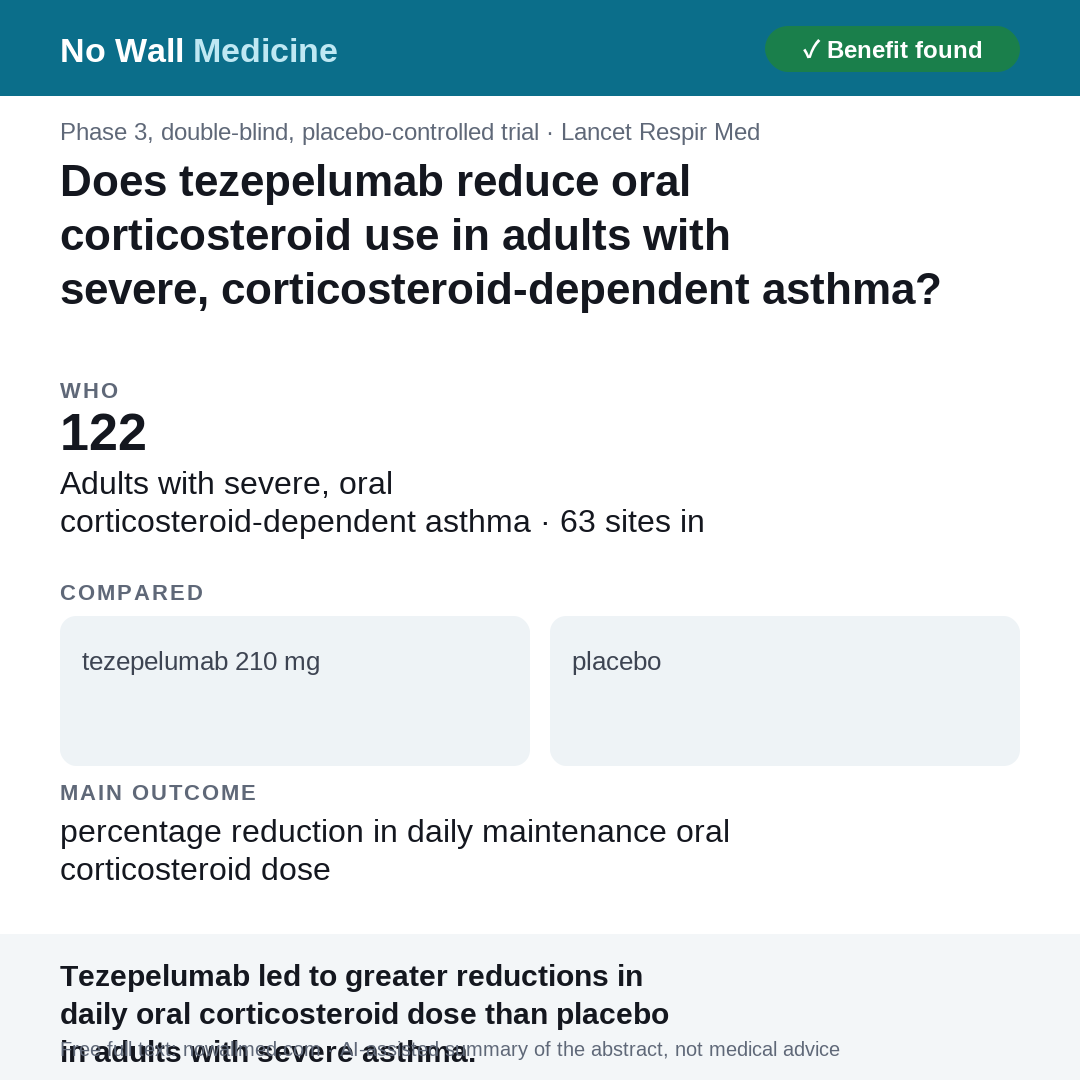
Efficacy and safety of tezepelumab versus placebo in reducing oral corticosteroid use in adults with severe, oral corticosteroid-dependent asthma (SUNRISE): a multicentre, placebo-controlled, double-blind, phase 3 trial
Phase 3, double-blind, placebo-controlled trialBenefit found
Does tezepelumab reduce oral corticosteroid use in adults with severe, corticosteroid-dependent asthma?
Who
122
Adults with severe, oral corticosteroid-dependent asthma · 63 sites in 12 countries
Compared
tezepelumab 210 mg
placebo
Main outcome
percentage reduction in daily maintenance oral corticosteroid dose
Result: odds ratio 2·93 (95% CI 1·43-6·03)
Bottom line: Tezepelumab led to greater reductions in daily oral corticosteroid dose than placebo in adults with severe asthma.
Funded by: AstraZeneca and Amgen
Lancet Respir Med · 2026-05-18Download image
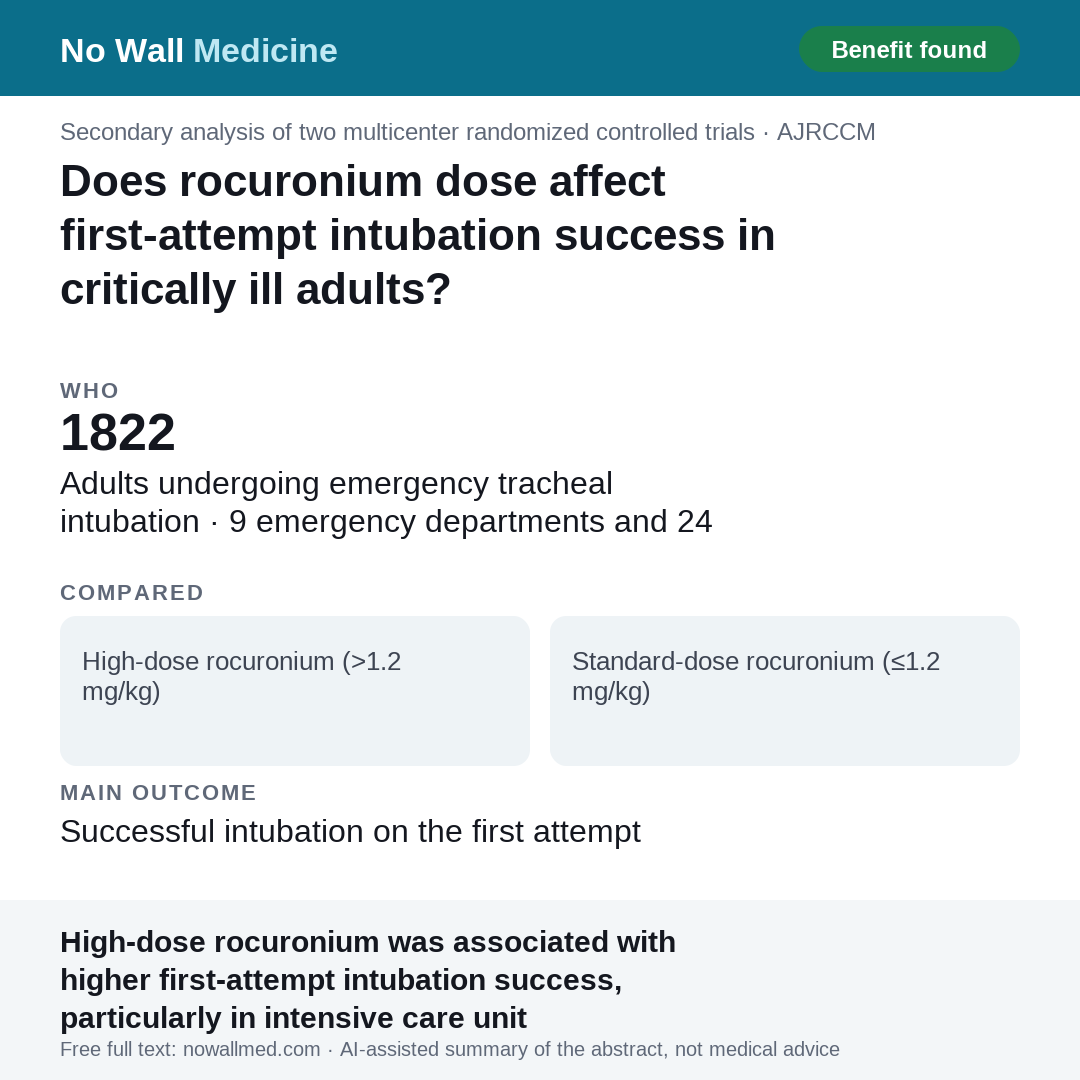
Rocuronium dose and first-attempt intubation success in the critically ill: secondary analysis of two multicenter trials
Secondary analysis of two multicenter randomized controlled trialsBenefit found
Does rocuronium dose affect first-attempt intubation success in critically ill adults?
Who
1822
Adults undergoing emergency tracheal intubation · 9 emergency departments and 24 intensive care units in the United States
Compared
High-dose rocuronium (>1.2 mg/kg)
Standard-dose rocuronium (≤1.2 mg/kg)
Main outcome
Successful intubation on the first attempt
Result: adjusted relative risk 1.07 (95% confidence interval 1.02-1.12)
Bottom line: High-dose rocuronium was associated with higher first-attempt intubation success, particularly in intensive care unit settings.
Limitation: Potential for unmeasured confounding
AJRCCM · 2026-05-18Download image
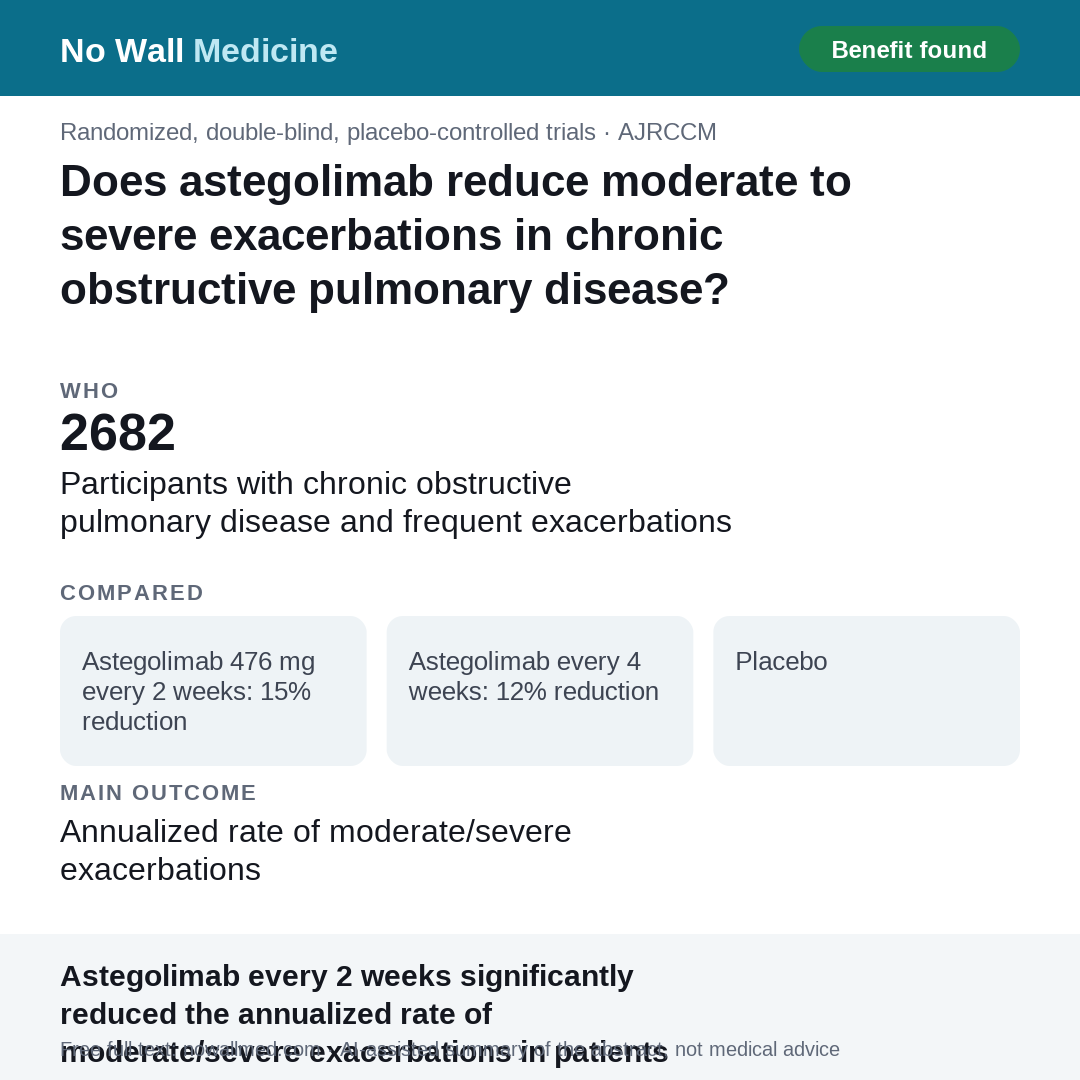
Astegolimab for chronic obstructive pulmonary disease with frequent exacerbations: pooled analysis of the ALIENTO and ARNASA trials
Randomized, double-blind, placebo-controlled trialsBenefit found
Does astegolimab reduce moderate to severe exacerbations in chronic obstructive pulmonary disease?
Who
2682
Participants with chronic obstructive pulmonary disease and frequent exacerbations
Compared
Astegolimab 476 mg every 2 weeks: 15% reduction
Astegolimab every 4 weeks: 12% reduction
Placebo
Main outcome
Annualized rate of moderate/severe exacerbations
Result: adjusted rate ratio 0.85 (95% CI 0.76-0.96)
Bottom line: Astegolimab every 2 weeks significantly reduced the annualized rate of moderate/severe exacerbations in patients with chronic obstructive pulmonary disease.
AJRCCM · 2026-05-18Download image
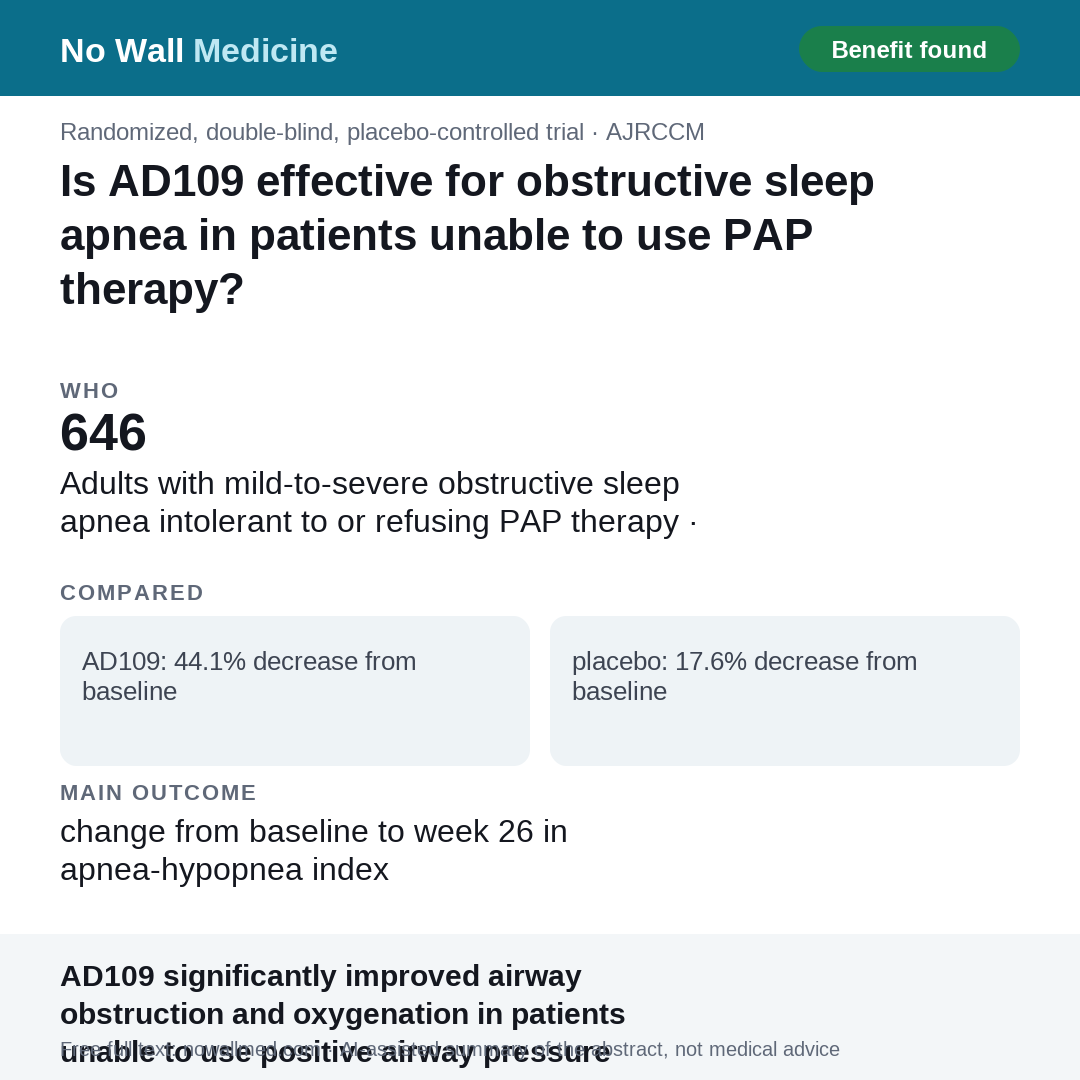
Aroxybutynin and atomoxetine (AD109) for obstructive sleep apnea: a randomized phase 3 trial (SynAIRgy)
Randomized, double-blind, placebo-controlled trialBenefit found
Is AD109 effective for obstructive sleep apnea in patients unable to use PAP therapy?
Who
646
Adults with mild-to-severe obstructive sleep apnea intolerant to or refusing PAP therapy · 69 centers
Compared
AD109: 44.1% decrease from baseline
placebo: 17.6% decrease from baseline
Main outcome
change from baseline to week 26 in apnea-hypopnea index
Result: -4.0 events/hour (95% CI, -6.4 to -1.6)
Bottom line: AD109 significantly improved airway obstruction and oxygenation in patients unable to use positive airway pressure therapy.
AJRCCM · 2026-05-18Download image
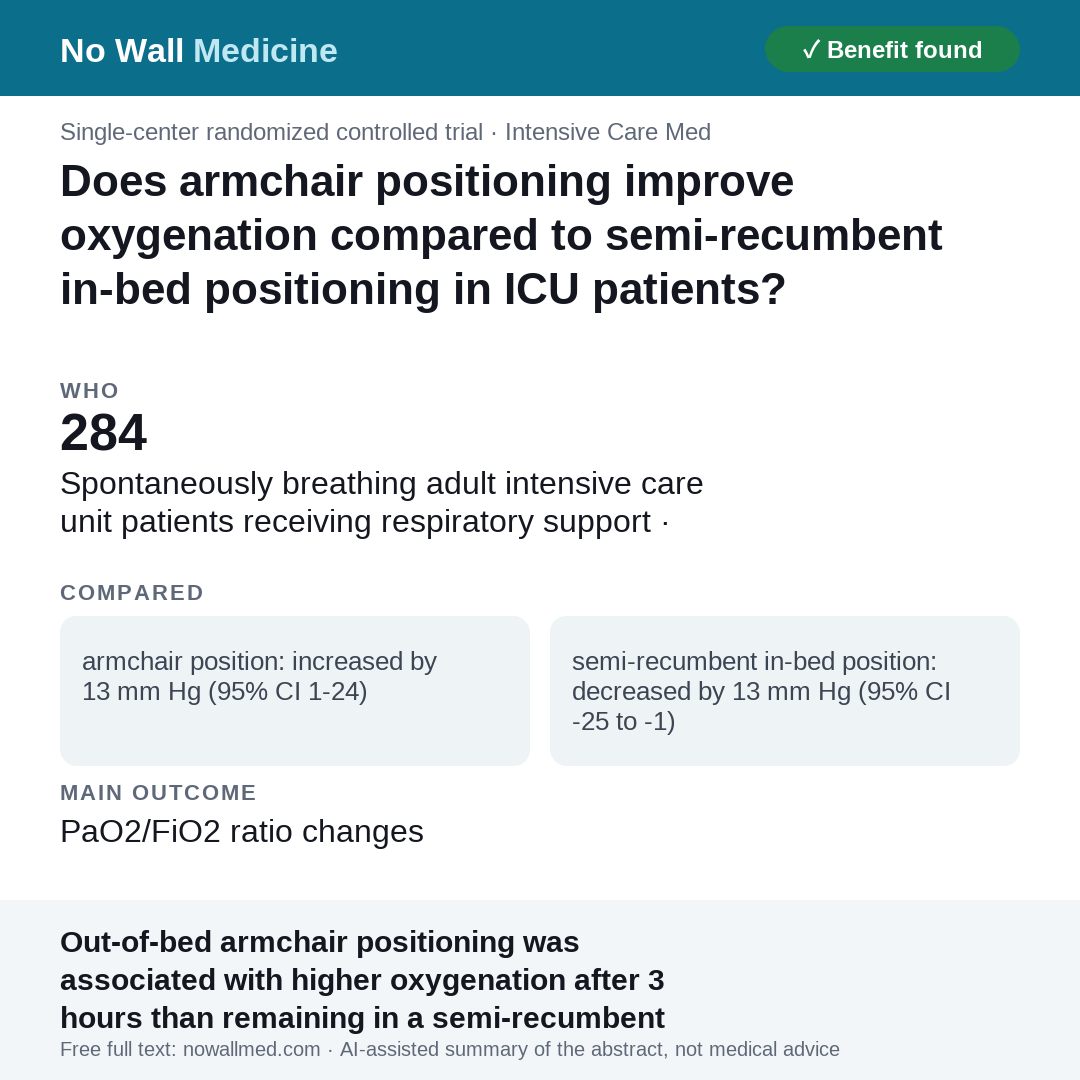
Effects of out-of-bed armchair positioning on oxygenation in spontaneously breathing ICU patients receiving respiratory support: a randomized controlled trial
Single-center randomized controlled trialBenefit found
Does armchair positioning improve oxygenation compared to semi-recumbent in-bed positioning in ICU patients?
Who
284
Spontaneously breathing adult intensive care unit patients receiving respiratory support · Single-center
Compared
armchair position: increased by 13 mm Hg (95% CI 1-24)
semi-recumbent in-bed position: decreased by 13 mm Hg (95% CI -25 to -1)
Main outcome
PaO2/FiO2 ratio changes
Result: 241 mm Hg (95% CI 214-268) vs 206 mm Hg (95% CI 179-233)
Bottom line: Out-of-bed armchair positioning was associated with higher oxygenation after 3 hours than remaining in a semi-recumbent position.
Limitation: Minor adverse events were more frequent in the armchair group.
Intensive Care Med · 2026-05-18Download image