Visual abstracts
New randomized trials and meta-analyses from leading journals at a glance: who was studied, what was compared, and what was found. Every paper is free to read in full.
All specialtiesCardiology 311Oncology 235Gastroenterology & Hepatology 133Infectious Disease 245Neurology 142Psychiatry & Mental Health 210Pulmonology 139Critical Care 91Endocrinology & Diabetes 186Pediatrics 138Surgery 91Orthopedics & Sports Medicine 60Neurosurgery 17Cardiothoracic & Vascular Surgery 34Plastic & Reconstructive Surgery 62Nephrology 63Rheumatology 59Hematology 74Dermatology 31Ophthalmology 52Obstetrics & Gynecology 89Public & Global Health 94Radiology & Imaging 26Anesthesiology 52Urology 72ENT (Otolaryngology) 40Emergency Medicine 29Allergy & Immunology 30Geriatrics 91Family Medicine & Primary Care 46Medical Genetics & Genomics 28Pathology & Laboratory Medicine 5Physical Medicine & Rehabilitation 76Palliative Care 45Nutrition 109Digital Health & AI 260General Medicine 40
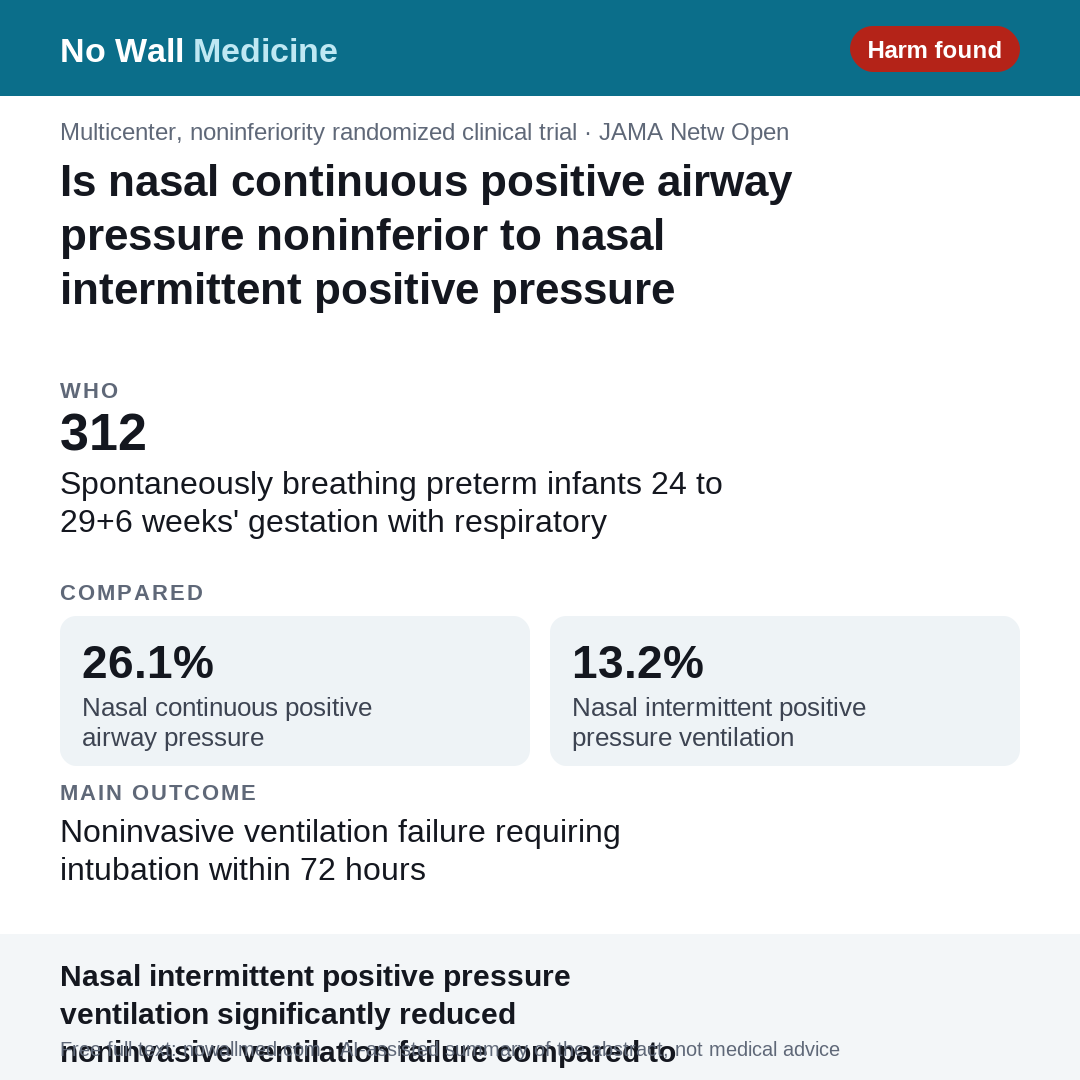
Nasal Continuous Positive Airway Pressure vs Nasal Intermittent Positive Pressure Ventilation in Preterm Infants With Respiratory Distress Syndrome: A Randomized Clinical Trial
Multicenter, noninferiority randomized clinical trialHarm found
Is nasal continuous positive airway pressure noninferior to nasal intermittent positive pressure ventilation for reducing intubation?
Who
312
Spontaneously breathing preterm infants 24 to 29+6 weeks' gestation with respiratory distress syndrome · 11 tertiary neonatal intensive care units in China
Compared
26.1%Nasal continuous positive airway pressure
13.2%Nasal intermittent positive pressure ventilation
Main outcome
Noninvasive ventilation failure requiring intubation within 72 hours
Result: adjusted risk difference, 12.8%; 95% CI, 4.2%-21.6%
Bottom line: Nasal intermittent positive pressure ventilation significantly reduced noninvasive ventilation failure compared to nasal continuous positive airway pressure in preterm infants.
JAMA Netw Open · 2026-06-01Download image
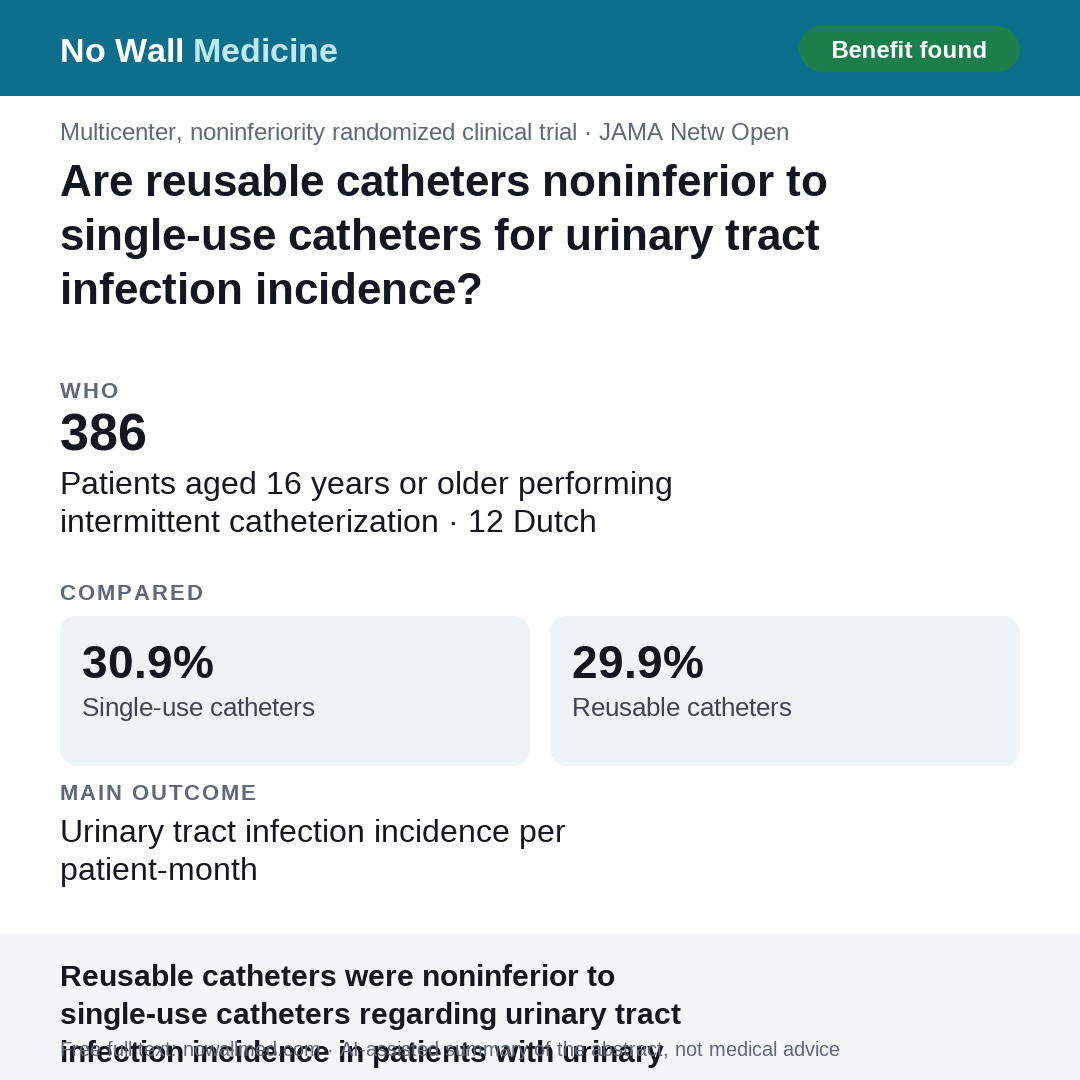
Single-Use vs Reusable Catheters for Intermittent Catheterization in Patients With Urinary Retention: The COMPARE Randomized Clinical Trial
Multicenter, noninferiority randomized clinical trialBenefit found
Are reusable catheters noninferior to single-use catheters for urinary tract infection incidence?
Who
386
Patients aged 16 years or older performing intermittent catheterization · 12 Dutch hospitals
Compared
30.9%Single-use catheters
29.9%Reusable catheters
Main outcome
Urinary tract infection incidence per patient-month
Result: absolute difference of -0.004 (95% CI, -0.025 to 0.019)
Bottom line: Reusable catheters were noninferior to single-use catheters regarding urinary tract infection incidence in patients with urinary retention.
Limitation: Variable tolerability and patient-reported outcomes including urethral irritation in the reusable group.
JAMA Netw Open · 2026-06-01Download image
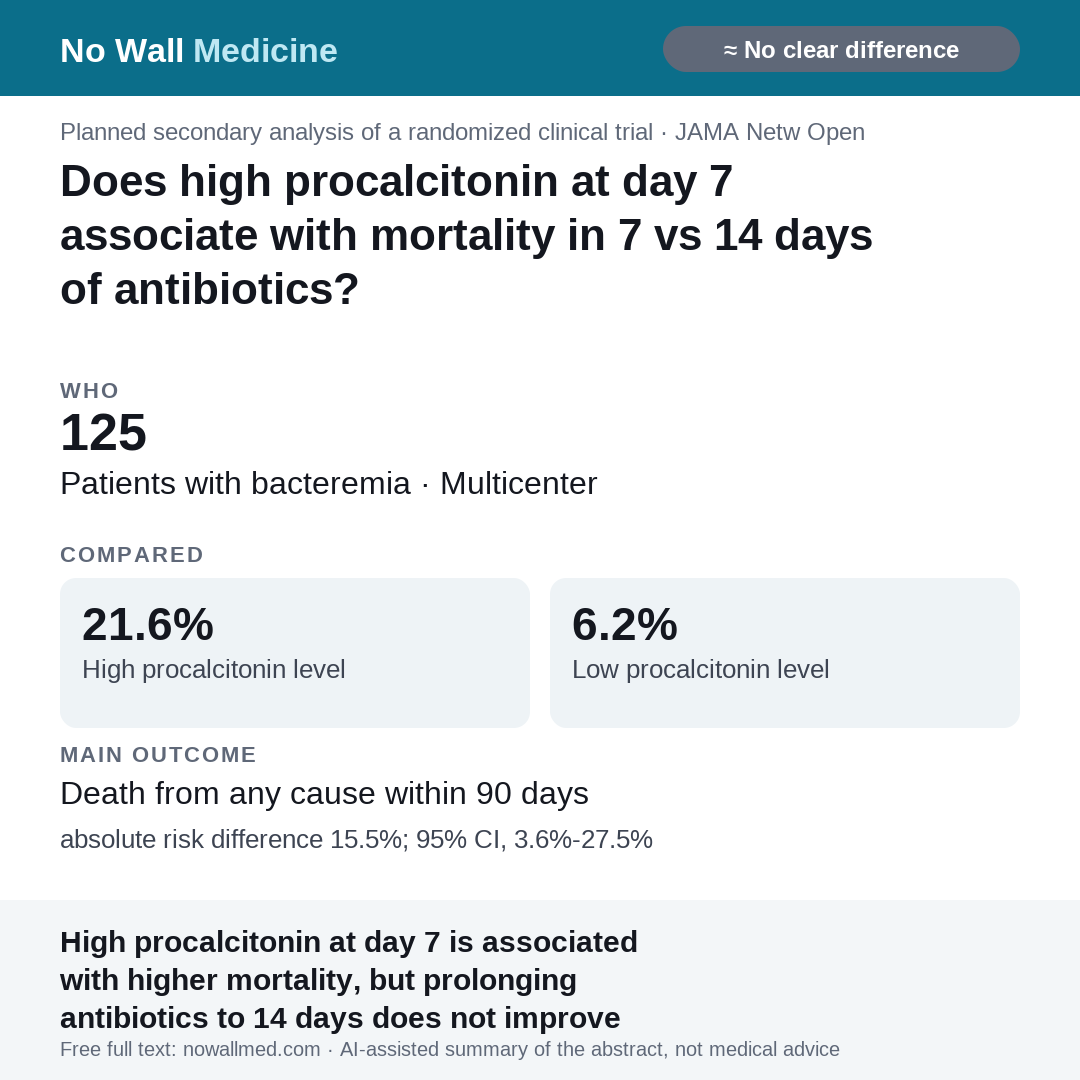
Procalcitonin to Guide 7 vs 14 Days of Antibiotics in Bloodstream Infections: A Secondary Analysis of the BALANCE Trial
Planned secondary analysis of a randomized clinical trialNo clear difference
Does high procalcitonin at day 7 associate with mortality in 7 vs 14 days of antibiotics?
Who
125
Patients with bacteremia · Multicenter
Compared
21.6%High procalcitonin level (13 of 60)
6.2%Low procalcitonin level (4 of 65)
Main outcome
Death from any cause within 90 days
Result: absolute risk difference 15.5%; 95% CI, 3.6%-27.5%
Bottom line: High procalcitonin at day 7 is associated with higher mortality, but prolonging antibiotics to 14 days does not improve outcomes.
JAMA Netw Open · 2026-06-01Download image
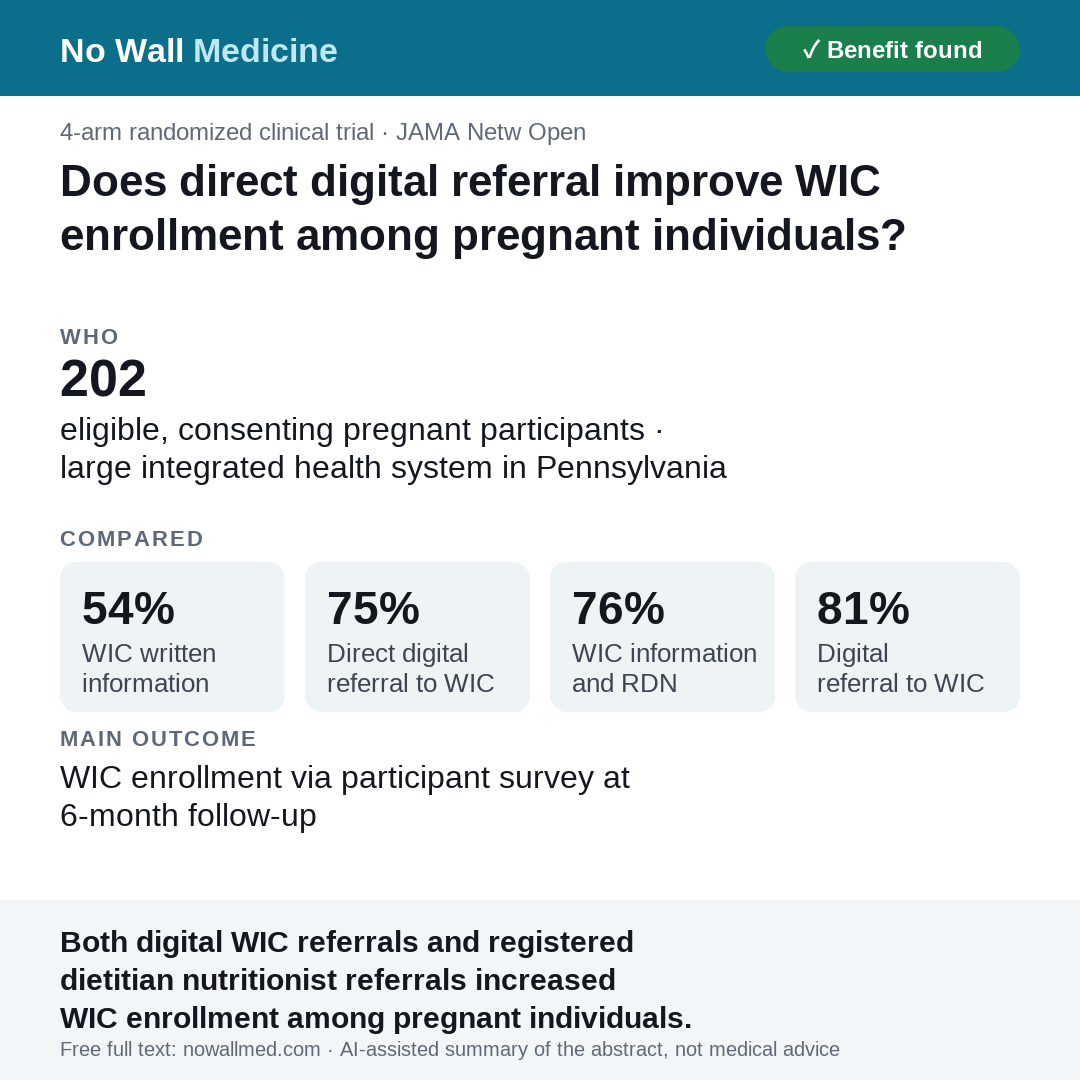
Direct Digital Referrals From Prenatal Care and WIC Enrollment Among Pregnant Individuals: A Randomized Clinical Trial
4-arm randomized clinical trialBenefit found
Does direct digital referral improve WIC enrollment among pregnant individuals?
Who
202
eligible, consenting pregnant participants · large integrated health system in Pennsylvania
Compared
54%WIC written information (27 of 50)
75%Direct digital referral to WIC (41 of 55)
76%WIC information and RDN referral (37 of 49)
81%Digital referral to WIC and RDN (39 of 48)
Main outcome
WIC enrollment via participant survey at 6-month follow-up
Bottom line: Both digital WIC referrals and registered dietitian nutritionist referrals increased WIC enrollment among pregnant individuals.
JAMA Netw Open · 2026-06-01Download image
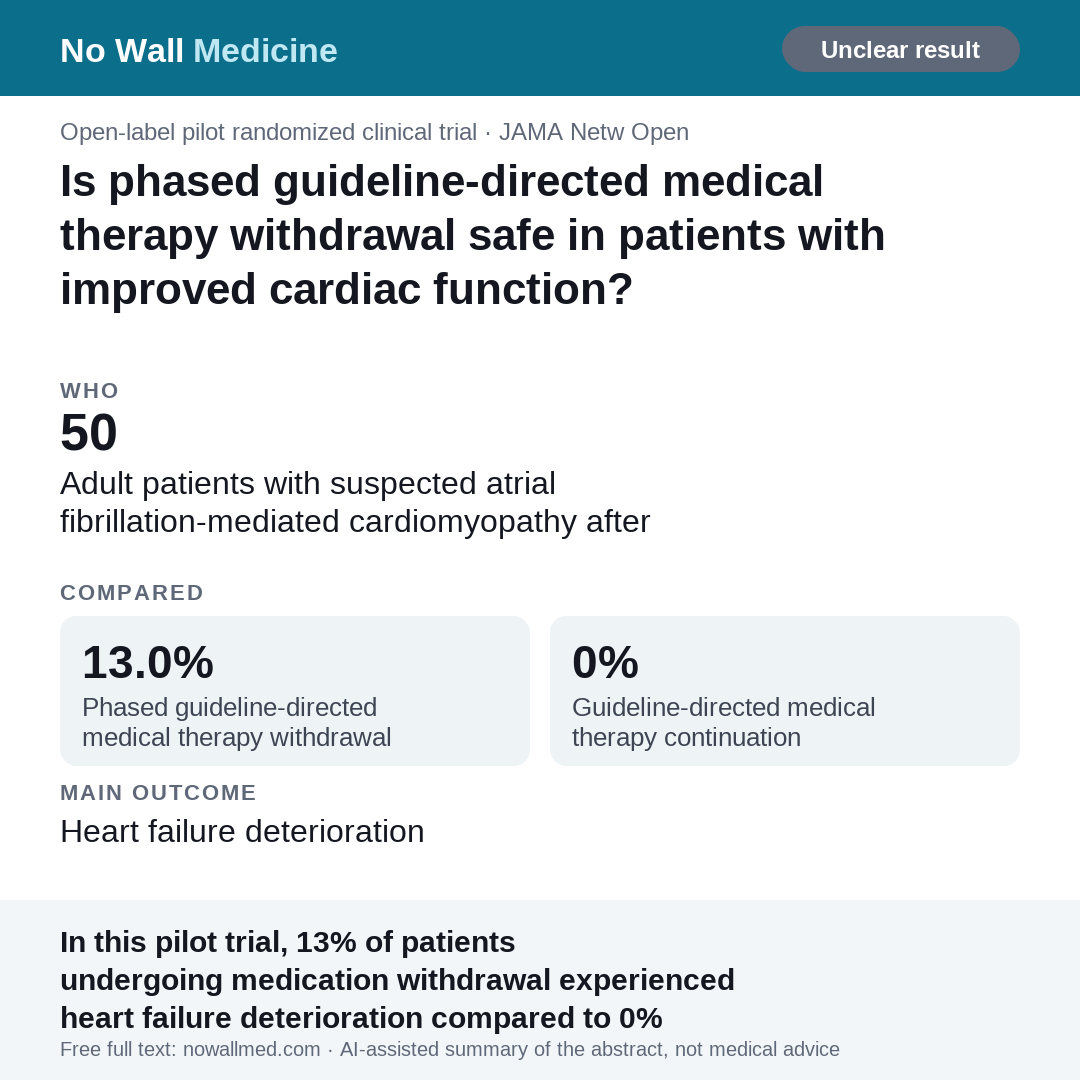
Heart Failure Medication Withdrawal in Patients With Improved Cardiac Function After Atrial Fibrillation Ablation: The DEFINITION-AF Pilot Randomized Clinical Trial
Open-label pilot randomized clinical trialUnclear result
Is phased guideline-directed medical therapy withdrawal safe in patients with improved cardiac function?
Who
50
Adult patients with suspected atrial fibrillation-mediated cardiomyopathy after catheter ablation · Beijing Anzhen Hospital, China
Compared
13.0%Phased guideline-directed medical therapy withdrawal
0%Guideline-directed medical therapy continuation
Main outcome
Heart failure deterioration
Bottom line: In this pilot trial, 13% of patients undergoing medication withdrawal experienced heart failure deterioration compared to 0% in the continuation group.
JAMA Netw Open · 2026-06-01Download image
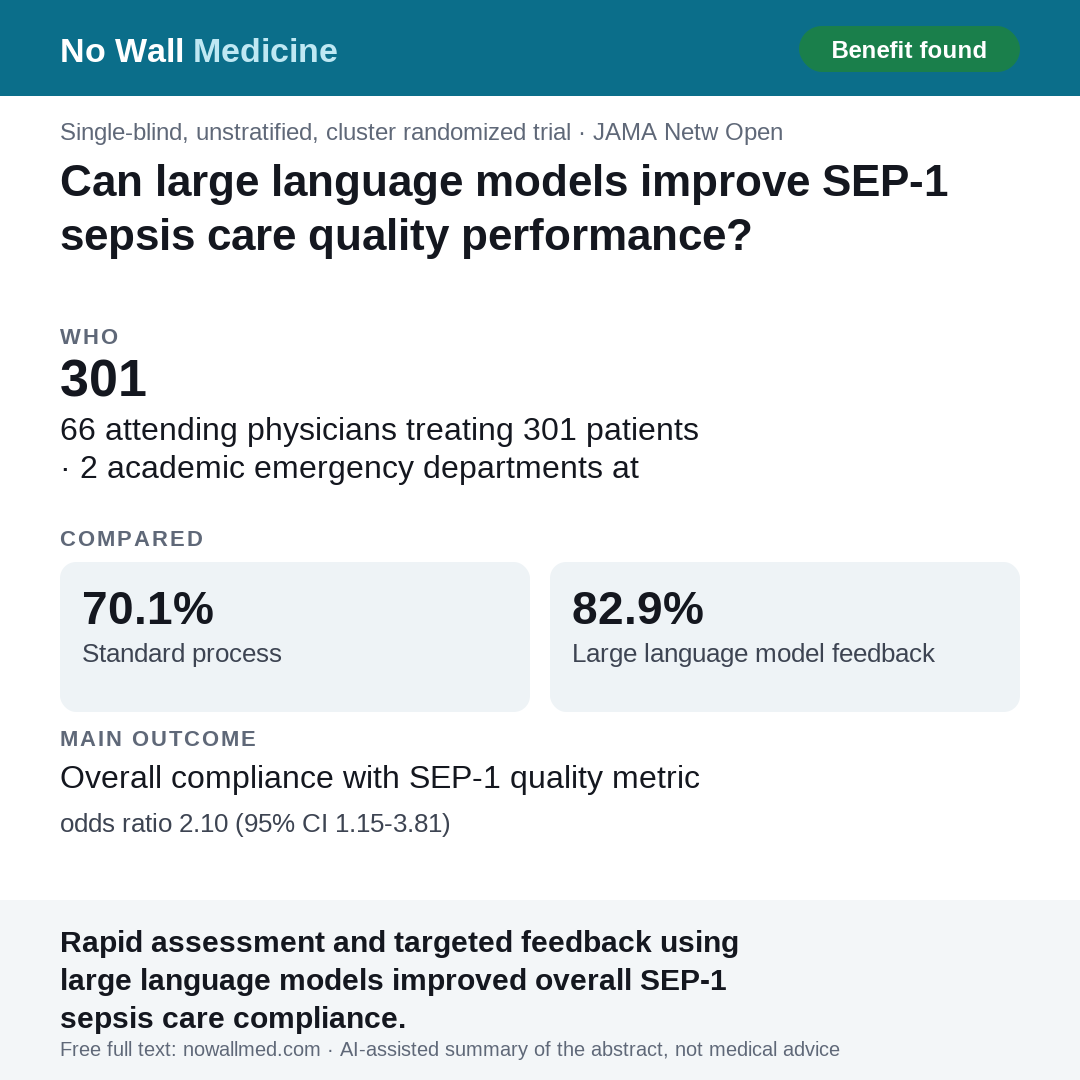
Medical Record Abstraction for Quality Improvement in Sepsis Care Using Artificial Intelligence: A Cluster Randomized Trial
Single-blind, unstratified, cluster randomized trialBenefit found
Can large language models improve SEP-1 sepsis care quality performance?
Who
301
66 attending physicians treating 301 patients · 2 academic emergency departments at University of California, San Diego
Compared
70.1%Standard process
82.9%Large language model feedback
Main outcome
Overall compliance with SEP-1 quality metric
Result: odds ratio 2.10 (95% CI 1.15-3.81)
Bottom line: Rapid assessment and targeted feedback using large language models improved overall SEP-1 sepsis care compliance.
JAMA Netw Open · 2026-06-01Download image
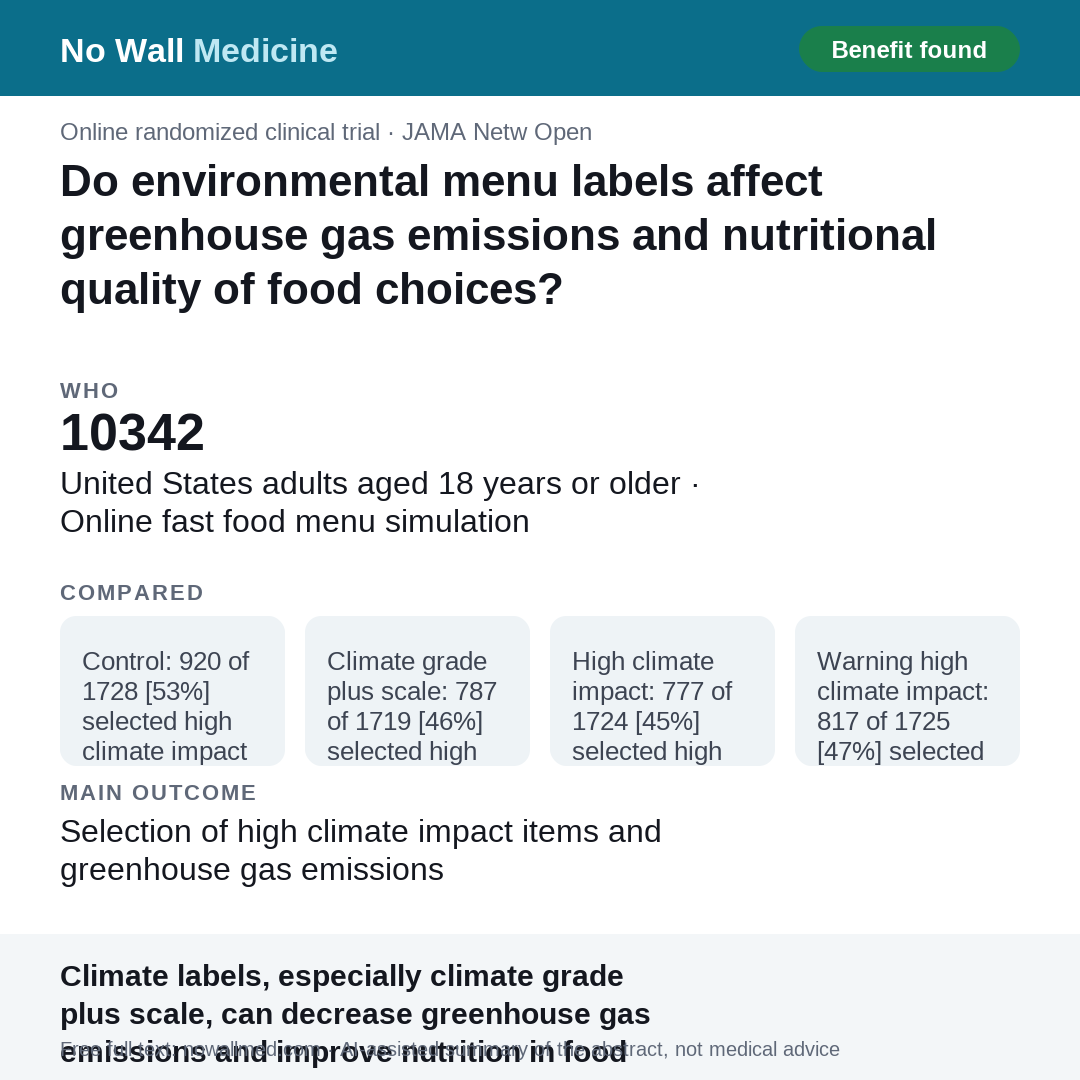
Environmental Menu Labels and Food Selection Among US Adults: A Randomized Clinical Trial
Online randomized clinical trialBenefit found
Do environmental menu labels affect greenhouse gas emissions and nutritional quality of food choices?
Who
10342
United States adults aged 18 years or older · Online fast food menu simulation
Compared
Control: 920 of 1728 [53%] selected high climate impact items
Climate grade plus scale: 787 of 1719 [46%] selected high climate impact items
High climate impact: 777 of 1724 [45%] selected high climate impact items
Warning high climate impact: 817 of 1725 [47%] selected high climate impact items
Main outcome
Selection of high climate impact items and greenhouse gas emissions
Result: climate grade plus scale mean GHGE 16.3 kg CO2 equivalent (95% CI 15.5-17.2)
Bottom line: Climate labels, especially climate grade plus scale, can decrease greenhouse gas emissions and improve nutrition in food choices.
JAMA Netw Open · 2026-06-01Download image
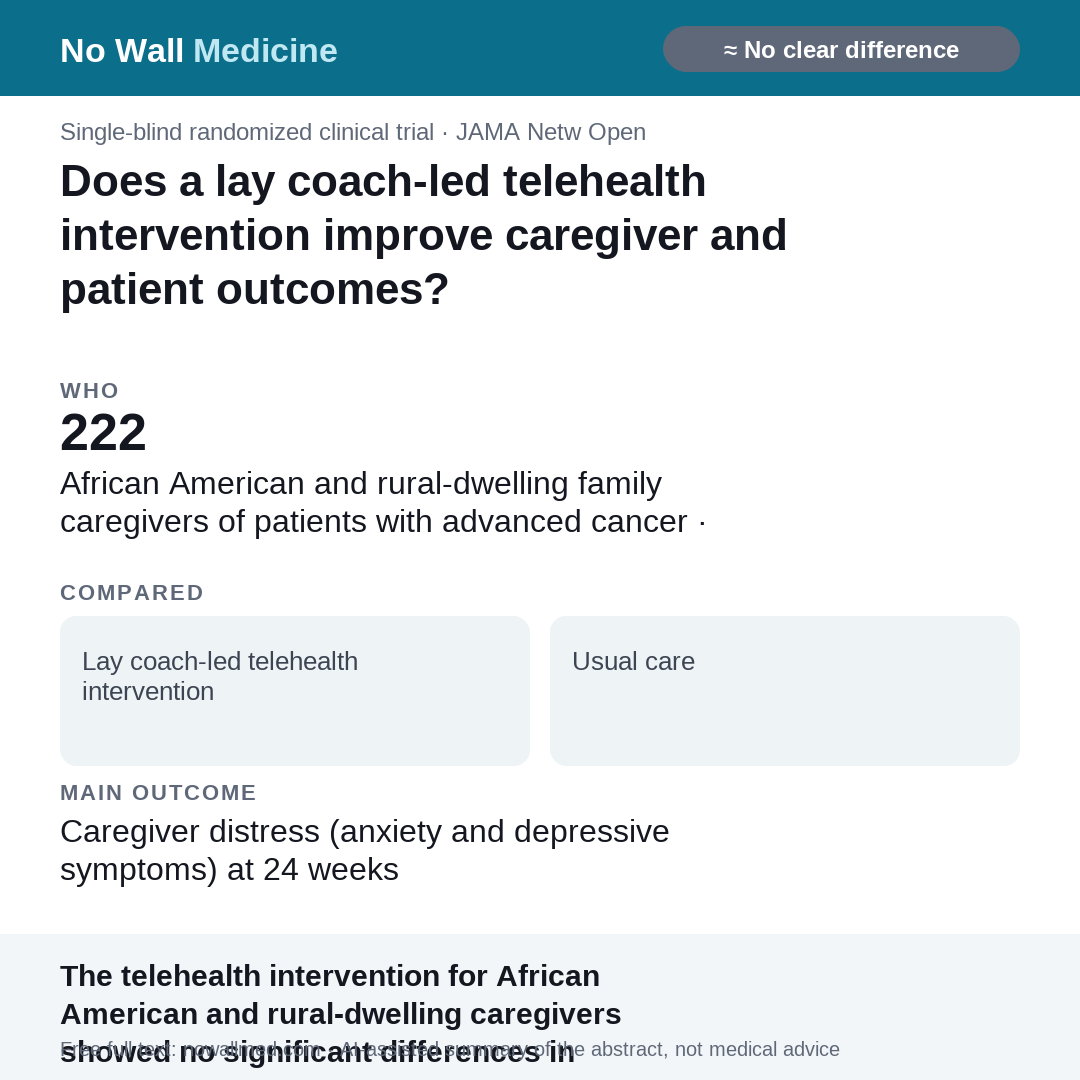
Palliative Care Coaching for Family Caregivers of Patients With Advanced Cancer: A Randomized Clinical Trial
Single-blind randomized clinical trialNo clear difference
Does a lay coach-led telehealth intervention improve caregiver and patient outcomes?
Who
222
African American and rural-dwelling family caregivers of patients with advanced cancer · Outpatient oncology clinics at 2 large cancer centers, Southeastern US
Compared
Lay coach-led telehealth intervention
Usual care
Main outcome
Caregiver distress (anxiety and depressive symptoms) at 24 weeks
Result: mean baseline-adjusted difference 0.23 (95% CI -0.14 to 0.24) for anxiety
Bottom line: The telehealth intervention for African American and rural-dwelling caregivers showed no significant differences in caregiver or patient outcomes.
Limitation: Exploratory sensitivity analyses indicated potential improvements in caregiver anxiety and patient mental health quality of life.
JAMA Netw Open · 2026-06-01Download image
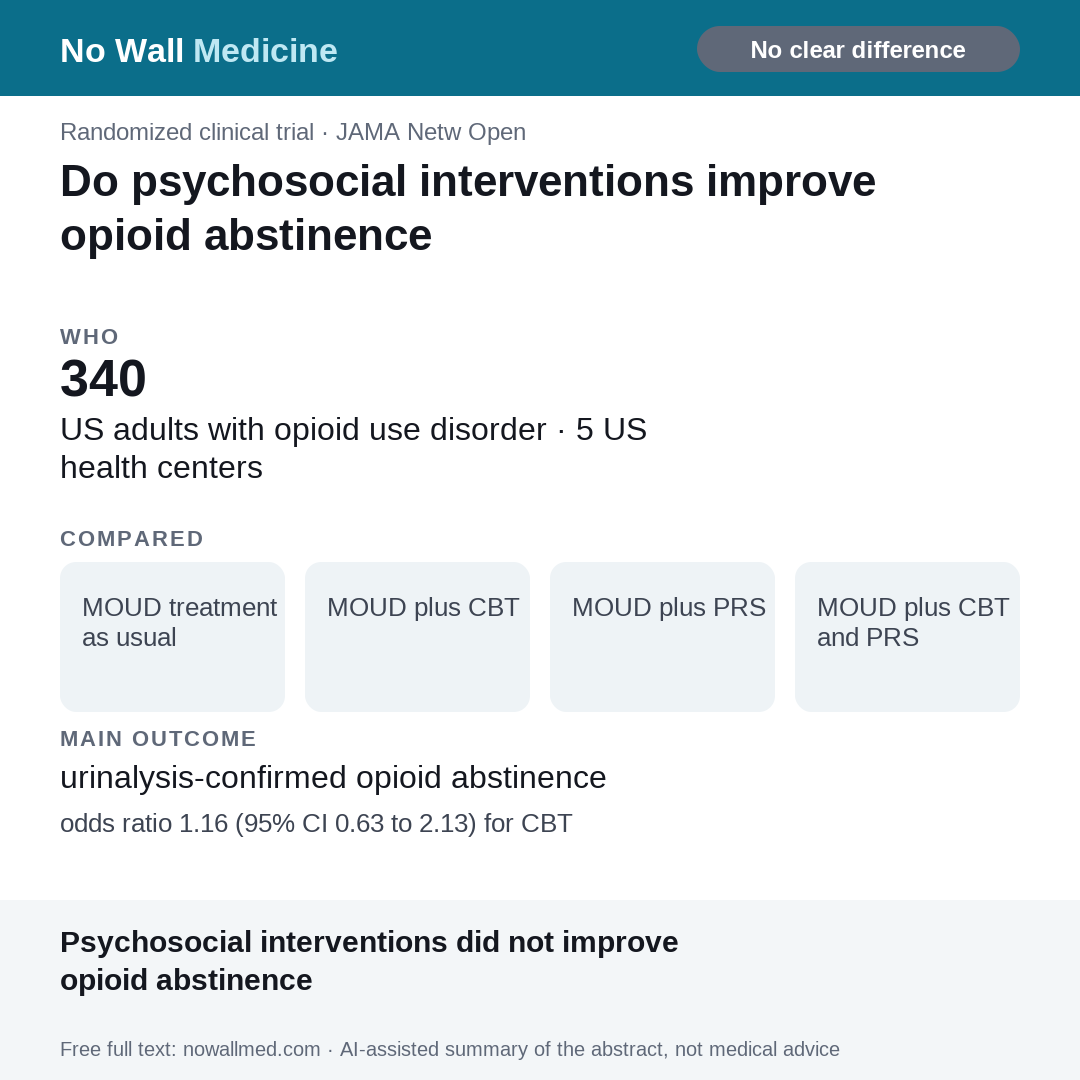
Adjunctive Psychosocial Interventions and Opioid Abstinence Among Patients Receiving Buprenorphine: A Randomized Clinical Trial
Randomized clinical trialNo clear difference
Do psychosocial interventions improve opioid abstinence
Who
340
US adults with opioid use disorder · 5 US health centers
Compared
MOUD treatment as usual
MOUD plus CBT
MOUD plus PRS
MOUD plus CBT and PRS
Main outcome
urinalysis-confirmed opioid abstinence
Result: odds ratio 1.16 (95% CI 0.63 to 2.13) for CBT
Bottom line: Psychosocial interventions did not improve opioid abstinence
JAMA Netw Open · 2026-06-01Download image
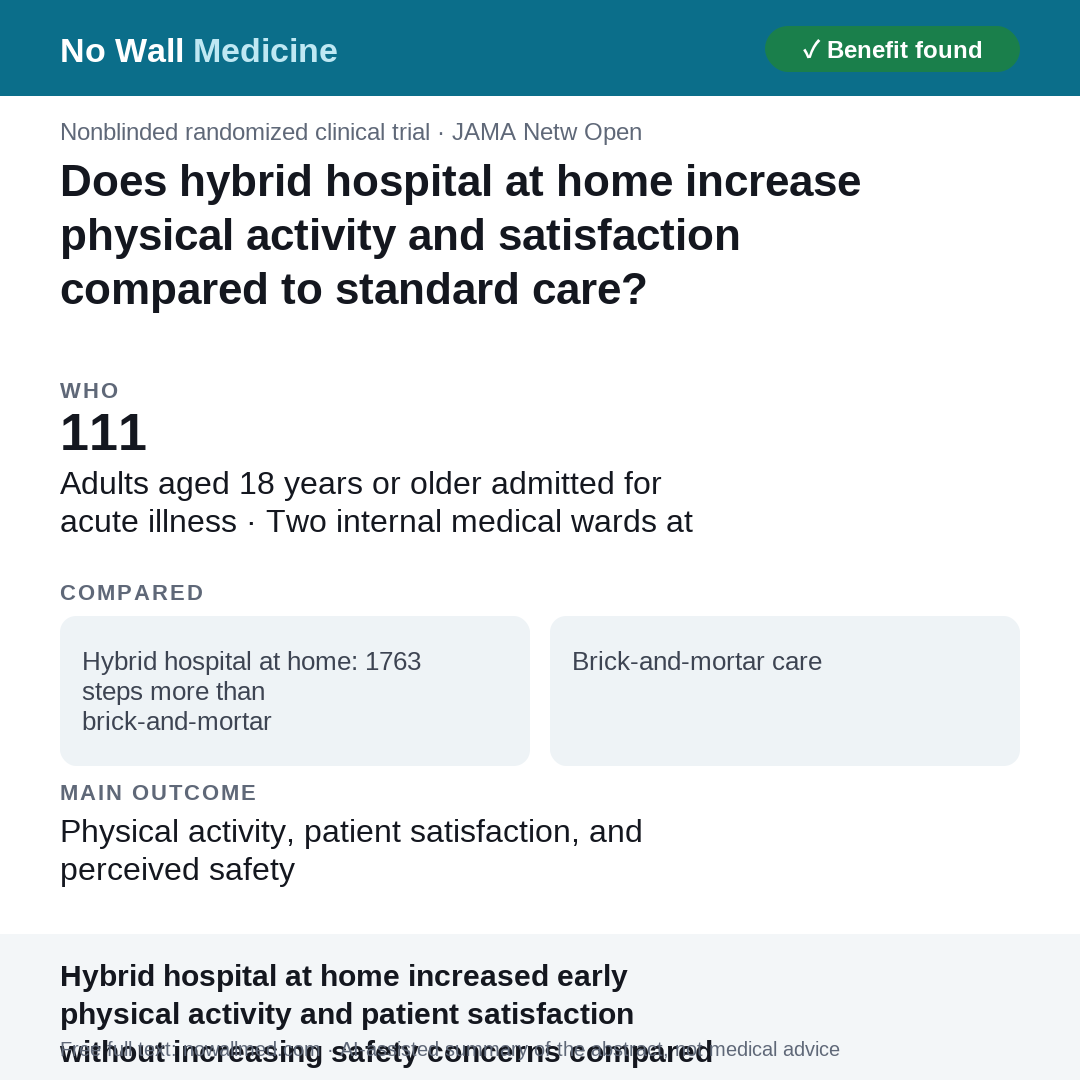
Hybrid Hospital at Home and Physical Activity for Adults Admitted to the Hospital With Acute Illness: A Randomized Clinical Trial
Nonblinded randomized clinical trialBenefit found
Does hybrid hospital at home increase physical activity and satisfaction compared to standard care?
Who
111
Adults aged 18 years or older admitted for acute illness · Two internal medical wards at a regional public hospital in Denmark
Compared
Hybrid hospital at home: 1763 steps more than brick-and-mortar
Brick-and-mortar care
Main outcome
Physical activity, patient satisfaction, and perceived safety
Result: adjusted mean difference 1763 steps (95% CI 153 to 3373 steps)
Bottom line: Hybrid hospital at home increased early physical activity and patient satisfaction without increasing safety concerns compared to standard care.
Limitation: Future studies should incorporate frailty measures and assess durability and linkage to clinical end points.
JAMA Netw Open · 2026-06-01Download image
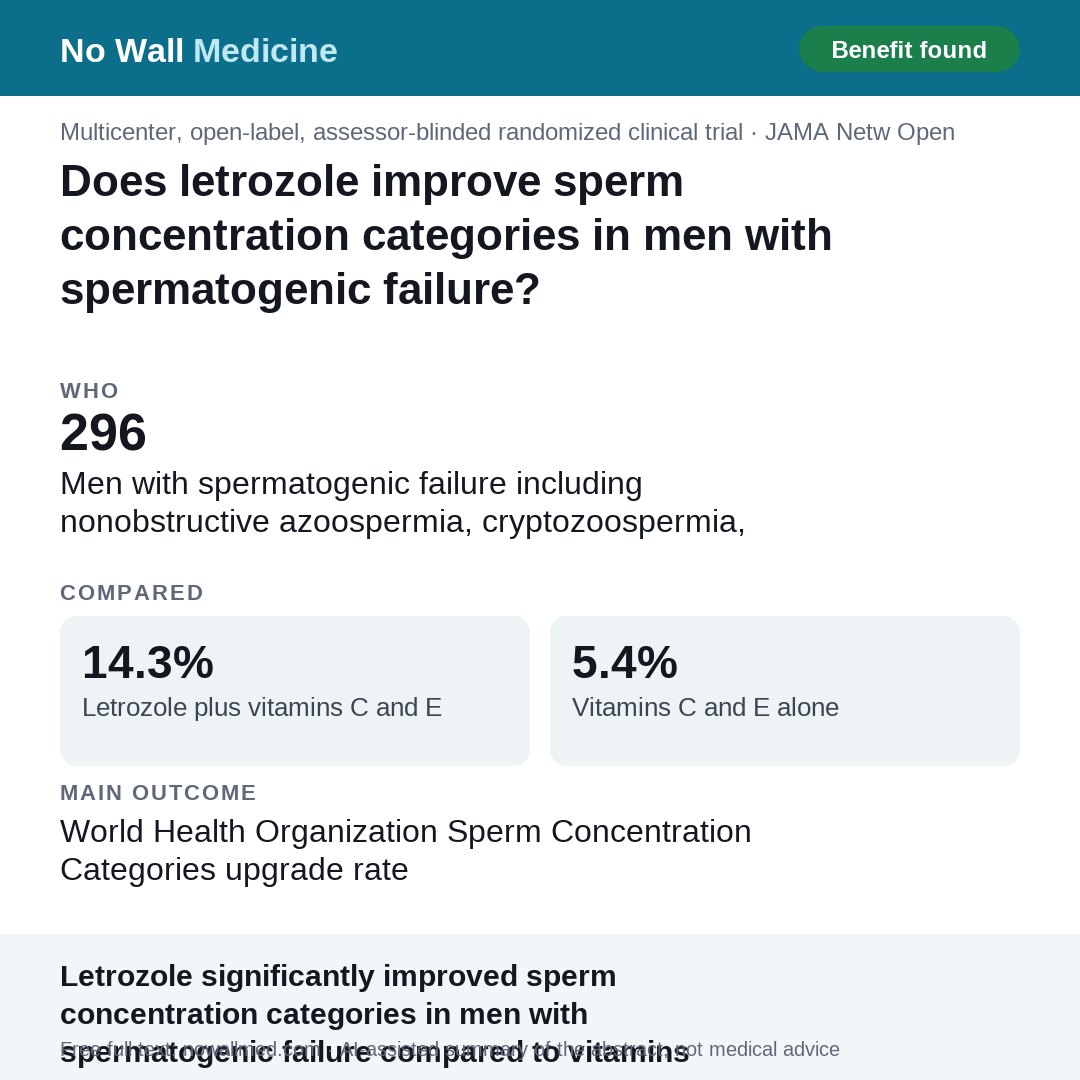
Letrozole and Infertility Among Males With Spermatogenic Failure: A Randomized Clinical Trial
Multicenter, open-label, assessor-blinded randomized clinical trialBenefit found
Does letrozole improve sperm concentration categories in men with spermatogenic failure?
Who
296
Men with spermatogenic failure including nonobstructive azoospermia, cryptozoospermia, or severe oligozoospermia · 10 male infertility centers in China
Compared
14.3%Letrozole plus vitamins C and E (21 of 147 participants)
5.4%Vitamins C and E alone (8 of 149 participants)
Main outcome
World Health Organization Sperm Concentration Categories upgrade rate
Result: risk difference, 9.2% (95% CI, 2.5%-15.8%)
Bottom line: Letrozole significantly improved sperm concentration categories in men with spermatogenic failure compared to vitamins alone.
JAMA Netw Open · 2026-06-01Download image
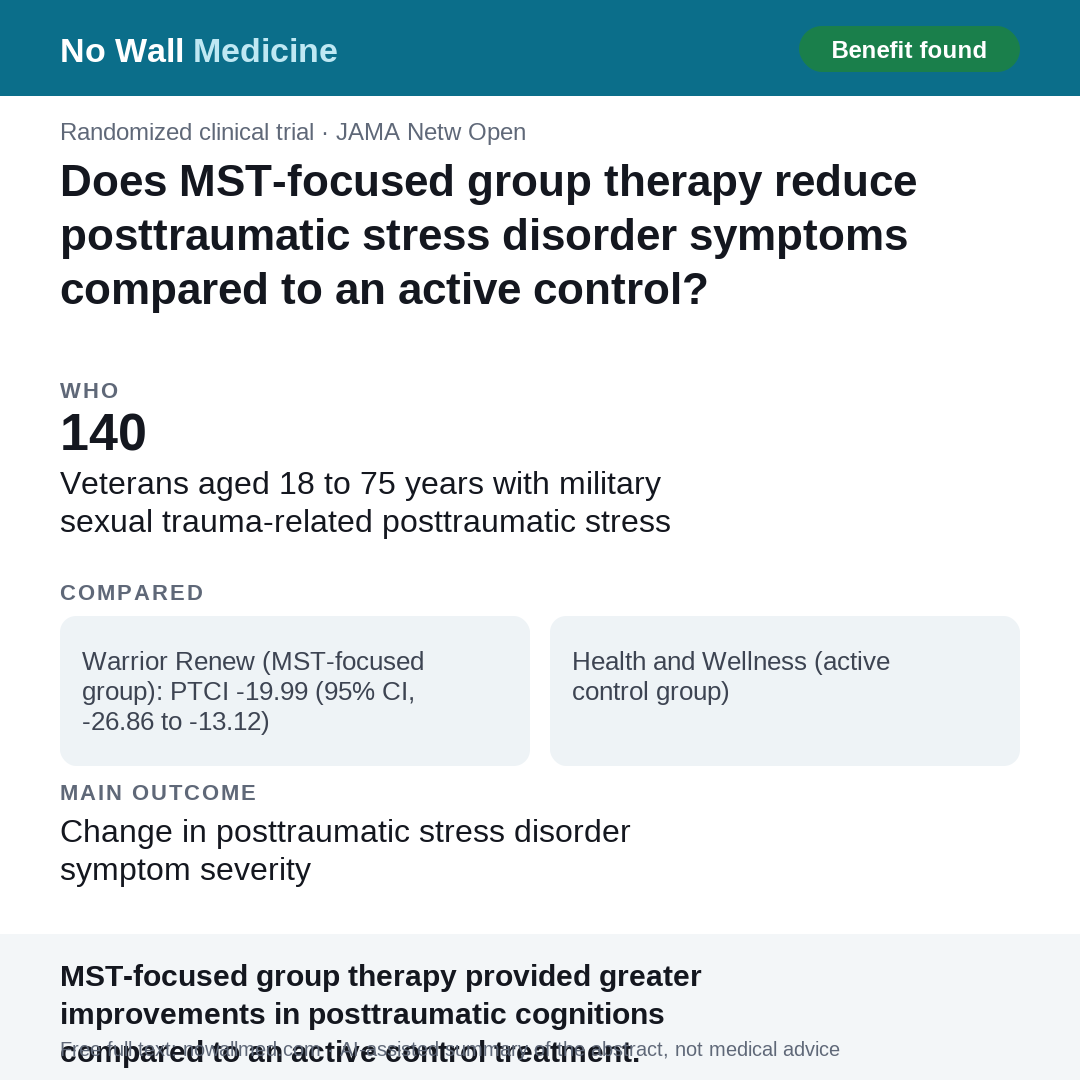
Group Therapy for Posttraumatic Stress Disorder Symptoms Among Veterans With Military Sexual Trauma: A Randomized Clinical Trial
Randomized clinical trialBenefit found
Does MST-focused group therapy reduce posttraumatic stress disorder symptoms compared to an active control?
Who
140
Veterans aged 18 to 75 years with military sexual trauma-related posttraumatic stress disorder symptoms · 2 Veterans Affairs health care systems, Pacific Northwest US
Compared
Warrior Renew (MST-focused group): PTCI -19.99 (95% CI, -26.86 to -13.12)
Health and Wellness (active control group)
Main outcome
Change in posttraumatic stress disorder symptom severity
Result: PTCI difference -9.61 (95% CI, -18.98 to -0.25)
Bottom line: MST-focused group therapy provided greater improvements in posttraumatic cognitions compared to an active control treatment.
JAMA Netw Open · 2026-06-01Download image
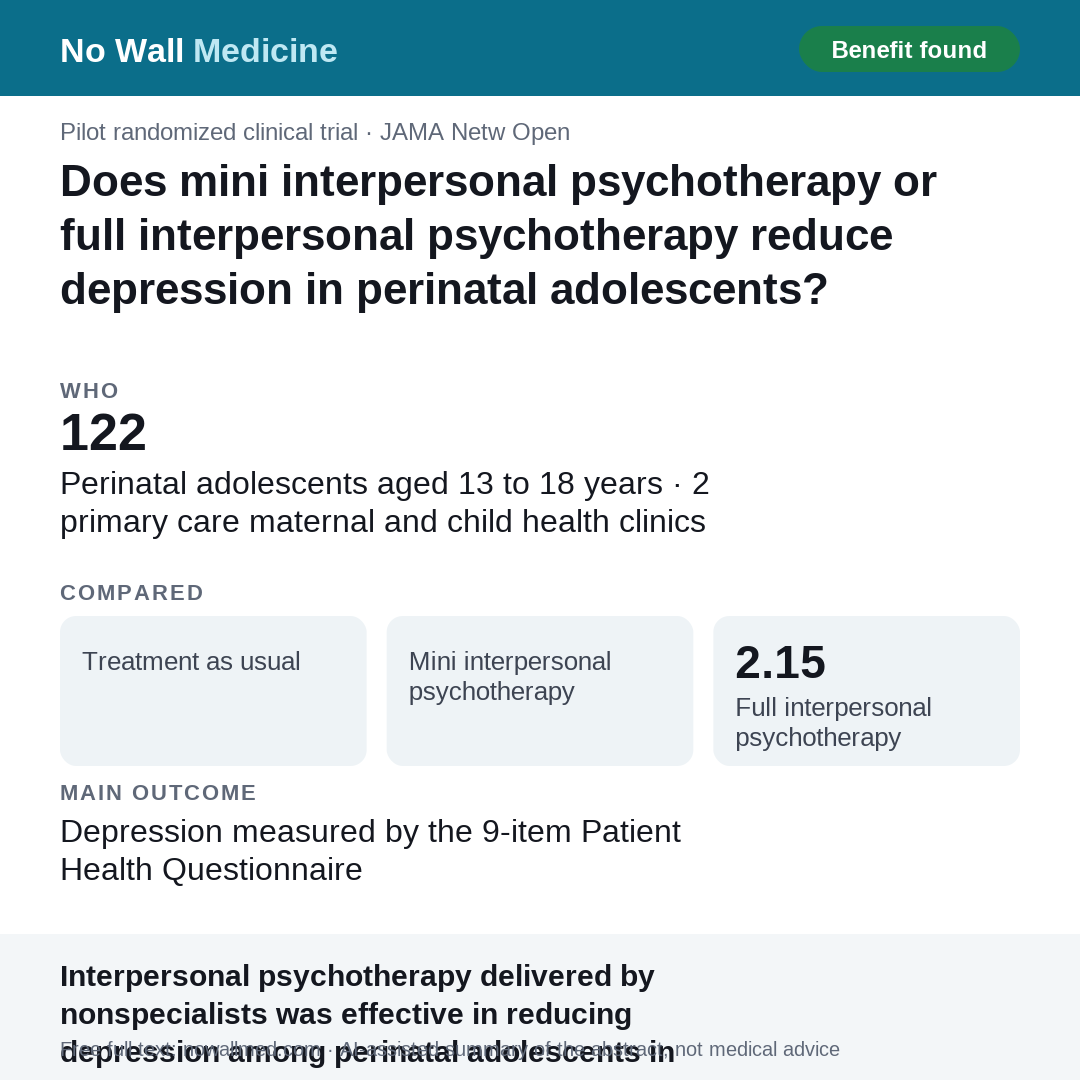
Group Interpersonal Psychotherapy for Depression in Perinatal Adolescents in Kenya: A Pilot Randomized Clinical Trial
Pilot randomized clinical trialBenefit found
Does mini or full group interpersonal psychotherapy reduce depression in perinatal adolescents?
Who
122
Perinatal adolescents aged 13 to 18 years · 2 primary care maternal and child health clinics in Nairobi, Kenya
Compared
7.94Treatment as usual (3.71)
3.94Mini group interpersonal psychotherapy (2.81)
2.15Full group interpersonal psychotherapy (1.94)
Main outcome
Depression measured by the 9-item Patient Health Questionnaire
Result: β vs TAU = -5.79 (95% CI, -7.67 to -3.91) for full IPT-G
Bottom line: Both psychotherapy arms reduced depression more than usual care, though full therapy showed more sustained benefits at 6 months.
JAMA Netw Open · 2026-06-01Download image
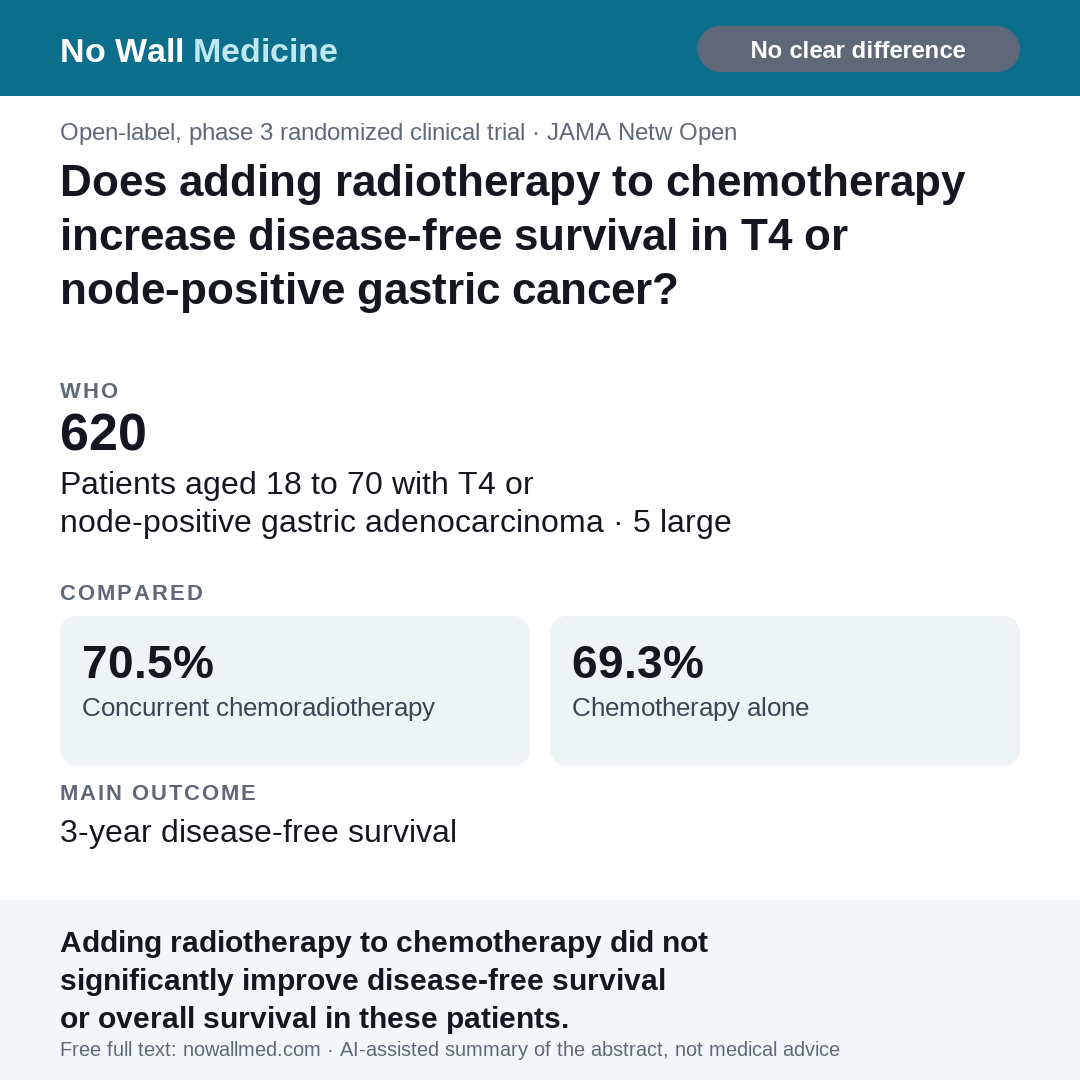
Adjuvant Chemoradiotherapy or Chemotherapy After D2 Gastrectomy in Gastric Cancer: A Randomized Clinical Trial
Open-label, phase 3 randomized clinical trialNo clear difference
Does adding radiotherapy to chemotherapy increase disease-free survival in T4 or node-positive gastric cancer?
Who
620
Patients aged 18 to 70 with T4 or node-positive gastric adenocarcinoma · 5 large tertiary hospitals in China
Compared
70.5%Concurrent chemoradiotherapy
69.3%Chemotherapy alone
Main outcome
3-year disease-free survival
Result: hazard ratio 0.98 (95% CI 0.73 to 1.33)
Bottom line: Adding radiotherapy to chemotherapy did not significantly improve disease-free survival or overall survival in these patients.
JAMA Netw Open · 2026-06-01Download image
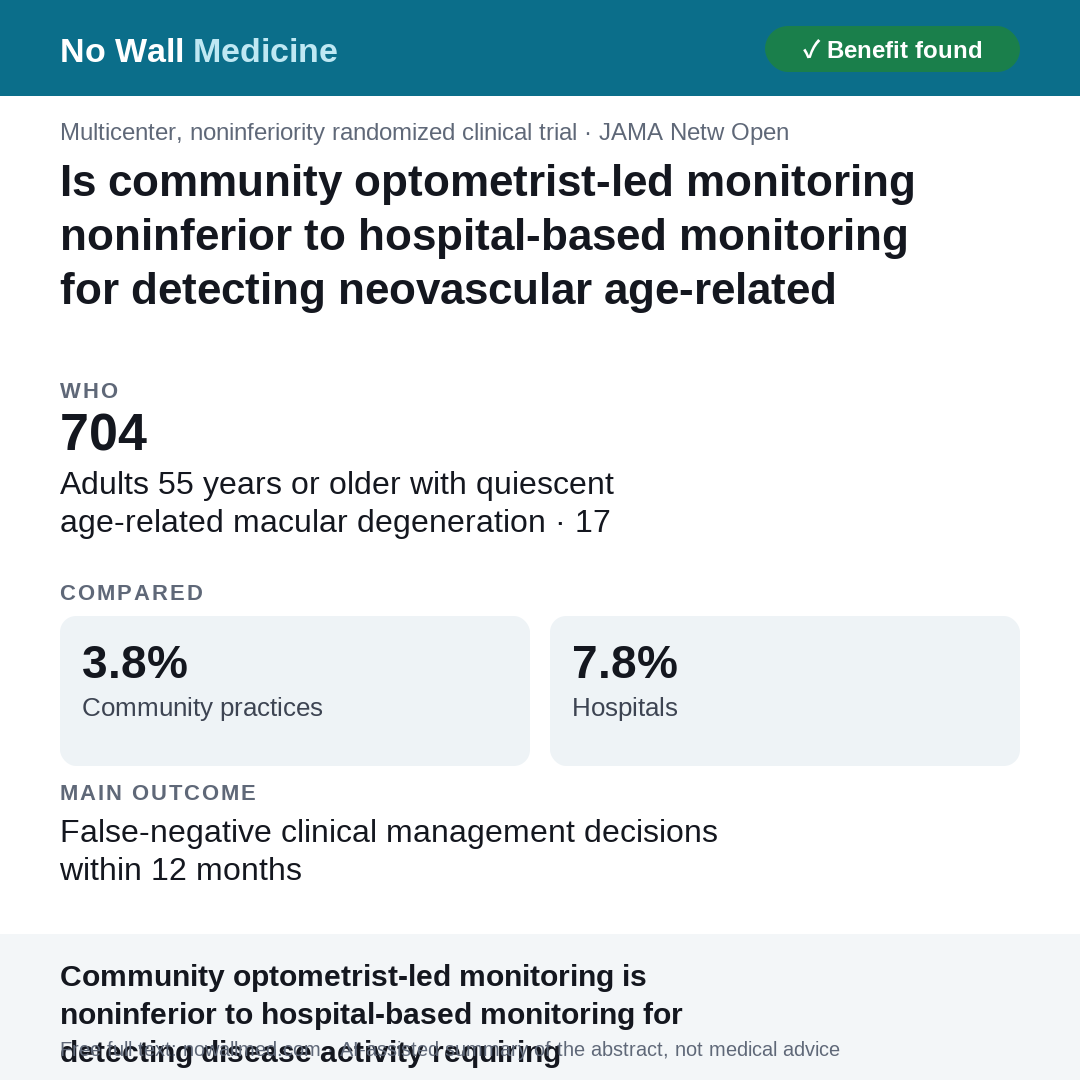
Community Optometrist-Led Monitoring of Quiescent Neovascular Age-Related Macular Degeneration: The FENETRE Randomized Clinical Trial
Multicenter, noninferiority randomized clinical trialBenefit found
Is community optometrist-led monitoring noninferior to hospital-based monitoring for detecting neovascular age-related macular degeneration activity?
Who
704
Adults 55 years or older with quiescent age-related macular degeneration · 17 hospitals and 60 community optometry practices
Compared
3.8%Community practices
7.8%Hospitals
Main outcome
False-negative clinical management decisions within 12 months
Result: risk difference, -3.9 percentage points; 95% CI, -7.4 to -0.3 percentage points
Bottom line: Community optometrist-led monitoring is noninferior to hospital-based monitoring for detecting disease activity requiring treatment.
JAMA Netw Open · 2026-06-01Download image
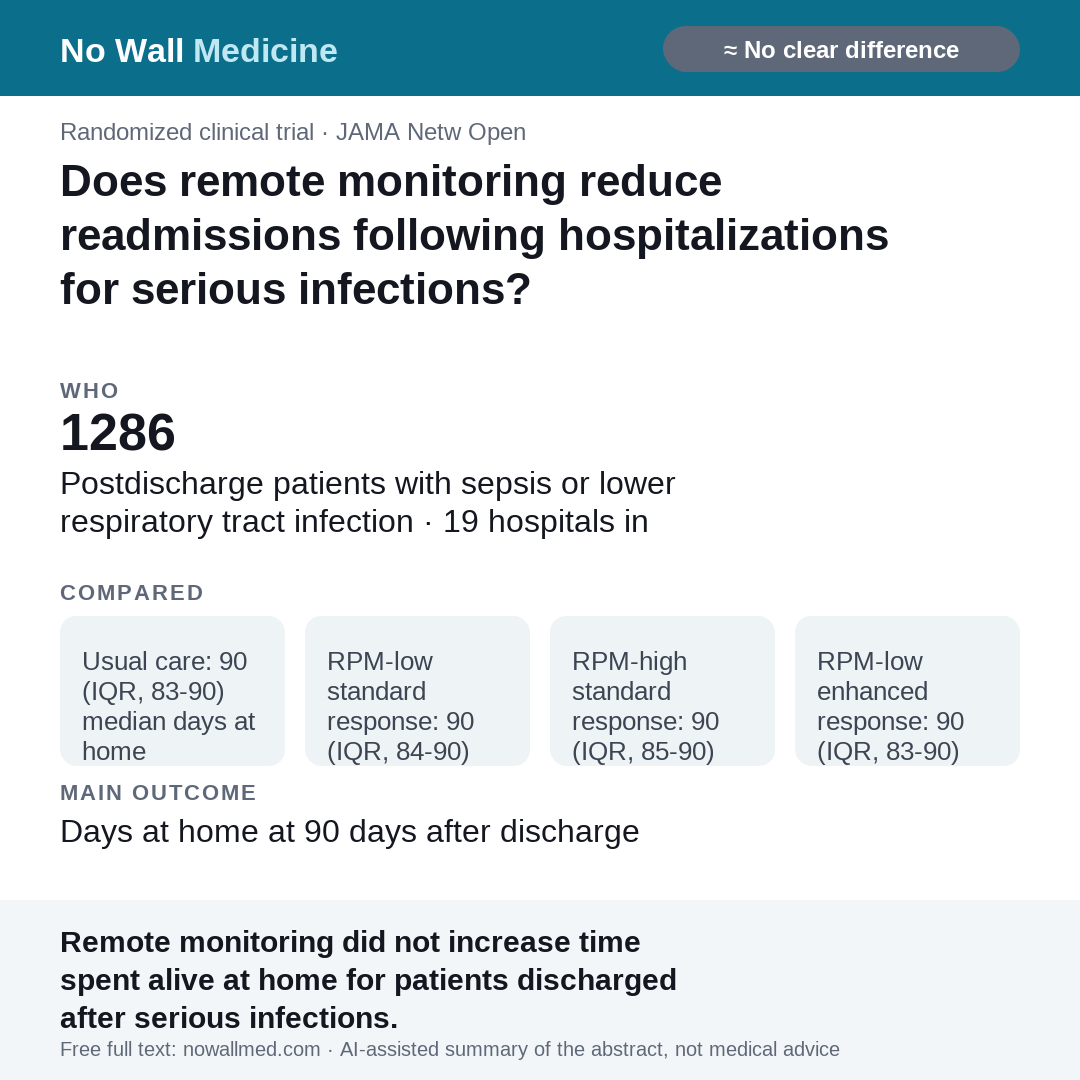
Remote Monitoring Approaches to Reduce Readmissions After Infection and Sepsis: A Randomized Clinical Trial
Randomized clinical trialNo clear difference
Does remote monitoring reduce readmissions following hospitalizations for serious infections?
Who
1286
Postdischarge patients with sepsis or lower respiratory tract infection · 19 hospitals in western Pennsylvania
Compared
Usual care: 90 (IQR, 83-90) median days at home
RPM-low standard response: 90 (IQR, 84-90) median days at home
RPM-high standard response: 90 (IQR, 85-90) median days at home
RPM-low enhanced response: 90 (IQR, 83-90) median days at home
Main outcome
Days at home at 90 days after discharge
Result: cumulative odds ratios 0.96 (credible interval 0.70-1.32) to 1.01 (95% CrI 0.76-1.33)
Bottom line: Remote monitoring did not increase time spent alive at home for patients discharged after serious infections.
JAMA Netw Open · 2026-06-01Download image
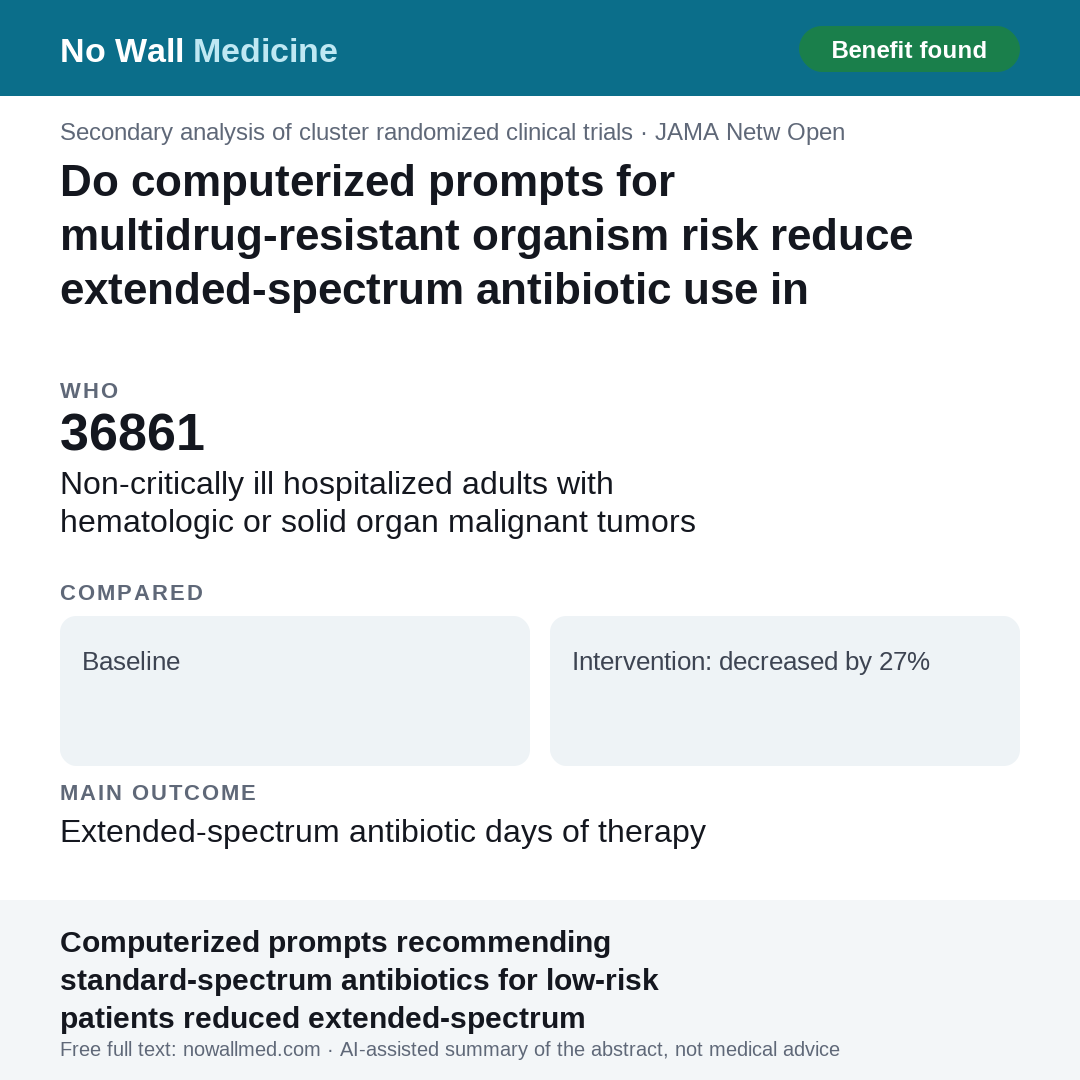
Improving Empiric Antibiotic Selection for Patients With Cancer Hospitalized With Infection: Secondary Analysis of the INSPIRE Cluster Randomized Trials
Secondary analysis of cluster randomized clinical trialsBenefit found
Do computerized prompts for multidrug-resistant organism risk reduce extended-spectrum antibiotic use in cancer patients?
Who
36861
Non-critically ill hospitalized adults with hematologic or solid organ malignant tumors
Compared
Baseline
Intervention: decreased by 27% to 24% depending on infection type
Main outcome
Extended-spectrum antibiotic days of therapy
Result: rate ratio 0.73 (95% CI, 0.67-0.80) for pneumonia
Bottom line: Computerized prompts recommending standard-spectrum antibiotics for low-risk patients reduced extended-spectrum antibiotic use without affecting safety outcomes.
JAMA Netw Open · 2026-06-01Download image
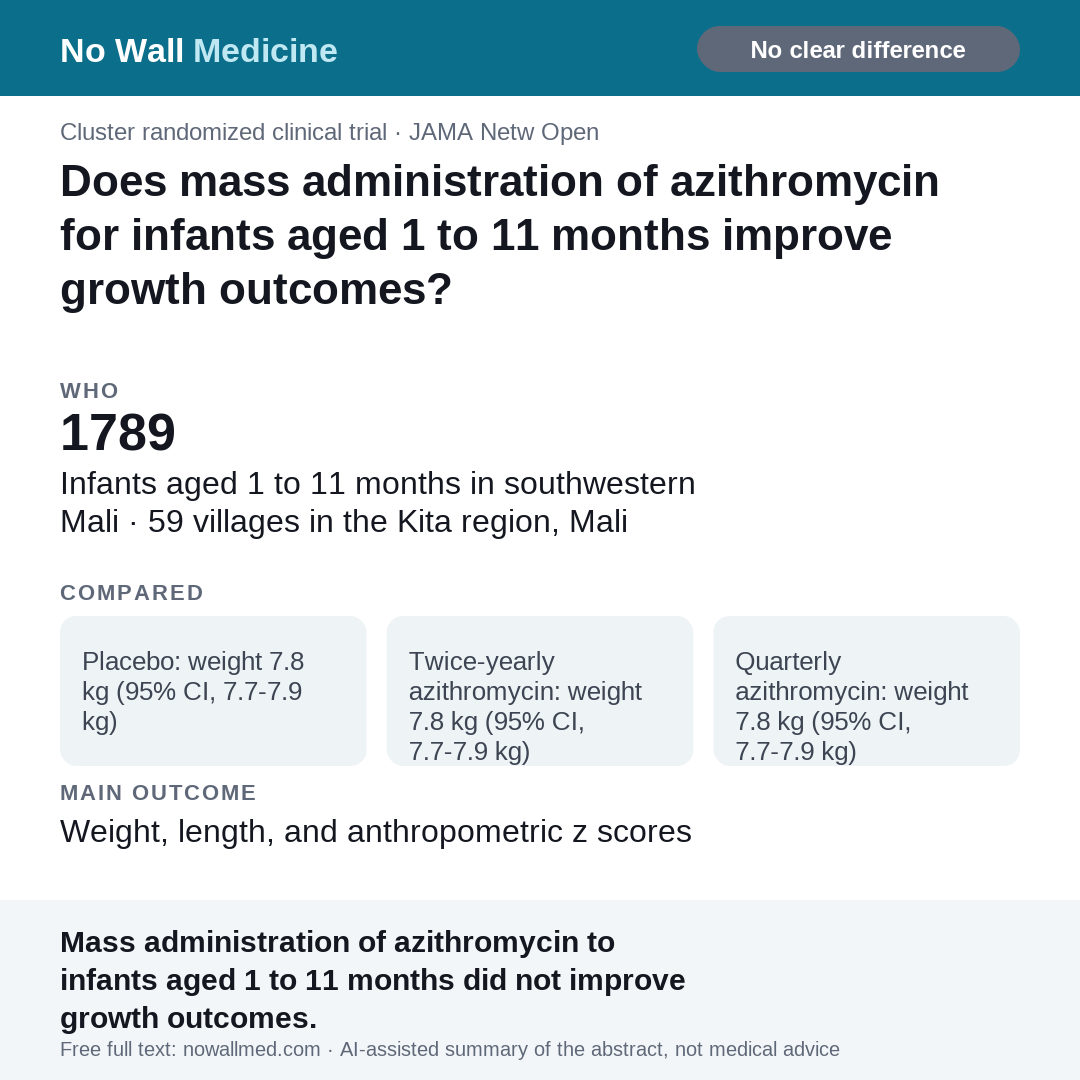
Infant Growth After Mass Administration of Azithromycin: Secondary Outcomes of a Cluster Randomized Clinical Trial
Cluster randomized clinical trialNo clear difference
Does mass administration of azithromycin for infants aged 1 to 11 months improve growth outcomes?
Who
1789
Infants aged 1 to 11 months in southwestern Mali · 59 villages in the Kita region, Mali
Compared
Placebo: weight 7.8 kg (95% CI, 7.7-7.9 kg)
Twice-yearly azithromycin: weight 7.8 kg (95% CI, 7.7-7.9 kg)
Quarterly azithromycin: weight 7.8 kg (95% CI, 7.7-7.9 kg)
Main outcome
Weight, length, and anthropometric z scores
Bottom line: Mass administration of azithromycin to infants aged 1 to 11 months did not improve growth outcomes.
JAMA Netw Open · 2026-06-01Download image
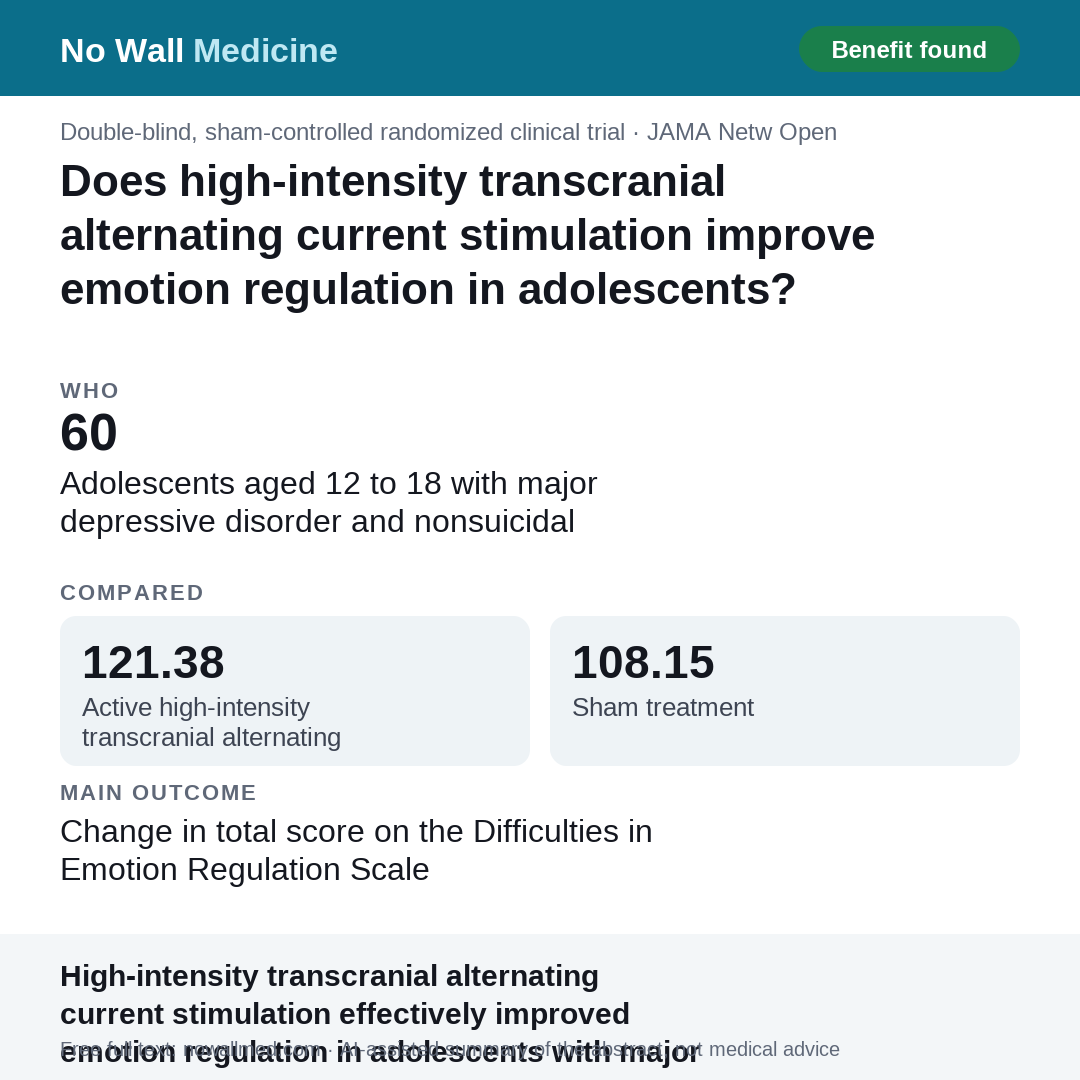
High-Intensity Transcranial Alternating Current Stimulation for Emotion Regulation and Attentional Bias in Adolescents With Nonsuicidal Self-Injury: A Randomized Clinical Trial
Double-blind, sham-controlled randomized clinical trialBenefit found
Does high-intensity transcranial alternating current stimulation improve emotion regulation and attentional bias in adolescents?
Who
60
Adolescents aged 12 to 18 with major depressive disorder and nonsuicidal self-injury · Psychiatric hospital in Western China
Compared
Active high-intensity transcranial alternating current stimulation: 121.38 [95% CI, 119.62 to 123.14]
Sham treatment: 108.15 [95% CI, 106.30 to 109.99]
Main outcome
Change in total score on the Difficulties in Emotion Regulation Scale
Result: -2.78 [95% CI, -4.12 to -1.44]
Bottom line: High-intensity transcranial alternating current stimulation improved emotion regulation, attentional bias, and depression scores in adolescents.
JAMA Netw Open · 2026-06-01Download image
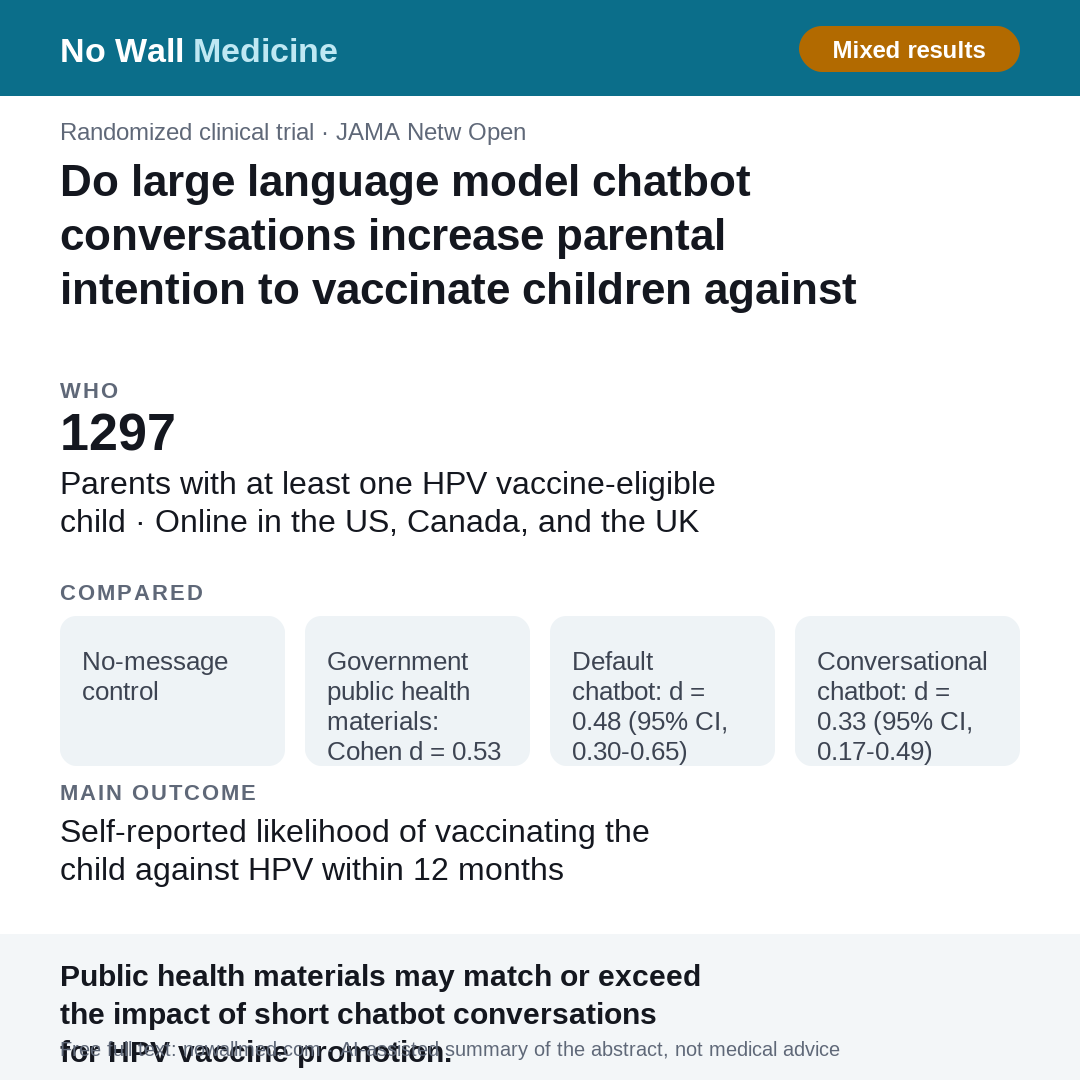
Large Language Model Chatbot Conversations vs Public Health Materials and Parental HPV Vaccination Intentions: A Randomized Clinical Trial
Randomized clinical trialMixed results
Do large language model chatbot conversations increase parental intention to vaccinate children against HPV?
Who
1297
Parents with at least one HPV vaccine-eligible child · Online in the US, Canada, and the UK
Compared
No-message control
Government public health materials: Cohen d = 0.53 (95% CI, 0.36-0.70)
Default chatbot: d = 0.48 (95% CI, 0.30-0.65)
Conversational chatbot: d = 0.33 (95% CI, 0.17-0.49)
Main outcome
Self-reported likelihood of vaccinating the child against HPV within 12 months
Bottom line: Public health materials may match or exceed the impact of short chatbot conversations for HPV vaccine promotion.
JAMA Netw Open · 2026-06-01Download image