Visual abstracts
New randomized trials and meta-analyses from leading journals at a glance: who was studied, what was compared, and what was found. Every paper is free to read in full.
All specialtiesCardiology 4763Oncology 4042Gastroenterology & Hepatology 1902Infectious Disease 3756Neurology 1872Psychiatry & Mental Health 2214Pulmonology 2042Critical Care 1319Endocrinology & Diabetes 2544Pediatrics 2889Surgery 2479Orthopedics & Sports Medicine 917Neurosurgery 525Cardiothoracic & Vascular Surgery 656Plastic & Reconstructive Surgery 574Nephrology 1107Rheumatology 810Hematology 1090Dermatology 611Ophthalmology 532Obstetrics & Gynecology 1645Public & Global Health 1037Radiology & Imaging 617Anesthesiology 957Urology 745ENT (Otolaryngology) 494Emergency Medicine 481Allergy & Immunology 309Geriatrics 972Family Medicine & Primary Care 533Medical Genetics & Genomics 659Pathology & Laboratory Medicine 156Physical Medicine & Rehabilitation 734Palliative Care 421Nutrition 1560Digital Health & AI 2133General Medicine 318
Diagnostic test accuracy of procalcitonin and C-reactive protein for predicting invasive and serious bacterial infections in young febrile infants: a systematic review and meta-analysis
Systematic review and meta-analysisMixed results
Do procalcitonin and C-reactive protein have similar accuracy for predicting bacterial infections in febrile infants?
Who
7755
Febrile infants aged 90 days or younger
Compared
Procalcitonin for invasive bacterial infections: pAUC 0·72 (95% CI 0·56-0·79)
C-reactive protein for invasive bacterial infections: pAUC 0·28 (95% CI 0·17-0·61)
Procalcitonin for serious bacterial infections: pAUC 0·55 (95% CI 0·44-0·69)
C-reactive protein for serious bacterial infections: pAUC 0·54 (95% CI 0·40-0·61)
Main outcome
Partial area under the curve for predicting infections
Result: pAUC 0·72 (95% CI 0·56-0·79) vs 0·28 (95% CI 0·17-0·61) for invasive infections
Bottom line: Procalcitonin is superior for detecting invasive bacterial infections, but both biomarkers show similar accuracy for serious bacterial infections.
Limitation: The absence of a single definition of serious bacterial infection across studies.
Lancet Child Adolesc Health · 2024-03-16Download image

Systemic lupus erythematosus is associated with an increased frequency of spontaneous preterm births: systematic review and meta-analysis
Systematic review and meta-analysisKey finding
What are the proportions of spontaneous and indicated preterm birth in systemic lupus erythematosus?
Who
8157
Pregnant women with systemic lupus erythematosus
Compared
14%Spontaneous preterm birth (95% prediction interval, 0.04-0.27)
16%Indicated preterm birth (95% prediction interval, 0.03-0.35)
Main outcome
Proportions of spontaneous and indicated preterm birth
Result: 31% (95% prediction interval, 0.14-0.50) total preterm birth
Bottom line: Pregnant women with systemic lupus erythematosus have high proportions of spontaneous and indicated preterm births.
AJOG · 2024-03-16Download image

Point-of-care testing and treatment of sexually transmitted and genital infections to improve birth outcomes in high-burden, low-resource settings (WANTAIM): a pragmatic cluster randomised crossover trial in Papua New Guinea
Pragmatic cluster randomised crossover trialNo clear difference
Does point-of-care testing and treatment improve preterm birth and low birthweight outcomes?
Who
4526
Women attending an antenatal clinic at 26 weeks' gestation or earlier · Ten primary health facilities in Papua New Guinea
Compared
18·8%Intervention group (SD 4·7%)
17·8%Control group
Main outcome
Preterm birth, low birthweight, or both
Result: risk ratio 1·06 (95% CI 0·78-1·42)
Bottom line: Point-of-care testing and treatment did not reduce preterm birth or low birthweight compared with standard care.
Funded by: UK DHSC, FCDO, MRC, Wellcome Trust, NHMRC, and Swiss National Science Foundation
Lancet Glob Health · 2024-03-15Download image

Quantifying Overlapping Forms of Malnutrition Across Latin America: A Systematic Literature Review and Meta-Analysis of Prevalence Estimates
Systematic literature review and meta-analysisMixed results
What is the prevalence of double burden of malnutrition typologies in Latin America and the Caribbean?
Who
Individuals across 27 Latin American and Caribbean countries · 27 Latin American and Caribbean countries
Compared
24.3%Adult with overweight and child with anemia (95% CI: 18.8%, 30.2%)
8.5%Adult with overweight and child with stunting (95% CI: 7.7, 9.3)
Main outcome
Prevalence of identified double burden of malnutrition typologies
Bottom line: Double burden of malnutrition prevalence in Latin America and the Caribbean ranges between 0% and 24%.
Limitation: All prevalences carried large heterogeneity (I2>90%) and life course estimates were insufficient.
Adv Nutr · 2024-03-15Download image

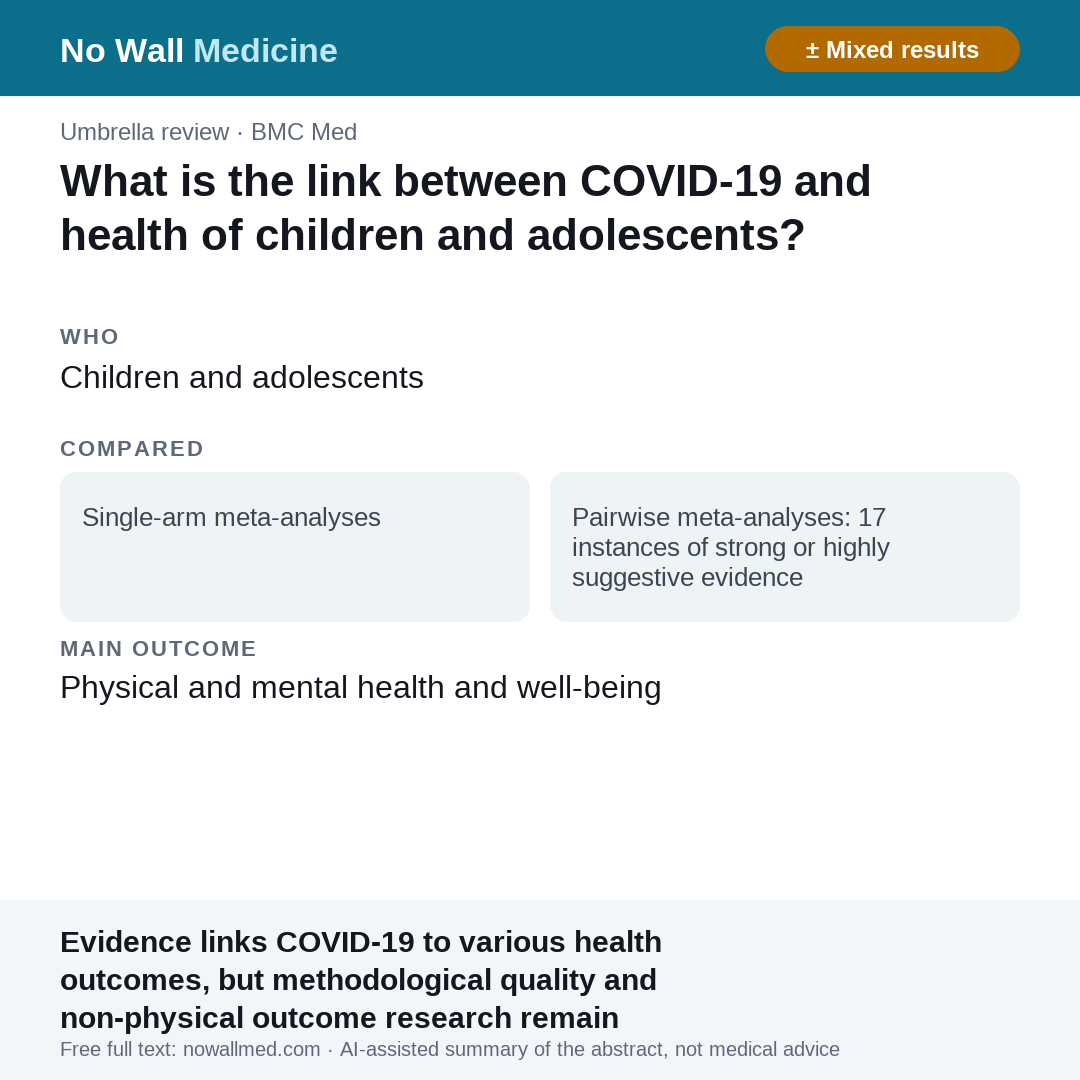
Evidence linking COVID-19 and the health/well-being of children and adolescents: an umbrella review
Umbrella reviewMixed results
What is the link between COVID-19 and health of children and adolescents?
Who
Children and adolescents
Compared
Single-arm meta-analyses
Pairwise meta-analyses: 17 instances of strong or highly suggestive evidence
Main outcome
Physical and mental health and well-being
Bottom line: Evidence links COVID-19 to various health outcomes, but methodological quality and non-physical outcome research remain suboptimal.
Limitation: The quality of evidence and methodological rigor were suboptimal.
BMC Med · 2024-03-13Download image
Bright Light Therapy as Add-On to Inpatient Treatment in Youth With Moderate to Severe Depression: A Randomized Clinical Trial
Double-blind, placebo-controlled randomized parallel-group trialNo clear difference
Does morning bright light therapy enhance inpatient treatment for adolescent major depressive disorder?
Who
227
Inpatients aged 12 to 18 years with major depressive disorder · 4 university hospitals in Germany
Compared
Bright light therapy
Placebo red light
Main outcome
Change in Beck Depression Inventory-II score from baseline to posttreatment
Bottom line: Bright light therapy did not show superiority over placebo red light therapy in adolescent inpatients with major depressive disorder.
JAMA Psychiatry · 2024-03-13Download image

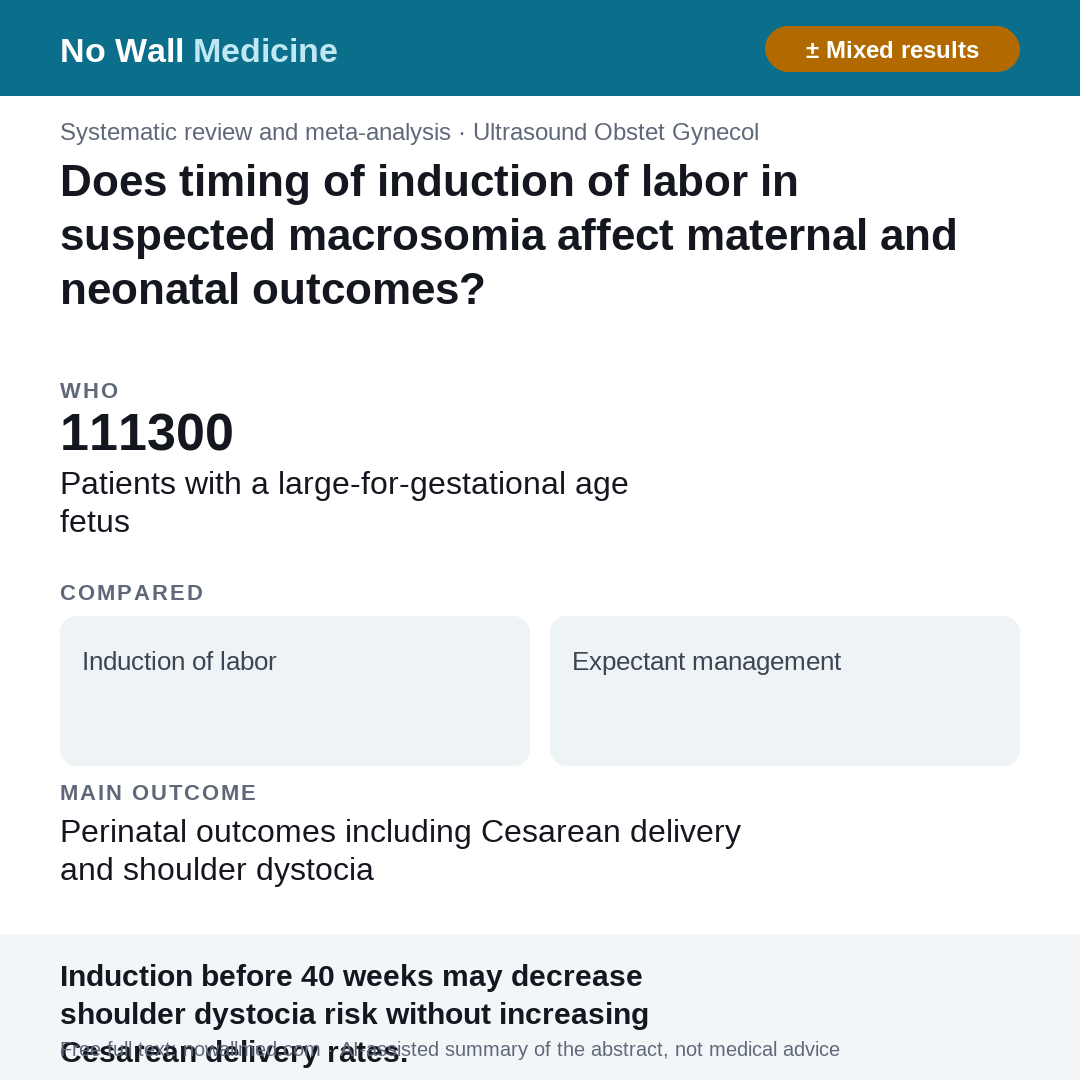
Timing of induction of labor in suspected macrosomia: retrospective cohort study, systematic review and meta-analysis
Systematic review and meta-analysisMixed results
Does timing of induction of labor in suspected macrosomia affect maternal and neonatal outcomes?
Who
111300
Patients with a large-for-gestational age fetus
Compared
Induction of labor
Expectant management
Main outcome
Perinatal outcomes including Cesarean delivery and shoulder dystocia
Result: odds ratio 0.64 (95% CI, 0.42-0.98) for shoulder dystocia
Bottom line: Induction before 40 weeks may decrease shoulder dystocia risk without increasing Cesarean delivery rates.
Ultrasound Obstet Gynecol · 2024-03-13Download image
A Dutch paediatric palliative care guideline: a systematic review and evidence-based recommendations for symptom treatment
Systematic review and guidelineUnclear result
Symptom treatment in pediatric palliative care
Who
Children with life-threatening conditions
Compared
Interventions
Control
Main outcome
Symptom relief
Bottom line: Evidence for symptom treatment is lacking
BMC Palliat Care · 2024-03-13Download image

Activated sputum eosinophils associated with exacerbations in children on mepolizumab
Randomized, placebo-controlled clinical trialMixed results
What is the effect of mepolizumab on airway eosinophils in childhood asthma?
Who
53
Urban children with severe eosinophilic asthma
Compared
mepolizumab: 58% lower
placebo
Main outcome
Median sputum eosinophils
Result: 0.35% difference (95% CI 0.01, 0.74)
Bottom line: Mepolizumab reduces sputum eosinophils, but specific activated eosinophil subpopulations remain elevated in children experiencing exacerbations.
JACI · 2024-03-12Download image

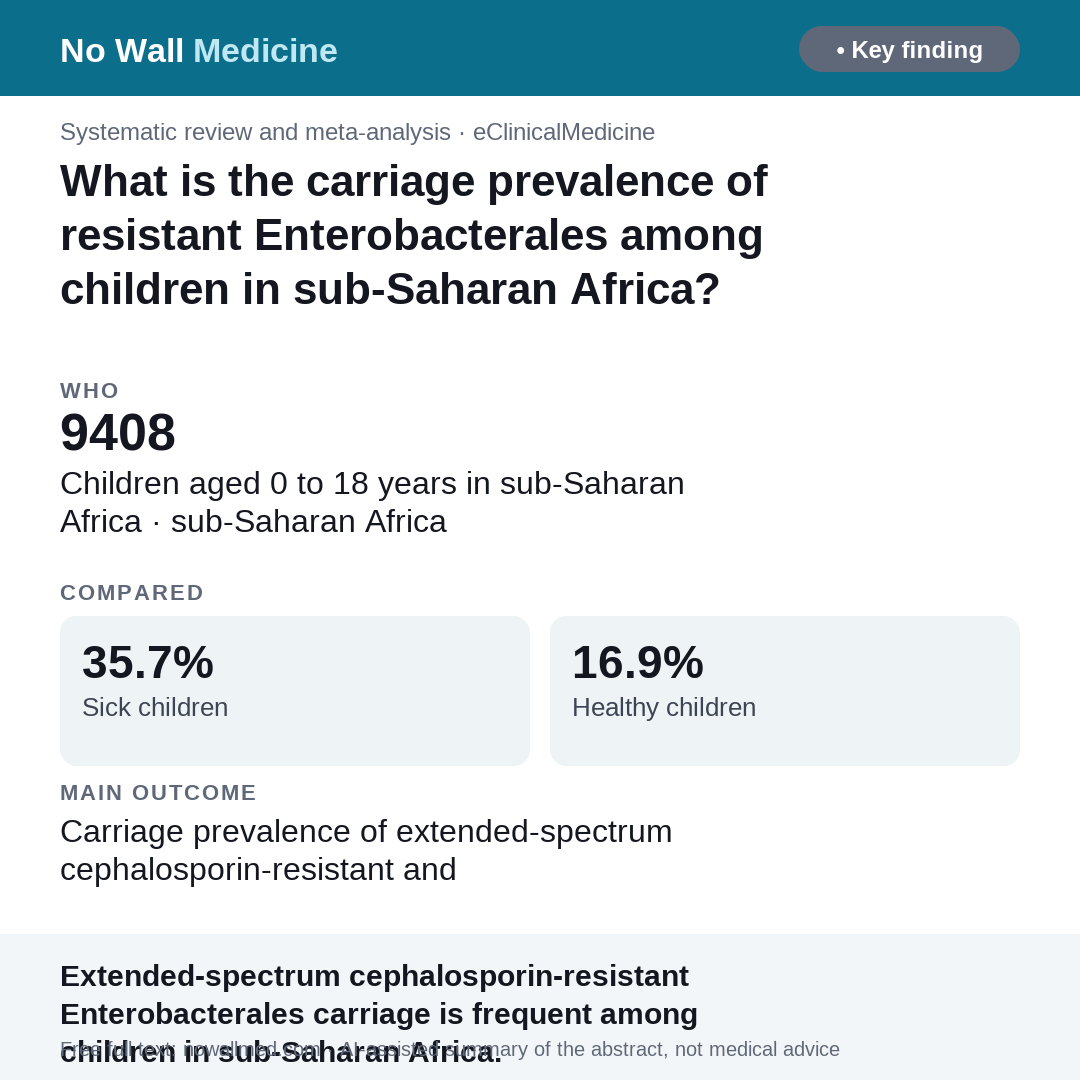
Carriage of third-generation cephalosporin-resistant and carbapenem-resistant Enterobacterales among children in sub-Saharan Africa: a systematic review and meta-analysis
Systematic review and meta-analysisKey finding
What is the carriage prevalence of resistant Enterobacterales among children in sub-Saharan Africa?
Who
9408
Children aged 0 to 18 years in sub-Saharan Africa · sub-Saharan Africa
Compared
35.7%Sick children
16.9%Healthy children
Main outcome
Carriage prevalence of extended-spectrum cephalosporin-resistant and carbapenem-resistant Enterobacterales
Result: ESCR-E prevalence 32.2% (95% CI: 25.2%-40.2%)
Bottom line: Extended-spectrum cephalosporin-resistant Enterobacterales carriage is frequent among children in sub-Saharan Africa.
Limitation: High between-study heterogeneity and bias in participant selection and microbiological specimens.
eClinicalMedicine · 2024-03-11Download image
Effect of Pneumococcal Conjugate Vaccines on Viral Respiratory Infections: A Systematic Literature Review
Systematic literature reviewKey finding
Do pneumococcal conjugate vaccines reduce viral respiratory tract infections?
Who
Children and adults
Compared
Pneumococcal conjugate vaccines
No vaccine
Main outcome
Vaccine efficacy or adjusted effectiveness against viral respiratory tract infections
Bottom line: Pneumococcal conjugate vaccines are associated with protection against some viral respiratory tract infections, especially influenza in children.
Limitation: Data in adults were limited.
J Infect Dis · 2024-03-11Download image

The efficacy of therapeutic interventions on paediatric burn patients' height, weight, body composition, and muscle strength: A systematic review and meta-analysis
Systematic review and meta-analysisBenefit found
Do therapeutic interventions improve height, weight, body composition, and muscle strength in pediatric burn patients?
Who
Pediatric burn patients
Compared
Therapeutic interventions
Control
Main outcome
Height, weight, body composition, and muscle strength
Bottom line: Therapeutic interventions including exercise, pharmacologic agents, and nutrition support positively affect pediatric burn patients' physical metrics.
Burns · 2024-03-11Download image

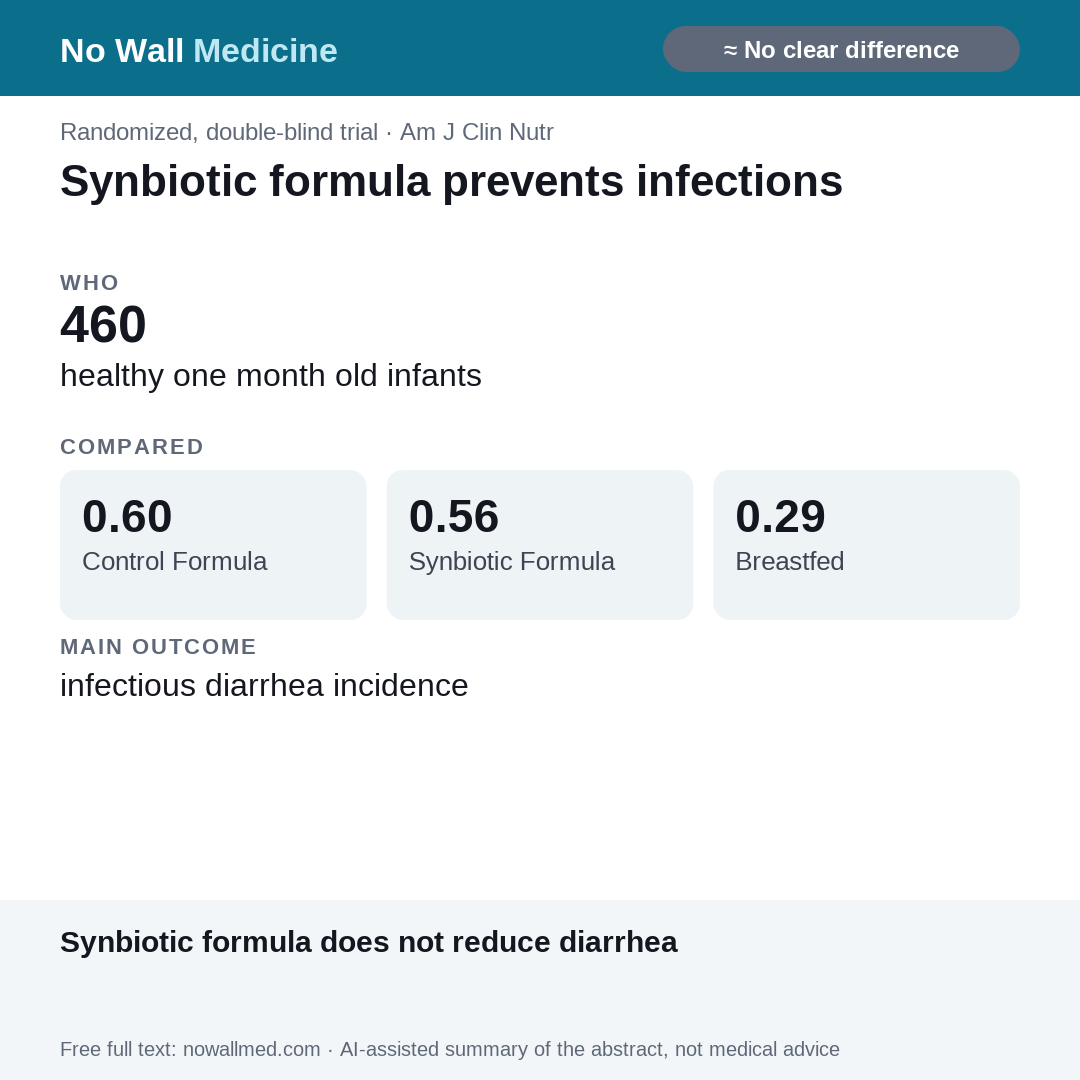
Efficacy and safety of a synbiotic infant formula for the prevention of respiratory and gastrointestinal infections: a randomized controlled trial
Randomized, double-blind trialNo clear difference
Synbiotic formula prevents infections
Who
460
healthy one month old infants
Compared
0.60Control Formula
0.56Synbiotic Formula
0.29Breastfed
Main outcome
infectious diarrhea incidence
Bottom line: Synbiotic formula does not reduce diarrhea
Am J Clin Nutr · 2024-03-10Download image
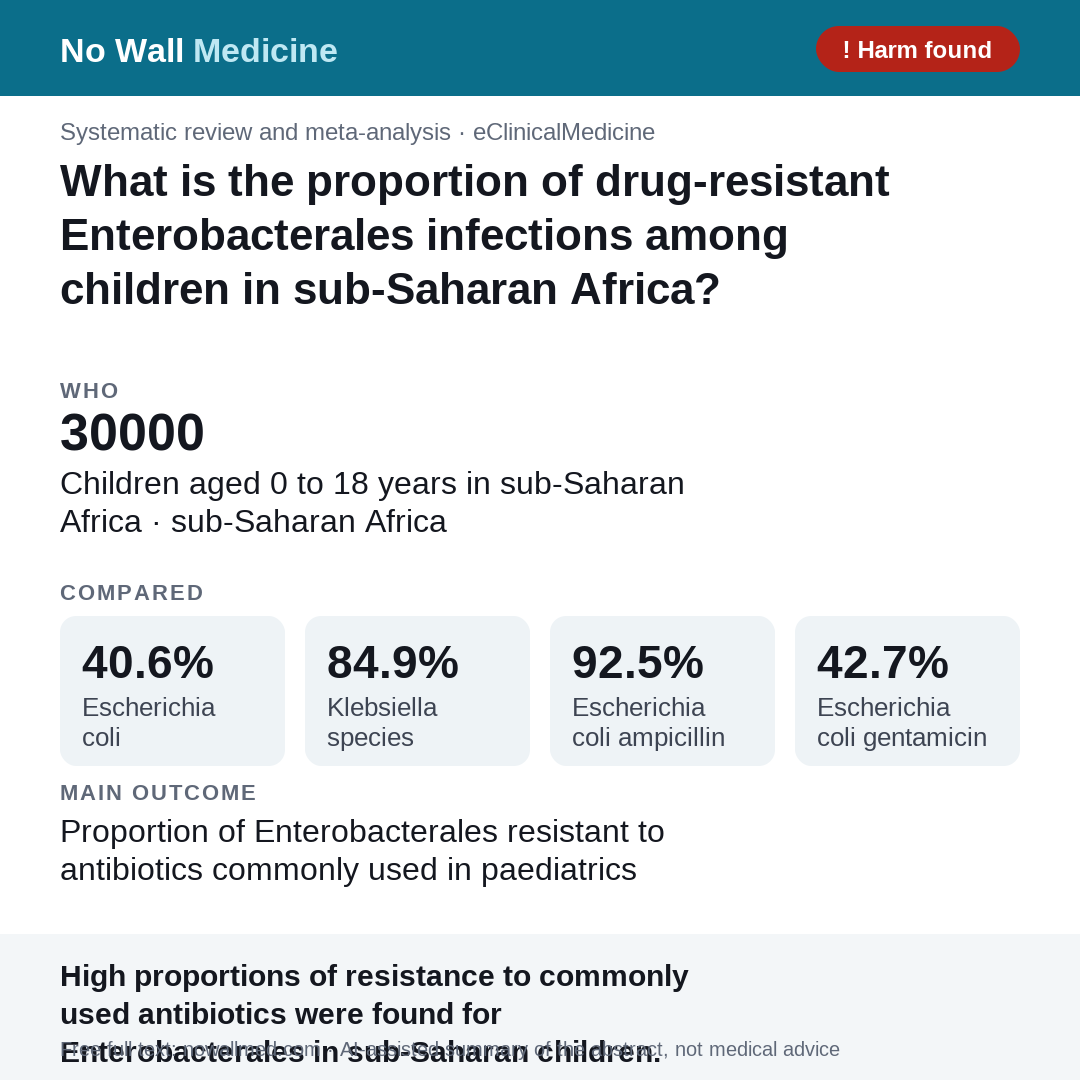
Antimicrobial resistance in Enterobacterales infections among children in sub-Saharan Africa: a systematic review and meta-analysis
Systematic review and meta-analysisHarm found
What is the proportion of drug-resistant Enterobacterales infections among children in sub-Saharan Africa?
Who
30000
Children aged 0 to 18 years in sub-Saharan Africa · sub-Saharan Africa
Compared
40.6%Escherichia coli third-generation cephalosporin resistance (95% CI: 27.7%-55%)
84.9%Klebsiella species third-generation cephalosporin resistance (72.8%-92.2%)
92.5%Escherichia coli ampicillin resistance (95% CI: 76.4%-97.9%)
42.7%Escherichia coli gentamicin resistance (95% CI: 30%-56.5%)
Main outcome
Proportion of Enterobacterales resistant to antibiotics commonly used in paediatrics
Bottom line: High proportions of resistance to commonly used antibiotics were found for Enterobacterales in sub-Saharan children.
Funded by: No funding was received
eClinicalMedicine · 2024-03-08Download image
MRD at the end of induction and EFS in T-cell lymphoblastic lymphoma: Children's Oncology Group trial AALL1231
Randomized trialBenefit found
MRD impact on T-lymphoblastic lymphoma
Who
209
Children and young adults with T-LL
Compared
MRD <0.1%: 89.0% ± 4.4%
MRD ≥0.1%: 63.6% ± 17.2%
Main outcome
Event-free survival
Result: hazard ratio, 3.73; 95% confidence interval, 1.12-12.40
Bottom line: Low MRD linked to better event-free survival
Blood · 2024-03-08Download image

Learning competing risks across multiple hospitals: one-shot distributed algorithms
Simulation study and application to electronic health record dataBenefit found
How accurate are one-shot distributed algorithms for competing risk models using multi-hospital data?
Who
6
Pediatric patients from eight national children's hospitals · Eight national children's hospitals
Compared
One-shot distributed algorithms: 0.2% relative bias
Meta-analysis estimator: 40% relative bias
Main outcome
Relative bias in estimating risk factors for post-acute sequelae of SARS-COV-2
Bottom line: One-shot distributed algorithms provide highly accurate risk factor estimation compared to meta-analysis in multi-hospital settings.
J Am Med Inform Assoc · 2024-03-08Download image

Clinical effectiveness of the psychological therapy Mental Health Intervention for Children with Epilepsy in addition to usual care compared with assessment-enhanced usual care alone: a multicentre, randomised controlled clinical trial in the UK
Randomized controlled trialBenefit found
Does Mental Health Intervention help children with epilepsy?
Who
334
Children with epilepsy and mental health disorders · England and Northern Ireland
Compared
17.6Mental Health Intervention (SD 6.3)
19.6Usual care (6.1)
Main outcome
Parent-report Strengths and Difficulties Questionnaire
Result: adjusted effect -1.7 (95% CI -2.8 to -0.5)
Bottom line: Mental Health Intervention improves symptoms
Funded by: UK National Institute for Health Research
Lancet · 2024-03-07Download image

Metformin in pregnancy and childhood neurodevelopmental outcomes: a systematic review and meta-analysis
Systematic review and meta-analysisNo clear difference
Does maternal metformin use during pregnancy impact offspring neurodevelopmental outcomes?
Who
14042
Children of women treated with metformin during pregnancy
Compared
Metformin exposed
Unexposed peers
Main outcome
Neurodevelopmental outcomes in offspring
Result: relative risk 1.09 (95% confidence interval, 0.54-2.17)
Bottom line: Maternal metformin use during pregnancy is not associated with adverse neurodevelopmental outcomes in children up to 14 years.
AJOG · 2024-03-07Download image

Early skin inflammatory biomarker is predictive of development and persistence of atopic dermatitis in infants
Randomized, open-label trialKey finding
Are early skin inflammatory biomarkers predictive of atopic dermatitis development in infants?
Who
Infants with a parent with allergic disease
Compared
Infants with filaggrin wild-type genotype and high S100A8/9: predicted development of atopic dermatitis
Infants with filaggrin loss-of-function mutation
Main outcome
Development and persistence of atopic dermatitis
Bottom line: Higher S100A8/9 titers at eight weeks in filaggrin wild-type infants predict atopic dermatitis development.
JACI · 2024-03-07Download image

The association between physical availability of cannabis retail outlets and frequent cannabis use and related health harms: a systematic review
Systematic reviewHarm found
Does cannabis retail store access associate with frequent use and health harms?
Who
Adults, adolescents, children, and pregnant individuals · 4 countries (United States, Canada, Netherlands and Uruguay)
Compared
Greater cannabis retail access: 83% increased healthcare service use or poison control calls
Greater cannabis retail access: 100% increased cannabis use and hospitalization during pregnancy
Greater cannabis retail access: 64% frequent cannabis use in adults and young adults
Main outcome
Frequent use and adverse health outcomes
Bottom line: Greater cannabis retail access is positively associated with increased cannabis use and related health harms.
Funded by: Canadian Centre on Substance Use and Addiction
Lancet Reg Health Am · 2024-03-07Download image