Visual abstracts
New randomized trials and meta-analyses from leading journals at a glance: who was studied, what was compared, and what was found. Every paper is free to read in full.
All specialtiesCardiology 3456Oncology 2969Gastroenterology & Hepatology 1356Infectious Disease 2386Neurology 1395Psychiatry & Mental Health 1638Pulmonology 1474Critical Care 992Endocrinology & Diabetes 1756Pediatrics 2099Surgery 1838Orthopedics & Sports Medicine 639Neurosurgery 410Cardiothoracic & Vascular Surgery 409Plastic & Reconstructive Surgery 483Nephrology 749Rheumatology 549Hematology 779Dermatology 427Ophthalmology 382Obstetrics & Gynecology 1181Public & Global Health 662Radiology & Imaging 489Anesthesiology 705Urology 575ENT (Otolaryngology) 378Emergency Medicine 373Allergy & Immunology 215Geriatrics 728Family Medicine & Primary Care 401Medical Genetics & Genomics 437Pathology & Laboratory Medicine 112Physical Medicine & Rehabilitation 538Palliative Care 318Nutrition 1034Digital Health & AI 1630General Medicine 249
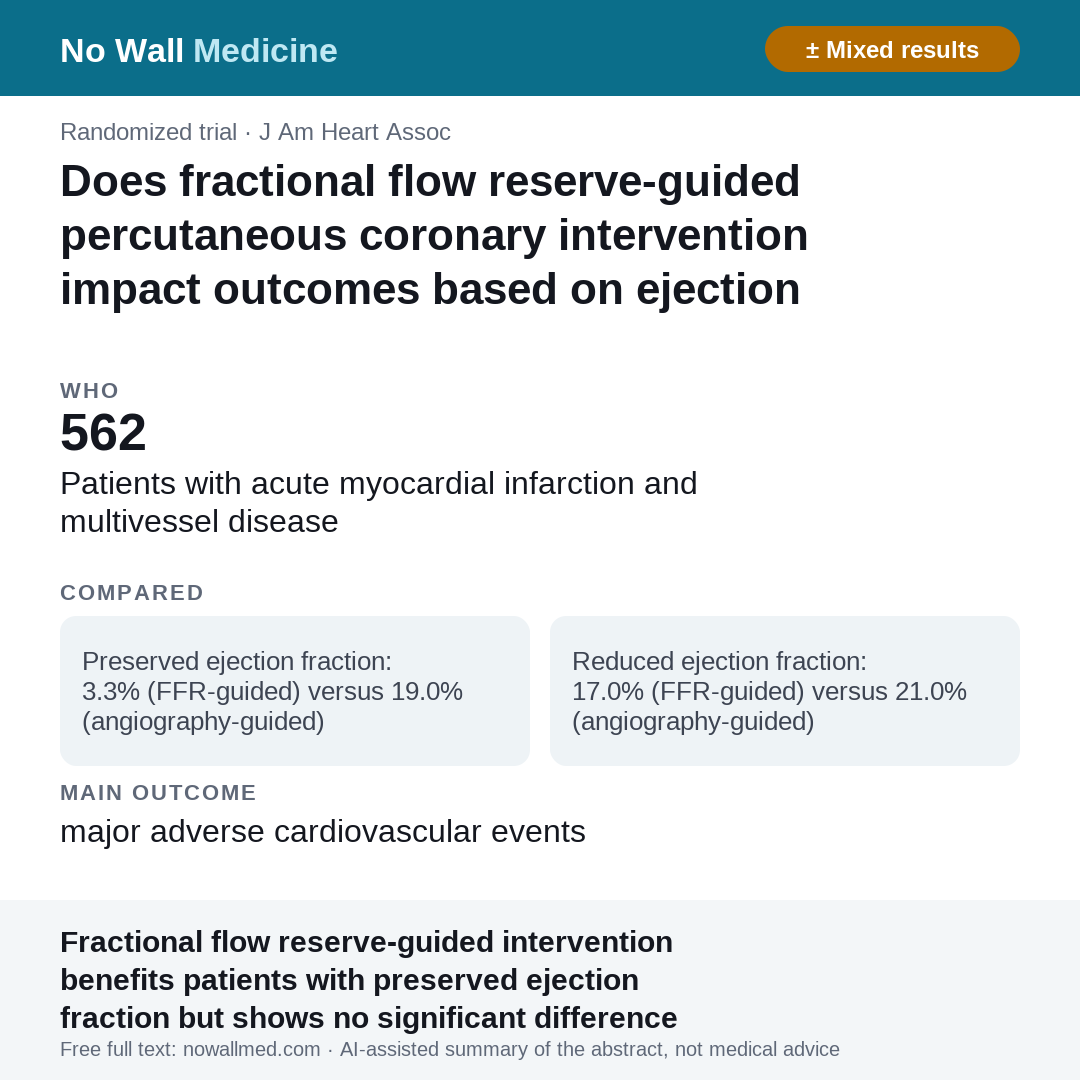
Clinical Relevance of Fractional Flow Reserve-Guided Percutaneous Coronary Interevention According to Left Ventricular Ejection Fraction in Patients With Acute Myocardial Infarction and Multivessel Disease
Randomized trialMixed results
Does fractional flow reserve-guided percutaneous coronary intervention impact outcomes based on ejection fraction?
Who
562
Patients with acute myocardial infarction and multivessel disease
Compared
Preserved ejection fraction: 3.3% (FFR-guided) versus 19.0% (angiography-guided)
Reduced ejection fraction: 17.0% (FFR-guided) versus 21.0% (angiography-guided)
Main outcome
major adverse cardiovascular events
Result: hazard ratio 0.26 (95% CI 0.11-0.66) for preserved ejection fraction
Bottom line: Fractional flow reserve-guided intervention benefits patients with preserved ejection fraction but shows no significant difference in those with reduced ejection fraction.
J Am Heart Assoc · 2025-08-29Download image
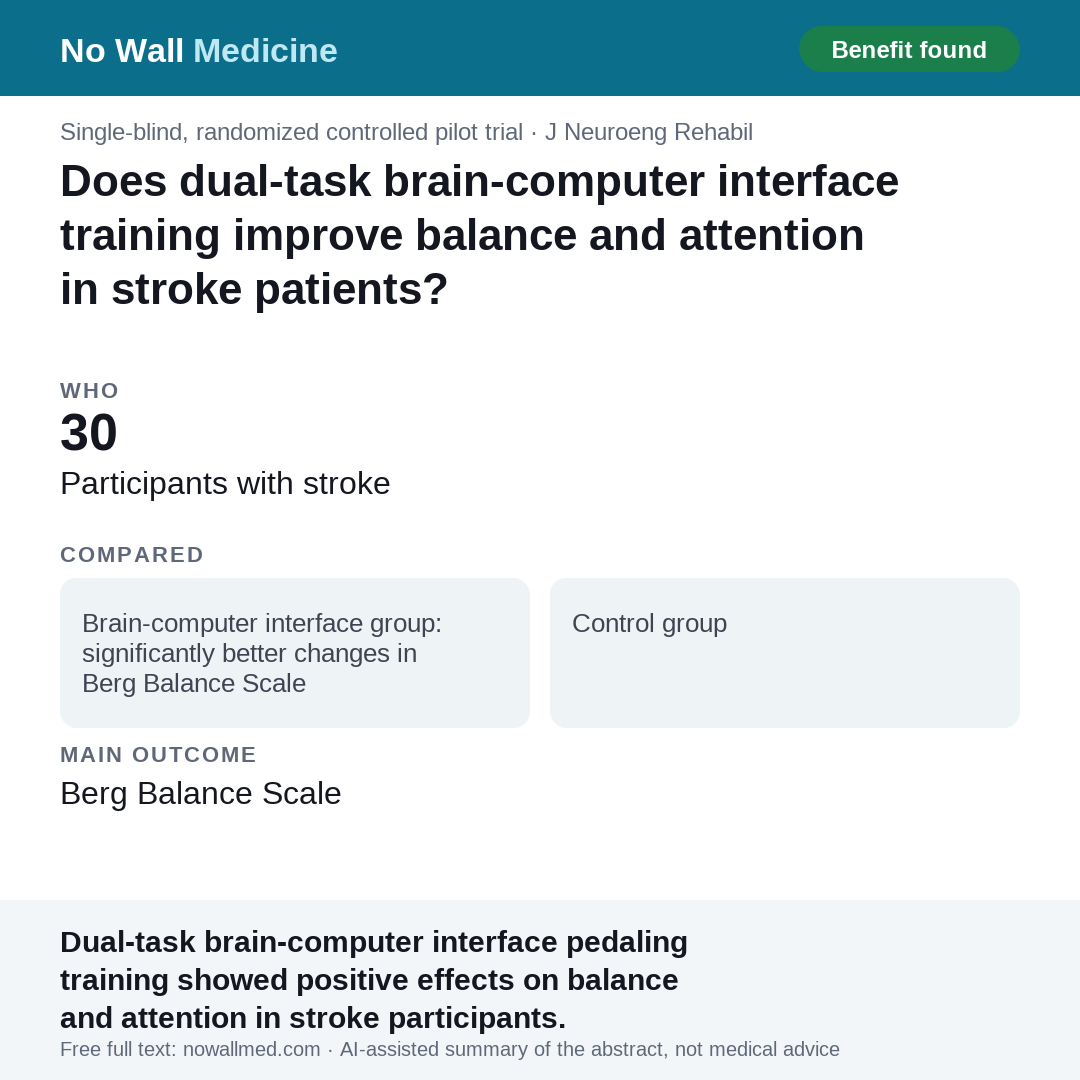
Effects of dual-task mode brain-computer interface based on motor imagery and virtual reality on balance and attention in patients with stroke: a randomized controlled pilot trial
Single-blind, randomized controlled pilot trialBenefit found
Does dual-task brain-computer interface training improve balance and attention in stroke patients?
Who
30
Participants with stroke
Compared
Brain-computer interface group: significantly better changes in Berg Balance Scale
Control group
Main outcome
Berg Balance Scale
Bottom line: Dual-task brain-computer interface pedaling training showed positive effects on balance and attention in stroke participants.
Limitation: The study is a preliminary pilot trial.
J Neuroeng Rehabil · 2025-08-29Download image
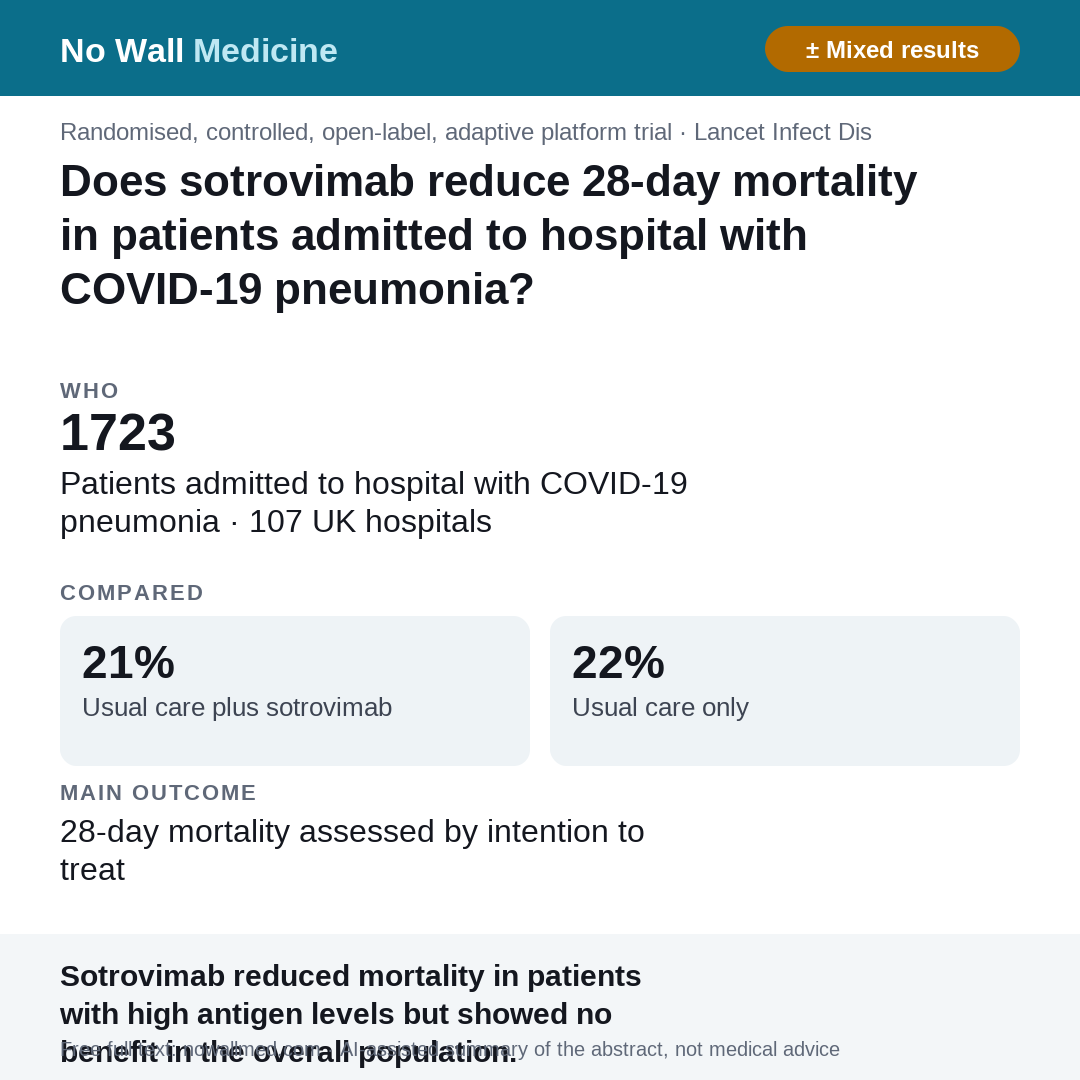
Sotrovimab versus usual care in patients admitted to hospital with COVID-19 (RECOVERY): a randomised, controlled, open-label, platform trial
Randomised, controlled, open-label, adaptive platform trialMixed results
Does sotrovimab reduce 28-day mortality in patients admitted to hospital with COVID-19 pneumonia?
Who
1723
Patients admitted to hospital with COVID-19 pneumonia · 107 UK hospitals
Compared
21%Usual care plus sotrovimab (177/828)
22%Usual care only (201/895)
Main outcome
28-day mortality assessed by intention to treat
Result: 0.95 (95% CI 0.77-1.16)
Bottom line: Sotrovimab reduced mortality in patients with high antigen levels but showed no benefit in the overall population.
Limitation: The emergence of high-level resistance to sotrovimab among subsequent SARS-CoV-2 variants restricts its current usefulness.
Funded by: UK Research and Innovation and National Institute for Health and Care Research
Lancet Infect Dis · 2025-08-28Download image
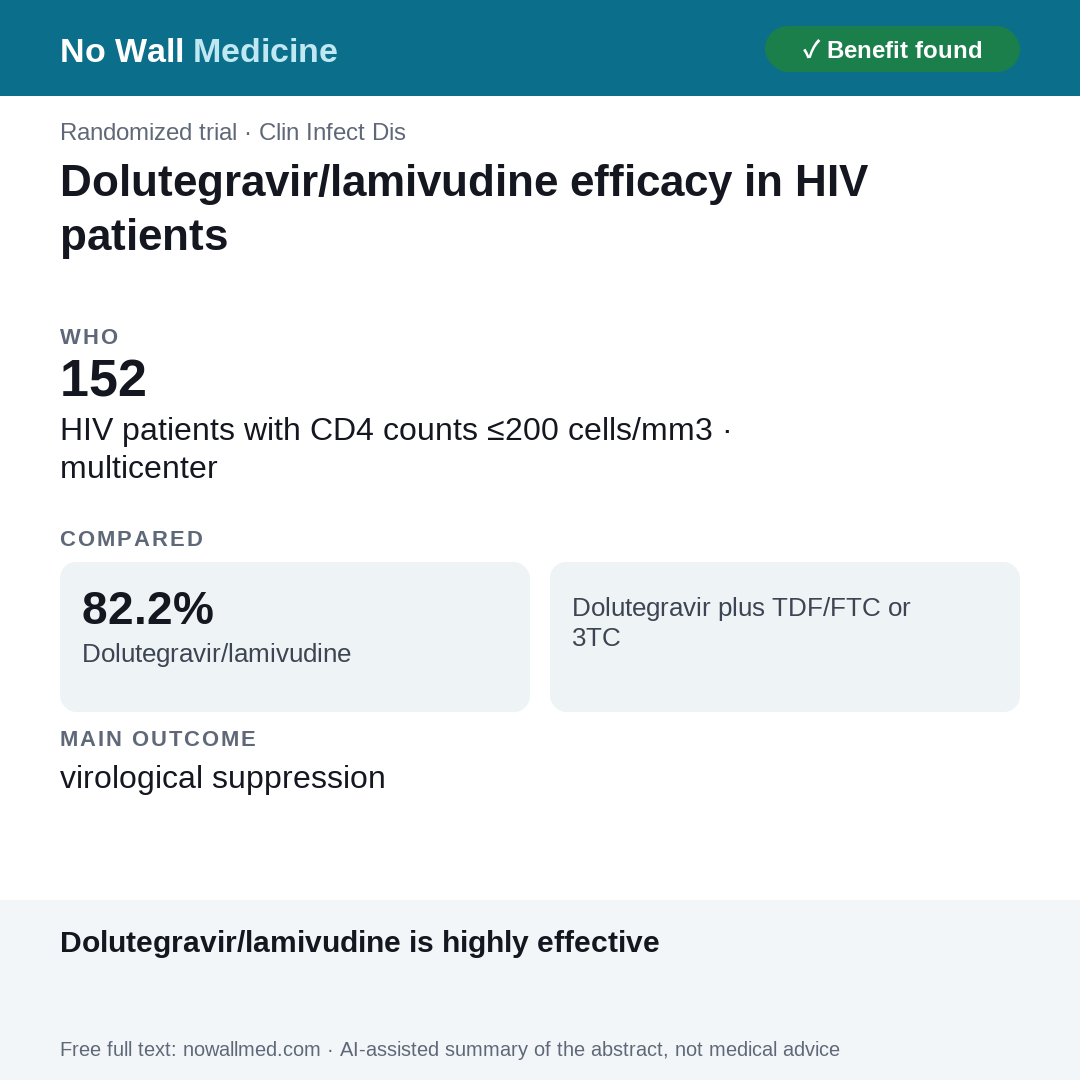
Efficacy and Safety of Dual Therapy With Dolutegravir/Lamivudine in Treatment-naive Persons With CD4 Counts <200/mm3: 48-Week Results of the DOLCE Study
Randomized trialBenefit found
Dolutegravir/lamivudine efficacy in HIV patients
Who
152
HIV patients with CD4 counts ≤200 cells/mm3 · multicenter
Compared
82.2%Dolutegravir/lamivudine (125/152)
Dolutegravir plus TDF/FTC or 3TC
Main outcome
virological suppression
Bottom line: Dolutegravir/lamivudine is highly effective
Clin Infect Dis · 2025-08-28Download image
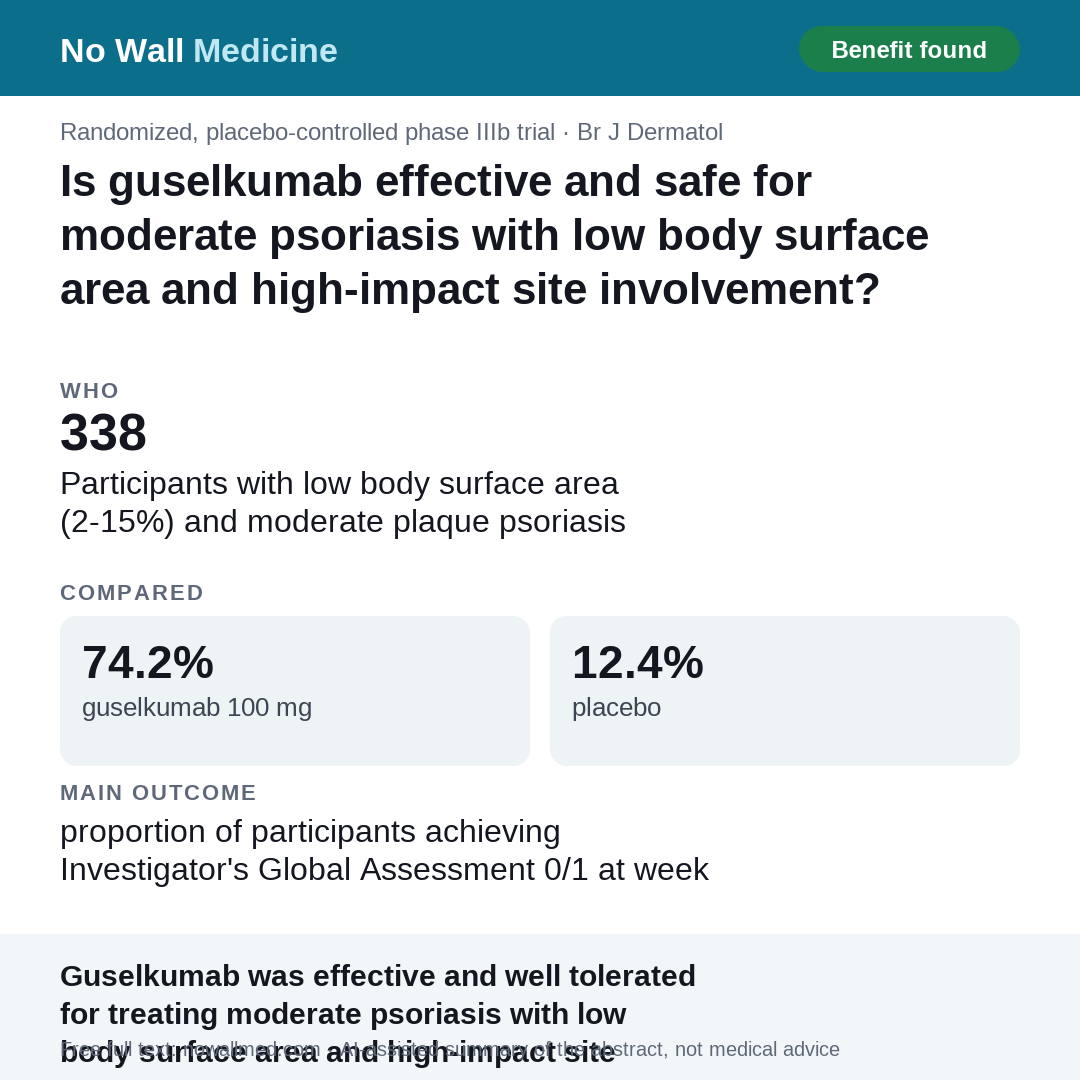
SPECTREM phase IIIb clinical trial results through week 16: guselkumab efficacy and safety for the treatment of low body surface area, moderate psoriasis with high-impact site involvement
Randomized, placebo-controlled phase IIIb trialBenefit found
Is guselkumab effective and safe for moderate psoriasis with low body surface area and high-impact site involvement?
Who
338
Participants with low body surface area (2-15%) and moderate plaque psoriasis
Compared
74.2%guselkumab 100 mg
12.4%placebo
Main outcome
proportion of participants achieving Investigator's Global Assessment 0/1 at week 16
Bottom line: Guselkumab was effective and well tolerated for treating moderate psoriasis with low body surface area and high-impact site involvement.
Br J Dermatol · 2025-08-28Download image
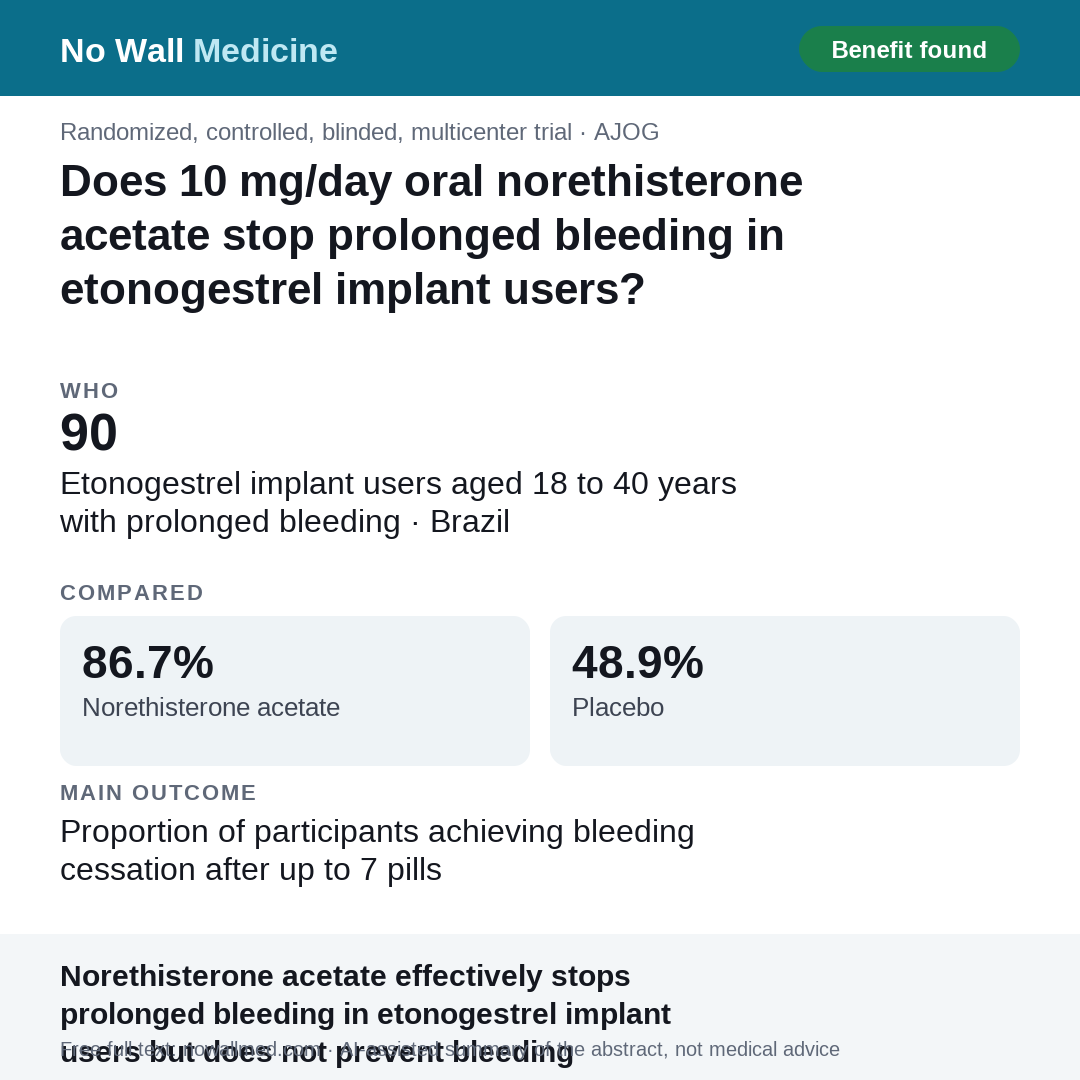
Norethisterone for prolonged uterine bleeding associated with etonogestrel implant (IMPLANET): a randomized controlled trial
Randomized, controlled, blinded, multicenter trialBenefit found
Does 10 mg/day oral norethisterone acetate stop prolonged bleeding in etonogestrel implant users?
Who
90
Etonogestrel implant users aged 18 to 40 years with prolonged bleeding · Brazil
Compared
86.7%Norethisterone acetate
48.9%Placebo
Main outcome
Proportion of participants achieving bleeding cessation after up to 7 pills
Result: adjusted risk difference, 35.6% (95% confidence interval, 17.1%-54.0%)
Bottom line: Norethisterone acetate effectively stops prolonged bleeding in etonogestrel implant users but does not prevent bleeding recurrence.
AJOG · 2025-08-28Download image
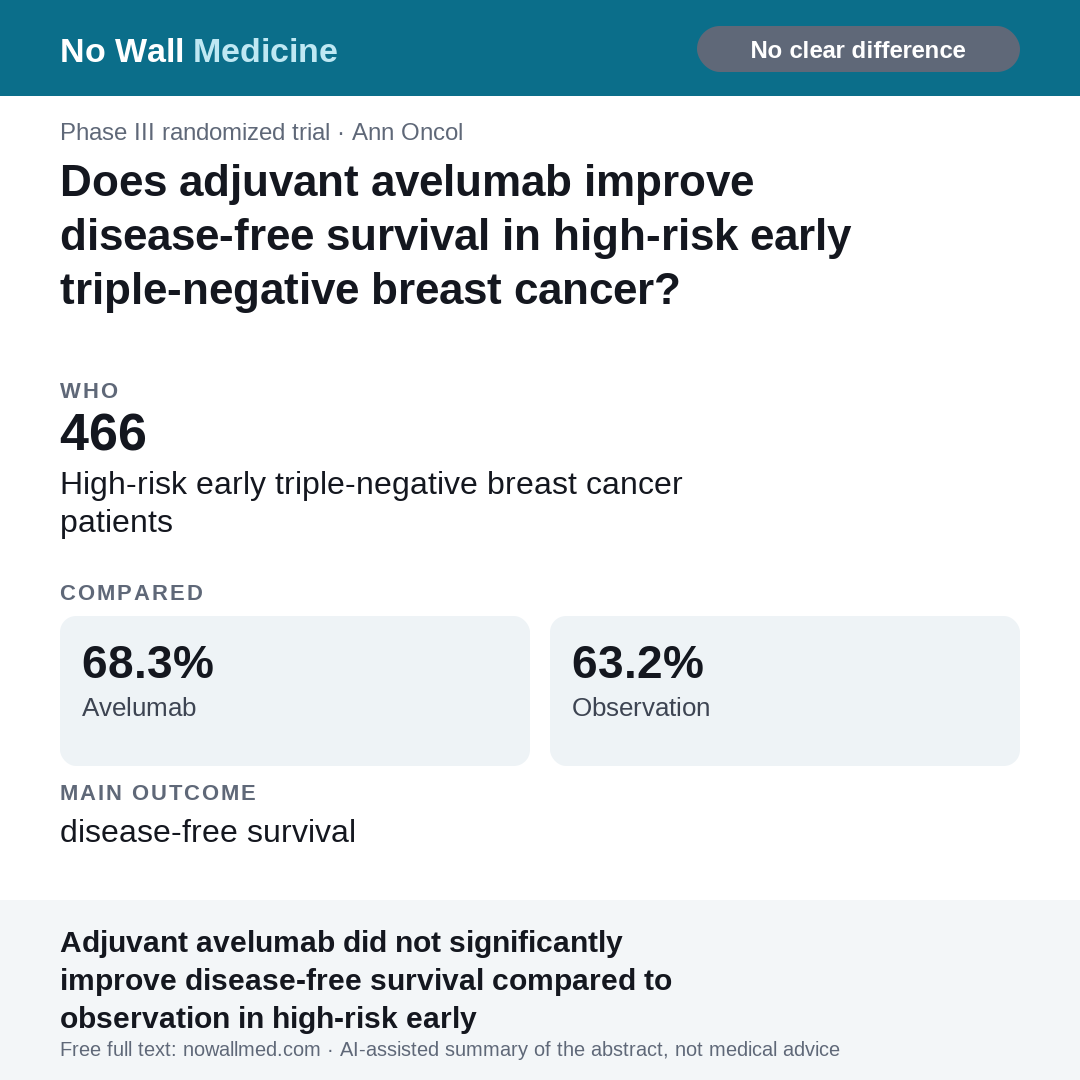
A-BRAVE trial: a phase III randomized trial with anti-PD-L1 avelumab in high-risk triple-negative early breast cancer patients
Phase III randomized trialNo clear difference
Does adjuvant avelumab improve disease-free survival in high-risk early triple-negative breast cancer?
Who
466
High-risk early triple-negative breast cancer patients
Compared
68.3%Avelumab
63.2%Observation
Main outcome
disease-free survival
Result: hazard ratio 0.81 (95% CI 0.61-1.09)
Bottom line: Adjuvant avelumab did not significantly improve disease-free survival compared to observation in high-risk early triple-negative breast cancer.
Limitation: A descriptive analysis suggests a potential favorable impact on overall survival.
Ann Oncol · 2025-08-28Download image
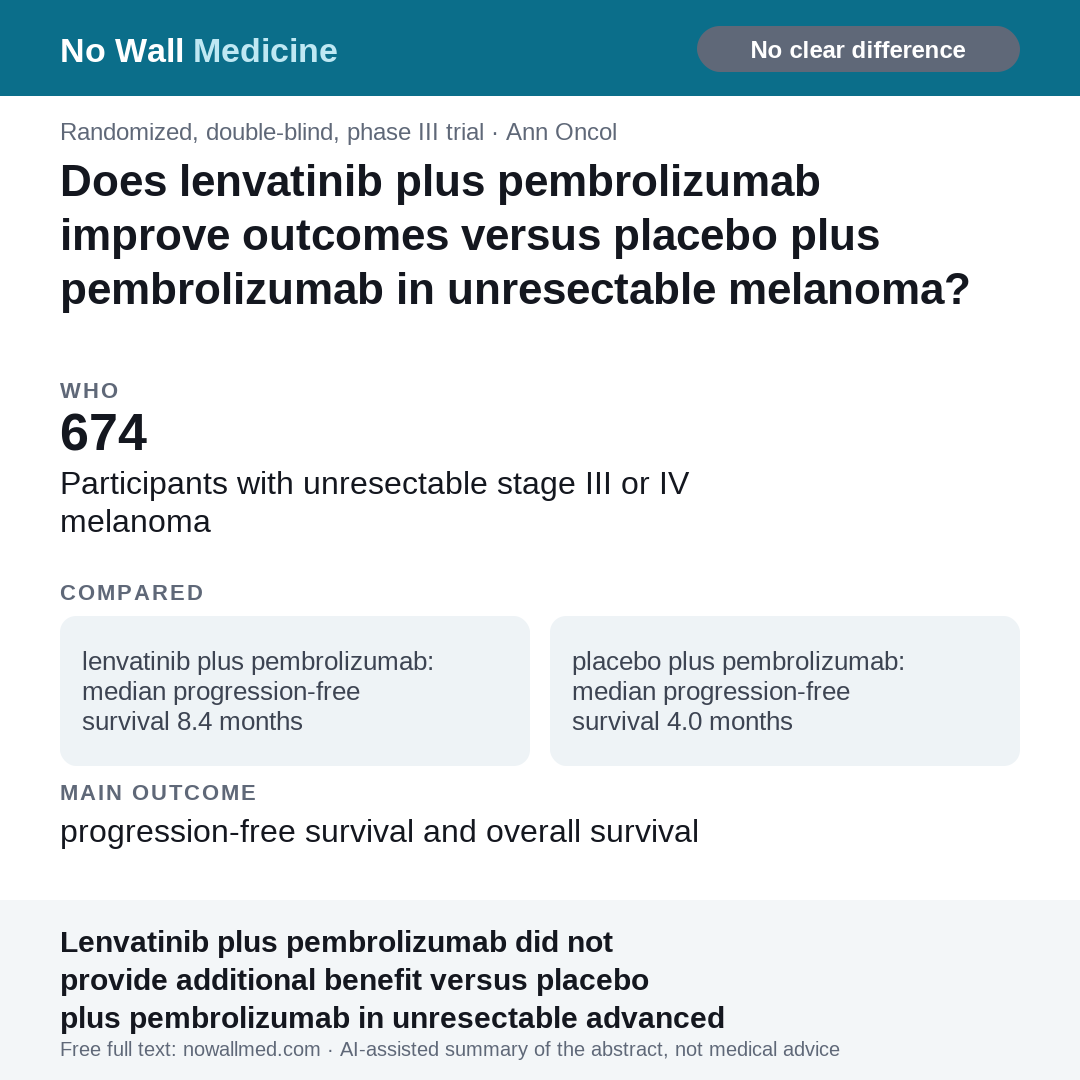
Randomized, double-blind, phase III LEAP-003 study of first-line lenvatinib plus pembrolizumab versus placebo plus pembrolizumab for unresectable or metastatic melanoma
Randomized, double-blind, phase III trialNo clear difference
Does lenvatinib plus pembrolizumab improve outcomes versus placebo plus pembrolizumab in unresectable melanoma?
Who
674
Participants with unresectable stage III or IV melanoma
Compared
lenvatinib plus pembrolizumab: median progression-free survival 8.4 months
placebo plus pembrolizumab: median progression-free survival 4.0 months
Main outcome
progression-free survival and overall survival
Result: hazard ratio 0.83 (95% CI 0.69-1.00)
Bottom line: Lenvatinib plus pembrolizumab did not provide additional benefit versus placebo plus pembrolizumab in unresectable advanced melanoma.
Ann Oncol · 2025-08-28Download image
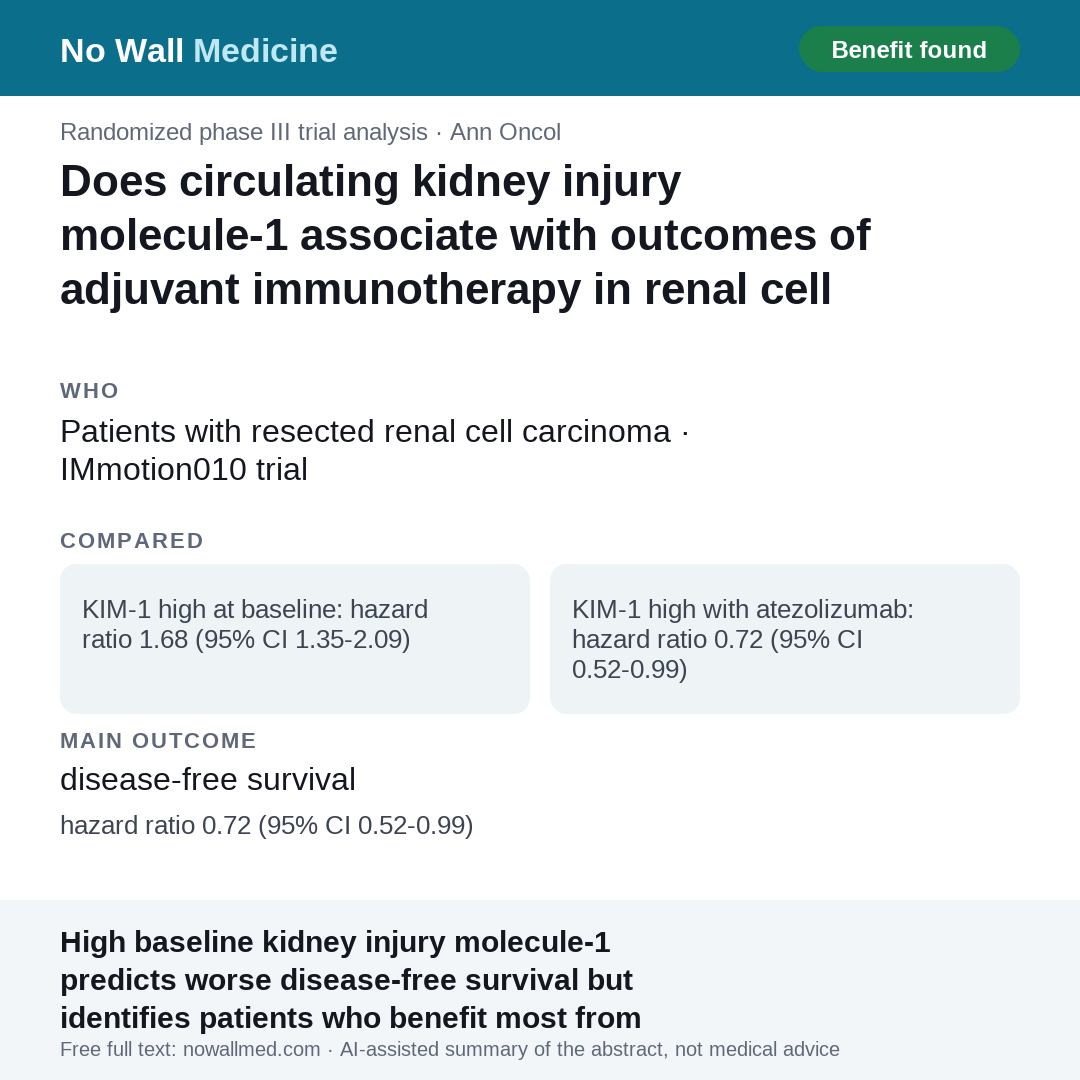
Circulating kidney injury molecule-1 (KIM-1) and association with outcome to adjuvant immunotherapy in renal cell carcinoma
Randomized phase III trial analysisBenefit found
Does circulating kidney injury molecule-1 associate with outcomes of adjuvant immunotherapy in renal cell carcinoma?
Who
Patients with resected renal cell carcinoma · IMmotion010 trial
Compared
KIM-1 high at baseline: hazard ratio 1.68 (95% CI 1.35-2.09)
KIM-1 high with atezolizumab: hazard ratio 0.72 (95% CI 0.52-0.99)
Main outcome
disease-free survival
Result: hazard ratio 0.72 (95% CI 0.52-0.99)
Bottom line: High baseline kidney injury molecule-1 predicts worse disease-free survival but identifies patients who benefit most from adjuvant atezolizumab.
Ann Oncol · 2025-08-28Download image
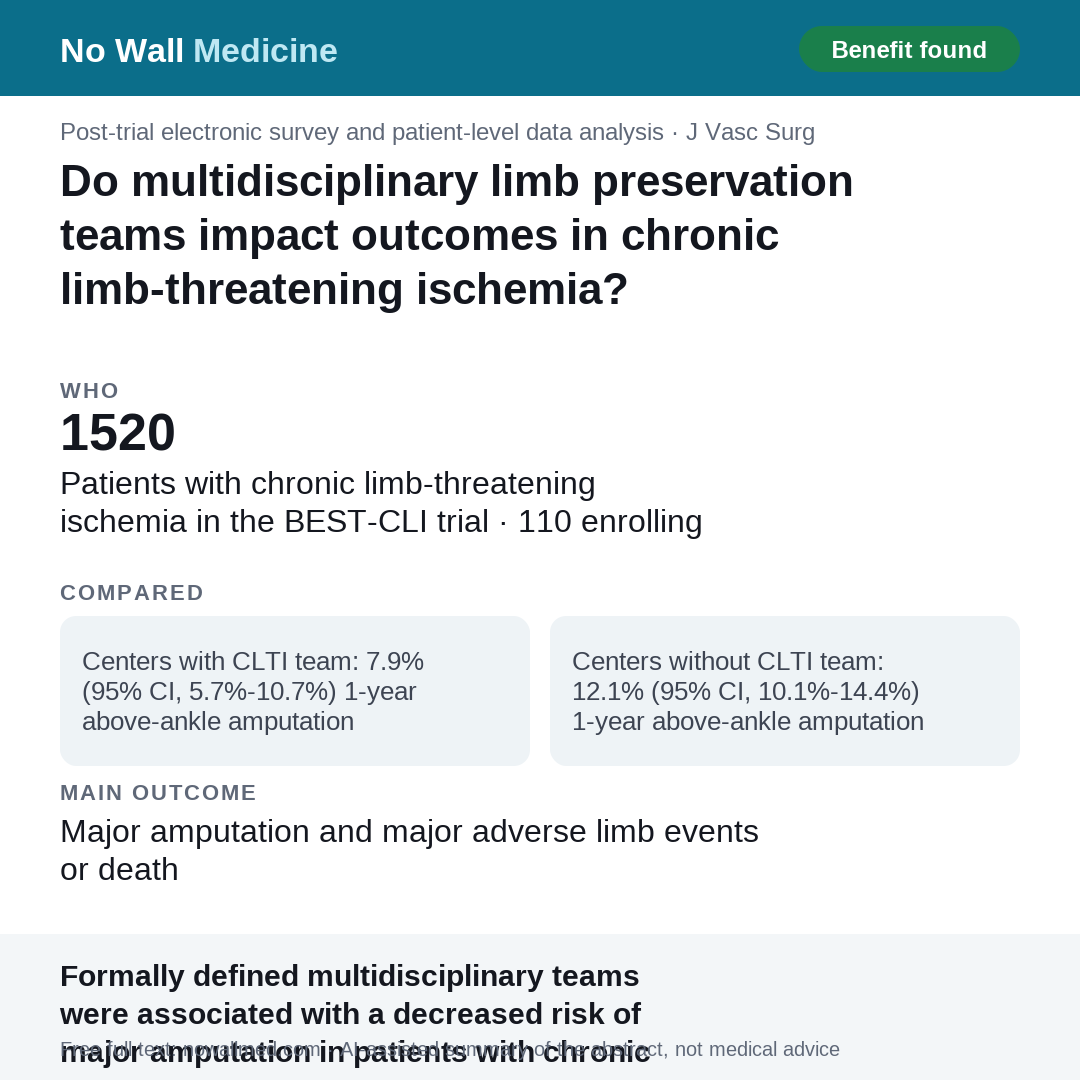
Characteristics of multidisciplinary limb preservation teams and their impact on outcomes in the BEST-CLI trial
Post-trial electronic survey and patient-level data analysisBenefit found
Do multidisciplinary limb preservation teams impact outcomes in chronic limb-threatening ischemia?
Who
1520
Patients with chronic limb-threatening ischemia in the BEST-CLI trial · 110 enrolling sites
Compared
Centers with CLTI team: 7.9% (95% CI, 5.7%-10.7%) 1-year above-ankle amputation
Centers without CLTI team: 12.1% (95% CI, 10.1%-14.4%) 1-year above-ankle amputation
Main outcome
Major amputation and major adverse limb events or death
Result: hazard ratio 0.60 (95% CI, 0.42-0.86) for major amputation
Bottom line: Formally defined multidisciplinary teams were associated with a decreased risk of major amputation in patients with chronic limb-threatening ischemia.
J Vasc Surg · 2025-08-28Download image
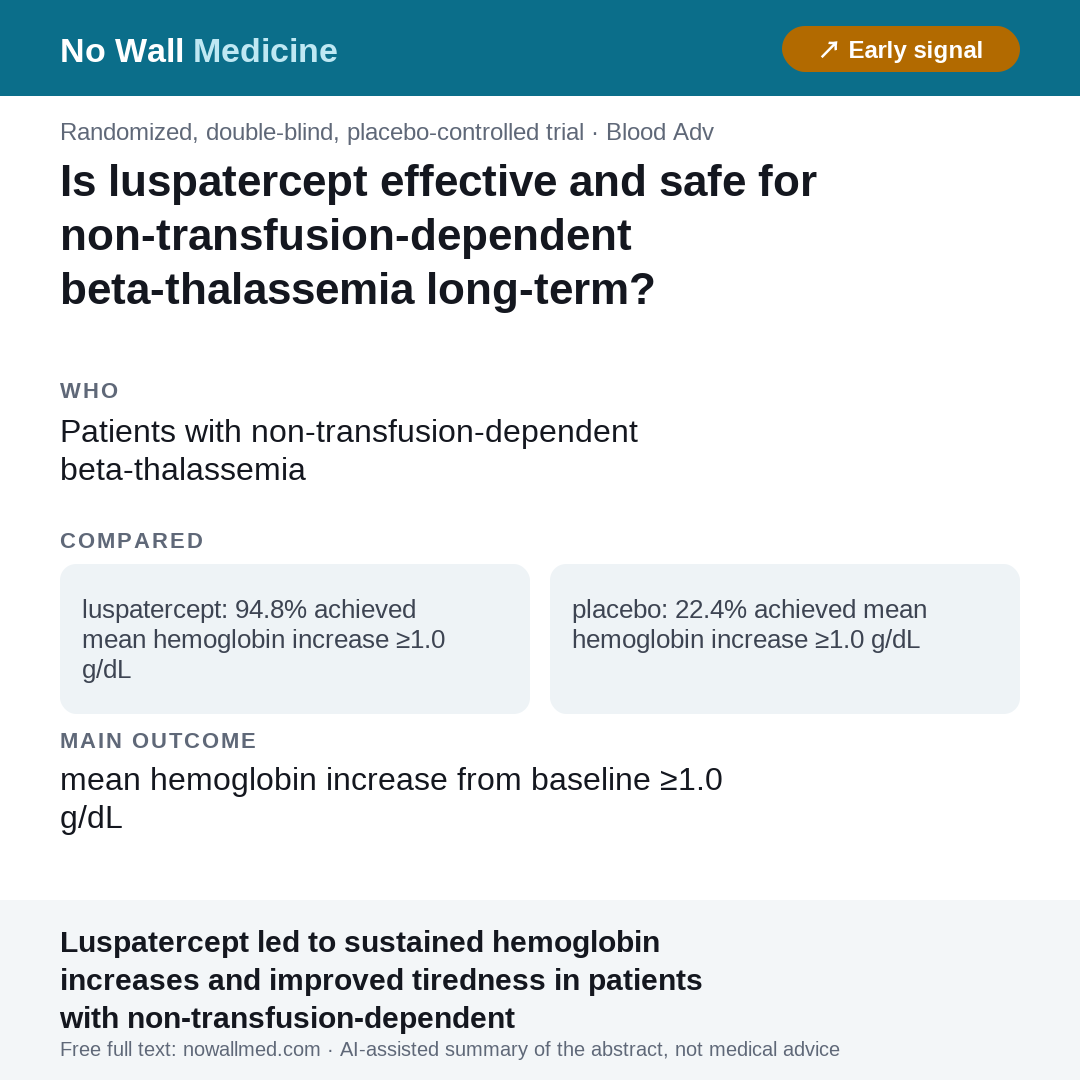
Efficacy and safety of luspatercept in non-transfusion-dependent β-thalassemia: long-term results from the BEYOND study
Randomized, double-blind, placebo-controlled trialBenefit found
Is luspatercept effective and safe for non-transfusion-dependent beta-thalassemia long-term?
Who
Patients with non-transfusion-dependent beta-thalassemia
Compared
luspatercept: 94.8% achieved mean hemoglobin increase ≥1.0 g/dL
placebo: 22.4% achieved mean hemoglobin increase ≥1.0 g/dL
Main outcome
mean hemoglobin increase from baseline ≥1.0 g/dL
Bottom line: Luspatercept led to sustained hemoglobin increases and improved tiredness in patients with non-transfusion-dependent beta-thalassemia.
Blood Adv · 2025-08-28Download image
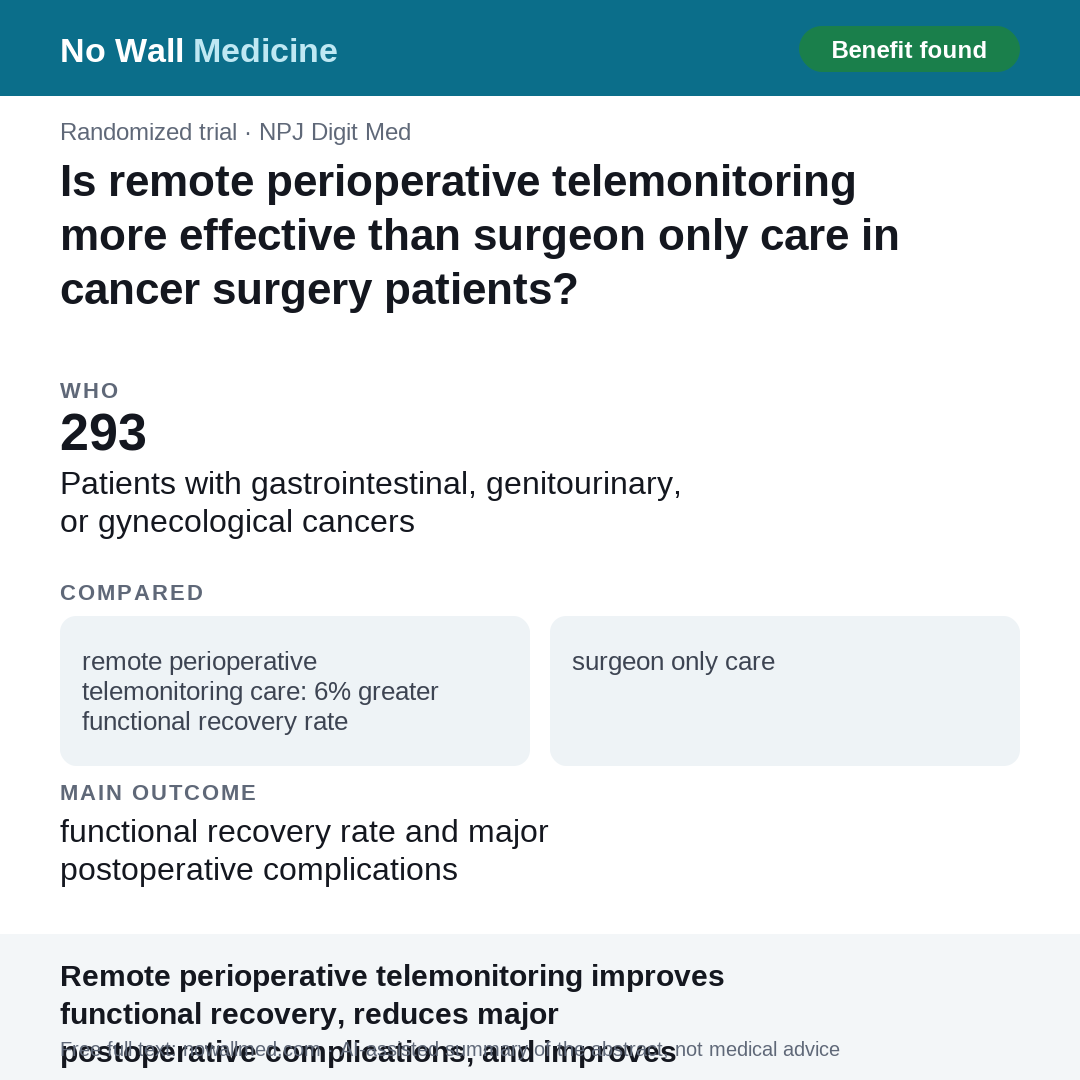
Comparative effectiveness of remote perioperative telemonitoring in cancer surgery: a randomized trial
Randomized trialBenefit found
Is remote perioperative telemonitoring more effective than surgeon only care in cancer surgery patients?
Who
293
Patients with gastrointestinal, genitourinary, or gynecological cancers
Compared
remote perioperative telemonitoring care: 6% greater functional recovery rate
surgeon only care
Main outcome
functional recovery rate and major postoperative complications
Bottom line: Remote perioperative telemonitoring improves functional recovery, reduces major postoperative complications, and improves symptom management in cancer surgery patients.
NPJ Digit Med · 2025-08-28Download image
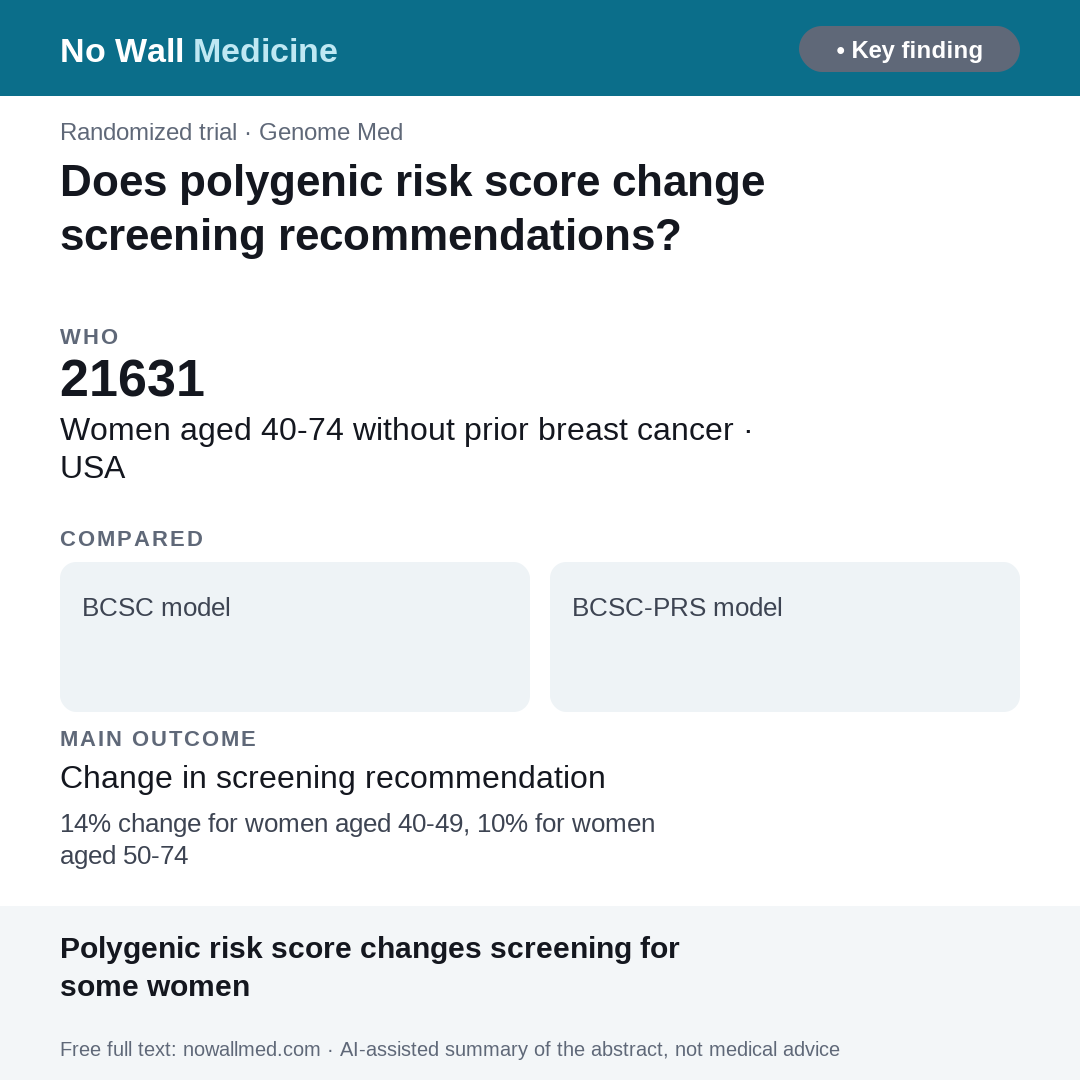
Integrating breast cancer polygenic risk scores at scale in the WISDOM Study: a national randomized personalized screening trial
Randomized trialBenefit found
Does polygenic risk score change screening recommendations?
Who
21631
Women aged 40-74 without prior breast cancer · USA
Compared
BCSC model
BCSC-PRS model
Main outcome
Change in screening recommendation
Result: 14% change for women aged 40-49, 10% for women aged 50-74
Bottom line: Polygenic risk score changes screening for some women
Genome Med · 2025-08-28Download image
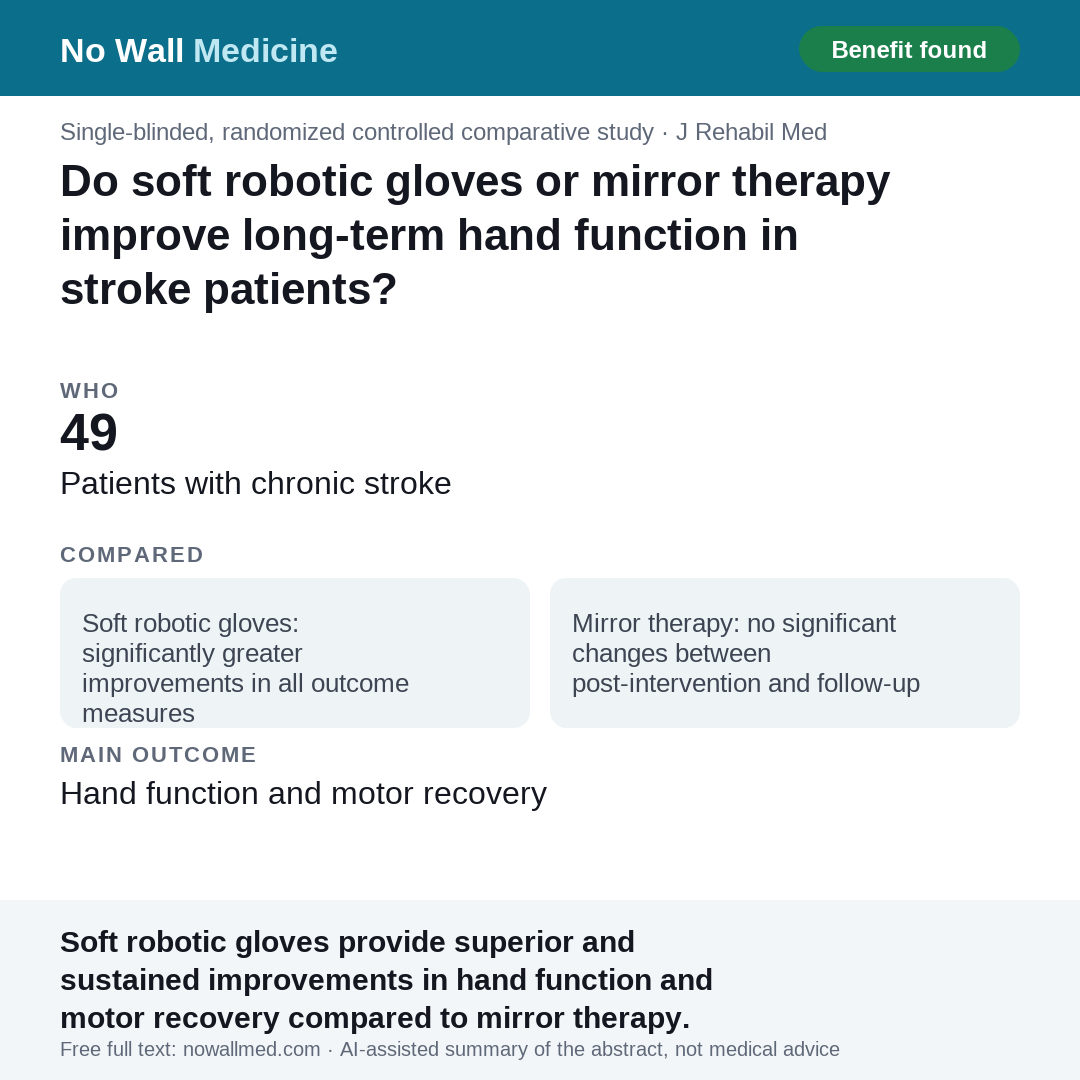
Soft robotic gloves versus mirror therapy: a long-term comparative study on hand function and motor recovery in post-stroke rehabilitation
Single-blinded, randomized controlled comparative studyBenefit found
Do soft robotic gloves or mirror therapy improve long-term hand function in stroke patients?
Who
49
Patients with chronic stroke
Compared
Soft robotic gloves: significantly greater improvements in all outcome measures
Mirror therapy: no significant changes between post-intervention and follow-up
Main outcome
Hand function and motor recovery
Bottom line: Soft robotic gloves provide superior and sustained improvements in hand function and motor recovery compared to mirror therapy.
J Rehabil Med · 2025-08-28Download image
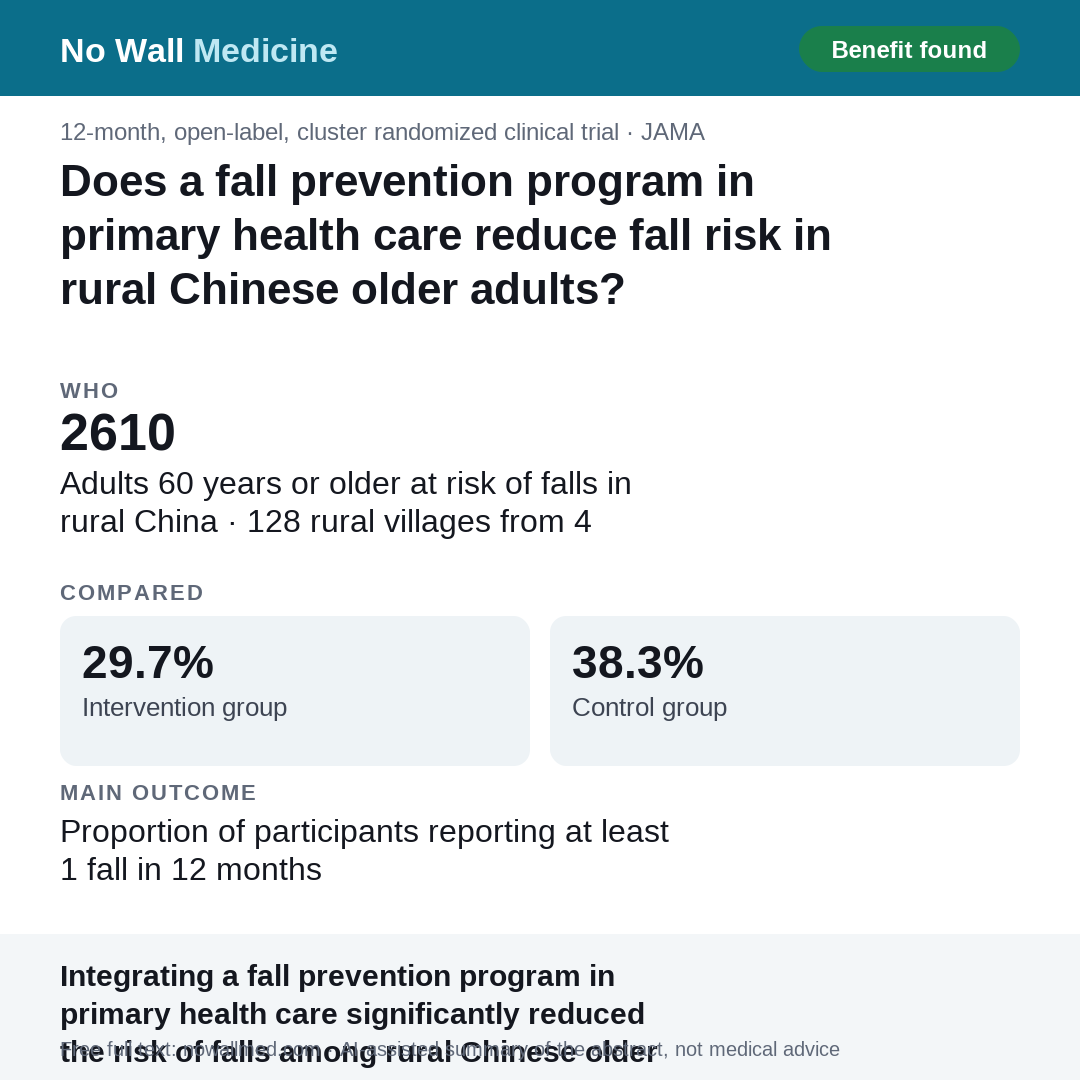
A Fall Prevention Program Integrated in Primary Health Care for Older People in Rural China: The FAMILY Cluster Randomized Clinical Trial
12-month, open-label, cluster randomized clinical trialBenefit found
Does a fall prevention program in primary health care reduce fall risk in rural Chinese older adults?
Who
2610
Adults 60 years or older at risk of falls in rural China · 128 rural villages from 4 Chinese provinces
Compared
29.7%Intervention group
38.3%Control group
Main outcome
Proportion of participants reporting at least 1 fall in 12 months
Result: odds ratio 0.67 (95% CI 0.48-0.91)
Bottom line: Integrating a fall prevention program in primary health care significantly reduced the risk of falls among rural Chinese older adults.
JAMA · 2025-08-27Download image
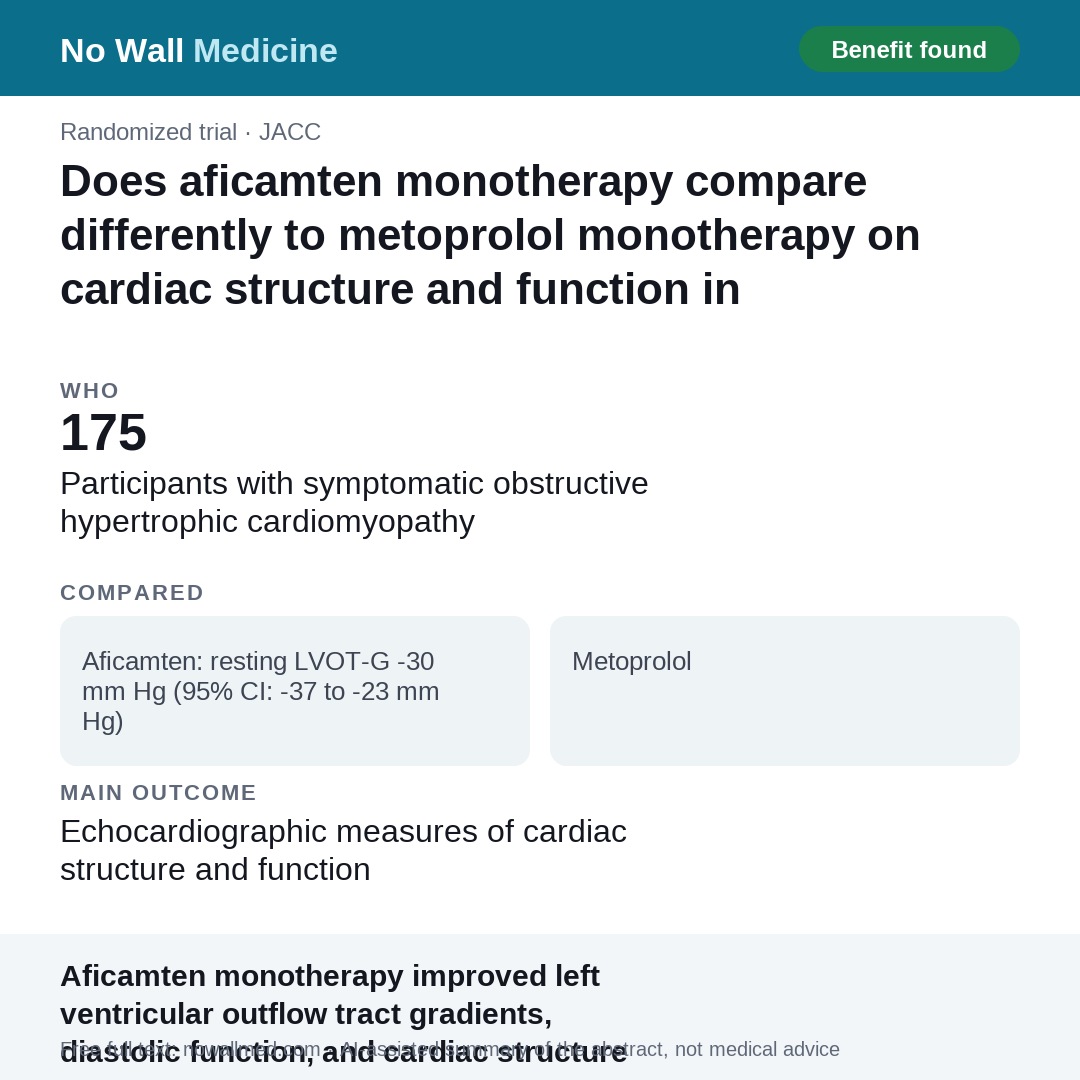
Effect of Aficamten Compared With Metoprolol on Echocardiographic Measures in Symptomatic Obstructive Hypertrophic Cardiomyopathy: MAPLE-HCM
Randomized trialBenefit found
Does aficamten monotherapy compare differently to metoprolol monotherapy on cardiac structure and function in symptomatic obstructive hypertrophic cardiomyopathy?
Who
175
Participants with symptomatic obstructive hypertrophic cardiomyopathy
Compared
Aficamten: resting LVOT-G -30 mm Hg (95% CI: -37 to -23 mm Hg)
Metoprolol
Main outcome
Echocardiographic measures of cardiac structure and function
Result: resting LVOT-G -30 mm Hg (95% CI: -37 to -23 mm Hg)
Bottom line: Aficamten monotherapy improved left ventricular outflow tract gradients, diastolic function, and cardiac structure compared to metoprolol over 24 weeks.
JACC · 2025-08-27Download image
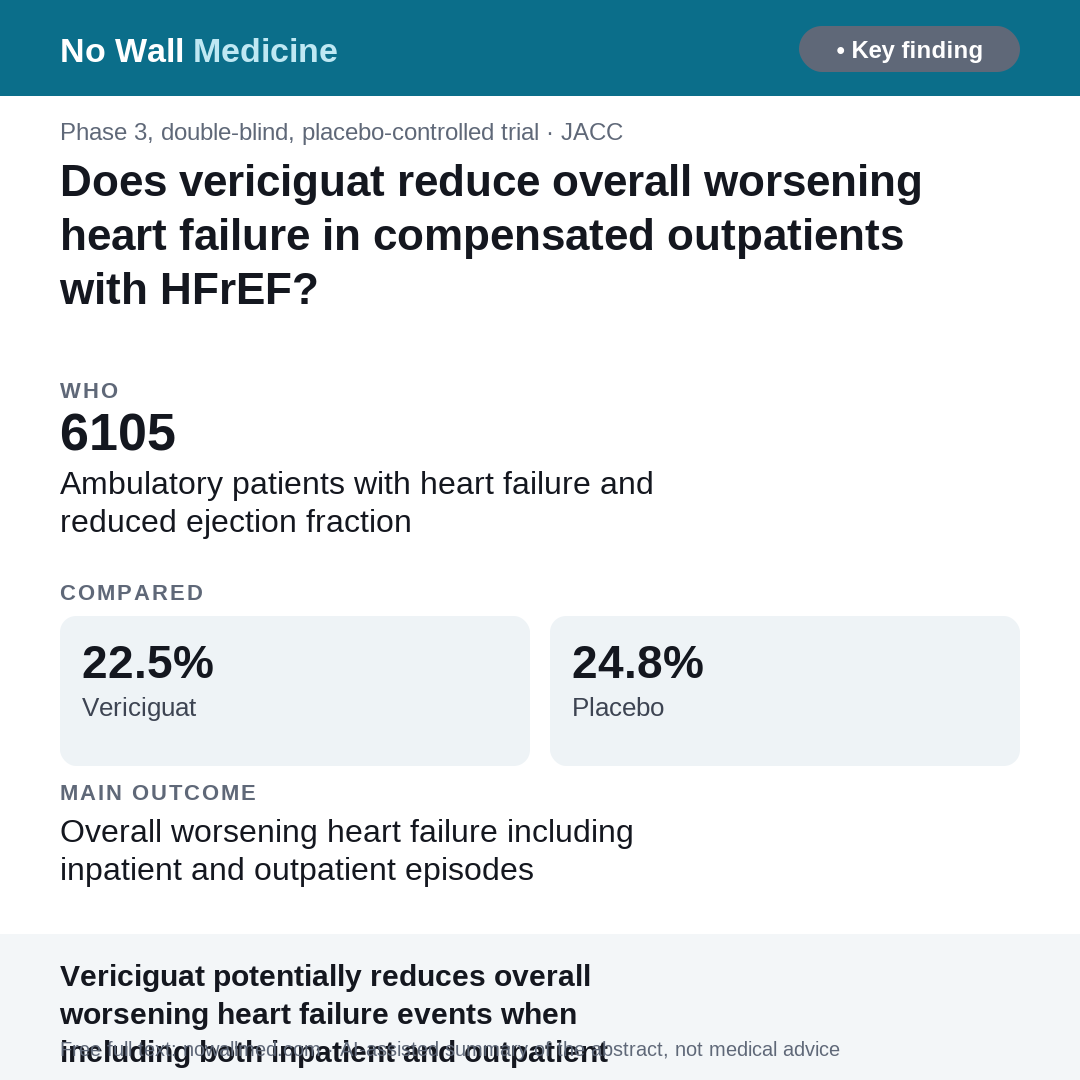
Effect of Vericiguat on Total Heart Failure Events in Compensated Outpatients With HFrEF: Insights From VICTOR
Phase 3, double-blind, placebo-controlled trialBenefit found
Does vericiguat reduce overall worsening heart failure in compensated outpatients with HFrEF?
Who
6105
Ambulatory patients with heart failure and reduced ejection fraction
Compared
22.5%Vericiguat
24.8%Placebo
Main outcome
Overall worsening heart failure including inpatient and outpatient episodes
Result: hazard ratio 0.90 (95% CI 0.81-1.00)
Bottom line: Vericiguat potentially reduces overall worsening heart failure events when including both inpatient and outpatient settings.
JACC · 2025-08-27Download image
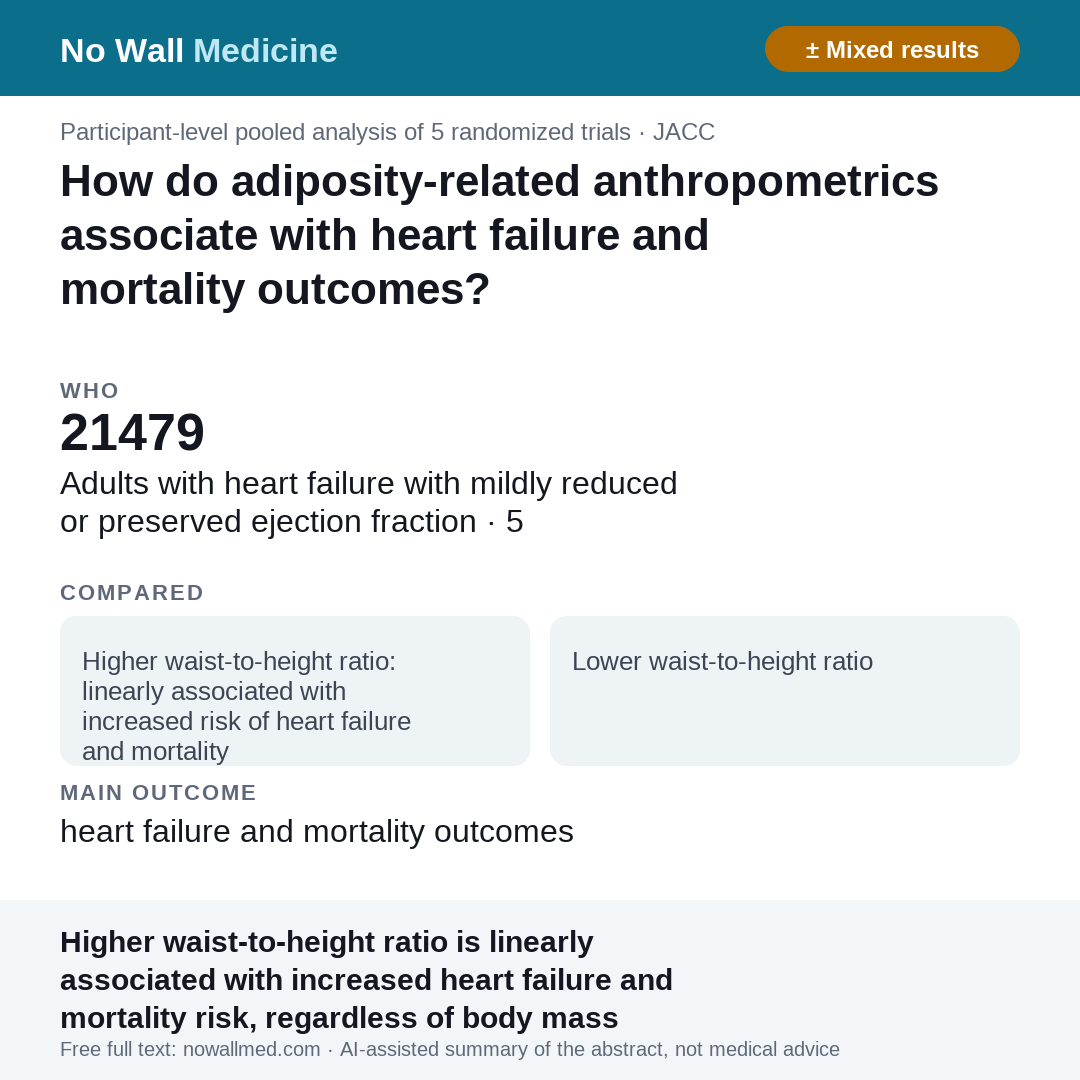
Adiposity-Related Anthropometrics and Clinical Outcomes in Heart Failure With Mildly Reduced or Preserved Ejection Fraction: A Participant-Level Pooled Analysis of Randomized Clinical Trials
Participant-level pooled analysis of 5 randomized trialsMixed results
How do adiposity-related anthropometrics associate with heart failure and mortality outcomes?
Who
21479
Adults with heart failure with mildly reduced or preserved ejection fraction · 5 international randomized trials
Compared
Higher waist-to-height ratio: linearly associated with increased risk of heart failure and mortality
Lower waist-to-height ratio
Main outcome
heart failure and mortality outcomes
Bottom line: Higher waist-to-height ratio is linearly associated with increased heart failure and mortality risk, regardless of body mass index.
JACC · 2025-08-27Download image
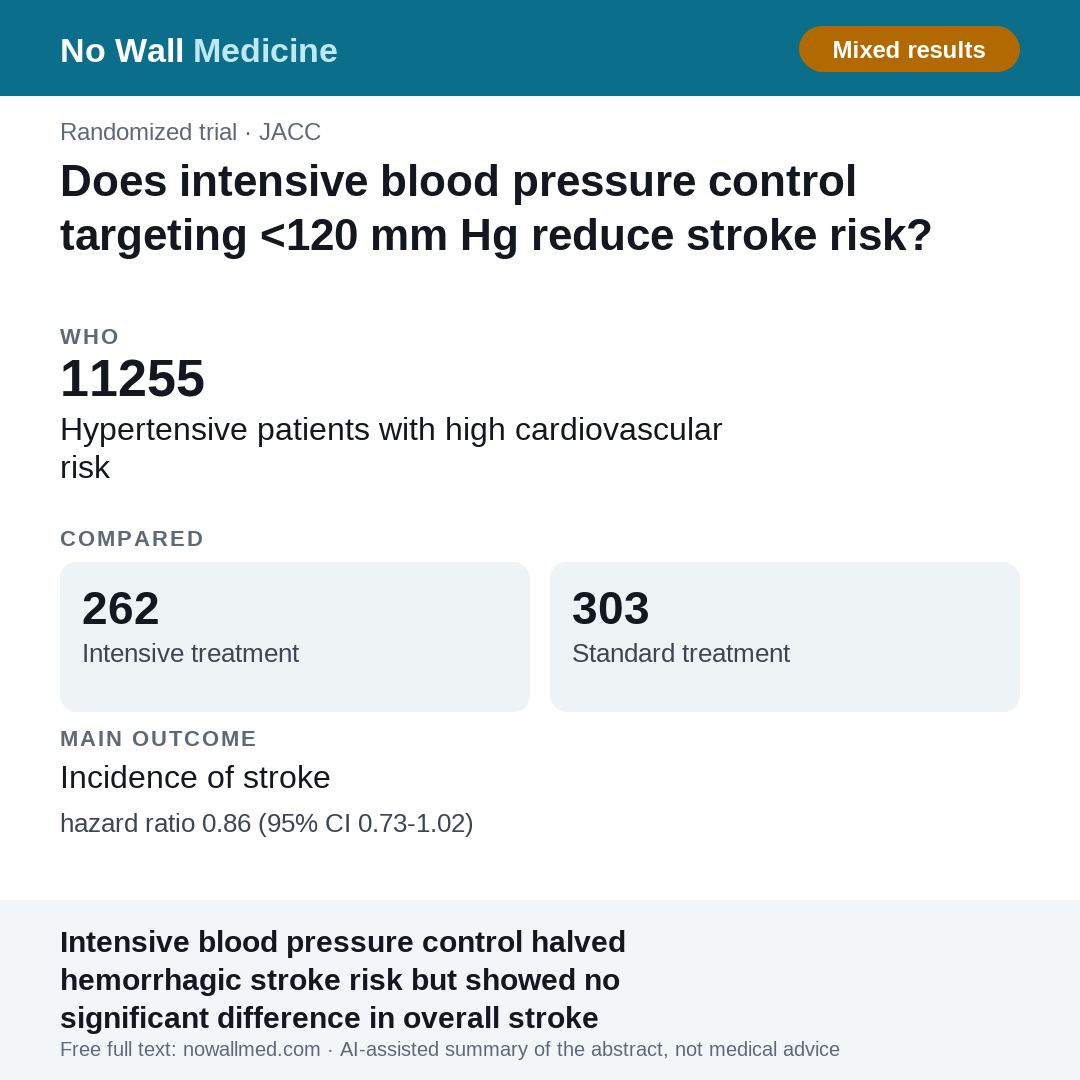
Effect of Intensive Blood Pressure Control on Stroke: A Prespecified Secondary Analysis of the ESPRIT Trial
Randomized trialMixed results
Does intensive blood pressure control targeting <120 mm Hg reduce stroke risk?
Who
11255
Hypertensive patients with high cardiovascular risk
Compared
262Intensive treatment (4.7%)
303Standard treatment (5.4%)
Main outcome
Incidence of stroke
Result: hazard ratio 0.86 (95% CI 0.73-1.02)
Bottom line: Intensive blood pressure control halved hemorrhagic stroke risk but showed no significant difference in overall stroke incidence.
JACC · 2025-08-27Download image
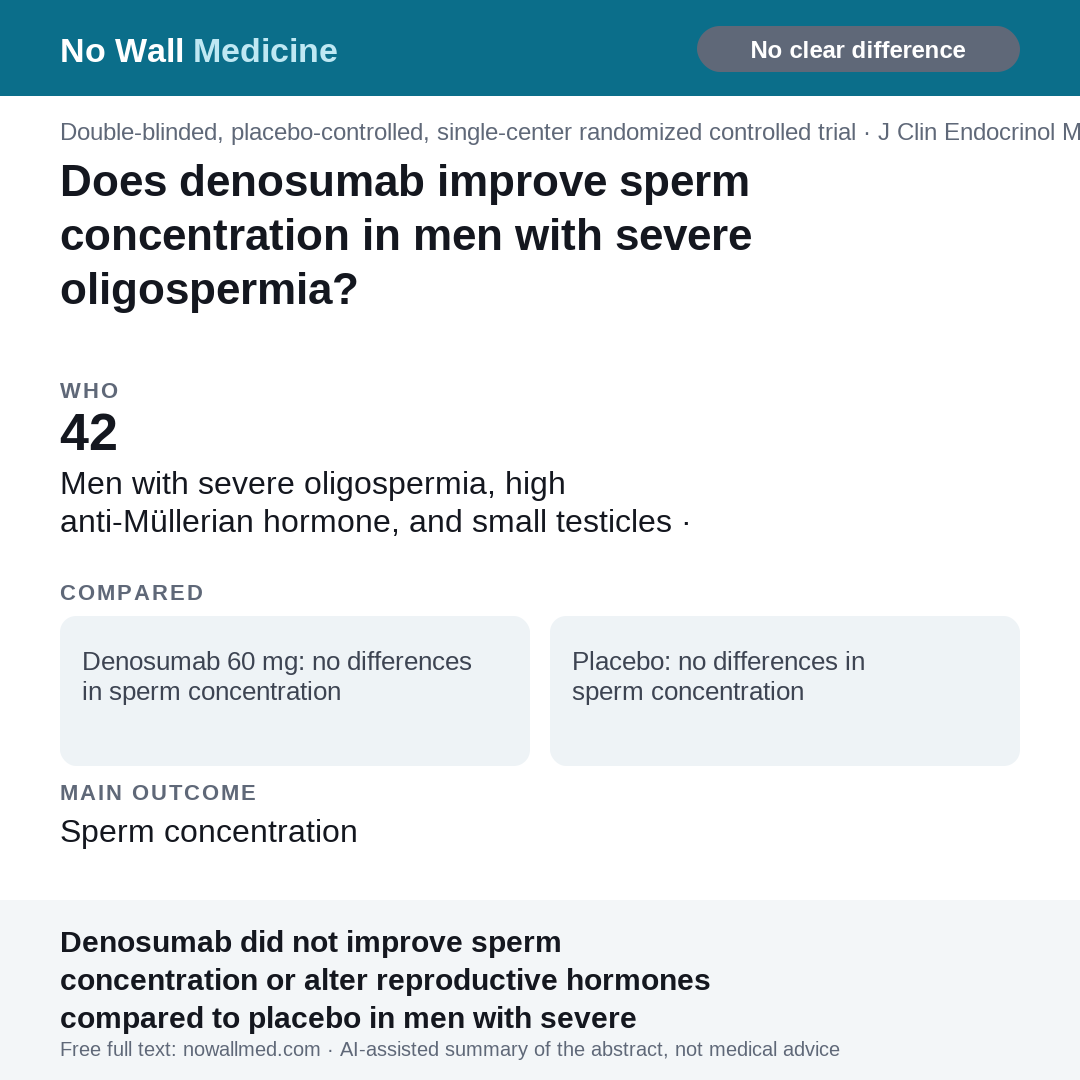
Effect of Denosumab on Sperm Concentration in Men With Severe Oligospermia: A Randomized Controlled Trial
Double-blinded, placebo-controlled, single-center randomized controlled trialNo clear difference
Does denosumab improve sperm concentration in men with severe oligospermia?
Who
42
Men with severe oligospermia, high anti-Müllerian hormone, and small testicles · Single-center
Compared
Denosumab 60 mg: no differences in sperm concentration
Placebo: no differences in sperm concentration
Main outcome
Sperm concentration
Bottom line: Denosumab did not improve sperm concentration or alter reproductive hormones compared to placebo in men with severe oligospermia.
J Clin Endocrinol Metab · 2025-08-27Download image