Visual abstracts
New randomized trials and meta-analyses from leading journals at a glance: who was studied, what was compared, and what was found. Every paper is free to read in full.
All specialtiesCardiology 350Oncology 273Gastroenterology & Hepatology 145Infectious Disease 266Neurology 159Psychiatry & Mental Health 223Pulmonology 159Critical Care 104Endocrinology & Diabetes 205Pediatrics 156Surgery 100Orthopedics & Sports Medicine 66Neurosurgery 21Cardiothoracic & Vascular Surgery 36Plastic & Reconstructive Surgery 67Nephrology 68Rheumatology 67Hematology 80Dermatology 32Ophthalmology 58Obstetrics & Gynecology 97Public & Global Health 100Radiology & Imaging 29Anesthesiology 61Urology 77ENT (Otolaryngology) 44Emergency Medicine 33Allergy & Immunology 37Geriatrics 96Family Medicine & Primary Care 53Medical Genetics & Genomics 32Pathology & Laboratory Medicine 5Physical Medicine & Rehabilitation 87Palliative Care 53Nutrition 116Digital Health & AI 293General Medicine 42
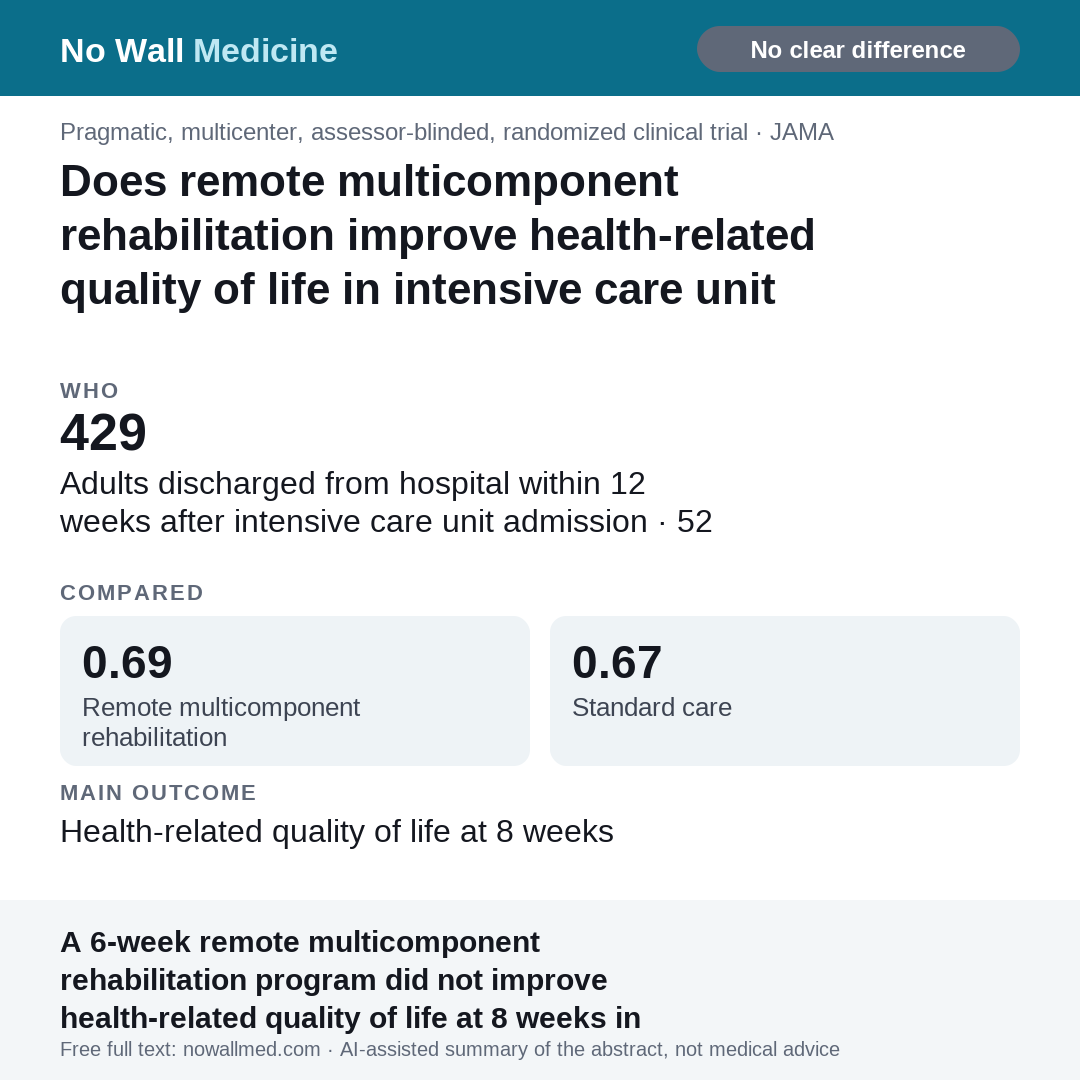
Remote Multicomponent Rehabilitation in Intensive Care Unit Survivors: A Randomized Clinical Trial
Pragmatic, multicenter, assessor-blinded, randomized clinical trialNo clear difference
Does remote multicomponent rehabilitation improve health-related quality of life in intensive care unit survivors?
Who
429
Adults discharged from hospital within 12 weeks after intensive care unit admission · 52 National Health Service hospitals in the UK
Compared
0.69Remote multicomponent rehabilitation (SD, 0.26)
0.67Standard care (SD, 0.27)
Main outcome
Health-related quality of life at 8 weeks
Result: adjusted mean difference, 0.04 (95% CI, -0.001 to 0.09)
Bottom line: A 6-week remote multicomponent rehabilitation program did not improve health-related quality of life at 8 weeks in intensive care survivors.
JAMA · 2026-05-18Download image
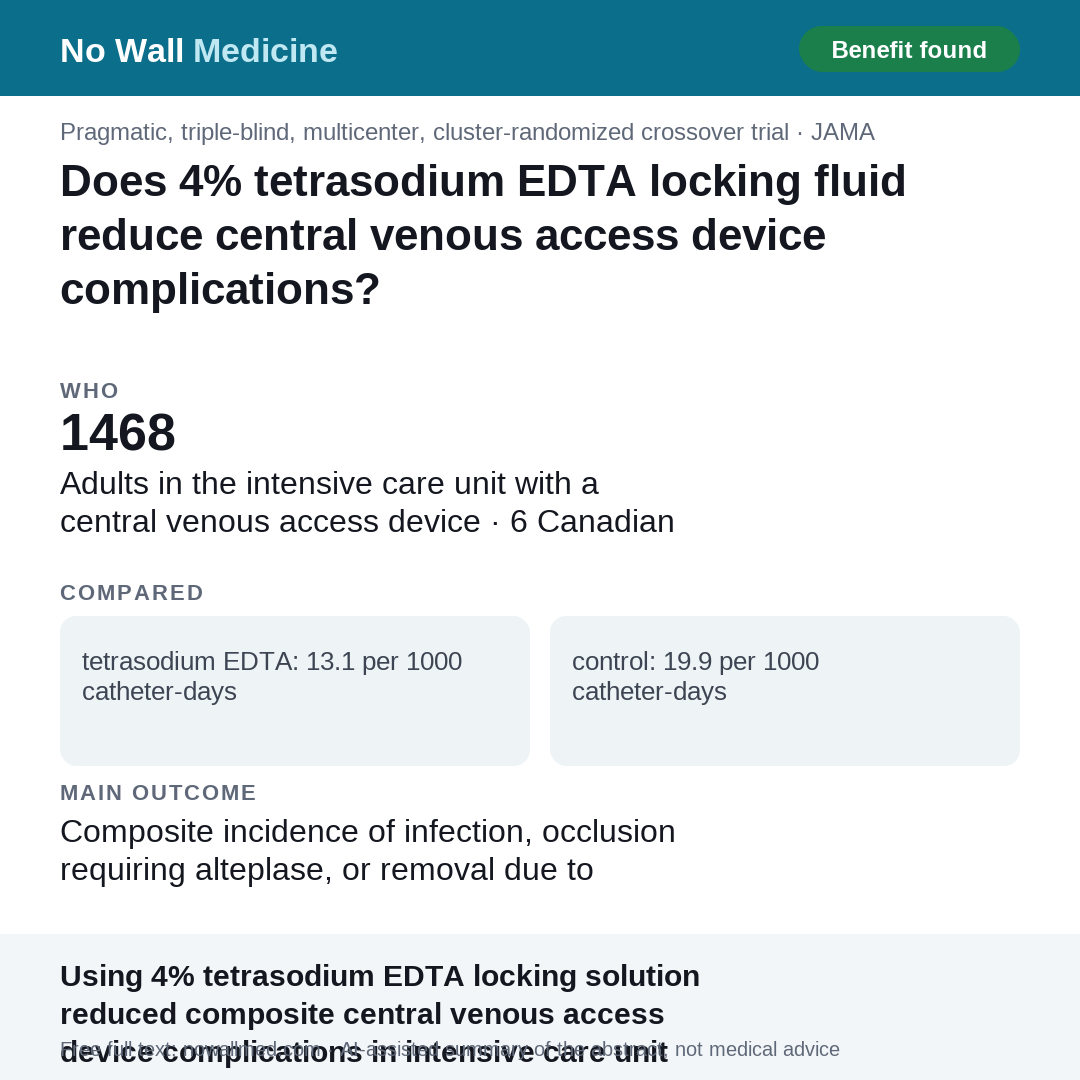
4% Tetrasodium EDTA to Prevent Central Venous Access Device-Associated Complications: A Randomized Clinical Trial
Pragmatic, triple-blind, multicenter, cluster-randomized crossover trialBenefit found
Does 4% tetrasodium EDTA locking fluid reduce central venous access device complications?
Who
1468
Adults in the intensive care unit with a central venous access device · 6 Canadian hospitals
Compared
tetrasodium EDTA: 13.1 per 1000 catheter-days
control: 19.9 per 1000 catheter-days
Main outcome
Composite incidence of infection, occlusion requiring alteplase, or removal due to occlusion
Result: rate ratio 0.68 (95% CI 0.47-0.96)
Bottom line: Using 4% tetrasodium EDTA locking solution reduced composite central venous access device complications in intensive care unit patients.
JAMA · 2026-05-18Download image
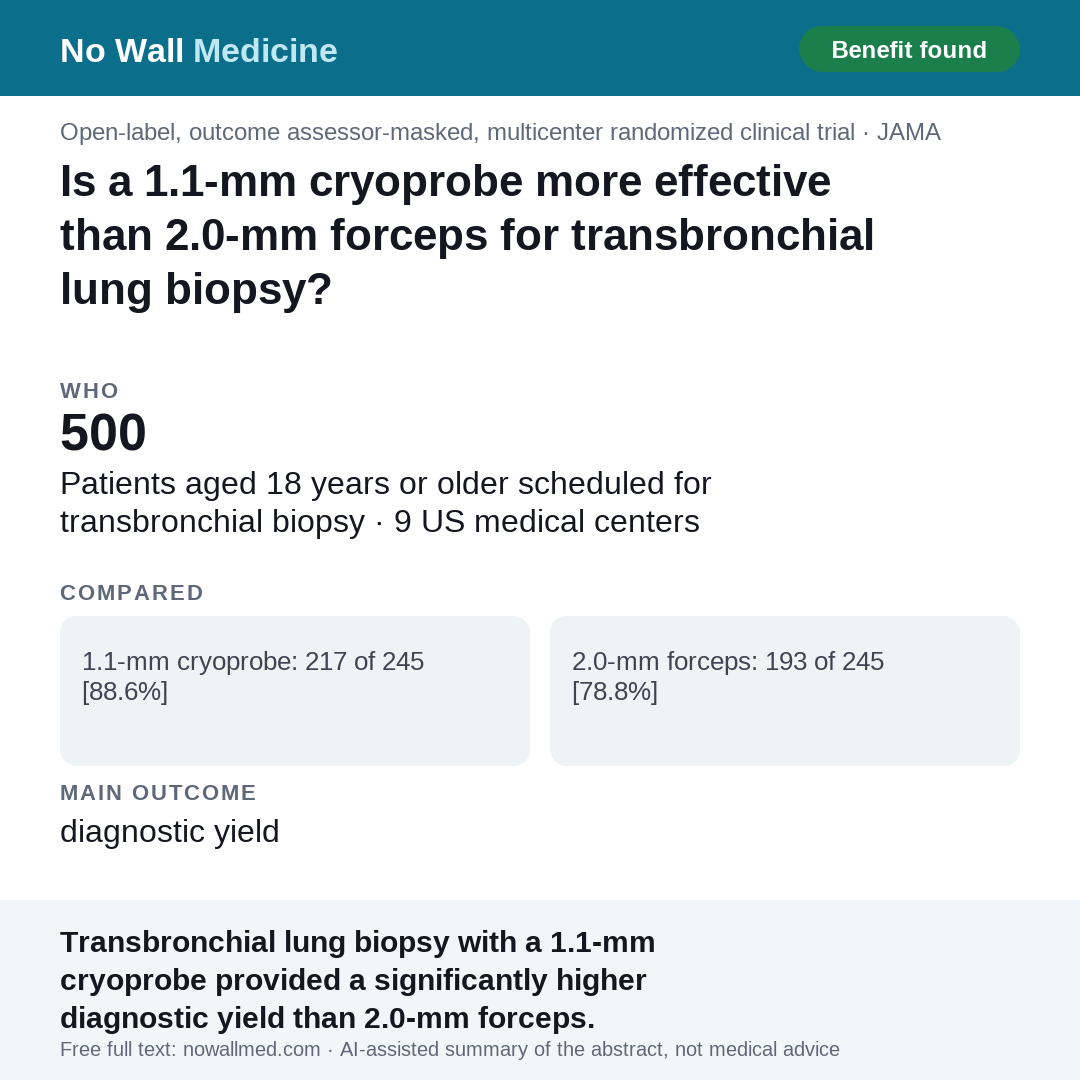
Cryobiopsy vs Forceps for Bronchoscopic Lung Biopsy: The FROSTBITE-2 Randomized Clinical Trial
Open-label, outcome assessor-masked, multicenter randomized clinical trialBenefit found
Is a 1.1-mm cryoprobe more effective than 2.0-mm forceps for transbronchial lung biopsy?
Who
500
Patients aged 18 years or older scheduled for transbronchial biopsy · 9 US medical centers
Compared
1.1-mm cryoprobe: 217 of 245 [88.6%]
2.0-mm forceps: 193 of 245 [78.8%]
Main outcome
diagnostic yield
Result: absolute difference, 9.8%; 95% CI, 3.3%-16.3%
Bottom line: Transbronchial lung biopsy with a 1.1-mm cryoprobe provided a significantly higher diagnostic yield than 2.0-mm forceps.
JAMA · 2026-05-18Download image
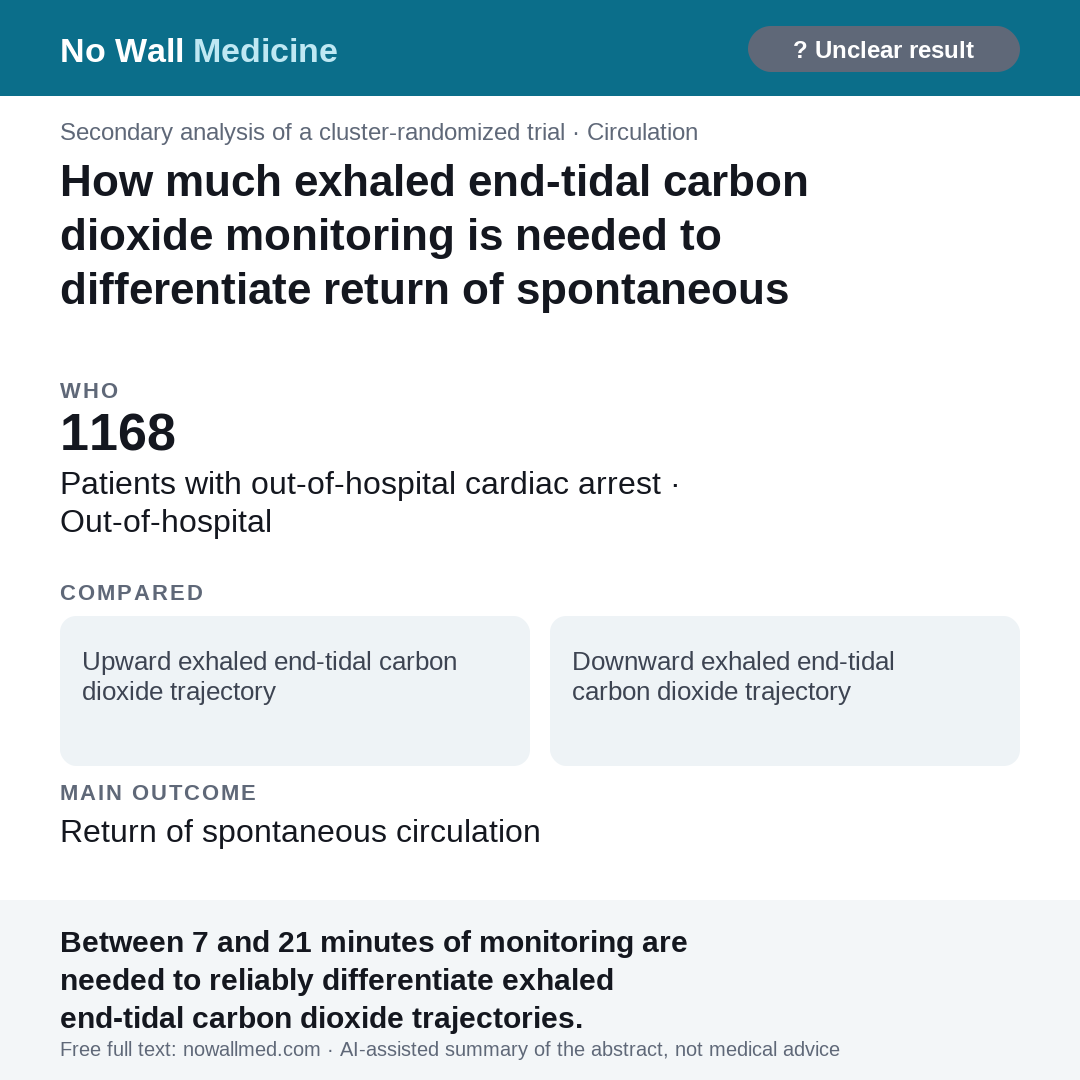
Resuscitation From Out-of-Hospital Cardiac Arrest: When Is EtCO2 Reliably Associated With ROSC?
Secondary analysis of a cluster-randomized trialUnclear result
How much exhaled end-tidal carbon dioxide monitoring is needed to differentiate return of spontaneous circulation?
Who
1168
Patients with out-of-hospital cardiac arrest · Out-of-hospital
Compared
Upward exhaled end-tidal carbon dioxide trajectory
Downward exhaled end-tidal carbon dioxide trajectory
Main outcome
Return of spontaneous circulation
Bottom line: Between 7 and 21 minutes of monitoring are needed to reliably differentiate exhaled end-tidal carbon dioxide trajectories.
Circulation · 2026-05-18Download image
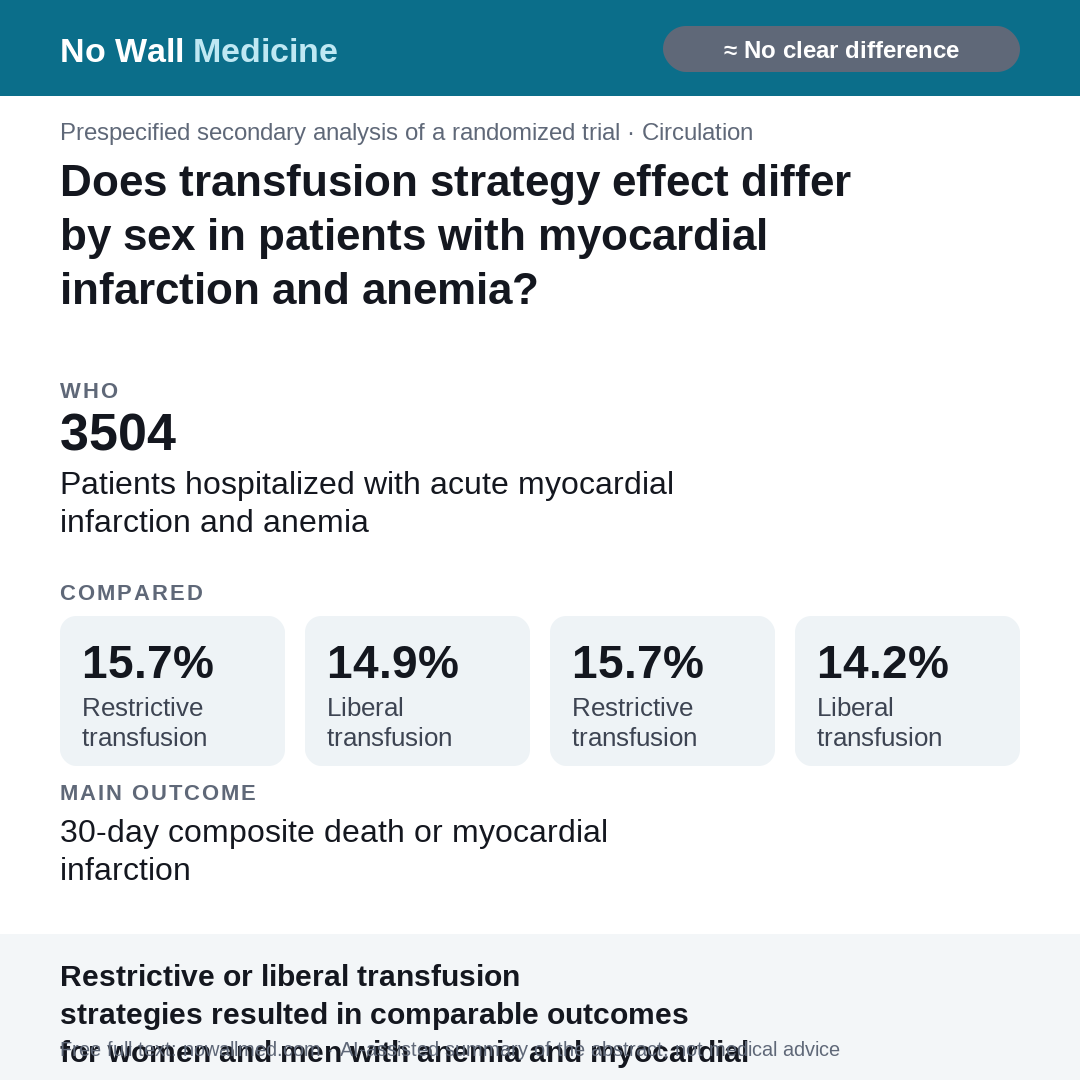
Comparative Efficacy of Transfusion Strategies in Women and Men With Myocardial Infarction and Anemia: Prespecified Secondary Findings From the MINT Trial
Prespecified secondary analysis of a randomized trialNo clear difference
Does transfusion strategy effect differ by sex in patients with myocardial infarction and anemia?
Who
3504
Patients hospitalized with acute myocardial infarction and anemia
Compared
15.7%Restrictive transfusion strategy in women
14.9%Liberal transfusion strategy in women
15.7%Restrictive transfusion strategy in men
14.2%Liberal transfusion strategy in men
Main outcome
30-day composite death or myocardial infarction
Result: interaction P=0.60
Bottom line: Restrictive or liberal transfusion strategies resulted in comparable outcomes for women and men with anemia and myocardial infarction.
Circulation · 2026-05-18Download image
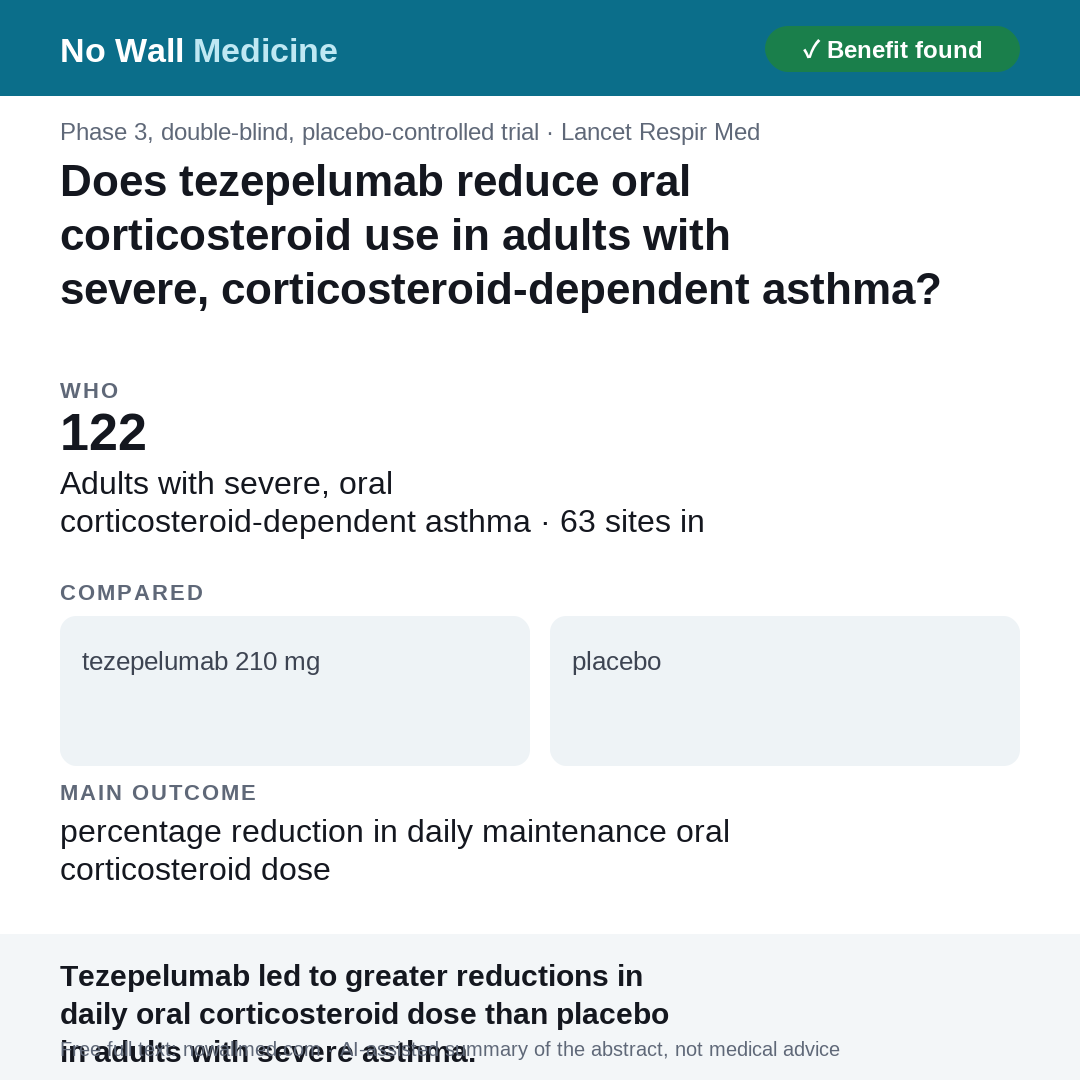
Efficacy and safety of tezepelumab versus placebo in reducing oral corticosteroid use in adults with severe, oral corticosteroid-dependent asthma (SUNRISE): a multicentre, placebo-controlled, double-blind, phase 3 trial
Phase 3, double-blind, placebo-controlled trialBenefit found
Does tezepelumab reduce oral corticosteroid use in adults with severe, corticosteroid-dependent asthma?
Who
122
Adults with severe, oral corticosteroid-dependent asthma · 63 sites in 12 countries
Compared
tezepelumab 210 mg
placebo
Main outcome
percentage reduction in daily maintenance oral corticosteroid dose
Result: odds ratio 2·93 (95% CI 1·43-6·03)
Bottom line: Tezepelumab led to greater reductions in daily oral corticosteroid dose than placebo in adults with severe asthma.
Funded by: AstraZeneca and Amgen
Lancet Respir Med · 2026-05-18Download image
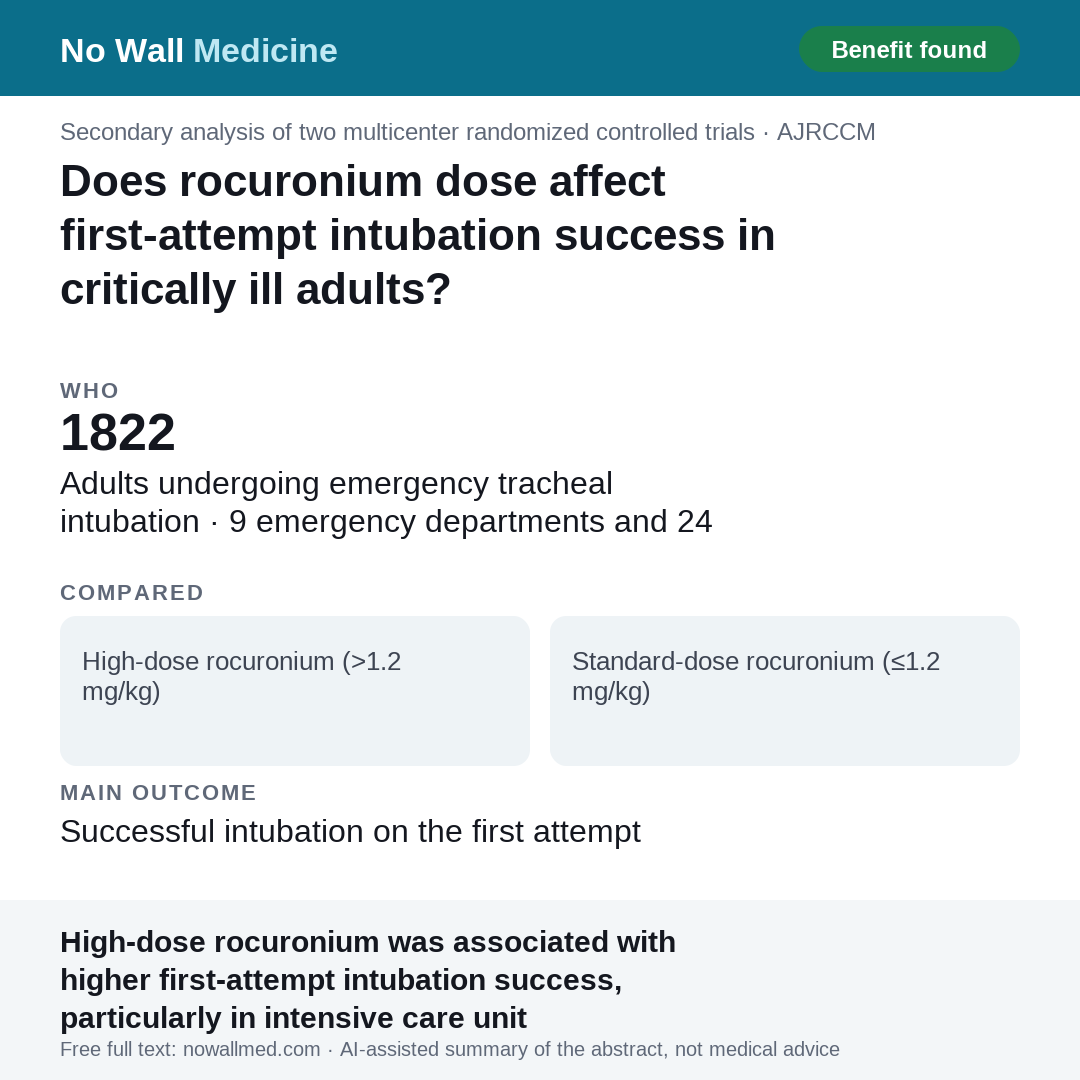
Rocuronium dose and first-attempt intubation success in the critically ill: secondary analysis of two multicenter trials
Secondary analysis of two multicenter randomized controlled trialsBenefit found
Does rocuronium dose affect first-attempt intubation success in critically ill adults?
Who
1822
Adults undergoing emergency tracheal intubation · 9 emergency departments and 24 intensive care units in the United States
Compared
High-dose rocuronium (>1.2 mg/kg)
Standard-dose rocuronium (≤1.2 mg/kg)
Main outcome
Successful intubation on the first attempt
Result: adjusted relative risk 1.07 (95% confidence interval 1.02-1.12)
Bottom line: High-dose rocuronium was associated with higher first-attempt intubation success, particularly in intensive care unit settings.
Limitation: Potential for unmeasured confounding
AJRCCM · 2026-05-18Download image
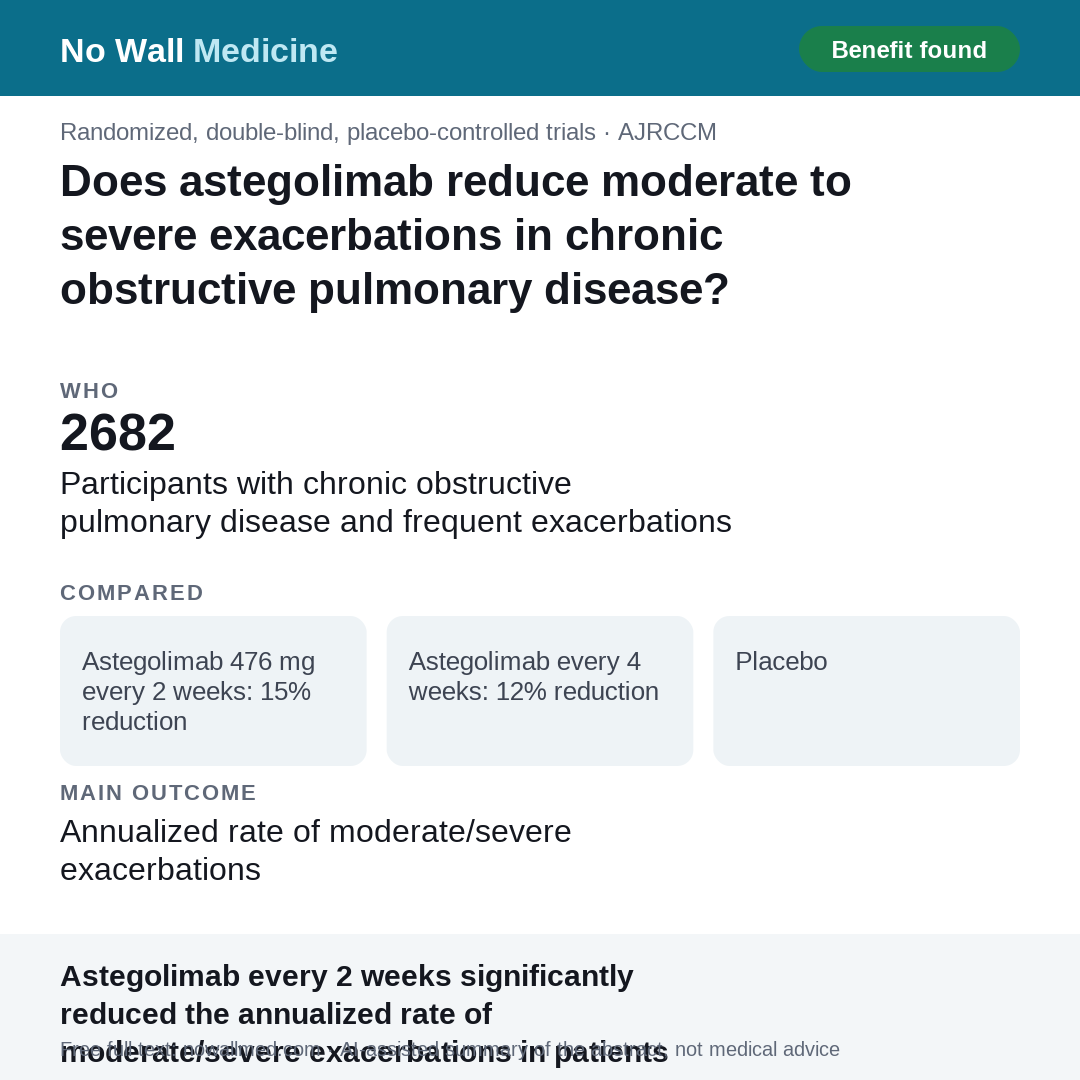
Astegolimab for chronic obstructive pulmonary disease with frequent exacerbations: pooled analysis of the ALIENTO and ARNASA trials
Randomized, double-blind, placebo-controlled trialsBenefit found
Does astegolimab reduce moderate to severe exacerbations in chronic obstructive pulmonary disease?
Who
2682
Participants with chronic obstructive pulmonary disease and frequent exacerbations
Compared
Astegolimab 476 mg every 2 weeks: 15% reduction
Astegolimab every 4 weeks: 12% reduction
Placebo
Main outcome
Annualized rate of moderate/severe exacerbations
Result: adjusted rate ratio 0.85 (95% CI 0.76-0.96)
Bottom line: Astegolimab every 2 weeks significantly reduced the annualized rate of moderate/severe exacerbations in patients with chronic obstructive pulmonary disease.
AJRCCM · 2026-05-18Download image
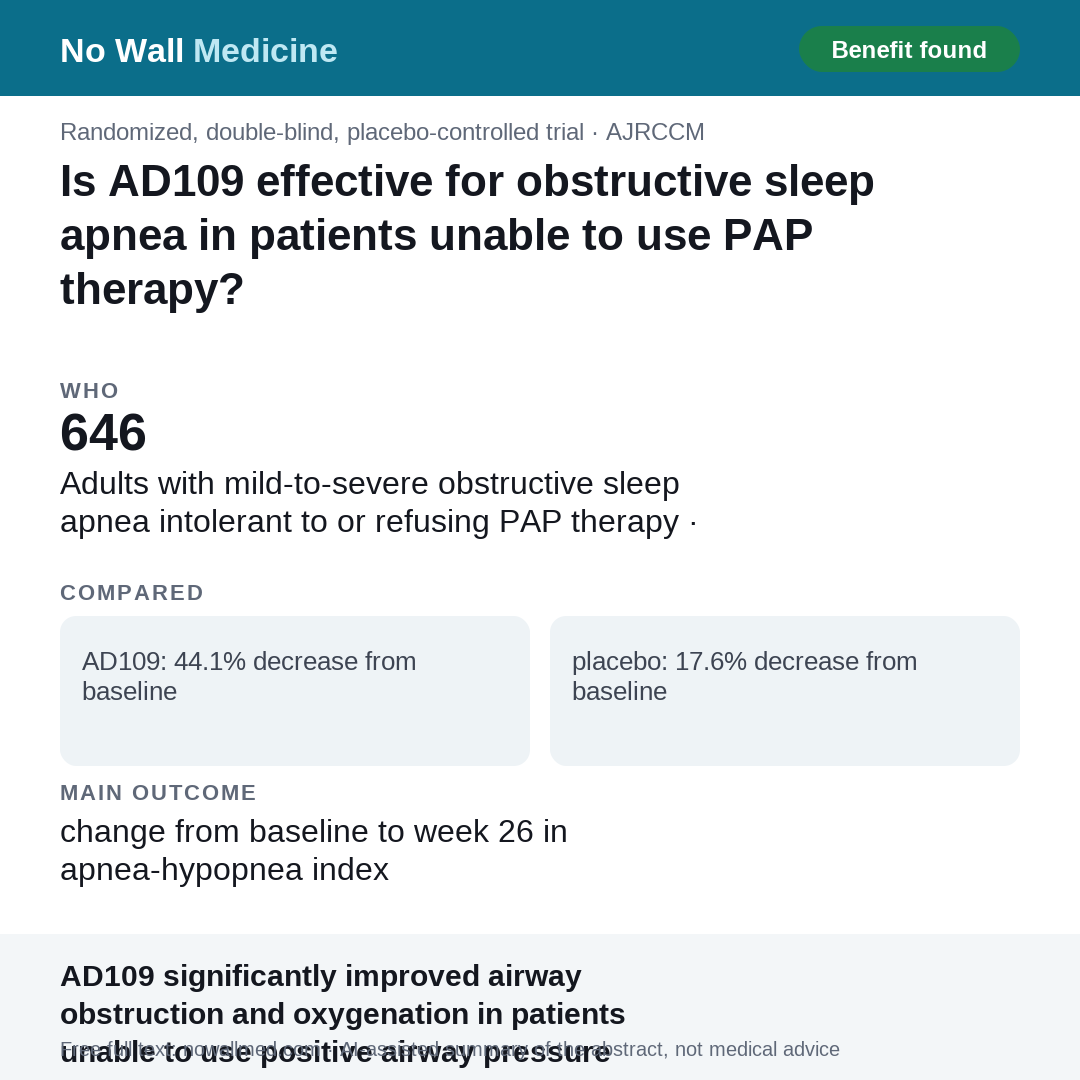
Aroxybutynin and atomoxetine (AD109) for obstructive sleep apnea: a randomized phase 3 trial (SynAIRgy)
Randomized, double-blind, placebo-controlled trialBenefit found
Is AD109 effective for obstructive sleep apnea in patients unable to use PAP therapy?
Who
646
Adults with mild-to-severe obstructive sleep apnea intolerant to or refusing PAP therapy · 69 centers
Compared
AD109: 44.1% decrease from baseline
placebo: 17.6% decrease from baseline
Main outcome
change from baseline to week 26 in apnea-hypopnea index
Result: -4.0 events/hour (95% CI, -6.4 to -1.6)
Bottom line: AD109 significantly improved airway obstruction and oxygenation in patients unable to use positive airway pressure therapy.
AJRCCM · 2026-05-18Download image
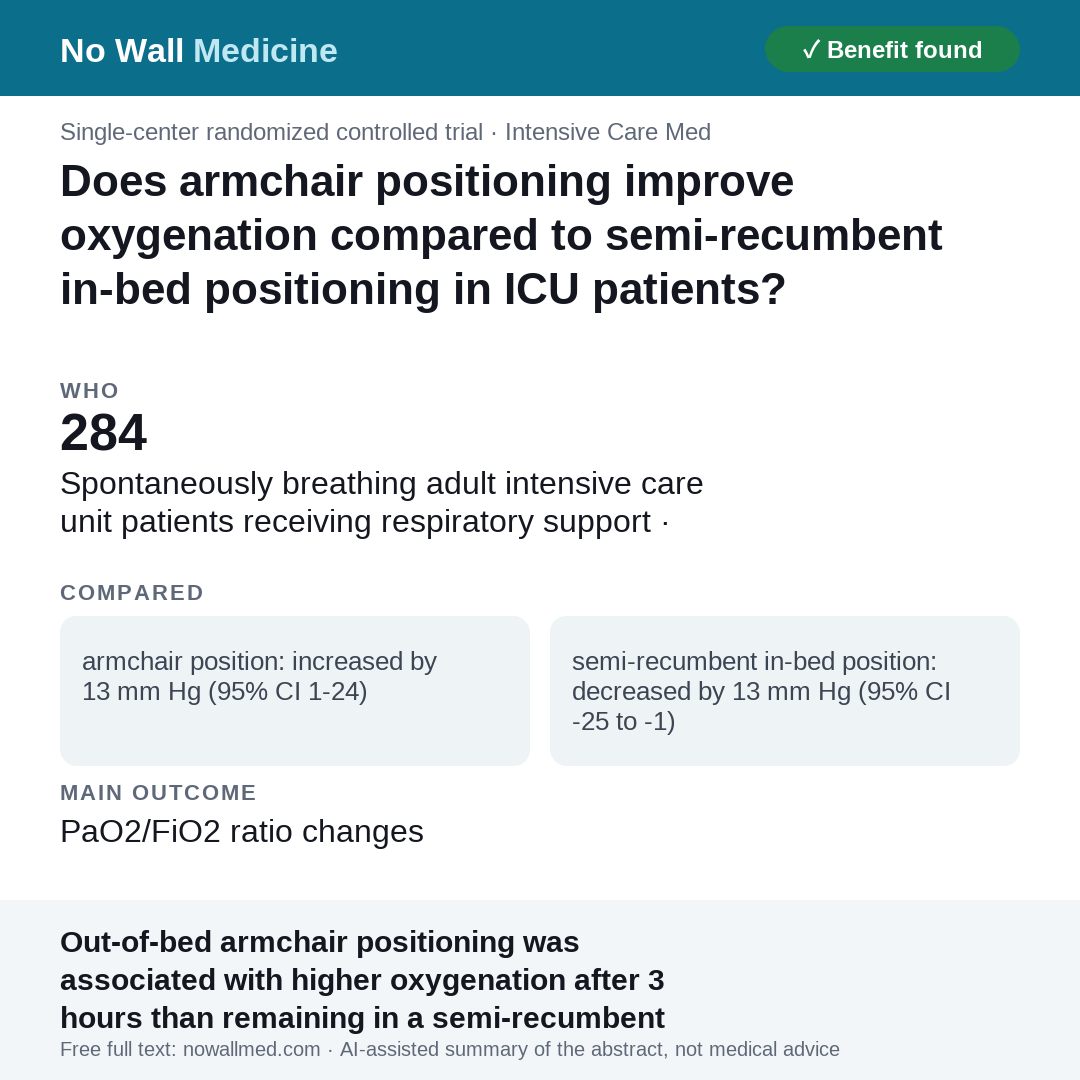
Effects of out-of-bed armchair positioning on oxygenation in spontaneously breathing ICU patients receiving respiratory support: a randomized controlled trial
Single-center randomized controlled trialBenefit found
Does armchair positioning improve oxygenation compared to semi-recumbent in-bed positioning in ICU patients?
Who
284
Spontaneously breathing adult intensive care unit patients receiving respiratory support · Single-center
Compared
armchair position: increased by 13 mm Hg (95% CI 1-24)
semi-recumbent in-bed position: decreased by 13 mm Hg (95% CI -25 to -1)
Main outcome
PaO2/FiO2 ratio changes
Result: 241 mm Hg (95% CI 214-268) vs 206 mm Hg (95% CI 179-233)
Bottom line: Out-of-bed armchair positioning was associated with higher oxygenation after 3 hours than remaining in a semi-recumbent position.
Limitation: Minor adverse events were more frequent in the armchair group.
Intensive Care Med · 2026-05-18Download image
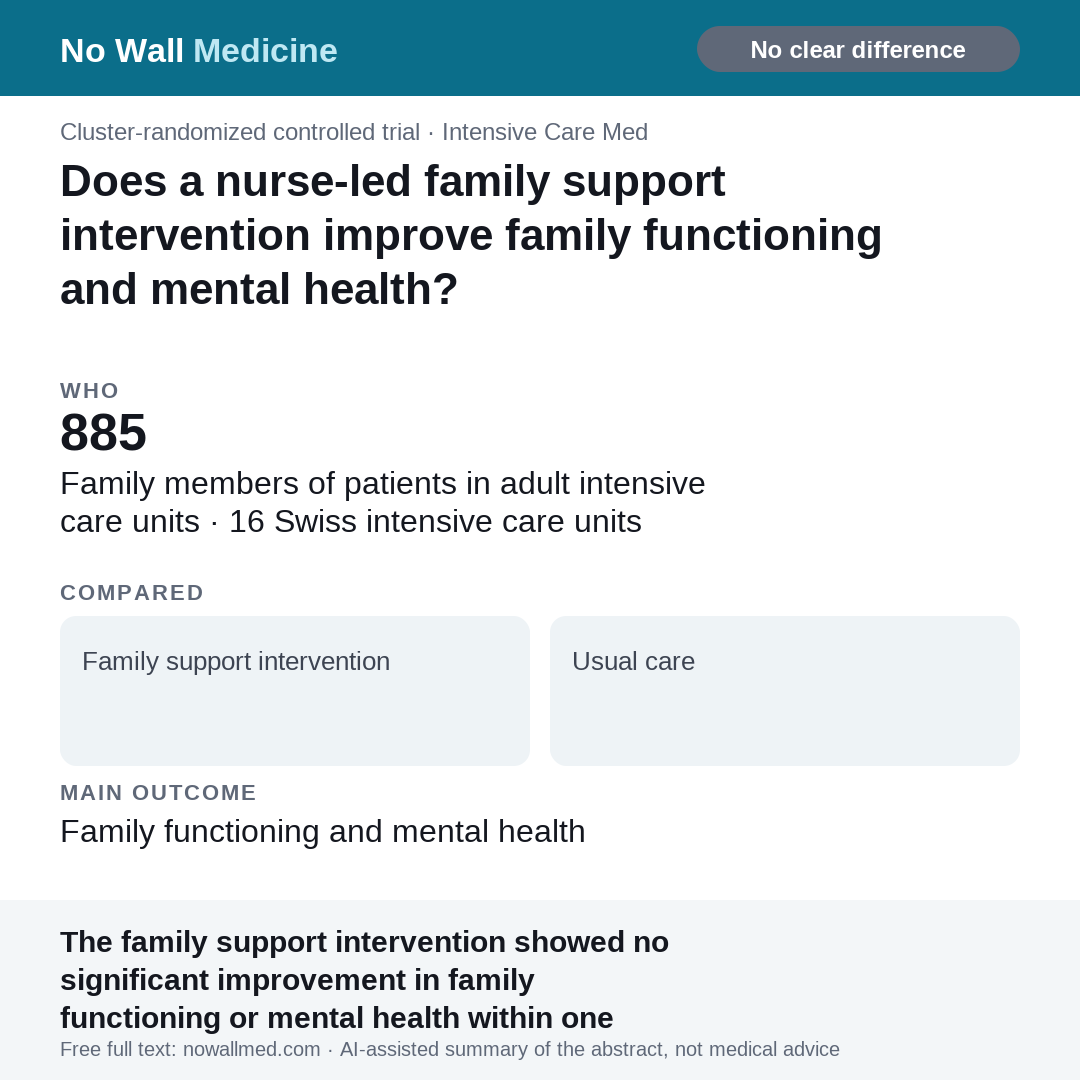
The FICUS cluster randomized controlled trial of a family support intervention in adult intensive care units: mental health and family functioning outcomes
Cluster-randomized controlled trialNo clear difference
Does a nurse-led family support intervention improve family functioning and mental health?
Who
885
Family members of patients in adult intensive care units · 16 Swiss intensive care units
Compared
Family support intervention
Usual care
Main outcome
Family functioning and mental health
Bottom line: The family support intervention showed no significant improvement in family functioning or mental health within one year.
Limitation: Results must be interpreted cautiously and in a hypothesis-generating manner.
Intensive Care Med · 2026-05-18Download image
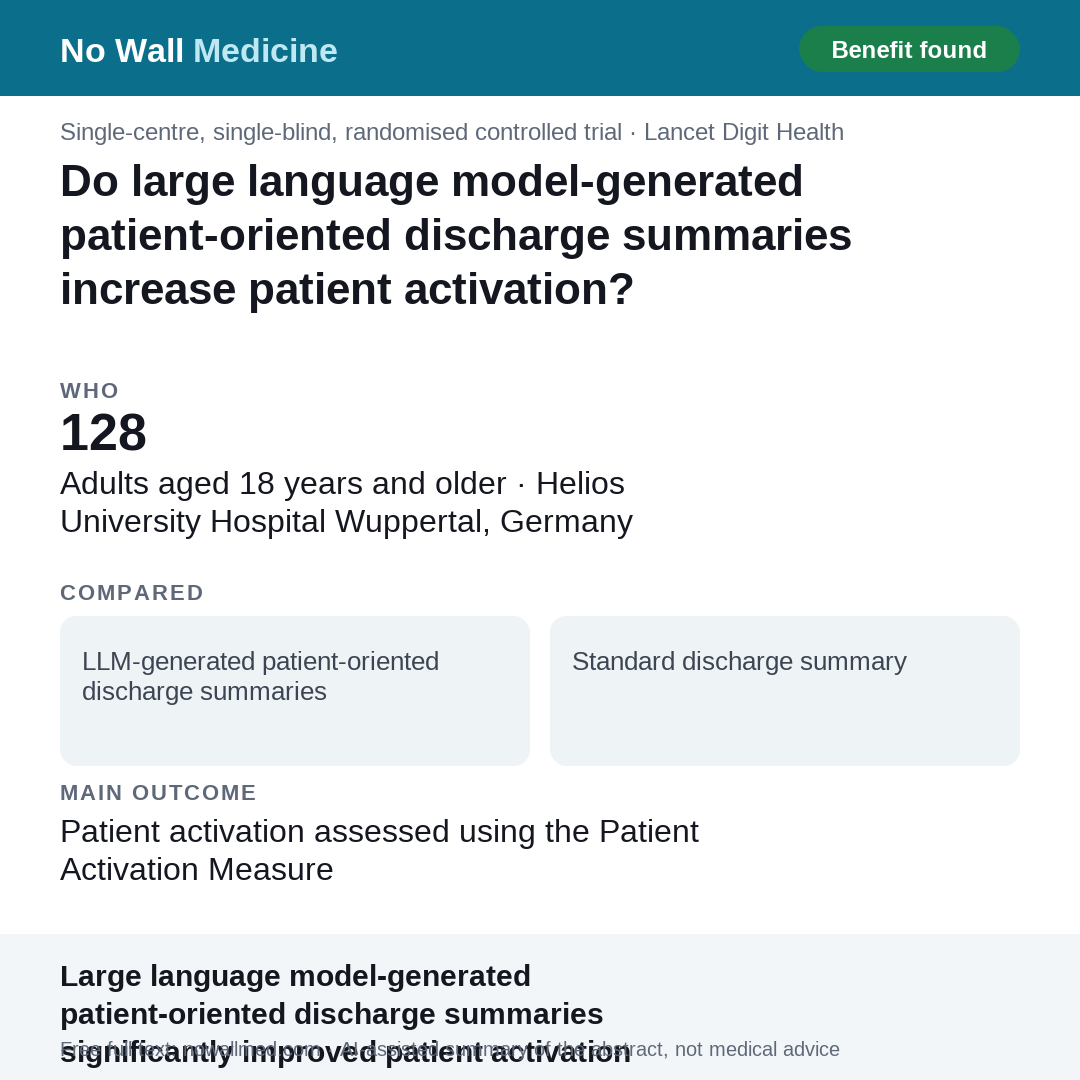
Effects of large language model-generated, patient-oriented discharge summaries on patient activation: a single-centre, single-blind, randomised controlled trial in Germany
Single-centre, single-blind, randomised controlled trialBenefit found
Do large language model-generated patient-oriented discharge summaries increase patient activation?
Who
128
Adults aged 18 years and older · Helios University Hospital Wuppertal, Germany
Compared
LLM-generated patient-oriented discharge summaries
Standard discharge summary
Main outcome
Patient activation assessed using the Patient Activation Measure
Result: Hodges-Lehmann median of differences 9·6 points (95% CI 4·3-15·1)
Bottom line: Large language model-generated patient-oriented discharge summaries significantly improved patient activation compared to standard discharge summaries.
Funded by: Witten/Herdecke University
Lancet Digit Health · 2026-05-18Download image
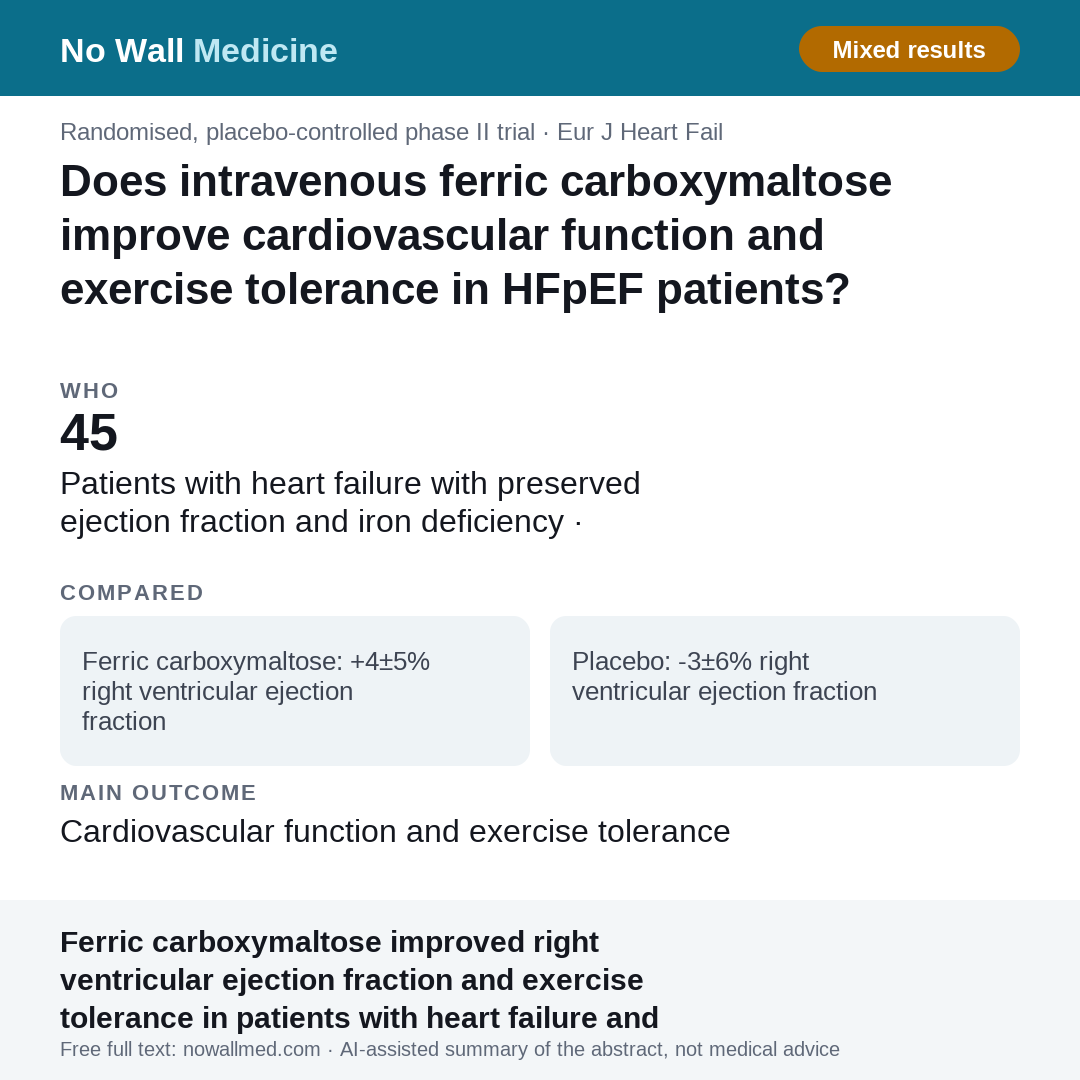
Intravenous IRON supplementation in Heart Failure with Preserved Ejection Fraction and iron deficiency (IRON-HFpEF): a comprehensive phase II multicentre placebo-controlled randomised clinical trial
Randomised, placebo-controlled phase II trialMixed results
Does intravenous ferric carboxymaltose improve cardiovascular function and exercise tolerance in HFpEF patients?
Who
45
Patients with heart failure with preserved ejection fraction and iron deficiency · Amsterdam UMC and Maastricht UMC+
Compared
Ferric carboxymaltose: +4±5% right ventricular ejection fraction
Placebo: -3±6% right ventricular ejection fraction
Main outcome
Cardiovascular function and exercise tolerance
Bottom line: Ferric carboxymaltose improved right ventricular ejection fraction and exercise tolerance in patients with heart failure and iron deficiency.
Limitation: The study was a phase II trial with a small sample size.
Eur J Heart Fail · 2026-05-18Download image
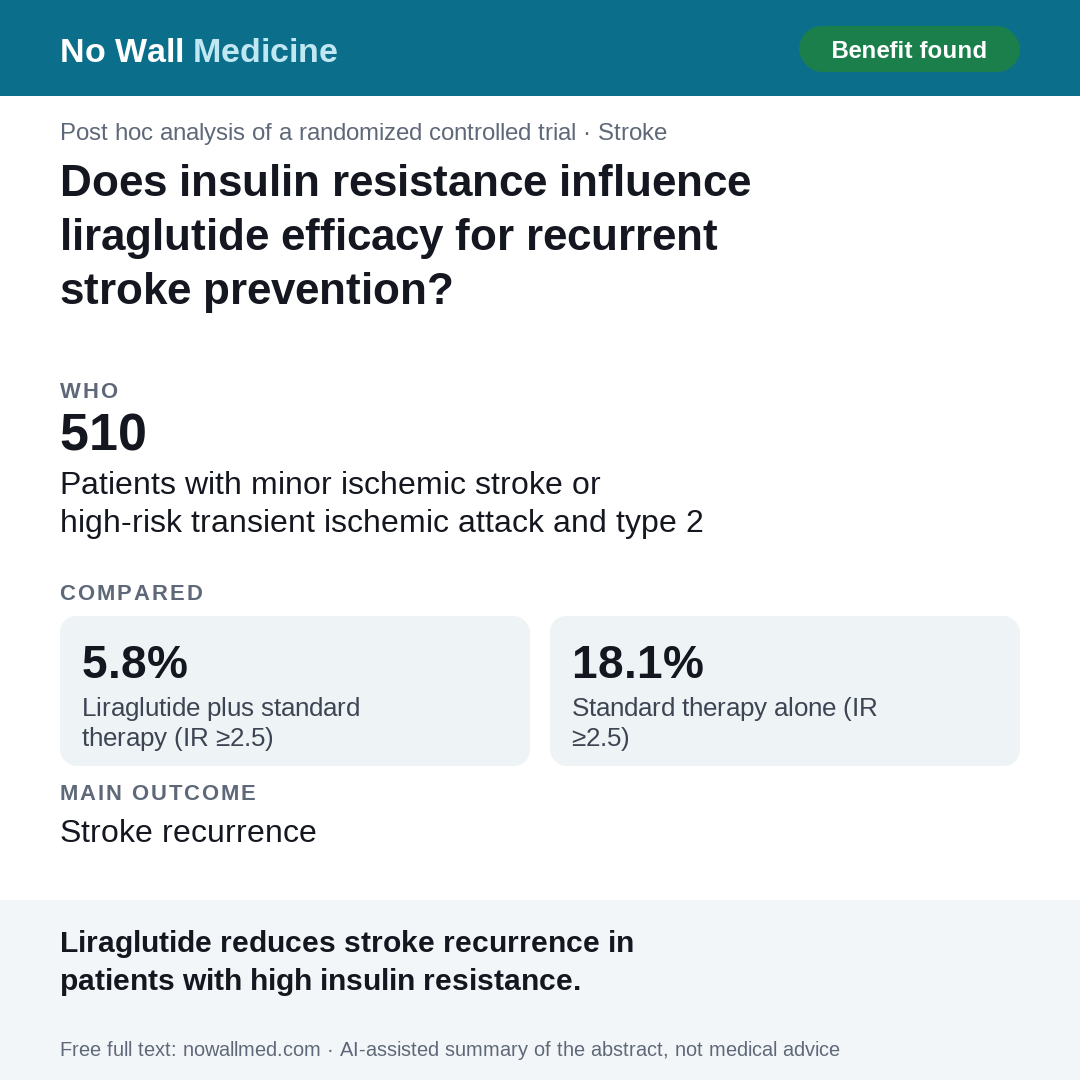
Liraglutide and Recurrent Stroke by Baseline Insulin Resistance: A Post Hoc Analysis of the LAMP Trial
Post hoc analysis of a randomized controlled trialBenefit found
Does insulin resistance influence liraglutide efficacy for recurrent stroke prevention?
Who
510
Patients with minor ischemic stroke or high-risk transient ischemic attack and type 2 diabetes · 27 hospitals in China
Compared
5.8%Liraglutide plus standard therapy (IR ≥2.5)
18.1%Standard therapy alone (IR ≥2.5)
Main outcome
Stroke recurrence
Result: absolute risk reduction 12.3% (95% CI 5.6%-19.0%)
Bottom line: Liraglutide reduces stroke recurrence in patients with high insulin resistance.
Stroke · 2026-05-18Download image
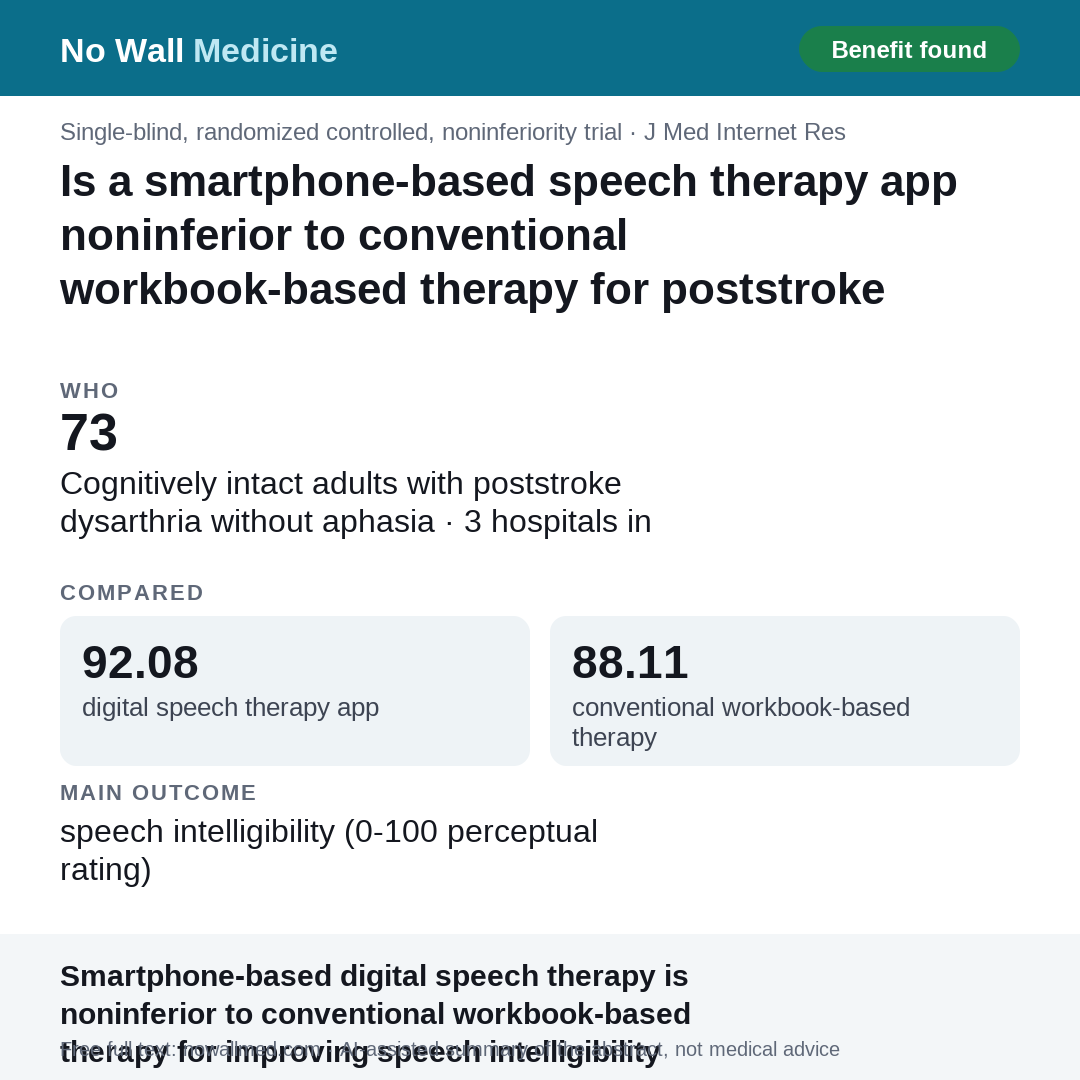
Efficacy of Digital Speech Therapy for Poststroke Dysarthria: Randomized Noninferiority Trial
Single-blind, randomized controlled, noninferiority trialBenefit found
Is a smartphone-based speech therapy app noninferior to conventional workbook-based therapy for poststroke dysarthria?
Who
73
Cognitively intact adults with poststroke dysarthria without aphasia · 3 hospitals in South Korea
Compared
92.08digital speech therapy app (SD 12.38)
88.11conventional workbook-based therapy (SD 18.06)
Main outcome
speech intelligibility (0-100 perceptual rating)
Result: adjusted between-group difference 4.49 (95% CI 0.61-8.37)
Bottom line: Smartphone-based digital speech therapy is noninferior to conventional workbook-based therapy for improving speech intelligibility in poststroke dysarthria.
Limitation: Efficacy in older survivors with cognitive deficits or co-occurring aphasia remains to be established.
J Med Internet Res · 2026-05-18Download image
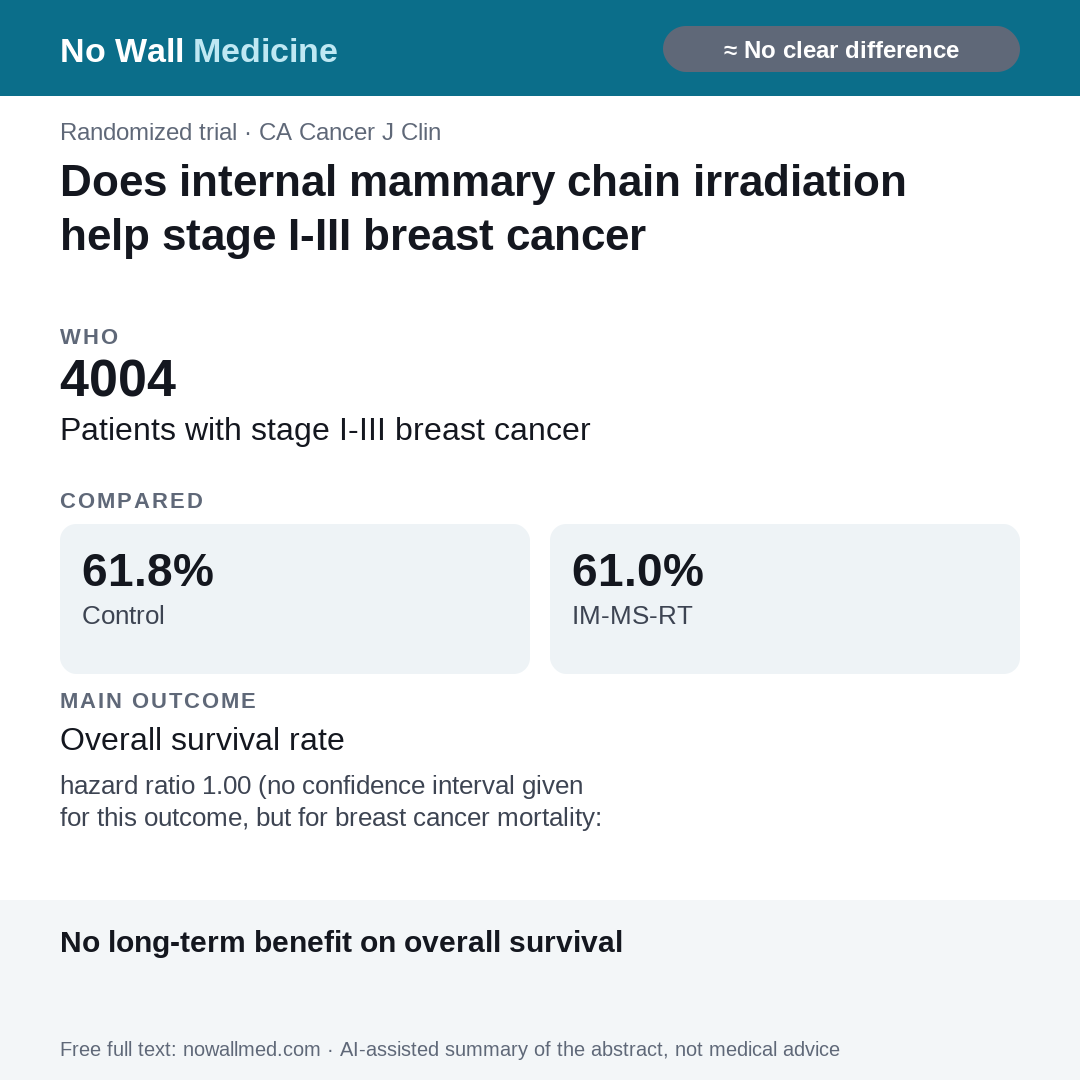
Twenty-year results of the randomized European Organization for Research and Treatment of Cancer trial 22922/10925 evaluating internal mammary chain and medial supraclavicular lymph node irradiation in stage I-III breast cancer
Randomized trialNo clear difference
Does internal mammary chain irradiation help stage I-III breast cancer
Who
4004
Patients with stage I-III breast cancer
Compared
61.8%Control
61.0%IM-MS-RT
Main outcome
Overall survival rate
Result: hazard ratio 1.00 (no confidence interval given for this outcome, but for breast cancer mortality: hazard ratio 0.82)
Bottom line: No long-term benefit on overall survival
CA Cancer J Clin · 2026-05-17Download image
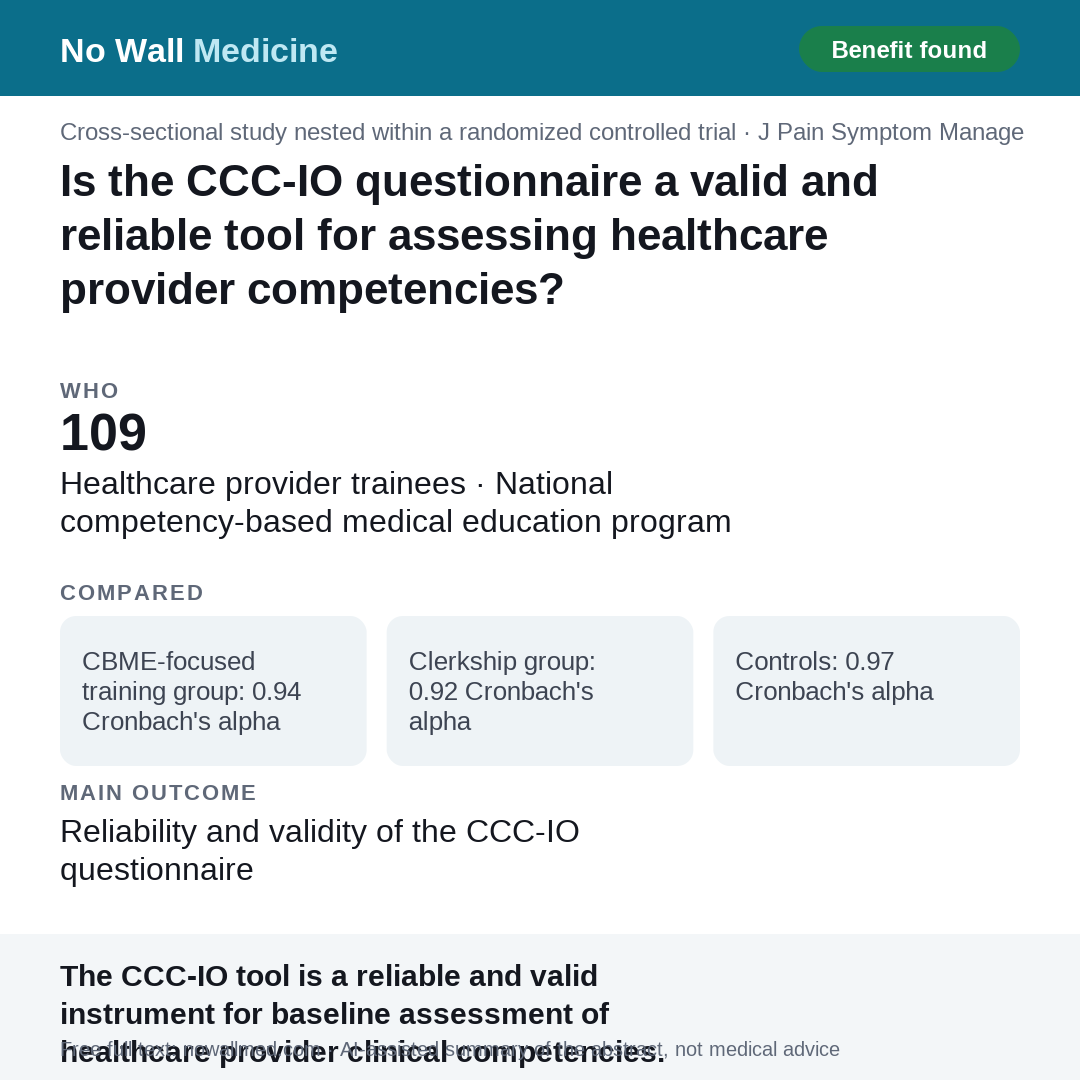
Developing a Preliminarily Validated Competency-Based Integrative Oncology Training Questionnaire
Cross-sectional study nested within a randomized controlled trialBenefit found
Is the CCC-IO questionnaire a valid and reliable tool for assessing healthcare provider competencies?
Who
109
Healthcare provider trainees · National competency-based medical education program
Compared
CBME-focused training group: 0.94 Cronbach's alpha
Clerkship group: 0.92 Cronbach's alpha
Controls: 0.97 Cronbach's alpha
Main outcome
Reliability and validity of the CCC-IO questionnaire
Result: 0.95 Cronbach's alpha for the entire cohort
Bottom line: The CCC-IO tool is a reliable and valid instrument for baseline assessment of healthcare provider clinical competencies.
J Pain Symptom Manage · 2026-05-17Download image
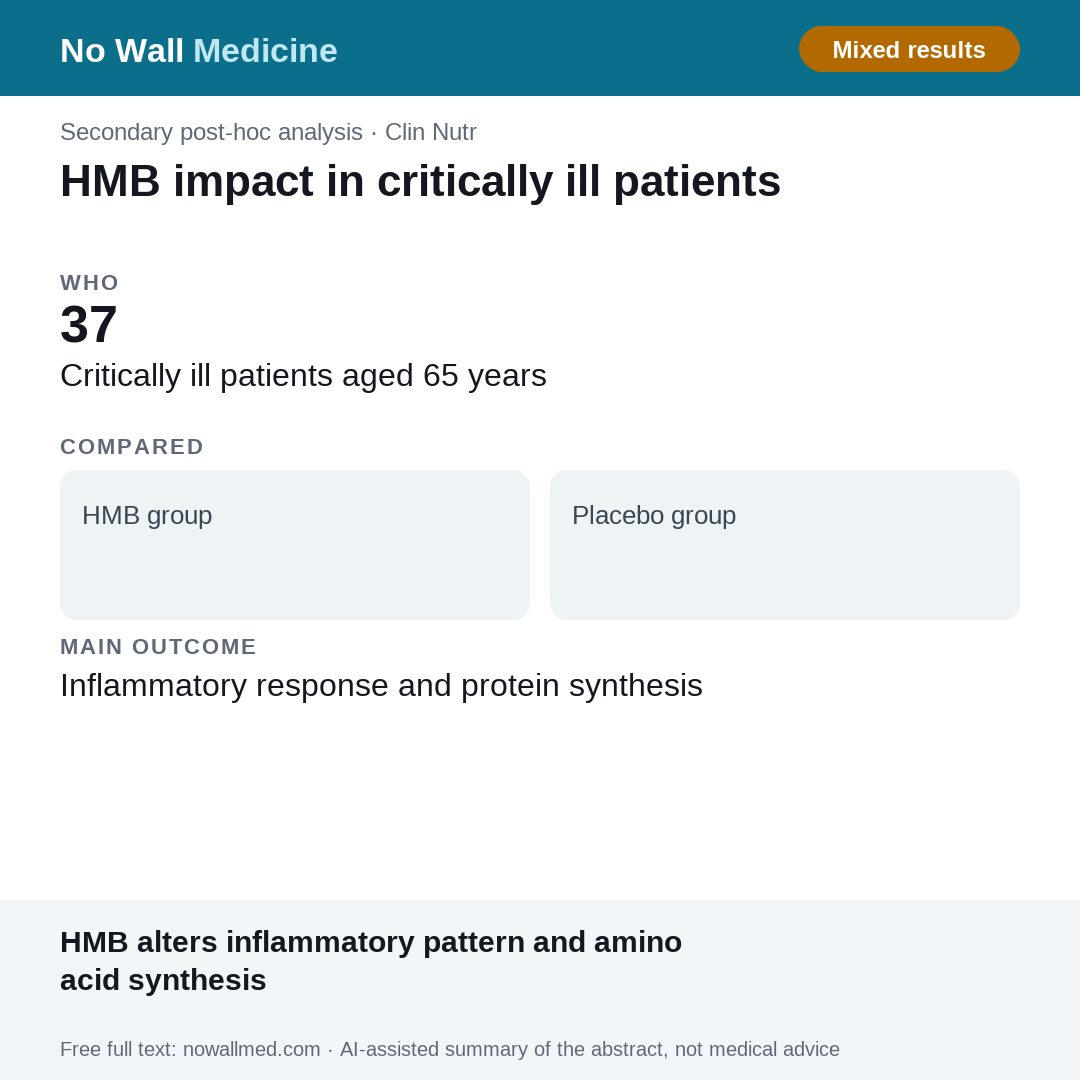
Does β-hydroxy-β-methylbutyrate (HMB) have an anti-inflammatory impact in critically ill patients? A secondary post hoc analysis of an RCT
Secondary post-hoc analysisMixed results
HMB impact in critically ill patients
Who
37
Critically ill patients aged 65 years
Compared
HMB group
Placebo group
Main outcome
Inflammatory response and protein synthesis
Bottom line: HMB alters inflammatory pattern and amino acid synthesis
Clin Nutr · 2026-05-16Download image
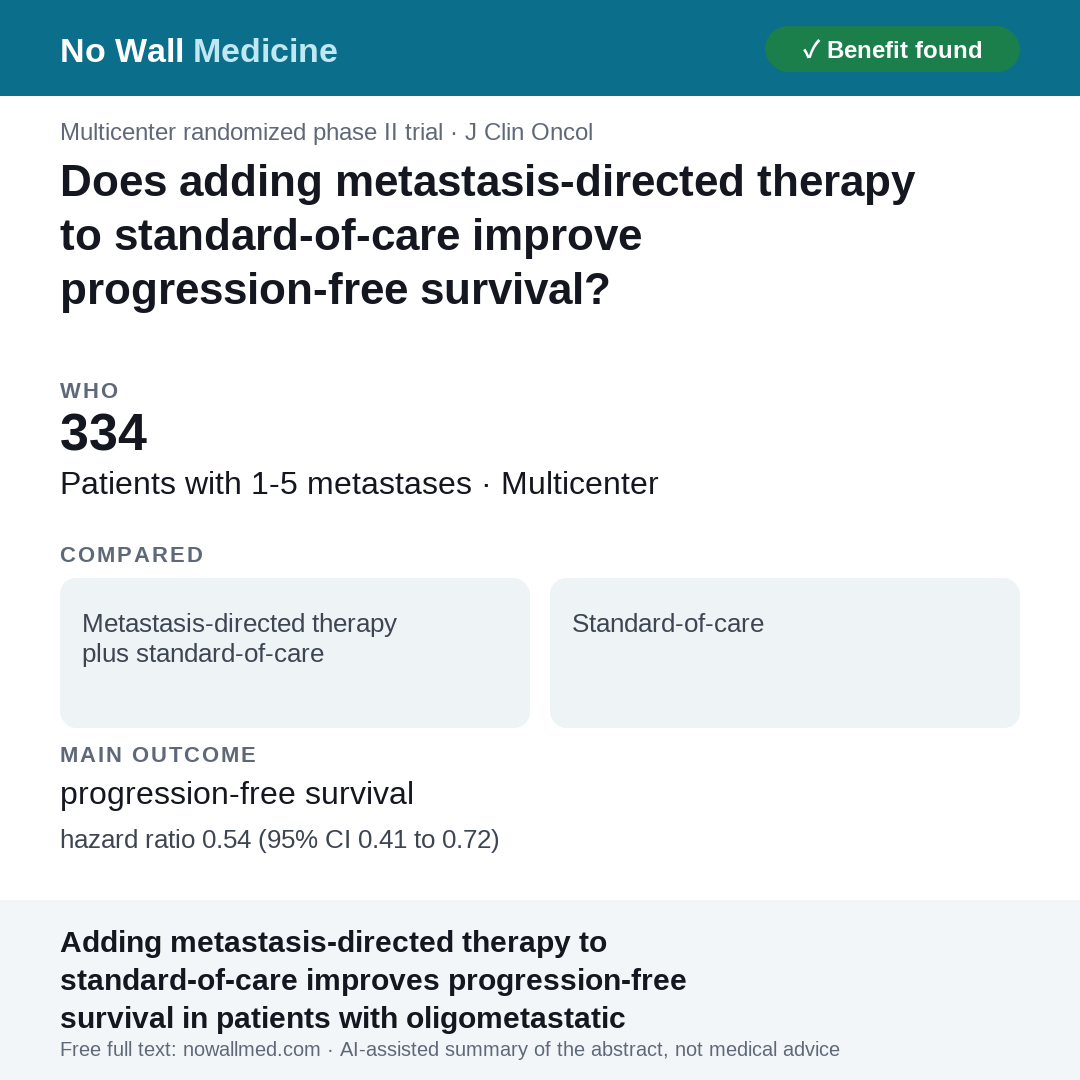
Addition of Metastasis-Directed Therapy to Standard of Care for Oligometastatic Disease: Primary Aggregated Analysis of All Baskets from the Phase II Randomized EXTEND Trial
Multicenter randomized phase II trialBenefit found
Does adding metastasis-directed therapy to standard-of-care improve progression-free survival?
Who
334
Patients with 1-5 metastases · Multicenter
Compared
Metastasis-directed therapy plus standard-of-care
Standard-of-care
Main outcome
progression-free survival
Result: hazard ratio 0.54 (95% CI 0.41 to 0.72)
Bottom line: Adding metastasis-directed therapy to standard-of-care improves progression-free survival in patients with oligometastatic disease.
J Clin Oncol · 2026-05-16Download image
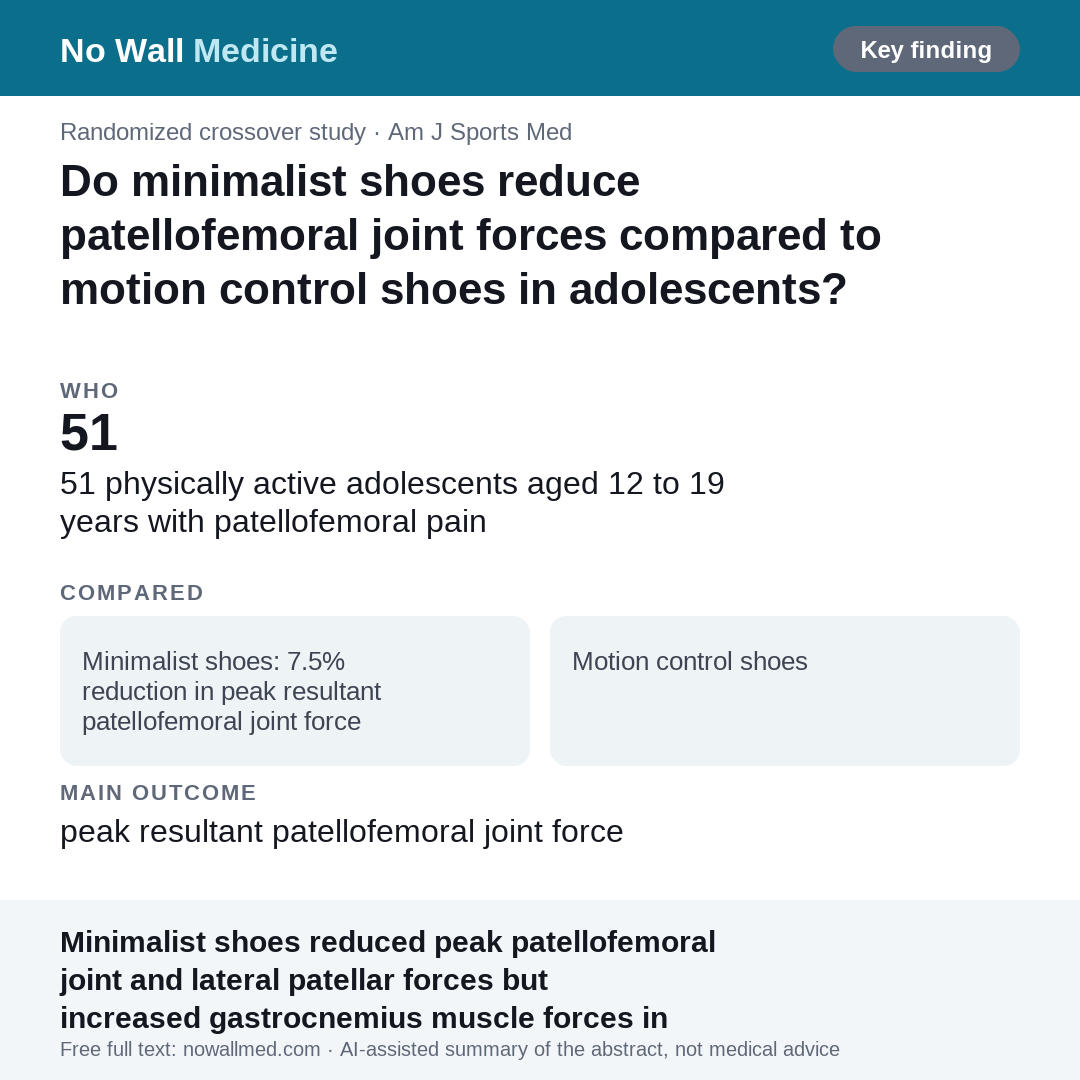
The Effect of Minimalist Versus Motion Control Shoes on Patellofemoral Joint Forces in Adolescents With Patellofemoral Pain During Running: A Randomized Crossover Study
Randomized crossover studyBenefit found
Do minimalist shoes reduce patellofemoral joint forces compared to motion control shoes in adolescents?
Who
51
51 physically active adolescents aged 12 to 19 years with patellofemoral pain
Compared
Minimalist shoes: 7.5% reduction in peak resultant patellofemoral joint force
Motion control shoes
Main outcome
peak resultant patellofemoral joint force
Result: mean difference 363.2 N (95% CI 666.8-59.5)
Bottom line: Minimalist shoes reduced peak patellofemoral joint and lateral patellar forces but increased gastrocnemius muscle forces in adolescents.
Am J Sports Med · 2026-05-16Download image