Visual abstracts
New randomized trials and meta-analyses from leading journals at a glance: who was studied, what was compared, and what was found. Every paper is free to read in full.
All specialtiesCardiology 4763Oncology 4043Gastroenterology & Hepatology 1903Infectious Disease 3756Neurology 1872Psychiatry & Mental Health 2216Pulmonology 2044Critical Care 1319Endocrinology & Diabetes 2544Pediatrics 2889Surgery 2480Orthopedics & Sports Medicine 917Neurosurgery 525Cardiothoracic & Vascular Surgery 656Plastic & Reconstructive Surgery 574Nephrology 1107Rheumatology 810Hematology 1090Dermatology 611Ophthalmology 532Obstetrics & Gynecology 1645Public & Global Health 1037Radiology & Imaging 619Anesthesiology 958Urology 745ENT (Otolaryngology) 494Emergency Medicine 481Allergy & Immunology 309Geriatrics 972Family Medicine & Primary Care 534Medical Genetics & Genomics 659Pathology & Laboratory Medicine 156Physical Medicine & Rehabilitation 734Palliative Care 421Nutrition 1560Digital Health & AI 2137General Medicine 318
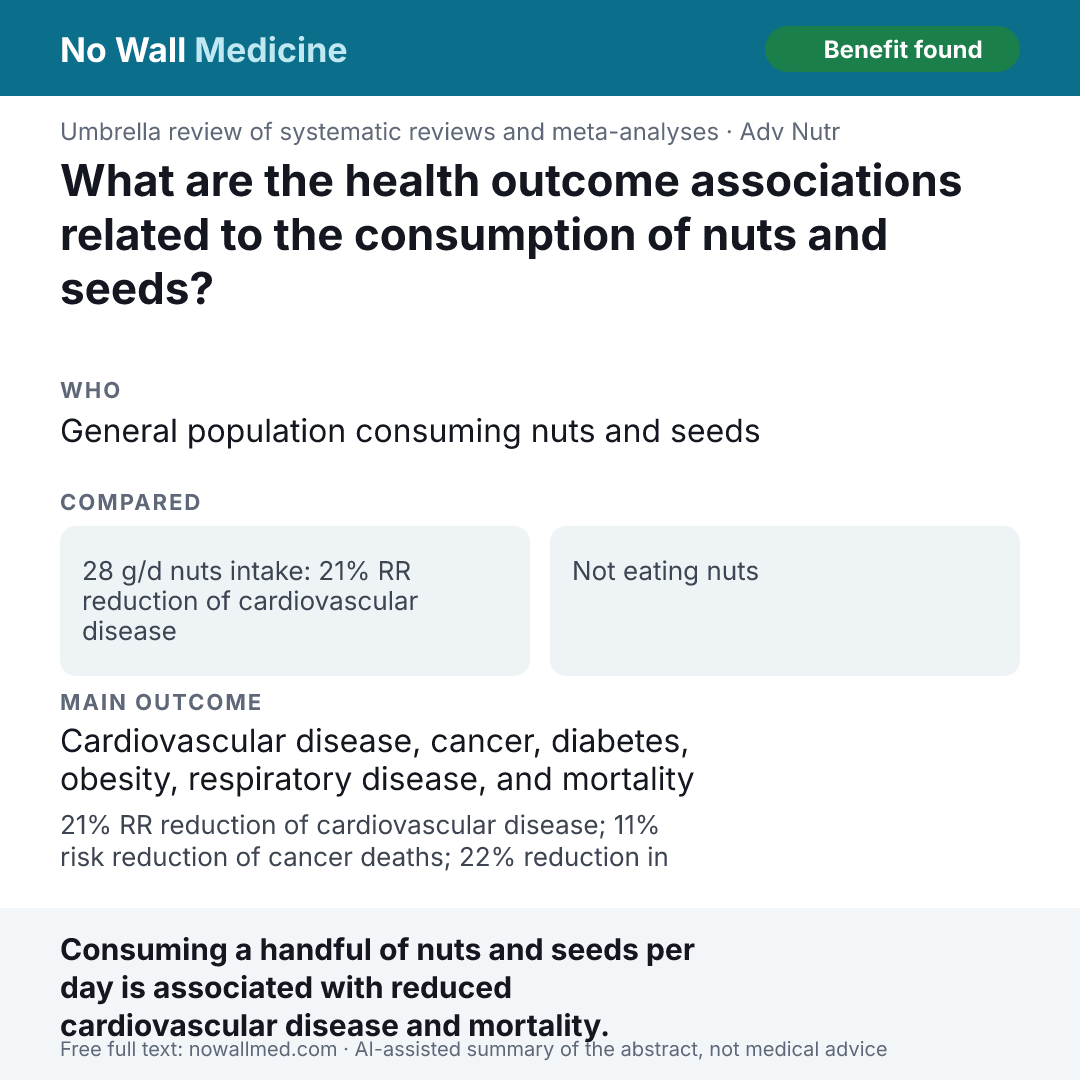
Consumption of Nuts and Seeds and Health Outcomes Including Cardiovascular Disease, Diabetes and Metabolic Disease, Cancer, and Mortality: An Umbrella Review
Umbrella review of systematic reviews and meta-analysesBenefit found
What are the health outcome associations related to the consumption of nuts and seeds?
Who
General population consuming nuts and seeds
Compared
28 g/d nuts intake: 21% RR reduction of cardiovascular disease
Not eating nuts
Main outcome
Cardiovascular disease, cancer, diabetes, obesity, respiratory disease, and mortality
Result: 21% RR reduction of cardiovascular disease; 11% risk reduction of cancer deaths; 22% reduction in all-cause mortality
Bottom line: Consuming a handful of nuts and seeds per day is associated with reduced cardiovascular disease and mortality.
Limitation: Substantial heterogeneity between studies regarding allergy and related adverse reactions.
Adv Nutr · 2022-08-31 · Save PNG
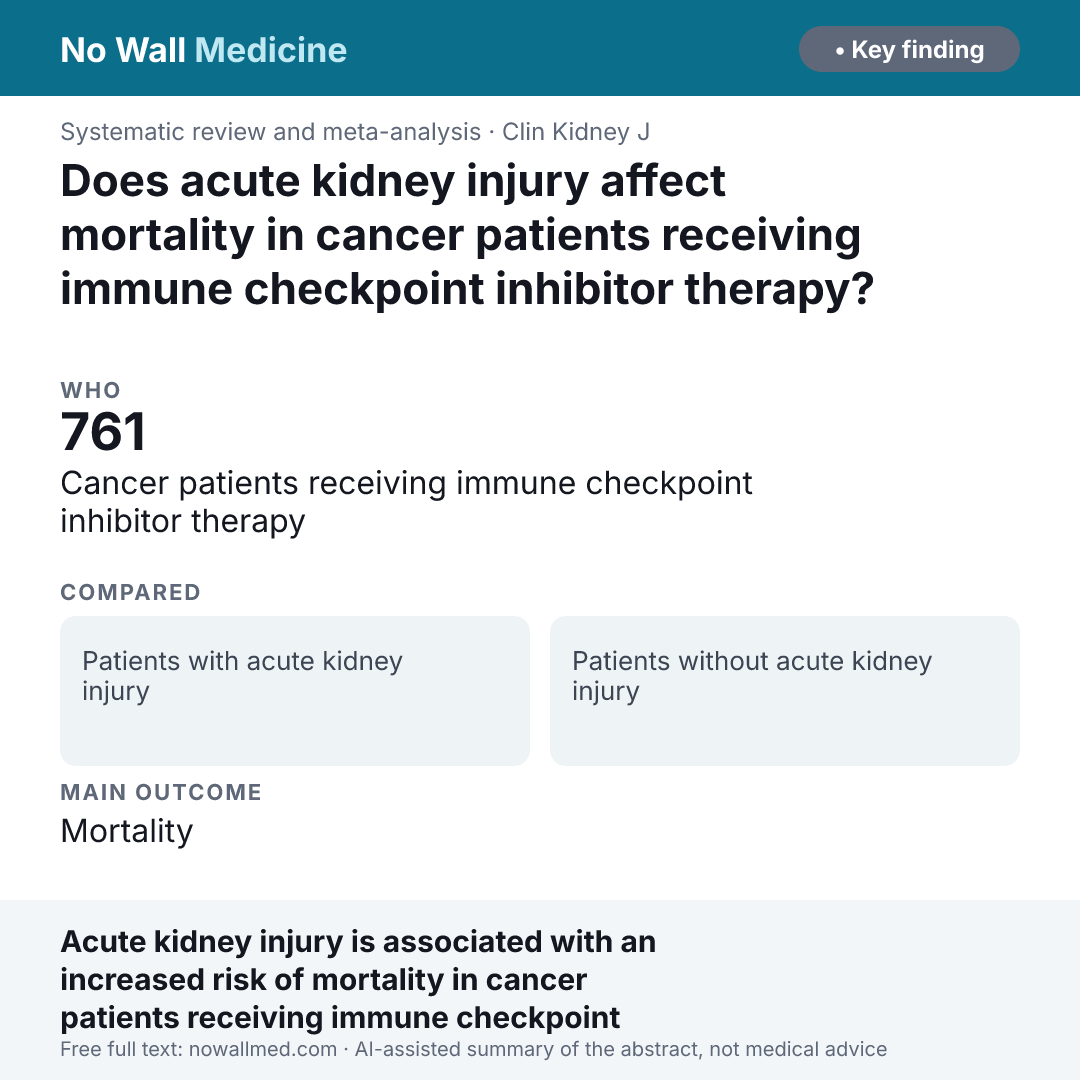
The association between acute kidney injury and outcomes in cancer patients receiving immune checkpoint inhibitor therapy: a systematic review and meta-analysis
Systematic review and meta-analysisKey finding
Does acute kidney injury affect mortality in cancer patients receiving immune checkpoint inhibitor therapy?
Who
761
Cancer patients receiving immune checkpoint inhibitor therapy
Compared
Patients with acute kidney injury
Patients without acute kidney injury
Main outcome
Mortality
Result: hazard ratio 1.42 (95% CI 1.05-1.92)
Bottom line: Acute kidney injury is associated with an increased risk of mortality in cancer patients receiving immune checkpoint inhibitor therapy.
Clin Kidney J · 2022-08-31 · Save PNG
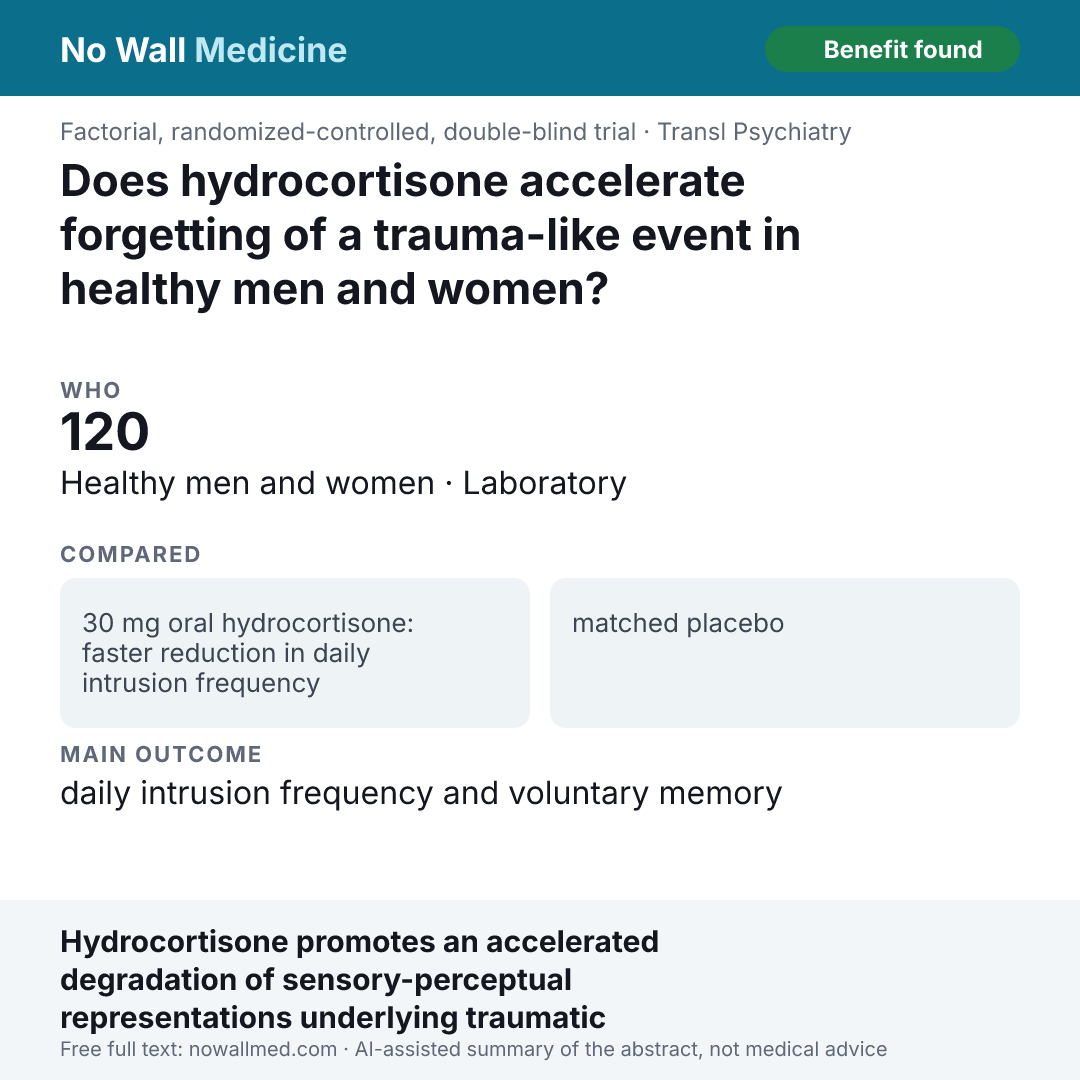
Accelerated forgetting of a trauma-like event in healthy men and women after a single dose of hydrocortisone
Factorial, randomized-controlled, double-blind trialBenefit found
Does hydrocortisone accelerate forgetting of a trauma-like event in healthy men and women?
Who
120
Healthy men and women · Laboratory
Compared
30 mg oral hydrocortisone: faster reduction in daily intrusion frequency
matched placebo
Main outcome
daily intrusion frequency and voluntary memory
Bottom line: Hydrocortisone promotes an accelerated degradation of sensory-perceptual representations underlying traumatic intrusive memories.
Transl Psychiatry · 2022-08-31 · Save PNG
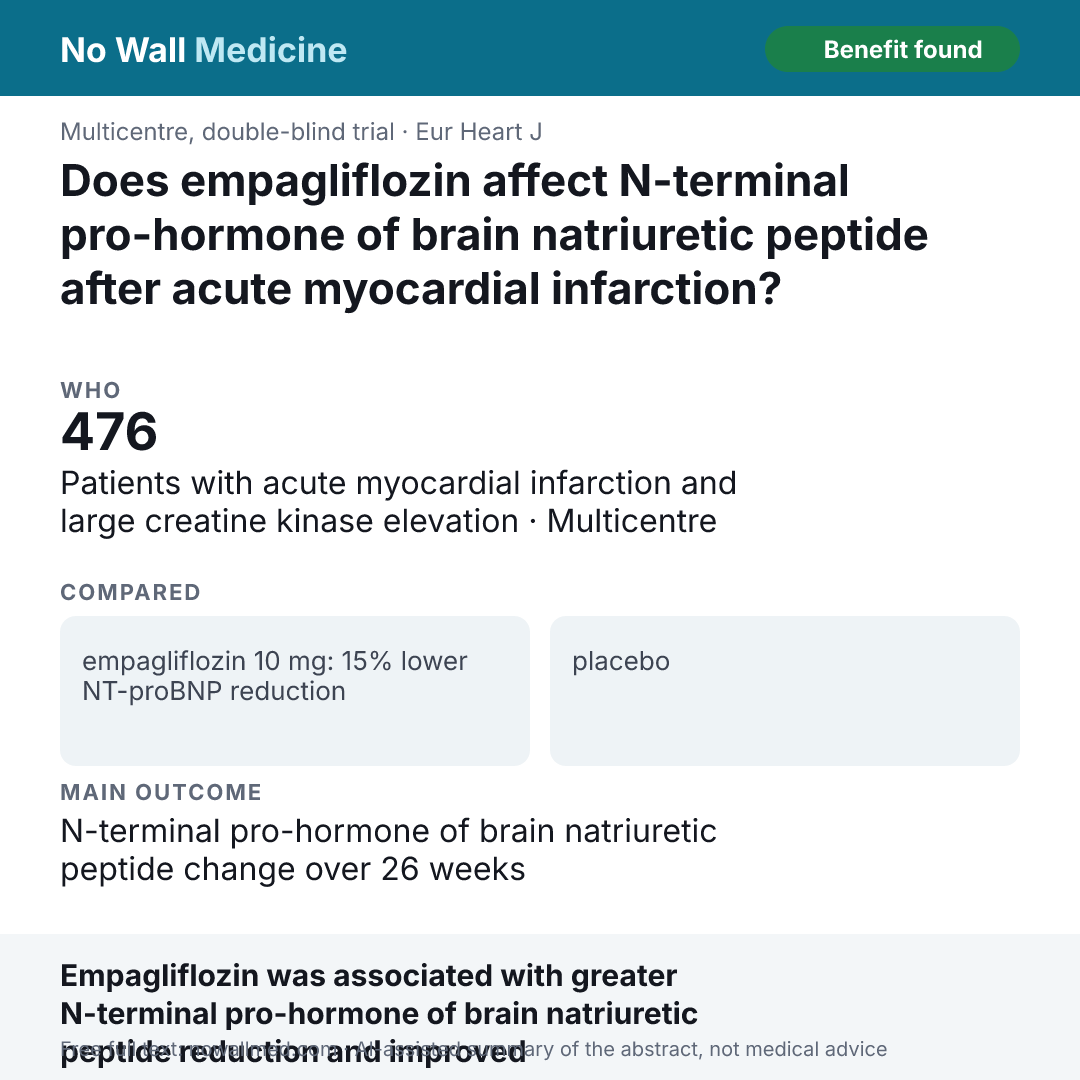
Empagliflozin in acute myocardial infarction: the EMMY trial
Multicentre, double-blind trialBenefit found
Does empagliflozin affect N-terminal pro-hormone of brain natriuretic peptide after acute myocardial infarction?
Who
476
Patients with acute myocardial infarction and large creatine kinase elevation · Multicentre
Compared
empagliflozin 10 mg: 15% lower NT-proBNP reduction
placebo
Main outcome
N-terminal pro-hormone of brain natriuretic peptide change over 26 weeks
Result: 15% lower [95% confidence interval -4.4% to -23.6%]
Bottom line: Empagliflozin was associated with greater N-terminal pro-hormone of brain natriuretic peptide reduction and improved echocardiographic parameters.
Eur Heart J · 2022-08-30 · Save PNG
Association of Neurocritical Care Services With Mortality and Functional Outcomes for Adults With Brain Injury: A Systematic Review and Meta-analysis
Systematic review and meta-analysisKey finding
Does neurocritical care improve mortality and functional outcomes for adults with acute brain injury?
Who
55792
Adults with acute brain injury admitted to intensive care units
Compared
Subspecialized care: 17% relative risk reduction
General care
Main outcome
All-cause mortality at longest follow-up until 6 months
Result: risk ratio 0.83 (95% CI, 0.75-0.92)
Bottom line: Subspecialized neurocritical care is associated with improved survival and functional outcomes for critically ill adults with brain injury.
Limitation: Confidence in the evidence is limited by substantial heterogeneity.
JAMA Neurol · 2022-08-30 · Save PNG

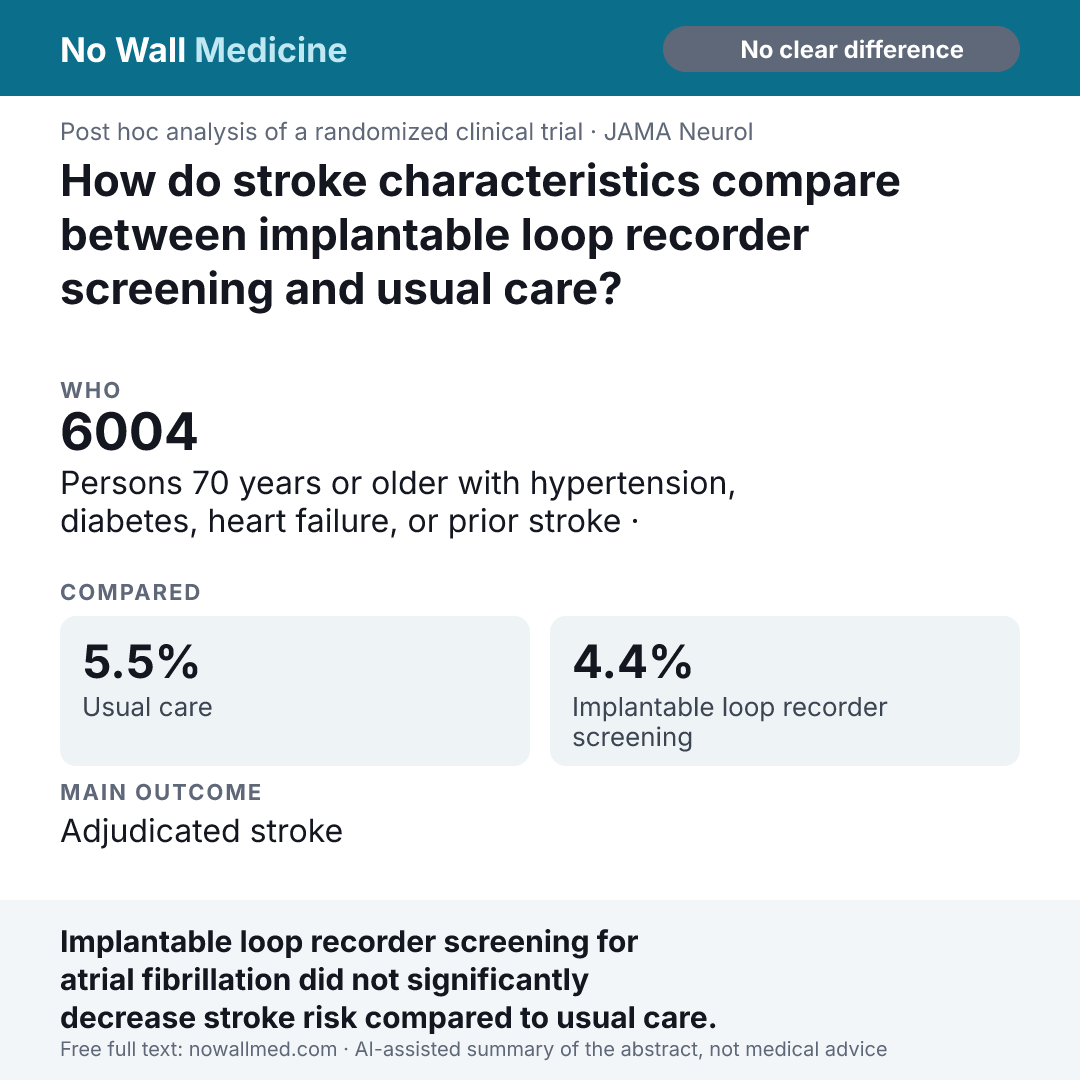
Severity and Etiology of Incident Stroke in Patients Screened for Atrial Fibrillation vs Usual Care and the Impact of Prior Stroke: A Post Hoc Analysis of the LOOP Randomized Clinical Trial
Post hoc analysis of a randomized clinical trialNo clear difference
How do stroke characteristics compare between implantable loop recorder screening and usual care?
Who
6004
Persons 70 years or older with hypertension, diabetes, heart failure, or prior stroke · Four sites in Denmark
Compared
5.5%Usual care
4.4%Implantable loop recorder screening
Main outcome
Adjudicated stroke
Result: hazard ratio 0.76 (95% CI, 0.57-1.03)
Bottom line: Implantable loop recorder screening for atrial fibrillation did not significantly decrease stroke risk compared to usual care.
JAMA Neurol · 2022-08-30 · Save PNG
Expansion of Escherichia-Shigella in Gut Is Associated with the Onset and Response to Immunosuppressive Therapy of IgA Nephropathy
Randomized discovery and validation cohort studyKey finding
Is Escherichia-Shigella expansion associated with IgA nephropathy onset and treatment response?
Who
Treatment naive IgA nephropathy patients and healthy controls
Compared
IgA nephropathy patients: expansion of Escherichia-Shigella
Healthy controls
Main outcome
Gut microbiota characteristics and bacterial diagnosis model
Result: AUC=0.8635, 0.8551, 0.8026 in discovery, validation, and cross-regional validation
Bottom line: Escherichia-Shigella expansion is a hallmark of IgA nephropathy and may serve as a diagnostic biomarker.
Limitation: The model did not effectively distinguish IgA nephropathy from membranous nephropathy.
JASN · 2022-08-30 · Save PNG

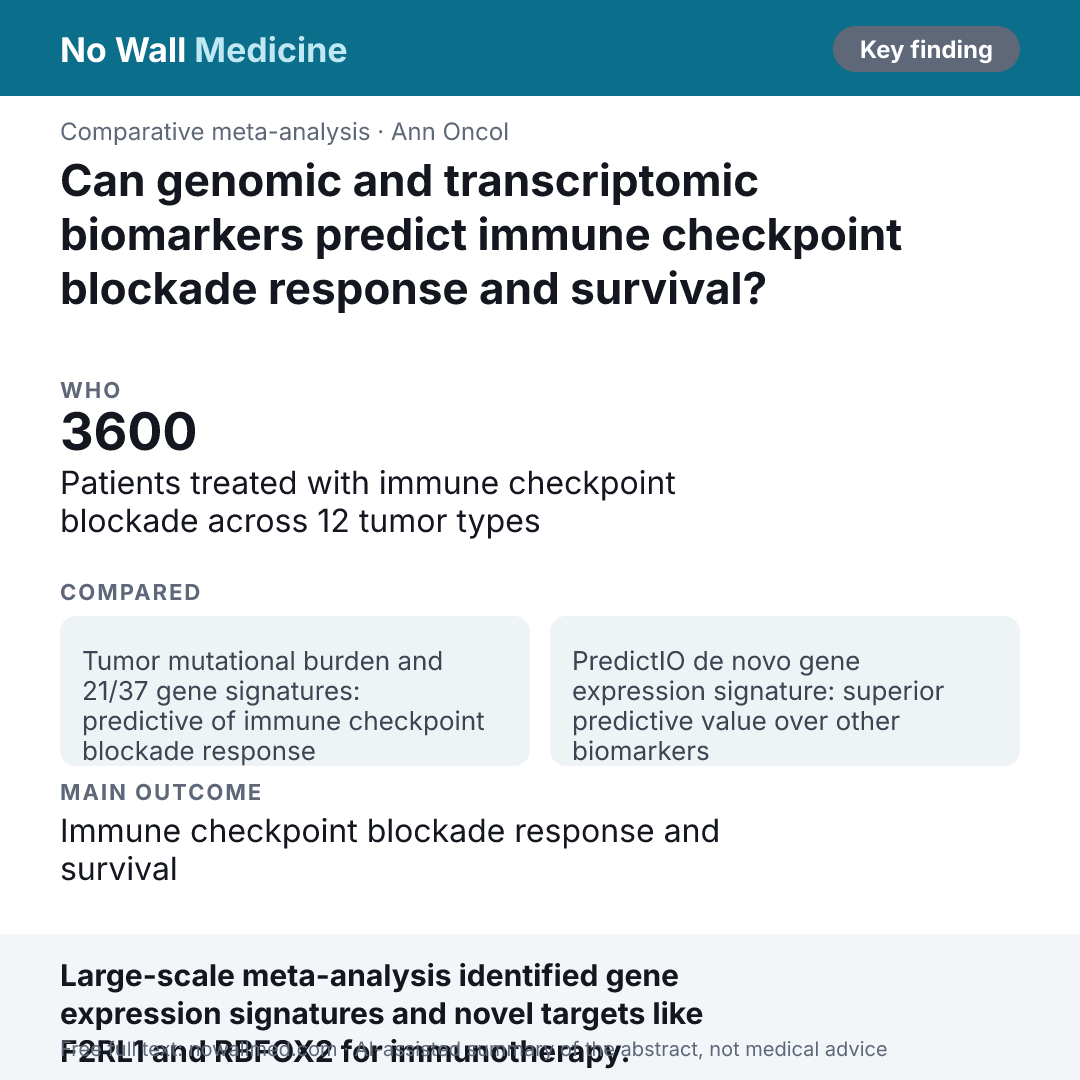
Leveraging big data of immune checkpoint blockade response identifies novel potential targets
Comparative meta-analysisKey finding
Can genomic and transcriptomic biomarkers predict immune checkpoint blockade response and survival?
Who
3600
Patients treated with immune checkpoint blockade across 12 tumor types
Compared
Tumor mutational burden and 21/37 gene signatures: predictive of immune checkpoint blockade response
PredictIO de novo gene expression signature: superior predictive value over other biomarkers
Main outcome
Immune checkpoint blockade response and survival
Bottom line: Large-scale meta-analysis identified gene expression signatures and novel targets like F2RL1 and RBFOX2 for immunotherapy.
Ann Oncol · 2022-08-30 · Save PNG
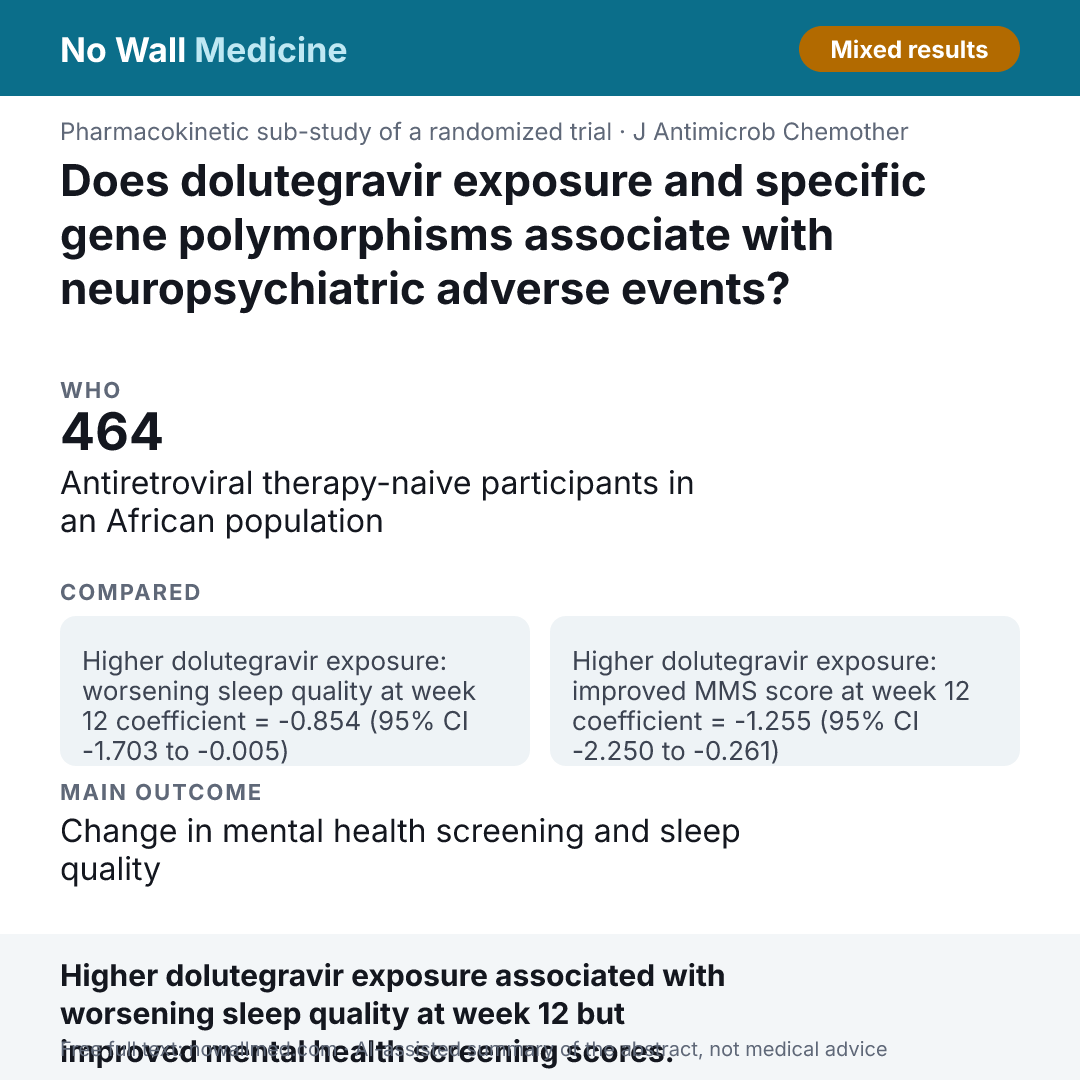
Pharmacokinetic and pharmacogenetic associations with dolutegravir neuropsychiatric adverse events in an African population
Pharmacokinetic sub-study of a randomized trialMixed results
Does dolutegravir exposure and specific gene polymorphisms associate with neuropsychiatric adverse events?
Who
464
Antiretroviral therapy-naive participants in an African population
Compared
Higher dolutegravir exposure: worsening sleep quality at week 12 coefficient = -0.854 (95% CI -1.703 to -0.005)
Higher dolutegravir exposure: improved MMS score at week 12 coefficient = -1.255 (95% CI -2.250 to -0.261)
Main outcome
Change in mental health screening and sleep quality
Bottom line: Higher dolutegravir exposure associated with worsening sleep quality at week 12 but improved mental health screening scores.
J Antimicrob Chemother · 2022-08-30 · Save PNG
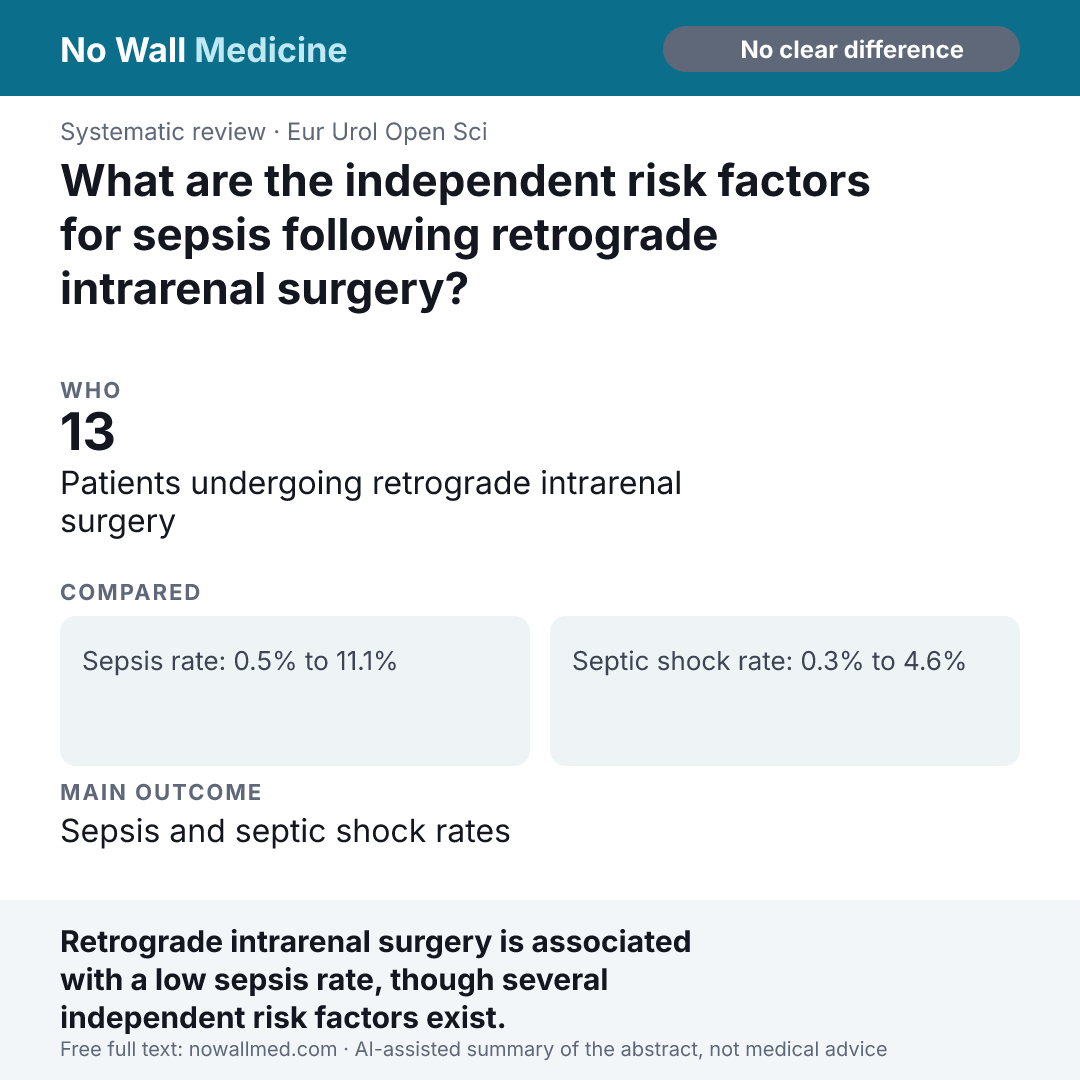
Acupuncture for Uremic Pruritus: A Systematic Review and Meta-Analysis
Systematic review and meta-analysisBenefit found
Is acupuncture effective and safe for treating uremic pruritus?
Who
504
Patients with uremic pruritus
Compared
Acupuncture
Conventional treatment
Main outcome
Effective rate of treating uremic pruritus
Result: risk ratio 1.28 (95% CI 1.09 to 1.50)
Bottom line: Acupuncture is a safe and effective treatment for improving uremic pruritus symptoms.
J Pain Symptom Manage · 2022-08-30 · Save PNG
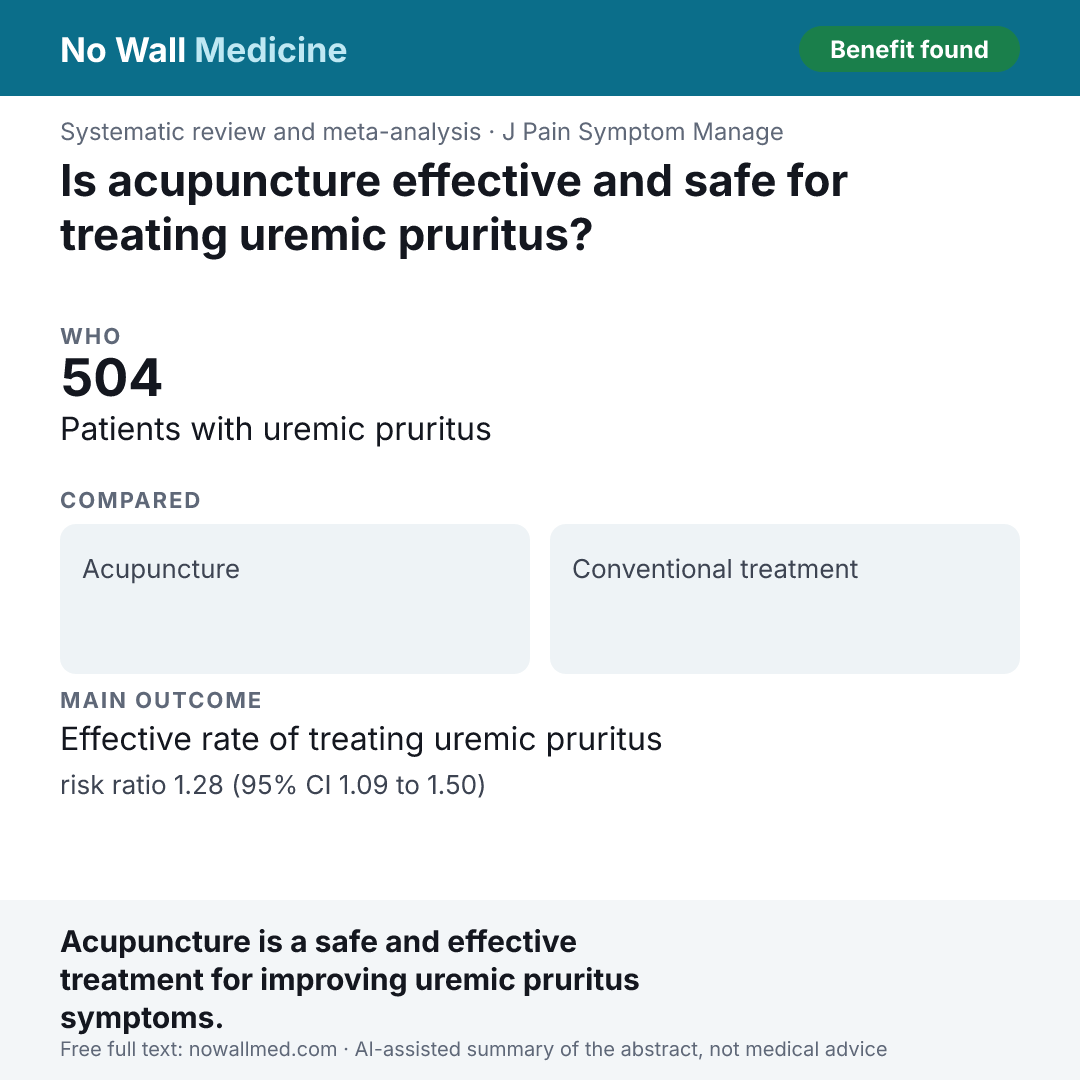
Circulating ceramides and sphingomyelins and the risk of incident cardiovascular disease among people with diabetes: the strong heart study
Meta-analysis of two longitudinal cohortsMixed results
Do specific ceramides and sphingomyelins associate with incident cardiovascular disease in people with diabetes?
Who
American Indians with prevalent type 2 diabetes · United States
Compared
Two-fold higher Cer-16: hazard ratio 1.85
Two-fold higher SM-22: hazard ratio 0.48
Main outcome
incident cardiovascular disease
Result: Cer-16 HR 1.85 (95% CI 1.05-3.25); SM-22 HR 0.48 (95% CI 0.26-0.87)
Bottom line: Higher Cer-16 and certain sphingomyelins were associated with cardiovascular disease risk, but results did not meet pre-specified significance.
Limitation: Associations did not meet the pre-specified threshold for statistical significance of p = 0.006.
Cardiovasc Diabetol · 2022-08-30 · Save PNG
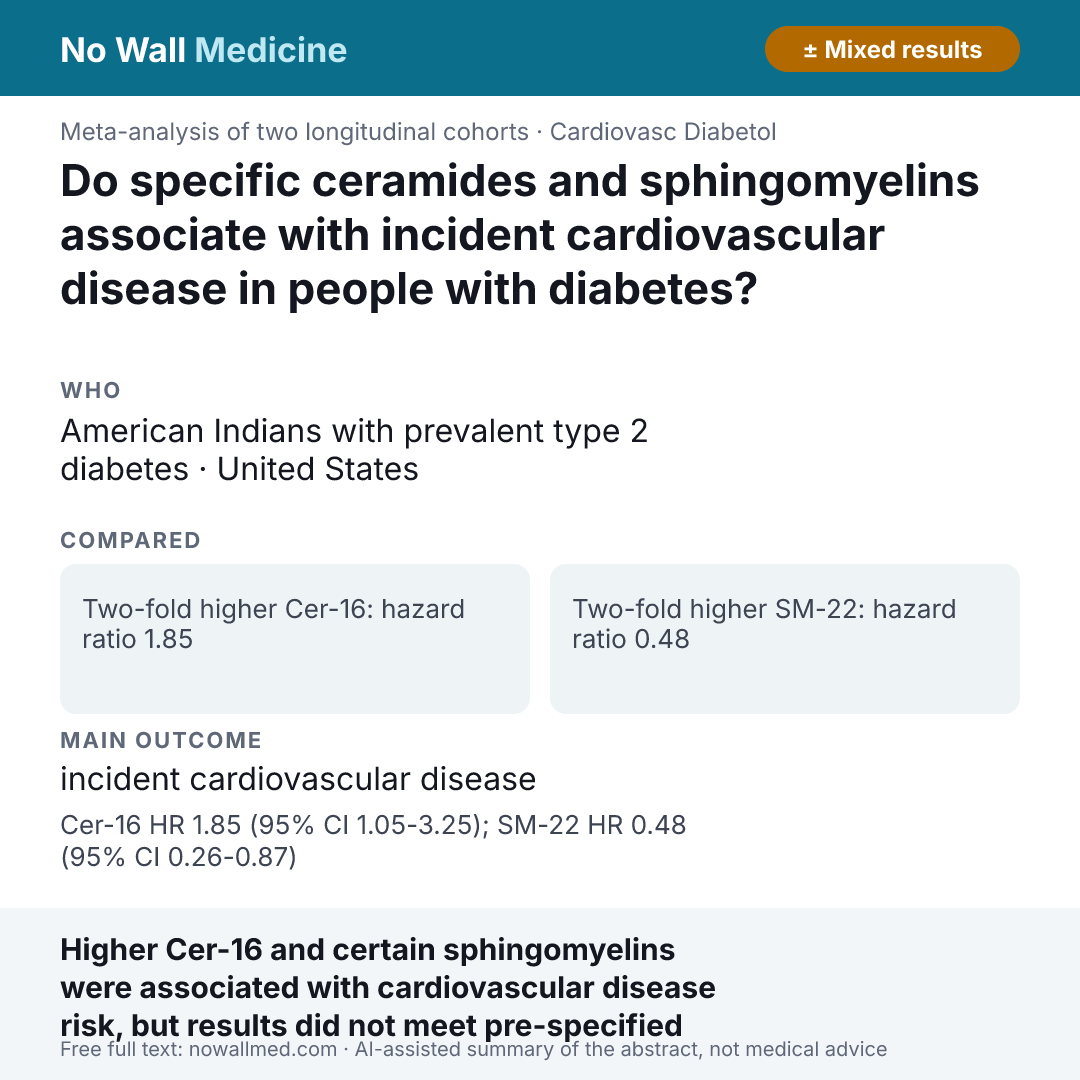
Withdrawal of inhaled corticosteroids from patients with COPD with mild or moderate airflow limitation in primary care: a feasibility randomised trial
Open feasibility trialMixed results
Is identifying and withdrawing inhaled corticosteroids from mild/moderate COPD patients feasible?
Who
40
Patients with mild or moderate chronic obstructive pulmonary disease · 20 primary care practices
Compared
Inhaled corticosteroid withdrawal
Usual care
Main outcome
Feasibility of identification and acceptability of withdrawal
Bottom line: Identifying suitable patients is feasible, but real-time verification is required due to undocumented asthma and lung function variability.
Limitation: Small sample size of 40 randomized patients and reliance on real-time verification.
BMJ Open Respir Res · 2022-08-30 · Save PNG
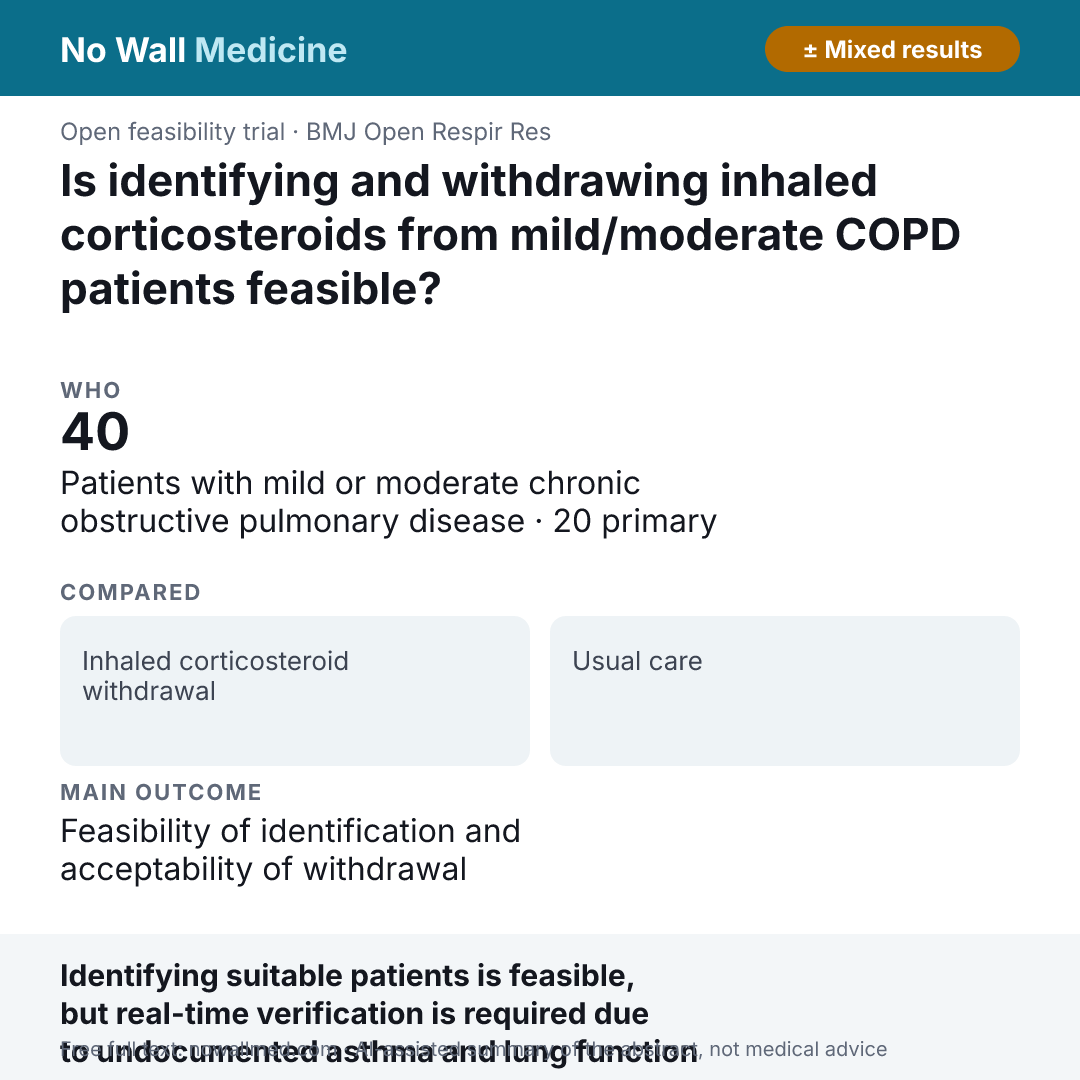
Risk of Sepsis in Retrograde Intrarenal Surgery: A Systematic Review of the Literature
Systematic reviewNo clear difference
What are the independent risk factors for sepsis following retrograde intrarenal surgery?
Who
13
Patients undergoing retrograde intrarenal surgery
Compared
Sepsis rate: 0.5% to 11.1%
Septic shock rate: 0.3% to 4.6%
Main outcome
Sepsis and septic shock rates
Bottom line: Retrograde intrarenal surgery is associated with a low sepsis rate, though several independent risk factors exist.
Limitation: Only four studies addressed independent risks for urosepsis.
Eur Urol Open Sci · 2022-08-30 · Save PNG
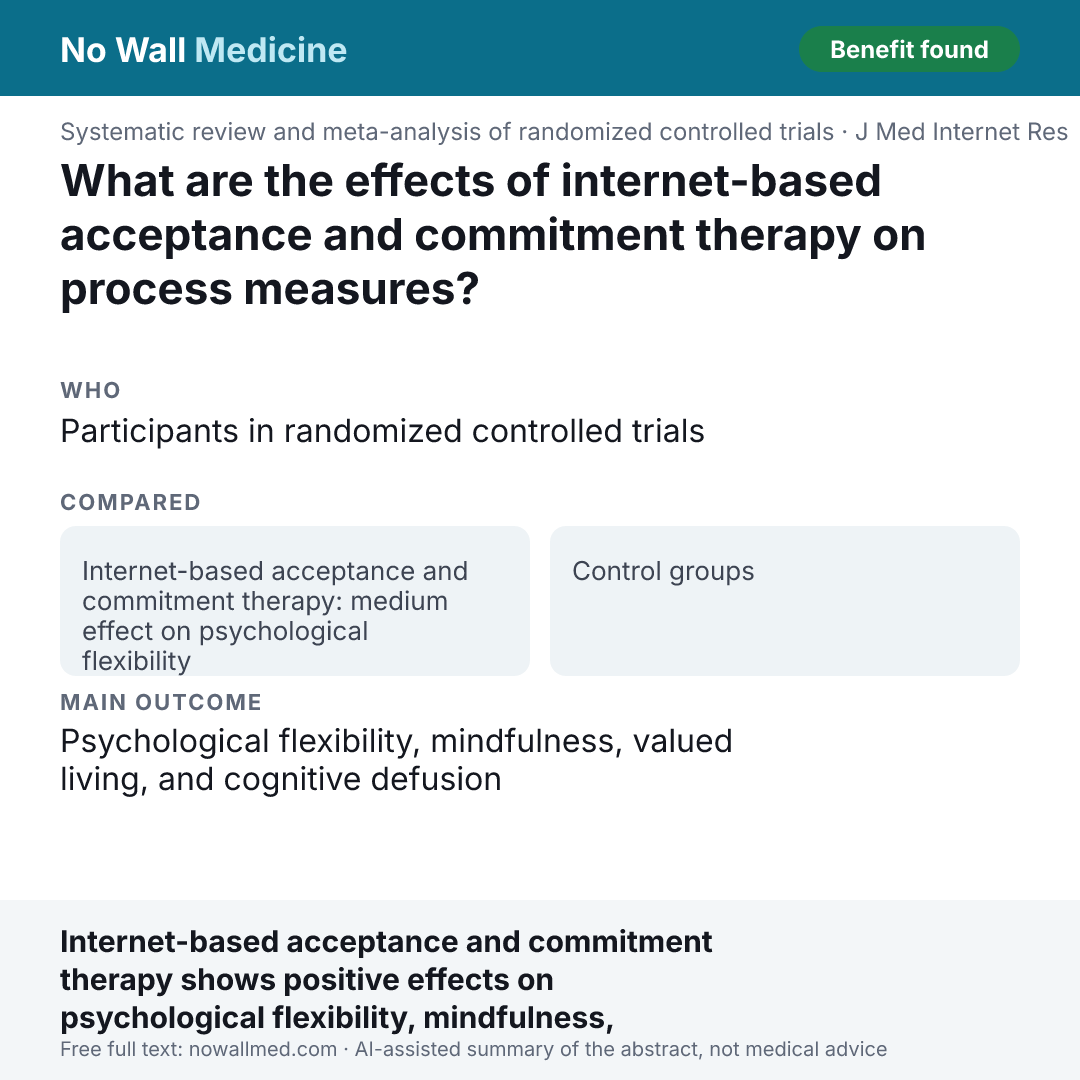
The Effects of Internet-Based Acceptance and Commitment Therapy on Process Measures: Systematic Review and Meta-analysis
Systematic review and meta-analysis of randomized controlled trialsBenefit found
What are the effects of internet-based acceptance and commitment therapy on process measures?
Who
Participants in randomized controlled trials
Compared
Internet-based acceptance and commitment therapy: medium effect on psychological flexibility
Control groups
Main outcome
Psychological flexibility, mindfulness, valued living, and cognitive defusion
Bottom line: Internet-based acceptance and commitment therapy shows positive effects on psychological flexibility, mindfulness, valued living, and cognitive defusion.
Limitation: Relatively few studies compared internet-based acceptance and commitment therapy with active control groups.
J Med Internet Res · 2022-08-30 · Save PNG
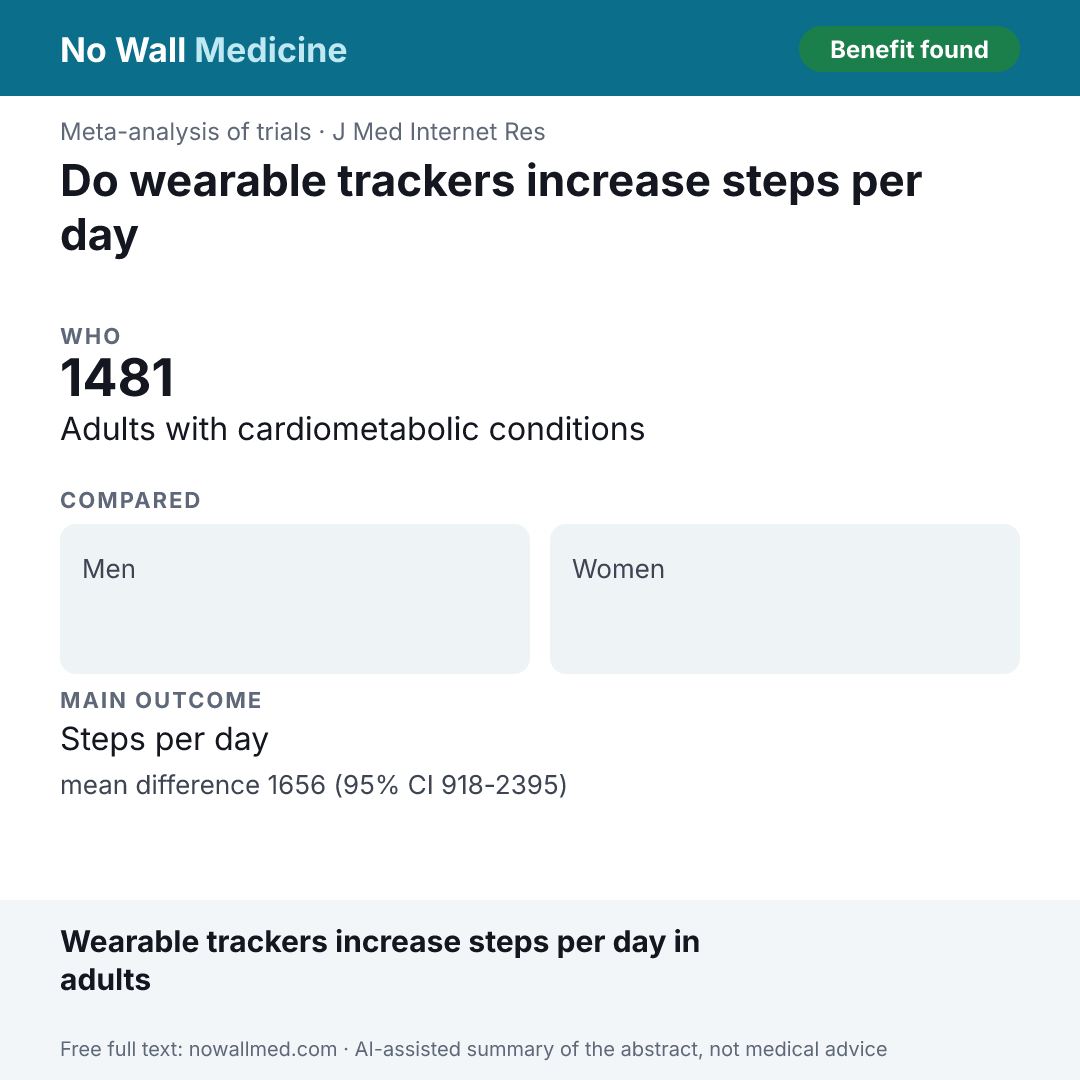
Association Between Patient Factors and the Effectiveness of Wearable Trackers at Increasing the Number of Steps per Day Among Adults With Cardiometabolic Conditions: Meta-analysis of Individual Patient Data From Randomized Controlled Trials
Meta-analysis of trialsBenefit found
Do wearable trackers increase steps per day
Who
1481
Adults with cardiometabolic conditions
Compared
Men
Women
Main outcome
Steps per day
Result: mean difference 1656 (95% CI 918-2395)
Bottom line: Wearable trackers increase steps per day in adults
Limitation: heterogeneity across trials
J Med Internet Res · 2022-08-30 · Save PNG
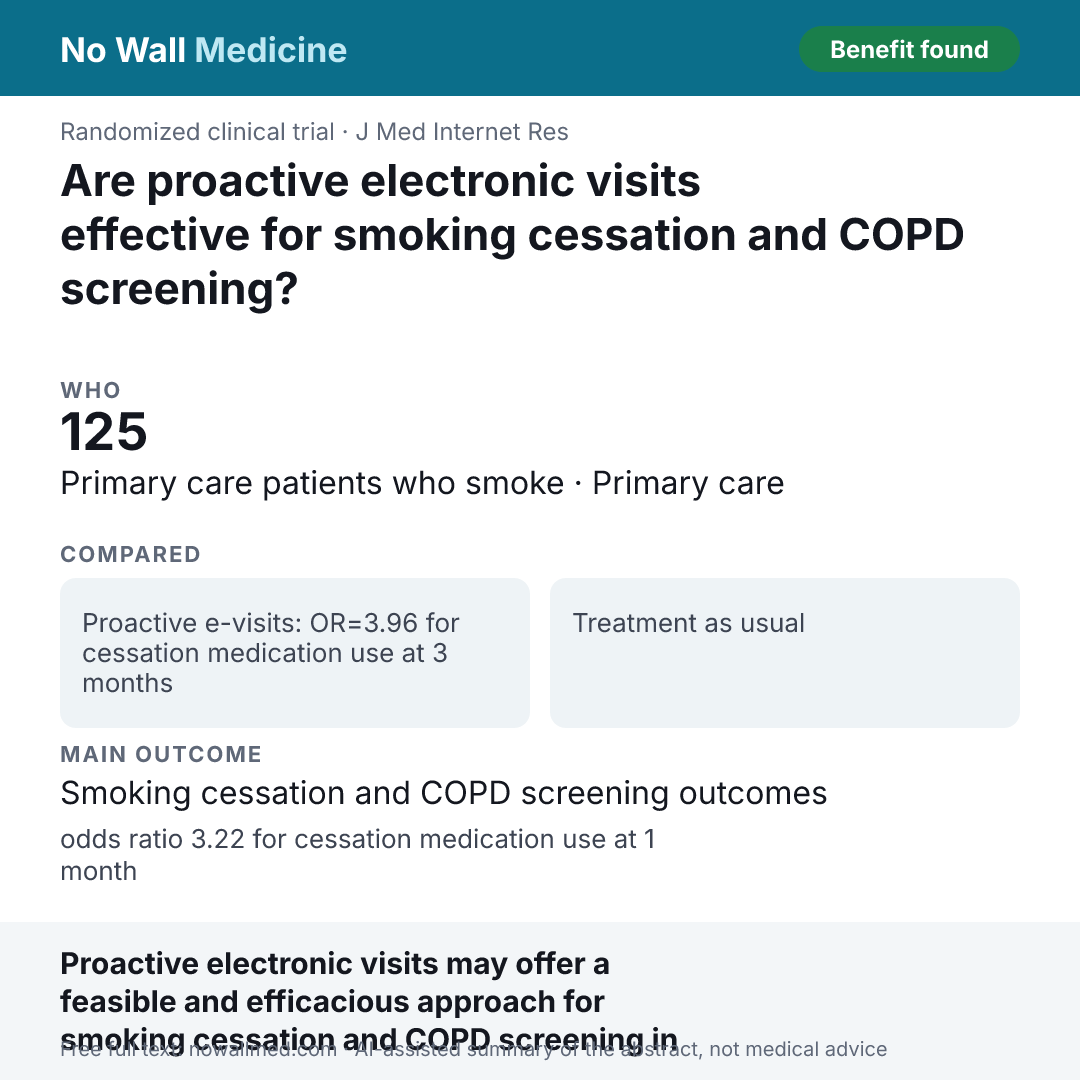
Proactive Electronic Visits for Smoking Cessation and Chronic Obstructive Pulmonary Disease Screening in Primary Care: Randomized Controlled Trial of Feasibility, Acceptability, and Efficacy
Randomized clinical trialBenefit found
Are proactive electronic visits effective for smoking cessation and COPD screening?
Who
125
Primary care patients who smoke · Primary care
Compared
Proactive e-visits: OR=3.96 for cessation medication use at 3 months
Treatment as usual
Main outcome
Smoking cessation and COPD screening outcomes
Result: odds ratio 3.22 for cessation medication use at 1 month
Bottom line: Proactive electronic visits may offer a feasible and efficacious approach for smoking cessation and COPD screening in primary care.
J Med Internet Res · 2022-08-30 · Save PNG
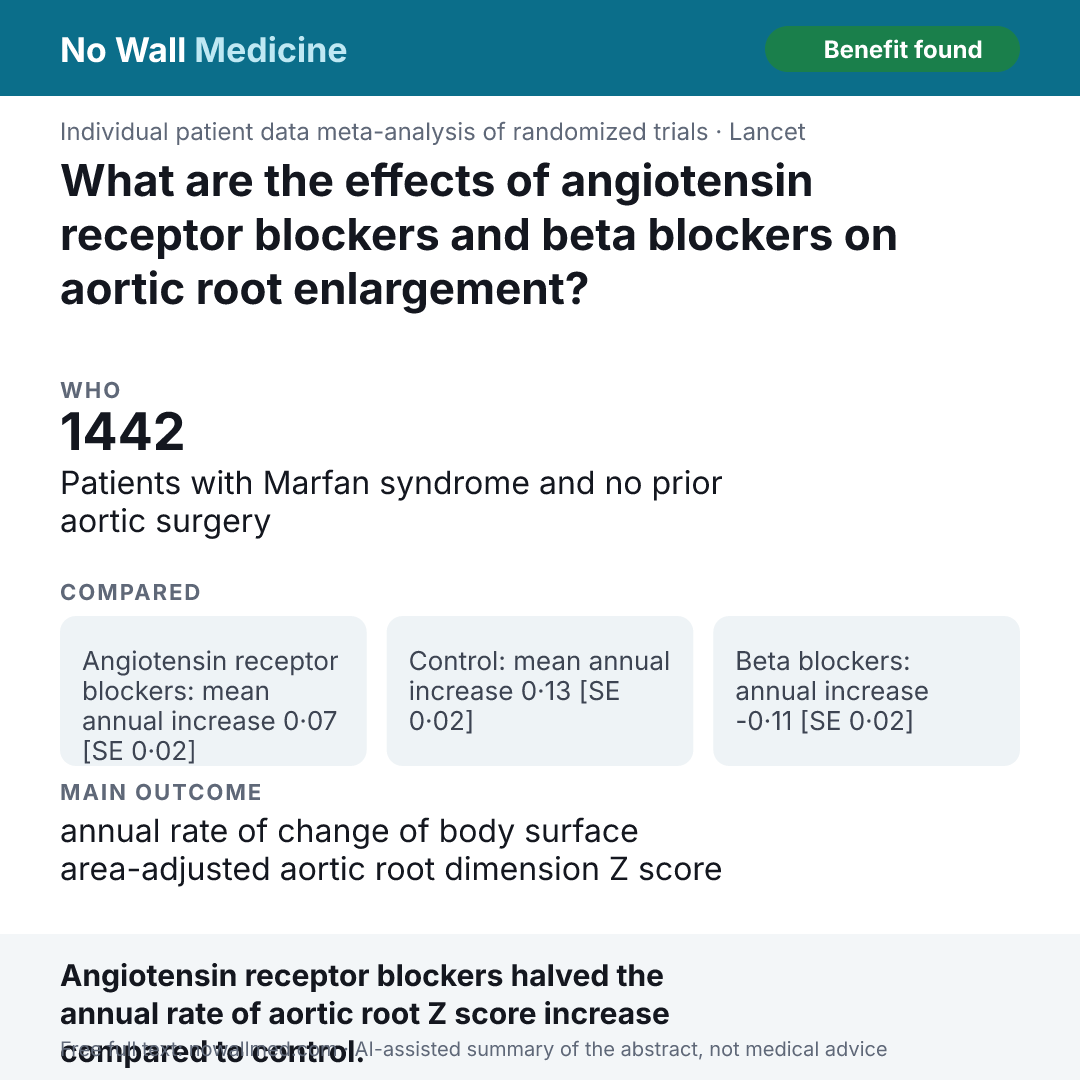
Angiotensin receptor blockers and β blockers in Marfan syndrome: an individual patient data meta-analysis of randomised trials
Individual patient data meta-analysis of randomized trialsBenefit found
What are the effects of angiotensin receptor blockers and beta blockers on aortic root enlargement?
Who
1442
Patients with Marfan syndrome and no prior aortic surgery
Compared
Angiotensin receptor blockers: mean annual increase 0·07 [SE 0·02]
Control: mean annual increase 0·13 [SE 0·02]
Beta blockers: annual increase -0·11 [SE 0·02]
Main outcome
annual rate of change of body surface area-adjusted aortic root dimension Z score
Result: absolute difference -0·07 (95% CI -0·12 to -0·01)
Bottom line: Angiotensin receptor blockers halved the annual rate of aortic root Z score increase compared to control.
Funded by: Marfan Foundation, Oxford British Heart Foundation, UK Medical Research Council
Lancet · 2022-08-29 · Save PNG
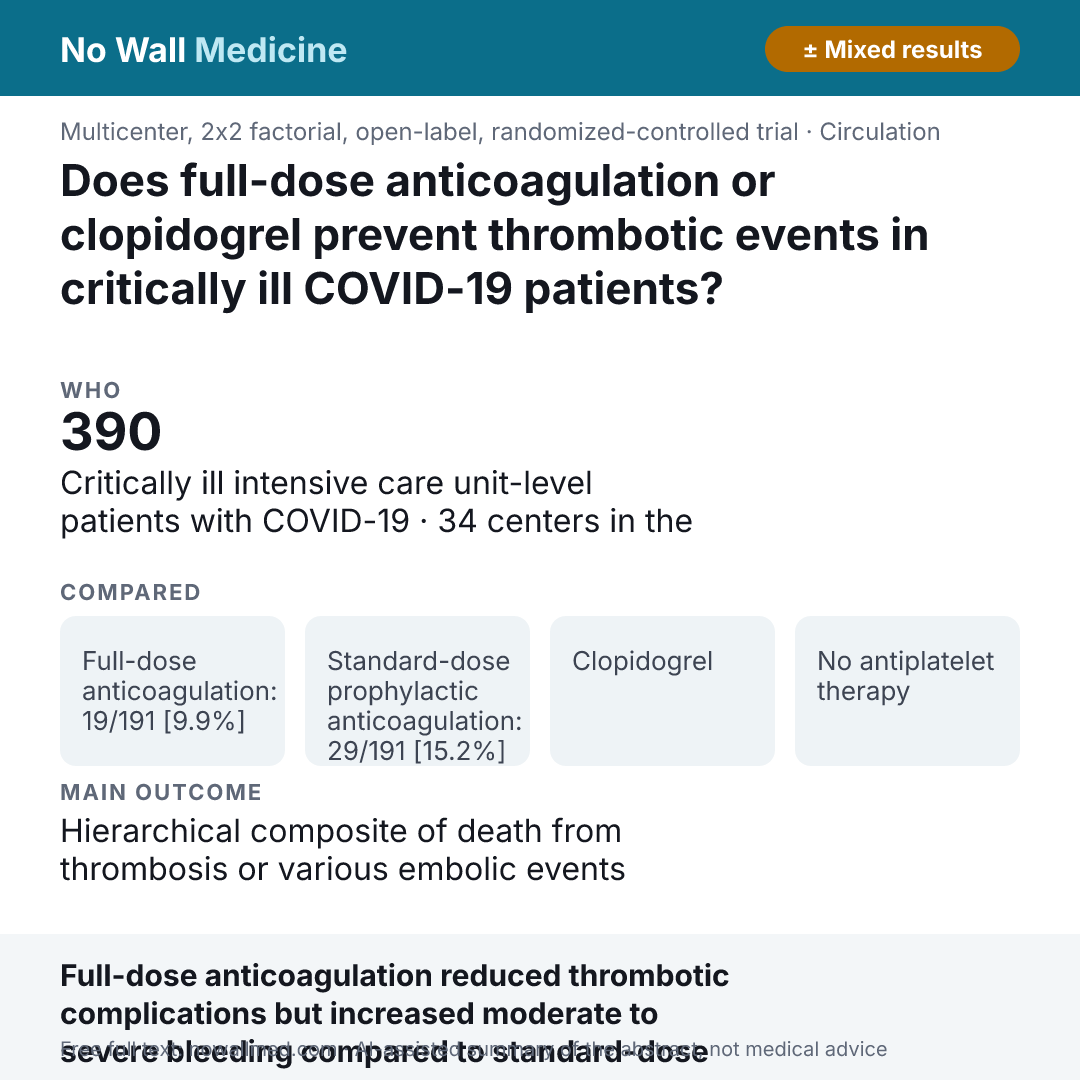
Anticoagulation and Antiplatelet Therapy for Prevention of Venous and Arterial Thrombotic Events in Critically Ill Patients With COVID-19: COVID-PACT
Multicenter, 2x2 factorial, open-label, randomized-controlled trialMixed results
Does full-dose anticoagulation or clopidogrel prevent thrombotic events in critically ill COVID-19 patients?
Who
390
Critically ill intensive care unit-level patients with COVID-19 · 34 centers in the United States
Compared
Full-dose anticoagulation: 19/191 [9.9%]
Standard-dose prophylactic anticoagulation: 29/191 [15.2%]
Clopidogrel
No antiplatelet therapy
Main outcome
Hierarchical composite of death from thrombosis or various embolic events
Result: hazard ratio, 0.56 (95% CI, 0.32-0.99)
Bottom line: Full-dose anticoagulation reduced thrombotic complications but increased moderate to severe bleeding compared to standard-dose prophylactic anticoagulation.
Circulation · 2022-08-29 · Save PNG
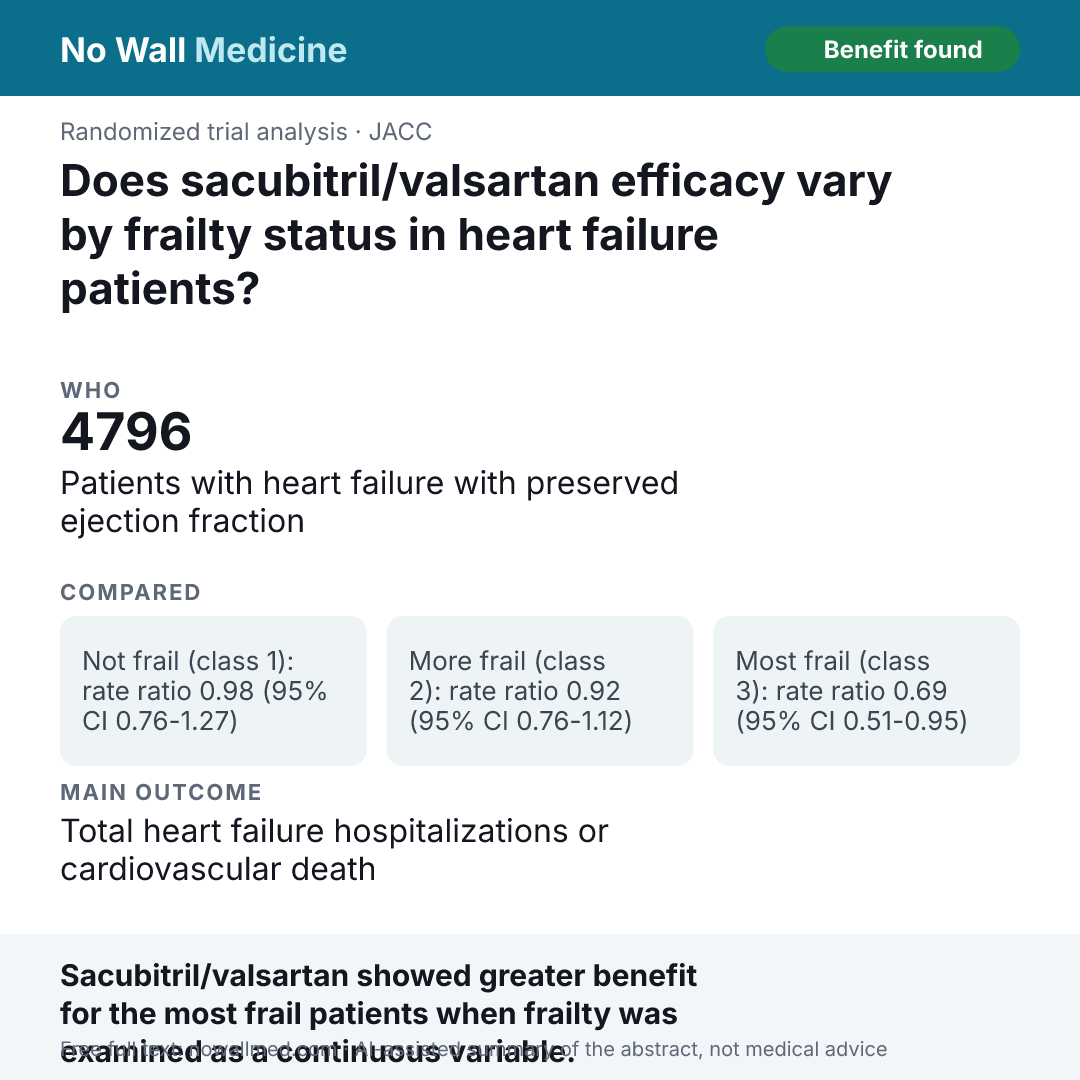
Sacubitril/Valsartan and Frailty in Patients With Heart Failure and Preserved Ejection Fraction
Randomized trial analysisBenefit found
Does sacubitril/valsartan efficacy vary by frailty status in heart failure patients?
Who
4796
Patients with heart failure with preserved ejection fraction
Compared
Not frail (class 1): rate ratio 0.98 (95% CI 0.76-1.27)
More frail (class 2): rate ratio 0.92 (95% CI 0.76-1.12)
Most frail (class 3): rate ratio 0.69 (95% CI 0.51-0.95)
Main outcome
Total heart failure hospitalizations or cardiovascular death
Result: rate ratio 0.69 (95% CI 0.51-0.95) for most frail
Bottom line: Sacubitril/valsartan showed greater benefit for the most frail patients when frailty was examined as a continuous variable.
JACC · 2022-08-29 · Save PNG
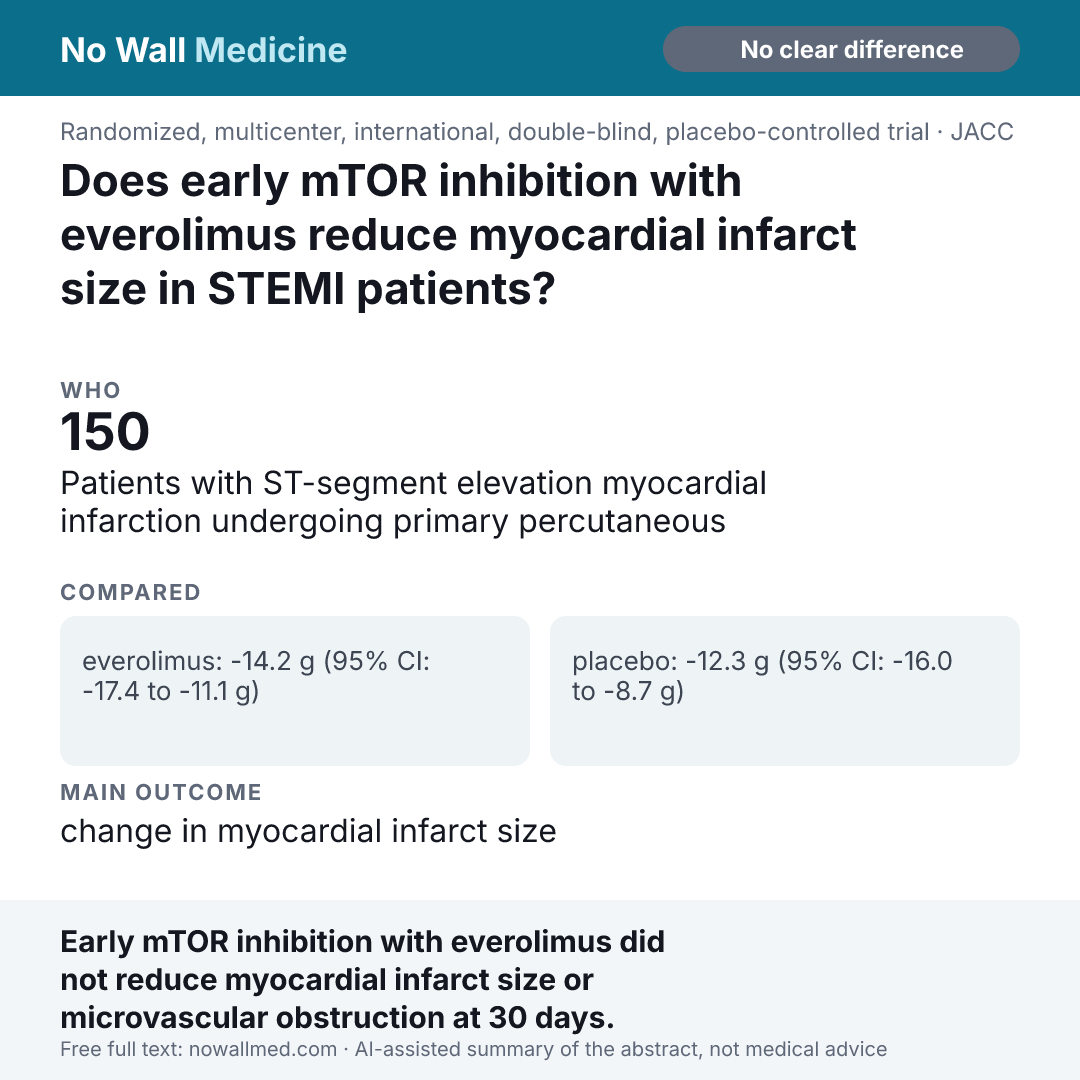
Mammalian Target of Rapamycin Inhibition in Patients With ST-Segment Elevation Myocardial Infarction
Randomized, multicenter, international, double-blind, placebo-controlled trialNo clear difference
Does early mTOR inhibition with everolimus reduce myocardial infarct size in STEMI patients?
Who
150
Patients with ST-segment elevation myocardial infarction undergoing primary percutaneous coronary intervention · multicenter, international
Compared
everolimus: -14.2 g (95% CI: -17.4 to -11.1 g)
placebo: -12.3 g (95% CI: -16.0 to -8.7 g)
Main outcome
change in myocardial infarct size
Bottom line: Early mTOR inhibition with everolimus did not reduce myocardial infarct size or microvascular obstruction at 30 days.
JACC · 2022-08-29 · Save PNG