Visual abstracts
New randomized trials and meta-analyses from leading journals at a glance: who was studied, what was compared, and what was found. Every paper is free to read in full.
All specialtiesCardiology 361Oncology 283Gastroenterology & Hepatology 148Infectious Disease 276Neurology 164Psychiatry & Mental Health 230Pulmonology 166Critical Care 110Endocrinology & Diabetes 212Pediatrics 157Surgery 106Orthopedics & Sports Medicine 66Neurosurgery 21Cardiothoracic & Vascular Surgery 36Plastic & Reconstructive Surgery 68Nephrology 71Rheumatology 69Hematology 82Dermatology 34Ophthalmology 60Obstetrics & Gynecology 103Public & Global Health 105Radiology & Imaging 29Anesthesiology 61Urology 78ENT (Otolaryngology) 44Emergency Medicine 34Allergy & Immunology 39Geriatrics 100Family Medicine & Primary Care 55Medical Genetics & Genomics 32Pathology & Laboratory Medicine 5Physical Medicine & Rehabilitation 88Palliative Care 55Nutrition 121Digital Health & AI 303General Medicine 42
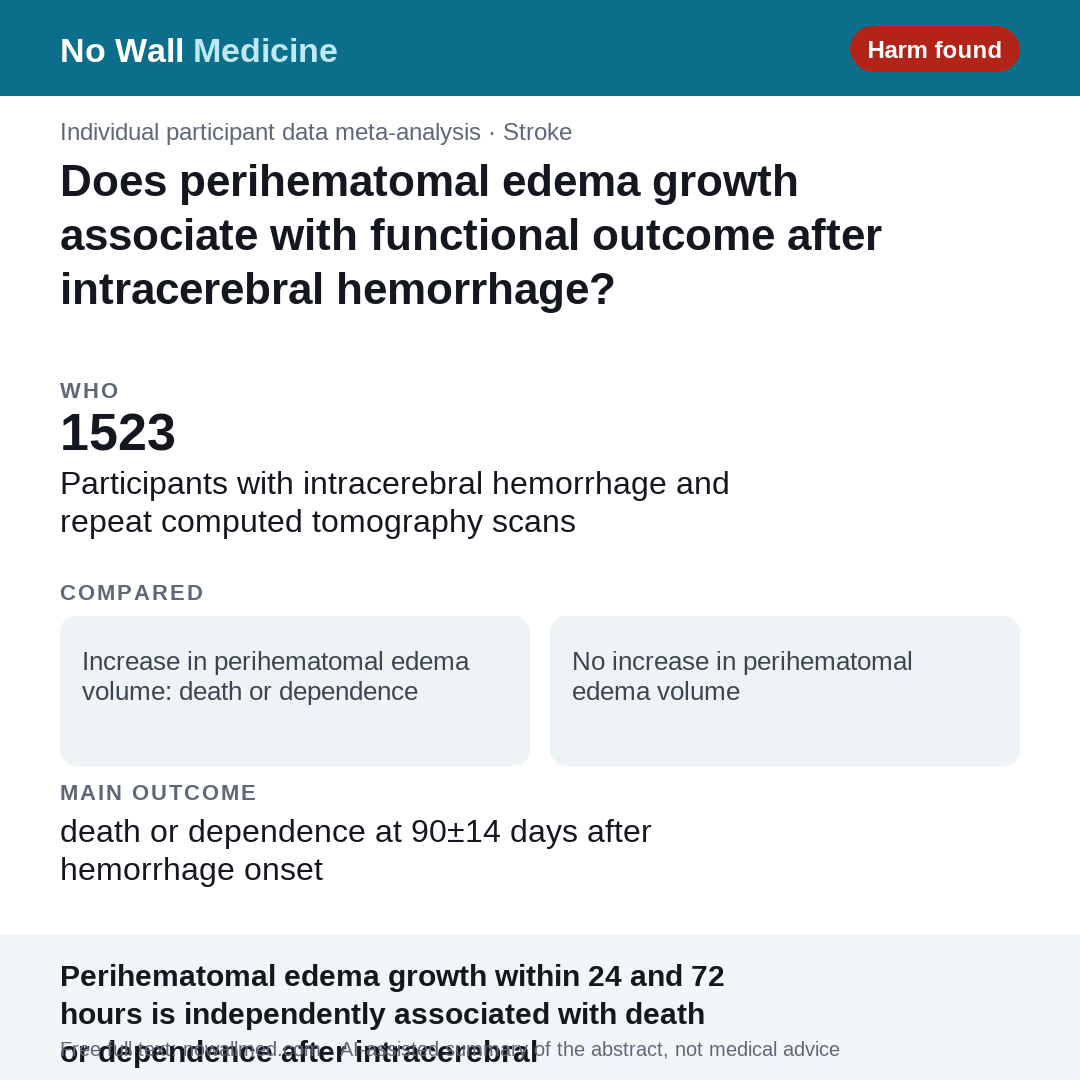
Perihematomal Edema and Functional Outcome After Intracerebral Hemorrhage: A Meta-Analysis of Individual Participant Data
Individual participant data meta-analysisHarm found
Does perihematomal edema growth associate with functional outcome after intracerebral hemorrhage?
Who
1523
Participants with intracerebral hemorrhage and repeat computed tomography scans
Compared
Increase in perihematomal edema volume: death or dependence
No increase in perihematomal edema volume
Main outcome
death or dependence at 90±14 days after hemorrhage onset
Result: adjusted odds ratio 1.04 per mL increase (95% CI 1.01-1.06)
Bottom line: Perihematomal edema growth within 24 and 72 hours is independently associated with death or dependence after intracerebral hemorrhage.
Stroke · 2026-03-04Download image
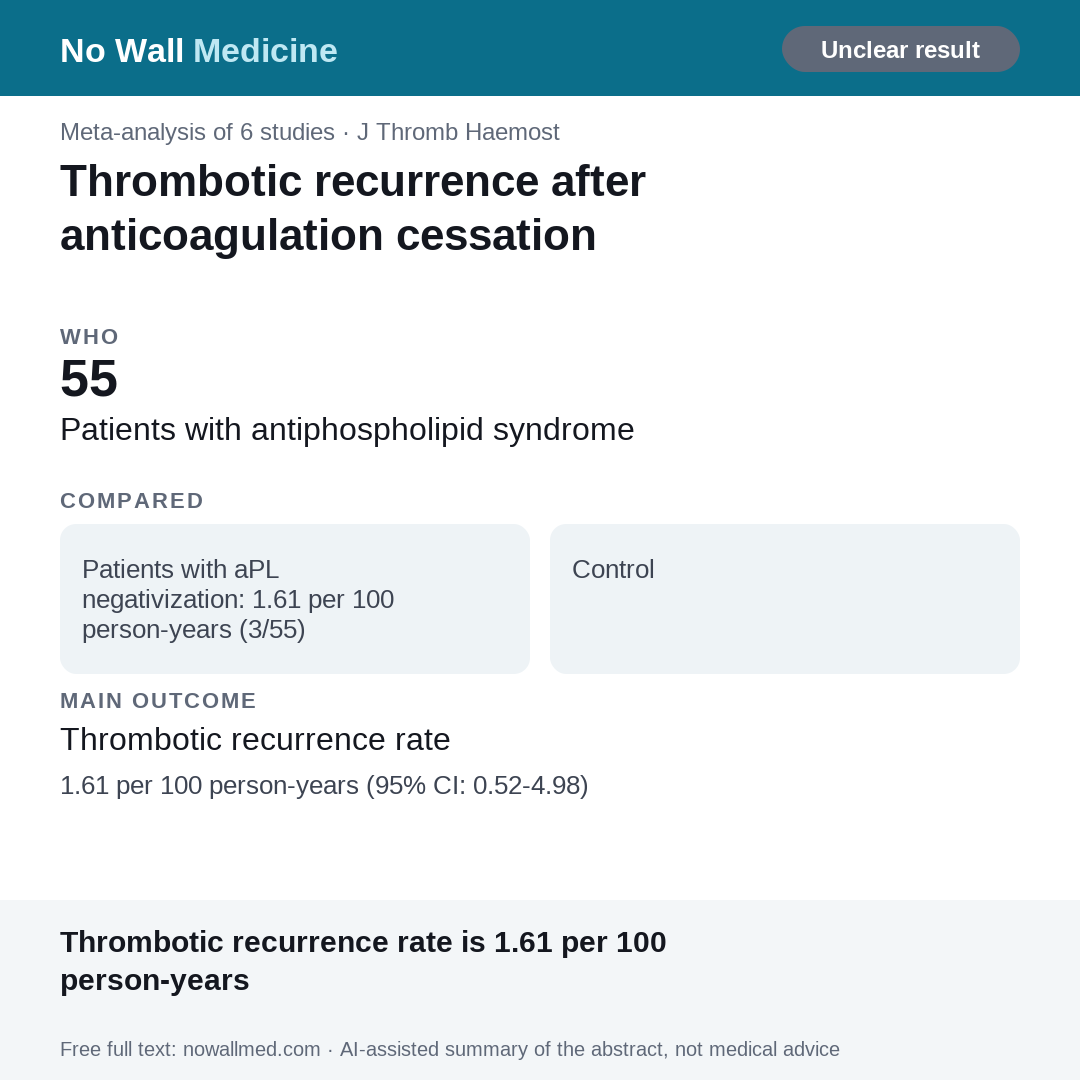
Thrombotic recurrence after anticoagulation cessation in patients with antiphospholipid syndrome and antiphospholipid antibody negativization: a systematic review and meta-analysis
Meta-analysis of 6 studiesUnclear result
Thrombotic recurrence after anticoagulation cessation
Who
55
Patients with antiphospholipid syndrome
Compared
Patients with aPL negativization: 1.61 per 100 person-years (3/55)
Control
Main outcome
Thrombotic recurrence rate
Result: 1.61 per 100 person-years (95% CI: 0.52-4.98)
Bottom line: Thrombotic recurrence rate is 1.61 per 100 person-years
Limitation: Limited by data quality
J Thromb Haemost · 2026-03-04Download image
Artificial Intelligence Applications in Medical Devices for Personalized Health Care Solutions: Systematic Review
Systematic reviewBenefit found
What is the scope and impact of artificial intelligence in medical devices?
Who
100
Peer-reviewed articles and reports published between 2016 and 2023
Compared
AI-based diagnostic tools: 98.88% accuracy in multiclass disease classification from X-ray images
Insulin injection site recognition: 95% accuracy
Main outcome
Scope, impact, and challenges of artificial intelligence in medical devices
Bottom line: Artificial intelligence in medical devices offers immense potential for personalized health care despite technical, ethical, and regulatory challenges.
J Med Internet Res · 2026-03-04Download image

LLM-assisted systematic review of large language models in clinical medicine
LLM-assisted systematic reviewMixed results
Do LLMs outperform humans in clinical medicine?
Who
4609
clinical medicine studies
Compared
33%LLMs
humans
Main outcome
performance comparison
Bottom line: LLMs outperform humans in 33% of comparisons
Limitation: small sample sizes in at least 25% of studies
Nat Med · 2026-03-03Download image

Efficacy and safety of pharmacologic therapies in acromegaly: a systematic literature review and network meta-analysis
Systematic review and network meta-analysisBenefit found
What are the efficacy and safety of pharmacological treatments for acromegaly?
Who
Patients with acromegaly
Compared
Paltusotine: significantly higher biochemical control vs O-OCT and SC-OCT-D
Other pharmacological treatments: comparable biochemical control rates
Main outcome
Biochemical control and safety
Result: paltusotine biochemical control odds ratios 7.34 (95% CrI 1.48-36.07) and 7.85 (95% CrI 1.72-36.25)
Bottom line: Paltusotine shows promising efficacy, safety, and lower discontinuation rates compared to oral or subcutaneous octreotide in acromegaly.
J Clin Endocrinol Metab · 2026-03-03Download image

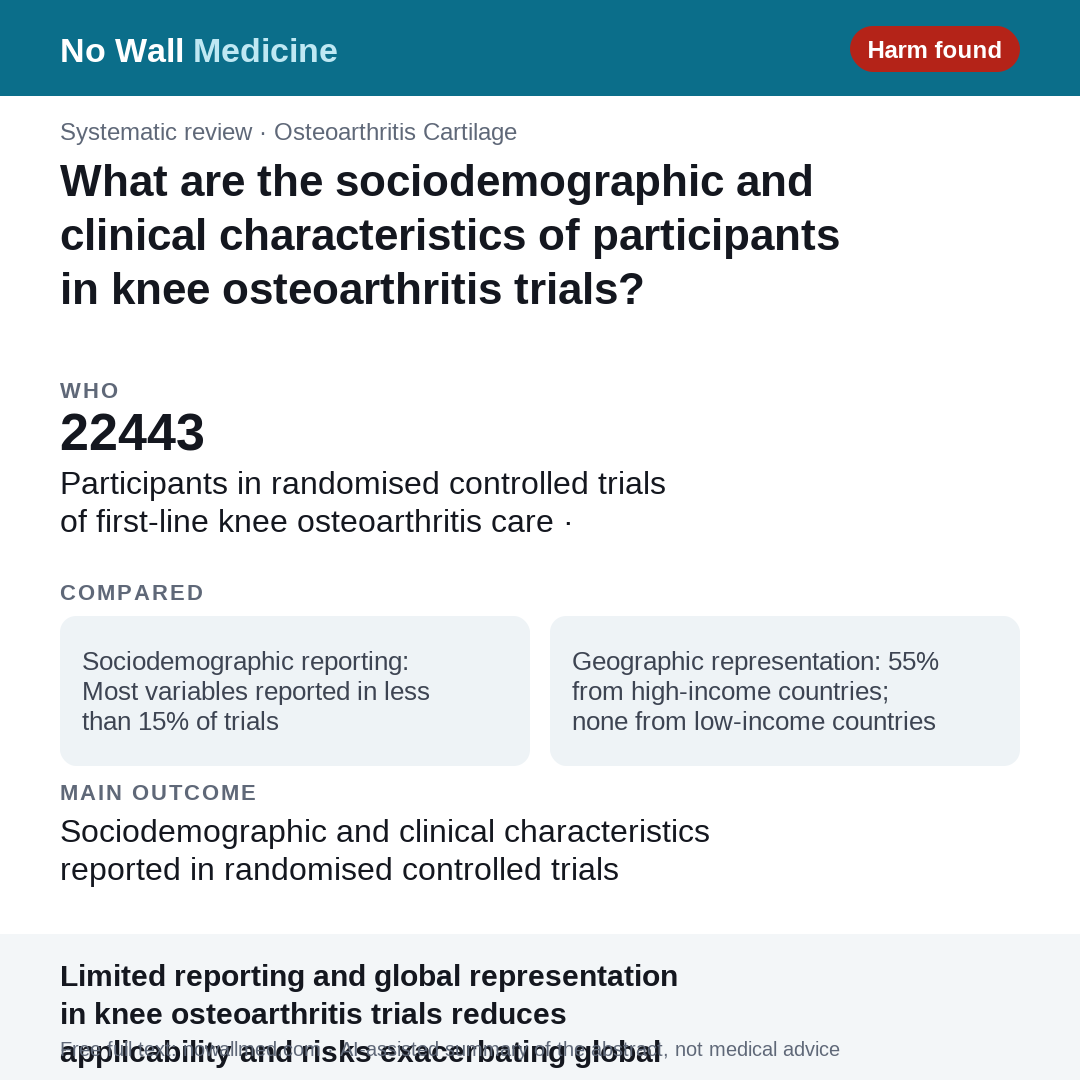
Blind spots in reporting and representation in knee osteoarthritis research: A systematic review of the sociodemographic and clinical characteristics of 22,443 participants in randomised controlled trials of first-line care
Systematic reviewHarm found
What are the sociodemographic and clinical characteristics of participants in knee osteoarthritis trials?
Who
22443
Participants in randomised controlled trials of first-line knee osteoarthritis care · Global, representing 17% of countries (34/198)
Compared
Sociodemographic reporting: Most variables reported in less than 15% of trials
Geographic representation: 55% from high-income countries; none from low-income countries
Main outcome
Sociodemographic and clinical characteristics reported in randomised controlled trials
Bottom line: Limited reporting and global representation in knee osteoarthritis trials reduces applicability and risks exacerbating global health inequities.
Osteoarthritis Cartilage · 2026-03-03Download image
Management of carotid free-floating thrombus: A systematic review
Systematic review of 11 studiesMixed results
What are the safety and effectiveness of management strategies for carotid free-floating thrombus?
Who
179
Patients with carotid free-floating thrombus
Compared
Antithrombotic medication alone: 6.7% (8/120) short-term death/stroke
Endovascular treatment: 5.0% (1/20) short-term death/stroke
Carotid endarterectomy: 2.6% (1/38) short-term death/stroke
Main outcome
Composite of any nonfatal stroke and all-cause death
Bottom line: All reported treatment strategies carry considerable risk, though carotid endarterectomy may be more favorable than antithrombotic medication alone.
Limitation: Studies were predominantly of low quality and no randomized controlled studies were identified.
J Vasc Surg · 2026-03-03Download image

Effects of digital communication tools on patients, family members and health care professionals in adult ICUs: a mixed-methods systematic review
Mixed-methods systematic reviewBenefit found
Digital communication tools in ICUs
Who
Patients, family members, healthcare professionals · 19 countries
Compared
Virtual communication
Usual care
Main outcome
Family satisfaction, patient anxiety
Result: Standardized mean difference = 0.76 (95% CI 0.45 to 1.06), mean difference = -2.19 (95% CI -4.62 to 0.23)
Bottom line: Digital communication improves family satisfaction
Crit Care · 2026-03-03Download image

Virtual reality interventions for attention deficit/hyperactivity disorder: a systematic review
Systematic reviewBenefit found
Are virtual reality interventions effective for attention deficit/hyperactivity disorder?
Who
Children and adolescents with attention deficit/hyperactivity disorder
Compared
Virtual reality interventions: significantly improve core ADHD symptoms, executive functions, emotional regulation, and social skills
Control
Main outcome
core ADHD symptoms, executive functions, emotional regulation, and social skills
Bottom line: Virtual reality interventions significantly improve ADHD symptoms, executive functions, emotional regulation, and social skills in children and adolescents.
Limitation: adherence reporting was inconsistent across studies
NPJ Digit Med · 2026-03-03Download image

GLP-1 Receptor Agonists and Noncardiometabolic Outcomes: An Umbrella Review of Meta-Analyses
Umbrella review of meta-analysesMixed results
What are the associations between GLP-1 receptor agonists and noncardiometabolic outcomes?
Who
3580616
People with type 2 diabetes and obesity
Compared
GLP-1 receptor agonists
Control
Main outcome
Noncardiometabolic outcomes across multiple domains
Bottom line: GLP-1 receptor agonists showed gastrointestinal adverse event signals and potential protection against serious infections and respiratory disease.
JAMA Netw Open · 2026-03-02Download image

Racial and Ethnic Reporting and Representation in US Alzheimer Clinical Trials: A Systematic Review
Systematic reviewHarm found
What are the patterns of racial and ethnic reporting and representation in US Alzheimer disease phase 3 trials?
Who
88
Phase 3 Alzheimer disease drug trials in the United States · United States
Compared
91.3%White patients median enrollment (87.3%-93.6%)
7.2%Black (non-Hispanic) median enrollment (3.7%-9.1%)
5.2%Hispanic median enrollment (3.1%-6.6%)
0.9%Asian or Pacific Islander median enrollment (0.6%-1.6%)
Main outcome
Reporting and representation of patient race and ethnicity
Bottom line: Phase 3 Alzheimer disease trials show substantial gaps in racial and ethnic reporting and representation, limiting generalizability.
JAMA Netw Open · 2026-03-02Download image

Machine Learning-Based Sleep Electroencephalographic Brain Age Index and Dementia Risk: An Individual Participant Data Meta-Analysis
Meta-analysis of 5 cohortsHarm found
Sleep brain age index and dementia risk
Who
7105
Community-dwelling adults without dementia · 5 community-based cohorts
Compared
Higher BAI
Lower BAI
Main outcome
Incident dementia
Result: hazard ratio 1.39 (95% CI 1.21 to 1.59)
Bottom line: Higher BAI linked to higher dementia risk
JAMA Netw Open · 2026-03-02Download image

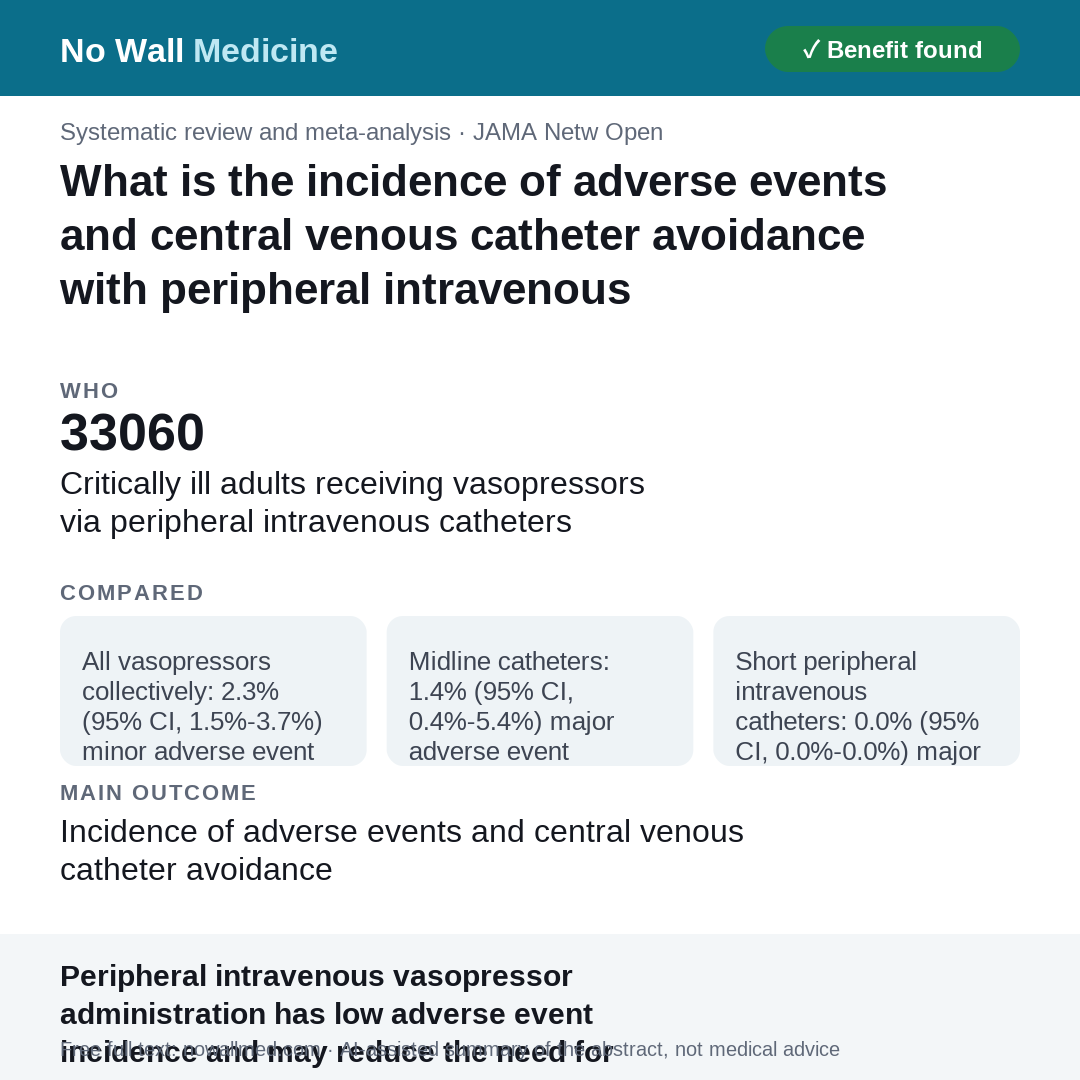
Incidence of Adverse Events in Peripheral Intravenous Vasopressor Use: A Systematic Review and Meta-Analysis
Systematic review and meta-analysisBenefit found
What is the incidence of adverse events and central venous catheter avoidance with peripheral intravenous vasopressors?
Who
33060
Critically ill adults receiving vasopressors via peripheral intravenous catheters
Compared
All vasopressors collectively: 2.3% (95% CI, 1.5%-3.7%) minor adverse event incidence
Midline catheters: 1.4% (95% CI, 0.4%-5.4%) major adverse event incidence
Short peripheral intravenous catheters: 0.0% (95% CI, 0.0%-0.0%) major adverse event incidence
Main outcome
Incidence of adverse events and central venous catheter avoidance
Bottom line: Peripheral intravenous vasopressor administration has low adverse event incidence and may reduce the need for central venous catheter placement.
JAMA Netw Open · 2026-03-02Download image
IDSA 2025 Guidelines on the Use of Vaccines for the Prevention of Seasonal RSV Infections in Immunocompromised Patients
Systematic review and expert panel recommendationBenefit found
Should immunocompromised adults and children receive respiratory syncytial virus vaccination?
Who
Immunocompromised adults and children
Compared
Vaccinated immunocompromised adults: 70% reduction in respiratory syncytial virus-associated hospitalization
Unvaccinated immunocompromised adults
Main outcome
Respiratory syncytial virus-associated hospitalization and critical illness
Result: 70% (95% CI: 66%-73%) reduction in hospitalization
Bottom line: Strong recommendation for age-appropriate respiratory syncytial virus vaccination in immunocompromised adults and adolescents.
Limitation: Direct evidence to guide vaccination in this population remains limited.
Clin Infect Dis · 2026-03-02Download image

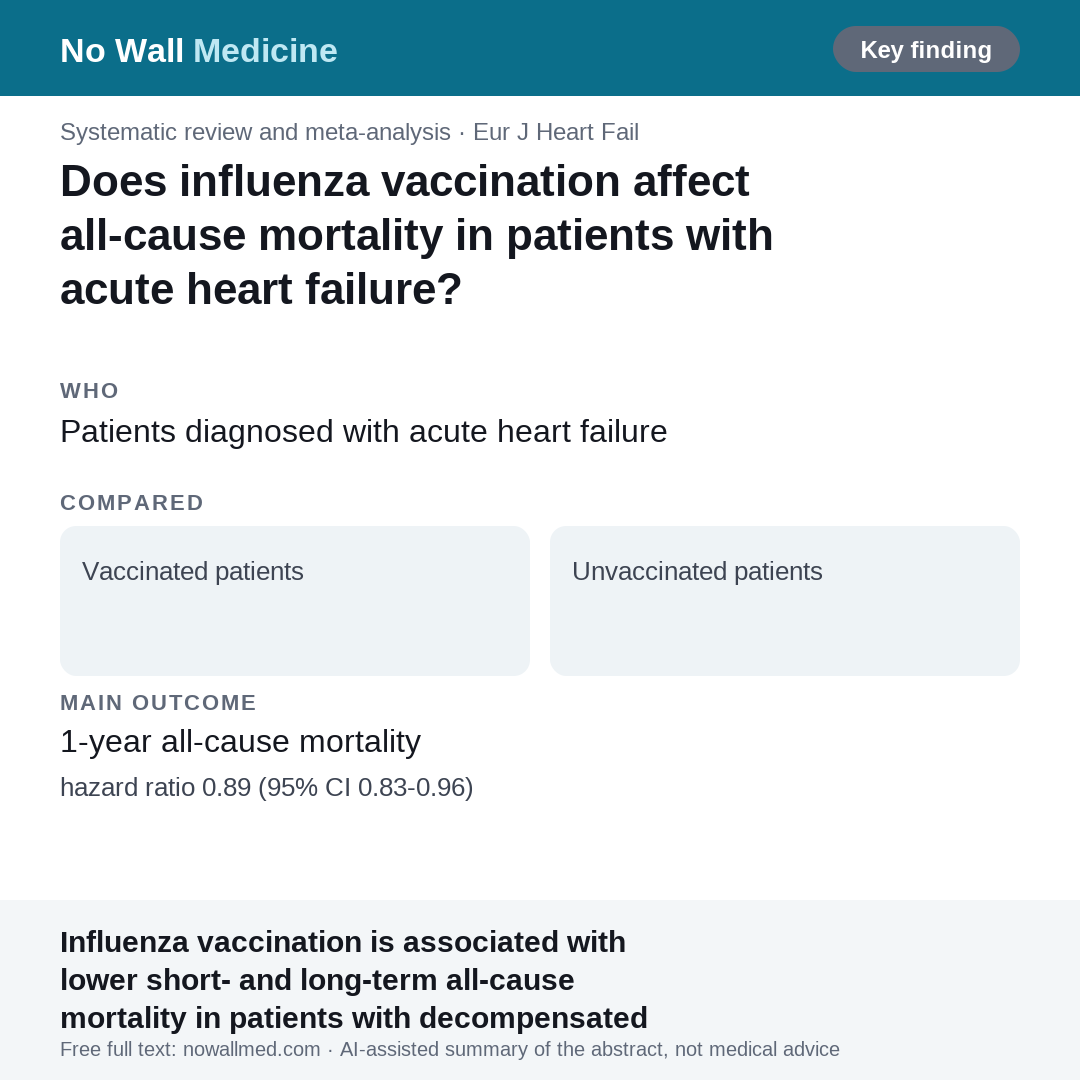
Effect of influenza vaccination in patients with decompensated heart failure: a systematic review and meta-analysis
Systematic review and meta-analysisBenefit found
Does influenza vaccination affect all-cause mortality in patients with acute heart failure?
Who
Patients diagnosed with acute heart failure
Compared
Vaccinated patients
Unvaccinated patients
Main outcome
1-year all-cause mortality
Result: hazard ratio 0.89 (95% CI 0.83-0.96)
Bottom line: Influenza vaccination is associated with lower short- and long-term all-cause mortality in patients with decompensated heart failure.
Limitation: All included studies were observational, so results could be subject to residual confounding.
Eur J Heart Fail · 2026-03-02Download image
A Systematic Review of Graft-Related Complications and Recurrence Following Minimally Invasive Sacrocolpopexy With Xenografts and Allografts
Systematic review and meta-analysisMixed results
What are the recurrence and graft-related complication rates following minimally invasive sacrocolpopexy with biological grafts?
Who
353
Patients undergoing minimally invasive sacrocolpopexy with biological grafts
Compared
All biological grafts: 25.6% [95% CI: 8.1%-48.2%]
0.8%Graft exposure (95% CI: 0.0%-4.2%)
Main outcome
Recurrence rates and graft-related complications
Result: pooled recurrence 25.6% [95% CI: 8.1%-48.2%]
Bottom line: Biological grafts show higher recurrence rates than synthetic grafts, though graft exposure rates appear comparable.
Limitation: Given study heterogeneity, further research is required to determine the optimal graft choice.
BJOG · 2026-03-02Download image

Prognostic Impact of Anterior Commissure Involvement on Treatment Failure in Early-Stage Glottic Carcinoma Treated With Definitive Radiotherapy: A Univariate and Multivariate Meta-Analysis
Univariate and Bayesian multivariate meta-analysisNo clear difference
Does anterior commissure involvement impact local failure in early-stage glottic carcinoma?
Who
2527
Patients with early-stage glottic carcinoma treated with definitive radiotherapy
Compared
Anterior commissure involvement present: OR 1.61 (95% CI 1.15-2.26)
Adjusted multivariate models: adjusted ORs 1.05-1.43
Main outcome
local failure
Result: adjusted ORs 1.05-1.43, all 95% CrIs including unity
Bottom line: Anterior commissure involvement is not a fundamental prognostic criterion for local failure after radiotherapy.
Limitation: Univariate findings may be confounded by correlation with other factors, particularly T substage.
Head Neck · 2026-03-02Download image

Nectin-4-Targeted Radiotheranostics for Personalized Cancer Therapy: A Systematic Review
Systematic reviewBenefit found
What is the status of nectin-4-directed molecular theranostics in cancer therapy?
Who
Patients with nectin-4 overexpressing tumors
Compared
Nectin-4-targeted radiotracers: comparable diagnostic accuracy to standard molecular imaging methods
Standard molecular imaging
Main outcome
Diagnostic accuracy and detection of metastatic lesions
Bottom line: Nectin-4-targeted radiotracers show high specificity and comparable diagnostic accuracy to standard imaging methods.
J Nucl Med · 2026-03-02Download image

Bronchial thermoplasty for severe asthma: Systematic review and meta-analysis of benefits and harms
Systematic review and meta-analysis of 6 trialsMixed results
Is bronchial thermoplasty effective and safe for patients with severe asthma?
Who
573
Adults with severe asthma
Compared
Bronchial thermoplasty
Control
Main outcome
Asthma control, quality of life, and severe exacerbations
Result: overall severe exacerbations incidence rate ratio 0.81 (95% CI 0.68 to 0.97)
Bottom line: Bronchial thermoplasty may improve asthma control and quality of life but likely increases procedural exacerbations and serious respiratory harms.
JACI Glob · 2026-03-02Download image

Burden of Shigella and enterotoxigenic Escherichia coli infections among children under 5 years in Ethiopia, Kenya and Malawi: a systematic review and meta-analysis
Systematic review and meta-analysisUnclear result
What is the prevalence of Shigella and enterotoxigenic Escherichia coli in children?
Who
Children under 5 years in Ethiopia, Kenya and Malawi · Ethiopia, Kenya and Malawi
Compared
8%Shigella prevalence (95% CI 6% to 9%)
11%Enterotoxigenic Escherichia coli prevalence (95% CI 6% to 15%)
Main outcome
Prevalence of Shigella and enterotoxigenic Escherichia coli
Bottom line: Shigella and enterotoxigenic Escherichia coli show significant prevalence among children in Ethiopia, Kenya and Malawi.
Limitation: Differences in prevalence may be explained by the application of sensitive, molecular detection methods in Malawi.
BMJ Glob Health · 2026-03-02Download image