Visual abstracts
New randomized trials and meta-analyses from leading journals at a glance: who was studied, what was compared, and what was found. Every paper is free to read in full.
All specialtiesCardiology 4763Oncology 4043Gastroenterology & Hepatology 1903Infectious Disease 3756Neurology 1872Psychiatry & Mental Health 2216Pulmonology 2044Critical Care 1319Endocrinology & Diabetes 2544Pediatrics 2889Surgery 2480Orthopedics & Sports Medicine 917Neurosurgery 525Cardiothoracic & Vascular Surgery 656Plastic & Reconstructive Surgery 574Nephrology 1107Rheumatology 810Hematology 1090Dermatology 611Ophthalmology 532Obstetrics & Gynecology 1645Public & Global Health 1037Radiology & Imaging 619Anesthesiology 958Urology 745ENT (Otolaryngology) 494Emergency Medicine 481Allergy & Immunology 309Geriatrics 972Family Medicine & Primary Care 534Medical Genetics & Genomics 659Pathology & Laboratory Medicine 156Physical Medicine & Rehabilitation 734Palliative Care 421Nutrition 1560Digital Health & AI 2137General Medicine 318
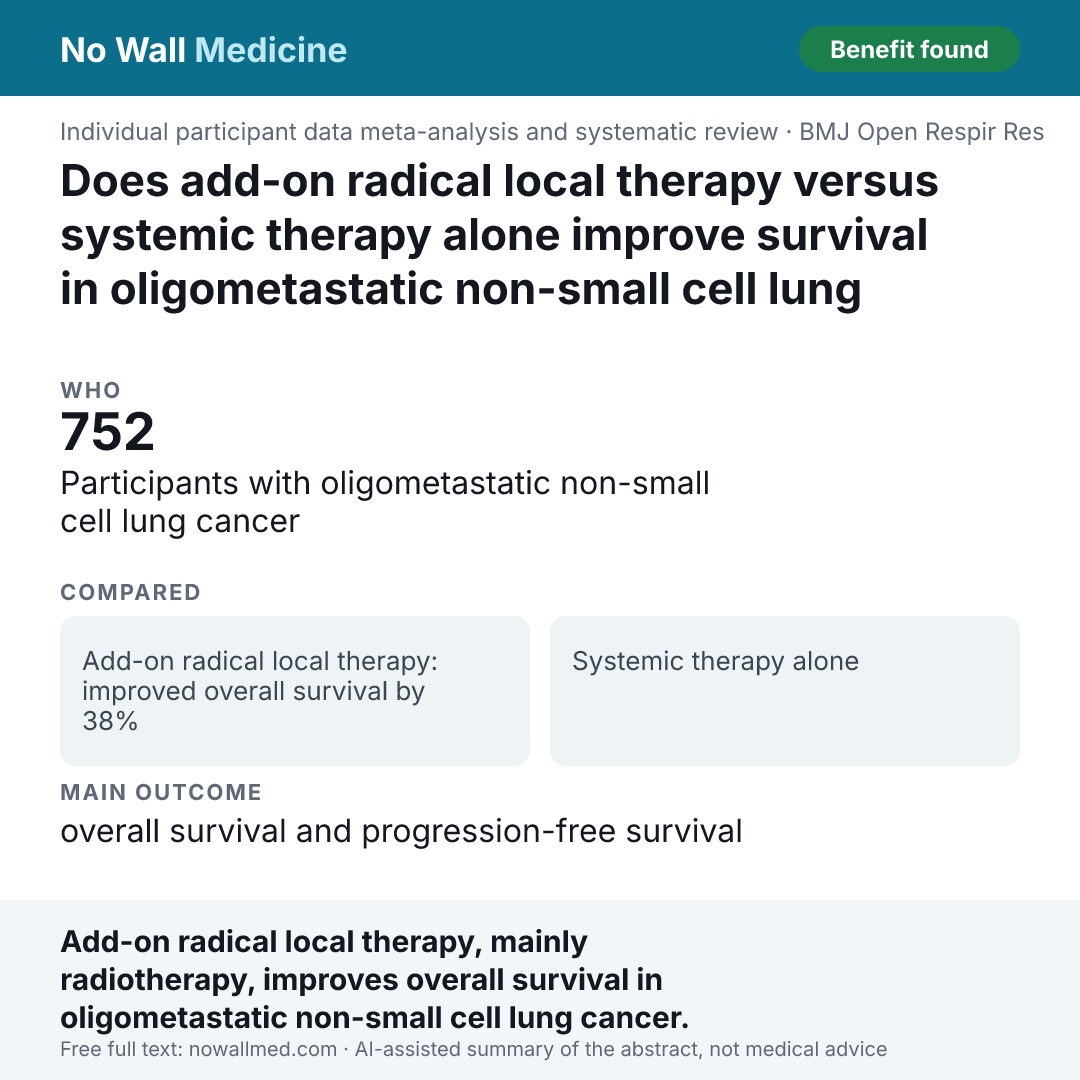
IPDMA - RADICAL - NSCLC: individual participant data meta-analysis and systematic review of radical local therapy for oligometastatic NSCLC
Individual participant data meta-analysis and systematic reviewBenefit found
Does add-on radical local therapy versus systemic therapy alone improve survival in oligometastatic non-small cell lung cancer?
Who
752
Participants with oligometastatic non-small cell lung cancer
Compared
Add-on radical local therapy: improved overall survival by 38%
Systemic therapy alone
Main outcome
overall survival and progression-free survival
Result: hazard ratio 0.62 (95% CI 0.50 to 0.76)
Bottom line: Add-on radical local therapy, mainly radiotherapy, improves overall survival in oligometastatic non-small cell lung cancer.
Limitation: Inconsistent reporting of safety limited quantitative synthesis.
BMJ Open Respir Res · 2025-09-17 · Save PNG
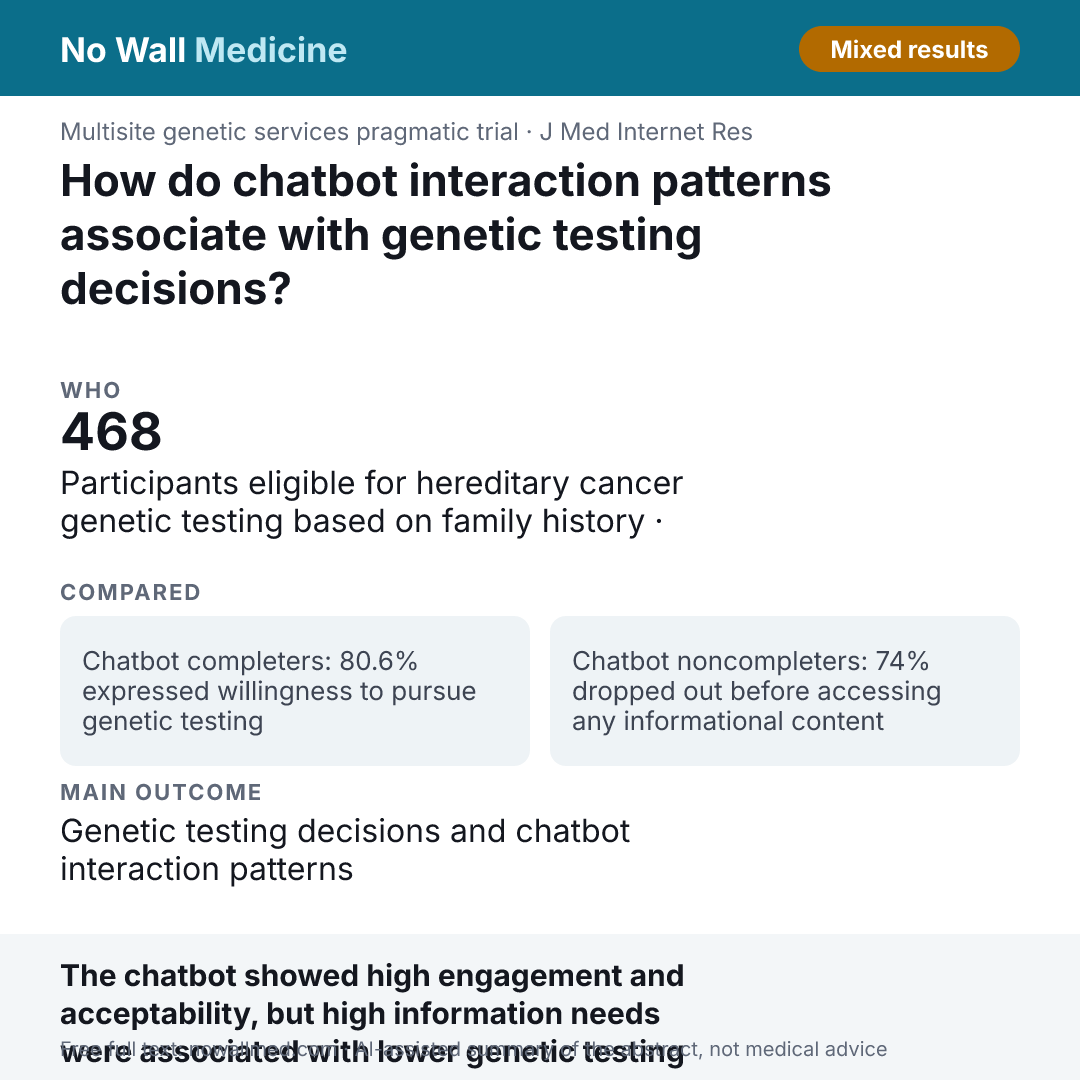
Bridging Technology and Pretest Genetic Services: Quantitative Study of Chatbot Interaction Patterns, User Characteristics, and Genetic Testing Decisions
Multisite genetic services pragmatic trialMixed results
How do chatbot interaction patterns associate with genetic testing decisions?
Who
468
Participants eligible for hereditary cancer genetic testing based on family history · Multisite
Compared
Chatbot completers: 80.6% expressed willingness to pursue genetic testing
Chatbot noncompleters: 74% dropped out before accessing any informational content
Main outcome
Genetic testing decisions and chatbot interaction patterns
Result: odds ratio 0.33 (95% CI 0.12-0.91) for ≥3 prompts; odds ratio 0.46 (95% CI 0.22-0.96) for open-ended questions
Bottom line: The chatbot showed high engagement and acceptability, but high information needs were associated with lower genetic testing willingness.
Limitation: Future efforts should address concerns of users with high information needs.
J Med Internet Res · 2025-09-17 · Save PNG
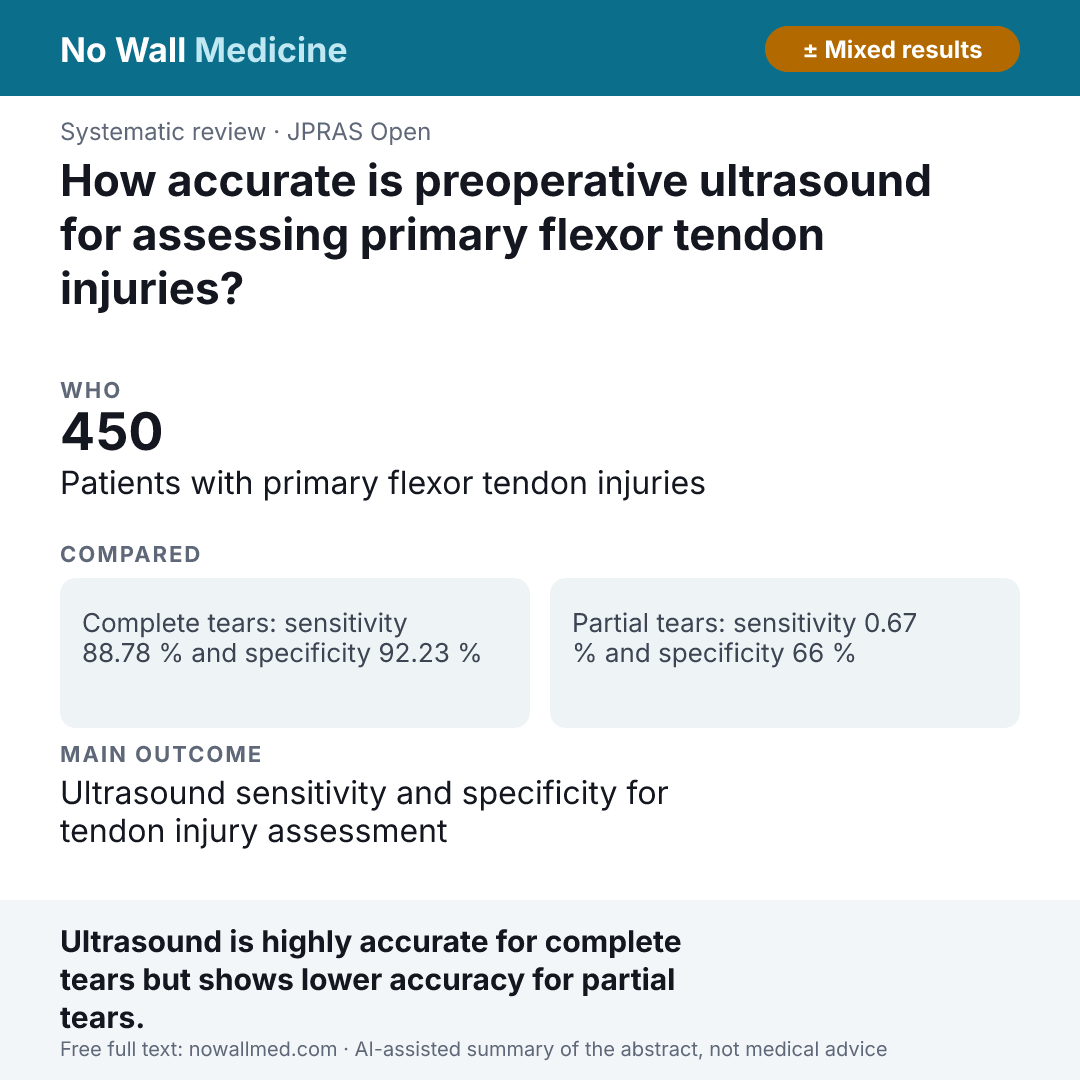
The accuracy of preoperative ultrasound use in primary flexor tendon repair: A systematic review
Systematic reviewMixed results
How accurate is preoperative ultrasound for assessing primary flexor tendon injuries?
Who
450
Patients with primary flexor tendon injuries
Compared
Complete tears: sensitivity 88.78 % and specificity 92.23 %
Partial tears: sensitivity 0.67 % and specificity 66 %
Main outcome
Ultrasound sensitivity and specificity for tendon injury assessment
Bottom line: Ultrasound is highly accurate for complete tears but shows lower accuracy for partial tears.
JPRAS Open · 2025-09-17 · Save PNG
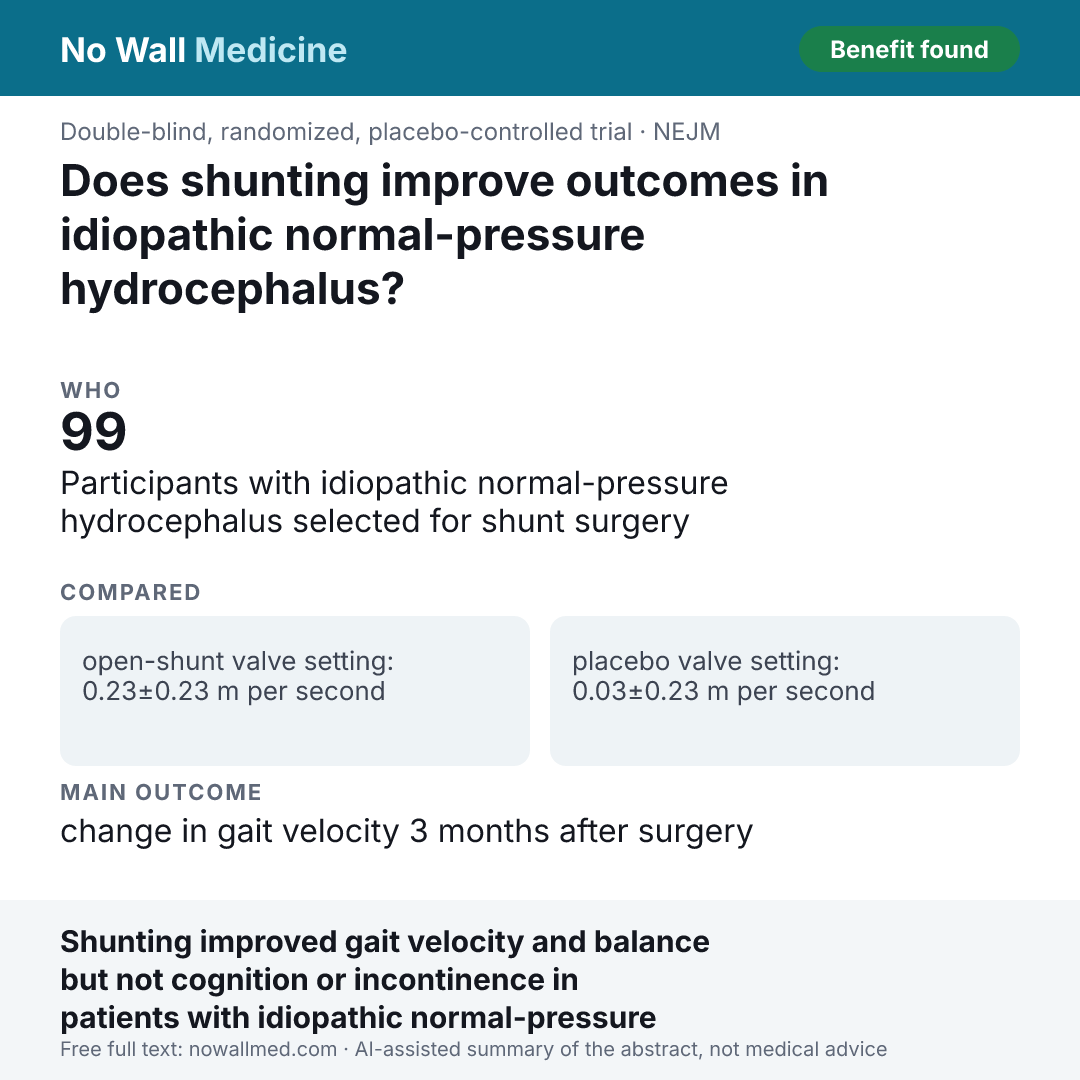
A Randomized Trial of Shunting for Idiopathic Normal-Pressure Hydrocephalus
Double-blind, randomized, placebo-controlled trialBenefit found
Does shunting improve outcomes in idiopathic normal-pressure hydrocephalus?
Who
99
Participants with idiopathic normal-pressure hydrocephalus selected for shunt surgery
Compared
open-shunt valve setting: 0.23±0.23 m per second
placebo valve setting: 0.03±0.23 m per second
Main outcome
change in gait velocity 3 months after surgery
Result: treatment difference of 0.21 m per second (95% confidence interval, 0.12 to 0.31)
Bottom line: Shunting improved gait velocity and balance but not cognition or incontinence in patients with idiopathic normal-pressure hydrocephalus.
Funded by: National Institute of Neurological Disorders and Stroke and Trial Innovation Network
NEJM · 2025-09-16 · Save PNG
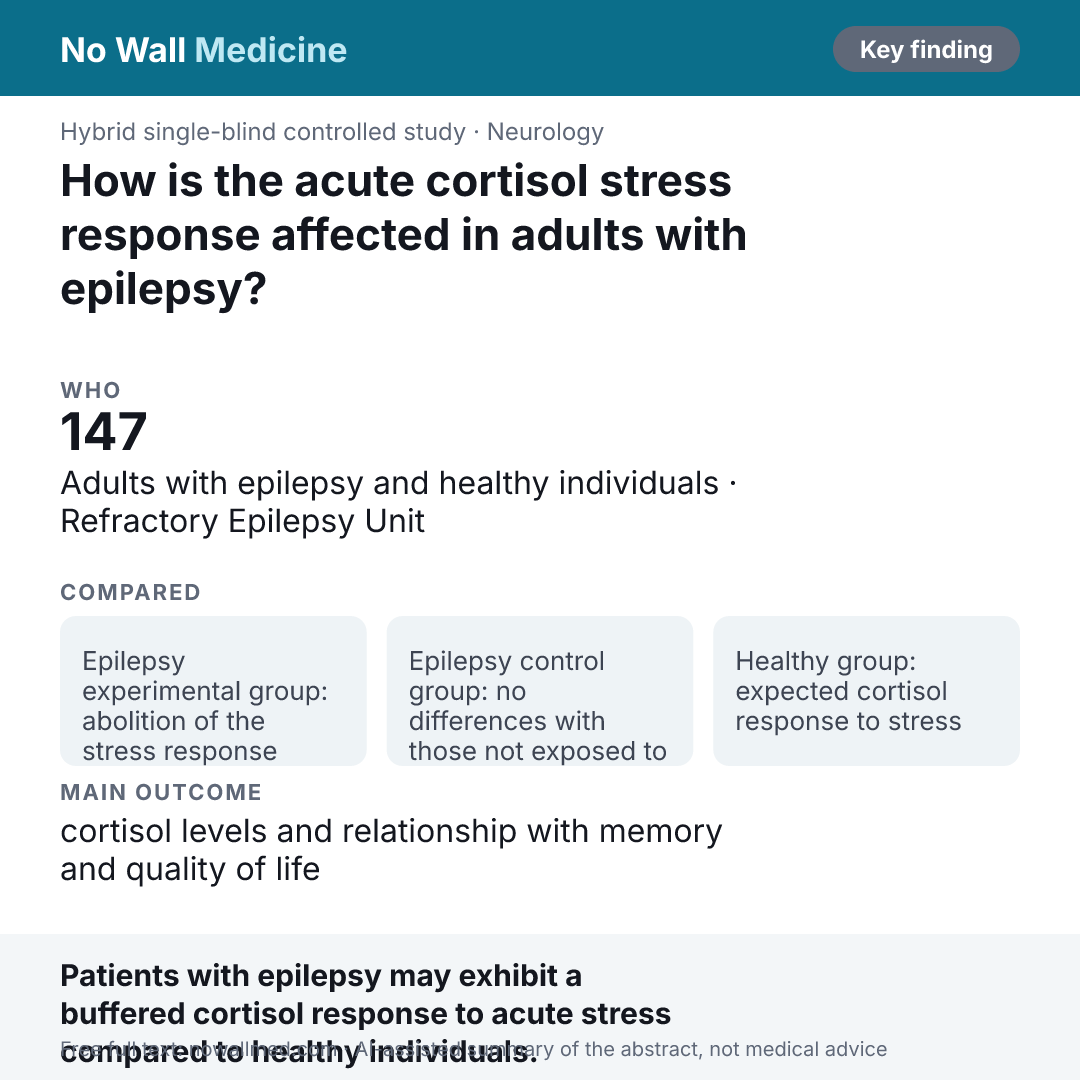
Buffered Cortisol Response to Stress in Patients With Epilepsy and Its Association With Memory and Quality of Life
Hybrid single-blind controlled studyKey finding
How is the acute cortisol stress response affected in adults with epilepsy?
Who
147
Adults with epilepsy and healthy individuals · Refractory Epilepsy Unit
Compared
Epilepsy experimental group: abolition of the stress response
Epilepsy control group: no differences with those not exposed to the Trier Social Stress Test
Healthy group: expected cortisol response to stress
Main outcome
cortisol levels and relationship with memory and quality of life
Result: mean difference -107.90 (95% CI -176.75 to -39.05)
Bottom line: Patients with epilepsy may exhibit a buffered cortisol response to acute stress compared to healthy individuals.
Limitation: cross-sectional design and sample specificity
Neurology · 2025-09-16 · Save PNG
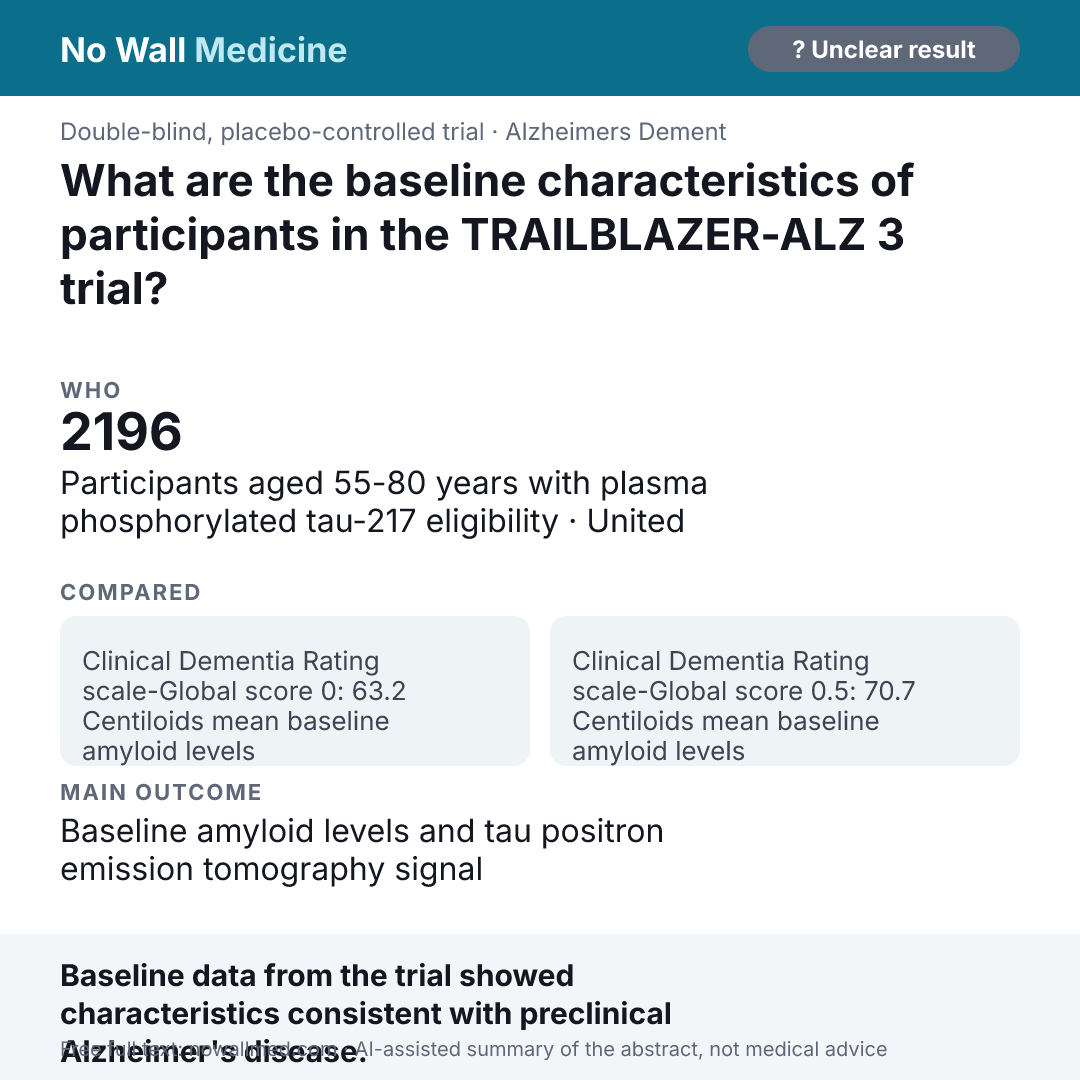
Donanemab in preclinical Alzheimer's disease: Screening and baseline data from TRAILBLAZER-ALZ 3
Double-blind, placebo-controlled trialUnclear result
What are the baseline characteristics of participants in the TRAILBLAZER-ALZ 3 trial?
Who
2196
Participants aged 55-80 years with plasma phosphorylated tau-217 eligibility · United States and Japan
Compared
Clinical Dementia Rating scale-Global score 0: 63.2 Centiloids mean baseline amyloid levels
Clinical Dementia Rating scale-Global score 0.5: 70.7 Centiloids mean baseline amyloid levels
Main outcome
Baseline amyloid levels and tau positron emission tomography signal
Bottom line: Baseline data from the trial showed characteristics consistent with preclinical Alzheimer's disease.
Alzheimers Dement · 2025-09-16 · Save PNG
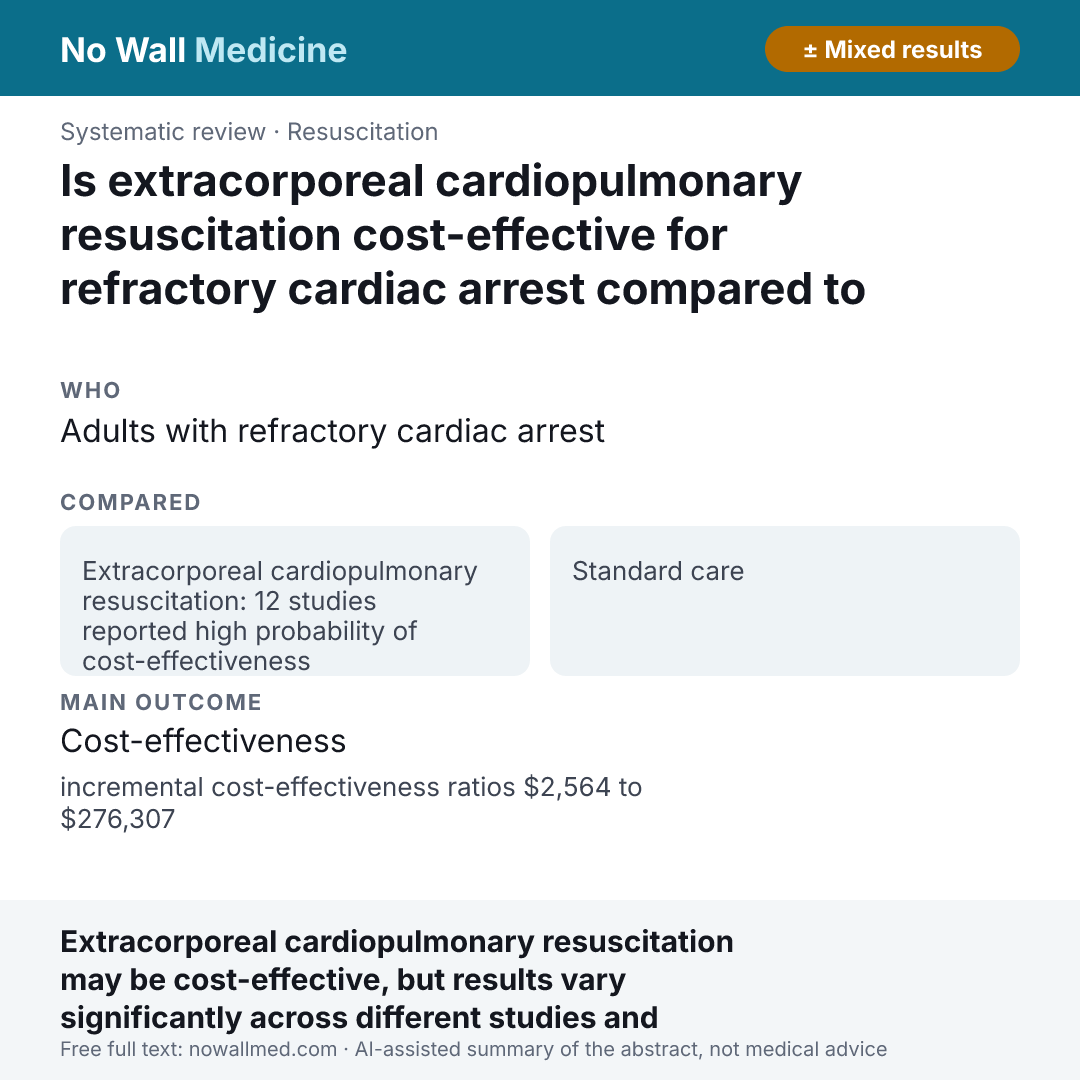
The cost-effectiveness of extracorporeal cardiopulmonary resuscitation (ECPR) for refractory cardiac arrest: A systematic review
Systematic reviewMixed results
Is extracorporeal cardiopulmonary resuscitation cost-effective for refractory cardiac arrest compared to standard care?
Who
Adults with refractory cardiac arrest
Compared
Extracorporeal cardiopulmonary resuscitation: 12 studies reported high probability of cost-effectiveness
Standard care
Main outcome
Cost-effectiveness
Result: incremental cost-effectiveness ratios $2,564 to $276,307
Bottom line: Extracorporeal cardiopulmonary resuscitation may be cost-effective, but results vary significantly across different studies and settings.
Resuscitation · 2025-09-16 · Save PNG
Gut feelings-the gut microbiome as a regulator of mental health in polycystic ovary syndrome
Systematic reviewKey finding
Is the gut microbiome associated with mental health in women with polycystic ovary syndrome?
Who
Women with polycystic ovary syndrome
Compared
Women with PCOS: association between gut microbiome and mental health problems
Women without PCOS
Main outcome
Association between gut microbiome and mental health indicators
Bottom line: All reviewed studies indicated an association between gut microbiome changes and mental health indicators in polycystic ovary syndrome.
Limitation: Limited number of studies, low quality scores, and high risk of bias in half of studies.
Fertil Steril · 2025-09-16 · Save PNG

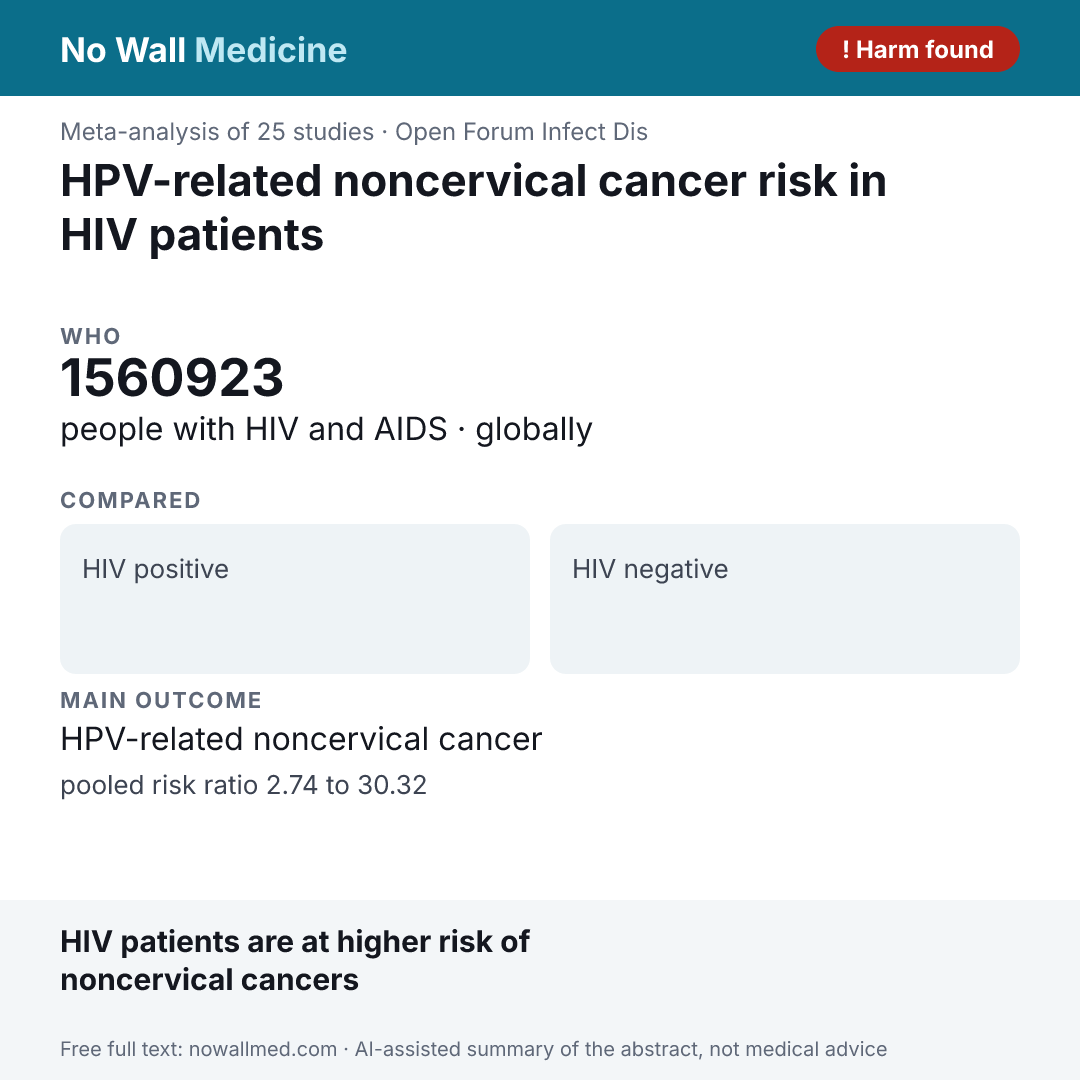
Global Estimates of the HPV-related, Noncervical Cancer Burden in People With HIV and AIDS and the Potential Effect of Improved HPV Vaccine Coverage in This Population: A Systematic Review, Meta-analysis and Modeling Study
Meta-analysis of 25 studiesHarm found
HPV-related noncervical cancer risk in HIV patients
Who
1560923
people with HIV and AIDS · globally
Compared
HIV positive
HIV negative
Main outcome
HPV-related noncervical cancer
Result: pooled risk ratio 2.74 to 30.32
Bottom line: HIV patients are at higher risk of noncervical cancers
Open Forum Infect Dis · 2025-09-16 · Save PNG
Minimum material requirements for hand hygiene in community settings: a systematic review
Systematic reviewUnclear result
What are the minimum material requirements for hand hygiene in community settings?
Who
People in non-healthcare community settings · 27 countries across 4 WHO regions
Compared
Material requirements
Hand hygiene practices
Main outcome
Relationship between material requirements and hand hygiene practices
Bottom line: There is a lack of evidence linking material requirements with handwashing practices in community settings.
Limitation: The review was limited to observational studies.
BMJ Glob Health · 2025-09-16 · Save PNG

Efficacy and effectiveness of hand hygiene-related practices used in community settings for removal of organisms from hands: a systematic review
Systematic reviewMixed results
How effective are hand hygiene materials for removing organisms from hands in community settings?
Who
Laboratory and field studies in community settings
Compared
Soap and water (bacteria): >2 log10 reduction (2.19 (95% CI 1.5 to 2.87))
Alcohol-based sanitisers (bacteria): >2 log10 reduction (3.13 (95% CI 2.7 to 3.56))
2.03Soap and water (viruses) (95% CI 1.45 to 2.62)
Alcohol-based sanitisers (viruses): <2 log10 reduction (1.86 (95% CI 1.37 to 2.35))
Main outcome
log10 reduction in organisms on hands
Bottom line: Alcohol-based sanitisers and soap are effective against bacteria, but efficacy against viruses varies between methods.
Limitation: Limited ability to compare efficacy due to focus on bacteria, soap, and alcohol-based sanitisers.
BMJ Glob Health · 2025-09-16 · Save PNG

Interventions to improve hand hygiene in community settings: a systematic review of theories, barriers and enablers, behaviour change techniques and hand hygiene station design features
Systematic review of 223 studiesMixed results
What improves hand hygiene in community settings
Who
247398
people in non-healthcare community settings · community settings
Compared
82%effective interventions
ineffective interventions
Main outcome
hand hygiene practice
Bottom line: Most interventions improved hand hygiene
Limitation: inconsistent intervention reporting
BMJ Glob Health · 2025-09-16 · Save PNG

Behavioural factors influencing hand hygiene practices across domestic, institutional and public community settings: a systematic review and qualitative meta-synthesis
Systematic review and qualitative meta-synthesisMixed results
What are the barriers and enablers to hand hygiene in community settings?
Who
People in domestic, institutional and public community settings · Africa, South-East Asia and other community settings
Compared
Barriers: Physical Opportunity, Reflective Motivation and Automatic Motivation
Enablers: Automatic Motivation and Reflective Motivation
Main outcome
Barriers and enablers to hand hygiene practices
Bottom line: Lack of resources hinders hand hygiene even when people are motivated, with habits and risk perception driving practice.
Limitation: Representativeness may be limited and evidence on alcohol-based hand rubs was limited.
BMJ Glob Health · 2025-09-16 · Save PNG

Applications of Magnetic Resonance Imaging in Upper Eyelid Anatomy and Upper Eyelid Blepharoplasty: A Systematic Review
Systematic reviewKey finding
What are the applications of magnetic resonance imaging in upper eyelid anatomy and blepharoplasty?
Who
Clinical studies utilizing magnetic resonance imaging
Compared
Normal anatomy and functions: 7 articles
Racial anatomical disparities: 2 articles
Tumor extent: 1 article
Anatomical changes postblepharoplasty: 2 articles
Main outcome
MRI applications in upper eyelid anatomy and blepharoplasty
Bottom line: Dynamic high-resolution magnetic resonance imaging supports personalized surgical planning and objective postoperative assessments in complex upper eyelid cases.
Limitation: Protocol inconsistencies, small samples, artifacts, and cost.
Plast Reconstr Surg Glob Open · 2025-09-16 · Save PNG

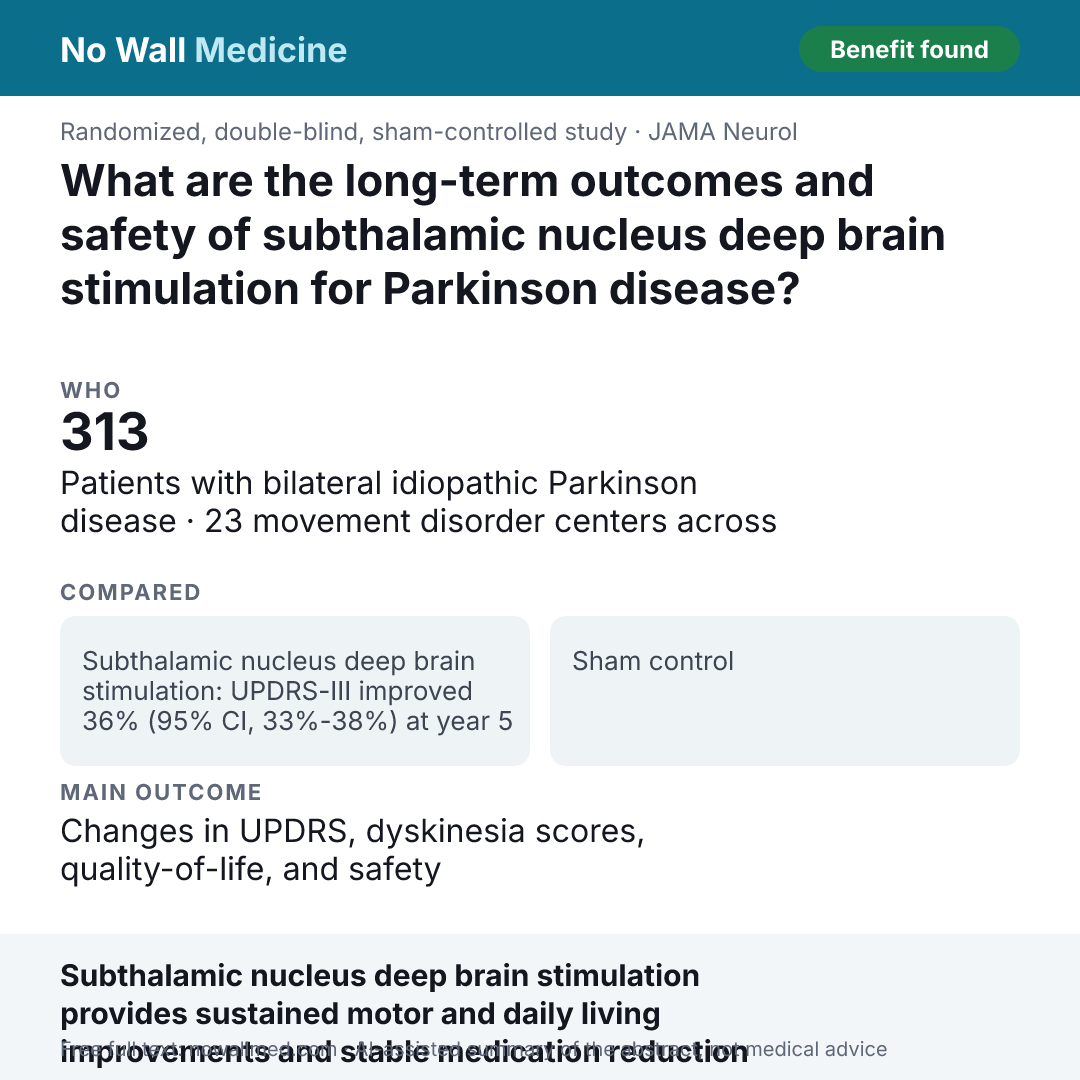
Five-Year Outcomes from Deep Brain Stimulation of the Subthalamic Nucleus for Parkinson Disease
Randomized, double-blind, sham-controlled studyBenefit found
What are the long-term outcomes and safety of subthalamic nucleus deep brain stimulation for Parkinson disease?
Who
313
Patients with bilateral idiopathic Parkinson disease · 23 movement disorder centers across the US
Compared
Subthalamic nucleus deep brain stimulation: UPDRS-III improved 36% (95% CI, 33%-38%) at year 5
Sham control
Main outcome
Changes in UPDRS, dyskinesia scores, quality-of-life, and safety
Bottom line: Subthalamic nucleus deep brain stimulation provides sustained motor and daily living improvements and stable medication reduction over five years.
JAMA Neurol · 2025-09-15 · Save PNG
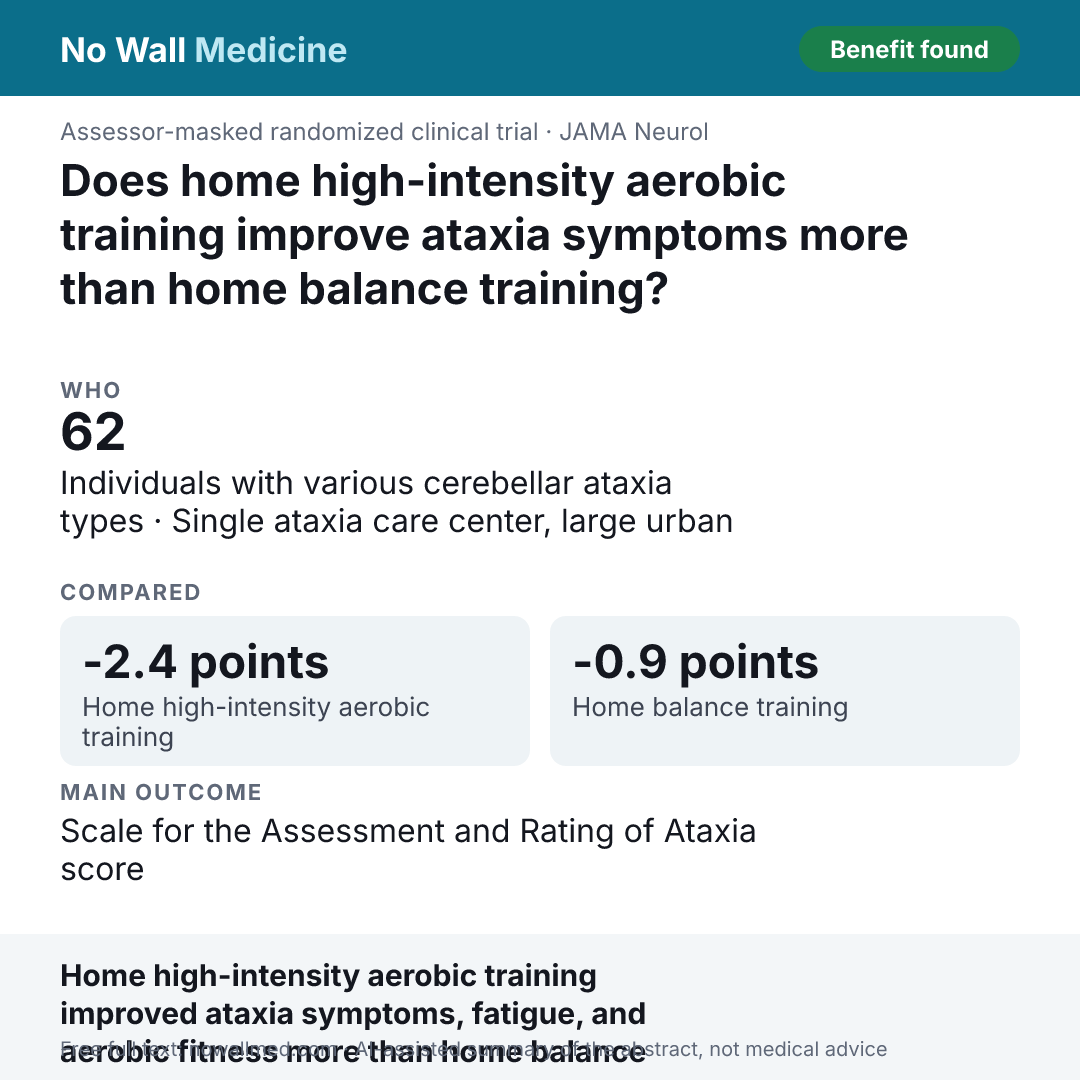
Home Training for Cerebellar Ataxias: A Randomized Clinical Trial
Assessor-masked randomized clinical trialBenefit found
Does home high-intensity aerobic training improve ataxia symptoms more than home balance training?
Who
62
Individuals with various cerebellar ataxia types · Single ataxia care center, large urban US city
Compared
-2.4 pointsHome high-intensity aerobic training (95% CI, -3.1 to -1.80)
-0.9 pointsHome balance training (95% CI, -1.5 to -0.2)
Main outcome
Scale for the Assessment and Rating of Ataxia score
Result: β, -1.53 (95% CI, -2.44 to -0.61)
Bottom line: Home high-intensity aerobic training improved ataxia symptoms, fatigue, and aerobic fitness more than home balance training.
JAMA Neurol · 2025-09-15 · Save PNG
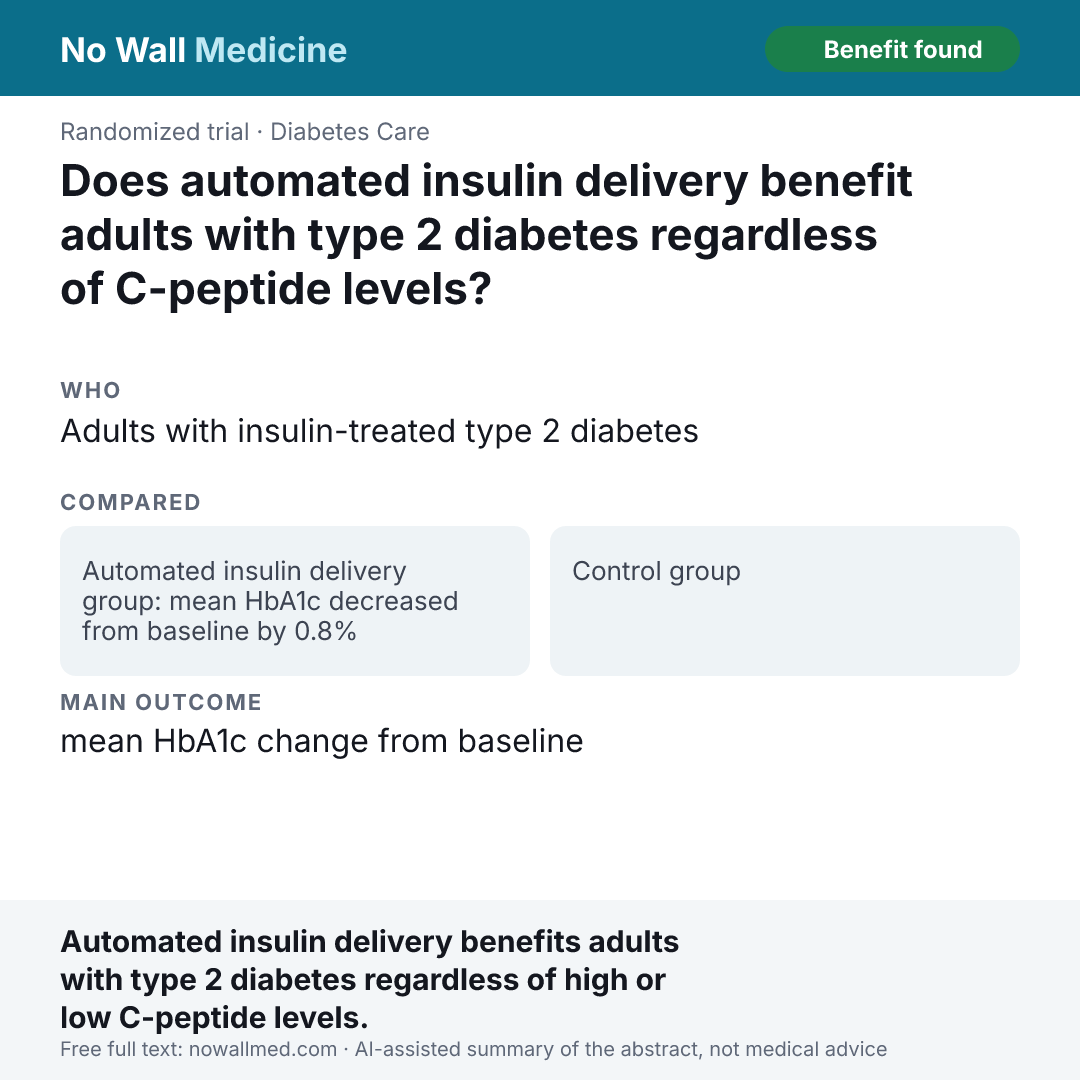
Adults With Type 2 Diabetes Benefit From Automated Insulin Delivery Irrespective of C-Peptide Level
Randomized trialBenefit found
Does automated insulin delivery benefit adults with type 2 diabetes regardless of C-peptide levels?
Who
Adults with insulin-treated type 2 diabetes
Compared
Automated insulin delivery group: mean HbA1c decreased from baseline by 0.8%
Control group
Main outcome
mean HbA1c change from baseline
Bottom line: Automated insulin delivery benefits adults with type 2 diabetes regardless of high or low C-peptide levels.
Diabetes Care · 2025-09-15 · Save PNG
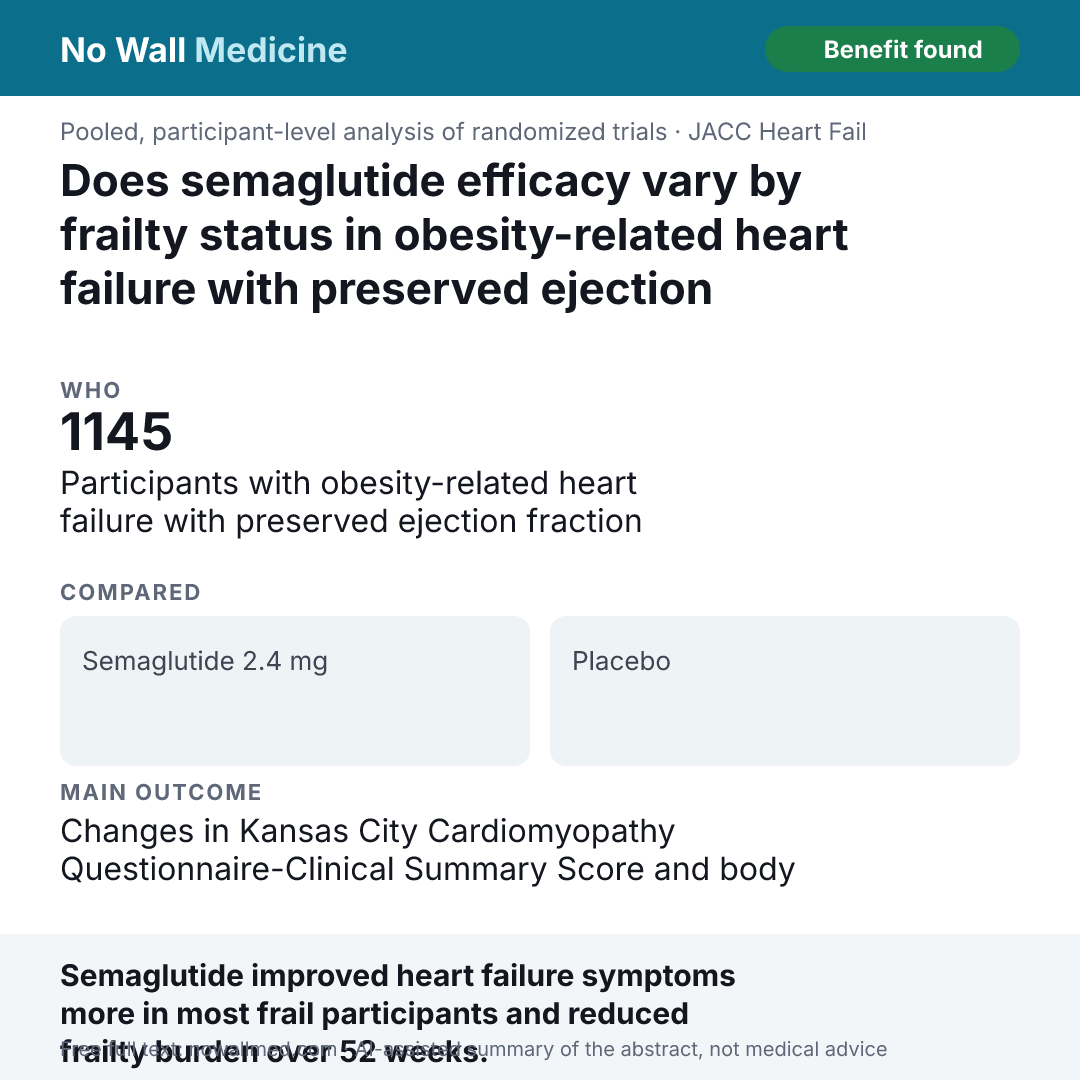
Frailty and Effects of Semaglutide in Obesity-Related HFpEF: Findings From the STEP-HFpEF Program
Pooled, participant-level analysis of randomized trialsBenefit found
Does semaglutide efficacy vary by frailty status in obesity-related heart failure with preserved ejection fraction?
Who
1145
Participants with obesity-related heart failure with preserved ejection fraction
Compared
Semaglutide 2.4 mg
Placebo
Main outcome
Changes in Kansas City Cardiomyopathy Questionnaire-Clinical Summary Score and body weight
Result: most frail mean difference: 11.0 (95% CI 8.1-13.8)
Bottom line: Semaglutide improved heart failure symptoms more in most frail participants and reduced frailty burden over 52 weeks.
JACC Heart Fail · 2025-09-15 · Save PNG
Charting the evolution of artificial intelligence mental health chatbots from rule-based systems to large language models: a systematic review
Systematic review of 160 studiesUnclear result
How have artificial intelligence mental health chatbots evolved and how are they evaluated?
Who
Artificial intelligence mental health chatbots
Compared
All studies: 47% focused on clinical efficacy testing
Large language model studies: 16% underwent clinical efficacy testing
Main outcome
Chatbot architecture evolution and evaluation rigor
Bottom line: Large language model chatbots are increasing but lack sufficient clinical efficacy testing and robust validation.
Limitation: Discrepancies exist between marketed claims and actual artificial intelligence architectures used.
World Psychiatry · 2025-09-15 · Save PNG

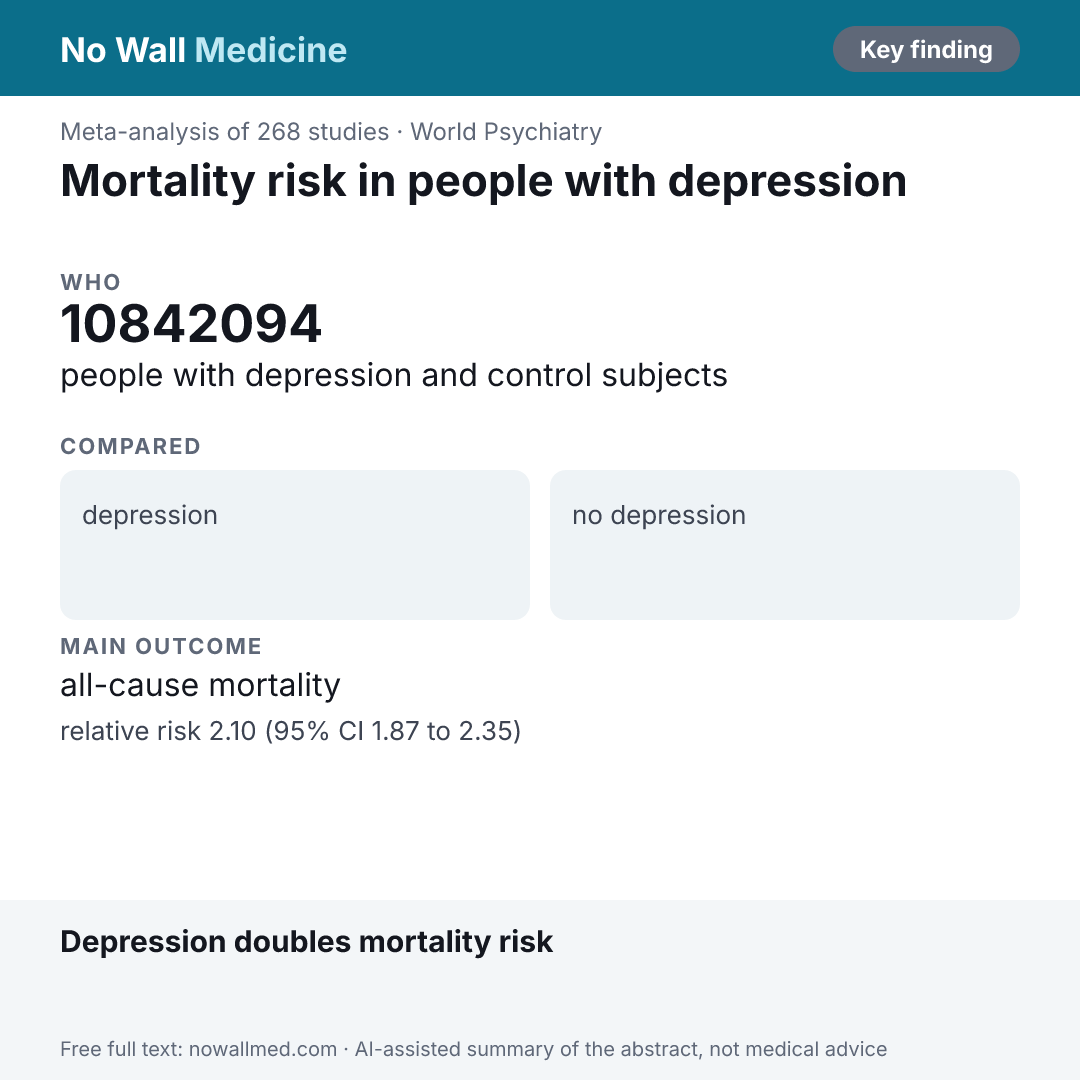
All-cause and cause-specific mortality in people with depression: a large-scale systematic review and meta-analysis of relative risk and aggravating or attenuating factors, including antidepressant treatment
Meta-analysis of 268 studiesKey finding
Mortality risk in people with depression
Who
10842094
people with depression and control subjects
Compared
depression
no depression
Main outcome
all-cause mortality
Result: relative risk 2.10 (95% CI 1.87 to 2.35)
Bottom line: Depression doubles mortality risk
World Psychiatry · 2025-09-15 · Save PNG