Visual abstracts
New randomized trials and meta-analyses from leading journals at a glance: who was studied, what was compared, and what was found. Every paper is free to read in full.
All specialtiesCardiology 382Oncology 296Gastroenterology & Hepatology 151Infectious Disease 296Neurology 173Psychiatry & Mental Health 248Pulmonology 171Critical Care 116Endocrinology & Diabetes 220Pediatrics 175Surgery 114Orthopedics & Sports Medicine 70Neurosurgery 24Cardiothoracic & Vascular Surgery 41Plastic & Reconstructive Surgery 74Nephrology 74Rheumatology 73Hematology 85Dermatology 39Ophthalmology 60Obstetrics & Gynecology 111Public & Global Health 112Radiology & Imaging 30Anesthesiology 67Urology 87ENT (Otolaryngology) 47Emergency Medicine 38Allergy & Immunology 47Geriatrics 110Family Medicine & Primary Care 63Medical Genetics & Genomics 34Pathology & Laboratory Medicine 5Physical Medicine & Rehabilitation 91Palliative Care 58Nutrition 131Digital Health & AI 320General Medicine 46
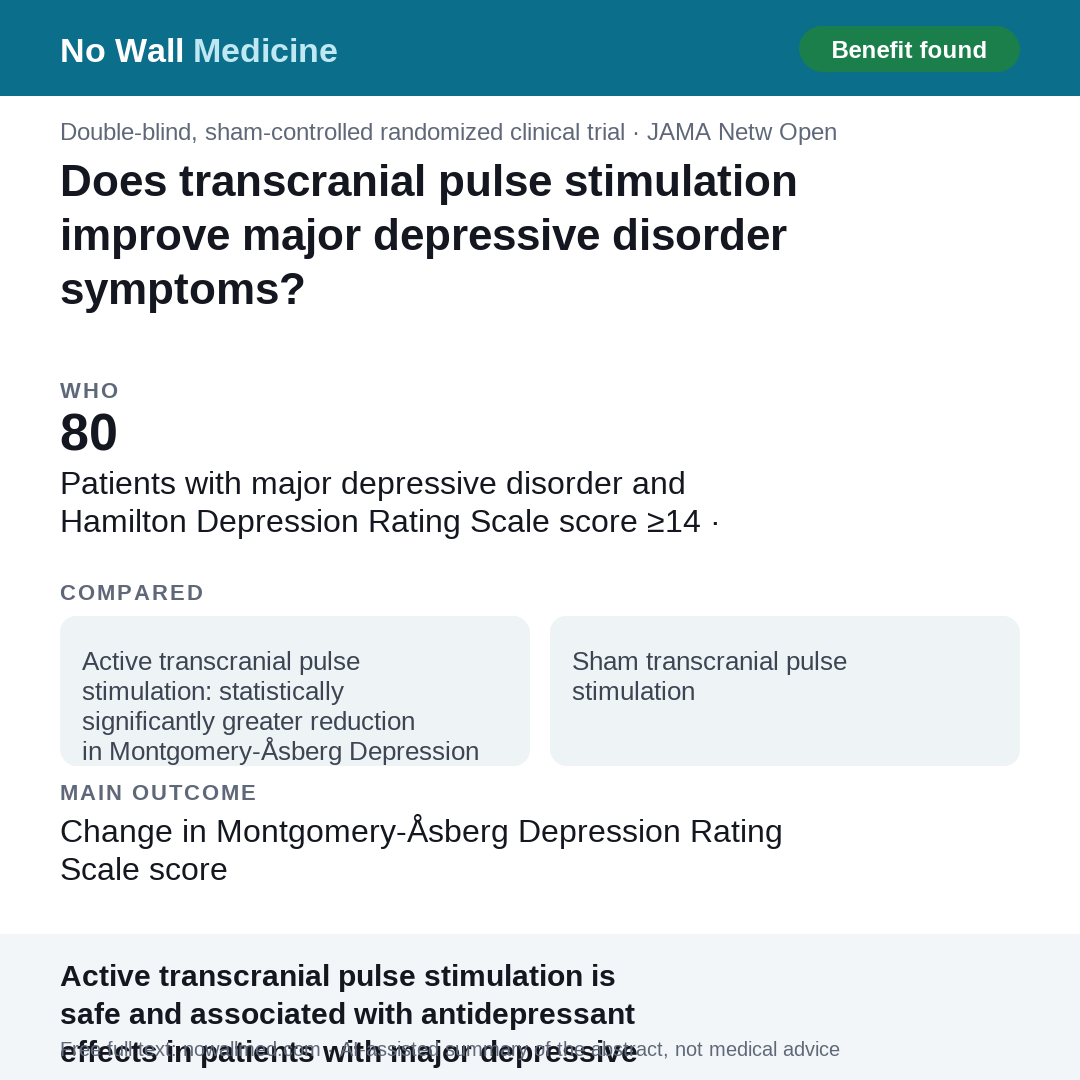
Prefrontal Transcranial Pulse Stimulation for Major Depressive Disorder: A Randomized Clinical Trial
Double-blind, sham-controlled randomized clinical trialBenefit found
Does transcranial pulse stimulation improve major depressive disorder symptoms?
Who
80
Patients with major depressive disorder and Hamilton Depression Rating Scale score ≥14 · Hong Kong Polytechnic University
Compared
Active transcranial pulse stimulation: statistically significantly greater reduction in Montgomery-Åsberg Depression Rating Scale scores
Sham transcranial pulse stimulation
Main outcome
Change in Montgomery-Åsberg Depression Rating Scale score
Result: mean difference, -4.19; 95% CI, -8.33 to -0.04
Bottom line: Active transcranial pulse stimulation is safe and associated with antidepressant effects in patients with major depressive disorder.
Limitation: future studies are needed to optimize therapeutic efficacy by increasing sessions and refining targeting
JAMA Netw Open · 2026-07-01Download image
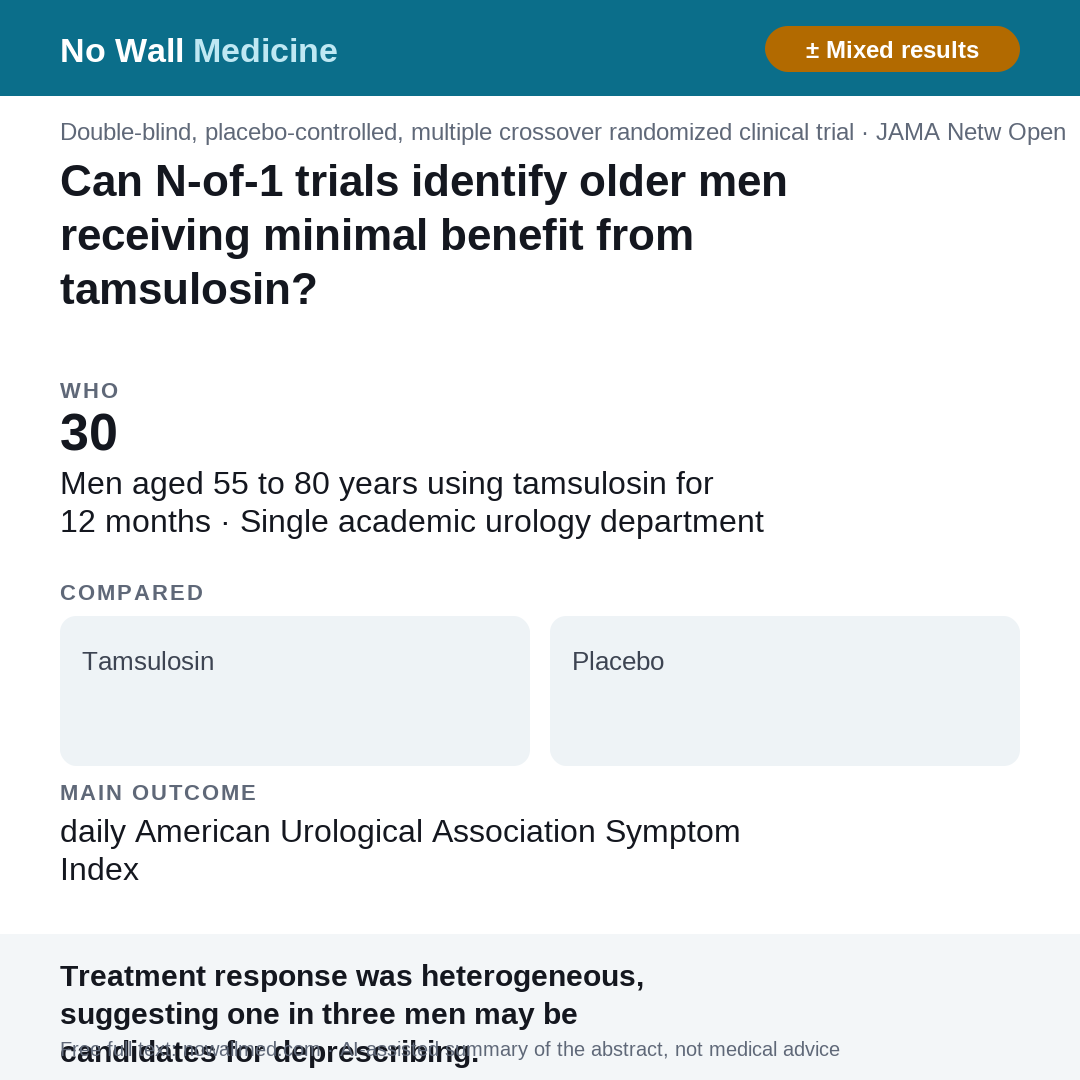
Tamsulosin Deprescribing for Lower Urinary Tract Symptoms in Older Men: A Randomized Clinical Trial
Double-blind, placebo-controlled, multiple crossover randomized clinical trialMixed results
Can N-of-1 trials identify older men receiving minimal benefit from tamsulosin?
Who
30
Men aged 55 to 80 years using tamsulosin for 12 months · Single academic urology department
Compared
Tamsulosin
Placebo
Main outcome
daily American Urological Association Symptom Index
Result: group-level mean difference -2.96 (95% CI -4.37 to -1.54)
Bottom line: Treatment response was heterogeneous, suggesting one in three men may be candidates for deprescribing.
JAMA Netw Open · 2026-07-01Download image
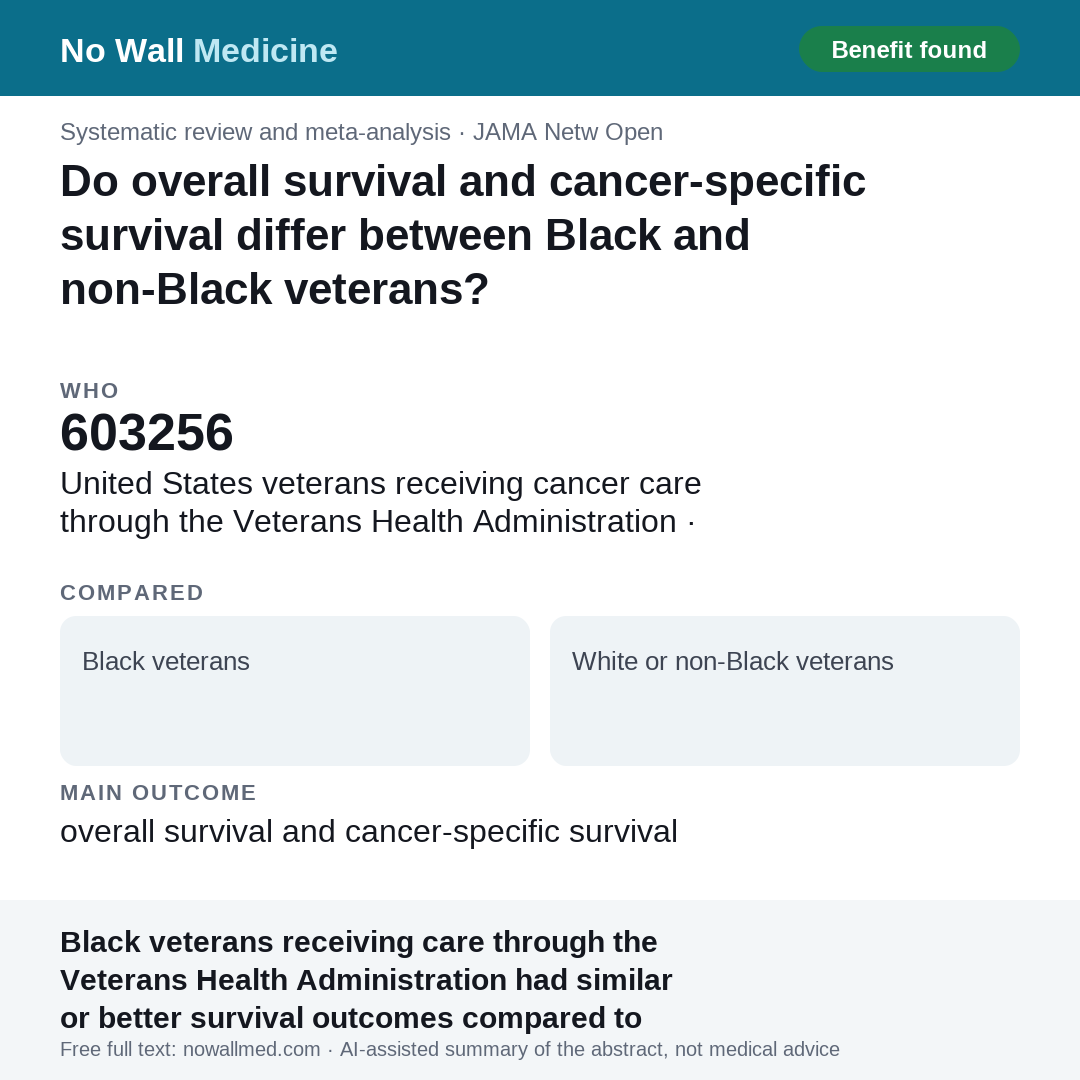
Equity and Cancer Survival Among Veterans Health Administration Patients: A Systematic Review and Meta-Analysis
Systematic review and meta-analysisBenefit found
Do overall survival and cancer-specific survival differ between Black and non-Black veterans?
Who
603256
United States veterans receiving cancer care through the Veterans Health Administration · United States
Compared
Black veterans
White or non-Black veterans
Main outcome
overall survival and cancer-specific survival
Result: hazard ratio 0.93 (95% CI 0.89-0.97) for overall survival; hazard ratio 0.94 (95% CI 0.90-0.98) for cancer-specific survival
Bottom line: Black veterans receiving care through the Veterans Health Administration had similar or better survival outcomes compared to White or non-Black veterans.
JAMA Netw Open · 2026-07-01Download image
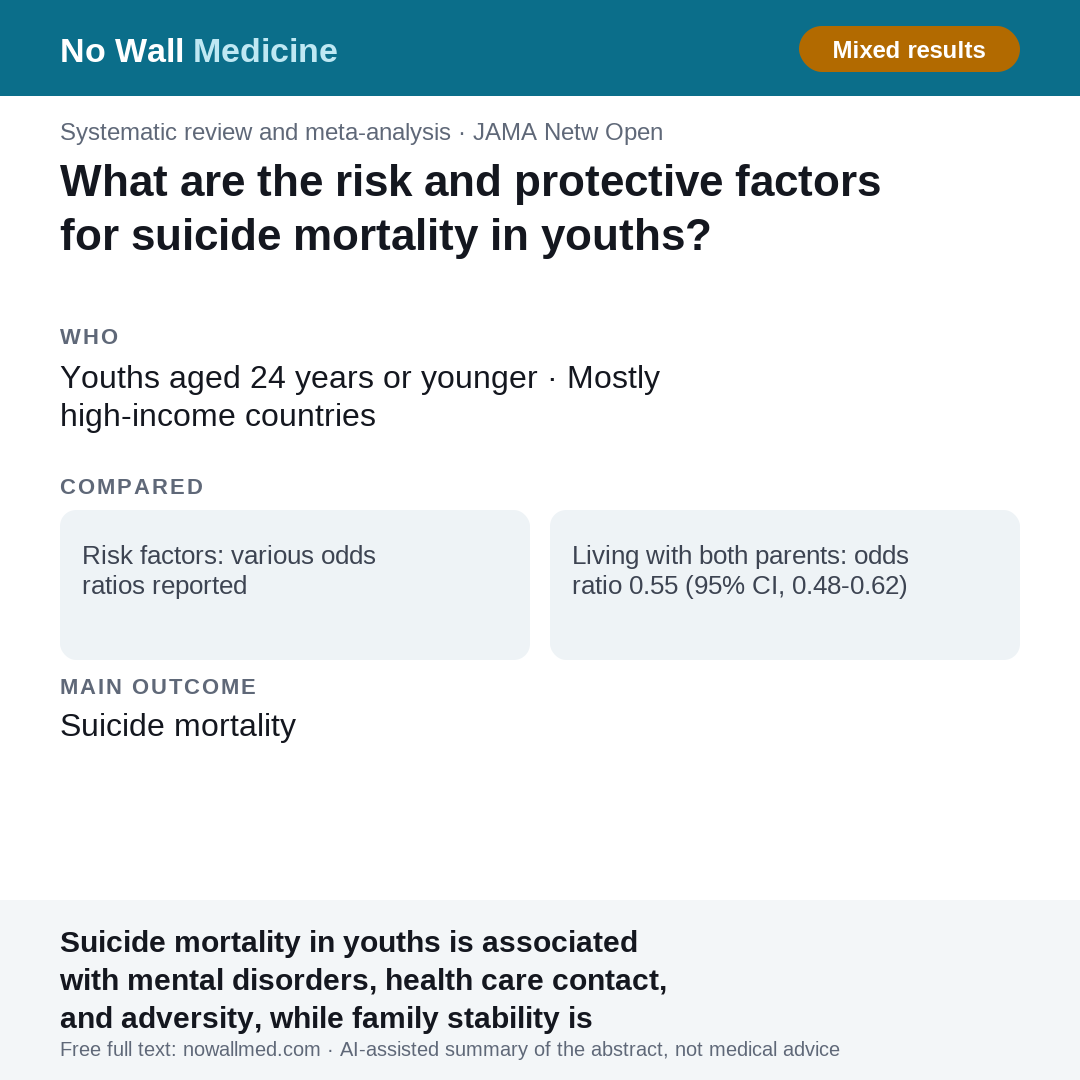
Risk and Protective Factors for Suicide Mortality in Youths: A Systematic Review and Meta-Analysis
Systematic review and meta-analysisMixed results
What are the risk and protective factors for suicide mortality in youths?
Who
Youths aged 24 years or younger · Mostly high-income countries
Compared
Risk factors: various odds ratios reported
Living with both parents: odds ratio 0.55 (95% CI, 0.48-0.62)
Main outcome
Suicide mortality
Bottom line: Suicide mortality in youths is associated with mental disorders, health care contact, and adversity, while family stability is protective.
JAMA Netw Open · 2026-07-01Download image
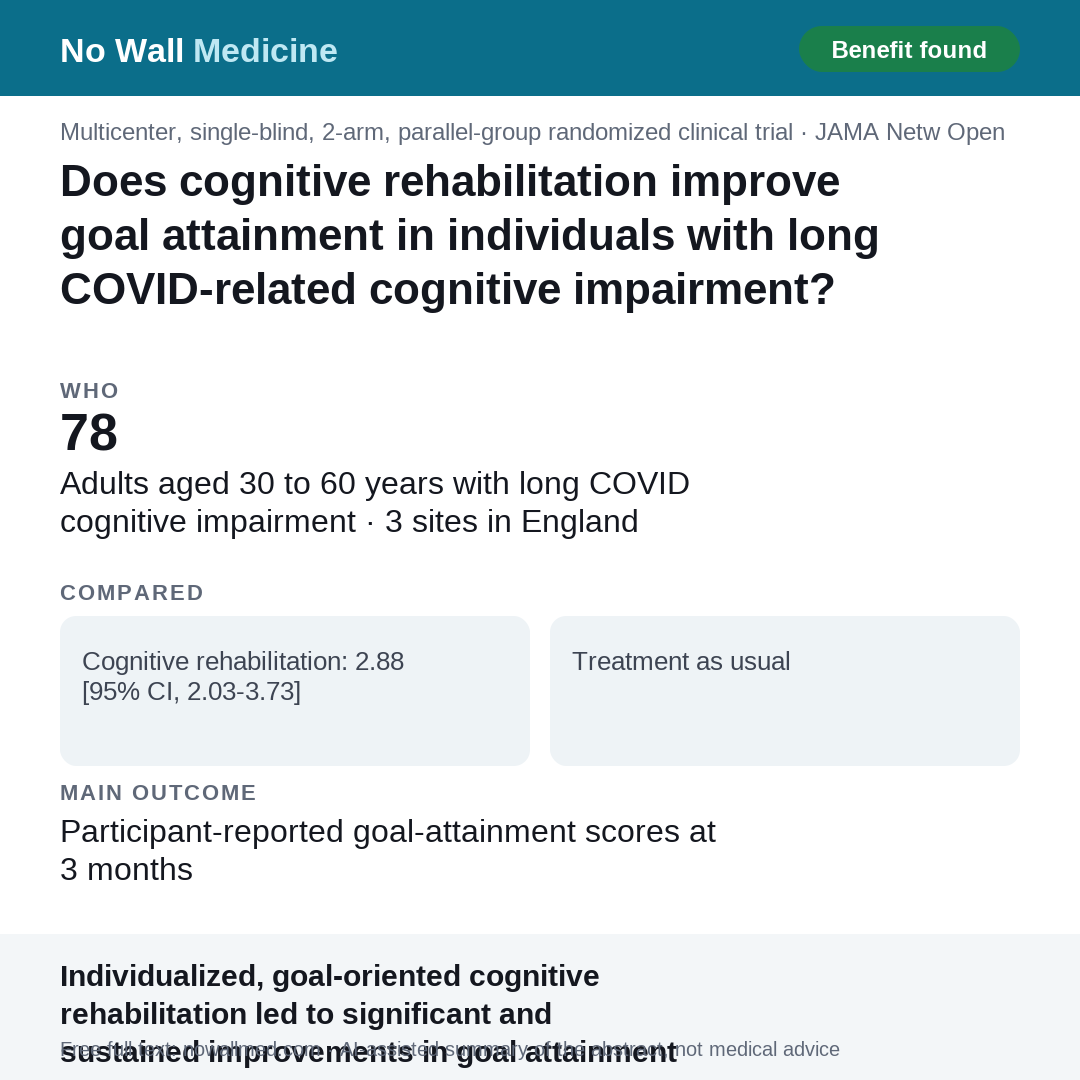
Cognitive Rehabilitation and Functional Outcomes in Long COVID-Related Cognitive Impairment: A Randomized Clinical Trial
Multicenter, single-blind, 2-arm, parallel-group randomized clinical trialBenefit found
Does cognitive rehabilitation improve goal attainment in individuals with long COVID-related cognitive impairment?
Who
78
Adults aged 30 to 60 years with long COVID cognitive impairment · 3 sites in England
Compared
Cognitive rehabilitation: 2.88 [95% CI, 2.03-3.73]
Treatment as usual
Main outcome
Participant-reported goal-attainment scores at 3 months
Result: adjusted mean difference, 2.88 [95% CI, 2.03-3.73]
Bottom line: Individualized, goal-oriented cognitive rehabilitation led to significant and sustained improvements in goal attainment for people with long COVID.
JAMA Netw Open · 2026-07-01Download image
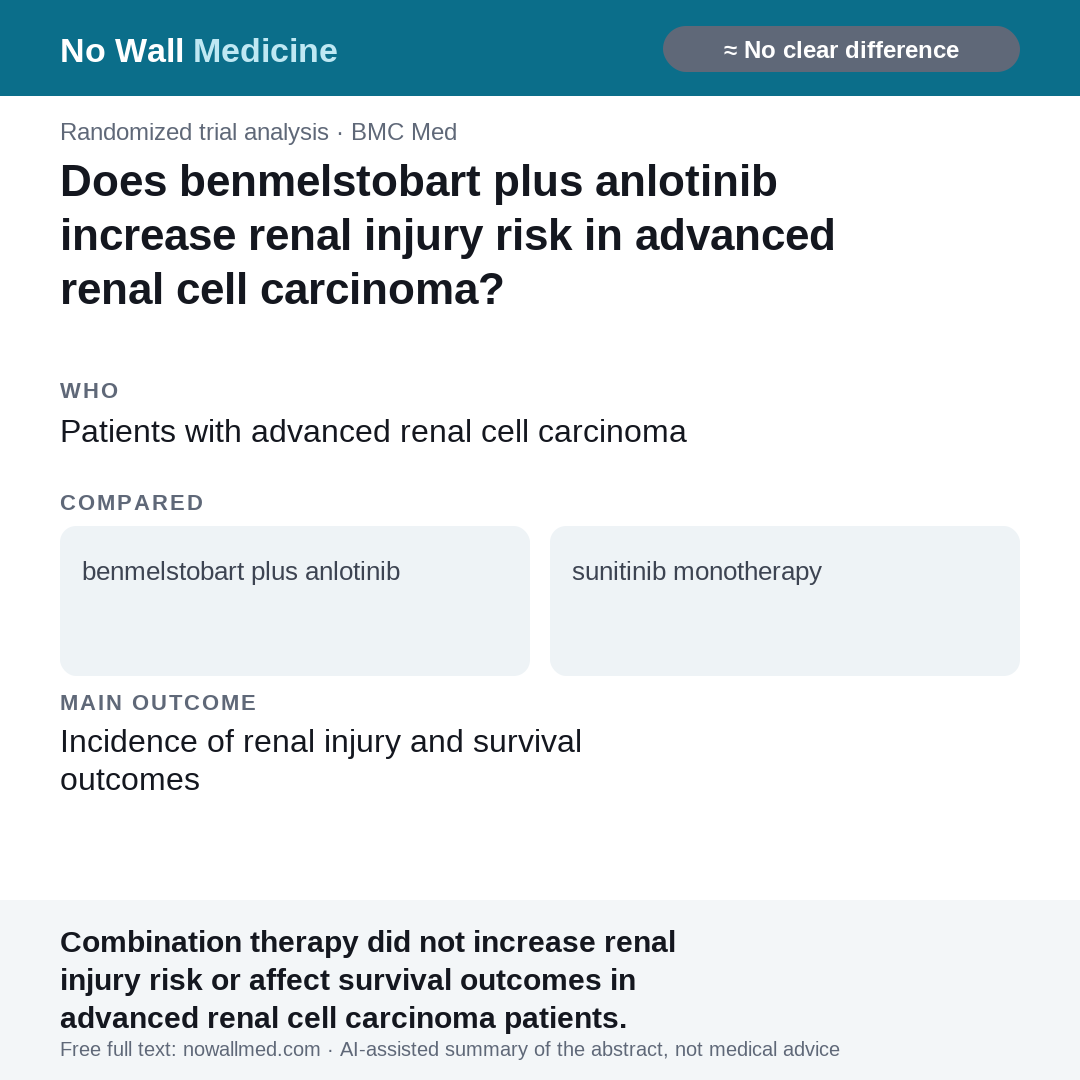
Evaluation and analysis of renal injury in patients with advanced renal cell carcinoma receiving first-line benmelstobart plus anlotinib: results from the ETER100 study
Randomized trial analysisNo clear difference
Does benmelstobart plus anlotinib increase renal injury risk in advanced renal cell carcinoma?
Who
Patients with advanced renal cell carcinoma
Compared
benmelstobart plus anlotinib
sunitinib monotherapy
Main outcome
Incidence of renal injury and survival outcomes
Bottom line: Combination therapy did not increase renal injury risk or affect survival outcomes in advanced renal cell carcinoma patients.
BMC Med · 2026-07-01Download image
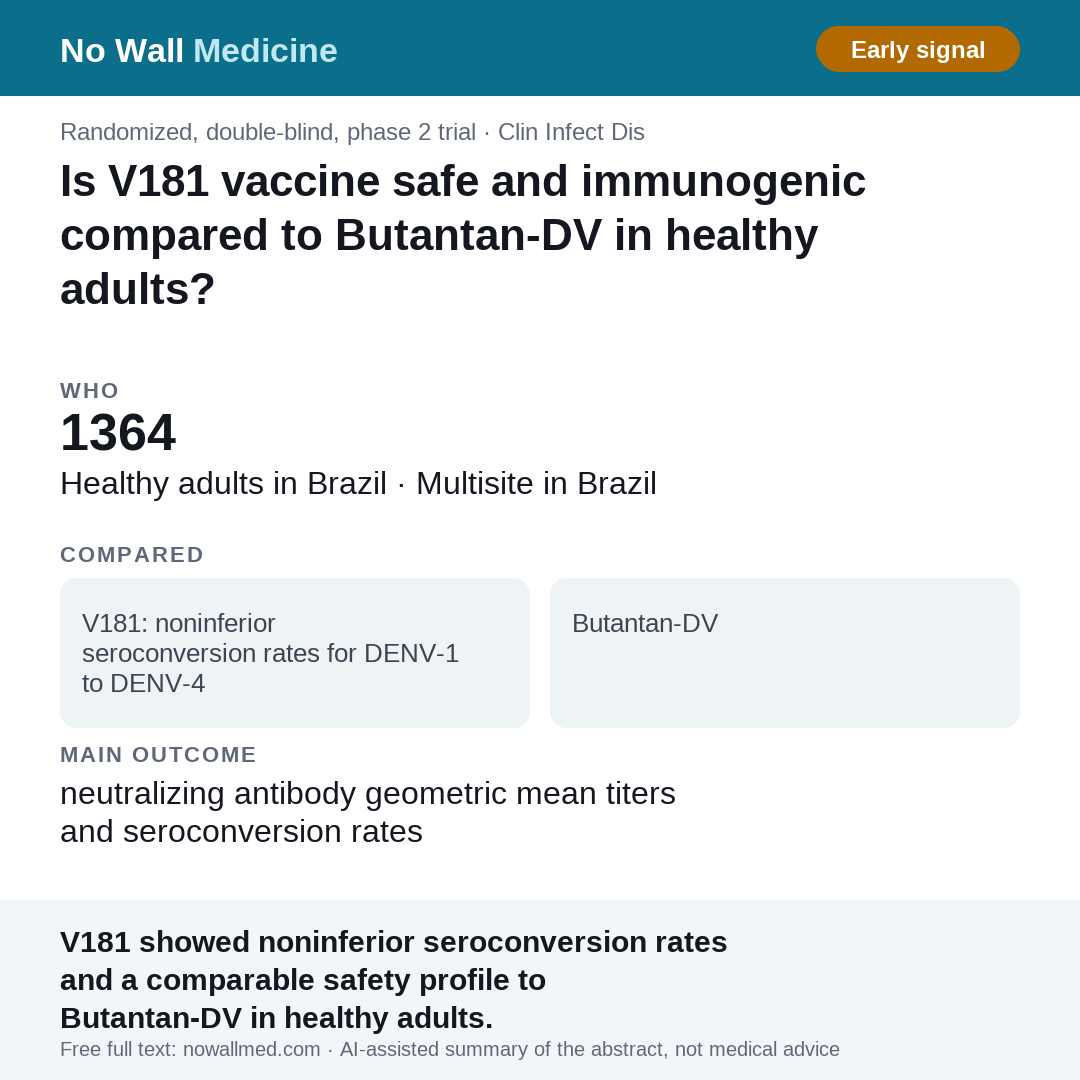
Safety and Immunogenicity of the Live-Attenuated Quadrivalent Dengue Vaccine V181 Compared With Butantan-DV Among Healthy Adults in Brazil: A Randomized, Double-Blind, Phase 2 Trial
Randomized, double-blind, phase 2 trialBenefit found
Is V181 vaccine safe and immunogenic compared to Butantan-DV in healthy adults?
Who
1364
Healthy adults in Brazil · Multisite in Brazil
Compared
V181: noninferior seroconversion rates for DENV-1 to DENV-4
Butantan-DV
Main outcome
neutralizing antibody geometric mean titers and seroconversion rates
Bottom line: V181 showed noninferior seroconversion rates and a comparable safety profile to Butantan-DV in healthy adults.
Clin Infect Dis · 2026-07-01Download image
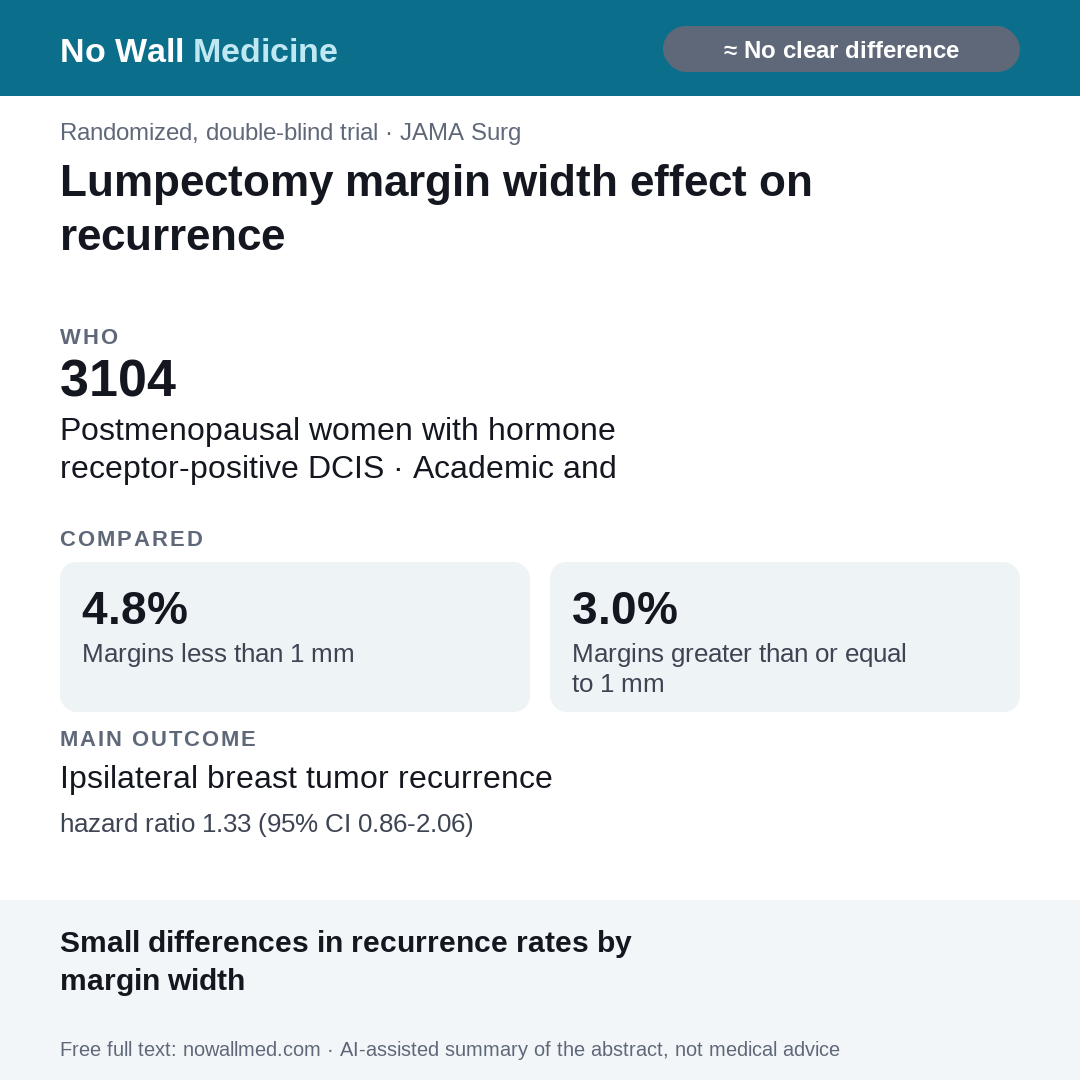
Lumpectomy Margins and Local Recurrence in DCIS: Results From the NRG Oncology/NSABP B-35 Randomized Clinical Trial
Randomized, double-blind trialNo clear difference
Lumpectomy margin width effect on recurrence
Who
3104
Postmenopausal women with hormone receptor-positive DCIS · Academic and community hospitals
Compared
4.8%Margins less than 1 mm (24/502)
3.0%Margins greater than or equal to 1 mm (66/2205)
Main outcome
Ipsilateral breast tumor recurrence
Result: hazard ratio 1.33 (95% CI 0.86-2.06)
Bottom line: Small differences in recurrence rates by margin width
JAMA Surg · 2026-07-01Download image
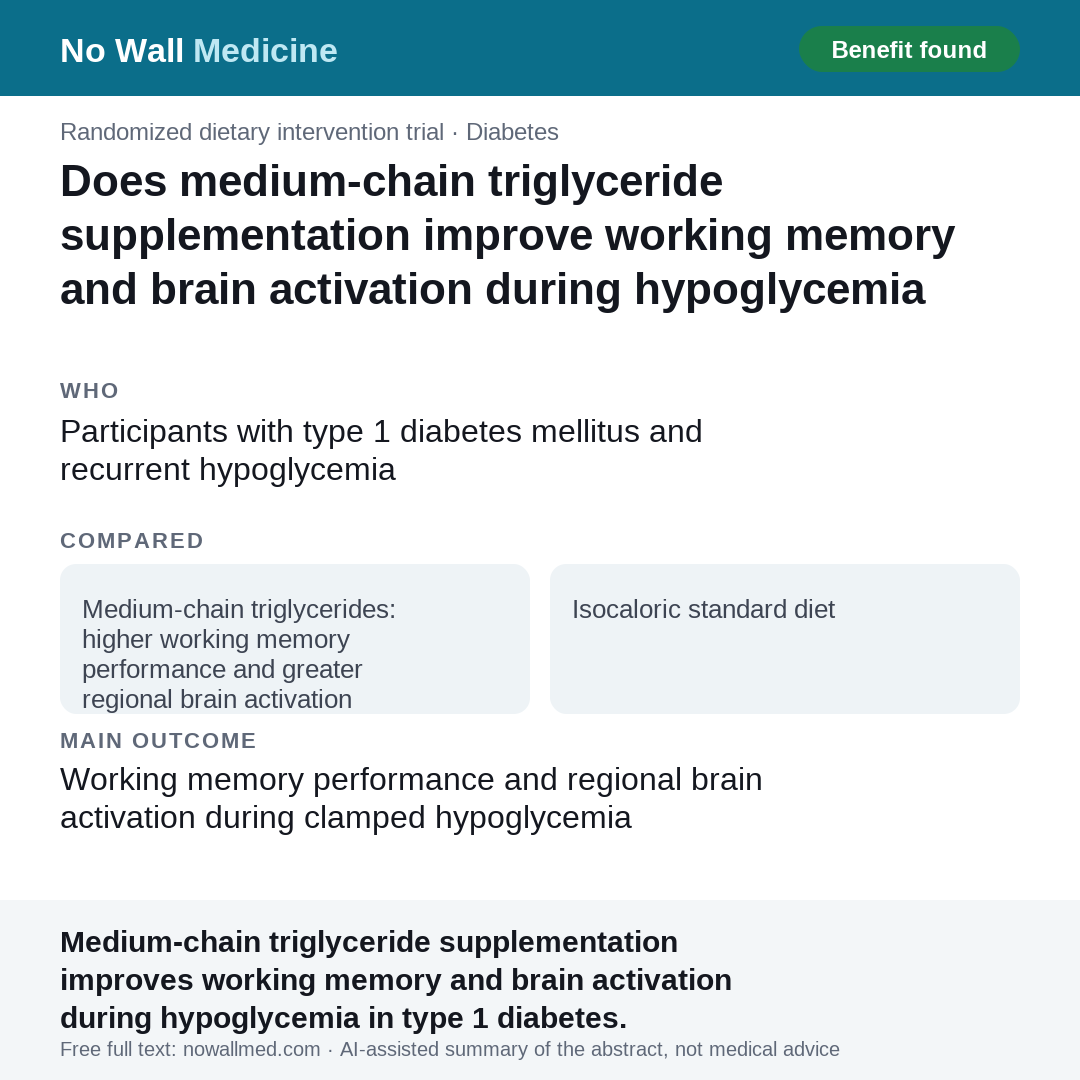
Ketone Bodies Derived From Medium-Chain Triglycerides Support Brain Metabolism and Function Under Hypoglycemia in Type 1 Diabetes Mellitus
Randomized dietary intervention trialBenefit found
Does medium-chain triglyceride supplementation improve working memory and brain activation during hypoglycemia in type 1 diabetes?
Who
Participants with type 1 diabetes mellitus and recurrent hypoglycemia
Compared
Medium-chain triglycerides: higher working memory performance and greater regional brain activation
Isocaloric standard diet
Main outcome
Working memory performance and regional brain activation during clamped hypoglycemia
Bottom line: Medium-chain triglyceride supplementation improves working memory and brain activation during hypoglycemia in type 1 diabetes.
Diabetes · 2026-07-01Download image
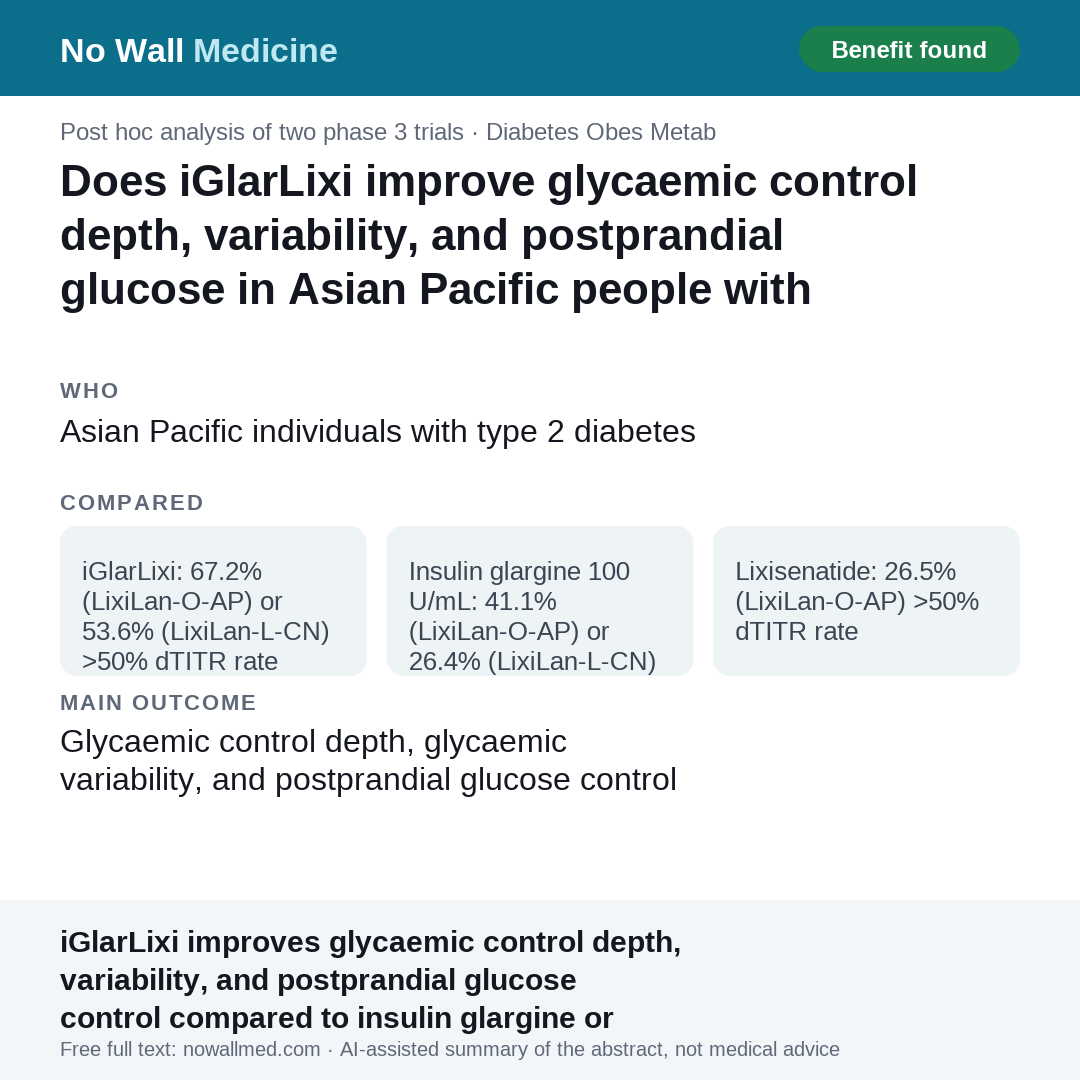
Impact of iGlarLixi on Glycaemic Control Depth and Variability in Asian Pacific People With Type 2 Diabetes: A Post Hoc Analysis of LixiLan-O-AP and LixiLan-L-CN
Post hoc analysis of two phase 3 trialsBenefit found
Does iGlarLixi improve glycaemic control depth, variability, and postprandial glucose in Asian Pacific people with type 2 diabetes?
Who
Asian Pacific individuals with type 2 diabetes
Compared
iGlarLixi: 67.2% (LixiLan-O-AP) or 53.6% (LixiLan-L-CN) >50% dTITR rate
Insulin glargine 100 U/mL: 41.1% (LixiLan-O-AP) or 26.4% (LixiLan-L-CN) >50% dTITR rate
Lixisenatide: 26.5% (LixiLan-O-AP) >50% dTITR rate
Main outcome
Glycaemic control depth, glycaemic variability, and postprandial glucose control
Bottom line: iGlarLixi improves glycaemic control depth, variability, and postprandial glucose control compared to insulin glargine or lixisenatide.
Diabetes Obes Metab · 2026-07-01Download image
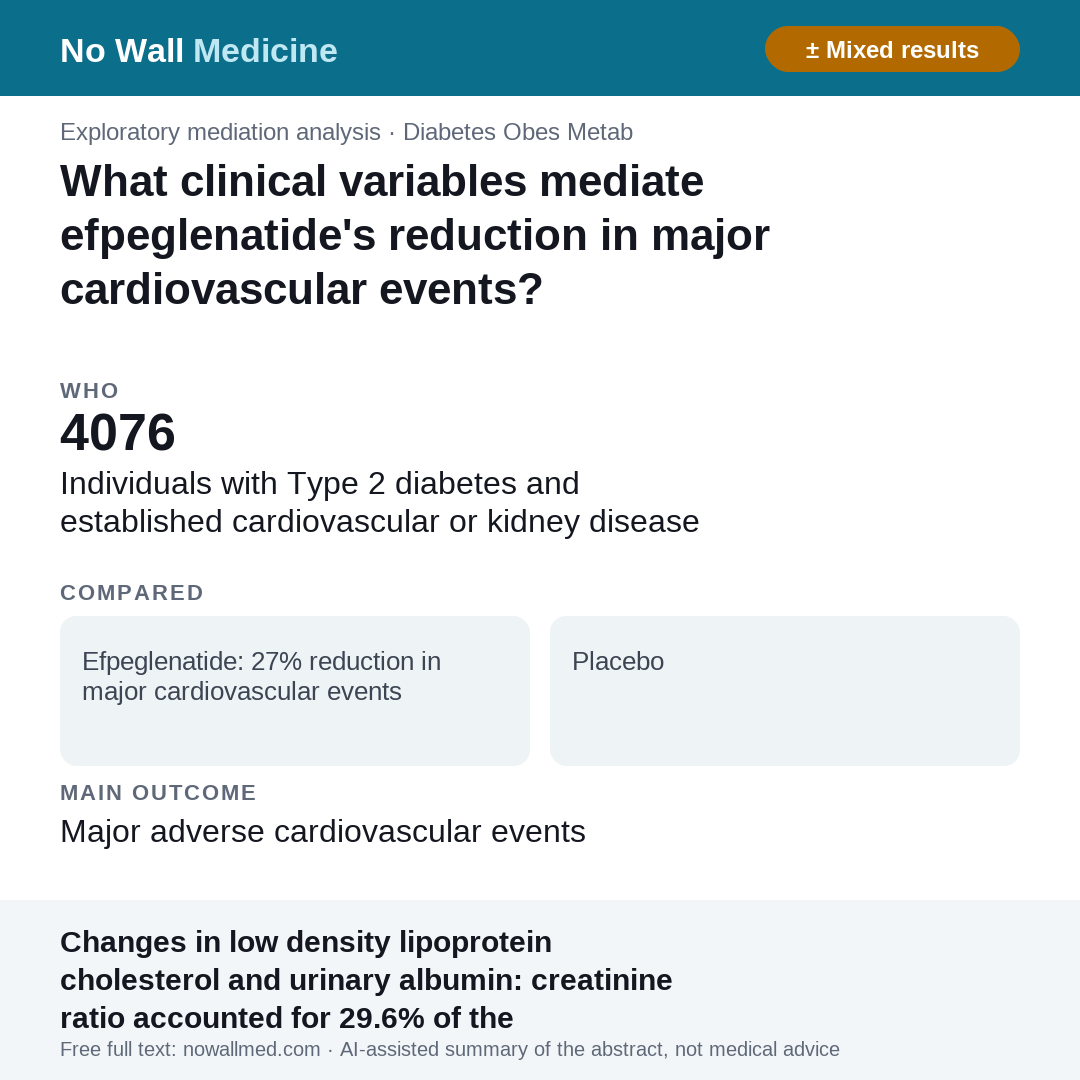
Potential Mediators of Efpeglenatide's Cardiovascular Benefit: An Exploratory Analysis of the AMPLITUDE-O Trial
Exploratory mediation analysisMixed results
What clinical variables mediate efpeglenatide's reduction in major cardiovascular events?
Who
4076
Individuals with Type 2 diabetes and established cardiovascular or kidney disease
Compared
Efpeglenatide: 27% reduction in major cardiovascular events
Placebo
Main outcome
Major adverse cardiovascular events
Bottom line: Changes in low density lipoprotein cholesterol and urinary albumin: creatinine ratio accounted for 29.6% of the cardiovascular benefit.
Diabetes Obes Metab · 2026-07-01Download image
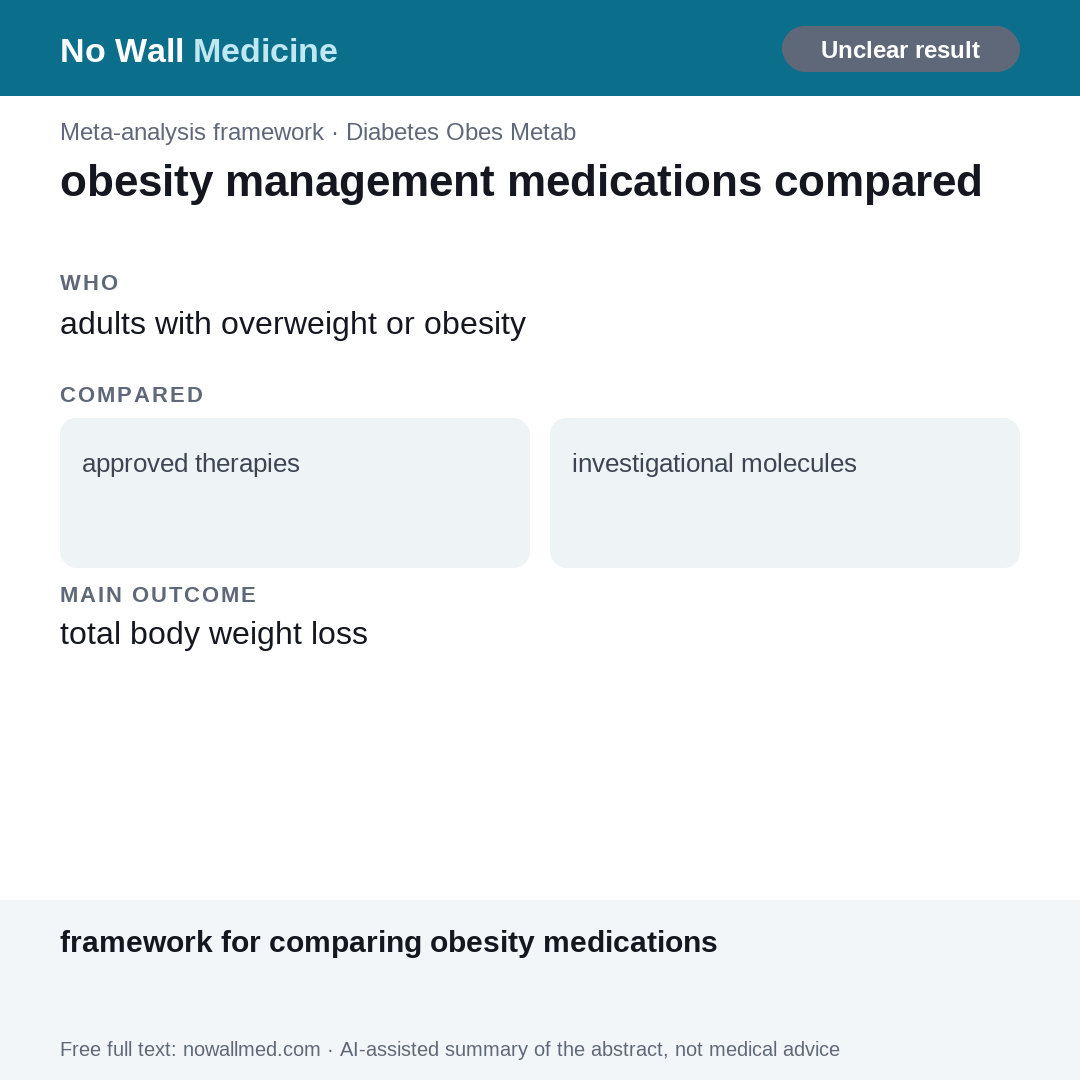
Positioning Incretin-Based and Next-Generation Obesity Management Medications: A Methodological Framework for a Series of Systematic Reviews and Network Meta-Analyses
Meta-analysis frameworkUnclear result
obesity management medications compared
Who
adults with overweight or obesity
Compared
approved therapies
investigational molecules
Main outcome
total body weight loss
Bottom line: framework for comparing obesity medications
Diabetes Obes Metab · 2026-07-01Download image
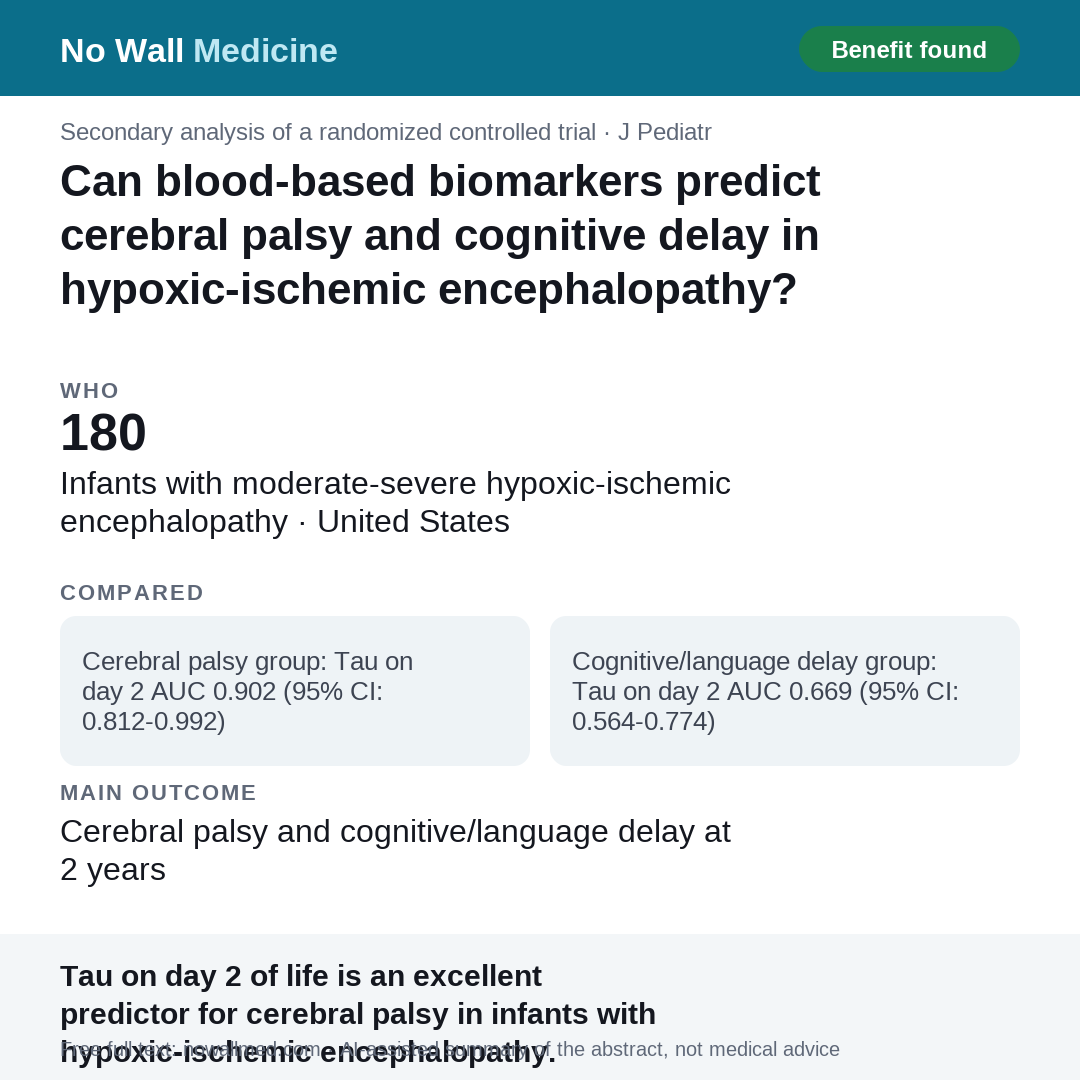
Blood-Based Biomarkers Predict Cerebral Palsy and Cognitive Delay in Hypoxic-Ischemic Encephalopathy: A Secondary Analysis of the High-Dose Erythropoietin for Asphyxia and Encephalopathy Randomized Controlled Trial
Secondary analysis of a randomized controlled trialBenefit found
Can blood-based biomarkers predict cerebral palsy and cognitive delay in hypoxic-ischemic encephalopathy?
Who
180
Infants with moderate-severe hypoxic-ischemic encephalopathy · United States
Compared
Cerebral palsy group: Tau on day 2 AUC 0.902 (95% CI: 0.812-0.992)
Cognitive/language delay group: Tau on day 2 AUC 0.669 (95% CI: 0.564-0.774)
Main outcome
Cerebral palsy and cognitive/language delay at 2 years
Bottom line: Tau on day 2 of life is an excellent predictor for cerebral palsy in infants with hypoxic-ischemic encephalopathy.
J Pediatr · 2026-07-01Download image
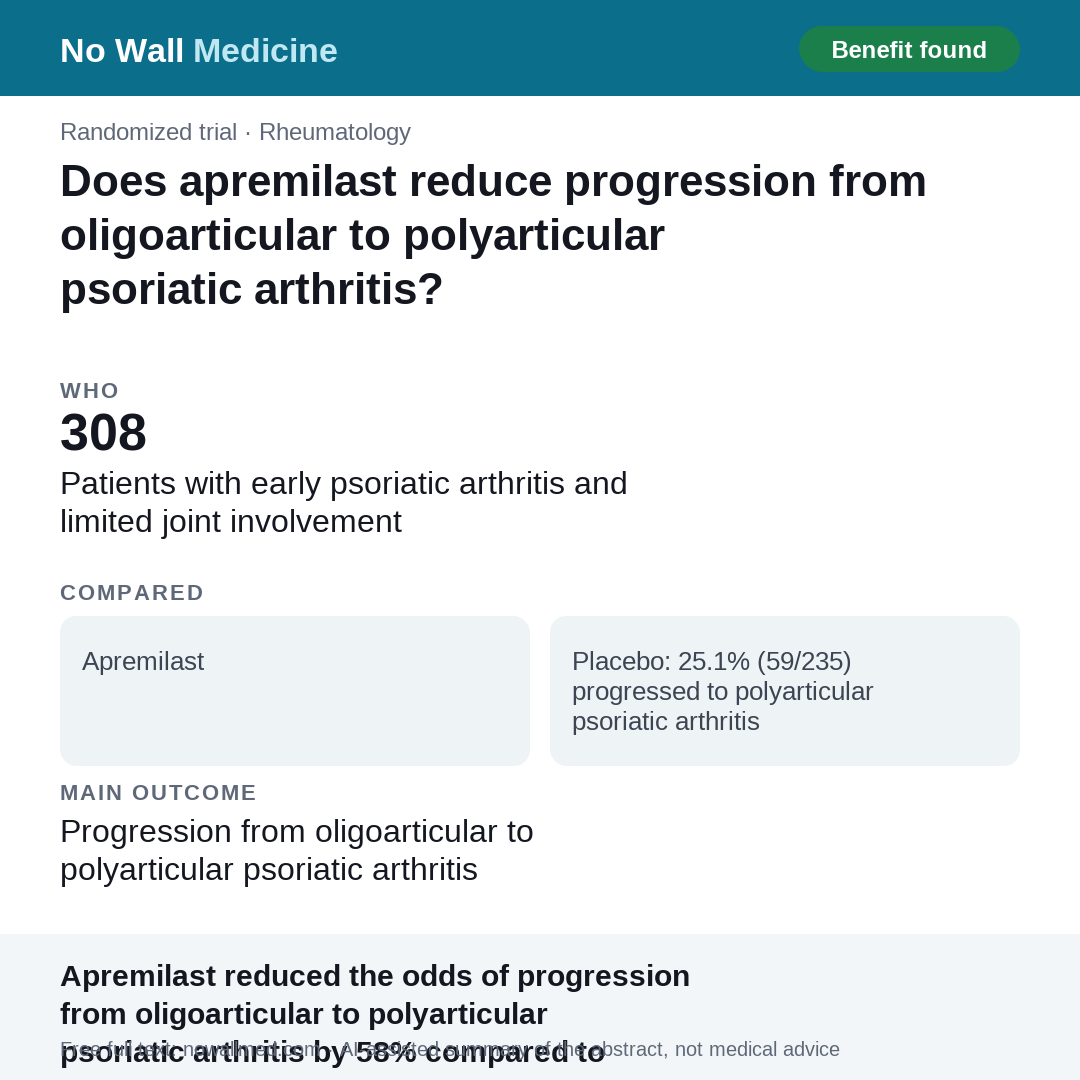
Progression from oligoarticular to polyarticular psoriatic arthritis and apremilast as a disease modifier: Novel insights from FOREMOST
Randomized trialBenefit found
Does apremilast reduce progression from oligoarticular to polyarticular psoriatic arthritis?
Who
308
Patients with early psoriatic arthritis and limited joint involvement
Compared
Apremilast
Placebo: 25.1% (59/235) progressed to polyarticular psoriatic arthritis
Main outcome
Progression from oligoarticular to polyarticular psoriatic arthritis
Result: odds ratio 0.42 (95% CI 0.22 to 0.77)
Bottom line: Apremilast reduced the odds of progression from oligoarticular to polyarticular psoriatic arthritis by 58% compared to placebo.
Rheumatology · 2026-07-01Download image
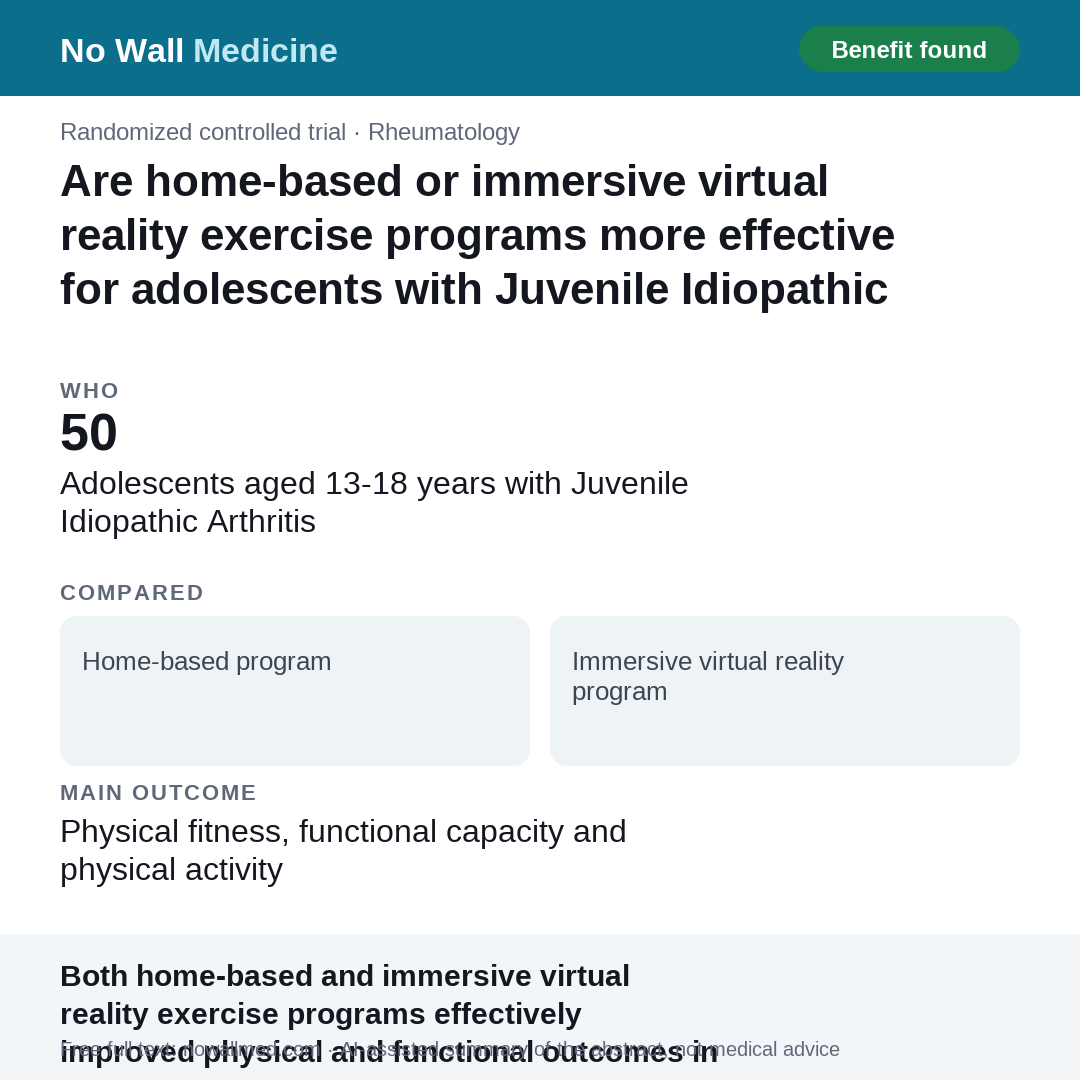
Personalized, physiotherapist-guided exercise programs in JIA: home-based vs. immersive virtual reality (JiaFitXR)
Randomized controlled trialMixed results
Are home-based or immersive virtual reality exercise programs more effective for adolescents with Juvenile Idiopathic Arthritis?
Who
50
50 adolescents aged 13-18 years with Juvenile Idiopathic Arthritis
Compared
Home-based program: superior improvements in flexibility and upper-extremity strength
Immersive virtual reality program: greater gains in 1-Min Sit-to-Stand, Step-Up and Step-Down tests
Main outcome
physical fitness, functional capacity and physical activity
Bottom line: Both exercise approaches improved outcomes, but virtual reality offered more lower-extremity gains while home-based programs improved flexibility.
Rheumatology · 2026-07-01Download image
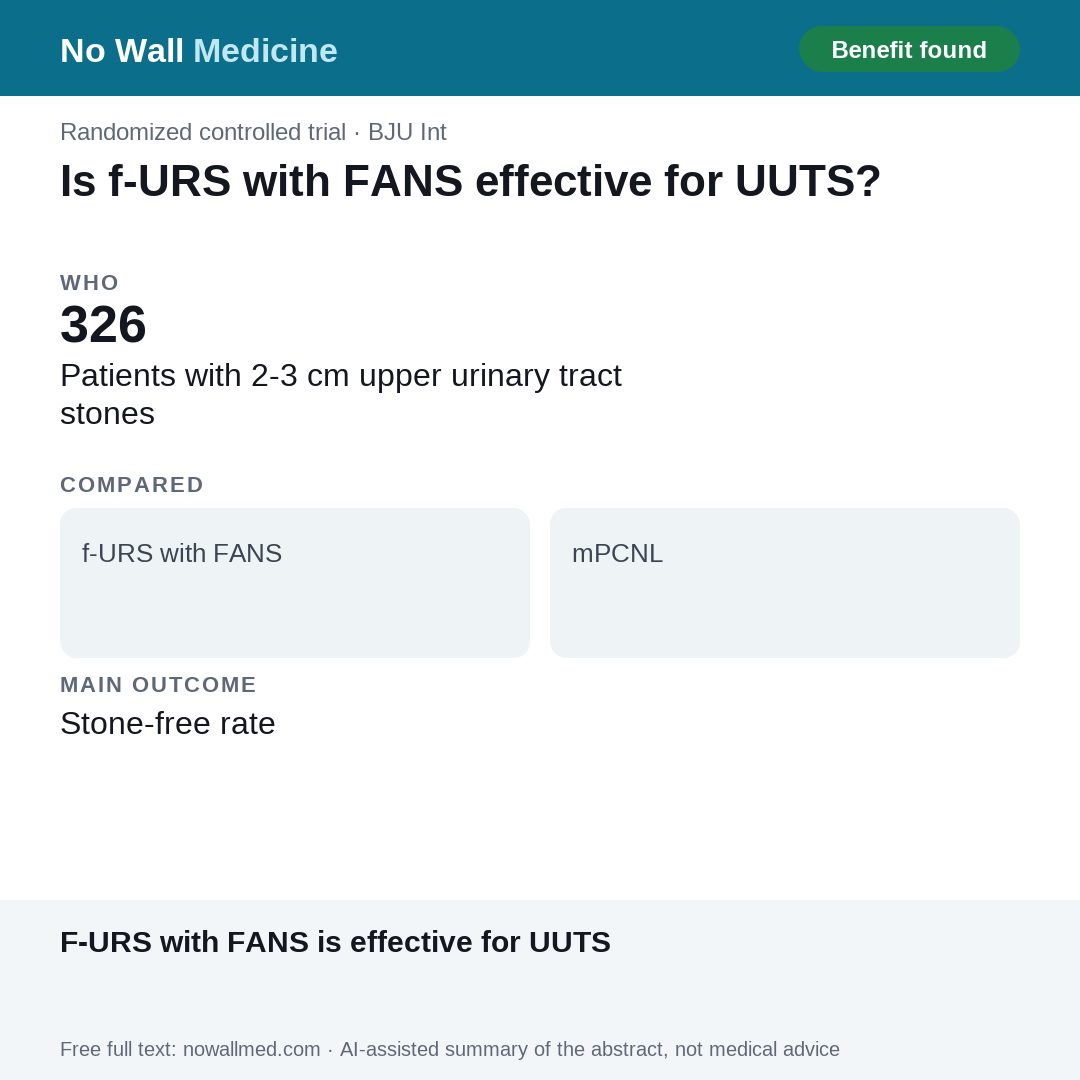
F-URS with FANS versus mPCNL for 2-3 cm UUTS: a RCT with a subgroup analysis of 2-2.5 cm stones
Randomized controlled trialBenefit found
Is f-URS with FANS effective for UUTS?
Who
326
Patients with 2-3 cm upper urinary tract stones
Compared
f-URS with FANS
mPCNL
Main outcome
Stone-free rate
Bottom line: F-URS with FANS is effective for UUTS
BJU Int · 2026-07-01Download image
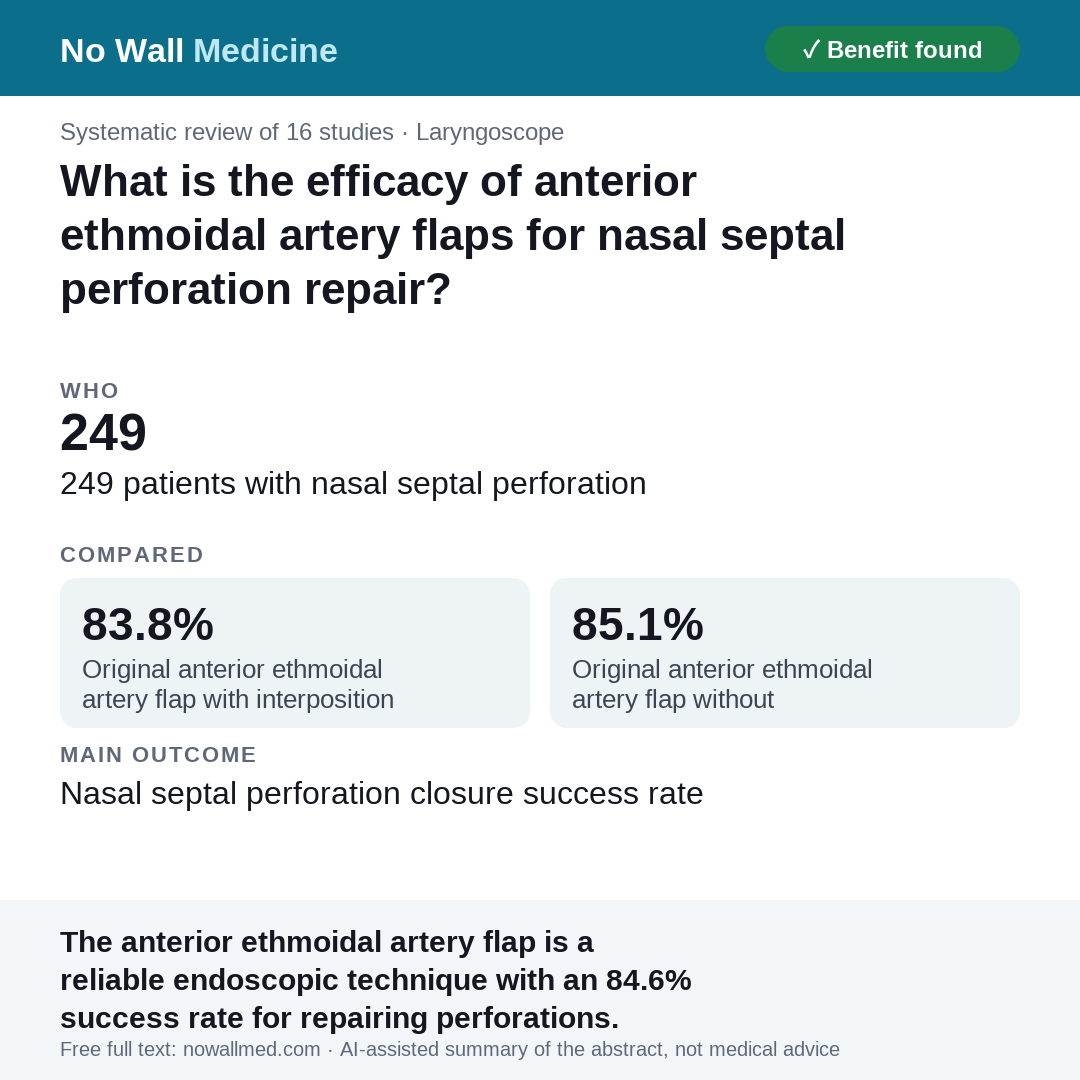
Success of Anterior Ethmoidal Artery Flaps for Nasal Septal Perforation Repair: A Systematic Review
Systematic review of 16 studiesBenefit found
What is the efficacy of anterior ethmoidal artery flaps for nasal septal perforation repair?
Who
249
249 patients with nasal septal perforation
Compared
83.8%Original anterior ethmoidal artery flap with interposition graft (62/74)
85.1%Original anterior ethmoidal artery flap without interposition graft (86/101)
Main outcome
Nasal septal perforation closure success rate
Bottom line: The anterior ethmoidal artery flap is a reliable endoscopic technique with an 84.6% success rate for repairing perforations.
Laryngoscope · 2026-07-01Download image
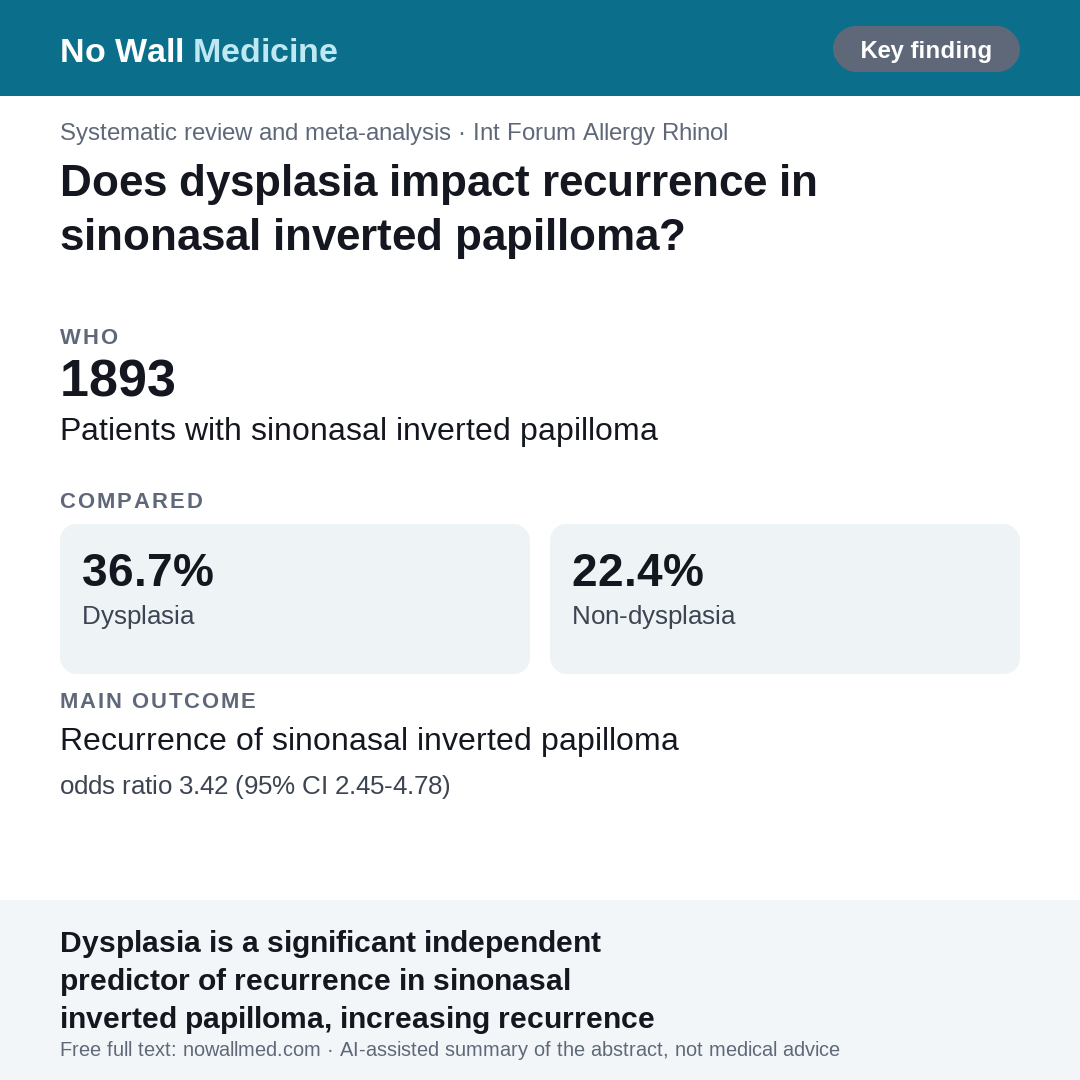
Impact of Dysplasia on Inverted Papilloma Recurrence: A Systematic Review and Meta-Analysis
Systematic review and meta-analysisHarm found
Does dysplasia impact recurrence in sinonasal inverted papilloma?
Who
1893
Patients with sinonasal inverted papilloma
Compared
36.7%Dysplasia (104/283)
22.4%Non-dysplasia (302/1346)
Main outcome
Recurrence of sinonasal inverted papilloma
Result: odds ratio 3.42 (95% CI 2.45-4.78)
Bottom line: Dysplasia is a significant independent predictor of recurrence in sinonasal inverted papilloma, increasing recurrence odds by 3.4 times.
Int Forum Allergy Rhinol · 2026-07-01Download image
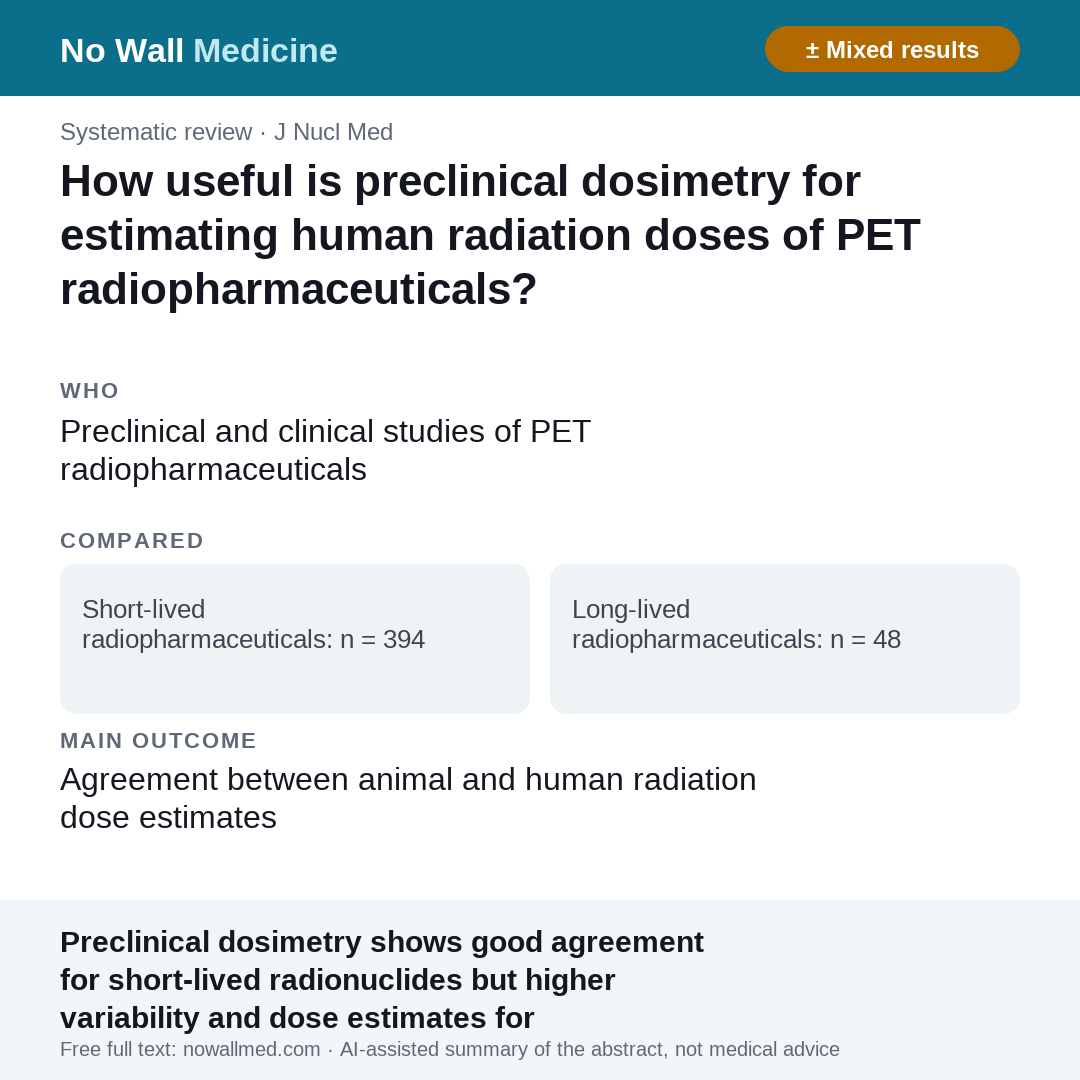
Utility of Preclinical Dosimetry for First-in-Human Studies with PET Drugs Labeled with Common Radionuclides: A Systematic Review of Radiation Dose Estimates
Systematic reviewMixed results
How useful is preclinical dosimetry for estimating human radiation doses of PET radiopharmaceuticals?
Who
Preclinical and clinical studies of PET radiopharmaceuticals
Compared
Short-lived radiopharmaceuticals: n = 394
Long-lived radiopharmaceuticals: n = 48
Main outcome
Agreement between animal and human radiation dose estimates
Bottom line: Preclinical dosimetry shows good agreement for short-lived radionuclides but higher variability and dose estimates for long-lived ones.
J Nucl Med · 2026-07-01Download image
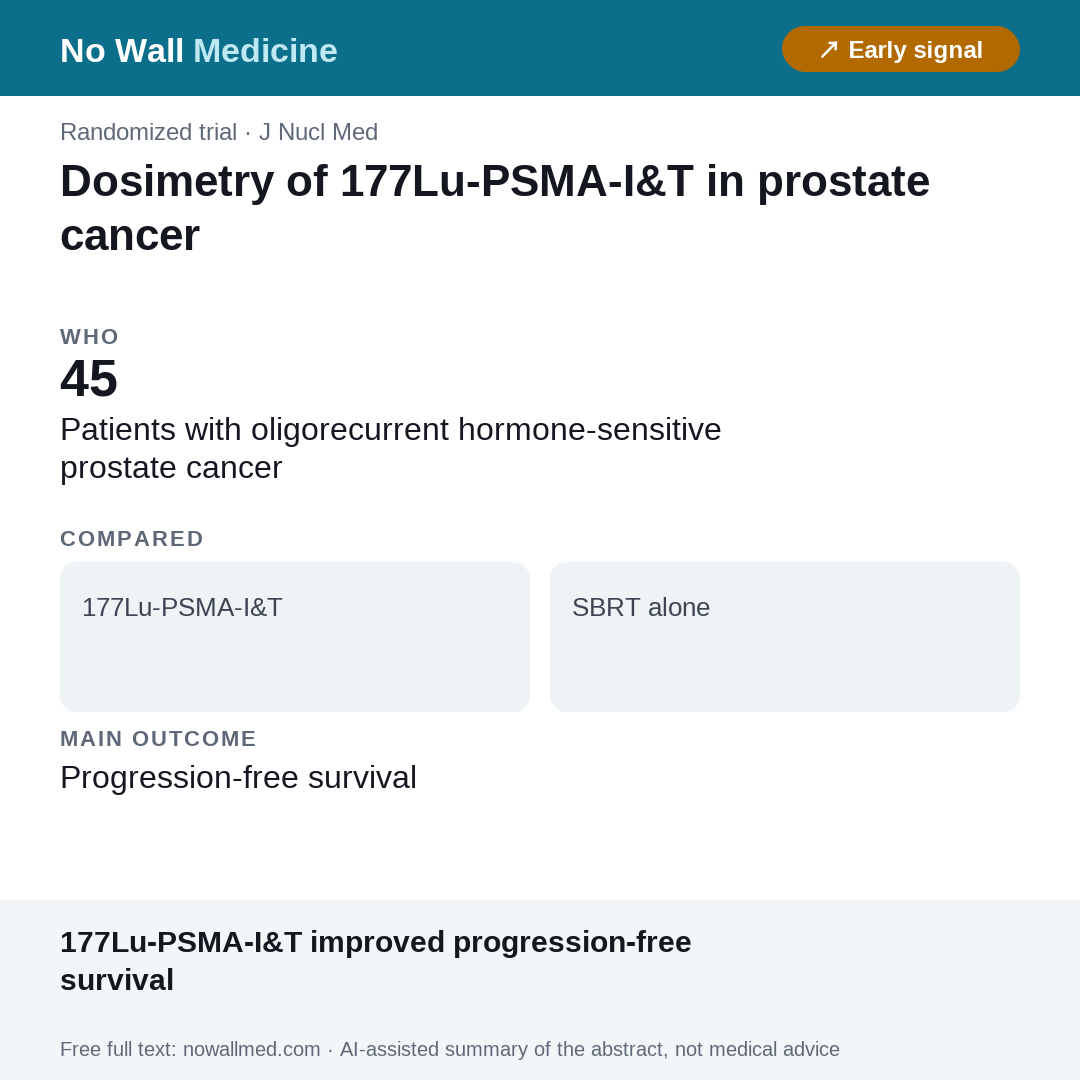
Dosimetry Analysis of 177Lu-PSMA-I&T in Patients with Low-Volume Oligometastatic Hormone-Sensitive Prostate Cancer: A Secondary Analysis of the LUNAR Trial
Randomized trialBenefit found
Dosimetry of 177Lu-PSMA-I&T in prostate cancer
Who
45
Patients with oligorecurrent hormone-sensitive prostate cancer
Compared
177Lu-PSMA-I&T
SBRT alone
Main outcome
Progression-free survival
Bottom line: 177Lu-PSMA-I&T improved progression-free survival
Limitation: Limited spatial resolution of SPECT
J Nucl Med · 2026-07-01Download image