Visual abstracts
New randomized trials and meta-analyses from leading journals at a glance: who was studied, what was compared, and what was found. Every paper is free to read in full.
All specialtiesCardiology 391Oncology 310Gastroenterology & Hepatology 156Infectious Disease 312Neurology 178Psychiatry & Mental Health 256Pulmonology 178Critical Care 122Endocrinology & Diabetes 233Pediatrics 183Surgery 123Orthopedics & Sports Medicine 73Neurosurgery 24Cardiothoracic & Vascular Surgery 47Plastic & Reconstructive Surgery 78Nephrology 76Rheumatology 78Hematology 91Dermatology 42Ophthalmology 62Obstetrics & Gynecology 118Public & Global Health 117Radiology & Imaging 35Anesthesiology 67Urology 90ENT (Otolaryngology) 47Emergency Medicine 39Allergy & Immunology 48Geriatrics 112Family Medicine & Primary Care 66Medical Genetics & Genomics 36Pathology & Laboratory Medicine 6Physical Medicine & Rehabilitation 94Palliative Care 59Nutrition 134Digital Health & AI 333General Medicine 46
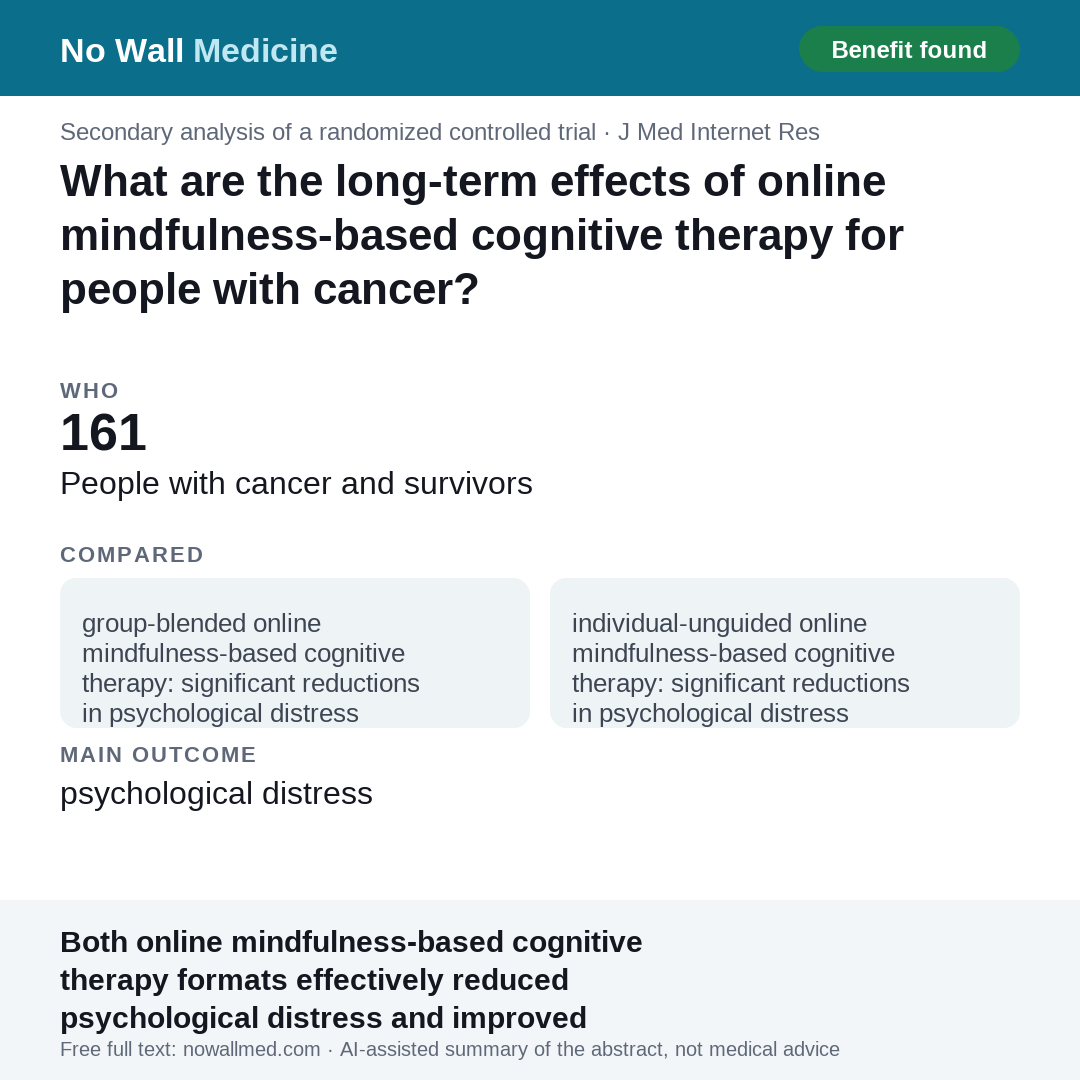
Long-Term Outcomes, Moderators, and Predictors in Online Mindfulness-Based Cognitive Therapy for People With Cancer: Secondary Analysis of a Randomized Controlled Trial
Secondary analysis of a randomized controlled trialBenefit found
What are the long-term effects of online mindfulness-based cognitive therapy for people with cancer?
Who
161
People with cancer and survivors
Compared
group-blended online mindfulness-based cognitive therapy: significant reductions in psychological distress
individual-unguided online mindfulness-based cognitive therapy: significant reductions in psychological distress
Main outcome
psychological distress
Bottom line: Both online mindfulness-based cognitive therapy formats effectively reduced psychological distress and improved well-being up to 9 months posttreatment.
Limitation: Larger, fully powered randomized controlled trials are needed to confirm these results.
J Med Internet Res · 2026-04-17Download image
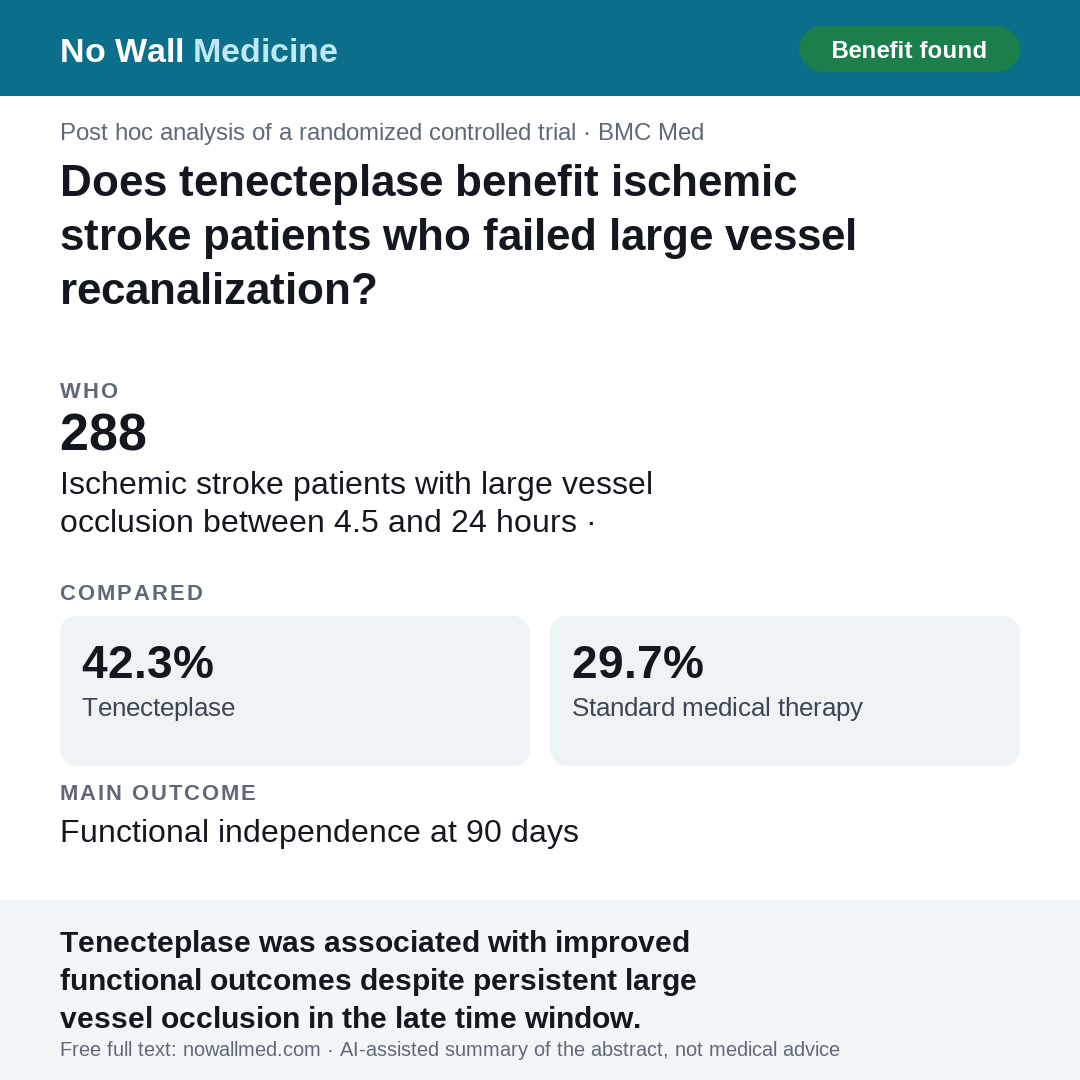
Clinical benefit of tenecteplase despite failed recanalization in late-window ischemic stroke: a post hoc analysis of the TRACE-3 trial
Post hoc analysis of a randomized controlled trialBenefit found
Does tenecteplase benefit ischemic stroke patients who failed large vessel recanalization?
Who
288
Ischemic stroke patients with large vessel occlusion between 4.5 and 24 hours · Multicenter
Compared
42.3%Tenecteplase
29.7%Standard medical therapy
Main outcome
Functional independence at 90 days
Result: adjusted risk ratio 1.37 (95% CI 1.00-1.86)
Bottom line: Tenecteplase was associated with improved functional outcomes despite persistent large vessel occlusion in the late time window.
BMC Med · 2026-04-16Download image
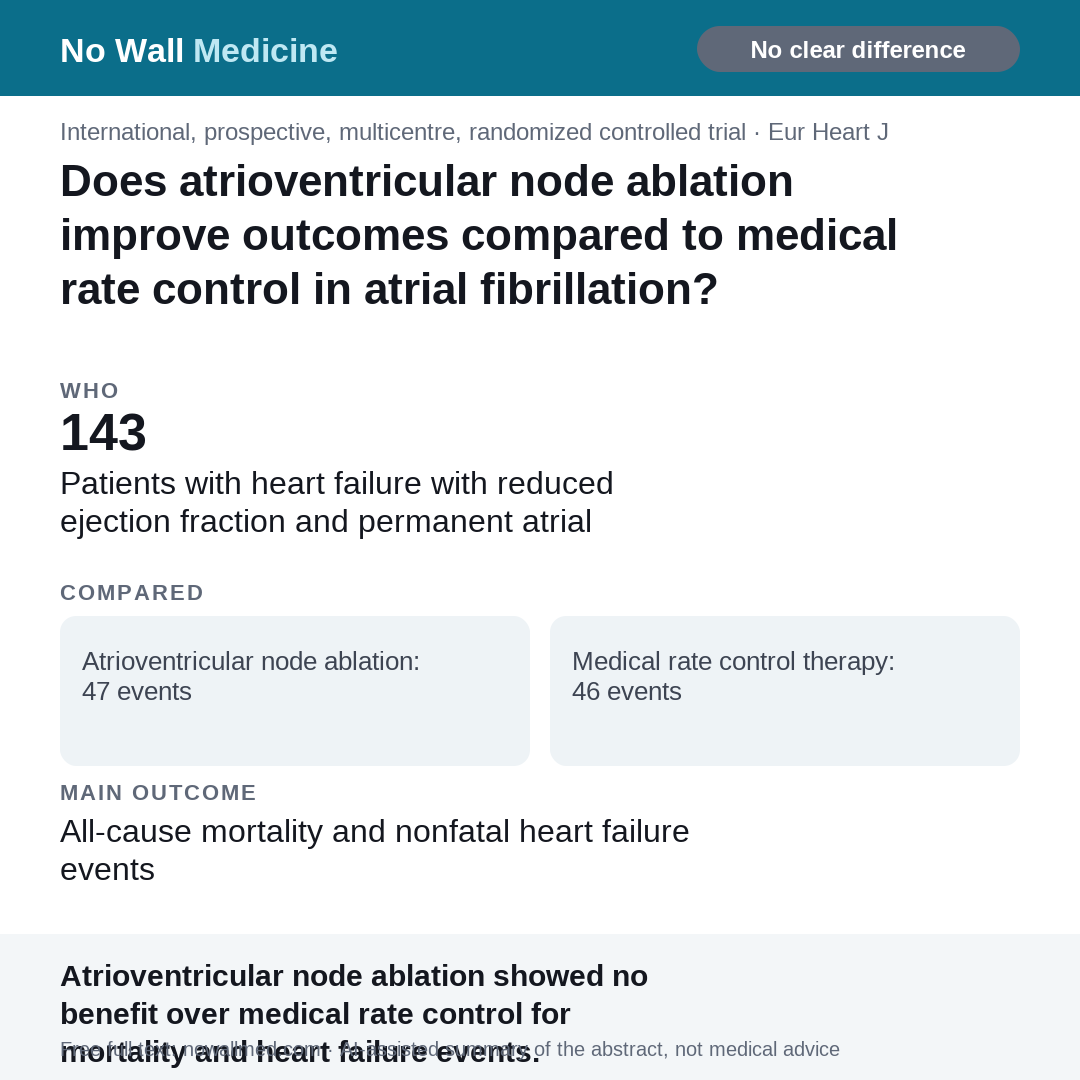
Cardiac resynchronization therapy with or without atrioventricular node ablation in atrial fibrillation: the CAAN-AF trial
International, prospective, multicentre, randomized controlled trialNo clear difference
Does atrioventricular node ablation improve outcomes compared to medical rate control in atrial fibrillation?
Who
143
Patients with heart failure with reduced ejection fraction and permanent atrial fibrillation · International, multicentre
Compared
Atrioventricular node ablation: 47 events
Medical rate control therapy: 46 events
Main outcome
All-cause mortality and nonfatal heart failure events
Result: incident rate ratio 1.16 (95% CI 0.60-2.24)
Bottom line: Atrioventricular node ablation showed no benefit over medical rate control for mortality and heart failure events.
Eur Heart J · 2026-04-16Download image
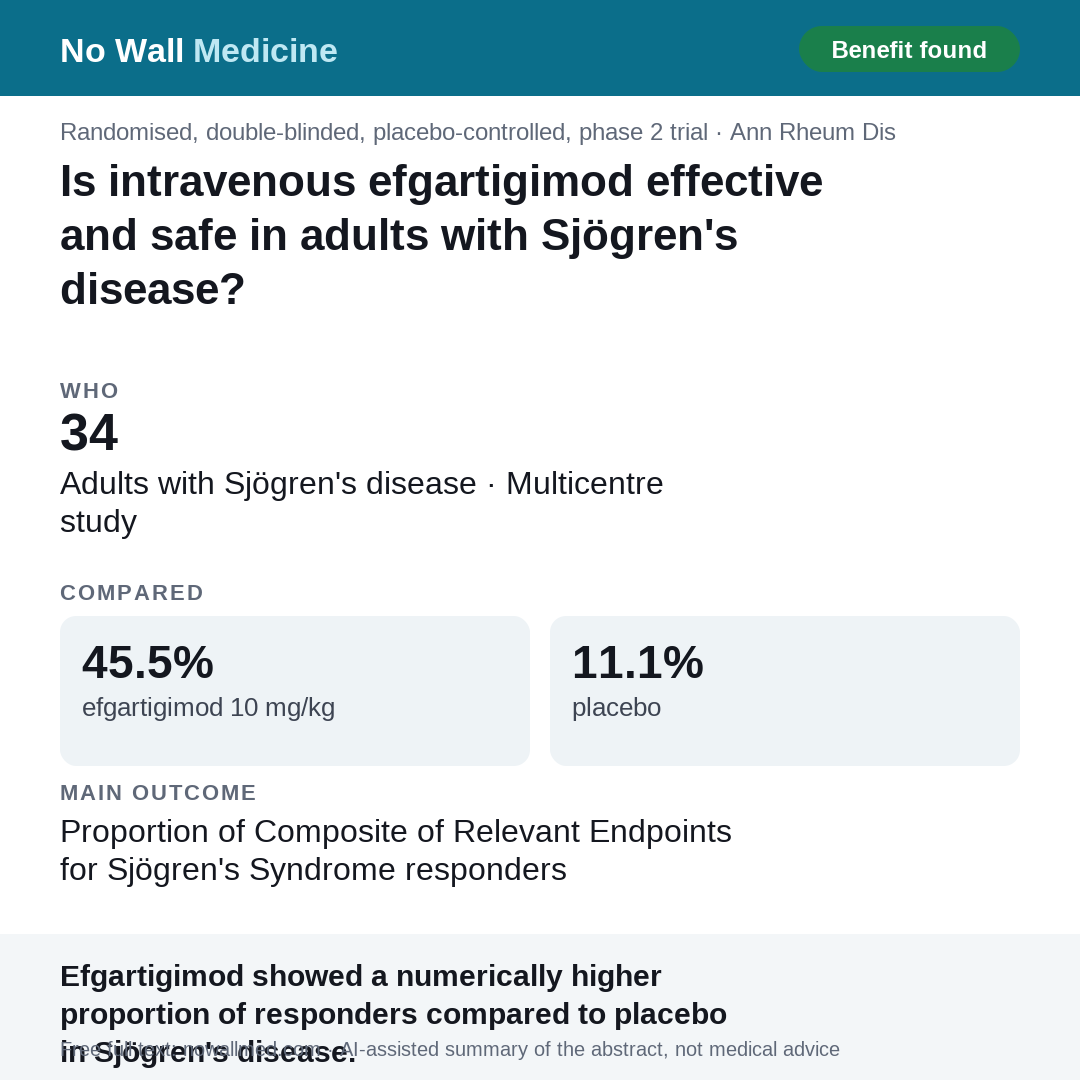
Efgartigimod in Sjögren's disease: a phase 2, randomised, placebo-controlled, parallel-group, double-blinded, proof-of-concept study (RHO)
Randomised, double-blinded, placebo-controlled, phase 2 trialBenefit found
Is intravenous efgartigimod effective and safe in adults with Sjögren's disease?
Who
34
Adults with Sjögren's disease · Multicentre study
Compared
45.5%efgartigimod 10 mg/kg
11.1%placebo
Main outcome
Proportion of Composite of Relevant Endpoints for Sjögren's Syndrome responders
Result: treatment difference 34.4%
Bottom line: Efgartigimod showed a numerically higher proportion of responders compared to placebo in Sjögren's disease.
Ann Rheum Dis · 2026-04-16Download image
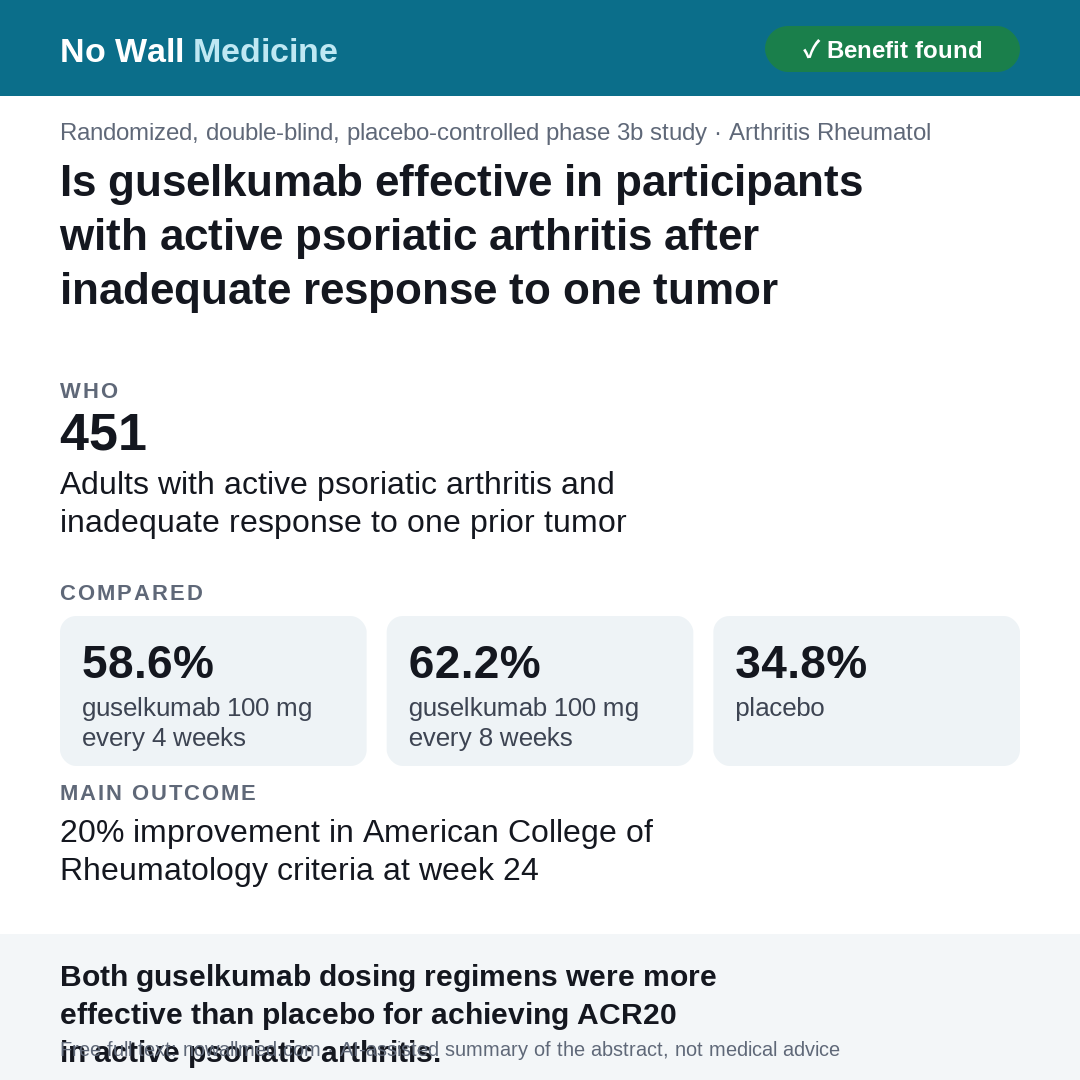
Efficacy and Safety of Guselkumab in Participants With Active Psoriatic Arthritis After Inadequate Response to One Prior Tumor Necrosis Factor Inhibitor: Week-24 Results of a Phase 3, Randomized, Placebo-Controlled Study
Randomized, double-blind, placebo-controlled phase 3b studyBenefit found
Is guselkumab effective in participants with active psoriatic arthritis after inadequate response to one tumor necrosis factor inhibitor?
Who
451
Adults with active psoriatic arthritis and inadequate response to one prior tumor necrosis factor inhibitor · multicenter
Compared
58.6%guselkumab 100 mg every 4 weeks
62.2%guselkumab 100 mg every 8 weeks
34.8%placebo
Main outcome
20% improvement in American College of Rheumatology criteria at week 24
Bottom line: Both guselkumab dosing regimens were more effective than placebo for achieving ACR20 in active psoriatic arthritis.
Arthritis Rheumatol · 2026-04-16Download image
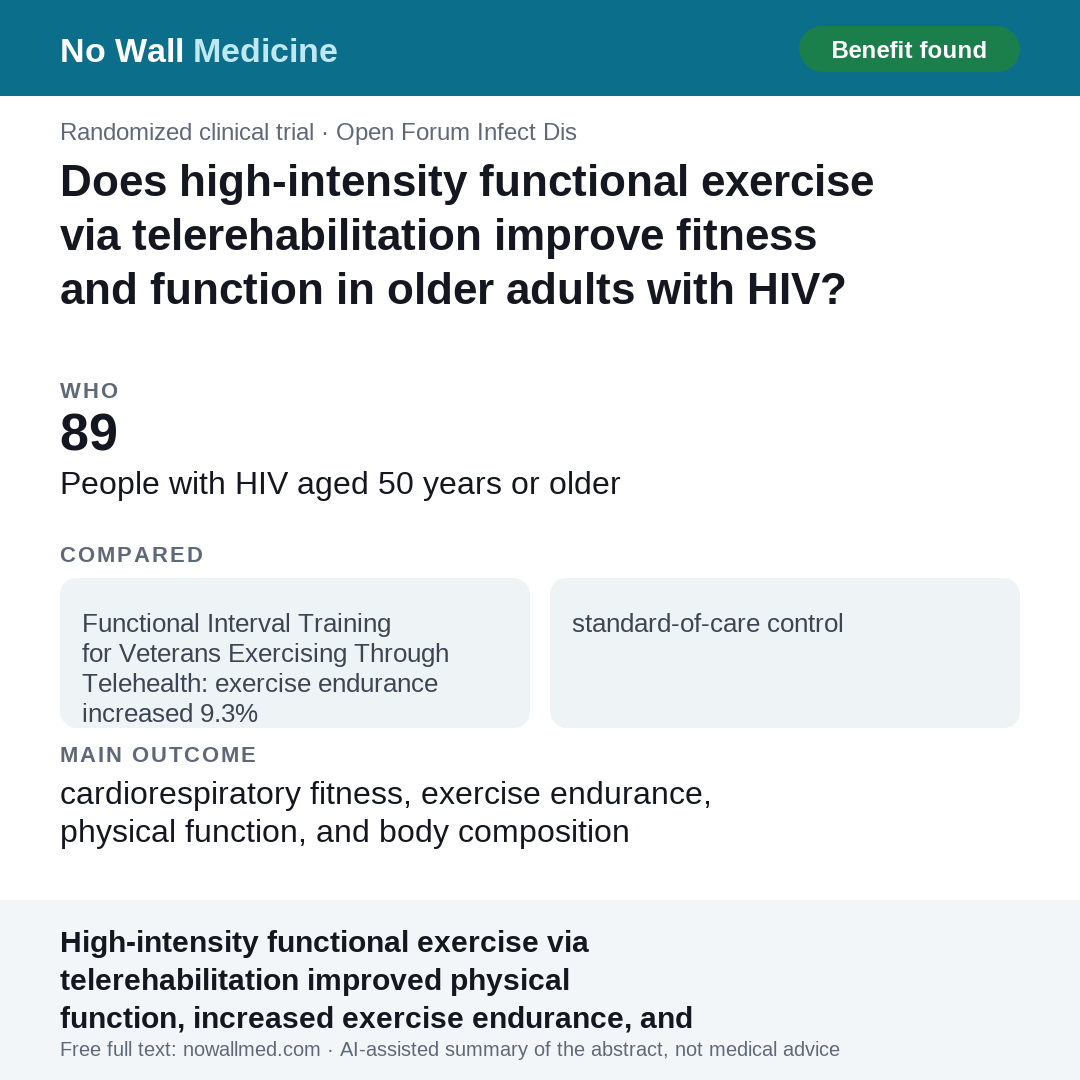
Effects of High-Intensity Functional Exercise on Cardiorespiratory Fitness and Physical Function in Older Adults With HIV: A Telerehabilitation Randomized Trial
Randomized clinical trialBenefit found
Does high-intensity functional exercise via telerehabilitation improve fitness and function in older adults with HIV?
Who
89
People with HIV aged 50 years or older
Compared
Functional Interval Training for Veterans Exercising Through Telehealth: exercise endurance increased 9.3%
standard-of-care control
Main outcome
cardiorespiratory fitness, exercise endurance, physical function, and body composition
Bottom line: High-intensity functional exercise via telerehabilitation improved physical function, increased exercise endurance, and reduced adiposity in older adults with HIV.
Open Forum Infect Dis · 2026-04-16Download image
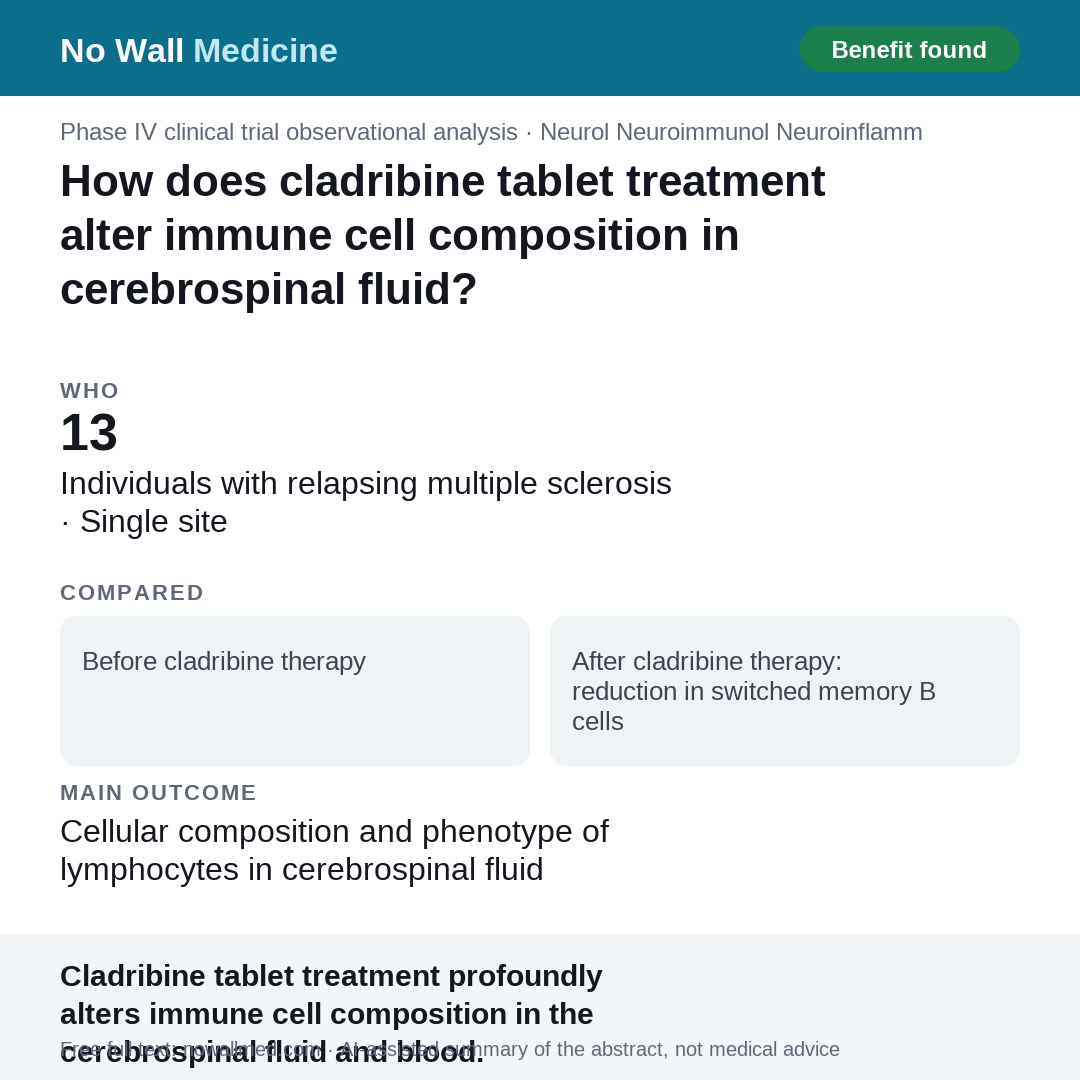
Dynamics of Spinal Fluid Immune Cell Alterations Following Cladribine Tablet Treatment in Multiple Sclerosis
Phase IV clinical trial observational analysisBenefit found
How does cladribine tablet treatment alter immune cell composition in cerebrospinal fluid?
Who
13
Individuals with relapsing multiple sclerosis · Single site
Compared
Before cladribine therapy
After cladribine therapy: reduction in switched memory B cells
Main outcome
Cellular composition and phenotype of lymphocytes in cerebrospinal fluid
Bottom line: Cladribine tablet treatment profoundly alters immune cell composition in the cerebrospinal fluid and blood.
Limitation: Small sample size of 13 individuals
Neurol Neuroimmunol Neuroinflamm · 2026-04-16Download image
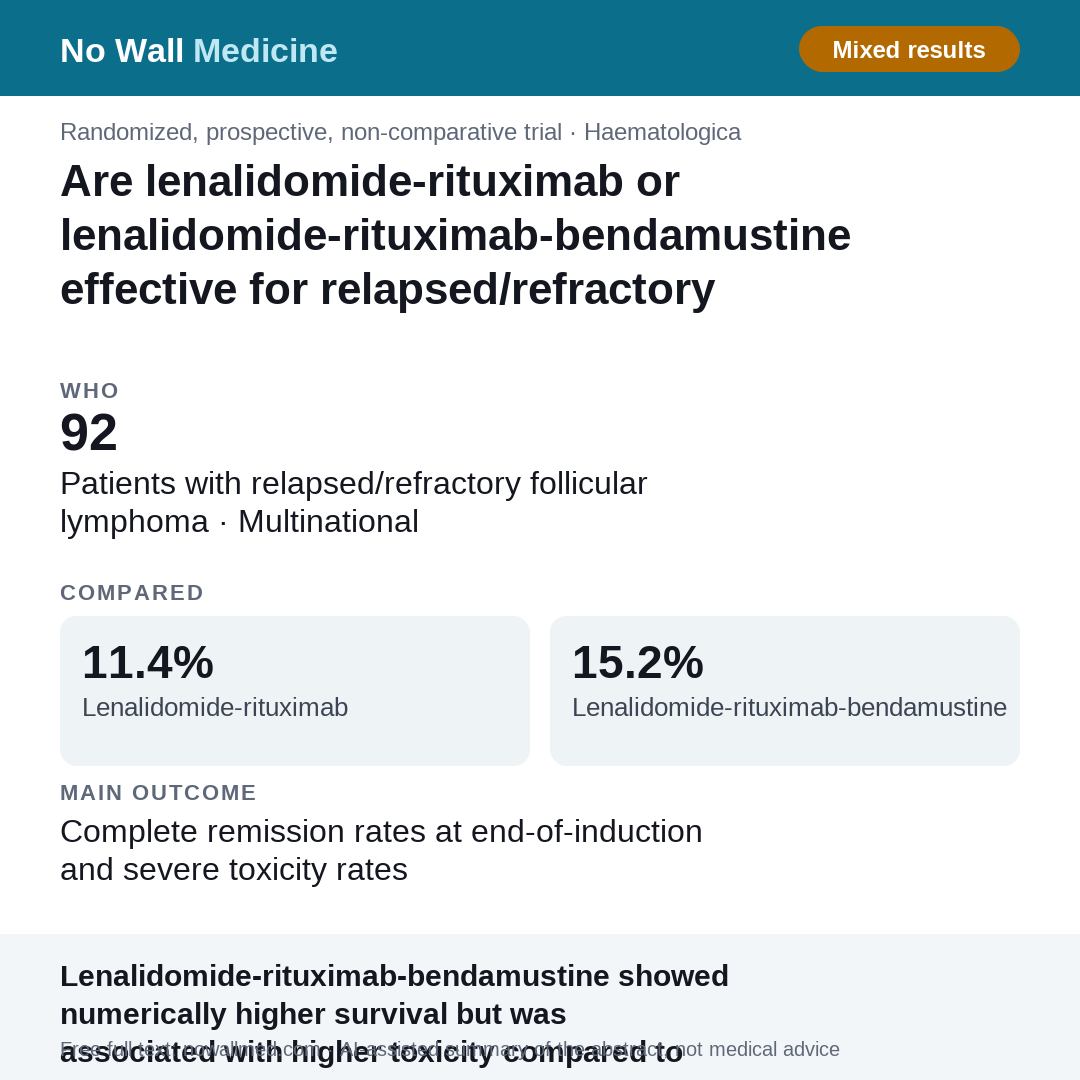
Lenalidomide-rituximab or lenalidomide-rituximabbendamustine for relapsed/refractory follicular lymphoma: primary and final analysis of the randomized phase II HOVON110/ReBeL study
Randomized, prospective, non-comparative trialMixed results
Are lenalidomide-rituximab or lenalidomide-rituximab-bendamustine effective for relapsed/refractory follicular lymphoma?
Who
92
Patients with relapsed/refractory follicular lymphoma · Multinational
Compared
11.4%Lenalidomide-rituximab (95% CI: 3.8-24.6%)
15.2%Lenalidomide-rituximab-bendamustine (95% CI: 6.3-28.9%)
Main outcome
Complete remission rates at end-of-induction and severe toxicity rates
Bottom line: Lenalidomide-rituximab-bendamustine showed numerically higher survival but was associated with higher toxicity compared to lenalidomide-rituximab.
Haematologica · 2026-04-16Download image
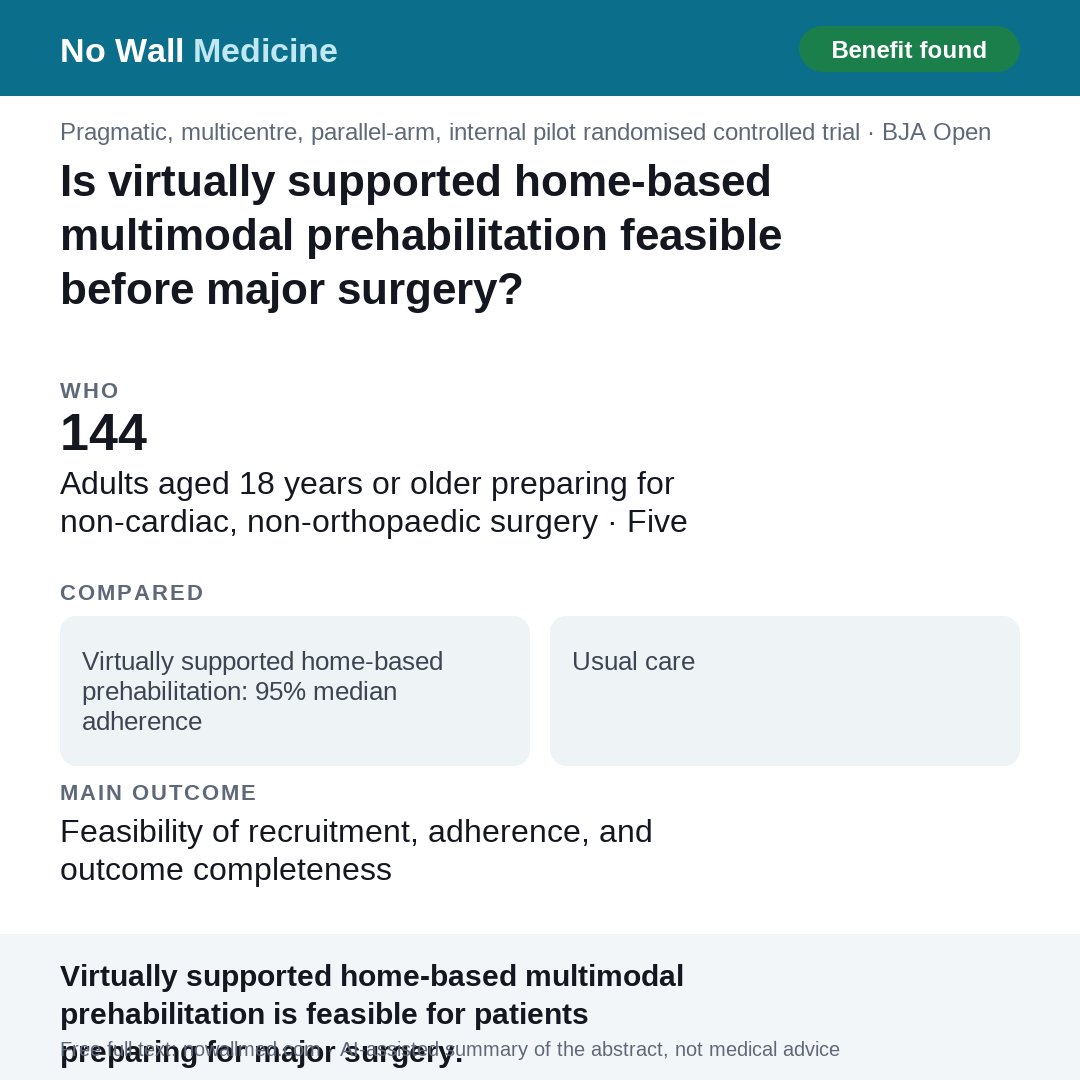
Home-based, virtually supported multimodal prehabilitation compared with usual care prior to major surgery: a multicentre, pragmatic pilot randomised trial
Pragmatic, multicentre, parallel-arm, internal pilot randomised controlled trialBenefit found
Is virtually supported home-based multimodal prehabilitation feasible before major surgery?
Who
144
Adults aged 18 years or older preparing for non-cardiac, non-orthopaedic surgery · Five Canadian centres
Compared
Virtually supported home-based prehabilitation: 95% median adherence
Usual care
Main outcome
Feasibility of recruitment, adherence, and outcome completeness
Bottom line: Virtually supported home-based multimodal prehabilitation is feasible for patients preparing for major surgery.
Limitation: This was an internal pilot trial; associations should be validated in a fully powered trial.
BJA Open · 2026-04-16Download image
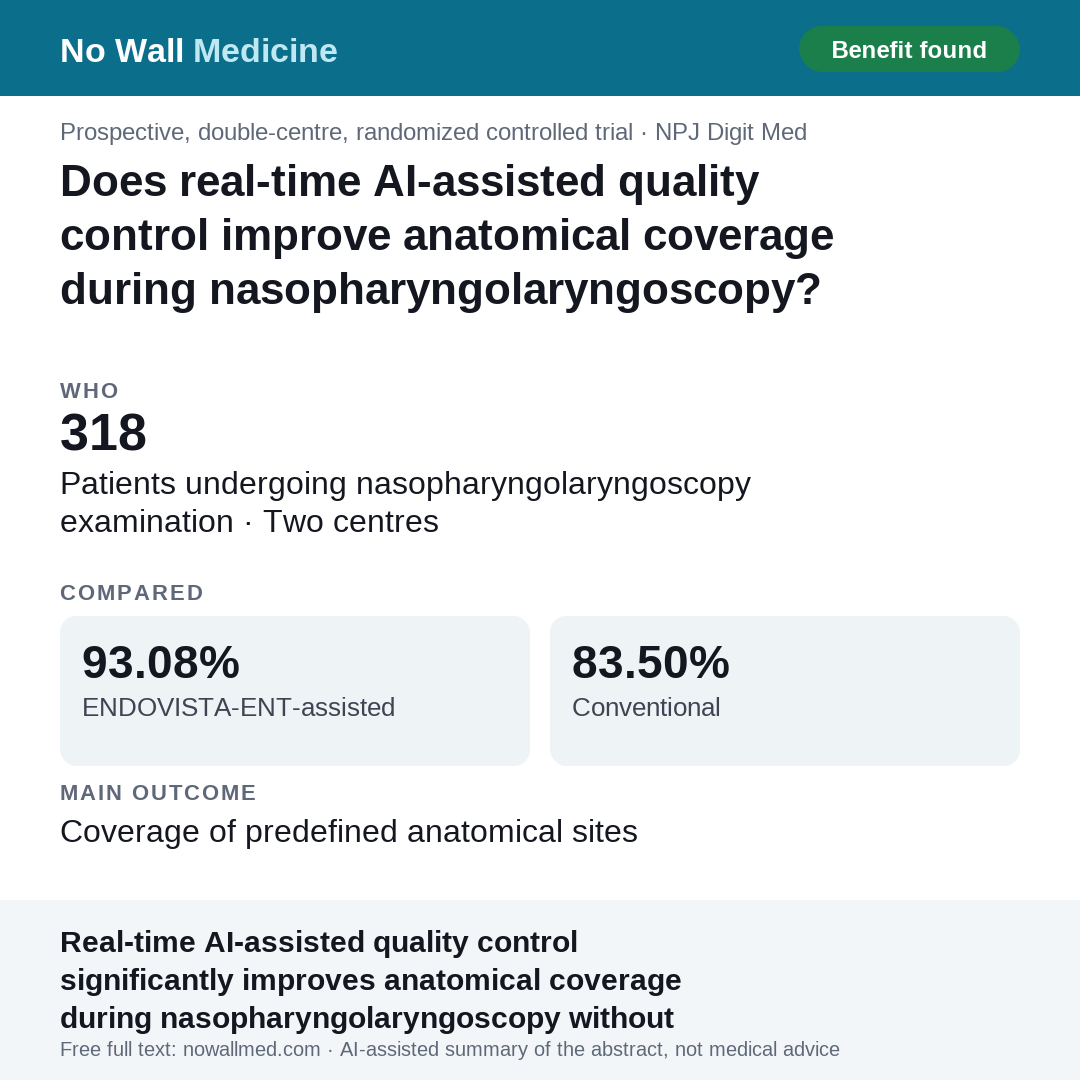
Real-time AI-assisted quality control during nasopharyngolaryngoscopy: a randomized controlled trial
Prospective, double-centre, randomized controlled trialBenefit found
Does real-time AI-assisted quality control improve anatomical coverage during nasopharyngolaryngoscopy?
Who
318
Patients undergoing nasopharyngolaryngoscopy examination · Two centres
Compared
93.08%ENDOVISTA-ENT-assisted
83.50%Conventional
Main outcome
Coverage of predefined anatomical sites
Bottom line: Real-time AI-assisted quality control significantly improves anatomical coverage during nasopharyngolaryngoscopy without increasing examination time.
NPJ Digit Med · 2026-04-16Download image
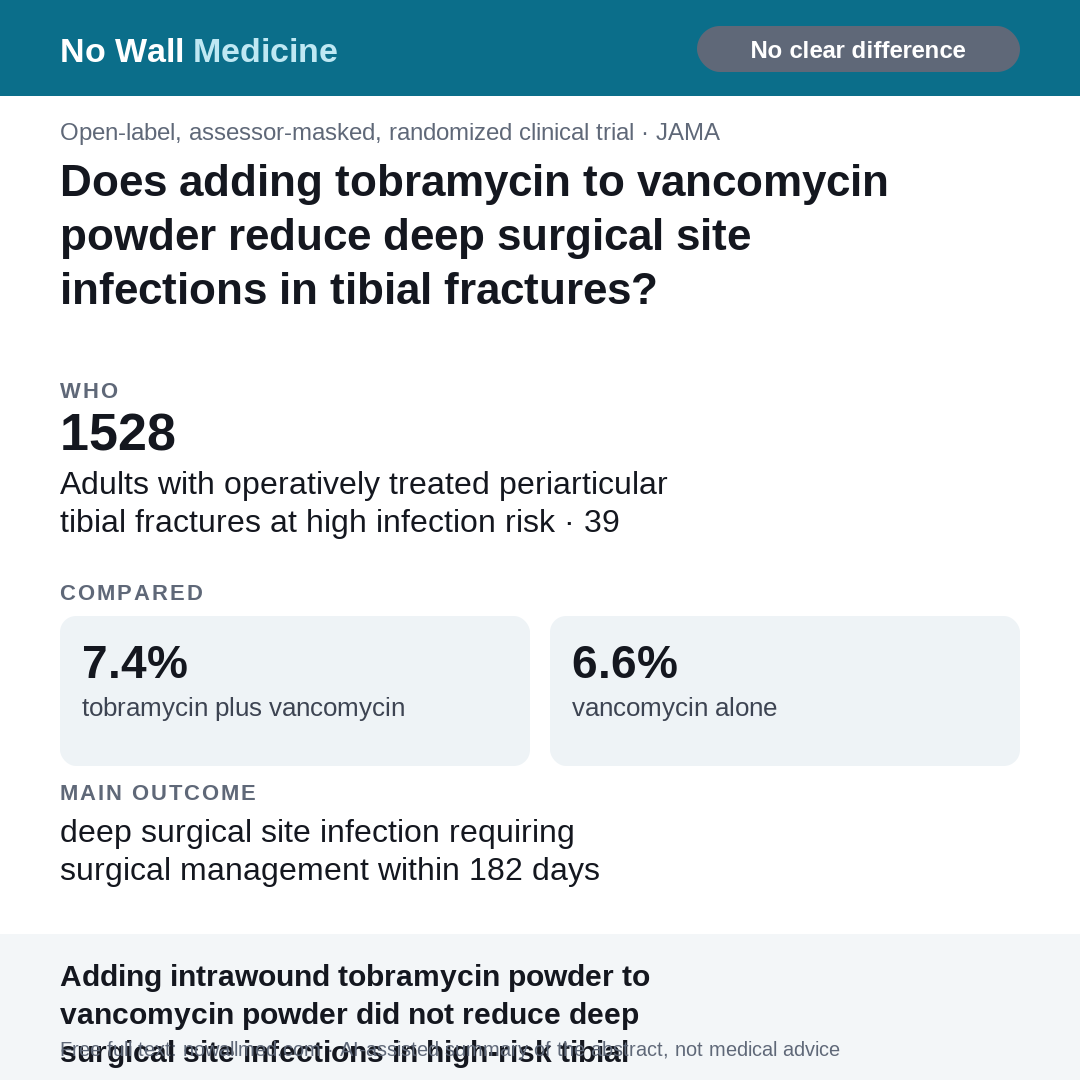
Intrawound Tobramycin Plus Vancomycin to Prevent Surgical Site Infection in Tibial Fractures: The TOBRA Randomized Clinical Trial
Open-label, assessor-masked, randomized clinical trialNo clear difference
Does adding tobramycin to vancomycin powder reduce deep surgical site infections in tibial fractures?
Who
1528
Adults with operatively treated periarticular tibial fractures at high infection risk · 39 US trauma centers
Compared
7.4%tobramycin plus vancomycin
6.6%vancomycin alone
Main outcome
deep surgical site infection requiring surgical management within 182 days
Result: hazard ratio 1.11 (95% bayesian credible interval 0.75-1.66)
Bottom line: Adding intrawound tobramycin powder to vancomycin powder did not reduce deep surgical site infections in high-risk tibial fracture patients.
JAMA · 2026-04-15Download image
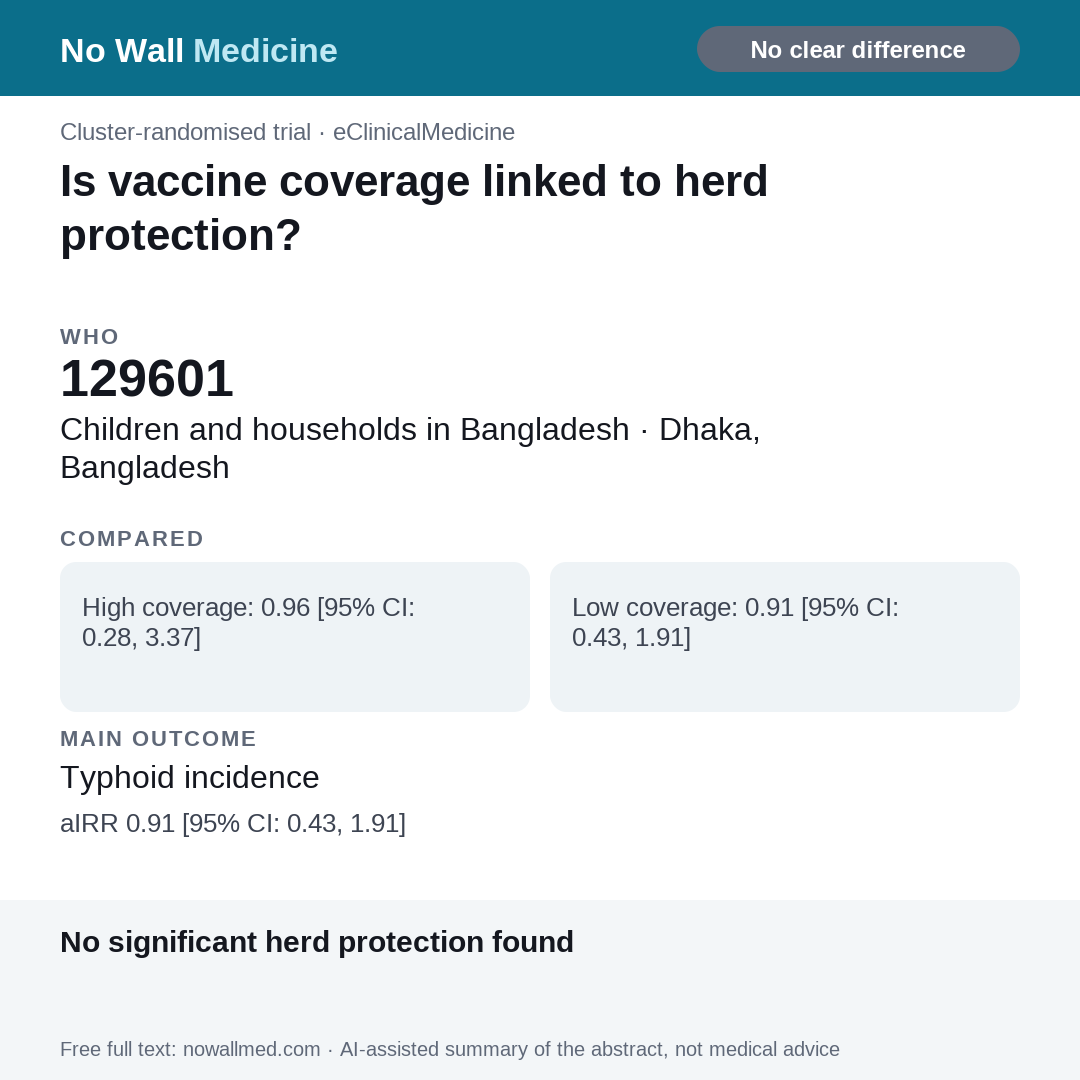
The association between vaccine coverage and herd protection: exploratory analyses of a cluster-randomised trial of Vi conjugate vaccine
Cluster-randomised trialNo clear difference
Vaccine coverage and herd protection
Who
150
Children and residents in Bangladesh · Dhaka, Bangladesh
Compared
TCV clusters: 0.91 [95% CI: 0.43, 1.91]
JE clusters
Main outcome
Typhoid incidence
Result: hazard ratio 0.91 (95% CI 0.43 to 1.91)
Bottom line: No significant herd protection found
Limitation: estimates were imprecise
Funded by: Gates Foundation
eClinicalMedicine · 2026-04-15Download image
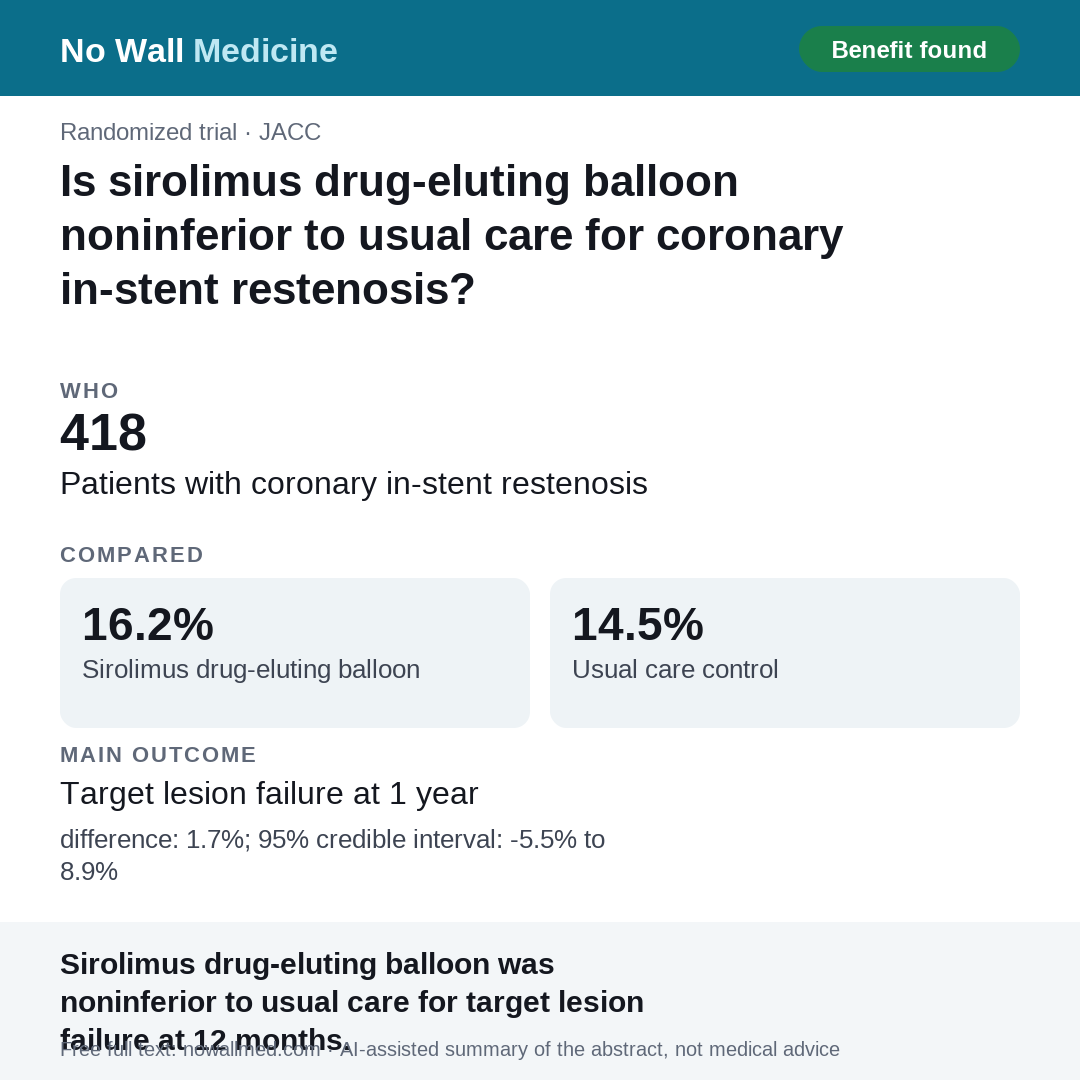
Sirolimus-Eluting Balloon vs Repeat Drug-Eluting Stent or Balloon Angioplasty for Coronary In-Stent Restenosis
Randomized trialBenefit found
Is sirolimus drug-eluting balloon noninferior to usual care for coronary in-stent restenosis?
Who
418
Patients with coronary in-stent restenosis
Compared
16.2%Sirolimus drug-eluting balloon (32/197)
14.5%Usual care control (28/193)
Main outcome
Target lesion failure at 1 year
Result: difference: 1.7%; 95% credible interval: -5.5% to 8.9%
Bottom line: Sirolimus drug-eluting balloon was noninferior to usual care for target lesion failure at 12 months.
Limitation: The drug-eluting balloon was not noninferior to drug-eluting stents for single-layer in-stent restenosis.
JACC · 2026-04-15Download image
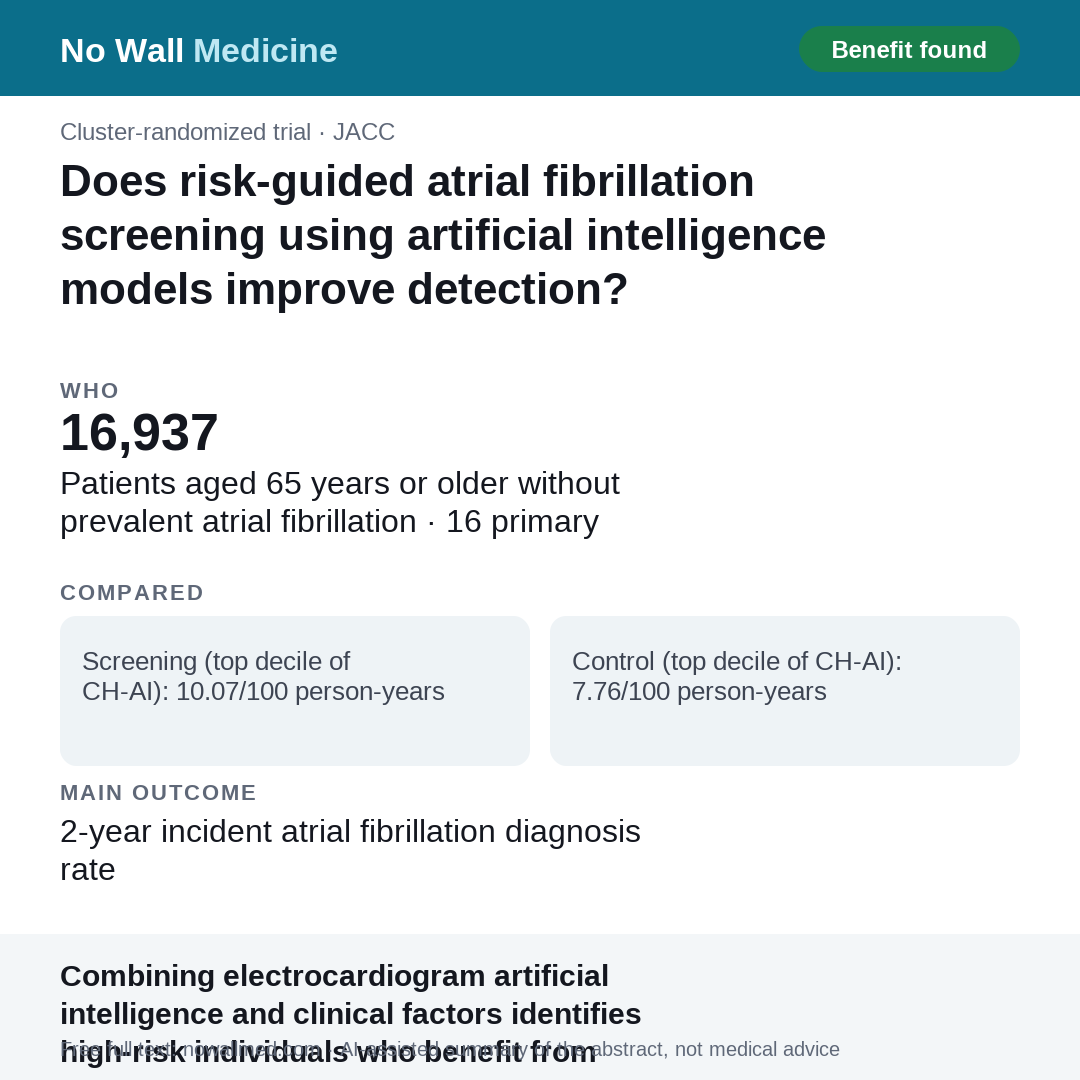
Risk-Guided Atrial Fibrillation Screening With Artificial Intelligence-Enabled Electrocardiogram Models: A VITAL-AF Trial Analysis
Cluster-randomized trialBenefit found
Does risk-guided atrial fibrillation screening using artificial intelligence models improve detection?
Who
16,937
Patients aged 65 years or older without prevalent atrial fibrillation · 16 primary care practices in Massachusetts
Compared
Screening (top decile of CH-AI): 10.07/100 person-years
Control (top decile of CH-AI): 7.76/100 person-years
Main outcome
2-year incident atrial fibrillation diagnosis rate
Result: difference in AF diagnosis rate 2.32/100 person-years (95% CI: 0.01-4.63)
Bottom line: Combining electrocardiogram artificial intelligence and clinical factors identifies high-risk individuals who benefit from atrial fibrillation screening.
Limitation: A trade-off exists between increasing screening efficiency and decreasing population coverage.
JACC · 2026-04-15Download image
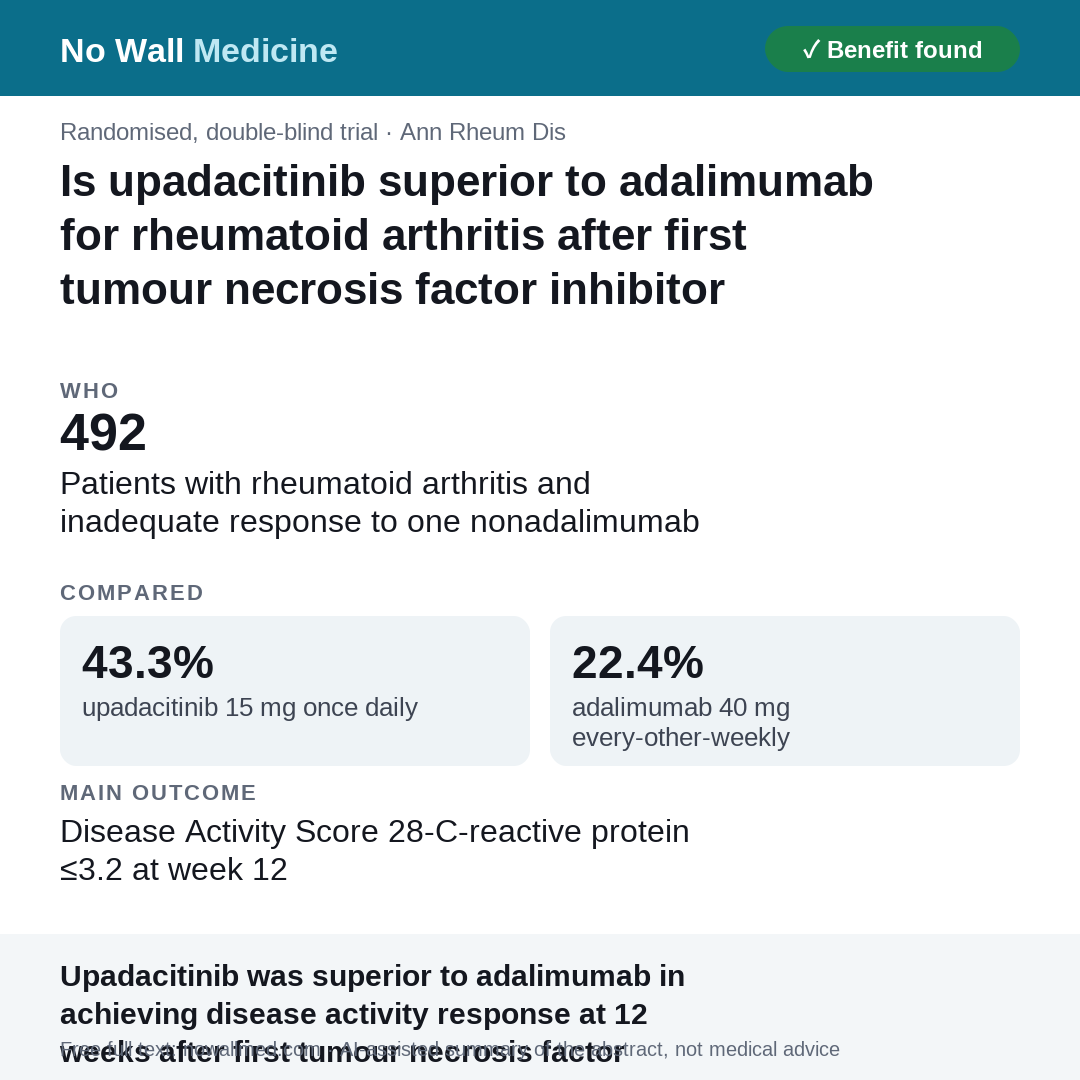
Upadacitinib vs adalimumab in patients with rheumatoid arthritis and a prior inadequate response or intolerance to a tumour necrosis factor inhibitor: 12-week results from the randomised, double-blind, SELECT-SWITCH study
Randomised, double-blind trialBenefit found
Is upadacitinib superior to adalimumab for rheumatoid arthritis after first tumour necrosis factor inhibitor failure?
Who
492
Patients with rheumatoid arthritis and inadequate response to one nonadalimumab tumour necrosis factor inhibitor
Compared
43.3%upadacitinib 15 mg once daily
22.4%adalimumab 40 mg every-other-weekly
Main outcome
Disease Activity Score 28-C-reactive protein ≤3.2 at week 12
Result: difference, 21.0% (95% CI: 12.9-29.1)
Bottom line: Upadacitinib was superior to adalimumab in achieving disease activity response at 12 weeks after first tumour necrosis factor inhibitor failure.
Ann Rheum Dis · 2026-04-15Download image
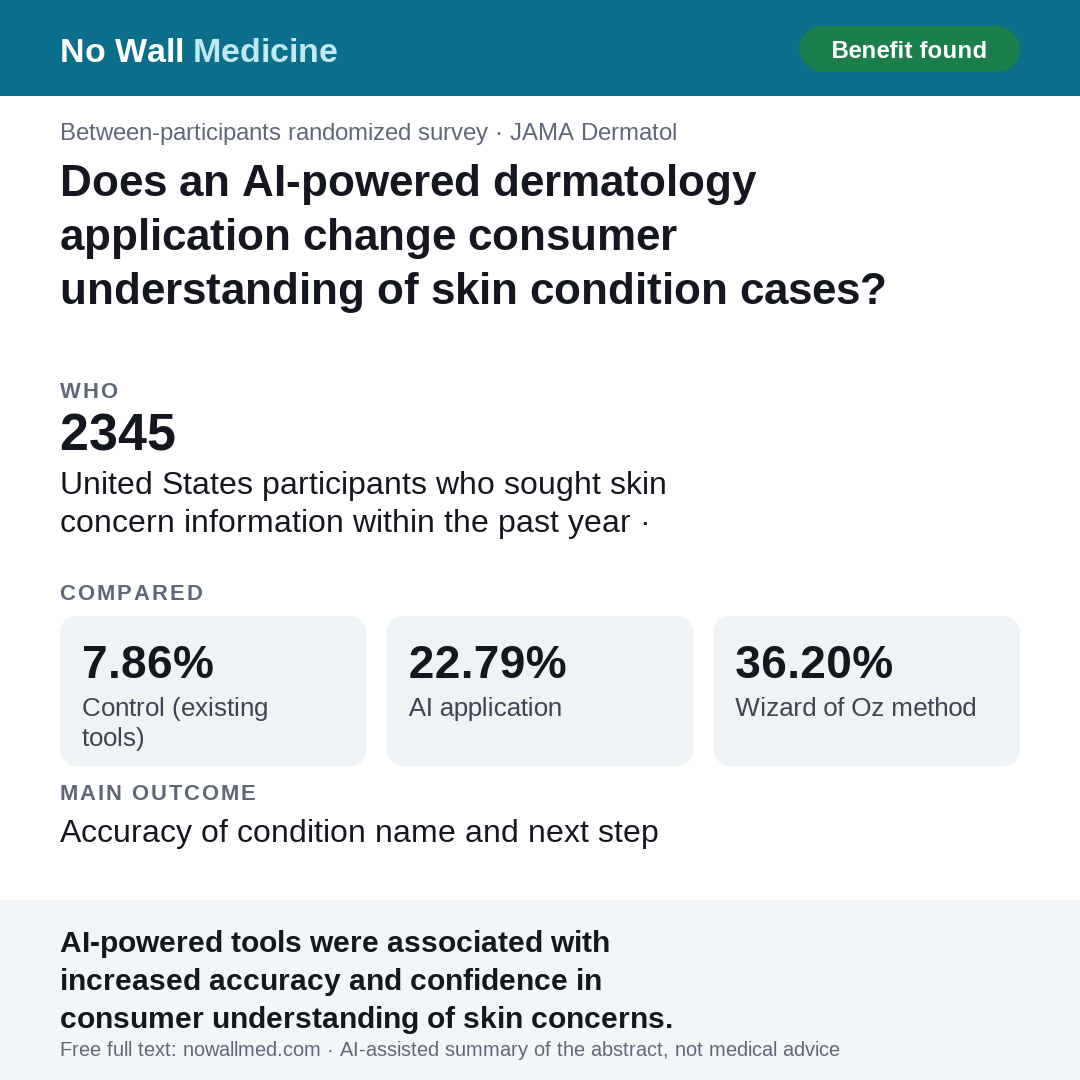
Consumer Understanding of Skin Concerns With an AI-Powered Informational Tool
Between-participants randomized surveyBenefit found
Does an AI-powered dermatology application change consumer understanding of skin condition cases?
Who
2345
United States participants who sought skin concern information within the past year · Commercial panel platform
Compared
7.86%Control (existing tools) (95% CI, 7.03%-8.71%)
22.79%AI application (95% CI, 21.48%-24.09%)
36.20%Wizard of Oz method (95% CI, 34.70%-37.73%)
Main outcome
Accuracy of condition name and next step
Bottom line: AI-powered tools were associated with increased accuracy and confidence in consumer understanding of skin concerns.
JAMA Dermatol · 2026-04-15Download image
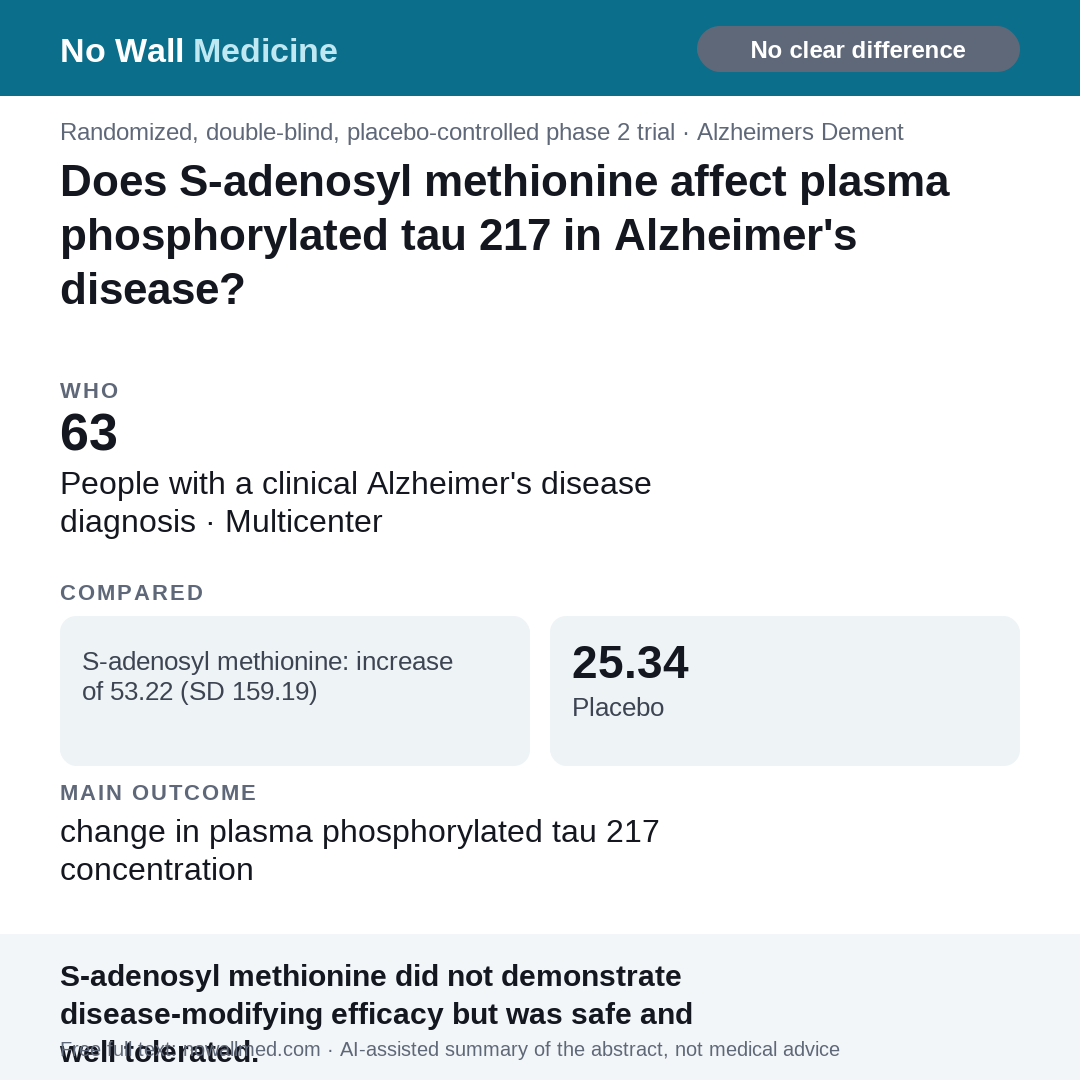
A phase 2, randomized, multicenter, double-blind, placebo-controlled trial of S-adenosyl methionine in participants with mild cognitive impairment or dementia due to Alzheimer's disease
Randomized, double-blind, placebo-controlled phase 2 trialNo clear difference
Does S-adenosyl methionine affect plasma phosphorylated tau 217 in Alzheimer's disease?
Who
63
People with a clinical Alzheimer's disease diagnosis · Multicenter
Compared
S-adenosyl methionine: increase of 53.22 (SD 159.19)
25.34Placebo (SD 94.83)
Main outcome
change in plasma phosphorylated tau 217 concentration
Result: standardized mean difference 37.58 (95% CI -32.61, 107.76)
Bottom line: S-adenosyl methionine did not demonstrate disease-modifying efficacy but was safe and well tolerated.
Alzheimers Dement · 2026-04-15Download image
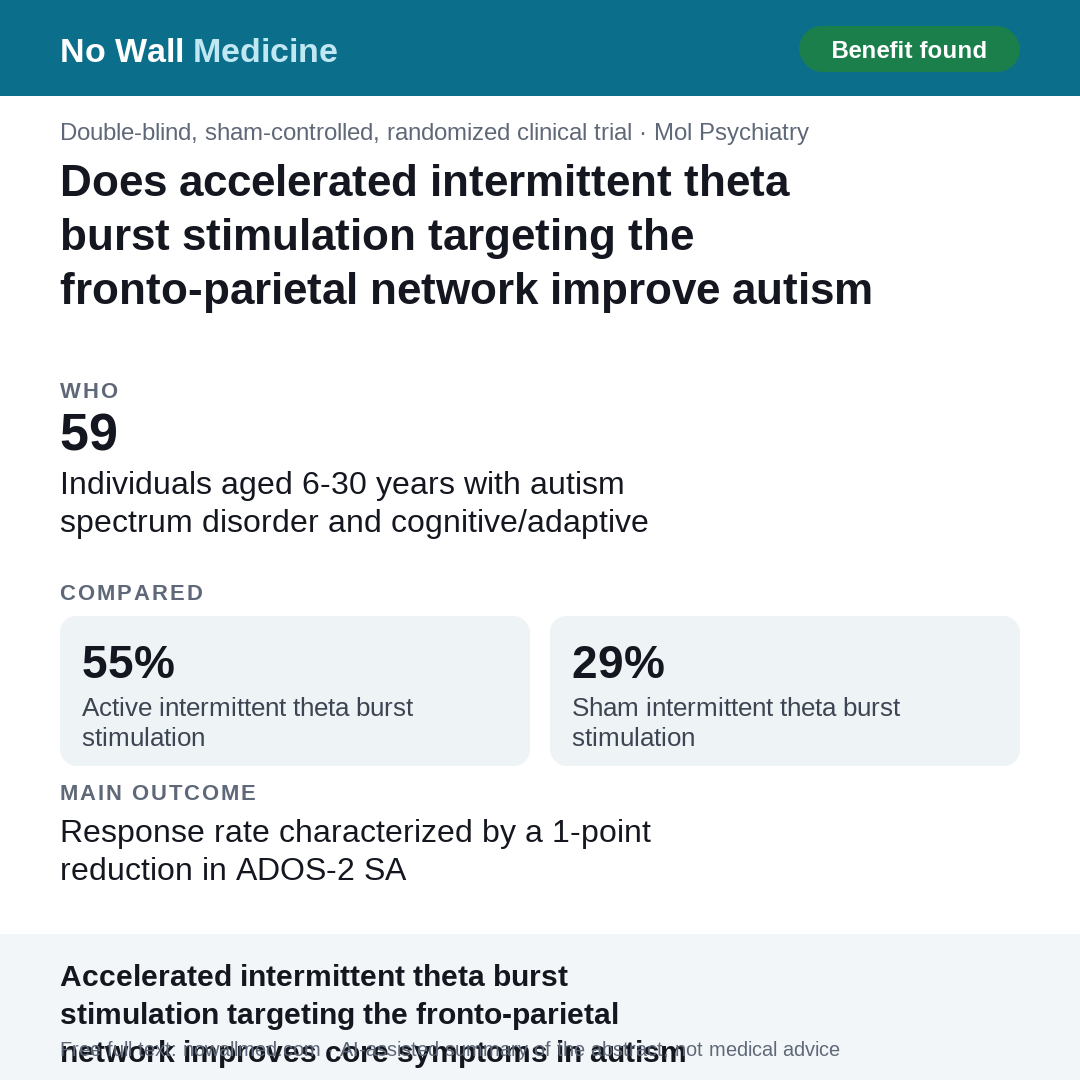
Accelerated intermittent theta burst stimulation targeting personalized fronto-parietal control network improves core symptoms of autism spectrum disorder: a double-blind, randomized controlled trial
Double-blind, sham-controlled, randomized clinical trialBenefit found
Does accelerated intermittent theta burst stimulation targeting the fronto-parietal network improve autism symptoms?
Who
59
Individuals aged 6-30 years with autism spectrum disorder and cognitive/adaptive delays
Compared
55%Active intermittent theta burst stimulation
29%Sham intermittent theta burst stimulation
Main outcome
Response rate characterized by a 1-point reduction in ADOS-2 SA
Result: cohen's d = -0.53
Bottom line: Accelerated intermittent theta burst stimulation targeting the fronto-parietal network improves core symptoms in autism spectrum disorder.
Mol Psychiatry · 2026-04-15Download image
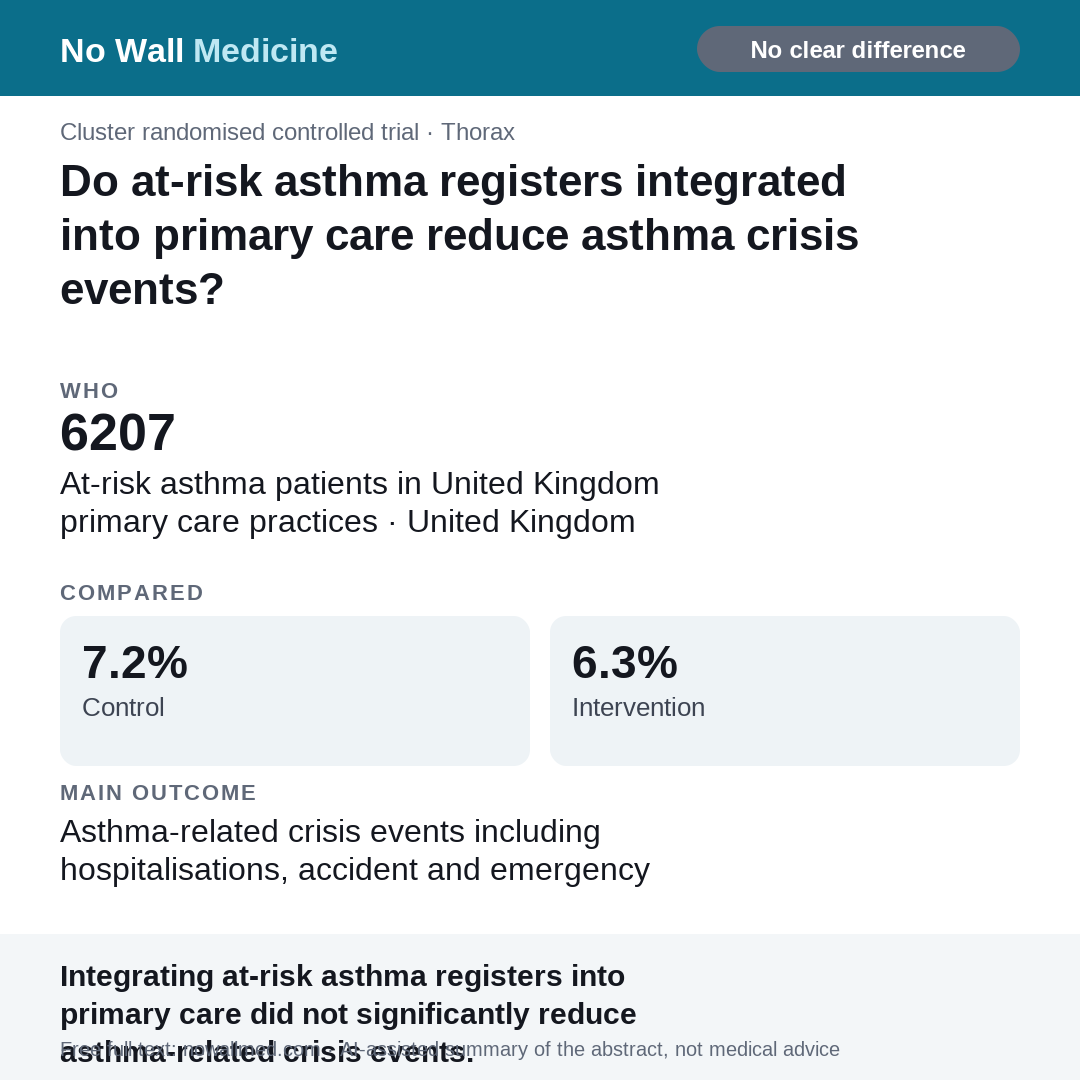
At-risk registers integrated into primary care to stop asthma crises in the UK: cluster randomised controlled trial with economic evaluation
Cluster randomised controlled trialNo clear difference
Do at-risk asthma registers integrated into primary care reduce asthma crisis events?
Who
6207
At-risk asthma patients in United Kingdom primary care practices · United Kingdom
Compared
7.2%Control
6.3%Intervention
Main outcome
Asthma-related crisis events including hospitalisations, accident and emergency visits or death
Result: odds ratio 0.82 (95% CI 0.66 to 1.03)
Bottom line: Integrating at-risk asthma registers into primary care did not significantly reduce asthma-related crisis events.
Thorax · 2026-04-15Download image
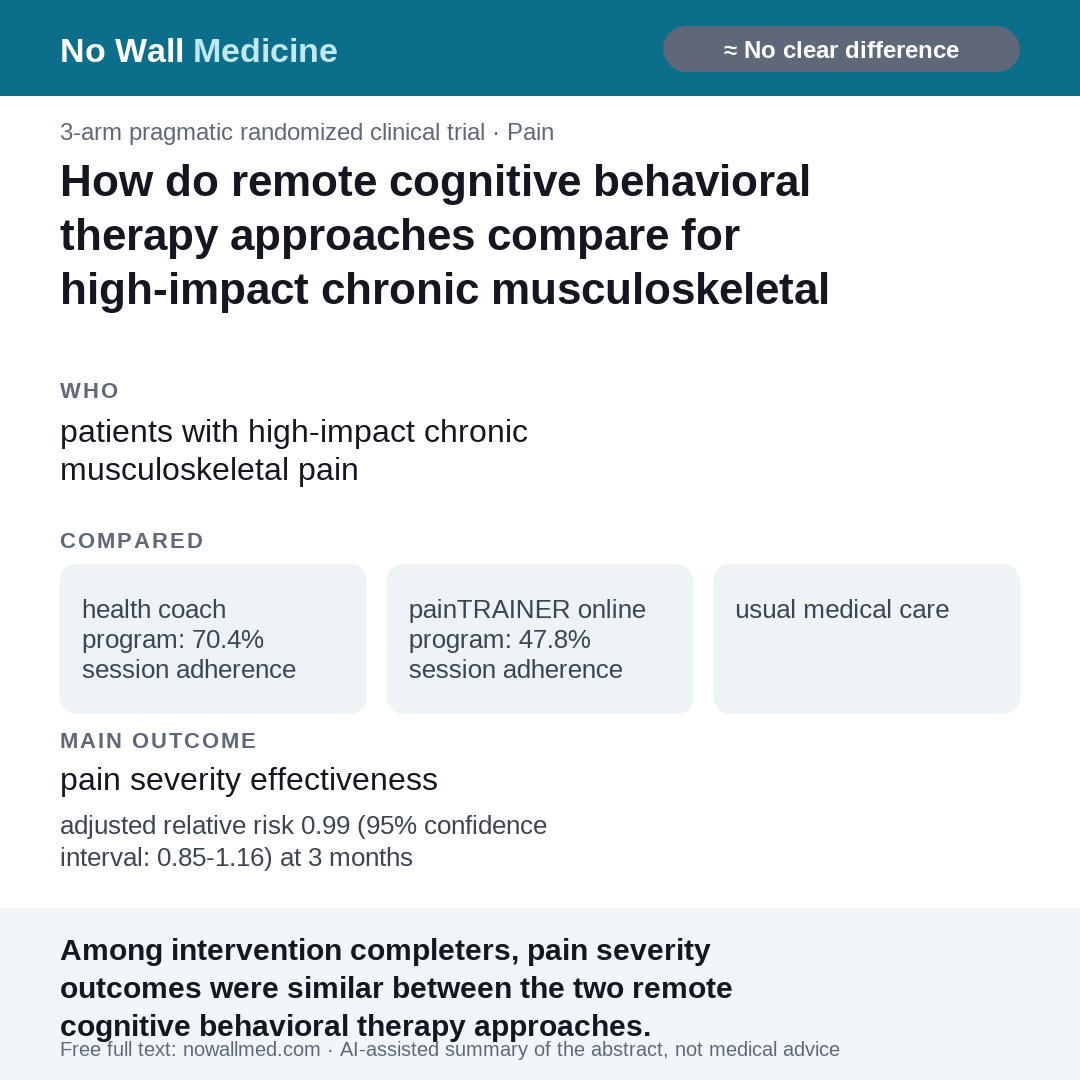
Predictors of patient treatment adherence and moderators of response for a randomized clinical trial comparing remote cognitive behavioral therapy approaches for high-impact chronic musculoskeletal pain
3-arm pragmatic randomized clinical trialNo clear difference
How do remote cognitive behavioral therapy approaches compare for high-impact chronic musculoskeletal pain?
Who
patients with high-impact chronic musculoskeletal pain
Compared
health coach program: 70.4% session adherence
painTRAINER online program: 47.8% session adherence
usual medical care
Main outcome
pain severity effectiveness
Result: adjusted relative risk 0.99 (95% confidence interval: 0.85-1.16) at 3 months
Bottom line: Among intervention completers, pain severity outcomes were similar between the two remote cognitive behavioral therapy approaches.
Pain · 2026-04-15Download image